Ancient Seals Collection

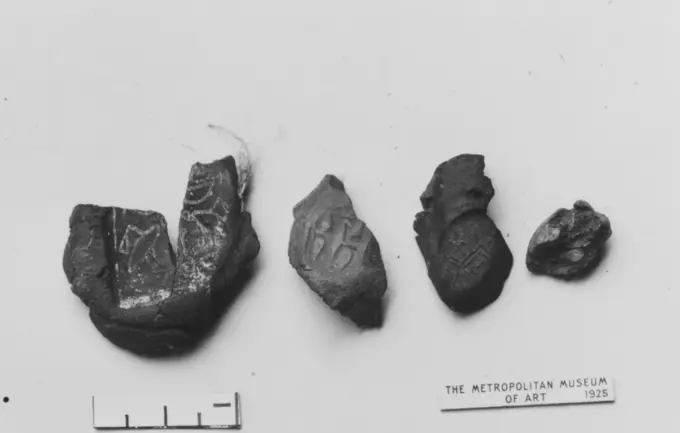
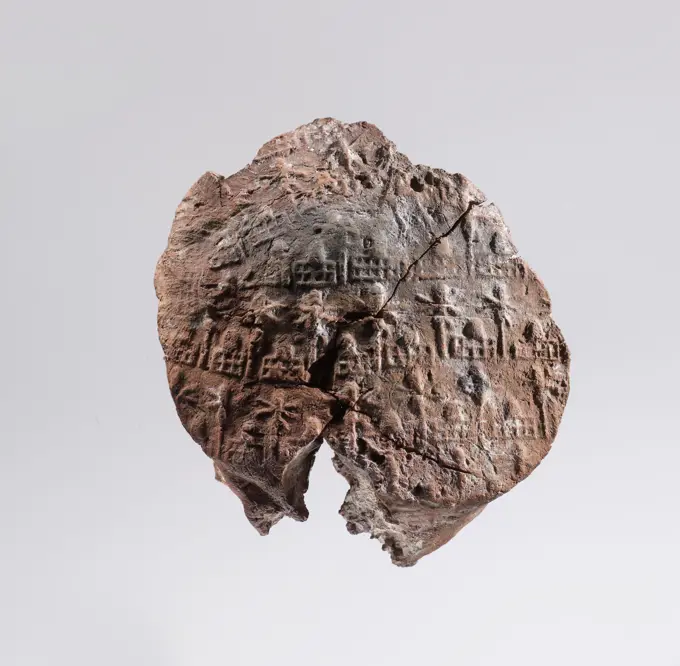
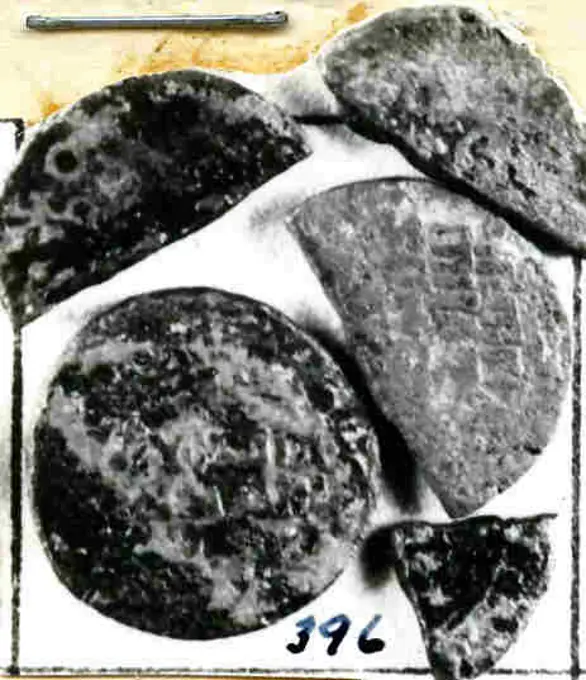
A series of ancient sealing fragments from the Middle Kingdom. The artifacts exhibit textured surfaces with historical inscriptions and patterns.
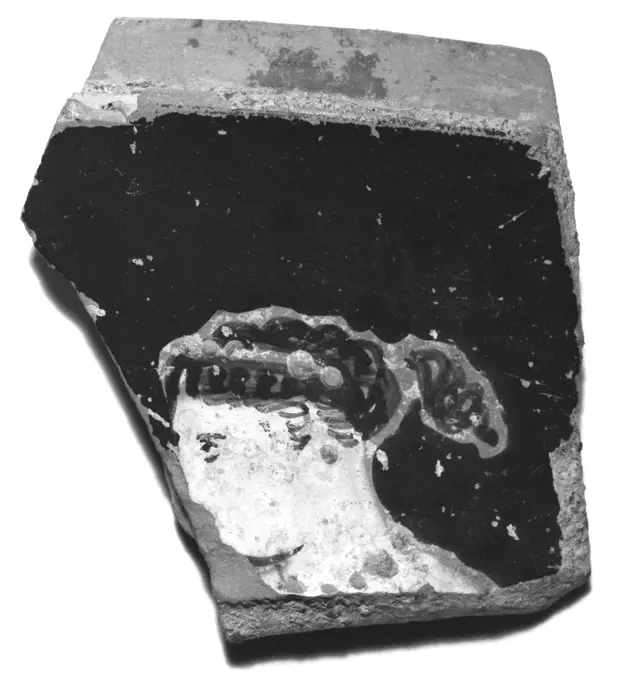
Fragmentary Attic Red-Figure Pyxis; Athens, Greece; about 380 B.C; Terracotta; 4.5 × 4.5 cm (1 3,4 × 1 3,4 in.)
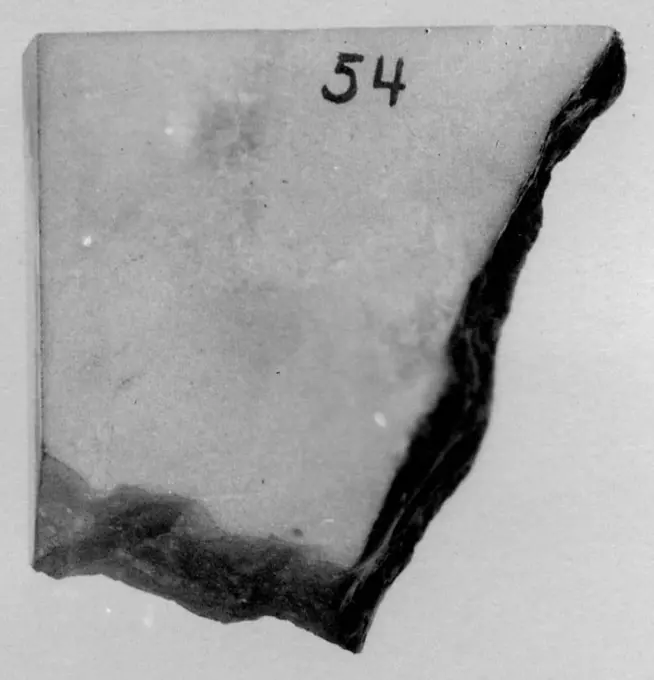
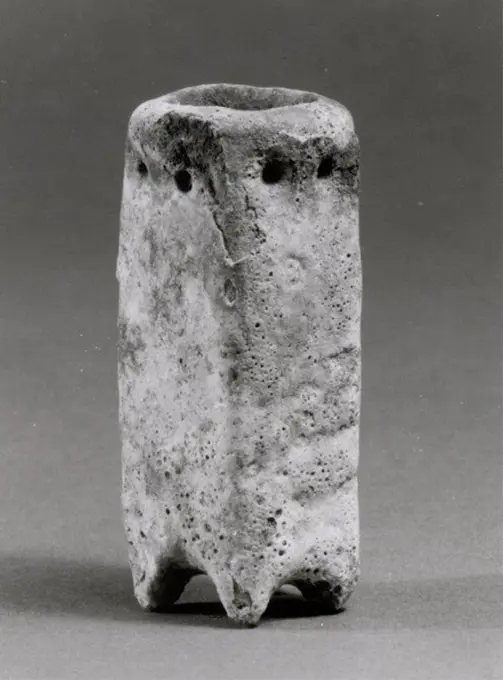
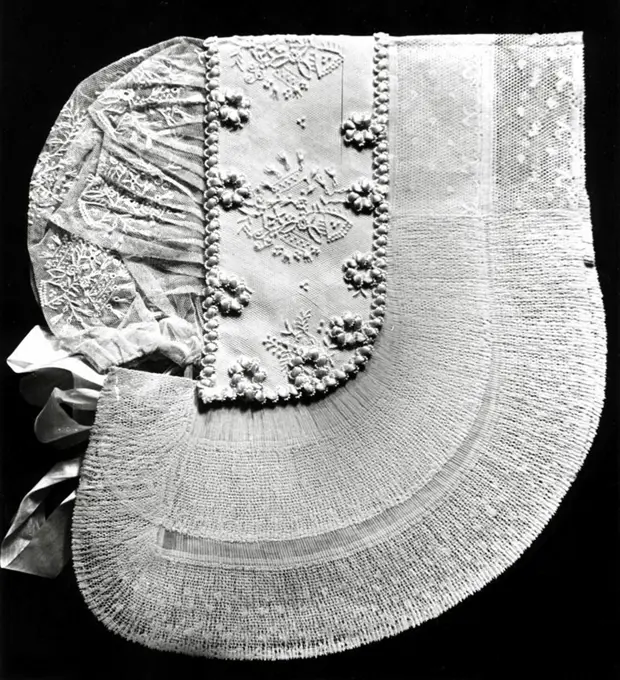
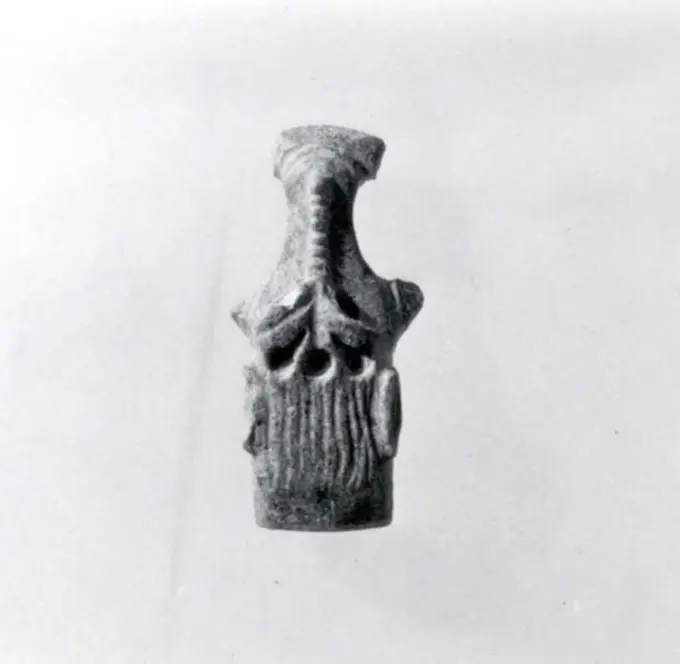
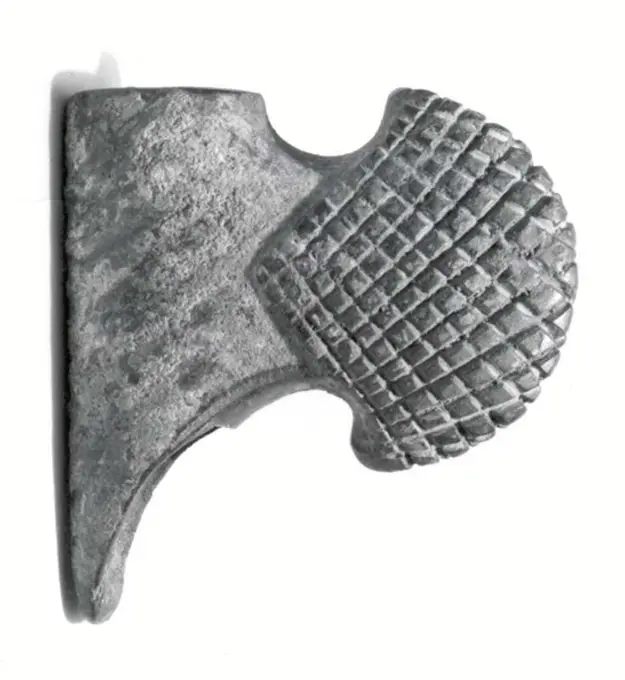
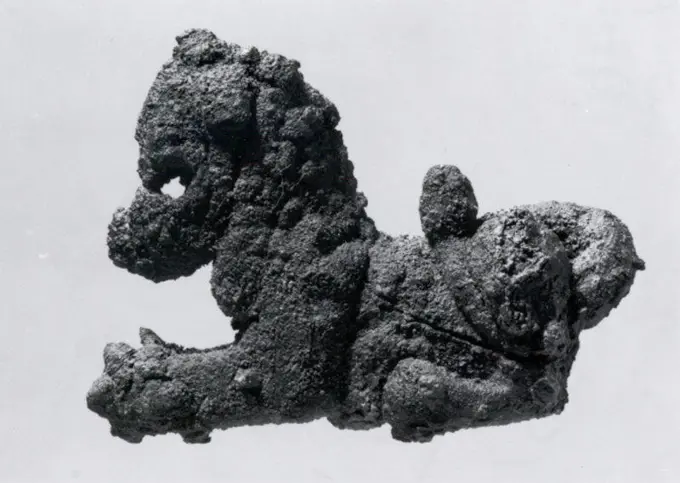
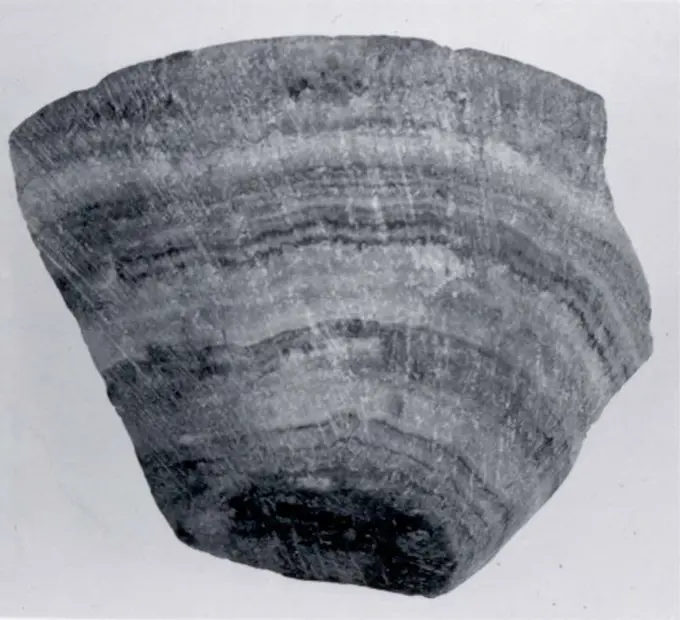
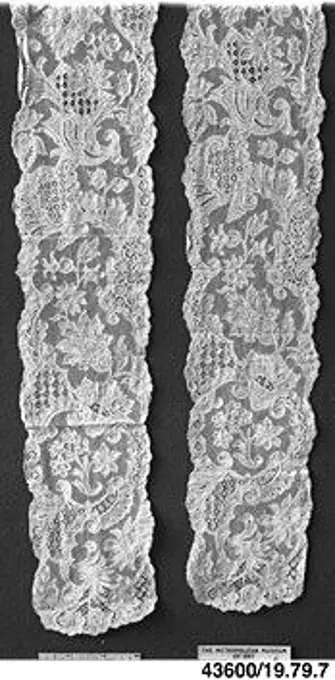
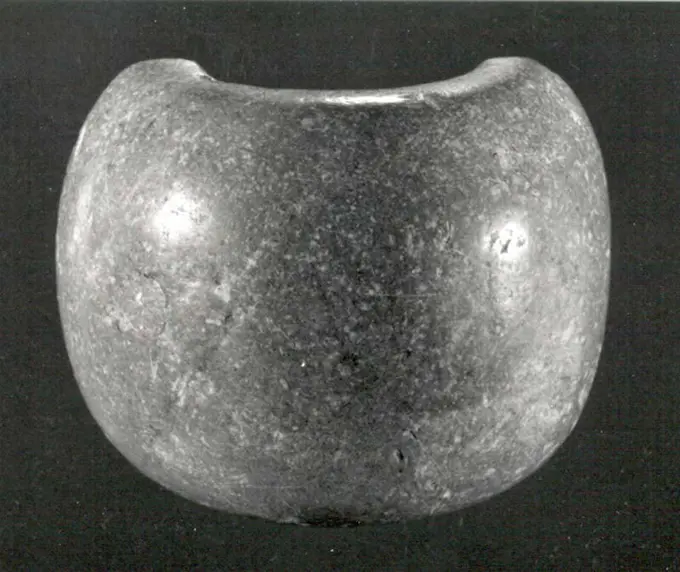
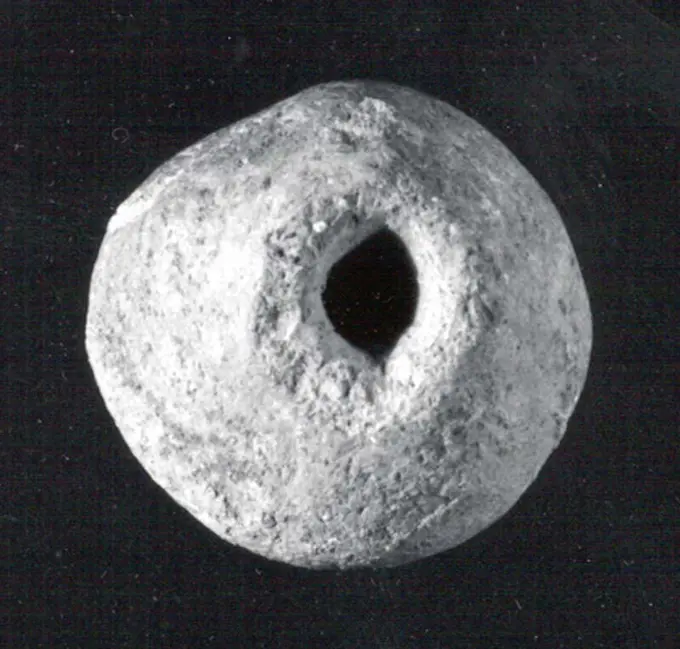
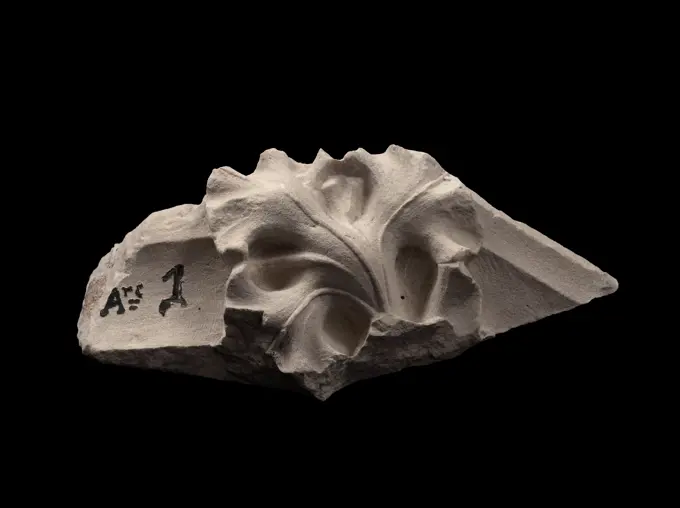
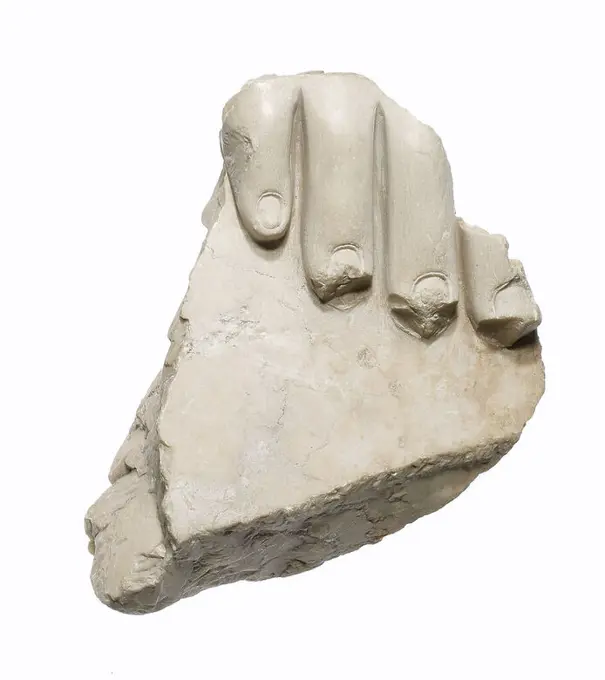
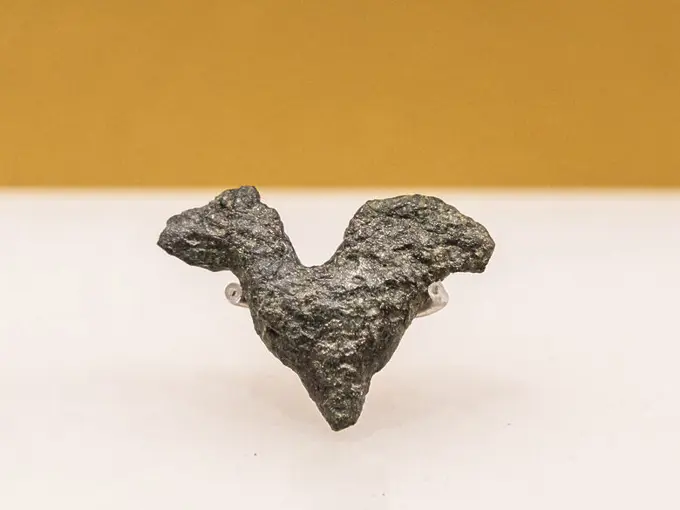
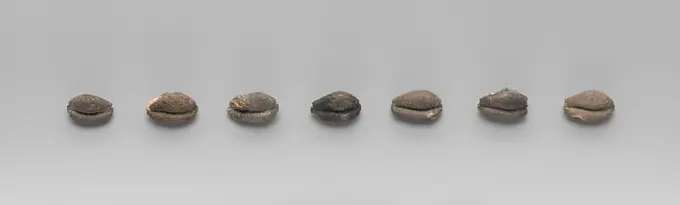
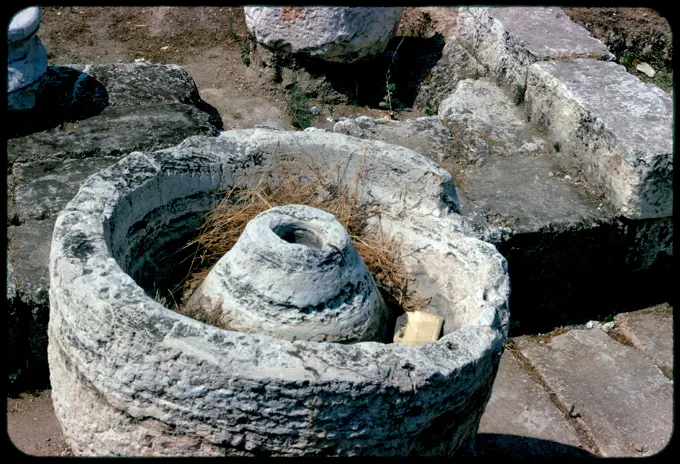
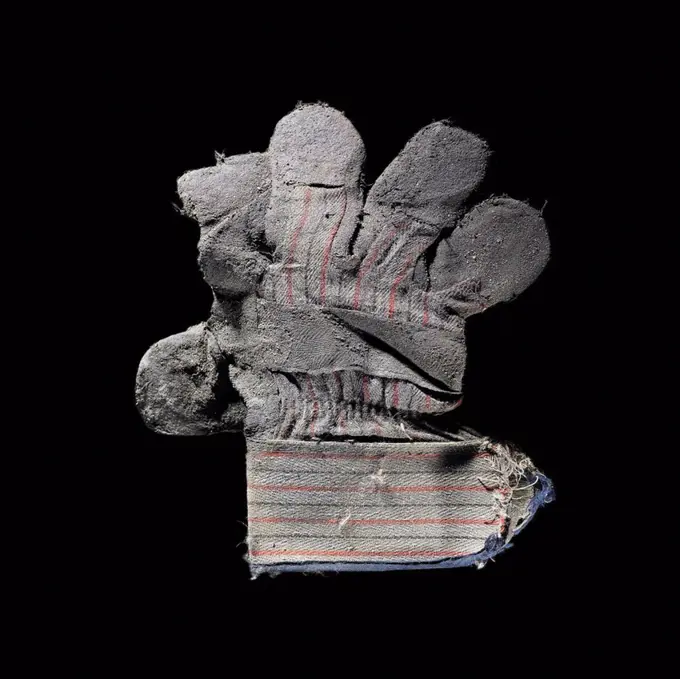
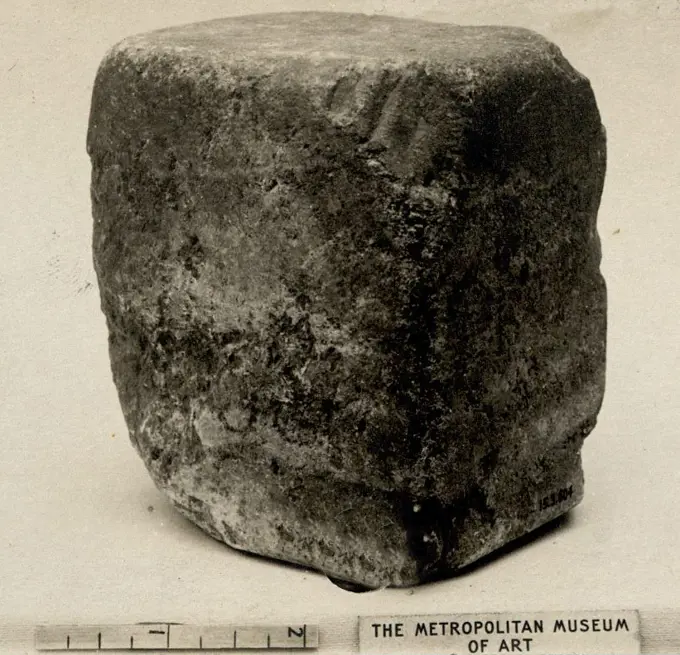
Axe head ca. 2900-2350 B.C. Sumerian. Axe head 323778Vintage Photograph. Closeup of back of oyster sitting on solid surfaceBull head-shaped spout of vessel Elamite ca. early 2nd millennium BCE This object is a spout, probably from a vessel, in the shape of a bulls head. The musculature and nostrils on the bulls face are carefully modeled, while the hair on the forehead and snout are rendered with incised crosshatching and curlicues. The eyes, originally inlaid, are now missing, as are the horns. The spout is made of bitumen, an asphalt-like substance that occurs naturally in the Near East. Mixed with ground calcite and quartz it forms a hard, gray substance which can be shaped like clay.Bitumen vessels were made in many places in the ancient Near East, especially in Susa in southwestern Iran, the capital of the ancient Elamite kingdom. Beginning in the third millennium BCE the Elamites developed an especially sophisticated recipe for bitumen compound, which they used to make a range of vessels, most decorated with animal foreparts, as well as other objects, a practice which continued into the first milleDrohiczyn seal. unknown, managerSlab with Echinoid fossils. Slab with Echinoid fossils. 3 almost complete Schinoids and some partial Echinoids. Echinoids are pink with some spines still attached... Natural Science Collection - PalaeontologyDrohiczyn seal. unknown, managerArmor plate ca. late 8th-late 7th century B.C. Assyrian. Armor plate 324389Mask 13th-14th century Mississippian. Mask 312909Coin 819-1005. Coin. 819-1005. Copper. Excavated in Iran, Nishapur. CoinsDrohiczyn seal. unknown, managerSherd ca. 2700-2500 B.C. Iran This sherd is made of a buff clay, with brown painted decoration. It is typical of Namazga IV ceramics from Turkmenistan, dating to ca. 2700-2500 B.C. It was excavated in 1937 at a prehistoric site in the vicinity of Nishapur in northeastern Iran. While Nishapur itself was founded by the Sasanian king Shapur I (reigned ca. A.D. 241-272), this sherd shows that human habitation there goes back to the prehistoric period. Furthermore, the prehistoric pottery from Nishapur has close affinities with ceramic materials from Central Asia rather than with contemporary sites in Iran, meaning that in this period its inhabitants were likely culturally linked to their neighbors to the east. At the same time, Nishapurs location on what later became known as the Great Khorasan Road suggests that it was part of the trade network that facilitated the import of precious stones such as lapis lazuli, carnelian and turquoise from Central Asia to Mesopotamia.. Sherd 323648Fibula. UnknownCoin 8th-9th century. Coin. 8th-9th century. Copper. Excavated in Iran, Nishapur. CoinsDrohiczyn seal. unknown, managerModel shell ca. 1981-1640 B.C. Middle Kingdom. Model shell. ca. 1981-1640 B.C.. Blue faience. Middle Kingdom. From Egypt, Memphite Region, Lisht North, Cemetery, MMA excavations, 1920-22. Dynasty 12-13Drohiczyn seal. unknown, managerDrohiczyn seal. unknown, managerReaal van Vieren, beaten in Mexico, mint from the wreck of the East Indians' t Vliegend Hart ,, 1703 - 1733  Drained silver coin, beaten on irregular coin plate. Front: coat of arms; on the right: Number 4. Target: Cross in multi -pass; Between cross arms: arms figures. Mexico silver (metal) striking (metalworking)  MexicoMace head Middle Kingdom ca. 1981-1640 B.C.Head with Melon Coiffure and Wreath. UnknownBronze Currency of Ambienis (Amiens) Bronze Currency of Ambienis (Amiens). Bronze. Around 100 av.j.-c.Sherd ca. 1st century A.D. Nabataean. Sherd 324250Tile Inlay depicting a Wig ca. 1279-1213 B.C. New Kingdom, Ramesside This tile once decorated the palace of Ramesses II in Piramesse, which he made into one of the greatest royal cities of ancient Egypt. Thanks to the royal favor and its strategic location, Piramesse soon became an important international trade center and a cosmopolitan metropolis, boasting a harbor, a military base, and temples dedicated to various gods like Amun-Re-Harakhty-Atum, Seth, Astarte, etc. Poems were written in the city's praise, and its name, which translates as "The House of Ramesses, Beloved of Amun, Great of Victories" when fully written, came to us through the Old Testament as Raamses.’ The tiles bear the names of Seti I, Ramesses II and later Ramesside kings, who renovated the palace and changed its decoration through the reigns. New tiles were made, and the old tiles may be have been dismantled and buried together. Based on the tiles, we can still reconstruct quite a number of the features of the paBreast with shawl, Aten cartouche ca. 1353-1336 B.C. New Kingdom, Amarna Period. Breast with shawl, Aten cartouche 549964Female Head. UnknownLeft ankle ca. 1352-1336 B.C. New Kingdom, Amarna Period. Left ankle 549206Vessel Foot. UnknownFragment Tibet. Fragment 43463Stamp seal ca. 3rd-7th century A.D. Sasanian. Stamp seal. Sasanian. ca. 3rd-7th century A.D.. Chalcedony, brown. Sasanian. Iran or Mesopotamiaquadrans (aes grave). Anonimowy, monetary officer, Republika Rzymska, issuerAttachment. UnknownHead with Melon Coiffure and Kekryphalos. UnknownStatuette of a Lion with Curly Mane. UnknownCosmetic container ca. 9th century B.C. Iran. Cosmetic container 325798Fragment of a solid clay barrel cylinder inscribed with an unidentified hymn. Dimensions: 2.17 x 2.24 x 1.22 in. (5.5 x 5.7 x 2.85 cm). Date: ca. mid-1st millennium B.C.. Museum: Metropolitan Museum of Art, New York, USA.Silver spiral. Culture: Cypriot. Dimensions: Length: 1 1/8 in. (2.8 cm). Date: ca. 1600-1050 B.C..Of plain wire, one turn. Museum: Metropolitan Museum of Art, New York, USA.Coin probably 8th-9th century. Coin. probably 8th-9th century. Copper. Excavated in Iran, Nishapur. CoinsPottery Whistle ca. 800-1525 Costa Rican Whistle in the shape of a bird.Although numerous pottery instruments survive from pre-Conquest South and Central America, little is known of how they were used before Spanish invaders ravaged the native cultures. Whistles, trumpets and rattles in animal or human form probably had ceremonial functions or served as playthings. Smaller whistles in animal shapes, perhaps worn suspended from the neck, sometimes have fingerholes that allow variation of pitch.. Pottery Whistle. Costa Rican. ca. 800-1525. Pottery, polychrome. Pre-Columbian. Central Region, Costa Rica. Aerophone-Whistle Flute-whistleFragmentary Right Foot from a Statue of a Draped Figure; Asia Minor; 2nd century; Bronze; 20.4 cm (8 1,16 in.)Glass Fragment. Culture: French. Dimensions: 3 1/2 x 3 in. (8.9 x 7.6 cm). Date: 14th century. Museum: Metropolitan Museum of Art, New York, USA.Sealing ca. 7th century A.D. Sasanian. Sealing 323313Attic Black-Figure Band Cup Fragment. UnknownCap (Peasant Work) Made 1875-1900 France. Cotton, machine-made twist net; embroidered with cotton in back, eyelet, overcast, padded satin and twined double running stitches; trimmed with silk-wrapped-cotton cord; edged with cotton, plain weave and linen, bobbin straight lace; pleated; starched; ribbons of silk, warp-float faced 4 1 satin weave .Drohiczyn seal. unknown, managerAmulet ca. 1st century B.C.. Amulet 324071Mask of a Bearded Male; Roman Empire (Italy ); 1st century; Terracotta; 9.8 × 7 cm (3 7,8 × 2 3,4 in.)Shoe. England. Date: 1501-1600. Dimensions: 24 × 9.5 × 1.5 cm (9 7/16 × 3 3/4 × 5/8 in.). Leather. Origin: England. Museum: The Chicago Art Institute, Chicago, USA.A stone saddle Quern and Muller from Rakhigarhi, or Rakhi Garhi, a village in Hisar District in the state of Haryana in India, the site of an Indus Valley Civilisation settlement. Dated 2600 BCTrebizond Coin; about 13th century; Silver, Byzantine Coinage of the empire of TrebizondsTrebizond Coin; about 13th century; Silver, Byzantine Coinage of the empire of TrebizondsDrohiczyn seal. unknown, managerMace head ca. 2300-2000 B.C. Hattian. Mace head 324450Engraved Gem. UnknownDocument Sealing With the Throne Name of Amenhotep III ca. 1390-1353 B.C. New Kingdom. Document Sealing With the Throne Name of Amenhotep III. ca. 1390-1353 B.C.. Mud. New Kingdom. From Egypt, Upper Egypt, Thebes, Malqata, West Villas, West Villa B, MMA excavations, 1910-12. Dynasty 18Attic Red-Figure Pelike Fragment (part of 86.AE.199.1).Fragment Made 1650-1675 England. Silk and silk-wrapped linen, bobbin straight lace of a type known as Gimp .Fragmentary Marble Finger. UnknownTrebizond Coin; about 13th century; Silver, Byzantine Coinage of the empire of TrebizondsHead with Wreath. UnknownLion pin ca. 9th century B.C. Iran. Lion pin 325613Drohiczyn seal. unknown, managerAttic Vase Fragment. UnknownChisel 3rd millennium B.C.. Chisel 325644Cup fragment ca. early to mid-3rd millennium B.C. Indus. Cup fragment 324703Trebizond Coin; about 13th century; Silver, Byzantine Coinage of the empire of TrebizondsMold of a Leaf. UnknownSealing ca. 1070-945 B.C. Third Intermediate Period. Sealing 559650Lappets (2) 18th century Flemish. Lappets (2) 220056Frog Pendant 11th-16th century Chiriqui. Frog Pendant 313114Headdress fragments ca. 9th century B.C. Iran. Headdress fragments 324991Slit Gong 19th century Angolan. Slit Gong 501090Mace head ca. 4500-2900 B.C. Iran This stone mace head, now broken, would have originally been affixed to a wooden shaft. The lack of decoration suggests it was purely functional in nature. It was excavated in 1937 at a prehistoric site in the vicinity of Nishapur in northeastern Iran. While Nishapur itself was founded by the Sasanian king Shapur I (reigned ca. A.D. 241-272), this object shows that human habitation there goes back to the prehistoric period. Furthermore, the prehistoric pottery from Nishapur has close affinities with ceramic materials from Central Asia rather than with contemporary sites in Iran, meaning that in this period its inhabitants were likely culturally linked to their neighbors to the east. Indeed, a very similar stone mace head was excavated at Anau in Turkmenistan in 1904. Nishapurs location on what later became known as the Great Khorasan Road suggests that it was part of the trade network that facilitated the import of precious stones such as lapis lazuli. Good distorted lead gun ball.Jar sealing impressed with name of Queen Neithhotep ca. 3100 B.C. Early Dynastic Period. Jar sealing impressed with name of Queen Neithhotep. ca. 3100 B.C.. Clay (fired). Early Dynastic Period. From Egypt, Northern Upper Egypt, Naqada, "The Royal Tomb", Garstang excavations 1904. Dynasty 1Attic Black-Figure Band Cup Fragment. UnknownRelief fragment, tomb of Meketre ca. 1981-1975 B.C. Middle Kingdom. Relief fragment, tomb of Meketre 742728TEJIDO DE LINO EGIPCIO S X. Location: ALHAMBRA-MUSEO TEXTIL. GRANADA. SPANIEN.Macro Close up image of raw material Platinum and Chrome Ore rock isolated on black reflective backgroundAttic Black-Figure Band Cup Fragment. UnknownCoin A.D. 684-685/65 A.H. Islamic. Coin 323498Head of a Boy. UnknownPIEZAS DE LA EXPOSICION "ARTE SIN ARTISTAS": CANTO RODADO CON GRABADO DE CAPRIDO (CABRA).Vintage Photograph. Crucifix shining on a globe on a lit backgroundSpindle whorl 5th-3rd millennium B.C. Iran This ceramic spindle whorl was excavated in 1937 at a prehistoric site in the vicinity of Nishapur in northeastern Iran. While Nishapur itself was founded by the Sasanian king Shapur I (reigned ca. A.D. 241-272), this whorl shows that human habitation there goes back to the prehistoric period. Furthermore, the prehistoric pottery from Nishapur has close affinities with ceramic materials from Central Asia rather than with contemporary sites in Iran, meaning that in this period its inhabitants were likely culturally linked to their neighbors to the east. At the same time, Nishapurs location on what later became known as the Great Khorasan Road suggests that it was part of the trade network that facilitated the import of precious stones such as lapis lazuli, carnelian and turquoise from Central Asia to Mesopotamia.Spindle whorls were used to make thread. A dowel was inserted through the hole, to which plant fibers or wool were attached. The whorSeal with head of an antelope ca. 3rd-7th century A.D. Sasanian. Seal with head of an antelope. Sasanian. ca. 3rd-7th century A.D.. Hematite. Sasanian. IranGothic foliage (fragment). Pierre, 1350. Paris, Carnavalet museum. 54612-12 Foliage, leaf, fragment, gothic, stone, terracotta, front viewPendant. Culture: China. Dimensions: H. 1 in. (2.5 cm); L. 1 7/8 in. (4.8 cm). Museum: Metropolitan Museum of Art, New York, USA.Toe fragment. Dimensions: L. 10 x W. 12 x D. 5 to 7 cm. Dynasty: Dynasty 18. Reign: reign of Akhenaten. Date: ca. 1353-1336 B.C.. Museum: Metropolitan Museum of Art, New York, USA.Vector set of various of broken stones. Cartoon clipart collection of smashed rocks with cracks isolated from background. Hand drawn gravel and blocks. Vector set of various of broken stones. Cartoon clipart collection of smashed rocks with cracks isolated from background.Trebizond Coin; about 13th century; Silver, Byzantine Coinage of the empire of TrebizondsFragment pipe head. Fragment pipe head. Of the excavations at the Hofstede Arentsburg 1827-1831 under the supervision of professor Reuvens.Coin ca. 1130. Coin 457686Iberian votive offering in the shape of a rooster, bronze, III BC,Cástulo, Linares, Iberian Museum of Jaén, Andalusia, Spain.Seven beads in the shape of cowrie shells. Dimensions: Range of each: L. 2.2 to 2.5 cm (7/8 to 1 in.); H. 1.4 to 1.5 cm (9/16 in.); D. 0.7 to 0.9 cm (1/4 to 3/8 in.). Date: ca. 1887-1750 BC.These seven beads take the form of cowrie shells and were once most likely part of a beaded girdle. Several of the beads contain pellets so that the girdle would have made a soft noise as its owner moved. Museum: Metropolitan Museum of Art, New York, USA.Archaeological object, Athens, Greece , Antiquities, Archaeological sites. Edmund L. Mitchell CollectionHandle ca. 6th century B.C. Iran This handle was once part of a pottery vessel. It is in the form of a ducks head, with the neck and beak attached to the remains of the vessels rim. The duck has a round eye, which was originally inlaid. It is made of red clay and decorated with a dark red slip.The handle was excavated at Tepe Nush-i Jan, an Iron Age hilltop site about 60 km sound of Hamadan in western Iran. Nush-i Jan was occupied in the 7th and 6th centuries B.C., and its occupants are generally thought to be the Medes, an Iranian people known from Assyrian, Achaemenid and Biblical sources. Though the textual sources portray them as a powerful empire, archaeological evidence for the Medes has yet to sustain this impression. Rather, they seem to have lived in scattered fortified sites in western and central Iran, without any clear capital. Nush-i Jan, one of the best known of these sites, features two temples, a columned hall, and a fort. This handle was found near the Central TempleBead China. Bead 43159Old work glove on a black backgroundWeight: 120 deben ca. 1981-1640 B.C. Middle Kingdom. Weight: 120 deben. ca. 1981-1640 B.C.. Alabaster. Middle Kingdom. From Egypt, Memphite Region, Lisht North, Cemetery, MMA excavations, 1920-22. Dynasty 12-13Terracotta Ball and Dice 500 B.C.