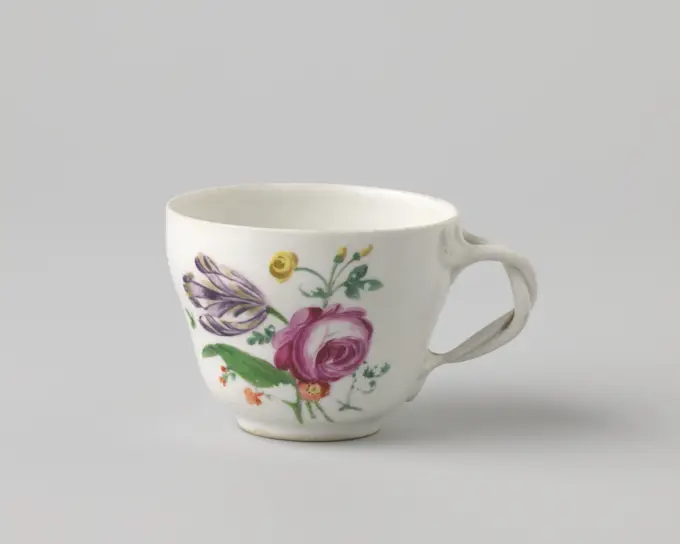
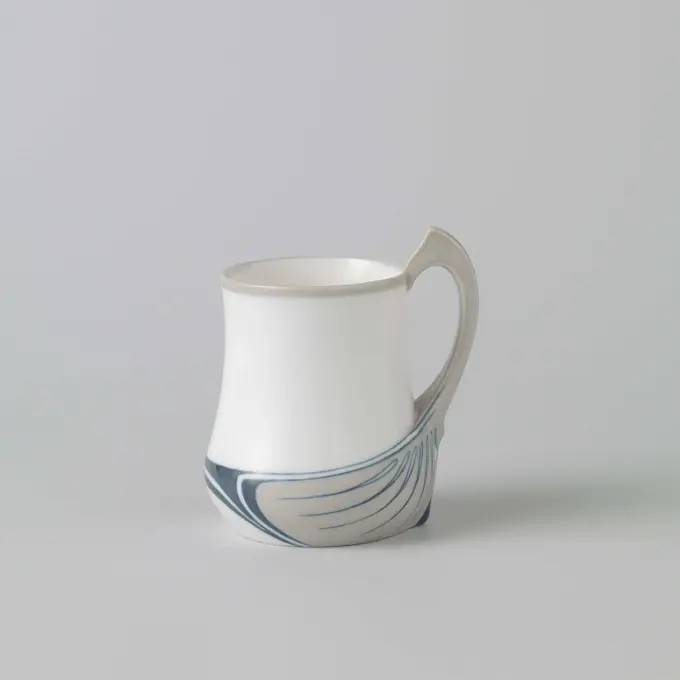
Antique Porcelain Teapots and Jugs

Exquisite porcelain teapots and jugs with intricate designs, showcasing historical craftsmanship and decorative artistry.
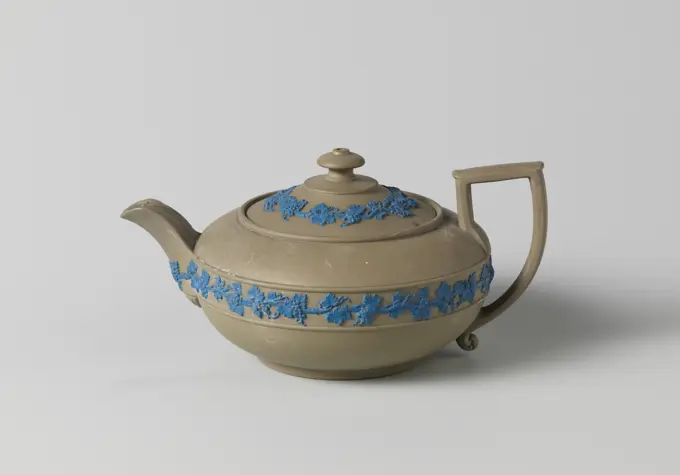
Teapot with lid of hard-baked pottery; Wedgwood .. teapot of hard-baked pottery. The belly has the shape of a lying ellipsch. The pot has a curved spout, an angular ear and a lid with button. The belly is decorated with a blue edge of grapes of grapes and vines in relief. The teapot includes a sugar bowl (BK-15430-B), a milk jug (BK-15430-C) and a nspoe bowl (BK-15430-D). The teapot has been marked.
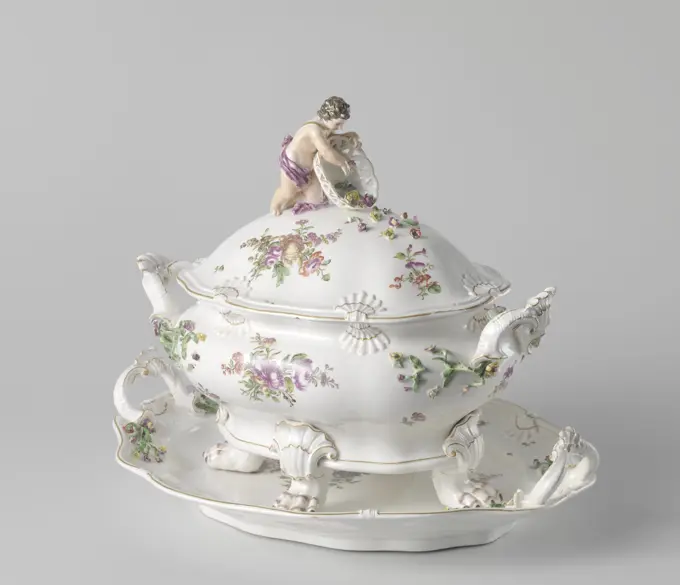
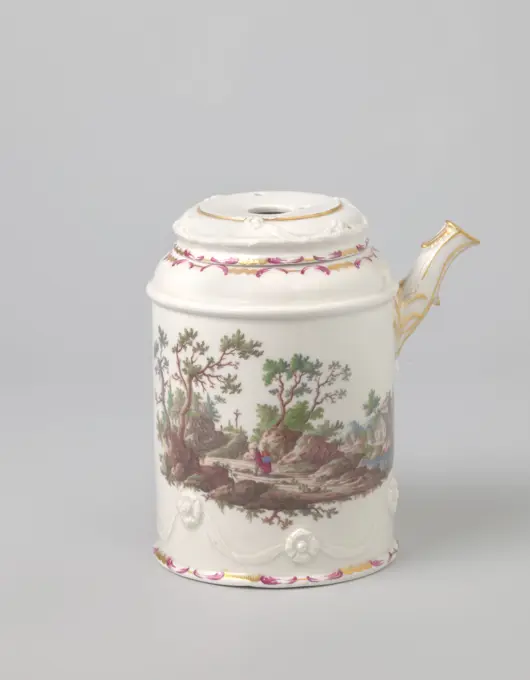
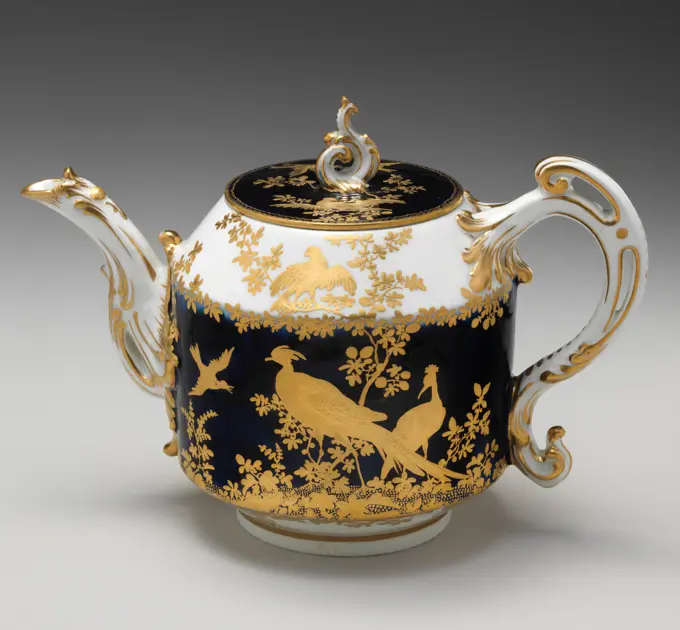
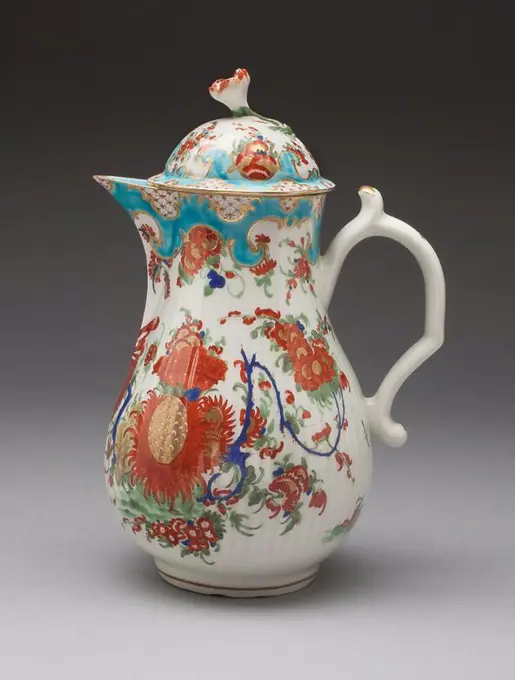
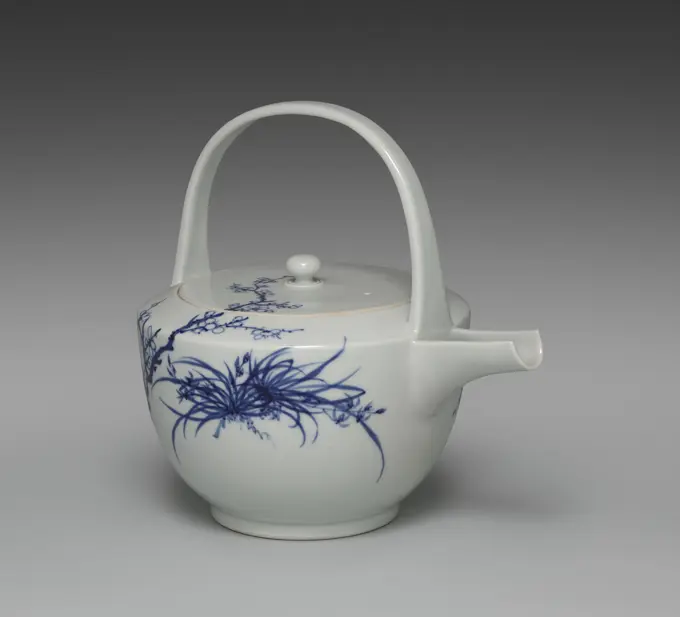
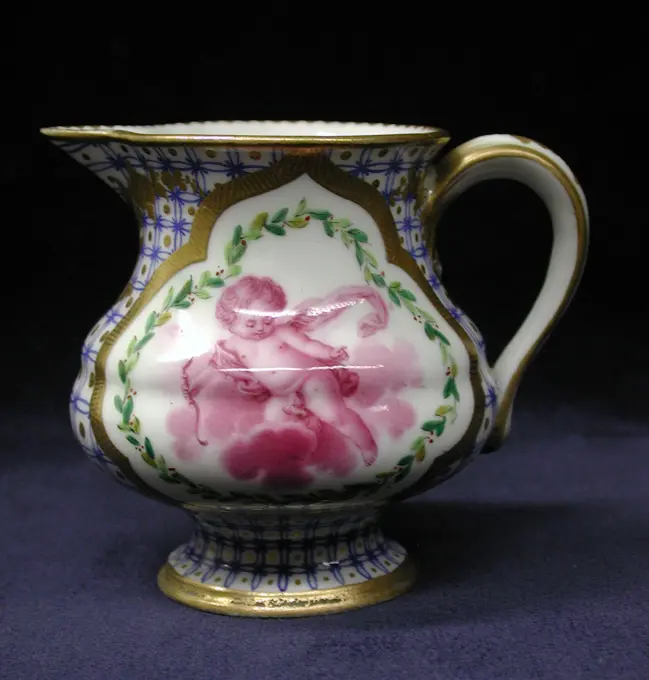
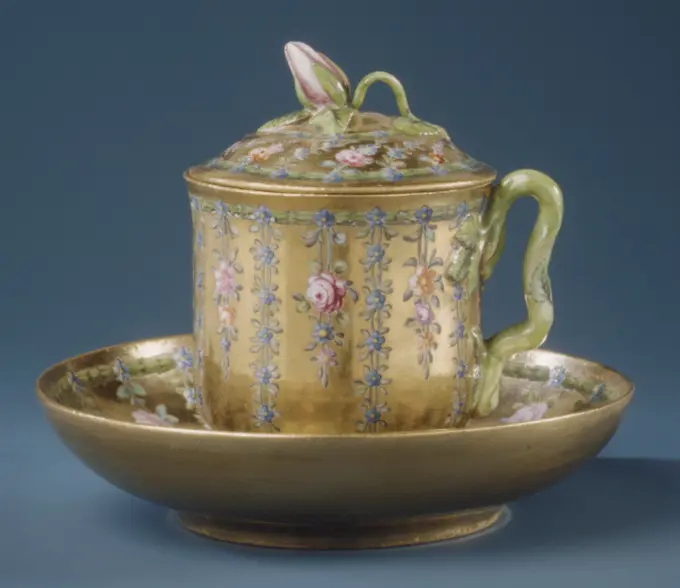
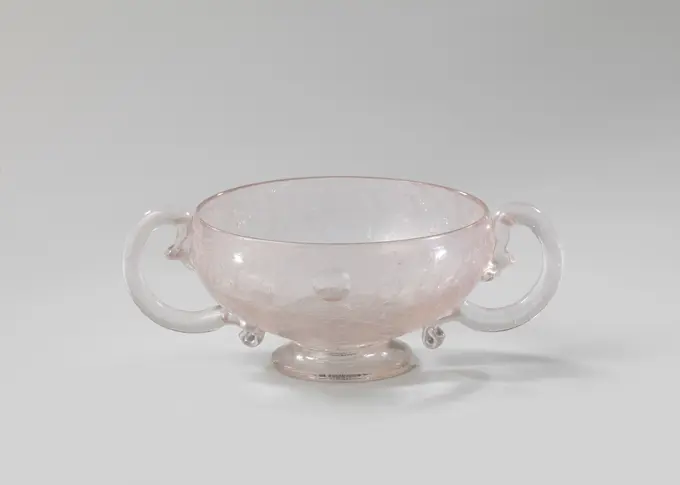
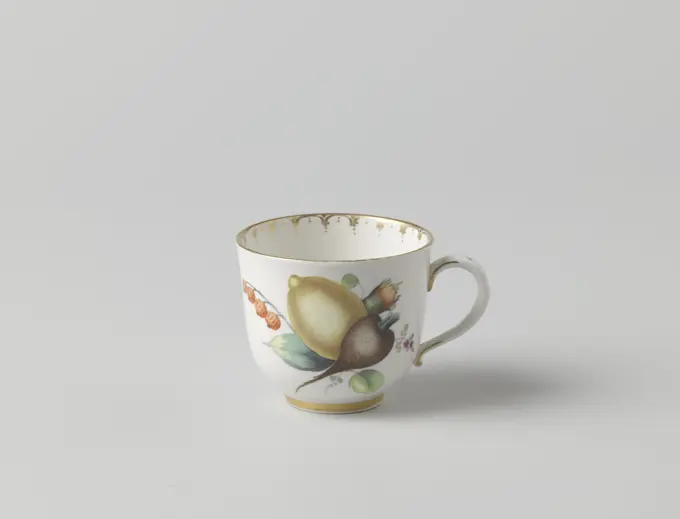
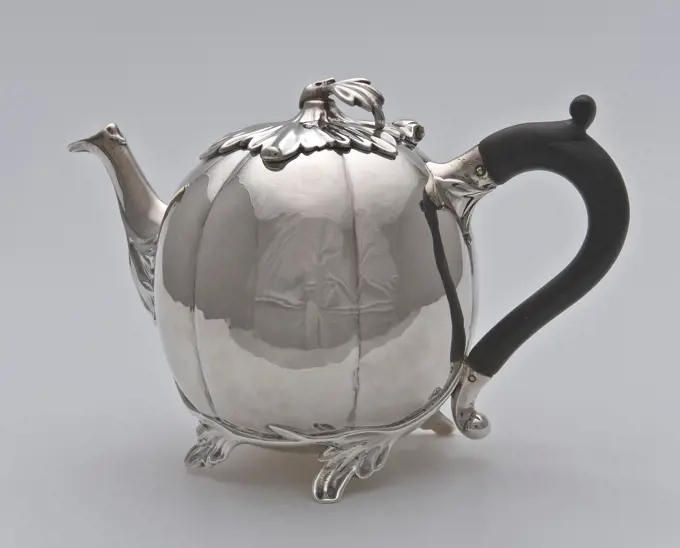
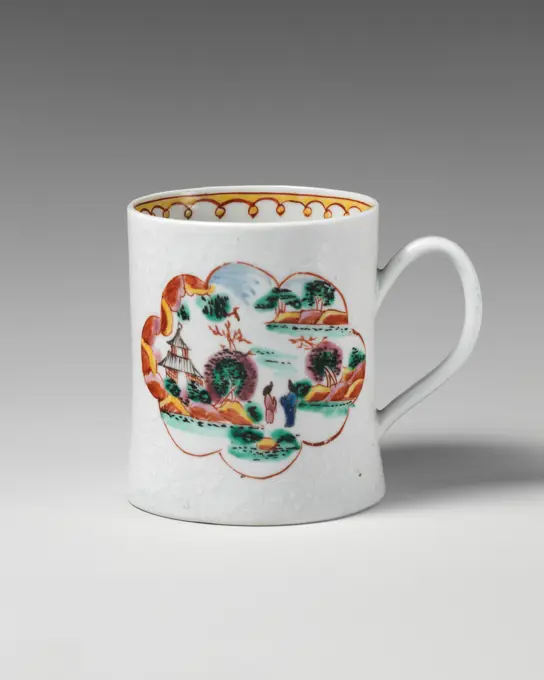
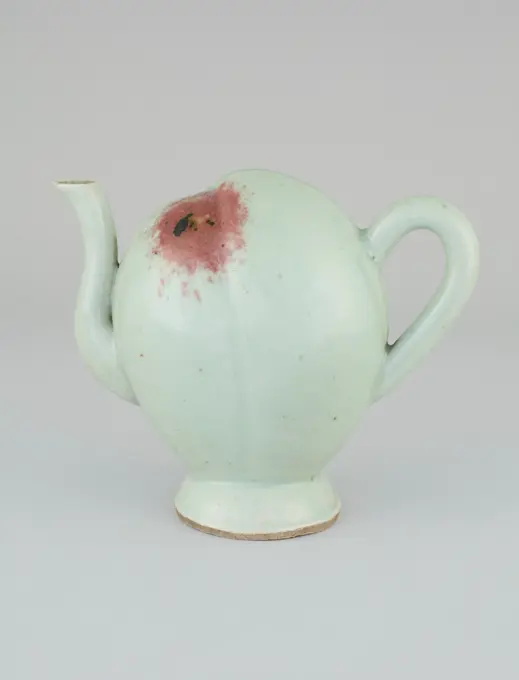
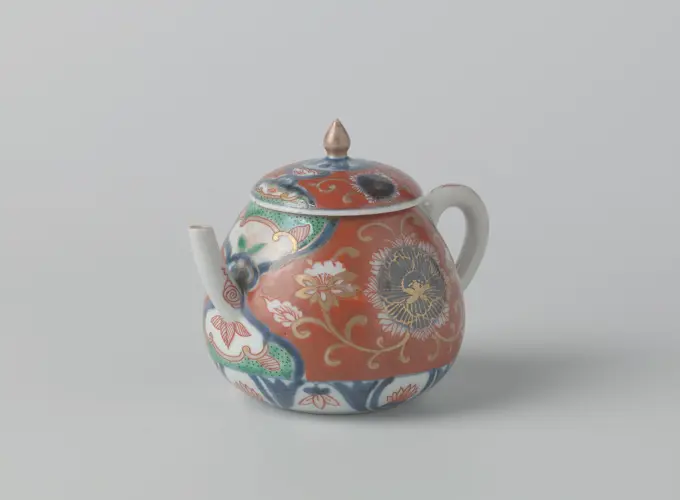
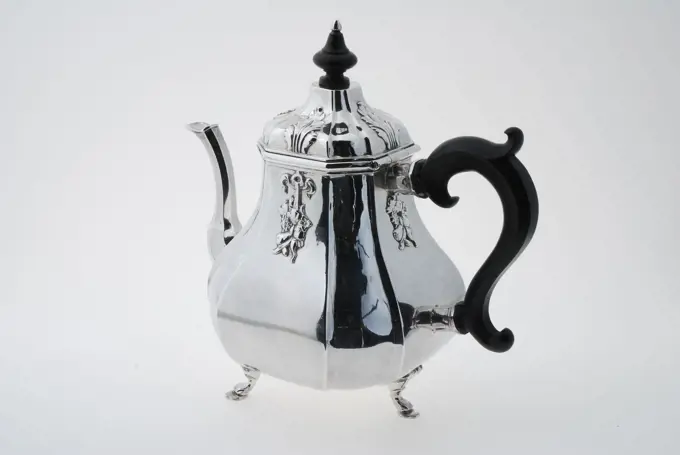
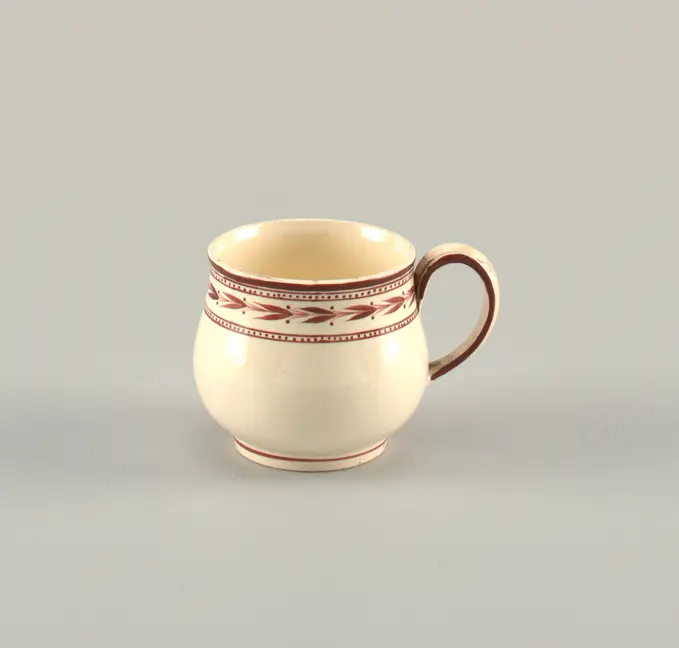
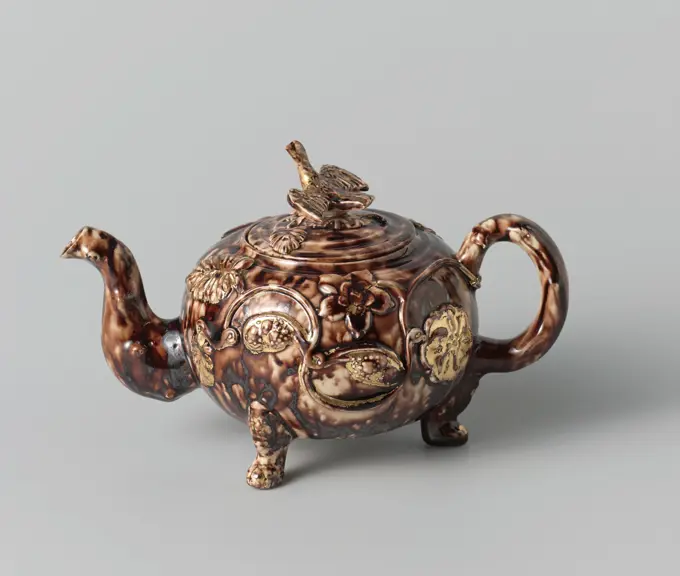
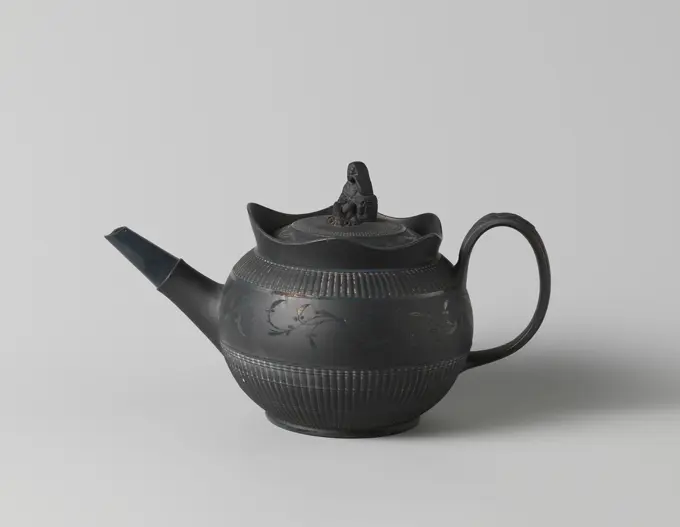
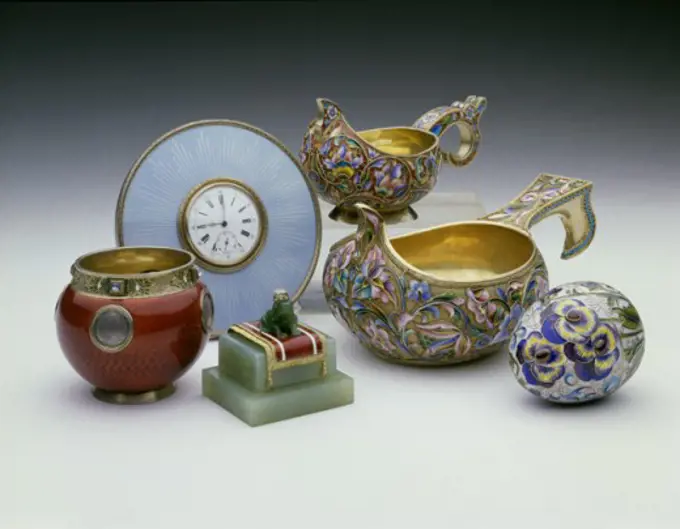
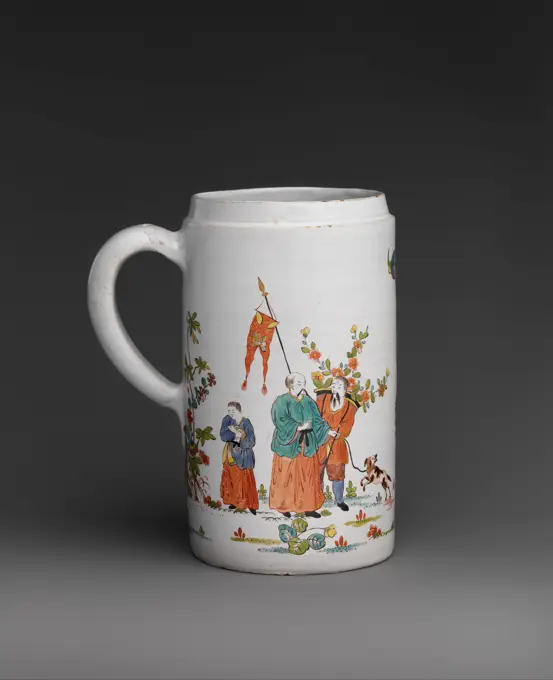
Two-Handled Sugar Bowl, Carl Thieme Potschappel Porcelain Manufactory, German, established 1872, hard paste porcelain, vitreous enamel, gold, Cylindrical body and domed lid with gilded flower finial. Flower wreath with basket. Two handles., Germany, early 19th century, ceramics, Decorative Arts, sugar bowl, sugar bowlCoffee lid, painted with flower vines, anonymous, c. 1780 - c. 1830 Vaulted lid with button of coffee pot made of blue painted faience. Germany earthenware. tin glaze. Vaulted lid with button of coffee pot made of blue painted faience. Germany earthenware. tin glaze.Tea Pot With Flowering Plants And Diaper Patterns. Teapot of porcelain with a curved spout and C-shaped ear, painted on the glaze in blue, red, pink, green, turquoise, eggplant and black. A flowering plant (peony) twice on the wall. On the shoulder a band with napkin interrupted by flower branches in cartouches. The spout and the ear with flower drinks. The lid with the same decoration. Family Rose.Cup with cover late 18th century Royal Porcelain Manufactory, Naples. Cup with cover 187768 Factory: Naples Royal Porcelain Manufactory, Ferdinand IV period, ca. 1771ca.1807, Cup with cover, late 18th century, Soft-paste porcelain, Height (without cover): 2 1/2 in. (6.4 cm). The Metropolitan Museum of Art, New York. Gift of Henry G. Marquand, 1894 (94.4.151a, b)Cup and Saucer ca. 1861 Rudolph T. Lux. Cup and Saucer 2859Chocolate pot with a landscape and garlands, Porseleinfabriek Ludwigsburg, c. 1770 - c. 1775 Can or pot (chocolate can) of porcelain with a cylindrical body, round shoulder and bent spout with perpendicular to it the base of a handle. Painted on the glaze in email colors and gold. On the wall a river landscape with a building and people walking along a path where a crucified. Below a flower garland in relief. A profile on the shoulder. The foot and shoulder with a tire of rocailles. The spout and the ear are modeled in leaf vines and flowers. Handle is missing. Marked on the underside with the crowned double C and 3. Ludwigsburg porcelain. glaze. gold (metal) painting / gilding / vitrification Can or pot (chocolate can) of porcelain with a cylindrical body, round shoulder and bent spout with perpendicular to it the base of a handle. Painted on the glaze in email colors and gold. On the wall a river landscape with a building and people walking along a path where a crucified. Below a floSoup tirel, oval, cream colored. Soep terrine of pottery, cream-colored glazed. The convex, oval body in itself broadened, oval foot. Two handles in the shape of stylized leaves.tea pot, ceramic teapot on backgroundCup with roundels and ornamental Borders, royal porcelain manufactory, c. 1870 - c. 1900  Porcelain head with a spherical abdomen and slightly spreading edge, painted in underlaze blue and on the glaze red, yellow, black and gold. C-shaped ear from the edge. The outer edge with a tire rosettes saved in red. The belly is covered with blue with decorative tires in gold. The inside and ear are covered with gold. Marked on the underside with the scepter, a golden arrow or anchor, the number 33 and I. Berlin porcelain. glaze. gold (metal) painting / gilding / vitrificationTeapot (part of a service) ca. 1758-69 Chelsea Porcelain Manufactory The gilding on these pieces (see 54.163.7a, b-.34) is of a very high order, with tooled work on a thick application of honey gilding selectively matte and burnished for a lively design of pheasants, peacocks, and swallows in a landscape. The deep bowl was for little cakes. Listen to experts illuminate this artwork's story Listen Play or pause #407. Teapots Supported by Bloomberg Philanthropies We're sorry, the transcript for this audio track is not available at this time. We are working to make it available as soon as possible.. Teapot (part of a service). British, Chelsea. ca. 1758-69. Soft-paste porcelain with enamel decoration and gilding. Chelsea Porcelain Manufactory (British, 1745-1784, Gold Anchor Period, 1759-69). Ceramics-PorcelainCup. Korzec (manufaktura porcelany ; 1790-1832), factoryCoffee Pot. Worcester Porcelain Factory; Worcester, England, founded 1751. Date: 1770-1780. Dimensions: 21.9 × 15.2 × 11.8 cm (8 5/8 × 6 × 4 5/8 in.). Soft-paste porcelain, polychrome enamels and gilding. Origin: Worcester. Museum: The Chicago Art Institute, Chicago, USA. Author: Worcester Royal Porcelain Company.Trekpot, four -sided, with swiveled corners, Valentine Caspar Bömcke (attributed to), 1761 Migratory jar, four -sided, with swiveled corners, with ear and lid button from Ebony. The jar rests on a low -rejuvenating foot. The body first broadens itself to rejuvenate itself to the low straight neck. The sides are somewhat sphere. The S-shaped bent spout has a corrugated, foam-like start. The ear is bent. The vaulted lid is crowned by a four -sided stage with swiveled corners, on which the round wooden vase -shaped button that is crowned by a profiled silver cap. On the bottom of the soil the engraved inscription: Sara Maria van Loon Nat: 6. Jan.s 1761. Amsterdam silver (metal). elm (wood). ebony (wood) Migratory jar, four -sided, with swiveled corners, with ear and lid button from Ebony. The jar rests on a low -rejuvenating foot. The body first broadens itself to rejuvenate itself to the low straight neck. The sides are somewhat sphere. The S-shaped bent spout has a corrugated, foam-likeThis sake pourer with the Chinese theme of the Four Nobles, in which the qualities of a good person are represented by plants, are among Seif Yohei III’s designs painted in blue. Sake Pourer with Chrysanthemum, Orchid, and Plum, c. 1887. Seifū Yohei III (Japanese, 1851-1914). Porcelain with underglaze blue; with handle: 23 cm (9 1/16 in.); width with spout: 24 cm (9 7/16 in.); lid: 2 x 13.5 cm (13/16 x 5 5/16 in.).Milk jug French 18th-19th centuryTeapot with portrait of a woman (part of a service) 1750-70 Chinese, possibly for Dutch market. Teapot with portrait of a woman (part of a service). Chinese, possibly for Dutch market. 1750-70. Hard-paste porcelain with enamel decoration and gilding. Ceramics-Porcelain-ExportWorcester Porcelain Manufactory, Jug, c. 1770, soft-paste porcelain.Cup and Saucer. Culture: German. Dimensions: Cup: H. 3 5/8 in. (9.2 cm)Saucer: Diam. 5 3/4 in. (14.6 cm). Maker: Koenigliche Porzellan Manufaktur (German, founded 1763). Date: ca. 1844-47. Museum: Metropolitan Museum of Art, New York, USA.. Ansbachpainted Decoration: Porcelain factory The Hague, 1777-1790Hard-Paste PorcelainCup with Flowers, royal porcelain manufactory, c. 1849 - c. 1870 Porcelain head, painted on the glaze in blue, red, pink, green, yellow, purple and black. Slightly round wall and high, uneven c-shaped ear. The outside wall is covered with small sprinkling flowers. The inside is undecorated. Marked on the underside with the scepter including a medallion with the eagle, a scepter and a globe in his claws. The edge script reads' Koenigl. Porzellan Manufaktur '. Hereby the number 31 and II. Berlin porcelain. glaze. painting / vitrification Porcelain head, painted on the glaze in blue, red, pink, green, yellow, purple and black. Slightly round wall and high, uneven c-shaped ear. The outside wall is covered with small sprinkling flowers. The inside is undecorated. Marked on the underside with the scepter including a medallion with the eagle, a scepter and a globe in his claws. The edge script reads' Koenigl. Porzellan Manufaktur '. Hereby the number 31 and II. Berlin porcelain. glaze. paintiCup, 1888. M. Louise McLaughlin (American, 1847-1939), Haviland & Co. (French). Porcelain; overall: 5.5 x 7.5 cm (2 3/16 x 2 15/16 in.).Cup with cover and saucer ca. 1760 Imperial Porcelain Manufactory, St. Petersburg Russian Following the "porcelain mania" at the other courts of Europe, Russia's first national porcelain factorythe Imperial Porcelain Manufactory-was established in Saint Petersburg in 1744 by the order of Empress Elizabeth I (r. 1741-61), daughter of Peter the Great. The Russian mining engineer Dmitrii Vinogradov (died 1758) developed working methods that ensured the perpetuity and further development of the factory. Even today his technical notes provide the basis for producing "white gold" at what is now the Lomonosov Porcelain Factory in Saint Petersburg. This cup and saucer come from the personal set of the empress and have an inventory number of Gatchina Palace, a Romanoff summer residence.. Cup with cover and saucer. Russian, St. Petersburg. ca. 1760. Hard-paste porcelain. Ceramics-PorcelainJug with cover dated 1619 Hungarian, Moravia. Jug with cover 200986Scale with ears on foot, with the inscription: Vermey Het Quade, Anonymous, c. 1675 - c. 1700 Low, set foot. Come with two C-shaped, set ears. On the body Caligraphy inscription: Vermy Het Quade. A lens is cut between the word 'it' and 'quade'. An illegible sign is engraved on the bottom. glassblower: NetherlandsNorthern Netherlands glass glassblowing Low, set foot. Come with two C-shaped, set ears. On the body Caligraphy inscription: Vermy Het Quade. A lens is cut between the word 'it' and 'quade'. An illegible sign is engraved on the bottom. glassblower: NetherlandsNorthern Netherlands glass glassblowingCup, decorated with floral wreath and stars. Cup of porcelain, with multicolored floral wreath along the edge and further decorated with regularly placed stars in gold. Signature: CPG in red. With associated dish (B).Teapot, painted with cavalrymen. Along Tuit and Oor Insekten, Porcelinfabriek aan den Amstel, 1784 - 1809  Teapot with lid multicolored painted with cavalrymen. Along the spout and the ear insects. Marked: Amstel in underlaze blue and inggrift *L.1. Ouder-Amstel porcelainCoffeepot with view of Lafayette at Franklins Tomb. Manufacturer possibly: Enoch Wood and Sons, British, 1820-1846After Engraving after drawing by: D. W. Jackson, active ca. 1825Honorand: Gilbert du Motier, Marquis de Lafayette, French, 1757-1834Honorand: George Washington, American, 1732-1799, LL.D. 1781This tea set with idyllic lakeside Chinese landscapes has a side-handled pot called a kysu, used for steeping, straining, and serving tea. Unlike some others, this set also has a yuzamashi, a container used to cool boiled water to just the right temperature for the best flavor when steeping. Seif Yohei III’s painting teacher, Tanomura Chokuny (1814-1907), made a visual record of famous sencha events that shows how these kinds of porcelains fit with objects such as a stove and kettle to form a complete set of utensils for tea preparation, and with ensembles of decorative objects meant to inspire creativity Teapot from Tea Set with Chinese Landscape, c. 1893-1914. Seifū Yohei III (Japanese, 1851-1914). Porcelain with underglaze blue; height with lid: 9.2 cm (3 5/8 in.).Head, painted with vegetables and fruits surrounded by sprinkling flowers, porcelain factory The Hague, c. 1777 - c. 1790 Head, multicolored painted with a decor of vegetables and fruits surrounded by sprinkles. Marked with a stork in blue under the glaze. N.B. German porcelain painted in The Hague. The Hague porcelain Head, multicolored painted with a decor of vegetables and fruits surrounded by sprinkles. Marked with a stork in blue under the glaze. N.B. German porcelain painted in The Hague. The Hague porcelainTincture; Prószków L Ski (Factory of the Fajans; 1763-1853); 1770-1783 (1770-00-00-1783-00-00);Teapot with cover. Culture: British. Dimensions: Overall: 4 1/2 × 7 in. (11.4 × 17.8 cm). Date: ca. 1755-70. Museum: Metropolitan Museum of Art, New York, USA.Chocolate boiler with pottery lid, Wedgwood Black Basalt. With lid., Wedgwood, c. 1785 - c. 1800 Spherical chocolate boiler with pottery lid, Black Basalt. The boiler has a raised, accolade -shaped edge with two holes in which the loose handle of Was Riet hangs. The spout is S-shaped and the lid has a button in the form of a sitting woman with a piece of paper in her left hand. The belly of the kettle is decorated in relief with playing naked children, above an edge of dripping out vertical piping. The boiler is marked. England earthenware Spherical chocolate boiler with pottery lid, Black Basalt. The boiler has a raised, accolade -shaped edge with two holes in which the loose handle of Was Riet hangs. The spout is S-shaped and the lid has a button in the form of a sitting woman with a piece of paper in her left hand. The belly of the kettle is decorated in relief with playing naked children, above an edge of dripping out vertical piping. The boiler is marked. England earthenwareBeer mug, painted with chinoiseries. Beer mug from multi-colored painted faience. In the colors purple, blue, yellow, green and brown, a landscape with two figures (Chinese) is painted and on the ear blue, horizontal stripes. The lid is missing. The PUL is marked: F.Tea-pot. Sandstone, Qing dynasty (1644-1912). Provenance: China. Paris, Cernuschi museum. 78847-3 Asian art, Chinese art, living art, ceramic, Ching dynasty, Qing dynasty, Tsing, GRES dynasty, service to the, theiere, dishesDing-type censer with lid. unknown, craftsmanCzajniczek z nakrywką. unknown, craftsmanTerrine with underput, painted with flower bouquets, Weesper Porceleinfabriek, c. 1764 - c. 1768 Terrine with lid on porcelain underpot. Multicolored painted on the glaze with flower bouquets. Weesp porcelain Terrine with lid on porcelain underpot. Multicolored painted on the glaze with flower bouquets. Weesp porcelainWhite tea service consisting of high teapot and three cups with saucers painted with dogroses isolatedKettle; Malcz, Karol (1797-1867); The end of the 1830s (1890-00-00-1900-00-00);Covered Milk Jug with Chinoiserie Vignettes Milk Jug; Manufactured by Royal Porcelain Manufactory, Berlin (Germany); Style of Jacques-Gabriel Huquier (French, 1730 - 1805), François Boucher (French, 1703-1770); Germany; hard paste porcelain, vitreous enamel, goldCup and Saucer 1725-1735 Saint-Cloud. Soft-paste porcelain with underglaze blue decoration . Saint-Cloud Porcelain ManufactoryMilkus, with mountain landscape, in which three people. Milk jug of pottery with lilac transfer decor. The outside with a mountain landscape, in which three people. On the inside the top edge is decorated with band work. The C-shaped ear is decorated with an abstract decor, consisting of curls.Chinese tea pot isolated on white backgroundSilversmith: Douwe Eysma, Small silver teapot with wooden handle, in which the spout, lid and legs are decorated and shaped into leaves, teapot crockery holder silver wood, driven molded appliqué Melon shaped body four leaf shaped feet flat arched lid in the shape of six-pointed petal with curved leaf as knob hinge on one-eighth right of the ear placed slightly curved spout pouted wooden ear bottom underside (smashed) serve serve tea drink drink tea set. Cup, painted multily with a flower bouquet and spreader flowers. Marked with two crossed swords and three dumplings in underglazing blue.Cream Boat 1760-1770 Worcester. Soft-paste porcelain with polychrome enamels . Worcester Royal Porcelain Company (Manufacturer)Cup (part of a service) 18th century Meissen Manufactory German. Cup (part of a service) 209395Tea head, part of a tea set, Petrus Regout & Co., 1934 Tea head of earthenware, part of a tea set. Brown distance on the outside, with red buttons, spouts, ears and edges. Marked with sphinx stamp; Petrus Regout & Co Maastricht in a lying rectangle; Made in Holland. Maastricht earthenware Tea head of earthenware, part of a tea set. Brown distance on the outside, with red buttons, spouts, ears and edges. Marked with sphinx stamp; Petrus Regout & Co Maastricht in a lying rectangle; Made in Holland. Maastricht earthenwareMug 18th century British. Mug. British. 18th century. Soft-paste porcelain. Ceramics-PorcelainCup ca. 1740-50 Meissen Manufactory German. Cup 188723 Manufactory: Meissen Manufactory, German, 1710present, Decorator: Gold decoration in the style of F. J. Ferner, Cup, ca. 174050, Hard-paste porcelain, Height: 2 5/8 in. (6.7 cm). The Metropolitan Museum of Art, New York. Gift of Alfred Duane Pell, 1902 (02.6.223)Buire (common name). Covered animated by a red spot rosé of copper oxide. Cernuschi Museum, Asia Museum of Asia in the city of Paris.CDK unknownTeapot with lotus scrolls and flower roundels, anonymous, c. 1775 - c. 1799 Porcelain teapot lid, painted in underly glaze blue and on the glaze red, green, black and gold. Twice on the lid a flower rosette surrounded by lotus drinks. Around the gold -colored lid button a bond with lotus vines in cartouches. Imari. Japan porcelain. glaze. cobalt (mineral). gold (metal) painting / gilding / vitrification Porcelain teapot lid, painted in underly glaze blue and on the glaze red, green, black and gold. Twice on the lid a flower rosette surrounded by lotus drinks. Around the gold -colored lid button a bond with lotus vines in cartouches. Imari. Japan porcelain. glaze. cobalt (mineral). gold (metal) painting / gilding / vitrificationBartholomeus van der Tooren, Three-piece crockery pulling pot, teapot tableware holder tea set tableware silver, gram Three-piece tea service: teapot milk jug tea caddy Appliques of fruit and vegetable bunch and acanthus leaf. stadskeur Rotterdam year letter Dutch lion master sign release sign N (1795) drink serving tea making Comes from the collection Tromp Meesters.Kan van faience, anonymous, c. 1720 - c. 1760 Can from faience with lid. Blue painted. Delft . Can from faience with lid. Blue painted. Delft .Cup with an ornamental border, anonymous, c. 1800 - c. 1824 Porcelain head with a cylindrical wall and C-shaped ear, painted on the glaze in gold. The outer wall is with golden lines divided into two wide tires with a pendulum of stars in the top, half moon shapes with dots and triangles. Golden line and dots on the ear. Marked on the underside with C. Empire. France porcelain. glaze. gold (metal) painting / gilding / vitrification Porcelain head with a cylindrical wall and C-shaped ear, painted on the glaze in gold. The outer wall is with golden lines divided into two wide tires with a pendulum of stars in the top, half moon shapes with dots and triangles. Golden line and dots on the ear. Marked on the underside with C. Empire. France porcelain. glaze. gold (metal) painting / gilding / vitrificationTeapot ca. 1755-60 Style of Thomas Whieldon Listen to experts illuminate this artwork's story Listen Play or pause #407. Teapots Supported by Bloomberg Philanthropies We're sorry, the transcript for this audio track is not available at this time. We are working to make it available as soon as possible.. Teapot. British, Staffordshire. ca. 1755-60. Tortoiseshell ware (glazed earthenware). Ceramics-PotteryTea Set (England); leeds pottery, silver resist; 7 x 11.2 x 7.7 cm (2 3/4 x 4 7/16 x 3 1/16 in.); Bequest of Jane M. Epstine; 2006-20-20Stacked coffee cups and coffee potCup; Manufactured by Wedgwood (United Kingdom); glazed earthenware (queen's ware) with overglaze decoration; 5.7 x 8.8 cm (2 1/4 x 3 7/16 in.); Bequest of Erskine Hewitt; 1938-57-427-aPitcher ca. 1885 American or British. Pitcher 5884Teapot of hard baked earthenware; Staffordshire., Anonymous, c. 1750 Teapot of hard baked pottery. The teapot is covered with a brown -marbled lead glaze and decorated in relief with partly gilded vines with leaves and grape bunches. The teapot belongs to a milk jug (BK-1977-245-B) and a coil (BK-1977-245-C). England earthenware. lead glaze marbled paper / gilding Teapot of hard baked pottery. The teapot is covered with a brown -marbled lead glaze and decorated in relief with partly gilded vines with leaves and grape bunches. The teapot belongs to a milk jug (BK-1977-245-B) and a coil (BK-1977-245-C). England earthenware. lead glaze marbled paper / gildingTeapot with lid of pottery, Neale & Palmer Black Basalt. Bulb-shaped teapot with lid of pottery, black basalt. The teapot has raised edge with a wavy top edge, a C-shaped ear, a straight spout and a lid with a button in the form of a grieving woman. The teapot is decorated with two ribbed tires between which a bond with a silver-colored leaf drink.Cup and saucer, from child's coffee set with check pattern, c. 1924-1926, Waechtersbach Earthenware Factory, Schierbach, Hesse, Germany, 2 x 3 7/8 in. (5.1 x 9.84 cm), Earthenware, Germany, 20th centuryCup with two ears, from porcelain. Cup with two ears, with lid. Porcelain. The head is painted around with a landscape with two figures on both sides. Golden piping along the edges and ears. With associated lid (B).Cup, decorated with insects. Cup of porcelain, part of a tea set, decorated with golden edges, insects in colors and golden spreading flowers. Note: Some parts of the tea set are marked with the letters GB, rue Thirou à Paris. Note: Different heads damaged; One with broken ear.Teapot ca. 1750 Meissen Manufactory German. Teapot 188552 Factory: Meissen Manufactory, German, 1710present, Teapot, ca. 1750, Hard-paste porcelain, Height: 4 1/4 in. (10.8 cm). The Metropolitan Museum of Art, New York. Gift of W. B. Osgood Field, 1902 (02.5.38a, b)Teapot ca. 1840 William Forbes. Teapot 8419Two vases Mi Nia (Meissen)Watering Can with Fish and Snail Watering Can; Designed by Hugo Leven (German, 1874-1956); Manufactured by J. P. Kayser & Sohn (Germany); pewter; Frame H x W x D: 22.9 x 30.5 x 8.9 cm (9 in. x 12 in. x 3 1/2 in.)The Herend porcelain manufactory, here a small selection of the porcelain products on 26.10.1993 in Iserlohn, is one of the most important manufactories in Europe, DEU, Germany, EuropeFaberge Bowl, Summin Clock, Faberge Bell Push, Ruckert Kovsh, Semenova Kovsh and Faberge Egg Antiques Tankard ca. 1736-37 Adam Friedrich von Löwenfinck The decoration of the tall, bottlenecked vase (see 1974.356.363) has been attributed to Löwenfinck not only for stylistic reasons but also because two of the scenes that decorate the three reserves are repeated on a faience tankard made in Bayreuth that bears his initials, F.v.L. This tankard, which is also in the Museum (1974.356.246),10 is dated from about 1736 to 1737, the period immediately following Löwenfinck’s departure from Meissen. On the tankard, one scene depicts three Chinese figures, one of whom appears to be a boy who holds a rabbit. In the second scene, one of three Chinese figures rides a fantastic beast and holds a pennant in his left hand. While these scenes are found on the Museum’s vase, they are in reverse orientation to those on the faience tankard. The understanding of why the compositions would be flipped is made more complex by the fact that the scene with the boy and the rabbit exists on another Meissen vase Sauskom in shell shape with three legs and ear, Hendrik Fortman, 1767 Sauskom of silver. The oval bowl rests on three legs in the form of crested motifs. In the longitudinal direction of the body, a pattern is driven from parallel ranging ripples with which the appearance of a shell was suggested. The corrugated top edge has a short incoming curl on one side, decorated with a rocaille. To this is a flat made of volutes, decorated with a helmeted Herm, confirm. On the other short side of the upper edge is a shallow snee -shaped mouth, which is decorated on the outside with curled volutes above a mask that runs into a crested motif. Leiden silver (metal) Sauskom of silver. The oval bowl rests on three legs in the form of crested motifs. In the longitudinal direction of the body, a pattern is driven from parallel ranging ripples with which the appearance of a shell was suggested. The corrugated top edge has a short incoming curl on one side, decorated with a rocaille. To this is a flat maCovered Cup Cup; China (for export); glazed and gilt porcelainSugar bowl from the coffee and tea set 'Saxonia', Meissener Porzellan Manufaktur, c. 1904 Porcelain sugar bowl, painted in blue and gray. The pot has a lid. The pot is part of the coffee and tea set Saxonia. The sugar bowl is marked. Float porcelain. uranium oxide Porcelain sugar bowl, painted in blue and gray. The pot has a lid. The pot is part of the coffee and tea set Saxonia. The sugar bowl is marked. Float porcelain. uranium oxideMug c 1880 England. .Negendelig koffie- en theeservies, beschilderd met vrouwen of putti in ovalen tegen rood fond.Coffee and tea set consisting of a round blade (A), a coffee pot (B), a teapot (C), a milk jug (D), a sugar bowl (E) and two heads (F-1 and F-2) and two Dishes (G-1 and G-2), painted multi-colored with ovals in which women's figures or putti in brown on a soil against a red fond. Along the edges a golden flower and leaf drink. Flammed f of 1, 2, 3 and 10 separated by a lying indent in underglazing blue.Toy coffeepot - Inconnu / UnknownBowls and dishesMilkkan van Earthenware, E.J. Birch Black Basalt. With lid., Edmund John Birch, c. 1790 - c. 1810 Convex cylindrical milk jug of earthenware, black basalt. The jug has a C-shaped ear, a curved SNEB and a lid with a button in the form of a sitting woman with her left arm resting on a barrel. The lower half of the abdomen of the KAN is ribbed and above that is an image in relief of allegorical women and musician children. The jug is marked. Hanley earthenware Convex cylindrical milk jug of earthenware, black basalt. The jug has a C-shaped ear, a curved SNEB and a lid with a button in the form of a sitting woman with her left arm resting on a barrel. The lower half of the abdomen of the KAN is ribbed and above that is an image in relief of allegorical women and musician children. The jug is marked. Hanley earthenwareShell -shaped sauce bowl on three curved legs, François van Stapele, 1747 A shell -shaped bowl resting on three curved legs with a leaf -shaped start. Under the mouth of the bowl, a weapon is engraved, consisting of an oval shield, in which a flying bird, surrounded by volutes and crowned with a helmet sign, above which a female bust. Marked and dated. Note: belongs to inv.no. BK-15750-B. The Hague silver (metal) casting / engraving A shell -shaped bowl resting on three curved legs with a leaf -shaped start. Under the mouth of the bowl, a weapon is engraved, consisting of an oval shield, in which a flying bird, surrounded by volutes and crowned with a helmet sign, above which a female bust. Marked and dated. Note: belongs to inv.no. BK-15750-B. The Hague silver (metal) casting / engravingHexagonal Teapot. Staffordshire, England. Date: 1765-1775. Dimensions: 12.4 x 18.6 x 9.8 cm (4 7/8 x 7 5/16 x 3 7/8 in.). Stoneware (redware). Origin: Staffordshire. Museum: The Chicago Art Institute, Chicago, USA.Tea potcups and teapot. Tiny utensils it is isolated on a white backgroundCup with a bouquet and flower sprays, imperial porcelain factory, c. 1800 - c. 1849 Porcelain head with a braided, C-shaped ear, painted on the glaze in red, pink, green, yellow and purple. On the outside wall a bouquet of different flowers (including peony) surrounded by loose twigs. Marked on the underside with the shield, +35 and the numbers 25 and 87. Vienna porcelain. glaze. painting / vitrification Porcelain head with a braided, C-shaped ear, painted on the glaze in red, pink, green, yellow and purple. On the outside wall a bouquet of different flowers (including peony) surrounded by loose twigs. Marked on the underside with the shield, +35 and the numbers 25 and 87. Vienna porcelain. glaze. painting / vitrificationSet of mugs with the Twelve Months, Meissener Porzellan Manufaktur, c. 1740 - c. 1745 Cylindrical cup with S-shaped ear, made of painted porcelain. The cup is painted with a cartouche of leaf and network within which a Sleedvaart and above which the name Januaryus. On either side of the cartouche, a small person (caricature) is painted by a fire and a skating small person (caricature). The cup is marked. Float porcelain Cylindrical cup with S-shaped ear, made of painted porcelain. The cup is painted with a cartouche of leaf and network within which a Sleedvaart and above which the name Januaryus. On either side of the cartouche, a small person (caricature) is painted by a fire and a skating small person (caricature). The cup is marked. Float porcelainCoffee Pot with lid from Solitaire Set, c. 1785, Höchst Porcelain Factory, Höchst am Main, Germany, 1746-1796, 5 3/4 x 4 1/2 x 3in. (14.6 x 11.4 x 7.6cm), Porcelain, Germany, 18th centurycappuccino vintage cup cartoon. cappuccino vintage cup sign. isolated symbol vector illustration. cappuccino vintage cup cartoon vector illustrationJapanese teapotCup with two birds in a landscape, anonymous, c. 1790 - c. 1800  Porcelain head with a cylindrical wall and an ear, painted on the glaze in email colors and gold. On the outer wall an octagonal compartment with two white birds in a landscape with a red air. A golden band above the foot and on the edge. The ear with a golden line and dots. France porcelain. glaze. gold (metal) painting / gilding / vitrificationCloth and cupsAladdin s Magic LampsClay teapot for chinese tea ceremonyCup of the coffee and tea service 'Saxonia'. Cup of porcelain, painted in blue and gray. The head is part of the Saxonia coffee and tea service. The head is noticed.Teapot in the form of a house ca. 1755 British, Staffordshire Listen to experts illuminate this artwork's story Listen Play or pause #407. Teapots Supported by Bloomberg Philanthropies We're sorry, the transcript for this audio track is not available at this time. We are working to make it available as soon as possible.. Teapot in the form of a house. British, Staffordshire. ca. 1755. Salt-glazed stoneware with enamel decoration. Ceramics-PotteryClose-up of papier-mache decorative box with bowl and two cupsGeorgia, Tifton, Georgia Museum of Agriculture and Historic Village, local pottery with swastika, once thought to be a good luck symbolPorcelain tea pot and cup of hot tea on the table, antique traditional crockery set, high tea English afternoon tea cozy stylish interior. Porcelain tea pot and cup of hot tea on the table, antique traditional crockery set, high tea English afternoon teaCover of white porcelain lid decorated with primulas and birds, N.V. Haagsche Plateel factory Rozenburg, c. 1900 Lid of white porcelain ink pot. On the four vaulted sides, a branch of Primulas or an exotic bird on a branch in light shades were varied. The square lid has a handle. The Hague porcelain Lid of white porcelain ink pot. On the four vaulted sides, a branch of Primulas or an exotic bird on a branch in light shades were varied. The square lid has a handle. The Hague porcelain