My Boards
View Pictures
  • My Boards
← Artworks

Classical Sculptural Reliefs

Remarkable reliefs and carvings representing mythological and historical themes, reflecting artistic achievements from ancient to medieval times.

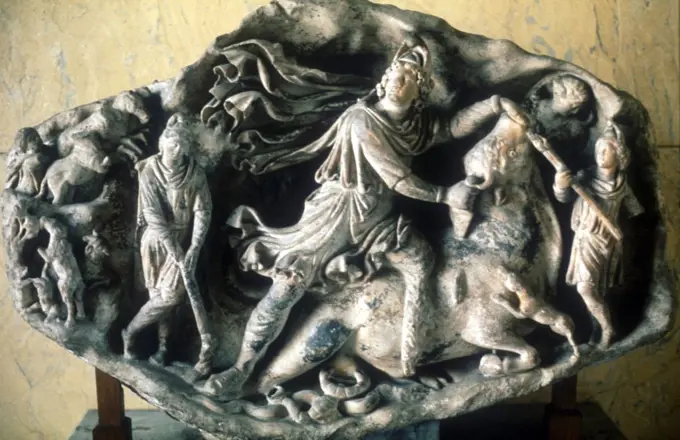
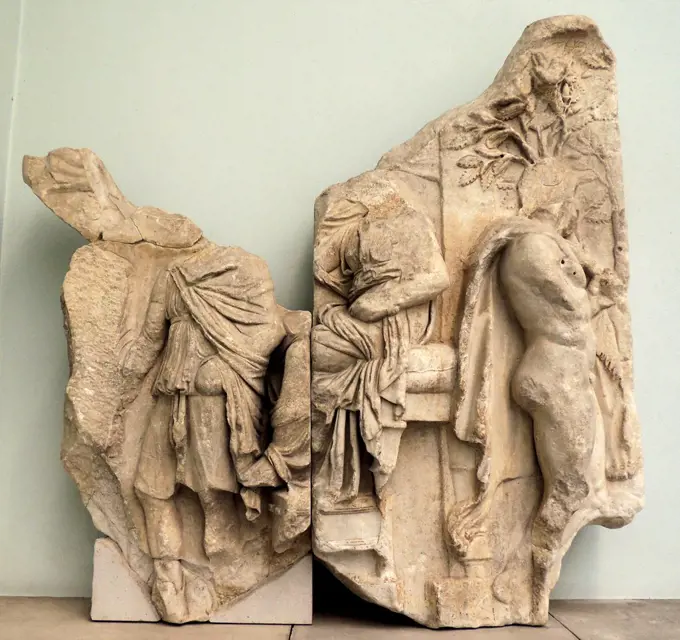
Banquet scene. Roman period. Miletus.
347 assets in this story
1746-19670348
Pergamum Altar in the Pergamum Museum in Berlin. It is a monumental construction built during the reign of King Eumenes 11 in the first half of the 2nd century BC on one of the terraces of the acropolis of the ancient city of Pergamum in Asia Minor. It is 35.64 meters wide and 33.4 meters deep. The front stairway is almost 20 meters wide. The base is decorated with a frieze in high relief showing the battle between the Giants and Olympian gods known as the Gigantomachy. In 1878 the German engineer Carl Human began official excavations on the acropolis of Pergamum. The excavation was undertaken in order to rescue the altar friezes and expose the foundation of the edifice. Later, other ancient structures on the acropolis were brought to light.
1746-4668
Mithras, ancient Persian god of light and ruler of universe, slaying the bull. Roman marble sculpture. AD100-150, Vienna, Kunsthistorische Museum.
6145-54596477
Martyrdom of St Emerenziana, 1660. By Ercole Ferrata
1746-19697978
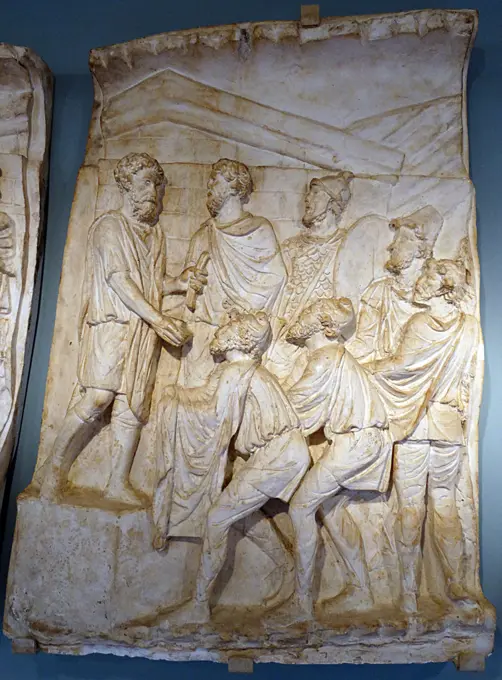
Column of Marcus Aurelius (Barbarian Embassy) circa 180-192 A.D.
1848-56651115
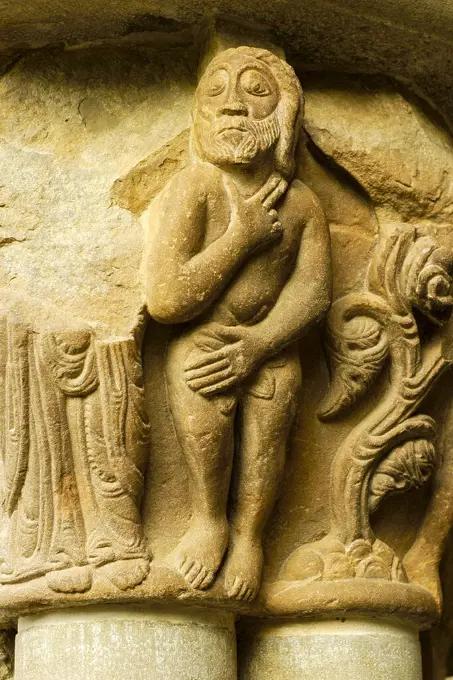
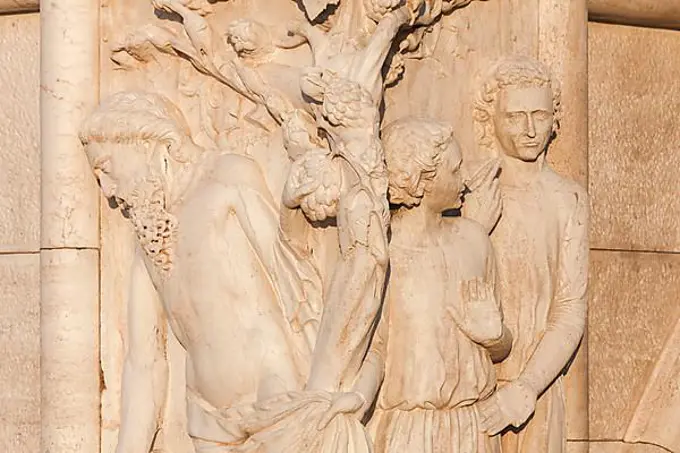
Naked Adam, romanic cloister, Royal Monastery of San Juan de la Pena, Botaya, Huesca, Aragon, Spain, Europe
4409-17401327
Nativity. Culture: French. Dimensions: Overall: 8 1/2 x 12 1/2 in. (21.6 x 31.8 cm). Date: 14th century. Museum: Metropolitan Museum of Art, New York, USA.
4292-70498
Italy, Calabria, Reggio Calabria, National Museum, Magna Grecia, Pinax from Mannella Sanctuary in Locri Epizefiri, Terracotta Votive Small Plank, Kidnapping of Kore.
4409-20883246
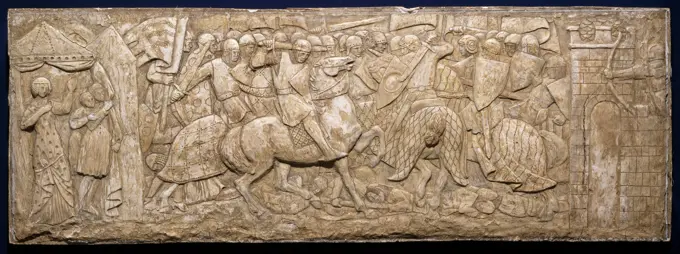
PAVIA , BATALLA DE. REINADO DE CARLOS I , AÑO 1525. COMBATE ENTRE CARLOS I DE ESPAÑA Y FRANCISCO I DE FRANCIA EL 23-24 DE FEBRERO DE 1525. RELIEVE DEL ZOCALO DE LA FACHADA DEL PALACIO DE CARLOS V ( I DE ESPAÑA ) EN GRANADA.
6145-29066120
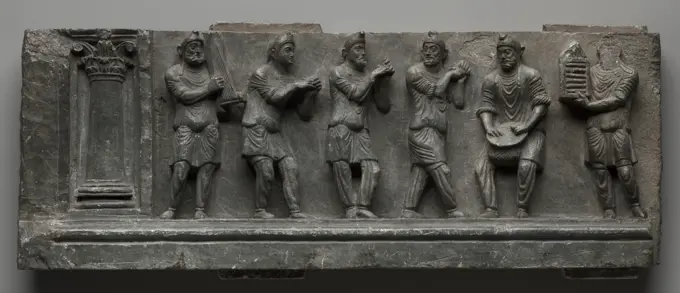
Bacchanalian Relief, AD 1-100. Pakistan, Gandhara, Buner area, early Kushan period (AD 1-320). Schist; overall: 17.1 x 44.5 cm (6 3/4 x 17 1/2 in.).
1746-28979398
Relief depicting the figure of Solon and a representation of the Light of Wisdom. At the right is Draco. Solon (c.638 – c.558 BC) was an Athenian statesman, lawmaker, and poet. Draco (fl. c. 7th century BC) was the first recorded legislator of Athens in Ancient Greece. US Supreme Court, Washington DC. USA.
6145-48828861
The Apocalypse. Ernst Alpers (German, active Hannover, Germany about 1867)
1746-19664307
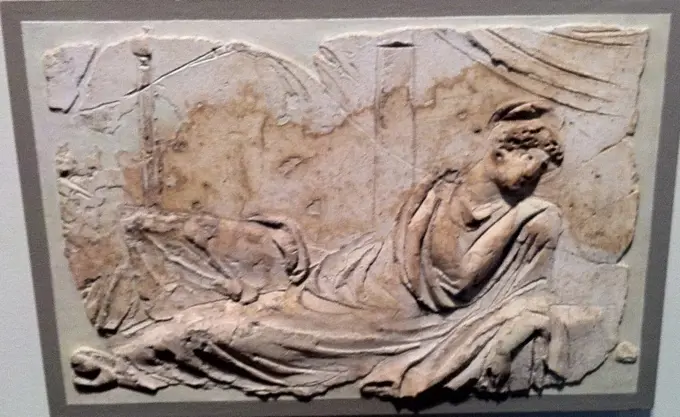
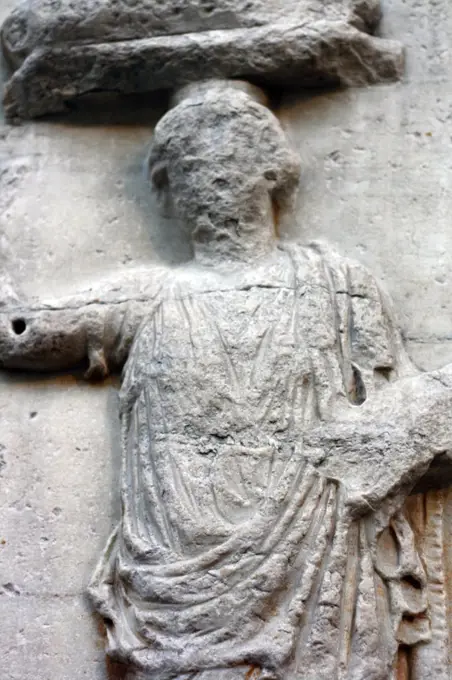
Stucco relief (Roman) depicting a female figure. 1st Century AD
4409-17338511
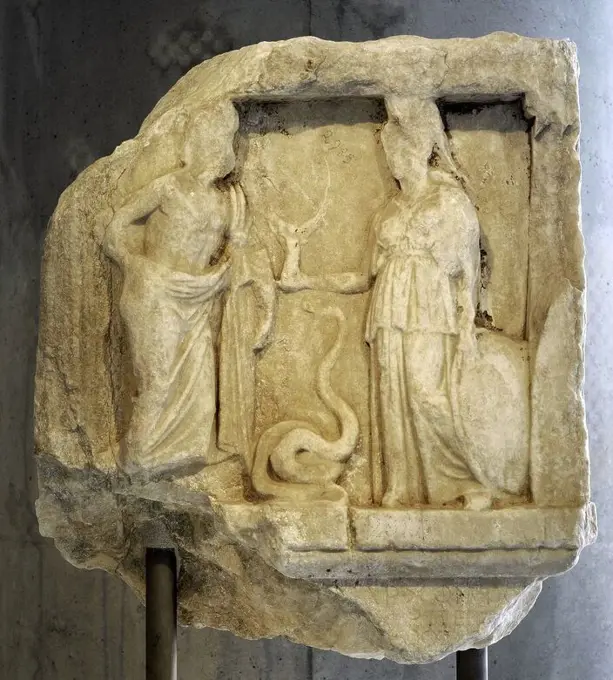
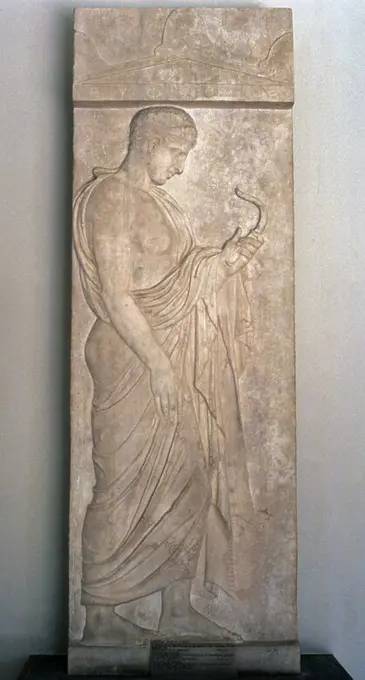
Honorary decree. Athens grants the title of proxenos (consul) and benefactor to a citizen of Croton (South Italy). The relief depicts the Goddess Athena and possibly, Asclepios. Ca. 330 BC. Acropolis Museum. Athens. Greece.
4409-21356560
FRISO OCCIDENTAL DEL PARTENON -CABALGATA DE CABALLEROS - SIGLO V AC. Author: PHIDIAS. Location: ACROPOLIS. ATHENS. GREECE.
4409-62748900
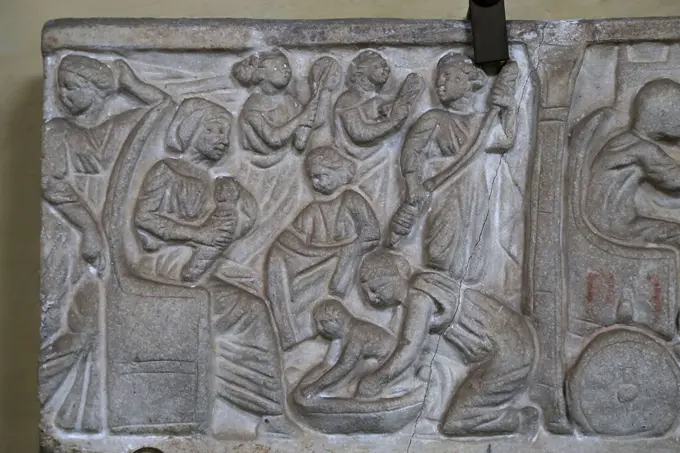
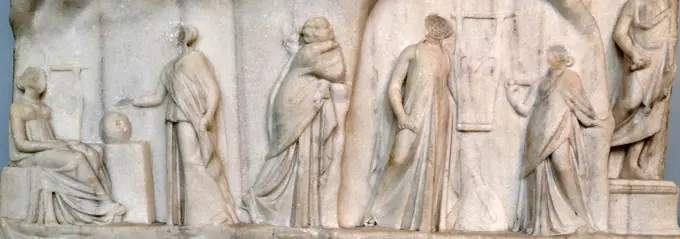
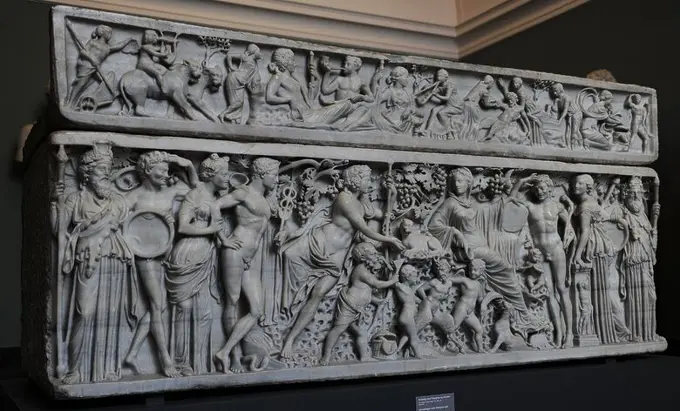
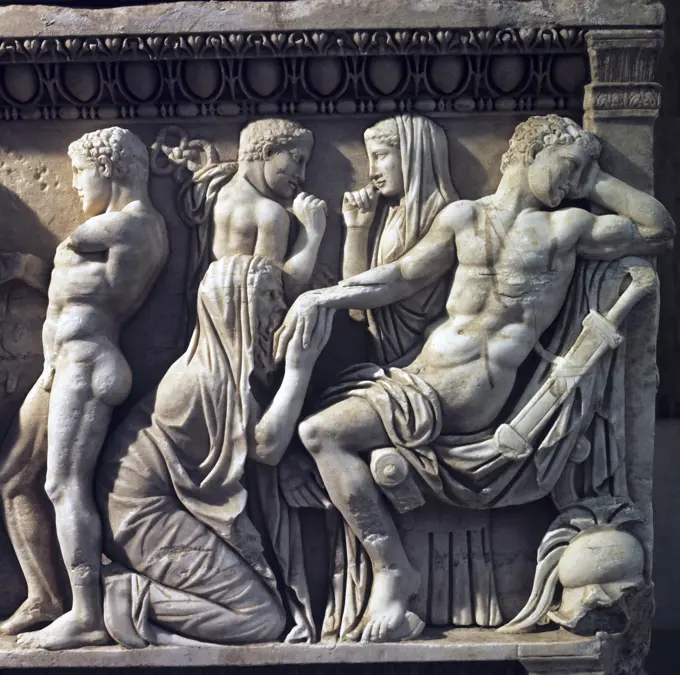
Child's sarcopaghus. Surrounded by women, the mother sits on a throne chair nursing her infant while the nurse bathes a child; in the background the three Fates work the threads of the child's alloted life. Vatican Museums (Chiaramonti).
4409-17292906
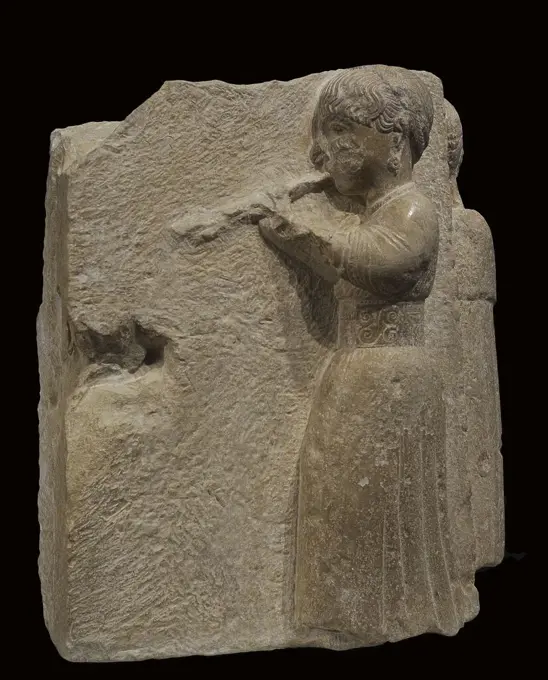
Reliefs of Osuna. 3rd-2nd centuries BC. Ashlar of Group A. Reliefs depicting a ritualized battle between two young men, accompanied by processions to the sound of the music. Ashlar with a woman playing a flute or auletris. Iberian culture. Osuna (Seville province, Andalusia, Spain). National Archaeological Museum. Madrid. Spain.
4409-20881511
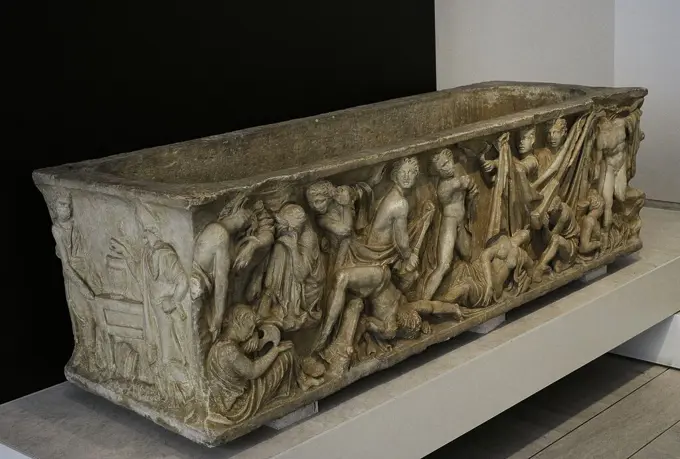
ARTE ROMANO. SARCOFAGO DE HIPOLITO. MUSEO ARQUEOLOGICO DE TARRAGONA.
4409-62747735
Roman era. Sarcophagus of a child. Marble. 3rd cent. AD. From Appian Way. Rome. Vatican Museums. Pio-Clementine Museum. Octogonal Court.
4409-62748518
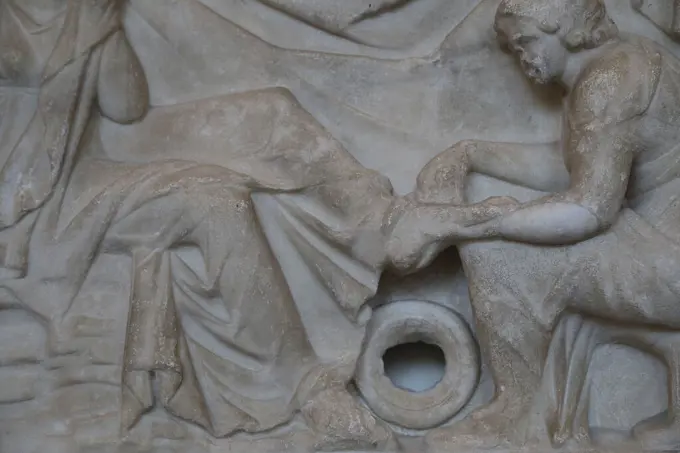
Roman art. Society. Slave washing feet woman, before wedding ceremony. Relief. 2nd century. National Roman Museum. Palazzo Altemps. Rome. Italy.
1848-49329274
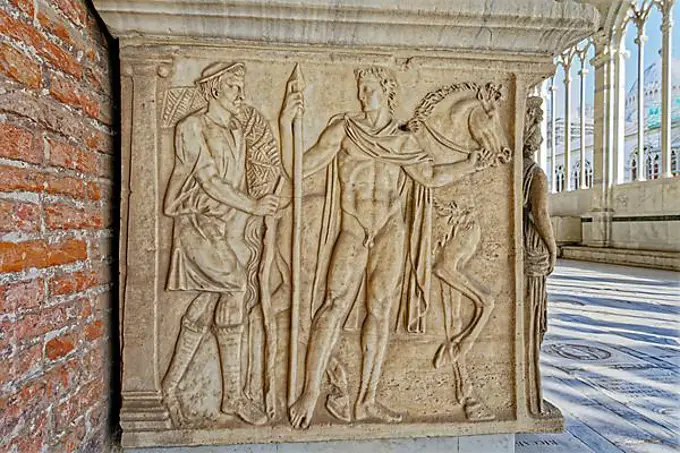
Side view, Roman Phaedra Hippolytus sarcophagus, Sarcofago romano, Fedra e Ippolito, 2nd c., Antiquity, Camposanto Monumentale, Miracles Square, Piazza dei Miracoli also Campo dei Miracoli, Piazza del Duomo, Pisa, Tuscany, Italy, UNESCO World Heritage Site, Europe
1746-29016584
(Detail) from the Apotheosis of Homer, 3rd-century BC, marble relief, by Archelaus of Prieneis. The Apotheosis was a common scene in classical and neo-classical art, showing the poet Homer's elevation to divine status. Homer was the subject of a number of formal hero cults in classical antiquity.
6145-48891236
Frise du Parthenon.. Dimitrios Constantin (Greek, active 1858 - 1860s)
1899-45510
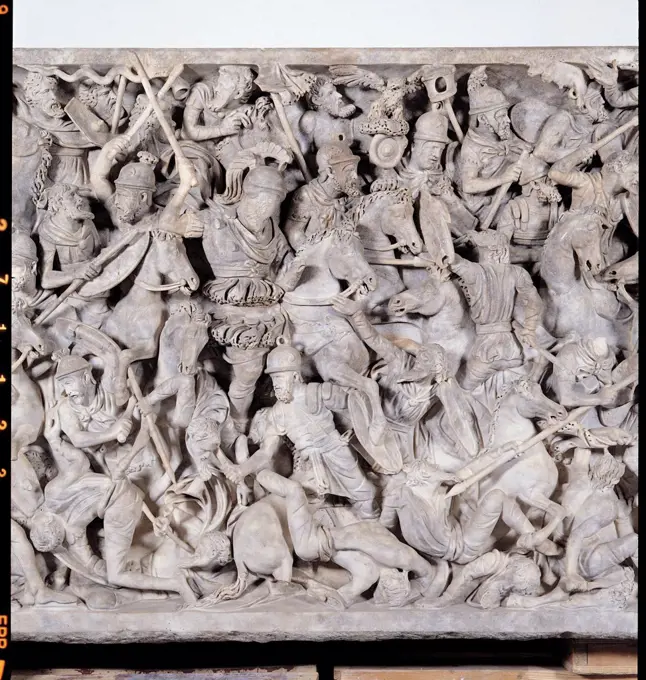
Portonaccio Sarcophagus, by Unknown artist, 180 - 190, 2nd Century, medium grain white marble. Italy: Lazio: Rome: Palazzo Massimo alle Terme: Sala XII - inv. 112327. Detail. Portonaccio Sarcophagus front battle figures prisoner woman soldiers lances/spears shields
4048-16067138
Egypt - Tall al-Amarnah (Amarna, Tell el-Amarna), necropolis. Tomb of Merire. Detail, relief. De AgostiniUIGEverett Collection (938_05_86003104)
1848-64937716
Alhambra Carlos V marble wall sculptures in Granada of Andalusia Spain
1788-19996
Marble sarcophagus with relief depicting Achilles at court of King Lycomedes, 240 a.d. circa, detail of Achilles wearing armor
4409-17379046
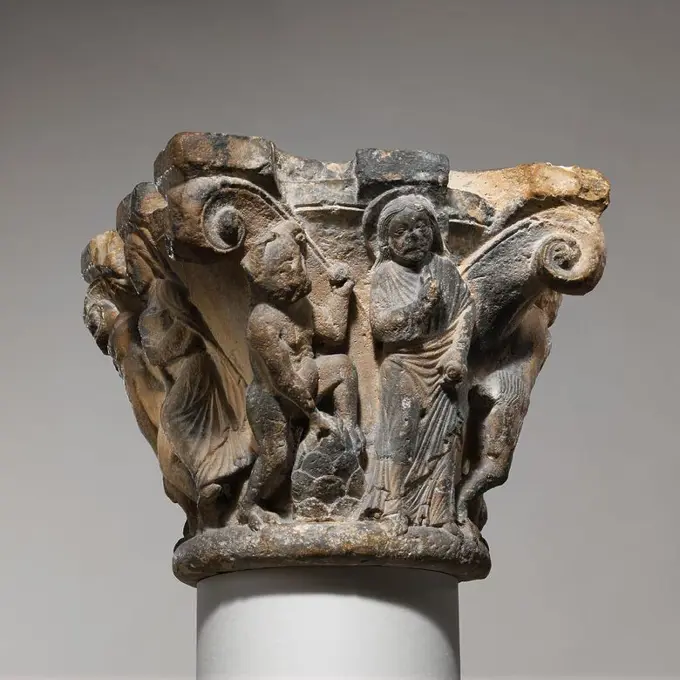
Capital with the Temptation of Jesus. Culture: North French. Dimensions: Overall: 10 5/8 x 11 3/4 x 11 3/4 in. (27 x 29.8 x 29.8 cm)weight: 76lb. (34.5kg). Date: ca. 1175-1200.Probably originating from a cloister arcade, this capital depicts the temptations of Jesus. The narrative order is not sequential: the Devil tempts Jesus to change stones into bread; the Devil tempts Jesus with the kingdoms of the world; the Devil carries Jesus on his back to the top of the Temple; the Devil tempts Jesus to cast himself from the top of the Temple. The naturalism of the capital's forms, the antique character of the fluid drapery defining the anatomy of the figures, and the lively narrative quality of the presentation are all hallmarks of the emerging Gothic style. Museum: Metropolitan Museum of Art, New York, USA.
4409-28791601
wolf, cloister of the Monastery of San Juan de los Reyes, Toledo, Castilla-La Mancha, Spain.
4409-156120
Detail of the Sarcophagus of Leocadi. 5th. Moses receiving the tables of law. Museum: Museu Nacional Arqueològic, Tarragona.
1746-30015844
Detail of a relief of Imperial guards, (Apadana, East staircase) at Persepolis.
7155-70378930
Triptolemos in Demter's throne Greek relief.
1746-21112198
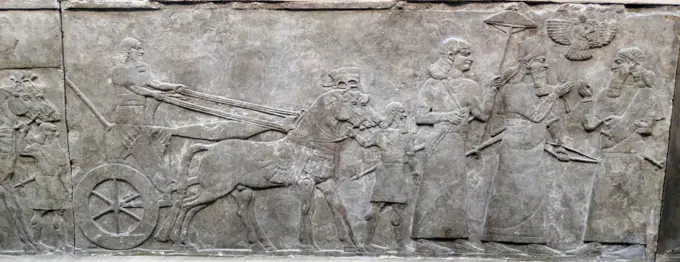
Wall frieze depicting a triumphal march. Assyrian, about 865-860 BC From Nimrud, North-West Palace, Iraq. Chariots, with the standards of Assyrian gods, return victorious to camp. In front of them some Assyrian soldiers play catch with enemy heads
1788-111118391
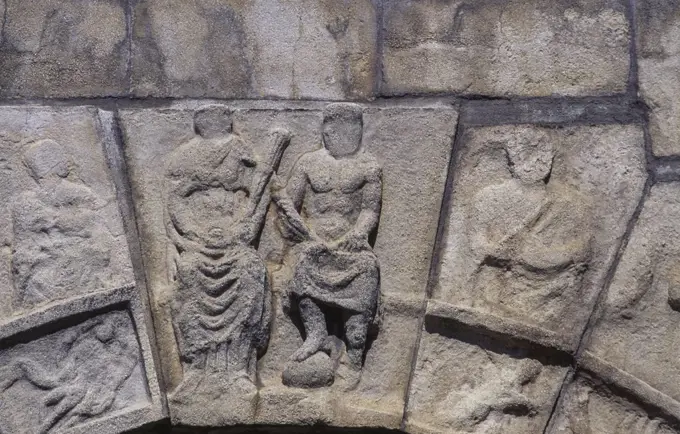
Sculpted keystone depicting Juno and Jupiter, detail of the Arch of Dativius Victor (replica), Mogontiacum, Mainz, Rhineland-Palatinate, Germany. Roman civilization, 3rd century AD.
4409-21513611
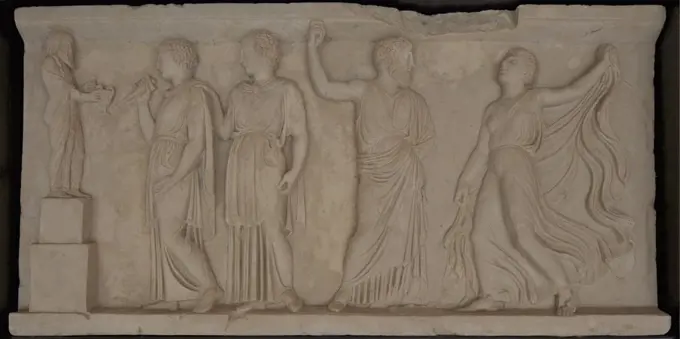
Greek Art. Artemis and Kephisos with three nymphs. Marble. Votive relief, 410 BC. From Phaleron. National Archaeological Museum, Athens, Greece.
4409-63023255
Adam and Expulsion from Paradise, capital of the cloister. Monastery of San Juan de la Peña (12th-13th centuries). Serrablo. Huesca. Spain.
1788-14510
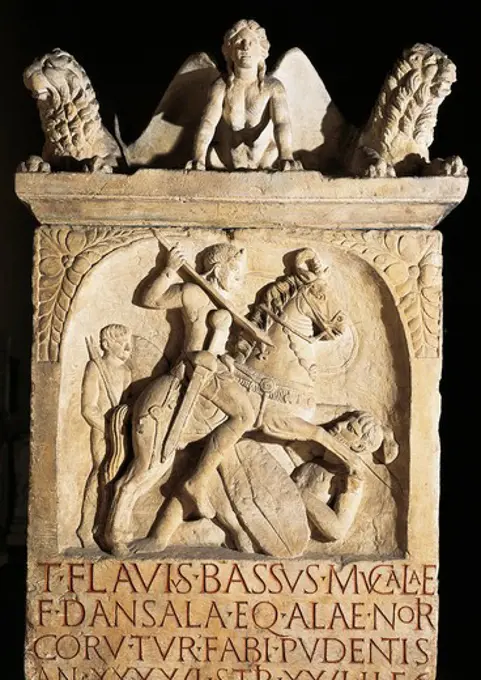
Funerary stele of Knight Flavio Basso stationed in Noricum
1525-22150543
Close-up of sculptures on a wall
1746-19666629
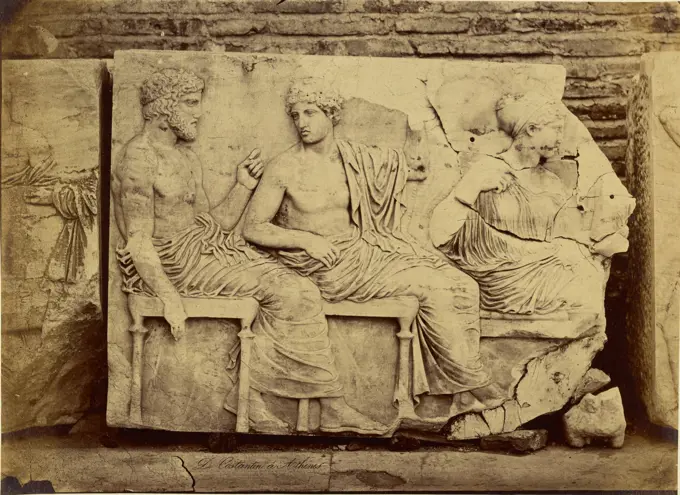
In the left section of the scene, Poseidon holding a trident and Apollo holding a laurel branch with the other. beside them sit two sister divinities, Artemis and Aphrodite. Parthenon Frieze Athens
4409-17220118
Arte fenicio. Estela funeraria, caliza, 475-450 a. C. procedente de Golgoi, Chipre. Museum: Metropolitan Museum of Art, New York.
4409-17433398
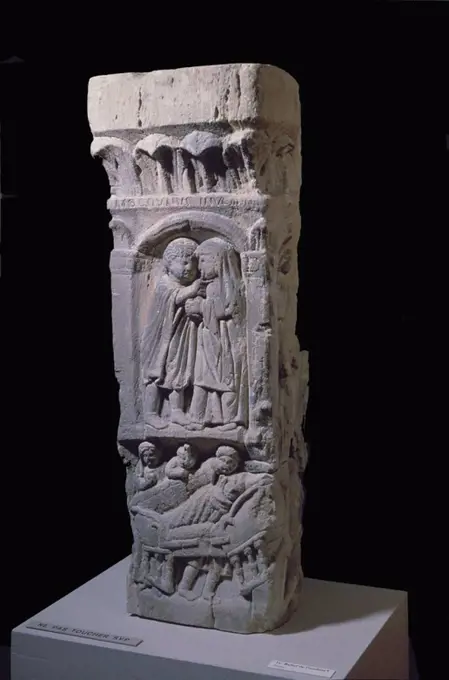
Plaque with Scenes at Emmaus. Culture: Carolingian. Dimensions: Overall: 4 9/16 x 9 1/4 x 1/4 in. (11.5 x 23.5 x 0.6 cm). Date: ca. 850-900.Among the finest ivory carvings in the Cloisters collection, this plaque depicts Christ's appearance to two of his disciples after his Resurrection. Christ, who is distinguished by his halo, meets the disciples along the road to the town of Emmaus, near Jerusalem. As described in the Gospel of Luke (24:13-35), although not recognizing Christ, they urge him to stay in town with them. Once within Emmaus, they finally recognize him as he breaks bread for their shared evening meal. Judging from the horizontal format and the recesses along the top edge to accommodate hinges, this plaque once served as the back panel of a small coffret. Originally, the recessed images of birds and flowers in the border were filled with gold foil. Museum: Metropolitan Museum of Art, New York, USA.
6145-29857790
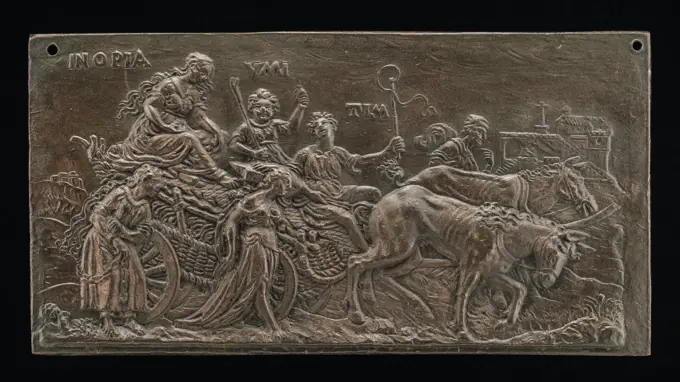
German or South Netherlandish 17th Century, The Triumph of Poverty, c 1600 The Triumph of Poverty
4409-65763877
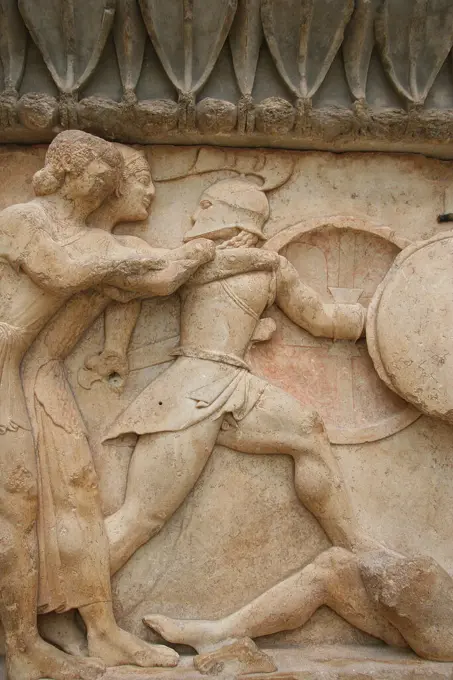
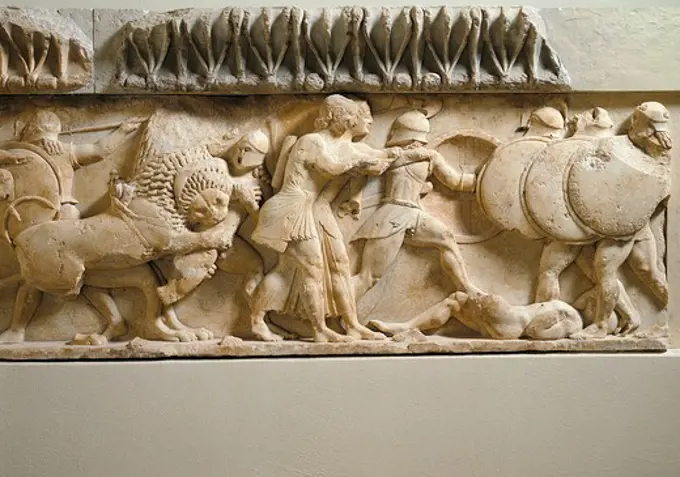
Delphi, Greece. North frieze of the Treasury of the Siphnians. The twins Artemis and Apollo fightig with Giant. 530-480 BC. Delphi Archaeological museum. Greece.
6145-29834551
Fragment of a Frieze with the Miracle of Loaves and Fishes 6th-7th century On this heavily damaged stone, Christ sits enthroned under an arch, extending his right hand toward twelve baskets. Saint Mark the Evangelist (6:33-44) wrote that from a meager five loaves and two fish, Christ was able to feed a crowd of five thousand peoplewith twelve baskets of food left over, as here. In this depiction, angels stand to Christ’s left and right; beyond them, apostles or saints carry books in their left hand and gesture with their right as if speaking or preaching.. Fragment of a Frieze with the Miracle of Loaves and Fishes 454052
1558-14110717
England, London, British Museum, Elgin Marbles, Reliefs depicting Horsemen
6176-67039699
Archaic metope showing Actaeon and Artemis, 5th century BC. Artist: Unknown
4409-61756
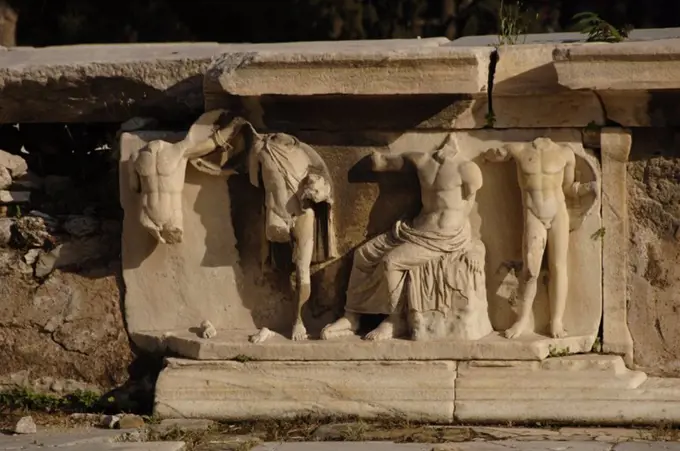
Greece, Athens. Stage relief from the Theatre of Dionysus. Roman Age. 2nd century BC. Back of the stage. Relief depicting a scene from the myth of Dionysus.
4435-4910
TURKEY. Bergama. Pergamon. Relief with mythological scene (3rd-2nd c. BC). Greek art. Relief on marble.
4409-9631
SARCOFAGO PALEOCRISTIANO-MULTIPLICACION PANES. Location: MUSEO ARQUEOLOGICO-COLECCION. CORDOBA. SPANIEN.
4409-45836
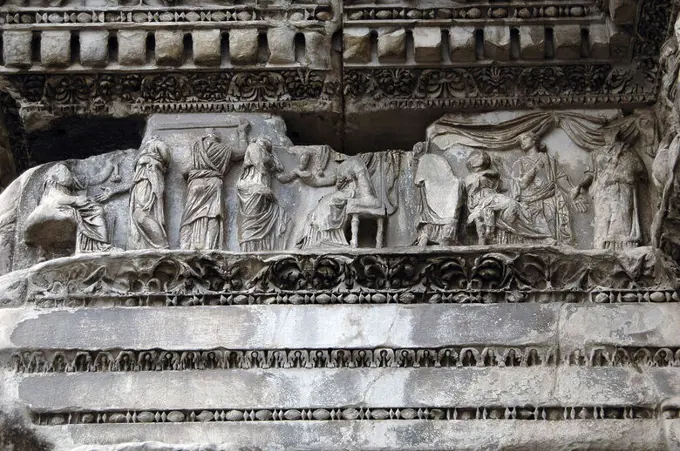
Italy. Rome. Forum of Nerva. Built in 85-97 A.C. It was started by Emperor Domitian but officially completed and opened by his successor, Nerva. It is also referred to as the Transient Forum (Forum Transitorium). Entablature. Detail showing scenes of myth of Arachne.
4409-62746442
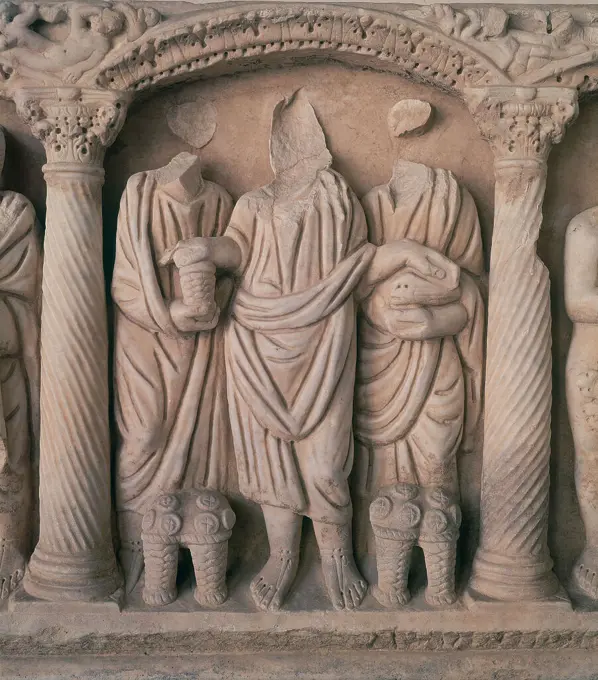
Early Christian. Roman sarcophagus of Marcus Claudianus (330-335 AD). Curing ot the blind man. Via della Lungara next S. Giacomo, Rome. National Museum of Rome. Massim Palace. Rome. Italy.
4443-21909439
Fragment pilaster with dancing boys, pilaster ornament building component sandstone stone, sculpted
1788-40880
Arula (small altar) depicting winged Nike, terracotta unearthed in Centocamere, Calabria, Italy. Ancient Greek civilization, Magna Graecia, 5th Century BC.
4409-20932140
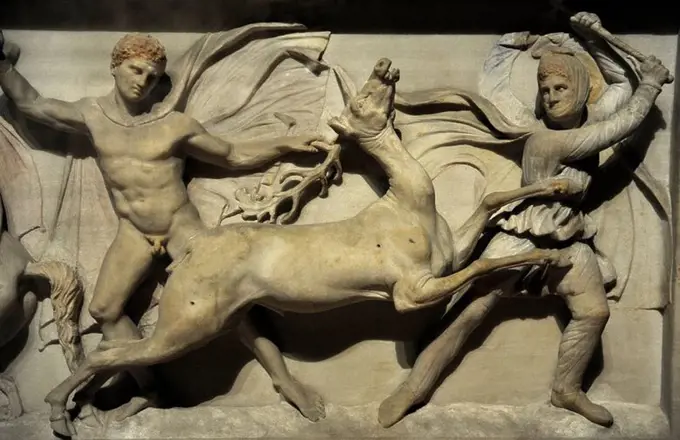
Alexander Sarcophagus. 4th century BC. Long side depicting Alexander and the Macedonians hunting lions with Abdalonymus and the Persians. Pentelic marble. From the Royal Necropolis of Sidon. Archaeological Museum. Istanbul. Turkey.
4409-20990310
Grave stele of Eupheros depicting an young athlete holding a strigil. Ca. 430 BC. Marble. Archaeological Museum of Kerameikos. Athens. Greece.
4409-64029
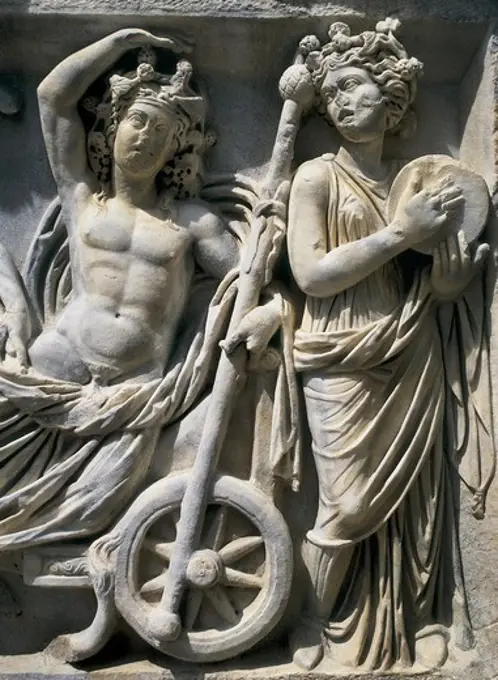
Roman Art. Sarcophagus with Dionysus and Ariadne. Marble. C. 200 A.C. From Vigna Casali, Rome. Carlsberg Glyptotek Museum. Copenhagen. Denmark.
6145-48862168
Relief with the Seer Calchas. Unknown
4409-17350055
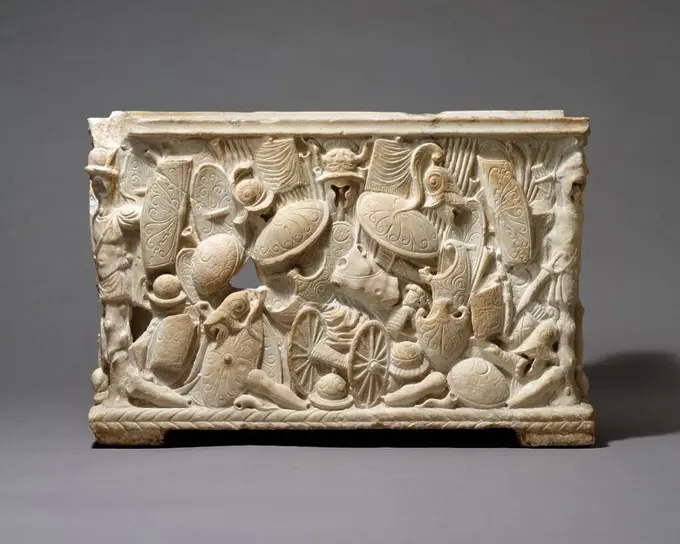
Marble cinerary urn. Culture: Roman. Dimensions: Overall: 14 1/4 x 21 1/4 x 16 1/8 in. (36.2 x 54 x 41 cm). Date: 1st half of 1st century A.D..This Roman cinerary urn is highly unusual in having the spoils of war as its principal theme. Despite the fragmentary nature of the piece, the trophies and piles of weapons and armor that cover the back and sides of the rectilinear box are very striking. In both detail and composition, the panels are representative of high-quality workmanship, suggesting that the work was a special commission. Sadly, much of the front, where the inscription recording the name of the deceased would have been, is missing. The urn is said to have been excavated from a tomb near Anagni, southeast of Rome, in 1899. Other marble funerary urns in the Museum's collection (see 96.9.222a, b; 25.78.29; and 27.122.2a, b; on display in the courtyard) belong to much more common types of Roman funerary art, cinerary urns that either resemble actual receptacles (vases or bask
1746-19666002
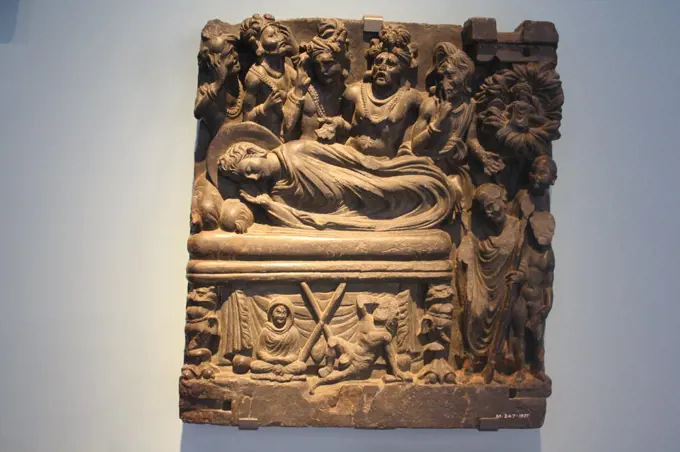
The Death of the Buddha. AD100-300 Ancient Gandhara. The Buddha lies on a couch. This is the moment of passing into the great nirvana, the final release from the cycle of rebirth. Behind the deathbed are grieving local princes.
4409-97209
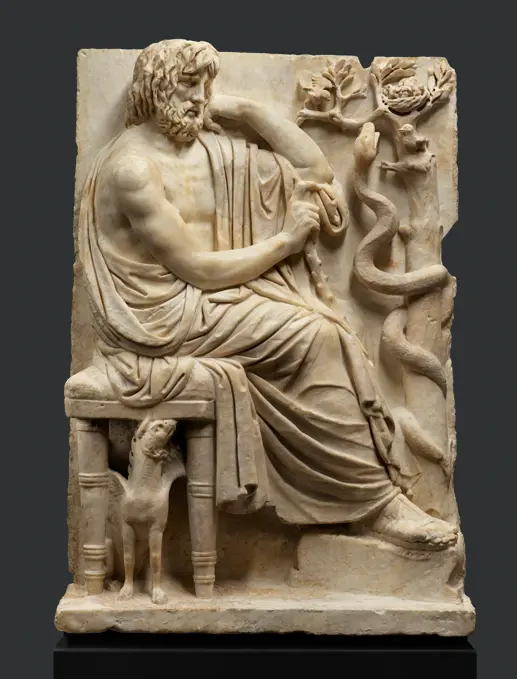
ROMAN SCULPTURE - THE OCULIST.
6176-67036584
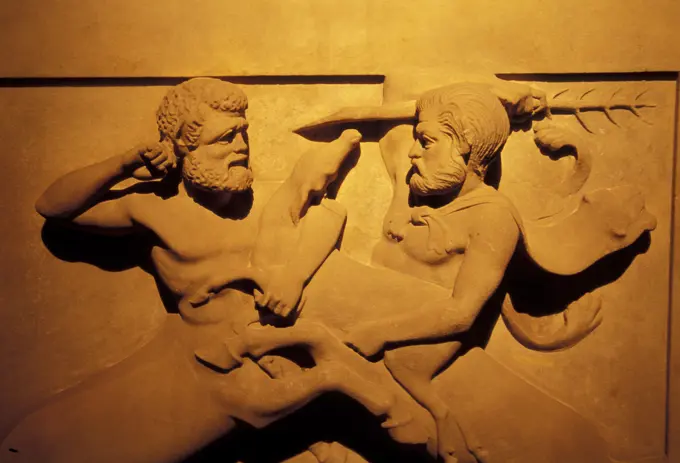
Relief of a centaur and Lapith fighting, The Bassai Sculptures, Temple of Apollo, Bassae, Greece. Artist: Unknown
4409-153383
SEPULCRO DE SIXTO IV - ALEGORIA DE LA DIALECTICA - SIGLO XV. Author: ANTONIO DE POLLAIOLO (1432-1498). Location: BASILICA DE SAN PEDRO-INTERIOR. VATICANO.
4409-62746556
Altar. Relief. Myth of Cleobi and Bitone. Marble. Imperial Age. Rome. National Roman Museum. Baths of Diocletian. Rome. Italy.
4409-62746726
Roman art. Early Christian. Feeding the multitude. Miracles of Jesus. Relief. Sarcophagus. Vatican Museums.
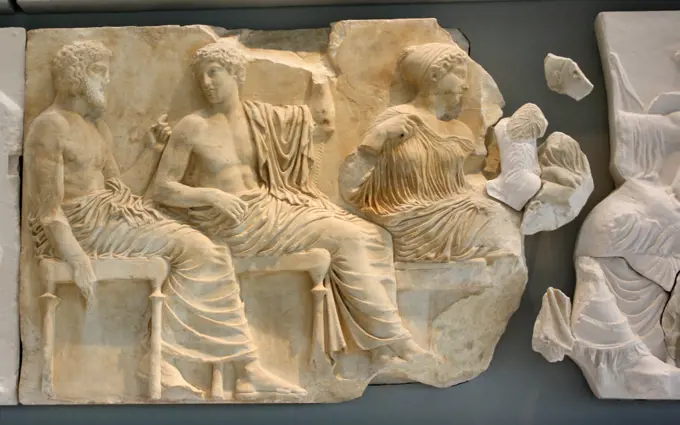
1788-19910
""Mourners Sarcophagus"", marble, from the royal necropolis of Sidon, Lebanon. Detail, wives of Strabo I, king of Sidon.
6145-48659985
Great Eleusinian relief , Bas-reliefs, Antiquities, Goddesses, Gods, Triptolemus Greek mythology, Demeter Greek deity, Persephone Greek deity. Nicholas Catsimpoolas Collection
4409-17394660
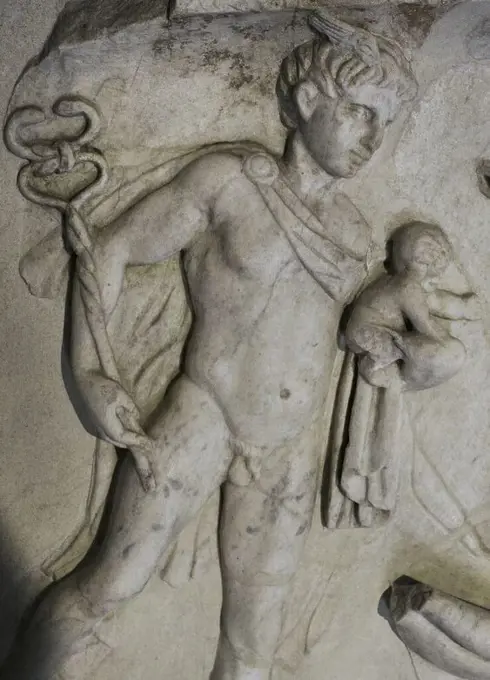
Bacchus childhood. 1st-2nd centuries AD. Relief depicting Mercury carrying Bacchus child in arms who reaches out his hands. Marble. From Rome (Italy). National Archaeological Museum. Madrid. Spain.
1788-14464
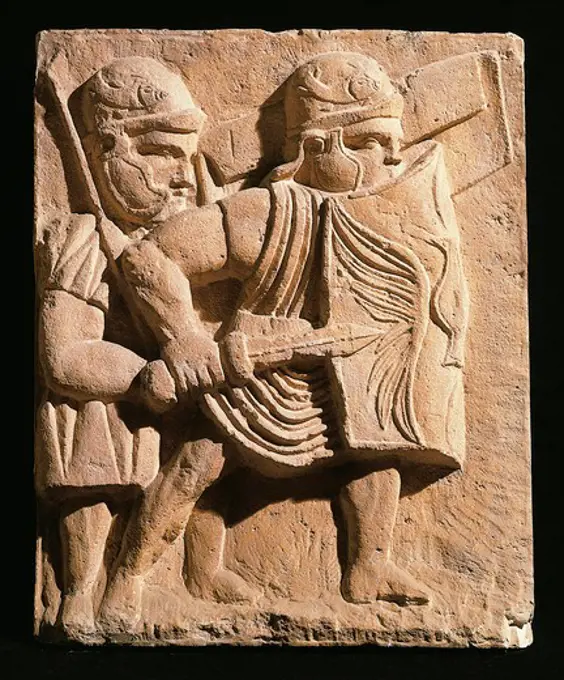
Relief portraying legionnaires mounting assault
1848-49489958
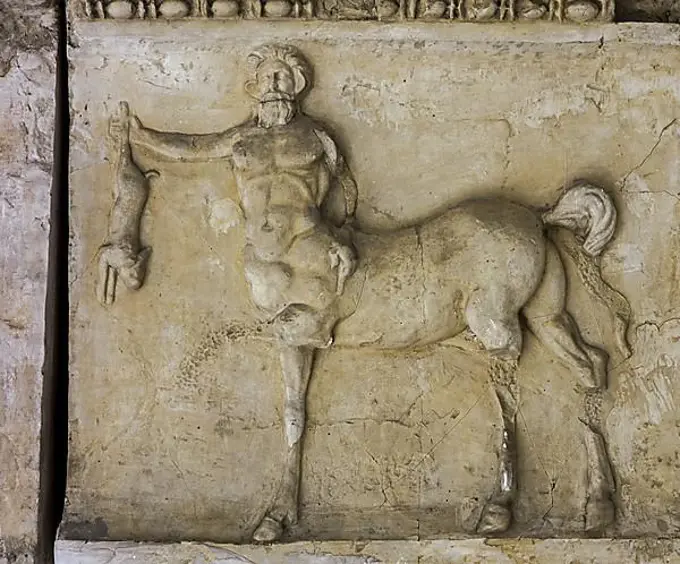
Roman frieze showing centaur, mythological creature with the head, arms, and torso of a human and the body and legs of a horse
4409-20918093
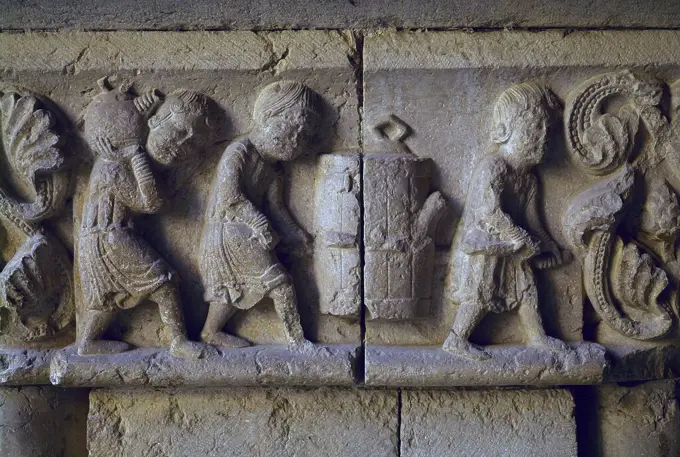
CLAUSTRO ROMANICO DE LA CATEDRAL DE GERONA - DETALLE DE UNA IMPOSTA - CONSTRUCCION DE UN TEMPLO:OBREROS TRANSPORTANDO UN BARRIL - SIGLO XII. Location: CATEDRAL DE SANTA MARIA-INTERIOR. GERONA. SPAIN.
4409-21516677
FACHADA-BASAMENTO CON HERCULES. Location: EXTERIOR. ONATE. Guipuzcoa. SPAIN.
1899-28896816
Bas-relief with a view of the Portus Augustis, circa 200, The Torlonia Marbles. Collecting Masterpieces, Gallerie d'Italia, Milan, Lombardy, Italy, Europed. C.
4409-17394704
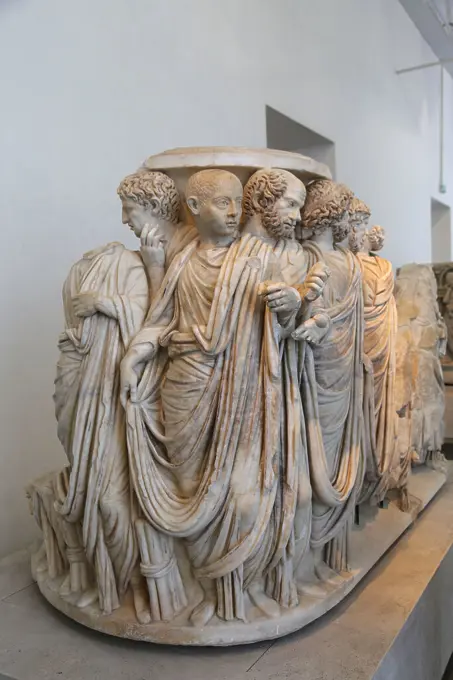
Sarcophagus of the Oresteia. Mid-2nd century AD. Reliefs depicting the revenge of Orestes: the death of Clytemnestra and the traitor Aegisthus, the arrival of the hero at Delphi and his appearance before the Athenian court at the Areopagus, where he will be acquitted. Marble. From Husillos (Palencia province, Castile and Leon, Spain). National Archaeological Museum. Madrid. Spain.
1848-49503236
Doge's Palace, corner capital Noah's Drunkenness with his sons Shem (covering Noah's nakedness with a cloth) and Ham, Venice, Italy, Europe
6145-54598016
The Battle of the Kings, (undated pre-1928). Arthur Joseph Gaskin (d.1928)
1746-19669481
Detail from the Parthenon Frieze. Greek marble sculpture, made between 443-438 BC. The full frieze shows a narrative procession of men, women & horses.
6145-48866303
Grave Stele of Herophanta and Posideos. Unknown
1899-17319432
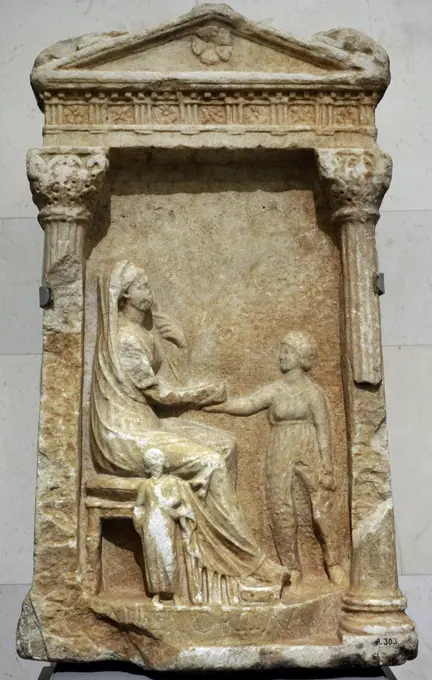
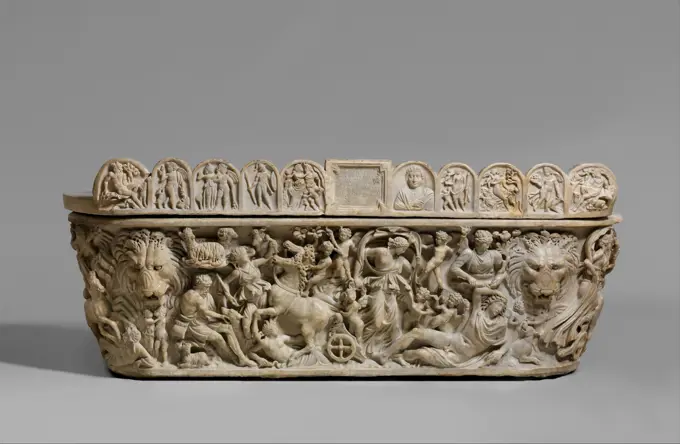
Greek art. Funerary relief of Aristobala. Farewell scene. 3rd century BC. Marble. The state Hermitage Museum. Saint Petersburg. Russia.
1788-15824
Greek civilization, Gigantomachy, detail of north side of frieze of Siphnian Treasury, circa 525 BC
1848-64937335
Alhambra Carlos V marble wall sculptures in Granada of Andalusia Spain
1788-22569
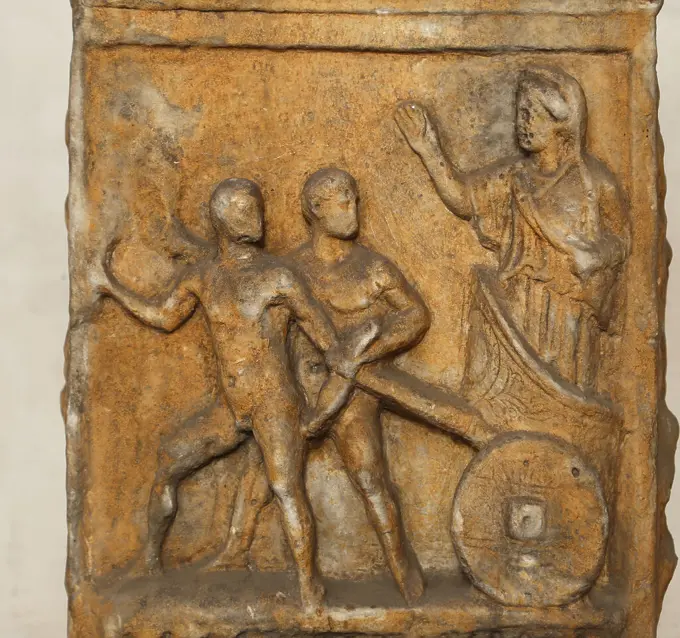
Five Good Emperors, Relief representing the Emperor Marcus Aurelius (Marcus Annius Verus, 121 - 180 A.D.) on his triumphal chariot, imperial age
4409-20919223
DETALLE DEL TIMPANO DE LA PUERTA DEL RELOJ - SIGLO XIV - GOTICO ESPAÑOL. Location: CATEDRAL-EXTERIOR. Toledo. SPAIN.
7063-70137973
France, Bouches-du-Rhone, Marseille. Carved stone figurines, Abbaye St-Victor
7141-70477467
Turkey, Istanbul. Detail from Lycian sarcophagus in the Archeological Museum of Istanbul
4409-62309
Pergamon Altar. Built by order of Eumenes II Soter. 164-156 BC. Marble and limestone. Gigantomachy. South frieze. The three-faceted goddess Hecate fighting with a torch, a sword and a lance against the giant Klytios. Next to her is Artemis (she doesn't appear) fighting with a bow and arrow against a Giant who is perhaps Otos (he doesn't appear). Her hunting dog kills another Giant with a bite to the neck. Pergamon Museum. Berlin. Germany.
4409-48999
Roman Art. Italy. Ara Pacis Augustae. Tellus panel. Relief depicting Tellus nursing Romulus and Remus. Dated 13 BC. Museum of the Ara Pacis. Rome. Italy.
4409-21504947
SARCOFAGO PALEOCRISTIANO DE BRIVIESCA (QUINTANA BUREBA). DEPOSITO: MUSEO PROVINCIAL DE BURGOS.
4409-17262687
SEGOVIA SANTA MARIA LA REAL DE NIEVA IGLESIA DE NUESTRTA SEÑORA DE LA SOTARREÑA CLAUSTRO DETALLE CAPITEL CAZA DEL OSO.
1788-14468
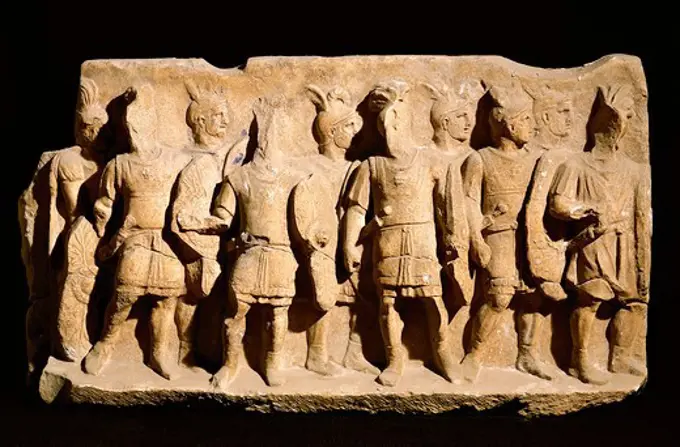
Relief portraying legionnaire in typical armor of order, from Cuma, Campania Region, Italy
7155-70376936
Byzantine warriors. Byzantine ivory. 11th cent. TURKEY.
1899-67535
Saint-Trophime church tympanum The damned
4409-17355674
The Deposition. Artist: Leonhard Kern (German, Forchtenberg, Hohenlohe 1588-1662 Schwäbisch Hall). Culture: German, Schwäbisch Hall. Dimensions: Overall: 12 13/16 × 10 1/8 in. (32.5 × 25.7 cm). Date: ca. 1640-50.Despite the ravages of the Thirty Years War, Leonhard Kern's shop in Schwäbisch Hall flourished, producing statuettes and small reliefs of high quality in boxwood, ivory, and alabaster. They extended the precepts of Renaissance art deep into the seventeenth century, thanks to Kern's memories of his study in Italy (1609-12) and his emulation of Italian masters such as Giambologna. To the latter he may owe the V-shaped cleft in the mountains that part in this scene to reveal Jerusalem and to enframe the Holy Women above center, as well as the rectilinear cluster of figures at right that include Joseph of Arimathea, carrying a stack of linens and directing the preparation of the dead Christ's body for burial. Yet these are not strict quotations and the design, characteristically
4042-1170
Dionysiac marble relief, in Herculaneum in Rome, discovered in 2009, Italy, Naples, Neapolitan National Archeological Museum
4409-17264263
Carlos V palace - relief on the facade, The Alhambra, Granada, Region of Andalusia, Spain, Europe.
4409-21479934
scene of the conquest of Majorca,Memorial Cross landing in Gran Via de la Creu. Santa Ponça, It was inaugurated in 1929, on the occasion of the commemoration of the seventh anniversary of the conquest, Calvia, Mallorca, Balearic Islands, Spain.
1848-50771594
Historic coffins in the crypt of Palermo Cathedral, Sicily, Italy, Europe
7155-70383724
Roman sarcophagus. Tyre. Legend of Achilles. Priam kneeling before Achilles for body of his son Hector. 2nd century AD. Marble. National Museum of Beirut, Lebanon
4409-62747017
A lenos sarcophagus with processus consularis. Roman. 270 AD. National Roman Museum. Palace Massimo. Rome. Italy.
4409-53362401
Tombstone. Heroized horseman. Mid-3rd century AD. From Brestnik, Plovdiv region, Bulgaria. National Archaeological Museum. Sofia. Bulgaria.
6145-29752165
Marble sarcophagus with the myth of Selene and Endymion early 3rd century A.D. Roman An inscription at the center of the lid informs us that this trough-shaped sarcophagus was dedicated to a woman named Arria, who lived fifty years and ten months, by her daughter Aninia Hilara. Arrias portrait is carved just to the right of the inscription. The story of Endymion is shown in strongly undercut relief on the front of the sarcophagus. In the center, Selene, the moon goddess, alights from her chariot to visit her beloved, the shepherd Endymion, who reclines at the right. Endymion, most beautiful of men, has been granted eternal youth and eternal sleep. A female figure stands over him, pouring out the magic potion of immortality and holding a bunch of sleep-inducing poppies. The scene is flanked on the left end of the sarcophagus by a rising Helios, the sun god, and on the right by a descending Selene, each in a chariot. On the back, a bucolic scene with herdsmen among grazing bulls and uny
1788-16120
Roman civilization, Relief with Marcus Curtius on horseback leaping into chasm Lacus Curtius
PREVIOUS
of 4
NEXT
2401 S. Ervay, Suite 206
Dallas, Texas 75215
United States
Get Started
Free ResearchMy BoardsMy Cart
For Creators
How To License Your ContentContributor PortalFrame of Mind
Resources
API accessPricing
Contact
+1 866 236 0087help@viewpictures.co.uk Contact form
©2026 View Pictures. All Rights Reserved. -A
This site is protected by reCAPTCHA and Google Privacy Policy and Terms of Service apply.