Decorative Kakiemon Plates

A collection of ornate round porcelain plates featuring kakiemon decor, multi-colored floral designs, ribbed and scalloped edges, and vibrant illustrations of tigers and flowers.

Plate, multicolored painted with a kakiemon decor, meissener porzellan manufaktur, c. 1740 Round plate of painted porcelain. The board has a scalloped edge and is painted with two ho-ho birds, chrysanthemums, bound hedges and Ominaeshi. The board is marked. Float porcelain Round plate of painted porcelain. The board has a scalloped edge and is painted with two ho-ho birds, chrysanthemums, bound hedges and Ominaeshi. The board is marked. Float porcelain
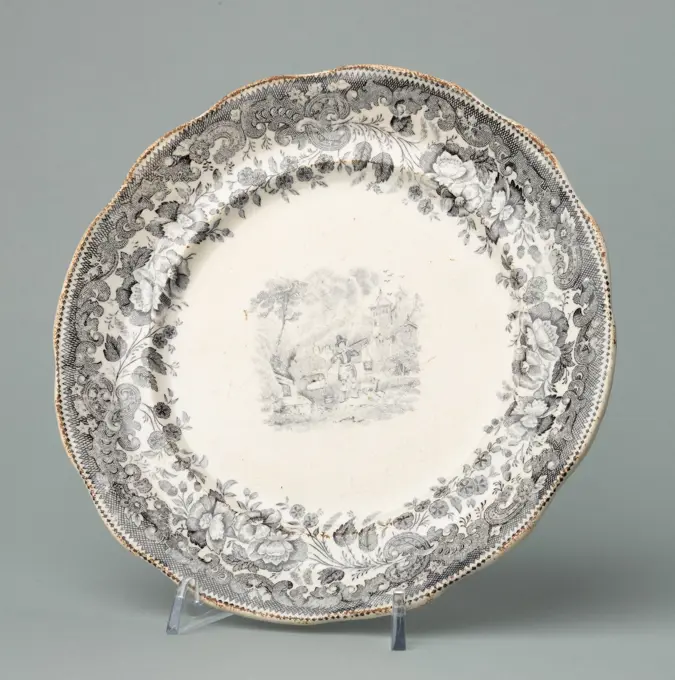
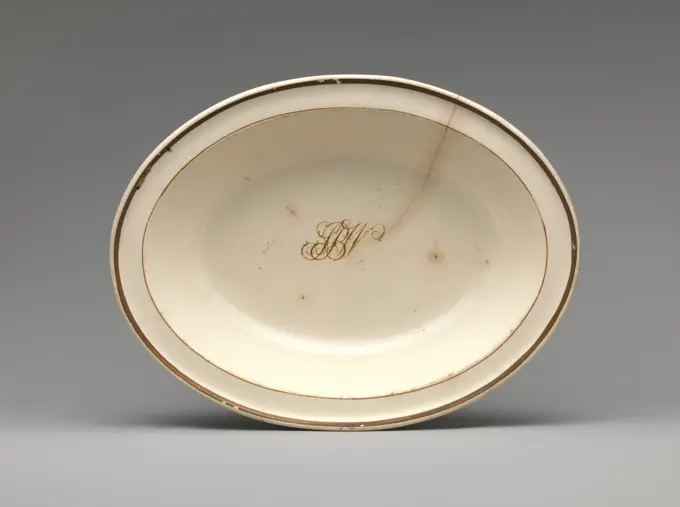
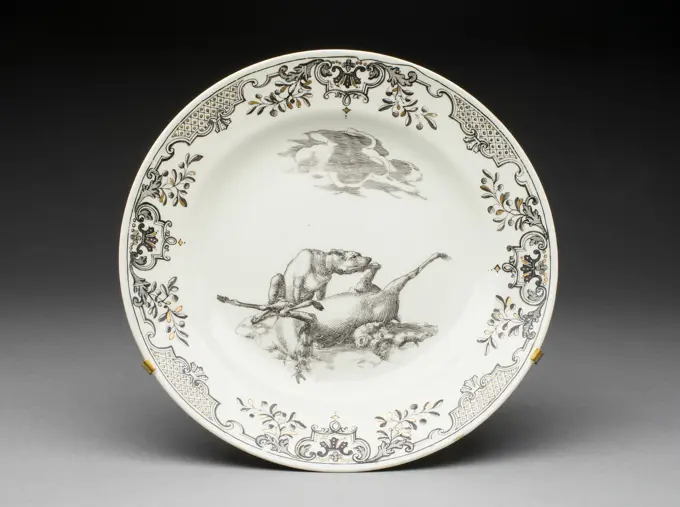
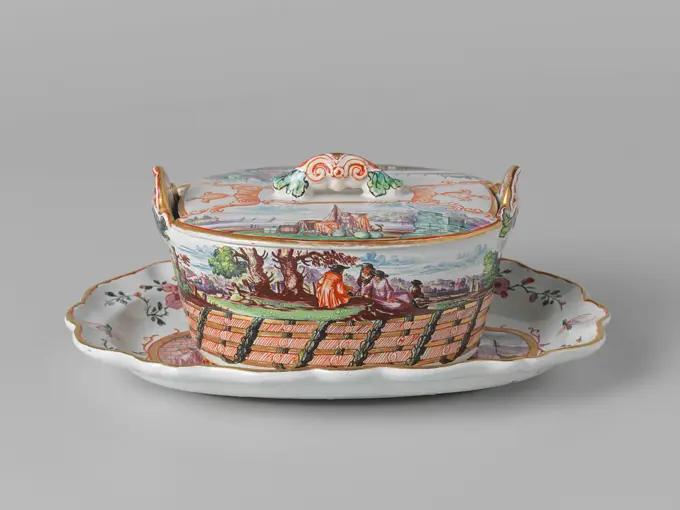
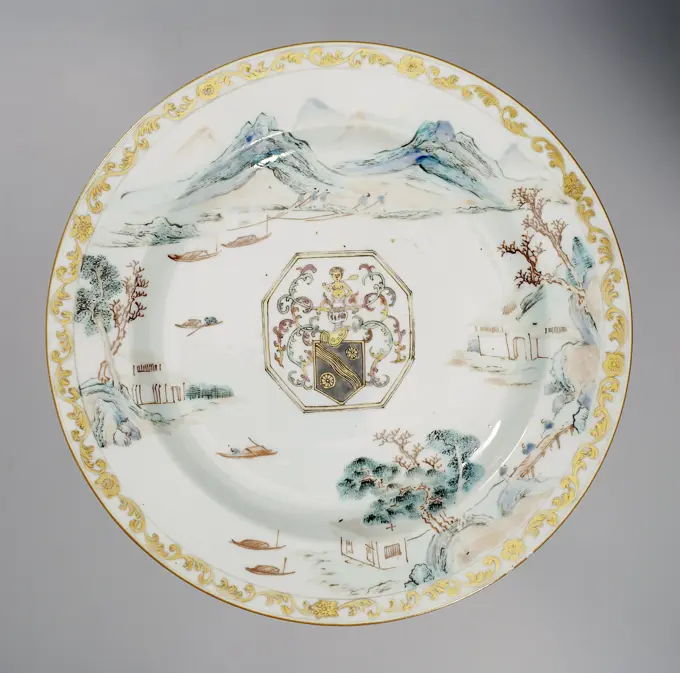
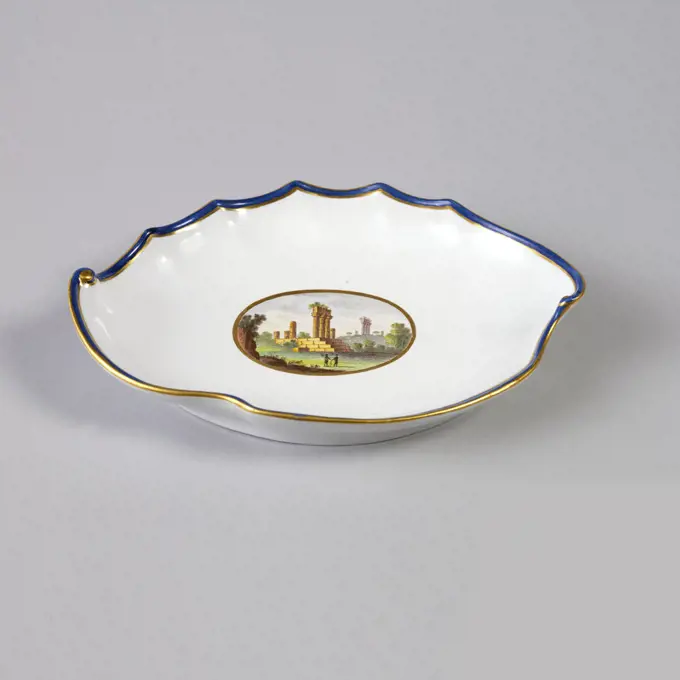
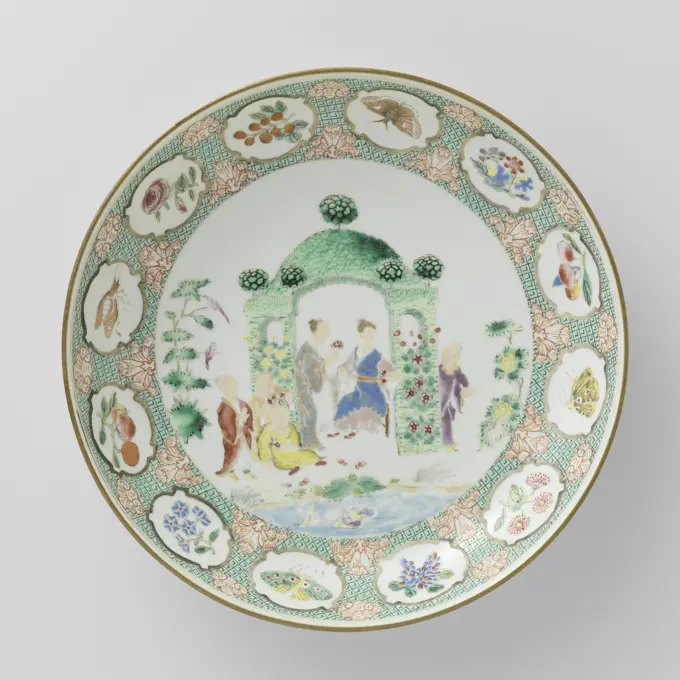
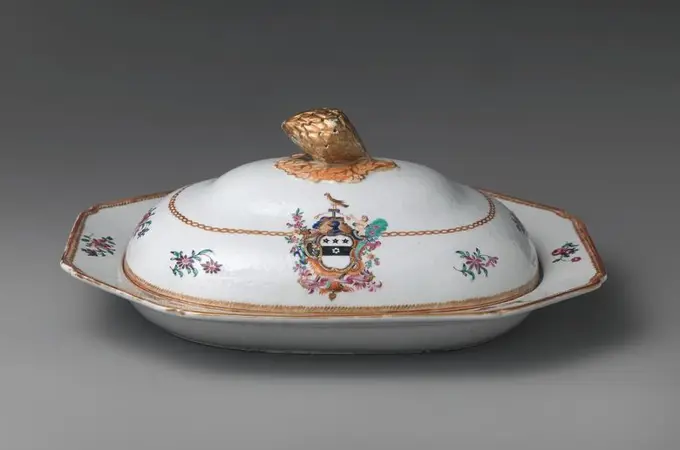
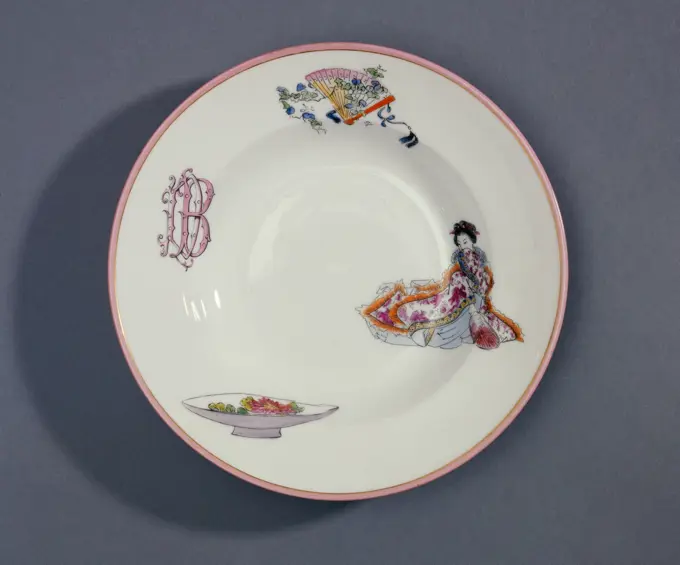
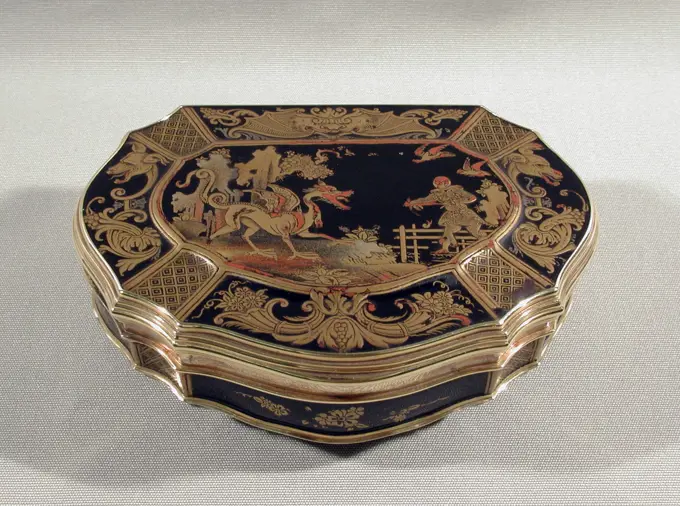
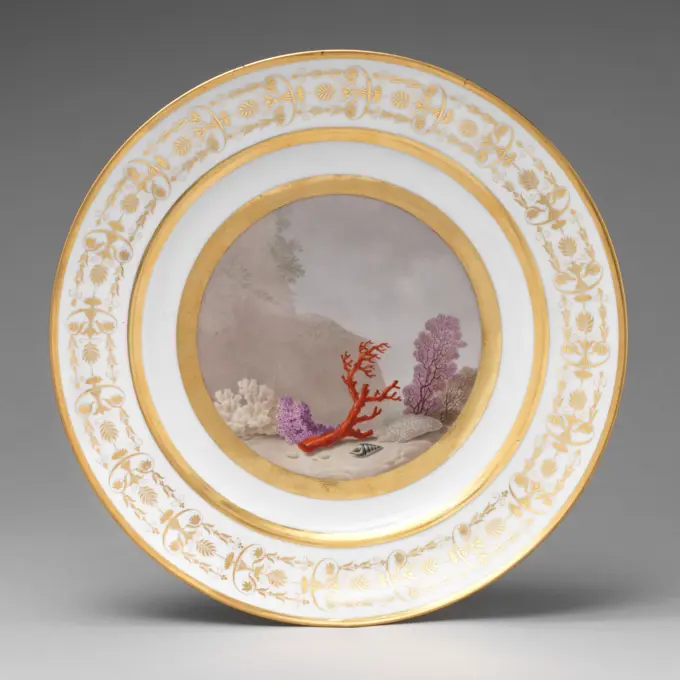
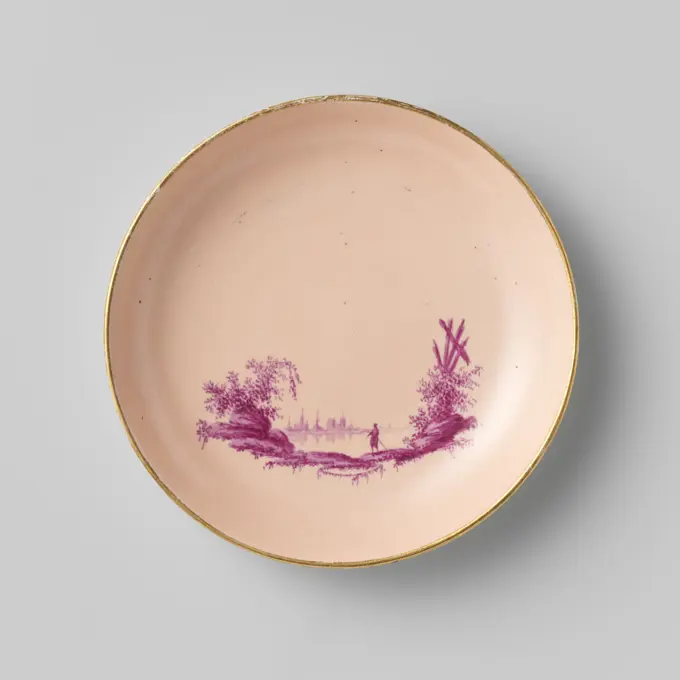
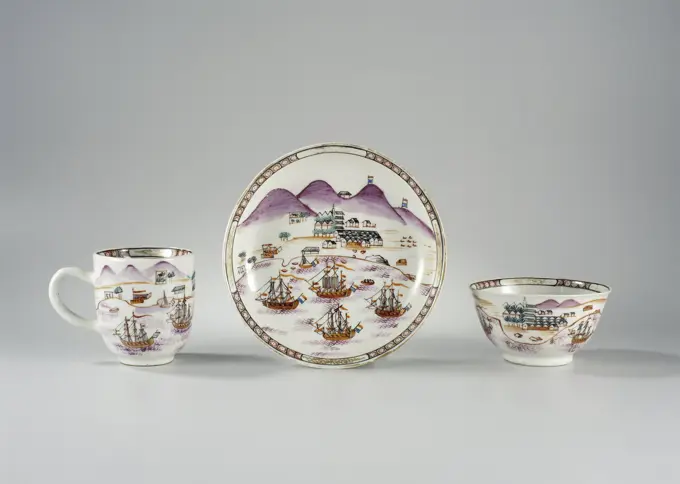
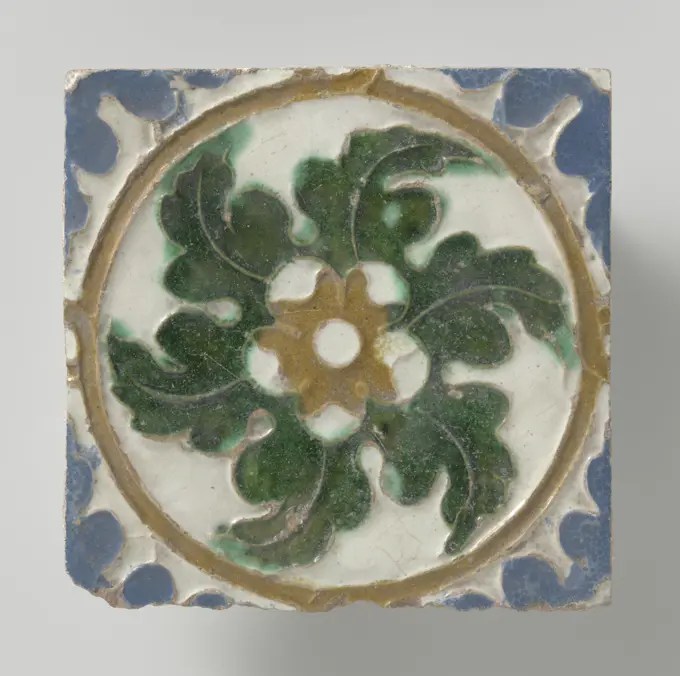
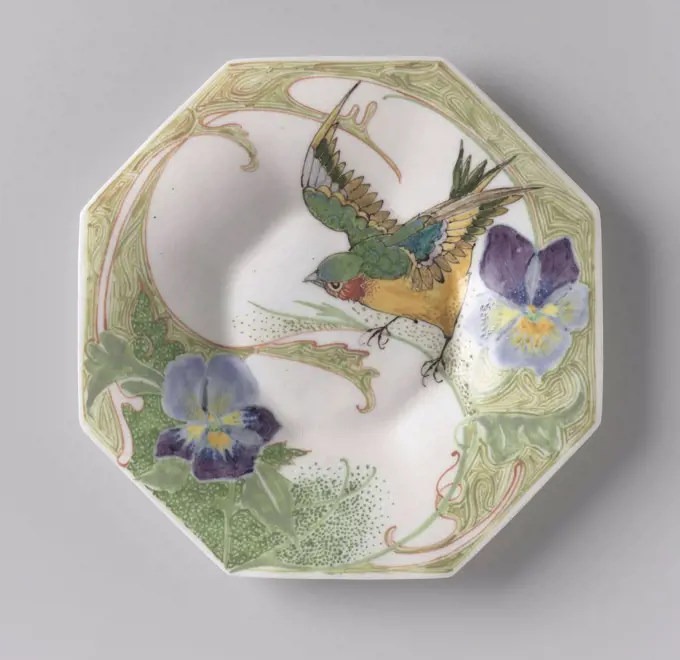
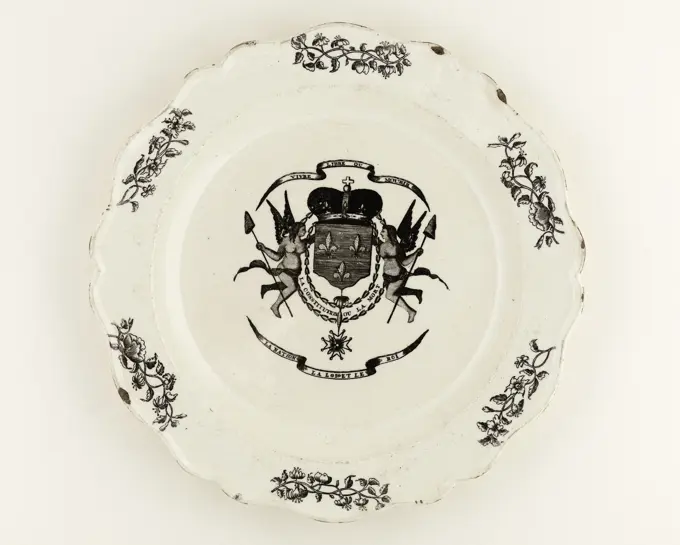
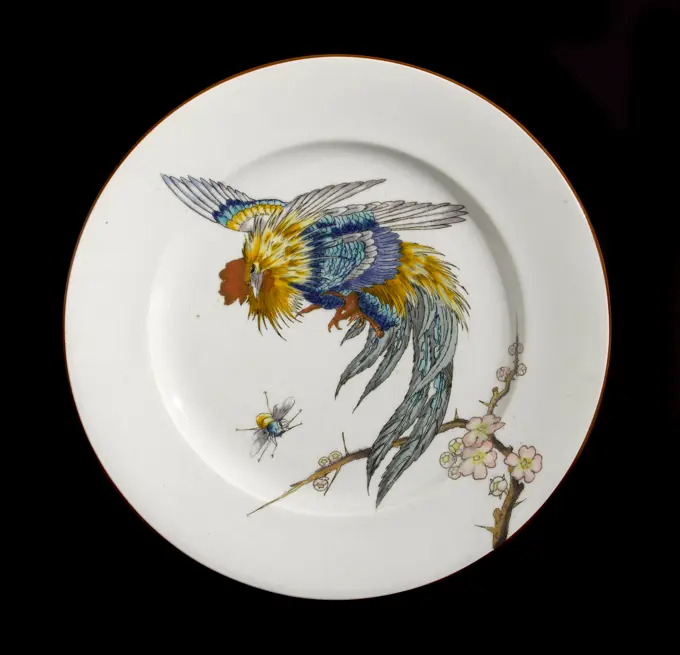
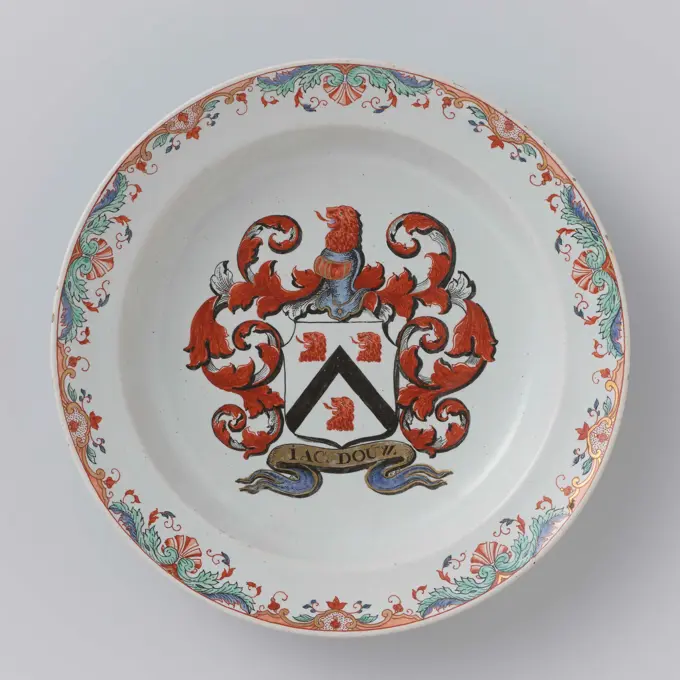
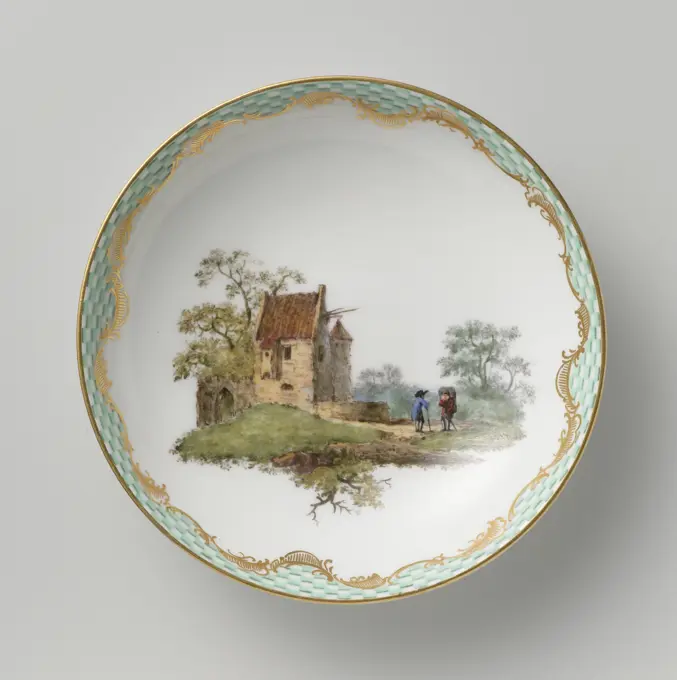
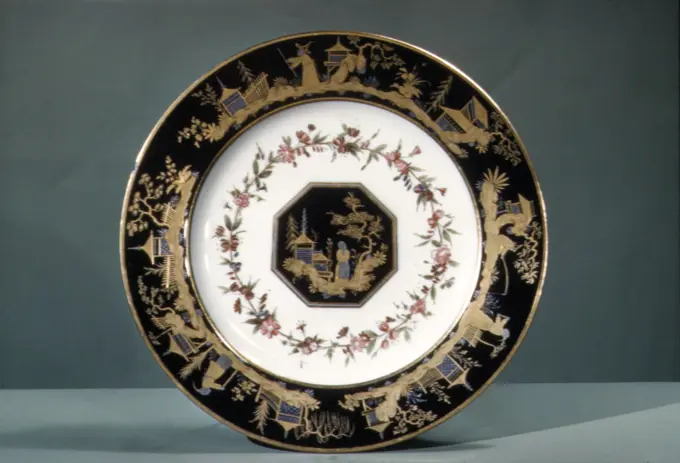
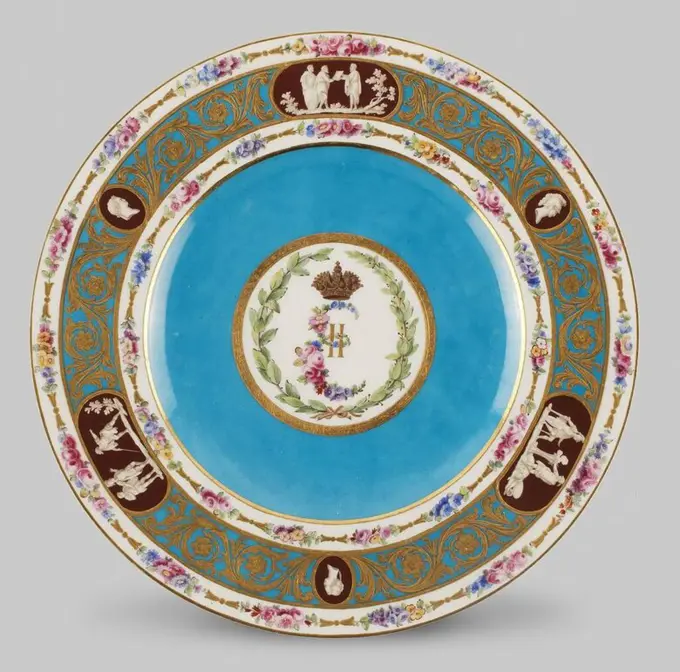
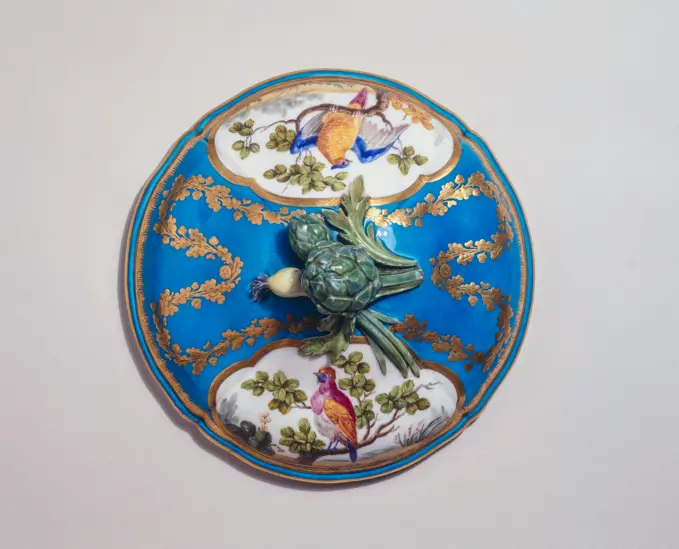
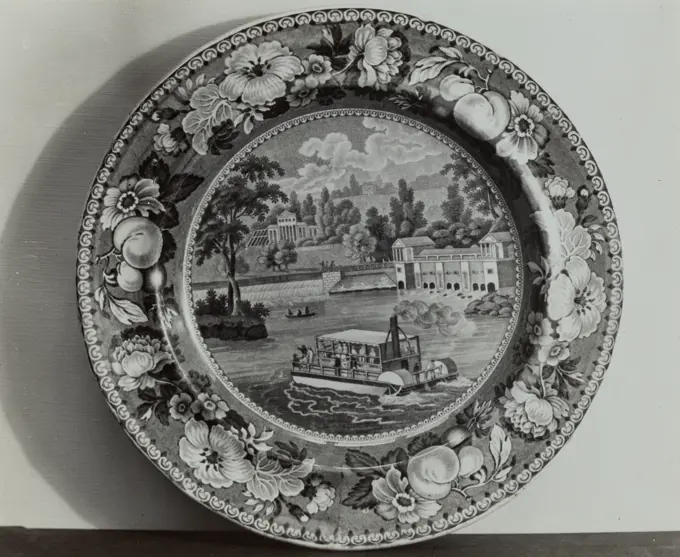
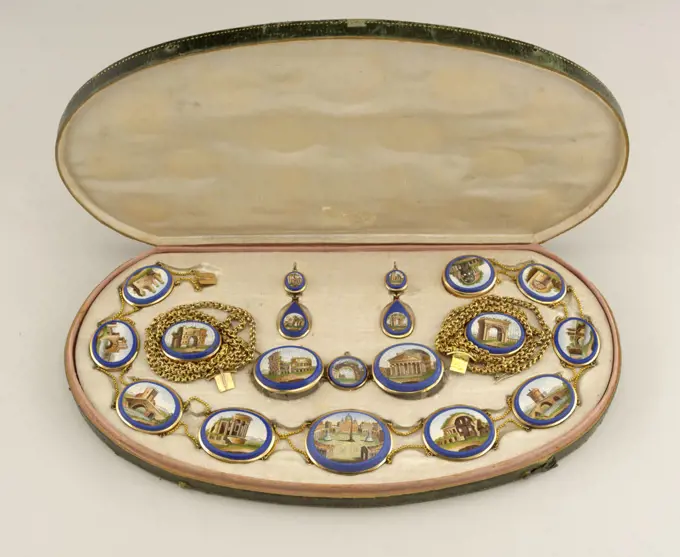
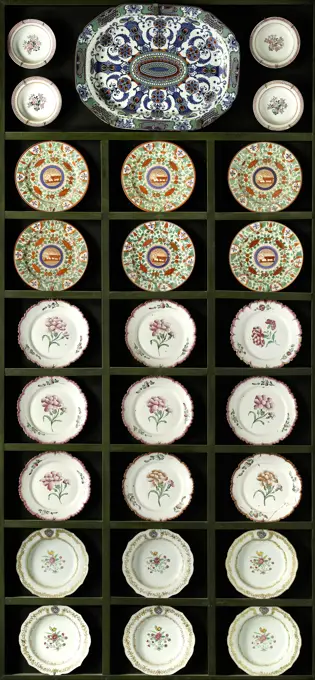
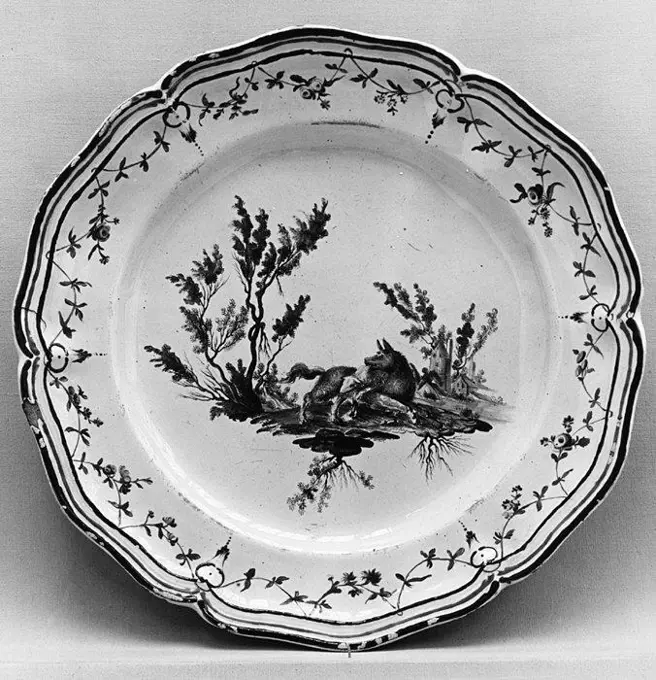
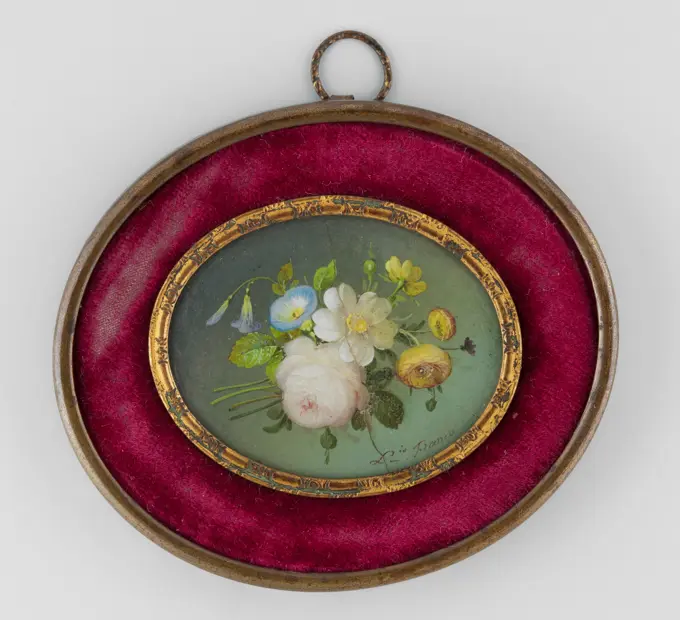
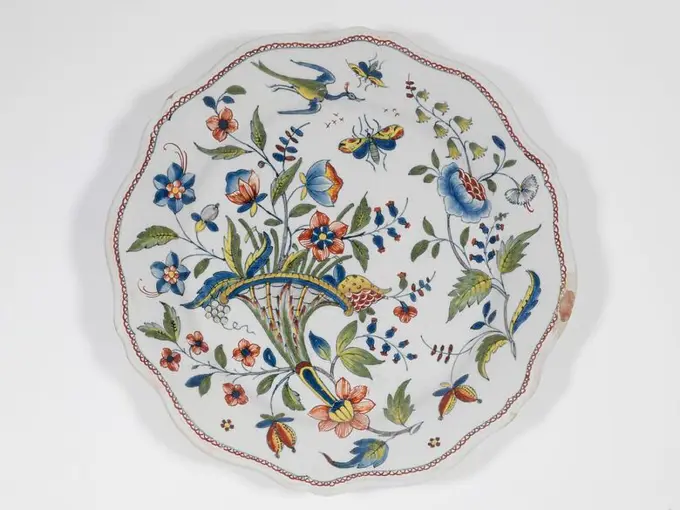
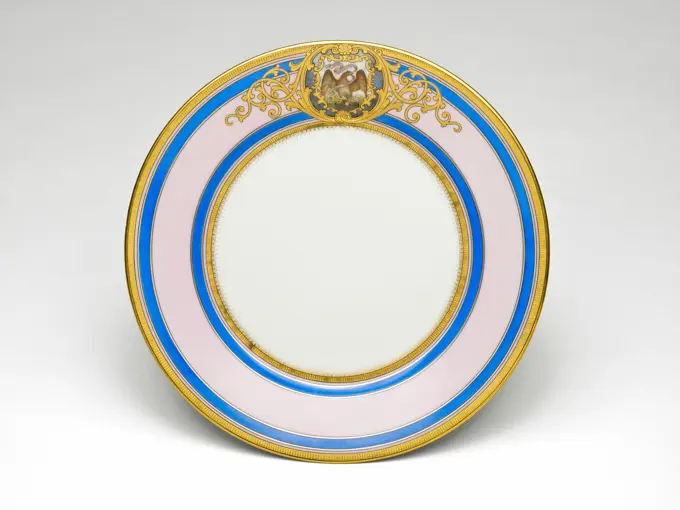
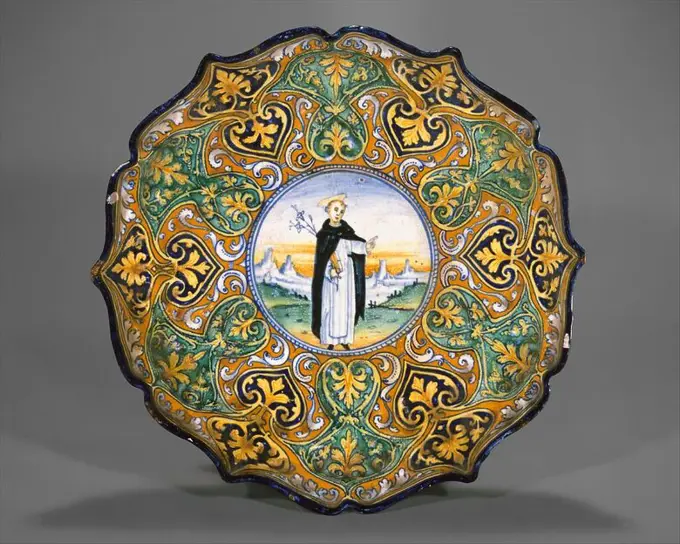
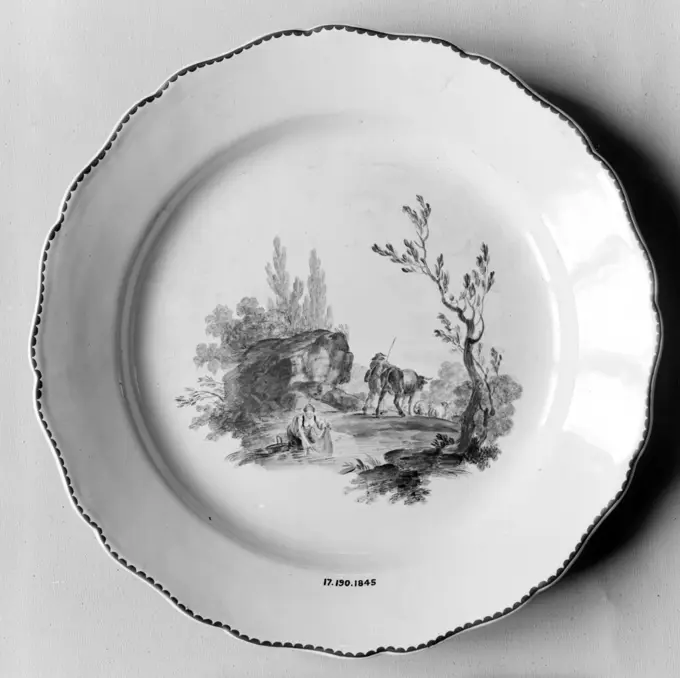
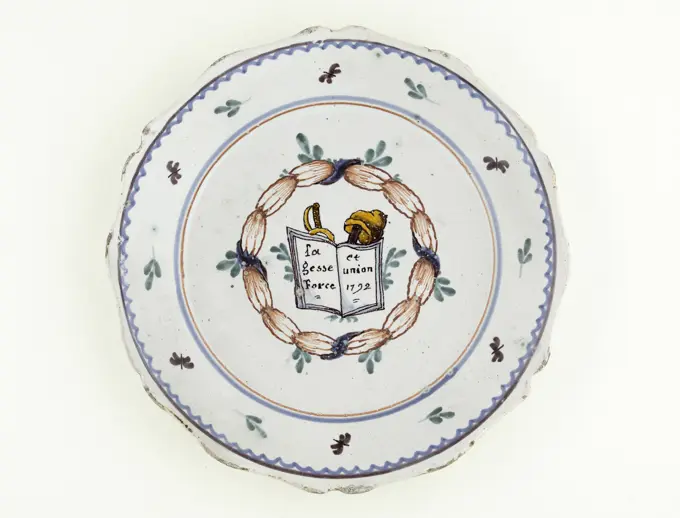
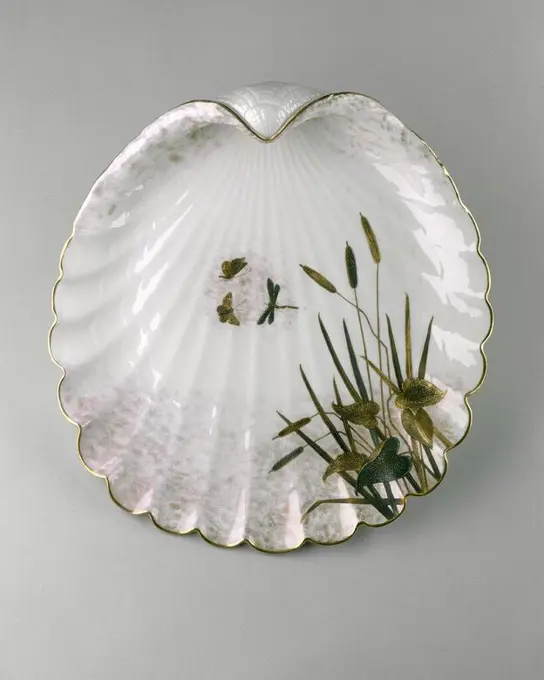
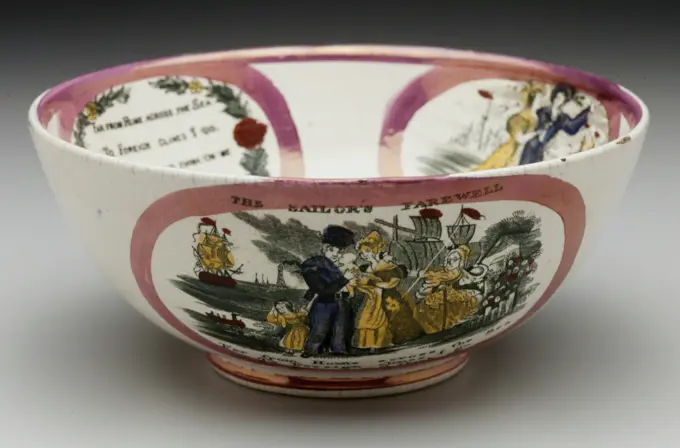
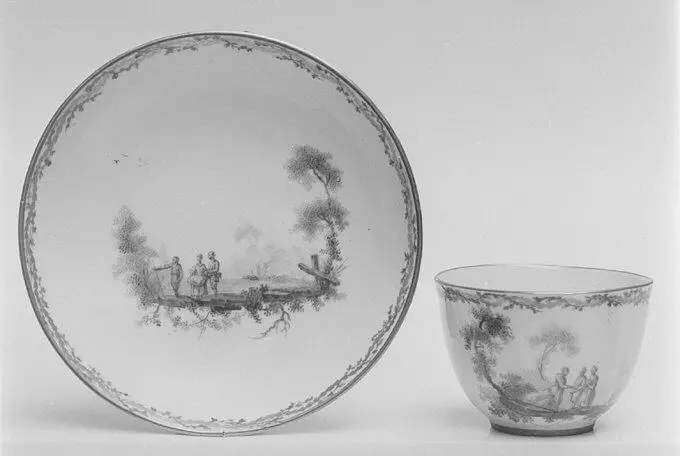
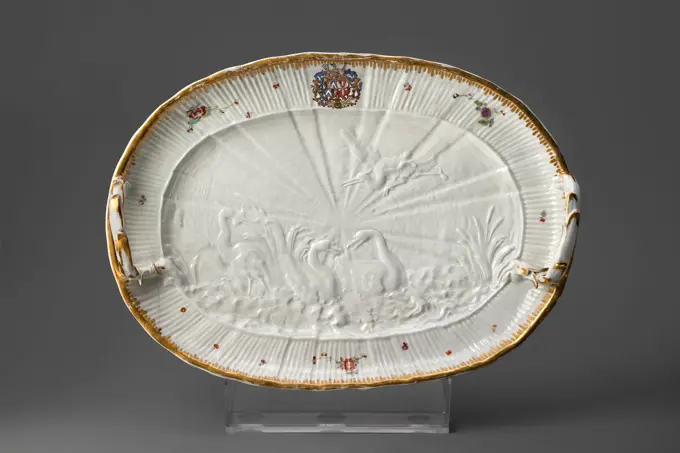
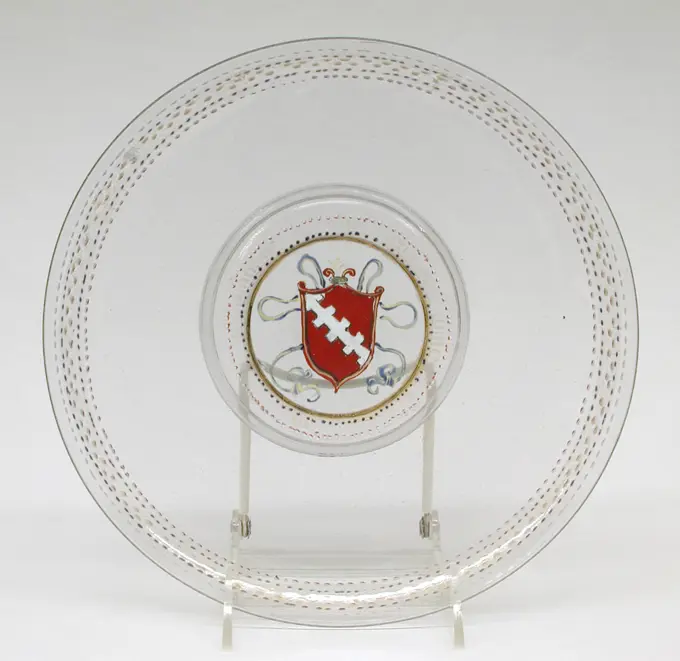
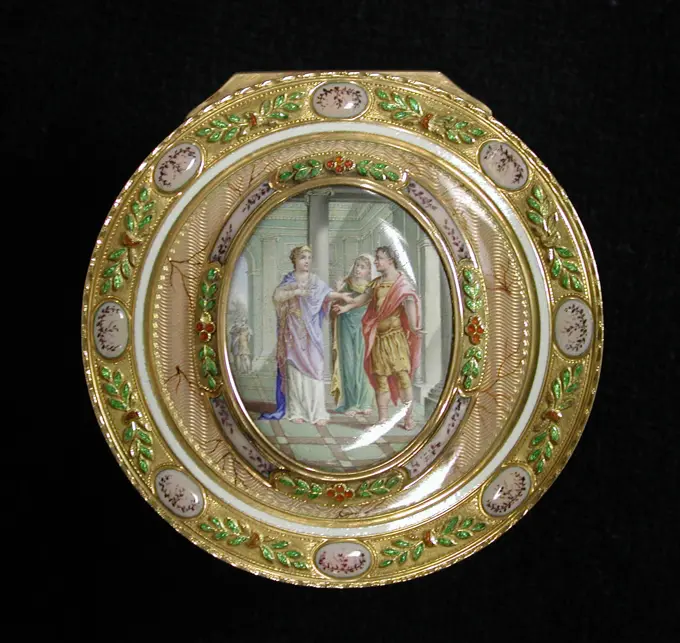
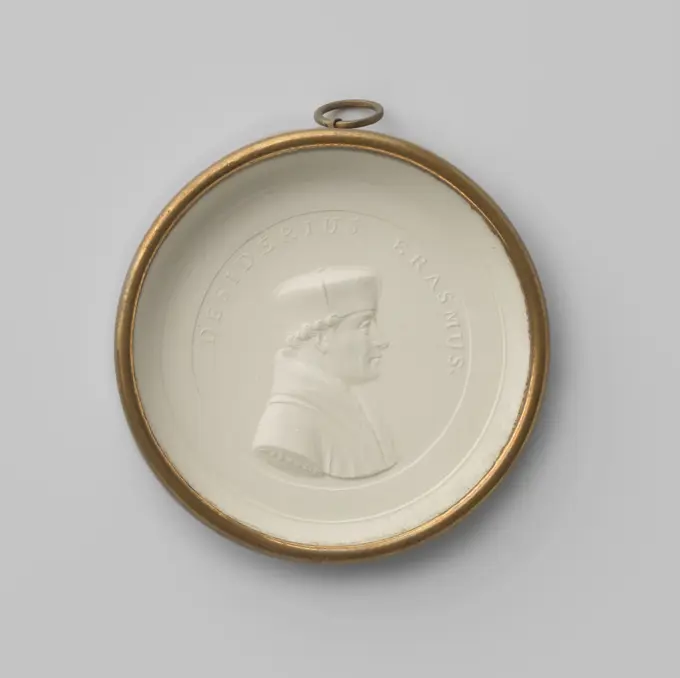
Plate, Tin-glazed earthenware, Circular plate with scalloped edge; dark green flora and fauna decoration, three grotesque-type figures in center. Blue-green tinted glaze., ca. 1760, ceramics, Decorative Arts, PlateOctagonal soup plate with the coat of arms of the Sayer family, anonymous, c. 1750 - c. 1774 Octagonal porcelain soup plate with squeezed corners, painted on the glaze in blue, red, pink, green, purple, black and gold. On the flat the coat of arms of the Sayer family, with a white twill and three birds against a red background. The helmet sign is a lion. The weapon is surrounded by acanthus leaves and flower branches. On the edge of loose flower branches and a Spearhead border. Weapon porcelain with email colors. China porcelain. glaze. gold (metal) painting / gilding / vitrification Octagonal porcelain soup plate with squeezed corners, painted on the glaze in blue, red, pink, green, purple, black and gold. On the flat the coat of arms of the Sayer family, with a white twill and three birds against a red background. The helmet sign is a lion. The weapon is surrounded by acanthus leaves and flower branches. On the edge of loose flower branches and a Spearhead border. Weapon porcelain wiCup and Saucer. Du Paquier Porcelain Manufactory (Austrian, 1718-1744); Austria, Vienna. Date: 1720-1730. Dimensions: Cup: 7.3 × 6.7 cm (2 7/8 × 2 5/8 in.); Saucer: diam. 13.3 cm (5 1/4 in.). Hard-paste porcelain, polychrome enamels, and gilding. Origin: Vienna. Museum: The Chicago Art Institute, USA.Anonymous. Plate at the Tree of Liberty. Earthenware. Paris, Carnavalet museum. 71683-19 Tree, decoration, flag, child, faience, revolutionary period, French revolution, plate, hatService set: a tray and two jugs. Kaiserliche Porzellanmanufaktur in Wien (1744-1864), factorySèvres Porcelain Manufactory, Cup and Saucer, 1780, hard-paste porcelain.Plate (England); Manufactured by Chelsea Porcelain Manufactory (United Kingdom); glazed porcelainBliżej Kultury ĆmielówDish 1750-75 British Creamware, so-called for its cream-colored body, is a refined earthenware with a lead-based glaze that was developed in Staffordshire, England around 1750. Due to its light color and glossy glaze, it was ideal for dinnerware. Economically affordable to produce, creamware was imported to America in large quantities. Although much creamware was used in America, it is rare to find pieces associated with a particular family. This dinner service (36.22.1 -.38) bears the initials SBW” for Samuel Blachley Webb. The set was imported from England in 1774 by Webb, who was an aide-de-camp and military secretary to General George Washington.. Dish 3322Plate: Storm, c. 1876. Félix Bracquemond (French, 1833-1914), Haviland & Co. (French). Porcelain; diameter: 24.1 cm (9 1/2 in.).. Porcelain plate, painted on the glaze in blue, red, pink, black and gold. On the flat the arms of the Herzeele family. The weapon consists of two fields: on the left a red background with a golden twill, right 1. A gold ring with four red hearts, 2. a red background with two crossed knots, 3. Three black vulture swifts. The helmet sign is a crown and the weapon is worn by a lion and a griffin, standing on golden pedestal in Louis XIV style. To the weapon flower drinks in Bianco Sopra Bianco. A Spearhead border on the wall. The edge with an adornment in the Viennese du Paquier style with flowers, garlands and peacocks. Weapon porcelain with email colors.. These dishes belong to a so-called confituurster, or star-shaped sweetmeat set. It was so named because the sweetmeat dishes were arranged in a star pattern around a piece at centre. The painted decoration in various colours was based onAsian porcelain. The Moriaanshooft pottery factory was renowned for its technically advanced and artistically refined tin-glazed earthenware.Dish. Round dish of multicolored painted majolica. On the flat is a landscape with trees painted in which a man running to the left with a hat and a stick in his left hand. The man wears a long jacket or a cape. Eight segment arcs are painted on the edge within which a coarsely applied decoration.Plate 1730-1740 Vienna. Hard-paste porcelain, monochrome black, and gildingTwo lidded butter dishes with saucers. Delft factories produced many small butter dishes, mostly in pairs. They vary in painted decorations, knobs and saucers. This model with vertical lugs was also made in the Meissen porcelain factory. The paintings in overglazeenamel - harbour views, figures and landscapes - are of high quality. The red and gold bars around the base resemble wooden slats or basketwork, as if the dishes are standing in little baskets.Sèvres Porcelain Manufactory, Cup and Saucer, 18th century, soft-paste porcelain.Plate bearing the arms of the Beekman family, anonymous, c. 1730 - c. 1735 Porcelain plate, painted on the glaze in blue, red, pink, green, yellow, black and gold. On the flat the weapon of the Beekman family. The weapon has a black background with gold roses or other flowers. The helmet sign is a half -naked figure who holds a bat. The weapon is surrounded by a cover of leaf vines. On the board is a river landscape that stretches over the wall and part of the edge with pavilions and boats. On the edge a band with flower vines. Two chips in the edge. Weapon porcelain with email colors. China porcelain. glaze. gold (metal) painting / gilding / vitrification Porcelain plate, painted on the glaze in blue, red, pink, green, yellow, black and gold. On the flat the weapon of the Beekman family. The weapon has a black background with gold roses or other flowers. The helmet sign is a half -naked figure who holds a bat. The weapon is surrounded by a cover of leaf vines. On the board is a river Dish, Doccia Porcelain Factory, Italian, established 1735, porcelain, vitreous enamel, gold, Asymetrical ovoid dish with scalloped rim, scrolled at left and right; rim decorated with wide blue band between thin gilt lines; in center, oval medallion with gilt border, showing landscape with two figures among classical ruins., Doccia, Italy, ca. 1780, ceramics, Decorative Arts, dish, dishDish 1770-80 Chinese, possibly for British market. Dish 193090Saucer-dish with an image of The Arbour, anonymous, c. 1740 - c. 1760 Porcelain bowl with round wall, painted on the glaze in blue, red, pink, green, yellow, purple, black and gold. There are two women on the flat and four children play, in the foreground three ducks in a pond and on either side of the arbor with birds; Twelve cartouches with butterflies, flower and fruit branches on the edge of stylized leaves on servetwork with it is saved; A decorative band on the outer edge. Decoration to design by Cornelis Pronk (1691-1754). European performance in email colors. Chinadraughtsman: Netherlands porcelain. glaze. gold (metal) painting / gilding / vitrification Porcelain bowl with round wall, painted on the glaze in blue, red, pink, green, yellow, purple, black and gold. There are two women on the flat and four children play, in the foreground three ducks in a pond and on either side of the arbor with birds; Twelve cartouches with butterflies, flower and fruit branches on the edge of sSaucer With figures and Animals near Pavilion at the Waterside. Dish of porcelain, painted on the glaze in blue, red, pink, green, black and gold. On the flat of the dish different people, ducks and a dog at pavilions on the waterfront, in the water single boats; On the edge tendrils interspersed with birds on a branch and landscapes in cartouches; The edge with a bond with geometric pattern. Wall of the dish has been broken. Famille Rose / Mandarin.Covered Platter. Culture: Chinese, for American market. Dimensions: H. 11 in. (27.9 cm). Date: 1785-90.This object belongs to a large dinner service (10.149.1-.248) bearing the Townley family coat-of-arms. The service, probably ordered by Justice Samuel Chase (1741-1811) of Annapolis, Maryland, displays the enamel-painted arms of Margaret Townley, Chase's aunt. Museum: Metropolitan Museum of Art, New York, USA.Saucer ca. 1860-66 Chinese, for American market. Saucer 7261Russian National Wooden Tableware Russian national handmade wooden container on an isolated studio background Copyright: xZoonar.com/AndreyxSkatx 8079763Félix Bracquemond (1833-1914). Service of "Japanese thirteen graces". Soup bowl. Porcelain. Museum of Fine Arts of the City of Paris, Petit Palais. ART MENAGER, CREUSE PRESSITTE, Cup, EVENTEIL, Woman, Japanese, Porcelain, Table service, Service, Thirteen Japanese grace, Crockery, 19th 19th 19th 19th 19th XIXth century, PATTERToy bread plate - Georgeville D'après Francis Morley, 1845-1850Snuffbox 1757-58 J.F.()B. In eighteenth-century Europe, Paris led the production of high-quality luxury goods. Parisian goldsmiths made a wide range of small, personal articles such as snuffboxes; étuis to hold sealing wax, tweezers, or utensils for sewing; souvenirs, which contained thin ivory tablets for note taking; and shuttles for knotting lace. Gold snuffboxes and boxes decorated with portrait miniatures were prized and frequently given as royal gifts, often to ambassadors or members of the court in lieu of cash payments for their services. Coveted and admired, these boxes were produced from a variety of materials. The best were skillfully made of gold and embellished with diamonds, enameled decoration, lacquer, and other luxurious materials. By the middle of the century, the taking of snuff had become an entrenched social ritual, and the snuffbox, too, had become an important social prop. Snuffboxes were considered highly fashionable accessories, with some merchants advertisingCup and saucer, Meissener porcelain manufactory, c. 1725 Round dish of painted porcelain. The dish is decorated on the back in relief with three painted flower branches. The dish is decorated with a double red circle within which a Höroldt chinoiserie consisting of a number of Chinese at a high palm tree. Along the edge a golden trim with an ornament in gold runs. Float porcelain Round dish of painted porcelain. The dish is decorated on the back in relief with three painted flower branches. The dish is decorated with a double red circle within which a Höroldt chinoiserie consisting of a number of Chinese at a high palm tree. Along the edge a golden trim with an ornament in gold runs. Float porcelainCup with handle with an European couple sitting in a landscape, anonymous, c. 1775 - c. 1799 Porcelain ear head, painted on the glaze in blue, red, pink, green, yellow, purple, black and gold. On the wall a medallion of flower ranks with a representation of a sitting European pair in a landscape. They are watched by a third person behind them, reminiscent of a character from the Commedia dell'arte. Behind the couple a vase on a pedestal. A crack in the wall of the head. European performance in email colors. China porcelain. glaze. gold (metal) painting / gilding / vitrification Porcelain ear head, painted on the glaze in blue, red, pink, green, yellow, purple, black and gold. On the wall a medallion of flower ranks with a representation of a sitting European pair in a landscape. They are watched by a third person behind them, reminiscent of a character from the Commedia dell'arte. Behind the couple a vase on a pedestal. A crack in the wall of the head. European performance in email colPlate with marine subject ca. 1789-97 Dihl et Guérhard The decoration and unusual painting composition found on this plate, which probably dates to around 1797, attest to the high quality and experimental work of the Dihl et Guérhard manufactory. Founded in 1781 by the modeler Christophe Dihl and the entrepreneur Antoine Guérhard and based in Paris, the factory became the most important private porcelain firm during the French Revolution. Reaching a height during the turbulent period of 1789 to 1798, the firm capitalized upon the abolition of Sèvress royal monopoly on porcelain in order to experiment with a variety of vessel shapes, ground colors, decorative effects, and subject matter. Although eighteenth-century natural history cabinets often featured shells and corals, artists rarely depicted specimens in a natural setting, particularly one as unsettling as the misty shoreline and cliffs found in this group of three plates (2018.143.1-.3).. Plate with marine subject. French, Paris.Plate. Retailer: E.V. Haughwout and Company, American, ca. 1834-ca. 1870Dinner service, incomplete  plate plate Mi Nia (Meissen)Dinner plate -Dinner plate, c. 1865, Minton's Pottery and Porcelain Factory, British, 1 1/8 x 10 3/8 in. (2.86 x 26.35 cm), Ceramic, England, 19th centuryDish 17th century. Dish 447224Dish of a coffee and tea set, painted with figures in a river landscape in beet red. Dish of porcelain. Part of a coffee and tea set, painted in beet red on a light pink fond, with figures in a river landscape, with buildings and ruins.Plate 1785-90 Chinese, for American market This object belongs to a large dinner service (10.149.1-.248) bearing the Townley family coat-of-arms. The service, probably ordered by Justice Samuel Chase (1741-1811) of Annapolis, Maryland, displays the enamel-painted arms of Margaret Townley, Chase's aunt.. Plate. Chinese, for American market. 1785-90. Porcelain. Made in ChinaImperial and Royal Porcelain Manufactory Vienna, Cup and Saucer, 1804, hard-paste porcelain.Bell-shaped cup with Dutch ships anchored at the Table Bay, anonymous, c. 1750 - c. 1774 Bell -shaped head of porcelain, painted on the glaze in blue, red, green, purple, black and gold. On the outer wall a performance of various Dutch ships for anchor in the South African table bay, at the Dutch location; The inner edge with decorative tire interspersed with flower vines in cartouches. Head has been broken. European performance in email colors. China porcelain. glaze. gold (metal) painting / gilding / vitrification Bell -shaped head of porcelain, painted on the glaze in blue, red, green, purple, black and gold. On the outer wall a performance of various Dutch ships for anchor in the South African table bay, at the Dutch location; The inner edge with decorative tire interspersed with flower vines in cartouches. Head has been broken. European performance in email colors. China porcelain. glaze. gold (metal) painting / gilding / vitrificationSoup plate - St. Louis Gate. Porte St. Louis D'après Robert Cochran & Company, 1846-1896Plate;  19th century (1801-00-00-1900-00-00);Saucer French 18th-19th centuryTile, Anonymous, 1500 - 1600 Cuenca tile, painted in white, green, yellow-brown and blue. In a circle a rosette with fanning leaves and a flower -shaped heart. Leaf parts in the corners. Spain earthenware. tin glaze Cuenca tile, painted in white, green, yellow-brown and blue. In a circle a rosette with fanning leaves and a flower -shaped heart. Leaf parts in the corners. Spain earthenware. tin glazeSlop Bowl with Chinoiserie Vignettes Bowl; Manufactured by Royal Porcelain Manufactory, Berlin (Germany); Style of Jacques-Gabriel Huquier (French, 1730 - 1805), François Boucher (French, 1703-1770); Germany; hard paste porcelain, vitreous enamel, goldDish, part of a set, painted with bird and violins, N.V. Haagsche Plateelfabriek Rozenburg, C.W.J. 't Hart, 1913Dish, multi-colored painted with a kakiemon decor, Meissener Porzellan Manufaktur, c. 1740 Dish of painted porcelain. The dish has the shape of two partially covering leaves. The edge is partly sharp. One leaf has a large grain with its windows, has a relief pattern of cutting circles with a cross in the middle and is painted with stroked flower branches. The other leaf is painted with a tiger around bamboo and with a prunus with a thick purple trunk. The dish is marked. Float porcelain Dish of painted porcelain. The dish has the shape of two partially covering leaves. The edge is partly sharp. One leaf has a large grain with its windows, has a relief pattern of cutting circles with a cross in the middle and is painted with stroked flower branches. The other leaf is painted with a tiger around bamboo and with a prunus with a thick purple trunk. The dish is marked. Float porcelainPlate, with a woman with a jug and a child for a waterfall, Peter Regout, c. 1860 - c. 1890 Plate of earthenware with black transfer decor. On the flat a woman with jug and a child with a drinking bowl for a waterfall. The edge with vines, grapes and pears. Maastricht . Plate of earthenware with black transfer decor. On the flat a woman with jug and a child with a drinking bowl for a waterfall. The edge with vines, grapes and pears. Maastricht .Cup with handle with the arms of the Saunders family, anonymous, c. 1725 - c. 1749 Porcelain ear head, painted on the glaze in blue, red, black and gold. On the wall the coat of arms of the Saunders family with three elephants; The helmet sign is also an elephant surrounded by acanthus leaves. Around a European decorative tire in Louis XIV style with birds and service in cartouches. Old label on the bottom with 'Saunders (Governor of Madras)'. A crack in the wall of the head. Weapon porcelain with email colors. China porcelain. glaze. gold (metal) painting / gilding / vitrification Porcelain ear head, painted on the glaze in blue, red, black and gold. On the wall the coat of arms of the Saunders family with three elephants; The helmet sign is also an elephant surrounded by acanthus leaves. Around a European decorative tire in Louis XIV style with birds and service in cartouches. Old label on the bottom with 'Saunders (Governor of Madras)'. A crack in the wall of the head. Weapon porcelAnonymous. Plate with the weapons of France. Earthenware. Around 1789. Paris, Carnavalet museum. 72430-45 Weapon France, coat of arms, faience, revolutionary period, French revolution, platePlate. Earthenware. JULES Old and Cie Manufacture. 2nd half of the 19th century. Museum of Fine Arts of the City of Paris, Petit Palais. PLATE Crockery, Earthenware, Faience, Insect, Insect, Jules Vie Mois and Cie Manufacture, Bird, Crockery, Putch, Bird,. Plate painted multily painted with the arm of the Zeeland family Douw. Under the coat of arms the inscription: iac.douw. And in the bow, left a and right 1750. The edge is painted with acanthus leaves, shell motifs, lambrequins and flower branches. (The label on Zaal speaks of the Frisian DOOW family).Child's plate -Plate of English hard baked earthenware, faience fine from Creil., Creil (Oise), c. 1810 - c. 1835 plate (dishes) Round plate of hard baked pottery. The plate is cream -colored and is decorated with an overpressure. On the flat is a representation of the history of Fabius Dorsus, the edge has lions and centaurs. France earthenwareDish, multi -colored painted with a landscape with figures., Meissener Porzellan Manufaktur, 1777 Round dish of painted porcelain. The dish is painted with landscapes in which figures and along the edge a wide strip of green braid. The dish is marked. Float porcelain Round dish of painted porcelain. The dish is painted with landscapes in which figures and along the edge a wide strip of green braid. The dish is marked. Float porcelainBowl. Worcester Porcelain Factory; Worcester, England, founded 1751. Date: 1780-1790. Dimensions: H. 32.9 cm (12 15/16 in.); diam. 16.5 cm (6 1/2 in.). Soft-paste porcelain with black transfer-printed decoration. Origin: Worcester. Museum: The Chicago Art Institute, Chicago, USA. Author: Worcester Royal Porcelain Company.Plate ca. 1791 Sèvres Manufactory French Porcelain decorated with a black ground in imitation of Asian lacquer was produced at Sèvres for about a fifteen-year period beginning in 1790. Furniture decorated with imported black lacquer panels saw a resurgence of popularity in the last two decades of the eighteenth century, and the Sèvres factory's efforts to simulate black lacquer on porcelain were probably stimulated by this renewed general interest in lacquer decoration. Black-ground Sèvres porcelain was decorated with chinoiserie scenes executed in gold, which was often applied in subtle tones of yellow, green, and red. Small decorative highlights were often executed in platinum, and the ability to apply platinumfirst mastered by the factory in 1790may have been an impetus to produce these lacquer-inspired pieces.[Jeffrey H. Munger, 2015. Plate 202674Serving plate - Holmes, Plant & Maydew, 1876-1885 Holmes, Plant & Maydew, 1876-1885Plate. Sèvres Porcelain Manufactory; French, founded 1740; Painted by Edmé-François Bouilliat (French, 1758-1810) and Pierre-Antoine Méreaud (French, active 1754-1791); Gilded by Etienne-Henry Le Guay (French, active 1748-1749 and 1751-1796) and Philippe Castel (French, active 1771-1797). Date: 1778. Dimensions: Diam. 26 cm (10 1/4 in.). Soft-paste porcelain, turquoise-blue ground, polychrome enamels, and gilding. Origin: Sèvres. Museum: The Chicago Art Institute, Chicago, USA. Author: Manufacture nationale de Sevres.Bell-shaped cup with a woman an a man with a mandolin, anonymous, c. 1760 - c. 1780 Bell -shaped head of porcelain, painted on the glaze in blue, red, pink, black and gold. On the wall a lobed cartouche with a European woman and a man with a mandolin on a terrace in front of a building, a spinging dog for the balustrade; A castle in the background; Around the cartouche half flower straws and leaves. On the inner edge a 'Spearhead border'. European performance in email colors and Encre de Chine. China porcelain. glaze. gold (metal) painting / gilding / vitrification Bell -shaped head of porcelain, painted on the glaze in blue, red, pink, black and gold. On the wall a lobed cartouche with a European woman and a man with a mandolin on a terrace in front of a building, a spinging dog for the balustrade; A castle in the background; Around the cartouche half flower straws and leaves. On the inner edge a 'Spearhead border'. European performance in email colors and Encre de Chine. China porcelDessert plate - Davenport DavenportManufacture of Sèvres. "Pot with a celestial blue fon jelle". Ceramics, tender dough porcelain, polychrome enamels. 1771-1771. Museum of Fine Arts of the City of Paris, Petit Palais. 101893-11 Artichoke, blue, blue color, lid, decor, animal decor, gilding, detail, email, pheasant, legume, bird, porcelain, pot, pot, tablet, dishes, 18th 18th 18th 18th 18th 18th 18th centuryHelmut Hiatt, Plate  Damn and Waterworks, Philadelphia, c 1936 Plate - Damn and Waterworks, PhiladelphiaMicro-mosaic, Gold sheet and wire, glass mosaics, A gold oval brooch outlined in blue with an inner image of the Colisseum in Rome. Brooch is part of a set., Rome, Italy, 1800-1825, jewelry, Decorative Arts, Brooch, BroochBord with the arms of Van Buren and two ornamental borders, anonymous, c. 1700 - c. 1724 Plate of porcelain, painted in underly glaze blue and on the glaze red, green, black and gold. On the flat the family crest of Van Buren with a grin against a gold background on the left and twice seven golden rectangles on a red background. The helmet sign is a greyhound with wings surrounded by acanthus leaves. The wall with servetwork with a stylized flower, interrupted by cartouches with a landscape or a flower vase. The edge with a band with brushes and a band with leaves on servetwork. Four pronen on the bottom. Weapon porcelain in Imari. Arita. Arita porcelain. glaze. cobalt (mineral). gold (metal) painting / gilding / vitrification Plate of porcelain, painted in underly glaze blue and on the glaze red, green, black and gold. On the flat the family crest of Van Buren with a grin against a gold background on the left and twice seven golden rectangles on a red background. The helmet sign is a Plate ca. 1750-60 Continental European. Plate 200859Victor Hugo (1802-1885). Chinese decor from Juliette Drouet's house in Guernsey, West Wall. Green wooden record containing plates and dishes, composed of twenty-seven compartments (right side of the west wall). Painted wood. 1857-1864. Paris, house of Victor Hugo. 78171-18 Asian art, decorative arts, painted wood, green wood, Chinese cabinet, locker, chinoiserie, compartment, decor, faience, storage, Chinese living room, dishes, 19th XIX 19th 19th 19th 19th century, plate, dishSèvres Porcelain Manufactory, Saucer, 1811, Hard-paste porcelain.Charger with Armorial Shield. Italy, Deruta, circa 1510. Furnishings; Serviceware. Tin-glazed earthenware (maiolica). Cup and saucer of porcelain, painted on the glaze in blue, red, pink, green, purple, black and gold. On the flat a crowned monogram 's.c.w.' Flanked by angels with a trumpet. Under the monogram the date '1776'. Four flower branches on the wall. The inner edge with a decorative band. Old label on the bottom with 's.c.w. (British Museum) '. A crack in the wall of the head. Weapon porcelain with email colors.Plate with arms of the Earl of Lincolnshire, c. 1775, 15/16 x 8 3/4 in. (2.38 x 22.23 cm), Porcelain, China, 18th centuryBord van Faience, de Roos (Possible), c. 1690 - C. 1720 Plate with blue painting of tree -rich landscapes in which some figures: preceded a loaded mule and followed by a man with a stick. At the top in the middle a coat of arms with the spheres of canaan, a grape voucher wearing and a grapes as a helmet sign, a banderole with the initials SB at the bottom. Delft . Plate with blue painting of tree -rich landscapes in which some figures: preceded a loaded mule and followed by a man with a stick. At the top in the middle a coat of arms with the spheres of canaan, a grape voucher wearing and a grapes as a helmet sign, a banderole with the initials SB at the bottom. Delft .Paris type, Cup and Saucer, 1810-15, hard-paste porcelain.Plate 18th century French, Lunéville or environs Faience, or tin-glazed and enameled earthenware, first emerged in France during the sixteenth century, reaching widespread usage among elite patrons during the seventeenth and early eighteenth centuries, prior to the establishment of soft-paste porcelain factories. Although characterized as more provincial in style than porcelain, French faience was used at the court of Louis XIV as part of elaborate meals and displays, with large-scale vessels incorporated into the Baroque garden designs of Versailles. Earlier examples of French faience attest to the strong influence of maiolica artists from Italy. Later works demonstrate the ways in which cities such as Nevers, Rouen, Lyon, Moustiers, and Marseille developed innovative vessel shapes and decorative motifs prized among collectors throughout Europe. While faience can be created from a wide mixture of clays, it is foremost distinguished by the milky opaque white color achieved by the additFlowers; Franco L. IO (Fl. 1800-1900); 1800 (1800-00-00-1800-00-00);Madeyski Antoni (1862-1939), Madeyski, Antoni (1862-1939)-collection, bouquets, flora, flowers, still life, foreign miniatures, rosesServing plate - View of Montreal, Quebec D'après Podmore, Walker & CompanyPlate. Culture: French, Rouen. Dimensions: Diameter: 9 3/4 in. (24.8 cm). Date: ca. 1750-60.Faience, or tin-glazed and enameled earthenware, first emerged in France during the sixteenth century, reaching widespread usage among elite patrons during the seventeenth and early eighteenth centuries, prior to the establishment of soft-paste porcelain factories. Although characterized as more provincial in style than porcelain, French faience was used at the court of Louis XIV as part of elaborate meals and displays, with large-scale vessels incorporated into the Baroque garden designs of Versailles. Earlier examples of French faience attest to the strong influence of maiolica artists from Italy. Later works demonstrate the ways in which cities such as Nevers, Rouen, Lyon, Moustiers, and Marseille developed innovative vessel shapes and decorative motifs prized among collectors throughout Europe.While faience can be created from a wide mixture of clays, it is foremost distinguished by the miIllinois Plate c 1878-1889 United States. Joseph S. Potter served as a diplomat and United States Consul in Germany, where he embraced the hobby of china painting after he noticed women in the consulate taking lessons and later visited the Meissen Porcelain Manufactory. Potter painted a series of ìstatesî plates, including this Illinois plate, which is decorated in polychromatic minerals, gold, and silver. Inside the gold, filigree-patterned cartouche, ìIllinoisî is depicted as a bald eagle against rays of sunshine, with the state motto, ìState Sovereignty, National Union.î In the late 19th century, when such pieces were at the height of their popularity, these plates would have been displayed in china cabinets, alongside other ceramics.. Hard paste porcelain . Joseph PotterSaucer. Koenigliche Porcellain Fabrique, Meissen (1710-1763), factoryDish (crespina). Culture: Italian, Faenza. Dimensions: Diam. 11 1/2 in. (29.2 cm). Date: ca. 1540-50. Museum: Metropolitan Museum of Art, New York, USA.Plate ca. 1777-1800 Probably Antoine Bonnefoy French Faience, or tin-glazed and enameled earthenware, first emerged in France during the sixteenth century, reaching widespread usage among elite patrons during the seventeenth and early eighteenth centuries, prior to the establishment of soft-paste porcelain factories. Although characterized as more provincial in style than porcelain, French faience was used at the court of Louis XIV as part of elaborate meals and displays, with large-scale vessels incorporated into the Baroque garden designs of Versailles. Earlier examples of French faience attest to the strong influence of maiolica artists from Italy. Later works demonstrate the ways in which cities such as Nevers, Rouen, Lyon, Moustiers, and Marseille developed innovative vessel shapes and decorative motifs prized among collectors throughout Europe. While faience can be created from a wide mixture of clays, it is foremost distinguished by the milky opaque white color achieved by the aSoup Plate c 1790 England. Creamware .Covered Dish. China. Date: 1760-1770. Dimensions: Overall: 19.4 × 28.6 × 28.3 cm (7 5/8 × 11 1/4 × 11 1/8 in.)Dish: 3.5 × 28.6 × 28.3 cm (1 3/8 × 11 1/4 × 11 1/8 in.); Cover: 16.6 × 26.7 × 26.4 cm (6 3/8 × 10 1/2 × 10 3/8 in.). Enameled copper decorated with canton enamels. Origin: Junyao. Museum: The Chicago Art Institute, Chicago, USA.Anonymous. "Wisdom, strength, union" plate. Earthenware. 1792. Paris, Carnavalet museum. 72430-9 Phrygian cap, crown, faience, strength, revolutionary period, reunion, French revolution, wisdom, three orders, union, plateTray. Culture: American. Dimensions: 15 5/8 x 14 5/8 in. (39.7 x 37.1 cm). Maker: Ott and Brewer (1871-1893). Date: 1876-83. Museum: Metropolitan Museum of Art, New York, USA.Armorial Plate 18th century Japan. Armorial Plate 49338Sailor's Farewell' punch bowl, mid 19th century, 3 3/4 x 8 5/8 x 8 5/8 in. (9.53 x 21.91 x 21.91 cm), Pottery, lustre glaze, England, 19th century. Porcelain plate, painted on the glaze in blue, red, black and gold. On the flat a representation of two Dutch ships for Anchor in the South African table bay, at the Dutch location; The edge with a decorative band in the Viennese du Paquier-style. European performance in Encre de Chine.Teabowl and saucer ca. 1780-84 Loosdrecht Dutch. Teabowl and saucer 188988 Factory: Loosdrecht, Teabowl and saucer, ca. 178084, Hard-paste porcelain, Overall (Teabowl): 1 7/8  2 5/8 in. (4.8  6.7 cm); Diameter (Saucer): 5 1/8 in. (13 cm). The Metropolitan Museum of Art, New York. Rogers Fund, 1906 (06.346a, b)Fili Empir from miniatures, Saucer with the Pelikan coat of arms, from a set with a branch; Baranówka (Porcelain Manufaktura; 1804-2012); 1827 (1827-00-00-1827-00-00);Board with an oriental street face on the flat. Pottery plate with red transfer decor. On the flat an oriental street face. On the edge of the plate among other circles with flowering branches.Oval platter with handles; Koenigliche Porcellain Fabrique, Meissen (1710-1763), Eberlein, Johann Friedrich (1695-1749); 1740-1741 (1740-00-00-1741-00-00);Bruehl, Henryk (1700-1763), swan service, coats of arms, platters, purchase (provenance)Small plate with a miniature. unknown, painter, Koenigliche Porzellan Manufaktur - KPM (Berlin ; 1763-1918), factorySet of six small heart-shaped dishes. Delft, c. 1735-1755tin-glazed earthenware (faience)Tazza 16th century Italian, Venice (Murano). Tazza 186120Snuffbox with miniature depicting the return of Theseus 1781 Probably by Barthélemy Pillieux In eighteenth-century Europe, Paris led the production of high-quality luxury goods. Parisian goldsmiths made a wide range of small, personal articles such as snuffboxes; étuis to hold sealing wax, tweezers, or utensils for sewing; souvenirs, which contained thin ivory tablets for note taking; and shuttles for knotting lace. Gold snuffboxes and boxes decorated with portrait miniatures were prized and frequently given as royal gifts, often to ambassadors or members of the court in lieu of cash payments for their services. Coveted and admired, these boxes were produced from a variety of materials. The best were skillfully made of gold and embellished with diamonds, enameled decoration, lacquer, and other luxurious materials. By the middle of the century, the taking of snuff had become an entrenched social ritual, and the snuffbox, too, had become an important social prop. Snuffboxes were considerPlate ca. 1830-ca. 1840 British (American market). Plate 5972A plate from the "Babie Skiego" website; Imperial Porcelain Factory in St. Petersburg (1744-1917); around 1825 (1820-00-00-1830-00-00);Saucer with a Chinese junk and the arms or amsterdam. Dish of porcelain, painted on the glaze in blue, red, pink, green, yellow, black and gold. On the front of the dish a Chinese jonk with crew on the waves, above the arms of Amsterdam. Weapon porcelain.Desiderius Erasmus, Gottfried Eichler, 1687 - 1757 locket Desiderius Erasmus. One -sided medallion in brass ring rear glass on bearing eye and carrying ring. Front: breastpiece man with hat to the right inside. Reverse: label with inscription. Berlin gypsum. brass (alloy). glass castingCommemorative dinner plate - Dominion of Canada Josiah Wedgwood Josiah Wedgwood