Decorative Plates

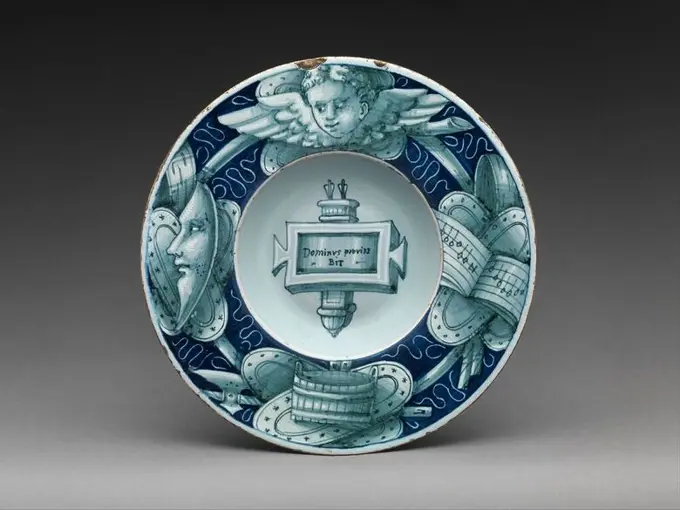
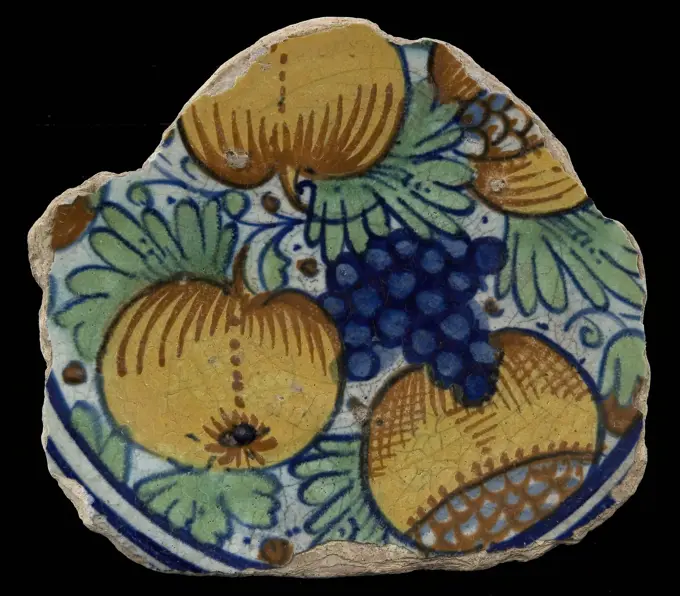
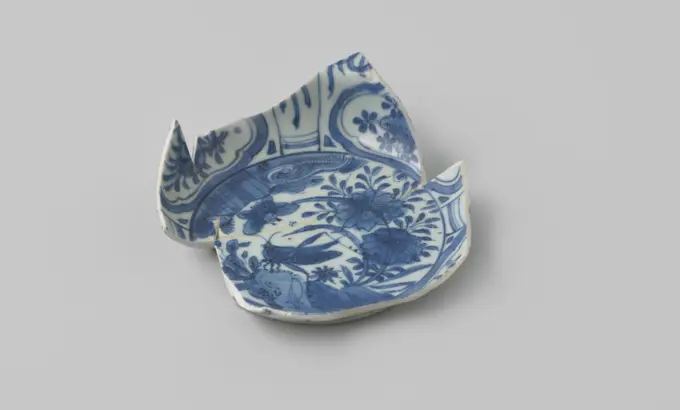
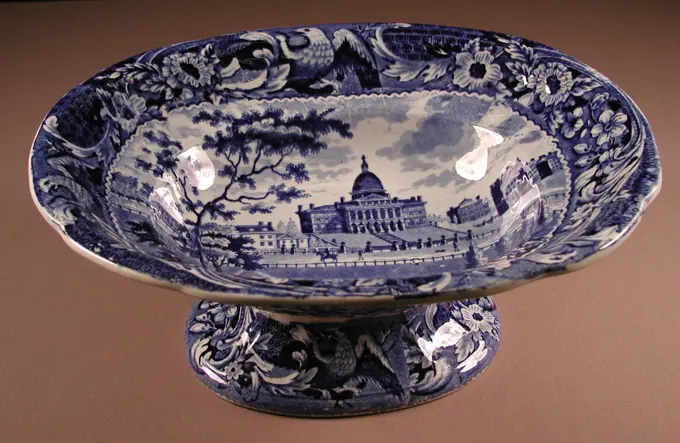
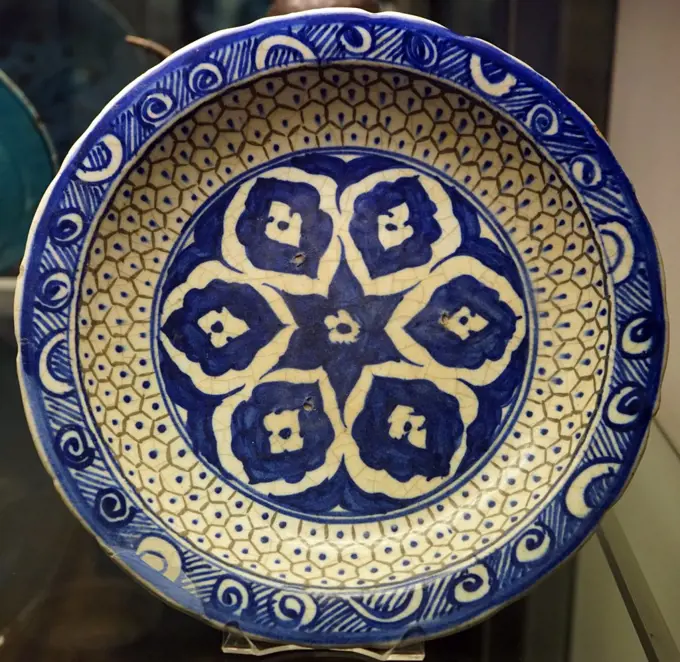
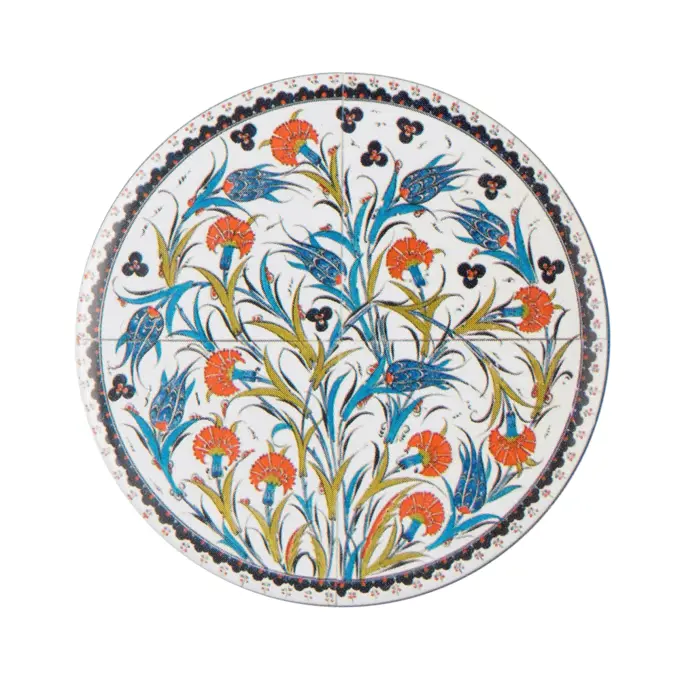
A collection of historic decorative plates featuring intricate blue designs, floral motifs, and detailed craftsmanship from Asian ceramics.

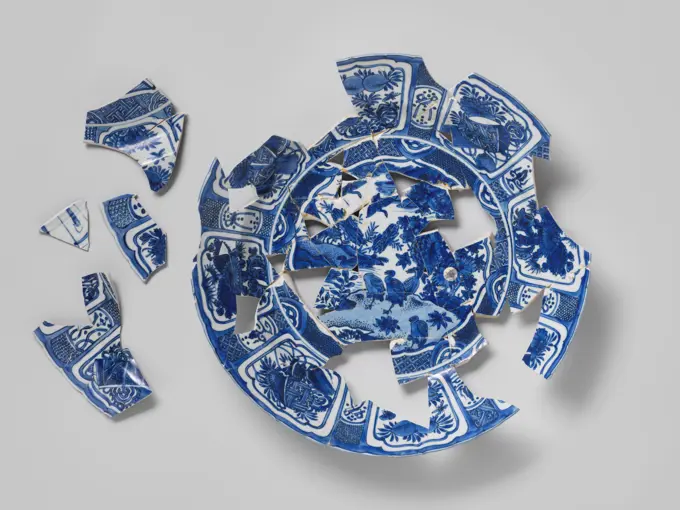
Sign from V.O.C.-ship De 'Witte Leeuw', Anonymous, Before 1613 plate (dishes) Sign from V.O.C. ship De 'Witte Leeuw', 95 present. Jingdezhen bone china (material)   Sint-Helena
Sign from V.O.C.-ship De 'Witte Leeuw', Anonymous, Before 1613 plate (dishes) Sign from V.O.C. ship De 'Witte Leeuw', 95 present. Jingdezhen bone china (material) Sint-Helena
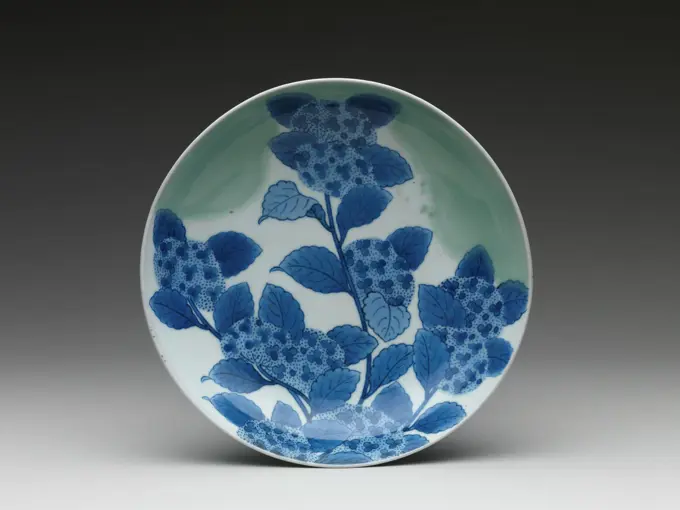
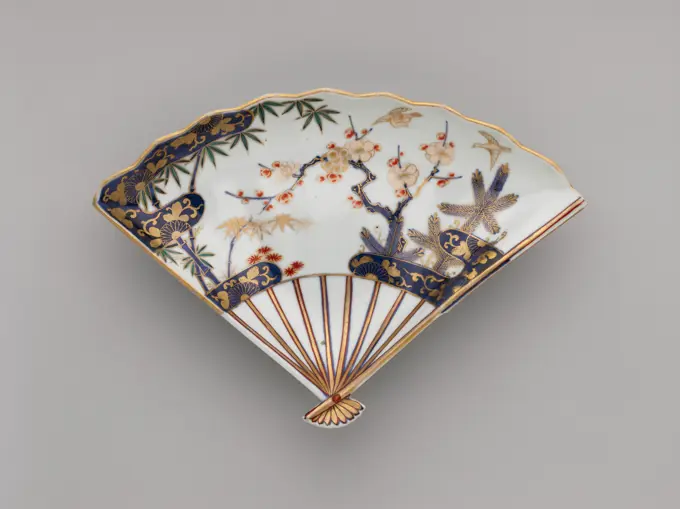
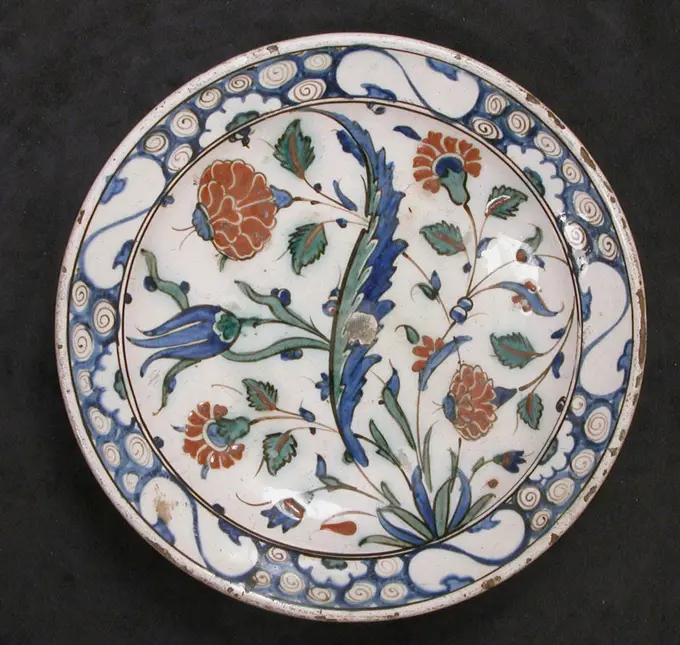
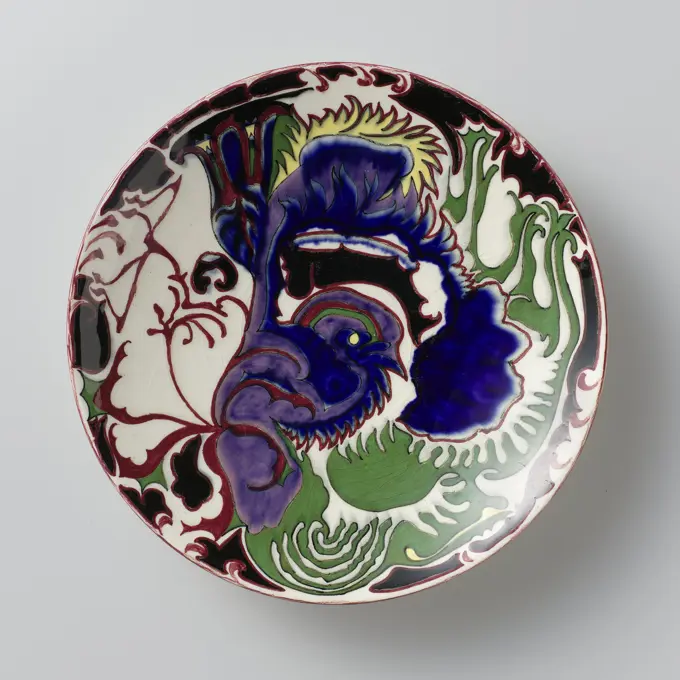
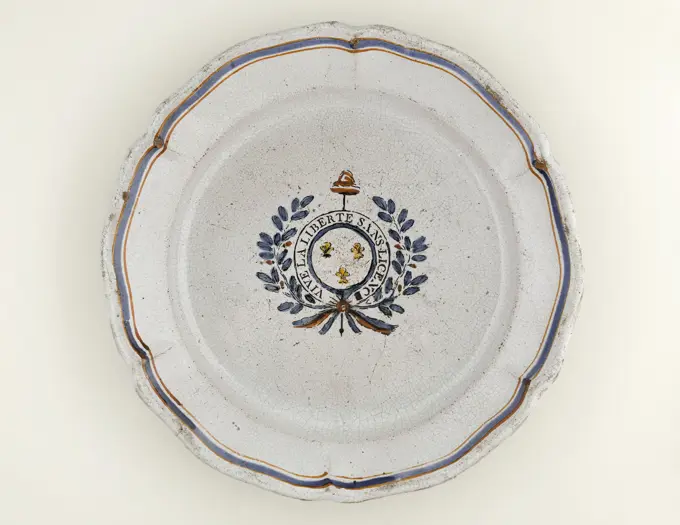
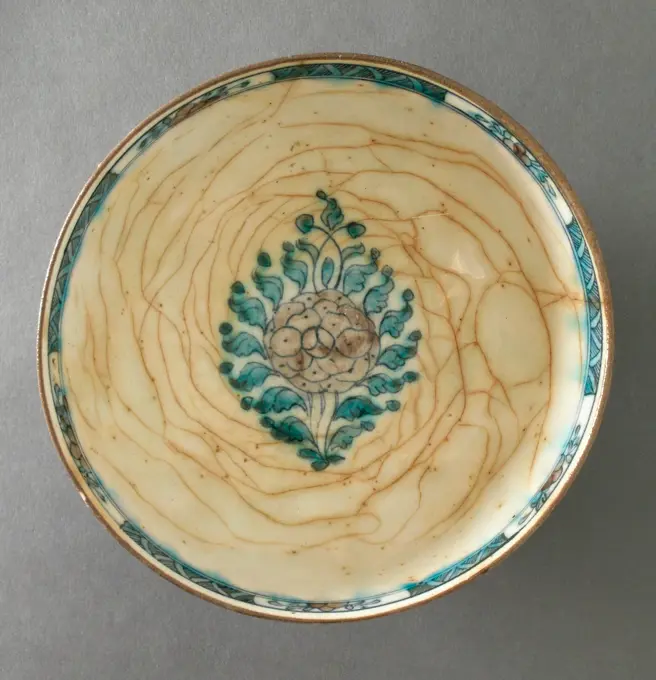
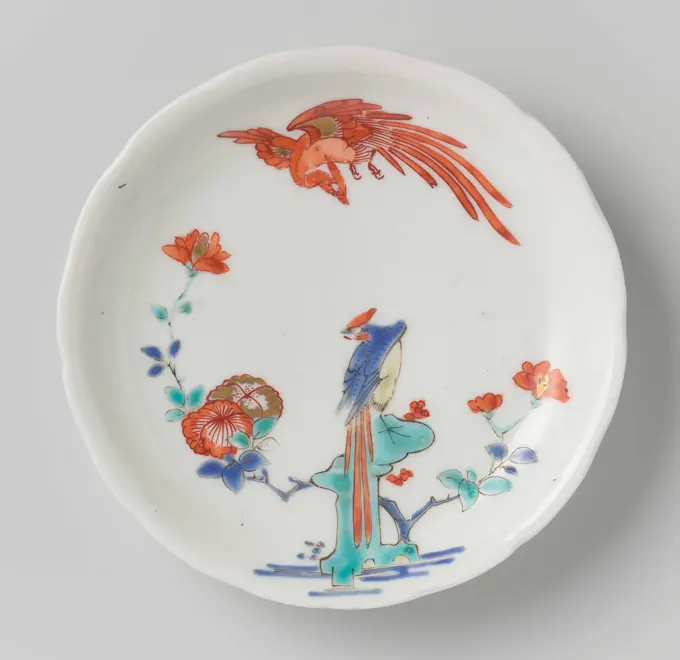
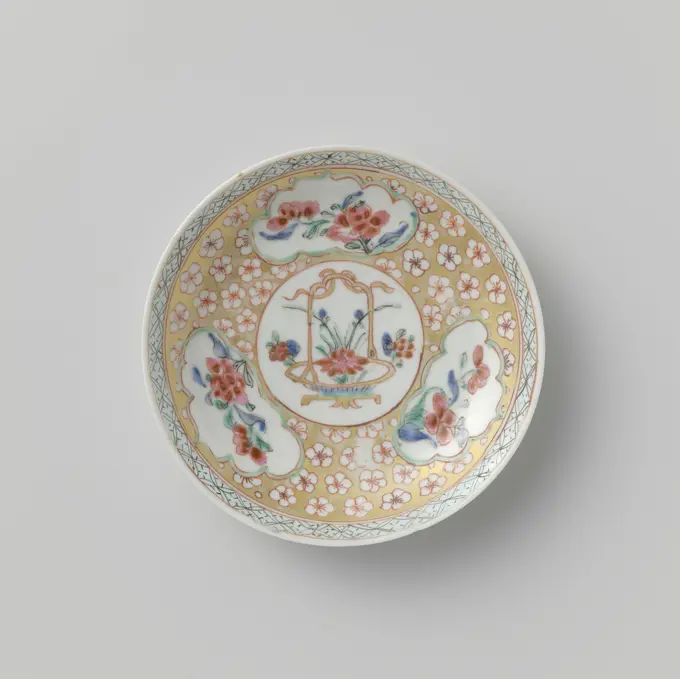
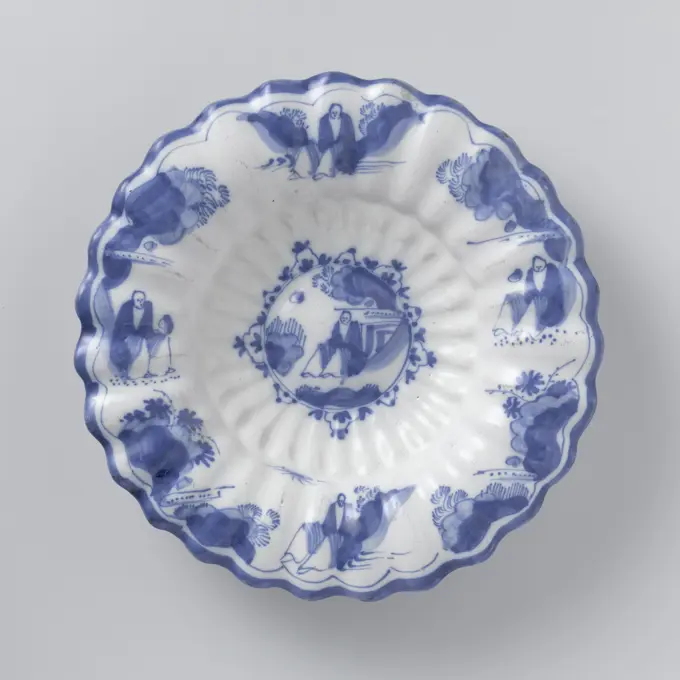
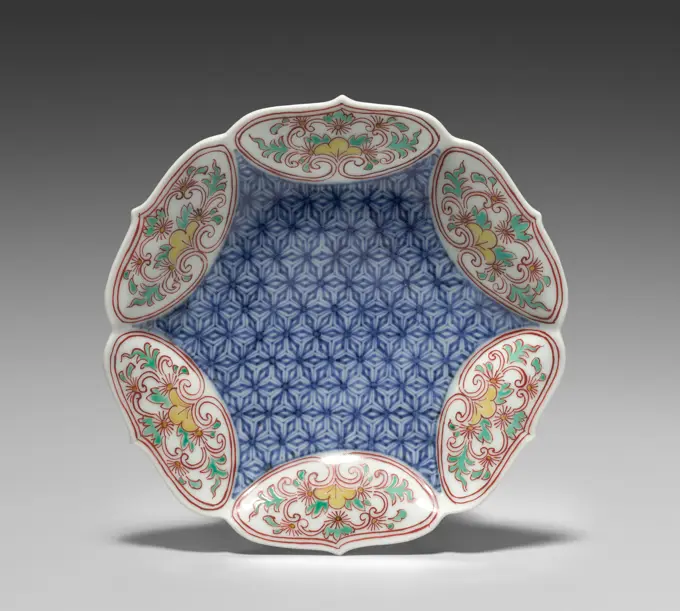
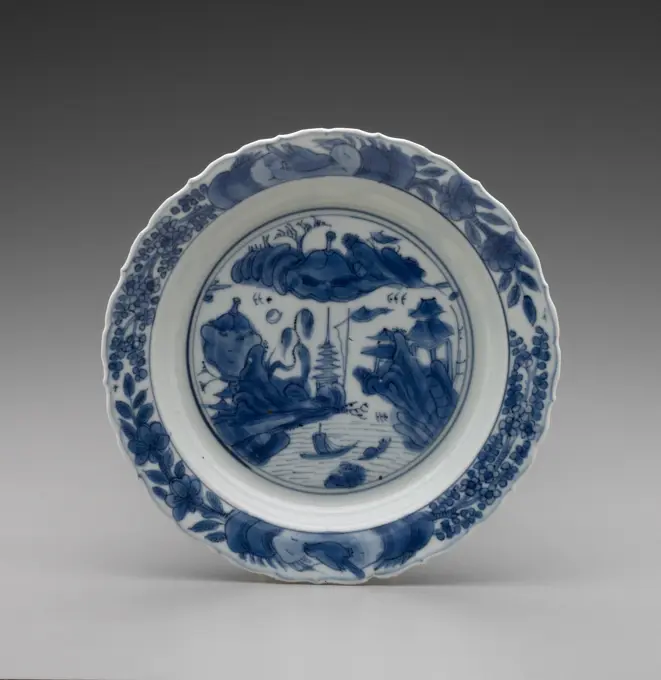
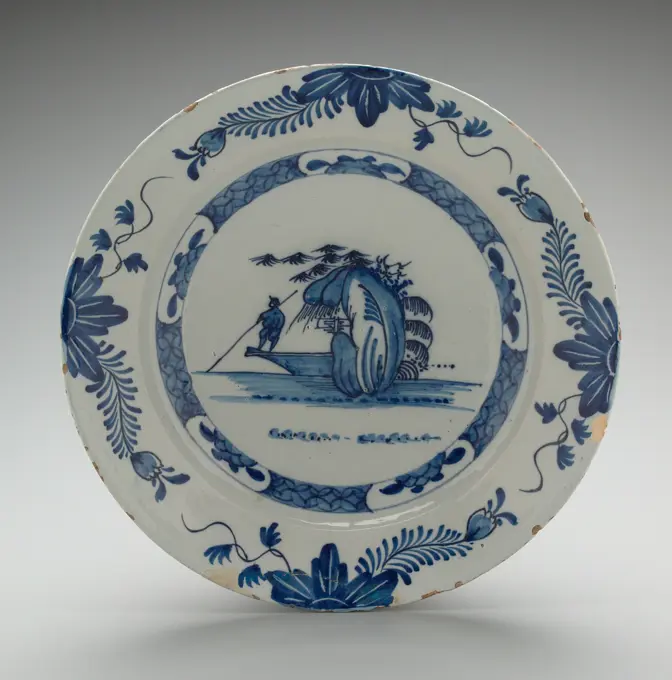
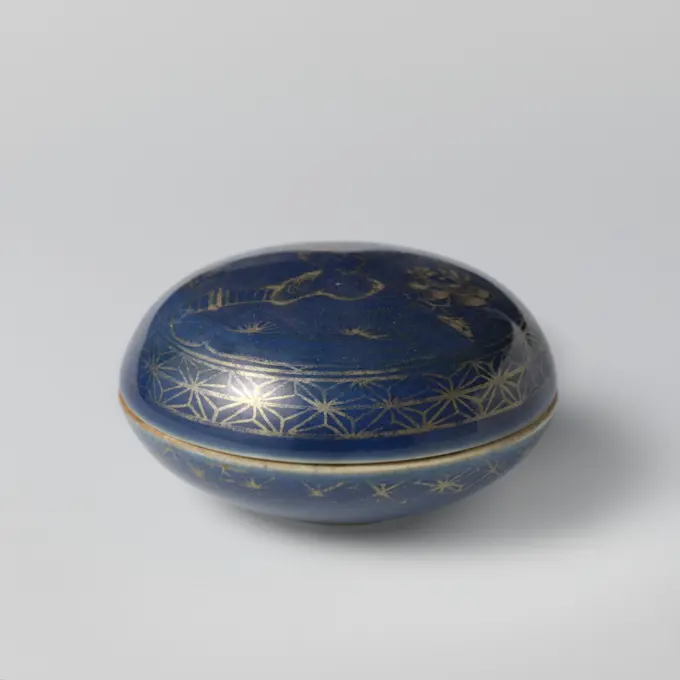
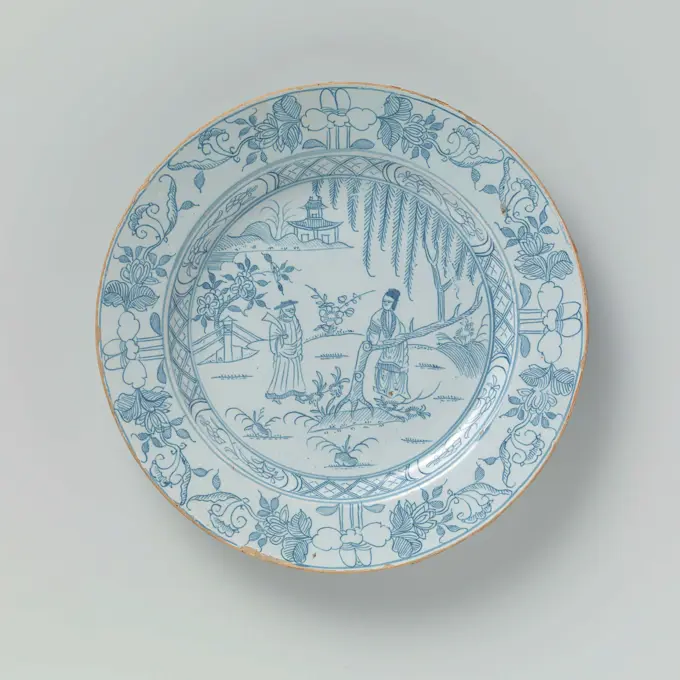
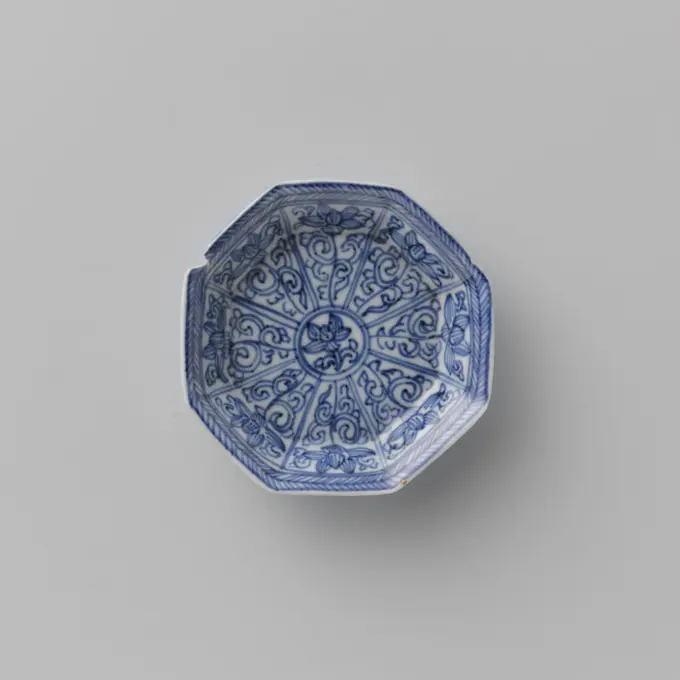
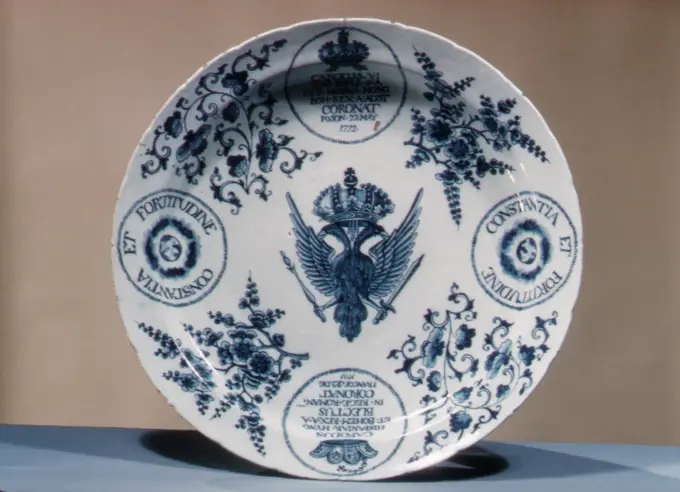
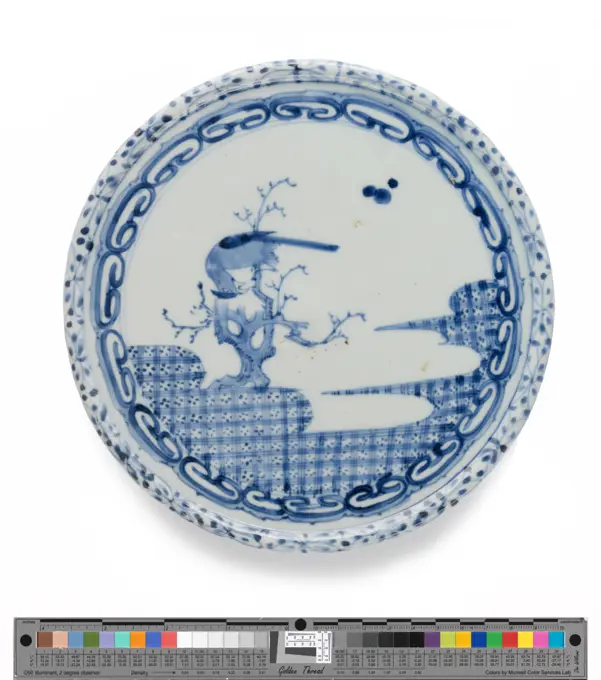
Plate with Fluted Sides and Continuous Flower Pattern. Porcelain plate with ribbed wall and scalloped edge, painted in underglaze blue. On the flat flower drinks in a medallion with a band arceing; the wall with floral drinks and a band with arrearing; The back with four lotus plants. Marked on the bottom with a diamond in a double circle. Blue White.. Dish of porcelain with deep wall and flat edge, painted in underglaze blue and on the biscuit green, yellow, eggplant and black. On the flat in a rebel medallion two pearl roaching dragons between flames and clouds; on the wall eight flower branches (O.A. Lotus, peony, prunus, chrysanthemum); the border with dragons; the back of the edge with five flying cranes between clouds; The rear of the wall with dragons. Marked on the underside with the six character mark of Emperor Kangxi in a double circle. Email sur biscuit.Bord, Petrus Regout, 1867 Plate of earthenware, with blue continuous flower decor, belonging to a children's service. Maastricht . Plate of earthenware, with blue continuous flower decor, belonging to a children's service. Maastricht .Sign belonging to a tea set of Chromolith Steengoed, decorated in blue and yellow -brown, Villeroy & Boch Ceramic Werke K.G., c. 1911 - c. 1912 Plate, octagonal, belonging to a tea set by Chromolith Steengoed. Decoration in blue and yellow -brown. Metling mastery stoneware Plate, octagonal, belonging to a tea set by Chromolith Steengoed. Decoration in blue and yellow -brown. Metling mastery stonewareSet of Five Double Shell-form Plates with Landscape and Floral Designs. Japan, 19th century. Ceramics. Hirado ware; porcelain with underglaze bluePlate with fluted sides and continuous flower pattern, anonymous, c. 1700 - c. 1724 Plate of porcelain with ribbed wall and scalloped edge, painted in underlaze blue. On the flat flower vines in a medallion with a tire archive work; the wall with flower vines and a band with shadowing; The back with four lotus plants. Marked on the bottom with a window in a double circle. Two chips and a crack in the edge. Blue White. China porcelain. glaze. cobalt (mineral) painting / vitrification Plate of porcelain with ribbed wall and scalloped edge, painted in underlaze blue. On the flat flower vines in a medallion with a tire archive work; the wall with flower vines and a band with shadowing; The back with four lotus plants. Marked on the bottom with a window in a double circle. Two chips and a crack in the edge. Blue White. China porcelain. glaze. cobalt (mineral) painting / vitrificationDish with Hydrangeas ca. 1690-1730 Japan This dish draws the viewer's attention to a single sprig of hydrangea, a typical summer blossom of Japan, framed by a pale green mist. The flowers painted in cobalt blue paired with the hazy celadon glaze give the impression that we are seeing these flowers shortly after a summer rain shower.The refined, almost poetic nature of this dish is appropriate considering its use. This is an example of Nabeshima ware, a specialty porcelain that was produced during the Edo period. The production of this type of porcelain was carried out at a separate kiln from those making commercial porcelain, in order to keep the techniques and designs secret. These wares would be reserved exclusively for use as presents to members of the ruling class. Nabeshima ware, therefore, had to live up to the highest standards and was made to suit a discriminating taste.. Dish with Hydrangeas. Japan. ca. 1690-1730. Porcelain with celadon glaze and underglaze blue decoration (HiMajolica dish with ears, blue on white, Chinese garden as decor, papkom bowl crockery holder earth discovery ceramics pottery enamel, archeology Rotterdam archaeological find in the soil Rotterdam 1940.Fan-Shaped Dish early 18th century Japan. Fan-Shaped Dish. Japan. early 18th century. Porcelain painted with cobalt blue under and colored enamels over transparent glaze (Hizen ware; Imari type). Edo period (1615-1868). CeramicsSaucer-dish with powder blue and pots with pine, bamboo and prunus, anonymous, c. 1700 - c. 1724 Scale with a round wall of porcelain, painted in underly glaze blue and red. The dish is covered with bleu poudré (powder blue) with a star -shaped reserve on the flat in which two flower pots with pine, bamboo and prunus branches; Twice a bamboo branch on the bottom. Marked on the underside with the six-character brand of Keizer Chenghua in a double circle. A chip in the edge; A crack in the edge. Underglaze blue with copper red. China porcelain. glaze. cobalt (mineral). glaze painting / vitrification Scale with a round wall of porcelain, painted in underly glaze blue and red. The dish is covered with bleu poudré (powder blue) with a star -shaped reserve on the flat in which two flower pots with pine, bamboo and prunus branches; Twice a bamboo branch on the bottom. Marked on the underside with the six-character brand of Keizer Chenghua in a double circle. A chip in the edge; A crack in the. Scale of faience with a chinoiserie decoration inspired by the Chinese transition porcelainoriental antique ceramic plate on a black background closeup. oriental antique ceramic plateDish late 16th century. Dish 444878Wall plate, polychrome painted with bird pattern, N.V. Haagsche Plateel Factory Rozenburg, 1887 Pottery wall plate, polychrome painted with a bird pattern. There are hanging holes in the foot ring. The back is not glazed, except for the brand. Marked with: w flag g / The Hague and c and arrow, everything in black; Ingrift: +. The Hague earthenware vitrification Pottery wall plate, polychrome painted with a bird pattern. There are hanging holes in the foot ring. The back is not glazed, except for the brand. Marked with: w flag g / The Hague and c and arrow, everything in black; Ingrift: +. The Hague earthenware vitrificationAnonymous. Plat "Long live freedom without license". Earthenware. 1790-1792. Paris, Carnavalet museum. 72430-35 Phrygian hat, faience, freedom, revolutionary period, French revolution, dishSharf of rossy baking earthenware, with white glaze, with a painting of a landscape with a building and a decorative edge in blue, anonymous, 1600 - 1650 at the front  Northern Netherlands earthenware. glaze majolica  Northern Netherlands earthenware. glaze majolicaBowl. Iran, 18th-19th century. Ceramics. Fritware, underglaze-paintedPair of Bowls: Kakiemon Ware, late 1600s. Japan, Edo period (1615-1868). Imari ware porcelain with overglaze enamel and gold decoration; diameter: 35.6 cm (14 in.); height: 13.1 cm (5 3/16 in.). The Chinese style of decoration identifies this bowl as a product made for the markets in England, Holland, France, and Germany. Here, kakiemon potters rearranged the Chinese literati motifs of the plum, pine, and bamboo. Such kakiemon ware inspired domestic porcelain production in Europe in the 1700s-1800s.Saucer With Petal-Shaped Panel Around A Central Medallion, Filled With Flower Sprays. Dish of porcelain, painted in underglaze blue and on the glaze red and gold. On the platter a medallion with flour, a medallion six petal-shaped boxes filled with flower branches; Between the boxes a flower drink; Three loose flowers on the back. Chinese Imari.Large Dish with Peony Bouquet and Cherry Blossom Rafts late 17th-early 18th century Japan. Large Dish with Peony Bouquet and Cherry Blossom Rafts. Japan. late 17th-early 18th century. Porcelain with underglaze blue and overglaze polychrome enamels, gold (Arita ware, Imari type). Edo period (1615-1868). CeramicsBowl with Ducks over Lotus Pond, 1573-1620. China, Jiangxi province, Jingdezhen kilns, Ming dynasty (1368-1644), Wanli reign (1572-1620). Porcelain with underglaze blue decoration; diameter: 13.3 cm (5 1/4 in.); overall: 6.6 cm (2 5/8 in.).Dish with Scale-Pattern Design ca. 1575-80. Dish with Scale-Pattern Design 449104Saucer with panels in The Shape of a Flowerhead Filled with Flower Sprays. Dish of porcelain with raised wall and flat edge, painted in underglaze blue. On the flat a medallion surrounded by flower leaf-shaped compartments; The medallion is filled with a flower branch, rock and grasshopper, in the leaf-shaped boxes each time a flower branch; on the edge flower branches; The back with two flower branches and a peach roof. Marked on the bottom with an artemisia leaf in a double circle. Blue White.Saucer With Stylized Flower and Ornamental Border. Dish of porcelain, painted on the glaze in red and gold. On the flat of the dish a medallion with flour, here around two rows with petal-shaped compartments with light ingrangled, wavy lines; The edge with a decorative band. Milk and blood.. Scalloped dish of porcelain, painted on the glaze in blue, red, green, yellow, black and gold with a pair of hay birds, one in the air and one on a rock with a flower branch. Kakiemon style.Saucer with a flower basket and flower sprays, anonymous, c. 1725 - c. 1749 Porcelain dish, painted on the glaze in blue, red, pink, green, black and gold. On the flat in the center a medallion with a flower basket with Lotus; To the medallion a wide band with saved flowers in a golden land; On this three cartouches saved with flowering plant; The edge with servetwork. Famle Rose. China porcelain. glaze. gold (metal) painting / gilding / vitrification Porcelain dish, painted on the glaze in blue, red, pink, green, black and gold. On the flat in the center a medallion with a flower basket with Lotus; To the medallion a wide band with saved flowers in a golden land; On this three cartouches saved with flowering plant; The edge with servetwork. Famle Rose. China porcelain. glaze. gold (metal) painting / gilding / vitrificationDish;  1. Exercise of the 17th century (1601-00-00-1625-00-00);Chien Lung, Rouge box, 1736-96, soft-paste porcelain.Plooischotel van faience, anonymous, c. 1650 - c. 1675 Round plooischotel of blue painted faience. The flat has a convex circle, on which a sitting figure is painted. The edge is ribbed and sculpted and painted with four sitting figures. Delft earthenware. tin glaze. Round plooischotel of blue painted faience. The flat has a convex circle, on which a sitting figure is painted. The edge is ribbed and sculpted and painted with four sitting figures. Delft earthenware. tin glaze.Dish with Dragon amid Flames Encircled by Fish amid Waves 1700-1899 China. Porcelain painted in underglaze blue and overglaze enamels .Small Dish (Kozara) with Barbed Rim and Stylized Floral Panels, c. 1670. Japan, Edo period (1615-1868). Porcelain with underglaze blue and colored enamels (Hizen ware, Nabeshima type); diameter: 14.9 cm (5 7/8 in.).PlatePlate 1765-1775 Worcester. Soft-paste porcelain, polychrome enamels and gilding . Worcester Royal Porcelain Company (Manufacturer)Round Box With Powder Blue, Rocks And Flowering Plants. Round box of porcelain, painted in underglaze blue and on the glaze gold. The box is, on the underside, covered with bleu poudré (powder blue); On the lid a rock with flowering plants and a fence; To the edge a decorative tire with napkin. A crack in the box. Bleu poudré with gold.Saucer-dish with Budai and two servants, anonymous, c. 1630 - c. 1640 Scale of porcelain with lobed edge, painted in underlaze blue. A sitting Budai or Putai on the flat with a galebas grid and a shoe in the foreground. Two servants behind him. The wall is modeled in twisted courses with alternately a leaf motif in blue or saved in a blue background. The edge with a band with spiral work. Marked on the bottom with 'Fuku' in a double square. Ko-Oometsuke in Blauw-Wit. China porcelain. glaze. cobalt (mineral) painting / vitrification Scale of porcelain with lobed edge, painted in underlaze blue. A sitting Budai or Putai on the flat with a galebas grid and a shoe in the foreground. Two servants behind him. The wall is modeled in twisted courses with alternately a leaf motif in blue or saved in a blue background. The edge with a band with spiral work. Marked on the bottom with 'Fuku' in a double square. Ko-Oometsuke in Blauw-Wit. China porcelain. glaze. cobalt (mineral) painting / vitrificDish dated 1535 Casa Pirota Manufactory. Dish. Italian, Faenza. dated 1535. Maiolica (tin-glazed earthenware). Ceramics-PotteryDish with flowers and birds ca. 1660 Dutch, Delft Most likely introduced from the Islamic world, where it had developed in the ninth century in response to imported Chinese ceramics, the use of a tin-based glaze to cover a dark earthenware body has a long history in Europe. Here, the tin glaze is painted with blue pigment on a plate whose shape and design parallel Chinese kraak ware.. Dish with flowers and birds 196577Saucer-dish with precious objects and antiquities, anonymous, c. 1700 - c. 1724 Dish with round wall of porcelain, painted in underly glaze blue and on the glaze blue, red, green, yellow, eggplant and black. On the Plat Chinese antiques; The underside with four valuables. Marked on the underside with a seal brand in a double circle. Famle Verte. China porcelain. glaze. cobalt (mineral) painting / vitrification Dish with round wall of porcelain, painted in underly glaze blue and on the glaze blue, red, green, yellow, eggplant and black. On the Plat Chinese antiques; The underside with four valuables. Marked on the underside with a seal brand in a double circle. Famle Verte. China porcelain. glaze. cobalt (mineral) painting / vitrificationToy dinner plate - Inconnu / UnknownDeep Dish with Egret (from a set of ten) 1639 Japan. Deep Dish with Egret (from a set of ten). Japan. 1639. Porcelain with underglaze blue decoration (Hizen ware). Edo period (1615-1868). CeramicsPlate 16th-17th century. Plate 454756Tray;  20th century (1901-00-00-1920-00-00);Anonymous. Plate. Earthenware. 1790. Paris, Carnavalet museum. 70955-60 Weapon, Crown, Epee, Faience, Decorative Pattern, knot, shovel, revolutionary period, dishes, platePlate (one of a pair) ca. 1731 Chinese, for British market. Plate (one of a pair) 205237Saucer, c. 1750. Vincennes Porcelain Factory (France, 1740-56). Soft-paste porcelain; diameter: 20.4 cm (8 1/16 in.).Plate with lion crest, pierced border, c. 1790, 15/16 x 7 1/2 in. (2.38 x 19.05 cm), Porcelain, China, 18th centuryOttoman dish, c. 1560, Lotus design, Turkey.Saucer with Cock and Deer on a Black Ground With Flower Scrolls. Dish of porcelain, painted on the glaze in blue, red, pink, green, yellow and black. The flat is covered with a black glaze with in spare flower drinks and four cartouches: a medallion with rooster and three leaf-shaped cartouches with deer in a landscape; The edge with a band pink 'crackled ice' pattern. A crack in the edge. Family Rose.Deep sign from V.O.C. ship De 'Witte Leeuw', Anonymous, Before 1613 plate (dishes) Deep sign from V.O.C. ship the 'Witte Leeuw', 80 present. Jingdezhen bone china (material)   Sint-HelenaPlate. English for the American market; Staffordshire, England. Date: 1824-1834. Dimensions: . Earthenware. Origin: Staffordshire. Museum: The Chicago Art Institute, Chicago, USA. Author: Staffordshire Potteries.Talerzyk. unknown, craftsmanRound tray with decoration of dragons and clouds 17th-18th century Japan (Ryūkyū Islands). Round tray with decoration of dragons and clouds. Japan (Ryūkyū Islands). 17th-18th century. Mother-of-pearl inlay on black lacquer. LacquerPlate 9th-10th century. Plate 449761Glued fragment faience plate with Chinese decor in Wanli style, dish plate crockery holder soil find ceramic earthenware glaze tin glaze, ring 12.5 hand turned baked 2x glazed Glued fragment of faience plate Baked in cassette. Standring. Monochrome decor Chinese garden or flower arrangement in Chinese style the edge divided into cassettes in the style of the period: wanli. Flat mirror shoulder slanting flag. Tan-brown shard archeology Rotterdam City center Stadsdriehoek Schielandshuis indigenous pottery food serving table serving decorate China Soil discovery: Schielandshuis during restoration.Two tiles, Glazed moulded earthenware, Moulded in low relief, with white, blue, green and light brown glazes. Interlacing bands forming tangent circles, large and small, enclosing green and blue foliage forms., Andalusia, Spain, 16th-17th century, tiles, Decorative Arts, Two tilesBowl with an Equestrian and Four Pairs of SeatedFiguresPlate; Manufacture Nationale de Porcelaine de Sevres (1756-); 1838-1846 (1844-00-00-1844-00-00);ornaments, rosette (ornament). Dish of porcelain with scalloped edge, painted on the glaze in blue, red, green, yellow, black and gold. On the Flat the Coat of Arms of Limburg, with the inscription 'Limburgh', with a flower branch with bird on either side, two insects above the weapon and under the weapon a flower branch; The wall and edge are divided into twelve flower leaf-shaped courses alternately filled with a seated Chinese man in a landscape, a standing Chinese lady in a landscape or flower vases; The edge with napkin. Two flower branches on the rear. Some cracks in the wall. Weapon porcelain with email colors.PlateClose-up of a plate, England. Oval brush back from blue painted faïence, painted with leaves and floral drinks and along the edge a floral pattern. The brush ridge has been handed out in loan since 1958 to J.H. Loudon (Aerdenhout) and Iin March 1996 returned.Plate ca. 1752 Chelsea Porcelain Manufactory. Plate. British, Chelsea. ca. 1752. Soft-paste porcelain. Chelsea Porcelain Manufactory (British, 1745-1784, Red Anchor Period, ca. 1753-58). Ceramics-PorcelainRound box with powder blue, rocks and flowering plants, anonymous, c. 1700 - c. 1724 Round box of porcelain, painted in underly glaze blue and on the glaze gold. The box is, except for the bottom, covered with bleu poudré (powder blue); On the lid a rock with flowering plants and a fence; A decorative band with servetwork around the edge. A crack in the box. Bleu Poudré with gold. China porcelain. glaze. cobalt (mineral). gold (metal) painting / gilding / vitrification Round box of porcelain, painted in underly glaze blue and on the glaze gold. The box is, except for the bottom, covered with bleu poudré (powder blue); On the lid a rock with flowering plants and a fence; A decorative band with servetwork around the edge. A crack in the box. Bleu Poudré with gold. China porcelain. glaze. cobalt (mineral). gold (metal) painting / gilding / vitrificationPlate. China, Qianlong period, mid-18th century. Furnishings; Serviceware. PorcelainPlate, painted with an unknown weapon, possibly from Egmond, Anonymous, 1718 Plate of earthenware painted in blue on tinglaze with an unknown weapon in the platelet, possibly of a member of an unknown family of Egmond. In addition, a crowned mirror monogram J.V.E. The edge decorated with leaf work. Delft . Plate of earthenware painted in blue on tinglaze with an unknown weapon in the platelet, possibly of a member of an unknown family of Egmond. In addition, a crowned mirror monogram J.V.E. The edge decorated with leaf work. Delft .Saucer With Deer in a Water Landscape on a Black Ground. Dish of porcelain, painted on biscuit in blue, red, pink, green, yellow and black. The flat of the dish is covered with a black glaze with three deer in a river landscape with trees, mountains and mushrooms (Lingzhi). Wall of the dish has been broken. Decorated in Europe. Famille Noire with famille rose colors.Saucer With Petal-Shaped Panel Around A Central Medallion, Filled With Flower Sprays. Dish of porcelain, painted in underglaze blue and on the glaze red and gold. On the platter a medallion with flour, a medallion six petal-shaped boxes filled with flower branches; Between the boxes a flower drink; Three loose flowers on the back. Chinese Imari.Dish, painted with chinoiserie: man and woman in landscape next to tree. Round dish of blue painted faience, with a light blue fond. A Chinese landscape is painted on the flat in which a woman next to a tree and left of the tree a man. Flower drinks are painted on the edge and three branches on the back of the edge.Octagonal saucer with lotus scrolls, anonymous, c. 1700 - c. 1724 Octagonal dish of porcelain, painted in under -glaze blue. On the flat a lotus in a double medallion; Around eight -radiating courses with lotus vines; The edge with a band with leaf vines. The outside with eight compartments with a lottery branch. Two chips in the edge. Blue White. China porcelain. glaze. cobalt (mineral) painting / vitrification Octagonal dish of porcelain, painted in under -glaze blue. On the flat a lotus in a double medallion; Around eight -radiating courses with lotus vines; The edge with a band with leaf vines. The outside with eight compartments with a lottery branch. Two chips in the edge. Blue White. China porcelain. glaze. cobalt (mineral) painting / vitrificationCylindrical Covered Jar With Flower Heads in reserve. Cylindrical lid plug of porcelain, painted in underglaze blue. Covered with a 'crackled ice' blue ground with plum blossoms in reserve; The flat lid knob with flower against a blue ground. Blue White.Bowl with deer 1826 Japan. Bowl with deer. Japan. 1826. Stoneware (Takatori ware). late Edo period (1615-1868). CeramicsWide-rimmed bowl. Artist: Possibly Jacopo da Pesaro (Italian, active Venice, 1507-ca. 1550) , Venice. Culture: Italian, probably Venice or environs. Dimensions: Overall (confirmed): 1 1/4 × 9 3/8 in. (3.2 × 23.8 cm). Date: ca. 1530-50. Museum: Metropolitan Museum of Art, New York, USA.Charger, 1878. Daubron frères (French). Glazed and gilt earthenware; diameter: 33 cm (13 in.).Fragment majolica dish, polychrome, decor of grapes, apples and pomegranates, plate crockery holder soil find ceramic earthenware enamel, baked underside covered with lead glaze. Polychrome Poorly mixed pottery with red veins archeology decorate serving foodSaucer with a cock and three deer in panels on a gold ground with floral scrolls, anonymous, c. 1725 - c. 1749 Porcelain dish with a spreading wall, painted on the glaze in blue, red, pink, green, yellow, black and gold. On the flat of the dish in the center a medallion with a rooster; around the medallion three leaf -shaped cartouches with a deer in a landscape against a golden background with flower vines; The edge with a 'crackled-ice' band. A crack and a chip in the edge of the dish. Famle Rose. China porcelain. glaze. gold (metal) painting / gilding / vitrification Porcelain dish with a spreading wall, painted on the glaze in blue, red, pink, green, yellow, black and gold. On the flat of the dish in the center a medallion with a rooster; around the medallion three leaf -shaped cartouches with a deer in a landscape against a golden background with flower vines; The edge with a 'crackled-ice' band. A crack and a chip in the edge of the dish. Famle Rose. China porcelain. glaze. gold Rectangular Dish With Flowering Plants, A Bird and Insects near A Rock. Shallow, rectangular scale of porcelain with squeezed corners, painted in underglazer blue. On the flat a bird on the branch of a flowering plant (peony) and two butterflies at a rock. This is a bond with napkin. The outer wall with a blue bond with prunus flowers in reserve. The bottom is unglazed. Old label on the bottom with 'legacy Mrs. A.M. Kickhefer / Japan, Arita, 18th century / 1967 '. Arita, blue-white.Bowl with calligraphic decoration 900 CE-1000 Iran. In the 10th and 11th centuries, a tradition of painting ceramics in thick colored slips (watered-down clay) became common practice in central and eastern Iran. These vessels were typically decorated with simple calligraphic lines, often containing blessings or pious insights, not unlike fortune cookie messages. Here the text reads, ìGenerosity is a disposition of the dwellers of ParadiseÖ regret.î This type of script is known as knotted Kufic, distinctive for its consistent baseline and embellished by small knots and twists in the staffs of the letters.. Earthenware, white slip with black slip decoration under a transparent glaze . IslamicDish late 17th-early 18th century China. Dish. China. late 17th-early 18th century. Porcelain painted in underglaze blue. Qing dynasty (1644-1911), Kangxi period (1662-1722). CeramicsFragment deep plate from V.O.C. ship De 'Witte Leeuw', Before 1613 plate (dishes) Fragment deep plate from V.O.C. ship the 'Witte Leeuw'. Jingdezhen bone china (material)   Sint-HelenaPORCELANA DE INDIAS CON INSCRIPCION CHINA S XVII. Location: CONVENTO DE SAN CLEMENTE-MUSEO. Toledo. SPAIN.Footed fruit dish with a view of Boston StateHouse.  Manufacturer: Joseph Stubbs, British, 1790-1829Large plate or 'lampetschotel' of Chinese porcelain from the wreck of the Dutch East Indiaman Witte Leeuw, anonymous, before 1613  Saucer from V.O.C. ship De 'Witte Leeuw', 70 present; Parts of the flat and the wall are missing. The shard is glassy white and has little ingrained dirt. The glaze is blue tinted. The bottom is unglazed and the foot ring is faceted and stands inside. The lip is unpaved. Lampet dish. With four separate shards. Jingdezhen bone china (material)   Sint-HelenaCup plate with view of Boston StateHouse.  Manufacturer: Ralph Stevenson and Williams, British, ca. 1824-27Toy candy dish - Indian Scene D'après Francis Morley, 1845-1850Dish ca. 1712 De Metaale Pot Factory Dutch. Dish 201795Lobed Plate With A Stylized Flower and Ornamental Borders. Porcelain plate with lobed edge, painted on the glaze in red, pink, green, black and gold. On the flat in the center a stylized flower surrounded by a bond with a switching motif and a narrow band with a leaf motif; a band with curlwork on the wall; The edge with a narrow band with leaf motif and a decorative tire. A chip in the edge. Family Rose.Dish with Design of Hawk on Branch. Japan, Hizen, circa 1640-1650. Ceramics. Hizen, Arita ware; porcelain with cobalt blue underglaze designShallow plate. unknown, craftsmanPatera  colourful lotus flowers and plant flagellum on a blue background unknownBottle of hard baked pottery; Wedgwood's Jasper Ware., Wedgwood, c. 1770 - c. 1785 Flat, ellipse -shaped bottle of blue hard baked pottery, with a white decoration. On one side is a soil on which a tree, plants and a sitting woman with a helmet, laurel branch and shield. With the woman is a woman who holds a shield with a men's bust. On the other side there is a soil with a tree under which a sitting woman and man (hunter). The bottle has a silver screw cap. England earthenware. metal Flat, ellipse -shaped bottle of blue hard baked pottery, with a white decoration. On one side is a soil on which a tree, plants and a sitting woman with a helmet, laurel branch and shield. With the woman is a woman who holds a shield with a men's bust. On the other side there is a soil with a tree under which a sitting woman and man (hunter). The bottle has a silver screw cap. England earthenware. metalFaience plate on wide stand ring, blue on white ground, weapon dish, plate crockery holder soil find ceramic pottery glaze tin glaze, hand turned baked glazed decorated baked Dish with raised edge without shoulder. Wide and narrow stand ring Fully covered with tinglaze on the bottom contaminated with manganese. Decorated with coat of arms in blue on white ground Coat of arms in three quarters surrounded by acanthus leaves under winged helmet In the upper quarter diagonal angle and two diamonds the lower quarters cloverleaf. Cooked prints in the edge at the top archeology heraldry indigenous pottery decorate serving serving tableBowl with six-petalled floral design and scale pattern, in a Kubachi type. Dated 16th CenturyPlato azul de cerámica decorada. Serie Cintes. Siglo XVIII. Museo de la cerámica, Barcelona.Dish of multicolored painted majolica. Deep round dish of multi-colored painted majolica. The dish has a narrow, flat edge on which concentric circles have been painted. A landscape is painted on the dish in which a rider moving to the left.Top view of vintage tin box on the white background.Plate in cartouch shape with a landscape with three figures under a tree in blue, inside a multicolored flower edge. Plate of faïence, cartouch-shaped. Painted in blue with three figures under a tree, inside a multicolored edge.Porcelain dish with multicolored decoration, two 'Phoenixen' on the flat, edge in compartments with fruits and flowers, anonymous, c. 1690 - c. 1710 Porcelain dish with multicolored decoration (upper glaze emails green, blue, black and iron red). On the flat two 'Phoenixen', edge in compartments with fruits and flowers. Arita (possibly) porcelain Porcelain dish with multicolored decoration (upper glaze emails green, blue, black and iron red). On the flat two 'Phoenixen', edge in compartments with fruits and flowers. Arita (possibly) porcelainSeif Yohei III (1851-1914) was a son of the Maruyama school painter Okada Ryhei (dates unknown). Though he studied painting, he ultimately succeeded his ceramics mentor, Seif Yohei II (1845-1878), in Kyoto. He distinguished himself as a remarkable porcelain artist, taking Qing dynasty Chinese wares as his inspiration. He experimented widely with new glazing techniques. In 1893, he became the first ceramicist to be appointed as an Imperial Household Artist under a system introduced by the Japanese government in 1890. He produced many works for use in Chinese-style tea gatherings called sencha. Dish from Dishes with Shells, c. 1915. Seifū Yohei IV (Japanese, 1872-1951). One from a set of five dishes; porcelain with blue glaze, iron oxide, and molded design; height: 2.5 cm (1 in.); diameter: 12.1 cm (4 3/4 in.).clay antique vase cartoon. clay antique vase sign. isolated symbol vector illustration. clay antique vase cartoon vector illustrationCERAMICA POPULAR FUENTE. Location: EXTERIOR. PROVINCIA. TERUEL. SPAIN.