Decorative Porcelain Vases

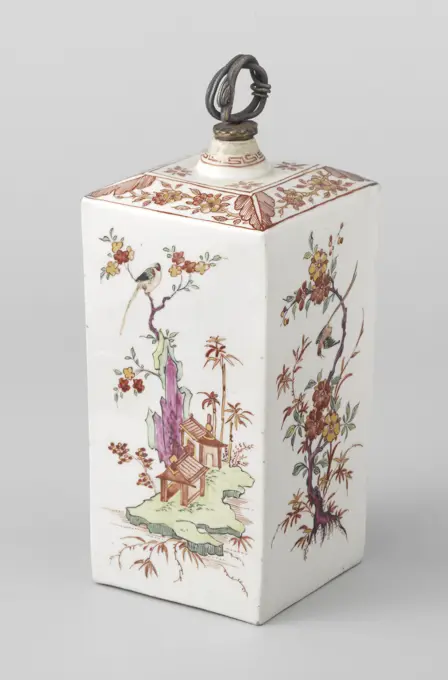
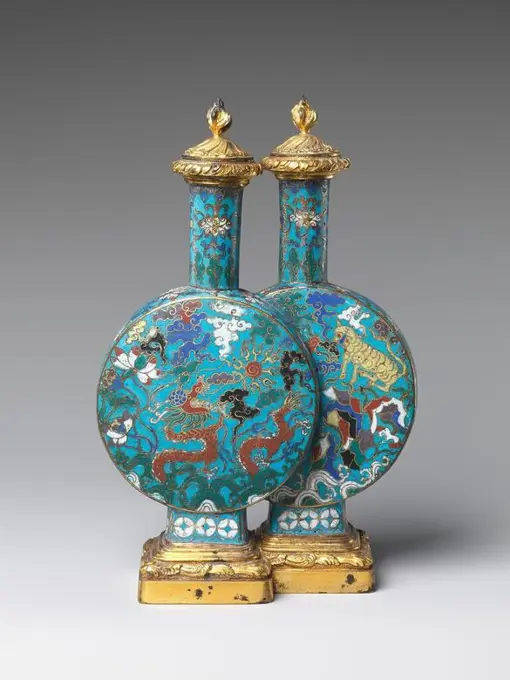
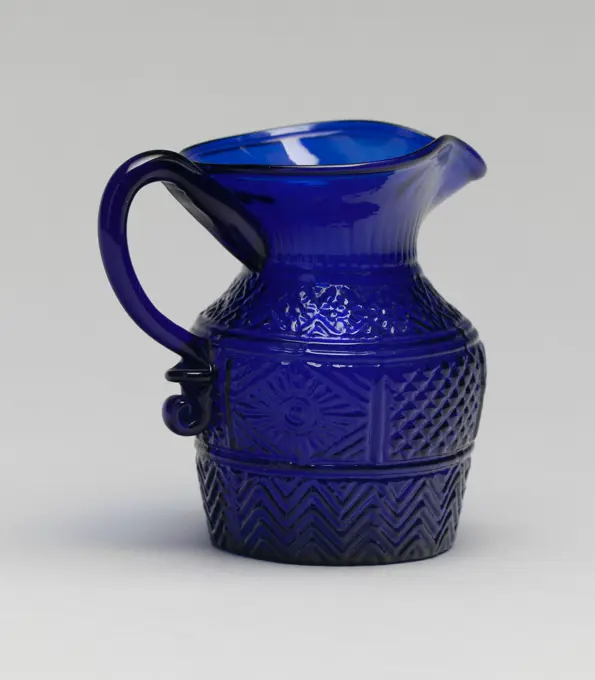
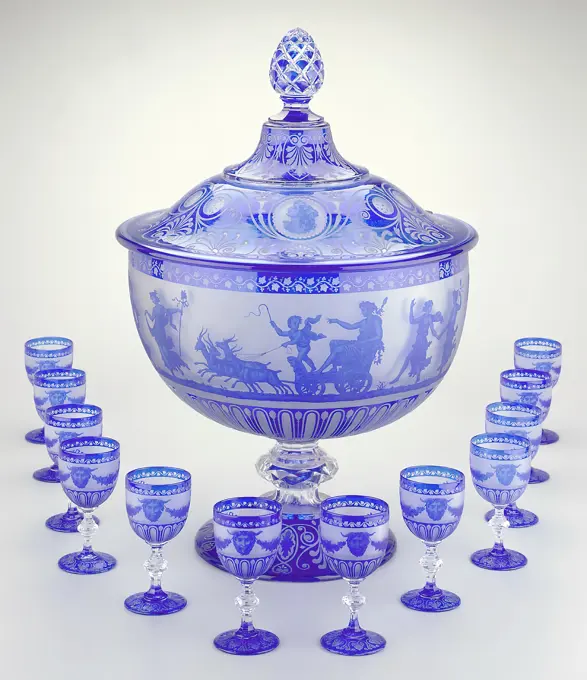
Elegant porcelain vases with intricate designs, showcasing birds and flowers in vibrant colors, highlighting craftsmanship and artistic detail from various periods.

Baluster covered jar with flowering plants and auspicious symbols in panels, anonymous, c. 1680 - c. 1720 Porcelain lid -shaped lid -shaped lid jar with a wide neck, painted in underly glaze blue and on the glaze gold. The wall is divided into three rows with scalloped, rectangular compartments with a flowering plant in a rock and happiness symbols and antiques. On the neck a bond with lotus drinks saved in a blue background. The underside is unglazed. Blauw-Wit with Goudemail. China porcelain. glaze. cobalt (mineral). gold (metal) painting / gilding / vitrification Porcelain lid -shaped lid -shaped lid jar with a wide neck, painted in underly glaze blue and on the glaze gold. The wall is divided into three rows with scalloped, rectangular compartments with a flowering plant in a rock and happiness symbols and antiques. On the neck a bond with lotus drinks saved in a blue background. The underside is unglazed. Blauw-Wit with Goudemail. China porcelain. glaze. cobalt (mineral). gold (me
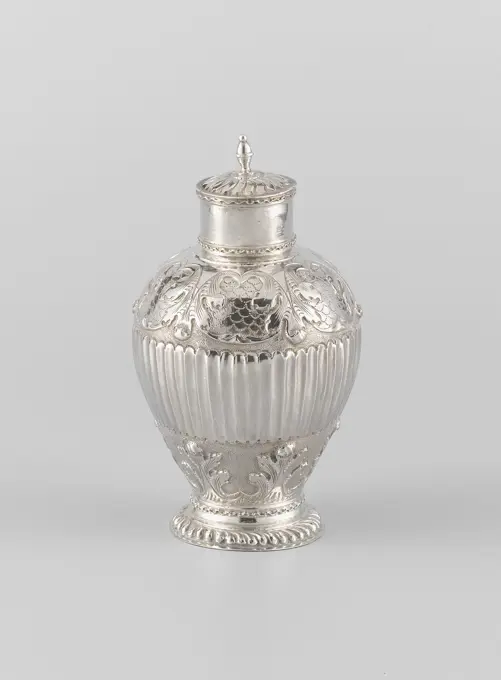
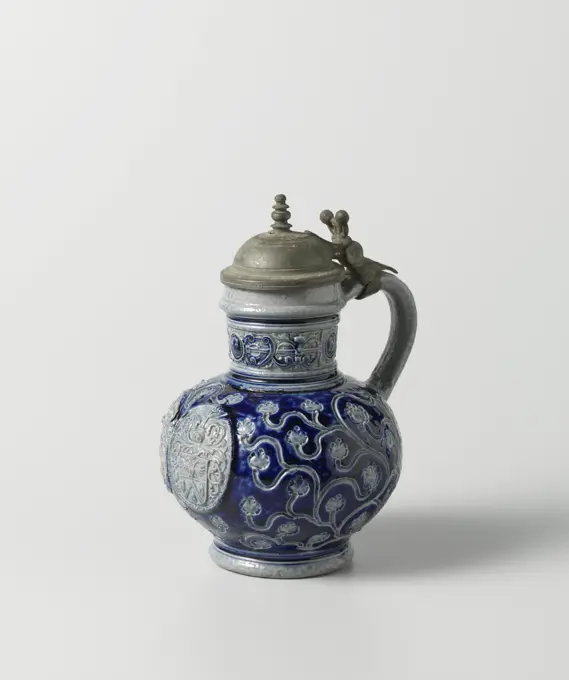
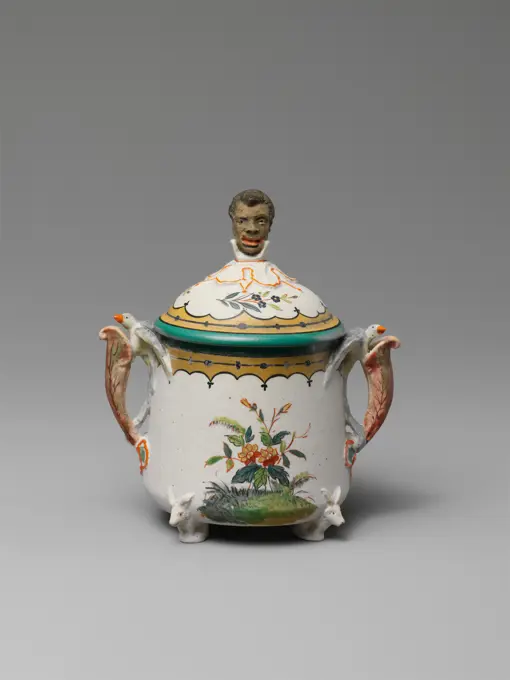
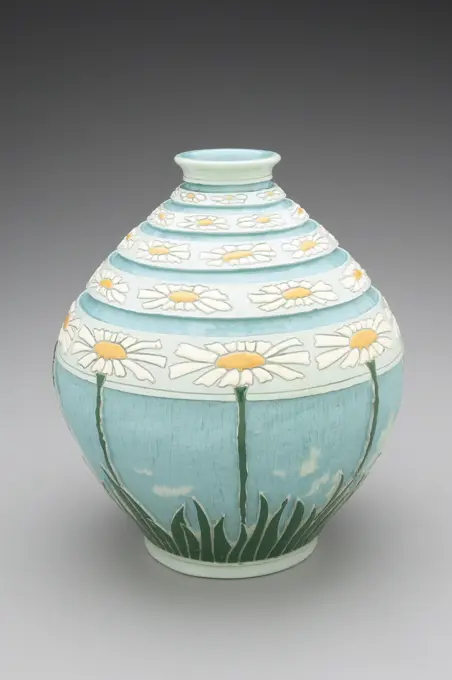
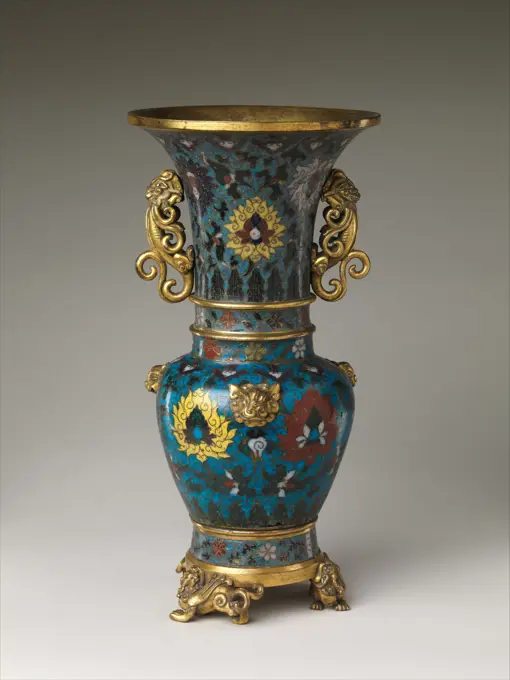
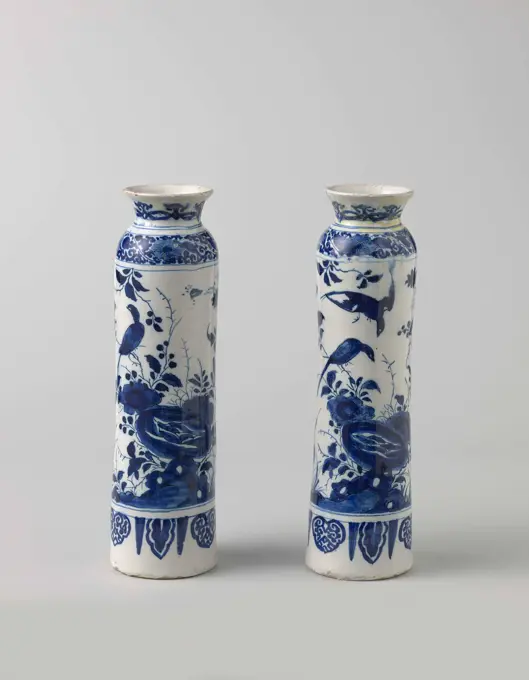
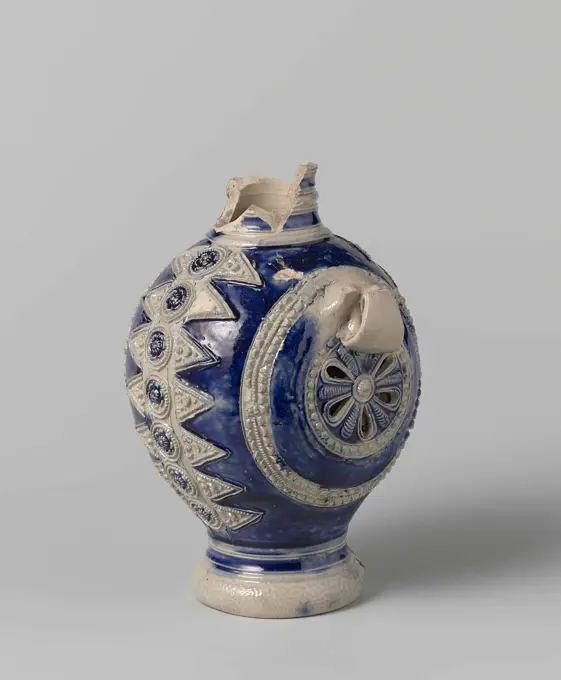
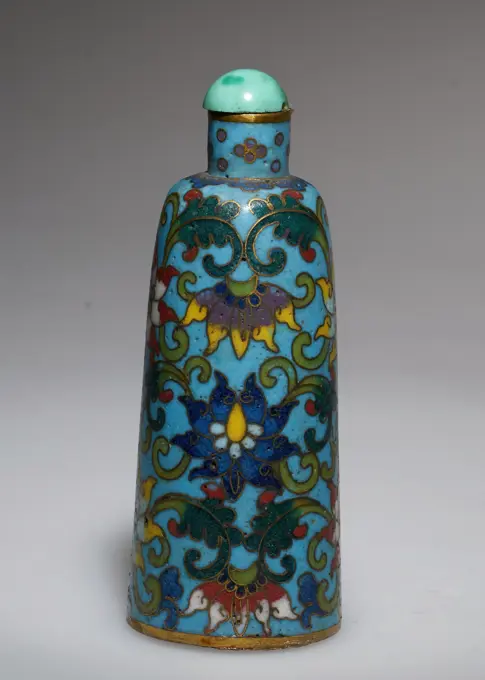
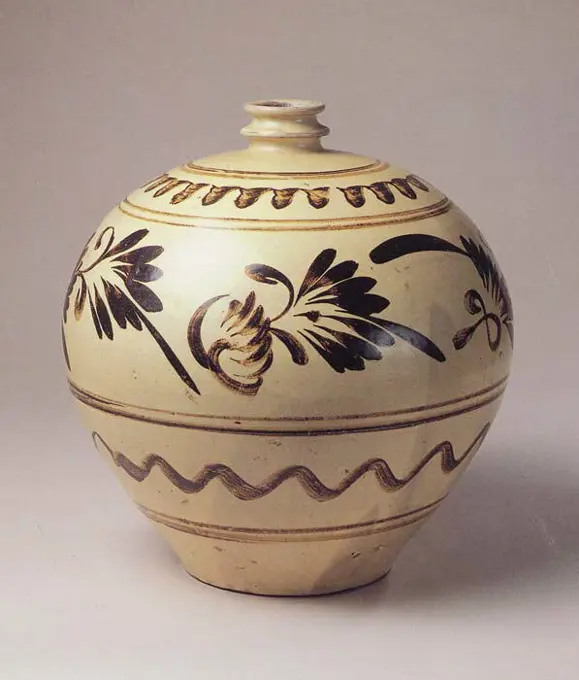
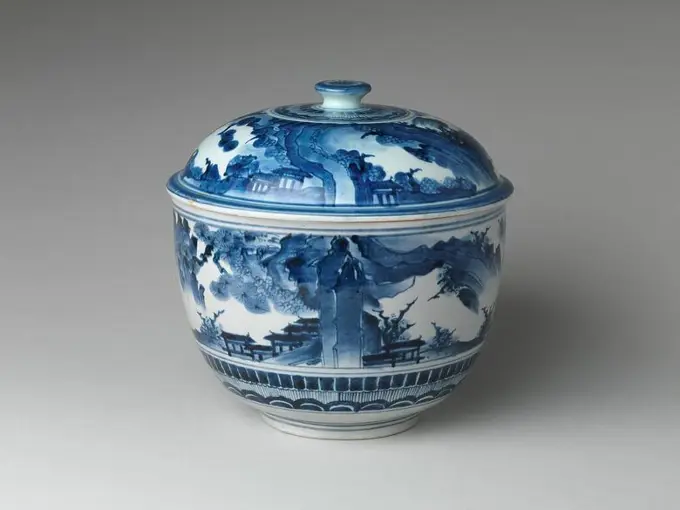
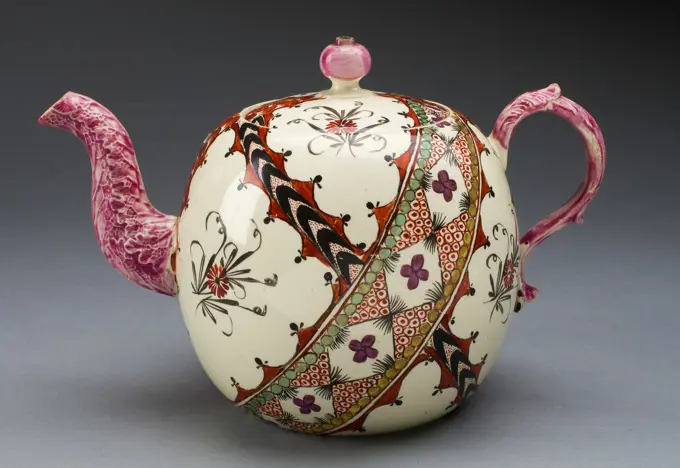
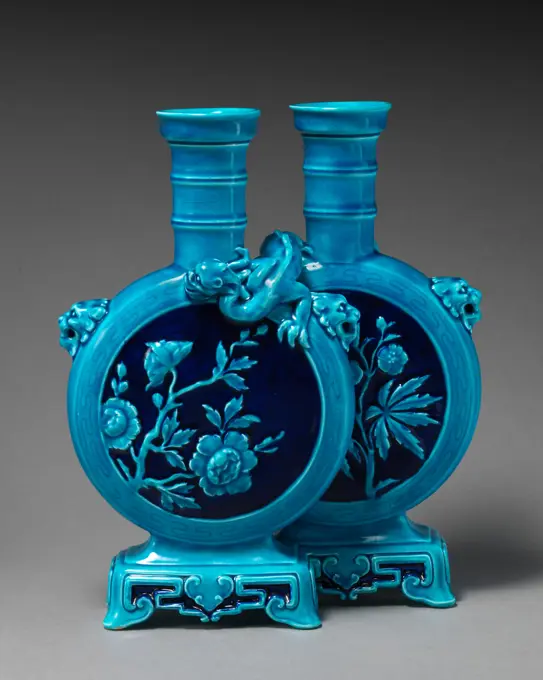
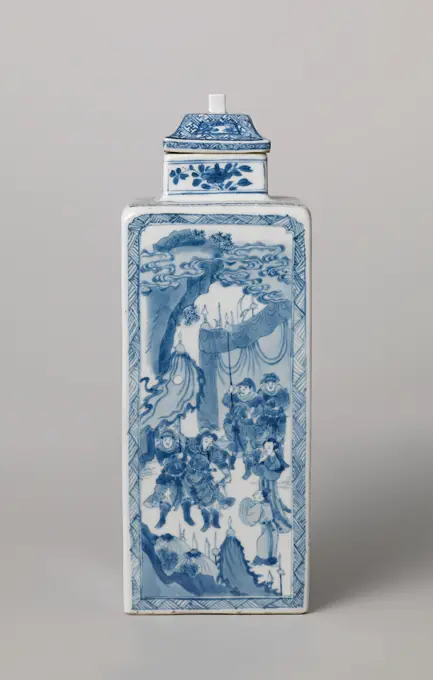
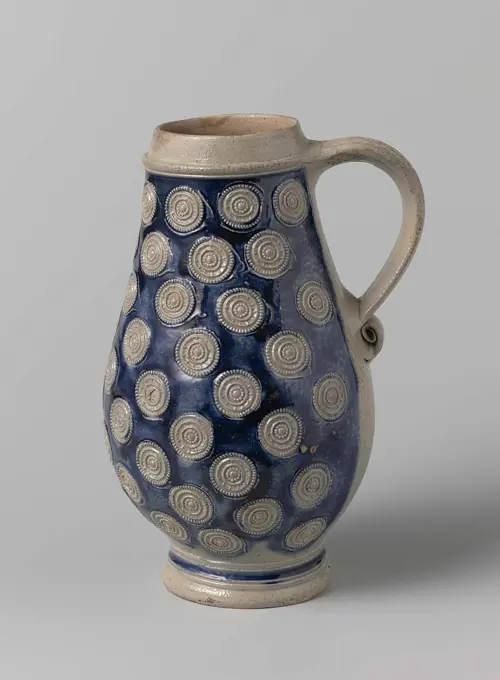
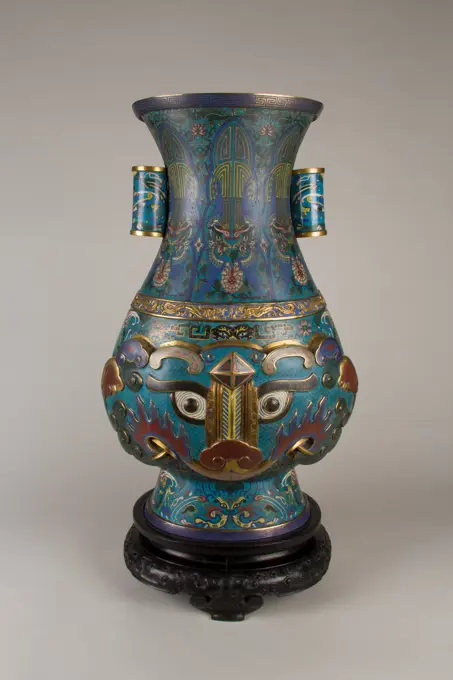
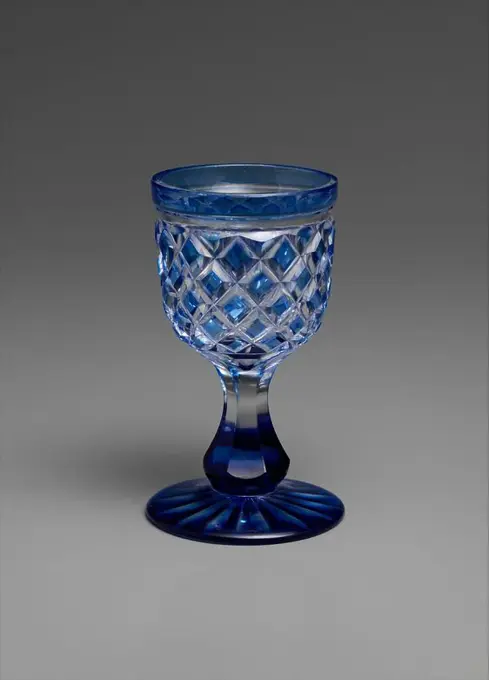
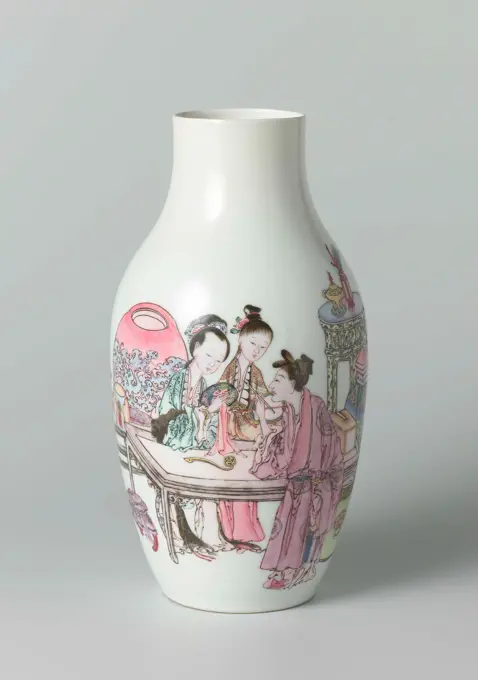
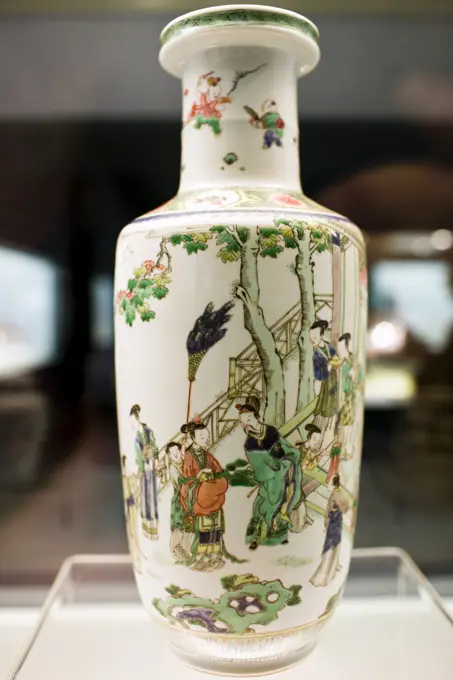
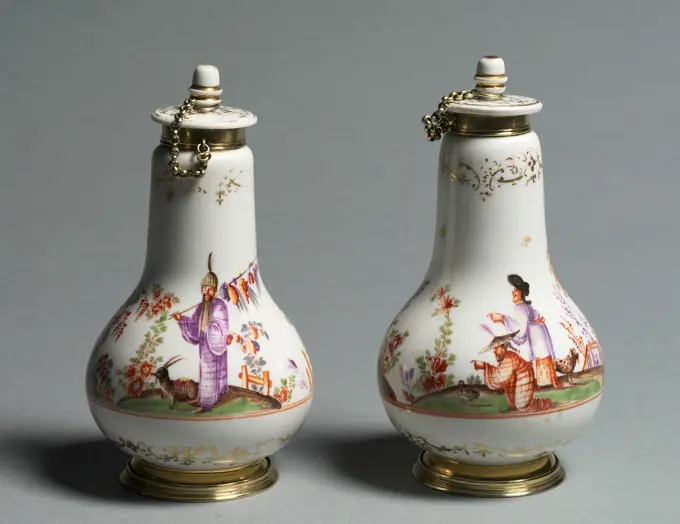
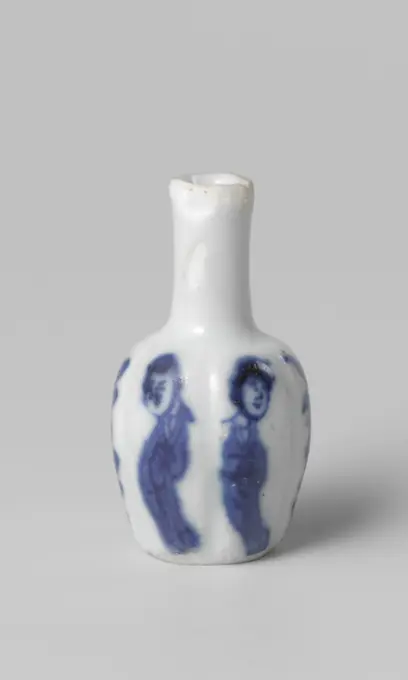
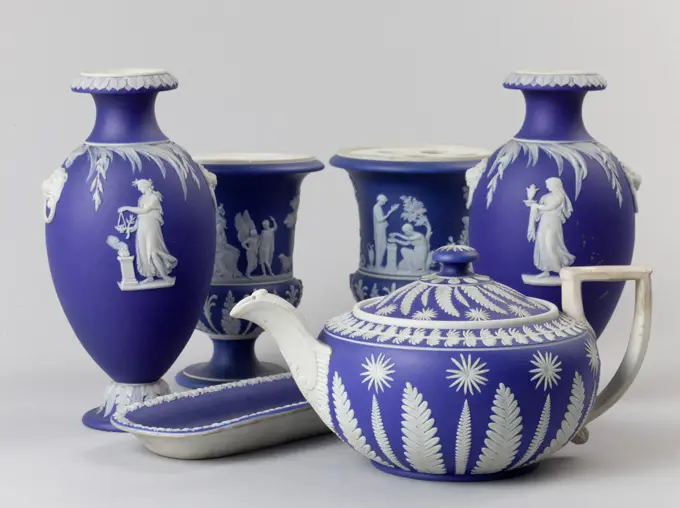
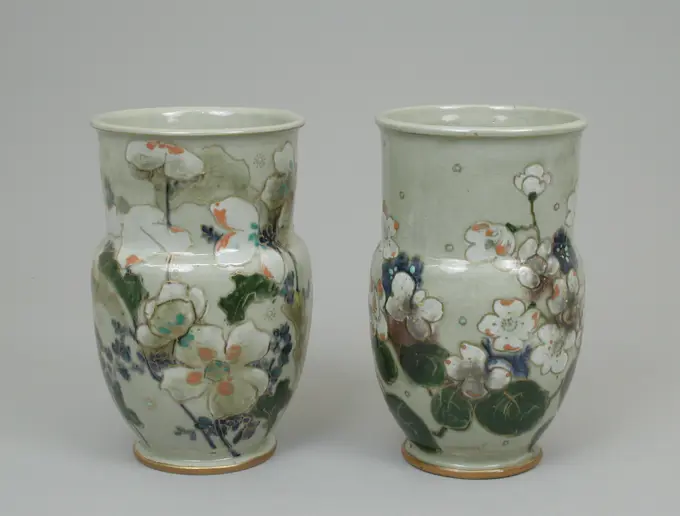
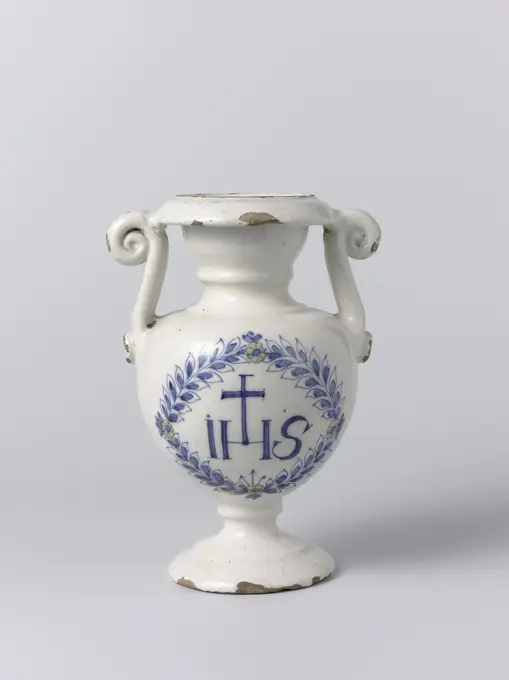
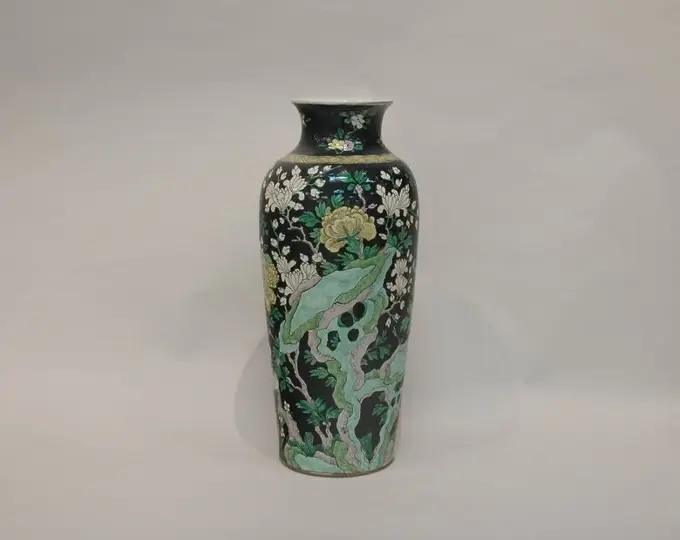
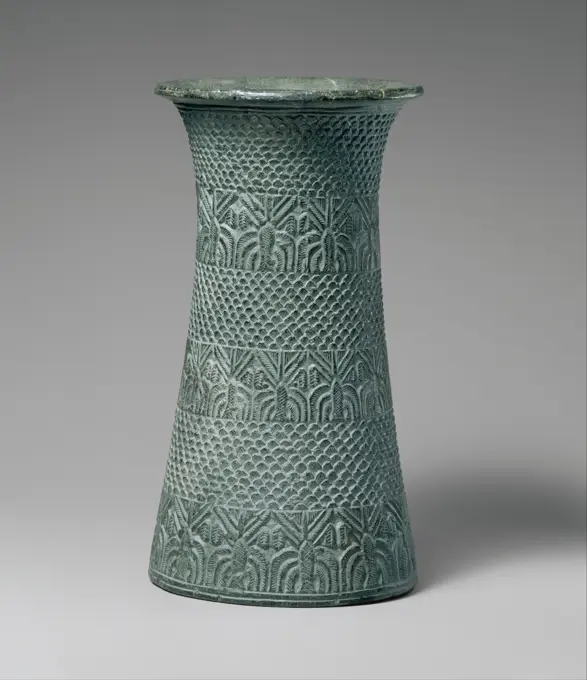
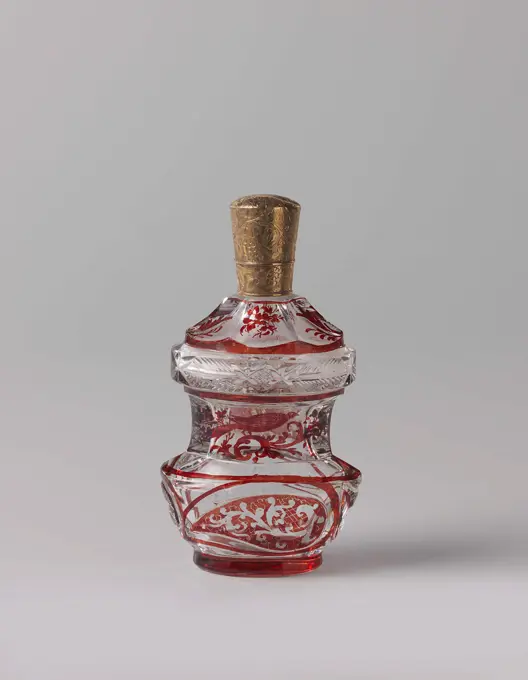
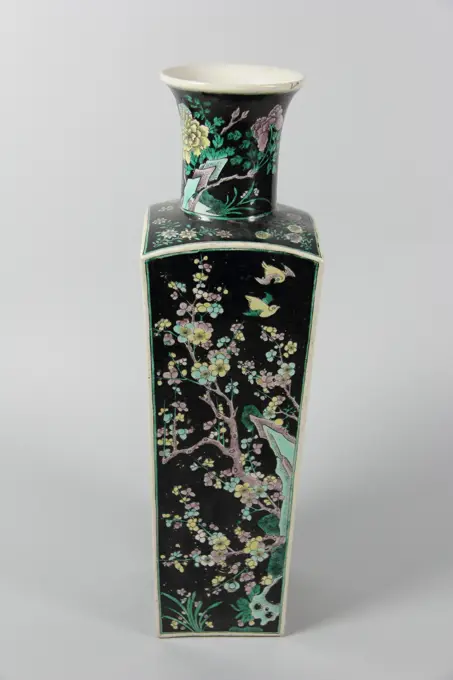
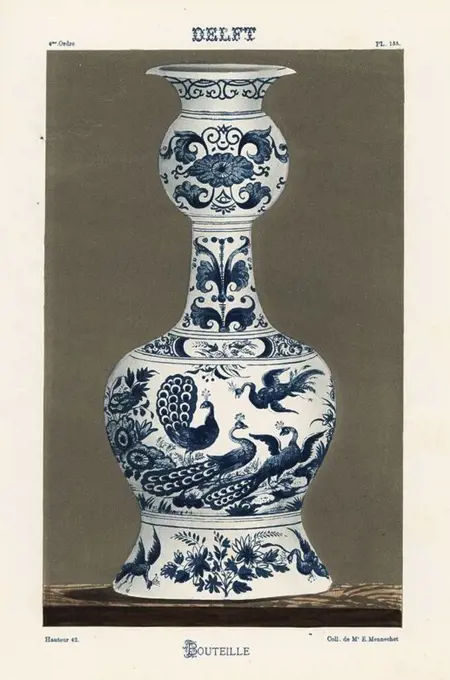
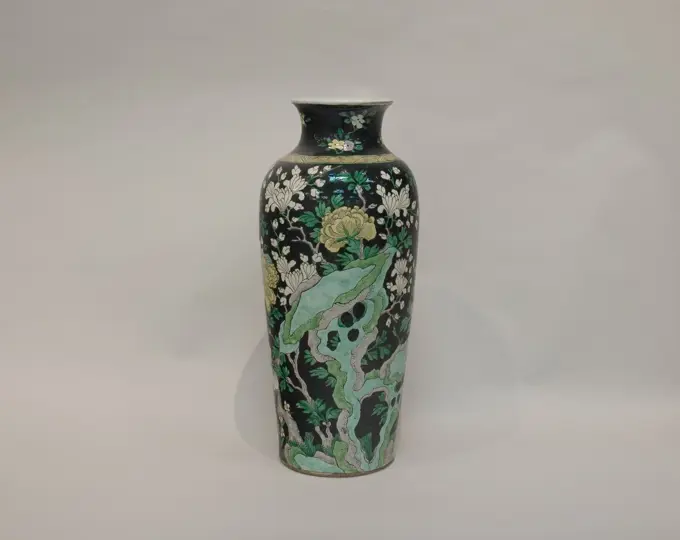
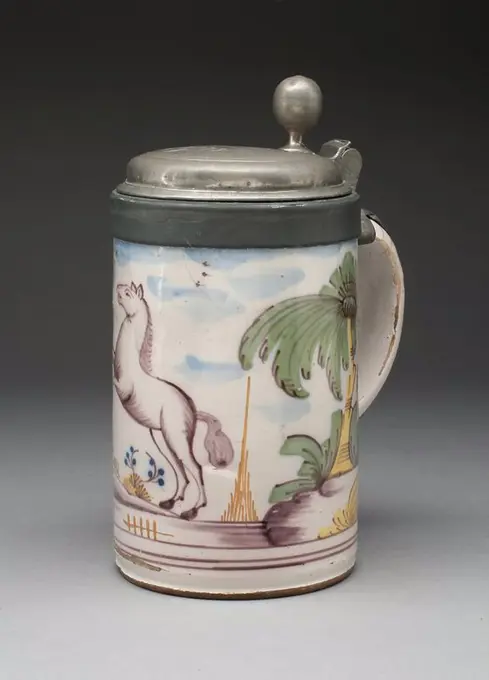
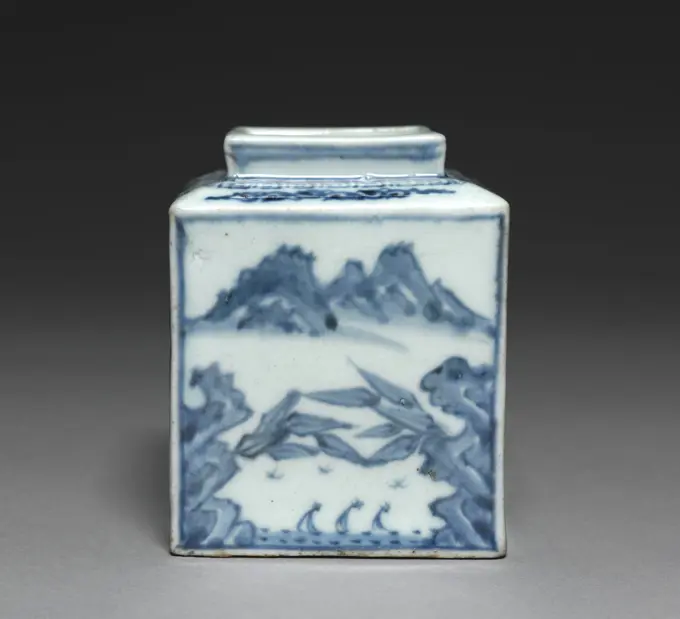
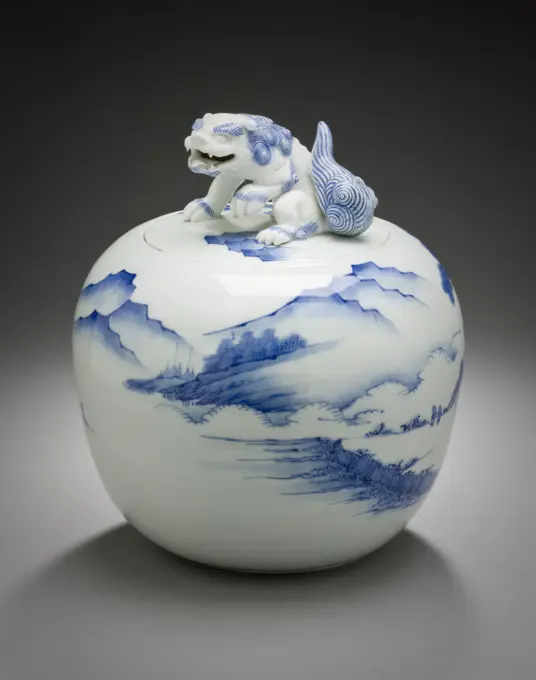
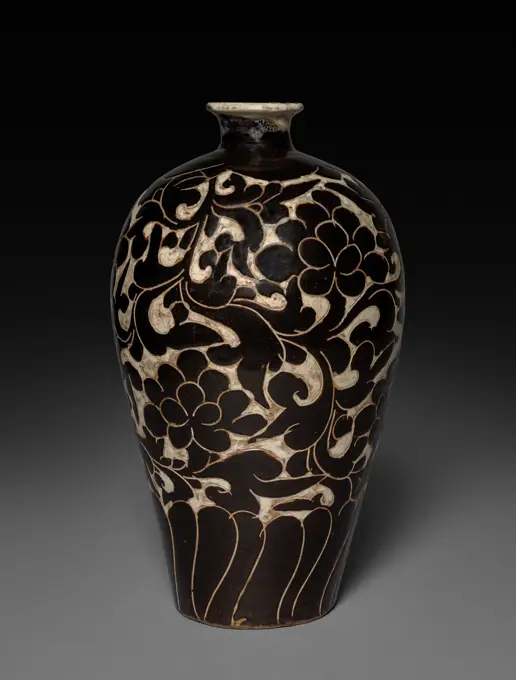
Vase with Peony Decoration, 1000s-1100s. China, Northern Song dynasty (960-1127). Gray stoneware with underglaze slip decoration, Cizhou ware; diameter: 19.7 cm (7 3/4 in.); overall: 30.2 cm (11 7/8 in.).Unknown (n. - d.), Celadon vase (common name). Ceramics, porcelain, golden bronze frame. Petit Palais, Museum of Fine Arts of the City of Paris.Pair Of Wig Stands (China (for export)); glazed porcelain with underglaze cobalt decorationTheBus, Jacob Groeneweg (attributed to), 1731 The round tea lever has a foot with an outstanding edge, a body widening upwards and a loose lid. A Knerrenrand runs along the foot edge. The decoration on the body is divided into horizontal tires. The middle band shows cannelures, the bottom and the upper band show standing or hanging Acanthus leaf. The leaves on the upper edge are interconnected by cloths, creating fields. In these fields, the punch-shaped patterns have been applied, beyond that the punch is matted outside. Waved threads run along the edges of the lid, the top is decorated with a flower rosette. There is a vase -shaped button in the middle. The Teabus consists of various hammered parts - foot, body, collar and neck - that are soldered together. The lid consists of a wall and a cap. The lid button is cast. A thread is soldered along the lower edge of the lid. The decoration is driven, the contours are indicated with engraving work. Haarlem silver (metal) granulation The rSeated figure of Zhang Guolao, One of the Eight Immortals. Image of porcelain on hexagonal pedestal, painted on biscuit in green, yellow, eggplant and black. The image represents the sitting Zhang Guolao, one of the eight immortals, in a robe with clouds. On his left knee rest, attribute, a bamboo stirring instrument. The hexagonal base is decorated on the front with napkin with a stylized chrysanthemum, at the rear of two loose flowers and a window. The sticks of the percussion instrument have been demolished. Email sur biscuit with famille verte colors.Jug with a coat of arms and floral scrolls, anonymous, c. 1595 - c. 1625 Jug of stoneware on stand ring with a spherical belly and wide neck. The C-shaped ear is attached to the neck and shoulder. Profiles on the neck and the foot. Partly covered with cobalt blue. On the abdomen in relief twice a printed and imposed weapon between bred ranks with stamped flowers. On the neck a bond with roll work interrupted by medallions with a mask. Attached to the ear a pewter frame with lid. Raeren. Rae Stoneware. Glaze. Cobalt (Mineral). frame: tin (metal) vitrification Jug of stoneware on stand ring with a spherical belly and wide neck. The C-shaped ear is attached to the neck and shoulder. Profiles on the neck and the foot. Partly covered with cobalt blue. On the abdomen in relief twice a printed and imposed weapon between bred ranks with stamped flowers. On the neck a bond with roll work interrupted by medallions with a mask. Attached to the ear a pewter frame with lid. Raeren. Rae Stoneware. GSugar bowl ca. 1876 Designed by Karl L. H. Müller American Made as a prototype for a porcelain service exhibited at the 1876 Philadelphia Centennial Exhibition, this tea set depicts troubling imagery on the finials of the teapot and sugar bowl in the form of heads of an Asian and a Black man. While designer Karl Mullers intent was undoubtedly to present well-known iconography for tea and sugar—a goat is also depicted on the handle of the creamer—the representations reveal the pervasiveness of racist thought in 19th-century America. The Black head also underscores how the commodity of sugar was inextricably linked to the exploitation of enslaved labor, especially in the Atlantic World.. Sugar bowl 2507Box with diaper patterns and flowering plants in a panel decoration, anonymous, c. 1400 - c. 1599 Lid of stone box, painted in underly glaze blue and on the glaze red and green. The top of the lid with a modeled, scalloped cartouche with a landscape with mountains and trees. A chip in the edge of the box. Decoration following the Chinese squatter porcelain. Vietnam stoneware. glaze. cobalt (mineral) painting / vitrification Lid of stone box, painted in underly glaze blue and on the glaze red and green. The top of the lid with a modeled, scalloped cartouche with a landscape with mountains and trees. A chip in the edge of the box. Decoration following the Chinese squatter porcelain. Vietnam stoneware. glaze. cobalt (mineral) painting / vitrificationRozane Della Robbia” Vase.  Maker: Roseville Pottery, American, 1890-1954Vase lower part: Yuan dynasty; mounts and upper part: Kangxi period (1662-1722 China. Vase 40633Trolley, blue painted on white tinglaze. Trolleys, blue painted with in Chinese trant with birds, flowers and and branches. At the top and top a decorative border, also in Chinese trantSnuff bottle. unknown, craftsmanMiniature bottle vase with Chinese figures and pine sprays, anonymous, c. 1675 - c. 1724 Miniature bottle -shaped vase made of porcelain with square body, painted in underlaze blue. Four medallions on the belly with a Chinese person each, one on horseback, one walking, one with a fan and one sitting; On the shoulder a band with zigzag work; The neck with twice a pine branch. Blue White. China porcelain. glaze. cobalt (mineral) painting / vitrification Miniature bottle -shaped vase made of porcelain with square body, painted in underlaze blue. Four medallions on the belly with a Chinese person each, one on horseback, one walking, one with a fan and one sitting; On the shoulder a band with zigzag work; The neck with twice a pine branch. Blue White. China porcelain. glaze. cobalt (mineral) painting / vitrificationCovered vase with stand, modelled in bamboo-shaped sections with flower sprays, anonymous, c. 1700 - c. 1724 Vase of porcelain, painted on the glaze in green, yellow, eggplant and black. Modeled in bamboo -shaped segments. The segments are subdivided into courses filled with flower areas, flowering plants or leaves. On the neck and shoulder of the vase a band with modeled lotus leaves. Email sur biscuit with family distance colors. China porcelain. glaze. painting / vitrification Vase of porcelain, painted on the glaze in green, yellow, eggplant and black. Modeled in bamboo -shaped segments. The segments are subdivided into courses filled with flower areas, flowering plants or leaves. On the neck and shoulder of the vase a band with modeled lotus leaves. Email sur biscuit with family distance colors. China porcelain. glaze. painting / vitrification'Bottle - Japanese (Kutani)', late 17th century, (1945). Creator: Unknown.Covered Box with Birds. Vietnam, circa 1450-1550. Furnishings; Accessories. Wheel-thrown stoneware with cream slip, incised and underglaze blue painted decoration, clear glaze and overglaze green and red enamel decorationJug. Can be from stoneware. With relief decoration and blue glaze. Handle and neck are missing.Snuff Bottle, 1750-1850, 3 x 1 1/8in. (7.6 x 2.9cm), Cloisonne, China, Qing dynastyFoot of faience mustard pot, decorated with flower decoration on white background, mustard pot pot crockery holder fragment earthenware pottery earthenware glaze tin glaze, hand turned fried glazed painted baked Foot of faience mustard pot. Blue flower decor on the belly. Lines around the constriction of the foot and leaf figures around the foot Surface with cut out soul Yellowish shard archeology City center Stadsdriehoek Rotterdam Laurens church indigenous pottery mustard serving serve Soil discovery found during the restoration of the Laurenskerk in Rotterdam Excavation east of the church.Arita (ceramic production center) (n. - d.), Vase Cornet with imari decor. Porcelain, polychrome enamels. Petit Palais, Museum of Fine Arts of the City of Paris.German stone jar German blue stone jar isolated over white background Copyright: xZoonar.com/IvonnexWierinkx 8485538Condiment Dish with DomedCoverJug with stylized flowers, anonymous, c. 1730 - c. 1770 Jug of stoneware on stand ring with a spherical body and long, wide neck. The C-shaped ear is attached to the neck and shoulder. Partly covered with cobalt blue. The belly is hexagonal with a round compartment on each side formed by a printed and laid tire of bulbs in relief. In the courses alternately an entry, stylized decoration of a flower livel or plants near a fence. Below and above this decoration a band with a pressed zigzag line (Knibis). The neck is divided into three tires with stylized leaf vines, knibis or stylized flowers. A pressed decorative tire and blue dots on the foot. A pewter frame with lid is attached to the ear. On the lid the beaten letters 'M.A.S.'; The inside with an illegible brand. Lahntal, Westerwald. Lahntal Stoneware. Glaze. Cobalt (Mineral). frame: tin (metal) vitrification Jug of stoneware on stand ring with a spherical body and long, wide neck. The C-shaped ear is attached to the neck and shouldeBottle with Abstract Flowers and Leaves 14th century China. Bottle with Abstract Flowers and Leaves 39531Vase. unknown, craftsmanBottle-Shaped Vase, 1796-1820. China, Qing dynasty (1644-1911), Jiaqing reign (1796-1820). Porcelain, overglaze colors and gold; overall: 30.8 cm (12 1/8 in.). Porcelain with this dense floral millefleurs decoration and a multitude of overglaze enamel colors was first made in the Qing dynasty imperial workshops in Beijing, patronized by the Yongzheng emperor who reigned during 1723-35. This design must have been challenging for porcelain painters to master and remained popular into the late 1800s.Fragment of a jug with roundels, heart shapes and foliate ornaments, anonymous, c. 1600 - c. 1699 Fragment of a jug of stoneware on a high foot with a spherical body and narrow neck. The ear and part of the neck and foot are missing. Profiles on the foot and the neck. Partly covered with cobalt blue. Printed and imposed, concentric circles of small rosettes and stamped heart shapes on the abdomen, within which a three -pass. In the center three acorns and two flowers in compartments. The side with a vertical band of flowers with triangular leaf motifs on either side. On the neck a band with curl work interrupted by rosettes in medallions. Westerwald. Westerwald stoneware. glaze. cobalt (mineral) vitrification Fragment of a jug of stoneware on a high foot with a spherical body and narrow neck. The ear and part of the neck and foot are missing. Profiles on the foot and the neck. Partly covered with cobalt blue. Printed and imposed, concentric circles of small rosettes and stamped heart sTureen with Landscape. Culture: Japan. Dimensions: Diam. 10 in. (25.4 cm). Date: late 17th century.This large tureen is a piece of export porcelain made for the European trade that was conducted by the Dutch during the Edo period (1615-1868). It is decorated in the Transitional style, in which a stylized landscape scene is executed in underglaze blue on a white surface. This style originated in Chinese export porcelain and was popular in Europe in the first half of the seventeenth century. When, toward the middle of that century, the Dutch porcelain trade was carried out primarily with Japan, Chinese styles were used as models. This large tureen shape was not widespread in Japan, but rather was created specifically to meet the demand of European buyers. Museum: Metropolitan Museum of Art, New York, USA.Teapot 1765-1775 Leeds. Lead-glazed earthenware (creamware) and polychrome enamels .Porcelain Jar with Lid from the Ming Dynasty 16th Century.Jar with mythical creatures 16th century China. Jar with mythical creatures. China. 16th century. Porcelain painted in underglaze cobalt blue (Jingdezhen ware). Ming dynasty (1368-1644). CeramicsDouble moon flask December 1873 Minton(s) Minton was the most important ceramics factory during the Victorian period and began exhibiting products at the first Great Exhibition of 1851. Founded in 1793 by Thomas Minton at Stoke-on-Trent, the firm initially specialized in transferware pottery before expanding under the ownership of Thomass son Herbert Minton, beginning in 1836. Under the ownership of Colin Minton Campbell, who succeeded his uncle in 1858, the factory became recognized as a specialist producer of Aesthetics movement porcelain, which were inspired by a rich array of exotic and eclectic decorative motifs.. Double moon flask. British, Stoke-on-Trent, Staffordshire. December 1873. Lead-glazed earthenware. Ceramics-PorcelainVase with two ornamental borders with scrolls and dots, royal porcelain manufactory, 1913 Vase of porcelain with a layer, printed egg -shaped body and a long, wide, slightly round shoulder. Painted on the glaze in blue and gold. On the neck, overflowing on the shoulder a wide band with vertical lines interspersed with blue stripes surrounded by curl, ending in a gold pendant comprises by blue dots. Above the foot a wavy band with dots. Marked on the underside with the scepter, the number 59, a red government apple with 'K.P.M', the anniversary brand 'K.P.' With the date '1703-1913', the annual letters K.O (1913), the model number 6389 (year 1902). Art Nouveau. Berlin porcelain. glaze. painting / vitrification Vase of porcelain with a layer, printed egg -shaped body and a long, wide, slightly round shoulder. Painted on the glaze in blue and gold. On the neck, overflowing on the shoulder a wide band with vertical lines interspersed with blue stripes surrounded by curl, ending in a gold pSquare bottle with narrative scenes of warriors in a landschape.Square bottle of porcelain, painted in underglaze blue. On the walls elongated cartouches with pinched corners with different fighting scenes: warriors in a landscape in a battle on a horse, or warriors on a terrace standing in front of a table behind which sitting magistrates. To make the cartouches a band with arrearing. On the shoulder a band with a Swastika pattern and four times a flowering plant on the neck. The lid with a swastika pattern with a cartouche with a lucky symbol (fish). On the square lid knob the character 'fú', happiness. Marked on the bottom with an artemisia leaf. Blue White.Coffee Cup and Saucer 1804-1813 Worcester. Soft-paste porcelain with polychrome enamels and gilding . Worcester Royal Porcelain Company (Manufacturer)Beaker vase (part of an assembled garniture) ca. 1690-1720 Japanese, for export market (Hizen ware, Imari type) Japanese porcelain vases made for export were avidly sought by aristocratic and royal patrons to decorate their stately homes and palaces in the late seventeenth and early eighteenth centuries. While Chinese porcelains were exported to Europe and Britain in larger quantities during this period, Japanese porcelains were prized for their boldly patterned and richly colored decoration. The popularity of works such as these changed European taste for Asian porcelain, with a more vivid palette preferred over the blue and white decoration which once defined imported porcelains.. Beaker vase (part of an assembled garniture). Japanese, for export market (Hizen ware, Imari type). ca. 1690-1720. Hard-paste porcelain with underglaze blue and overglaze enamel and gilding. Ceramics-Porcelain-ExportRectangular plate of blue painted faience, 1760 Rectangular plate made of blue painted faience, horing with an octagonal stew (BK-NM-4001). Makkum earthenware. tin glaze. Rectangular plate made of blue painted faience, horing with an octagonal stew (BK-NM-4001). Makkum earthenware. tin glaze.. Bottle of painted porcelain. The bottle has a long square neck and is painted with chrysanthemums, alternately on the four sides behind two bound hedges and behind rocks. The bottle has been marked.Can be from stoneware. Can be made of stoneware with a spotty cobalt color. The pear-shaped body is decorated with rosettes printed in flat relief on a blue fond.Vase 19th century China. Vase 42073Vase; Hayakawa, Komejirô (Fl. Ca 1880-1912); End of the 19th century (1890-00-00-1900-00-00);Anonymous, China. Burnt-sponsor, green family decor. Porcelain, polychrome enamels, golden bronze frame. XVIIth-18th century. Museum of Fine Arts of the City of Paris, Petit Palais. Brule-by-Parfum, Faience, XVIIth XVIIth XVII 17th 17th 17 CENTURYBrush Pot with Episode from Life on Sima Guang, 1628-1661. China, Jiangxi province, Jingdezhen, Qing dynasty, Shunzhi period (1644-61). Porcelain with underglaze blue decoration; diameter: 20.2 cm (7 15/16 in.); overall: 20.4 cm (8 1/16 in.).Can, spherical with clover leaf -shaped mouth, anonymous, c. 1450 - c. 1550 Spherical can of lead glaze pottery, on a base and with a clover leaf -shaped mouth. The jug has a wide, flat ear. In the KAN is a flower around which concentric circles engraved. Two striped tires swing around the circles. Italy earthenware. lead glaze Spherical can of lead glaze pottery, on a base and with a clover leaf -shaped mouth. The jug has a wide, flat ear. In the KAN is a flower around which concentric circles engraved. Two striped tires swing around the circles. Italy earthenware. lead glazeCordial. Culture: American. Dimensions: Height: 4 in. (10.2 cm). Engraver: Possibly cut by Joseph Stouvenel and Company (1851-1857). Manufacturer: Brooklyn Flint Glass Company (American, Brooklyn, New York, 1824-1868). Date: 1850-55.New York City was an important center for machine-cut luxury glass in the middle of the nineteenth century. This partial group (2014.626.1a,b -.7) of blue-cut-to-clear glass is extraordinarily rare and perhaps even experimental when it was made in the 1850s. This is the only known blue plated cut glass attributed to the Brooklyn Flint Glass Works. The diamond pattern is thought to have been executed by Joseph Stouvenel, a highly skilled glass cutter whose works were exhibited at the New York Exhibition of 1853-54 and published during the period. Museum: Metropolitan Museum of Art, New York, USA.. Egg-shaped vase of porcelain with a wide, short neck, painted on the glaze in blue, pink, green, yellow, black and gold. On the wall a scene of two ladies behind a table surrounded by vases, tables and antiques (scepter, books, tripod, vase with peacock feathers, coral); In addition to this group, a servant with a flower vase, for her is a cat; A third lady in front of the table, which apparently paints the scene on the vase. Family Rose.Covered Jar With Hoo-Birds in panels on a ground of Lotus and Floral scrolls. Porcelain lid pot, painted in underglaze blue and on the glaze red, black and gold. On the outer wall flower drinks with a lotus drink and a cartouche with a hay-bird alternately. A tire with pointed leaf motifs around the foot. The lid with the same decoration; Lid knob in the shape of a rooster on a rock. Imari.Jordan, Madaba. Traditional lantern.Pot from Cologne Pot from Cologne in gray and blue Copyright: xZoonar.com/IvonnexWierinkx 7122004Square bottle with birds, flowering plants and pavilions, anonymous, c. 1700 - c. 1724 Square bottle of porcelain with a gilt, bronze cap, painted on the glaze in red, green, yellow, purple, black and gold. On the walls twice pavilions on an island with rocks and flowering plants (bamboo), a bird on a branch, and twice a flying bird at a prunus branch and bamboo. On the shoulder a band with prunus branches and a leaf motif; Rank around the neck. A meander pattern on the neck. The cap is in the form of a braided ring, ending in a Hoo bird head on a flower rosette. The edge has been ground. Arita, decorated in Europe  In the Japanese Kakiemon style. Japanpainter: Europe (possibly) porcelain. glaze. gold (metal). dop: bronze (metal) painting / gilding / vitrification Square bottle of porcelain with a gilt, bronze cap, painted on the glaze in red, green, yellow, purple, black and gold. On the walls twice pavilions on an island with rocks and flowering plants (bamboo), a bird on a branch, aDouble Bottle (One of a Pair). Culture: China. Dimensions: H. 8 3/4 in. (22.2 cm); W. 5 3/4 in. (14.6 cm). Museum: Metropolitan Museum of Art, New York, USA.Goblet. UnknownCreamer c 1825-1830 Boston. Glass . Boston and Sandwich Glass CompanyLunchbox with Lid and Five silver Chopsticks and Rests 3rd quarter of the 19th century Japan. Lunchbox with Lid and Five silver Chopsticks and Rests 44713Punch goblet, 1867, Cristalleries de Baccarat, Baccarat, France, est. 1764, 4 3/4 x 2 7/16 in. (12.07 x 6.19 cm), Cased lead glass, France, 19th centuryPunch goblet, 1867, Cristalleries de Baccarat, Baccarat, France, est. 1764, 4 3/4 x 2 7/16 in. (12.07 x 6.19 cm), Cased lead glass, France, 19th centuryBarrel-Shaped Jar China. Barrel-Shaped Jar. China. Porcelain painted in underglaze blue and overglaze polychrome enamels. Ming dynasty (1368-1644), Wanli mark and period (1573-1620). CeramicsMing vase on display in the Shanghai Museum, ChinaTureen with cover Period of Paul Hannong ca. 1750-60 Faience, or tin-glazed and enameled earthenware, first emerged in France during the sixteenth century, reaching widespread usage among elite patrons during the seventeenth and early eighteenth centuries, prior to the establishment of soft-paste porcelain factories. Although characterized as more provincial in style than porcelain, French faience was used at the court of Louis XIV as part of elaborate meals and displays, with large-scale vessels incorporated into the Baroque garden designs of Versailles. Earlier examples of French faience attest to the strong influence of maiolica artists from Italy. Later works demonstrate the ways in which cities such as Nevers, Rouen, Lyon, Moustiers, and Marseille developed innovative vessel shapes and decorative motifs prized among collectors throughout Europe. While faience can be created from a wide mixture of clays, it is foremost distinguished by the milky opaque white color achieved by the aPortland Vase, a Roman cameo glass vase. Dated 1st CenturyVase. Culture: China. Dimensions: H. 10 1/2 in. (26.7 cm). Museum: Metropolitan Museum of Art, New York, USA.Dish with Heron Design late 17th century Japan. Dish with Heron Design 52277Covered Flasks, c. 1720-1723. Meissen Porcelain Factory (German). Porcelain with gilt metal mounts; overall: 14.2 x 7.7 cm (5 9/16 x 3 1/16 in.).Miniature bottle vase with flowering plants and women, anonymous, c. 1675 - c. 1724 Miniature ashesle, bottle -shaped vase of porcelain, painted in underlaze blue. Flowing plants and woman on the wall (long lips) on the wall. Blue White. China porcelain. glaze. cobalt (mineral) painting Miniature ashesle, bottle -shaped vase of porcelain, painted in underlaze blue. Flowing plants and woman on the wall (long lips) on the wall. Blue White. China porcelain. glaze. cobalt (mineral) paintingWedgwood Manufacture. "Wedgwood porcelain tea service". Wedgwood fine earthenware. Paris, Museum of Romantic Life. PORCELAINGlobe' still bank, 20th century, 4 1/8 x 3 11/16 x 3 11/16 in. (10.48 x 9.37 x 9.37 cm), Glass, United States, 20th centuryFlask (tokkuri), 19th century, Unknown Japanese, 6 1/4 in. (15.9 cm), Glazed pottery, Japan, 19th centuryPair of vases ca. 1882-86 Edouard-Alexandre Dammouse French The Dammouse brothers specialized in stylized floral motifs in the manner of Japanese prints. Their delicately drawn flowers were filled in with polychrome colors in low relief, sometimes outlined in gold. After years of working for others at various factories, the ceramicist Albert-Louis Dammouse and his painter brother Édouard-Alexandre opened their own workshop in Sèvres, where they focused on artistic pottery, porcelain, and glass.. Pair of vases. French, Paris. ca. 1882-86. Stoneware; china clay. Ceramics-PotteryVase, bottle-shaped, multi-colored painted with landscape with naked woman (Ariadne) and with the inscription on banderelle: a rosata. Bottle-shaped vase of multi-colored painted majolica. On the vase a banderold is painted with the inscription: a rosata, above that is a standing, naked woman painted in a landscape (Ariadne) with spin skirts and thread.Vase, anonymous, c. 1660 - c. 1690 vase Vase of multicolored painted faience, with two ears that end in volutes. At the front, the monogram IHS is painted in a wreath of blue and yellow. Delft earthenware. tin glaze.Chine vase gold on the white backgroundVase. Culture: China. Dimensions: H. 21 1/2 in. (54.6 cm); W. 8 1/2 in. (21.6 cm); Diam. of rim 5 3/4 in. (14.6 cm); Diam. of foot 7 1/2 in. (19.1 cm). Museum: Metropolitan Museum of Art, New York, USA.Tankard. Germany. Date: 1715-1725. Dimensions: H. 27.9 cm (11 in.); diam. 15.4 cm (6 6/16 in.). Tin-glazed earthenware (faience) and pewter. Origin: Germany. Museum: The Chicago Art Institute, Chicago, USA.Vase with overlapping pattern and three bands of palm trees ca. mid- to late 3rd millennium B.C. Vessels carved of a gray-green stone in what is called the "Intercultural Style" were made in the greater Gulf area as well as in southern Iran. At the site of Tepe Yahya in Iran, workshops were found with vessels and the raw materialschlorite or steatitefor their manufacture, dating to the mid-third millennium B.C. The stones were available in the nearby hills. Fragments of containers were also found at sites in the Gulf area. Vessels decorated in this style were found across the ancient Near East from Syria to the Indus Valley, evidence of the flourishing long-distance trade of the times.This piece has a tall shape with a flaring rim and is carved in alternating bands of an overlapping mountainlike pattern and date palm trees. The repertoire of motifs of the "Intercultural Style" includes vegetal, architectural, and abstract or naturalistic representations of people and animals.Many excVial with fish blow, birds and flowers. Flat spot, oval, in the middle body, facet cut, fish blowing, birds, flowers and leaf ornament. Small, flat plug of glass. The neck caught in a frame of gold with a high, round lid, engraved with floral drinks.Square vase with scenes of four seasons late 17th-early 18th century China. Square vase with scenes of four seasons. China. late 17th-early 18th century. Porcelain painted in polychrome enamels over a black ground (Jingdezhen ware, famille noire). Qing dynasty (1644-1911), Kangxi period (1662-1722). CeramicsBottle from Delft, Netherlands, 18th century, decorated with blue peacocks and flowers on a white ground. Hand-finished chromolithograph from Ris Paquot's General History of Ancient French and Foreign Glazed Pottery, Chez l'Auteur, Paris, 1874.Vase with flower and rock 19th century China. Vase with flower and rock. China. 19th century. Porcelain painted in overglaze polychrome enamels (Jingdezhen ware, famille noire). Qing dynasty (1644-1911). CeramicsCovered jar with three women in a garden and playing boys, anonymous, c. 1680 - c. 1720 Lid with ring -shaped button made of porcelain lid jar, painted in underlaze blue. On the lid with five boys playing in a landscape with rocks and plants, an artemisia leaf in the ring -shaped button. Blue White. China porcelain. glaze. cobalt (mineral) painting / vitrification Lid with ring -shaped button made of porcelain lid jar, painted in underlaze blue. On the lid with five boys playing in a landscape with rocks and plants, an artemisia leaf in the ring -shaped button. Blue White. China porcelain. glaze. cobalt (mineral) painting / vitrificationClose-up of a decorative pottery vase in unique patternFLORERO DE PORCELANA. Location: PALACIO TOPKAPI-MUSEO. ISTANBUL. TURQUIA.Vase with willow tree, rock, and butterflies late 18th century China. Vase with willow tree, rock, and butterflies 47937Set two vases with a backdrop of stylized palmets, c. 1910 Set two vases of earthenware, slim pear -shaped, painted in blue, brown and black with stylized palmets and other ornaments. Marked: Amphora Holland 210-1.c.j.vd.hoef; 210 also grabbed. Oegstgeest earthenware Set two vases of earthenware, slim pear -shaped, painted in blue, brown and black with stylized palmets and other ornaments. Marked: Amphora Holland 210-1.c.j.vd.hoef; 210 also grabbed. Oegstgeest earthenwareBulb pot, Porcelain, A bulb pot in the form of a commode made in porcelain with gilt detail., China (for export), late 18th century, ceramics, Decorative Arts, Bulb potTeapotVase. Kutani, manufactureTankard. Germany, Magdeburg. Date: 1772-1782. Dimensions: H. 22 cm (8 5/8 in.); diam. 10.8 cm (4 1/4 in.). Tin-glazed earthenware (faience) and pewter. Origin: Magdeburg. Museum: The Chicago Art Institute, Chicago, USA.Square-shaped Bottle with the Scenery of the Han River, 1800s. Korea, Joseon dynasty (1392-1910). Porcelain with underglaze cobalt blue decoration;Flask. UnknownVase. unknown, craftsmanPorcelain Vase, Downtown Santa Barbara, California, USAPharmacy Jar. Culture: Spanish. Dimensions: Overall: 12 1/2 in. (31.8 cm). Date: 1420-1430. Museum: Metropolitan Museum of Art, New York, USA.Reticule in the form of a flower basket, from ecrukligious cotton, in which multicolored beads brought along, anonymous, c. 1830 - c. 1850 Reticule in the shape of a flower basket, from ecrukligent cotton, in which multicolored beads extend. At the top a lane in Wybertjespatron, including large flowers in red, blue and yellow beads, with leaves in green beads all around. Halfway through the reticule a paved hoop with a round, paved bottom of thick paper at the bottom, making the lower part of the bag a sandlop model. From this hoop diagonal lines of contiguous blue beads. At the bottom of the bag an eight -pointed star in blue beads. An ecrinked cord has been laced by openings on the upper edge. The cord was probably added later. The reticule is unlined. North Netherlands whole: Cotton (textile). whole: Glass. Hoop: Iron (Metal). Soil: Paper knitting / blow molding Reticule in the shape of a flower basket, from ecrukligent cotton, in which multicolored beads extend. At the top a lane iVase from a five piece garniture, early 19th century, 8 1/2in. (21.6cm), Porcelain, China, 19th centuryJade itemVase 1878-82 John Bennett. Vase. John Bennett (1840-1907). American. 1878-82. Earthenware. Made in New York, New York, United StatesEngland, Staffordshire, Stoke-on-Trent, Wedgwood Visitor Centre, Exhibit of Giant Pot in The Wedgwood Museum. Porcelain vase on square ground surface, with a bumped body with a rib in the middle of the four walls and a slim round neck. Painted with purple lilacs and a bird on one wall. The colors are purple, blue, green and red; The bird in black, yellow, green, brown, blue and red.Cold-Water Jar for Tea with Landscape; Chinese Lion Knop. Japan, mid-19th century. Ceramics. Hirado Mikawachi ware; porcelain with underglaze blueBeaker vase with landscapes in panels, anonymous, c. 1700 Porcelain cup vas with a light spherical central part and spreading neck and foot, painted in underly glaze blue. The vase is divided into five rows of lotus leaf -shaped cartouches with landscapes. Upstairs and below the thickening in the center, above the foot and on the inner and outer edge a band with a zigzag pattern. Bekervaas is part of a cupboard set. Blue White. China porcelain. glaze. cobalt (mineral) painting / vitrification Porcelain cup vas with a light spherical central part and spreading neck and foot, painted in underly glaze blue. The vase is divided into five rows of lotus leaf -shaped cartouches with landscapes. Upstairs and below the thickening in the center, above the foot and on the inner and outer edge a band with a zigzag pattern. Bekervaas is part of a cupboard set. Blue White. China porcelain. glaze. cobalt (mineral) painting / vitrification