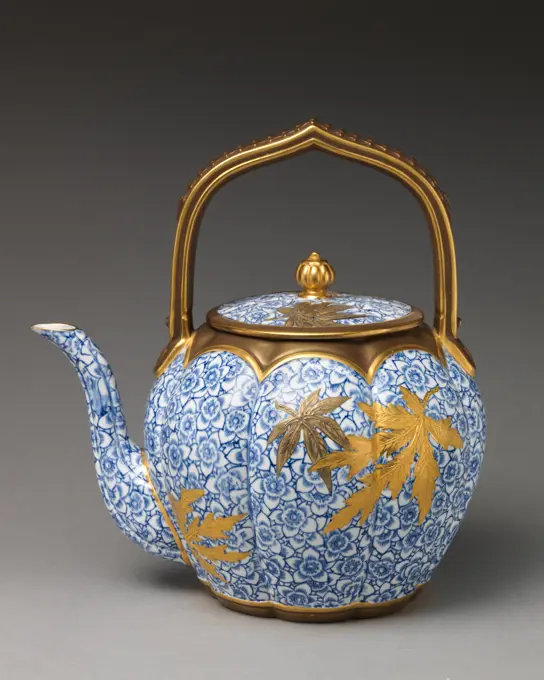
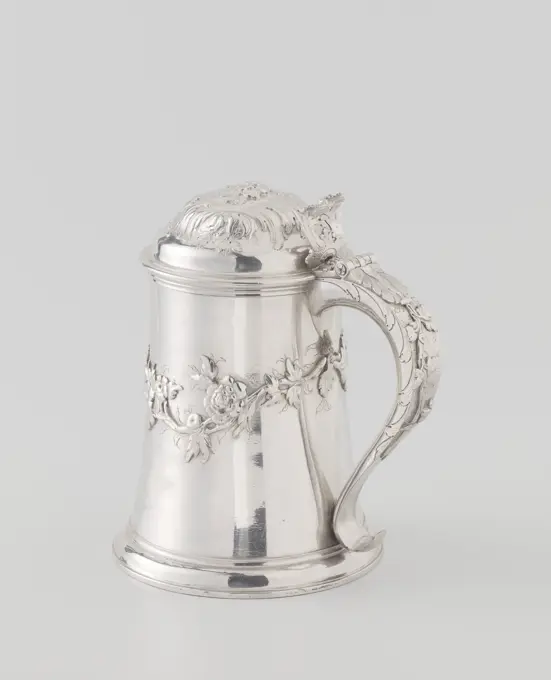
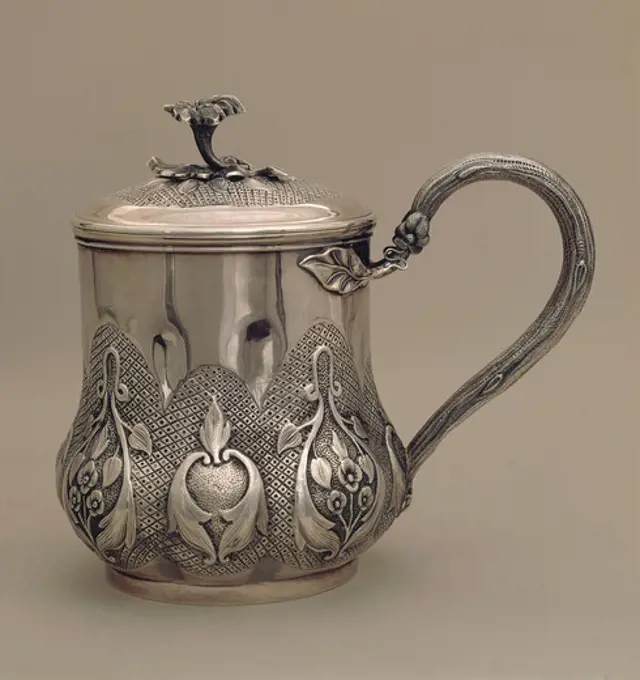
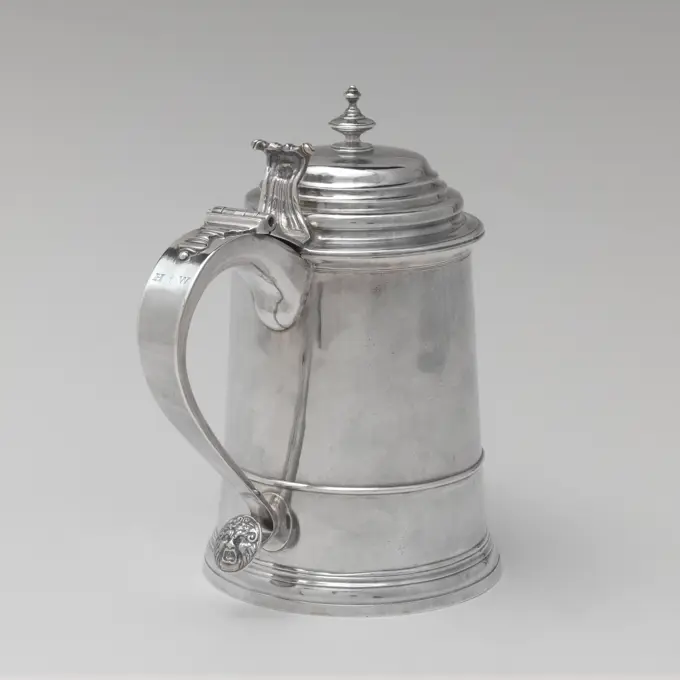
Decorative Teapots and Tableware

A selection of uniquely designed teapots and related tableware items, showcasing various materials and decorative styles from different eras.
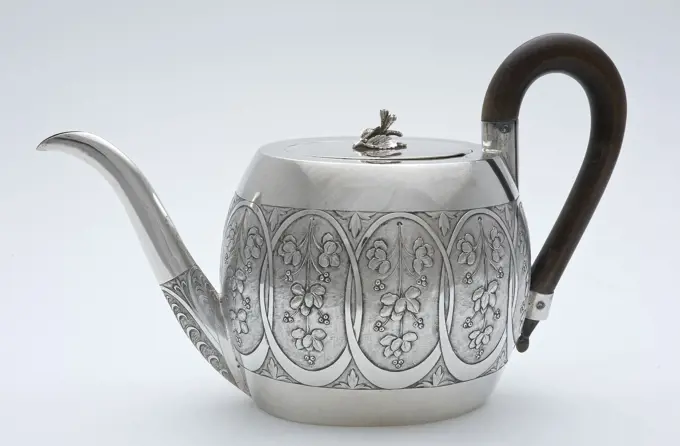
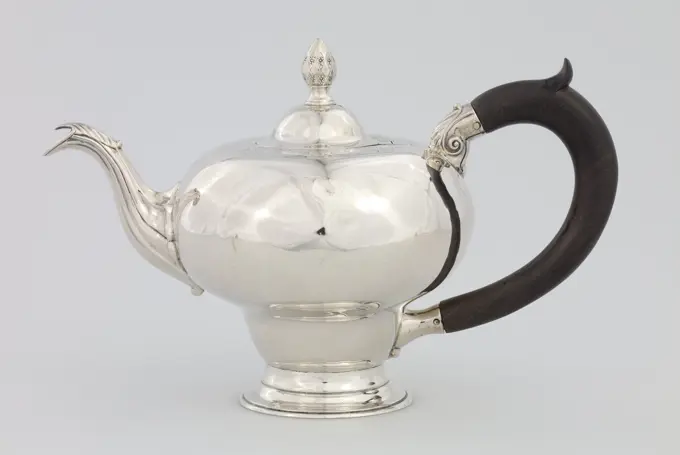
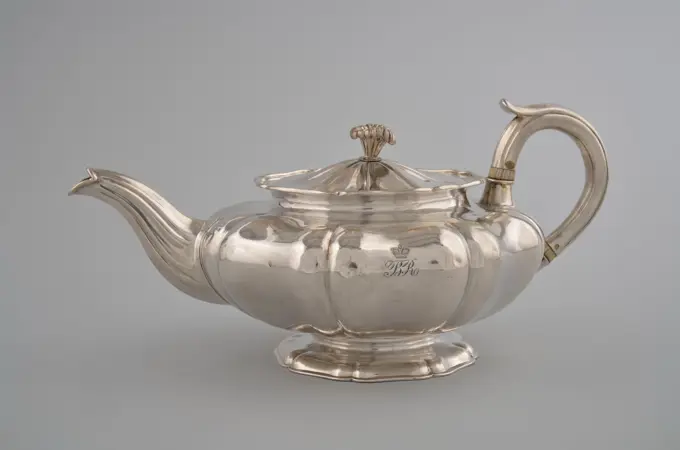
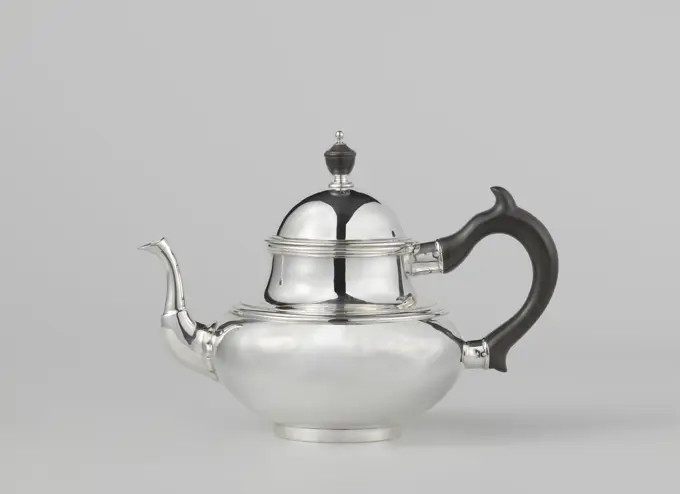
Silver oval teapot with wooden handle, teapot crockery holder silver wood, hammered pounded Body spout wooden handle lid knob 18 07 13 in rectangular monogram in shield (smashed bottom) serve serving
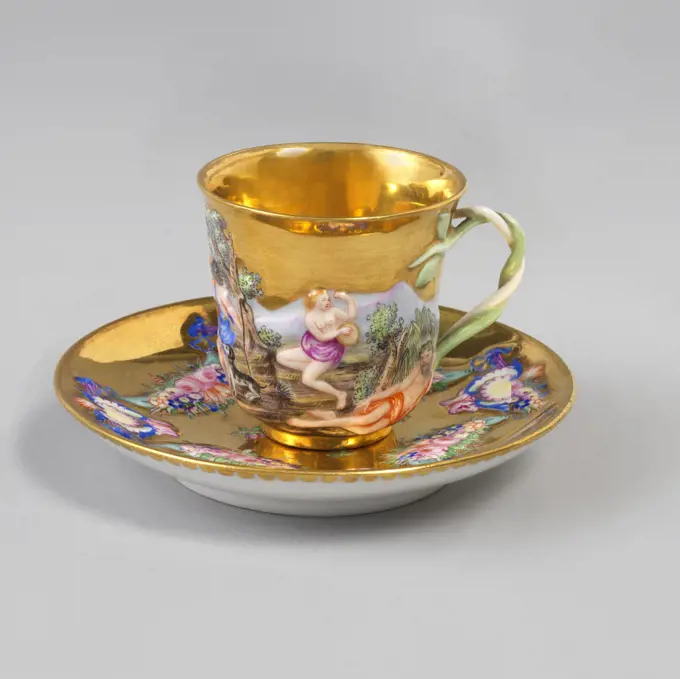
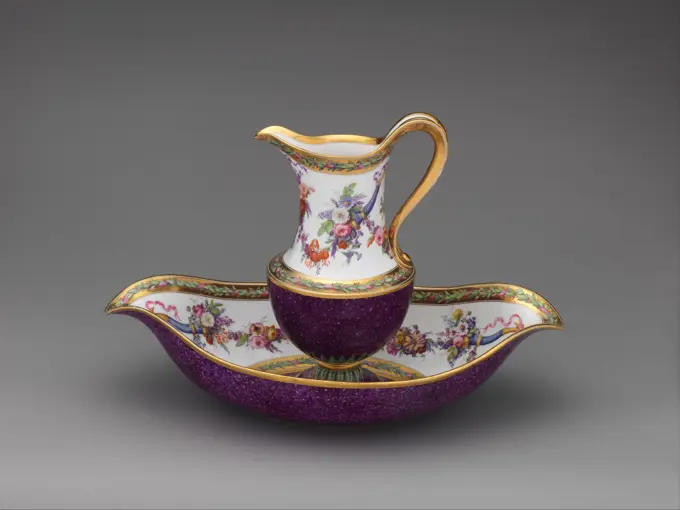
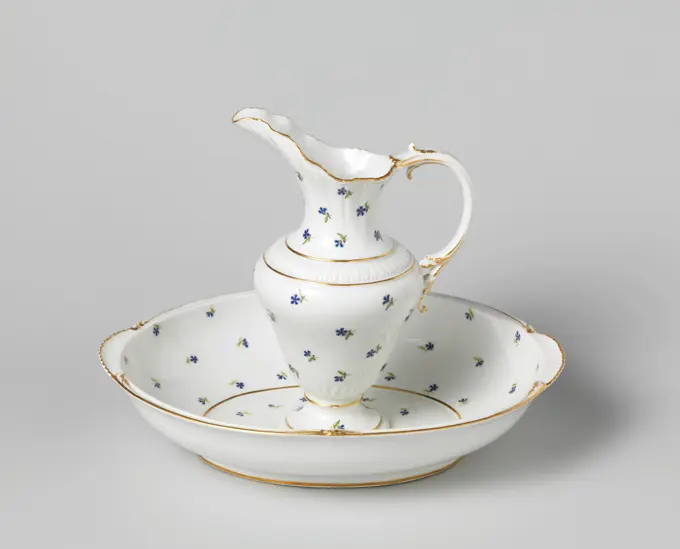
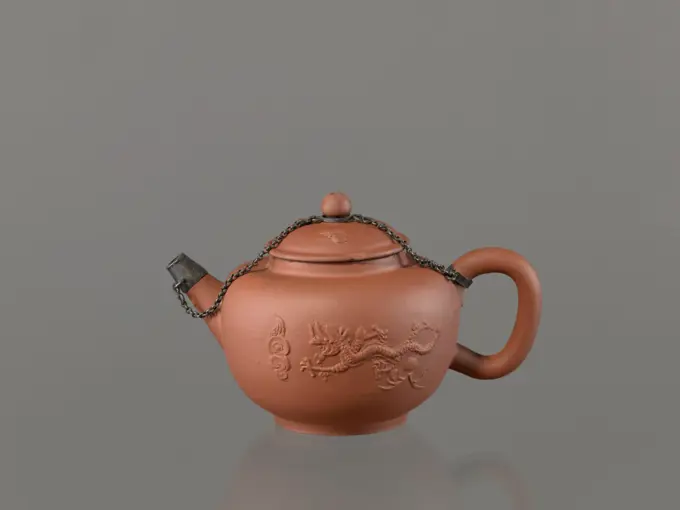
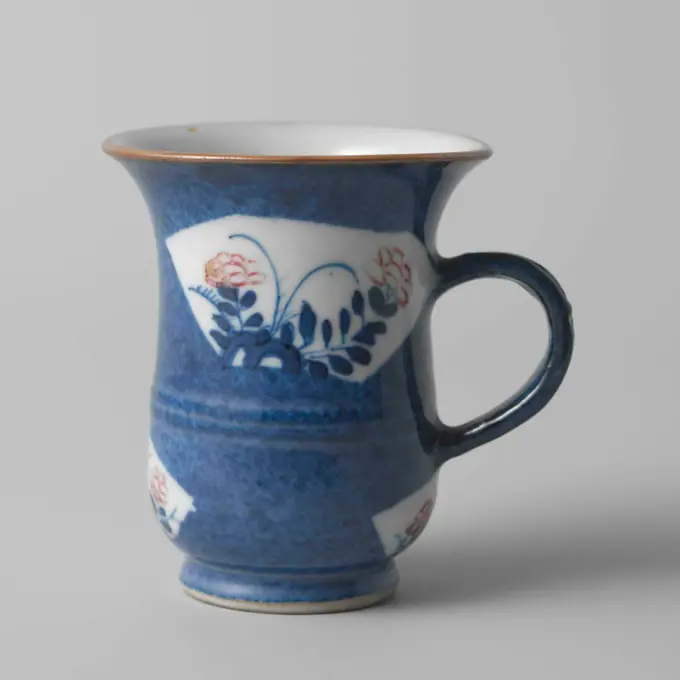
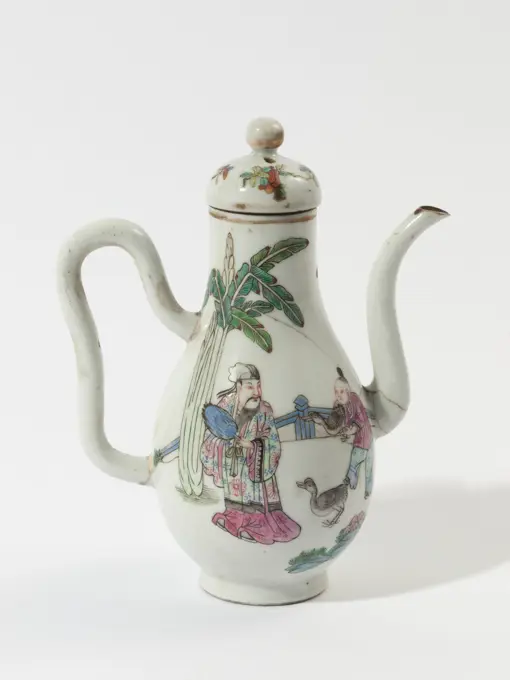
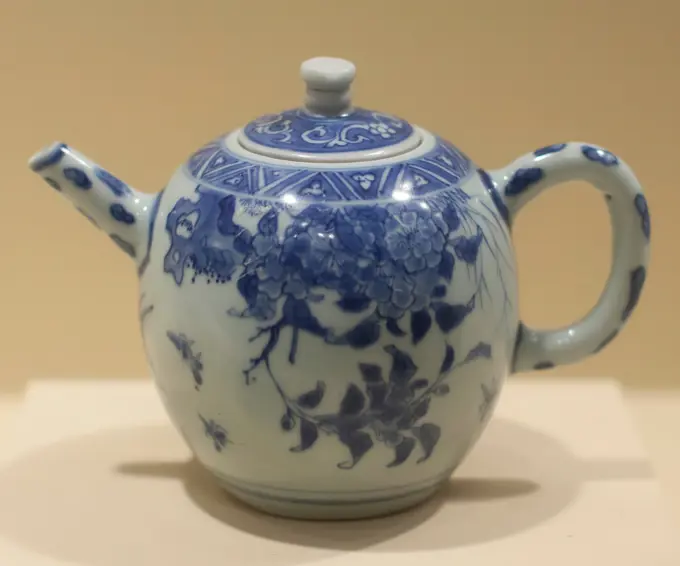
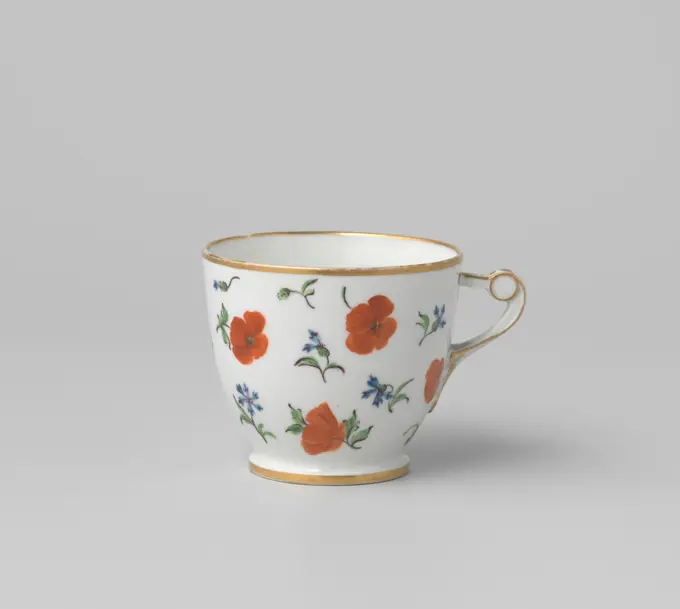
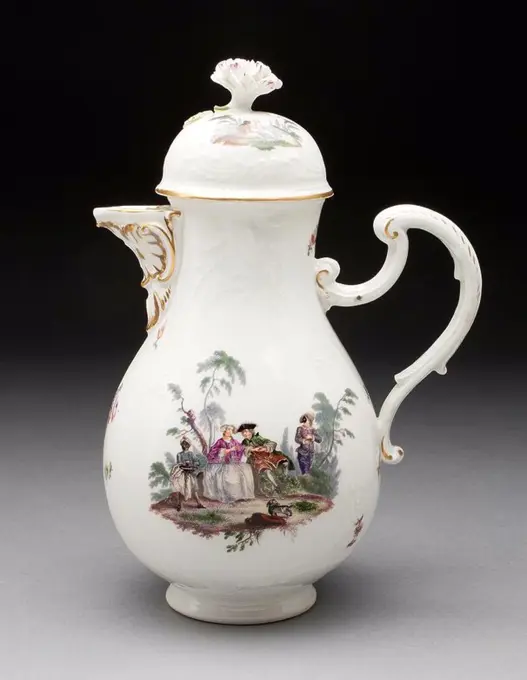
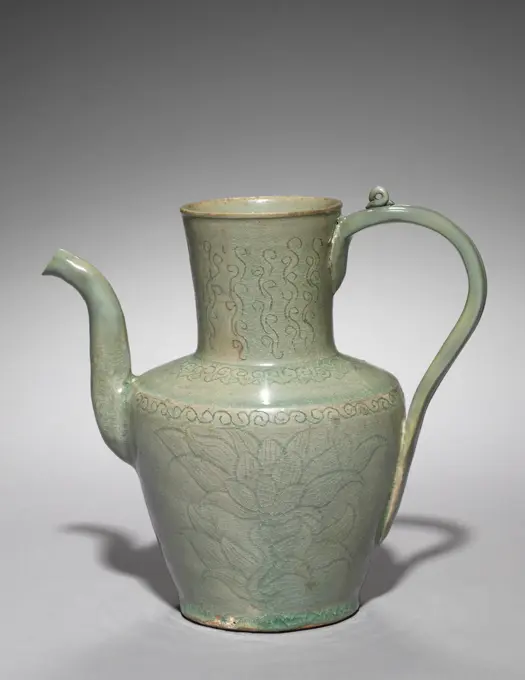
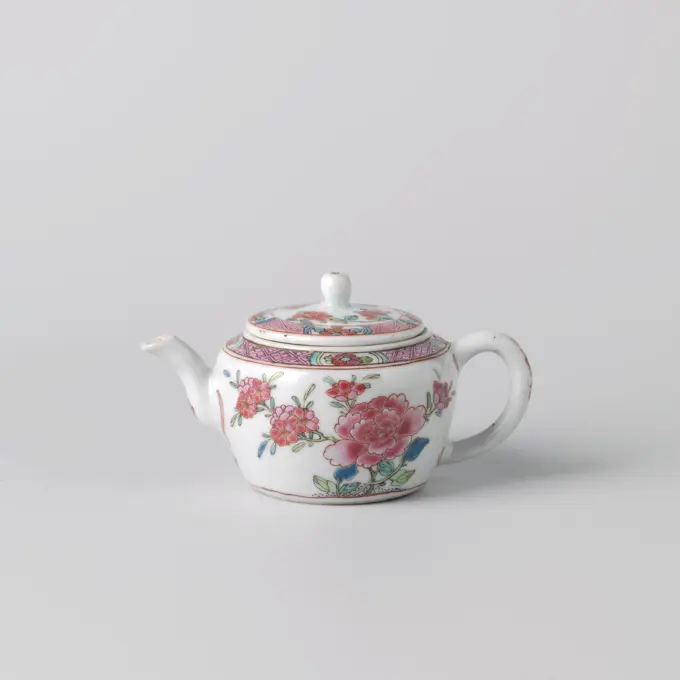
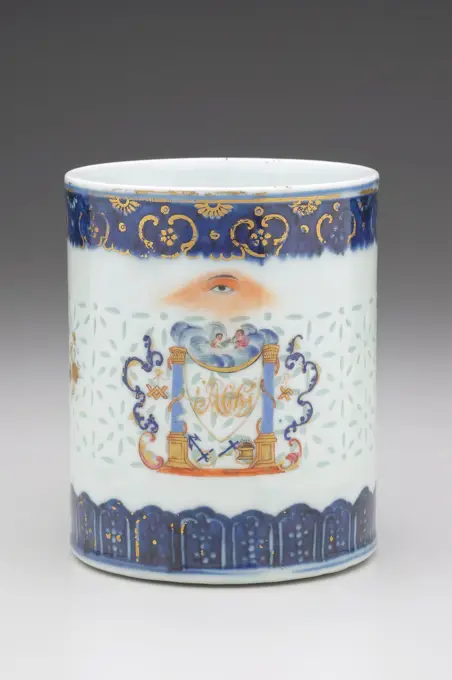
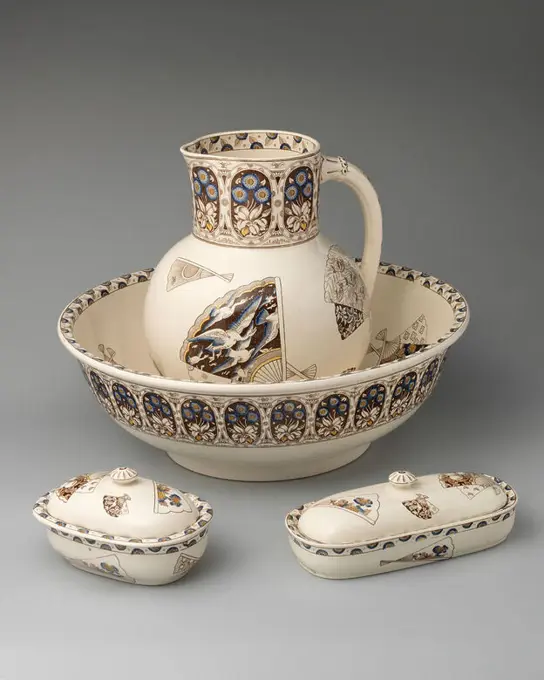
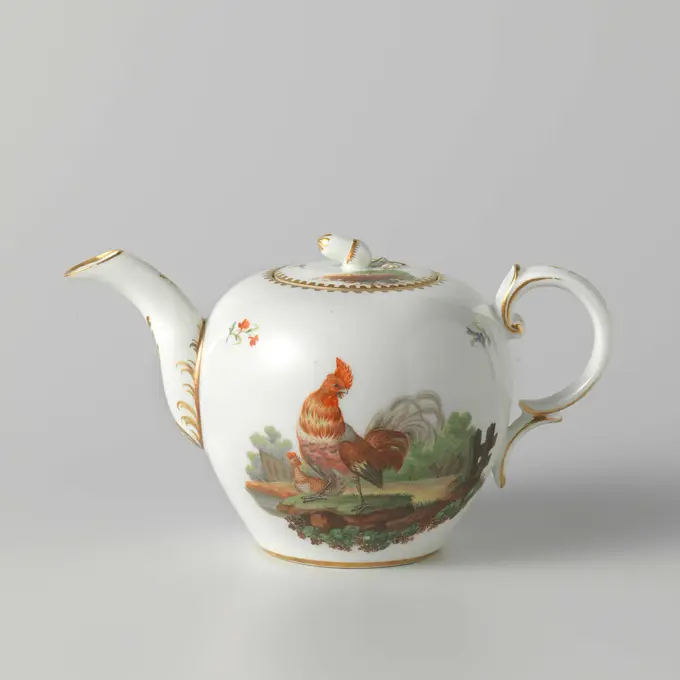
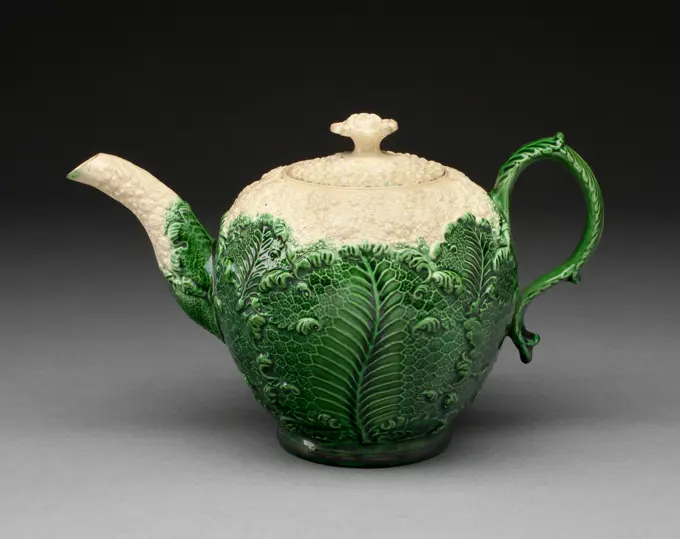
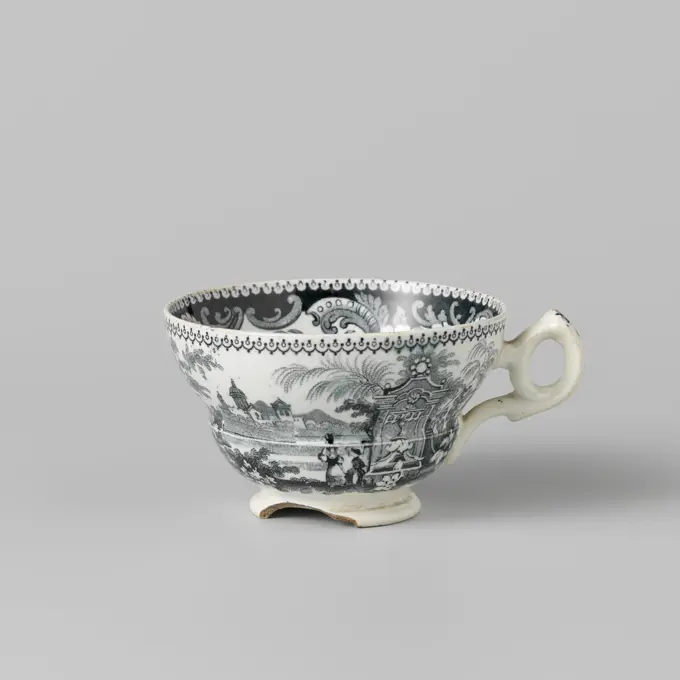
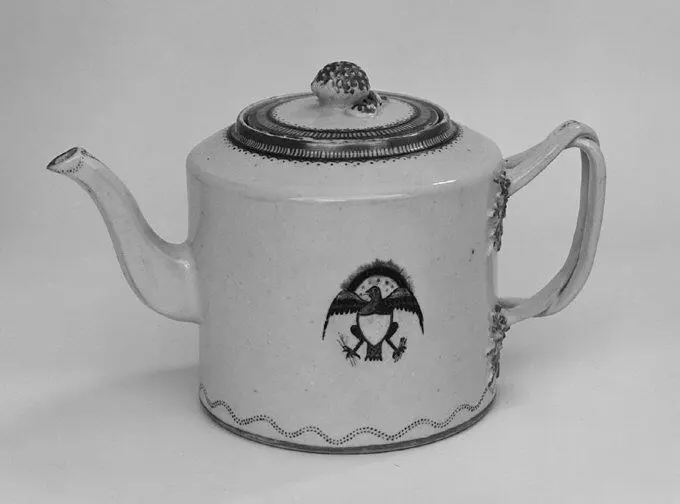
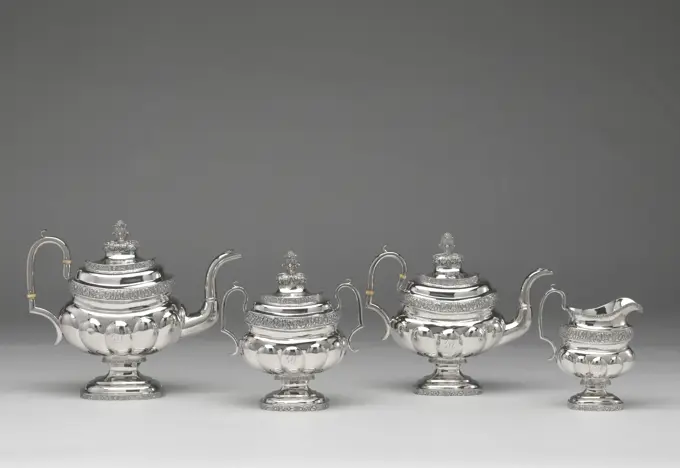
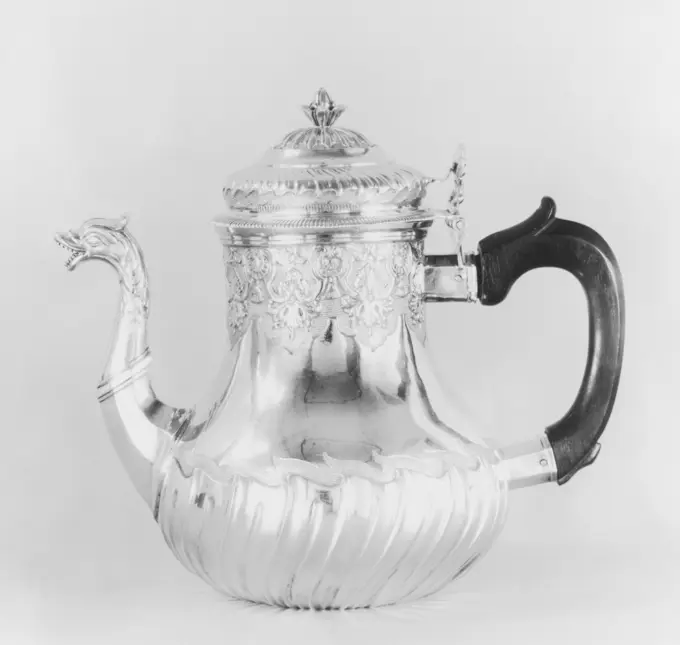
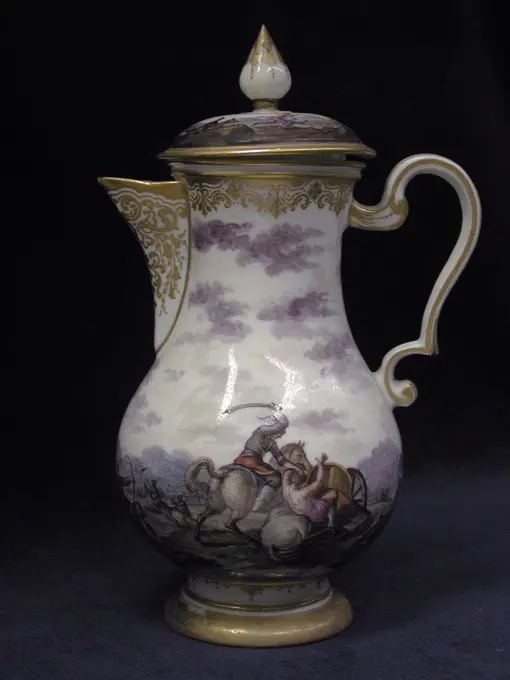
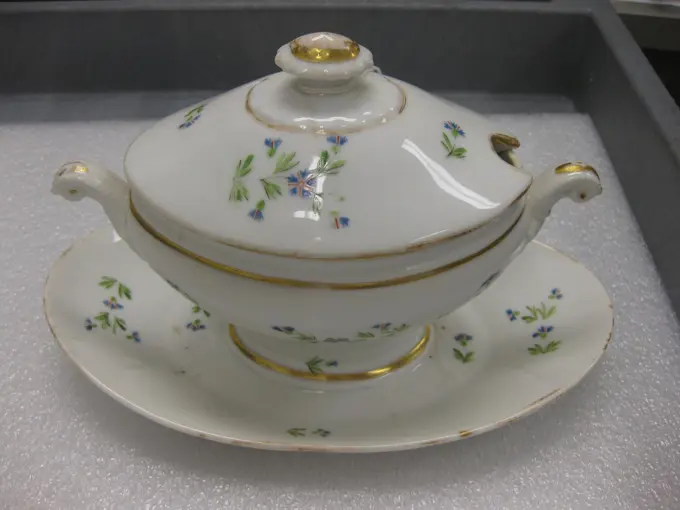
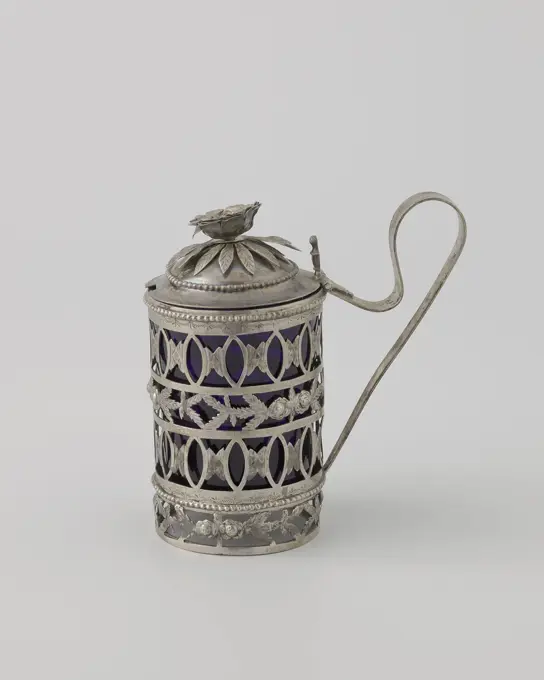
Cup, painted multily with flower bouquets on a yellow fond. Half-ball-shaped head of painted porcelain. The head has a C-shaped ear and is painted with flower bouquets on a yellow fond. The ear and the stand ring left white. The head is noticed.Cup and saucer, Doccia Porcelain Factory, Italian, established 1735, Molded porcelain, overglaze enamel and gilding, Curved flaring cup, with twisted stem handle, ending in leaves. Slightly curved saucer. On cup, relief decoration of mythological scenes (Judgement of Paris, Mercury, Neptune), enhanced with polychrome painting. Upper part of cup and inside gilded. Saucer gilded with polychrome relief festoons and cartouches., Doccia, Italy, 19th century, ceramics, Decorative Arts, Cup and saucerEwer and basin 1795 Sèvres Manufactory French For the Sèvres porcelain factory, the years of the French Revolution were difficult ones. The majority of the aristocratic clientele that had traditionally purchased its products were either killed or driven into exile, and the demand for luxury products such as porcelain was much diminished in the ruinous economy created by the Revolution. Despite these challenges, however, the Sèvres factory managed to survive, and some of its most original products date from this period. This ewer and basin reflect several stylistic currents at the forefront of fashion in the last decade of the eighteenth century. The spare, elegant lines of both the ewer and basin embody the austerity of the most up-to-date Neoclassical taste, and the contemporary fascination with hardstones can be seen in the imitation porphyry surfaces that decorate the exterior of the basin and the bottom half of the ewer. Lapis lazuli, marble, and porphyry were among the surfaces imPorcelain can and pelvis, manufacture Oud-Loosdrecht, 1784 Can and pelvis painted with a spray pattern of blue cornflowers and gold piping along the edges. Marked: M.O.L. and Amstel in blue under enamel. The oval scale has widened rocaille ornaments along the edge of rocaille ornaments that are widening in the length-axle and are deposited with gold. The jug with reversed cone-shaped abdomen, wide excellent spout with corrugated edge and rocaill-shaped ear has relief-leaf vines along the foot and neck and is deposited with gold along all edges. Loosdrecht porcelain Can and pelvis painted with a spray pattern of blue cornflowers and gold piping along the edges. Marked: M.O.L. and Amstel in blue under enamel. The oval scale has widened rocaille ornaments along the edge of rocaille ornaments that are widening in the length-axle and are deposited with gold. The jug with reversed cone-shaped abdomen, wide excellent spout with corrugated edge and rocaill-shaped ear has relief-leaf vines alonCup and Saucer. Saint-Cloud Porcelain Manufactory (France, Saint-Cloud, circa 1693 - 1766). France, Saint-Cloud, circa 1730. Furnishings; Serviceware. Soft-paste porcelain and glazeLidded kettle. unknown, craftsmanTeapot ca. 1760 Style of Whieldon type Listen to experts illuminate this artwork's story Listen Play or pause #407. Teapots Supported by Bloomberg Philanthropies We're sorry, the transcript for this audio track is not available at this time. We are working to make it available as soon as possible.. Teapot. British, Staffordshire. ca. 1760. Lead-glazed earthenware. Ceramics-PotteryTwo-Handled Sugar Bowl Sugar Bowl; Manufactured by Carl Thieme Saxonian Porcelain Company; porcelain, vitreous enamel, goldPotter: John Griffith, American, died 1824, Teapot, Earthenware, 6 3/8 × 10 3/8 in. (16.2 × 26.4 cm), Made in Elizabethtown, New Jersey, American, 19thcentury, Containers -CeramicsTeapot with lid; Milde, Ary de (1634-1708), Delft (ceramic family; Ca 1600-); 4 XVII century (1675-00-00-1699-00-00);Bell-Shaped Cup With Powder Blue and Fan-Shaped Panels. Bell-shaped cup with C-shaped ear of porcelain, painted in underglaze blue and red. The wall is covered with bleu poudré (powder blue) with spared impeller-shaped fields filled with flour branches; a double band in relief on the wall; The edge is brown. Middle blue with copper red.BUIRE. Porcelain with enamels decor "pink family", Qing dynasty (1644-1912). Provenance: China. Paris, Cernuschi museum. 78839-3 Asian art, Chinese art, art of living, bun, fine ceramic, jug, ching dynasty, Qing dynasty, tsing dynasty, fine porcelain, container, dishesTeapot with a Landscape and Flower Sprays, royal porcelain manufactory, c. 1780 Porcelain teapot with an egg-shaped body, C-shaped ear and slightly bent spout. Painted in email colors and gold. On the abdomen twice a medallion of flower branches with a landscape in it. The ear and the spout are decorated in rocaillest style. The lid with a similar decoration; Lid button in the shape of a flower. Marked on the underside with the scepter and II. Berlin porcelain. glaze. gold (metal) painting / gilding / vitrification Porcelain teapot with an egg-shaped body, C-shaped ear and slightly bent spout. Painted in email colors and gold. On the abdomen twice a medallion of flower branches with a landscape in it. The ear and the spout are decorated in rocaillest style. The lid with a similar decoration; Lid button in the shape of a flower. Marked on the underside with the scepter and II. Berlin porcelain. glaze. gold (metal) painting / gilding / vitrificationTeapot, c. 1643, 5 1/8 x 7 1/4 x 4 1/4 in. (13 x 18.4 x 10.8 cm), Porcelain, China, 17th centuryTeapot, c. 1760-1765, Elias Pelletreau, American, 1736-1810, 6 x 10 in. (15.2 x 25.4 cm), Silver, United States, 18th century, These two objects are high-quality eighteenth-century examples of tea wares. The teapot by Pelletreau who apprenticed with Simeon Soumain (whose porringer is shown here) has an inverted pear shape, which would have been hand-hammered upside down to form its signature shape. The similarly-shaped body of the Richardson creamer, with its integral spout, was likely also raised from one piece of silver. The single cast foot distinguishes this Philadelphia creamer from tri-footed New England examples.Covered Creamer with Battle Scenes ("Bataillen-Malerei") Creamer; Manufactured by Royal Porcelain Manufactory, Berlin (Germany); Model maker: Freidrich Elias Meyer (German, 1723 - 1785); Germany; hard paste porcelain, vitreous enamel, goldTea kettle; Hossauer, Johann George (1794-1874); 19th century (1801-00-00-1900-00-00);Cup, 1775-1799. Saint Cloud Porcelain Factory (French). Soft-paste porcelain; diameter: 7.4 cm (2 15/16 in.); overall: 6.6 x 9.4 cm (2 5/8 x 3 11/16 in.).Branches; Baranówka (Porcelain Manufaktura; 1804-2012); 1830-35 (1801-00-00-1900-00-00);. Coffee cup, purple painted with winged putti floating on clouds. Along the edge a guilloches band with dependent flour glulands. Marked with a stork in blue under the glaze. N.B. German porcelain painted in The Hague.Covered Jug 1740-50 British (American market). Covered Jug. British (American market). 1740-50. Stoneware. Made in Staffordshire, EnglandTeapot with Cover and Stand. Chamberlain's Factory (England, Worcester, 1788-1852)Humphrey Chamberlain, Jr. (England, Worcester, 1791-1824). England, circa 1807-1810. Furnishings; Serviceware. Porcelain with enamel and gilding. Ear head and saucer of porcelain, painted on the glaze in blue, red, pink, green, yellow, purple, black and gold. On the flat of the dish in the center a grape roof and a stick to which a hat, a horn and two coats of arms are attached, between the shields a garland; Six flower branches on the wall; The inner edge with a decorative pattern. The coat of arms are from the Visvliet and Sluoymer families (Zeeland). The head with the same decoration. Weapon porcelain.Ewer with 'Karakusa' scrolls. Can of porcelain with a pear-shaped body, C-shaped ear and curved spout at the top connected to the neck, painted in underglaze blue. On the body, neck and the spout 'Karakusa' tanks. On top of the ear a hole for a frame. Bak sand at the foot ring. Blue White.Cup. Cup of multicolored porcelain, with a C-shaped ear. The head is painted with large flowers (poppies) and small flowers (cornflowers). The head is marked and belongs to a dish.Teapot (part of a set) Made 1900 Providence. Silver . Gorham Manufacturing CompanyCoffee Pot. Meissen Porcelain Manufactory; German, founded 1710. Date: 1755-1765. Dimensions: 23.5 x 16.5 x 12.1 cm (9 1/4 x 6 1/2 x 4 3/4 in.). Hard-paste porcelain, polychrome enamels, and gilding. Origin: Meissen. Museum: The Chicago Art Institute, Chicago, USA.The Fox and the Grey Goose Nursery Rhyme Jug Made 1795-1805 Staffordshire. Lead-glazed earthenware (prattware) .. Porcelain earhead, painted on the glaze in blue, red, green, black and gold. On the outside wall the coat of arms of the Heere van Holy. The helmet sign is a star and the weapon is surrounded by leaf rights. Weapon porcelain with email colors.Tea-pot. Sandstone, Qing dynasty (1644-1912). Provenance: China. Paris, Cernuschi museum. 78836-8 Asian art, Chinese art, living art, ceramic, Ching dynasty, Qing dynasty, Tsing, GRES dynasty, service to the, theiere, dishesCup with flower sprays, fabriek Leperre-Durot, c. 1790 Porcelain head with a C-shaped ear, painted on the glaze in blue, pink, green, black and gold. The outer wall with flower branches (cornflower). Golden line on the foot and a band with triangles on the edge. The ear is turned on with golden dots and plant motifs. Marked on the underside with the crowned dolphin. Lille porcelain. glaze. gold (metal) painting / gilding / vitrification Porcelain head with a C-shaped ear, painted on the glaze in blue, pink, green, black and gold. The outer wall with flower branches (cornflower). Golden line on the foot and a band with triangles on the edge. The ear is turned on with golden dots and plant motifs. Marked on the underside with the crowned dolphin. Lille porcelain. glaze. gold (metal) painting / gilding / vitrificationWine Pot with Incised Lotus Design, 918-1392. Korea, Goryeo period (918-1392). Celadon ware with incised and carved decoration; overall: 22.4 cm (8 13/16 in.).Old gold teapot isolated on the white backgroundTwo-handled cup 1661-62 R. M., London. Two-handled cup. British, London. 1661-62. Silver. Metalwork-Silver. Low cup with ear, painted porcelain. The head is painted with landscapes in which figures and along the edge a wide strip of green braid. The head is noticed.. Meissen porcelain manufactory ice cream, c. 1725-1730Hard Paste PorcelainTea pot with flowering plants and diaper patterns, anonymous, c. 1725 - c. 1749 Porcelain teapot with a curved spout and C-shaped ear, painted on the glaze in blue, red, pink, green, turquoise, eggplant and black. On the wall twice a flowering plant (peony). On the shoulder a tire with servetwork interrupted by flower branches in cartouches. The spout and the ear with flower vines. The lid with the same decoration. Famle Rose. China porcelain. glaze. painting / vitrification Porcelain teapot with a curved spout and C-shaped ear, painted on the glaze in blue, red, pink, green, turquoise, eggplant and black. On the wall twice a flowering plant (peony). On the shoulder a tire with servetwork interrupted by flower branches in cartouches. The spout and the ear with flower vines. The lid with the same decoration. Famle Rose. China porcelain. glaze. painting / vitrificationKetel, Arnoldus van Geffen, 1761 Round boiler with lid and handle. There is a profiled button on the lid. The handle has a profiled handle. The boiler is marked: stk. = Amsterdam, Jrl. = B (1761), Mt. = Arnoldus van Geffen and a Zwijnskop. Amsterdam silver (metal) Round boiler with lid and handle. There is a profiled button on the lid. The handle has a profiled handle. The boiler is marked: stk. = Amsterdam, Jrl. = B (1761), Mt. = Arnoldus van Geffen and a Zwijnskop. Amsterdam silver (metal)Miniature coffeepot 1838-50 French The production of miniature silver furniture and tea, coffee, and chocolate equipment was a specialty of goldsmiths known as "toy men." The miniatures were probably intended for dollhouses. From the mid-eighteenth century in England until the present, porcelain and fine earthenware miniatures have been made as well.. Miniature coffeepot. French. 1838-50. Silver, wood. Metalwork-Silver-MiniatureCoffeepot ca. 1760 Imperial Porcelain Manufactory. Coffeepot 188755 Factory: Imperial Porcelain Manufactory , Vienna, 17441864, Coffeepot, ca. 1760, Hard-paste porcelain, Height: 10 1/4 in. (26 cm). The Metropolitan Museum of Art, New York. Gift of Alfred Duane Pell, 1902 (02.6.257a, b)Cup with vertical borders, 1773 Porcelain head with a clindric wall and C-shaped ear, painted on the glaze in blue, red, pink, green, yellow, black and gold. The outer wall is divided into vertical tires alternately filled with flower vines, each other cutting leaves in which a rosette and narrow tires with golden flower branches. Picking and a flower pattern on the ear. Marked on the underside with IP, a shield with m and a g. Porcelain Company: Höchstschrezheim porcelain. glaze. gold (metal) painting / gilding / vitrification Porcelain head with a clindric wall and C-shaped ear, painted on the glaze in blue, red, pink, green, yellow, black and gold. The outer wall is divided into vertical tires alternately filled with flower vines, each other cutting leaves in which a rosette and narrow tires with golden flower branches. Picking and a flower pattern on the ear. Marked on the underside with IP, a shield with m and a g. Porcelain Company: Höchstschrezheim porcelain. glaze. gold (metal)Service with stylized flower sprays and ornamental borders, anonymous, c. 1800 - c. 1824 Porcelain service, painted on the glaze in gold. The crockery consists of a coffee pot, teapot, milk jug, sugar bowl, bowl and twelve cups with dishes. Decorated with stylized flower branches and decorative tires. Empire. France porcelain. glaze. gold (metal) painting / gilding / vitrification Porcelain service, painted on the glaze in gold. The crockery consists of a coffee pot, teapot, milk jug, sugar bowl, bowl and twelve cups with dishes. Decorated with stylized flower branches and decorative tires. Empire. France porcelain. glaze. gold (metal) painting / gilding / vitrificationMasonic tankard, c. 1790, 5 7/16 x 6 x 4 7/16 in. (13.8 x 15.2 x 11.3 cm), Porcelain, China, 18th centuryCoffee pot, belonging to Tete-A-Tete, painted with landscapes within ovals. Coffee pot, belonging to Tête-à-tête. Painted within oval fields with landscapes in encre-chine surrounded by a flower garland on a yellow soil. Marked with a skewer in underglazing blue.Cover of a chocolate pot with a landscape and garlands, Porseleinfabriek Ludwigsburg, c. 1770 - c. 1775 Cover of a jug or pot (chocolate cane) of porcelain with a hole in the middle, around which three smaller holes. Painted on the glaze in email colors and gold. Decorated with a golden line, a band of rocailles and a flower garland in relief. Ludwigsburg porcelain. glaze. gold (metal) painting / gilding / vitrification Cover of a jug or pot (chocolate cane) of porcelain with a hole in the middle, around which three smaller holes. Painted on the glaze in email colors and gold. Decorated with a golden line, a band of rocailles and a flower garland in relief. Ludwigsburg porcelain. glaze. gold (metal) painting / gilding / vitrificationVincennes Manufacture. Cup. Tender porcelain. 3rd quarter of the 18th century. Museum of Fine Arts of the City of Paris, Petit Palais. 122743-22Pitcher 1849-58 United States Pottery Company. Pitcher 5866Ewer and basin, soap and brush boxes. Culture: probably British, Staffordshire. Dimensions: Height (.1 ewer): 11 in. (27.9 cm);Diameter (.2 basin): 15 11/16 in. (39.8 cm);Length (.3 soap box): 6 1/4 in. (15.9 cm);Length (.4 brush box): 8 1/4 in. (21 cm). Date: 1880-90. Museum: Metropolitan Museum of Art, New York, USA.Teapot. Square teapot with oscenips corners, a bell-shaped lid with lid button, a high, portrait handle and an S-shaped, square spout. The sides are painted in yellow green (2 shades), pink, brown, blue and black enamel with Westerners: a wide drinking man at a table and pine, two boys or men in a landscape, a seated man with a cup in hand In a landscape, a standing man in a landscape. Between the fields of napkin with flower branches in cartouches. On the shoulder and handle styled tendrils on a yellow fond, on the spout blue tendrils. On the bottom a bundle of grantato, peach and finger fee branches.Teapot ca. 1750-65 Thomas Whieldon Listen to experts illuminate this artwork's story Listen Play or pause #407. Teapots Supported by Bloomberg Philanthropies We're sorry, the transcript for this audio track is not available at this time. We are working to make it available as soon as possible.. Teapot. British, Staffordshire. ca. 1750-65. Lead-glazed earthenware with underglaze decoration. Ceramics-PotteryIvory teapot and teacup with floral designPart of a Tea service. Manufacturing former loose ruderecht, c. 1782-1784Hard-Paste PorcelainTeapot.Cup with handle with European landscape in a medallion. Porcelain earhead painted on the glaze in black and gold. On the outside wall a European landscape with two people, a building and trees in an oval medallion. Partially restored a chip in the edge and edge. Decorated in Europe in Encre Chine.Tureen and Stand 1780-1790 Yorkshire. Lead-glazed earthenware (creamware) .Miniature kettle with stand 1795-96 W. H.. Miniature kettle with stand. British, London. 1795-96. Silver, wicker. Metalwork-Silver-MiniatureTerrine with lid of multi-colored padded faience, in the form of a pumpkin. Terrine of faience in the form of a pumpkin. Painted multi-colored. Signature: V H 3. With associated subset in the form of a leaf.Beer mug with lid of Opaak White Glass, with a chinoise series, anonymous, c. 1800 - c. 1900  Curved foot edge. Cylindrical, slightly fed body; Under the mouth a profile edge. Almost flat lid, bent ear. On the body two Chinese, one with parasol, the other with a bowl in hand. Palm trees on both sides. Flowers on the lid and the handle. The lid, caught in a pewter frame with thumb piece, is hinged attached to the ear. Bohemia Glass. frame: tin (metal) glassblowingLid, black, decorated with rib edges, Petrus Regout, c. 1860 - c. 1880 Black stone lid. The lid is decorated with concentric rib edges close together, and has a round button with air hole. Maastricht . Black stone lid. The lid is decorated with concentric rib edges close together, and has a round button with air hole. Maastricht .Joseph Loring, Cann, c. 1779, silver.Sugar Bowl 1800-1815 Chinese. Sugar Bowl. Chinese. 1800-1815. Porcelain. Made in ChinaEwer. Korea. Date: 1200-1299. Dimensions: H. 14.6cm; diam(including spout). 15.1 cm; Lid: H. 3.5 cm; diam. 5.7 cm. Slip-coated stoneware. Origin: Korea. Museum: The Chicago Art Institute, Chicago, USA.Coffeepot.   Maker: Paul Revere, American, 1735-1818Teapot Made 1765-1780 Staffordshire .Teapot ca. 1750-70 Style of Thomas Whieldon Listen to experts illuminate this artwork's story Listen Play or pause #407. Teapots Supported by Bloomberg Philanthropies We're sorry, the transcript for this audio track is not available at this time. We are working to make it available as soon as possible.. Teapot. British, Staffordshire. ca. 1750-70. Lead-glazed earthenware. Ceramics-PotteryCup of hard-baked pottery; Stockton. Semi-spherical head on a foot, with a coating in the middle of the wall and a C-shaped ear in which a closed circle. The head is made of white pottery with a black overpressure. The outer wall has a pattern of romantic landscape, the inner wall has a pattern of volutes and flowers and a landscape in the middle. The head belongs to a dishware of which any pieces are marked with "Wedgewood".Jug of tin with e-sided body and lid. Ocht sided jug from tin. The profiled stand ring is about in a baluster-shaped body. In the middle of the vaulted lid is a seated lion, which serves as a button. The thumbs of thumbs is formed by two fucks and passes through a double-dedic hinge in the handle, which runs virtually straight down after a curvature. A decoration has been installed on the handle.Teapot 1773 Saint Petersburg. Silver gilt and wood . Johann Köpping (Silversmith)Silver teapot with handle and lid button from Ebony, Hermanus Montauban, 1727 Silver teapot, with ebony handle and lid button. The wide, round body turns into a tuning neck. The lid is half -ball. Gorinchem silver (metal). ebony (wood) Silver teapot, with ebony handle and lid button. The wide, round body turns into a tuning neck. The lid is half -ball. Gorinchem silver (metal). ebony (wood)Coffee Pot, Frederik Sleumer (attributed to), 1772 Pear -shaped coffee pot on three legs bent out that end in a sphere. The spout is bent and the handle is S-shaped. The top edge of the pot is serrated. The lid is arched in the middle and has a pointed button. The pot is marked: stk. = Amsterdam, Jrl. = N (1772), Mt. = Attributed Frederik Sleumer and an ax. Amsterdam silver (metal) Pear -shaped coffee pot on three legs bent out that end in a sphere. The spout is bent and the handle is S-shaped. The top edge of the pot is serrated. The lid is arched in the middle and has a pointed button. The pot is marked: stk. = Amsterdam, Jrl. = N (1772), Mt. = Attributed Frederik Sleumer and an ax. Amsterdam silver (metal)Come from V.O.C.-Schip De 'Witte Leeuw', Anonymous, Before 1613 bowl Come from V.O.C. ship the 'Witte Leeuw', complete. A simple leaf shelf on the outer wall. Jingdezhen porcelain   Sint-HelenaOctagonal cup and saucer with flower sprays, anonymous, c. 1750 - c. 1774 Octagonal cup and dish of porcelain, painted on the glaze in blue, red, pink, green, yellow, eggplant and black. A flower group on the flat of the dish; Four flower branches on the wall. The head with the same decoration. Famle Rose. China porcelain. glaze. gold (metal) painting / gilding / vitrification Octagonal cup and dish of porcelain, painted on the glaze in blue, red, pink, green, yellow, eggplant and black. A flower group on the flat of the dish; Four flower branches on the wall. The head with the same decoration. Famle Rose. China porcelain. glaze. gold (metal) painting / gilding / vitrificationTeapot 1780-1790 Worcester. Soft-paste porcelain with black transfer-printed decoration . Worcester Royal Porcelain Company (Manufacturer)Cup with a woman and a fisherman on the coast, anonymous, c. 1790 - c. 1800  Soft-Paste porcelain head (pâte-endre) with a C-shaped ear, painted on the glaze in red, pink, black and gold. On the outside wall a medallion with a woman and a fisherman on the coast, looking at the boats on the water. A garland and a flower branch on either side of the medallion. On the outer edge a wavy band of a ribbon and a leaf vank that cross each other. Leaf motifs on the ear. Golden Rand. Europe porcelain. soft-paste porcelain. glaze. gold (metal) painting / gilding / vitrificationWater Dropper with Slip-Inlaid Design 20th century Korea. Water Dropper with Slip-Inlaid Design 36455Ewer with Animal Handle 1300-1368 China. Longquan ware; celadon-glazed stoneware .Teapot (part of a service) late 18th-early 19th century Chinese, for American market. Teapot (part of a service) 201113. Ear head and saucer of porcelain, painted on the glaze in blue, red, pink, green, yellow, black and gold. On the flat of the dish. The arm of the families Gordon and Forbes. The weapon is divided into four courses with Gordon in 1. and 4. with three boar heads against a blue background; 2. And 3. Forbes with three cups on a light blue background. The helmet sign is an arm with a sword and the inscription 'Corde Manuque'. A Spearhead border on the inner edge. The head with the same decoration with a cartouche with a landscape on either side of the weapon. Ear has been broken. Weapon porcelain with email colors.Jar with carpholine cure. Can of stoneware with round belly and wide neck. Belly and neck are decorated with deeply incised network. 3 lion's heads on the neck.Tea and Coffee Service 1818 New York City. Silver . John CrawfordTeapot with fixed handle 1880 Worcester factory After the end of the Flight, Barr & Barr ownership of the Worcester factory in 1840, the firm went through a succession of owners and mergers before falling under the ownership of Kerr & Binns in 1852. During the partnership, the factory sought to rebuild its former eighteenth-century reputation in porcelain and known for Renaissance-inspired designs. With the establishment of the Royal Worcester Porcelain Company in 1862, the company gradually gained recognition for its Japanese-inspired designs, which formed part of Japonisme, a collective fascination with Japan that took place in Europe and the United States following the opening of Japanese markets to the West by Commodore Perry in 1853.. Teapot with fixed handle. British, Worcester. 1880. Bone china. Ceramics-PorcelainStraight-sided cup and saucer with scattered stylised flowers, anonymous, c. 1840 - c. 1860 Porcelain cup and saucer with straight wall, painted on the glaze in blue, red, pink, green, yellow and black. Seven loose, stylized flowers on the front of the dish. The head with the same decoration. Both marked on the underside with the six-character seal brand of Emperor Qianlong. A chip in the edge of the head. Famle Rose. China porcelain. glaze. painting / vitrification Porcelain cup and saucer with straight wall, painted on the glaze in blue, red, pink, green, yellow and black. Seven loose, stylized flowers on the front of the dish. The head with the same decoration. Both marked on the underside with the six-character seal brand of Emperor Qianlong. A chip in the edge of the head. Famle Rose. China porcelain. glaze. painting / vitrificationTeapot of silver with handle and lid knob of ebony. Teapot of silver, with ebony handle and lid knob. The wide, round body is about in a tapered neck. The lid is half-watered.Cup with flowers, foliate scrolls and garlands, Manufacture de Sèvres, c. 1775 - c. 1799  Porcelain head with a cylindrical wall and C-shaped ear, painted on the glaze in blue, pink, green, purple and gold. The upper part of the outside wall is decorated with three tires. In the middle medallions with a flower or rosette flanked by leaf vines against a green background. Above a leaf vank with blue dots. The lower band shows Golden garlands with a stylized flower pattern. A golden line above the foot and on the edge. The inner edge with a band of half gold bulbs. On the ear a modeled palmet with gold, including golden dots. Marked on the bottom with the double L. Sèvres porcelain. glaze. gold (metal) painting / gilding / vitrificationHot milk jug 1727-28 James Ker Although politically united, England and Scotland had distinctive social customs, a fact reflected in their silver works. Scottish silver and gold design remained independent of London styles and fashions until the mid-eighteenth century. The completely spherical "bullet" teapot (see 64.141.88), along with matching milk jug and sugar bowl, was an especially Scottish, particularly Edinburgh preference. These three objects, made by three Edinburgh goldsmiths within a few years of each other, exemplify the broad demand for this shape. Characteristic also is the restrained narrow band of engraved ornament on all three pieces.. Hot milk jug 207385Fopkan. Fopkan on a stand ring, multicolored painted faience. The neck is open, the ear is C-shaped and on the belly is a flower with leaves painted in the colors blue, yellow and yellow-brown.Teapot ca. 1770 Ludwigsburg Porcelain Manufactory. Teapot 199286Bierpul, Johannes Schiotling, 1767 Round beer mug with hinged lid of silver, with driven, cast, imposed and engraved decorations of flower branches and rocailles. Engraved on the underside of the soil: HB together, for Hendrik Boonen. Amsterdam silver (metal) Round beer mug with hinged lid of silver, with driven, cast, imposed and engraved decorations of flower branches and rocailles. Engraved on the underside of the soil: HB together, for Hendrik Boonen. Amsterdam silver (metal)Cup with the Arms of Vincent de Gournay (1676-1743) and Marie-Françoise Séré de la Ville-Materre. Cup of porcelain with straight to the top Discarding wall, painted on the glaze in blue, red, pink, yellow, black and gold. The outer wall with the crowned weapons of Vincent de Gournay (1676-1743) and Marie-Françoise Séré de la Ville-Materre (Marriage 1711) with whining peony plants, a butterfly and a bird on a branch; The edge with a tire napkin interspersed with flower drinks in cartouches. Two chips in the edge. Weapon porcelain.Silversmith's Art, Russia 19th century. Silver tea box.Tea teapot; Lilpop, Karol Jerzy (Fl. 1820-1833); 1 19th century (1801-00-00-1825-00-00);Tankard ca.1725 John Burt. Tankard 8189Teapot ca. 1750 Lille Mint Tea never attained the popularity of chocolate or coffee in France, and relatively few eighteenth-century French silver teapots survive. Most of those that do are northern French. This example, made near the Flemish border, reflects the lingering popularity there of interlaced scrollwork and foliate decoration. These motifs were no longer fashionable in Paris after the 1730s, with the emergence of the Rococo style, which makes a tentative appearance here in the spiral fluting of the base and lid and in the undulating engraved border.. Teapot 200224Pitcher. Potter: Salamander Works, 1825-1896Modeler: Daniel Greatbach, American, born England, active 1834-1866Coffeepot (part of a service) 1743-59 Capodimonte Porcelain Manufactory The gift of the Hans Syz Collection in 1995 endowed the Museum with nearly three hundred examples of European and Asian ceramics meticulously acquired by Swiss-born collector Dr. Syz (1894-1991) to chart the migration of models and patterns from East to West. Documenting a continuous process of influence and adaptation, these pieces provide a discriminating review of the nuances of stylistic change resulting from three centuries of trade.. Coffeepot (part of a service) 208495Small Covered Tureen onStandApostles, Glazed stoneware, A highly decorative white teapot and lid with detail on the body, spout and handle. The center has panels depicting figures in an outdoor scene., England, ca. 1842, ceramics, Decorative Arts, Teapot and lid, Teapot and lidInner box of blue glass, anonymous, c. 1780 - c. 1800 Blue glass inner box hiring with a mustard pot. Utrecht glass Blue glass inner box hiring with a mustard pot. Utrecht glassThree uses, Petrus Regout, 1867 Trois usages of earthenware with blue continuous flower decor, belonging to a children's service. Two semi -spot -shaped bins on either side of the mustard pot. The mustard pot has an ear, the thumb grip of which is formed by a leaf. The round, curved lid has an opening for a spoon and is crowned by a flower -shaped button. Maastricht . Trois usages of earthenware with blue continuous flower decor, belonging to a children's service. Two semi -spot -shaped bins on either side of the mustard pot. The mustard pot has an ear, the thumb grip of which is formed by a leaf. The round, curved lid has an opening for a spoon and is crowned by a flower -shaped button. Maastricht .Traveling tea set, c. 1825, 4 x 8 x 5 1/2 in. (10.16 x 20.32 x 13.97 cm) (a, teapot)2 x 5 3/4 x 4 7/8 in. (5.08 x 14.61 x 12.38 cm) (b, teapot lid)5 x 1 x 2 5/8 in. (12.7 x 2.54 x 6.67 cm) (c, teapot handle)2 1/2 x 5 1/2 x 4 5/8 in. (6.35 x 13.97 x 11.75 cm) (d, bowl)2 x 4 13/16 x 4 1/8 in. (5.08 x 12.22 x 10.48 cm) (e, creamer)2 1/2 x 5/8 x 1 9/16 in. (6.35 x 1.59 x 3.97 cm) (f, creamer handle), Sheffield plate (silver fused to copper), ivory, England, 19th century