Elegant Porcelain Cups

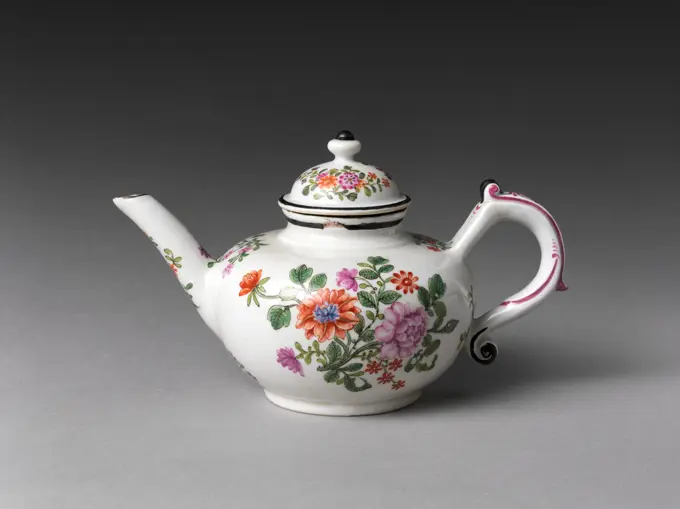
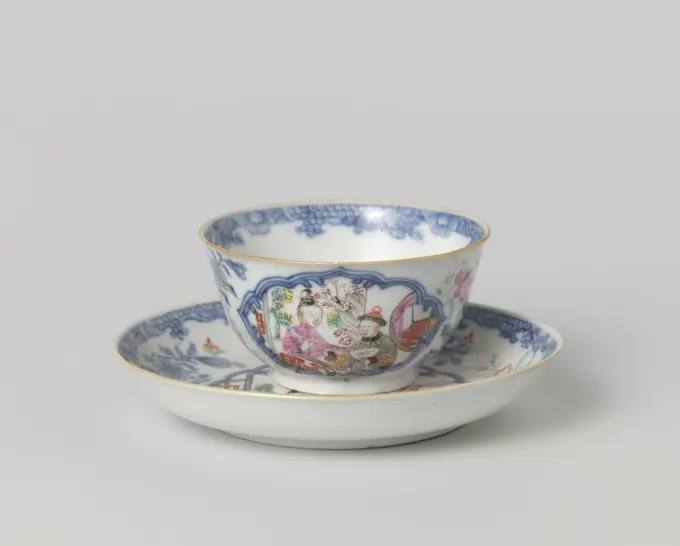
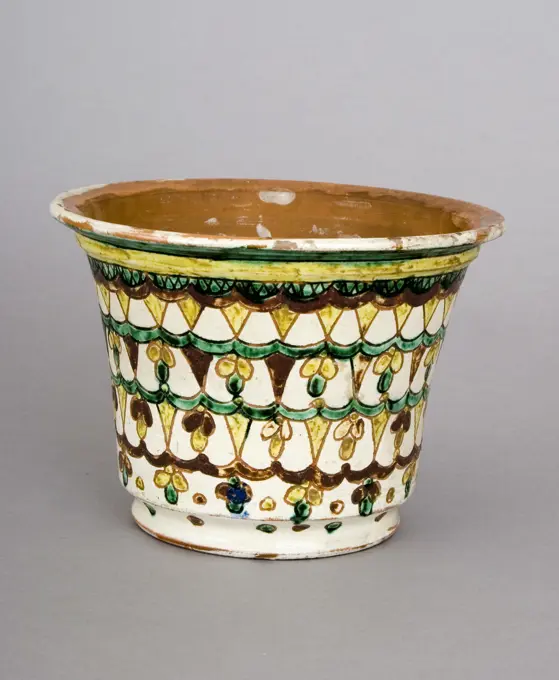
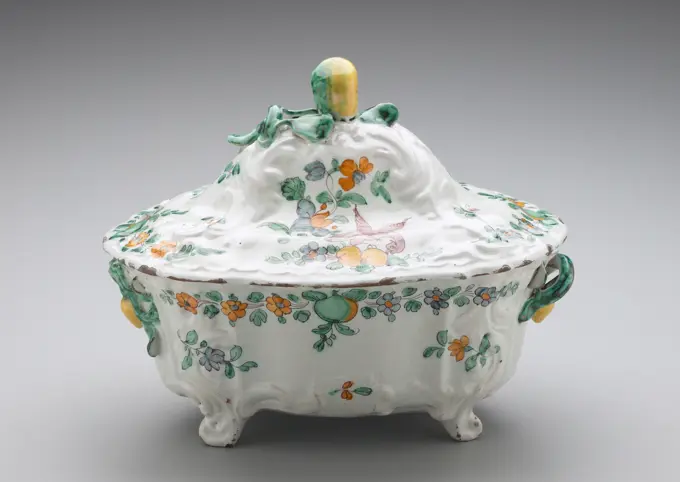
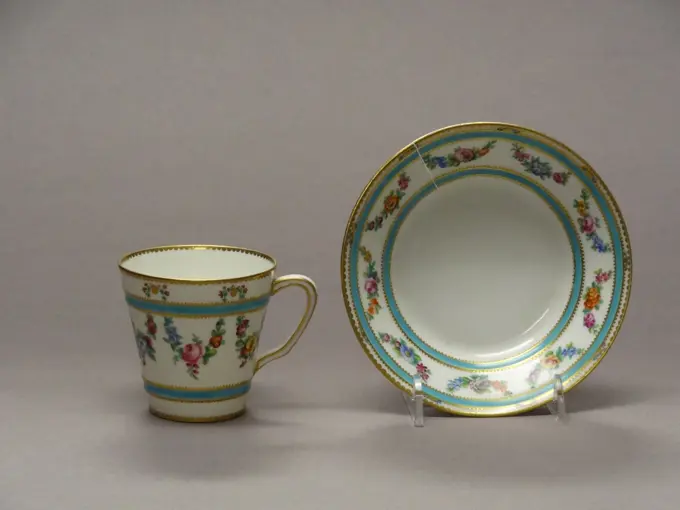
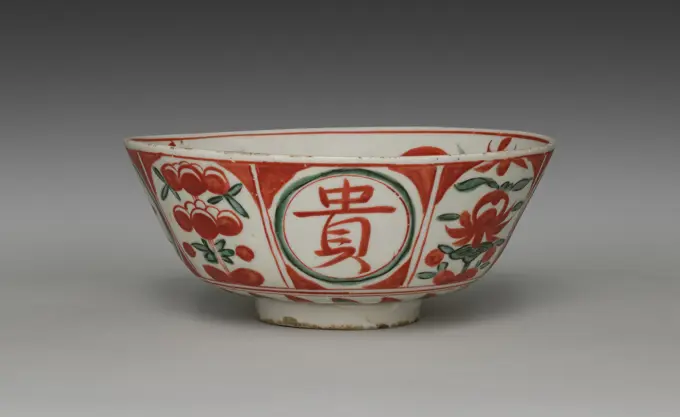
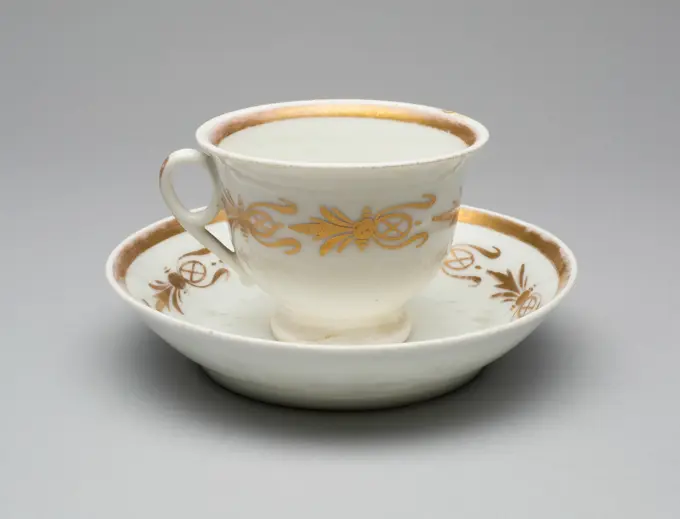
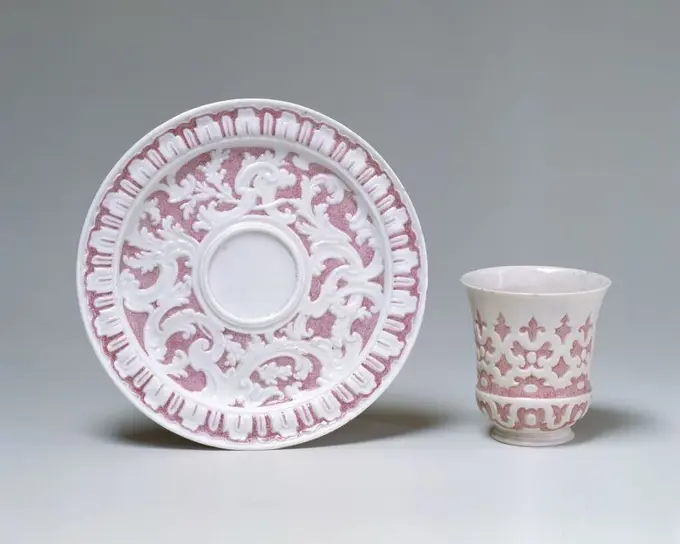
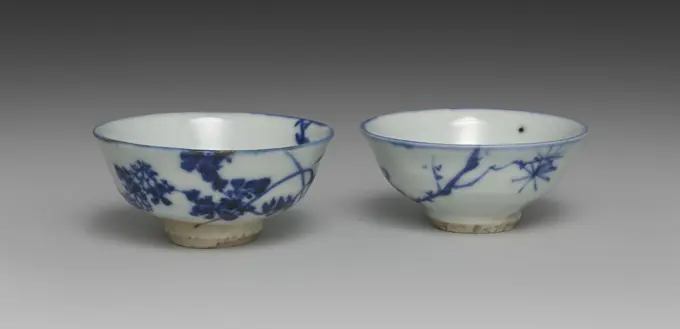
Beautifully designed porcelain cups and saucers featuring intricate floral patterns, showcasing rich colors and elegant craftsmanship.

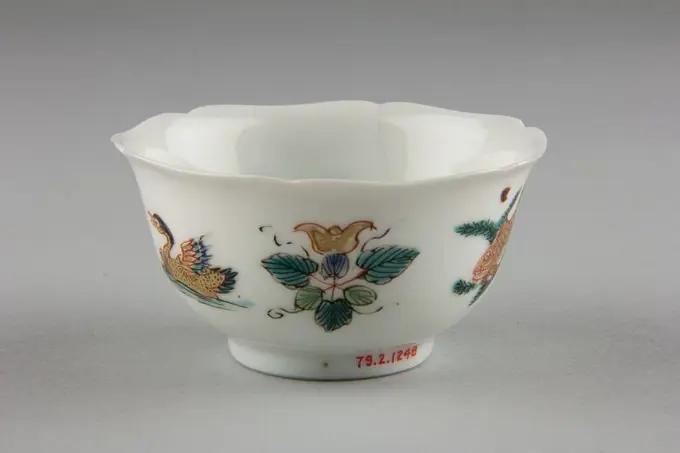
Bell-shaped cup with a crane near a peony plant and rock, anonymous, c. 1725 - c. 1749 Bell -shaped head of porcelain, painted on the glaze in blue, red, pink, green, black and gold. On the outside two leaf -shaped cartouches with a crane in a landscape in a flourishing peon plant and a rock; Between the cartouches flower ranks in Bianco Sopra Bianco; The inner edge with a decorative pattern. Part of a service. European forms with Famle Rose. China porcelain. glaze. gold (metal) painting / gilding / vitrification Bell -shaped head of porcelain, painted on the glaze in blue, red, pink, green, black and gold. On the outside two leaf -shaped cartouches with a crane in a landscape in a flourishing peon plant and a rock; Between the cartouches flower ranks in Bianco Sopra Bianco; The inner edge with a decorative pattern. Part of a service. European forms with Famle Rose. China porcelain. glaze. gold (metal) painting / gilding / vitrification
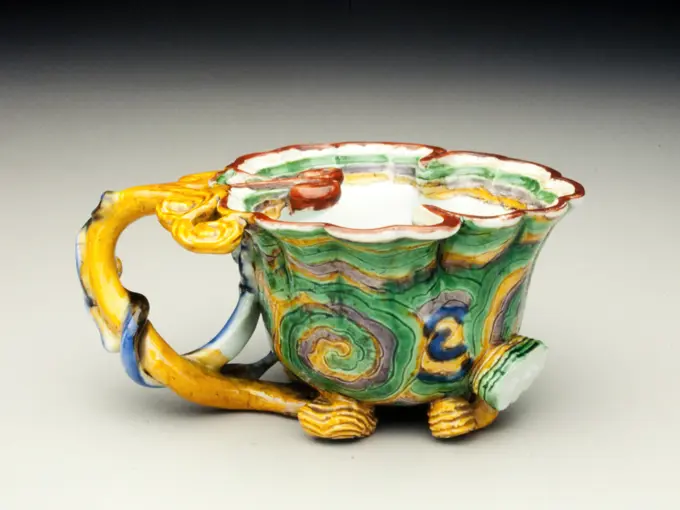
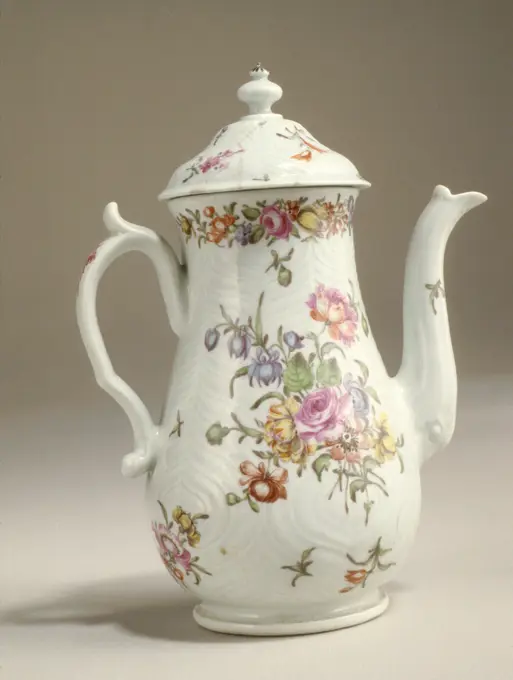
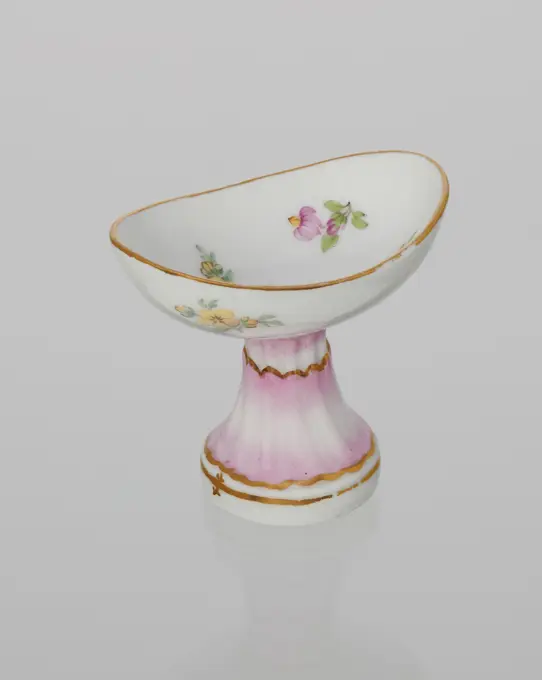
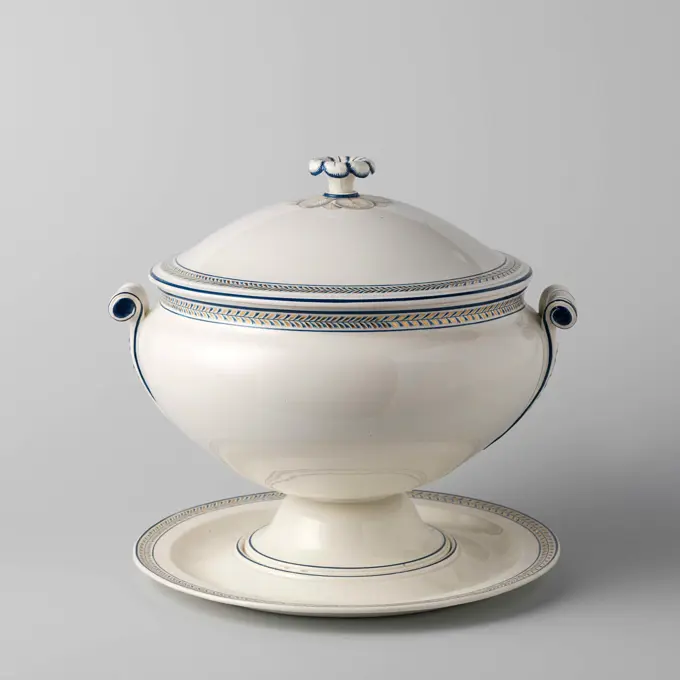
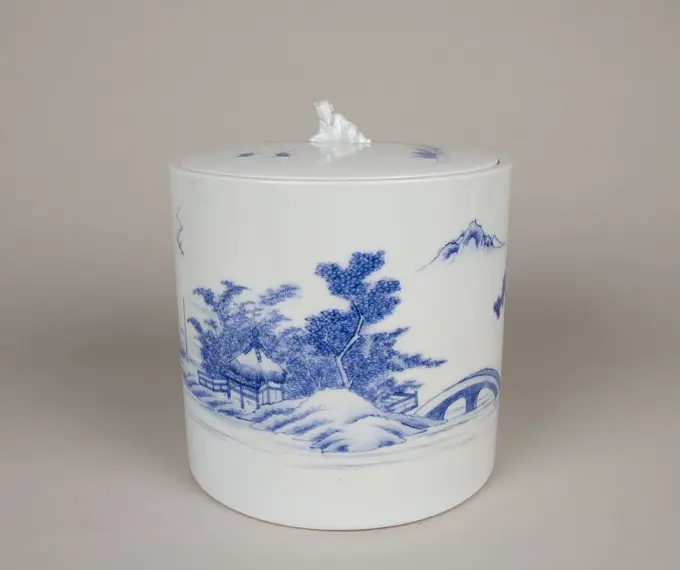
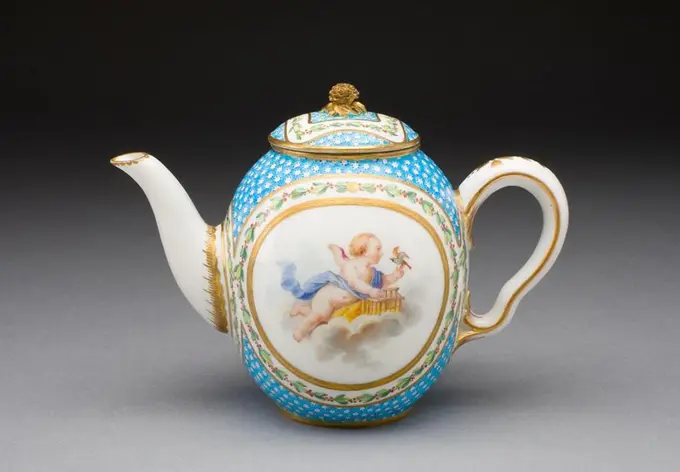
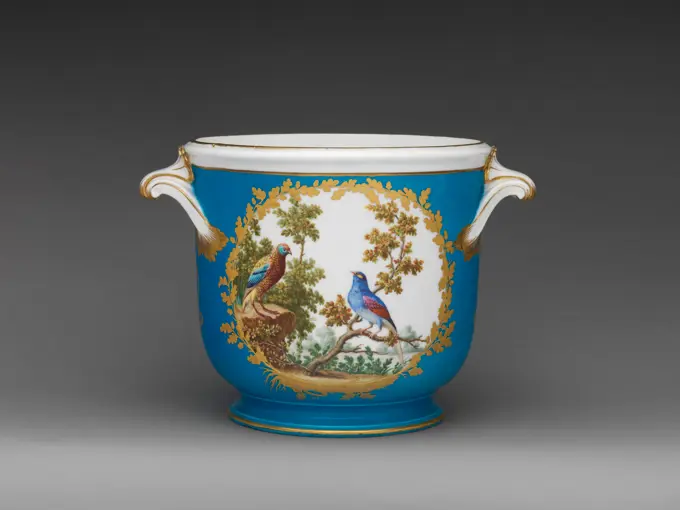
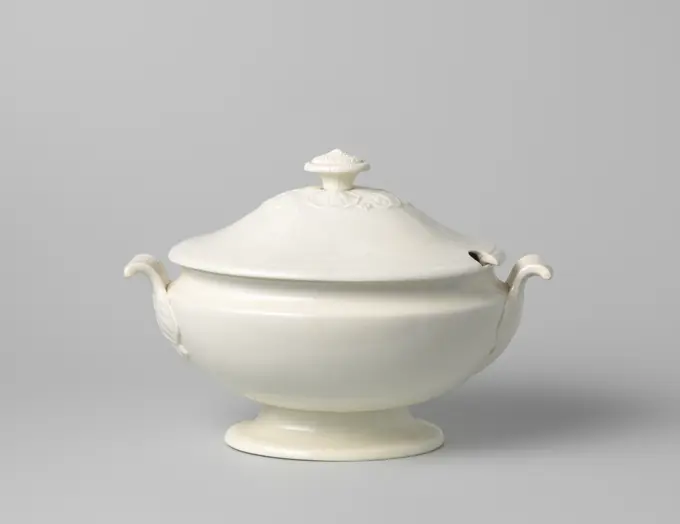
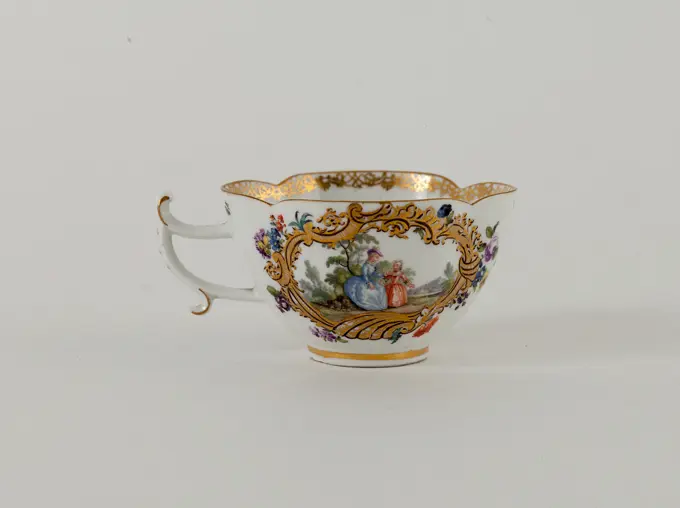
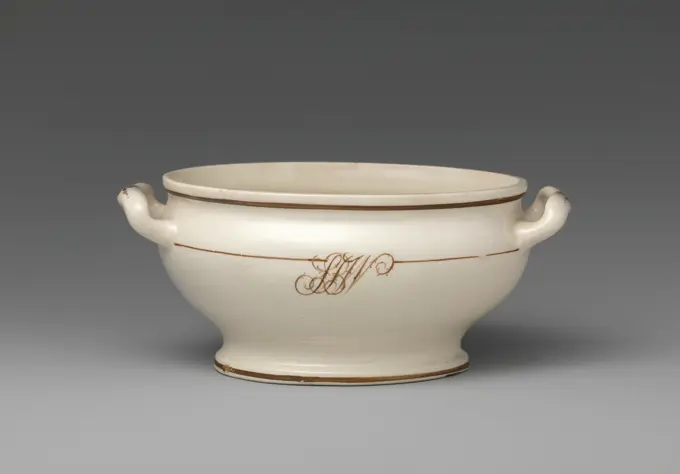
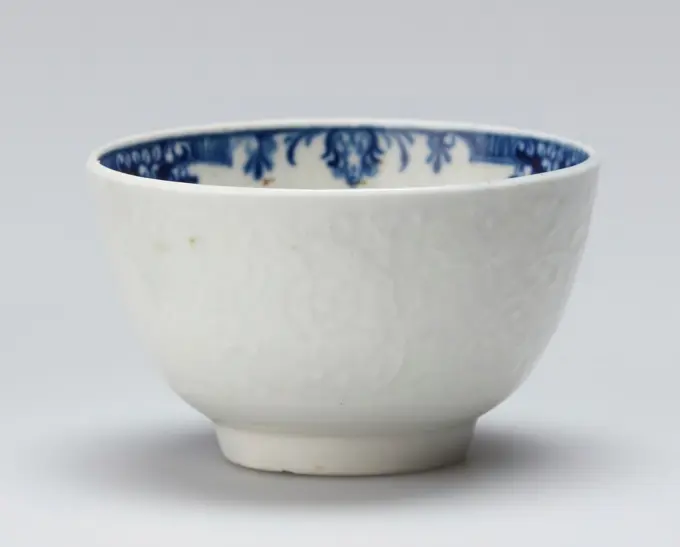
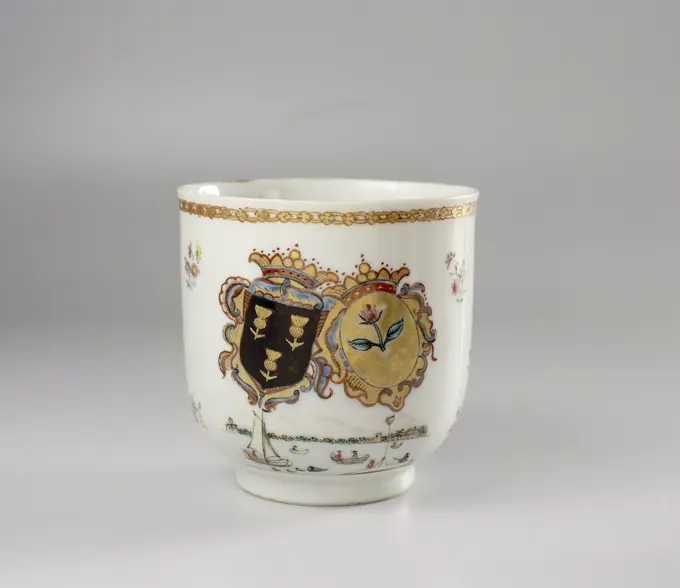
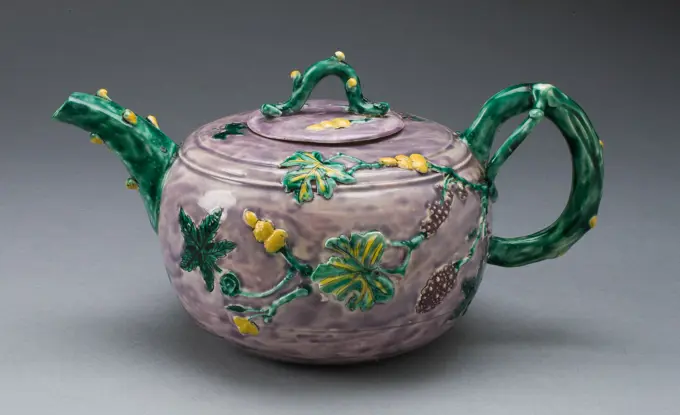
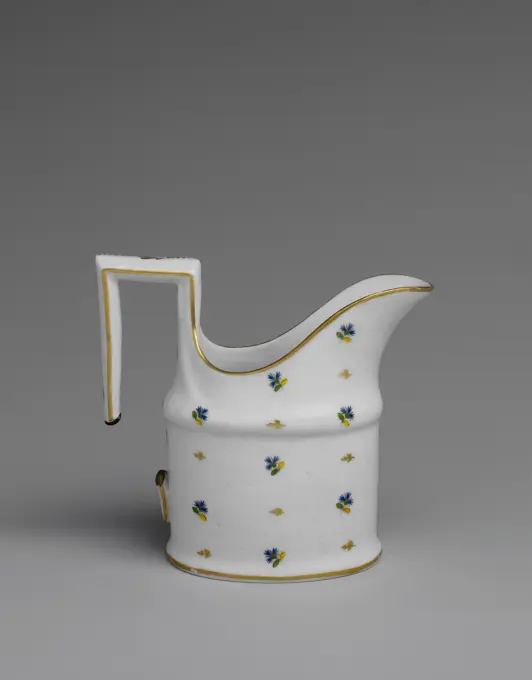
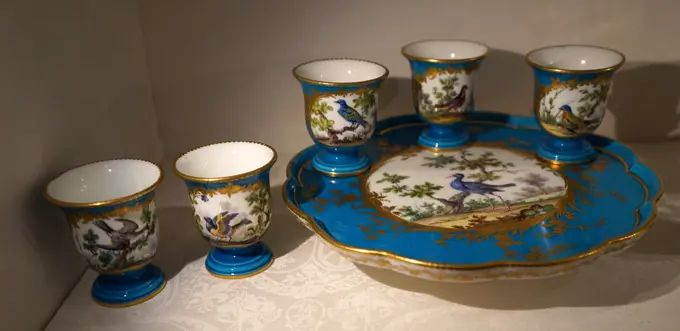
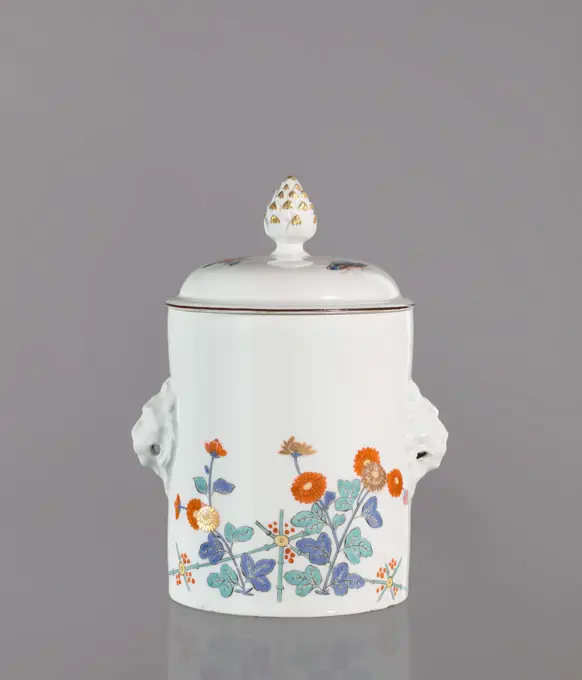
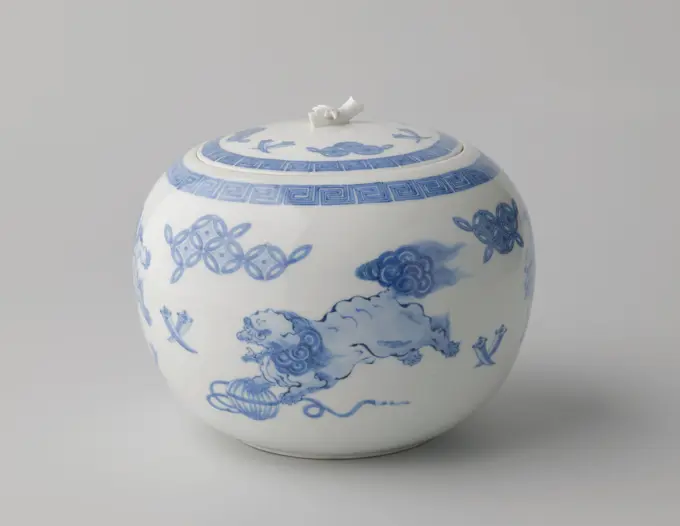
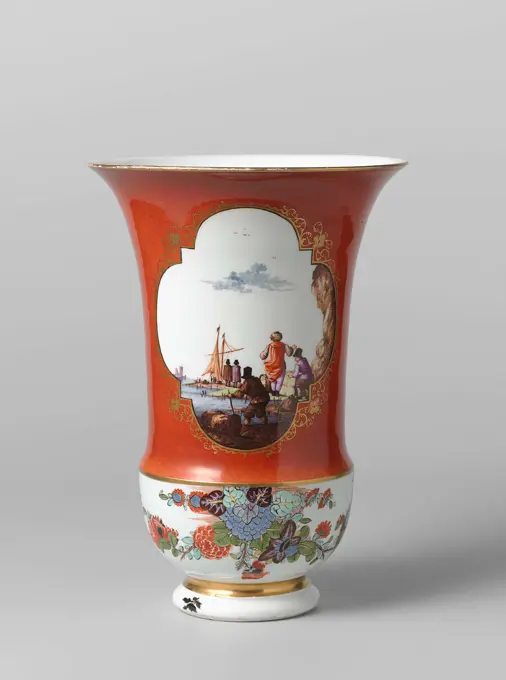
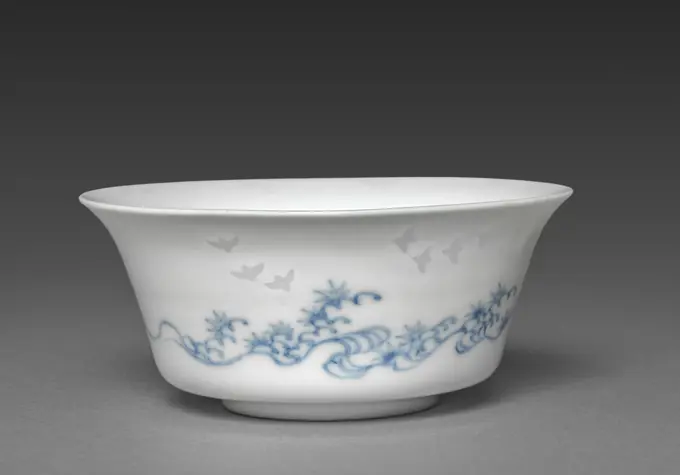
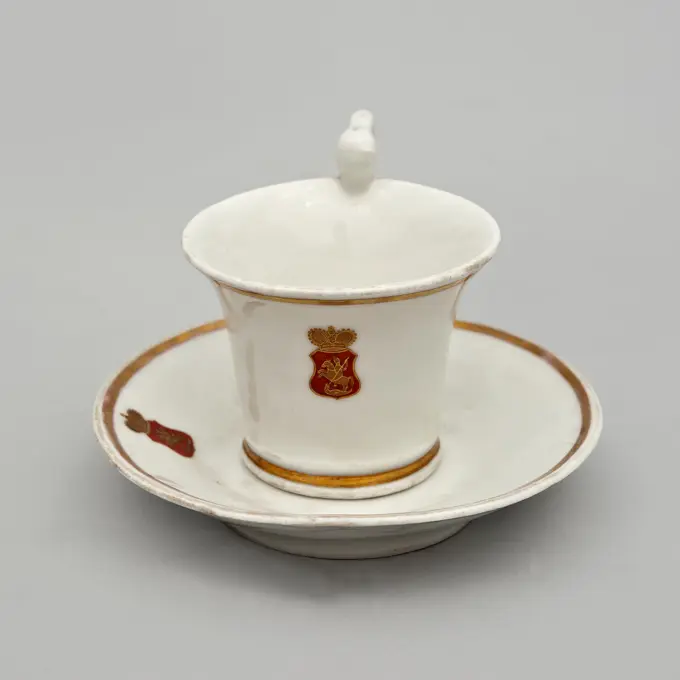
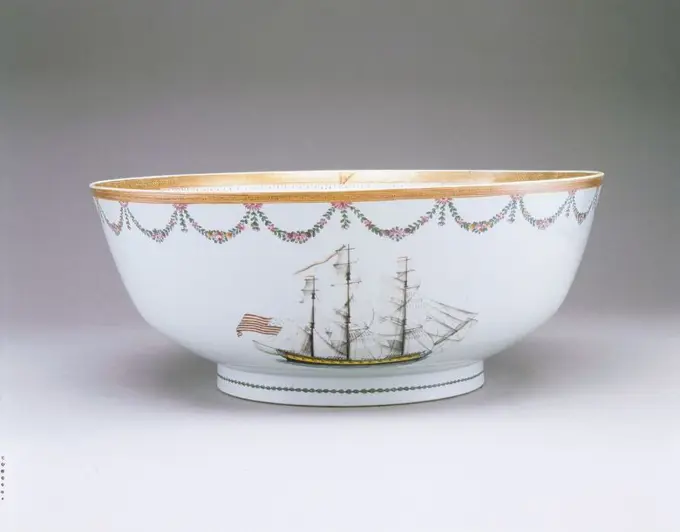
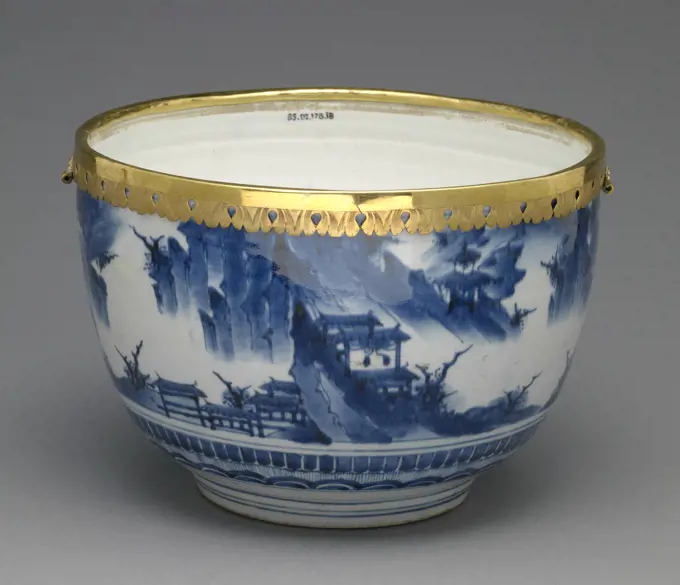
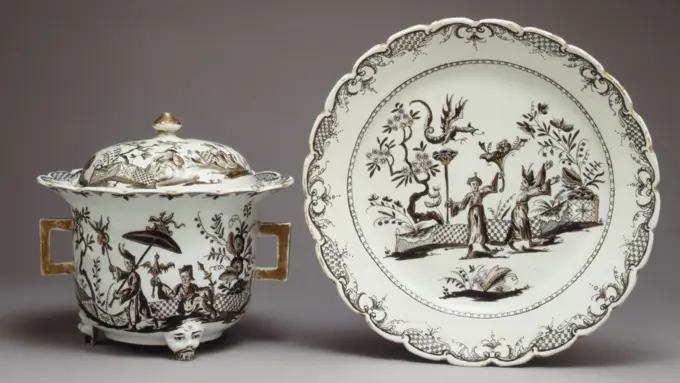
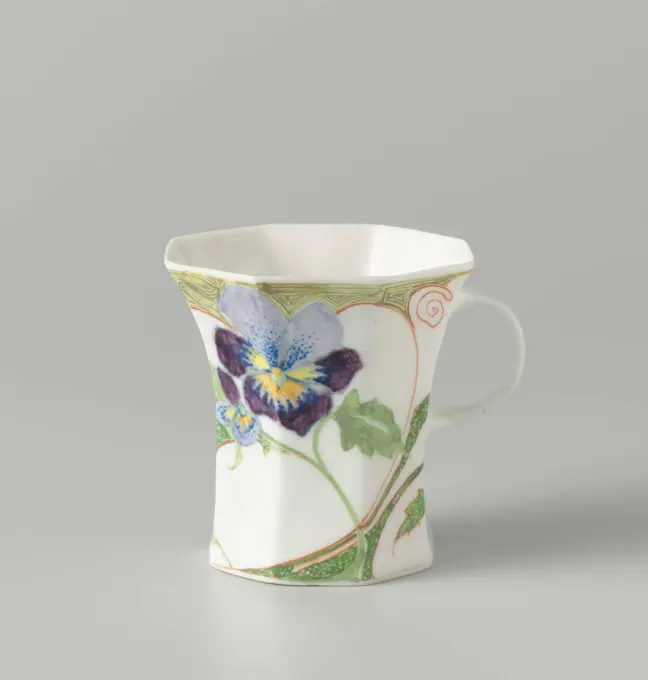
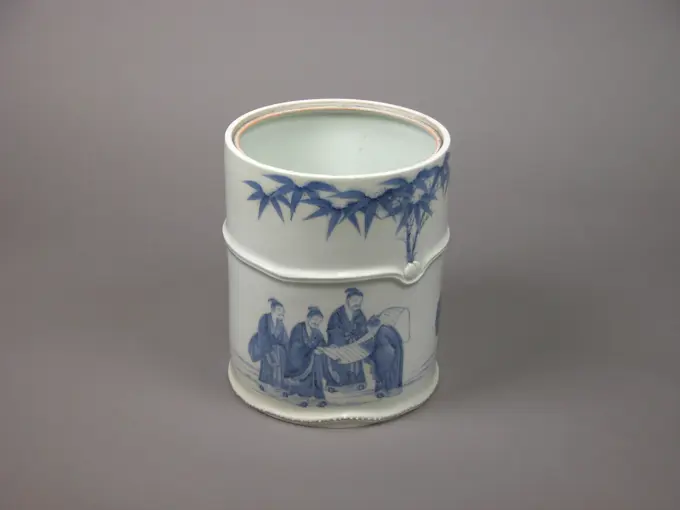
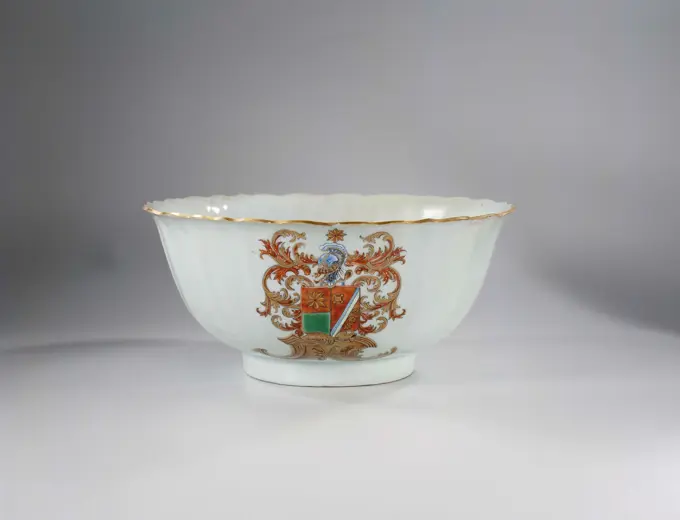
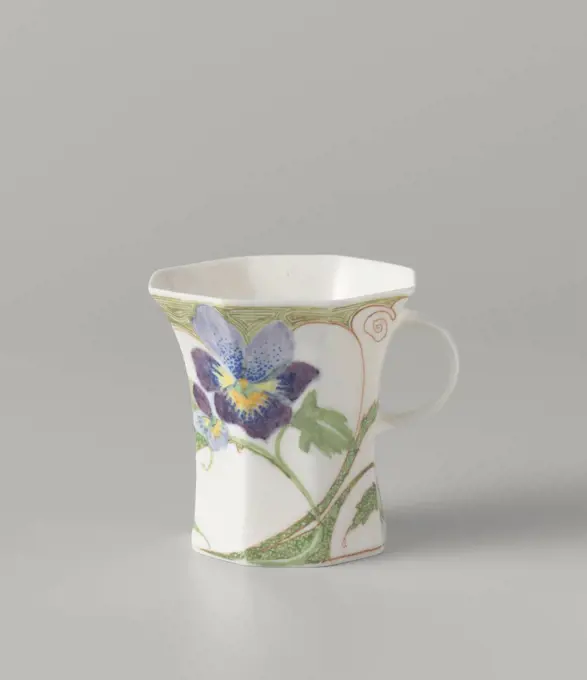
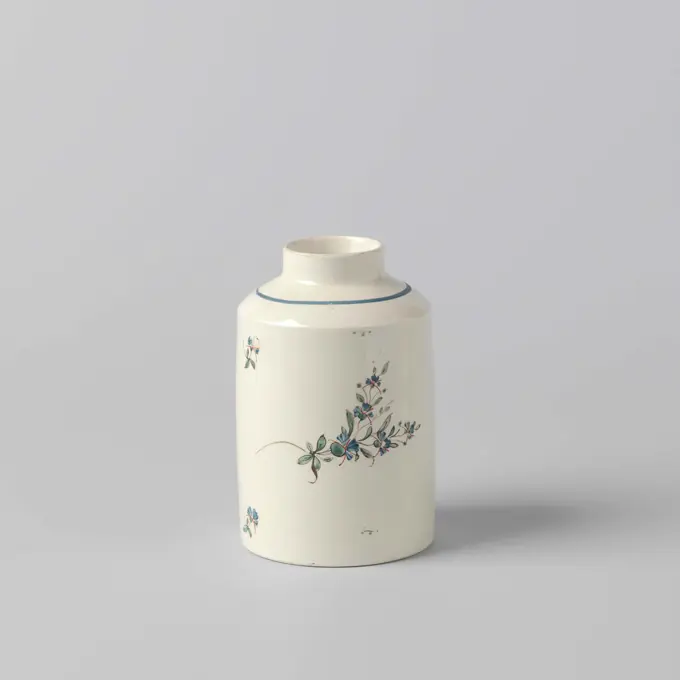
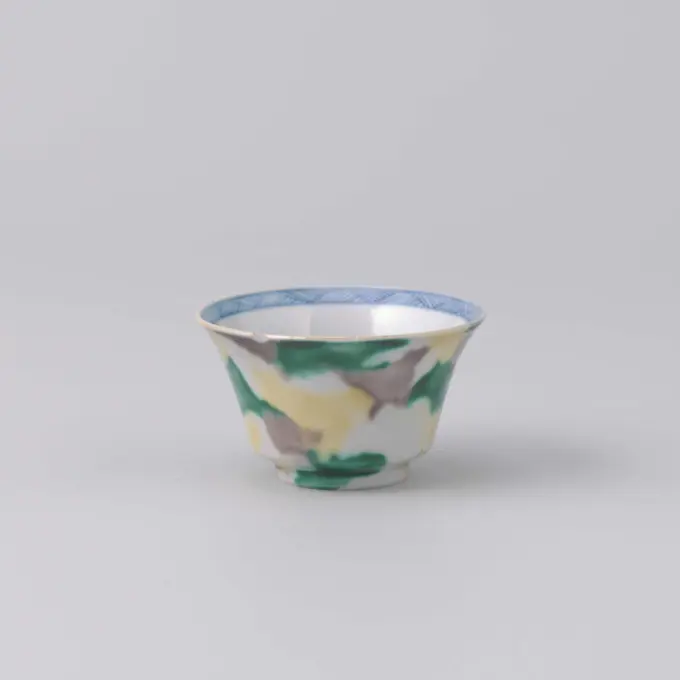
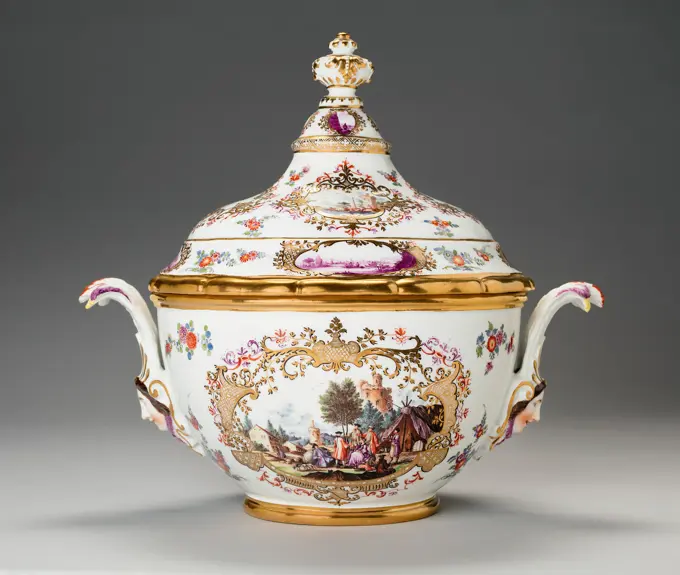
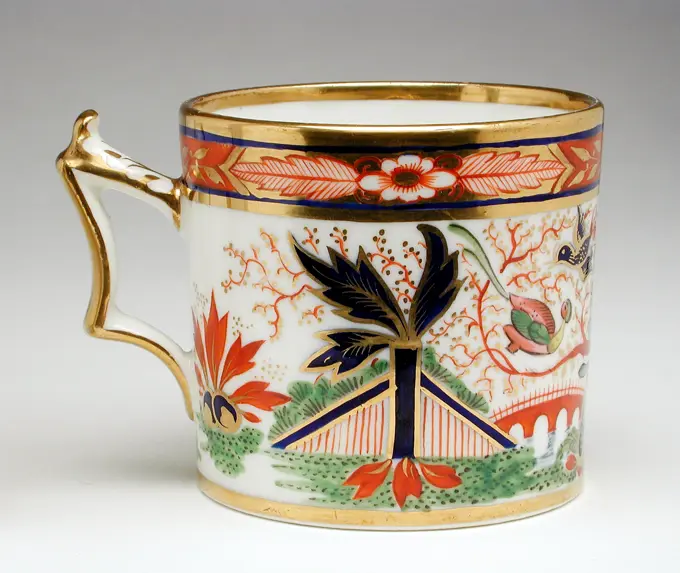
Sugar box with lid, multi -colored painted with chinoiseries and the coat of arms of the Venetian Morosini family, Meissener Porzellan Manufaktur, 1731 Sugar box with lid, made of painted porcelain. The box is painted with Höroldt chinoiseries and the coat of arms of the Venetian Morosini family. On one of the sides, a Chinese holds an oval shield with the inscription: K.P. // M.F. // girl // sen // 1731. The sugar box is marked. Float porcelain Sugar box with lid, made of painted porcelain. The box is painted with Höroldt chinoiseries and the coat of arms of the Venetian Morosini family. On one of the sides, a Chinese holds an oval shield with the inscription: K.P. // M.F. // girl // sen // 1731. The sugar box is marked. Float porcelainBowl - Portneuf potteryTeapot early 19th century British, Staffordshire. Teapot. British, Staffordshire. early 19th century. Pottery. Ceramics-PotteryCup and Saucer 1777 Sèvres. Soft-paste porcelain, polychrome enamels, and gilding . Manufacture nationale de Sèvres (Manufacturer)Cup with a matte green border with floral scrolls, anonymous, c. 1800 - c. 1810  Porcelain head, painted on the glaze in red, green, black and gold. The head is cylindrical with a spreading edge and a pointed ear, ending in a lion's head. A dull green band with flower vines on the outer wall. Above and under a band with flower branches. Above the foot and the inner and outer edge with a golden band. The ear is also gold, where the lion's head is left white. France porcelain. glaze. gold (metal) painting / gilding / vitrificationLibation Cup, 1573-1619, 2 1/4 x 5 x 3 13/16 in. (5.72 x 12.7 x 9.68 cm), Porcelain with underglaze enamels, China, 16th-17th centuryWalljardirs, anonymous, c. 1800 - c. 1900 Concave funnel -shaped wall jardinière of multi -colored painted faience. The rear wall is flat, the upper wall is equipped with holes and the wall is ribbed. The upper edge is sculpted and the rear wall is equipped with two holes on which the Jardiniere can be hung. The wall is painted with flower bouquets. The Jardinière includes an identical copy. France earthenware. tin glaze. Concave funnel -shaped wall jardinière of multi -colored painted faience. The rear wall is flat, the upper wall is equipped with holes and the wall is ribbed. The upper edge is sculpted and the rear wall is equipped with two holes on which the Jardiniere can be hung. The wall is painted with flower bouquets. The Jardinière includes an identical copy. France earthenware. tin glaze.Kop, anonymous, c. 1660 - c. 1730 Kop of blue painted faience, painted with an all -round landscape with a boat. The head is a bottom find and the bottom is missing. Delft earthenware. tin glaze. Kop of blue painted faience, painted with an all -round landscape with a boat. The head is a bottom find and the bottom is missing. Delft earthenware. tin glaze.Worcester Porcelain Manufactory, Coffeepot and Cover, c. 1760, soft-paste porcelain.Eye washing glass. Koenigliche Porzellan Manufaktur - KPM (Berlin ; 1763-1918), factoryTerrine with lid and understaffa of hard-baked pottery, wedgwood cream. Terrine with lid and underfaith of hard-baked pottery. The round below has an increased center piece with a raised edge. The terrine is round and has a vaulted foot and a rejuvenating body. The terrine has plot-shaped ears and a vaulted lid with a circular button that is formed by bent springs. A rosette is painted around the button in gold and blue. The terrine belongs to a breeze (BK-1961-30-B) and a dish (BK-1961-30-C). The terrine has been marked.Teapot, anonymous, 1740 - 1760 Square teapot with ingredients corners, a bell-shaped lid with lid button, a high, standing handle and an S-shaped, square spout. The sides are painted in yellow green (2 shades), pink, brown, blue and black enamel with Westerners: a wide -lying man at a table and a pine, two boys or men in a landscape, a sitting man with a cup in hand In a landscape, a standing man in a landscape. Between the fields of service with flower branches in cartouches. On the shoulder and the handle stylized tifles on a yellow stock, on the spout blue tibs. On the bottom a bundle of granted, peach and fingercitren branches. China copper (metal). Square teapot with ingredients corners, a bell-shaped lid with lid button, a high, standing handle and an S-shaped, square spout. The sides are painted in yellow green (2 shades), pink, brown, blue and black enamel with Westerners: a wide -lying man at a table and a pine, two boys or men in a landscape, a sitting man with a cup in hand Bowl, white, with an edge on the inside with rococo ornament. Bowl of white porcelain, decorated on inside along the top edge with a rococo ornament in blue. On the flat a blue aster. Exterior with relief decoration of a rank with leaves and flowers. Signature under the foot: C. Note: Restored.Teapot with peonies ca. 1735 Vienna. Teapot with peonies. Austrian, Vienna. ca. 1735. Hard-paste porcelain painted with colored enamels over transparent glaze. Ceramics-PorcelainBowl, 1723-1735, 2 3/8 x 5 7/8 in. (6.03 x 14.92 cm), Porcelain with underglaze blue decor, China, 18th centuryRussian Porcelain (19th C.) Antiques Hermitage Museum, St. Petersburg, Russia Bell-Shaped Cup With Figures And Animals near Pavilion at the Waterside. Bell-shaped head of porcelain, painted on the glaze in blue, red, pink, green, black and gold. Different persons, ducks and a dog at pavilions on the waterfront, shown some boats in the water; On the edge tendrils interspersed with birds on a branch and landscapes in cartouches; The edge with a bond with geometric pattern. Wall of the dish has been broken. Famille Rose / Mandarin.Slabak, belonging to a service decorated with a flung ribbon motif with leaf branches, flower bouquets and stripped flower branches, manufacture Oud -Loosdrecht, 1780 - in or before 1820 Slabak, belonging to a porcelain service decorated with a flung ribbon motif in purple and gold with green leaf branches, flower bouquets and sprinkled flower branches. Borders slightly corrugated, with decoration in gold with purple leaf motif between which green crossed leaf motif. Marked: M.O.L. and Amstel. NOTE: Broken in the middle. Loosdrecht Amsterdam porcelain Slabak, belonging to a porcelain service decorated with a flung ribbon motif in purple and gold with green leaf branches, flower bouquets and sprinkled flower branches. Borders slightly corrugated, with decoration in gold with purple leaf motif between which green crossed leaf motif. Marked: M.O.L. and Amstel. NOTE: Broken in the middle. Loosdrecht Amsterdam porcelainBell-shaped cup and saucer with two figures in front of a pavilion and flower sprays, anonymous, c. 1775 - c. 1799 Klock -shaped head and dish of porcelain, painted in underly glaze blue and on the glaze blue, red, pink, green, yellow, black and gold. On the flat of the dish a scalloped cartouche with two people at a table in front of a pavilion, in the background mountains and trees; Around the cartouche flower branches; A Fitzhugh edge on the edge. The head with the same decoration. Famle Rose. China porcelain. glaze. cobalt (mineral). gold (metal) painting / gilding / vitrification Klock -shaped head and dish of porcelain, painted in underly glaze blue and on the glaze blue, red, pink, green, yellow, black and gold. On the flat of the dish a scalloped cartouche with two people at a table in front of a pavilion, in the background mountains and trees; Around the cartouche flower branches; A Fitzhugh edge on the edge. The head with the same decoration. Famle Rose. China porcelain. glazPot Bauhölzel, Jakub, National Garncarska School in KołomyjaTureenWater Jar with Lin Hejing (Lin Bu) and His Pet Crane. Culture: Japan. Dimensions: H. 7 1/8 in. (18.1 cm); Diam. 6 1/2 in. (16.5 cm). Date: mid- 19th century. Museum: Metropolitan Museum of Art, New York, USA.Cup and saucer, Costerman-uproar, blue Chinese porcelain, cup and saucer drinking utensils tableware holder ceramic porcelain cup h 4,0, hand-turned painted painted Cup and saucer of thin-walled porcelain The Costerman riots show how building is leveled with the ground Chalice with slightly protruding edge small stand ring Dish with flat mirror. Sloping edge decorated with napkin and cartouches including flower figures. Marked at the bottom of double blue circle Tumult of Rotterdam Costerman Riot Jacob van Zuylen of Nyevelt mayorCzarka with a vegetable flagella and cobalt lotus unknownTeapot (from a tea service). Sèvres Porcelain Manufactory; French, founded 1740; Figures after François Boucher (French, 1703-1770; Painted by Jacques Fontaine (French, 1734/35-1807, active 1752-1800). Date: 1770. Dimensions: 12.7 x 16.8 x 8.9 cm (5 x 6 5/8 x 3 1/2 in.). Soft-paste porcelain, polychrome enamels, and gilding. Origin: Sèvres. Museum: The Chicago Art Institute, Chicago, USA.Wine-bottle cooler (seau à bouteille) (part of a service) 1771-72 Sèvres Manufactory French The table services produced at Sèvres in the eighteenth century were highly prized and extremely expensive. They were not only purchased by the Crown and members of the aristocracy but also given by the king as diplomatic gifts to foreign courts and visiting dignitaries, and the esteem in which they were held did much to enhance the factorys prestige and fortunes. Because the number of pieces composing a service was very large, the cost was enormous, but this did not deter many courtiers from ordering a dinner or dessert service, or both.One of the most celebrated services produced at Sèvres was delivered to Louis-René-Édouard, prince de Rohan-Guémenée (1734-1803), on September 7, 1772. All of the pieces were decorated with the rich turquoise ground color known as bleu céleste and with birds encircled by an elaborate gilt wreath of oak leaves and acorns. Many of the components of the service beMaker Unknown, Teabowl, c. 1800, porcelain, enamel, and gilding.Przeszo Przyszoci Höroldt, Johann GregoriusCome with ornament in Chinese style, Petrus Regout, 1836 Come of earthenware on the inside and outside with ting laze covered and decorated on the inside with printed and coarse painted ornament from Chinese motifs. Maastricht earthenware Come of earthenware on the inside and outside with ting laze covered and decorated on the inside with printed and coarse painted ornament from Chinese motifs. Maastricht earthenwareCup with bouquets and flowers, c. 1777 - c. 1790 Porcelain head with a slightly thickening wall and braided ear, painted on the glaze in blue, red, green, yellow, purple and gold. On the outside wall two bouquets of different flowers and a straw flower. Golden line on the foot and the ear. Golden Rand. Marked on the underside with the stork. porcelain company: Ansbachporcelain company: The Hague porcelain. glaze. gold (metal) painting / gilding / vitrification Porcelain head with a slightly thickening wall and braided ear, painted on the glaze in blue, red, green, yellow, purple and gold. On the outside wall two bouquets of different flowers and a straw flower. Golden line on the foot and the ear. Golden Rand. Marked on the underside with the stork. porcelain company: Ansbachporcelain company: The Hague porcelain. glaze. gold (metal) painting / gilding / vitrificationCup (Bei) with Four Figures. China, Jiangxi Province, Jingdezhen, Chinese, Ming dynasty, Chongzhen mark and period, 1628-1644. Furnishings; Serviceware. Wheel-thrown porcelain with blue painted decoration under clear glazeSugar box. Culture: Austrian, Vienna. Dimensions: H. 4-1/8 in. (10.5 cm.); L. 5-3/16 in. (13.2 cm.). Factory: Vienna. Factory director: Du Paquier period (1718-1744). Date: ca. 1730-35.The Du Paquier manufactory made sugar boxes in four basic shapes, including this oval, which is also known in Meissen porcelain and likely was influenced by Baroque silver. Surviving Du Paquier tea, chocolate, and coffee services always have sugar boxes but never milk jugs, an indication that the Viennese preferred their tea sweetened but without milk. Museum: Metropolitan Museum of Art, New York, USA.Meissen Manufacture. Quadrilobed cup. Hard porcelain, polychrome enamels. 18th century. Museum of Fine Arts of the City of Paris, Petit Palais. Faience, table service, cup, dishes, 18th 18th 18th 18th 18th 18th 18 centuryVase cover;  1725-1740 (1725-00-00-1740-00-00);Soup tirel with lid, oval, cream colored, with button in the shape of a flower. Soep terrine of pottery, cream-colored glazed. The convex, oval body in itself broadened, oval foot. Two handles in the shape of stylized leaves. The curved lid is decorated at the top with leaves in relief and is awarded by a button in the shape of a flower.Meissen Manufacture. Quadrilobed cup. Hard porcelain, polychrome enamels. 2nd quarter of the 18th century. Museum of Fine Arts of the City of Paris, Petit Palais. Faience, table service, cup, dishes, 18th 18th 18th 18th 18th 18th 18 centurySaucer with two quail near a rock, anonymous, c. 1725 - c. 1749 Porcelain saucer with a six -squeezed edge, painted on the glaze in blue, red, green, black and gold. On the flat two quail with a rock with a magnolia and bamboo. Porcelain with email colors. China porcelain. glaze. gold (metal) painting / gilding / vitrification Porcelain saucer with a six -squeezed edge, painted on the glaze in blue, red, green, black and gold. On the flat two quail with a rock with a magnolia and bamboo. Porcelain with email colors. China porcelain. glaze. gold (metal) painting / gilding / vitrificationSugar Bowl 1750-75 British Creamware, so-called for its cream-colored body, is a refined earthenware with a lead-based glaze that was developed in Staffordshire, England around 1750. Due to its light color and glossy glaze, it was ideal for dinnerware. Economically affordable to produce, creamware was imported to America in large quantities. Although much creamware was used in America, it is rare to find pieces associated with a particular family. This dinner service (36.22.1 -.38) bears the initials SBW” for Samuel Blachley Webb. The set was imported from England in 1774 by Webb, who was an aide-de-camp and military secretary to General George Washington.. Sugar Bowl 7981Tea cup, from a tea service, 18th century, Worcester Porcelain Works (a.k.a. Royal Worcester Porcelain Company), Worcester, England, est. 1751, Porcelain, England, 18th century. Salt barrel of painted porcelain. The salt barrel has the shape of a shell with a scalloped edge and stands on three volutely legs. The salt barrel is painted with Deutsche Blumen, insects and fruits. The edge is decorated with the Neuozier pattern in relief. The salt barrel is marked and belongs to a tableware (BK-17474-1 to BK-17474-253).Cup with handle with the arms of the Van Blommenstein and De Roos family, anonymous, c. 1755 Porcelain ear head, painted on the glaze in blue, red, pink, green, yellow, black and gold. On the outside wall the alliance weapon of the Blommenstein and De Roos families. The weapon to the left of the Van Blommenstein family has a black background with three golden thistles or Africans. The weapon to the left of the De Roos family has a gold background with rose. In both families, a crown is depicted in red and gold above the weapon and the cover consists of curl work in Rococo style. Under the whole, a (probably Dutch) river view with a harbor, fishing boats, houses, a church and shrub layout is depicted. Sprinkling flowers on either side of the weapon and a switch pattern on the edge. Weapon porcelain with email colors. China porcelain. glaze. gold (metal) painting / gilding / vitrification Porcelain ear head, painted on the glaze in blue, red, pink, green, yellow, black and gold. On the oCup And Saucer (Russia); Manufactured by Kuznetsoff Pottery (Russia); porcelain, enamel, gildingTeapot 1745-1755 Staffordshire .Cup with a putto on clouds, Ansbach, 1785 Porcelain's head (coffee cup) with a C-shaped ear, painted on the glaze in pink (Camaïeu) and gold. On the outer wall a putto sitting on a branch on a cloud. To sprinkle the show in gold. The inner edge with a twisted band, on which garlands and flower branches hang. Golden line on the foot and golden edge. Marked on the underside with the stork. porcelain company: GermanyThe Hague porcelain. glaze. gold (metal) painting / gilding / vitrification Porcelain's head (coffee cup) with a C-shaped ear, painted on the glaze in pink (Camaïeu) and gold. On the outer wall a putto sitting on a branch on a cloud. To sprinkle the show in gold. The inner edge with a twisted band, on which garlands and flower branches hang. Golden line on the foot and golden edge. Marked on the underside with the stork. porcelain company: GermanyThe Hague porcelain. glaze. gold (metal) painting / gilding / vitrificationDish cover (cloche) from a service for Frederick William II of Prussia. Königliche Porzellan ManufakturBerlin, c. 1785-1800hard-paste porcelainCream Pitcher ca. 1780 French, possibly. Cream Pitcher 2636Object from a Dessert Service 'The Razumovsky Service', made from soft-paste porcelain. Dated 18th CenturyMinton Porcelain Manufactory, Stoke-on-Trent, Cup and Saucer, c. 1825, Bone porcelain.Dish. unknown, craftsmanSaucer, branch Koenigliche Porcellain Fabrique, Meissen (1710-1763); 1725-1735 (1725-00-00-1735-00-00);Bowl with Auspicious Words and Floral Motifs, 1600s. China, Ming dynasty (1368-1644). Stoneware with overglaze color enamels; height: 9 cm (3 9/16 in.); diameter: 21.5 cm (8 7/16 in.).Cop painted with butterflies and dragonflies, Porcelinfabriek aan den Amstel, 1784 - 1809 Head without an ear -colored painted with butterflies and dragonflies. Marked: Amstel. Ouder-Amstel porcelain Head without an ear -colored painted with butterflies and dragonflies. Marked: Amstel. Ouder-Amstel porcelainCup (part of a service) ca. 1765-70 Worcester factory. Cup (part of a service) 198453Cup and Saucer c 1826-1838 Philadelphia. Porcelain . Tucker and HemphillCan with a lid with Kakiemon decoration. Koenigliche Porcellain Fabrique, Meissen (1710-1763), factoryPowder pot, anonymous, c. 1775 - c. 1800 Powder pot with blue Saxon pattern, unnoticed.  . Powder pot with blue Saxon pattern, unnoticed.  .Round covered jar with shishi and auspicious symbols, anonymous, c. 1750 - c. 1849 Porcelain lid of round lid jar, painted in underlaze blue. On the lid of lucky symbols (horns, coins). Along the edge a band with meander pattern. Lid button in the form of a bamboo branch. Blauw-Wit Hirado. Japan porcelain. glaze. cobalt (mineral) painting / vitrification Porcelain lid of round lid jar, painted in underlaze blue. On the lid of lucky symbols (horns, coins). Along the edge a band with meander pattern. Lid button in the form of a bamboo branch. Blauw-Wit Hirado. Japan porcelain. glaze. cobalt (mineral) painting / vitrificationRound covered jar with shishi and auspicious symbols, anonymous, anonymous, c. 1750 - c. 1849 Round lid pot made of porcelain, painted in underly glaze blue. On the outer wall four times a shishi (lion dog) with lucky symbols (horns, coins). A band with a meander pattern on the shoulder. The lid with the same decoration; Button in the form of a bamboo branch. Blauw-Wit Hirado. Japan porcelain. glaze. cobalt (mineral) painting / vitrification Round lid pot made of porcelain, painted in underly glaze blue. On the outer wall four times a shishi (lion dog) with lucky symbols (horns, coins). A band with a meander pattern on the shoulder. The lid with the same decoration; Button in the form of a bamboo branch. Blauw-Wit Hirado. Japan porcelain. glaze. cobalt (mineral) painting / vitrification. Cup of porcelain, painted on the glaze in blue, red, pink, green, yellow, black and gold. The wall of the head divided into two sections, the upper with ribbed wall, and with a brace-shaped edge. On the wall the 'JM' monogram in a crowned medallion with shell pattern, napkin work and flower branches; For the medallion and on the wall napkin work with four small and four large cartouches with flower branch. Two cracks in the wall of the head. European performance in email colors.Three vases. Objects with a red ground are extremely rare. Moreover, the quality of the depictions on this vase is very high: harbourscenes with a low horizon and so-called indianische Blumen, flowers of the Indies, around the neck.Coffeepot - Holmes, Plant & Maydew, 1876-1885 Holmes, Plant & Maydew, 1876-1885Wine Cup, 1700s. Japan, Edo period (1615-1868). Porcelain ; overall: 4.2 cm (1 5/8 in.).Fili Anka with a saucer; Baranówka (Porcelain Manufaktura; 1804-2012); 1828 (1828-00-00-1828-00-00);Chetwertyńscy (family), Pogoń Ruska (coat of arms), Potocki, Paweł, flower decorations, the coat of arms of the Czetwertyński family, coats of arms, purchase (provenance), Saint. Jerzy killing the dragon (iconogr.)Lid of sand spreader or ink pot, manufacture Oud-Loosdrecht, c. 1778 - c. 1782 Cover with gold piping. Loosdrecht porcelain Cover with gold piping. Loosdrecht porcelainCup and Saucer. Switzerland, Zürich. Date: 1765-1785. Dimensions: Cup: H. 4.5 cm (1 3/4 in.); diam. 7.8 cm (3 1/16 in.); Saucer: H. 3.8 cm (1 1/2 in.); diam. 13.7 cm (5 3/8 in.). Porcelain with polychrome enamel decoration. Origin: Zürich. Museum: The Chicago Art Institute, Chicago, USA.Punch Bowl. Culture: Chinese, for American market. Dimensions: H. 6 1/4 in. (15.9 cm); Diam. 15 1/2 in. (39.4 cm). Date: ca. 1790. Museum: Metropolitan Museum of Art, New York, USA.Cup. Culture: China. Dimensions: H. 1 1/2 in. (3.8 cm); Diam. 2 7/8 in. (7.3 cm). Date: late 18th-first half of the 19th century. Museum: Metropolitan Museum of Art, New York, USA.Bowl of a lidded and mounted bowl; Mounts attributed to Wolfgang Howzer (Swiss, active 1660 - about 1688); or China; porcelain about 1650 - 1680; mounts about 1680; Hard-paste porcelain, underglaze blue decoration with gilt-metal mounts; 20.5 x 38.1 x 25.5 cm (8 1,16 x 15 x 10 1,16 in.)Flowerpot. Flowerpot painted multily with a flower bouquet. Signature: LO3 in blue.. Milkus with lid, porcelain, multicolored painted with tires with flower bouquets respectively on a gold-driven background and a round each other wavy leaf garland and a pink ribbon on a gold and orange shaded background, separated by tires with golden flower branches on a white fond. Part of tea service.Ollio pot with cover and stand ca. 1725 Vienna The tripod was used in early dynastic China (2nd-1st millennium B.C.) for offerings of food. During the twelfth century the form was adapted for burning incense. The eighteenth-century Japanese export version was freely adapted at Delft, Meissen, and Vienna, where its original purpose was ignored. By eliminating the piercing in the cover and changing the proportions, the incense burner became a bowl for soup or stew, reverting to the tripods earliest function in China.. Ollio pot with cover and stand 199315. The octagonal porcelain head with ear is polychrome painted with violets (purple, light and dark blue and yellow) within an ornamental decor. Labeled with: Kroon, Rozenburg, Stork, The Hague (upper each other); on the left the brand before 1913, on the right the work order number 332 (at one head 333); under the painting mark of c.w.j. 't heart.Water Jar for the Tea Ceremony with Seven Sages of the Bamboo Grove Design 18th century Japan. Water Jar for the Tea Ceremony with Seven Sages of the Bamboo Grove Design 41749. Bowl of porcelain with ribbed wall and scalloped edge, painted on the glaze in blue, red, green, black and gold. On the outer wall twice the coat of arms of the Heere van Holy. The helmet sign is a star and the weapon is surrounded by leaf rights. Old label on the bottom with 'Pieter de Heere van Holy'. Weapon porcelain with email colors.Pair of cups and saucers, anonymous, c. 1700 Hexagonal porcelain dish, painted in underly glaze blue. On the flat a flying crane against a soil of 'crackled-ice' in a star-shaped cartouche; Lotus drinks around the cartouche; the edge with a decorative band; On the back five valuables (Artemisiablad, Pearl, Roll, window, musical stone) and a toaist symbol (castagnets). Marked on the underside with the seal brand 'Fú' in a double circle. Blue White. China porcelain. glaze. cobalt (mineral) painting / vitrification Hexagonal porcelain dish, painted in underly glaze blue. On the flat a flying crane against a soil of 'crackled-ice' in a star-shaped cartouche; Lotus drinks around the cartouche; the edge with a decorative band; On the back five valuables (Artemisiablad, Pearl, Roll, window, musical stone) and a toaist symbol (castagnets). Marked on the underside with the seal brand 'Fú' in a double circle. Blue White. China porcelain. glaze. cobalt (mineral) painting / vitrificationCup, part of a set, painted with violins, N.V. Haagsche Plateelfabriek Rozenburg, C.W.J. 't Hart, 1913. The drinking of tea was increasingly adopted in the West by the end of the 17th century. China had been closed for decades as the result of a civil war. When it ended, VOC merchants could once again buy porcelain from China, and the supply of tea and of teacups grew enormously.The hexagonal form of these cups is exceptional, just as is the crane in flight, set against a richly variegated blue background.Cream jug ca. 1770-80 Gotha. Cream jug 199271Subtotel of multi -colored painted faience, c. 1750 - c. 1775 Flowerpot of multicolored painted faience on a yellow stock. The flowerpot consists of a vase and a dish in Louis Xvde style. The flowerpot and the dish are decorated with tulips and daisives and marked with the letters LPK. The flowerpot includes an identical copy with the invnr. BK-NM-11351-B. Delft earthenware. tin glaze. Flowerpot of multicolored painted faience on a yellow stock. The flowerpot consists of a vase and a dish in Louis Xvde style. The flowerpot and the dish are decorated with tulips and daisives and marked with the letters LPK. The flowerpot includes an identical copy with the invnr. BK-NM-11351-B. Delft earthenware. tin glaze.Come from v.o.c.-ship the 'white lion'. Come from v.o.c.-ship the 'White Lion', 100 & Present.Tea bus from hard-baked pottery; Leeds creamware. Cylindrical tea bus from hard-baked pottery with a decoration on the glaze. The decoration consists of flower branches in blue, green and red. The lid is missing. A sugar bowl belongs to the tea can.Bell-Shaped Cup with 'Egg and Spinach' Pattern and Cock Among Plants. Bell-shaped head of porcelain, painted in underglaze blue and on the glaze green, yellow and eggplant. The head depicts the 'Egg and Spinach' pattern on the outside and the rooster on the inside. Marked on the underside with a mushroom (Lingzhi). Famille Verte.Lidded Bowl and Dish (Écuelle ronde et plateau rond). Vincennes Porcelain Manufactory (French, founded 1740, dissolved 1756)Covered Tureen and Stand (One of a Pair) 1735-1745 Germany . Meissen Porcelain ManufactoryDessert Service (Coffee Cann), Set of 11Beaker-Shaped Vessel, c. 1745. Capo di Monte Factory (Italian). Porcelain; overall: 9.4 x 8.6 cm (3 11/16 x 3 3/8 in.).Punch Bowl. China; Chinese, made for the American market. Date: 1790. Dimensions: 12.1 × 29.2 cm (4 3/4 × 11 1/2 in.). Porcelain, enamel, and gilding. Origin: China. Museum: The Chicago Art Institute, Chicago, USA.Ching Dynasty, Cup and Saucer, 19th century, hard-paste porcelain.Cup. Culture: American. Dimensions: H. 2 in. (5.1 cm). Maker: Union Porcelain Works (1863-ca. 1922). Date: ca. 1876. Museum: Metropolitan Museum of Art, New York, USA.Bowl (folding hat) with auspicious Symbols, Tassels and Flower Sprays. Bowl of porcelain bowl, painted in underglaze blue. On the soil lucky symbols and brushes. On the inner wall four scalloped cartouches with lucky symbols or plants. The inner edge with flower branches. The outer wall is divided into four wide compartments with a kind of pearl motif and four narrow compartments. The form and decorations are in line with the Chinese squirrch porcelain. Cracked glaze; some golden lacquer restorations; Bakzand on the bottom. Blue White.Cup and saucer ca. 1775 Ilmenau Porcelain Manufactory The gift of the Hans Syz Collection in 1995 endowed the Museum with nearly three hundred examples of European and Asian ceramics meticulously acquired by Swiss-born collector Dr. Syz (1894-1991) to chart the migration of models and patterns from East to West. Documenting a continuous process of influence and adaptation, these pieces provide a discriminating review of the nuances of stylistic change resulting from three centuries of trade.. Cup and saucer 208365Teapot 19th century Royal Porcelain Manufactory Danish. Teapot 187697Bowl with flowers and insects; Manufacture de Porcelaine de Berlin (1751-1757); 1750-1757 (1750-00-00-1757-00-00);White pot with coat of arms and birds of prey, kandijpot pot bowl tableware holder ceramic porcelain glaze, baked glazed painted stove enamelled Cylindrical bowl rounded to the base on stand ring Two pinched leaf shaped ears Under coat of arms in cartouche on outer wall ( twice) painted in black on green ground: The Van Heemskerkens armor heraldry chine de commande Van Heemskerken Van Heemskerck van Beest serveCup with cock and three fans with flower sprays, anonymous, c. 1725 - c. 1749 Porcelain head with sloping wall, painted on the glaze in blue, red, pink, green, yellow, black and gold. A medallion with a rooster depicted; around the medallion three fans with flowering plants against a pink soil; Three elongated compartments with servetwork between the fans. Two cracks in the head. Famle Rose. China porcelain. glaze. gold (metal) painting / gilding / vitrification Porcelain head with sloping wall, painted on the glaze in blue, red, pink, green, yellow, black and gold. A medallion with a rooster depicted; around the medallion three fans with flowering plants against a pink soil; Three elongated compartments with servetwork between the fans. Two cracks in the head. Famle Rose. China porcelain. glaze. gold (metal) painting / gilding / vitrificationBeaker and saucer. Culture: Italian, Naples. Dimensions: Beaker (.1): H. 2 3/4 in. (7.0 cm.); Saucer (.2): Diam. 6 1/6 in. (15.7 cm.). Factory: Capodimonte Porcelain Factory (Italian, 1740/43-1759). Date: ca. 1743. Museum: Metropolitan Museum of Art, New York, USA.. Round cup of porcelain, painted on the glaze in blue, red, green, yellow, black and gold with a pair of hay birds, one in the air and one on a rock with a flower branch. Inside on the bottom a rosette within a double circle in red and gold. Old label on the bottom with 'Collection Westendorp / 32'. Kakiemon style.Seif Yohei II excelled as a painter, as evidenced by his floral and landscape designs. His works were selected as the best among Kyoto ceramics shown to jurists from Europe and the US, thus paving the way for international recognition of the studio in the late 1800s. Sake Cups with Auspicious Flora, c. 1860-78. Seifū Yohei II (Japanese, 1844-1878). Pair of sake cups; porcelain with underglaze blue; height (each): 3 cm (1 3/16 in.); diameter (each): 7 cm (2 3/4 in.).. Fragment of a cup of blue painted faience. Floral motifs have been painted on the fragment. The fragment is a soil find out of Delft.Food Vessel in the Form of a Treasure Boat with Plovers and Waves. Japan, late 19th century. Ceramics. Hirado Mikawachi ware; porcelain with underglaze blue