Historic Textile Patterns

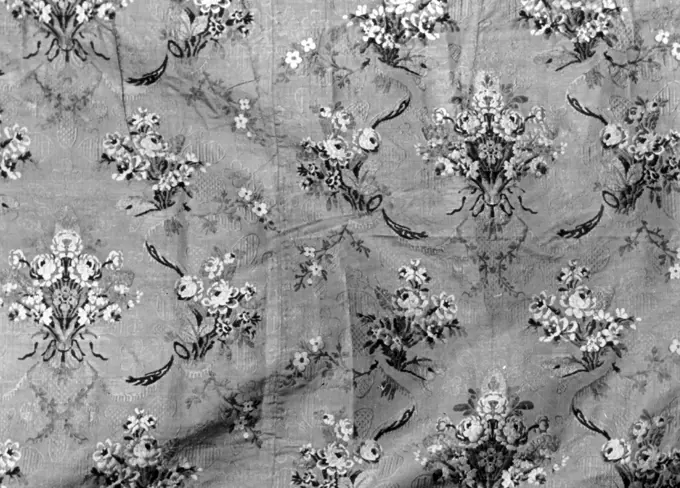
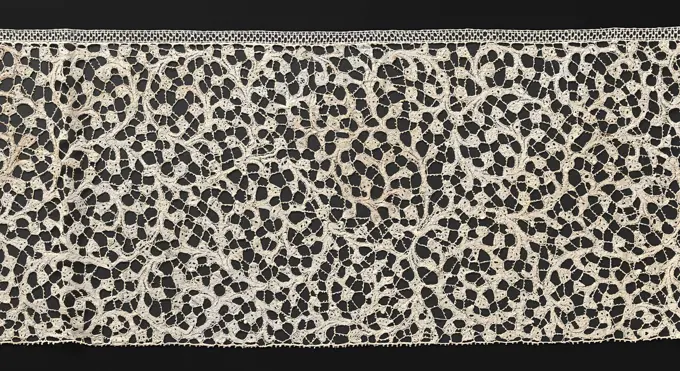
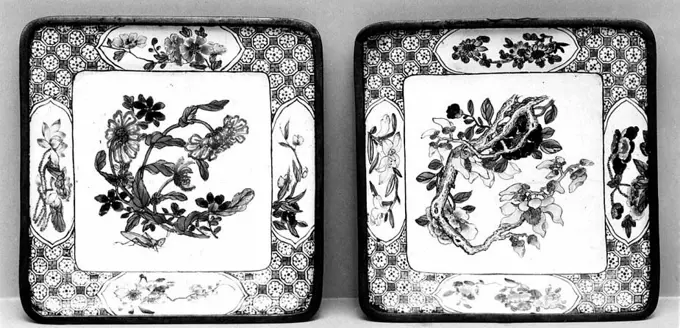
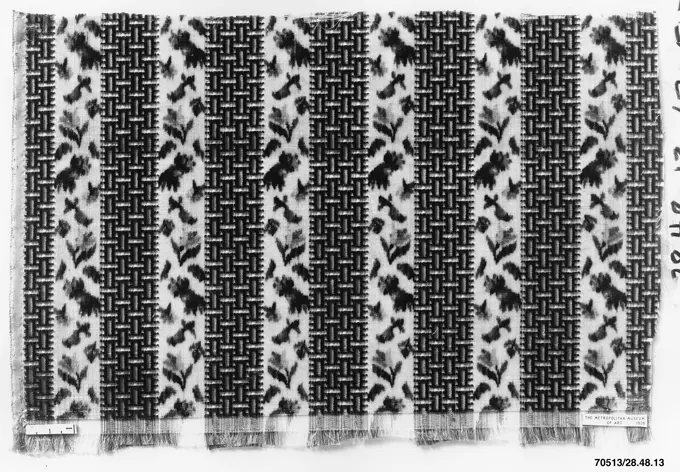
Vintage fabric pieces showcasing intricate floral designs from various historical periods, including European and Asian origins.

Cover 1825-30 British. Cover 219677
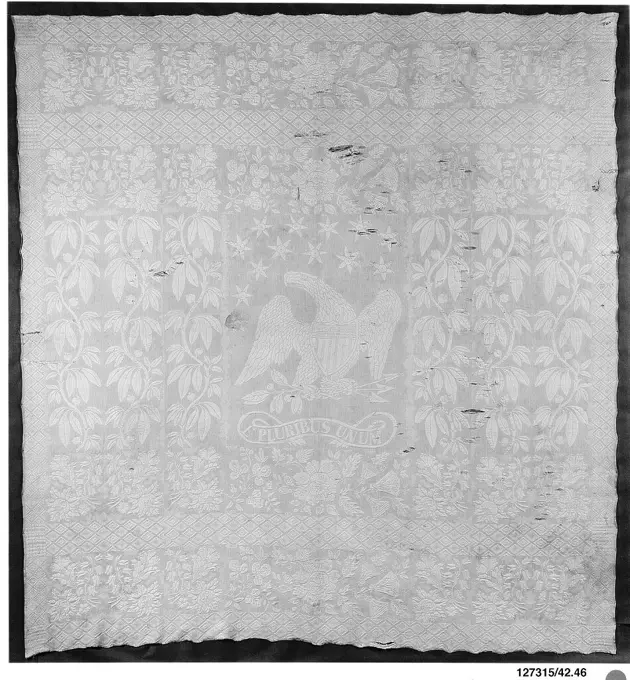
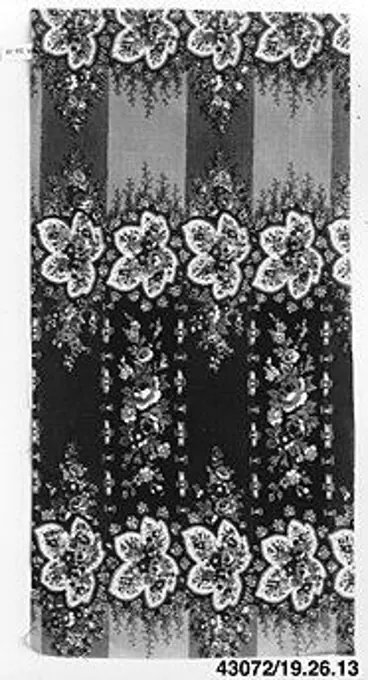
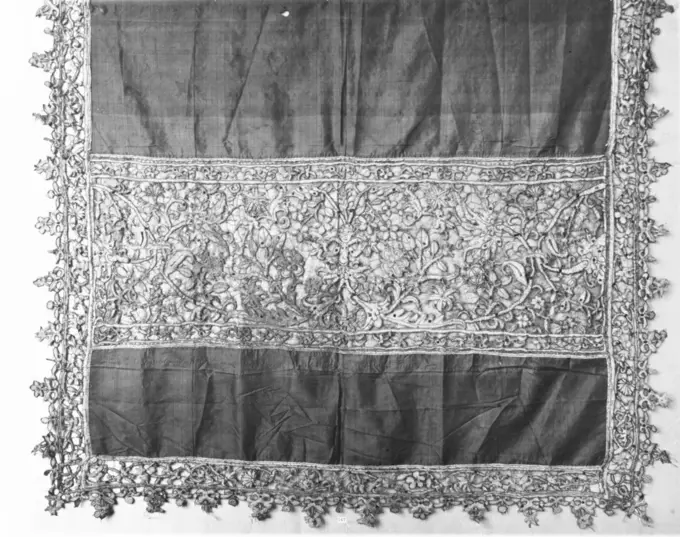
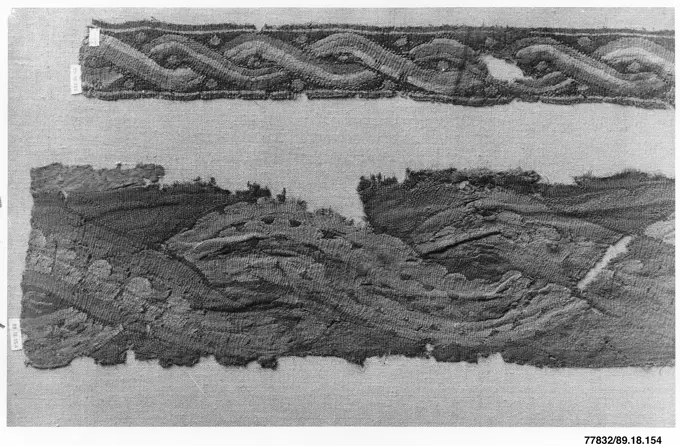
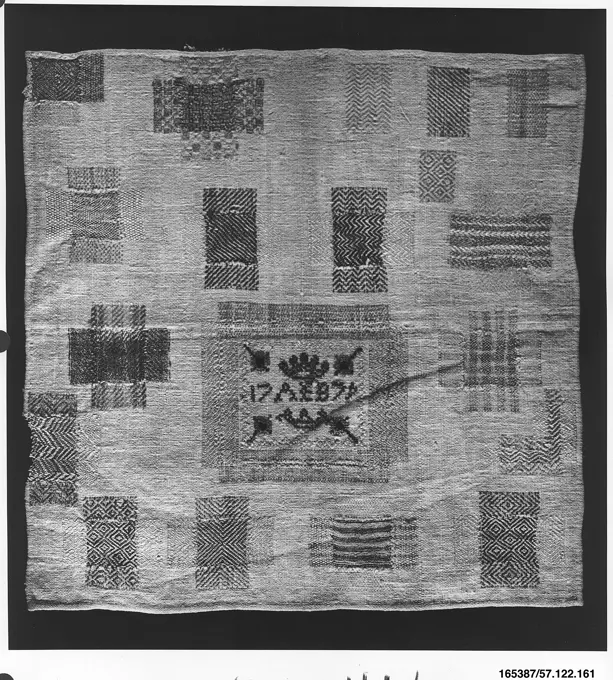
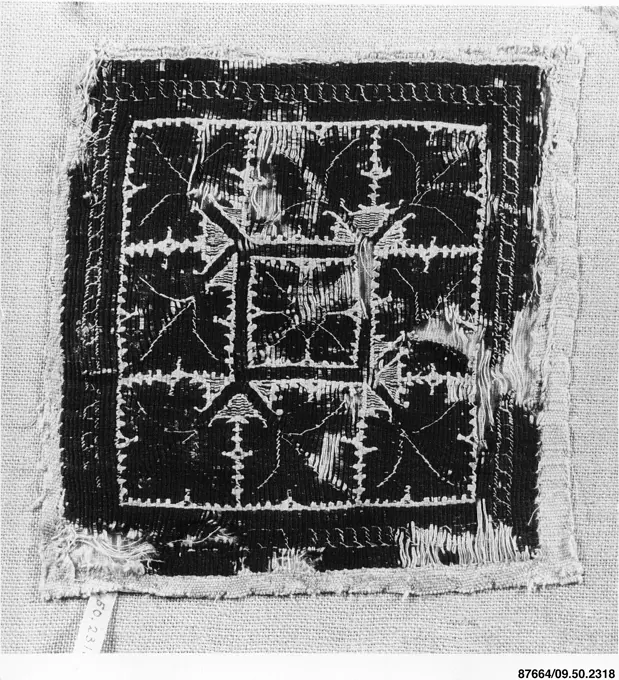
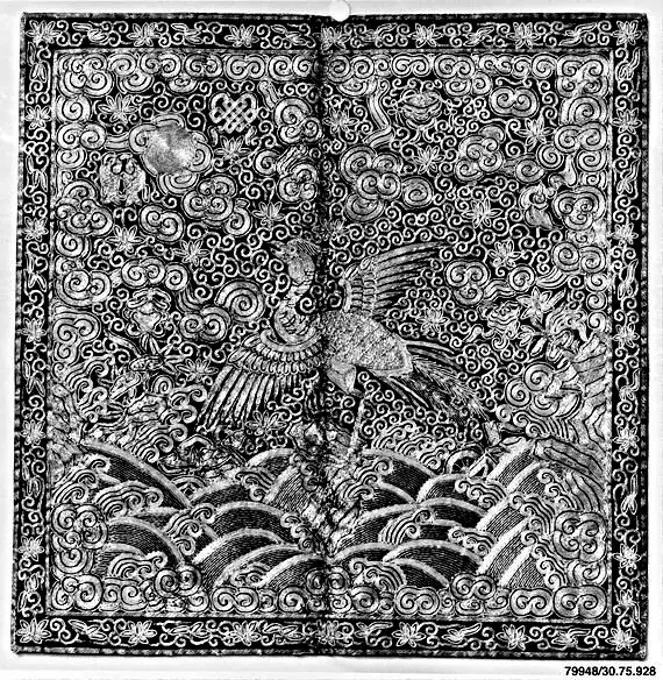
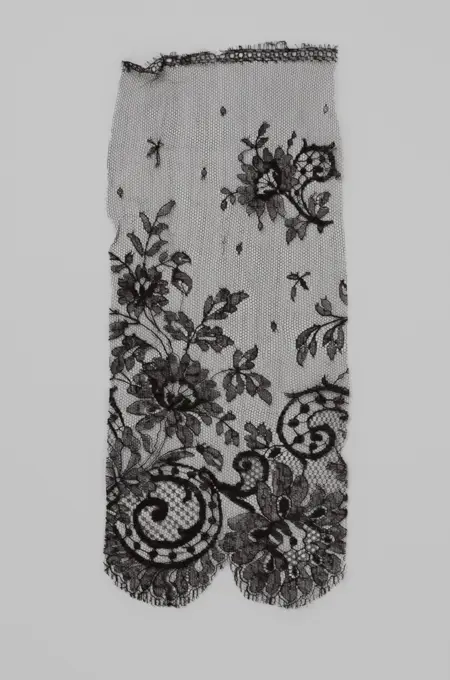
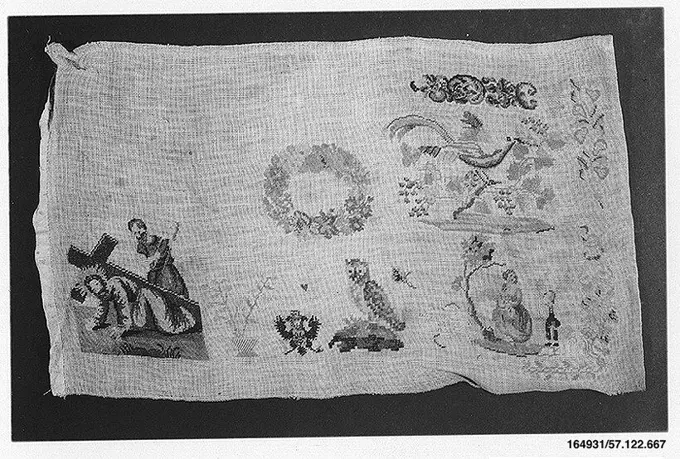
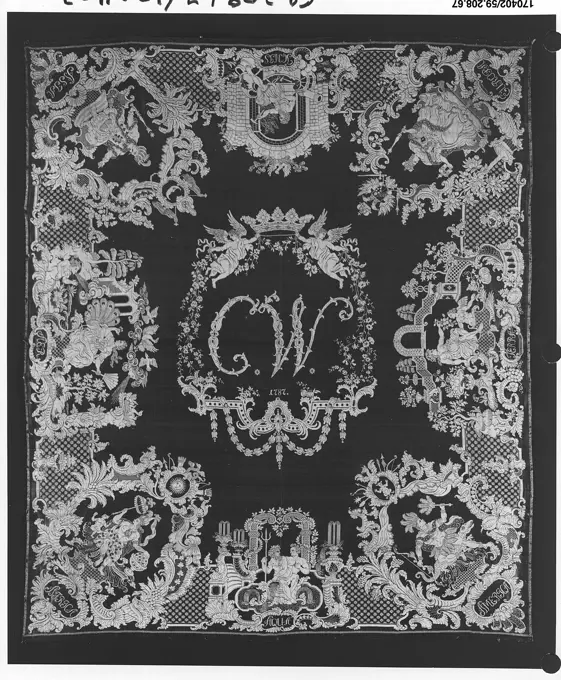
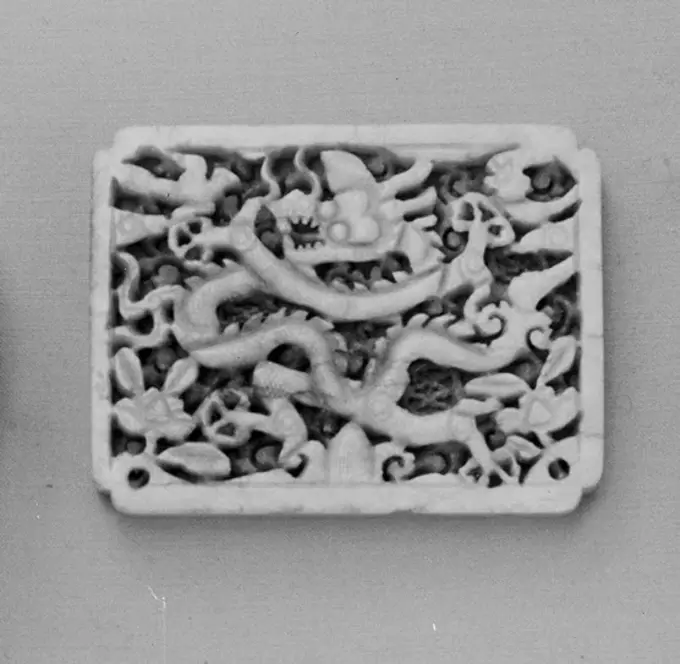
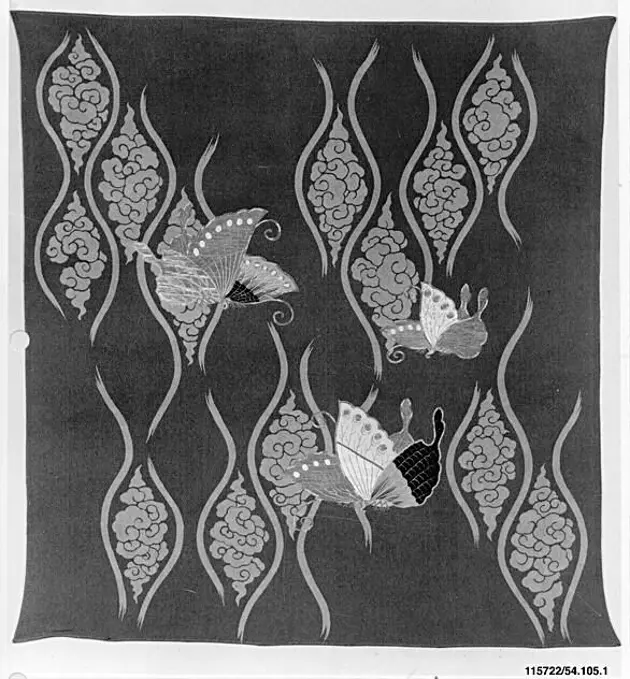
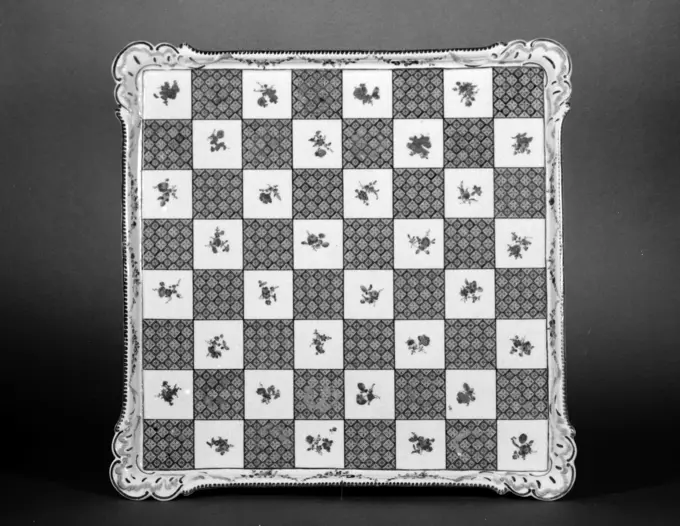
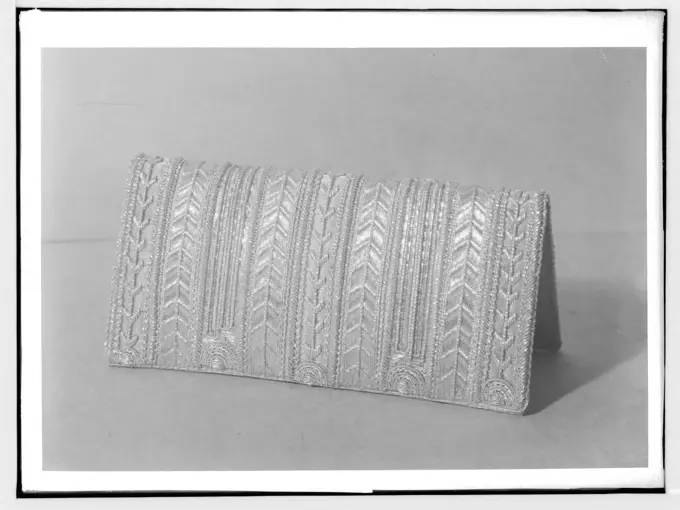
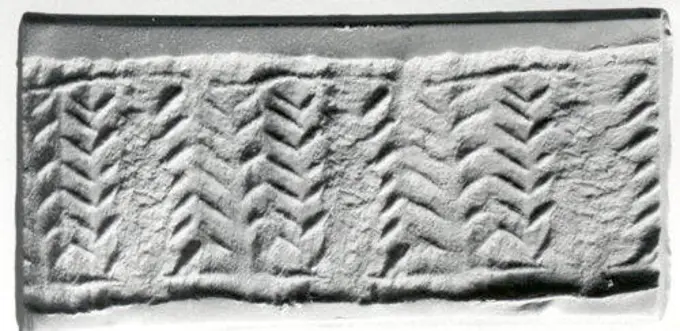
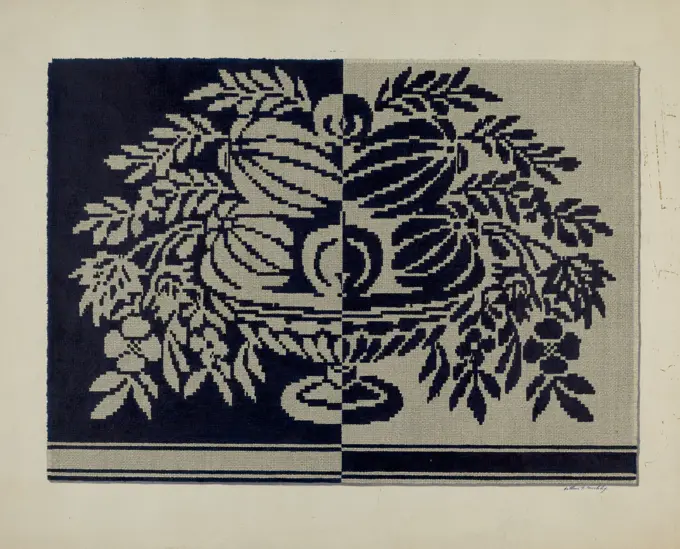
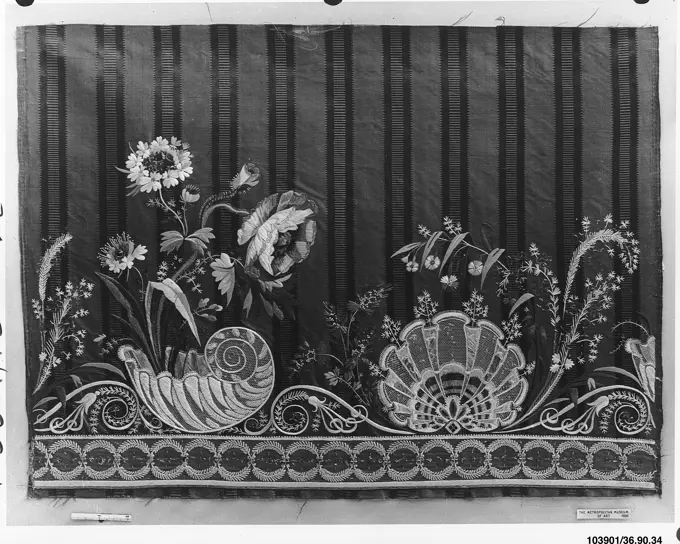
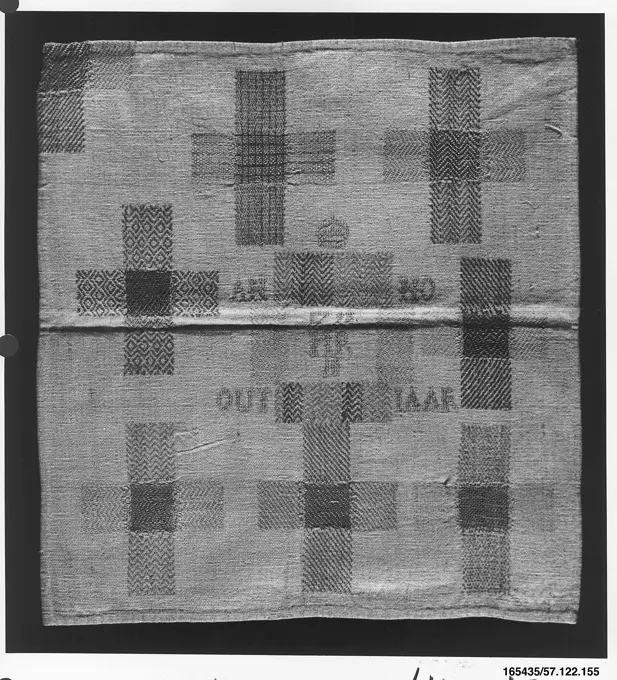
Piece early 19th century China. Piece 69771Piece 1740-50 French. Piece 223251Sampler 19th century Austrian. Sampler 228007Piece 18th century Spanish. Piece. Spanish. 18th century. Silk and metal thread. Textiles-WovenStrip Made 1875-1900 Italy. Linen, plain weave; cut and drawn thread work in overcast stitches and overcast bars .Shoulder Band Fragment. Dimensions: H. 8 1/4 in. (21 cm)W. 2 3/4 in. (7 cm). Date: 3rd-4th century. Museum: Metropolitan Museum of Art, New York, USA.Piece 16th-17th century Italian. Piece 223488Quilt, Marsailles type. Culture: American or British. Dimensions: 104 1/4 x 97 in. (264.8 x 246.4 cm). Date: ca. 1876.This loom-woven bed cover has warps of both red and white cotton and a weft of white cotton. It was woven to imitate hand quilting. The central design is an eagle with outspread wings standing above the words E PLURIBLIS UNUM. Thirteen stars are visible above the eagle's head. The remaining ground is covered with floral and foliage borders. Museum: Metropolitan Museum of Art, New York, USA.Basilicata Matera Matera Duomo21. Hutzel, Max 1960-1990 Medieval: Architecture, architectural sculpture (1268-70). Post-medieval: Architectural sculpture; interior remodelled in 1627 and in 1776 includes sculpture, painting, frescoes, choir stall German-born photographer and scholar Max Hutzel (1911-1988) photographed in Italy from the early 1960s until his death. The result of this project, referred to by Hutzel as Foto Arte Minore, is thorough documentation of art historical development in Italy up to the 18th century, including objects of the Etruscans and the Romans, as well as early Medieval, Romanesque, Gothic, Renaissance and Baroque monuments. Images are organized by geographic region in Italy, then by province, city, site complex and monument.Dress border. Culture: French. Dimensions: L. 21 x W. 16 inches53.3 x 40.6 cm. Date: early 19th century. Museum: Metropolitan Museum of Art, New York, USA.Sample ca. 1840 French, Mulhausen. Sample. French, Mulhausen. ca. 1840. Cotton. Textiles-PrintedBand first half 18th century Hungarian (Slovakia). Band 217805Textile Fragment 4th century. Textile Fragment 444345Piece late 15th-early 16th century Italian. Piece 227150Plate 1835-45. Plate 6084Plate ca. 1840 American. Plate 6053Baptismal veil Spanish or Italian early 17th century View more. Baptismal veil. Spanish or Italian. early 17th century. Silk and metal thread, cutwork. Textiles-LacesFragment of a Band. Dimensions: H. 10 1/2 in. (26.7 cm)W. 1 1/4 in. (3.2 cm). Date: 3rd-4th century. Museum: Metropolitan Museum of Art, New York, USA.Landscape with bird. unknown unknown Tapestry Dimensions: H 7'4" x W 3'2" Tapestry Materials/Techniques: unknown Culture: French Weaving Center: Aubusson Ownership History: French & Co. received from Mihran N. Costikyan 7/13/1954; returned 10/13/1954. Bird in tree, amongst flowering plants; river with waterfall, buildings in background (BRD) border with jewel-like chain; C-scroll motifs in corners French & Co. stock sheet in archive, 55001-x-a Related Works: Panels in set: GCPA 0243555, 0184468Piece 19th century Japan. Piece 70411Piece ca. 1700 Italian. Piece 227468Fragment. Culture: French. Date: 1750-75. Museum: Metropolitan Museum of Art, New York, USA.Fragment. Egypt. Date: 1401-1500. Dimensions: 33 × 22.9 cm (13 × 9 in.). Linen, plain weave; embroidered. Origin: Egypt. Museum: The Chicago Art Institute, Chicago, USA. Author: Islamic.Veil mid-19th century French. Veil 121355Music Box ca. 1810 Swiss Oblong engine-turned gold music box with rounded corners and floral borders.. Music Box 505666Textile Fragment 5th-6th century. Textile Fragment 443359Five Fragments Made 1701-1800 France. Plain compound cloth .Embroidered darning sampler 1779 Dutch. Embroidered darning sampler 228088Bliżej Kultury unknownSquare 3rd-4th century. Square 445910Strip 16th century Italian. Strip 220832Rank Badge with Golden Pheasant 18th-19th century China. Rank Badge with Golden Pheasant 68904Indian ornamentPiece ca. 1850-55 British. Piece 221940Sleeve Band 19th century China. Sleeve Band 68693Piece 18th century French. Piece 224255Fragment Made 1840-1850 England. Silk, plain weave with supplementary patterning warps and self-patterned by two-color complementary ground weft floats; woven on loom with Jacquard attachment .Panel with Birds 15th-16th century Inca. Panel with Birds 307846Steel made of black machine side with a scallop; with volute pattern, Gustav Schnitzler, c. 1900 - c. 1910 Steel, rectangular, of black machine side, used in the manufacture of a parasoldek. The side has a volute pattern. Nijmegenwitzerland . Steel, rectangular, of black machine side, used in the manufacture of a parasoldek. The side has a volute pattern. Nijmegenwitzerland .Coverlet Made 1851 New York. Cotton and wool, plain weave double cloth; woven on loom with Jacquard attachment; full loom width; seamless . J. van Ness (Weaver)Piece 18th century French. Piece 223317Piece 18th century French. Piece 224004Cantonnière with garlands and sprays of flowers, and hanging tassels. unknown unknown Tapestry Dimensions: H 10' x W 6'6" Tapestry Materials/Techniques: unknown Culture: French Weaving Center: Aubusson Ownership History: French & Co. purchased from Mrs. Jennye Greenberg, received 7/16/1934 (). Stock sheet states: "Miscellaneous Lot - All items purchased with exception of remaining 2 tapestries. As of May 1946 per letter" SS 76530; this panel is not individually documented on the stock sheet. Related Works: Similar cantonnière: GCPA 0238818Chair seat and back late 17th-early 18th century French. Chair seat and back 227754Sampler 19th century German. Sampler 228590Fan Holder 18th-19th century China. Fan Holder 68827Gift Cloth (Fukusa) 19th century Japan. Gift Cloth (Fukusa) 69882Banquet napkin 1787 German The letters C.W. may stand for Christian Waentig who was born in 1787; his grandson was a linen merchant in New York.. Banquet napkin 228791Piece 16th-17th century Italian. Piece 224412Fragment 1750-75 French. Fragment 220118Edging. Culture: French. Dimensions: L. 23 x W. 5 1/2 inches58.4 x 14.0 cm. Date: late 18th-early 19th century.The Metropolitan Museum's great lace collection was started when the Museum became the first among American museums to organize a permanent collection of lace with the acceptance of the McCallum Collection in 1879 and the bequests of Mrs. John Jacob Astor, Mrs. Robert L. Stuart, Mrs. Augustus Cleveland, and Mrs. A. W. Winters shortly thereafter. In 1893 a loan collection of antique laces shown at the World's Columbian Exposition in Chicago was assembled by a committee of New York women headed by Catharine Augusta Newbold. About 1900 Miss Newbold arranged and labeled an exhibition of laces and linenworks lent to the Metropolitan Museum by Mrs. James Boorman Johnstone and the Misses Johnstone. "Her scholarly knowledge of lace technique enabled the Museum for the first time to offer a comprehensive display of lace illustrating its historical development," wrote Miss Frances MorCurtain. Culture: British. Dimensions: L.88 x W. 56 inches (223.5 x 142.2 cm). Date: ca. 1790. Museum: Metropolitan Museum of Art, New York, USA.Sweden, Blekinge, Blekinge, Karlskrona, Karlskrona, external marina (depicted, town).Sweden, Blekinge, Blekinge, Karlskrona, Karlskrona, External War Gogs (depicted, City)Piece, Gift Cover mid-19th century Japan. Piece, Gift Cover 70302Altar Cloth ca. 1625 Japan. Altar Cloth 68353Piece 16th century Italian. Piece 220534Girdle ornament China. Girdle ornament 43056Piece 18th century European. Piece 216292Piece 18th-19th century Japan. Piece 66914Rectangular box with double dragons China. Rectangular box with double dragons. China. Porcelain painted in underglaze blue (Jingdezhen ware). Ming dynasty (1368-1644), Wanli period (1573-1620). CeramicsSet of bookcase doors first half 18th century French. Set of bookcase doors. French. first half 18th century. Oak. WoodworkFragment. Dimensions: 35 7/16 in. high 33 7/16 in. wide (90 cm high 85 cm wide). Date: 2nd-3rd century. Museum: Metropolitan Museum of Art, New York, USA.Square 20th century Japan. Square 70092Strip 16th-17th century Italian or Sicilian. Strip 215406Textile Fragment 18th century. Textile Fragment 445791Chessboard mid-18th century Meissen Manufactory German. Chessboard. German, Meissen. mid-18th century. Hard-paste porcelainChasuble late 18th century Italian. Chasuble 227791Rank Badge with Design of Mountains, Waves and Bats late 19th-early 20th century China. Rank Badge with Design of Mountains, Waves and Bats 70107Sampler 19th century German. Sampler 228653AntependiumPiece 1759-88 French or Spanish. Piece 228843Piece late 18th century Flemish, Brussels. Piece 218166Tile first quarter 17th century Dutch. Tile. Dutch. first quarter 17th century. Tin-glazed earthenware. Ceramics-PotteryBliżej Kultury unknownTextile Fragment 3rd-4th century. Textile Fragment 443466Embroidered evening handbagFragment of Hanging early 19th century. Fragment of Hanging 447693Bedcover Made 1791-1800 New York. This bedcover is attributed to six of the nine children of Joseph Patterson (1710ñ1780) and Lydia Marean (1711ñ1783). The family was of Scottish heritage, descending from James Patterson, who left London for the United States in 1652. Family history indicates that the wool used in the making of this bedcover came from sheep raised on the farm of the makersí brother, Amos Patterson (1747ñ1817). It was possibly carded, spun, dyed, and woven by his sisters. The bedcover, produced in a rural environment, combines sophisticated design, skilled execution, and ingenuity in its creation.. Wool, twill weave; embroidered with wool in buttonhole, herringbone, Roumanian, satin and stem stitches; edged with fringe . Sisters of the Honorable Amos PattersonPanel Made 1701-1800 France. .Strook kloskant met spiraalranken met koraalknoppen.Strip natural colosside, Flemish guipure. Pattern with large spiral drinks with coral buttons and an irregular open braid soil with picots. Full work in linen stroke with recesses. The top is trimmed with a border clamping side, the underside is finished with a straight edge with fine picots.Square Dish China. Square Dish 40815Plate ca. 1835. Plate. ca. 1835. Lacy pressed glassSleeve Band 19th century China. Sleeve Band 68667Piece late 18th-early 19th century French. Piece 222151Sumo Wrestler's Ceremonial Apron (Kesho Mawashi). Culture: Japan. Dimensions: 240 x 29 in. (609.6 x 73.7 cm). Date: early 20th century. Museum: Metropolitan Museum of Art, New York, USA.Fragment ca. 1789 Oberkampf Manufactory French. Fragment. French, Jouy-en-Josas. ca. 1789. Cotton. Textiles-PrintedBed tent 18th century Greek Islands, Rhodes. Bed tent 212692Cylinder seal with geometric design ca. 9th-7th century B.C. Assyrian or Iranian. Cylinder seal with geometric design 324636Mirror Case China. Mirror Case 68808Arthur G Merkley, Tyler Coverlet, c 1942 Tyler CoverletFragment Made 1000-1476 Peru. Slit tapestry (old card) .Fragment (Belgium); linenDress border early 19th century French. Dress border 223140Strip bobbin with spiral vines with coral buds, anonymous, c. 1680 - c. 1689 Strip of natural -colored bobbin, Flemish guipure. Pattern with large spiral vines with coral buds and an irregular open braiding ground with picots. Fullwork in linen battle with recesses. The top is trimmed with a border bobbin, the bottom is finished with a straight edge with fine picots. Southern Netherlands linen (material) bobbin lace / Flemish guipure lace Strip of natural -colored bobbin, Flemish guipure. Pattern with large spiral vines with coral buds and an irregular open braiding ground with picots. Fullwork in linen battle with recesses. The top is trimmed with a border bobbin, the bottom is finished with a straight edge with fine picots. Southern Netherlands linen (material) bobbin lace / Flemish guipure laceShawl mid-19th century Chinese. Shawl 229390Dish ca. 1760 British, Staffordshire. Dish 195012Cap Back Made 1701-1800 France. Cotton, plain weave; embroidered .Embroidered darning sampler 1798 Dutch. Embroidered darning sampler 228082Dalmatic. Italy. Date: 1601-1700. Dimensions: . Red velvet with design of gold brocaded panels. Origin: Italy. Museum: The Chicago Art Institute, Chicago, USA.Example of Ottoman art patterns applied on metals