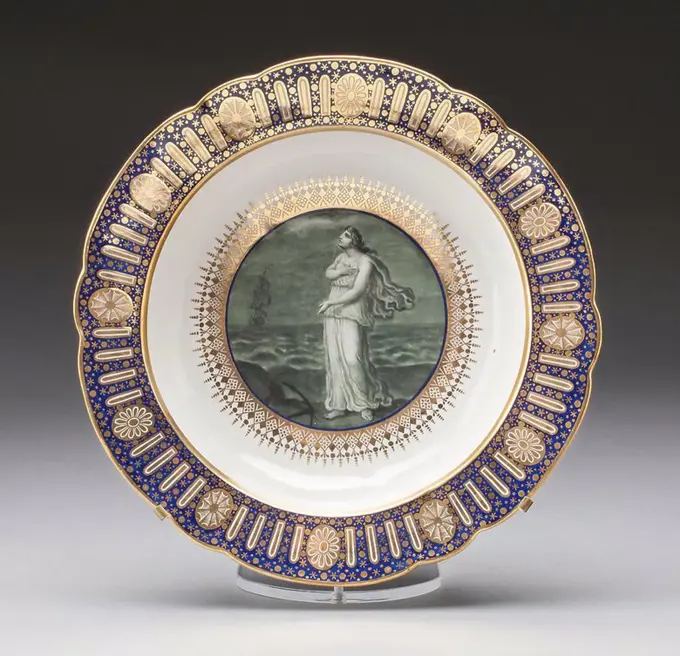
Ornate Ceramic Plates

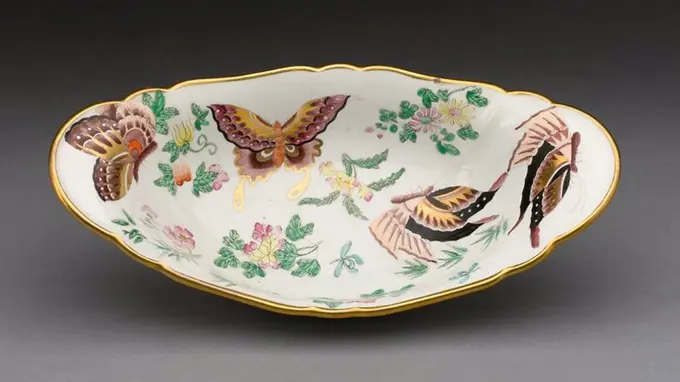
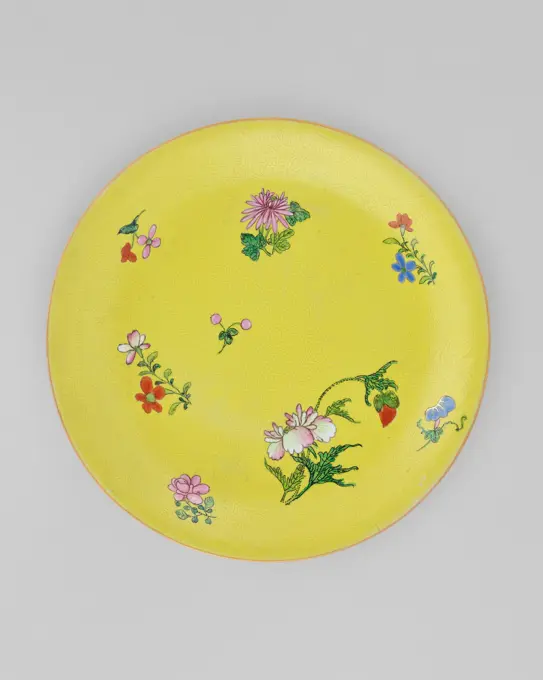
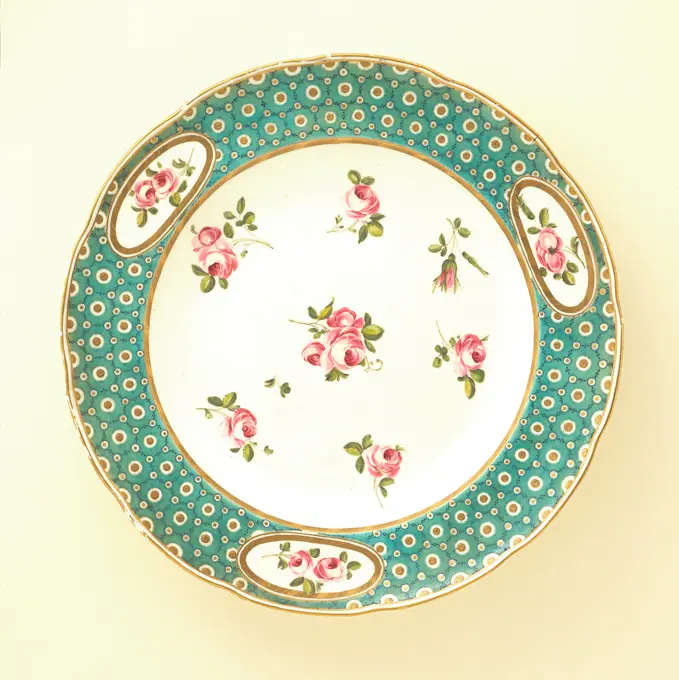
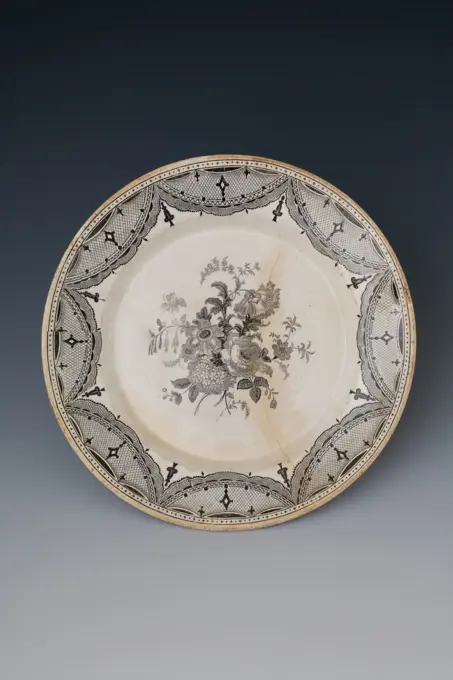
Delicately designed ceramic plates showcasing colorful floral and decorative patterns, made from porcelain and embellished with intricate details, evoking elegance.

Saucer with butterflies, floral scrolls and auspicious objects in panels, anonymous, c. 1725 - c. 1749 Porcelain dish with lobed wall, painted on the glaze in blue, red, green, yellow, black and gold. On the flat of the dish in the center a rosette of stylized flower vines; Around this a band with flower vines and butterflies interspersed with three cartouches with lucky symbols: fruit basket (fingercitroen, peach), lotus flower with pod or books and rolls. Famle Rose. China porcelain. glaze. gold (metal) painting / gilding / vitrification Porcelain dish with lobed wall, painted on the glaze in blue, red, green, yellow, black and gold. On the flat of the dish in the center a rosette of stylized flower vines; Around this a band with flower vines and butterflies interspersed with three cartouches with lucky symbols: fruit basket (fingercitroen, peach), lotus flower with pod or books and rolls. Famle Rose. China porcelain. glaze. gold (metal) painting / gilding / vitrification
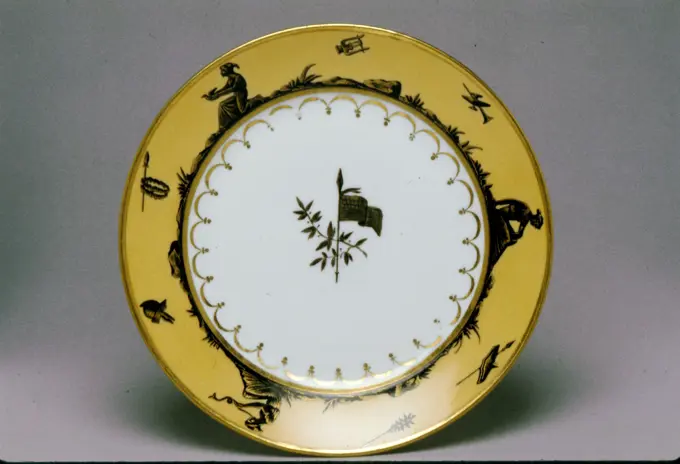
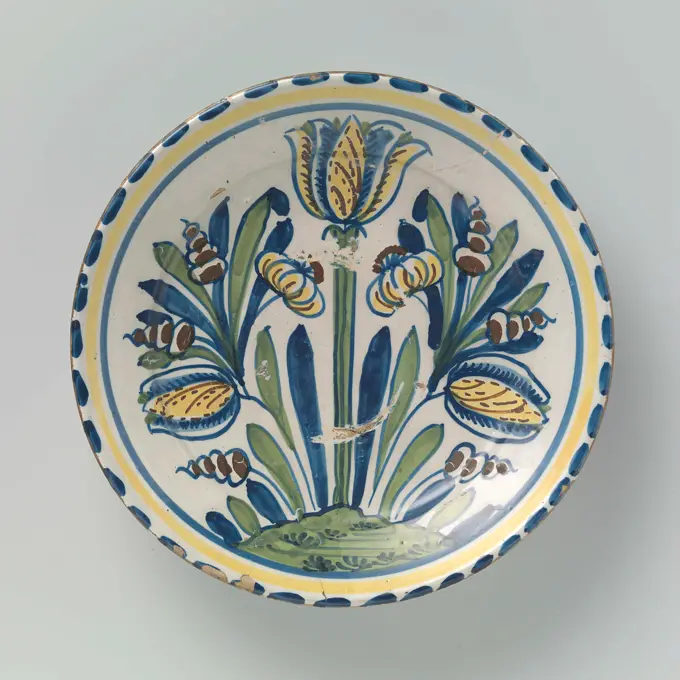
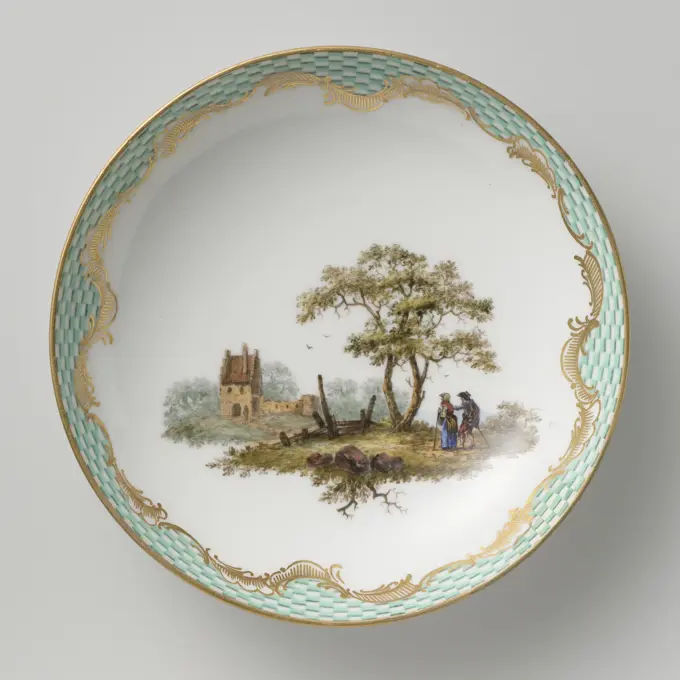
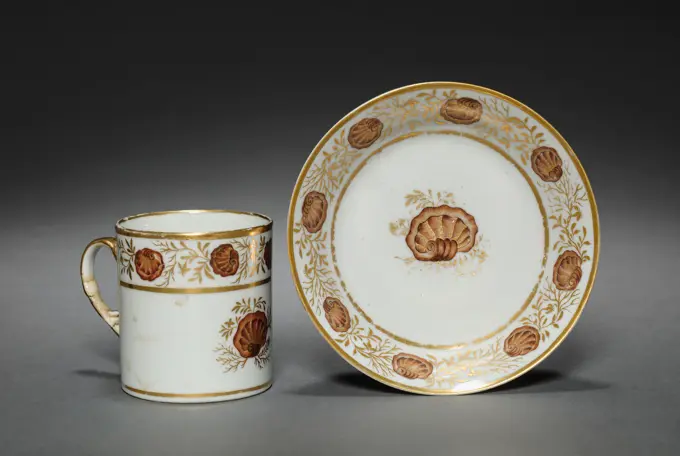
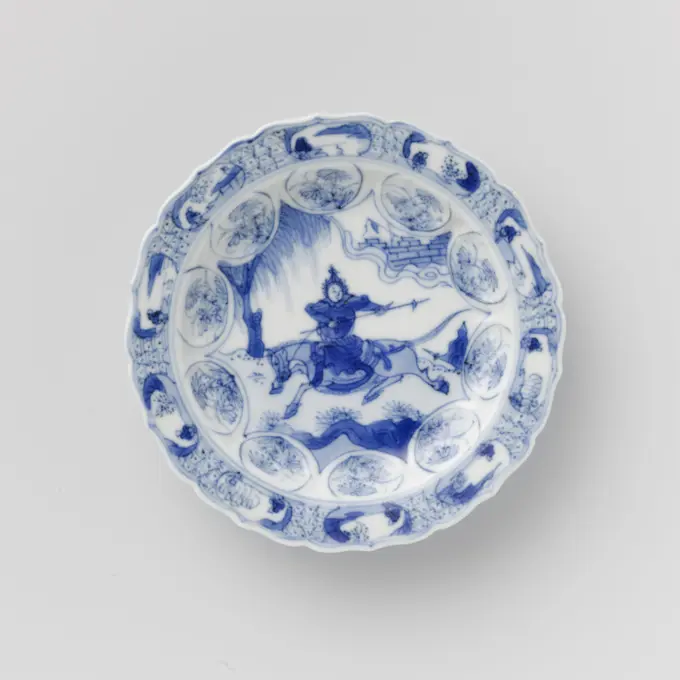
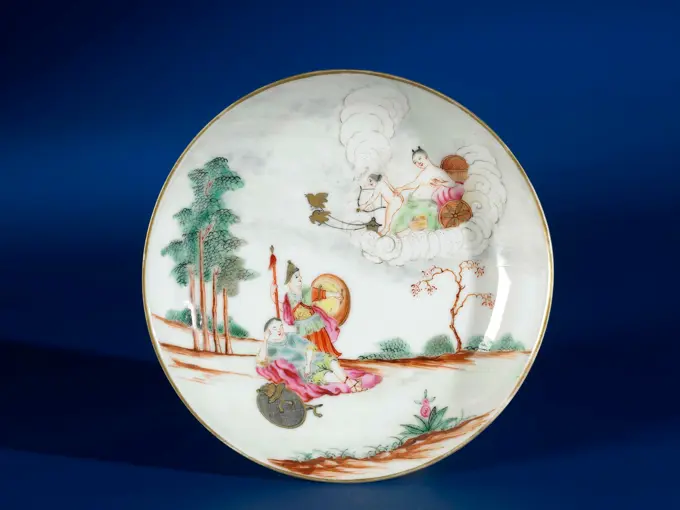
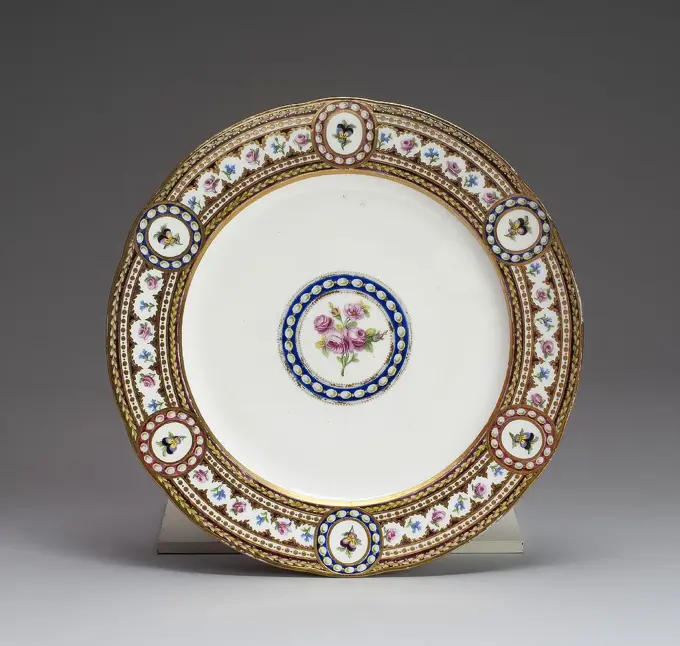
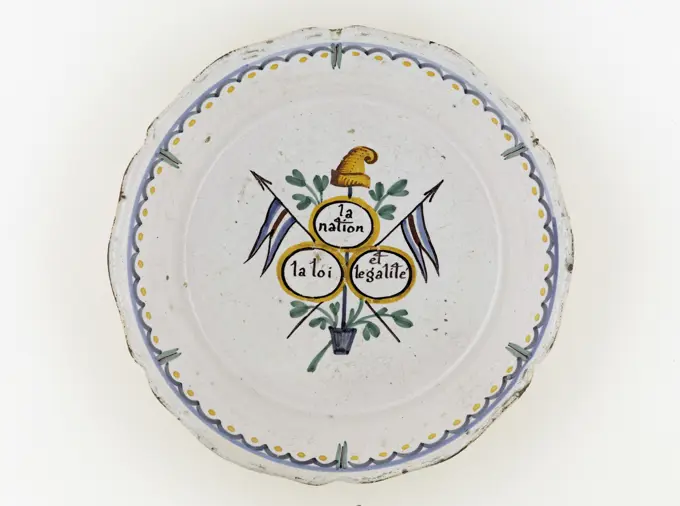
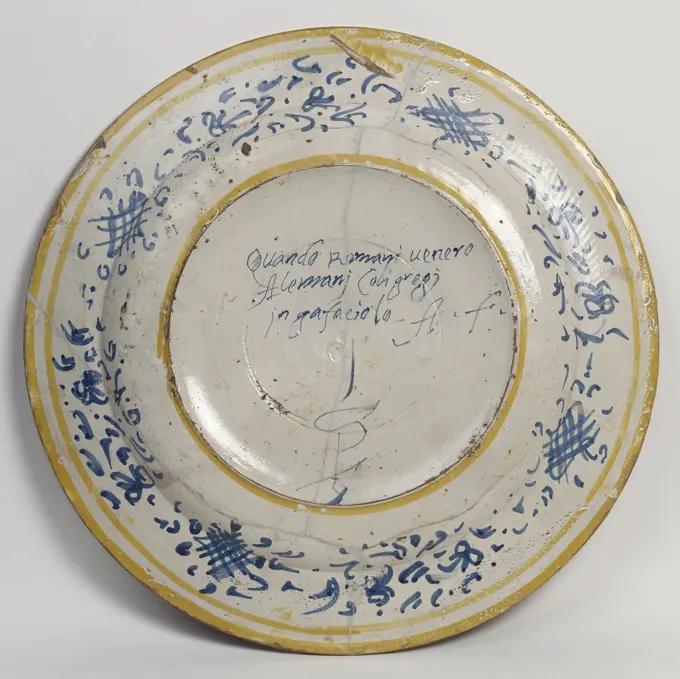
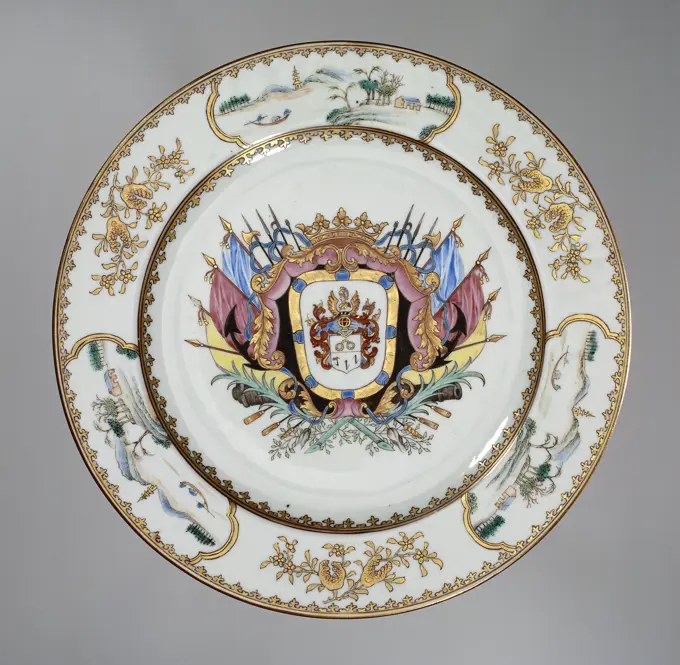
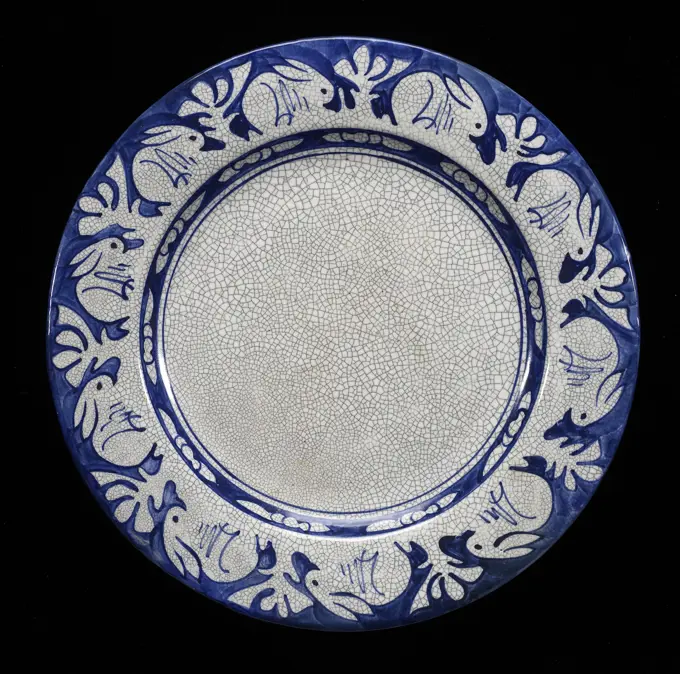
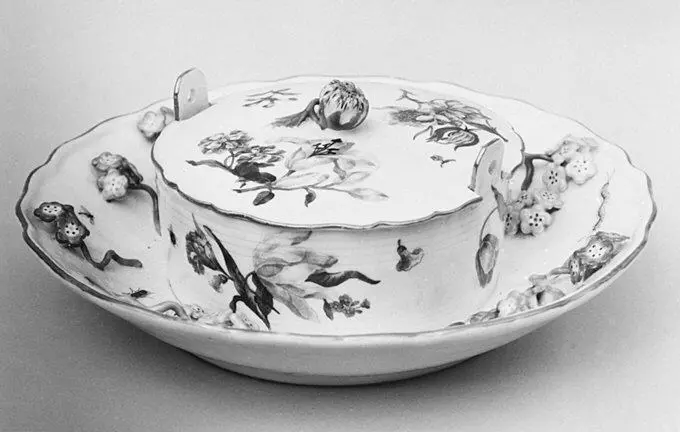
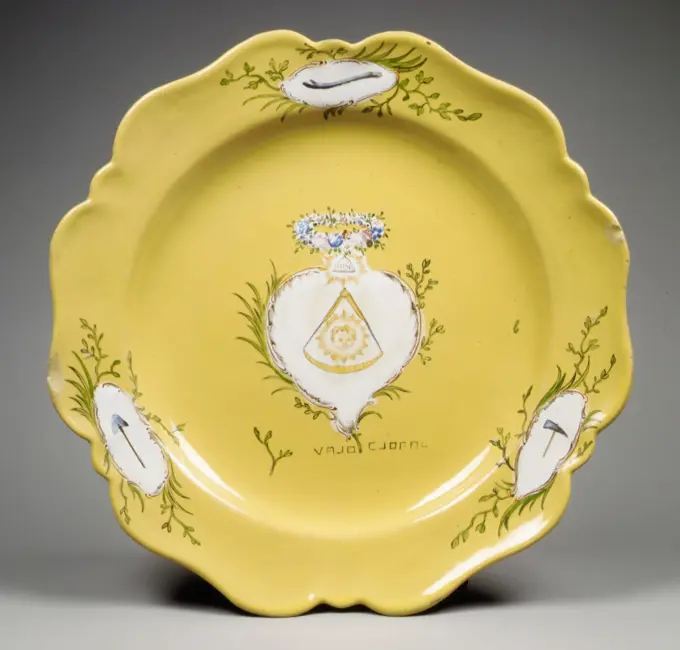
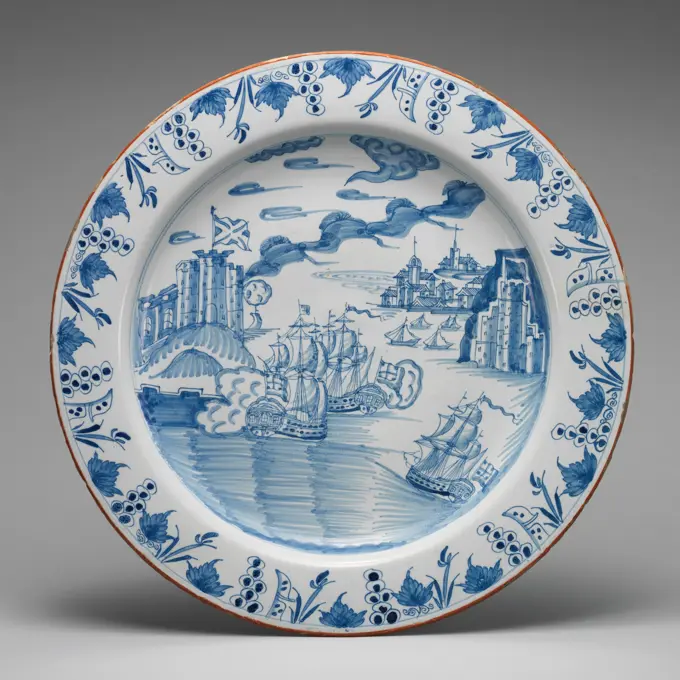
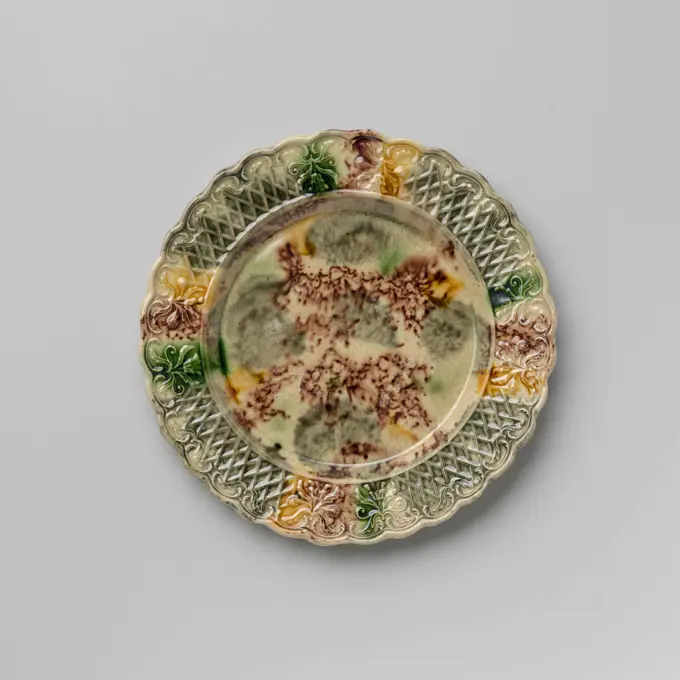
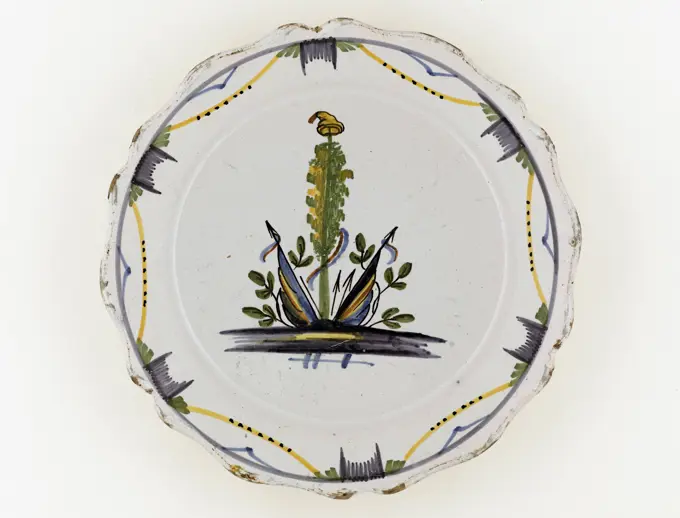
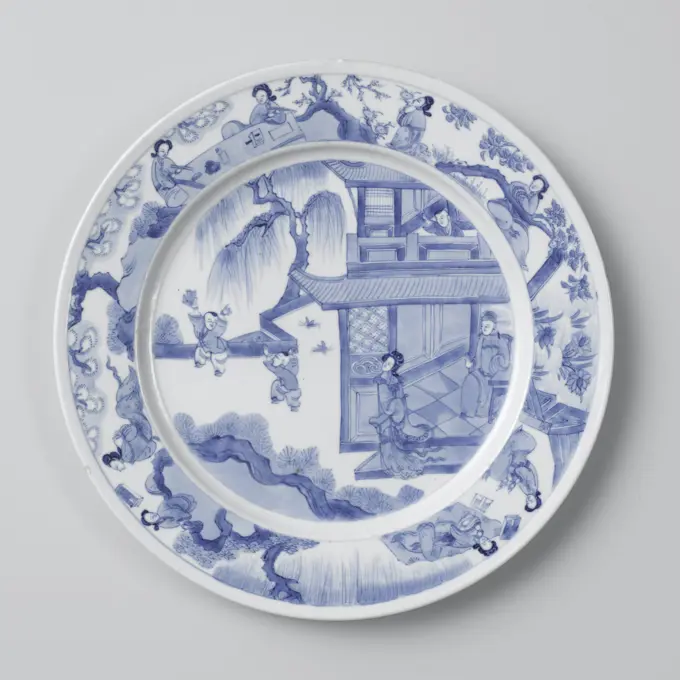
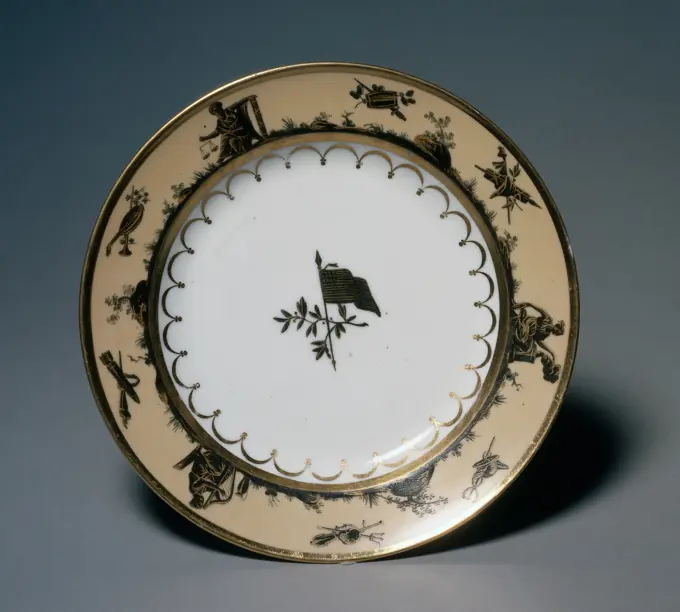
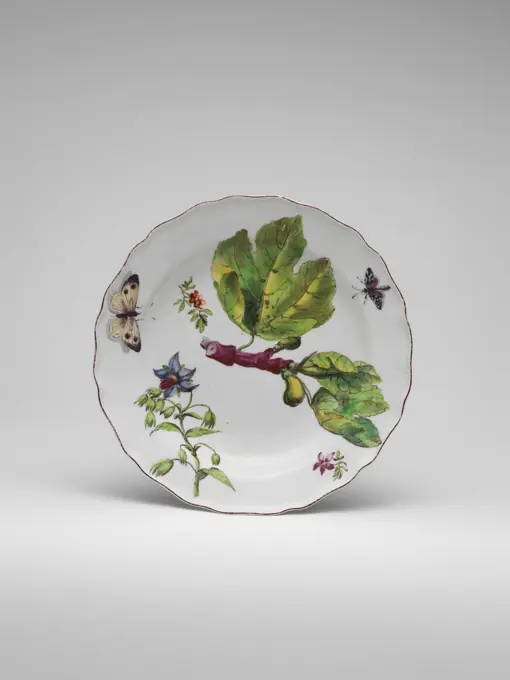
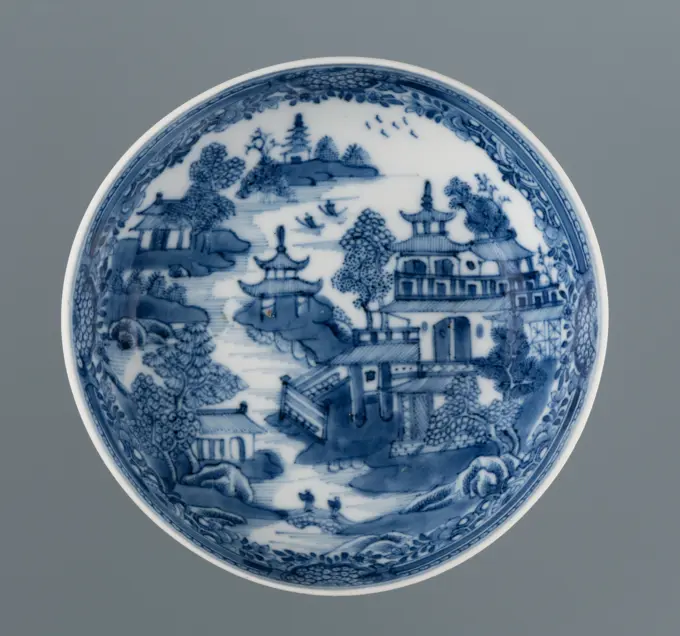
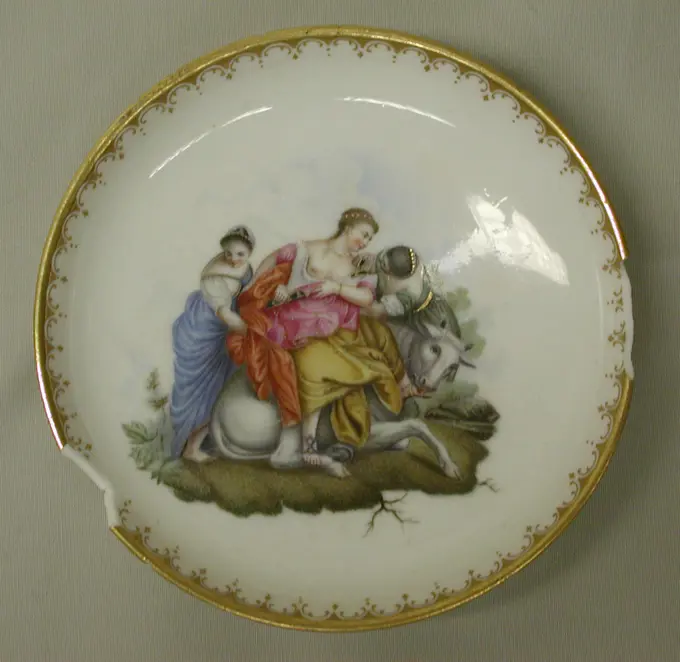
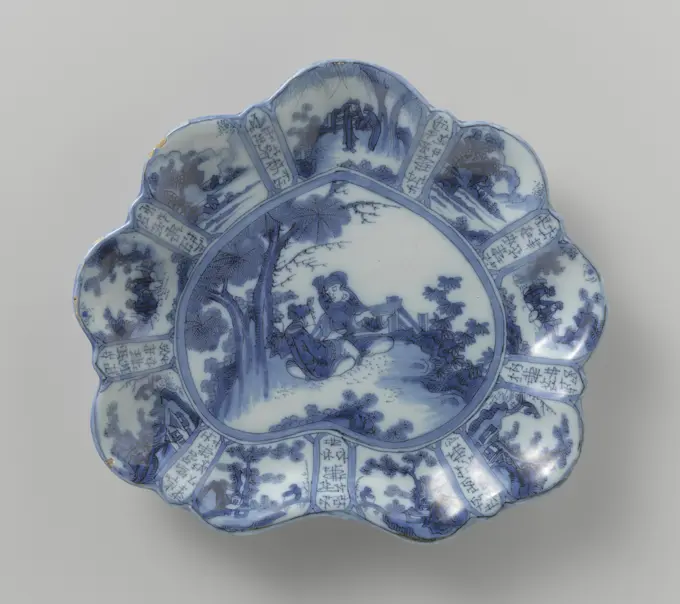
Scale, painted with chinoiseries in blue, the Greek A, c. 1678 - c. 1686 Faience dish with a chinoiserie decoration and with pseudo Chinese characters Delft . Faience dish with a chinoiserie decoration and with pseudo Chinese characters Delft .Dinner Plate ca. 1800-1815 French. Dinner Plate. French. ca. 1800-1815. Porcelain. Made in Paris, FrancePlate. Pottery plate, with blue continuous floral decor, belonging to a children's service.Dish, painted with tulips () And leaves. Round dish of multicolored painted majolica. The dish is painted with three stylized flowers (tulips) And leaves on a ground. Along the edge, sweeping (blue dashes) painted and a circle. The dish has a wide foot edge, inwardly sloping.Soup plate (part of a service) 1770-85 Chinese, for British market. Soup plate (part of a service) 201204Dish, Petrus Regout, 1867 Dish of earthenware, round, with blue continuous flower decor, belonging to a children's service. Maastricht . Dish of earthenware, round, with blue continuous flower decor, belonging to a children's service. Maastricht .Saucer. Baranówka (manufaktura porcelany ; 1804-post 1900 ), factoryDish, part of a service, painted with bird and violins, N.V. Haagsche Plateel Factory Rozenburg, 1913 The octagonal porcelain dish is polychrome painted with a bird and violets (purple, light and dark blue and yellow) inside an ornamental decor. Marked with: Kroon, Rozenburg, Ooievaar, The Hague (above each other); On the left the brand for 1913, on the right the work order number 332; Under the painting brand of C.W.J. Hart. The Hague porcelain The octagonal porcelain dish is polychrome painted with a bird and violets (purple, light and dark blue and yellow) inside an ornamental decor. Marked with: Kroon, Rozenburg, Ooievaar, The Hague (above each other); On the left the brand for 1913, on the right the work order number 332; Under the painting brand of C.W.J. Hart. The Hague porcelainPlate with the coat of arms of Hendrik Peter Godfried Quack and Isabella Gertraud von Carnap, Etienne Blancheron, c. 1790 - c. 1800 Deep plate of porcelain, painted on the glaze with gold. On the flat the alliance weapon of Hendrik Peter Godfried Quack and Isabella Gertraud von Carnap. The edge with a flower drink and a golden band. Two prenes on the bottom. Marked on the underside with N. porcelain company: Paris (possibly)Netherlands (possibly) porcelain. glaze. gold (metal) painting / gilding / vitrification Deep plate of porcelain, painted on the glaze with gold. On the flat the alliance weapon of Hendrik Peter Godfried Quack and Isabella Gertraud von Carnap. The edge with a flower drink and a golden band. Two prenes on the bottom. Marked on the underside with N. porcelain company: Paris (possibly)Netherlands (possibly) porcelain. glaze. gold (metal) painting / gilding / vitrificationPlooischotel with a putto, anonymous, c. 1650 - c. 1675  Plooischotel of multi -colored painted faience. The dish is sculpted. A putto on a ground is painted on the flat and a wreath on the edge, the colors used are blue, yellow, orange and purple. Delft (possibly) earthenware. tin glaze.Dish, multi -colored painted with a landscape with figures., Meissener Porzellan Manufaktur, 1777 Round dish of painted porcelain. The dish is painted with landscapes in which figures and along the edge a wide strip of green braid. The dish is marked. Float porcelain Round dish of painted porcelain. The dish is painted with landscapes in which figures and along the edge a wide strip of green braid. The dish is marked. Float porcelainCup and Saucer from Oliver Wolcott, Jr. Tea Service (6 of 6), 1785-1805. Chinese Export porcelain, late 18th-early 19th century. Porcelain, sepia enamel, gold leaf; overall: 7 x 9 x 6 cm (2 3/4 x 3 9/16 x 2 3/8 in.).Dish with Camellia Design early 18th century Japan. Dish with Camellia Design 52283Dessert plate - Davenport Davenport. Dish painted multi-colored in imitation famille verte with Eastern figures including a princess on horseback.Flower pot console with embroidery in petit point of roses, rose buds and forget-me-staples. Flower pot console with embroidery in petit point on a grid, in wool and here and there. Pattern: a bouquet of four roses, some rose knobs and twigs forget-me-staples on the ground of unprocessed grid. One of the roses is dark red, the others are lilac.Plate. Enoch Wood & Sons; English, active 1818-1846; Made for the American market; Staffordshire. Date: 1825-1830. Dimensions: Diam. 25.4 cm (10 in.). Earthenware. Origin: Staffordshire. Museum: The Chicago Art Institute, Chicago, USA.Dish, painted with all-round leaf garlands and flower branches. Dish of porcelain. Scalloped edge. Painted in underglazing blue with two all-round leaf garlands and on the flat four flower branches.Dish with the 'three friends' and birds, anonymous, c. 1700 - c. 1724 Porcelain saucer, painted in underly glaze blue and on the glaze in blue, red, green, yellow, black and gold. On the front the 'Three Friends of Winter' (bamboo, pine, prunus) with three birds. Marked on the underside with a seal brand in a double circle. Rand restored. Decorated in Europe in the Japanese Kakiemon style. China porcelain. glaze. cobalt (mineral). gold (metal) painting / gilding / vitrification Porcelain saucer, painted in underly glaze blue and on the glaze in blue, red, green, yellow, black and gold. On the front the 'Three Friends of Winter' (bamboo, pine, prunus) with three birds. Marked on the underside with a seal brand in a double circle. Rand restored. Decorated in Europe in the Japanese Kakiemon style. China porcelain. glaze. cobalt (mineral). gold (metal) painting / gilding / vitrification. Dish of porcelain, painted on the glaze in blue, red, pink, green, yellow, black and gold. On the flat two walking Chinese ladies in a landscape with trees, mountains and a river; A lady has a flower vase in her hands. On the wall an unidentified family coat of family with three branches against a white background surrounded by curling and flower branches. The helmet sign is also three branches. On the other side on the wall an unreadable monogram with flower branches. Further on the wall twice a bird on a branch. Old label on the underside with 'Van Sorgen Metelerkamp'. Weapon porcelain with email colors.Saucer wih Venus in a landscape, Ansbach, c. 1760 - c. 1800  Porcelain dish, painted on the glaze in red, green, yellow, purple, brown and gold. On the front Venus in a landscape. In her left hand she holds an arrow, right next to her a arrow sleeve on a purple cloth. To the show three flower branches. Golden Rand. Marked on the underside with the A and 102. Ansbach porcelain. glaze. gold (metal) painting / gilding / vitrificationDish 17th century. Dish. 17th century. Earthenware; glazed. Attributed to Iran. CeramicsDessert plate - William Davenport & Company, 1835-1881 William Davenport & Company, 1835-1881Saucer with horsemen, flower sprays and landscapes, anonymous, c. 1680 - c. 1720 Porcelain saucer with modeled medallions in the wall and scalloped edge, painted in underlaze blue. On the flat a star -shaped medallion with a rider with a weapon in a landscape; Modeled medallions with flower branches in the wall; the edge with a decorative pattern interspersed with people in a landscape in a cartouche; the rear with alternating fruit branches, willow and landscapes in the modeled medallions; The edge with alternating fruit branches and flower areas in compartments. Blue White. China porcelain. glaze. cobalt (mineral) painting / vitrification Porcelain saucer with modeled medallions in the wall and scalloped edge, painted in underlaze blue. On the flat a star -shaped medallion with a rider with a weapon in a landscape; Modeled medallions with flower branches in the wall; the edge with a decorative pattern interspersed with people in a landscape in a cartouche; the rear with alternating fSaucer-dish with lotus scrolls and a pheasant on a prunus spray near flowering plants, anonymous, c. 1700 - c. 1724 Porcelain bowl, painted in underly glaze blue and on the glaze blue, red, green, black and gold. Decorated on the outer wall in China with lotus vines and a bond with pointed leaf motifs. In Europe on the front decorated in email colors with a flower -shaped cartouche with a pheasant on a prunus branch at a rock with flowering plants and gathering hedges, a flying bird above it. Six flower branches on the edge. Marked on the bottom with an unidentified seal brand in a double circle. Old label on the bottom with 'Collection Westendorp/ 49'. Rand is damaged. Decorated in Europe in the Japanese Kakiemon style. Chinapainter: Europe porcelain. glaze. cobalt (mineral). gold (metal) painting / gilding / vitrification Porcelain bowl, painted in underly glaze blue and on the glaze blue, red, green, black and gold. Decorated on the outer wall in China with lotus vines and a bond wiDish with a pond, horses and flower sprays, anonymous, c. 1720 - c. 1730 Porcelain dish, painted on the glaze with blue, red, green, yellow, eggplant, black and gold. On the flat a pond with lotus plants, a flying bird and two swimming ducks; the wall with flower branches in cartouches interspersed with flowering prunus and magnolia branches against a black dotted green soil; Eight horses on the edge; The back with two flower branches. Famle Verte. China porcelain. glaze. cobalt (mineral). gold (metal) painting / vitrification Porcelain dish, painted on the glaze with blue, red, green, yellow, eggplant, black and gold. On the flat a pond with lotus plants, a flying bird and two swimming ducks; the wall with flower branches in cartouches interspersed with flowering prunus and magnolia branches against a black dotted green soil; Eight horses on the edge; The back with two flower branches. Famle Verte. China porcelain. glaze. cobalt (mineral). gold (metal) painting / vitrificationRound, flat plate of hard baked earthenware, hackwood, c. 1840 - c. 1860 plate (dishes) Round, flat plate of hard baked pottery with a decoration in blue of a landscape with buildings, a tree and a man with an animal on the flat. The edge is decorated with flower branches. The board is marked: Hackwood. The board includes three equal plates (BK-NM-14091-A to BK-NM-14091-D). Shelton earthenwareBoat-Shaped Dish. Wedgwood Manufactory; England, founded 1759. Date: 1812-1822. Dimensions: 6.7 × 24.9 × 13 cm (2 5/8 × 9 13/16 × 5 1/8 in.). Porcelain with polychrome enamels and gilding. Origin: Burslem. Museum: The Chicago Art Institute, Chicago, USA.Dish with Design of Hare in Clouds ca. 1624-43 Japan. Dish with Design of Hare in Clouds 50326. Dish of porcelain, painted on the glaze in blue, red, pink, green, yellow, black and gold. On the front in the clouds, Venus is depicted, seated in a car that is drawn by two pigeons. For her, Cupid, who points down his arrows. Downstairs Minerva, protector of the arts, sciences, handicrafts and gentlemen's goddess. With a shield and a lance in her hands, she protects a soldier, sleeping in a landscape, against the arrows of Cupid. European performance in email colors.Plate. Sèvres Porcelain Manufactory; French, founded 1740; Painted by Charles-Nicolas Buteux (French, active 1763-1801). Date: 1784. Dimensions: Diam. 23.8 cm (9 3/8 in.). Soft-paste porcelain, polychrome enamels, and gilding. Origin: Sèvres. Museum: The Chicago Art Institute, USA. Author: Manufacture nationale de Sevres.Toy soup plate - Hampton Ridgways, 1879-1920 Ridgways, 1879-1920Anonymous. Plate. Earthenware. Paris, Carnavalet museum. 71680-39 Phrygian cap, decoration, equalitis, faience, laurel, law, nation, revolutionary period, French revolution, platePlate. De Drye Vergulde Astonnekens (wytwórnia fajansu ; 1655-1803), manufacturerSaucer-dish with flower sprays in shaped panels on a diaper-pattern ground, anonymous, c. 1730 - c. 1745 Porcelain bowl, covered with a pink glaze and painted on the glaze in blue, red, pink, green, black and gold. On the front of the dish a lobed cartouche with a pair of pairing plant in a square scalloped cartouche with servetwork, a stylized lotus drink on the corners; On each side of the square a smaller lobed cartouche with a flowering plant (peoning, chrysanthemum, iris, balloon bell) against a ground of servetwork; On the inner edge a band with servetwork; The outside covered with a pink glaze. Famle Rose with a Ruby Back. China porcelain. glaze. gold (metal) painting / gilding / vitrification Porcelain bowl, covered with a pink glaze and painted on the glaze in blue, red, pink, green, black and gold. On the front of the dish a lobed cartouche with a pair of pairing plant in a square scalloped cartouche with servetwork, a stylized lotus drink on the corners; On each side of the . Plate of Faïence with Christ and the adulterous woman4-list bowl; Koenigliche Porcellain Fabrique, Meissen (1710-1763); around 1750 (1745-00-00-1755-00-00);Board, with a landscape with ruins on the flat. Pottery plate with red transfer decor. On the flat a landscape with ruins. The edge has been decorated with five cartouches made up of C-Volutes, in which ruins.Alessandro Fattorini. "Plat: fight of Greeks and Romans, Italian majolica of Cafaggiolo, between 1540 and 1550 (reverse)". Museum of Fine Arts of the City of Paris, Petit Palais. 26973-15 Greek, Italian majolica, reverse, Roman, fight, dishSaucer with a border of grapevines and flowers, La Courtille Parijs, c. 1800 - c. 1824 Porcelain dish with a straight wall, painted on the glaze in green, black and gold. A golden circle in the center. On the wall a band with vines on one side and flowers and leaves on the other. Golden Rand. Marked on the underside with the crossed arrows. Paris porcelain. glaze. gold (metal) painting / gilding / vitrification Porcelain dish with a straight wall, painted on the glaze in green, black and gold. A golden circle in the center. On the wall a band with vines on one side and flowers and leaves on the other. Golden Rand. Marked on the underside with the crossed arrows. Paris porcelain. glaze. gold (metal) painting / gilding / vitrificationSaucer 1785-90 Chinese, for American market This object belongs to a large dinner service (10.149.1-.248) bearing the Townley family coat-of-arms. The service, probably ordered by Justice Samuel Chase (1741-1811) of Annapolis, Maryland, displays the enamel-painted arms of Margaret Townley, Chase's aunt.. Saucer 7301. Pottery board painted in blue on tining acid with an unknown arm in the flat, possible from a member of an unknown sex of Egmond. Above a crowned mirror monogram J.V.e. The edge decorated with leafwork.Plate ca. 1775-85 Tournai. Plate 192306Luncheon plate - Thomas Furnival & Sons Thomas Furnival & SonsAnonymous. "W the Republic" plate. Earthenware. Paris, Carnavalet museum. 71684-2 Phrygian cap, decoration, french flag, faience, revolutionary period, republic, French revolution, platePlate with the arms of the Ver Heull family, anonymous, c. 1745 Porcelain plate, painted on the glaze in blue, red, pink, green, yellow, black and gold. On the flat the coat of arms of the Ver Huell family divided into two areas. Above glasses in gold and under three staples. The helmet sign consists of a Roman helmet with golden wings and a cover of leaf vines. The weapon is surrounded by a whole of military flags and spears with a crown on top. Under the weapon, palm leaves, two cannons, arrows, ribbons and foliage are depicted. A Spearhead border on the wall; On the edge three fields with Chinese style landscapes with fruit branches in between (fingercitroen) and a Spearhead border. Old label on the bottom with 'Vice Admiraal in 1804/ G.H. Far/ b. 1764/ envoy of Holland in Paris in 1808 '. Weapon porcelain with email colors. China porcelain. glaze. gold (metal) painting / gilding / vitrification Porcelain plate, painted on the glaze in blue, red, pink, green, yellow, black and gold.Cup and saucer ca. 1785 Chinese, for British market. Cup and saucer 204099Saucer 19th century Chinese, for British or American market. Saucer 185926Plate, c. 1897, Dedham Pottery, Dedham, Massachusetts, 1896-1943, 1 1/8 x 12 in. (2.86 x 30.48 cm), Pottery, United States, Arts and CraftsCharger, 18th-19th century, Unknown Japanese, 2 5/16 × 15 9/16 × 15 9/16 in. (5.87 × 39.53 × 39.53 cm), Glazed porcelain, Japan, 18th-19th centuryPlate Berlin (KPM)Butter dish with cover 18th century Meissen Manufactory German. Butter dish with cover 199236Plate ca. 1760 Veuve Perrin Factory Faience, or tin-glazed and enameled earthenware, first emerged in France during the sixteenth century, reaching widespread usage among elite patrons during the seventeenth and early eighteenth centuries, prior to the establishment of soft-paste porcelain factories. Although characterized as more provincial in style than porcelain, French faience was used at the court of Louis XIV as part of elaborate meals and displays, with large-scale vessels incorporated into the Baroque garden designs of Versailles. Earlier examples of French faience attest to the strong influence of maiolica artists from Italy. Later works demonstrate the ways in which cities such as Nevers, Rouen, Lyon, Moustiers, and Marseille developed innovative vessel shapes and decorative motifs prized among collectors throughout Europe. While faience can be created from a wide mixture of clays, it is foremost distinguished by the milky opaque white color achieved by the addition of tin oxDinner plate - Dufferin Terrace & Citadel, Place Dufferin & Citadelle, Quebec Views D'après Cochran & Fleming, 1896-1920Unknown (n. - d.), Bol saucer (main title), 1736. Porcelain, small fire enamels. Petit Palais, Museum of Fine Arts of the City of Paris.Plate mid-18th century Chinese, for German market. Plate 201271Vase stand. Antonibon, Pasquale (wytwórnia fajansu ; 1670-1884), factoryA salad bowl with a view of the Wawel Cathedral in Krakow G Owacki, Jan Nepomucen (1802 1847), MielówDish with Capture of Portobello by Admiral Vernon, November 20-21, 1739 ca. 1740-50 British, Bristol. Dish with Capture of Portobello by Admiral Vernon, November 20-21, 1739. British, Bristol. ca. 1740-50. Tin-glazed earthenware. Ceramics-PotteryPlate China. Plate. China. Porcelain (Export ware). Qing dynasty (1644-1911), Kangxi period (1662-1722). CeramicsDessert plate - Davenport DavenportPlate British 1750-75 Creamware, so-called for its cream-colored body, is a refined earthenware with a lead-based glaze that was developed in Staffordshire, England around 1750. Due to its light color and glossy glaze, it was ideal for dinnerware. Economically affordable to produce, creamware was imported to America in large quantities. Although much creamware was used in America, it is rare to find pieces associated with a particular family. This dinner service (36.22.1 -.38) bears the initials SBW” for Samuel Blachley Webb. The set was imported from England in 1774 by Webb, who was an aide-de-camp and military secretary to General George Washington.Plate of multicolor hard-baked pottery; Staffordshire .. Plate of multicolored hard-baked pottery. The edge is embossed with grille, interspersed with two adjacent symmetrical floral motifs. The scalloped edge is decorated with volutes and leaf motifs on the inside. The plate is covered with a spotted lead glaze in manganese, green, gray and yellow. The back is dotted in manganese and has a foot edge. The sign belongs to five signs (BK-1987-39-A to BK-1987-39-F).For a long time; Wierbi beginning of the 19th century (1800-00-00-1810-00-00);Plate ca. 1760 British, Bristol The gift of the Hans Syz Collection in 1995 endowed the Museum with nearly three hundred examples of European and Asian ceramics meticulously acquired by Swiss-born collector Dr. Syz (1894-1991) to chart the migration of models and patterns from East to West. Documenting a continuous process of influence and adaptation, these pieces provide a discriminating review of the nuances of stylistic change resulting from three centuries of trade.. Plate. British, Bristol. ca. 1760. Tin-glazed earthenware. Ceramics-PotteryAnonymous. Plate at the Tree of Liberty. Earthenware. Paris, Carnavalet museum. 71683-27 Tree, Phrygian cap, decoration, earthenware, freedom, revolutionary period, French revolution, plateDish, anonymous, c. 1675 - c. 1699 Flat plates of porcelain, painted in underly glaze blue. On the flat a woman, man and boy in a pavilion, two boys play outside in a fenced garden with tree, rocks and plants; On the edge a continuous landscape with trees, rocks and plants with women: two women at a table with objects for a scholar, a woman with a flower in her hand, a woman leaning on a branch, a sitting woman lying next to woman lady lying on an artemisia magazine, two sitting women with one of the valuables; the back with ten different flower branches; On the bottom a medallion in the form of a peon branch. Blue White. China porcelain. glaze. cobalt (mineral) painting / vitrification Flat plates of porcelain, painted in underly glaze blue. On the flat a woman, man and boy in a pavilion, two boys play outside in a fenced garden with tree, rocks and plants; On the edge a continuous landscape with trees, rocks and plants with women: two women at a table with objects for a scholar, a woPlate. Derby Porcelain Works (England, 1756-1848)Edward Withers (England, active 18th century (1775-1795)). England, circa 1790. Furnishings; Serviceware. Porcelain, gildingDessert plate - N. Durey  Jean Pouyat Jean PouyatCup and Saucer with an Abolitionist Scene, Etruria Works, c. 1853 - c. 1863  Dish with red and blue glued edge and black printing decor: a slave -made woman of African origin with a small child on the lap. She is under a date tree and between the plants. In the background there is a hut between two palms. Under the performance is the text "If nobody you see God you see". England (possibly) porcelain  African Americans. mother and baby or young child. slavery; serfs and the enslaved SurinamePlate with a yellow lion". Koenigliche Porcellain Fabrique, Meissen (1710-1763), factoryDinner plate - Montreal Davenport Davenport. Dish of porcelain with round wall, painted on the glaze in blue, red, green, brown, black and gold. On the flat the weapon of the Woodford and Lear families. The weapon is divided into two boxes with left Woodford with a lion's head (wrong to) in a French lily against a black background; Right Lear with three unicorns and a tilt band against a blue background. The helmet sign is a stylized flower flanked by two claws. The cover in brown with leaf refines with garlandes at the bottom. To the weapon a Spearhead border. On the wall eight valuables and lucky symbols (musical stone, shell, rolls, umbrella, impeller, book, horns); The inner edge with a band with curl work. On the outer edge a decorative band and on the wall four flower branches. Old label on the bottom with 'Woodford'. Weapon porcelain with email colors.Basket a Ur.;  Mielów (faience and porcelain factory; 1804-); around 1860 (1855-00-00-1865-00-00);Plate (England); 1.9 x 17.9 cm (3/4 x 7 1/16 in.); Bequest of Jane M. Epstine; 2006-20-41Light blue plate with multi-colored air balloon and border decoration, plate crockery holder ceramic earthenware glaze, baked painted glazed Round plate with diagonally rising edge brothers Montgolfier ballooning air balloon flag decorate home interiorToy dinner plate - Georgeville D'après Francis Morley, 1845-1850Plate (part of a service) ca. 1765-70 Worcester factory. Plate (part of a service). British, Worcester. ca. 1765-70. Soft-paste porcelain. Worcester factory (British, 1751-2008). Ceramics-PorcelainPlate, rectangular, with two shells and two narrows in relief. Plate of faïence, rectangular, with two shells and two narrows in relief. In the middle in blue a cowderSaucer with Twisted Panels and Flower Sprays. Dish of porcelain with round wall Modeled in ten tossed boxes, painted in underglaze blue. On the flat a rock with blooming plants; a flower branch on the wall in each box; the edge with a flower drink; On the back also in every box a flower branch. Marked on the bottom with the Chinese character 'Fú' in a double circle. Blue White.Plate ĆmielówDinner Plate, c.1805. Probably by Guérhard et Dihl (French). Porcelain; diameter: 23 cm (9 1/16 in.).Platform from the service of Hr.leksandra J.Sułkowski H.Sulim; Koenigliche Porcellain Fabrique, Meissen (1710-1763); 1735-1737 (1735-00-00-1735-00-00);Saucer with a lman and woman on a terrace, anonymous, c. 1725 - c. 1749 Porcelain dish with ribbed wall and scalloped edge, painted on the glaze in blue, red, pink, green, yellow and black. On the flat of the dish a man and woman on a terrace in front of a table and a trolley, the man is kneeling and embraces the woman; The wall with a continuous flower drink. European performance in email colors. China porcelain. glaze. gold (metal) painting / gilding / vitrification Porcelain dish with ribbed wall and scalloped edge, painted on the glaze in blue, red, pink, green, yellow and black. On the flat of the dish a man and woman on a terrace in front of a table and a trolley, the man is kneeling and embraces the woman; The wall with a continuous flower drink. European performance in email colors. China porcelain. glaze. gold (metal) painting / gilding / vitrificationDeep Dish with Peony, Pine Branches, Plum Blossoms, Chrysanthemum, Cherry, and Lotus Flowers 1800-1899 China. Porcelain painted in underglaze blue .Plate decorated with Japanese Kakiemon-inspired scene with twisted dragon ca. 1752, probably Raised Anchor Period Chelsea Porcelain Manufactory The British fascination for Japanese porcelain is evident in these two plates, which incorporate a Rococo silver shape with a Japanese Kakiemon-inspired design. Watched by a curious tiger, the dragon twists its body around the bamboo stalk in a shape that mimics the undulating edge of each plate.. Plate decorated with Japanese Kakiemon-inspired scene with twisted dragon. British, Chelsea. ca. 1752, probably Raised Anchor Period. Soft-paste porcelain. Ceramics-PorcelainDish, painted multi-colored with spreading flowers. Dish of porcelain, painted multily painted with spreader flowers. Labeled: scepter and kpm in underglaze blue; Rijkeappel with KPM in red; Relive the number 26.11. With a corresponding head.Botanical plate with spray of fruiting fig ca. 1755 Chelsea Porcelain Manufactory These botanical plates (2016.217-.226) were produced by the Chelsea factory around 1755 and are often referred to as Chelsea "Hans Sloane" wares, in reference to the royal physician, traveler, and natural historian who helped transform the Chelsea Physik Garden into a center of botanical knowledge during the British Enlightenment. Several subjects depicted on these plates were taken from botanical illustrations published by Philip Miller, curator of Chelsea Physik Garden. Although flowers and fruits could typically be found on earlier porcelain wares from Meissen, the lively naturalism of the Chelsea botanical plates reflects a broadening public interest in the natural world, and evidence the forms of global commerce that brought exotic species from the Caribbean, the Americas, and Asia to England.. Botanical plate with spray of fruiting fig. British, Chelsea. ca. 1755. Soft-paste porcelain. Ceramics-PorcDish, multi -colored painted with a landscape with figures., Meissener Porzellan Manufaktur, 1777 Round dish of painted porcelain. The dish is painted with landscapes in which figures and along the edge a wide strip of green braid. The dish is marked. Float porcelain Round dish of painted porcelain. The dish is painted with landscapes in which figures and along the edge a wide strip of green braid. The dish is marked. Float porcelainSubtotel, painted with butterflies and insects, c. 1778 - c. 1782 Porcelain undershot, multi -colored painted with butterflies and insects. Along the edge a golden trim. Loosdrecht porcelain Porcelain undershot, multi -colored painted with butterflies and insects. Along the edge a golden trim. Loosdrecht porcelainChamber pot lid - Dufferin Terrace & Citadel. Place Dufferin & Citadelle D'après Robert Cochran & Company, 1846-1896Dish with the coat of arms of Hendrik Peter Godfried Quack and Isabella Gertraud von Carnap, Etienne Blancheron, c. 1790 - c. 1800 Oval bowl of porcelain with four rectangular ribs in the wall, painted on the glaze with gold. On the flat the alliance weapon of Hendrik Peter Godfried Quack and Isabella Gertraud von Carnap. The inner wall with a flower drink and a golden band on the edge. Three prenes on the bottom. porcelain company: Paris (possibly)Netherlands (possibly) porcelain. glaze. gold (metal) painting / gilding / vitrification Oval bowl of porcelain with four rectangular ribs in the wall, painted on the glaze with gold. On the flat the alliance weapon of Hendrik Peter Godfried Quack and Isabella Gertraud von Carnap. The inner wall with a flower drink and a golden band on the edge. Three prenes on the bottom. porcelain company: Paris (possibly)Netherlands (possibly) porcelain. glaze. gold (metal) painting / gilding / vitrificationDish ca. 1760 Worcester factory. Dish. British, Worcester. ca. 1760. Soft-paste porcelain. Worcester factory (British, 1751-2008). Ceramics-PorcelainDish of blue painted faience, the metal pot (Possibly), c. 1700 - c. 1735 Dish of blue painted faience. A circle is painted on the flat within which flower vines. On the edge, six compartments are painted by leaves in which a flower branch. The board is marked and belongs to two identical plates with InvNR. BK-14968-A and BK-14968-B. Delft earthenware. tin glaze. Dish of blue painted faience. A circle is painted on the flat within which flower vines. On the edge, six compartments are painted by leaves in which a flower branch. The board is marked and belongs to two identical plates with InvNR. BK-14968-A and BK-14968-B. Delft earthenware. tin glaze.Miseczka. unknown, craftsmanDamascus Plate; glazed earthenware, transfer-printed decoration; 25.5 diameter x 3.5 cm (10 1/16 x 1 3/8 in.)Saucer ca. 1760 Real Fabrica de Buen Retiro. Saucer 208017Saucer with figures on a bridge in a water landscape with trees and houses, anonymous, c. 1700 Porcelain dish in the form of a four -pass with accolade -shaped border, painted in undermglaze blue. On the flat a river landscape with a rider and two walking people on a bridge. In the background houses, trees and clouds. The inner edge is with a blue band. Marked on the underside with the six-character brand of Keizer Chenghua. A proen on the bottom. Arita, Blauw-Wit. Japan porcelain. glaze. cobalt (mineral) painting / vitrification Porcelain dish in the form of a four -pass with accolade -shaped border, painted in undermglaze blue. On the flat a river landscape with a rider and two walking people on a bridge. In the background houses, trees and clouds. The inner edge is with a blue band. Marked on the underside with the six-character brand of Keizer Chenghua. A proen on the bottom. Arita, Blauw-Wit. Japan porcelain. glaze. cobalt (mineral) painting / vitrificationSoup Plate from the "Hope Service" Made for the Duke of Clarence. Worcester Porcelain Factory (Flight Period); Worcester, England, founded 1751. Date: 1787-1797. Dimensions: Diam. 25.4 cm (10 in.). Soft-paste porcelain with blue enamel, monochrome gray, and gilding. Origin: Worcester. Museum: The Chicago Art Institute, Chicago, USA. Author: Worcester Royal Porcelain Company.Part of a coffee and tea service. attributed to the Manufactuur Oud-LoosdrechtLoosdrecht, c. 1774-1778hard-paste porcelain