Ornate Porcelain Dishes

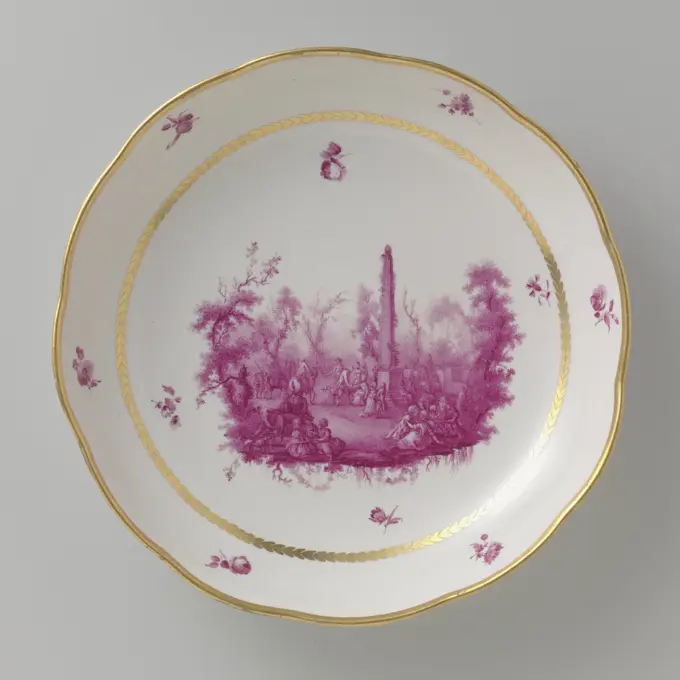
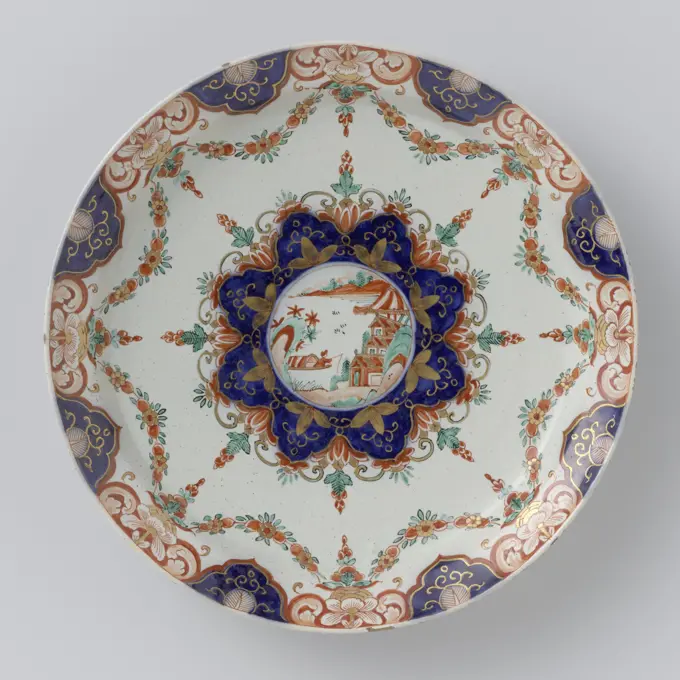
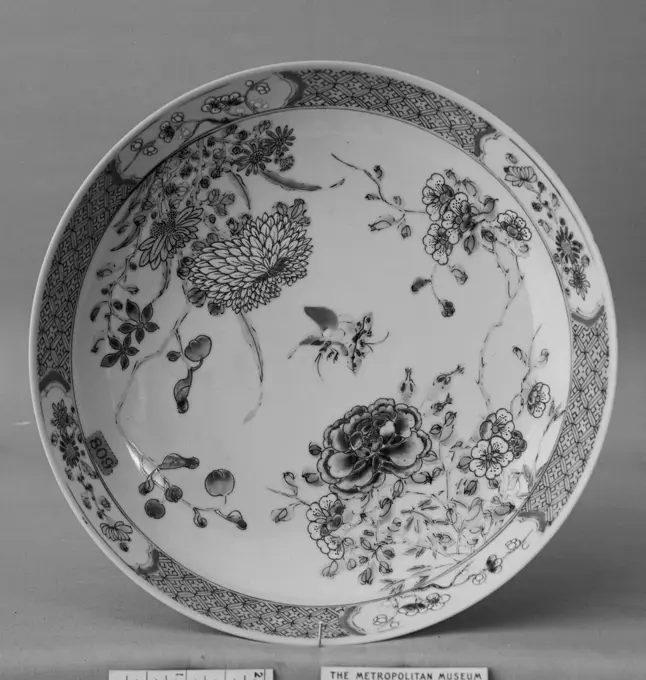
Artful, multi-colored porcelain dishes with floral and animal motifs. Features intricate craftsmanship from various historical periods, ideal for collectors.

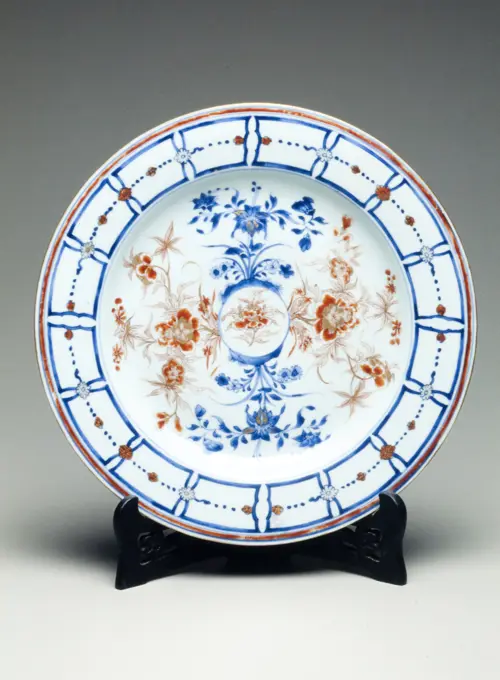
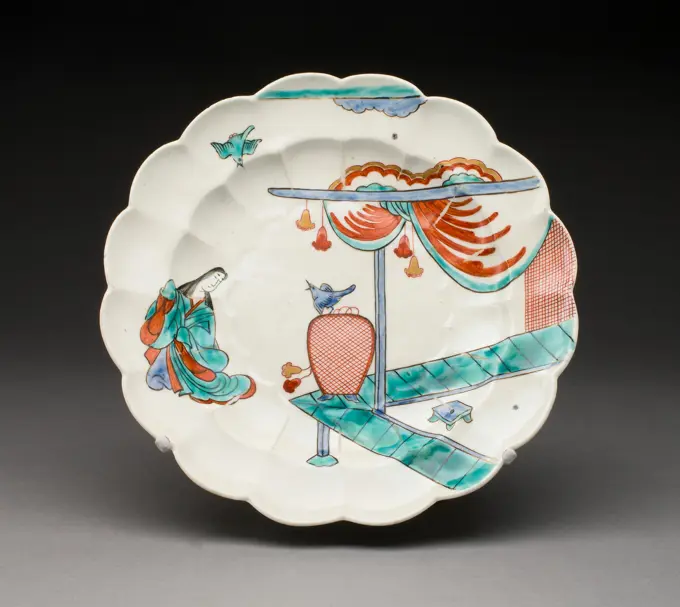
Saucer-dish with flowering plant, anonymous, c. 1675 - c. 1685 Porcelain dish, painted on the glaze in blue, red, green, yellow, black and gold. A chrysanthemum branch on the flat. The inner wall with twice rocks with flowering plants (pomegranate, prunus). Old label on the bottom with 'Collection Westendorp/ 51'. Four pronen on the bottom. Kakiemon style. Japan porcelain. glaze. gold (metal) gilding / vitrification Porcelain dish, painted on the glaze in blue, red, green, yellow, black and gold. A chrysanthemum branch on the flat. The inner wall with twice rocks with flowering plants (pomegranate, prunus). Old label on the bottom with 'Collection Westendorp/ 51'. Four pronen on the bottom. Kakiemon style. Japan porcelain. glaze. gold (metal) gilding / vitrification
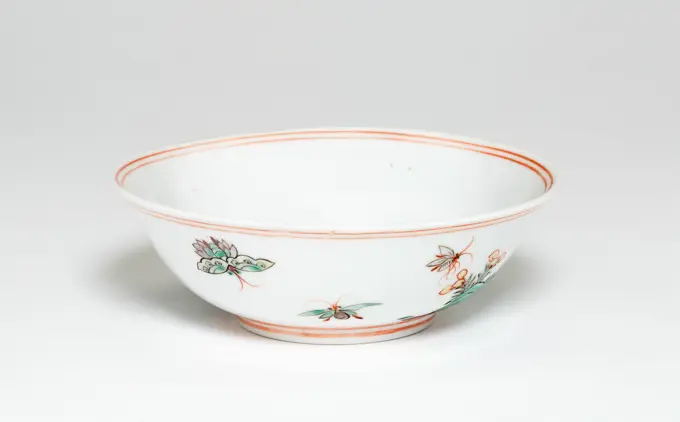
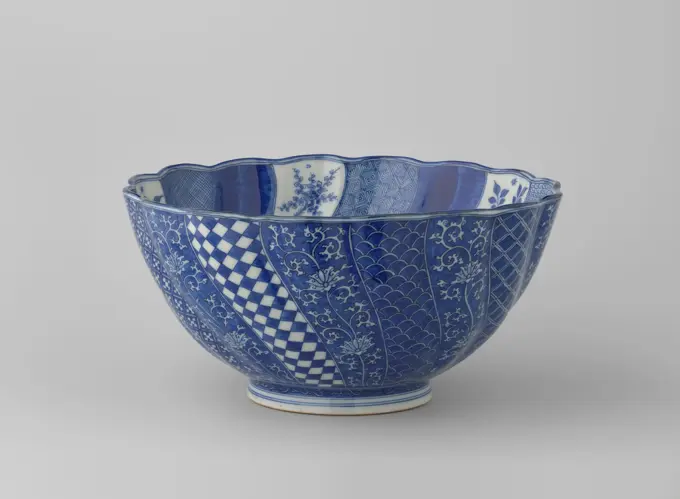
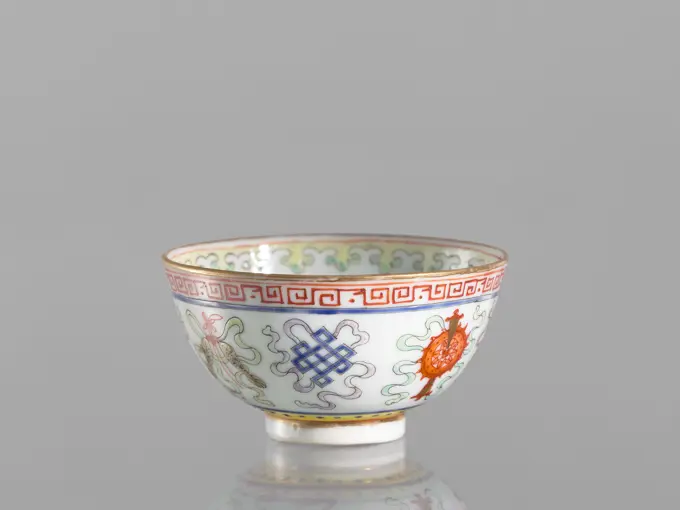
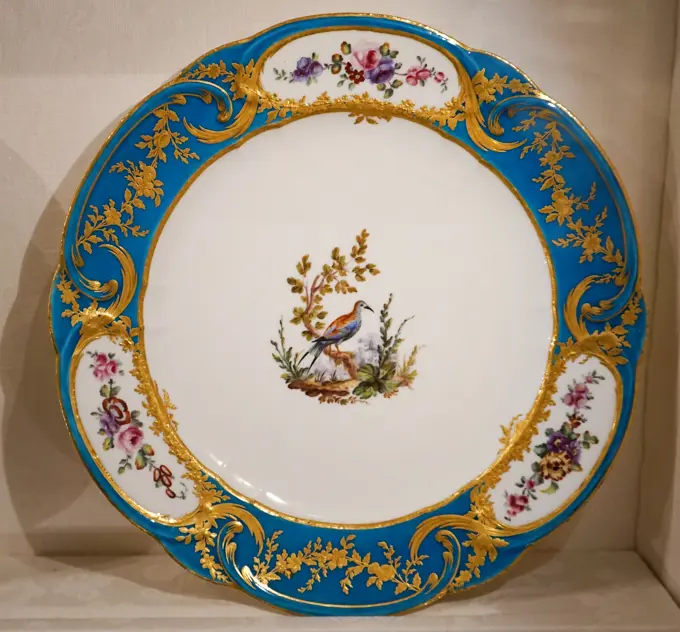
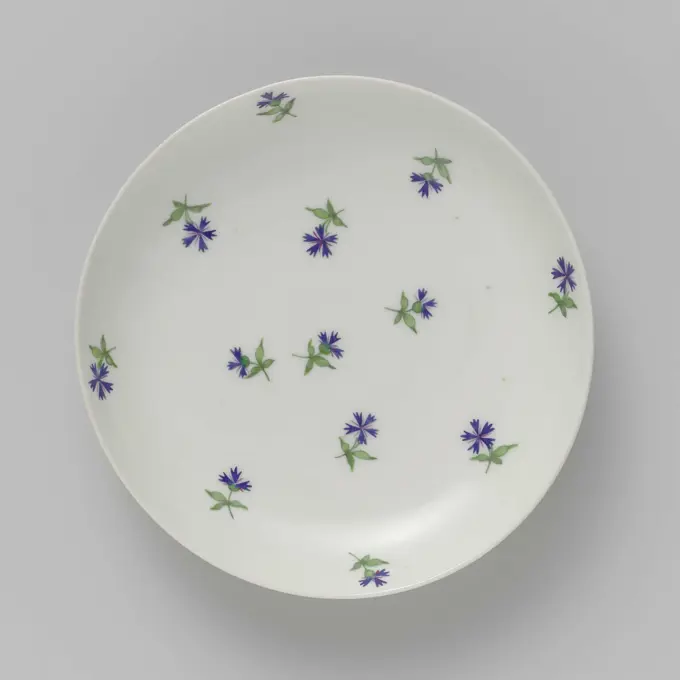
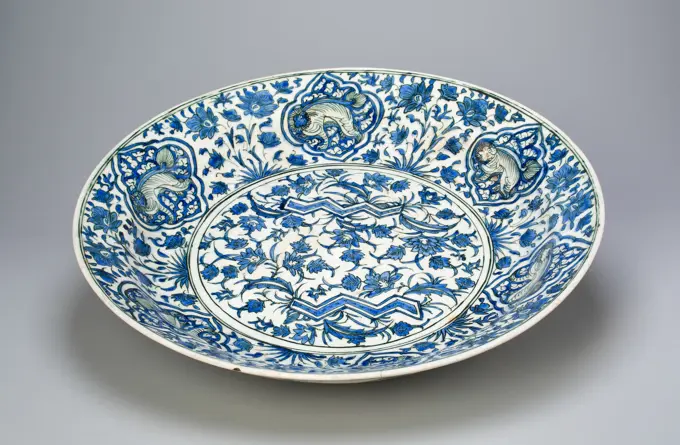
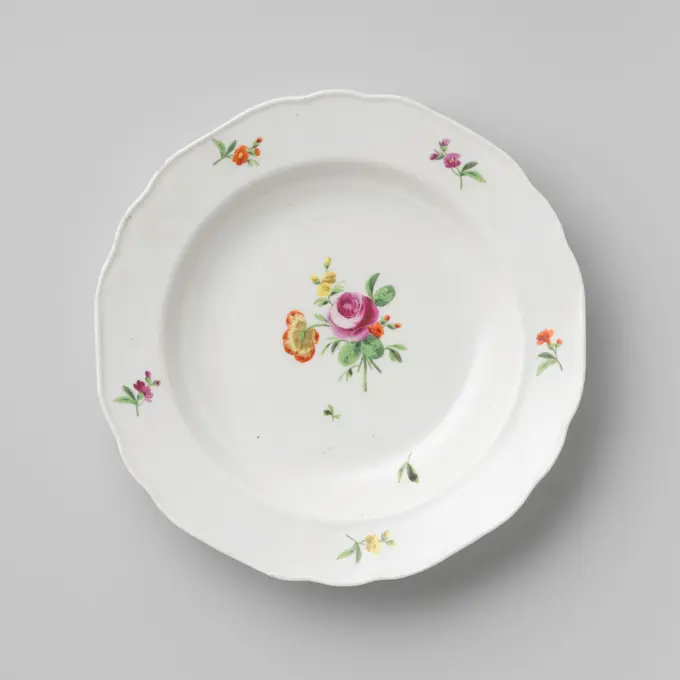
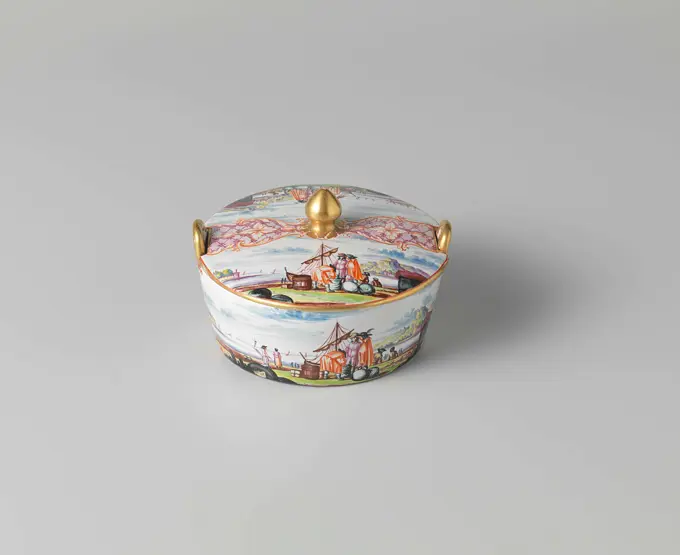
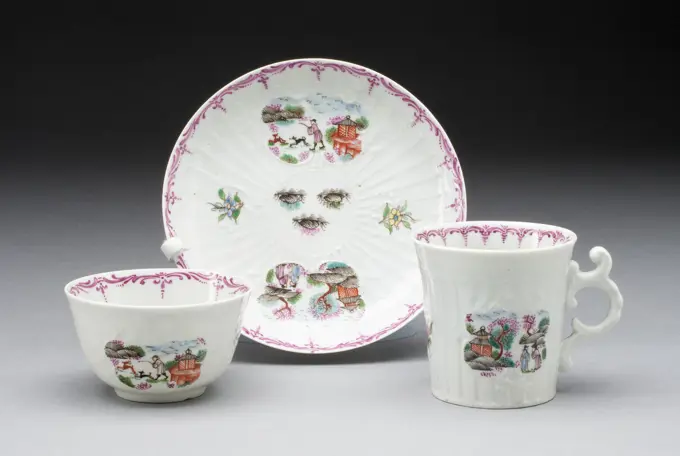
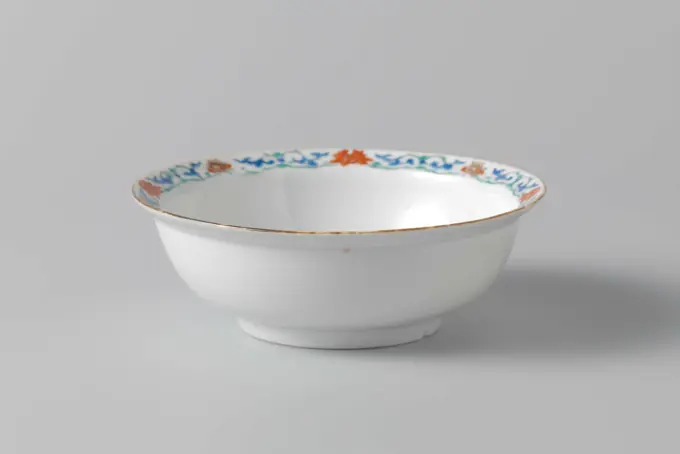
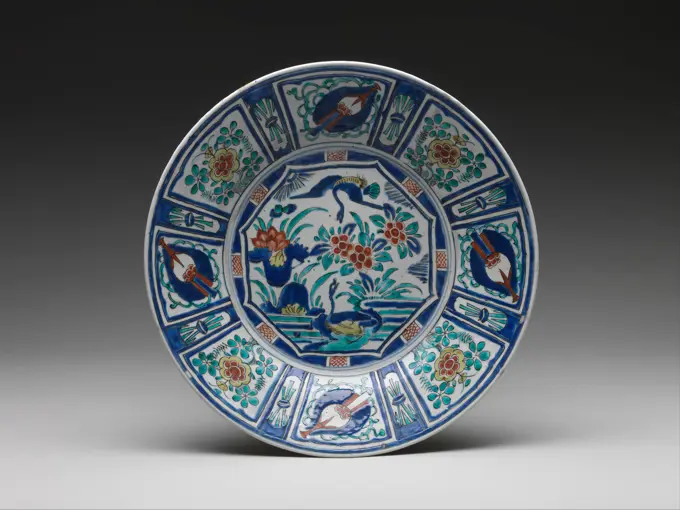
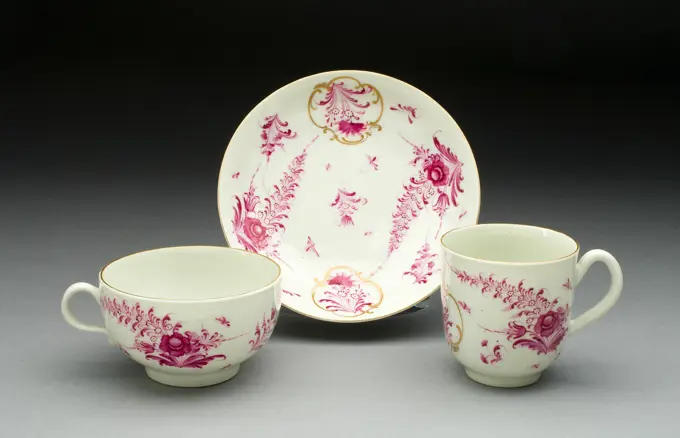
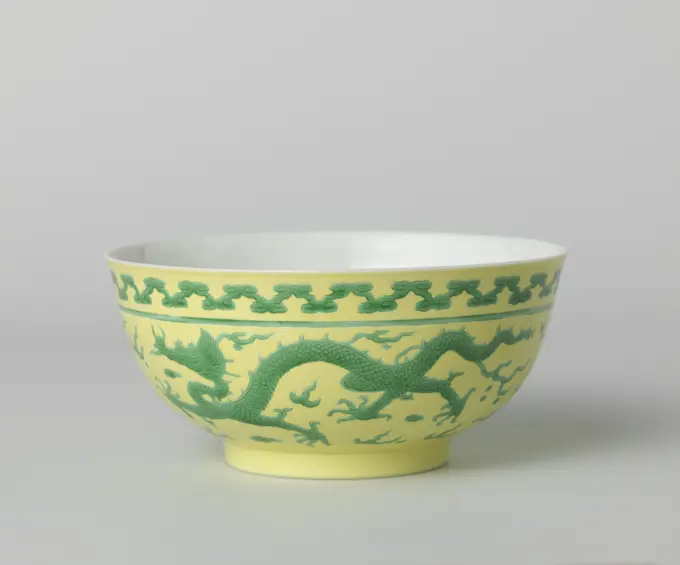
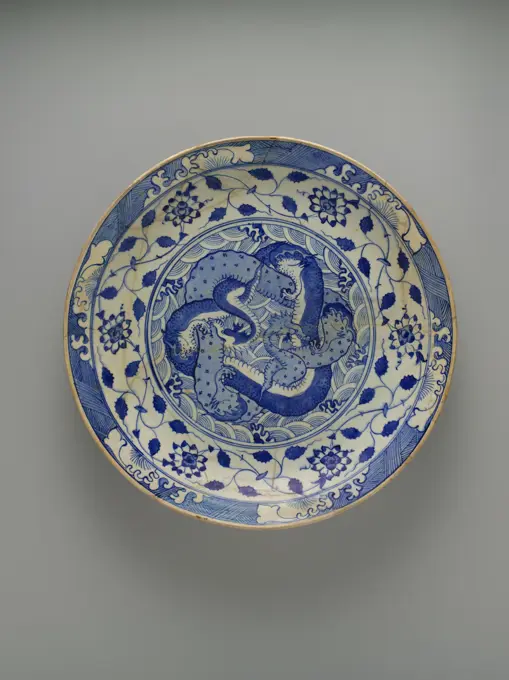
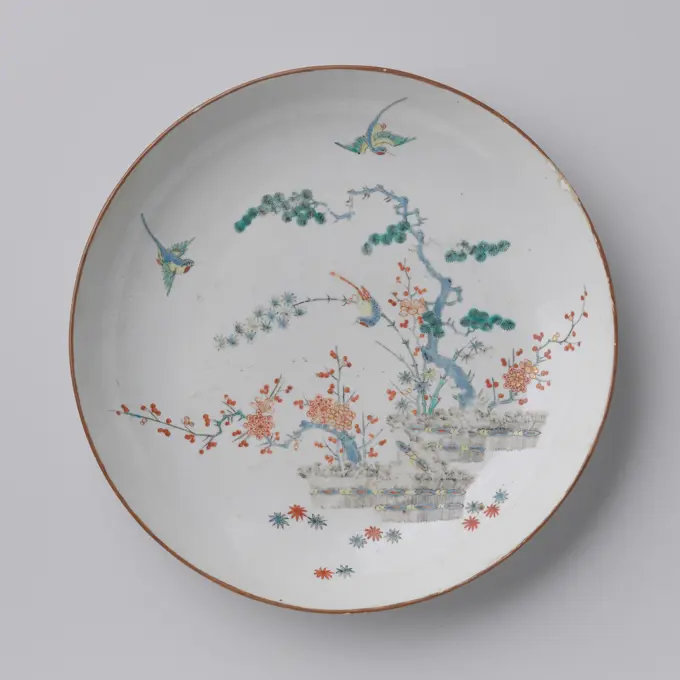
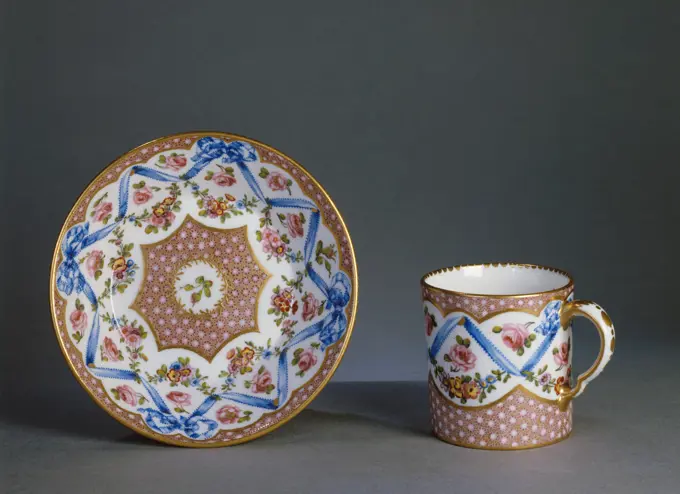
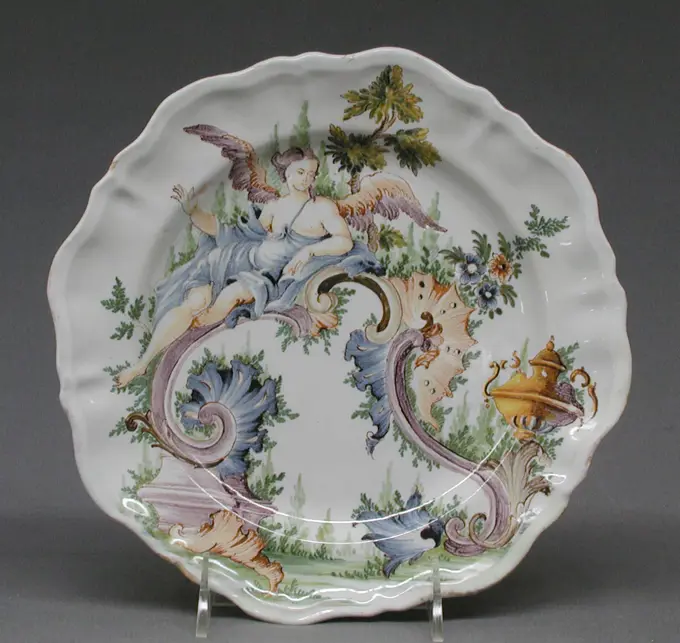
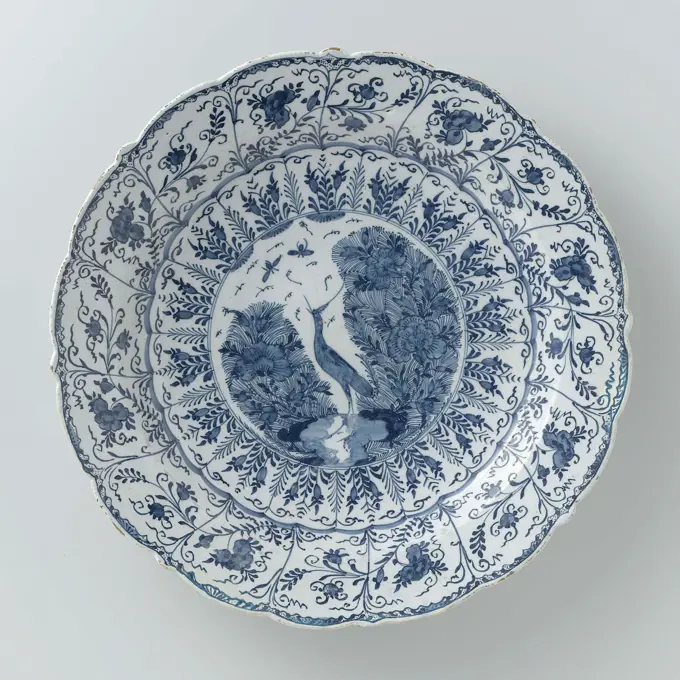
Octagonal Box with Birds, Peony Flowers, and Peach Branches. China. Date: 1522-1566. Dimensions: . Porcelain painted in underglaze blue. Origin: China. Museum: The Chicago Art Institute, Chicago, USA.Scale, manufacture Oud-Loosdrecht, c. 1778 - c. 1782 Deep tray of porcelain. Painted with a market scene. Loosdrecht porcelain Deep tray of porcelain. Painted with a market scene. Loosdrecht porcelainCup China. Cup. China. Porcelain painted in overglaze polychrome enamels and gilt. Qing dynasty (1644-1911). CeramicsDish, decorated with multicolored flowers and volutes, Peter Regout, c. 1850 - c. 1875 Dishes of earthenware with black transfer decor and moffel colors. The flat decorated with multicolored flowers and volutes. Maastricht . Dishes of earthenware with black transfer decor and moffel colors. The flat decorated with multicolored flowers and volutes. Maastricht .Saucer in the shape of a leaf, anonymous, c. 1750 - c. 1774 Porcelain saucer, the dish in the shape of a leaf, painted in underlaze blue. The dish is divided by the 'veins' of the leaf, filled with various flowering plants on a rock. Marked on the underside of the dish with a lotus. Blue White. China porcelain. glaze. cobalt (mineral) painting / vitrification Porcelain saucer, the dish in the shape of a leaf, painted in underlaze blue. The dish is divided by the 'veins' of the leaf, filled with various flowering plants on a rock. Marked on the underside of the dish with a lotus. Blue White. China porcelain. glaze. cobalt (mineral) painting / vitrificationPlate With Flowering Plants near A Rock and Pierced Rim. Porcelain plate with partially openwork edge, painted in underglaze blue. On the flat a medallion with large, blooming plants (peony) at a rock. Between the opened parts on the edge scalloped cartouches with flowering plants (orchid, prunus, lotus, aster); Above a band with arrearing. The outer wall with a continuous flower branch; The outer edge with four times a stylized flower branch. Marked on the bottom with a ruyi scepter in a double circle. Blue White.Bowl with Butterflies and Rocks 1522-1566 China. Porcelain painted in underglaze iron red and overglaze enamels .Bell-shaped cup with flowering plants, a rock and stylized flower sprays, anonymous, c. 1740 - c. 1760 Bell -shaped head of porcelain, with a lobed wall, painted in underlaze blue. On the soil a medallion with flowering plants (pine, lotus) behind a fence by a rock; The inner edge is divided into courses with a flower drink. The outer wall is modeled in petal -shaped compartments filled with a stylized flower branch. The outer edge is divided into courses with a flower vank. Blue White. China porcelain. glaze. cobalt (mineral) painting / vitrification Bell -shaped head of porcelain, with a lobed wall, painted in underlaze blue. On the soil a medallion with flowering plants (pine, lotus) behind a fence by a rock; The inner edge is divided into courses with a flower drink. The outer wall is modeled in petal -shaped compartments filled with a stylized flower branch. The outer edge is divided into courses with a flower vank. Blue White. China porcelain. glaze. cobalt (mineral) painting / vBowl, anonymous, c. 1575 - c. 1599 Come from porcelain, painted in under -glaze blue. On the outer wall four times a large, stylized flower rosette (peony) and a pattern consisting of five dots. On the outer edge a bond with branches. The inner edge with a band with three landscapes with rocks and trees. On the bottom and the bottom marked with the six-character brand of Keizer Chenghua in a double circle. Ming porcelain in blue and white. China porcelain. glaze. cobalt (mineral) painting / vitrification Come from porcelain, painted in under -glaze blue. On the outer wall four times a large, stylized flower rosette (peony) and a pattern consisting of five dots. On the outer edge a bond with branches. The inner edge with a band with three landscapes with rocks and trees. On the bottom and the bottom marked with the six-character brand of Keizer Chenghua in a double circle. Ming porcelain in blue and white. China porcelain. glaze. cobalt (mineral) painting / vitrificationPlate with an image of The Parasol Lady, anonymous, c. 1736 - c. 1738 Porcelain plate, painted on the glaze in blue, red, pink, green, yellow, black and gold. On the flat a woman by a pond with reeds, gesturing to three birds in front of her on the land, next to the woman a servant who holds a richly decorated parasol over her head; on the wall flower branches interspersed with a medallion; The edge with a honeycomb motif with four cartouches with a woman and four medallions with birds; The back with eight insects. The performance is designed by Cornelis Pronk (1691-1754). European performance in email colors. Chinadraughtsman: Netherlands porcelain. glaze. gold (metal) painting / gilding / vitrification Porcelain plate, painted on the glaze in blue, red, pink, green, yellow, black and gold. On the flat a woman by a pond with reeds, gesturing to three birds in front of her on the land, next to the woman a servant who holds a richly decorated parasol over her head; on the wall flower brCome to sueltu Stant, Rockally spoke the rightline, c.. 19000 Round bowl with vertical, twisted ribs of porcelain with a decoration in underly glaze blue of geometric and leaf vine motifs on the ribs. Onder in de voetring gemerkt   Kanjōen Chimon-sei (gemaakt door Kanjōen Chimon). SETO. Seto porcelain painting Round bowl with vertical, twisted ribs of porcelain with a decoration in underly glaze blue of geometric and leaf vine motifs on the ribs. Onder in de voetring gemerkt   Kanjōen Chimon-sei (gemaakt door Kanjōen Chimon). SETO. Seto porcelain paintingCup. unknown, craftsmanFooted Dish (Austria); Designed by Ludwig Lobmeyr (Austrian, 1829 - 1917); Manufactured by J. & L. Lobmeyr GmbH (Austria), Georg Rehlender; enameled and gilt glass; L x W x D: 24.5 x 20 x 6 cm (9 5/8 x 7 7/8 x 2 3/8 in.)Object from a Dessert Service 'The Razumovsky Service', made from soft-paste porcelain. Dated 18th CenturyPlate - Portneuf potteryDish, painted with cornflowers. Dish, decorated with cornflowers. Mounted amstel in blue under the glaze and engrade L1.Blue and White Dish 1601-1700 Iran. Blue-and-white ceramics became popular in the Islamic world as early as the 9th century. In later centuries, the stylistic exchange between Iran and China, as well as the high demand for Chinese porcelain in the Islamic world, led to the production of large quantities of blue-and-white wares in both Iran and China. This example from Safavid Iran shows the influence of Chinese art in the six lion-like creatures along the rim, as well as in the cloud forms behind them.. Fritware with underglaze painting in blue and black . IslamicSaucer with flower sprays, anonymous, c. 1860 Porcelain dish, painted on the glaze in blue, red, pink, green, yellow, brown and gold. On the flat a double golden circle with around it and on the inner wall a tire of flower branches. Golden Rand. Three prenes on the bottom. Marked on the underside with II and 04 . France (possibly) porcelain. glaze. gold (metal) painting / gilding / vitrification Porcelain dish, painted on the glaze in blue, red, pink, green, yellow, brown and gold. On the flat a double golden circle with around it and on the inner wall a tire of flower branches. Golden Rand. Three prenes on the bottom. Marked on the underside with II and 04 . France (possibly) porcelain. glaze. gold (metal) painting / gilding / vitrificationCover with grapevines, anonymous, c. 1800 - c. 1899 Porcelain lid, painted on the glaze in email colors and gold. Decorated with grape branches and a decorative band. Switzerland (possibly) porcelain. glaze. gold (metal) painting / gilding / vitrification Porcelain lid, painted on the glaze in email colors and gold. Decorated with grape branches and a decorative band. Switzerland (possibly) porcelain. glaze. gold (metal) painting / gilding / vitrificationDish with birds and insects near flowering plants and a rock, anonymous, c. 1650 - c. 1699 Porcelain saucer, painted in under -glaze blue. On the flat a flowering plant (camelia) in a rock. Flying birds and insects around it. The wall and edge are divided into six compartments with a bird on a rock near a flowering plant, flying bird and insects. The outer wall with four flower branches. Four pronen on the bottom. Blue White. Japan porcelain. glaze. cobalt (mineral) painting / vitrification Porcelain saucer, painted in under -glaze blue. On the flat a flowering plant (camelia) in a rock. Flying birds and insects around it. The wall and edge are divided into six compartments with a bird on a rock near a flowering plant, flying bird and insects. The outer wall with four flower branches. Four pronen on the bottom. Blue White. Japan porcelain. glaze. cobalt (mineral) painting / vitrificationSaucer with a D and foliate scrolls, Faubourg St. Denis, c. 1800  Dish or pattipan of porcelain, painted on the glaze in gold. On the flat the letter D in a leaf wreath. A leaf vank on the wall. Golden Rand. Marked on the underside with the crowned CP. The dish belongs to a milk jug with number BK-NM-13948. Faubourg Saint-Denis porcelain. glaze. gold (metal) painting / gilding / vitrificationRouge Box China. Rouge Box 47882Plate with a bouquet and flower sprays, imperial porcelain factory, c. 1800 - c. 1849 Porcelain plate with a lobed edge, painted on the glaze in red, green, yellow and purple. On the flat a bouquet of different flowers (including peony) surrounded by loose twigs and five flower branches on the edge. Marked on the underside with the shield, the letter P and the numbers 17, 11, 88 and 4. Vienna porcelain. glaze. painting / vitrification Porcelain plate with a lobed edge, painted on the glaze in red, green, yellow and purple. On the flat a bouquet of different flowers (including peony) surrounded by loose twigs and five flower branches on the edge. Marked on the underside with the shield, the letter P and the numbers 17, 11, 88 and 4. Vienna porcelain. glaze. painting / vitrificationDish (Switzerland); glazed earthenwareDish 17th century. Dish 446916Botersloot lid. Botervot lidDish with plotors and birds. Dish of porcelain, decorated with colorful volunce drinks and birds. Marked in gold with the letters CP above which a crown. With a corresponding head (A).Plate from v.O.c.-ship the 'white lion'. Plate from V.O.C.-ship the 'white lion' with a flat edge and a scalloped lip, decorated in underglaze blue, 98%%. In the flat lucky symbols surrounded by an accolady band with stylized tendrils and geomteric motifs. On the wall and edge wide and narrow field filled with lucky symbols and flower branches. The cobalt and glaze in the flat are partially burned in the oven and jumped into flood of the salt water. Type 1.1.4b.Cup (from a set of eight) China. Cup (from a set of eight). China. Porcelain with iron-red glaze, painted in overglaze polychrome enamels. Qing dynasty (1644-1911). Ceramics. Soft-paste porcelain, polychrome enamels . Worcester Royal Porcelain Company (Manufacturer)Suacer-dish with fluted sides and insects, peony and prunus sprays, anonymous, c. 1720 - c. 1740 Porcelain bowl with ribbed wall and lobed edge, painted on the glaze in red, green, yellow, eggplant, black and gold. A peon branch on the flat. The wall with two peony branches and a prunus branch; Flying insects between the branches. The back with three prunus branches. The scale is caught in a metal frame. Overecored (Amsterdam Bont). Japan Porcelain. Glaze. Cobalt (Mineral). Gold (Metal). frame: Metal painting / gilding / vitrification Porcelain bowl with ribbed wall and lobed edge, painted on the glaze in red, green, yellow, eggplant, black and gold. A peon branch on the flat. The wall with two peony branches and a prunus branch; Flying insects between the branches. The back with three prunus branches. The scale is caught in a metal frame. Overecored (Amsterdam Bont). Japan Porcelain. Glaze. Cobalt (Mineral). Gold (Metal). frame: Metal painting / gilding / vitrification. Shallow bowl of porcelain with a spreading edge, painted on the glaze in blue, red, green, black and gold. On the bottom prunus and pine behind pounded hedges. In addition to two flying birds. The inner edge with flower drinks. A preen on the bottom. Brown edge. Arita, Kakiemon.Plate with Geese in Lotus Pond 1660-80 Japan Japanese production of porcelain, which began in the early seventeenth century, flourished in the second half of the century in part thanks to the demands of the Dutch, who needed a new supplier as a result of the political disorder in China at the time. The shape and decoration of this dish follow the Chinese kraak ware; however, the colors of the enamels are uniquely Japanese.. Plate with Geese in Lotus Pond 49310Dish, c. 1715, 1 3/8 x 12 1/2 in. (3.49 x 31.75 cm), Porcelain with underglaze and enamel decoration, China, 18th centuryCup With Twisted Panels with Flower Sprays. Cup of porcelain with the wall landscaped in chanted compartments, painted in underglaze blue. The wall with grinders with flower branch; a medallion with flower branch on the bottom; The inside of the edge a bond with floral drinks. Marked on the bottom with the Chinese character 'Fú' in a double circle. Blue White.Plate. unknown, craftsmanBowl - Portneuf potteryEnea Utili. Cup: young man's bust, Italian majolica from Faenza around 1550 (face). Museum of Fine Arts of the City of Paris, Petit Palais. 27010-13 Bust, ceramic, cut, faenza, faience, man, Italy, Italian majolicCup With Stylized Flowers. Cup of porcelain with a spreading wall, painted in underglaze blue. On the outside wall a band with stylized flower drinks interspersed with three lines. A stylized flower rosette on the bottom. The inner edge with a bond with a zigzag pattern. Marked on the underside with the four-character mark of Emperor Yongzheng () In a double circle. Blue White.Platter 1885 Union Porcelain Works Union Porcelain Works was one of the most important and inventive American porcelain manufacturers in the second-half of the nineteenth century. In addition to their imaginative works designed by the German-born artistic director, Karl H. L. Müller, the firms mainstay was the production of heavy porcelain hotel dinnerware. This extensive service was made by Thomas Carll Smith, head of the Union Porcelain Works, as a gift to his daughter, Pastora Forest Smith Chace. The neoclassical decoration of the gilt bellflower and basket motif is complimented by turquoise enamel. Unlike the firms more eccentric and lavish designs created for their display at the Philadelphia Centennial Exposition in 1876, the pottery favored a more restrained classical style for their dinner services. This service descended in the Chace family.. Platter 6572Plate, painted multicolored with the Creagh family crest. Plate of faience, painted multi-colored. On the flat family crest Crearagh with a considerable helmet, with a half to the right-handed horse head and two leaf branches as a helmet sign. Under the coat of arms a banderole with the motto: Virtute et Numin. The edge of the board is painted with leaf refrences, flowers and birds.. The octagonal porcelain dish is polychrome painted with a bird and violets (purple, light and dark blue and yellow) within an ornamental decor. Labeled with: Kroon, Rozenburg, Stork, The Hague (upper each other); On the left the brand before 1913, on the right the work order number 332; under the painting mark of c.w.j. 't heart.Faïence board with flower vase, the Greek A, c. 1705 - c. 1725 Faïence board. Multicolored painted with flower vase and decorated edges. Delft . Faïence board. Multicolored painted with flower vase and decorated edges. Delft .Coffee Cup and Saucer Made 1755-1765 Worcester. Soft-paste porcelain, underglaze blue decoration . Worcester Royal Porcelain CompanySaucer (1 of 6) (part of a service) ca. 1720 Meissen Manufactory German. Saucer (1 of 6) (part of a service) 231654SLAKOM, PORCELEINFAUTH AAN DEN AMSTEL, 1784 - 1814 Slabs with scalloped mouth edge multicolored painted according to Japanese Imari example. On the inside blossom branches and on the outside sculpted medallions filled with flowers and rocks. Marked: Amstel in blue under the glaze. Amstel (river) porcelain Slabs with scalloped mouth edge multicolored painted according to Japanese Imari example. On the inside blossom branches and on the outside sculpted medallions filled with flowers and rocks. Marked: Amstel in blue under the glaze. Amstel (river) porcelainPlate from v.O.c.-ship the 'white lion'. Plate from v.O.c.-ship the 'white lion', 99% present.Tea cup. Tea cup without ear of porcelain. Painted in sepia with figures in a landscape. Along the edges a lilac fries between golden piping.Oval bowl; Korzec (Porcelain Manufaktura; 1790-1832); 1800-1805 (1800-00-00-1805-00-00);Tarasowiczs, Konstanty and Helena - collection, gift (provenance), flower decorations, cobaltTeacup, Coffee Cup, and Saucer 1765-1775 Worcester. Soft-paste porcelain with purple enamel and gilding . Worcester Royal Porcelain Company (Manufacturer)Cup and Saucer 1720-1730 Vienna. The first European factory to make hard-paste porcelain according to traditional Chinese methods was at Meissen in Saxony. Anxious to guard the secret of making porcelain, the Saxon authorities made it difficult for workers to leave Meissen. Still, some of them managed to get to Vienna in 1719, where they were employed at the factory founded by the court official Claudius Innocentius Du Paquier.The Meissen and Du Paquier factories competed with and influenced one another, but Du Paquier porcelain exhibits distinct qualities of its own denser and more whimsical decoration, a preference for russet and violet hues, and particularly fineLaub- und Bandel-werk(leaf and scrollwork) decorationóinterlaced bands and scrolls alternating with cartouches containing small scenes. The factory was incredibly successful but Du Paquier, facing financial difficulties and the expiration of his imperial patent for making porcelain, sold the factory to the Austrian state iBowl with two green pearl chasing dragons on a yellow ground, anonymous, c. 1800 - c. 1899 Come from porcelain with a straight wall, covered with a yellow glaze and painted in underly glaze blue and on the glaze green and black. The outside of the bowl is covered with a yellow enamel with saved and two pearls after lines of five -clawy dragons between clouds; Around the edge, a saved, grinding cloud motif in green. On the bottom the six-character brand of Keizer Yongzheng in a double circle. Porcelain with email colors. China porcelain. glaze. cobalt (mineral) painting / vitrification Come from porcelain with a straight wall, covered with a yellow glaze and painted in underly glaze blue and on the glaze green and black. The outside of the bowl is covered with a yellow enamel with saved and two pearls after lines of five -clawy dragons between clouds; Around the edge, a saved, grinding cloud motif in green. On the bottom the six-character brand of Keizer Yongzheng in a double circle. PoSaucer ca. 1730 Decorated by the Hausmaler Ignaz Preissler. Saucer 200938Terrine, multi-colored painted with figures in a river landscape, manufacture Oud-Loosdrecht, c. 1774 - c. 1778 Terrine of porcelain with two openwork slightly bent ears. Lid and saucer edge. Painted in beet red with figures in a river landscape. Under the ears a ground with tree stumps in beet red. Golden piping along mouth, lid and dish edge. Handle painted with ornament in beet red. Loosdrecht porcelain Terrine of porcelain with two openwork slightly bent ears. Lid and saucer edge. Painted in beet red with figures in a river landscape. Under the ears a ground with tree stumps in beet red. Golden piping along mouth, lid and dish edge. Handle painted with ornament in beet red. Loosdrecht porcelainDish from V.O.C.-ship De 'Witte Leeuw', Anonymous, Before 1613  Dish from V.O.C. ship De 'Witte Leeuw', complete, made up of 3 shards. Jingdezhen porcelain   Sint-HelenaDessert plate - Coalport China Company Coalport China CompanyRound, deep plate of hard-baked pottery. Round, deep plate of hard-baked pottery with a decoration in blue from a landscape with buildings, a tree and a man with an animal. The edge is decorated with flower branches. The sign is marked: Hackwood.Famille-Rose Dish, 18th century, 3-5/8 x 20-1/8 x 20-1/8 in. (9.2 x 51.1 x 51.1 cm), Glazed ceramic, China, 18th century, One of the chief glories of the Yung-cheng reign (1723-35) was the perfection of famille rose enamels, named for the pink enamel that often predominates these striking compositions. Major advances in the technology of enamel production allowed for a subtle blending of white, pink, and green enamels to produce color gradations. For the first time, enamels could be mixed with opaque white and used in shading in a manner akin to oil painting.Doucai Dish 1821-1850 China. Porcelain painted in underglaze blue and overglaze enamels .Cup and saucer with fish between water plants, anonymous, c. 1700 - c. 1724 Porcelain's head and saucer with ribbed wall and lobed edge, painted in underly glaze blue and on the glaze blue, red, green, yellow, eggplant, black and gold. The outside of the head with four fish between aquatic plants, the edge with a band Ruyi motif; On the bottom a fish and the inside with four fish in iron red, the edge with a band Ruyi motif. The flat of the dish with a larger fish between aquatic plants, otherwise the same decoration as on the head. Both marked on the bottom with 'yù', Jade, in a double circle. Famle Verte. China porcelain. glaze. cobalt (mineral). gold (metal) painting / gilding / vitrification Porcelain's head and saucer with ribbed wall and lobed edge, painted in underly glaze blue and on the glaze blue, red, green, yellow, eggplant, black and gold. The outside of the head with four fish between aquatic plants, the edge with a band Ruyi motif; On the bottom a fish and the inside witBowl with Peonies, 1662-1722. China, Jiangxi province, Jingdezhen kilns, Qing dynasty (1644-1911), Kangxi mark and reign (1661-1722). Porcelain with foreign color (yangcai) overglaze enamel decoration; diameter: 12.4 cm (4 7/8 in.); overall: 6.2 cm (2 7/16 in.).Vase first half of the 19th century China. Vase 51134Plate, 1783. China, Chinese Export, 18th century. Underglaze blue porcelain; diameter: 24.3 cm (9 9/16 in.).Soup plate ca. 1765-70 Meissen Manufactory German. Soup plate. After a print by Claudine Bouzonnet Stella (French, Lyons 1636-1697 Paris). German, Meissen. ca. 1765-70. Hard-paste porcelain. Ceramics-PorcelainPlatter. Culture: American. Dimensions: 20 x 13 3/4 in. (50.8 x 34.9 cm). Maker: Union Porcelain Works (1863-ca. 1922). Date: 1885.Union Porcelain Works was one of the most important and inventive American porcelain manufacturers in the second-half of the nineteenth century. In addition to their imaginative works designed by the German-born artistic director, Karl H. L. Müller, the firm's mainstay was the production of heavy porcelain hotel dinnerware. This extensive service was made by Thomas Carll Smith, head of the Union Porcelain Works, as a gift to his daughter, Pastora Forest Smith Chace. The neoclassical decoration of the gilt bellflower and basket motif is complimented by turquoise enamel. Unlike the firm's more eccentric and lavish designs created for their display at the Philadelphia Centennial Exposition in 1876, the pottery favored a more restrained classical style for their dinner services. This service descended in the Chace family. Museum: Metropolitan Museum of Art, NePlate of multi -colored Faïence, Anonymous, c. 1700 - c. 1725 Faïence board. Multicolored painted with a Chinese water landscape and lambrequins, in Imari colors. Delft . Faïence board. Multicolored painted with a Chinese water landscape and lambrequins, in Imari colors. Delft .Dish China. Dish. China. Porcelain painted in overglaze famille rose enamels. Qing dynasty (1644-1911), Yongzheng period (1723-35). CeramicsBowl. unknown, craftsmanBord, 't Fortuyn, c. 1760 - c. 1780 Round plate of multi -colored painted faience. On a light-blue stock, a flower is painted on the flat in the colors purple and blue. The edge has a white checkered surface containing four oval courses. In the compartments, flowers are painted in the colors purple and blue. The board is marked. Delft earthenware. tin glaze. Round plate of multi -colored painted faience. On a light-blue stock, a flower is painted on the flat in the colors purple and blue. The edge has a white checkered surface containing four oval courses. In the compartments, flowers are painted in the colors purple and blue. The board is marked. Delft earthenware. tin glaze.Soup Plate 1785-90 Chinese, for American market This object belongs to a large dinner service (10.149.1-.248) bearing the Townley family coat-of-arms. The service, probably ordered by Justice Samuel Chase (1741-1811) of Annapolis, Maryland, displays the enamel-painted arms of Margaret Townley, Chase's aunt.. Soup Plate 7676Plate; Koenigliche Porzellan Manufaktur (KPM; Berlin; 1763-1918); 1803-13 (1823-00-00-1832-00-00);Dish with Two Intertwined Dragons ca. 1640 Although Chinese blue-and-white porcelain had exerted a strong influence on ceramic production of the Islamic Near East since the fourteenth century, this phenomenon entered a new phase in the seventeenth century, as Persian ceramicists responded to the taste in Safavid Iran and abroad for Chinese export porcelain, known as Kraak ware.The designs on this large dish adapt elements of Chinese blue-and-white porcelain of various dates. The center of the dish is densely ornamented with two entwined dragons, one light blue and the other dark blue with a white underbelly, grappling with each other against a concentric wave pattern. The cavetto zone surrounds this scene with a band of lotus flowers linked by delicately scrolling vines and leaves. The rim bears a reserve-painted wave-and-rock pattern and the exterior is decorated with scrolls of wispy and fanlike floral forms. On the foot of the dish is a "tassel mark" in imitation of a Chinese reign Dish with the 'Three Friends' and Birds. Dish of porcelain, painted in underglaze blue and on the glaze in blue, red, green, yellow, black and gold. On the front the 'three friends of the winter' (bamboo, pine, prunus) with three birds. Marked on the underside with a seal mark in a double circle. Edge restored. Decorated in the Japanese Kakiemon style in Europe.Thevenet. "Lemon cup and saucer with reserves decorated with roses and ribbons, Sèvres ceramics". Porcelain, 1774. Paris, Cognacq-Jay museum. 35077-13 Ceramic of Sevres, Decoration, Manufacture of Sevres, Porcelain, Ribbon, Rose, Saucepe, Cup, LemonDish with spreader flowers and a medallion. Dish of multicolor painted porcelain. Painted in the colors green, gold and blue. On the flat of the dish a medallion where around spreader flowers and a border along the outer edge. Signature. With a corresponding head (A).Tea Bowl, Coffee Cup, and Saucer. Worcester Porcelain Factory; Worcester, England, founded 1751. Date: 1755-1765. Dimensions: Coffee cup: H. 5.9 cm (2 1/4 in.); diam. 6 cm (2 1/3 in.); Tea bowl: H. 3.9 cm (1 1/2 in.); diam. 6.8 cm (2 2/3 in.); Saucer diam. 11.8 cm (4 2/3 in.). Soft-paste porcelain, polychrome enamels. Origin: Worcester. Museum: The Chicago Art Institute, Chicago, USA. Author: Worcester Royal Porcelain Company.Fragment sign from V.O.C. ship De 'Witte Leeuw', Anonymous, Before 1613 plate (dishes) Fragment board from V.O.C. ship De 'Witte Leeuw', 70 present. Jingdezhen bone china (material)   Sint-HelenaBowl with flower sprays and grains, Vincennes, c. 1750 - c. 1752 Four times lobed bowl of soft-paste porcelain (Pâte Tendre), painted on the glaze in blue, red, green, black and gold. Flower branches and corn sheaves on the outside wall. The inside with sprinkling flowers. Brown edge. Marked on the underside with the double L with the French lily and an M. de Kom in the style of Japanese Kakiemon porcelain. Vincennes porcelain. soft-paste porcelain. glaze. gold (metal) painting / gilding / vitrification Four times lobed bowl of soft-paste porcelain (Pâte Tendre), painted on the glaze in blue, red, green, black and gold. Flower branches and corn sheaves on the outside wall. The inside with sprinkling flowers. Brown edge. Marked on the underside with the double L with the French lily and an M. de Kom in the style of Japanese Kakiemon porcelain. Vincennes porcelain. soft-paste porcelain. glaze. gold (metal) painting / gilding / vitrificationPlate ca. 1770 Italian, Turin or Le Nove. Plate. Italian, Turin or Le Nove. ca. 1770. Faience (tin-glazed earthenware). Ceramics-PotteryDessert plate - William Davenport & Company, 1835-1881 William Davenport & Company, 1835-1881Octagonal scale of Faïence, Anonymous, 1870 - 1890 Scale of Faïence with an eight -sided ribbed edge. Multicolored painted in the style of Delft Faïence around 1700-1725. France (possibly) . Scale of Faïence with an eight -sided ribbed edge. Multicolored painted in the style of Delft Faïence around 1700-1725. France (possibly) .Covered sugarbowl and saucer with the arms of the Romswinckel family, anonymous, c. 1765 - c. 1770 Sugar bowl with lid and dish of porcelain, painted on the glaze in blue, red, pink, green, yellow, black and gold. On the flat of the dish the coat of arms of the Romswinckel family. The weapon has a red background with three concentric gold rings. The helmet sign is a crown with three rings and feathers above it. The cover consists of leaf vines. On the inner edge a decorative band with grille and leaf vines with stylized flowers. Head and lid with the same decoration. A crack and a chip in the edge of the pot; Two cracks in the wall of the dish. Weapon porcelain with email colors. China porcelain. glaze. gold (metal) painting / gilding / vitrification Sugar bowl with lid and dish of porcelain, painted on the glaze in blue, red, pink, green, yellow, black and gold. On the flat of the dish the coat of arms of the Romswinckel family. The weapon has a red background with three concentric goSaucer (1 of 6) (part of a service) ca. 1720 Meissen Manufactory German. Saucer (1 of 6) (part of a service) 231650Bowl - Portneuf potteryDish. Culture: Spanish. Dimensions: Overall: 14 3/8 in. (36.5 cm). Date: ca. 1450. Museum: Metropolitan Museum of Art, New York, USA.Cover dish. Cover shell of pottery with blue continuous floral decor, belonging to a children's service. The oval cover shell has two handles with leafwork in relief. The oval, vaulted lid is on top of leaf work in relief and has a flower-shaped button.. Round dish of multicolored padded faience, with a scalloped edge. On the flat is a bird (heron) Painted between flowers and on the edge of flowers and leaf. The dish is marked: P and P <. Four identical dishes with Invnrs are part of the dish. BK-NM-13285-A, BK-NM-13285-B, BK-NM-13285-C and BK-NM-13285-e.Plate 1750-1760 Chelsea. Soft-paste porcelain, polychrome enamels . Chelsea Porcelain Factory (Manufacturer)Teacup and Saucer 1765-1775 Worcester. Soft-paste porcelain, underglaze blue, polychrome enamels and gilding . Worcester Royal Porcelain Company (Manufacturer)Dish with dragon handles 14th century China. Dish with dragon handles. China. 14th century. Jade (nephrite). Yuan (1271-1368)-Ming (1368-1644) dynasty. JadeDish, Spode Ceramic Works, English, established 1776, hard paste porcelain, vitreous enamel, gold, Rectangular dish with deeply scalloped edge, the scallops on the short ends extended to form handles that are pierced by two holes on each. Decoration same as on 1959-155-1., England, 1833-1847, ceramics, Decorative Arts, dish, dishFooted Vase with Dragons and Waves. Japan, late 19th century. Ceramics. Hirado Mikawachi ware; porcelain with underglaze red and blueObject from a Dessert Service 'The Razumovsky Service', made from soft-paste porcelain. Dated 18th CenturyDish, anonymous, c. 1700 - c. 1715 Dish of Faïence. Multicolored painted. Delft . Dish of Faïence. Multicolored painted. Delft .Dish painted with a representation of the Last Judgment, Anonymous, c. 1625 - c. 1660 Round dish of multicolored painted Faïence. The final judgment is painted on the flat and put on the edge of the rank ornaments. The board is marked on the back: Fome Swa. Portugal earthenware. tin glaze. Round dish of multicolored painted Faïence. The final judgment is painted on the flat and put on the edge of the rank ornaments. The board is marked on the back: Fome Swa. Portugal earthenware. tin glaze.. Base of Delft pottery, blue decor of three hexagonal jars, well, sand spreader and pen holder, decorated with flowers.Oval scale. Oval scale.DishFragments plate from v.O.c.-ship the 'white lion'. Plate from v.O.C.-ship the 'white lion' with a flat edge, decorated in underglaze blue, 60%% present; Parts of the flat and the wall are missing. The shard is glassy white and has little ingrained dirt. The glaze is blue tinted and has pinholes and small frying tears on the corners of the lip edge. Over portions of the lip edge, the glaze crumbles. The bottom is glazed. The foot ring is inside, is V-shaped and faceted. More than 20 granules of oven sand were found. In the flat a grasshopper on a rock in blooming plants; The show is enclosed by a brace-shaped edge filled with geometric motifs. On the wall and edge a layout in wide and narrow fields filled with lucky symbols and flowers. Type 1.1.3a.Dish, painted with flowers and ladder motif. Dish of porcelain. Multicolored painted with flower bouquets and a ladder motif along the edges.