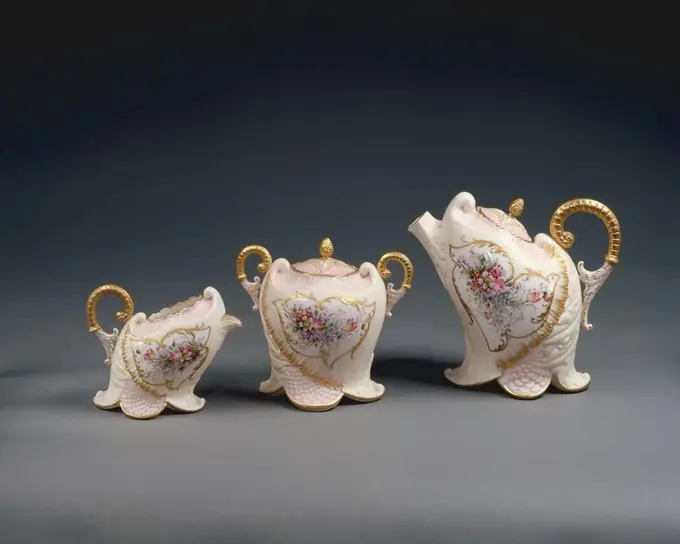
Porcelain Tea Accessories

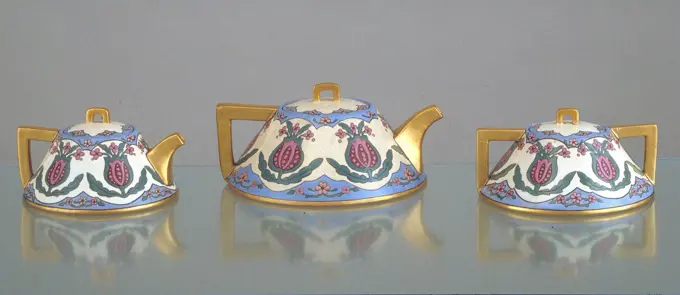
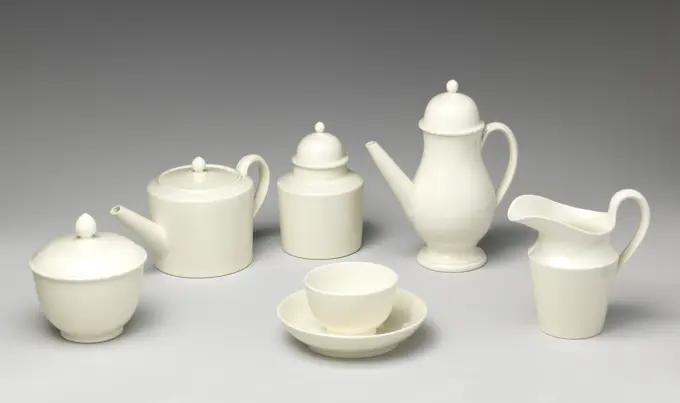
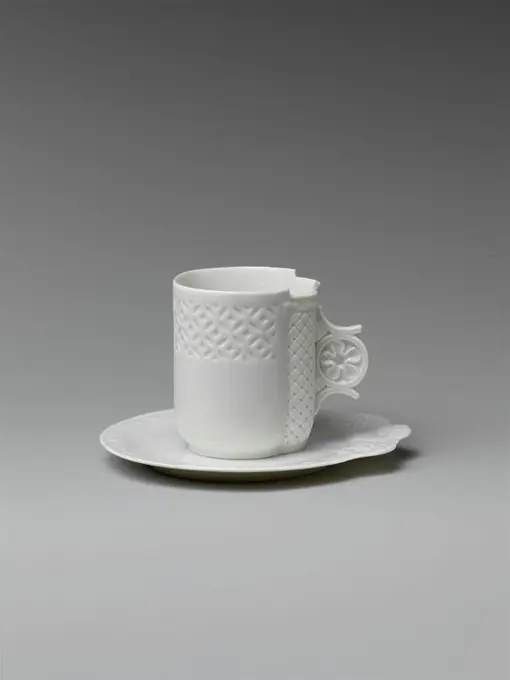
An assortment of delicate porcelain teapots, cups, and milk jugs, featuring floral designs and ornate details, each showcasing craftsmanship in varying styles and colors.

Teepot, Royal Porcelain Factory Dommer & Co., 1809 - 1814 Teapot in empira style decorated with pendulum leaves and gold piping along the edges. The teapot has a high belly and hollow curved foot. Nieuwer-Amstel porcelain Teapot in empira style decorated with pendulum leaves and gold piping along the edges. The teapot has a high belly and hollow curved foot. Nieuwer-Amstel porcelain
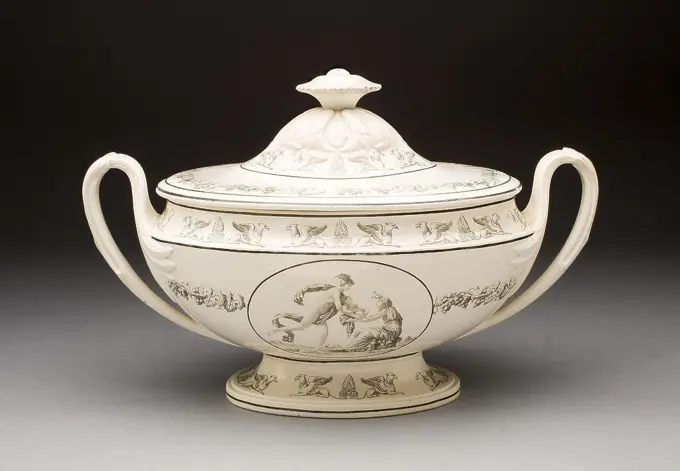
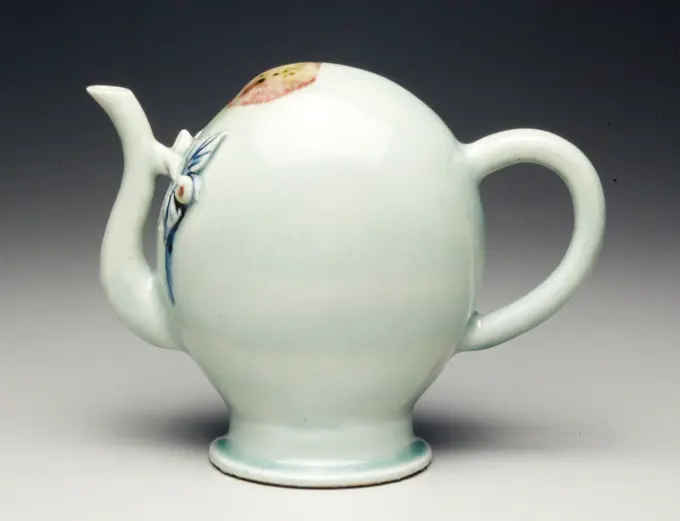
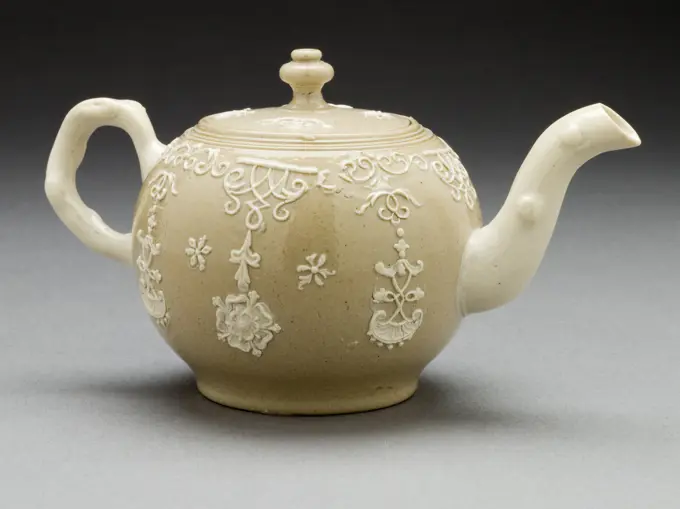
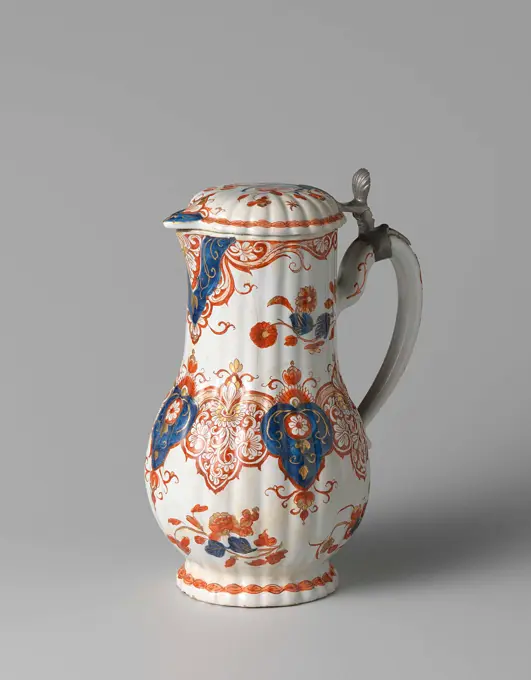
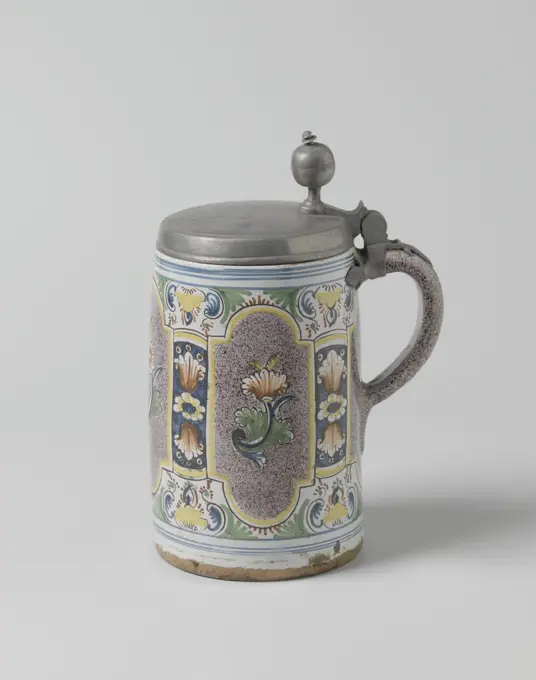
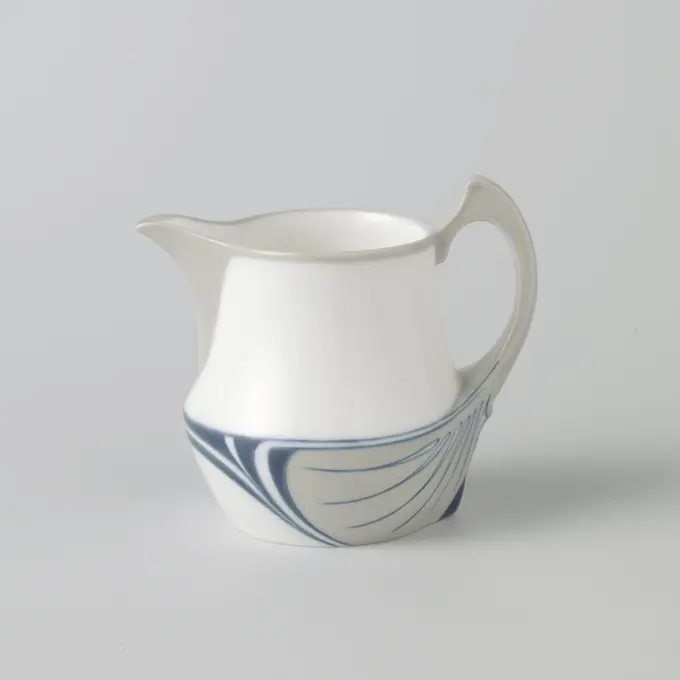
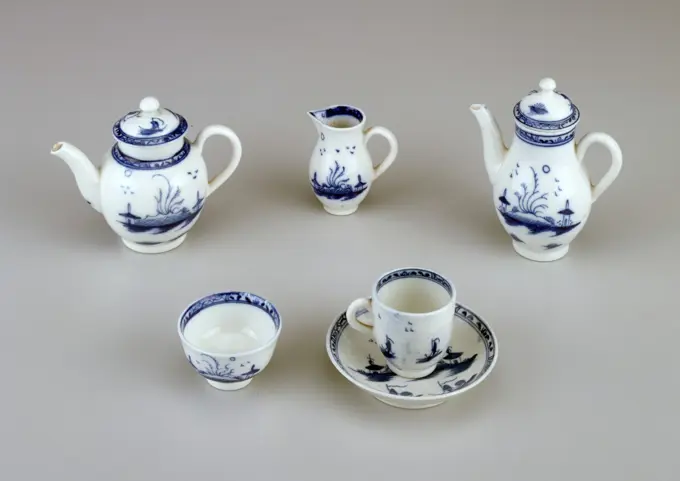
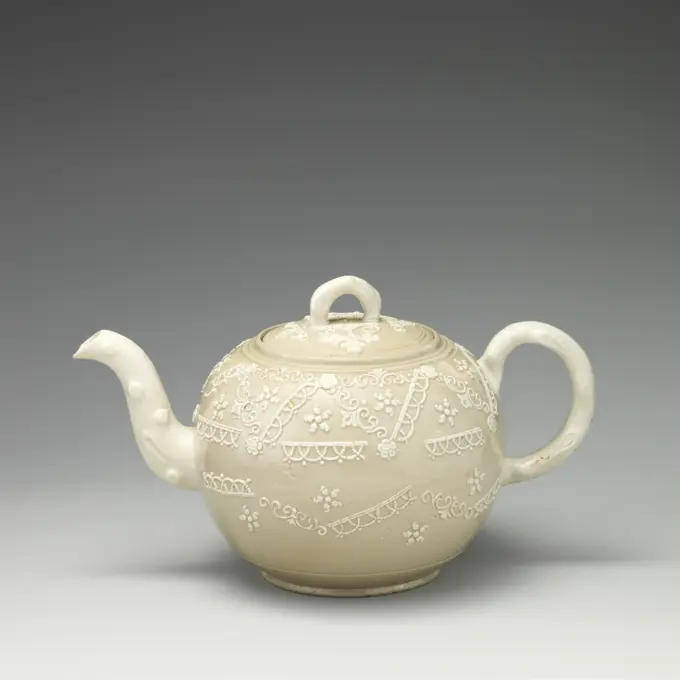
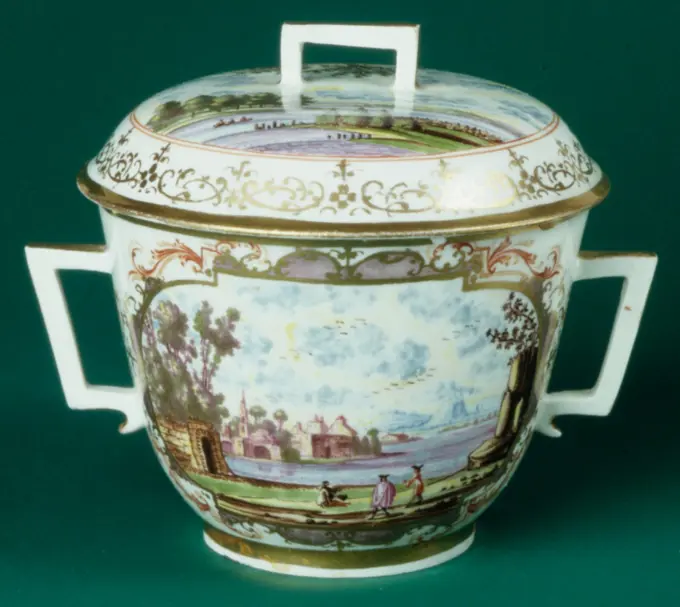
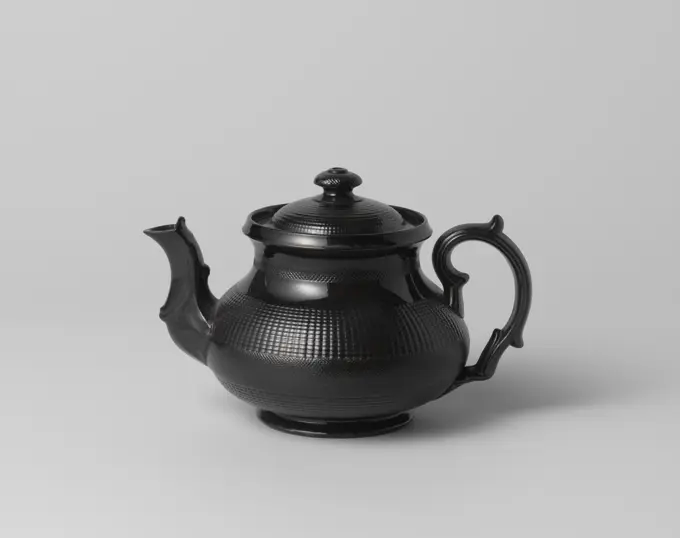
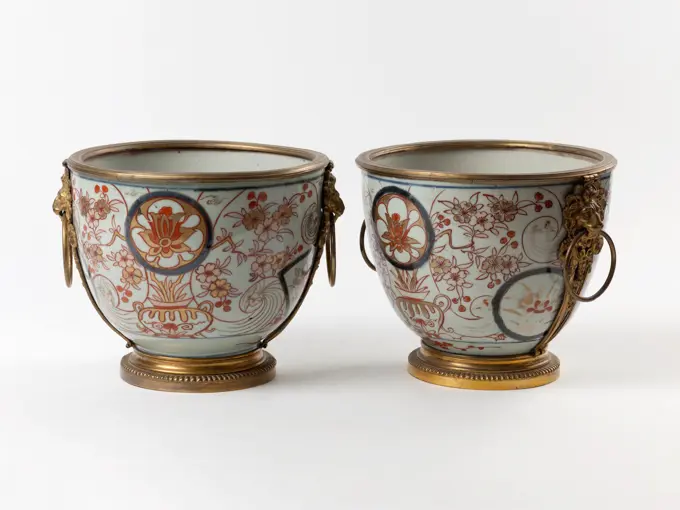
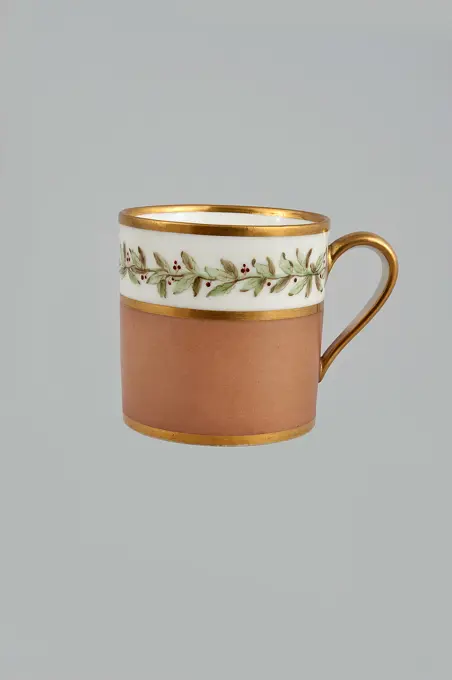
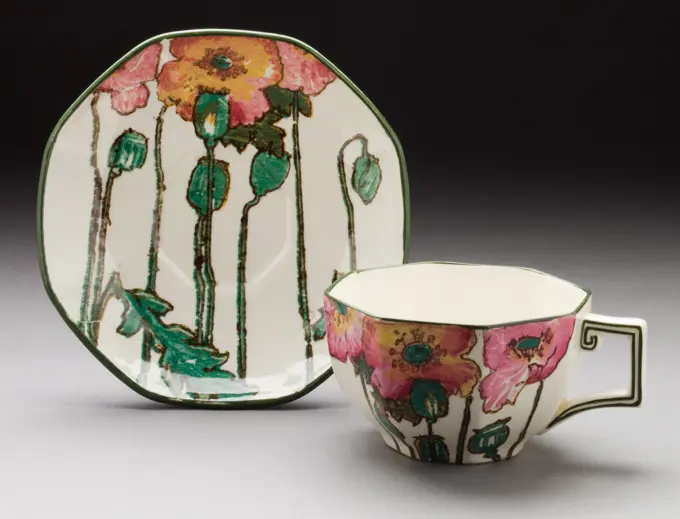
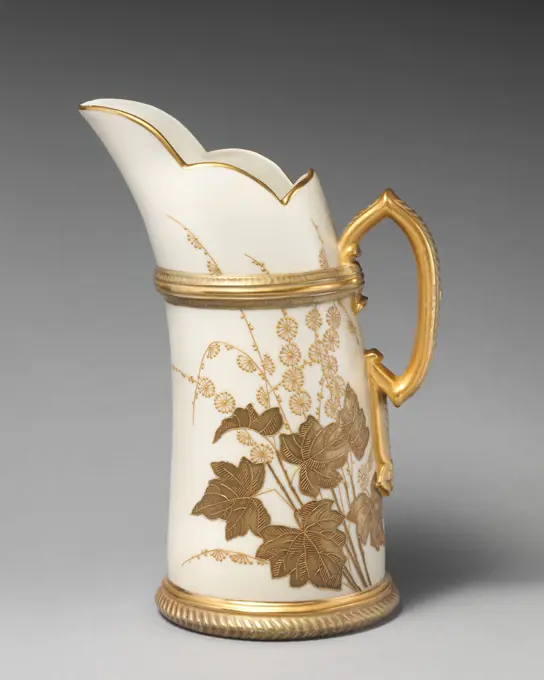
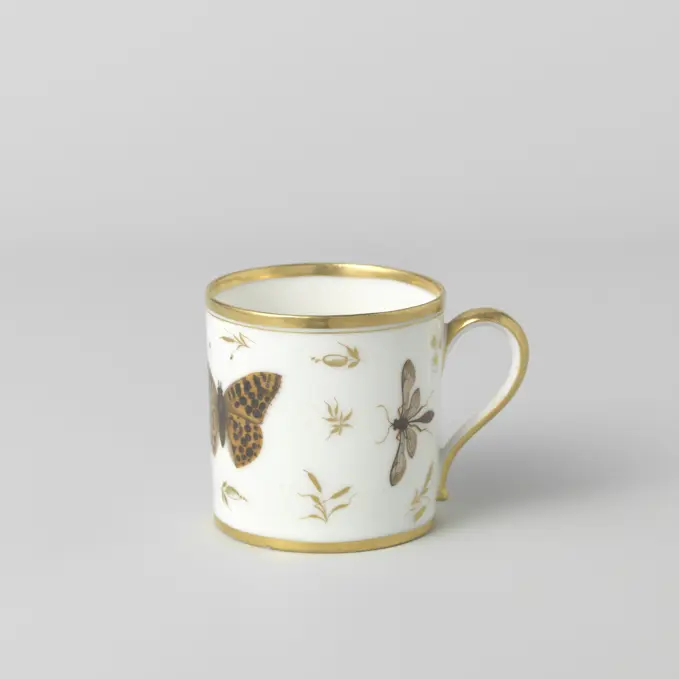
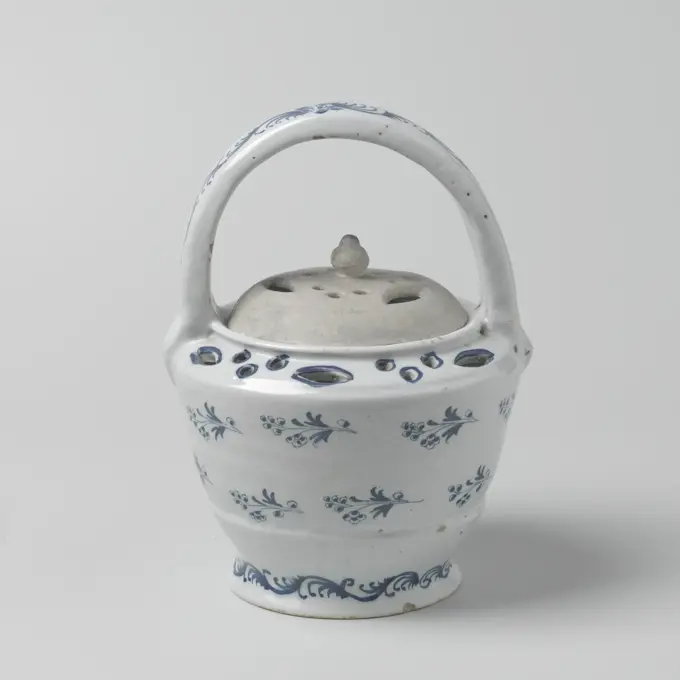
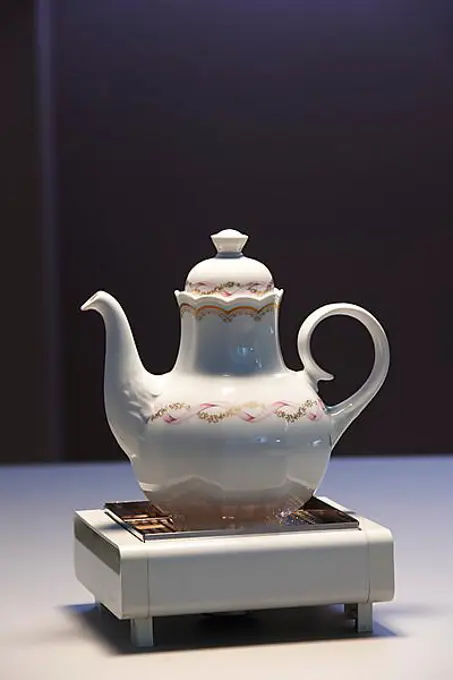
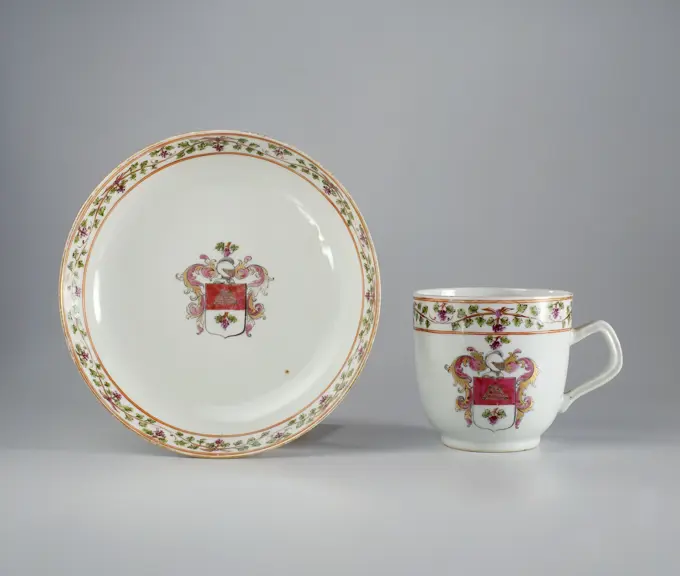
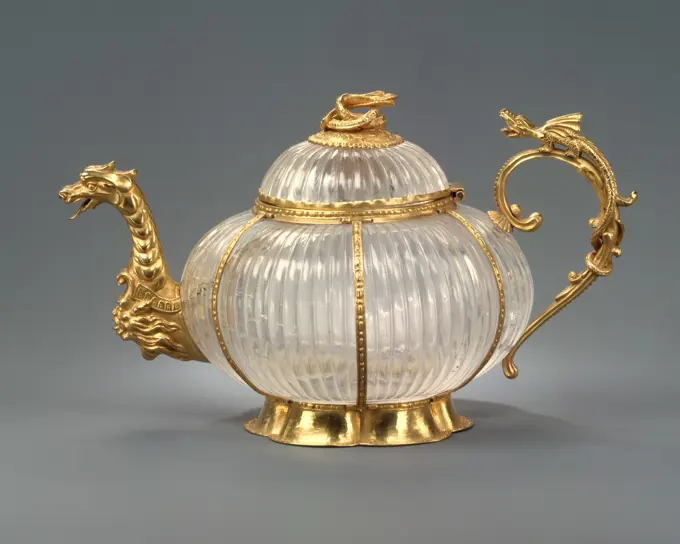
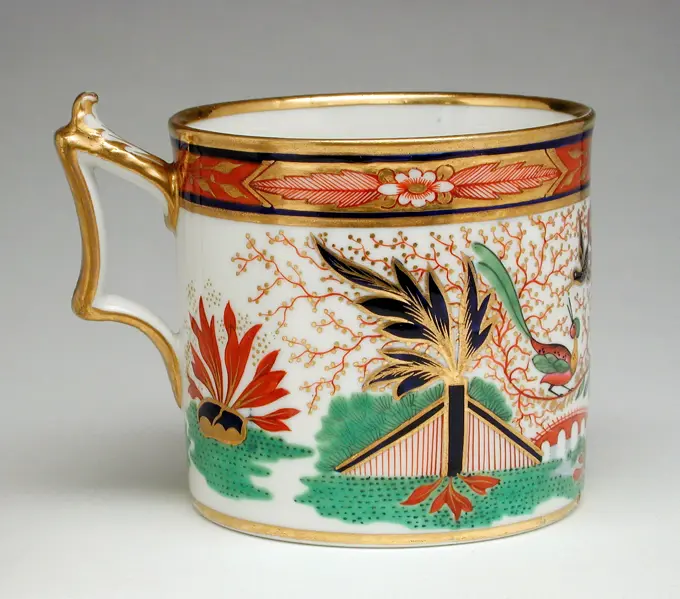
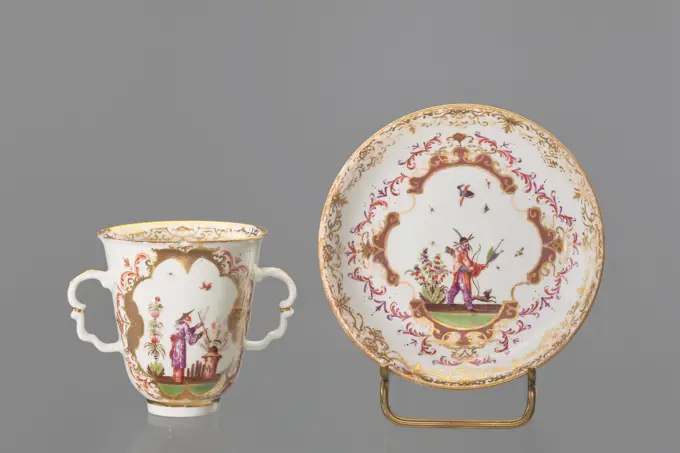
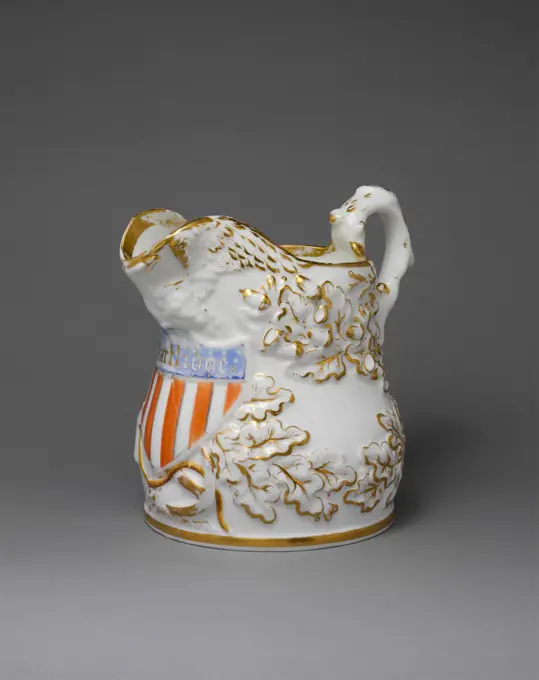
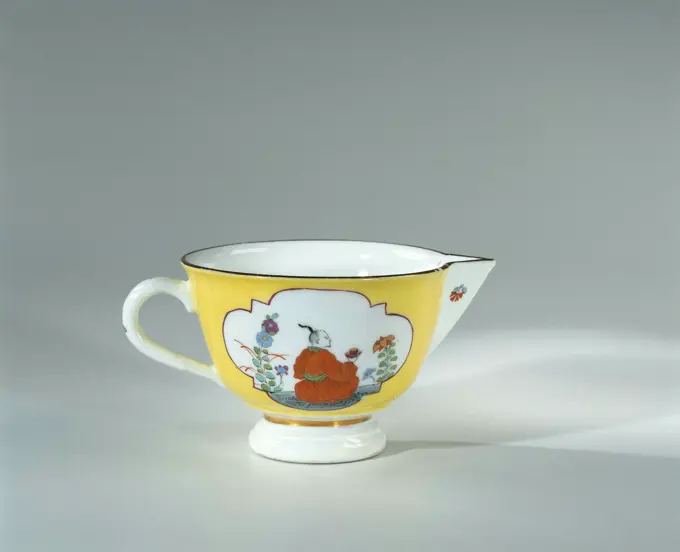
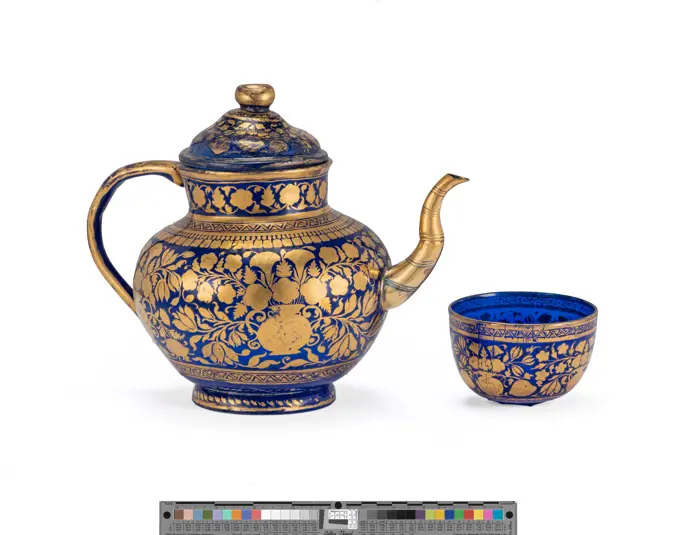
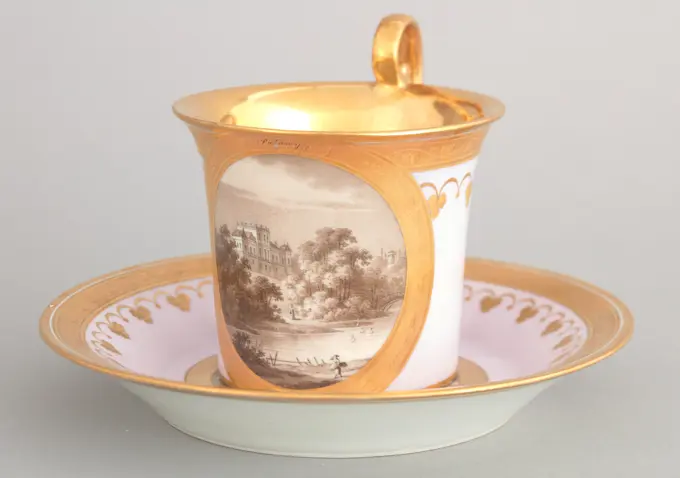
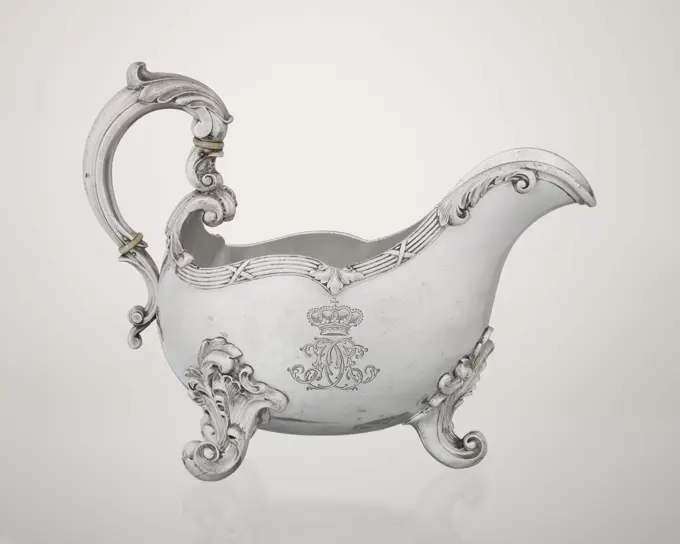
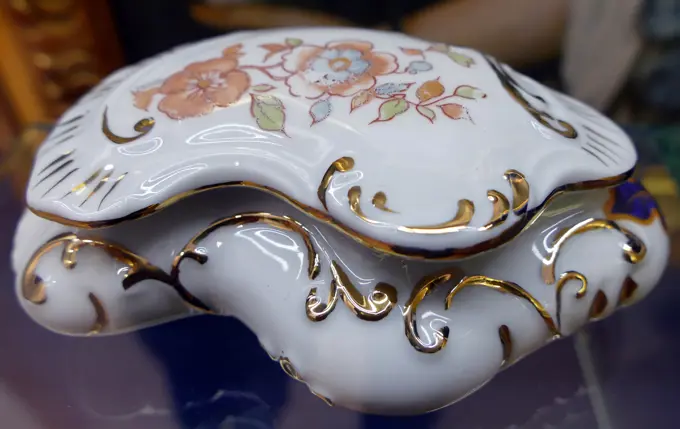
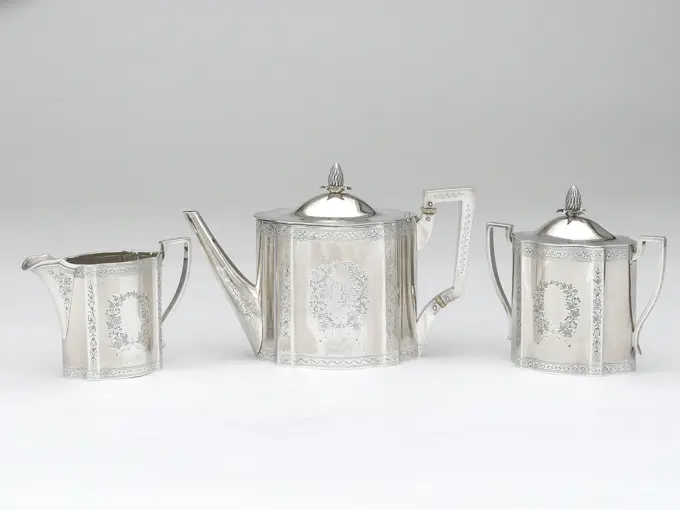
Head, multicolored painted with Deutsche Blumen in saved four passes in a yellow stock, Meissener Porzellan Manufaktur, c. 1765 Half -ball -shaped head of painted porcelain. The head has a stand ring and a C-shaped ear. The head is covered with a yellow stock with four passes in which Deutsche Blumen. The head is marked. Float porcelain Half -ball -shaped head of painted porcelain. The head has a stand ring and a C-shaped ear. The head is covered with a yellow stock with four passes in which Deutsche Blumen. The head is marked. Float porcelainTureen. Creil Pottery; French, 1801-1840. Date: 1810-1820. Dimensions: 22.9 × 34.3 cm (9 × 13 1/2 in.). Earthenware with transfer-printed decoration (creamware). Origin: Creil. Museum: The Chicago Art Institute, USA.Cadogan' teapot, c. 1750, 5 7/8 x 3 1/4 x 7 1/4 in. (14.92 x 8.26 x 18.42 cm), Porcelain, China, 18th centuryCoffee pot, belonging to Tete-A-Tete, painted with landscapes within ovals. Coffee pot, belonging to Tête-à-tête. Painted within oval fields with landscapes in encre-chine surrounded by a flower garland on a yellow soil. Marked with a skewer in underglazing blue.Lid painted with flowers. Lid painted a golden edge and flowers. The button has the shape of a flower.One-cup Teapot. Wedgwood (probably) (England, Staffordshire, founded 1759-present). England, Staffordshire, circa 1730. Furnishings; Serviceware. Salt-glazed stonewareCan with lid, Imari-Delft pottery. Can with faience lid. Painted multi-colored. Imii Delft. Marked K No.7.Milk; Barnard, Edward & Sons Ltd (London; company Z 1872/73 (1872-00-00-1873-00-00);Cream pitcher, Pressed glass, Clear glass cylindrical form with pressed decoration. Circular scalloped mouth with spout surmounting section decorated with pressed dotted pattern of alternating Maltese cross and fleur-de-lis motifs on swags above the phrase 'JUBILEE OF QUEEN VICTORIA 1837 1887'; reeded bottom section; ovoid loop handle; crown impressed on underside of base., ca. 1887, glasswares, Decorative Arts, Cream pitcherTeapot 1790-1800 Jabez Halsey. Teapot 8370Cup with checkered edge .. cup of porcelain, with multicolored checkered edge. Marked with swords. With associated dish.Cream jug ca. 1760 British, Staffordshire. Cream jug. British, Staffordshire. ca. 1760. Salt-glazed stoneware. Ceramics-PotteryTerrine, multi -colored painted with Deutsche Blumen, Insekten and Fruits, Meissener Porzellan Manufaktur, c. 1750 - c. 1760 Oval terrine of painted porcelain. The terrine has a vaulted wall and a vaulted lid. The edges are decorated with the Neuozier pattern in relief. The terrine is painted with Deutsche Blumen, Insekten and Fruits. The terrine has two ears in rocaille shape, the lid has plastic flowers and a button in the shape of a sitting boy. The Terrine is part of a service (BK-17474-1 to BK-17474-253). The terrine is marked. Float porcelain Oval terrine of painted porcelain. The terrine has a vaulted wall and a vaulted lid. The edges are decorated with the Neuozier pattern in relief. The terrine is painted with Deutsche Blumen, Insekten and Fruits. The terrine has two ears in rocaille shape, the lid has plastic flowers and a button in the shape of a sitting boy. The Terrine is part of a service (BK-17474-1 to BK-17474-253). The terrine is marked. Float porcelainCup with cover ca. 1740 Meissen Manufactory German. Cup with cover. German, Meissen. ca. 1740. Hard-paste porcelain. Ceramics-PorcelainPart of a coffee and tea service. attributed to the Manufactuur Oud-LoosdrechtLoosdrecht, c. 1774-1778hard-paste porcelainCup and saucer.Weesper Porcelainfabriekweesp, c. 1759-1771Hard-Paste PorcelainThe Herend porcelain manufactory, here a small selection of the porcelain products on 26.10.1993 in Iserlohn, is one of the most important manufactories in Europe, DEU, Germany, EuropeCup. Cylindrical cup of multicolor painted porcelain. Along the edge is a tire painted within which Guirlandes between ovals within which a flower. Flower bouquets are painted under the band. The head is noticed.Coffee cup from a coffee and tea set, painted with figures in a river landscape in beet red. Coffee cup with ear of porcelain. Painted in beet red on a light pink fond, with figures in a river landscape, with buildings and ruins.Beer mug with lid, painted with plant motifs, anonymous, c. 1730 - c. 1750  Beer mug of multi -colored painted faience, with a pewter lid. Purple compartments are painted by blue compartments on the pul, within which plant motifs in the colors orange, yellow, green and blue. Blue circles have been painted along the lower and upper edge. In the lid the inscription:*f*l*1747. Germany earthenware. tin glaze. tin (metal).Cup and Saucer, from the Service des Officiers, Sèvres Porcelain Manufactory, French, established 1756 to the present, hard paste porcelain, gold, France, 1849-1857, ceramics, Decorative Arts, cup and saucer, cup and saucerRoompot, painted with scenes from the Turfschippersbedrijf, Anonymous, 1700 Roompot van Faience, painted in blue with scenes from the Turfschippersbedrijf. Delft . Roompot van Faience, painted in blue with scenes from the Turfschippersbedrijf. Delft .. Tea cup, purple painted with winged putti floating on clouds. Along the edge a guilloches band with dependent flour glulands. Marked with a stork in blue under the glaze. N.B. German porcelain painted in The Hague.Head and saucer with river view, Royal Porcelain Factory Dommer & Co., 1809 - 1814 Cup and saucer decorated with a multi -colored landscape. Along the edges a leaf vank. Marked: Amstel. Nieuwer-Amstel porcelain Cup and saucer decorated with a multi -colored landscape. Along the edges a leaf vank. Marked: Amstel. Nieuwer-Amstel porcelainTeapot. Potter: John Griffith, American, died 1824Toy sauceboat set - Indian Scene D'après Francis Morley, 1845-1850Milkkan from the coffee and tea set 'Saxonia', Meissener Porzellan Manufaktur, c. 1904 Milk jug with porcelain lid, painted in blue and gray. The jug has a SNEB. The jug is marked. Float porcelain. uranium oxide Milk jug with porcelain lid, painted in blue and gray. The jug has a SNEB. The jug is marked. Float porcelain. uranium oxideTeapot, the ribs alternately blue and white, separated by golden piping, c. 1775 - c. 1800  Teapot with lid. Ribbed, the edges are serrated. The ribs separated by vertical gold piping. The Cavities Dark Blue (Blue du Roi), the ribs white, on which a decoration of leaf work and braid tire. The ear once kinked. The edges gilded, gilding inwards. The spout of the draft jar is damaged and mounted with silver. Marked in underlaze blue. Worcester earthenware vitrificationTea pot, from a child's tea set, in blue and white, c. 1780-1790, Caughley (Salopian) Works, 3 1/8 x 3 3/4 x 2 1/8in. (7.9 x 9.5 x 5.4cm), Pottery, England, 18th century. Woodwater tray of faience painted in blue. The holywater bin has an ear.TeapotTeapot from the coffee and tea set 'Saxonia', Meissener Porzellan Manufaktur, c. 1904 Porcelain teapot, painted in blue and gray. The pot has a spout. The pot is part of the coffee and tea set Saxonia. The teapot is marked. Float porcelain Porcelain teapot, painted in blue and gray. The pot has a spout. The pot is part of the coffee and tea set Saxonia. The teapot is marked. Float porcelainCover of teapot from the coffee and tea set 'Saxonia', Meissener Porzellan Manufaktur, c. 1904 Porcelain teapot lid, painted in blue and gray. The pot with lid is part of the coffee and tea set Saxonia. Float porcelain Porcelain teapot lid, painted in blue and gray. The pot with lid is part of the coffee and tea set Saxonia. Float porcelainTeapot ca. 1760-70 British, Staffordshire Listen to experts illuminate this artwork's story Listen Play or pause #407. Teapots Supported by Bloomberg Philanthropies We're sorry, the transcript for this audio track is not available at this time. We are working to make it available as soon as possible.. Teapot. British, Staffordshire. ca. 1760-70. Salt-glazed stoneware. Ceramics-PotteryBowl with cover (part of a set) decorated ca. 1725-30 Meissen Manufactory German The ensemble (1982.60.248-.251) is an assembled one, although one cup and saucer, both painted with riverscapes, are a fairly close match and are by the same hand. The xecond cup, also by the same artist, depicts an architectural landscape on one side, a winter skating scene opposite. On the saucer is a garden pavilion painted by a different artist. One cover is a modern replacement.The porcelain is of the Böttger type. Similar cups and saucers are dated 1720-25 by Rückert,1 but a slightly later date is suggested here by the incipient romanticism of the decoration. It is to be noted that, of the several known examples of cups of this model and decoration, the finials of the covers of all but these are in the form of a three-branched twig.Footnote:1 Rainer Rückert, Meissener Porzellan, 1710-1810 (exhib. cat.), Munich, Bayerisches Nationalmuseum, 1966, cat. no. 130.. Bowl with cover (part of a set). GermTeapot (part of a service) 1780-90 () Chinese, possibly for European market. Teapot (part of a service) 206662Teapot, black, decorated with corrugated edges. Teapot of black stone. The body with close-up ribbed edges. The S-shaped spout with volutes in relief. The C-shaped handle ends at the bottom in a stylized sheet.Terrine with lid, on a solid, painted with flower branches. Oval terrine of multi-colored padded faience, on a lower part. The terrine is geribd, stands on a foot and has a lid. The ears of the terrine and the lid have the shape of a tree branch that are mounted with leaves on the terrine and lid. The lower part has a lobed edge. The terrine, lid and underfaith are painted with flower branches.Wine Jug 1800-1825 Gmunden. Tin-glazed earthenware (faience) and pewter .Anonymous. Bucket. Japan porcelain, gilded bronze, around 1720. Paris, Carnavalet museum. 77641-13 Bronze gilded, gilding, flower motif, japan porcelain, regence style, dishes, 18th centuryTeacup. Manufacture nationale de porcelaine de Sevres (1756-), factory, Sevres, factory'Poppy' Teacup and Saucer. Doulton & Co. (England, London, Lambeth, founded 1815-1956 and Straffordshire, Burslem, 1877-present). England, 1912. Furnishings; Serviceware. Faïence with transfer decorationBlaker painted with parrot, N.V. Haagsche Plateel Factory Rozenburg, 1900 Blaker from porcelain, multi -colored painted with a parrot. The Hague porcelain Blaker from porcelain, multi -colored painted with a parrot. The Hague porcelainTeapot, c. 1860, Jean-François Veyrat, French, dates unknown, 7 1/2 x 10 x 6in. (19 x 25.4 x 15.2cm), Silver, France, 19th centuryEwer with gold floral motifs 1884 Worcester factory After the end of the Flight, Barr & Barr ownership of the Worcester factory in 1840, the firm went through a succession of owners and mergers before falling under the ownership of Kerr & Binns in 1852. During the partnership, the factory sought to rebuild its former eighteenth-century reputation in porcelain and known for Renaissance-inspired designs. With the establishment of the Royal Worcester Porcelain Company in 1862, the company gradually gained recognition for its Japanese-inspired designs, which formed part of Japonisme, a collective fascination with Japan that took place in Europe and the United States following the opening of Japanese markets to the West by Commodore Perry in 1853.. Ewer with gold floral motifs. British, Worcester. 1884. Bone china. Ceramics-PorcelainCup with insects, flower sprays and grapevines, Rue Thiroux Parijs, c. 1797 - c. 1798 service (set) Porcelain head with a cylindrical wall and C-shaped ear, painted on the glaze in enamel colors and gold. The outer wall is covered with colored insects (butterflies, beetles, dragonflies, etc.) and in gold flower branches and grape vines. Golden edge and ear. Marked on the bottom with 2. Paris porcelain. glaze. gold (metal) painting / gilding / vitrificationMug 1758-1762 Worcester. Soft-paste porcelain, polychrome enamels . Worcester Royal Porcelain Company (Manufacturer)Sake set, 20th century, Unknown Japanese, 1 x 2 11/16 x 2 11/16 in. (2.54 x 6.83 x 6.83 cm), Imari ware; porcelain, enamels, Japan, 20th centuryTerrine, sprinkled with sprinkling flowers, anonymous, c. 1775 - c. 1820 Terrine of Faience. Blue painted with sprinkling flowers. Brussels . Terrine of Faience. Blue painted with sprinkling flowers. Brussels .Coffee potA luxury tableware set on black reflective surface. Luxury tableware set on black reflective surfaceSaucer with a coat of arms and a monogram, anonymous, c. 1750 - c. 1774 Porcelain dish, painted on the glaze in red, pink, green, brown, purple, black and gold. On the flat of the dish an unidentified family crest divided into two courses with in 1. an object on a pink soil; 2. A grape branch against a white background. The helmet sign is a grape branch. The weapon is surrounded by leaf vines. On the inner edge a band with grape vines. Weapon porcelain with email colors. China porcelain. glaze. gold (metal) painting / gilding / vitrification Porcelain dish, painted on the glaze in red, pink, green, brown, purple, black and gold. On the flat of the dish an unidentified family crest divided into two courses with in 1. an object on a pink soil; 2. A grape branch against a white background. The helmet sign is a grape branch. The weapon is surrounded by leaf vines. On the inner edge a band with grape vines. Weapon porcelain with email colors. China porcelain. glaze. gold (metal) painting / Teapot of white stoneware with relief decorations; Staffordshire. Bulb-shaped teapot of white stoneware. The pot has an S-shaped spout and an S-shaped ear. The lid has a flower () As a button. The pot is decorated with six oval medallions in which a wavy relief pattern.. Sugar bowl with porcelain lid, painted multicolored with poppies inside an ornamental decor. Part of tea service.Teapot rock crystal ca. 1700, mounts ca. 1720 German, Dresden mounts and Indian, Mughal crystal From the turn of the seventeenth century until about 1725, the Saxon court at Dresden flourished as a center for the production of fanciful decorative objects in which goldsmiths work was combined with such varied and exotic materials as jade, rhinoceros horn, and emeralds. Each of these materials—like the ostrich eggs, coral, and coconut shells popular in the previous century— symbolized contact with a remote part of the world; when mounted in gold or silver, they became trophies of European trade and expansion.Such is the context of this teapot. The ribbed body and cover are of Indian rock crystal, and part of the finial on the lid probably is also Indian. Chased with flowering vines distinctly Eastern in character, the disk of the finial originally served as a platform for two small creatures of which only one, a turtle, has survived. The other mounts are German, and clearly reflect the Cup and saucer. Weesper Porcelainfabriekweesp, c. 1759-1771Hard-Paste PorcelainA Cup of Coffee, With Coffee Pot, 1970’s Style. Small porcelain milk jug with pear-shaped body, triangular spout from the edge and C-shaped ear, painted in underglaze blue and on the glaze red, green, black and gold. On the edge of the can, the edge of the lid and the lid a Japanese decorative tire in underglaze blue. Added a decoration in the Netherlands in email colors. On the abdomen a wide decorative band with arcing with four cartouches in it with alternating a river landscape with a man in a boat and a flower basket with two insects; On the edge curly. The lid with the same decoration. Translated / Amsterdam fur.Dessert Service (Coffee Cann). Flight, Barr & Barr (England, Worcester, 1813-1840). England, 1813. Furnishings; Serviceware. Porcelain, 'Japan' patternTwo-ear teacup with Hoeroldt malerei miniatures. Hoeroldt, Johann Gregorius (1696-1775), painter, Koenigliche Porcellain Fabrique, Meissen (1710-1763), factoryPitcher 1848-56 Charles Cartlidge and Company The mid-nineteenth century porcelain manufactory of Charles Cartlidge and Company in Greenpoint, Brooklyn produced a variety of slip-cast wares for the middle class market. The firm offered a wide array of forms which included tablewares and pitchers, along with mundane, everyday objects (inkstands, paper weights, spittoons, etc.) to highly specialized items. Among the companys favorite designs are the relief-molded pitchers of either corn and cornstalks or oak leaves and acorns, like this example. The most significant Cartlidge pitchers are those with shields and inscribed with names, often made for tradesmen or saloon keepers. The size of this pitcher is unusual and it is one of only a few known of this large capacity. The inscription, "C. Cartlidge," is for the firms proprietor and factory founder Charles Cartlidge, in whose family this pitcher descended.. Pitcher 5783Cup and saucer, c. 1740, Meissen Porcelain Factory, Meissen, Germany, est. 1710, 1 3/4 x 3 1/8 x 3 1/8 in. (4.45 x 7.94 x 7.94 cm), Porcelain, Germany, 18th centuryHanging Laver late 15th century South Netherlandish. Hanging Laver. South Netherlandish. late 15th century. Copper alloy, cast. Metalwork-Copper alloyJug, Glazed stoneware, A highly decorative white jug with detail on the body, spout and handle. The center depicts a knight riding a horse in an outdoor scene., England, 1849, ceramics, Decorative Arts, Jug. Cup of painted porcelain. The cup has an ear and a spout and is on the ear, the spout and the base after covered with a yellow fond. In this distance, two braco-shaped four passes have been saved within which one side is painted on one side on one side and a standing chinese on the other. The head is noticed.Teapot, c. 1730. Chantilly Porcelain Factory (French). Soft-paste porcelain; overall: 8.3 x 15 cm (3 1/4 x 5 7/8 in.). The pieces composing this individual tea set are entirely typical of Chantilly soft-paste porcelain in the Kakiemon style. Both the form and decoration of these pieces were inspired by Japanese prototypes. The use of knobs in the form of trumpet-shaped blossoms is characteristic of Chantilly wares.Can, painted with the portrait of Willem III. Can of faience, painted in blue with the portrait of Willem III, and two poems.Tureen. Sèvres Porcelain Manufactory; French, founded 1740. Date: 1861-1864. Dimensions: H. 21.6 cm (8 1/2 in.); diam. 25.4 cm (10 in.). Hard-paste porcelain and gilding. Origin: Sèvres. Museum: The Chicago Art Institute, Chicago, USA. Author: Manufacture nationale de Sevres.Egg glass; Chamberlain & Co (England; Porcelain Factory; 1788-1852); 1811-40 (1840-00-00-1845-00-00);Cup with the Portrait of Johan van Oldenbarnevelt, Anonymous (attributed to), after Jan Gerritsz. Visser, After 1794 service (set) Porcelain head, painted on the glaze in sepia and gold. A medallion with a portrait on the outside wall. A bond with a leaf rank and the inscription "Oldenbarneveld." To the medallion. Golden edge and a leaf vank on the ear. Marked on the bottom with 103-N and 5. porcelain company: Schwarzburgafter print by: Amsterdam porcelain. glaze. gold (metal) painting / gilding / vitrificationRoberta Spicer, Pitcher, c 1938 PitcherCup. Culture: French. Dimensions: Overall: 2 1/4 x 4 1/8 x 3 9/16 in. (5.7 x 10.5 x 9 cm). Date: 1815-30. Museum: Metropolitan Museum of Art, New York, USA.Close-up of silver teapots with sugar bowls in a trayTeaset. Decorator: Ada Lux Overton, AmericanBuliera (kettle for boiling water); Hutton & Sons Ltd (Shefield, Birmingham, London; company Z Otnicz and Platernicza; Fl. 1800-1930), Hutton, Edward (1839-); 1885/86 (1885-00-00-1886-00-00);Coffeepot - St. Johns Stone Chinaware Company (founded 1873) St. Johns Stone Chinaware Company (founded 1873)Cup with an ornamental border, anonymous, c. 1800 - c. 1824 Porcelain head with a cylindrical wall and C-shaped ear, painted on the glaze in gold. The outer wall is with golden lines divided into two wide tires with a pendulum of stars in the top, half moon shapes with dots and triangles. Golden line and dots on the ear. Marked on the underside with C. Empire. France porcelain. glaze. gold (metal) painting / gilding / vitrification Porcelain head with a cylindrical wall and C-shaped ear, painted on the glaze in gold. The outer wall is with golden lines divided into two wide tires with a pendulum of stars in the top, half moon shapes with dots and triangles. Golden line and dots on the ear. Marked on the underside with C. Empire. France porcelain. glaze. gold (metal) painting / gilding / vitrificationCup with a portrait of Santheuvel. Cup, one of a series of ten, part of a crockery with medallions painted in brown in which historical events and portraits of people from the national history. The cup is decorated with a portrait of Santheuvel. Signature.Miniature tea and coffee set ca. 1800 British. Miniature tea and coffee set. British. ca. 1800. Soft-paste porcelain. Ceramics-PotteryTeapot (part of a service) late 18th or early 19th century Lowestoft The tea service (67.192.1a, b-.16) is an example of "Mandarin" porcelain, painting done in imitation of Chinese export ware with figures in pink, red and blue. It was a style taken from Chinese drawings and used at the Bristol and Worcester factories as well.. Teapot (part of a service) 204797Sauce tureen British ca. 1800-1805 View more. Sauce tureen. British. ca. 1800-1805. Sheffield plate. Metalwork-SilverplateTeapot with Lid and Cup Inscribed with the Crest of John Deane (d. 1751), Governor of Bengal. India, Mughal empire, circa 1725-1732 (spout: 19th century). Furnishings; Serviceware. Cobalt blue glass with gilding; brass spoutEngland,Shropshire,Ironbridge Gorge,Coalport,Display in Coalport China MuseumCup and saucer. Culture: American. Dimensions: Cup: H. 3 in. (7.6 cm); Diam. 3 1/2 in. (8.9 cm)Saucer: Diam. 5 5/8 in. (14.3 cm). Maker: Union Porcelain Works (1863-ca. 1922). Date: 1875-85. Museum: Metropolitan Museum of Art, New York, USA.Vintage candy bowl, tea cup and teapot isolated on white background. Collage.'Porcelain Mug', c1770, (1936). Artist: John de Lanauze.Cup and Saucer with Putti Medallion Cup And Saucer; porcelain, vitreous enamel, goldPrzeszo Przyszoci Richter, Joseph (1780 1837)Hungary, capital city of Budapest. Buda, Castle Hill, Herend China.Unknown, Cup and Saucer, c. 1930, Bone porcelain.Teapot Teapot; pewterVase covered with a visited figure lion;  18th century (1701-00-00-1800-00-00);Retro cartoon with texture. Isolated on White.Sauceboat; Hunt & Roskell (London; company Z Otnicz; Fl. 1822-1965), Hunt, John Samuel (1785-1865); 1847/48 (1847-00-00-1848-00-00);CERAMICA DE LA MENORA (PRODUCCION ACTUAL). Location: INTERIOR. TALAVERA DE LA REINA. Toledo. SPAIN.Luxury chocolate box which would have been used by a French lady of the court. Dated 17th CenturyTea Service Made 1862 Boston. Silver . Haddock, Lincoln & FossTAZA PORCELANA DE ALCORA S XVIII. Location: CONVENTO DE SAN CLEMENTE-MUSEO. Toledo. SPAIN.Teapot. Culture: American. Dimensions: H. 6 in. (15.2 cm); Diam. 7 in. (17.8 cm). Maker: American Art China Company (1891-1894). Date: 1891-94. Museum: Metropolitan Museum of Art, New York, USA.Little tea pot, red clay with black Chinese ideographs, China, Asia