Textiles And Embroidery Patterns

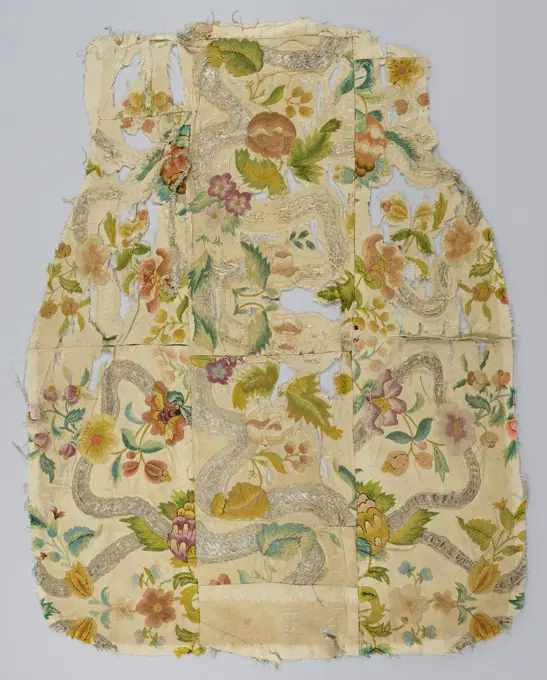
Selection of embroidered silk pieces and fabric samples, featuring floral designs and intricate weaving techniques from past centuries.
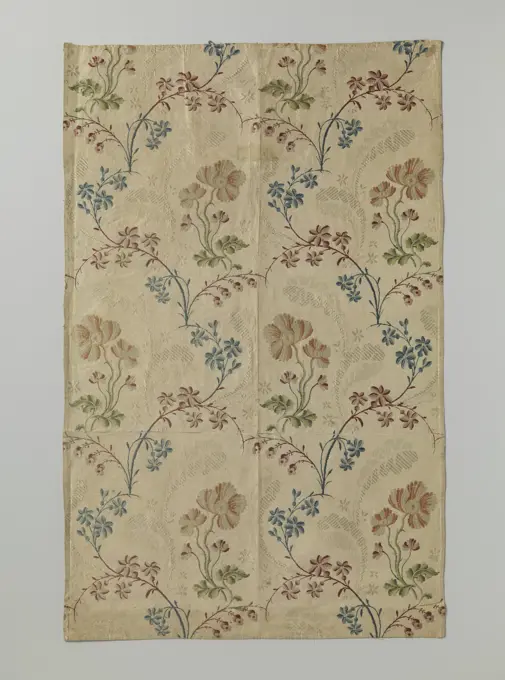
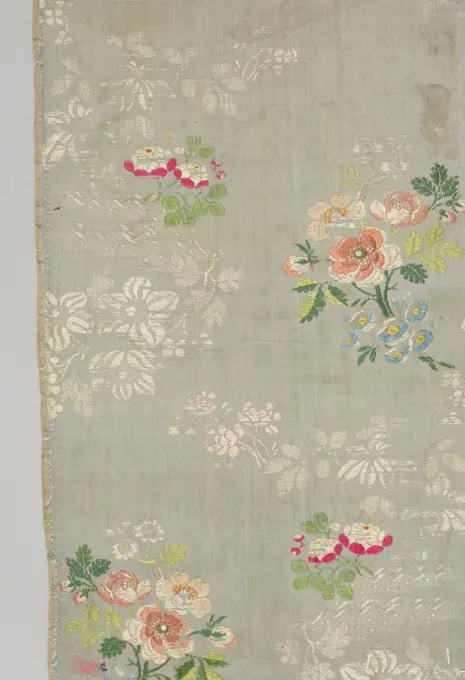
Two fragments -stuck fragments multicolored silk, anonymous, c. 1730 - c. 1760 Two fragments of silk tissue. The pattern has white spring -shaped leaves with small flowers and multicolored flower branches. Netherlands silk Two fragments of silk tissue. The pattern has white spring -shaped leaves with small flowers and multicolored flower branches. Netherlands silk
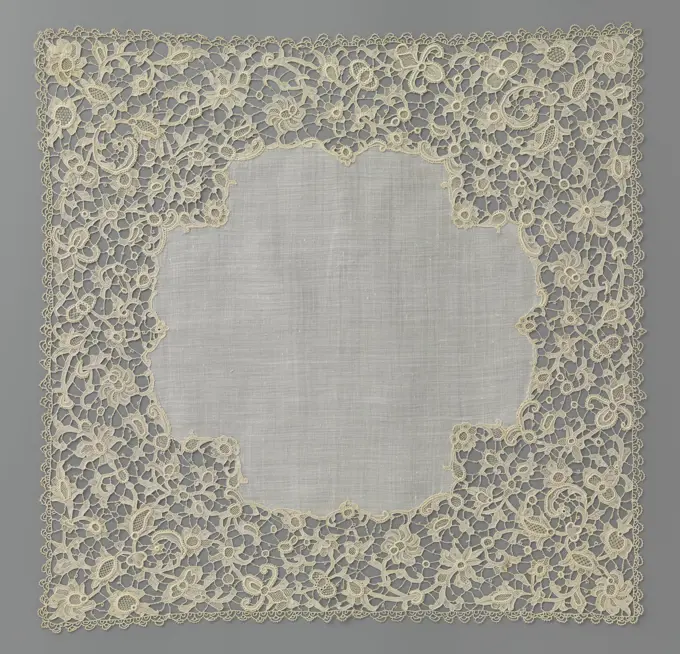
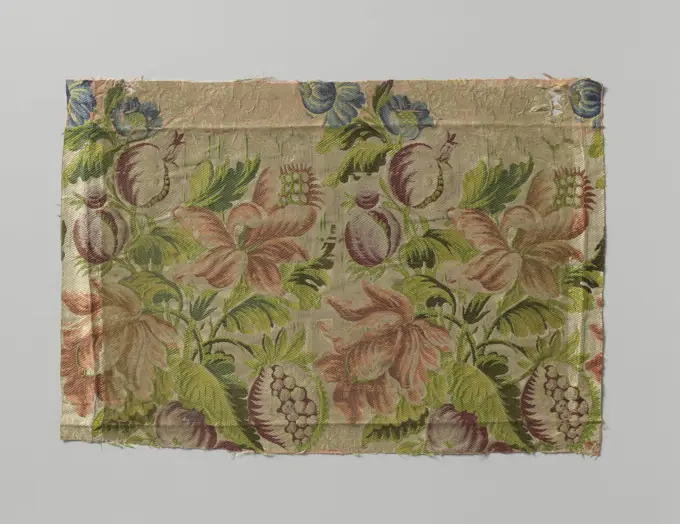
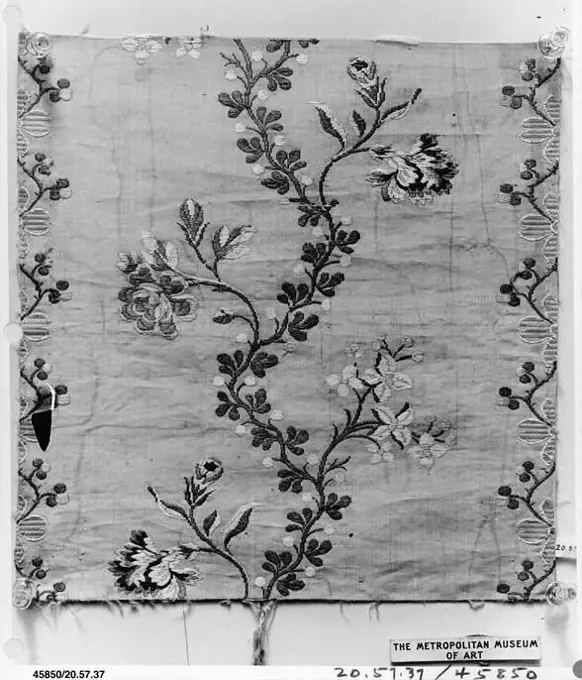
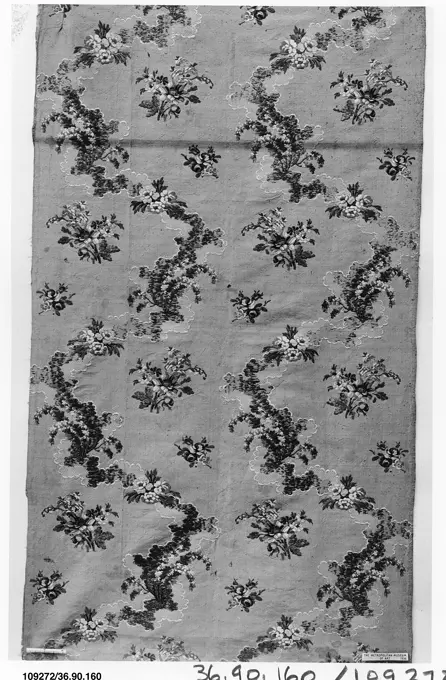
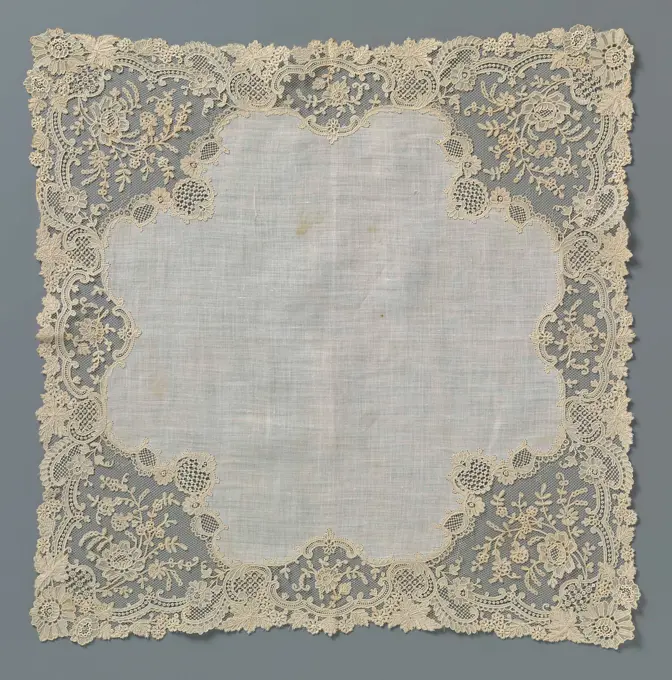
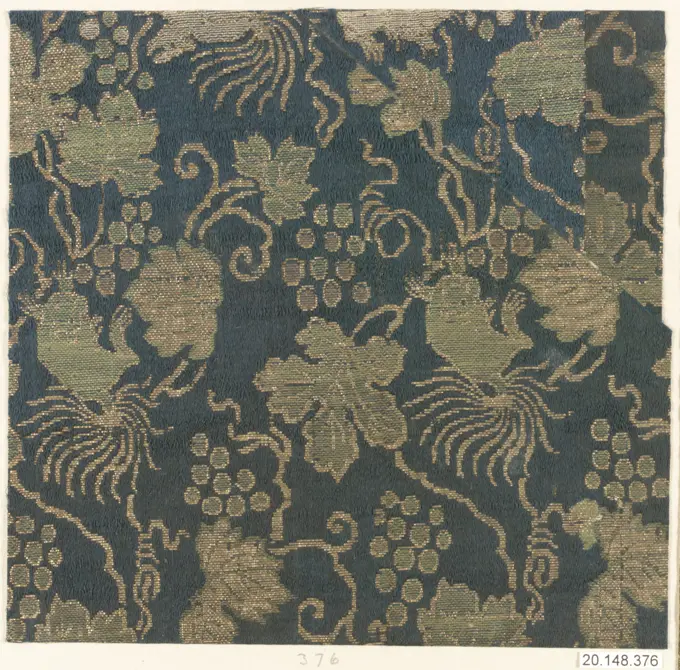
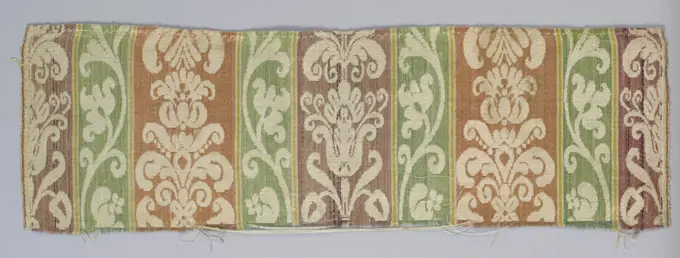
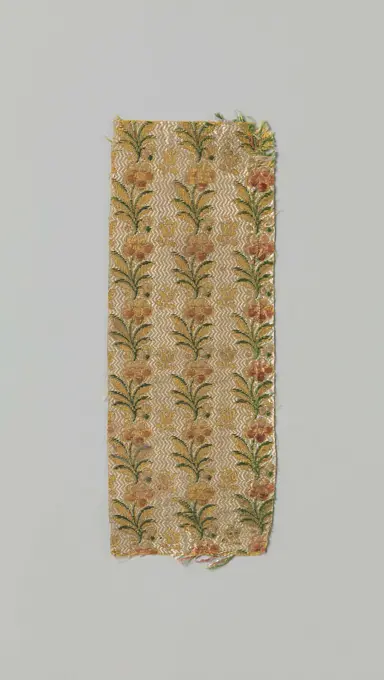
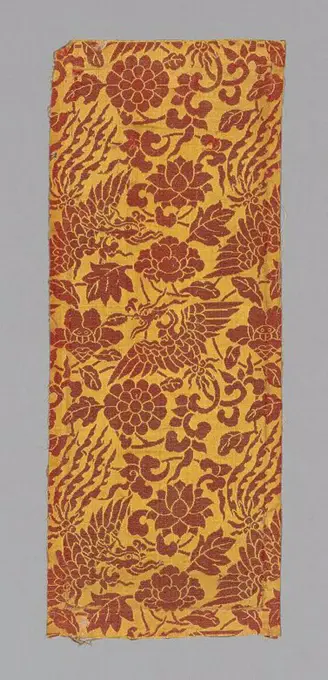
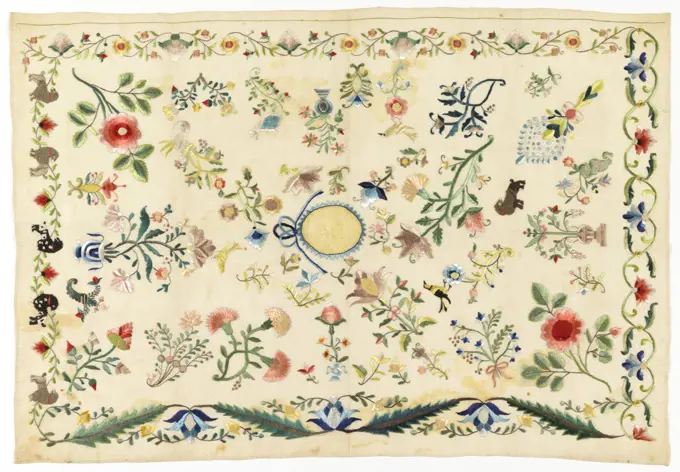
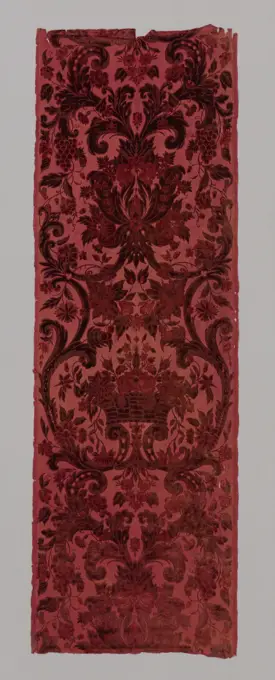
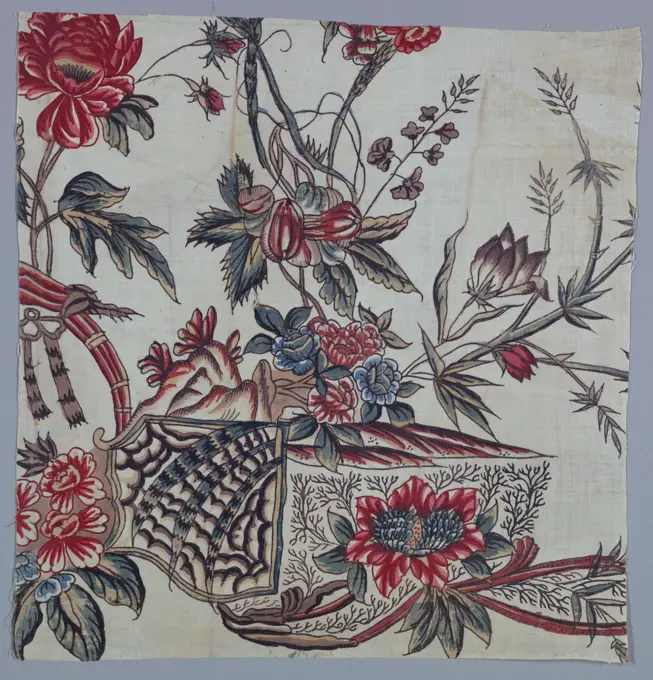
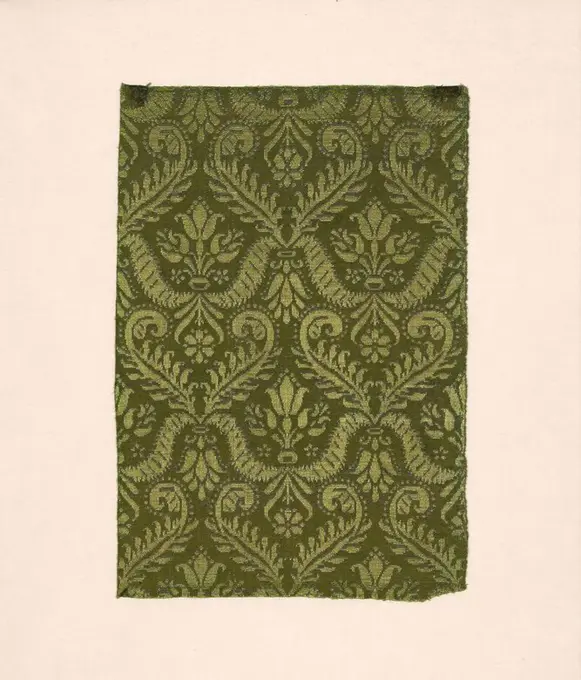
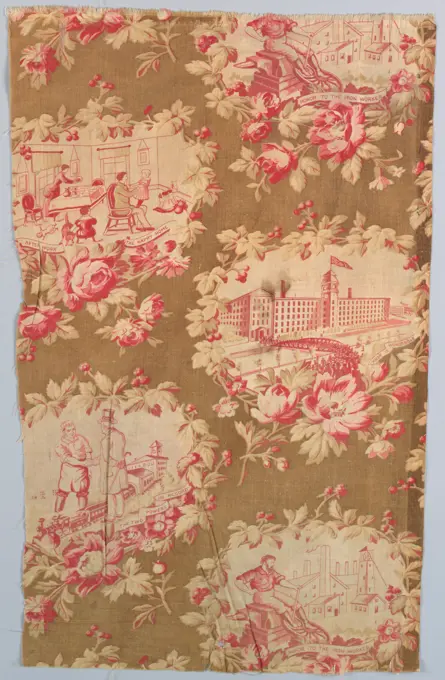
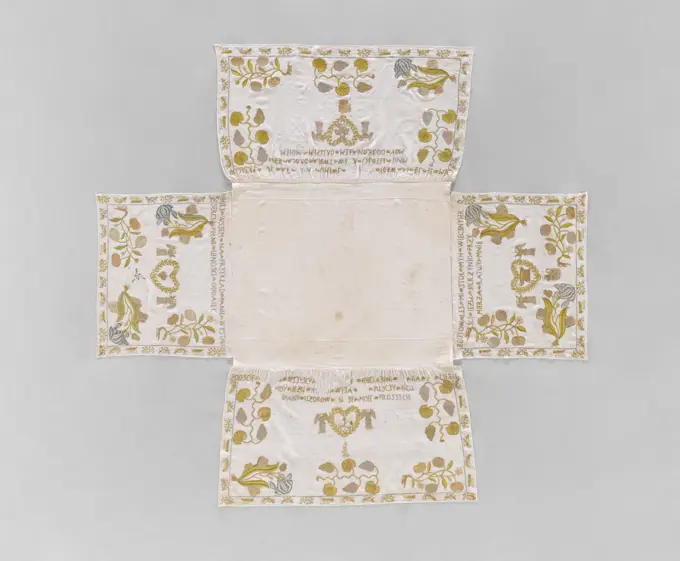
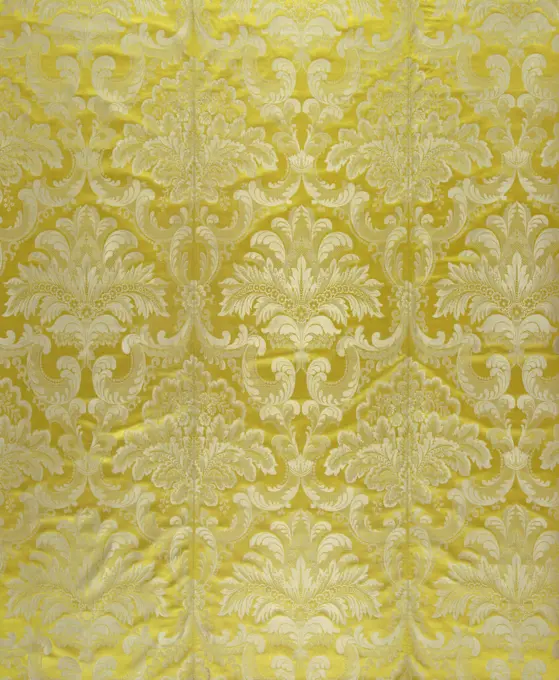
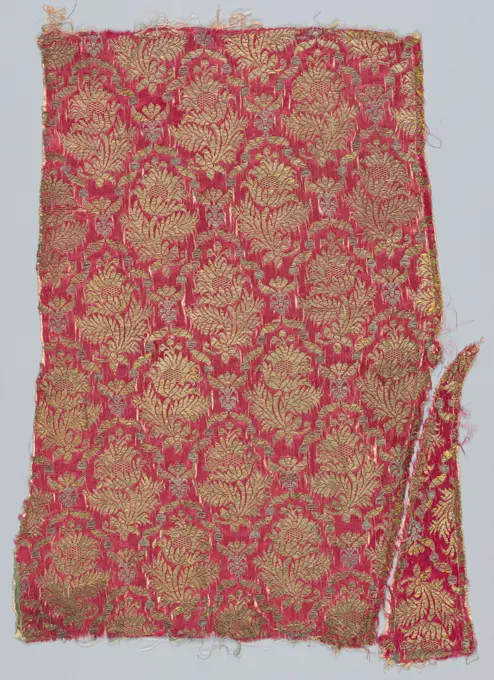
Piece 1750-60 French. Piece 220607Chintz Fragment (India); cottonWey (Formerly a Valance) Designed 1878-1888 England. Cotton, plain weave; block printed . William Morris (Designer)Piece. Culture: French. Dimensions: L. 17 3/4 x W. 17 inches45.1 x 43.2 cm. Date: 1750-60. Museum: Metropolitan Museum of Art, New York, USA.Textile (France); silk, metallic yarnsTextile (France); silkHandkerchief made of needle side with flowers and an interior of Batist. Batist handkerchief with a wide edge. Natural needle side: Venetian relief side. The inner piece of linen batist is scalloped and rosette-shaped. Lace: On a bar ground, tendrils with vermicked flowers, such as impeller-shaped palm-shaped flowers, paisley motifs, and so on, which are asymmetrical are grouped.Fragment of silk fabric  pattern made of flower bunches and lace motifs unknownNeedle's handkerchief with spring motif, anonymous, c. 1875 - c. 1910 Natural needle side handkerchief: Venetian relief side. Sculpted inner piece of linen batist and an edge of the needle side. On the open bars of bars there are tumbles with multifaceted flowers, including flowers with a spring motif. The pattern repeats itself in the four corners. BURANO linen (material) Venetian raised work Natural needle side handkerchief: Venetian relief side. Sculpted inner piece of linen batist and an edge of the needle side. On the open bars of bars there are tumbles with multifaceted flowers, including flowers with a spring motif. The pattern repeats itself in the four corners. BURANO linen (material) Venetian raised workFragment; medium; wool. linenTextile; silk on silk; Bequest of Erskine Hewitt; 1938-57-1250-aLeaf with spreading pattern of twigs with three fruits, Anonymous, 1750 - 1900  Leaf with spreading pattern made of twig with three fruits. With label with inscription: 'H.A. Hartogh ... Versantes. ' Half of a cover.  paper. block printing (relief printing process) ornament derived from plant formsTextile (France); cotton; Warp x Weft (warp with piece added at top): 59.5 x 24.5 cm (23 7/16 x 9 5/8 in.) Repeat H (half-drop): 23.5 cm (9 1/4 in.)Fragment of upholstery fabric unknownChaice veil, eddroided unknownSidewall - Sample, Mallow, 1887; Designed by Morris & Co. (United Kingdom); Manufactured by Jeffrey & Company (United Kingdom); block-printed paperPiece 18th-19th century Japan. Piece 65937Textile; cottonFragment pink rip tissue, 1700 Fragment of pink rip tissue with pattern of naturalistic flowers, leaves and seed bulbs. France (possibly) silk twill Fragment of pink rip tissue with pattern of naturalistic flowers, leaves and seed bulbs. France (possibly) silk twillCarpet fragment, Medium: wool Technique: double cloth, Fragment in olive green, red, yellow and off-white patterned by a row of a motif of two large flowers with a bunch of leaves in alternate alignment with a row of a motif of two large leaves with a branch of smaller leaves, scrolling tendrils between the motifs with small flower sprigs. Subtle background patterning of a diamond lattice., USA, 1850-1900, woven textiles, Carpet fragmentTablecloth, Medium: linen, cotton Technique: embroidered on plain weave, Square off-white tablecloth has in each corner two stylized pink roses with pale yellow-green spade-shaped leaves. Roses reminiscent of the Glasgow rose design., USA, ca. 1900, embroidery & stitching, TableclothRibbon French 19th centuryPanel. France, Lyon. Date: 1730-1740. Dimensions: 106.6 x 54.3 cm (42 x 21 3/8 in.)Repeat: 41 x 26.7 cm (16 1/8 x 10 1/2 in.). Silk, satin weave with twill interlacings of brocading and some self-patterning ground wefts and plain interlacings of secondary binding warps and some self-patterning ground wefts. Origin: Lyon. Museum: The Chicago Art Institute, Chicago, USA.Borders, Medium: cotton Technique: roller printed on plain weave and glazed, Three uncut bands of floral border in purple and black on white., England, mid-19th century, printed, dyed & painted textiles, BordersPiece 19th century Japan (Shiga). Piece 70407Tegelveld of twelve tiles, Anonymous, 1725 - 1825 Tile field of 12 tiles (6 x 2) with a saved pattern of acanthus leaves against a purple stock. Netherlands earthenware. tin glaze majolica Tile field of 12 tiles (6 x 2) with a saved pattern of acanthus leaves against a purple stock. Netherlands earthenware. tin glaze majolicaPiece 1760-70 French. Piece 220230Piece ca. 1760-70 French. Piece 223261Piece mid-18th century French. Piece 227528Handkerchief (France); cotton, linenFour fragments of fabric with floral motifs and leavesPanel Made 1765-1770 Germany. Silk, plain weave with supplementary patterning wefts and supplementary brocading wefts .Piece 1830-35 Bannister Hall The Bannister Hall print works was founded ca. 1798 by Richard Jackson and John Stephenson. Between 1809 and 1825 it was owned by Charles Swainson with varying partners. It was the leading firm for woodblock "furniture" chintzes.. Piece 221908Handkerchief of application office with sixteen seed beads. Natural Applicationant Handkerchief: Mixed Lace - Needle Side and Disknut - Appliqued on Machine Tulle. An eight batters center piece is surrounded by écru-colored lace with large, lobed, shield-shaped reserves in the corners and smaller reserves on the center of sides. The contours of corner reserves are formed by small C-Volutes and seed beads with grid work (needle side). In the reserves, fine, curved twigs with dwarf manjers, forgettmijnites (dump edge) and ranonkels (needle side). The fairly straight edge is made up of wingerd leaves and rosettes (needle side).Piece 18th century Japan. Piece 71367Sidewall (USA); Manufactured by M.H. Birge & Sons Co. (United States); machine-printed on ungrounded paper; 80 x 55.5 cm (31 1/2 x 21 7/8 in.)Piece 18th-19th century Japan. Piece 67528Samples (USA); Manufactured by Orinoka Mills (United States); Warp x Weft (a): 22 × 25 cm (8 11/16 × 9 13/16 in.) Warp x Weft (b): 20 × 25 cm (7 7/8 × 9 13/16 in.)Sample book page, Medium: cardboard, linen, silk, metallic Technique: linen embroidery with ground cloth dissolved Examples of embroidery on net produced by the Schiffli machine Metallic embroidery on net Machine-made openwork in imitation of hand-embroidered net Mostly floral and a few geometric patterns, some designs described as 'Spanish' Imitation hand-made filet Machine filet Imitation filet crochet Ploven (burnt-out lace) Fancy curtain lace made on the Levers machines Real filet (handmade) next to Machine-made filet Spotted curtain nets, made chiefly at Nottingham, England and Caudry, France., Samples of machine-made openwork and several examples of hand made lace mounted on boards. They imitate hand-embroidered net, crochet, or needlepoint. All are floral patterns plus a few of early 1920's geometric style., 'Embroidered net' produced by the Schiffli Machine., USA, ca. 1910, sample books, Sample book pagePiece 1760-70 French. Piece 223244Fragment. Europe, possibly Italy. Date: 1650-1700. Dimensions: 27.9 × 26 cm (11 × 10 1/4 in.). Linen and wool, compound weave (i.e. Beiderwand or Lampas 2:1). Origin: Europe. Museum: The Chicago Art Institute, Chicago, USA.Fragment of silk fabric  flower bouquets in net composition unknownHandkerchief, Medium: linen, cotton Technique: embroidered, Handkerchief of fine sheer linen with deep border solidly embroidered in ornamental floral motifs. Lace trimmed., France, early 19th century, embroidery & stitching, HandkerchiefFragment, Medium: silk Technique: 7&1 satin damask, Nine stripes in purple, green and orange each separated from the next by lines of yellow and white. each stripe has conventionalized foliate design., 17th century, woven textiles, FragmentFragment veelkleurige zijden droguet liseré.Fragment multicolor silk tissue. The pattern has vertical rows with multicolored flower branches, between which small yellow flower branches.Textile (Japan); silkSutra Cover. China. Date: 1590-1599. Dimensions: 36.5 × 14.2 cm (14 3/8 × 5 5/8 in.)Repeat: 19.8 × 11.2 cm (7 3/4 × 4 3/8 in.). Silk, warp-float faced 4:1 satin weave with supplementary patterning wefts bound in weft-float faced 1:4 satin interlacings. Origin: China. Museum: The Chicago Art Institute, Chicago, USA.Trimming (France); cottonFragment (France); woven silk; 1896-21-5Fragment; medium; silk, metallic threadCover or veil, Medium: linen Technique: Brussels style bobbin lace, Veil of Brussels-style lace with droschel ground and slender curving stems with leaves and flowers., Belgium, early 18th century, lace, Cover or veil. Silk, plain weave with supplementary patterning warps, supplementary brocading wefts, and self-patterned by complementary ground weft floats .Sampler, Medium: silk embroidery on cotton foundation Technique: embroidered in satin, stem, and knot stitches with cutwork with needle-made fillings on plain weave foundation, Sampler scattered with flowers and birds embroidered in many colored silks. Central medallion in gold with blue serrated edge and a bow. Several dogs, perhaps poodles, appear amongst the flowers., Mexico, 19th century, embroidery & stitching, SamplerSamples (USA); Manufactured by Orinoka Mills (United States); Warp x Weft (a): 20 × 65 cm (7 7/8 × 25 9/16 in.) Warp x Weft (b): 16.5 cm (6 1/2 in.)Piece 18th-19th century Japan. Piece 67251Fragment; silk woven; Warp x Weft: 18.1 x 11.6 cm (7 1/8 x 4 9/16 in.)Textile 1700-1899 Russian. Textile 173409Piece ca. 1735 Italian. Piece 227381Textile (France); silk; Warp x Weft: 50.2 x 53.5 cm (19 3/4 x 21 1/16 in.)Piece 17th century Italian. Piece 216979Yellow-ground fragment with motif of plum and bamboo covered in snow, 18th-19th century, Unknown Ryukyuan, 9 × 15 7/8 in. (22.86 × 40.32 cm) (overall), Cloth: cotton; bingata (stencil resist with applied pigments), Japan, 18th-19th centuryFragment textile. Textile fragment, print and embroidery on soft blue background.Panel Made 1715-1745 Italy. Silk, cut, uncut, voided velvet against satin weave foundation .Chintz Fragment (India); cottonBand (Italy); silk embroidery on linen foundationPiece 1760-70 French. Piece 223346Bedcover (North Carolina Lily or Virginia Lily Quilt). United States. Date: 1835-1845. Dimensions: 189.2 x 215.9 cm (74 1/2 x 85 in.). Origin: United States. Museum: The Chicago Art Institute, Chicago, USA.Fragment. Italy. Date: 1575-1600. Dimensions: 39.7 x 27 cm (15 5/8 x 10 5/8 in.)Repeat: 27.4 x 13.4 cm (10 3/4 - 10 7/8 x 5 1/4 in.). Silk, 4:1 satin damask weave. Origin: Italy. Museum: The Chicago Art Institute, Chicago, USA.Fragment of embroidery  waved river” motif and sprays of flowers unknownTextile (France); silk; Bequest of Erskine Hewitt; 1938-57-1136Textile Fragment (embroidered band)Fragment, Technique: velvet, 17th century, woven textiles, FragmentCoverlet 1830s French or Spanish. Coverlet 229547Album of loose cards in the boxLinnamast napkin with thrown flowers, anonymous, 1670 - 1680 White Linnamasten napkin with a pattern of stripped flowers and birds in edges. Satin 5 Binding. Northern Netherlands (Possible) linen (material) damask White Linnamasten napkin with a pattern of stripped flowers and birds in edges. Satin 5 Binding. Northern Netherlands (Possible) linen (material) damaskTextile (England); cottonVelvet Textile, 1600s. Italy, Genoa , second half of 17th century. Velvet (cut and uncut); silk; overall: 90.2 x 24.2 cm (35 1/2 x 9 1/2 in.).Fragment (USA); cotton; Warp x Weft: 47 x 28.5 cm (18 1/2 x 11 1/4 in.); Bequest of Elinor Merrell; 1995-50-272Ribbon French 19th century View more. Ribbon. French. 19th century. Textiles-TrimmingsPiece 18th-19th century Japan. Piece 66466Frieze, Liberty Wall Paper Company, Schuylerville, New York, Machine-printed paper, Row of staggered yellow poppies stemming from scroll-like architectural structures filled with thin leafy vines. Bottom has stripes of yellow and green. Grounding is shaded from light pink (top and bottom) to light yellow (middle). The monochrome blue background design alternates between floral bands and groups of thin lines. Top has stripes of green and foliate bands (same as in architectural structure)., Possible inscription in selvedge: ribbon with illegible letters (Standard Papers), Schuylerville, New York, USA, 1905-1915, Wallcoverings, FriezeTextile, Medium: silk Technique: predominately warp-caced plain weave patterned by a continuous supplementary weft (white) and discontinuous supplementary wefts (multi-colors); supplementary wefts bound on the front in 1 3 twill, Vertically symmetrical pattern of exotic flowers loosely held together by an ogee foremat. Yellow background., Netherlands, 18th century, woven textiles, TextileLength of Fabric for Clothing. Dimensions: Textile: H. 57 1/2 in. (146.1 cm)W. 28 1/2 in. (72.4 cm)Mount: H. 61 1/4 in. (155.6 cm)W. 32 1/4 in. (81.9 cm)D. 1 7/8 in. (4.8 cm). Date: 18th century.This length of fabric with intact selvedges is decorated with rows of poppies on a ground of shimmering silver-wrapped thread. Textiles like this example, with repeating patterns of formally arranged, naturalistic flowers on a blank background, were produced in great numbers in Mughal India beginning in the seventeenth century. Museum: Metropolitan Museum of Art, New York, USA.Piece 18th-19th century Japan. Piece. Japan. 18th-19th century. Silk. Textiles-WovenFragment; silk; Bequest of Richard Cranch Greenleaf in memory of his mother, Adeline Emma Greenleaf; 1962-56-21Church tablecover. unknown, authorLength of Silk Damask, late 1600s. Italy, late 17th. Damask, silk; average: 97.2 x 56.5 cm (38 1/4 x 22 1/4 in.).Textile; Manufactured by Schwartz-Huguenin; cottonCarpet fragment, Medium: wool, cotton, hemp Technique: cut pile, Bunches of flower heads in shades of brown, blue and orange on a dark cream-colored ground. Brown curlicues meander between flower heads., USA, 1850-75, woven textiles, Carpet fragmentCeiling Paper (USA); Manufactured by Maxwell & Co., S.A. (United States); machine-printed paper, liquid mica; 92 x 49 cm (36 1/4 x 19 5/16 in.)Textile, Medium: silk Technique: satin lampas, Canary yellow ground showing a design in ivory of diapered scrolls forming ogives and enclosing floriated leaf palmettes., France, early 19th century, woven textiles, TextileCoverlet Made 1850-1900 United States. Wool, plain weave double cloth with main warp bottom and attached knotted yarn edge fringe; woven on loom with Jacquard attachment .Fragment; silk, metallicPiece 1760-70 French. Piece 220276Handkerchief. probably Phillipines, 1780-1820. Costumes; Accessories. Bast fiber plain weave with cotton embroideryTextile Fragment early 18th century. Textile Fragment 454478Part of the antependium, embroidered  motifs of cornucopia, floral twigs and birds unknownFragment of silk fabric  motif of a vase with a bouquet ended with pomegranate unknownSidewall (possibly USA); machine-printed; 46 x 42 cm (18 1/8 x 16 9/16 in.)Piece 18th century possibly French. Piece. possibly French. 18th century. Cotton. Textiles-Printed