World War I Military Personnel

Historical images of soldiers and officers during World War I, showcasing moments before deployment and inspections, with a somber, historical mood.

Soldiers standing in Castle Park near Ypres during World War I. The photograph, labeled as number 66982, was taken on 5-12-19 and features a European Union symbol. The notes indicate it was taken in Ya Schlosspark Polderton bei Ypem, which translates to Castle Park Polderton near Ypres.
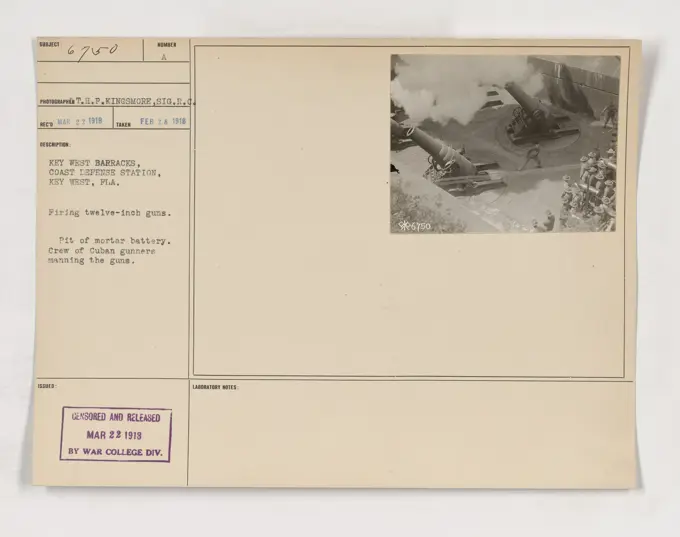
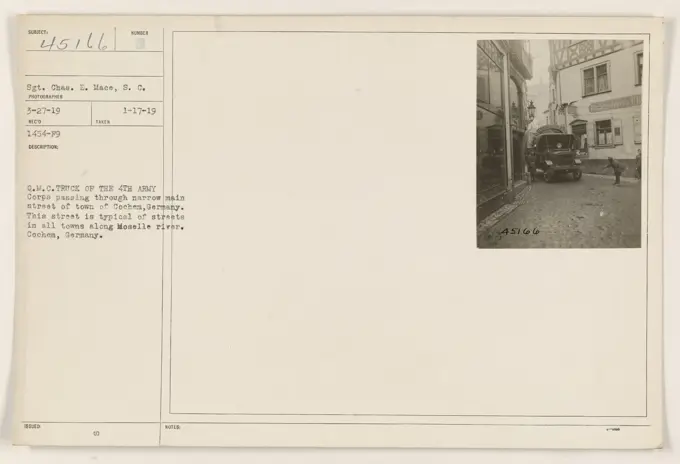
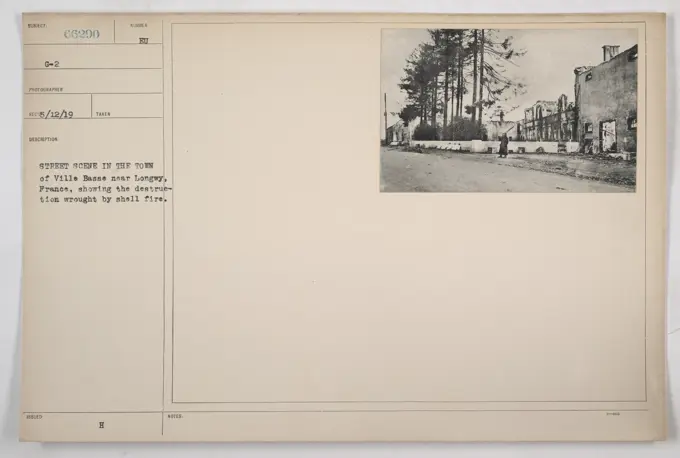
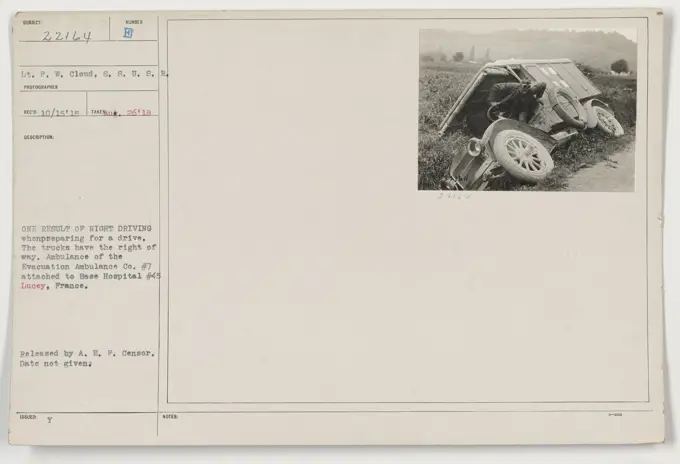
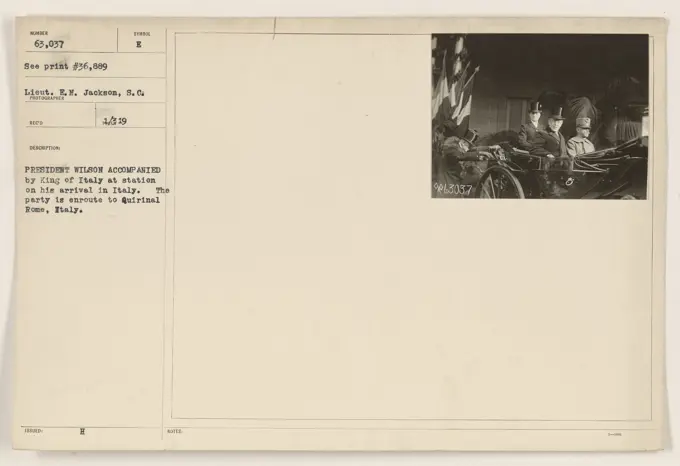
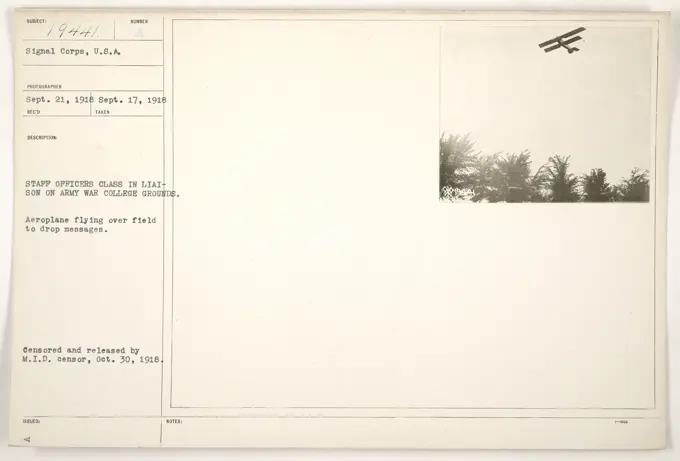
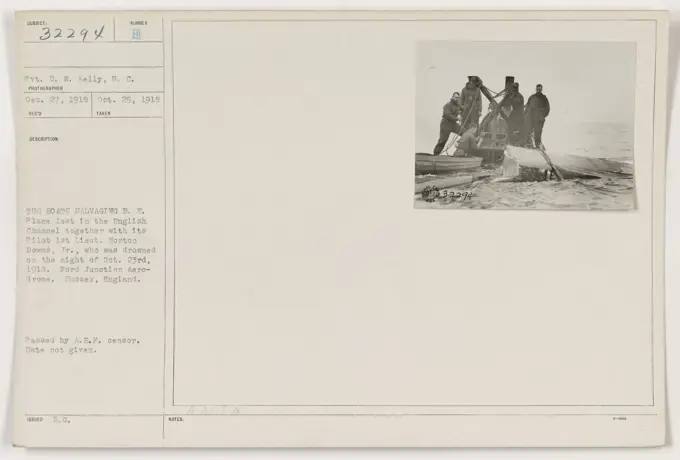
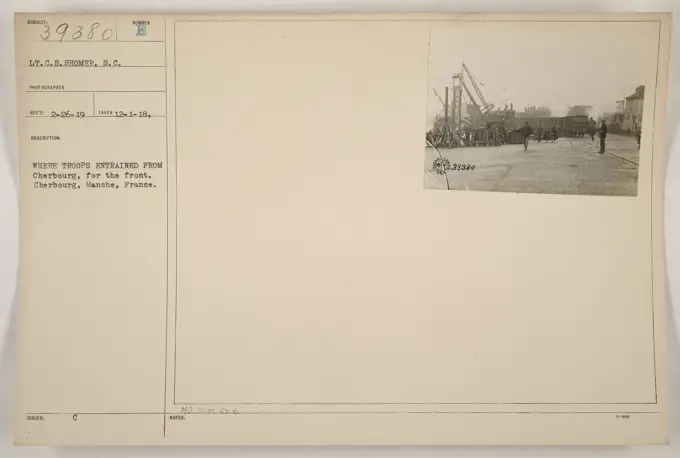
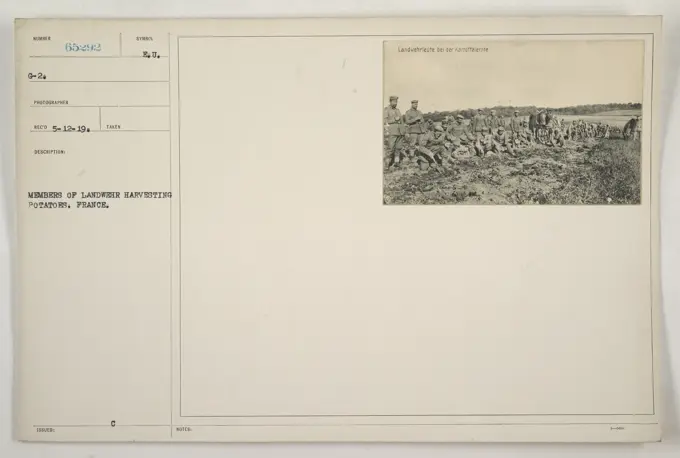
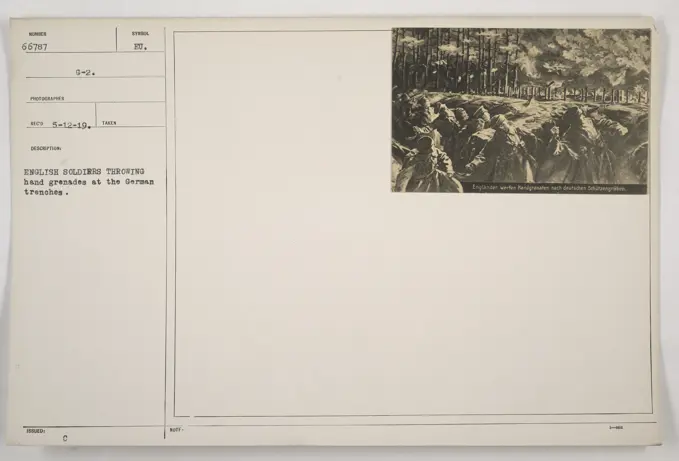
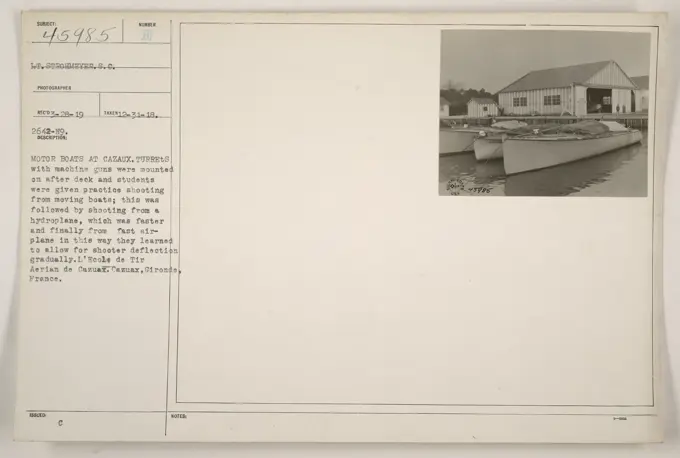
Portrait of Pvt. Oasge Christianson, a member of the "Americans All" unit. Christianson served with the Prussian Guards for four years before joining the American military. He was wounded five times while serving in the German Army. The photograph was taken in Washington, D.C. (#64,983) by Sgt. Bonner on 10/23/19.21st Grand Div. Transportation Corps, Camp Pullman, France. This photograph showcases the interior of erection shed No. 1 unit looking towards the north. The photographer's description symbol is SUNSER 57615 S.C. The photo received date is 7-15-19 and it was taken on 8-29-18. The image is issued and marked as "Notes for Official Use Only 3-0000."Caption: "Image depicts soldiers from the 1st Corps School at Gondrecourt, France, advancing in a line formation during military maneuvers. The photograph, taken by Sgt. J. Marshall, shows the infantry acting as combat groups and skirmishers. Date taken: August 16, 1918. Approved by A.E.F. Censor. FATALCEN."Crew of Cuban gunners firing twelve-inch guns at Key West Barracks, Coast Defense Station, Key West, FL. This photograph was taken by T.H.P. Kingsmore and R.C. Reed on February 28, 1918. It is part of a series of photographs documenting American military activities during World War One. Censored and released on March 22, 1918, by the War College Division. Photographer's notes: 6750.Sergeant A.C. Duff from the Signal Corps photographed American soldiers wounded in Base Hospital #8 in Savenay, France. The image was taken on June 25, 1918 and passed inspection by the A.E.P. Censor on July 23, 1918. Additional notes indicate the photograph's description number as 15879.Pvt. W.J. Beach standing in front of a grain hall used as quarters and a garage at Blois, Loire et Cher, France. Photograph taken on February 1st, 1919 during World War One. The image was received and recorded on December 1918 with the number 36287. (From the collection "Photographs of American Military Activities during World War One")A Q.M.C. truck from the 4th Army Corps is seen passing through the narrow main street in the town of Cochem, Germany. This street is indicative of the streets found in all towns along the Moselle River. The photograph was taken by Sgt. Chas. E. Mace, S. C. on 3-27-19 and issued on 1-17-19. The photo's reference number is 1454-F9.Dramatic aftermath of shell fire in the town of Ville Basse near Longwy, France. The street scene reveals widespread destruction and devastation in the area. The destruction is a testament to the harsh realities of war during World War One. (50 words)An ambulance of the Evacuation Ambulance Co. #7, attached to Base Hospital #45 in Lucey, France, during World War I. This image shows the result of night driving preparation, with the trucks having the right of way. The photo was taken on October 15, 1918, by Lt. P. W. Cloud of the U. S. R. N. Photo released by the A. E. P. Censor, with date unknown.Sgt. C.E. Dunn, S.C. leads Miss Margaret Wilson and her party, along with Maj. Newman, a French Officer, and Y.M.C.A. Secretaries, through the Forest d'Apremont in Meuse, France. The group explores former German-held territory. (Photographer: Unknown) (Date: November 13, 1918 to December 27, 1918) (Notes: Image number 32445; Description taken on December 27, 1918)President Wilson is seen being accompanied by the King of Italy at a station upon his arrival in Italy. They were en route to Quirinal Rome, Italy. The photograph was taken by Lieutenant E.M. Jackson, S.C., and is part of a series documenting American military activities during World War One. The photograph's reference number is 63037, with a print number of 36,889."Staff officers attending a liaison class at the Army War College grounds. In this photograph taken on September 17, 1918, an airplane can be seen flying over the field, presumably to drop messages. The image was censored and released by the M.I.D. censor on October 30, 1918."Tug boats are seen salvaging a B.E. plane that was lost in the English Channel along with its pilot, 1st Lieutenant Norton Downs, Jr., who drowned on the night of October 23, 1918. The photo was taken at Ford Junction Aerodrome in Sussex, England. It passed the A.E.F censor.American soldiers patrolling a city during World War One.Group of children held prisoners for the past four years in St. Mihiel, France during World War I. Photograph taken by a photographer from the S.C. unit on September 14, 1919. This image has the identification number 23,361. Notes indicate the photographer's description and status as a recognized photographer for this mission.Aerial view of the yard and warehouses at Montierohame, Indre, France. The photograph showcases the layout of the area where the 23rd Engineers detachment, led by Pvt. W. J. Beach, is stationed during World War I. The image was taken on October 15, 1918 and passed inspection by the A.E.F. censor. Notes indicate that it is labeled as photograph number 29999.American soldiers of the 28th Division posing with various supplies captured from the Germans after they evacuated Epaux-Bezu, France. The photograph was taken by Sgt. C. R. Nightingale and was issued by the A. E. F. censor on August 13, 1918.American troops preparing for battle during World War One. The soldiers are wearing full combat gear, carrying rifles, and marching through a muddy field. It is a somber image that showcases the intensity and seriousness of military activities during the war.Private E.J. Peters of the 8th Carolina regiment is captured in this photograph taken by photographer Numite on October 18, 1918. The image depicts the 113th machine gun battalion transporting rations to their front positions in Molain, Aisne, France during World War One. The photograph was approved by the A.E.F. censor, although the exact date is unknown.A bombing plane performs maneuvers over Ellington Field in Houston, Texas. The subject is Lt. H. P. Kingmore, a member of the Signal Reserve Corps. The photograph was taken by Redd in June 1918. Note that the image is not for publication and is intended for official use only.This is a photograph taken in Autreches during World War One. The image has been numbered as 66531 and was taken by photographer RECO on 5-12-19. It is described as being taken in Autreches and was issued by lea G-2. The symbol EU is also present. Additional notes include 3-000.Men of the 16th Infantry maintain a steady fire to suppress machine gun nests, allowing their comrades to advance to new positions. This photograph was taken in Otsingen, Germany and was distributed on March 10, 1919 by Sgt.lel.J.A.Marshall."Private Campbell, from the 23rd and 16th Engineers, took this photograph on December 13, 1918. It depicts the construction of a railroad bridge at Nevers Cut Off, Nevers, Nievre, France. The view is facing eastward and was passed by A.E.P. censor, but the exact date is unknown."Sgt. Mossioni of the American military in front of the city and harbor of Piume, Italy. The photograph was taken on December 2, 1918.Soldiers from the 21st Grand Division Transportation Corps apply a superstructure to Track No. 4 at Camp Pullman, France. This photograph taken on June 22, 1918, depicts the ongoing construction and development of military facilities during World War I. Note: The soldiers in the image are identified by their individual numbers and classification.A Signal Corps cameraman captures images of a parade in Washington, D.C. The photo, identified as 111-SC-996 in the collection, depicts the cameraman in action as he documents the military activities during World War I. The image highlights the significance of photography in documenting historic events during this period.Two cranes in operation from the poop deck in Bordeaux, Gironde, France. This photo was taken on February 26, 1919, by Cpl. Wagner. The description is sourced from photograph number 40309 in the collection of American military activities during World War One.German machine guns captured at a railroad station in Mesy, France on July 15, 1918 by Company G of the 38th Infantry Regiment, 3rd Division. The photograph was taken by Pvt. J. E. Gibbon, S.C., at 5:00 PM on July 24, 1918. The image was held by the A.E.F. censor for official use only.Soldiers of the 26th Division returning to the disinfecting plant in Sacy, France. They are seen turning in their old and worn out clothing to receive new and clean clothing without any bureaucratic complications. Photograph taken by Cpl. F. G. Carnochan, S.C. on September 12, 1918.Group of American soldiers posing with a captured German machine gun. Sgt. Nightingale can be seen holding the machine gun. The photo was taken on November 17, 1918, at the ISBUD offices in the hospital building in Epernay, Marne, France.Major J. P. Mitchel's body is returned to his mother's home in New York City after he was killed in an aviation accident at Gerstner Field. This photograph captures the somber moment as the military pays respect to the fallen soldier.West Point Class from 1921 on a tour through France, Belgium, and Germany. This specific image was taken by Lt. Col. G. R. Harrison, a photographer, and it shows President Poincare's home near Sampigny, France. The photo was assigned the number 64774 and was taken on December 22, 1919.First Lieutenant Richard W. Sears took this photograph on December 27, 1918. The image captures Chaplain Urban William Leger of the 317th Infantry headquarters Company, who was of Catholic faith. The picture was taken in Le Neufour, Meuse, France. It was approved by the A.E.P. censor but does not specify the date.Funeral service being held for Lt. J. Franklin Pox, with Sgt. L.J. Rode and Chaplain Doherty in attendance. Officer pall bearers can be seen carrying the casket. The location is CH.Q. Chaumont, France. This photograph was taken on August 25, 1918 and received on September 30, 1918. It was approved by the A.E.F. censor on September 5, 1918.Image of the 21st Grand Division Transportation Corps at Camp Pullman, France. The photograph shows workers framing the coal bin extension in the north yard. The image was taken on September 12, 1918. Photographer symbol E received the photo on July 15, 1919. It is classified as number 57666 S.C. and marked "For Official Use Only."Entrance to a telephone advance exchange in a dugout at Cheiry Chartreuve during World War I. The operators seen in the image are Pvt. Jos. Brown, Cpl. James Bagenloch, and Pvt. Ludwig Fitinghoff, all serving in the 8th Field Signal Bn. The photograph was taken on August 10, 1918, by Pvt. Dunn and received on September 10, 1918. It was passed by the A.E.F. censor, but the specific date is unknown.American soldiers participating in a procession from the Cathedral to the Hotel de Ville in Meaux, France during World War One. The photograph was taken by Lieutenant Estep of the S.C.U.S.R and released by the A.E.F. Censor. No further details about the date or significance of the procession are provided.Caption: Close-up of 6th Field Artillery passing the Treasury building during the First Division Parade in Washington, D.C. This photograph, taken on September 17, 1919, is part of the collection of American Military Activities during World War One. Photographer: Sgt. Mussler.Pvt. J.W. Beach of S.C. took this photograph on Oct. 23, 1918 at Camp Sabres, Bordeaux, France. The image shows a railroad bridge built by Co. "A", 42nd Engineers, with a unique truss. It was approved by the A.E.P. censor, but the issuance date is not provided.Cpl. Ingleston is pictured participating in a number E ball game between the Headquarters Company and the Machine Gun Company of the 166th Infantry, formerly the 4th Regiment Infantry of Ohio National Guard. The photo was taken in Sommercourt, France during World War One. It was released by A.E.P. Censor, but the specific date is not provided.Aviation experiment station personnel at Hampton, Virginia testing the Electroscope, a device used for static testing, on 22nd August 1917.Lieutenant Henry J. Poster, from the A.S.A.Po, is pictured with soldiers in what appears to be a military training exercise during World War I. The photograph, numbered 29044, was taken by a Signal Corps photographer on December 9, 1918. The soldiers are seen displaying the symbol "A" and the caption mentions the issue of symbol A-sort 089044.Soldiers participating in gymnastics training at War Prison Barracks No. 1 in Ft. McPherson, Georgia. The photograph, number 59215, was taken as part of documentation of military activities during World War One. Gymnastics was a common form of physical exercise and conditioning for soldiers during this time.Troops from the 26th Division of the U.S.A. passing before their Commander in Chief at Langres, Haute Marne, France. The photograph was taken on December 25, 1918.American soldiers from the 26th Division of the Military Police in Boucq, France, on April 8, 1918. This image shows Lieutenant E.H. Cooper of the Signal Corps conducting operations.American Labor Leader, Samuel Gompers, and his party pose in front of Villa Angelica Hqdrs, which served as the headquarters of the 332 Infantry Regiment. This photograph was taken near Treviso, Italy, during World War One. The date of the photograph is unknown, but it was passed by the A.E.F. Censor and issued by the W.F.C.Cpl. W.H. Ellis is seen in this photograph taken at American Base Hospital No.12 in Camiers, France during World War One. The image shows the kitchen where food is cooked for patients, serving both American and British hospitals. The picture was taken on December 30, 1918.A field kitchen and a squad of German men are seen on the outskirts of the town of Condeles-Autry, France. This photograph, numbered G-2 66146, was taken during World War One. The image shows a typical scene of German military activities during this period.Aerial view of hangars at the Aviation Experiment Station in Hampton, Virginia during World War One. This photograph, with the code number 3542, was taken on July 4th, 1917 by photographer Reco Issued Takes Symbol. H NOTES indicate that the image falls within the range 33-42.Factory destroyed by heavy artillery fire during World War One. Photograph taken on May 12, 1919. Photographer: Sumber G-2 66286. The factory shows significant damage caused by bombardment. Symbol "BU" denotes the location.Sgt. Gallivan prepares to tow a car back to the garage in Paris, France during World War One. The photo, taken on September 21, 1918, shows him tying the car up before moving it. The image was passed by the A.E.P. Censor and assigned the number 22645.Soldier wearing a gas mask with a canister on the back of their head. This photograph, taken on April 2, 1919, shows a member of the Chemical Warfare Service with the identification number AU. The canister on their head indicates that they are equipped for protection against chemical weapons.Secretary Baker and his entourage inspecting the Issoudon aviation camp in France. This photograph was taken on February 15, 1918. The image captures the visit of Secretary Baker and his team during World War I. It was released by the War College Division on April 20, 1918.Pvt. Prunelle, photographer for the American military, captured a photo of Gen. Forbs of the British forces and Maj. E.H. Morse of the U.S. Marine Corps, along with other staff officers, standing on the steps at St. George Hall on the Plateau in Lime St, Liverpool. The photo was taken on Aug. 13, 1918, and passed through the A.E.F censor.Color bearers from the Signal Corps of the United States Army. This photograph, taken on February 5, 1918, showcases the important role of flag bearers in military activities during World War I. The image is part of the collection with the ISSUED NUMBER E and no additional notes are provided.4785 Lt. H. P. Kingsmore of Signal R.C. captured this photograph on February 4, 1918, at Camp Wheeler in Macon, Georgia. It shows the 31st Division during training, specifically a rapid fire exercise in a trench at the rifle range located 10 miles from the main camp. The image was later released to the Photo Division, 8th General Field.Soldiers taking shelter in a dugout in front of Langemark, Belgium during World War One. The photograph, labeled as SUMBER G-2 65836, was taken on May 12, 1919, by an unknown photographer. The scene captures the reality of soldiers seeking protection during combat. In official records, it is referred to as "Unterstand ver Langemark."View of the British Cruiser's flag seen from a Caproni aircraft. The photo was taken on September 12, 1917 at the Led Symbol Aviation Experiment Station in Hampton, VA. (File: 111-SC-3888)American soldiers from the 308th Engineers of the 32nd Division rebuilding a bridge that was blown up by the Germans in retreat from Dun sur Meuse, France. The soldiers quickly constructed cribbing to complete the bridge, showcasing their efficiency and determination in wartime.West Point Cadets from Class 1921 touring Italy, nearing the top of Mt. Grappa. The photograph was taken by Lt. Col. G. R. Harrison on December 1, 1919. The image was issued with the symbol EIJ and the description notes state 3-4006.A group of rolling kitchens, escorted by wagons and water carts, bringing up the rear of a procession in Colombey, Hte.Marne, France. The photograph was taken on November 22, 1918, by Lt. H. A. Strohmeyer, Jr., 8th C. It was received and issued on February 26, 1919.Soldier from the American military takes possession of an Italian machine gun in the trenches during World War One. The gun has an identification symbol of "H" on it. This photograph, numbered 111-SC-16040, was received as part of a collection of 16,040 photographs documenting American military activities during the war.Caption: "Capt. Maury Hill, the commanding officer (left), and Capt. J.W. Cousins, the Operations officer, of the 24th Aero Squadron, pictured at Vavincourt, Meuse, France. The insignia of the squadron is visible. Photograph taken on November 13, 1918, by Pvt. Clyde L. Eddy, S.C."Troops from the 346th Field Artillery disembark from the Cruiser St. Louis in Hoboken, NJ after a 13-day voyage from Brest, France in January 1919. The troops, numbering 1300, can be seen lined up on deck, prepared to go ashore. This photo was taken by Lt. Geo. H. Lyon and approved by the M.I.D. censor on January 30, 1919.A French girl presents a bouquet of flowers to a U.S. Marine in celebration of the Allied victory during peace demonstrations in Paris, France. The photograph was taken on November 11, 1918, near the Arch of Triumph in Paris. This image was issued and approved by the A.E.F. censor, though the specific date is not known.Major D. R. Hawkins, the commanding officer of the 2nd Battalion, 325th Infantry, 82nd Division, is pictured in Chassigny, Hte. Marne, France. The photograph was taken by Lieutenant Lucien J. Rode, S.C. and can be found under the reference number 111-SC-39296. Notes related to this image are marked with the code "C."Aerial photograph taken in 1918 depicting military activities in an unidentified location in France during World War One. The photograph was issued with the symbol EU and is part of a larger collection of aerial photography, labeled as Sumber 925. There are additional notes mentioning the identification as "Hot" and referencing "0986 Jogos 1-1000".A group of airplanes flying in formation at Columbia University in New York during World War One. The photograph has the reference number 48323 and was taken by the photographer RECO. It was issued with the Columbia University stamp and features notes with the reference number 948323 3-400.The image shows the infirmary of the 21st Grand Division Transportation Corps at Camp Pullman, France during World War I. This photograph is categorized under the symbol E. It was taken on November 7, 1918 and recommended by the official photographer on July 15, 1919. The image bears the official stamp indicating it was issued and it is marked for official use only.Aerial view of trenches in France during World War I as captured in photograph 111-SC-8561. The photograph, taken by the Signal Corps photographer, provides a detailed map of the trenches. It was taken in French territory, with the photographer stationed at an elevated position. The image is part of the WUNDER collection.Aerial photograph showing unidentified location during World War One. The terrain is captured in the photograph, documenting the landscape during that time. The photo was taken in 1919 and is part of a series of aerial photography. The specific location and details of the photograph are unknown.A soldier holds the Number Isher 03 camera to take a photograph of the Salvation Army Headquarters in Baccarat, Lorraine, during World War One. This image is marked 111-SC-42243 in the Photographs of American Military Activities collection on March 1, 1919.Caption: "Crowds gather in the streets of Paris, France to celebrate the arrival of President Wilson during World War One. This photograph, taken on December 14, 1918, captures the fervent patriotism and support for the American president among the French population."Soldiers unloading horses from a transport ship "Tarnade" in Bordeaux, Gironde, France during World War One. February 5, 1919. Photographed by S. C. Soper.American soldiers boiling coffee during World War One. Photograph taken by a US military photographer on May 12, 1919. The photograph shows soldiers using a portable stove to boil coffee. Note: Description on the back of the photograph written in German: "Soldaten beim Kaffeekochen" (Soldiers boiling coffee).Lietenant Sears, a photographer with the Submarine Signal Company, took this photograph on January 23, 1919. The image captures a group of soldiers from the 319th Infantry Division in Florent, Marne, France. The photograph was released by AFP but the censor date is unknown. (Note: The caption provided is a combination of the information given in the image description itself. The "111-SC-35502" at the beginning is the identification code for the photograph, and the "RECO 1-23-19 TAKEN" indicates the date it was taken.)Mess line at Aytre, France, showing soldiers of the 21st Grand Division Transportation Corps during their deployment at Camp Pullman. This photo was taken on October 12, 1918."21st Grand Division, Transportation Corps at Camp Pullman, France, had a 50,000-gallon water tank that was about three quarters completed by July 1, 1918. This photograph was taken on July 15, 1919, and the photographer's description is marked with a symbol. It is intended for official use only."West Point Class 1921 posing for a photo on their tour through Italy. The image shows them lined up in front of the Grand Canal of Venice. The photographer is identified as Lt. Col. G. R. Harrison. This photograph was taken on December 1, 1919, presumably as part of their European tour.Pvt. A.J. Lubbe from the Signal Corps (SC) is captured in photograph number 21,189. The photo was taken on October 7, 1918 and includes officers from the Department of Military Aeronautics. One of the officers in the photo is Capt. D.B Lawrence, from the Personnel Section.Soldiers are seen patrolling one of the main streets in Lille, France, during World War I. The photo was taken by photographer Reco 65094 and is part of the collection "Photographs of American Military Activities." The image shows a typical street scene in Lille, note the café and shops in the background.This photograph shows a birds-eye view of War Prison Barracks #1 at Fort McPherson, Georgia during World War I. The stockade is visible and numbered 45,665. We have limited information on the photographer, Reco, and the description of the photo indicates the location and purpose of the structure.A motorcycle equipped with a cage for carrying pigeons in the Signal Corps Pigeon Section during World War One. The motorcycle bears the identification number 67,565.R.O.T.C. cadets engaging in boxing activities at Camp Jackson, South Carolina. The photo was taken on August 2, 1920.Pvt. W. J. Beach posing in front of temporary barracks at Hospital No. 52 in Belgian Range, Sarthe, France. This photograph was taken during World War One for documentation purposes."Photograph dated September 16, 1918, shows Sgth.let.cl.L. G. Morper, S. C. with two Licht German machine guns and one case of cartridges. The weapons and ammunition were delivered to the 315th Machine Gun En. 80th Division, under the command of Captain L. B. Garretson. Lieutenant Colonel Oscar Foley served as the Machine Gun Officer for the 80th Division. The location was Ippe court, Dept. of Meuse, France."Interior of the power house at Camp Pullman, France, showing engine driving air compressor NUMBER 57340 S.C. The photograph was taken by the photographer ECD on July 15, 1919, and has a symbol E. The description indicates it was taken on July 2, 1918, at the 21st Grand Div. Transportation Corps. It is marked as FOR OFFICIAL USE ONLY Part 3-06.American troops boarding a train at Cherbourg, France, bound for the front lines during World War One. The photo was taken on December 1, 1918, by LT.C.S.SHOMER. This image is part of series 39380 in the collection of Photographs of American Military Activities.Title: American Soldier Examining Shield Inscriptions on a Gun Caption: A soldier examines the inscriptions on the shield of a gun during World War One. The inscriptions reveal the gun's history and purpose. The soldier's focused expression suggests the significance of decoding the messages. The photograph provides a glimpse into the intricate details of American military equipment during the war.Members of the Landwehr, a German military reserve, are seen harvesting potatoes in France during World War One. This photograph was taken by a G-2 photographer on May 12, 1919. The image shows the soldiers engaged in agricultural work, emphasizing the wartime efforts to sustain the troops.Soldier exiting a tunnel at Co. A., 2nd Engineers, in Andilly, France on March 13, 1918. The photograph was taken by Private 1st Class M. Barnes and issued in March 1918. The image was censored and released by War College Division on April 23, 1918.English soldiers throwing hand grenades at German trenches during World War One. This photograph was taken on May 12, 1919, by a photographer with the code name RECO. It is marked as description G-2 and issued to English soldiers. The symbol C signifies this is an engagement between the British and German forces.A photograph showing General John J. Pershing entering the palace of the Duchess of Luxembourg during World War One. The photograph is deemed suitable for release by the A.E.P. censor, although the exact date is not specified. The subject of the photograph is identified as Sgt. McAuley, with the reference number being S.C. 31558.Motor boats at Cazaux, France. Turrets with machine guns were mounted on the after deck for students to practice shooting from moving boats. This training progressed to shooting from a faster hydroplane and then a fast airplane, teaching students to allow for shooter deflection gradually. Image taken by LT. STROIMEYER.S.C. photographer on July 28, 1919. Photograph reference number is 2642-19. Additional notes: Image taken on December 31, 1918, with reference number 0245985.Brigadier General Peter Traub meeting with French officers at his headquarters during World War One. This photograph was censored and released in April 1918 by the War College Division.Soldiers participating in military training exercises during World War I.21ST GRAND DIV. TRANSPORTATION CORPS, CAMP PULLMAN, FRANCE. A photograph of a 2-story barracks in Aytre, numbered 58027. Taken on November 13, 1918, this image was captured by an official photographer of the Signal Corps. The barracks were part of the Grand Div. Transportation Co. PS and were used by the troops stationed in Camp Pullman, France.An American soldier stands guard at an Italian outpost during World War One. The photograph, numbered 21337, was taken in 1919 and captured the presence of American military activities during the war. The soldier is shown in a composed manner, symbolizing the seriousness of the situation.Soldiers and horses at the Veterinary Hospital in Bayonne, France, during World War I. The photo was taken on February 5, 1919, and issued on December 10, 1918. It shows corals and sheds used for housing and treating animals.Troops from the 113th Ammunition Train and four Casual Companies of Marines arrive in Hoboken, NJ aboard the cruiser North Carolina. Among the troops were 583 men from the 5th and 6th Regiments who received decorations from the French Government. They were greeted by the Major's Committee of Welcome and the Police Band. Cigarettes and newspapers were thrown aboard from the Patrol. (Note: image reference 111-SC-34320)