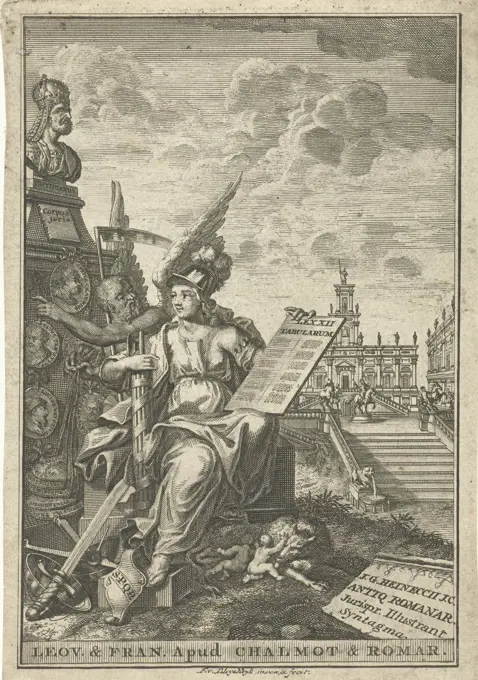
Allegorical Prints of France and Art

Engravings depicting allegorical representations of France, art, and mythology, with intricate detailing and a classical aesthetic.
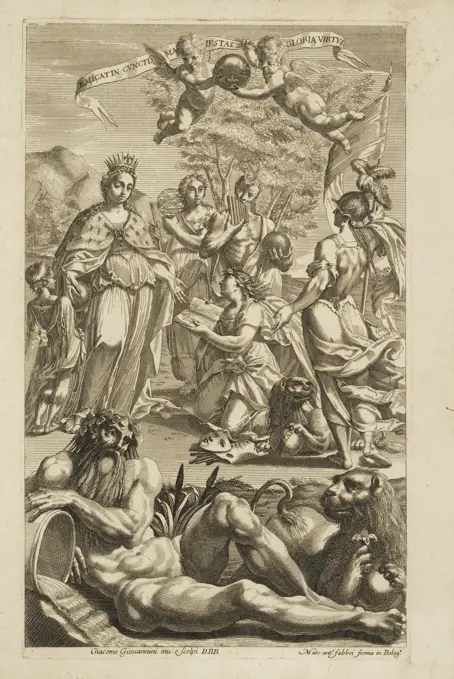
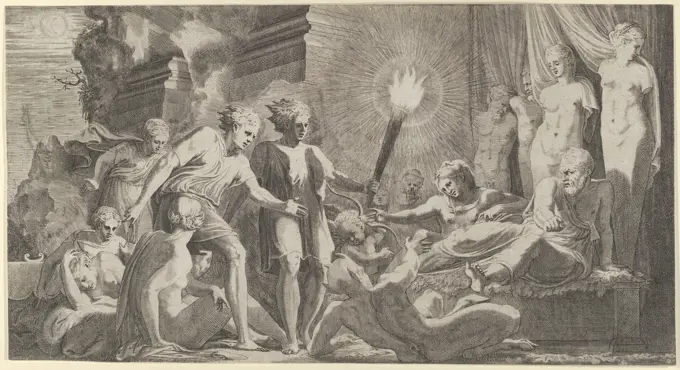
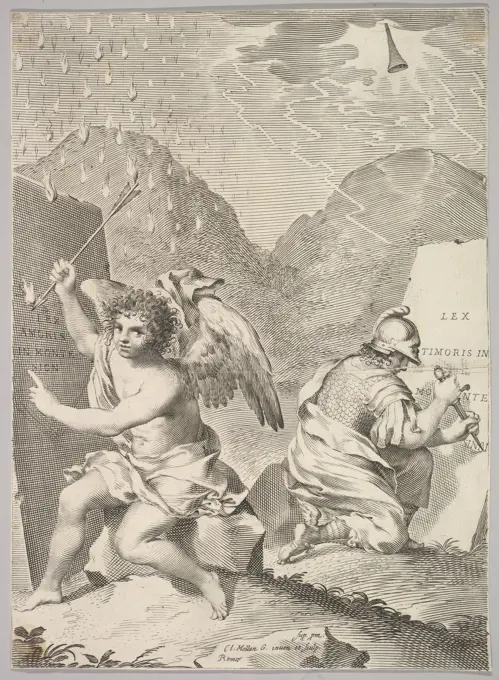
Frontispiece, Il claustro di S. Michele in Bosco di Bologna: dipinto dal famoso Lodovico Carracci, e da altri eccellenti maestri uscita dalla sua scola, Giovannini, Giacomo-Maria, 1667-1717, Malvasia, Carlo Cesare, 1616-1693, Etching, 1694
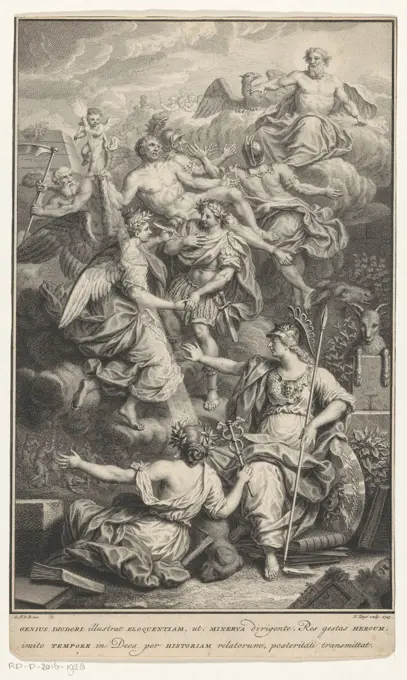
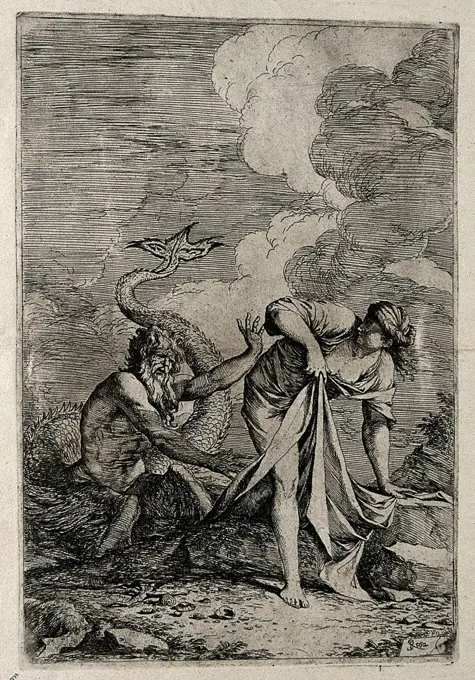
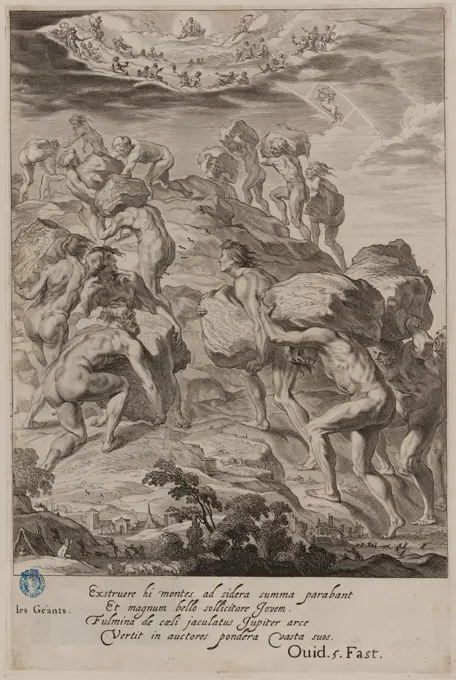
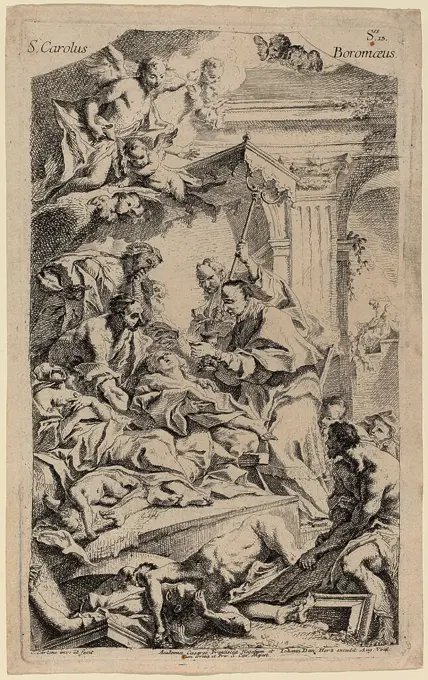
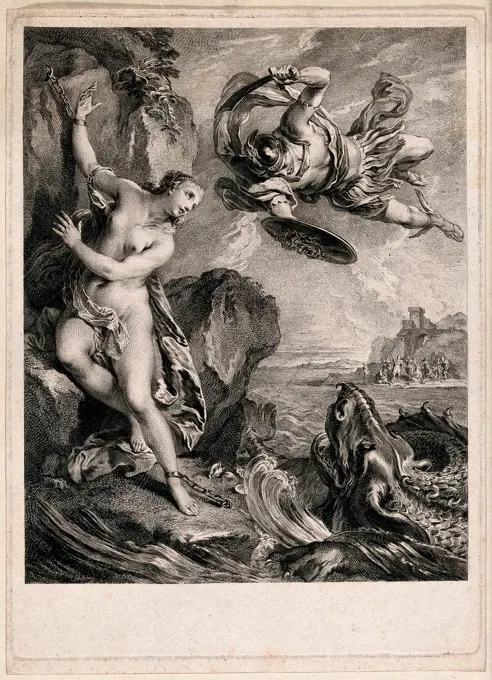
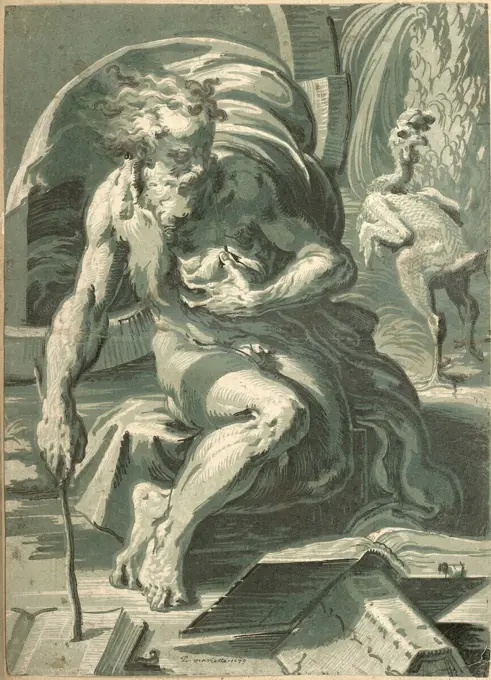
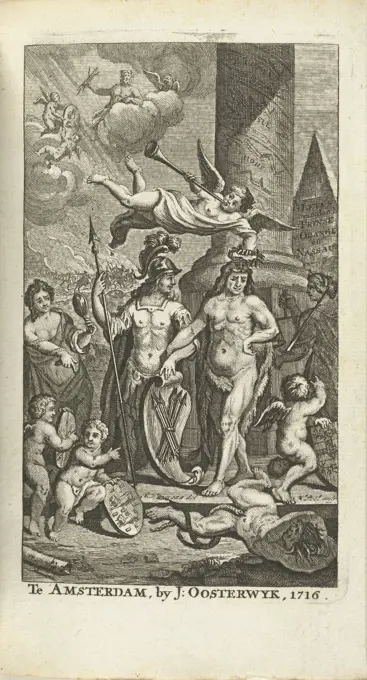
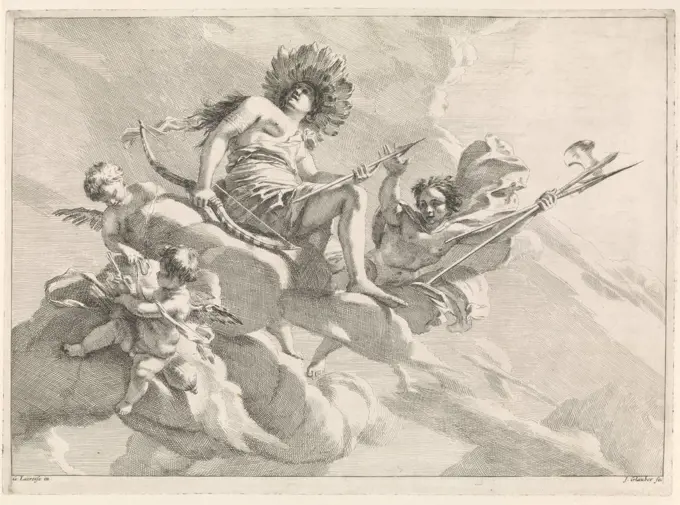
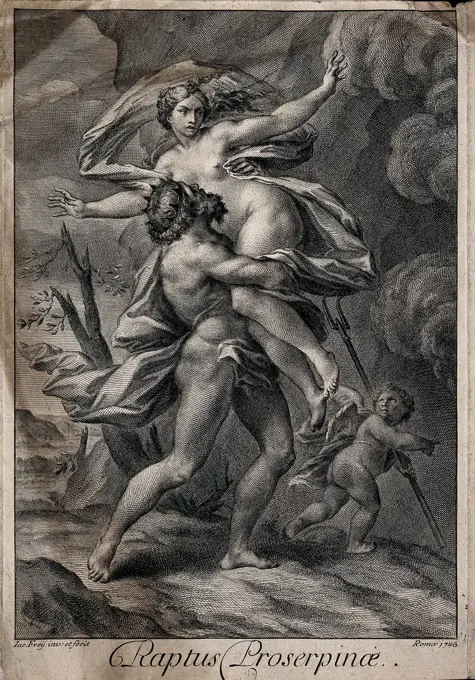
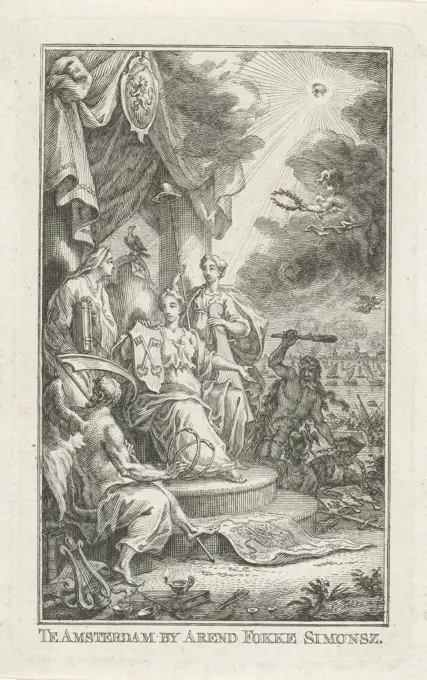
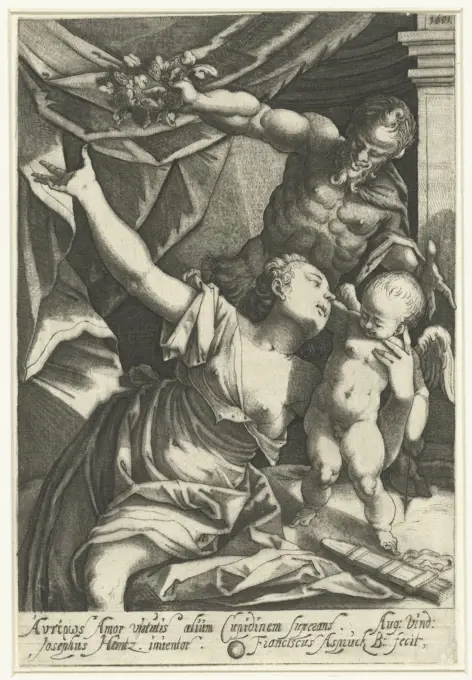
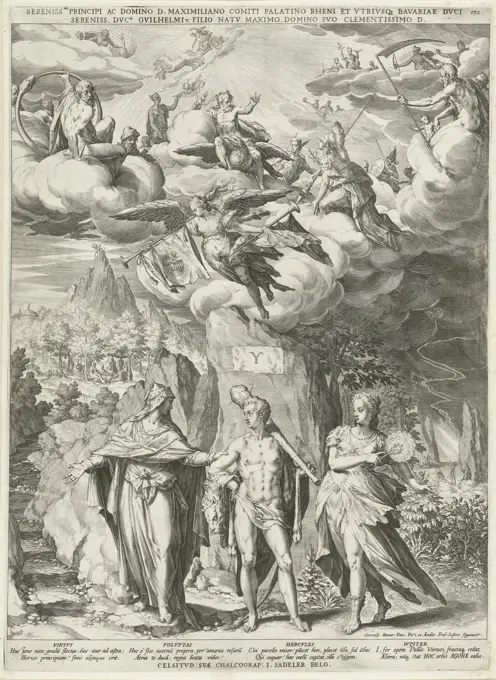
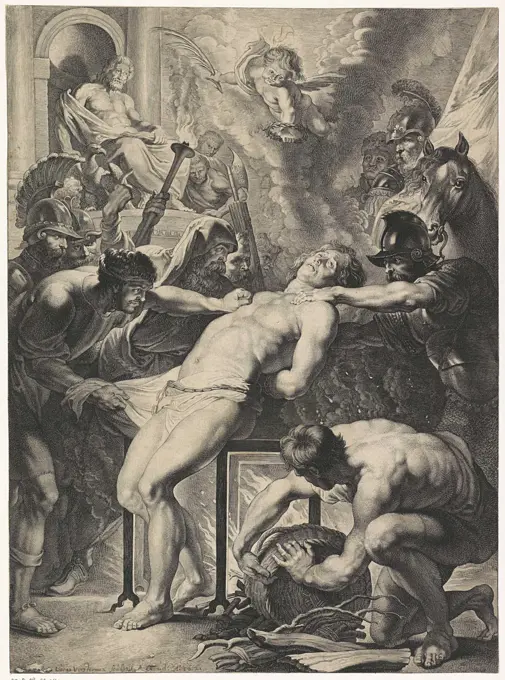
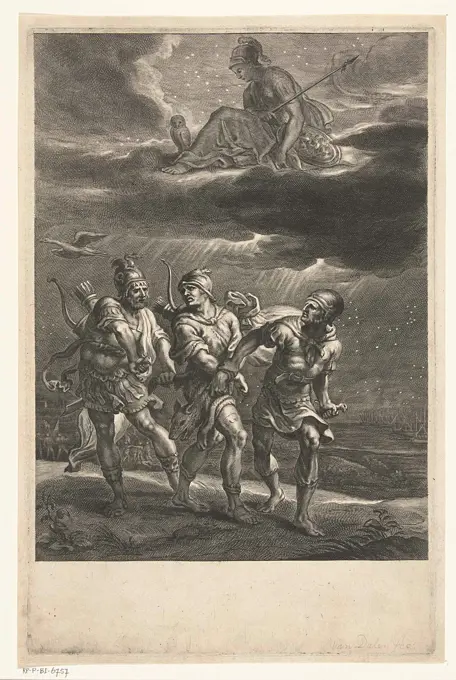
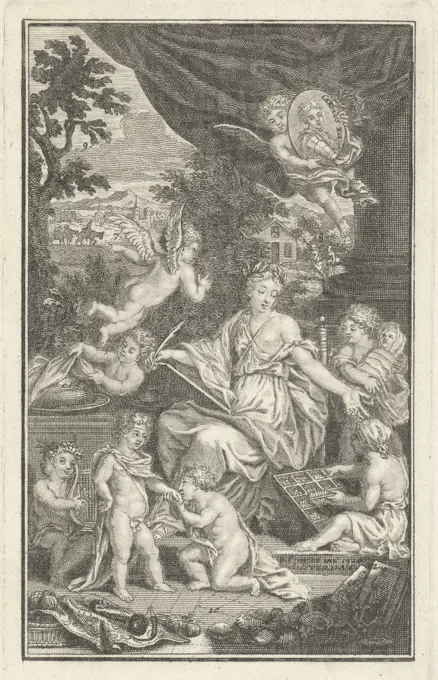
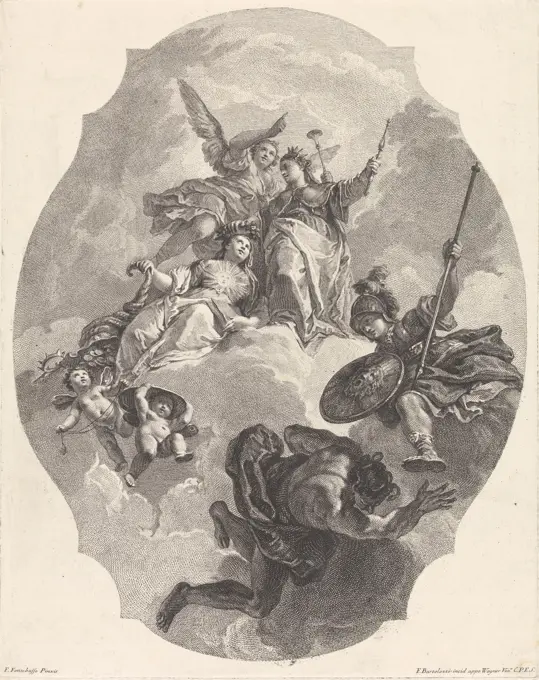
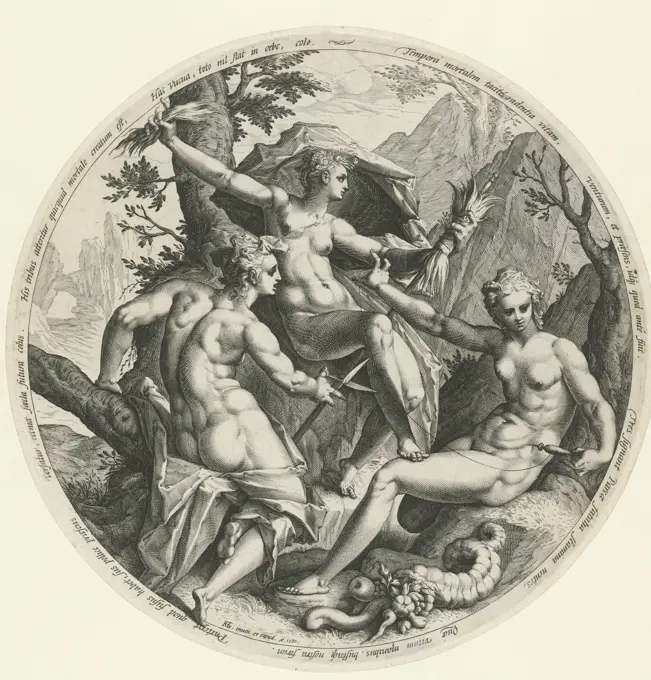
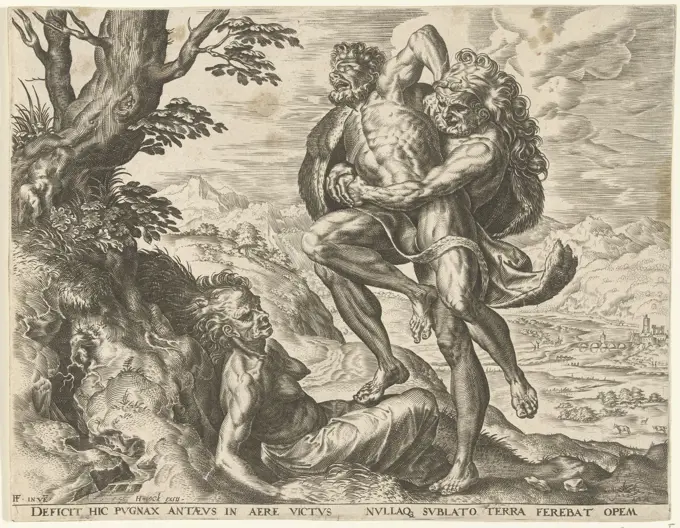
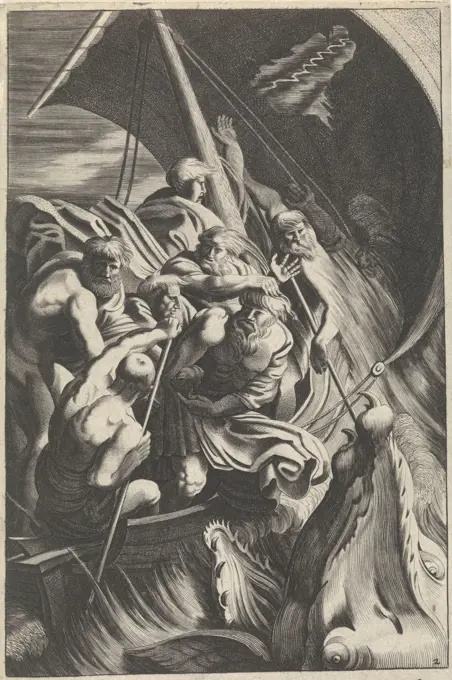
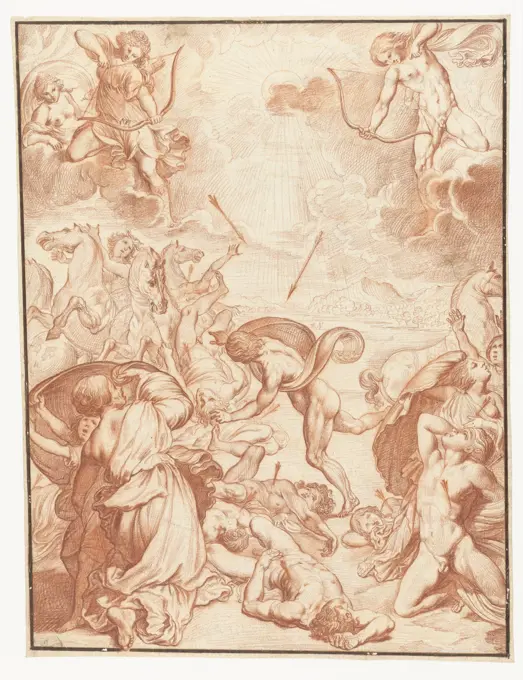
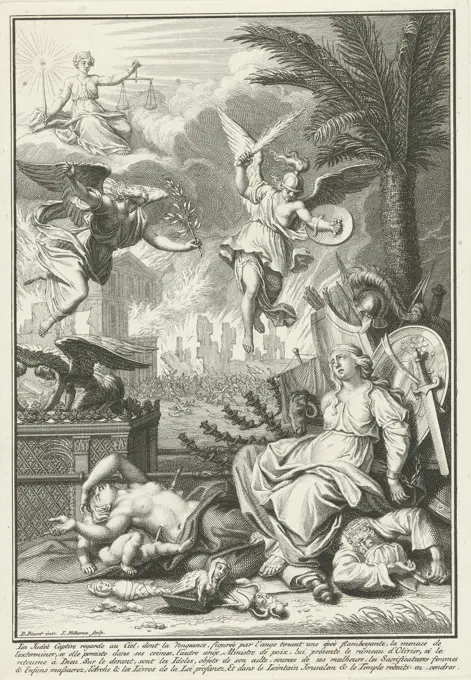
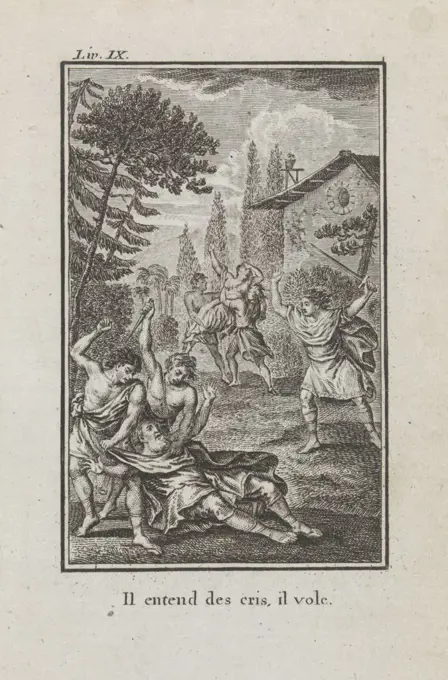
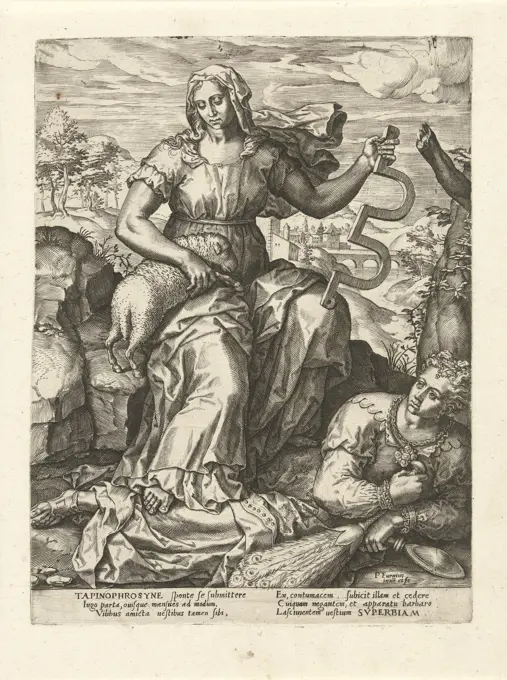
Allegorical show with France, Historiography and Father Time, Pieter Franciscus Martenasie, After Nicholas Blakey, 1739 - 1789 print A sitting allegorical female figure, representing France, with a putto behind her is accompanied by the personalized historiography and father Time. Above them fame blindly on a trumpet. Antwerp paper engraving Father Time, man with wings and scythe. 'Historia'; 'Historia' (Ripa). Fame; 'Fama', 'Fama buona', 'Fama chiara' (Ripa)Minerva protects painting, Gerard de Lairesse, 1675 print Minerva protects the personal painting (mask and painting palette) against the envy (snakes) and frenzy (burning torch). The Bazuin flagging fame flies above Minerva. In the foreground, a young and old satar together hold a piece of paper.  paper etching (story of) Minerva (Pallas, Athena). 'Pictura', symbolic representations, allegories and emblems ~ painting; 'Pittura' (Ripa). Fame; 'Fama', 'Fama buona', 'Fama chiara' (Ripa). Fury; 'Furore', 'Furore implacabile', 'Furore & Rabbia', 'Furore superbo & Indomito' (Ripa). Envy; 'Invidia' (Ripa) ~ personification of one of the Seven Deadly Sins. satyr(s) (in general)Apotheose van helden onder de regering van Minerva.Allegorical representation that depicts that Minerva's goddiness of the Goddess blossom blooming. In the foreground, Minerva is on a stack of books, with her spear in the hands. In addition to her a woman seen on the back, perhaps a muse, with the caduceus. Climb heroes to the Olympus on the clouds, where Jupiter waits for them. Father time looks in vain and sees how the heroes give himself eternal fame. In the undermaster a two-legged text.Allegorical show with poetry, Apollo and muses; P. Langendyks themselves; Title page for: Pieter Langendijk, the poems, 1721. Apollo with Lier relieves poetry and keeps her a goal, in the form of a figure blowing on two trumpets, in mind. In the background the Pegasus horse and the musicing musical musio, erato and euterpe. On the right sitting putti and a man-bent man at a water stream.Palladio, Andrea.H. Joris, Cornelis Schut (I), 1618 - 1655 print Joris sinks light through his knees at the foot of a statue of Apollo. The fire -breathing dragon flies behind it. The king focuses half on his throne that is placed under a canopy. People watch all around. In the foreground two shocking boys with a dog. In the sky a putto and an angel who holds Joris a laurel wreath above the head.  paper etching / engraving St. George leads the dragon into the city after having bound it with the princess' girdleThe Second Day (Dies II), plate 2 from The Creation of the World, a series of title and six plates 1589 Jan Muller Netherlandish. The Second Day (Dies II), plate 2 from The Creation of the World, a series of title and six plates 374001Glaucus and Scylla. Etching by S. Rosa.Saint Christopher. Etching by A. Zucchi after G. Camerata after Titian.Frontispiece, Il claustro di S. Michele in Bosco di Bologna: dipinto dal famoso Lodovico Carracci, e da altri eccellenti maestri uscita dalla sua scola, Giovannini, Giacomo-Maria, 1667-1717, Malvasia, Carlo Cesare, 1616-1693, Etching, 1694Allegory with truth, history and angels with image of the Temple of Jerusalem, François van Bleyswijck, afterononymus van der Me, 1723 print Allegory with female personifications of truth and history (Historia) sitting towards a chained woman, possibly the vice. Angels wear a roll print with the image of the temple of Jerusalem. A pagan temple burns in the background.  paper engraving / etching Truth; 'Viritã ' (Viripa). 'History'; 'History' (ripa). AngelsTable of the Museum Temple: Giants (Dutuit 36, White 92) Cornelis II Bloemaert, said the young person (1603-1692). Table of the Museum Temple: Giants (Dutuit 36, White 92). Burin, 1655. Museum of Fine Arts in the city of Paris, small palace.San Carlo Borromeo Giving Last Communion to Victims of the Plague. Dimensions: plate: 36.7 x 22 cm (14 7/16 x 8 11/16 in.) sheet: 38 x 23.9 cm (14 15/16 x 9 7/16 in.). Medium: etching on laid paper. Museum: National Gallery of Art, Washington DC. Author: Carlo Innocenzo Carlone.Diana in Her Chariot (La Lune sur son char). Artist: Claude Mellan (French, Abbeville 1598-1688 Paris); After Pietro da Cortona (Pietro Berrettini) (Italian, Cortona 1596-1669 Rome). Author: From book written by Giovanni Battista Ferrari (Italian, Siena 1584-1655 Siena). Dimensions: sheet: 10 15/16 x 7 1/2 in. (27.8 x 19 cm)plate: 8 3/16 x 6 in. (20.8 x 15.2 cm). Date: 1633. Museum: Metropolitan Museum of Art, New York, USA. Paris and Menelaus fight in  single combat for the love of  Helen, watched by soldiers and  by Aphrodite, Goddess of Love,  whose help Paris begsMiriam with the tambourine. After the crossing by the Red Sea, Miriam takes her tambourine and starts dancing. In the background the drowning army of the Pharaoh.Mercury and Cupido on a cloud, Andries van Buysen (Sr.), After Bernard Picart, c. 1700 - c. 1750 print Mercury and Cupido float on a cloud. They are looking for something on the earth. In the landscape is a Venus figure and a rider on horseback. Above the show a text in French.  paper etching (story of) Mercury (Hermes). (story of) Cupid, Amor (Eros)Diana sitting on a deer, Anonymous, Jost Amman, 1580 print   paper  Diana hunting. hoofed animals: deerJupiter and Semele, Arnold Houbraken, 1688 - 1700 print Jupiter, with a lightning bolt in his hand, has the baby of Semele, the later wine god Bacchus. Semele is dying on the ground because she wanted to see Jupiter in his full divinity. The latter on the advice of Juno, to be seen behind the cloud in the background, because she was jealous of the adultery of her husband with Semele. Bottom left: g. Print of part 1 of a series of prints with emblems, in total consisting of three parts with 23, 17 and 20 prints respectively. print maker: Northern Netherlandspublisher: Dordrecht paper etching / engraving (story of) SemeleThe Abudction of Proserpina ca. 1620-25 Pieter Soutman. The Abudction of Proserpina. After Peter Paul Rubens (Flemish, Siegen 1577-1640 Antwerp). ca. 1620-25. Etching; second state of four (Hollstein). PrintsThe Archangel Michael Fighting the Rebel Angels, Lucas Vorsterman (I), after Peter Paul Rubens, 1621 print The archangel Michael, in one hand a shield with the symbol of God the Father and in his other hand a lightning bolt, throws the rebellious angels from heaven together with other angels. Antwerp paper engraving fall of the rebel angels, who become devils. the Archangel Michael (and other angels) casting the rebel angels out of heavenThe truth of universal history unveiled, Pieter Yver, 1737 print Vigilance, with a helmet on the head, father time, and Amor reveal the truth of universal history in the eyes of a young prince. In the background a statue for religion and statues of the heroes from the past, including Alexander and Cesar. At the bottom of the margin a four -line text in French. Amsterdam paper etching / engraving Time revealing truth; Time Carrying Truth Aloft. Alertness, vigilance; 'Guardia', 'Vigilance', 'Supervision to defend yourself & oppose others' (Ripa). Crown PrinceAllegory over the victory of Queen Ester, Pieter Tanjé, after Gabriël François Louis Debie, 1728 print Allegorical representation over the victory of Queen Ester and the way in which she revealed Haman's practices. A woman is helped by strength and presented to the truth. Truth gives her a laurel wreath. In the background, a blindfolded person wanders in a thunderstorm. Amsterdam paper etching / engraving Truth; 'Verití' (Ripa). Fortitude, 'Fortitudo' ~ one of the Four Cardinal Virtues. lamb. crowning with laurelWinged female figure, draped and carrying a staff, striding behind a winged putto, who twists to look over his left shoulder, a round composition ca. 1550-1600 Anonymous. Winged female figure, draped and carrying a staff, striding behind a winged putto, who twists to look over his left shoulder, a round composition 397301In the dying hour no wealth, Dirck Volckertsz. Coornhert, after Maarten van Heemskerck, 1550 print At the end of his life, man is confronted with death. He focuses his deadly arrow on him. Man seeks protection behind the image of hope, but the bag of money goes and falls over. A broken hourglass indicates that the last hour of man has struck. Wealth cannot help man after death. In a cartouche at the bottom of the print a Dutch caption in rhyme. The print is part of a four -part series about the uselessness of hope for money and other secular issues.  paper etching / engraving personifications ~ the life of man. Hope, 'Spes'; 'Speranza divina e certa' (Ripa) ~ one of the Three Theological Virtues. acquiring riches. money-chest, treasure-chest, money-box. hourglass. Death as man (+ Death with bow and arrow)Contest between Fortune and Love, in the guise of Amor Love shows Semnon the beautiful woman Serine, with whom Semnon falls in love, Contest between Fortune and Love The good fortune and love , print maker: Noach van der Meer (II), (mentioned on object), intermediary draughtsman: Jacobus Buys, (mentioned on object), publisher: Johannes Allart, (mentioned on object), Amsterdam, 1777, paper, etching, h 245 mm × w 150 mmMartelaarschap van H. Stefanus, Philippe Joseph Tassaert, after Peter Paul Rubens, 1742 - 1803 print The stoning of Saint Stefanus. In heaven God the Father and Christ and three angels with a laurel wreath and palm branch.  paper etching / engraving martyrdom and death of StephenLOFLIED from King David and the Saint Cecilia. Design for a print.Allegorical figures around a Sphinx; General histories of the acquaintances Nature-Kloots; Title page for: Geerlof Sugers, General Kerkelyke and Wereldlyke Histories of the acquaintances Nature-Kloots, 1721. Crowd Allegorical figures around a Sphinx on a base. Left history and a writing female personification crowned with a tower. Father time unrotles a paper, in the air the fame. On the right the truth: a naked woman with a book and the sun on her head. Behind her Minerva, who with her lance a diabolical figure pushes into the earth.Venice, Sadeler, Aegidius, Bassano, Jacopo, Verona, Quia Natvs est vobis Hodie Salvator, Annunciation to the shepherds, verso bottom center - stamped, An angel announces the birth of Christ to the shepherds. The print has a Latin caption with an explanation., print, prints, height 270 mm, width 218 mm, Work conception, South Dutch, 1570 - 1629, after print by, 1593 - 1593, paper, engraving, engraving (printing process), print maker, Italian, 1515 - 1592-02-14, after a design by, Publication (Event), Publication, publisherHercules gekroond door Victoria; Voyage de C. le brun; Titelpagina voor: Cornelis de Bruyn, Voyage au Levant, 1700.Hercules, with a knots in his hand, is crowned by the winged Victoria. The persons settlements of sculpture, painting and architecture meet on the ground. Putti play with the measuring instruments of architecture. In the background a pyramid, classic buildings and a palm tree.Music; MVSICA; The seven liberal arts. The female personification of music plays an instrument. She is surrounded by pan, apollo and a third figure. In the context in the margin a four-line caption, in two columns, in Latin.Saint Jerome Artist's working dates 1752-1806 France. Etching on ivory laid paper . Jean Honoré FragonardTime crowning Employment and punishing Idleness. Artist: After Peter Paul Rubens (Flemish, Siegen 1577-1640 Antwerp); Antoine Couchet (Flemish, Antwerp 1630-1678). Dimensions: Sheet (Trimmed): 16 5/8 × 13 5/16 in. (42.3 × 33.8 cm). Publisher: Gillis Hendricx (Flemish, active 1640-1677). Date: ca. 1650-77.Between second and third states (Hollstein). Without the name of Rubens but with Latin verses in the lower margin. Museum: Metropolitan Museum of Art, New York, USA.Perseus rescuing Andromeda from a sea-monster. Engraving by L. Cars, 1728, after F. Lemoine.Palma, Jacopo, unknown, Sadeler, Aegidius, Saint Sebastian tied to a tree, verso lower left - stamped, Saint Sebastian is tied to a tree by soldiers. In the background archers prepare to shoot at him. A putto in the air with a palm branch and a crown. The print has a Latin caption., print, prent, prints, height 440 mm, width 308 mm, South Netherlands, 1570 - 1629, print maker, printmaker, 1580 - 1629, paper, papier, engraving, engraving (printing process), Work conceptionTable of Museum Temple: Arion (Dutuit 36, White 128) Cornelis II Bloemaert, said the young person (1603-1692). Table of the Museum Temple: Arion (Dutuit 36, White 128). Burin, 1655. Museum of Fine Arts in the city of Paris, small palace.Groupe de deux angelots (regardant vers la droite). Artist: Jean Morin (French, Paris ca. 1605-1650 Paris); After Philippe de Champaigne (French, Brussels 1602-1674 Paris). Dimensions: sheet: 9 13/16 x 8 1/16 in. (25 x 20.4 cm)image: 9 1/16 x 6 7/8 in. (23 x 17.5 cm). Museum: Metropolitan Museum of Art, New York, USA.Clair-obscur woodcut by Ugo da Carpi depicting Diogenes, printed from four plates in green and blue around 1527, showing philosophical figure and classical pose.Astronomy; Astronomia; The seven liberal arts. The female personification of astronomy, crowned with the crowbar and stars, measures a globe with her passer. In her other hand she holds an armillarium. It is surrounded by figures with various astronomical attributes. In the context in the margin a four-line caption, in two columns, in Latin.Engraved title page for J. Lamigue: The life of Zyne Hoogheit Johan Willem Friso, 1716, 1716 Engraved title page with an allegorical representation of Hercules lauded by the fame, with Minerva, caution and justice. In the background a column, obelisk and a war scene. Illustration in the Dutch translation from 1716 by J. Lamigue, the life of his Hoogheit Johan Willem Friso. print maker: Northern Netherlandspublisher: Amsterdam paper etching Engraved title page with an allegorical representation of Hercules lauded by the fame, with Minerva, caution and justice. In the background a column, obelisk and a war scene. Illustration in the Dutch translation from 1716 by J. Lamigue, the life of his Hoogheit Johan Willem Friso. print maker: Northern Netherlandspublisher: Amsterdam paper etchingScylla flight for glaucus. The Zeenimf Scylla fleeing for glaucus that extends left with beard and winding fish tail to its arms. Glaucus was a fisherman that turned into a sea-centaur after eating toxes in a sea-centaur and fell in love with SCYLLA.Diana with bow and arrow on a cloud Biblical, mythological and allegorical representations (series title), Diana sits on a cloud, bow and arrow in his hand. She is surrounded by two putti and a man with an ax and a spear. The print is part of a series with Biblical, mythological and allegorical representations., (Story of) Diana (Artemis), cupids: 'amores', 'amoretti', 'putti', Johannes Glauber (mentioned on object), 1656 - 1726, paper, etching, h 278 mm × w 382 mmPersonifications of the Austrian Netherlands and France, Jan Wandelaar, 1761 print In the middle is the personification of the Austrian Netherlands with a wall crown and a freedom staff with a hat. She holds an open book with the shortened title. At her feet is a lion with a bundle of arrows. Left behind her, a woman plays a winch and writes another woman in a book. On the other side of the open book, the personification of France is with a crown, a scepter and a rooster at her feet. Behind them, Mercury flies with his Caduceus, an envelope and a key.  paper engraving / etching personifications of countries, nations, states, districts, etc.. title-pageAeneas Recognizing Venus as She Disappears in aCloud. Etcher: Giovanni Domenico Tiepolo, Italian, Venice, 1727-1804 After: Giovanni Battista Tiepolo, Italian, Venice, 1696-1770The rape of Proserpine. Engraving by J. Frey.Allegory at the second century festival of the Leiden Relief, 1774, Simon Fokke, 1774 print Allegory at the second century celebration of the relief of Leiden, October 3, 1774. The city -killing of Leiden sitting on a throne, accompanied by freedom, time and history. In the background Hercules and the Leiden Relief (1574). print maker: Northern Netherlandspublisher: Amsterdam paper etching / engraving Father Time, man with wings and scythe. personification of a city, town-patron(ess) LeidenVenus holds Amor in her arm, from behind comes Pan and grabs Amor's head. Below the scene an inscription in Latin referring to Amor's brother Anteros, Venus and Amor with Pan Eros and Anteros, print maker: Franz Aspruck, (mentioned on object), Joseph Heintz (il Giovane), (mentioned on object), Augsburg, 1601, paper, h 180 mm × w 123 mmNeptune is standing on a shell and being pulled by seahorses. He is in conversation with Venus who has descended from the sky on her chariot pulled by birds. Illustration made for a story from 'Adventures of Telemachus', written by François de Fénélon, Venus and Neptune Adventures of Telemachus (series title)., print maker: Jacob Folkema, (mentioned on object), Jacob Folkema, (mentioned on object), 1715, paper, etching, h 149 mm × w 113 mmAchilles Restrained by Athena in Agamemnon's Tent, from Iliad, Book I Made 1765-1766 Sweden. This drawing by Swedenís most important Neoclassical sculptor and draftsman depicts a scene from Homerís Iliad, set during the Trojan War. Chryses, a Trojan priest of Apollo, prays to Apollo for help after Agamemnon, the leader of the Greek army, has refused to return his kidnapped daughter. In response, Apollo inflicts a plague upon the Greeks. Agamemnon returns Chrysesís daughter, but demands Chrysesís second kidnapped daughter, who is held by Achilles, in exchange. Enraged, Achilles draws his sword on Agamemnon, at which point Athena intervenes, as seen in the drawing.. Black chalk on cream laid paper . Johan Tobias SergelHercules on the Tweersprong, Johann Sadeler (I), After Frederik Sustris, 1588 - 1595 print The young Hercules on the Tweersprong. In his hands a club and a lion sheet. Above his head the Greek Y, the letter that symbolizes the path of life. To the left of Hercules is the personification of virtue, on the right the personification of sin. Virtue points him a narrow, steep road to Mount Parnassus. Sin points him the wide road to storm and accident. In the air the Roman gods in heaven. Fama blows the praise. München paper engraving Hercules at the cross-roads, 'Herkules am Scheidewege': the choice of Hercules. the Olympian gods together: Jupiter, Juno, Neptune, Ceres, Apollo, Diana, Mars, Venus, Mercury, Minerva, Vulcan, Vesta (or Bacchus). Parnassus, sacred to Apollo Musagetes. Fame; 'Fama', 'Fama buona', 'Fama chiara' (Ripa). armorial bearing, heraldryTriumph of Galatea with tritons and Nereïden and Putti. Galatea stands on a shell and is being pulled by dolphins. She is surrounded by Tritons and Nereïden. Three putti point their arrows at Galatea.Fortuna. Fortuna floats over a globe. She torts a bag of coins to. A putto pulls her hair.Torture death of the H. Laurentius. .Francesco Bartolozzi RA, 1728-1815, Italian, active in Britain (1764-99), The Rape of Cephalus with Aurora, 1776. Engraving.Allegorical title page with the portrait of writer Edward Simson; Title page for: Edward Simson, Chronicon Historiam Catholicam Complectens, 1729. Minerva is next to history and looks over her shoulder to the book in which she writes. History looks at three allegorical women's figures (truth, poetry and a third figure). Behind them Father time, fame and a two-man figure that beats an inscription with a chisel in a pyramid. Four putti flies in the air, with eternity symbols in the hands, carrying the portrait of writer Edward Simson.Two men with prisoner and minerva at night. Two men or soldiers carry a man whose arms tied up, the man wears a animal skin of a fox or wolf. The soldiers grab the lifting of their swords. Above them Minerva looks down from a cloud on them at a nocturnal starry sky. In the background a landscape with battlefield and boats on a quiet sea.Banditti...Representing Banditti Variously Employed: Killing an Enemy, Robert Blyth, 1750-1784, after John Hamilton Mortimer, 1740-1779, British, 1779, EtchingAmsterdam, Picart, Bernard, Allegorical representation with History writing down the life of Charles XII, King of Sweden, verso lower right - stamped, History writing on a tablet. She is surrounded by putti. At her feet a child storing printing letters in a container. A girl brings a baby to her. In the air a putto carries the portrait medallion of Charles XII, King of Sweden. In the background on the right a couple walking to a house. In the background on the left a man transporting a load with his two donkeys. Numbers have been placed next to parts of the representation that probably refer to a legend. With an empty margin., print, prints, height 153 mm, width 89 mm, Northern Netherlands, 1673-06-11 - 1733-05-08, print maker, printmaker, 1714 - 1714, first quarter 18th century, paper, papier, etching, etchings, engraving, engraving (printing process), intermediary draughtsmanFrancesco Bartolozzi RA, 1728-1815, Italian, active in Britain (1764-99), Classical Figures including Woman with Cornucopia of Coins. Engraving.Hercules surprising Fanus who mistook him for Omphale 1540-56 Léon Davent French. Hercules surprising Fanus who mistook him for Omphale 336961Vuur, Caspar Luyken, 1698 - 1702 print Mars, sitting with a burning torch and an ax in his hands. There is a wolf next to him. Putti bring mars his sword, shield and lightning bolts. Amsterdam paper etching fire (one of the four elements). attributes of Mars. beasts of prey, predatory animals: wolfDaphne changes into a laurel tree; Ovidius' metamorphoses. When the NiMF Daphne was haunted by Apollo, who had fallen in love with her, she begged her father Peneus (a river god) for help. This made his daughter emerged to her attacker by turning her into a laurel tree. You can see the moment when Daphnes arms turn into branches, while Apollo wants to grab her. In the background Cupid that Apollo, at the dead body of Python, affects with one of his arrows. Under the show twice two lines of Latin text. This print is part of a series of 52 prints that depicting stories from Ovidius' metamorphoses. This series varies in three numbered series: two of 20 prints and one of 12 prints. This print belongs to the first series.Newly married couple led by amors to marriage bed. Draughtsman: Bernard Picart. Dating: 1723. Measurements: h 93 mm × w 134 mm. Museum: Rijksmuseum, Amsterdam.Aegidius Sadeler II, The Martyrdom of Saint Sebastian, c 1620 The Martyrdom of Saint SebastianAllegorical representation of the city of Rome, Romeyn de Hooghe, 1655 - 1708 print Allegorical representation with a female figure proposing the city of Rome on stage. She is offered the keys to the city by a putto. On the left on stage objects that refer to Catholicism and Pope, Right Romulus and Remus and the Wolf. For the stage three figures who probably represent the Tiber. Netherlands paper etching / engraving (story of) Romulus and Remus. personification of river Tiber; 'Tevere' (Ripa). cities represented allegorically or symbolically Rome. TiberMartyrdom of the H. Livinus van Gent. The tongue of the Holy Livinus has been pulled out. A lot holds him to the beard, another man holds the tongs with the tongue. The horse in the background and the soldiers are scared as the sky angels appear and a male figure it lightning. In the middle of an assignment in Latin and the coat of arms of Cardinal Ignazio Michele Crivelli.A chalk drawing by Heinrich Friedrich Füger depicting Apollo with the Muses, rendered in gray washes to show figures and drapery.Fire, Print made by Bernard Lens, 1659-1725, British, after Antoine Coypel, 1661-1722, French, undated, Mezzotint on moderately thick, moderately textured, cream laid paper, Sheet: 10 9/16 × 13 15/16 inches (26.8 × 35.4 cm), Plate: 10 × 13 5/16 inches (25.4 × 33.8 cm), and Image: 9 5/8 × 13 5/16 inches (24.4 × 33.8 cm)Tiburtine Sibyl and the Emperor Augustus, c. 1527-30/31. After Parmigianino (Italian, 1503-1540), Antonio da Trento (Italian, c. 1508-c. 1550). Chiaroscuro woodcut (in brown-green and black); sheet: 34.1 x 25.9 cm (13 7/16 x 10 3/16 in.).Amsterdam, Luyken, Caspar, Cain flees after the murder of Abel, verso - manuscript in brown ink, print, prints, verso - stamped, 9, height 112 mm, width 150 mm, Northern Netherlands, 1672-12-18 - 1708-10-04, print maker, printmaker, 1712 - 1712, paper, papier, etching, etchingsNecker crowned with laurels on the ruins of France (TF)Three branch goddesses in a landscape, Jacob Matham (attributed to), after Hendrick Goltzius, 1587 print The three branch goddesses in a landscape. In the middle the Schikgodin Clotho that holds the spinning skirt, with the rough flax in her other hand. On the right, the sitting Lachesis has the bobbin and measures the thread. The left hide, atropos, cuts the thread with scissors. Haarlem paper engraving Fates, spare (Moir)Hercules is struggling with Antaeus, Cornelis Cort, after Frans Floris (I), 1563 print Hercules beats the giant Antaeus by lifting him up for so long until he gives up his resistance and dies. Antwerp paper engraving the giant Antaeus is lifted in the air and crushed to death by HerculesJonah is thrown into the sea to be swallowed by a large fish. Second print in a series of four on the biblical book of Jonah, Jonah thrown into the sea Story of Jonah (series title), print maker: Jan van de Velde (II), (mentioned on object), Willem Pietersz. Buytewech, (mentioned on object), Northern Netherlands, 1603 - 1641, paper, etching, h 189 mm × w 109 mmApparition of Saint Andrew in Glory. Artist: Giulio Romano (Italian, Rome 1499-1546 Mantua). Dimensions: 7 5/16 x 10 1/2in. (18.6 x 26.7cm). Date: 1499-1546. Museum: Metropolitan Museum of Art, New York, USA.Apollo and Diana kill the children of Niobe, Ludovicus Finsonius, 1580 - 1617 drawing   paper. chalk  Apollo and Diana kill Niobe's childrenSpanish Crown, Antwerp, Vorsterman, Lucas (I), Rubens, Peter Paul, Martyrdom of St. Lawrence, verso lower left - stamped, print, prints, height 389 mm, width 277 mm, Southern Netherlands, 1595 - 1675, print maker, printmaker, 1621 - 1621, paper, engraving, engraving (printing process), 1577-06-28 - 1640-05-30, after, after painting by, Publication (Event), Publication, publisher, granter of privilegeEkstaza św. Pawła Z: Varying images from the most famous crafts of painted Visscher, Nicolaes Jansz. (1649 1702), Liss, Johann (ca 1597 1631)Vignette (Tome 1.er, page 164, lib. II, fab. 15), Jupiter Carries Europa Away, from Les Métamorphoses d'Ovide en Latin et en François de la traduction de M. l'Abbé Banier de l'Académie Royale des Inscriptions et Belles-Lettres. Avec des explications historiques. A Paris Chez Despilly rue saint Jacques à la croix d'or. MDCCLXVII. Avec Approbation et Privilège du Roi. Artist: After François Boucher (French, Paris 1703-1770 Paris); Augustin de Saint-Aubin (French, Paris 1736-1807 Paris). Author: Ovid (Roman, Sulmo 43 B.C.-A.D. 17 Tomis, Moesia). Dimensions: Sheet: 7 5/8 × 5 3/16 in. (19.3 × 13.2 cm). Publisher: Chez Despilly (French, active 18th century). Series/Portfolio: Les Métamorphoses d'Ovide en Latin et en François de la traduction de M. l'Abbé Banier de l'Académie Royale des Inscriptions et Belles-Lettres. Avec des explications historiques. A Paris Chez Despilly rue saint Jacques à la croix d'or. MDCCLXVII. Avec Approbation et Privilège du Roi. Translator: Abbé Banier. Date: ca. 1Francesco Bartolozzi RA, 1728-1815, Italian, active in Britain (1764-99), Time and Beauty, 1780. Engraving.Johann Georg Bergmüller, Allegory of Winter with Diana the Huntress, c 1750 Allegory of Winter with Diana the HuntressAllegorical figures, including Apollo: one supports a portrait roundel of Karl Theodor, Elector Palatine, with attributes of the fine arts and of war; a view of a city beyond. Engraving by B. Hübner, 1776, after N. Guibal.Haarlem, Goltzius, Hendrick, Matham, Jacob, Three goddesses among the clouds, Venus, verso lower left - stamped, The goddess Venus, seated on a cloud. She is accompanied by Amor, with bow and arrow, his quiver beside him. In the air two doves., print, prints, height 206 mm, width 153 mm, Northern Netherlands, 1571-10-15 - 1631-01-20, print maker, printmaker, 1585 - 1589, paper, engraving, engraving (printing process), Work conception, 1558-01 - 1617-01-01, after a design by, Publication (Event), Publication, publisherCybele, Juno en Minerva, François de Poilly (I), 1632 - 1693 print Three women together, above them a putto with lilies and a peace pigeon. At Cybele a lion with pine branch, a peacock at Juno.  paper engraving / etching (story of) Minerva (Pallas, Athena). specific aspects, allegorical aspects of Cybele; Cybele as patroness. (story of) Juno (Hera)Hercules kills the dragon Ladon, Jean Baptiste de Poilly, after François Verdier, 1679 - 1728 print  France paper etching / engraving Hercules kills Ladon, the dragon which kept the tree of the HesperidesThe martyrdom of Saint Sebastian, Moses ter Borch, after Aegidius Sadeler (II), after Jacopo Palma, c. 1660, draughtsman: Moses ter Borch, Aegidius Sadeler, Jacopo Palma, Zwolle, c. 1660, paper, brush, h 420 mm × w 327 mmAn Angel and a Soldier Inscribe Stone Slabs Claude Mellan French. An Angel and a Soldier Inscribe Stone Slabs 393280Picart, Bernard, Folkema, Jacob, Allegory of the destruction of Jerusalem, verso - stamped, A Jewish woman is chained to a tree and is surrounded by attributes originating from the destroyed temples of Jerusalem. She is sitting on a dead priest, in front of her lies a naked woman whose body has been pierced with a dagger. In the air two angels come flying, one with an olive branch and one dressed in armor and with a lightning bolt in her hands. In heaven Justitia is enthroned with a pair of scales and a scepter with the All-Seeing Eye. On the left is the Ark of the Covenant, in the distance a view of the burning city., print, prints, height 237 mm, width 165 mm, Dutch, 1692 - 1767, print maker, 1702 - 1767, paper, etching, Work conception, Northern Dutch, 1673-06-11 - 1733-05-08The Transfiguration with Christ flanked by two saints and with the Apostles below. Artist: Cherubino Alberti (Zaccaria Mattia) (Italian, Borgo Sansepolcro 1553-1615 Rome). Dimensions: Sheet: 16 1/8 × 10 13/16 in. (41 × 27.5 cm). Date: 1570-1615. Museum: Metropolitan Museum of Art, New York, USA.Prometheus bound to a rock, his liver eaten by an eagle and his torch dropped from his hand. Engraving with etching.Numa saves Annna and her father from bandits, Anna and her father are attacked by bandits. Numa comes to their aid with a drawn sword. With a French caption., Male literary characters (with NAME), robbery, Henri-Joseph Godin (mentioned on object), 1790, paper, letterpress printing, w 136 mm × h 75 mmDiana and Endymion, Daniël van den Dyck, c. 1635 - 1670 print Diana visits the eternally sleeping endymion. She lifts his blanket and looks at his face. On the right a narrow lunar. Italy paper etching Diana (Luna) visiting the sleeping Endymion'Thisbe takes the Sword already reeking with the blood of Pyramus, plunges it into...', 1775.Artist: W WalkerPrometheus. Titian, ca. 1488-1576. still image. Reproductive prints. 1877-09. The Miriam and Ira D. Wallach Division of Art, Prints and Photographs: Picture Collection. Prometheus (Greek deity), Shackles, Physical restraints, Eagles , Mythology, Punishment & torture, Mythology, GreekFrançois Nicolas Chifflart, Genius of the Arts, 1865 Genius of the ArtsHumidity overcomes the pride, 1550 - 1625 print The personification of humility (Tapinophosyne) is in her hands and a lamb on her lap with a yoke. She has put her foot on the personification of pride (Superbia) that lies on the floor in front of her. The print has a Latin caption and is part of a series about virtues and vices.  paper engraving Pride; 'Superbia' (Ripa) ~ personification of one of the Seven Deadly Sins. Humility; 'Humiltí' (Ripa). one Virtue fighting against or treading upon one ViceAllegory on science; Title page for: Leeuwenhoek, Anthony van. Fifth continuation of letters, written to vinted high standers and learned Luiding, 1696. The personification of philosophy, queen of science, points to a picture of nature with her scepter. At her, the personification of research is. She wears clothing decorated with eyes and she looks through a magnifying glass. Right rear, zeal leads the blindfolded personification of error with donkey ears. A Jew, a Christian and a Heiden (supporter of Aristotle) approach the increase. On the left the personalization of truth is on raising. She is naked and holds a palm branch and a sun. She catches with her feet. With her, some inventions by Anthony van Leeuwenhoek, who are illuminated by a divine light. Verso a text with the explanation of the title page.Wildezwijnenjacht (right plate), Pieter Claesz. Soutman, after Peter Paul Rubens, 1642 print Men with spears put a wild boar in the mouth. A fallen man lies on the floor in front of the boar. Another man with a spear climbs on a tree stump. A farmer's man blows on a hunting horn. Right plate of a large performance consisting of two parts. At the bottom of the margin half of a verse in Latin over hunting.  paper etching / engraving boar-hunting. blowing the hunting horn. hunted animal attacking manAllegory of Roman Antiquity with female personification of Rome Father Time hangs portraits of Roman heroes on a monument In the grass, Remus and Romulus are suckled by the wolf, they also symbolize Rome A city view shows a Roman palace, Allegory of Roman Antiquity Title page for: Johann Gottlieb Heineccius, Antiquitatum Romanarum jurisprudentiam illustrantium syntagma secundum ordinem Institutionum Justiniani digestum, Leeuwarden, print maker: François van Bleyswijck, (mentioned on object), François van Bleyswijck, (mentioned on object), publisher: Chalmot & Romar, (mentioned on object), print maker: Leiden, publisher: Leeuwarden, 1681 - 1746 and/or 1758 - 1799, paper, etching, h 156 mm × w 117 mm