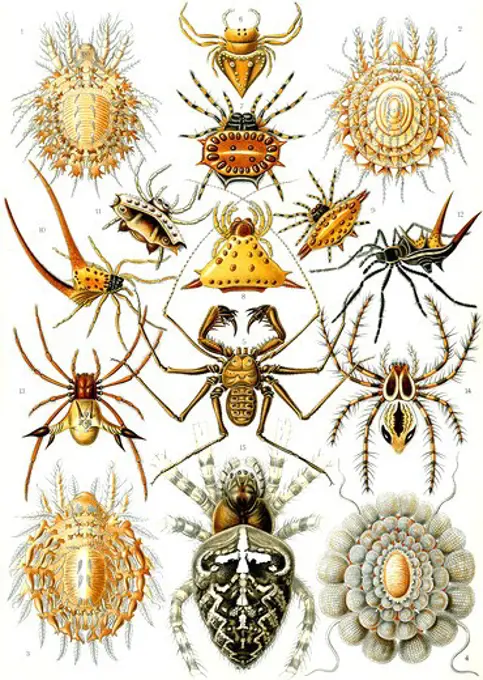
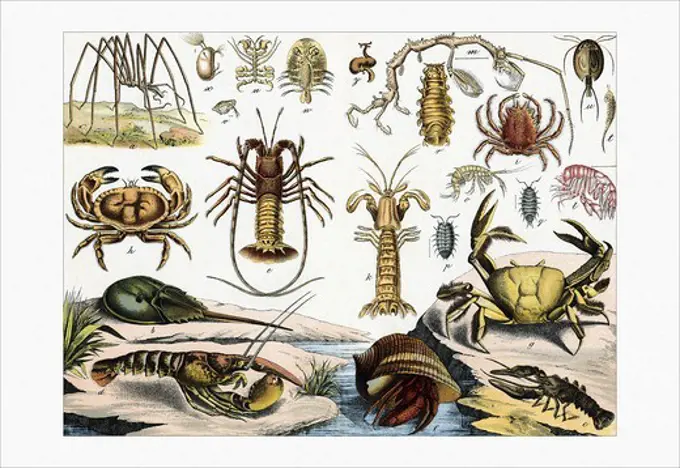
Anatomical Drawings of Crustaceans and Arachnids

A collection of detailed anatomical illustrations depicting various crustaceans and arachnids, showcasing their unique structures and anatomical features in a scientific format.

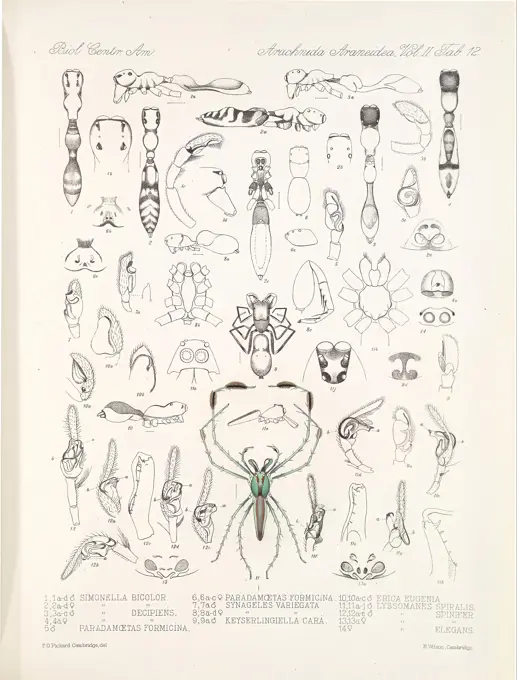
Proceedings of the Zoological Society of London, London, Academic Press, periodicals, zoology., A detailed scientific illustration showcasing various species from the genus Argyrodas. The central figure depicts a spider with elongated legs and a prominent body, labeled with numbers indicating specific anatomical features. Surrounding the main spider are additional drawings of related organisms, including close-up views of their structures, such as mouthparts and leg segments. Each illustration is meticulously labeled with letters and numbers for identification, illustrating the diversity and complexity of these arachnids. The captions provide insights into their classification and characteristics, contributing to the study of entomology and arachnology.
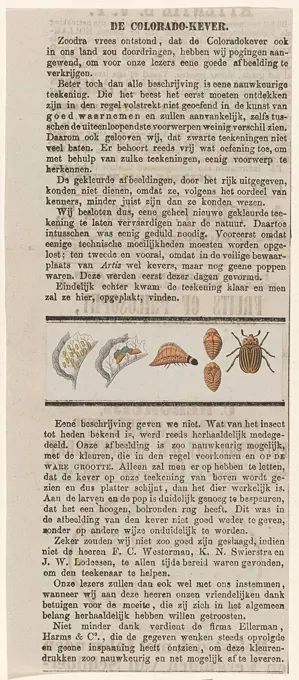
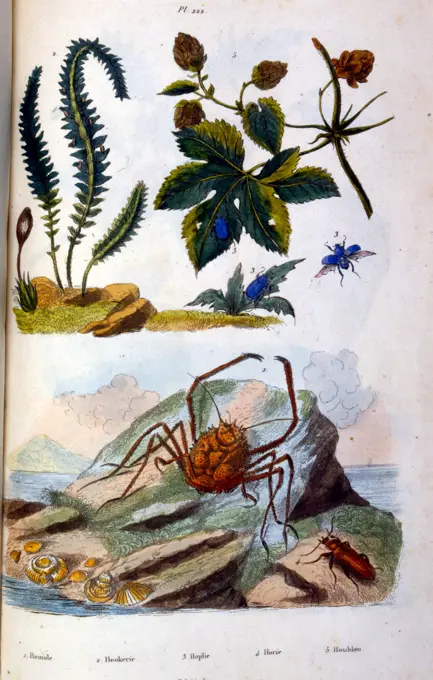
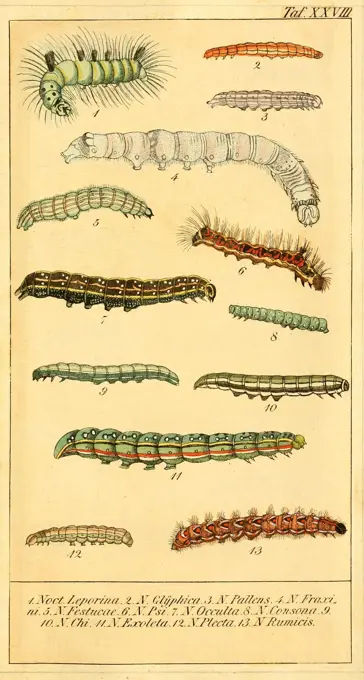
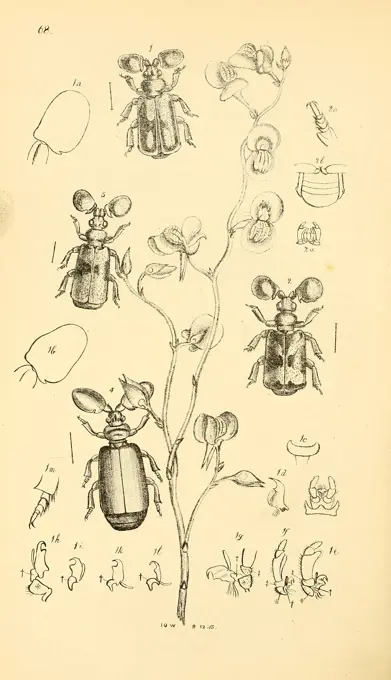
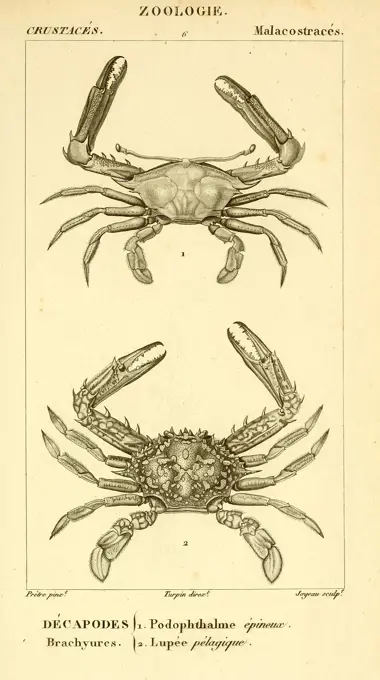
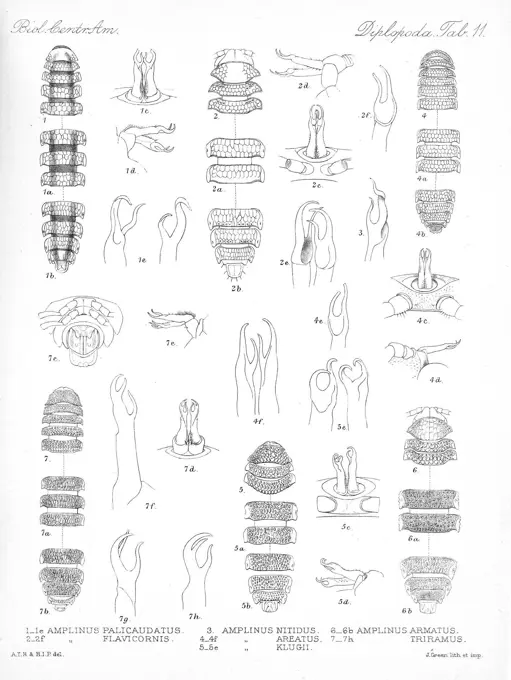
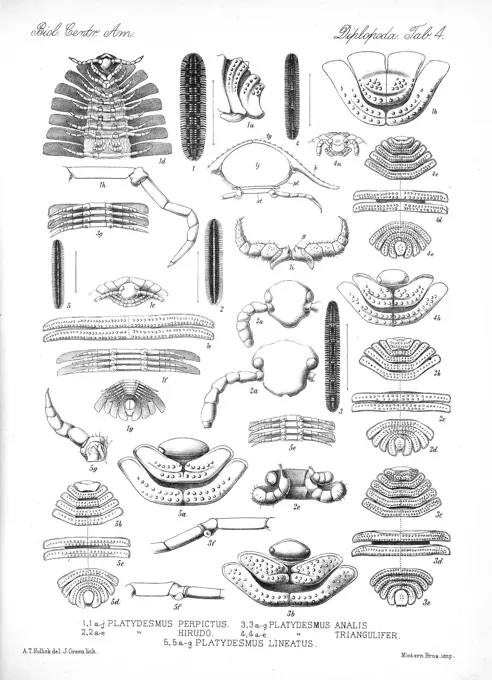
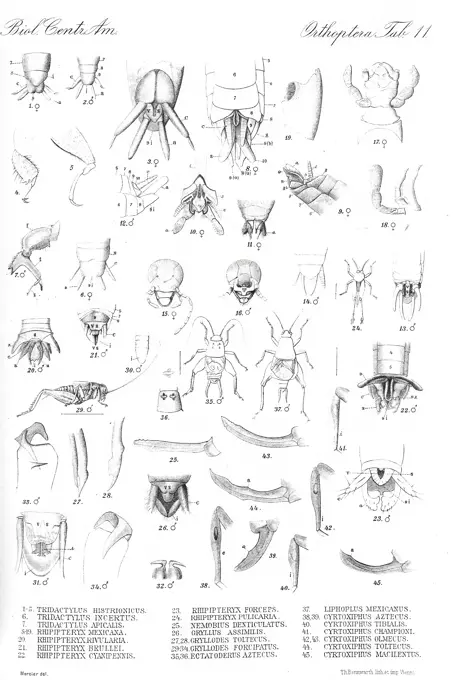
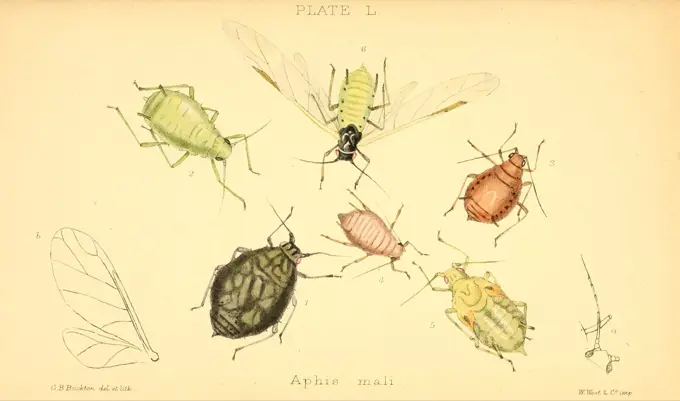
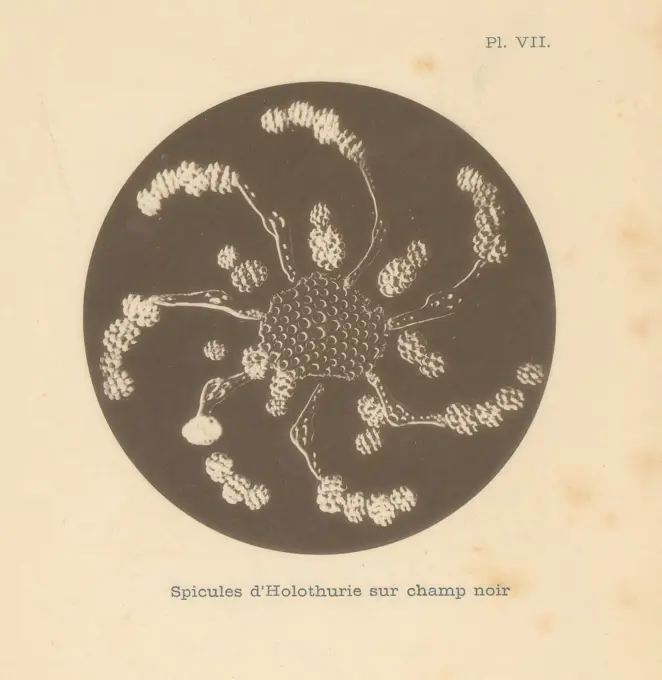
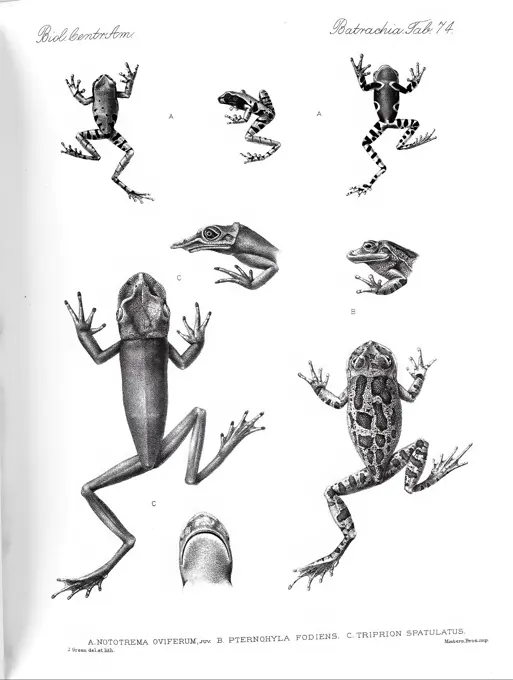
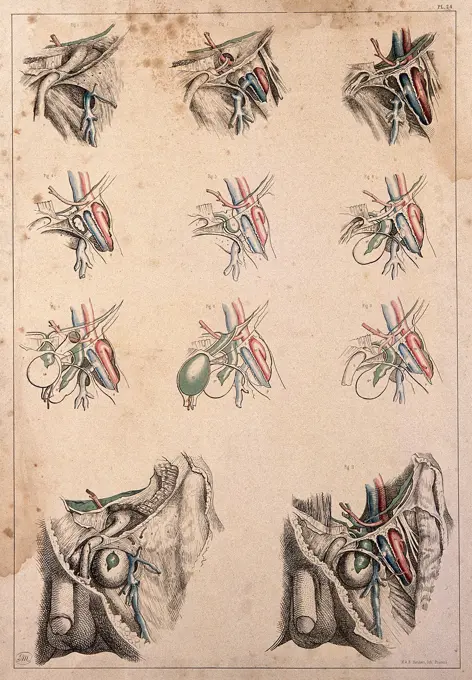
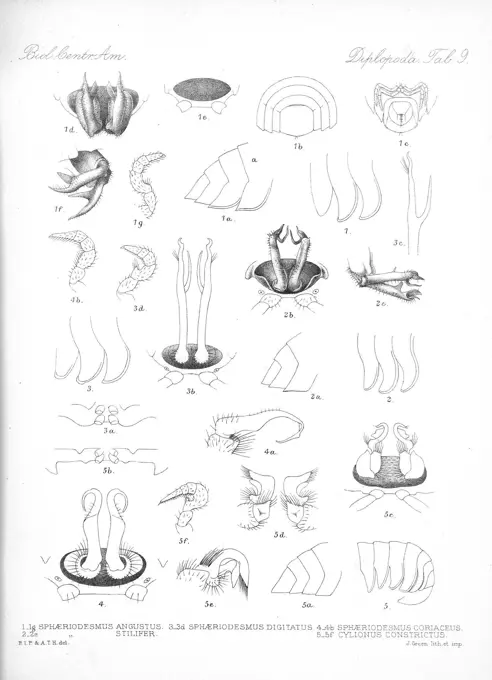
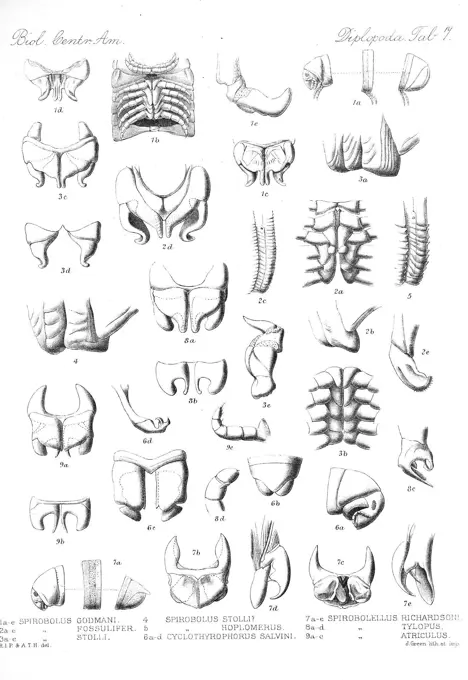
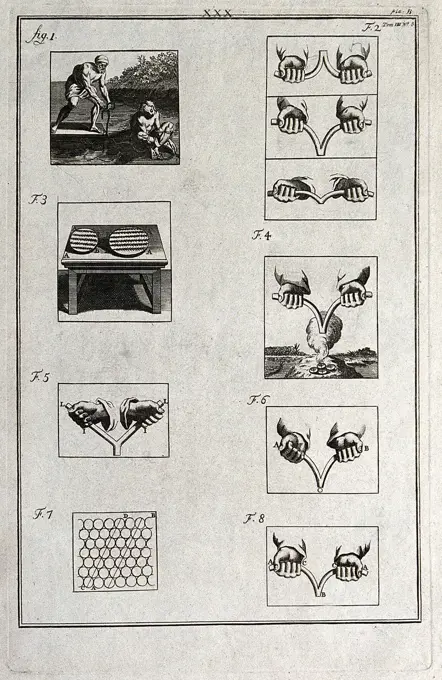
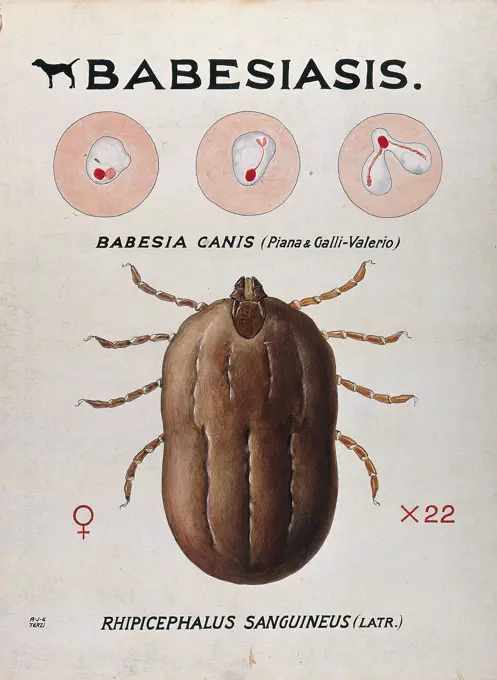
Collection of Crustaceans, Aquatic & Marine LifeCollection of the Dutch Heidematschappij. Drawings, Perithecium, Pycuide. undatedMushroom walls. Color drawing of a larf that houses in an additionally shown mushroom and various shapes of the beetle that occurs from the larf. Larf and beetle viewed by the mikroscope. With inscription. Part from Jan Brandes, DL sketchbook. 1 (1808), p. 215.Drawing, Design for Necklace with Brazilian Beetles; USA; graphite, brush and watercolor, white heightening on tracing paper; 12.6 x 19.2 cm (4 15/16 x 7 9/16 in.); 1910-44-1Biologia Centrali-Americana London, 1879-1915, archaeology, botany, Central America, description and travel, scientific expeditions, zoology, 06, arachnid, A detailed illustration showcasing various insect forms and anatomical structures. The composition features an array of insect parts, including heads, legs, and wings, meticulously labeled with scientific names. Among the specimens, distinct body shapes and features of different species can be observed, emphasizing their diversity. The illustration serves as a reference for entomological study, revealing intricate details such as antennae, mouthparts, and segmentation. Each specimen is rendered with precision, providing insight into the morphology and classification of these insects.Knipsel over de coloradokever, 1877; De Colorado-Kever.Newspaper clipping from the enclosure to the General Handelsblad from August 10, 1877 on the ColoradoKever. With a beetle development stages of the Beetle.SketchBook 4: Ornament and Architecture Studies, 1. Lilia Buliferrum, 2nd Lilia Giganteum, 3. Feuerliliie, 4. Fuchsia, Dicl … Tra, Passiflora Passion Flower, Oenothera Bee Night Cand, Wicke C ...Botanical and zoological illustration by F. E. Guérin. From Dictionnaire pittoresque d'histoire naturelle et des phénomènes de la nature - 1833/1834Chronologischer Raupenkalender, oder, Naturgeschichte der europäischen Raupen Berlin, Im Verlage von Theodor Bade, 1837, caterpillars, Europe, Lepidoptera, pictorial works, HSA, This illustration features a variety of caterpillars, each labeled with a unique identification number. The caterpillars display an array of colors, textures, and body shapes, showcasing the diversity within this stage of lepidopteran development. The arrangement includes notable examples with distinctive markings and variations in size. Each caterpillar is meticulously drawn to highlight details such as segments, appendages, and patterns, providing a comprehensive view of these intriguing larvae as they prepare for transformation into butterflies or moths. The labels correspond to specific species or categories, suggesting a scientific study or cataloging of these organisms.Arcana entomologica, or Illustrations of new, rare, and interesting insects, London, William Smith, 1845 i.e. 1841-1845, insects, arthropoda, entomology, classification, pictorial works, arthropod, The illustration features a botanical study that includes a detailed depiction of a flowering plant alongside various beetle species that inhabit or interact with it. The main plant is shown with elongated stems and clusters of blossoms, highlighting its features. Surrounding this central plant, various beetles are illustrated in different angles, showcasing their distinct body shapes and characteristics. There are also smaller sketches of insect parts, such as antennae and legs, providing anatomical details. This comprehensive illustration serves as both an artistic representation and a scientific reference for entomological and botanical studies.Considerations generales sur la classe des crustaces Paris F.G. Levrault 1825 France Crustacea Zoology, This illustration features two distinct types of crabs from the class Malacostraca. The top section depicts a crab viewed from above, showcasing its broad, rounded shell and prominent pincers, highlighting its defensive adaptations. The bottom section presents a detailed perspective of a different species, emphasizing the intricate structures of its exoskeleton and the articulation of its limbs. Both specimens are labeled, providing taxonomic clarity within the broader context of decapods, which are characterized by their ten limbs. The meticulous line work captures the anatomical features and textures, reflecting the scientific artistry of the period.An engraving depicting Three types of prímula.       A, pin eyed, B thrum eyed, and C, homostye. When Bateson and Gregor investigated these, they found that long styled plants ,with large eye were alvays homostye. 1912 Biologia Centrali-Americana London Published for the editors by R. H. Porter 1879-1915 archaeology botany Central America description and travel scientific expeditions zoology 69, This illustration presents a collection of detailed anatomical drawings, showcasing various forms and structures of unspecified organisms or anatomical features. The images are arranged in a grid format, with numbered labels accompanying each illustration. The designs display a diverse array of shapes and textures, highlighting both symmetrical and intricate elements, possibly representing different species or anatomical specimens. Each detailed representation invites examination, suggesting a study of morphology or taxonomy within a biological context. The title references a systematic approach to understanding the forms presented, indicating a scholarly focus on classification or anatomical study.Biologia Centrali-Americana, London, Published for the editors by R. H. Porter, 1879-1915 archaeology, botany, Central America, description and travel, scientific expeditions, zoology 55, This illustration features various detailed anatomical diagrams of the genus Platyhelminthes, specifically focusing on the morphological characteristics of different species. The images depict several view orientations and structural details, including segments and body plans. Key features are labeled for clarity, showcasing details such as the digestive tract, musculature, and other specific structures. Each figure is systematically organized, highlighting significant differences and similarities among the species. The layout reflects a scientific approach to understanding organism classification and anatomy, contributing to the study of flatworms.Biologia Centrali-Americana, London, 1879-1915, archaeology, botany, Central America, description and travel, scientific expeditions, zoology, dazzling diversity., This detailed illustration showcases a variety of marine and terrestrial invertebrates, focusing on their anatomical features. The image is organized into several sections, each labeled with a corresponding number for easy identification. It includes detailed drawings of structures such as limbs, body segments, and specialized appendages. The diversity of forms highlights the complexity of these organisms, encompassing different species and showcasing their unique adaptations. Annotations may provide additional scientific information regarding their classification or characteristics, making it a valuable reference for studies in biology and natural history.Insects, european garden spider (Araneus diadematus) is the most common representative of the genus of cross spiders in Central Europe, Historical, digitally restored reproduction from a 19th century originalIllustrations of insects created for the Magasin de zoologie 1838-1842, insects, pictorial works, The illustration features two distinct depictions of an insect, showcasing its anatomical structure. The top figure presents a simplified outline of the insect's body, emphasizing its elongated shape and segmented sections. Below, a more detailed representation highlights the insects legs and overall form, providing insight into its physical characteristics. The accompanying text identifies this particular species, contributing to an understanding of its classification within entomology. The soft, muted background accentuates the fine lines and details of the insect illustrations, inviting a closer examination of its features.Monograph of the British Aphides, London, 1876-83, aphids, Great Britain, Hemiptera, insects, wings, A collection of aphids is displayed, showcasing several species with distinct colors and characteristics. The array includes variations ranging from pale green to deep black, highlighting their diverse appearances. Among them, a winged specimen is visible, suggesting adaptability and reproduction strategies. The detailed illustration emphasizes the intricate features of each aphid, such as body shape and texture, as well as the elongated antennae. A single leaf fragment is also included, providing context to their natural habitat. This depiction captures the complexity and variety within this small but significant group of insects.Mendel, Charles, Spicules d'Holothurie sur champ noir, Microscope image of the skeletal needle of a sea cucumber, recto - printed, photomechanical print, page, photos, photographically illustrated books, Pl. VII., height 72 mm, width 72 mm, photographer, 1880 - 1899, paper, collotype, photoprint, maker, manufacturerBiologia Centrali-Americana, London, 1879-1915, Archaeology, Botany, Central America, Zoology, Scientific Expeditions, Description and Travel, This illustration showcases various species of frogs and toads, highlighting their unique anatomical features and physical characteristics. The species are labeled with letters A through C, indicating different frogs: A features an elongated body with webbed feet, B presents a more compact form with distinctive markings, and C displays a unique shape with spoon-like appendages. Each subject is depicted in a dynamic pose, showcasing their limbs and skin textures, emphasizing the diversity found within amphibian species. Annotations and scientific names accompany the figures, providing additional context for identification and classification.Femoral hernia: eleven figures. Coloured lithograph by J. Maclise, 1851.Biologia Centrali-Americana London Published for the editors by R. H. Porter 1879-1915 Archaeology Botany Central America Description and Travel Scientific Expeditions Zoology, This illustration features detailed scientific drawings of various anatomical structures belonging to specific species within the Diplopoda class, commonly known as millipedes. Each labeled figure showcases intricate features such as limbs, antennae, and reproductive organs, emphasizing the diversity in morphology among different species. The meticulous lines and shading highlight specific adaptations and characteristics, which are essential for the understanding of millipede biology and taxonomy. The arrangement of figures allows for easy comparison and study of the unique traits present in the depicted species.Dwarf spiders, Walckenaeria acuminata 203, Walckenaeria cuspidata 204, Walckenaeria monoceros 205, Leptothrix hardyi 206, Walckenaeria unicornis 207, Walckenaeria obtusa 208, Monocephalus fuscipes 209, Lophomma punctatum 210, Pelecopsis parallela 211, Cnephalocotes obscurus 212, Entelecara flavipes 213, and sheet weaver spider, Thyreosthenius parasiticus 214. Handcoloured lithograph by W. West from John Blackwalls A History of the Spiders of Great Britain and Ireland, Ray Society, London, 1861.Biologia Centrali-Americana London, 1879-1915 Archaeology Botany Central America Description and Travel Scientific Expeditions Zoology 61, The artwork features a detailed collection of illustrations showcasing various species and forms of marine organisms, specifically focusing on the structure of shells and exoskeletons. Each figure is meticulously labeled with alphanumeric codes, indicating different species and variations. The illustration demonstrates an array of shapes, from smooth and rounded to intricately segmented and spiny designs. The systematic presentation highlights the diversity and complexity of these organisms, serving as a reference for naturalists and biologists studying marine life.A torture victim; and divination techniques. Engraving.Spiders (Arachnida) the 66th plate from Ernst Haeckel's Kunstformen der Natur (1904)Secretory tissues, plant histology, drawing.Jean-Baptiste Meunier (1786-1856)/ Entomologie, ou histoire naturelle des insectes. No. 83 Curculio Pl. XXIX.Life-cycle stages of the parasite Babesia canis and its vector, the kennel tick (Rhicephalus sanguineus). Coloured drawing by A.J.E. Terzi.