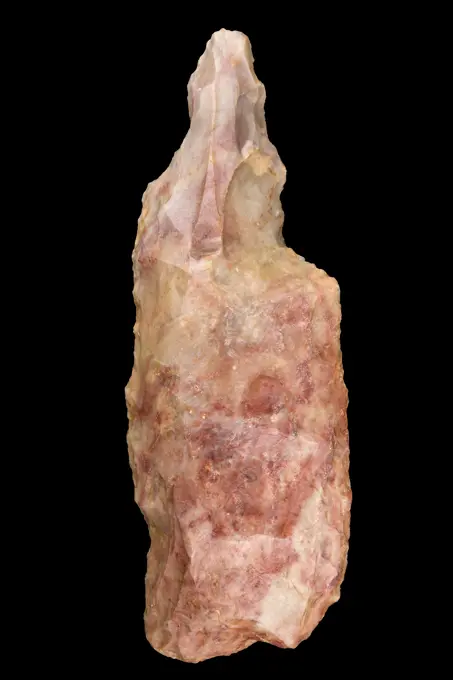
Ancient Armor Artifacts

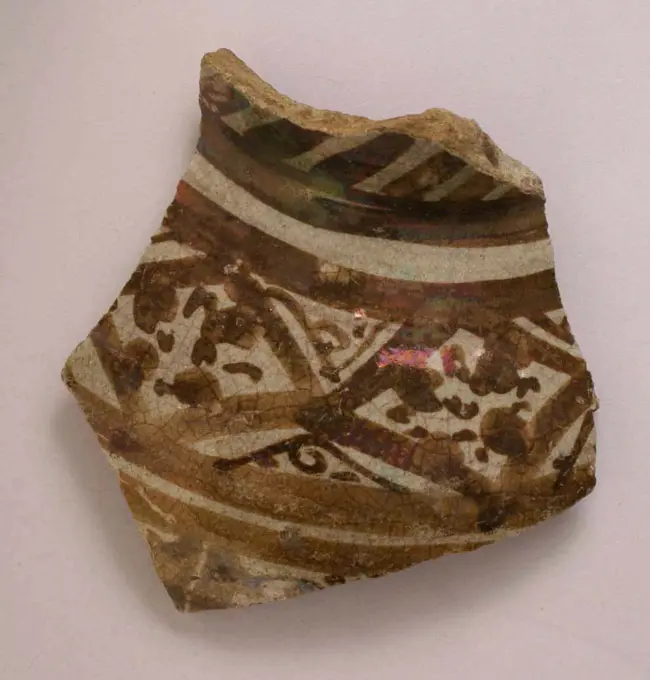
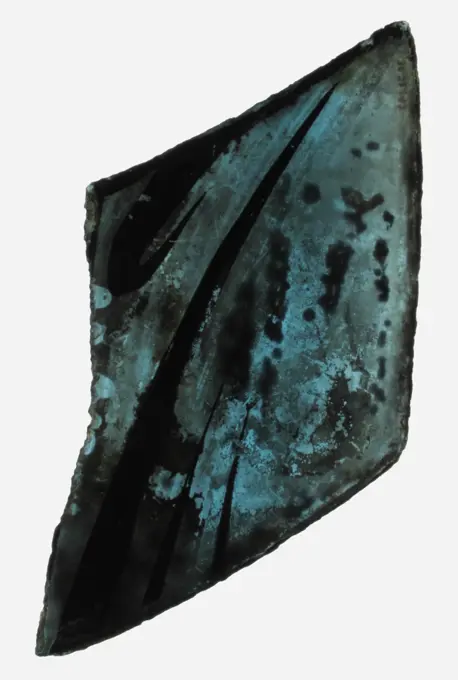
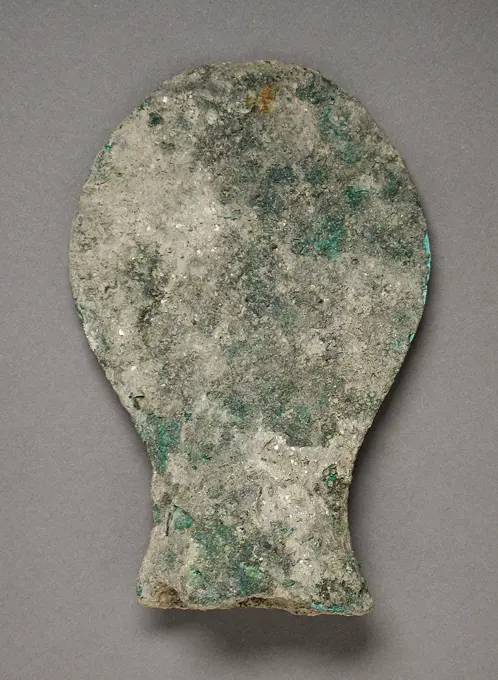
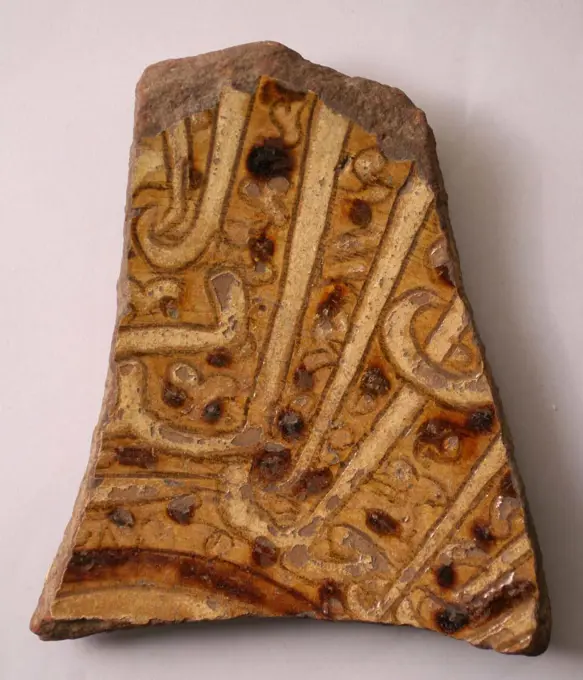
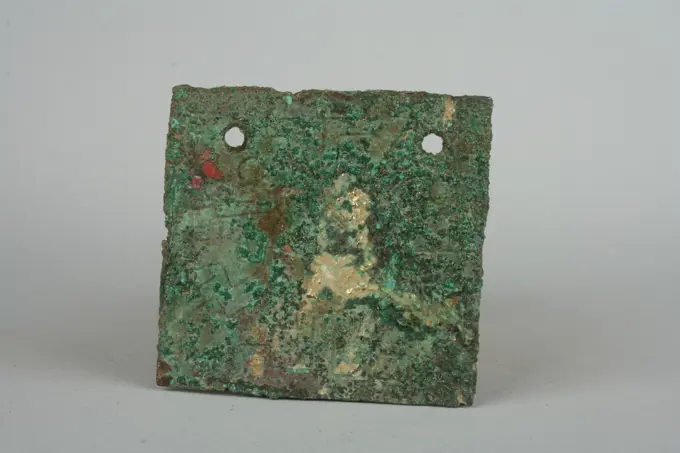
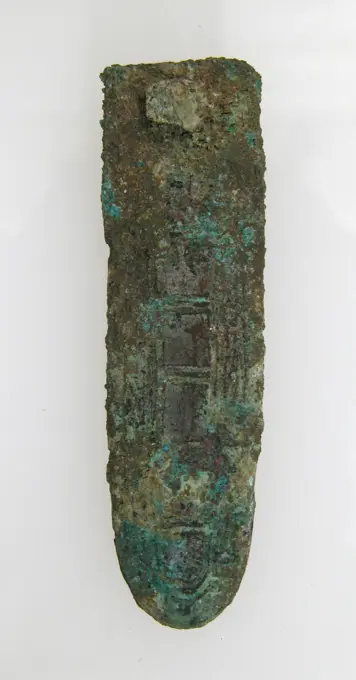
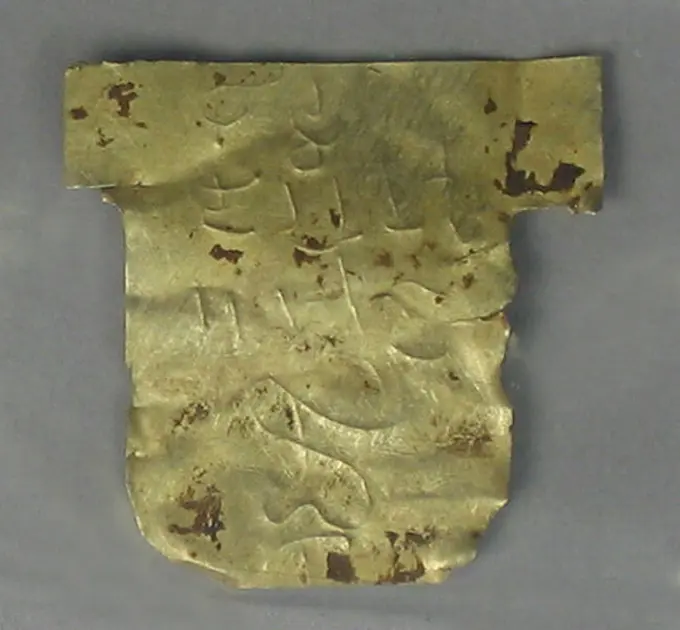
Historical artifacts including scales and relief fragments from ancient armor, highlighting craftsmanship from Egypt's past, with a focus on material textures.

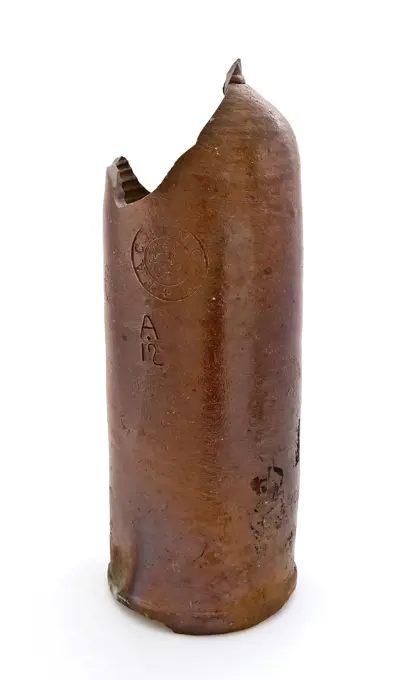
Spout of copper tap, small size, spout part ground find copper metal, cast filed Gray metal spout of tap in the shape of stylized animal head Curved spout with flat sides. Curvature only at the bottom. Small protruding lip at the front. Half of the vertical tube to which the stop belongs is still present archeology Rotterdam rail tunnel tap faucet holder component barrel beer wine Soil discovery: trajectory rail tunnel Rotterdam.
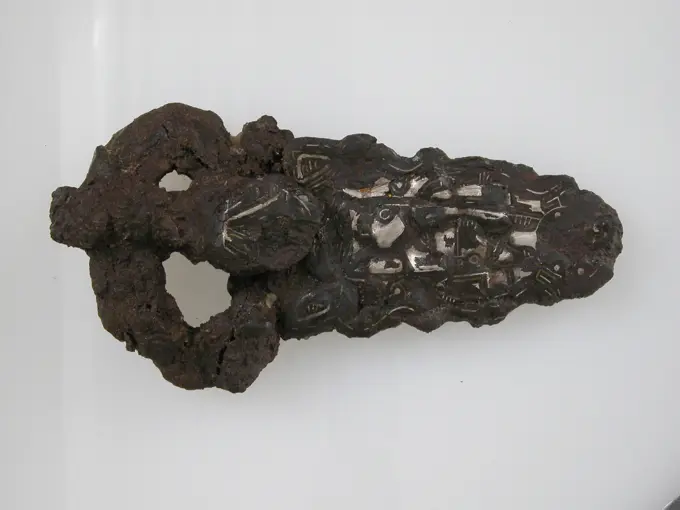
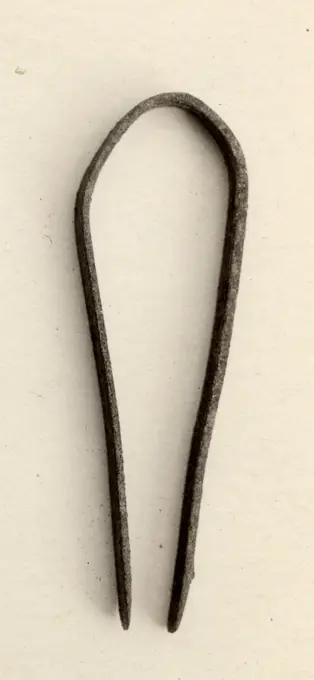
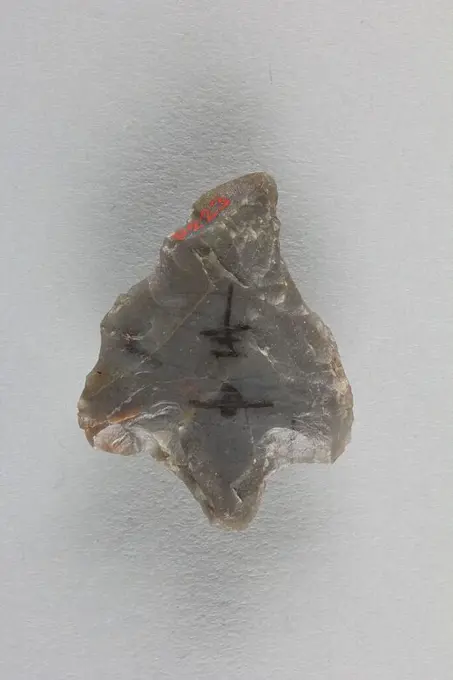
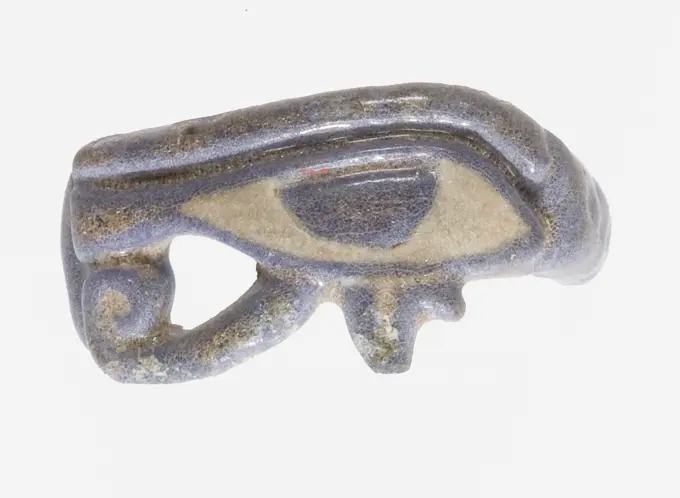
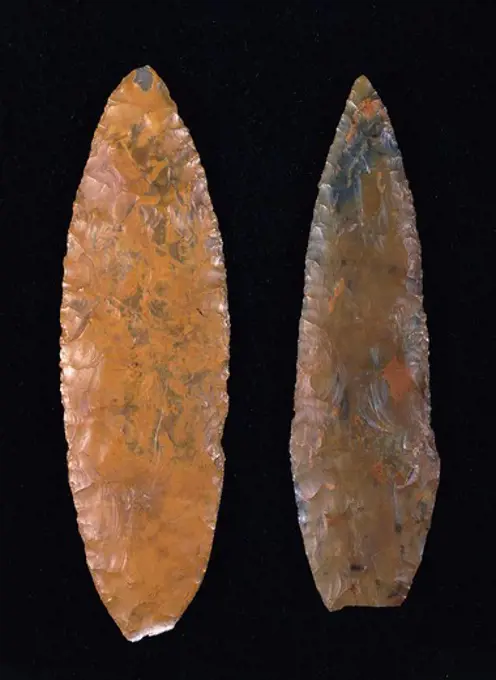
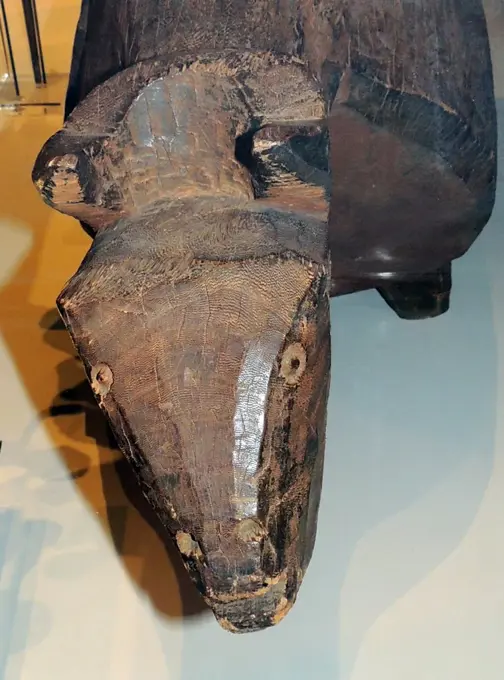
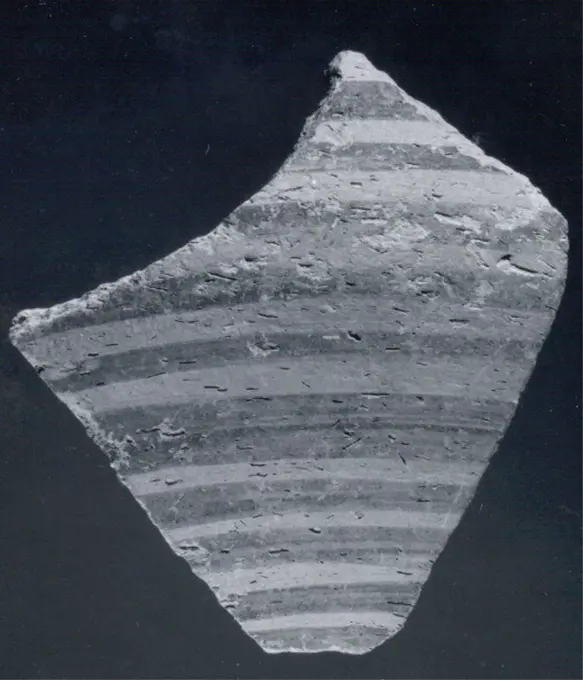
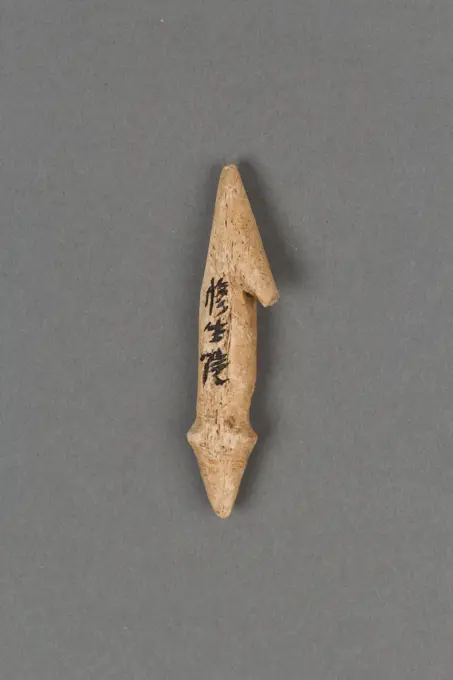
Fragment ca. 1150-ca. 1250 European or Middle Eastern. Fragment 696644wood cutting board isolated on white backgroundFragment 15th century. Fragment 445471Handle from a prime or a chisel from the wreck of the East India Hollandia. Tools and Instruments, Various Tools, AWL / Chisel Handle; ID. NG 1980-27H2281, Deforter.Black -lace sleeve, anonymous, c. 1850 - c. 1920  Europe .  Europe .RELIEVE DE CUATRO PEQUENAS FIGURAS XII DINASTIA IMPERIO MEDIO - VISTA POSTERIOR. Location: EGYPTIAN MUSEUM. KAIRO. EGYPT.ArrowheadSickle Blade, 1980-1801 BC. Egypt, Middle Kingdom, Dynasty 12. Flint; overall: 5 cm (1 15/16 in.).Losange punch: E/ A/ Master Punch. Small punch at the bottom :. Large strip decorated with flowers in the middle of each side from which the garlands of foliage leave, bordered on 2 sides by 1 row of large pearls.Vase fragment Minoan. Vase fragment. Minoan. Terracotta. Early Minoan III. Vasespiece of shungite stone on white marble macro shooting of natural mineral rock specimen - piece of shungite stone on white marble background from Tolvoja region of Karelia, Russia Copyright: xZoonar.com/ValeryxVoennyyx 11950303Possible pointed rear of small hammer, hammer tool kit fragment ground find iron metal, archeology Rotterdam City Triangle Mariniersweg Soil discovery: Mariniersweg Rotterdam.Fragment of hipposandal (title awarded). Iron. Carnavalet museum, history of Paris.Fragment from the head of a statue ca. 2381-2323 B.C. Old Kingdom At least one statue of the deceased was an important element of the burial equipment. No complete statues were found during the clearance of Perneb's tomb, but several statue fragments were discovered in the debris of the superstructure. These would have belonged to one or more figures either of Perneb himself or of members of his family. The statues would have been placed originally in Perneb's "serdab," a hidden room behind one of the chapel walls (see 98.4.9).This fragment preserves the side of a face framed by a short, curled wig, painted black, from the head of a male statue. The deep undercut at the corner above the cheek is typical of the late Fifth Dynasty.. Fragment from the head of a statue 547099Fragment. Culture: European or Middle Eastern. Dimensions: L. 2 in. (5.1 cm). Date: ca. 1150-ca. 1250. Museum: Metropolitan Museum of Art, New York, USA.Fragment of a Door Post with Acanthus Leaves 6th-7th century In the 500s Apa (Father) Jeremias founded a Coptic monastery at Saqqara, the ancient Egyptian necropolis (cemetery) of the city of Memphis, near the oldest pyramids. He and the earliest monks lived in tombs at the site. As the monastery grew, several grand churches with lavish decoration were built, as well as many chapels, public buildings, and complexes of cells (rooms) for each monk. The monastery continued to grow after the Arab conquest with materials from early Byzantine tomb structures being reused for additional monastic structures. Inscriptions record prayers to numerous holy figures. Sculptural elements from Saqqara are often carved with deeply undercut patterns to intensify the play of light and shadow and to mask the solidity of the architecture. This sculptural style was popular throughout the Byzantine world in the 500s.. Fragment of a Door Post with Acanthus Leaves 456173Fragment of red earthenware, partly with glaze, fragment crockery holder kitchen utensils earthenware ceramics earthenware glaze lead glaze, hand molded hand turned fried Fragments of red pottery Frying pans jugs pots of grass and bottom of small jug Spicy or only partially glazed with lead glaze archeology Rotterdam City center Stadsdriehoek Hoogstraat indigenous pottery water washing cooking nutrition food preparation handicraft pottery Soil discovery Hoogstraat Rotterdam June 15, 1983.Fragment of the bowl stroke;  3 thousand BC (-3000-00-00--2001-00-00);The collection of the ancient EastFragment 8th-9th century. Fragment 453423Fragment of a Dish 11th-12th century. Fragment of a Dish 446477Fragment 13th century Crusader. Fragment 475346Glass Fragment 14th century () French (). Glass Fragment. French (). 14th century (). Pot metal glass. Glass-StainedBottle 9th-10th century This glass bottle was excavated at the site of Tepe Madrasa in Nishapur.  Nishapur was a vital city in the early and middle Islamic periods, located along one of the main trajectories that connected Iran and West Asia Islamic lands with Central Asia and China. These itineraries are often referred by the term Silk routes’ but were in fact crucial to the movement of constellations of materials and objects, as well as people and ideas. The diverse population of Nishapur and its surroundings, from the better-researched elite groups of merchants, land-owning aristocracy, and literates, to the less-known artisans, farmers, miners, and servants, were instrumental in adapting global cultural trends to create their own distinctive visual languages. This is seen in the material remains of everyday life in medieval Nishapur — from pots and pans to lighting devices, inkwells, textiles and trimmings, jewelry, games and toys, talismanic devices, weapons, coins, and architectSocket Adze. Northeastern Thailand, Ban Chiang culture, 300 B.C.-A.D. 150. Tools and Equipment; adzes. Copper alloyKey Handle 1st-7th century Roman. Key Handle 462919Fragment ca. 1150-ca. 1250 European or Middle Eastern. Fragment 694234Fragment of a Bowl 14th-15th century. Fragment of a Bowl 446367Textile fragment 16th century British. Textile fragment 101689Grinder ca. 1981-1640 B.C. Middle Kingdom. Grinder. ca. 1981-1640 B.C.. Diorite. Middle Kingdom. From Egypt, Memphite Region, Lisht North, Cemetery, MMA excavations, 1920-22. Dynasty 12-13Amulet of a Cobra with Lioness Head 400 BCE-400 CE Egypt. Faience . Ancient EgyptianStoneware mineral pitcher, cylindrical with round shoulder, sausage ear and short neck, mineral water pitcher jar product packaging container soil find ceramic stoneware glaze salt glaze approx., hand turned glazed baked Stoneware mineral pitchers cylindrical with round shoulder short neck and sausage ear. Stand area with traces of deduction and soul. Glazed. Marked under the ear and marked on the front with medallion Medallion in the medallion: FACHINGEN in the midfield left clawing lion archeology Rotterdam Kralingen-Crooswijk Struisenburg Oostmaaslaan Boslaan Buizengat advertising indigenous pottery import drinking water drinking medicine packaging Soil discovery: Buizengat Oostmaaslaan Boslaan Rotterdam an old landfill of urban waste.Belt Buckle 7th century Frankish. Belt Buckle 465641 Frankish, Belt Buckle, 7th century, Iron, silver inlay, Overall: 5 9/16 x 2 13/16 x 1 1/4 in. (14.2 x 7.1 x 3.2 cm). The Metropolitan Museum of Art, New York. Gift of J. Pierpont Morgan, 1917 (17.193.308a)Tweezers ca. 1635-1458 B.C. Second Intermediate Period-Early New Kingdom. Tweezers 546899Half of an ornament in the shape of a dragon. Neolithic, Hongshan culture, about 3500 BC.Triangular Base with Serrated Edge. UnknownToothed shape. Point in chipped stone. Neolithic period. North Africa. 5 cm.Loden role from the wreck of the East Indiesman 't flying heart. To tubularly loden pictures. Black-gray and silver gray in color. Roll or lead.Spoon with oval container and a straight handle with a diamond -shaped cross -section, anonymous, c. 1590 - c. 1596 spoon. fragment Spoon with oval container and a straight handle with a diamond -shaped cross -section; The stem onset a point. Netherlands tin (metal) casting  Nova Zembla. Saving HuysBread dish. Terracotta. Neolithic. Paris, Carnavalet museum. Neolithic, bread dish, terracotta, dishes, archeological vestigeFragment. Culture: European or Middle Eastern. Dimensions: L. 1 7/8 in. (4.8 cm). Date: ca. 1150-ca. 1250. Museum: Metropolitan Museum of Art, New York, USA.Tassel, Medium: linen Technique: braided and knotted, White linen tassel with braided stem connected to egg-shape base. Core is braided over and from it hang multiple knotted elements--the longest from the center., Italy, 17th century, trimmings, TasselPasser -by the epaulettes of Van Speyk, Anonymous, 1831  Passing from the epaulettes of Van Speyk. Elongated piece of blue sheet, with a border dirty and worn white linen on one short side. Folded in the middle. Netherlands cloth. linen (material)   ScalesFragment ca. 1150-ca. 1250 European or Middle Eastern. Fragment 696643Right big toe with indication of a sandal strap ca. 1353-1336 B.C. New Kingdom, Amarna Period. Right big toe with indication of a sandal strap 561673Arrowhead. Culture: Japan. Dimensions: W. 1 in. (2.5 cm); L. 1 1/4 in. (3.2 cm). Museum: Metropolitan Museum of Art, New York, USA.Coin 8th century. Coin 457562Axe headFragmentary Ring Decorated with a Wedjat Eye ca. 1390-1353 B.C. New Kingdom. Fragmentary Ring Decorated with a Wedjat Eye. ca. 1390-1353 B.C.. faience. New Kingdom. From Egypt, Upper Egypt, Thebes, Malqata, Palace of Amenhotep III, MMA excavations, 1910-11. Dynasty 18Bird Plaque Ornament 3rd century B.C.-A.D. 2nd century Vicús. Bird Plaque Ornament 315416Fragment of Border 14th century. Fragment of Border 451033Ferret 6th-7th century Frankish. Ferret 464930 Frankish, Ferret, 6th7th century, Copper alloy, silvered, Overall: 1 13/16 x 1/2 x 3/16 in. (4.6 x 1.3 x 0.4 cm). The Metropolitan Museum of Art, New York. Gift of J. Pierpont Morgan, 1917 (17.191.228)Fragment. Culture: European or Middle Eastern. Dimensions: L. 1 3/4 in. (4.5 cm). Date: ca. 1150-ca. 1250. Museum: Metropolitan Museum of Art, New York, USA.Lex Municipal, época griega, Empúries. Museum: Museu d'Arqueologia de Catalunya, Empúries.Pelike, fragmentary ca. 520 B.C. Attributed to Euthymides. Pelike, fragmentary 255974Fragment 14th-15th century. Fragment 446321summer stationery mock-up scene. Sussulent plant and glass of clear water on beige textured table background, toned. summer stationery mock-up scene.Belt Ornament with Zoomorphic Design 6th-5th century B.C. North China and south-central Inner Mongolia. Belt Ornament with Zoomorphic Design 65300Fragment of earthenware dish on stand fins with bird's head in sludge technology, dish crockery holder soil find ceramic earthenware clay engobe glaze lead glaze, hand-turned glazed sgraffito ring loaf baked Edge fragment of flat dish on stand fins (only feed visible). Top glazed and provided with yellow sludge decoration reverse side unglazed. hole at the edge. Red earthenware archeology Rotterdam railway tunnel serving serve adorning food Soil discovery: railway tunnel Rotterdam.Point in the shape of a laurel leaf in cut stone. Neolithic period. North Africa. 6,1 cm.One of Seven Foundation Offerings 8th-12th century Indonesia (Central Java). One of Seven Foundation Offerings. Indonesia (Central Java). 8th-12th century. Gold. MetalworkStanding Figure 1st-8th century Mezcala. Standing Figure 317601Greek Art. 3rd-1st century BCE. Right forearm belonging to a bronze statue of a woman. Archaeological Museum of Olympia. Greece.Probably a Counter 5th-8th century. Probably a Counter 449166Fragment of a Turban-Shaped Thumb Rest 9th-11th century This ceramic fragment was excavated in Ctesiphon, the Sasanian metropolis and administrative capital conquered by Arab Muslim armies in 637. The city was known in Arabic as al-Madain, or "the cities", for its extended area. Arab historians indulge in describing al-Madain/Ctesiphons grand monuments, which obsessed Muslim rulers and may have acquired a symbolic meaning related to its imperial past. This was the case of the Taq-i Kisra, an impressively-sized ivan (a vaulted hall with one side open) partially dismantled to reuse its bricks in caliphal buildings in the new capital Baghdad. Finds like this fragment, which was excavated at a site named Selman Pak II, attest to the continued occupation of Ctesiphons urban area in the early Islamic period. The thumb rest would have originally decorated the uppermost handle of a ewer. While similar features could also have an animal shape, the creativity with turban-like shapes reached Costume Ornament. Culture: Peru; central coast (). Dimensions: D. 1 1/2 in. (3.8 cm). Date: 11th-12th century. Museum: Metropolitan Museum of Art, New York, USA.Fragment, Medium: silk, metal wrapped linen Technique: two fabric structures incompletely integrated, Fantastic birds flying up and down into large blossoms., Italy, 14th century, woven textiles, FragmentFragment of a Female Figure. Culture: Coptic. Dimensions: Overall: 2 3/4 x 1 1/4 x 5/8 in. (7 x 3.1 x 1.6 cm). Date: 4th-7th century. Museum: Metropolitan Museum of Art, New York, USA.Prehistoric lance and javelin flint tips, from ItalyFragment 13th century Crusader. Fragment 466812Fragment Tobacco Pipe, Cornelis Huijvenaar, 1760 - 1800 Fragment tobacco pipe with a crown and the letters c h n and n. Of the excavations on the Hofstede Arentsburg 1827-1831 under the supervision of Professor Reuvens. Schoonhoven pipe clay Fragment tobacco pipe with a crown and the letters c h n and n. Of the excavations on the Hofstede Arentsburg 1827-1831 under the supervision of Professor Reuvens. Schoonhoven pipe clayTalisman. Culture: Japan. Dimensions: H. 8 1/2 in. (21.6 cm); W. 7 5/8 in. (19.4 cm); D. 1 1/8 in. (2.9 cm). Date: ca. 2000 B.C..These implements--an arrowhead, fishhooks, needle, and harpoon--were skillfully carved from bone, a material worked by Japanese artisans since Paleolithic times. They were found in the Obara Shell Mound at Ofunato Bay in Iwate Prefecture. According to information gleaned from shell mounds, or middens, the people of the Jomon period relied on a variety of strategies to obtain food. The large number of fishhooks, fashioned with and without barbs, together with the rich array of marine remains found in these rubbish heaps since very early times indicate that some fifty species of fish and shellfish constituted an essential dietary staple. Toggle-head harpoons, a later innovation, facilitated the hunting of sea mammals. Attaching a line to the toggle allowed the hunter to draw in his prey once the toggle had broken away from the harpoon shaft. Further evidence gFragment of jaws. Caucasus. 4th century BC. Paris, Cernuschi museum. 35407-6 BRONZE, FRAGMENT, MORSAmulet of a Lioness Head 1070 BCE-656 BCE Egypt. Stone . Ancient EgyptianPapua new guinea hollowed out tree forming a canoeFragment. Culture: European or Middle Eastern. Dimensions: L. 2 7/8 in. (7.3 cm). Date: ca. 1150-ca. 1250. Museum: Metropolitan Museum of Art, New York, USA.Sherd ca. early 2nd millennium B.C.. Sherd. ca. early 2nd millennium B.C.. Ceramic. Middle Bronze Age. Mesopotamia, Tell TayaHarpoon head Japan The Jmon period is the earliest period in Japanese history, lasting from roughly 14,000 to 300 BCE. The Jmon people were primarily hunter-gatherers, hunting land animals and gathering vegetables and nuts on the land as well as hunting and fishing at sea. Using implements such as this fishhook, Jmon communities, especially those close to the sea, were able to consume a variety of fish. Fish bones found at Jmon archaeological sites indicate that the Jmon hunted fish not only close to the shore but also farther out in the open sea, where larger fish such as tuna could be caught. There is even evidence that the Jmon ate pufferfish, a poisonous fish considered a delicacy in modern Japan.. Harpoon head. Japan. Bone. Final Jmon period (ca. 1000-300 B.C.). BoneMultiple Strings of Beads. Egypt, New Kingdom (circa 1569 - 1081 BCE). Jewelry and Adornments; beads. FaienceShell from v.o.c.-ship the 'white lion'. .Stucco Fragment probably 8th-12th century. Stucco Fragment 741080Rubber -filled form of (presumably) a bolt, of which only the corroded outer layer has been preserved as a concretion, from the wreck of the East Indians' t Vliegend Hart, 1700 - 1735 concretionary stone The concretion probably once formed around an iron bolt. The created cavity is filled with rubber. The cast in elongated and has a round cross -section.  rubber (material). concretionary stonePetal-Shaped Bead, c. 1391-1353 BC. Egypt, New Kingdom, Dynasty 18, reign of Amenhotep III. Faience; overall: 3 x 1 cm (1 3/16 x 3/8 in.).PIEZA DE AJUAR DEL PALEOLITICO SUPERIOR: FRAGMENTO DE PUNTA DE FLECHA DE HOJA DE LAUREL DE LA CUEVA DE MORIN O CUEVA DEL REY (DEPOSITO: MUSEO ARQUEOLOGICO NACIONAL).Fragment of a bowl; Unknown Night -Tamanian workshop; approx. 6500 5500 BC ; Halaf culture (-6505-00-00--5495-00-00);Szarzyńska, Krystyna (1918-), painted ceramics, gift (provenance), Halaf culture (approx. 6500-ok. 5500 BC), bowls, geometric motifsSickle Blade, 1980-1801 BC. Egypt, Middle Kingdom, Dynasty 12. Flint; overall: 5 cm (1 15/16 in.).Fish Ornament 11th-12th century Peru; central coast (). Fish Ornament 308693Scaphella lamberti, a fossil gastropod from Pliocene deposits on white backgroundStone Pulidor before 16th century Mexican. Stone Pulidor 317132Een trom, c. 1810 - in or before 1839 drum A loose object from a diorama by Gerrit Schouten, representing a standing drum with a blue cloth. Suriname paper. glue. paint (coating) painting  SurinameModel Knot from the Foundation Deposit for Hatshepsut's Tomb ca. 1479-1458 B.C. New Kingdom This gold-covered knot was among the objects discovered in a foundation deposit in front of the tomb of Hatshepsut (KV 20) in the Valley of the Kings. Foundation deposits often contained magical implements and amulets intended to protect building or tomb that they marked. For more information on this deposit, see 30.8.6.. Model Knot from the Foundation Deposit for Hatshepsut's Tomb. ca. 1479-1458 B.C.. Wood, gold leaf. New Kingdom. From Egypt, Upper Egypt, Thebes, Valley of the Kings, Tomb of Hatshepsut (KV 20), Foundation deposit, Davis/Carter excavations, 1903-04. Dynasty 18Winged arrowhead in carved stone. Neolithic period. North Africa. 4,5 cm.Arrowheads, needles, hooks and harpoons. Culture: Japan. Dimensions: W. 3/8 in. (1 cm); L. 1 3/8 in. (3.5 cm). Museum: Metropolitan Museum of Art, New York, USA.Hammered Silver Peanut Ornament 8th-mid-16th century Peru; north coast (). Hammered Silver Peanut Ornament 308979furrier knife furrier s knife isolated on white background Copyright: xZoonar.com/ValeryxVoennyyx 5455365Pendant before 16th century Mexican. Pendant 317302A fragment of zinc sheet from Adam Mickiewicz's coffinstripped paint in the blue  wood door    and rusty      nailMKP GmbH, the company commissioned to analyse and assess the condition of the Carola Bridge, presented various material samples of the bridge debris to the press. Heavily rusted prestressing steel parts were also shown, Carola Bridge in Dresden, Dresden, Saxony, Germany, EuropeFragment ca. 1150-ca. 1250 European or Middle Eastern. Fragment 694277Stone punch. Neolithic period. North Africa. 11,1 cm.