My Boards
View Pictures
  • My Boards

Ancient Buddhist Statues

A collection of historic sculptures depicting various Buddhist deities and figures, crafted from materials like bronze and limestone, reflecting serene expressions.

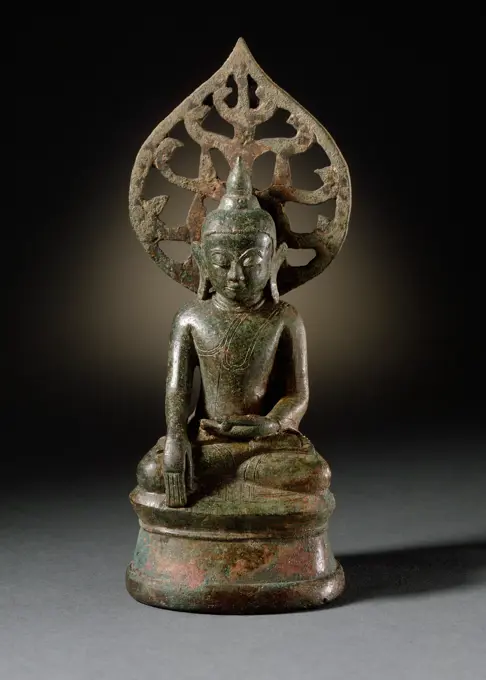
Buddha Shakyamuni. Burma (Myanmar), Mandalay (), 18th century. Sculpture. Copper alloy
288 assets in this story
6145-29124959
The Bodhisattva Avalokiteshvara (Lokanatha). India, Jammu and Kashmir, Kashmir region, circa 4th-5th century. Sculpture. Copper alloy
4443-28727487
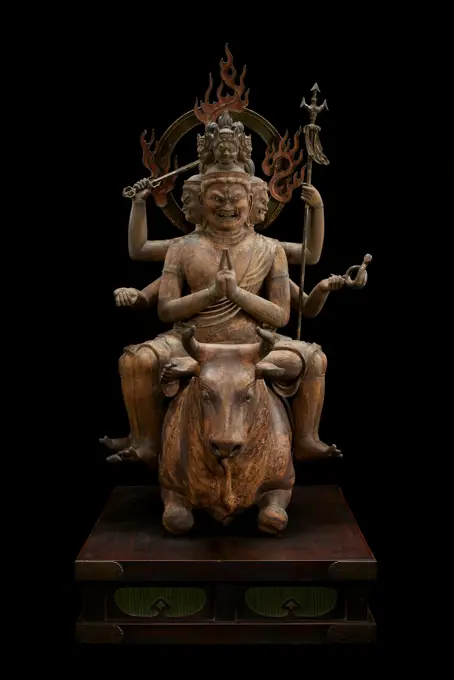
Daiitoku Myōō, the Wisdom King of Awe-Inspiring Power, second half 13th century, Unknown Japanese, 51 1/2 × 25 1/4 × 36 in. (130.81 × 64.14 × 91.44 cm), Wood with metal, polychrome, gilding, and inlaid crystal eyes, Japan, 13th century, Daiitoku Myōō is meant to be intimidating. He is also known as the Wisdom King of Awe-Inspiring Power, and it is his job to defeat evil. This Buddhist guardian deitys intense rage is manifested by his wild appearance: six legs, six arms carrying an assortment of weapons, and six glaring faces backed by a halo of flames. Daiitoku Myōō does not act alone but is one of the Five Great Wisdom Kings (Godai Myōō). Four of the Wisdom Kings guard the cardinal directions surrounding the central fifth king. Each of them also guards its own buddha. Since Daiitoku occupies the west, he is associated with the wrath of Amida Buddha, whose abode is a paradise known as the Western Pure Land.
6176-67036979
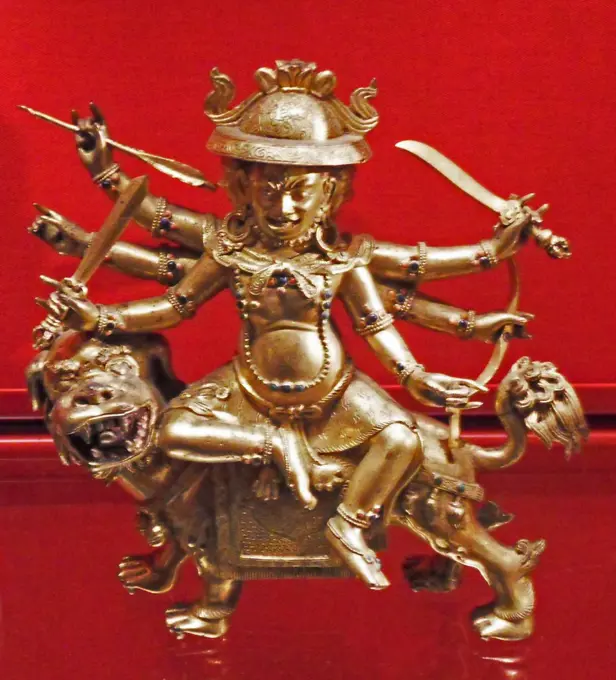
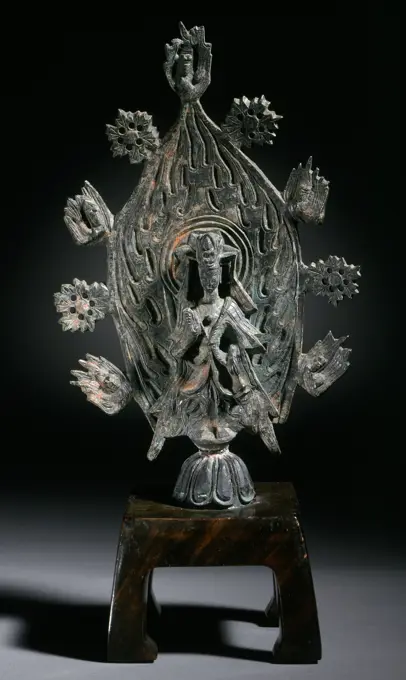
Japanese figure of the Adibuddha Aizen-Myo-O. Artist: Unknown
1746-21127235
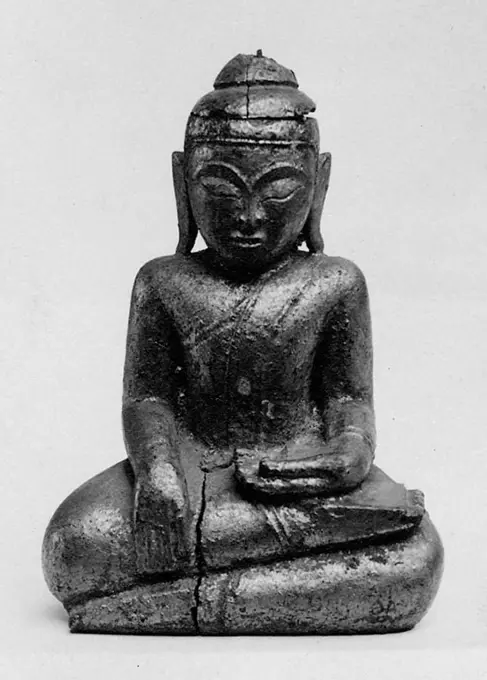
Crowned Buddha statue 19th century gilded wood Burmese (Burma, Myanmar)
6145-52898486
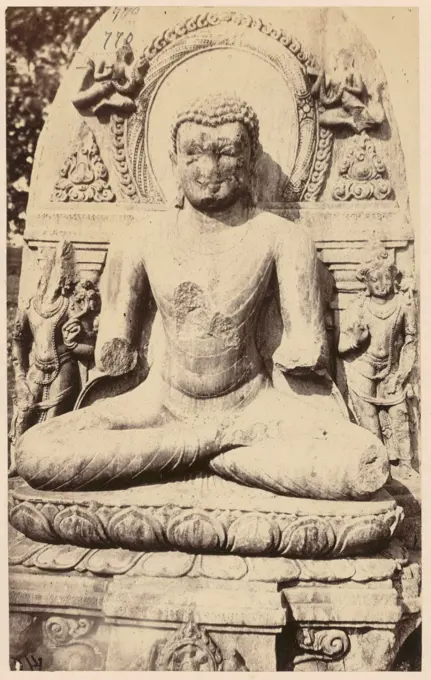
Statue of the seated Buddha at Bargaon
6145-29125664
The Hindu God Vishnu. Nepal, 13th-14th century. Sculpture. Stone
1848-55260221
Image of a deity with a peacock as riding animal, reliefs in Mahabaleshwara Temple, Chamundi Hill, Mysore, Karnataka, South India, India, South Asia, Asia
6145-29740490
Seated Buddha 19th century Cambodia. Seated Buddha 38877
6145-30191484
Buddha and Companions Riding a Mythical Animal 701 CE-800 CE Thailand. Sandstone .
1899-19137513
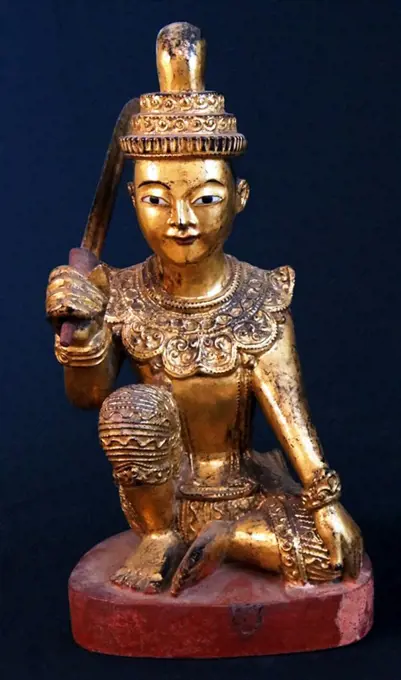
Burma/Myanmar: Wooden carving of a Burmese nat or spirit decorated in gold leaf and red lacquer, Mandalay, c. late 19th century
6145-29138261
Shiva as the Supreme Teacher
6145-48521604
Narasimha killing Asura Hiranyakashipu. unknown, sculptor
6145-29152855
Mahakala Son-dkar 18th century Tibet. Mahakala Son-dkar. Tibet. 18th century. Bronze. Sculpture
1848-50231176
Krishna god Vishnu avatar brass statue isolated on white with reflection
6145-30156032
God Ganesha, Remover of Obstacles 801 CE-1000 Central Java. Andesite .
1746-19677386
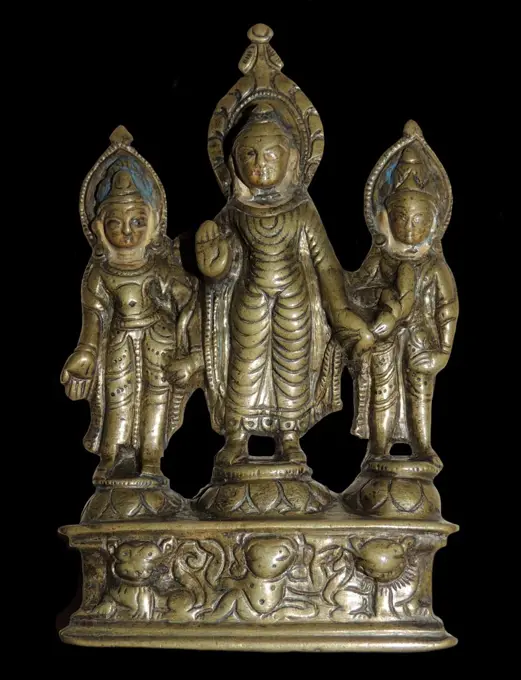
Abhaya mudra. This gesture (central figure, right hand held up) is one of reassurance. Copper alloy sculpture, Tibet, 12th century AD.
6117-28546579
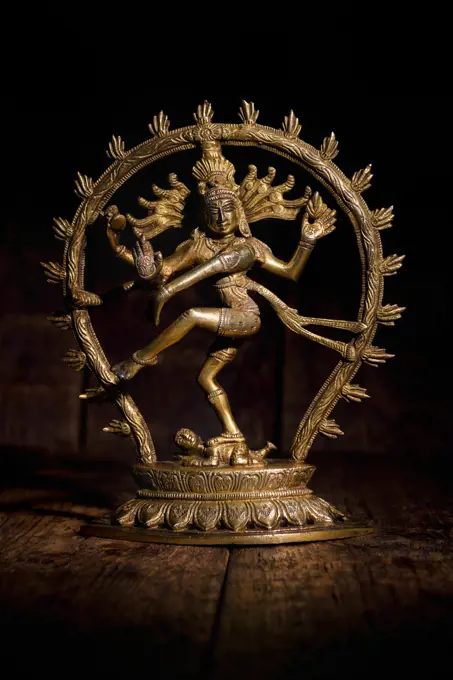
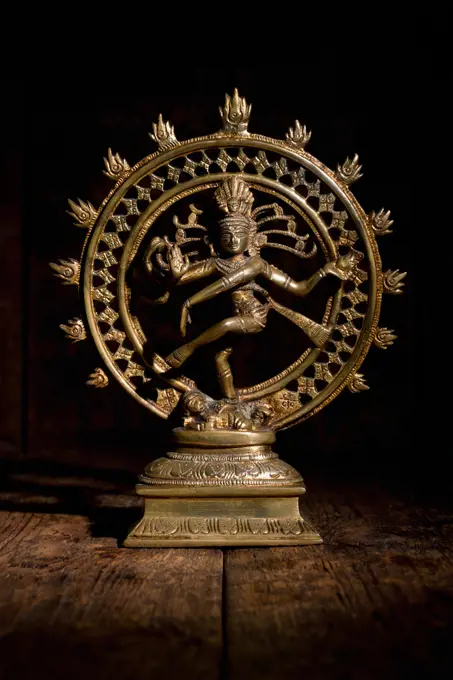
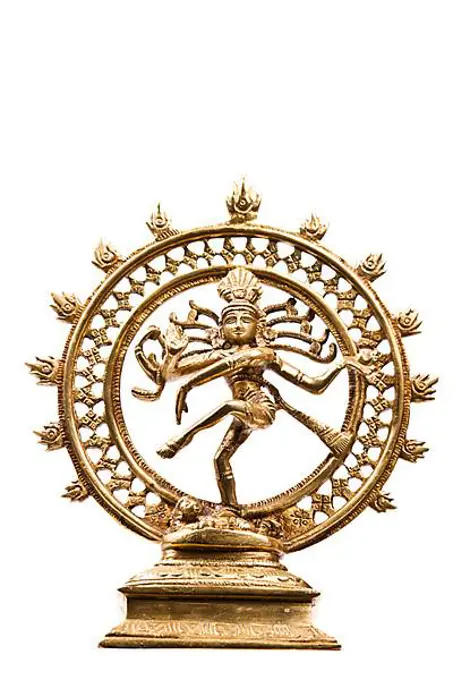
Statue of indian hindu god Shiva Nataraja - Lord of Dance on wooden background
6145-29811266
Saint Nicholas with the Three Boys in the Pickling Tub ca. 1500 South Netherlandish According to popular legend, Saint Nicholas restored life to three youths who had been killed by a butcher and thrown into a pickling tub.. Saint Nicholas with the Three Boys in the Pickling Tub. South Netherlandish. ca. 1500. Oak. Sculpture-Wood
6145-58826090
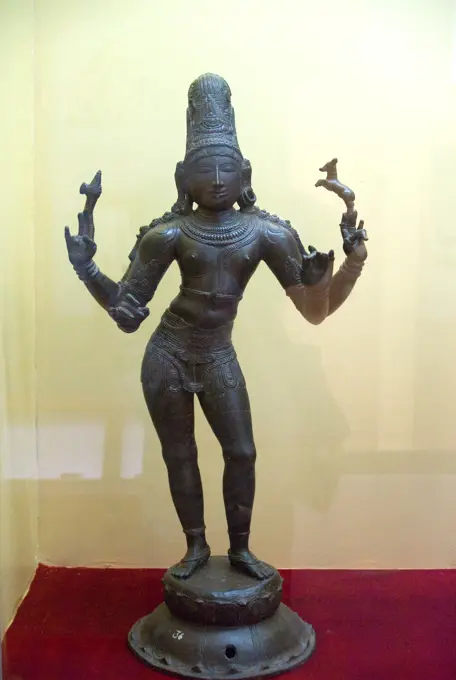
One, Anonymous, 1400 - 1500 Image of Devi in the form of Uma (Parvati). Tamil nadu bronze (metal) Image of Devi in the form of Uma (Parvati). Tamil nadu bronze (metal)
4443-28730395
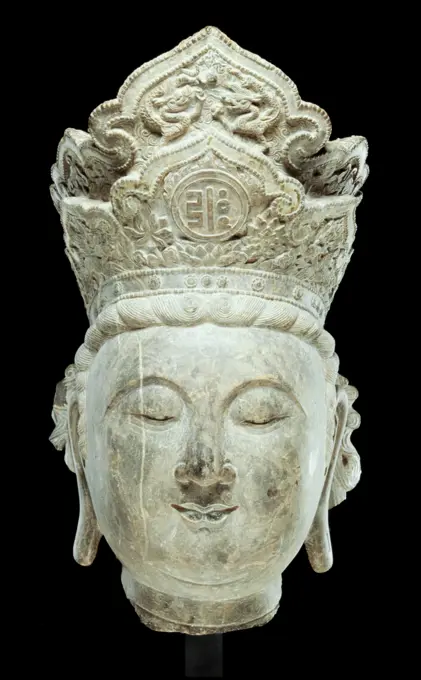
Head of a bodhisattva, probably Avalokiteshvara (Guanyin), 12th-13th century, 30 3/8 x 16 1/2 x 19 3/4in. (77.2 x 41.9 x 50.2cm), Limestone, China, 12th-13th century, Sculpted during the Jin or Yuan dynasties, this fully modeled, dignified, and elaborately detailed head reflects the splendor of Buddhist sculpture of the preceding Song dynasty (960-1279). The highly detailed two-tier crown, decorated with dragons and phoenixes, mimics ornate gold crowns excavated from royal burial tombs in northern China. In the front of the crown is a roundel on a lotus base containing a Tibetan character meaning 'buddha.' Its use here may be as a substitute for the miniature image of Amitābha, the buddha who usually appears in the headdress of the bodhisattva Avalokiteshvara.
4286-89702
Statue of a standing Buddha at the Freer Gallery of Art, Washington,DC
6188-68093014
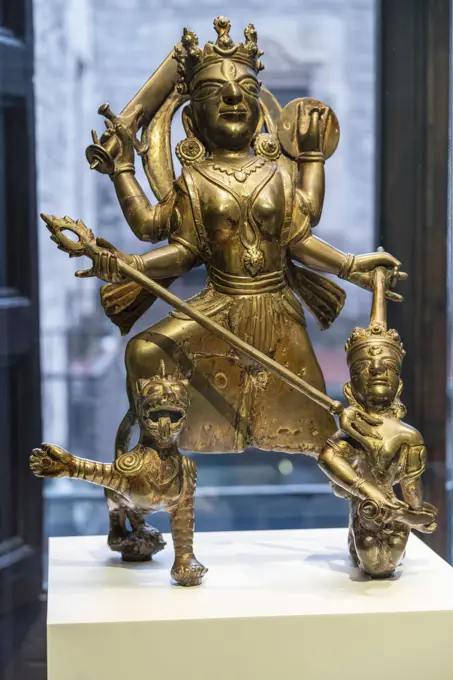
Durga tötet den Büffeldämon Durga killing the buffalo demon, Chamba, Himachal Pradesh, India, 14th century, brass, MuEC, Barcelona, Catalonia, Spain LicenseRF Copyright: xZoonar.com/BartomeuxBalaguerxRotgerx 23171266
6188-64653364
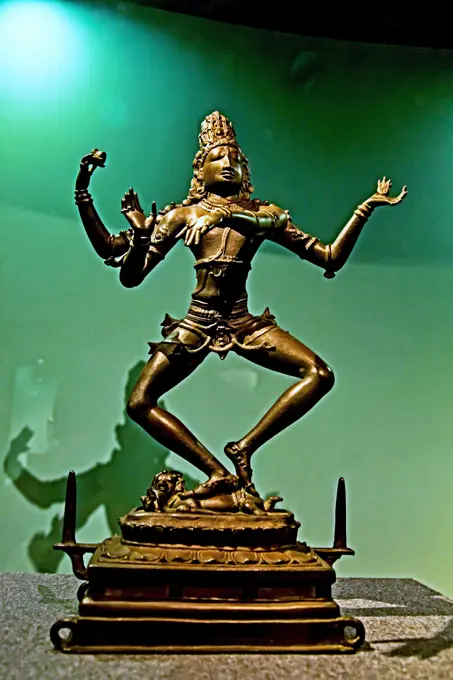
Antique bronze sculpture of Dancing Shiva from Thiruvarankulam, CSMVS Museum, Mumbai, Maharashtra, India, Asia India Copyright: xDuttagupta/DinodiaxPhotox -
4292-43606
Bronze Tara h  m 1,20 Dong Duong Style. discovered in 1978DaNang Museum, Vietnam
1788-23414
Combodia, Angkor, Statue of the Bodhisattva Lokesvara, Bayon style, Sandstone sculpture from Preah Thkol (Mebon)
4409-17553454
Buddhist God Mahakala. Tibet; Southern Tibet. Date: 1399-1499. Dimensions: 7.7 x 7.0 x 3.2 cm (3 x 2 3/4 x 1 1/4 in.). Stone with pigment. Origin: Tibet. Museum: The Chicago Art Institute, Chicago, USA.
1746-29971921
Head of goddess Parvati; From Maharashtra, India. late 19th century; Brass, casting;
1899-68922077
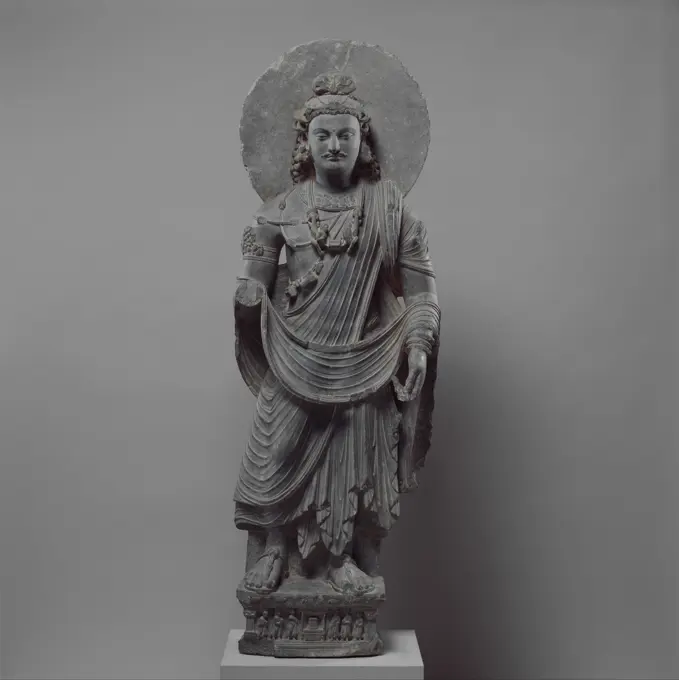
Pakistan: Bodhisattva Maiitreya or the Buddha of the Future, Gandhara, 3rd century. Metropolitan Museum of Art, New York. Gandhara is noted for the distinctive Gandhara style of Buddhist art, which developed out of a merger of Greek, Syrian, Persian, and Indian artistic influence. This development began during the Parthian Period (50 BCE - 75 CE). Gandharan style flourished and achieved its peak during the Kushan period, from the 1st to the 5th century.
6145-46427074
Figure of A Seated Guanyin With Child, Dragons and Acoyte. Image of porcelain on pedestal, covered with a translucent white glaze. A seated Guanyin on her throne with a child on his lap; On either side of the throne originally two adorants on a lotus flower or pod, one of which is still present; Above the adorants originally two attributes, of which only the book is present; Two four-coupling dragons wrote around the throne; The foot with waves. Two parts missing; hand child restored; Some fingers guanyin missing; Baking tear in the pedestal. Blanc De Chine.
4409-59983
Chinese art. The Bodhisattva Guanyin. Shanxi province, China. Jin Dynasty (1115-1234) with some Ming Dynasty (1368-1644) decoration. China 12th-13th c. Victoria and Albert Museum. London. England. United Kingdom.
4292-39505
Balinese gold image. Bali, Indonesia.
4409-63014134
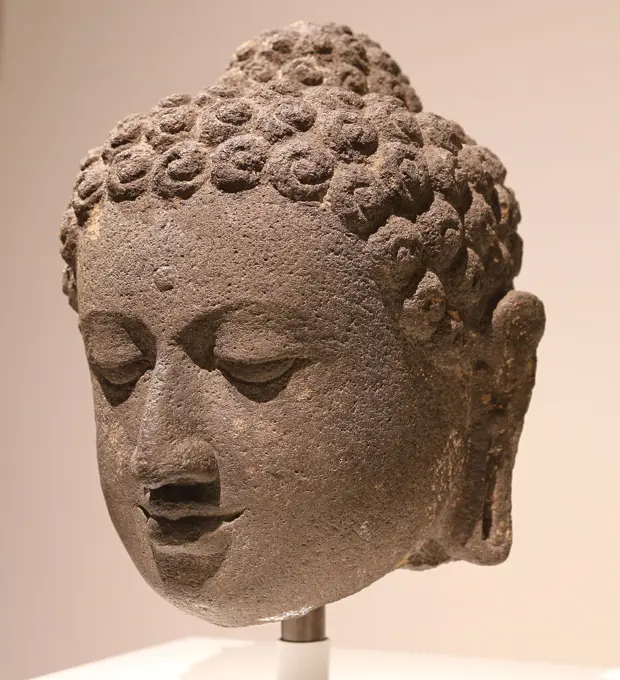
Buddha head. Temple of Borobudur, 9th. century. Java Island, Indonesia. Carved Andesite. Sailendra dynasty.
6145-29813885
Vishnu 10th-11th century India (Madhya Pradesh, Gwalior area). Vishnu 38723
6145-29715040
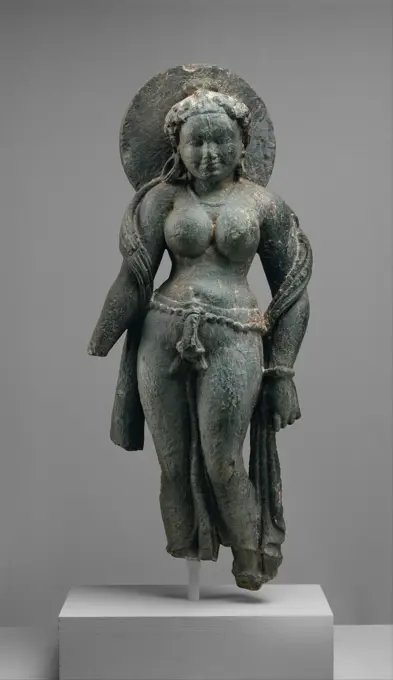
Mother Goddess (Matrika) mid- 6th century India (Rajasthan, Tanesara) This figure is one of a group of seven mother goddesses that sprang from an associated Hindu male god. Despite their alluring beauty, these matrikas represent dangerous and malevolent forcesthe devourers of children and bearers of sickness and disease. Although they were integral to early temple iconographic schema, as seen at sixth-century Aihole, their power was so threatening that they were soon marginalized, consigned to dedicated shrines beyond city boundaries. The combined power of the matrikas is understood to be embodied in the mother goddess par excellence, Durga.. Mother Goddess (Matrika). India (Rajasthan, Tanesara). mid- 6th century. Gray schist. Post-Gupta period. Sculpture
1746-19665844
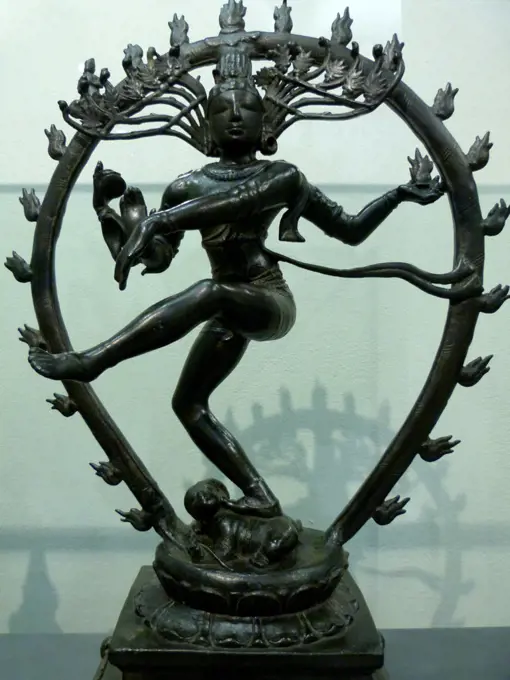
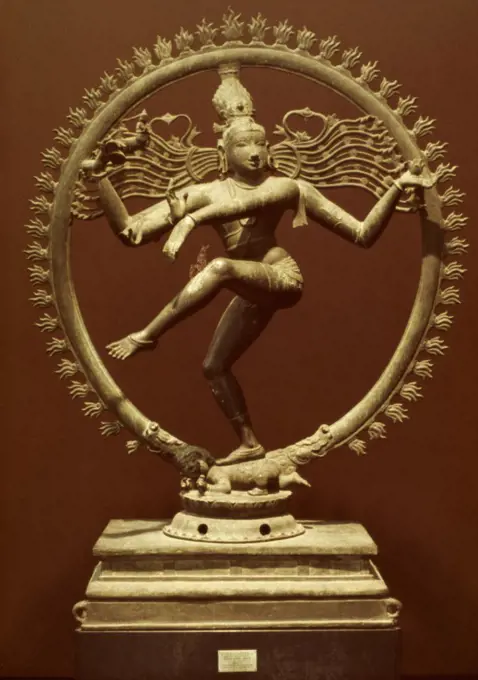
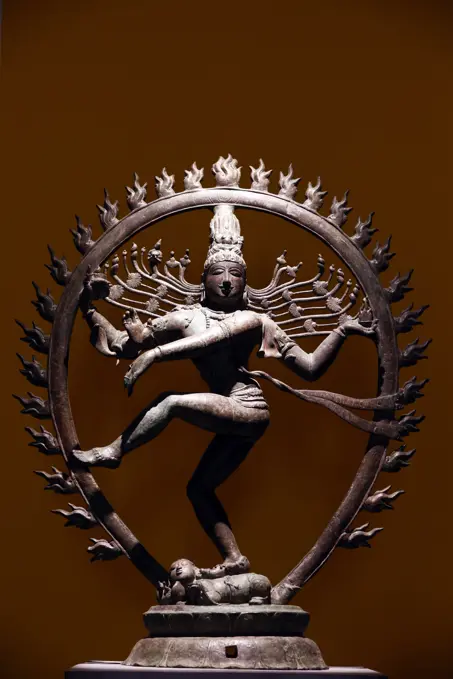
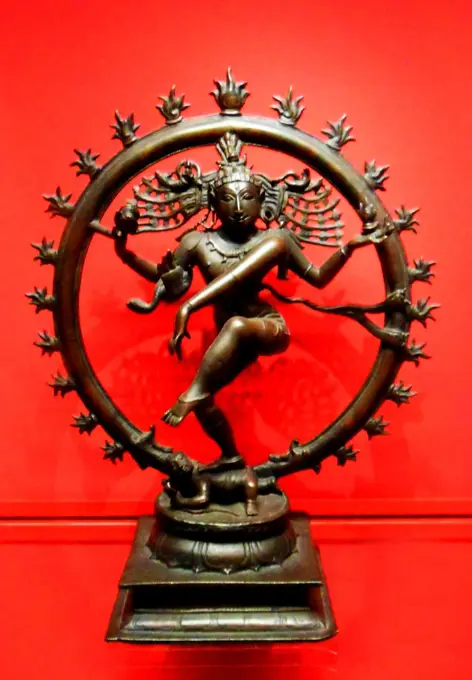
Shiva Nataraja, Lord of the Dance (900-50). Copper Alloy. Southern India. Late Pallava/early Chola period. Shiva holds the drum, associated with sound and energy, in his upper right hand the flame in his upper left hand, balancing his roles as creator and destroyer. His lower right hand in abhaya mudra offers reassurance, while his lower left suggests salvation through worship. He tramples on Apasmara, the demon of ignorance.
6176-67038578
Soapstone Chinese statuette of Shou-lao, 17th century. Artist: Unknown
1746-19676867
Las Mknhan Damar Po (God of War) on a wold 1700.
6145-29720365
Roundel with Karma Lineage 16th century Tibet The monks depicted here are dressed in the robes of the Karma tradition of Tibetan Buddhism, and the central figure likely represents Mikyo Dorje (1500-1599), the eighth head of that lineage. The other seven monks represent earlier incarnations of him, including Marpa (1012-1098) and Milarepa (1040-1123). Vajradhara presides above, and Mahakala, the orders great protector, stands below.. Roundel with Karma Lineage. Tibet. 16th century. Ivory. Sculpture
1746-28980813
The protectress Palden Lhamo como Magzor Gyalmo. Dated 14th Century
1746-21127530
Sculpture of the Indian Rahu, holding the waxing and waning crescents of the moon. Dated 17th Century
6145-45319036
Sculpture  Amida Buddha sitting on a lotus flower on the background of a mandorla unknown
4409-17582718
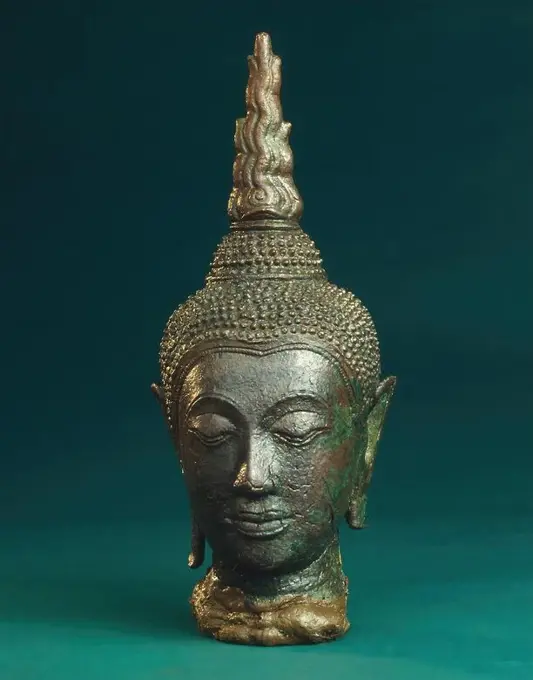
'Head from a Buddha Image'. Siam (now Thailand). Art of U-Thong, 'C' type, Late 14th - early 15th century. Dimensions: h. 19,5 cm. Museum: State Hermitage, St. Petersburg.
6188-64517287
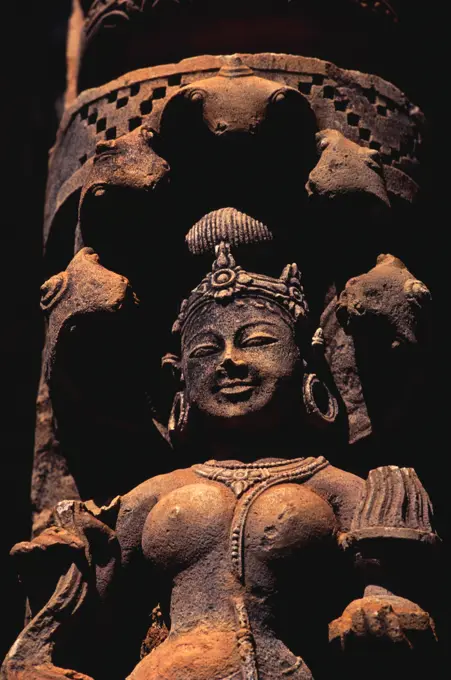
Statue of lady guarded by snake in Parvati temple, Bhubaneswar, Orissa, India Copyright: xNitinxKelvalkar/DinodiaxPhotox
4409-17410637
Buddha Maitreya (Mile). Culture: China. Dimensions: H. 30 1/4 (76.8 cm); W. 16 in. (40.6 cm); D. 9 3/4 in. (24.8 cm). Date: dated 524.The attenuated physique and heavy, concealing clothing worn by the Buddha in the center of this sculpture typify art produced in the early sixth century, particularly in the vicinity of the Northern Wei capital at Luoyang, in Henan Province. A badly abraded inscription incised on the back of the base identifies the central figure as Buddha Maitreya, gives the date, and indicates that a certain Gaizhi commissioned the sculpture on behalf of his deceased son. The inscription also expresses the hope that the son and other relatives will eventually be united in the presence of the Buddha. Maitreya is the only divinity in Buddhism revered as both a bodhisattva and a Buddha. Devotion to Maitreya and the desire for rebirth in his Pure Land, known as the Tushita (Contented) Heaven, were widespread in the late fifth and sixth centuries. Rebirth in a Pure Land of
1788-23383
India, Uttar Pradesh, Mathura, Kankali Tila, Statue of Surya, the chief solar deity in Hinduism, Kushan period
900-1025
Shiva As Nataraja Indian Art Rijksmuseum Vincent Van Gogh, Amsterdam, Netherlands
6145-29083113
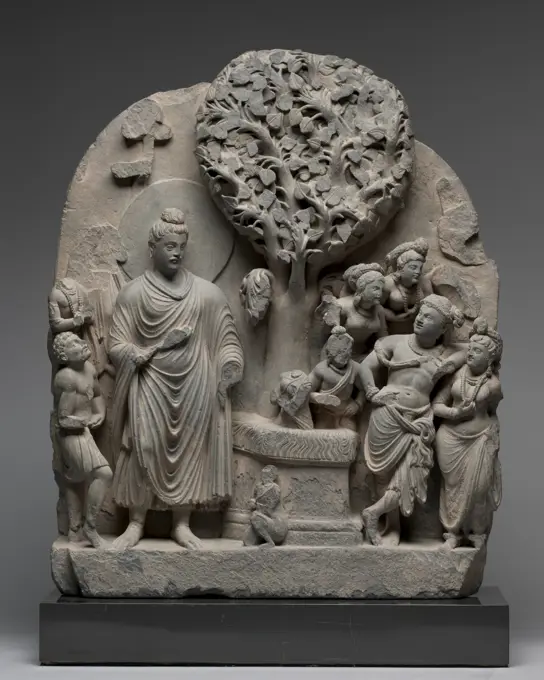
Siddhartha at the Bodhi Tree, AD 100s-200s. Pakistan, Gandhara. Schist; overall: 73.7 x 57.2 cm (29 x 22 1/2 in.). The tree under which the Buddha reached enlightenment marks the center of the composition. It had been under worship by local villagers, for it was known to be the residence of a nature divinity, who here emerges from the tree and altar to praise the Buddha. The altar itself is covered with kusha grass used in the context of sacrificial offerings. At the base of the altar, the earth goddess has risen from the ground and kneels before him in reverence.
6176-66915895
Ganesa - Statue of Lord Ganesh - Hindu Diety
6145-29115365
Buddha Shakyamuni Seated on an Elephant Throne. Burma (Myanmar), circa 1600. Sculpture. Wood
1746-19665859
Nagaraja guardstone 800-900 Anuradhapura period, Sri Lanka, Granite. Nagas, or serpent spirits are associated with the protection of treasure, whether in the earth or at the bottom of lakes or rivers. This figure is a 'serpent spirit king'. It would have been one of a pair, placed at the foot of the stairs leading up to a stupa to guard the reliquary mound and its sacred contents.
6145-29241163
Seated Buddha 18th century China. Seated Buddha. China. 18th century. Jade. Jade
1899-18721007
The Benin Empire (1440-1897) was a pre-colonial African state in what is now modern Nigeria. It is not to be confused with the modern-day country called Benin (and formerly called Dahomey).
6145-29193159
Seated Buddha 9th century Indonesia (Java). Seated Buddha. Indonesia (Java). 9th century. Bronze. Sculpture
6188-64625172
Bronze icon of vishnu at art gallery  Thanjavur  Tamil Nadu  India Copyright: xSatishxParashar/DinodiaxPhotox
6145-29117960
Brahmanrupa Mahakala (Tibetan: Gonpo Bramzehi). Tibet, circa 15th century. Sculpture. Silver with traces of paint; inlaid with turquoise
1890-127830
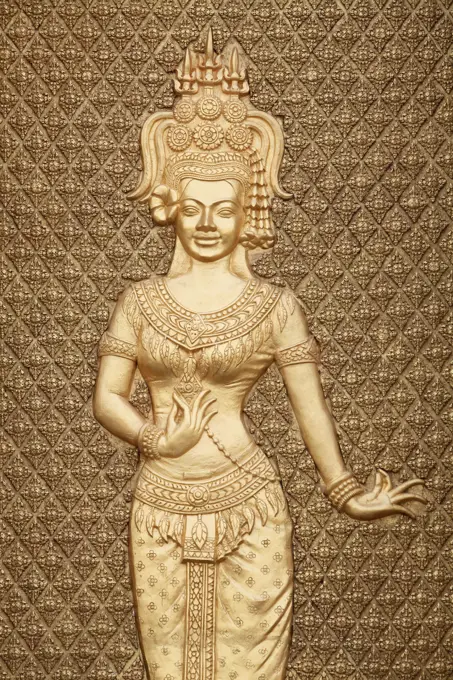
Apsara, Phnom Penh, Cambodia, Indochina, Southeast Asia, Asia
6188-64613223
Bronze statue of Natraj  Kankoduthavanitham  Tanjore Thanjavur  Tamil Nadu  India Copyright: xMxAmirtham/DinodiaxPhotox
6145-45736988
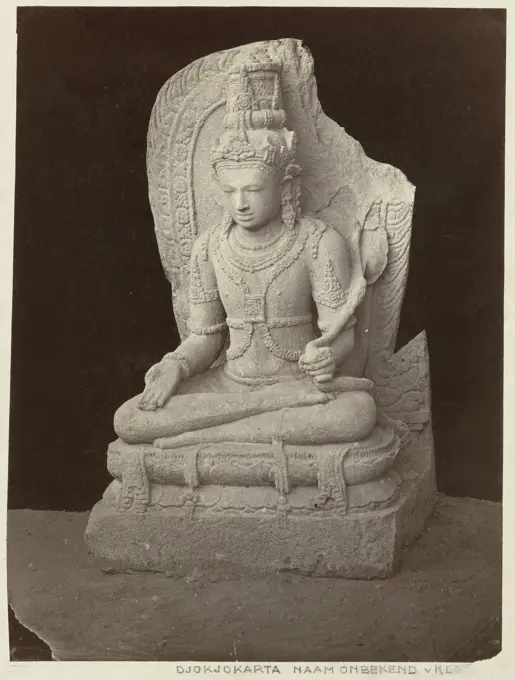
Djokjokarta (Klaring) (R. Djokjokarta) to Displaying Bodhisattva Avalokiteeshvara Displaying The Varadamudra, Probably Form Candi Plaosan (Former Klaring Collection). Yogyakarta, yogyakarta district, d.i. Yogyakarta Province, 9th century ...
4409-17390033
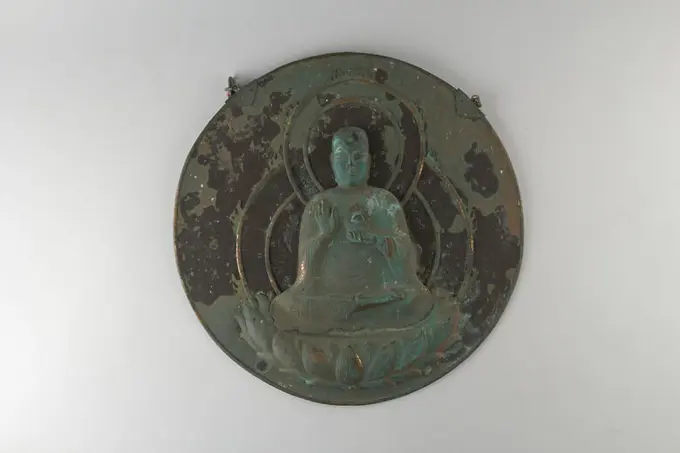
Shinto/Buddhist Votive Plaque with Image of Jizo (Ksitigarbha Bodhisattva) Attached to a Circular Mirror. Culture: Japan. Dimensions: Diam. 14 in. (35.6 cm);Image on disc: H. 11 7/8 in. (30.2 cm). Date: 12th century.The kakebotoke is a round metal or wooden disk with a separately made or repoussé (hammered from the rear) image of a Shinto or Buddhist deity imposed upon it. This unusually large example features a gilt repoussé image of the bodhisattva Jizo. The figure, lotus throne, and double halo are all separately modeled by hammering and are attached to the disk with small nails, a technique of the late Heian period. Museum: Metropolitan Museum of Art, New York, USA.
6145-29138259
The Hindu Goddess Kaumari
1558-14087888
Statue of Mahachakra Vajrapani, (1368 - 1644 AD) The Capital Museum, Beijing, China
1746-19664513
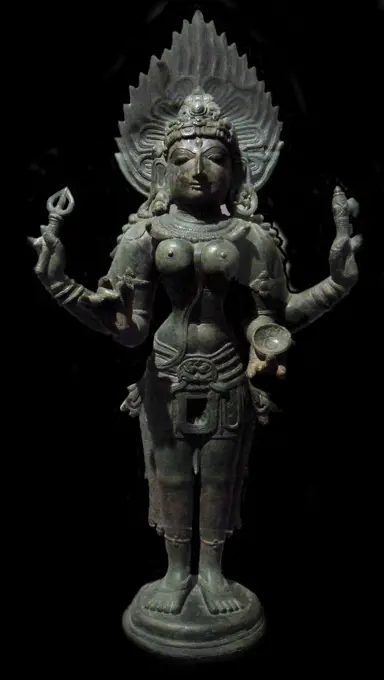
The God Kali: 12th century, Chola dynasty (850-1100 A.D) bronze from Tamil Nadu, India
6145-59657623
Buddha statue in Dhyanamudra from a niche of the Borobudur., 1873 photograph  Java (possibly) paper. photographic support. cardboard albumen print
1899-18859234
The Makara is a mythical creature associated with water. In Central Java, they often stood guard at temple entrances. This example has the muzzle of a dragon, the trunk of an elephant and the horns of a ram. Seated on the tongue of its wide-open mouth is a lion. The Makara is the vahana (vehicle) of the Ganga - the goddess of river Ganges (Ganga) and the sea god Varuna. It is also the insignia of the love god Kamadeva. Kamadeva is also known as Makaradhvaja (on whose flag a makara is depicted). Makara is the astrological sign of Capricorn, one of the twelve symbols of the Zodiac. It is often portrayed protecting entryways to Hindu and Buddhist temples. The Makara symbolized in ornaments are also in popular use as wedding gifts for bridal decoration. The Hindu Preserver-god Vishnu is also shown wearing makara-shaped earrings called Makarakundalas. The Sun god Surya and the Mother Goddess Chandi are also sometimes described as being adorned with Makarakundalas.
6145-29159868
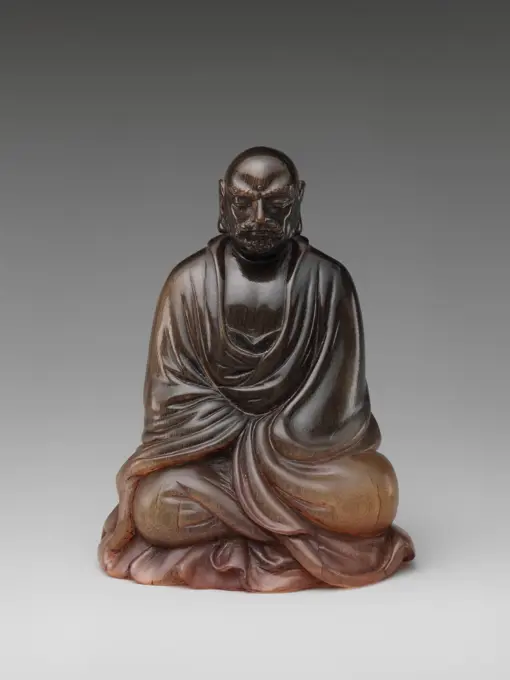
Buddhist monk Bodhidharma (Chinese: Damo) 17th century China The bald head, meditative posture, and monastic clothing identify this figure as Bodhidharma, the Indian monk credited with founding the Chan (or Zen) tradition of East Asian Buddhism.. Buddhist monk Bodhidharma (Chinese: Damo) 76769
1746-21127527
Sculpture of the Indian planet of the Mars (Mangala) holding a water pot in one hand and prayer beads in another. Dated 17th Century
6145-29124787
Plaque with Two Monks. Burma (Myanmar), Mingun, circa 1800. Sculpture. Earthenware with green and brown glaze
6188-64535954
Vishnu Kushan period, Pune, Maharashtra, India Copyright: xHemantxPatil/DinodiaxPhotox
1899-55266303
Guimet museum. Shiva lord of dance. India, 11 th century. Paris. France.
6145-29117942
The Monk Shin Upagok (Sanskrit: Upagupta). Burma (Myanmar), 19th century. Sculpture. Ivory
6145-29123698
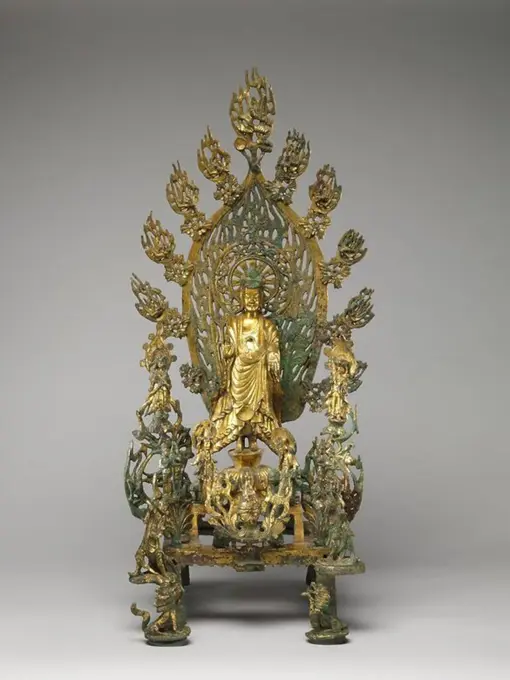
Maitreya (Mile), the Buddha of the Future. China, Six Dynasties period, early Northern Wei dynasty, 386-470. Sculpture. Cast bronze
6117-28546551
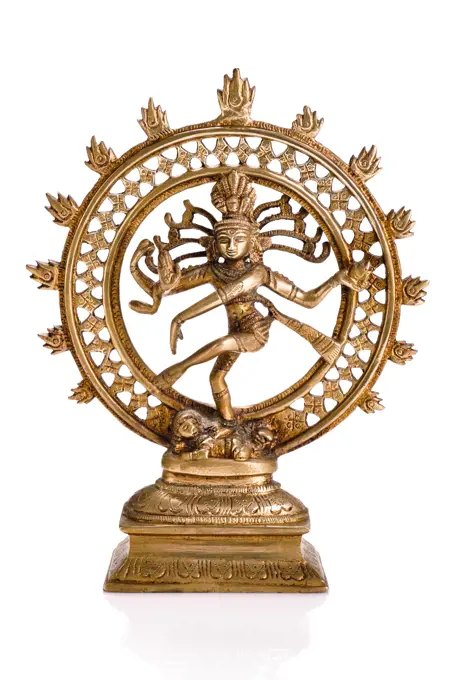
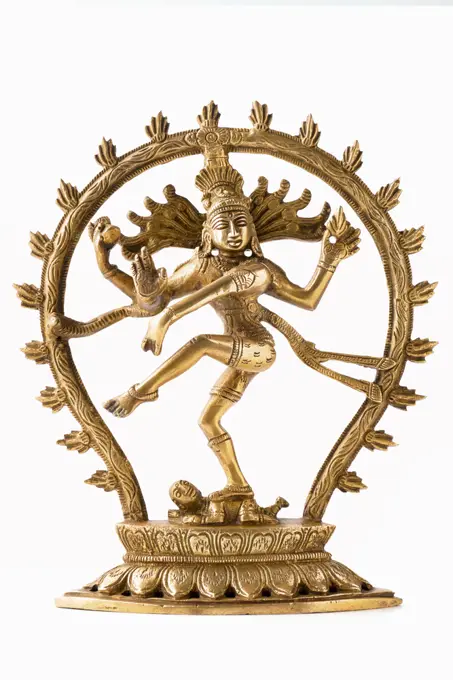
Bronze statue of indian hindu god Shiva Nataraja - Lord of Dance isolated on white with reflection
1899-58730613
Paknam Temple, Bangkok, Thailand, Southeast Asia, Asia
1746-19676387
Shiva Nataraja, Lord of the Dance circa 950.
1525-22780397
Statue of indian hindu god Shiva Nataraja - Lord of Dance on wooden background. Statue of Shiva Nataraja - Lord of Dance
1525-22774598
Statue of indian hindu god Shiva Nataraja - Lord of Dance isolated on white. Statue of Shiva Nataraja - Lord of Dance isolated
6188-68092996
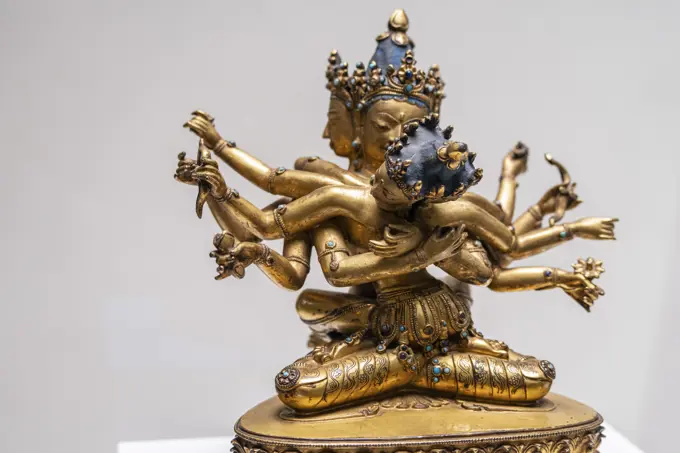
Meditationsgottheit Guhyasamaja und seine Gefährtin Vidyadhara Meditation deity Guhyasamaja and his consort Vidyadhara, Central Tibet, 17th century, gilt and painted copper, MuEC, Barcelona, Catalonia, Spain LicenseRF Copyright: xZoonar.com/BartomeuxBalaguerxRotgerx 23171227
6145-48849801
Buddha Idol. Unknown
4409-17431407
Votive Plaque (Tsa Tsa) Depicting a Stupa. Culture: Tibet. Dimensions: H. 4 1/8 in. (10.5 cm); W. 2 5/8 in. (6.7 cm); D. 1 3/8 in. (3.5 cm). Date: 10th-11th century.This molded clay tablet preserves an image of an early north Indian stupa (relic mound)--a type no longer extant. The stepped stupa is crowned with honorific umbrellas and festooned with flying banners. Written in Sharani script in the background is the Buddhist ye dharma creed, expounding the Buddha's Four Noble Truths. Museum: Metropolitan Museum of Art, New York, USA.
6145-54604227
View of dvarapala stone statue, Java, Indonesia
6145-59656589
Bodhisattva AvalokitShvara Displaying the Varadanudra, probably from Candi Plaosan. Yogyakarta, Yogyakarta District, D.I, Yogyakarta province, 9th Century., 1865 photograph  Java (possibly) paper. photographic support. cardboard albumen print
1788-41999
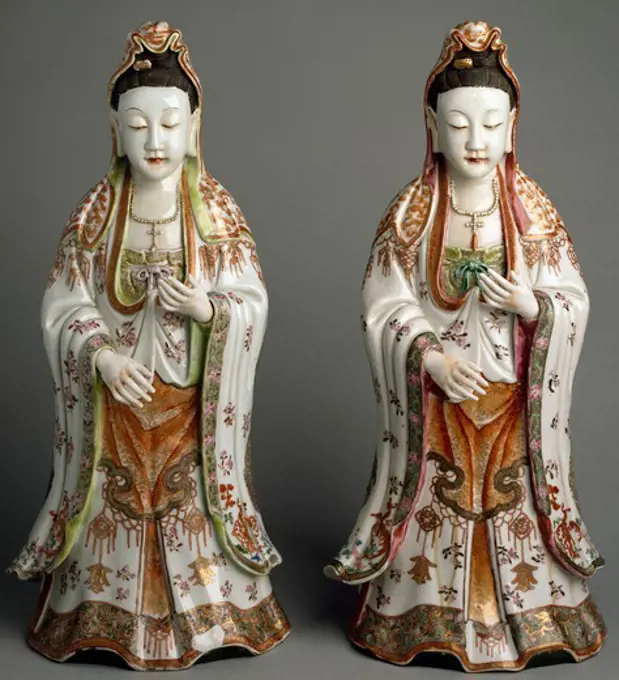
Kwannon statues, China. Chinese Civilisation, Qing dynasty, 18th century.
1848-55994612
Teak carving, Amerindian lovers, indigenous art, Guyana, South America
6188-64517215
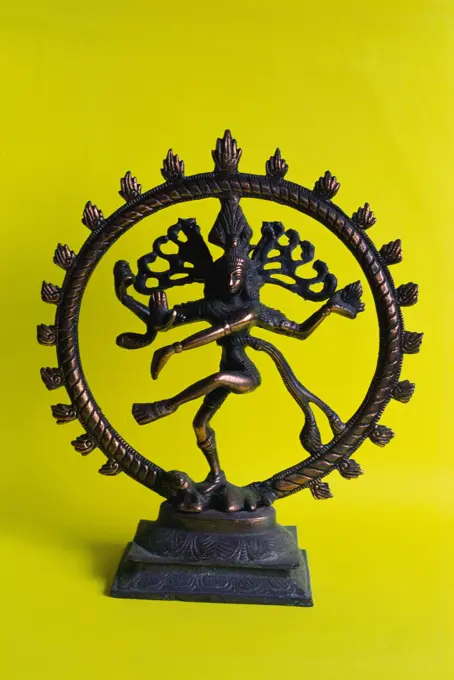
Shiva Natraj lord of cosmic dance in bronze casting, India Copyright: xNitinxKelvalkar/DinodiaxPhotox
1848-50221672
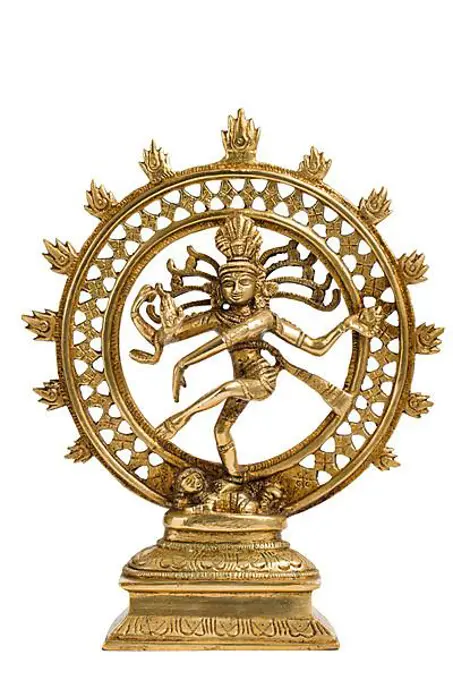
Statue of indian hindu god Shiva Nataraja, Lord of Dance isolated on white
1848-50221832
Statue of indian hindu god Shiva Nataraja, Lord of Dance isolated on white
1525-22231585
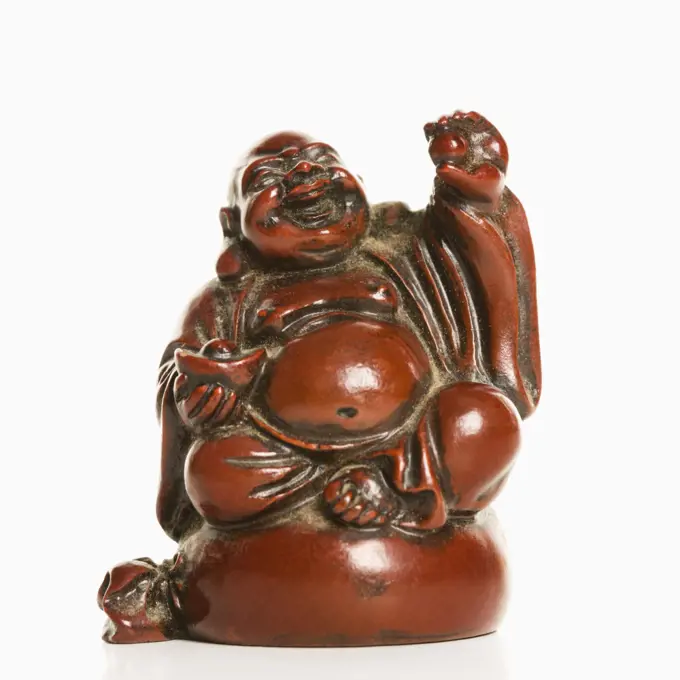
Happy laughing Buddha figurine with hand raised in blessing on white background.
4409-17344714
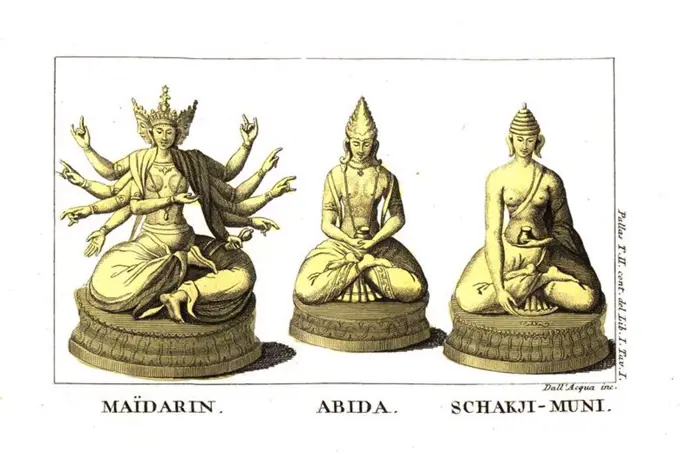
Figures of divinities in the Kalmyk religion: Maidarin, Amitabha and Shakyamuni. Illustration from Peter Simon Pallas Travels through the southern provinces of the Russia Empire, 1812. Copperplate engraving by Dell'Acqua handcoloured by Lazaretti from Giovanni Battista Sonzognos Collection of the Most Interesting Voyages (Raccolta de Viaggi Piu Interessanti), Milan, 1815-1817.
PREVIOUS
of 3
NEXT
2401 S. Ervay, Suite 206
Dallas, Texas 75215
United States
Get Started
Free ResearchMy BoardsMy Cart
For Creators
How To License Your ContentContributor PortalFrame of Mind
Resources
API accessPricing
Contact
+1 866 236 0087help@viewpictures.co.uk Contact form
©2026 View Pictures. All Rights Reserved. -B
This site is protected by reCAPTCHA and Google Privacy Policy and Terms of Service apply.