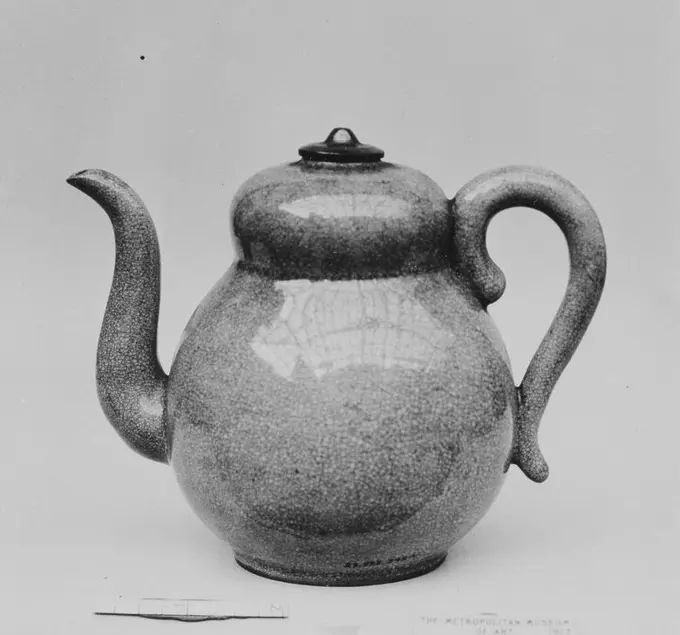
Ancient Ceramic Vessels

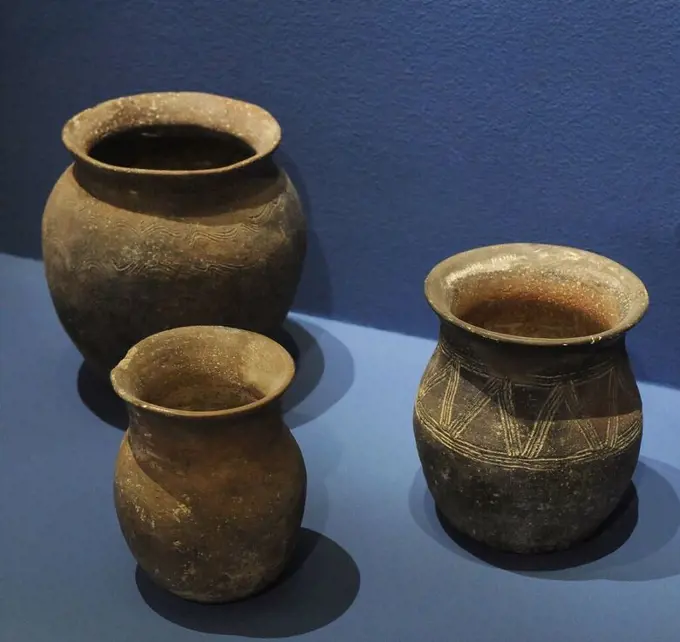
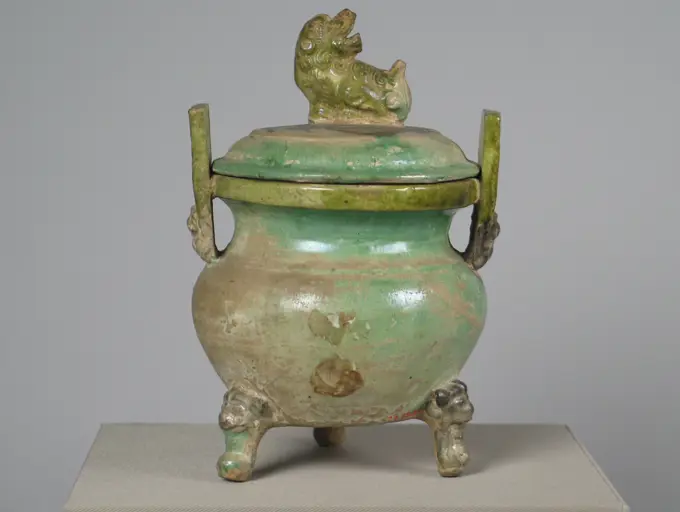
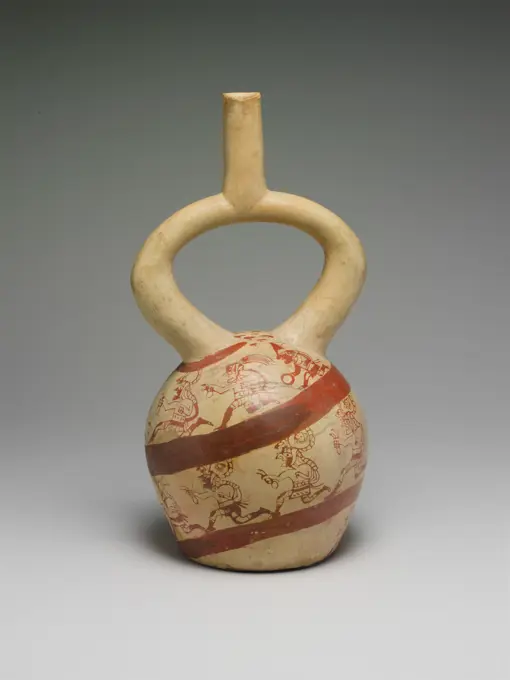
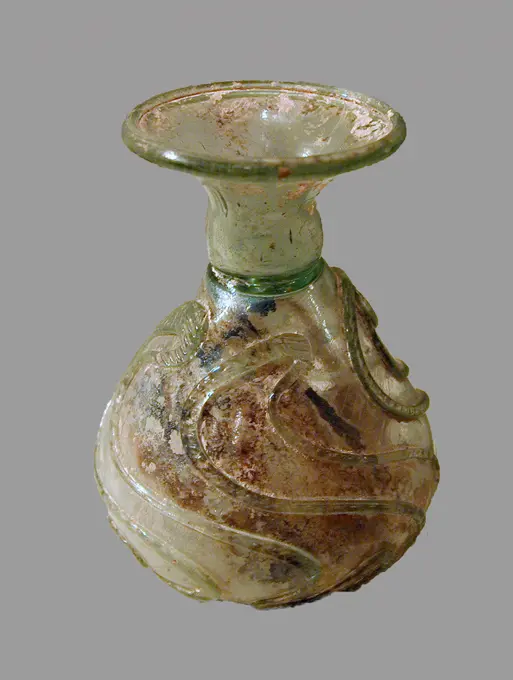
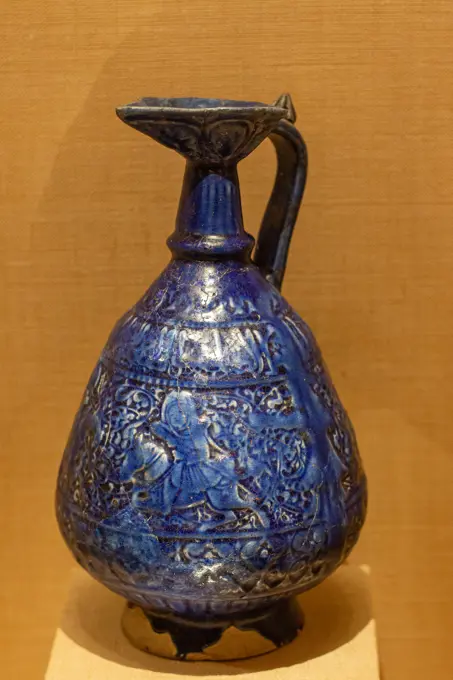
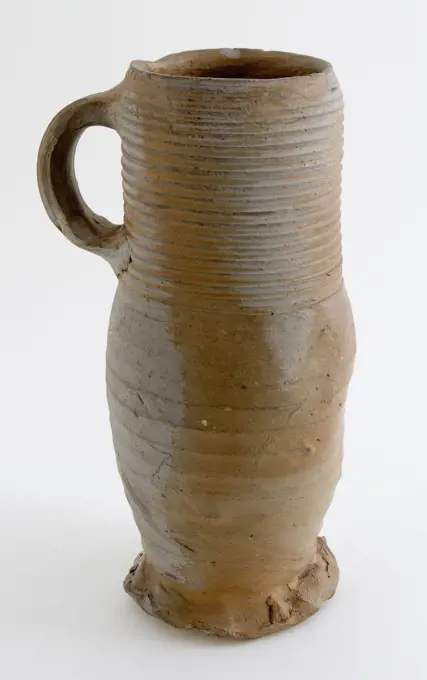
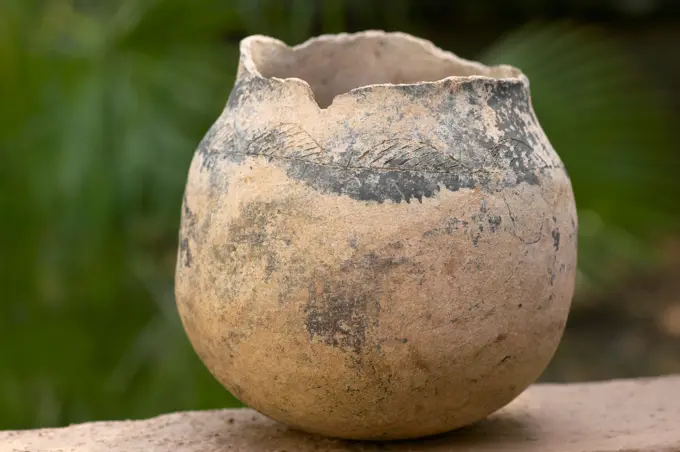
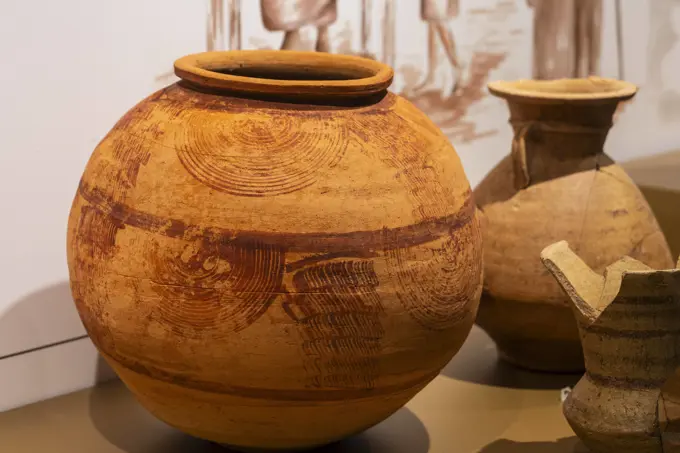
A collection of historical jugs and amphorae, showcasing various ancient styles and materials, including terracotta and glass, used for storing liquids.
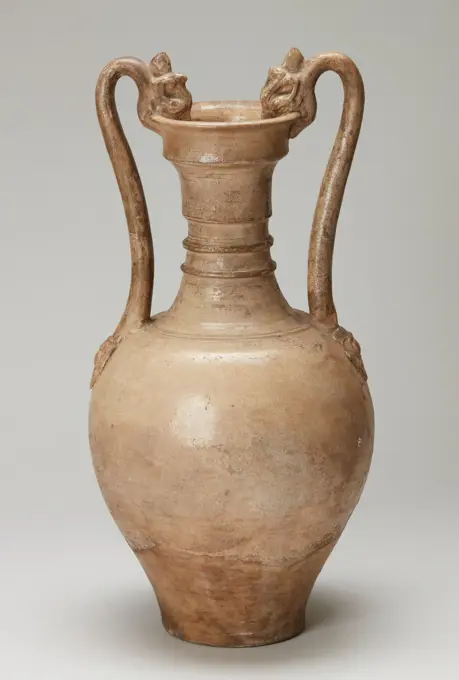
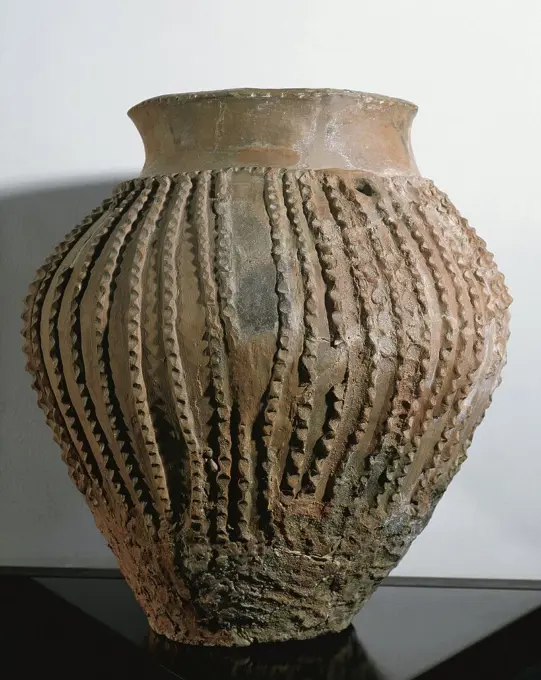
Funeral amphora, 7th-8th century, 18 in. (45.7 cm) (height), Hard grey ware, China, 7th-8th century
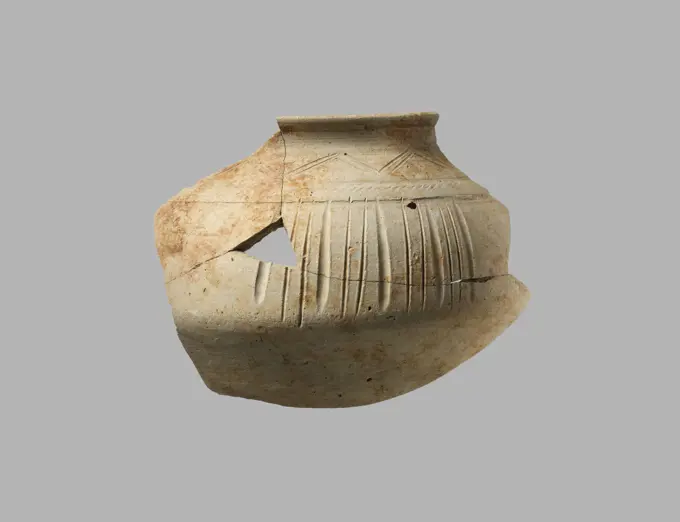
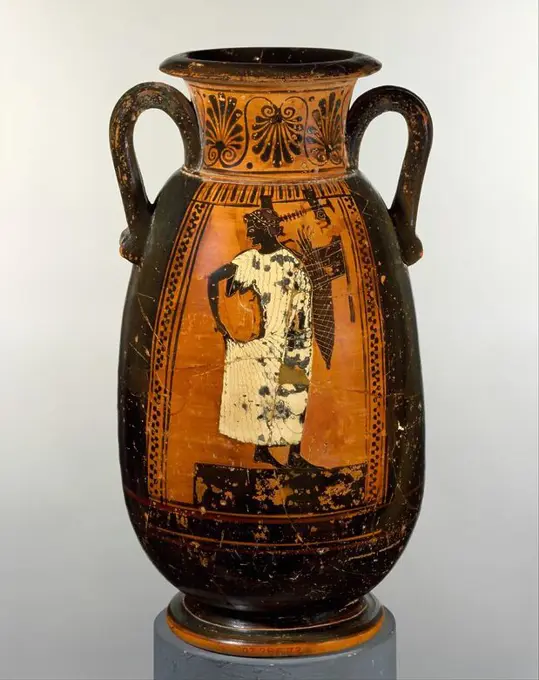
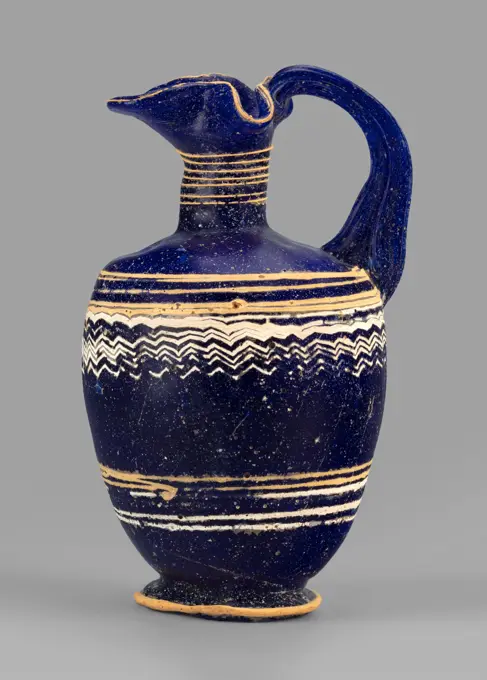
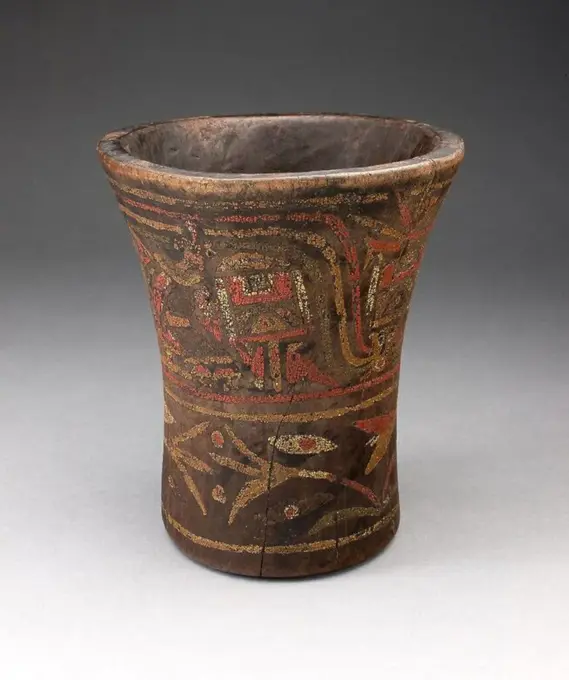
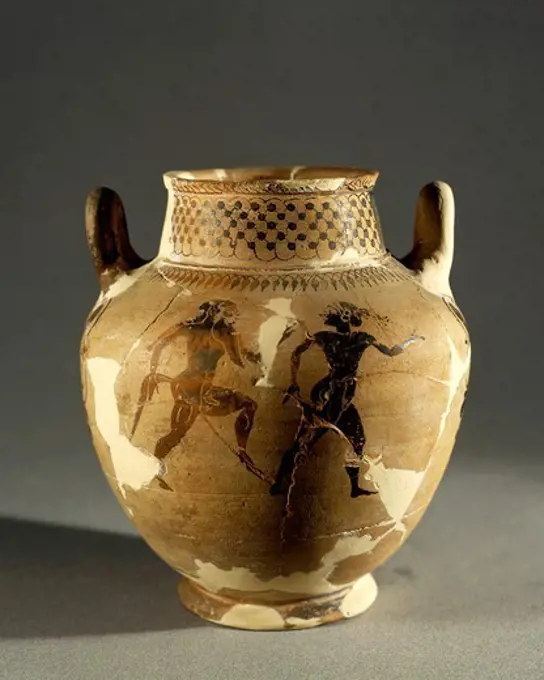
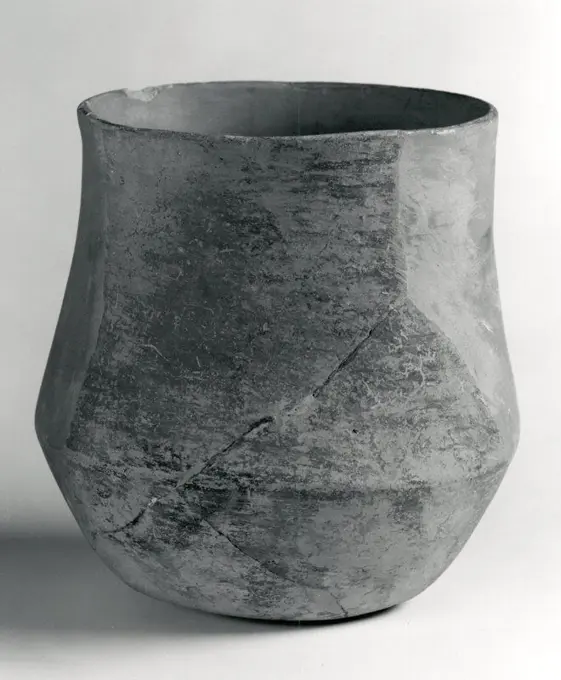
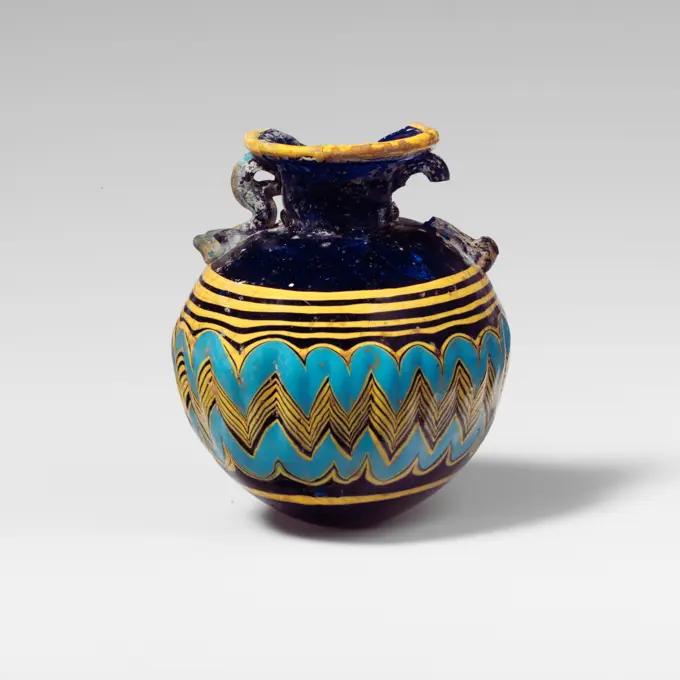
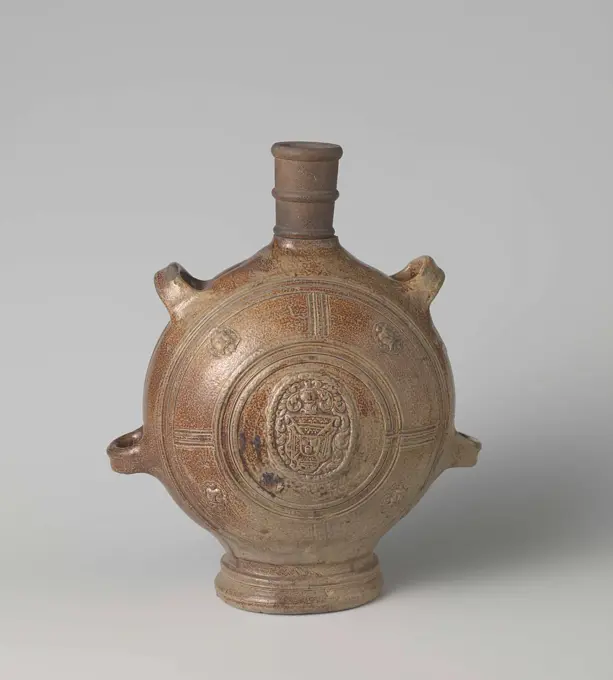
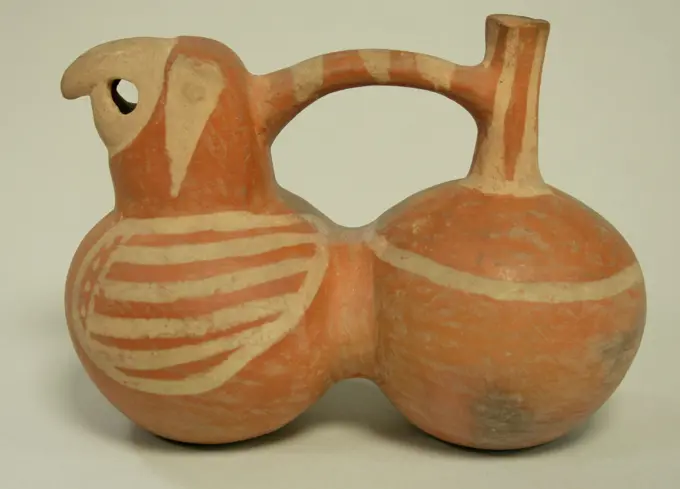
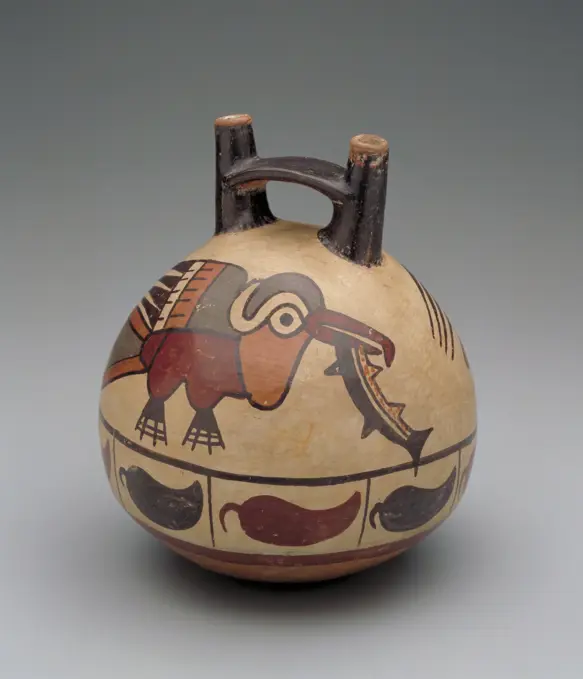
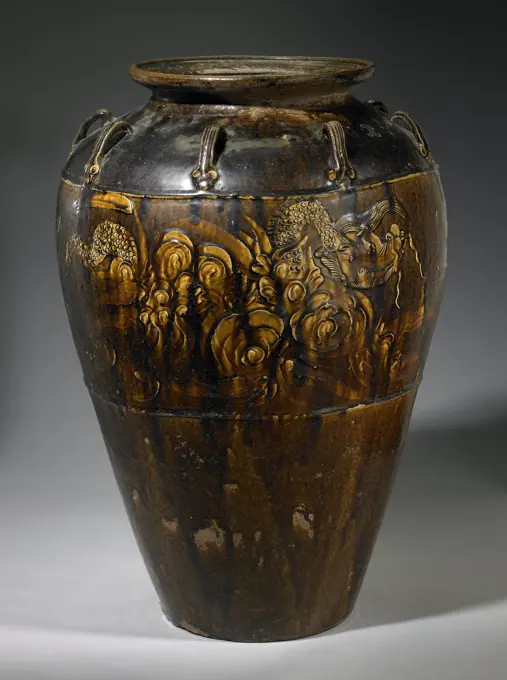
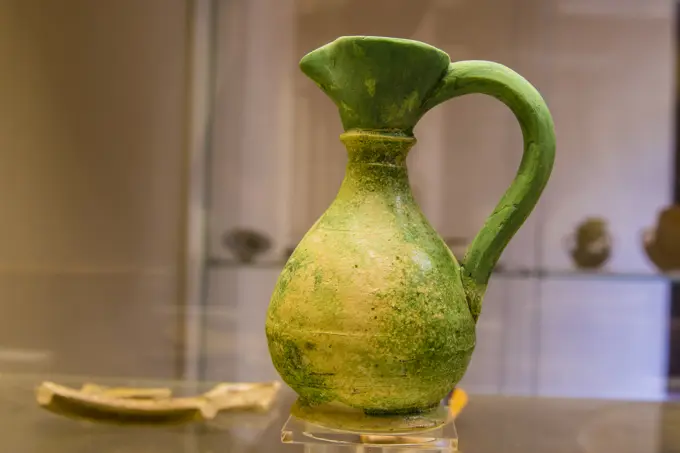
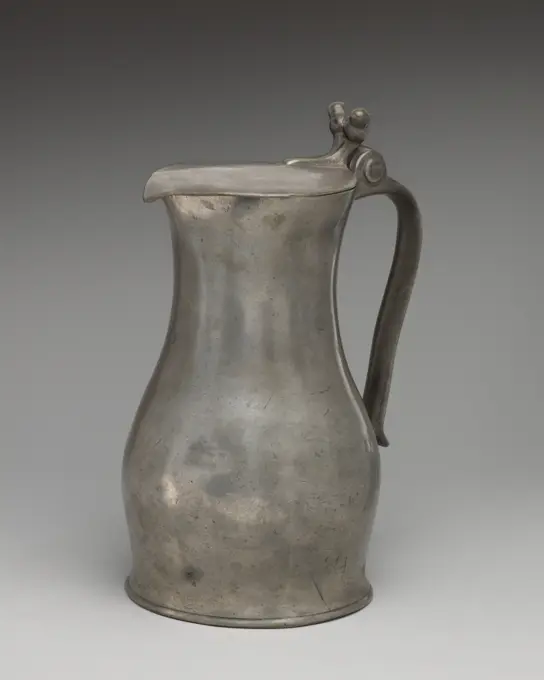
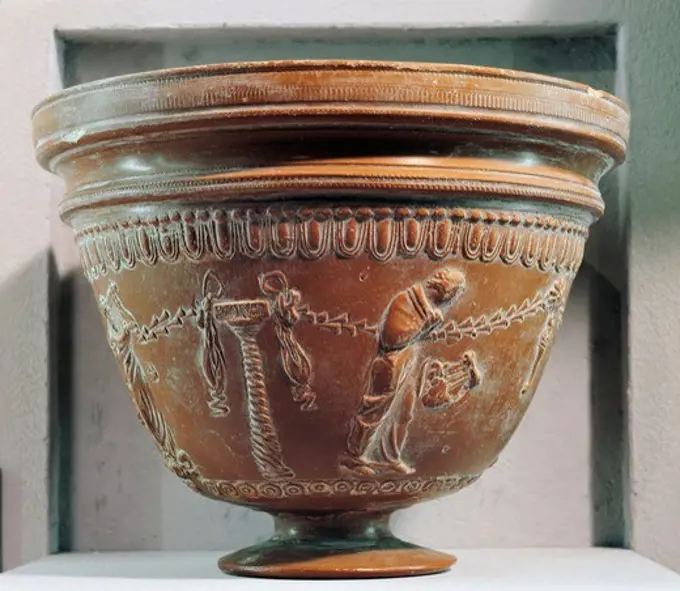
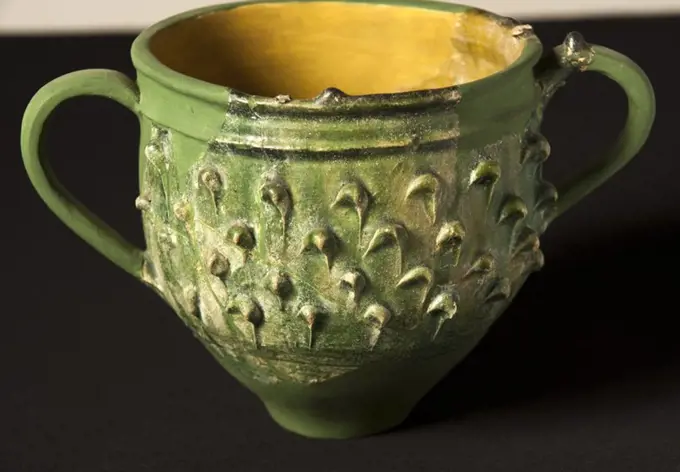
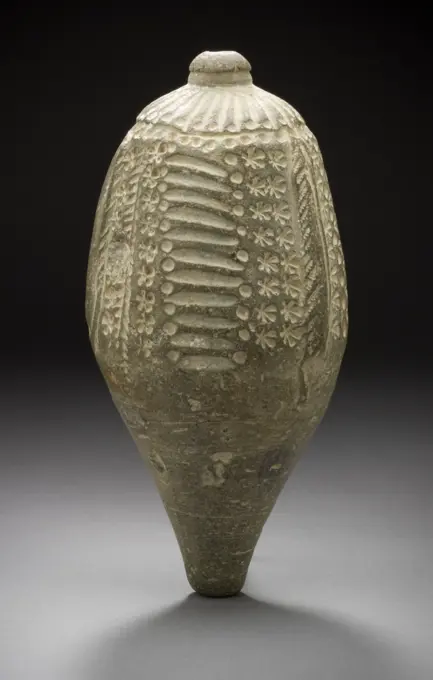
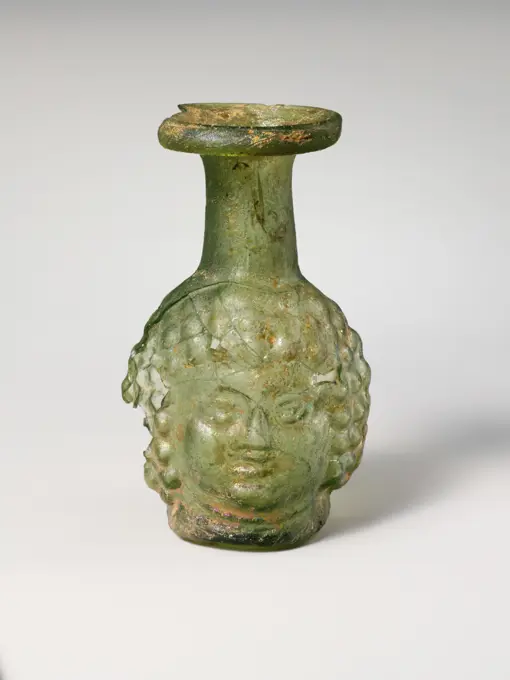
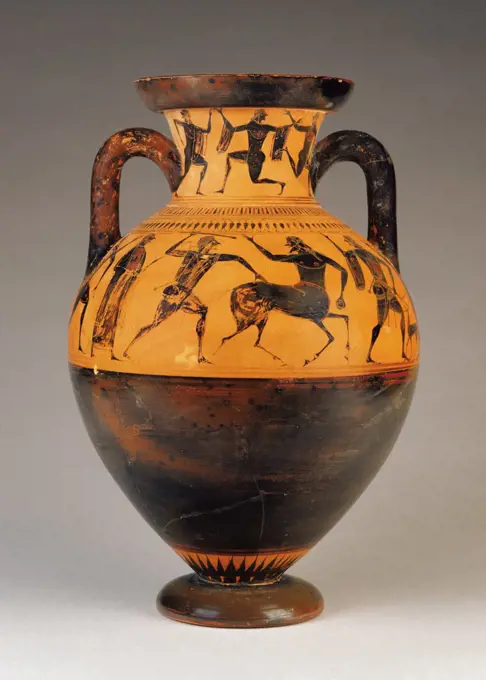
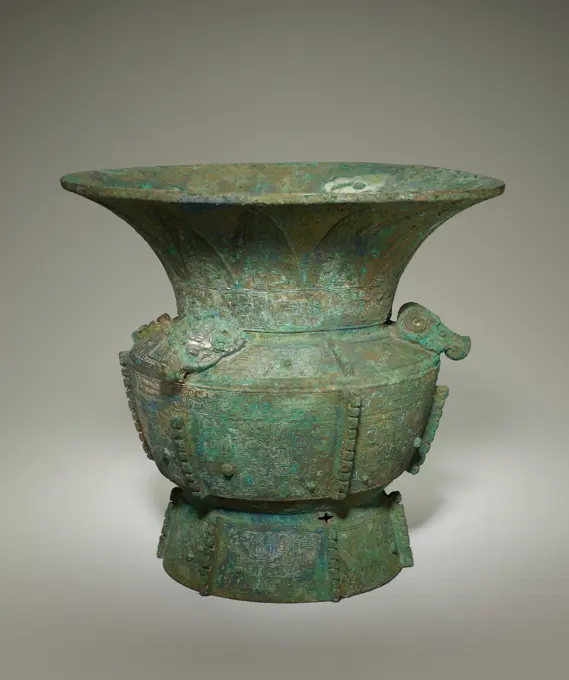
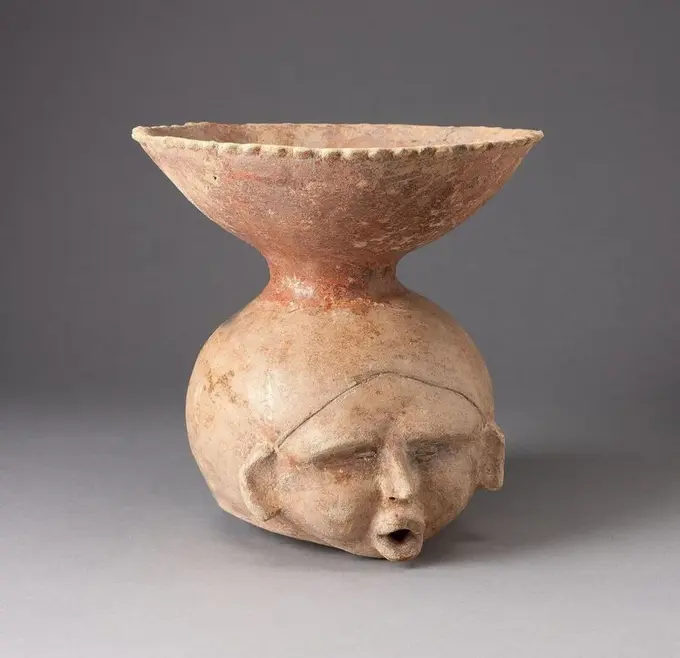
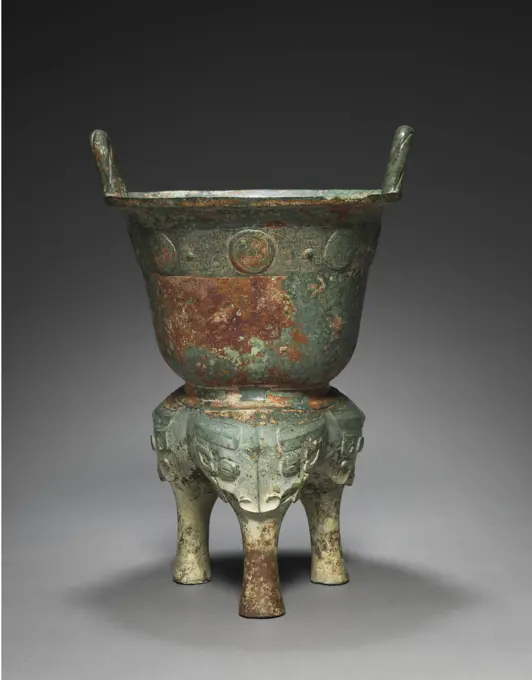
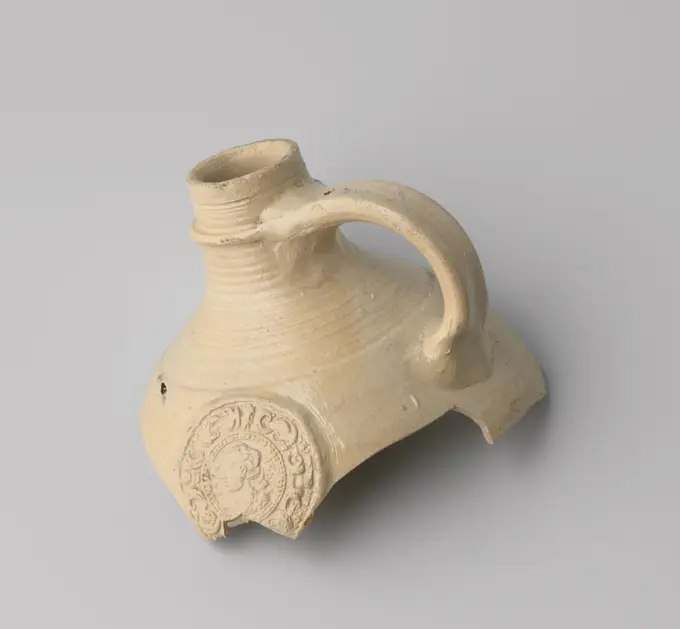
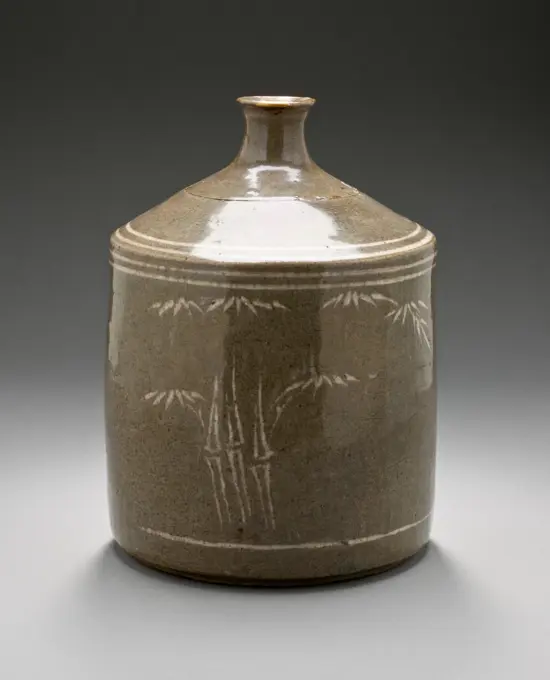
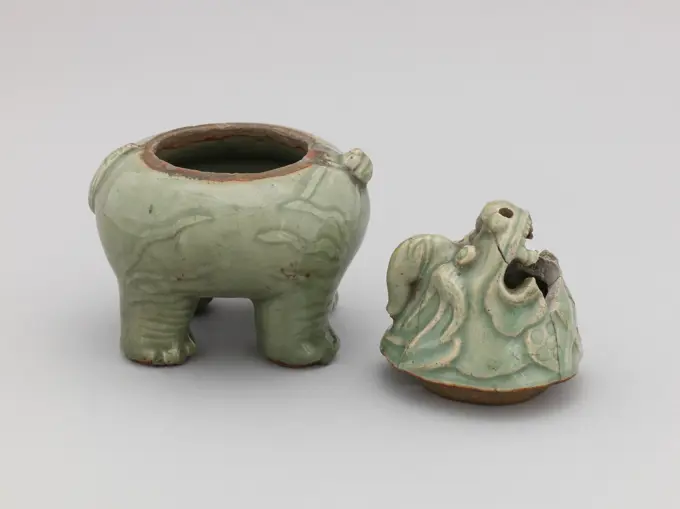
Jug. Culture: American. Dimensions: H. 8 3/4 in. (22.2 cm). Date: ca. 1800-1840.The mottled green glaze with dark spots is typical of New England potteries. The orange areas resulted from inconsistencies in the firing. Museum: Metropolitan Museum of Art, New York, USA.Sherd ca. 3100-2700 B.C.. Sherd. ca. 3100-2700 B.C.. Ceramic. Ninevite V. Syria, Tell Brakfunerary equipment, Monographic Museum of Pollentia, Alcudia, Mallorca, Balearic Islands, Spain.Terracotta neck-pelike (wine jar). Culture: Greek, Attic. Dimensions: Overall: 10 1/2 x 6in. (26.7 x 15.3cm)diameter 5 11/16in. (14.5cm). Date: ca. 500 B.C..Musical contests: obverse, kithara player; reverse, youth singing to double fluteThe platforms on which the performers stand indicate that they are participating in musical competitions. The figure on the obverse holds a kithara, the type of lyre used for performances. His pose and the wreath he wears suggest that he may already have won. The figures on the reverse are entirely absorbed, the flute player within himself, the boy projecting toward his audience. Museum: Metropolitan Museum of Art, New York, USA.Ewer with Figures of Faith, Hope, and Charity (model), Montbéliard, late 16th century François Briot French. Ewer with Figures of Faith, Hope, and Charity. François Briot (French (1550-1615 or later)). (model), Montbéliard, late 16th century. Pewter. MetalworkBottle; Egyptian workshop; 4th century (301-00-00-400-00-00);Oinochoe; Egyptian workshop; IV-III century BC (-400-00-00--201-00-00);CANTARO EN CERAMICA NEGRA - PROCEDE DE QUINTANA REDONDA (SORIA). Location: MUSEO DEL PUEBLO ESPAÑOL. MADRID. SPAIN.Ceramic, clay cezve on black backgroundDrinking Vessel (Kero) with Floral and Animal Motifs. Colonial Inca; South coast or southern highlands, Peru. Date: 1450-1532. Dimensions: 19.1 x 16.8 cm (7 1/2 x 6 5/8 in.). Wood and pigment. Origin: Peru. Museum: The Chicago Art Institute, Chicago, USA.Jug 4th-7th century Coptic. Jug 477270Askos (pottery vessel) with Daunian geometric decorationFikellura-style vase from Istria. Greek Civilization, 7th-3rd Century BC.Jar 3rd millennium B.C. Iran This biconical jar has been reconstructed from several pieces. It has a flat base and a straight rim. It is made of a buff clay, possibly using a slow wheel, and is decorated with a red slip. It was excavated at Tall-i Nokhodi, a prehistoric site in southwestern Iran occupied during the fourth and third millennia B.C. Excavations have been limited in scope, but the presence of ovens there suggest it was a small settlement. Metal finds from the site, including a cast bronze axe head, indicate a precious metalworking industry there, one which prefigures the magnificent and extensive bronzeworking of the neighboring Elamites in centuries to come.This jar was excavated in 1961 by the British Institute of Persian Studies. However, the Met acquired it in 1978 as a result of its financial contributions to the Institutes excavations at Tepe Nush-i Jan, another site in Iran. At the time the Iranian government allowed foreign excavators to keep a portion of the findGlass aryballos (perfume bottle) late 6th-5th century B.C. Greek, Eastern Mediterranean Translucent cobalt blue, with same color handles; trails in opaque yellow and opaque turquoise blue. Broad inward-sloping rim-disk; short cylindrical neck, tapering downwards; right-angled shoulder; almost spherical body; convex, somewhat pointed bottom; two vertical ring handles with knobbed tails, applied over trail decoration, extend from shoulder to underside of rim-disk.Yellow trail applied to outer edge of rim-disk; another yellow trail applied on upper body and wound spirally, at first in horizontal lines, then tooled into a close-set zigzag pattern around central section of body, formed by shallow vertical tooling indents; two thick turquoise blue trails applied over yellow, forming a bold, even design; below this, a single yellow trail wound horizontally around body; a turquoise blue trail applied along outer edge of one handle.Broken and repaired on rim, neck, and shoulder, with part of riJar 19th century Japan. Jar. Japan. 19th century. Pottery irregularly covered with slip and glaze. Edo (1615-1868) or Meiji period (1868-1912). CeramicsJug. Spherical jar of stoneware, with four ears and a groove for a cord. On the front are two large and two small concentric circles, a bearded mask and a weapon with helmet sign. In the middle of the back a diamond with twisted sides with a heart with a flower in the corners with a circle in the middle with a cross with fan-shapedly ending arms.Jar, 4th-2nd century BCE, 4 3/4 x 7 5/8 x 7 5/8 in. (12.1 x 19.4 x 19.4 cm), Pottery, pigment, Mexico, 4th-2nd century BCECoffeepot and Cover. Staffordshire (England). England, Staffordshire, circa 1765. Furnishings; Serviceware. Stoneware with glazeDouble Chambered Whistling Jar with Parrot 2nd century B.C. North Coast (). Double Chambered Whistling Jar with Parrot 308524Jar mid 6th-5th millennium B.C. Ubaid. Jar. Ubaid. mid 6th-5th millennium B.C.. Ceramic. Ubaid. Mesopotamia, Eridu (modern Abu Shahrein)lay amphora Isolated on white background. Panoramic collage. Wide photo with free space for text.Vessel, 100 BCE- 600 CE, 7 x 5 3/4 x 5 3/4 in. (17.78 x 14.61 x 14.61 cm), Clay, pigments, Peru, 1st century BCE-7th century CE, The chili pepper (aji) was one of the earliest domesticated plants in the Andes, with evidence of its presence by 4000 BCE. Used as a seasoning and preservative in Andean cuisine, peppers were also one of the most common images on ancient Nazca ceramics. Above the peppers encircling this vessel are Inca terns, seabirds that live along the Humboldt Current off the coast of Peru and Chile. In their distinctive orange beaks, they hold fish - perhaps anchovies. Nazca artists were inspired by nature but took liberties in representing its bounty. They often simplified or otherwise abstracted or altered forms to suit the needs of an object's functionality, image clarity, or aesthetic appeal.Martaban Storage Jar, early 17th century, 27 1/4 x 18 1/16 x 18 1/16 in. (69.22 x 45.88 x 45.88 cm), Stoneware with carved, appliqué and incised décor under a brown glaze, China, 17th century, Martaban jars are common stoneware storage pots named after the Arabic pronunciation of the Burmese port on the gulf of Pegu through which many of these vessels were traded. During the Ming dynasty, this busy port was under the jurisdiction of Thailand. From here Thai, Chinese, Burmese, and Cambodian goods were shipped throughout southeast Asia. These large jars were made near port towns for shipping convenience in the southern Chinese coastal provinces of Kwangtung, Fukien and Chekiang. Covered with black, brown or amber glaze, Martaban jars will typically display roughly incised decorations of dragons, clouds, pearls, or waves.Artifacts in the museum at the Alcazaba and Castle of Gibralfaro on Mount Malaga above the old town, Malaga, Spain. (Editorial Use Only)CANTIMPLORA EN BARRO BLANCO DECORADO CON CORDON DE BARRO-S XX ARTE POPULAR. Location: ALFARERIA. MOVEROS. Zamora. SPAIN.Clay pitcher with lid for water and milk, isolated on white background. Studio Photo. Clay pitcher with lid for water and milk, isolated on white backgroundJAN 12, 2019 Udon Thani, Thailand - Ancient pottery and prehistory ceramic ware exhibits at Ban Chiang MuseumVase ". Terracotta. Vietnam-Xe-Xive s. Paris, Cernuschi museum. 72185-4 Vietnamese object, terracotta, vaseMeasure second quarter 18th century John de St. Croix. Measure. British, London. second quarter 18th century. Pewter. Metalwork-PewterSealed ceramic vase of Publius Cornelius, from Island of Mogador (Essaouira), Room IIICeramic, clay cezve on black backgroundJug, 100-300. Cyprus, 2nd-3rd Century. Glass; overall: 13.4 cm (5 1/4 in.).Cristal Romano. Torre Llauder. Museo de Mataró.Vase. North Afghanistan, probably Balkh, 12th century. Ceramics. Fritware, unglazedWhistle, c. 1900, 2 5/16 × 2 1/16 × 1 3/8 in. (5.87 × 5.24 × 3.49 cm), Ivory, Democratic Republic of Congo, 20th centuryJARRA DE TRAMPA O BURLADERA VIDRIADA Y DECORADA EN NARANJA - SIGLO XIX. Location: ALFARERIA. TALAVERA DE LA REINA. Toledo. SPAIN.Glass double head flask. Culture: Roman. Dimensions: H.: 3 1/4 x 2 x 1 1/2 in. (8.3 x 5.1 x 3.8 cm). Date: 3rd-4th century A.D..Translucent green, with same color trail.Everted rim with plain rounded lip; cylindrical neck expanding slightly downwards; body in the shape of a double head; circular base with uneven flat bottom and rounded, slightly bulging edge. Raised mold seam runs down side of body.On underside or rim, solid round trail, forming collar; on body, two heads, back to back, with similar features: hair rendered as three rows of evenly-spaced knobs framing the faces to below chin level, arched brows, almond-shaped eyes with recessed pupils, pointed nose, small mouth with full lips, fat cheeks, and rounded chin, with horizontal band or collar around neck.Broken and repaired with losses to rim and body; many bubbles; pitting, dulling, and iridescent weathering. Museum: Metropolitan Museum of Art, New York, USA.BRASERO PARA CALENTAR LA CAMA (MARIDET) - ARTE POPULAR - SIGLO XX. Location: ALFARERIA. QUART. GERONA. SPAIN.Pottery from early medieval graves. Biskupija, Vrlika-Zdus, Kasic-Razbojine. Croatia. Museum of Croatian Archaeological Monuments. Split. Croatia.Incense Burner China. Incense Burner. China. Pottery. Ming dynasty (1368-1644). CeramicsARTE VISIGOTICO. ESPAA. CERAMICA visigoda y CUCHILLOS DE METAL del s. VI. Museo de Alcal· de Henares. Comunidad de Madrid.Runners Bottle 4th-7th century Moche A large number of Moche stirrup spout bottles represent men or anthropomorphized creatures running in line in a desert environment. These ritual runners have been interpreted as messengers traveling from one site or one valley to another. Most runners wear loincloths or short skirts with a decorated belt, as well as distinctive headdresses composed of a turban with a large disk or trapezoidal element on the front and long ribbons down the back. They also carry bags in their hands. While about half of ritual runners are human, others take the shape of anthropomorphized birds, snakes, bats, lizards, centipedes, or scorpions. Runners are often surrounded by desert plants, or beans that seem to float in the background. One ritual running scene involves a long line of anthropomorphized beans that become increasingly human as they reach the top of the vessel. It has been suggested that the message carried by the runner is encoded in beans contained in theESENCIERO DE ALBARRACIN. Nº INV. MT 629. ALTURA 16 CM. ANCHO MAXIMO 7,5 CM. MUSULMAN. (EXPOSICION :ARTE ISLAMICO ESPAÑOL)(DEPOSITO: MUSEO DE TERUEL).Glass sprinkler flask with snake-thread decroation Roman, Syrian 3rd century CE Translucent light blue green; base ring and trail in same color.Outsplayed rim, folded down, round, and in; slanting, funnel-shaped mouth; short, cylindrical neck, with folded diaphragm at base; conical body with straight side, then curving in sharply; applied, solid base ring; low kick in bottom with small pontil scar at center.A single continuous trail wound around body in a sinuous pattern, partially flattened and decorated with close-set tooled notches.Intact; a few pinprick and elongated bubbles, and blowing striations; slight dulling and small patches of limy encrustation and iridescent weathering on exterior, larger patches of soil encrustation, weathering, and brilliant iridescence on exterior.Although the snake-thread decoration seen here is found on Roman glassware throughout the Empire, the shape of this flask belongs firmly in the eastern tradition. It has a constriction at the base of the neck Coated clay pot made by Jan Prosyniak in Kolomyia, from the collection of Stanisław Ursyn-Rusiecki ; drawing for the publication: `CERAMIKA POLSKA ZEBRANA STARANIEM DOMINIKA WITKE JEŻEWSKIEGO, MALOWAŁ WŁ. SZTOLCMAN` Polish ceramics collected by the effor???????????????????. Sztolcman, Władysław Roman (1873-1950), painterThree Cypriot opium jugs. Imported in Egypt. Baked clay. 18th dynasty ( 1550-1295 BC). Picchianti collection. Naples archaeological Museum.Amphoriskos (Container for Oil) 200 BCE-50 BCE Eastern Mediterranean Region. Glass, core-formed technique . Ancient Eastern MediterraneanTerracotta neck-amphora (jar) ca. 350-325 B.C. Attributed to the Parrish Painter Obverse, woman, youth, and dogReverse, two youthsOn the neck, obverse and reverse, head of a youthThe meaning of the scene is not clear. The prominence of the dog is unusual, reflecting the Parrish Painter's independent bent.. Terracotta neck-amphora (jar) 245612Ewer with Molded Inscriptions and Figures on Horseback last quarter 11th-12th century In the last quarter of the 11th century Iranian potters started to work with stonepaste, a drastically new material in place of clay, made mainly of crushed pebbles with only small portions of clay and frit added to make it malleable during manufacturing and solid after firing. However, despite this, its stiffness required the use of molds for the shaping of the objects, as seen in this ewer.Stonepaste would eventually become one of the most durable technical innovations in Iran, where it is used even today in local pottery productions of both vessels and tiles. The mold employed for this ewer displays courtly scenes and an inscription with a sequence of eulogistic attributes.. Ewer with Molded Inscriptions and Figures on Horseback. last quarter 11th-12th century. Stonepaste; molded, monochrome glazed. Made in Iran. CeramicsStoneware jug be on pinched foot, cylindrical neck with rings, jug crockery holder soil find ceramic stoneware, hand turned baked Stoneware gray-beige flamed cylinder neck jug Narrow rings on the neck wider turns on the belly Pinched foot archeology Delftse Schie Rotterdam indigenous pottery import donate packaging serve drinks Soil discovery: dredged from the Delftse Schie.Lazio Viterbo Viterbo Museo Civico98. Hutzel, Max 1960-1990 Views of paintings (Middle Ages through 18th c.), frescoes, a tabernacle, coffin, sculpture reliefs, portal fragments, busts, sculpture, tapestry found in the Pinacoteca, Second floor gallery and Second floor cloister sequences. Antiquities: Many views of Etruscan and Roman fragments, sculpture, sarcophagi, pottery, masks, jewelry and other objects found in the Storeroom sequence (inventory numbers on back of prints), and the Cloister, Second floor Cloister, Valle Giulia, Sala Romana and Sala Etrusca sequences. General Notes: There are eight separate numerical sequences for this location. The cloister as an architectural structure, rather than museum site, is documented in the record and file for S. Maria della Verita, Cloister, all views of which are stored in Medieval core collection. Five views from the Museo Civico Second floor cloister sequence are stored in Medieval. German-born photographer and scholar Max Hutzel (1911-Pottery beaked jug from the Phylkopi I culture. The jug has an elongated spout. Dated 2000 BCBowl Resting on Jaguar. Culture: Costa Rica. Dimensions: H. 13 1/16 x W. 11 1/4 x D. 14 9/16 in. (33.3 x 28.6 x 37 cm). Date: 5th-16th century. Museum: Metropolitan Museum of Art, New York, USA.Italy, Emilia Romagna region, Mushroom shaped cinerary urn from San Vitale necropolisArretine Bowl Fragment with Animals. Roman, 1st-2nd century A.D.. Furnishings; Serviceware. TerracotaJar with a frieze of stylized animals ca. 2500-1900 B.C.. Jar with a frieze of stylized animals 322395Clay Burial Pot from the Leopard Kopje period (circa AD 1000). Decorations are typical of the Leopard Kopje people and identifies it. Found at Mmamagwa Iron Age site. Nothern Tuli Game Reserve. Botswana.Fragmentary Jar 6th-7th century. Fragmentary Jar 449095Tripod Cauldron (Ding) 13th-12th century B.C. China. Tripod Cauldron (Ding). China. 13th-12th century B.C.. Bronze. Shang dynasty (ca. 1600-1046 B.C.). MetalworkGlass double head flask 3rd-4th century A.D. Roman Translucent green, with same color trail.Everted rim with plain rounded lip; cylindrical neck expanding slightly downwards; body in the shape of a double head; circular base with uneven flat bottom and rounded, slightly bulging edge. Raised mold seam runs down side of body.On underside or rim, solid round trail, forming collar; on body, two heads, back to back, with similar features: hair rendered as three rows of evenly-spaced knobs framing the faces to below chin level, arched brows, almond-shaped eyes with recessed pupils, pointed nose, small mouth with full lips, fat cheeks, and rounded chin, with horizontal band or collar around neck.Broken and repaired with losses to rim and body; many bubbles; pitting, dulling, and iridescent weathering.. Glass double head flask. Roman. 3rd-4th century A.D.. Glass; blown in a two-part mold and trailed. Late Imperial. GlassStirrup Spout Vessel with Geometric Motifs Made 100 BCE-500 CE North Coast. Ceramic and pigment . MocheArtifacts at the El Born Cultural and Memorial Centre archeological site and museum, Barcelona, Spain. (Editorial Use Only)Attic Black-Figure Neck Amphora; Attributed to Affecter, Greek (Attic), about 540 - 520 B.C.; Athens, Greece, Europe; about 530 B.C.; Terracotta; Object: H: 38.7 x Diam. (body): 25.7 cm (15 1/4 x 10 1/8 in.), Object (rim): Diam.: 16.2 cm (6 3/8 in.)Roman or Greek Amphora (jar) found at Rhodes, Greece 1st Century ADVessel ca. early 1st millennium B.C. Iran. Vessel. Iran. ca. early 1st millennium B.C.. Ceramic, glaze. Iron Age. IranZun wine vessel, late 12th-11th century BCE, 11 7/8 x 13 x 13 in. (30.16 x 33.02 x 33.02 cm), Bronze, China, 12th-11th century BCEOpen-Necked Vessel in the Form of a Human Head, Possibly Deceased. Jalisco, Ameca style; Ameca Valley, Jalisco, Mexico. Date: 100 AD-300 AD. Dimensions: 21.6 x 21.6 cm (8 1/2 x 8 1/2 in.). Ceramic and pigment. Origin: Jalisco state. Museum: The Chicago Art Institute, Chicago, USA.Lazio Viterbo Viterbo Museo Civico85. Hutzel, Max 1960-1990 Views of paintings (Middle Ages through 18th c.), frescoes, a tabernacle, coffin, sculpture reliefs, portal fragments, busts, sculpture, tapestry found in the Pinacoteca, Second floor gallery and Second floor cloister sequences. Antiquities: Many views of Etruscan and Roman fragments, sculpture, sarcophagi, pottery, masks, jewelry and other objects found in the Storeroom sequence (inventory numbers on back of prints), and the Cloister, Second floor Cloister, Valle Giulia, Sala Romana and Sala Etrusca sequences. General Notes: There are eight separate numerical sequences for this location. The cloister as an architectural structure, rather than museum site, is documented in the record and file for S. Maria della Verita, Cloister, all views of which are stored in Medieval core collection. Five views from the Museo Civico Second floor cloister sequence are stored in Medieval. German-born photographer and scholar Max Hutzel (1911-Prehistory. Eneolithic. Vessel. Diocesan and Regional Museum of Solsona. Catalonia, Spain.Food Steamer (Xian), c. 1000 BC. China, late Shang dynasty (c.1600-c.1046 BC), Anyang phase (c.1250-1046 BC) to early Western Zhou dynasty (c. 1046-771 BC). Bronze; overall: 39.4 x 26.7 x 24.8 cm (15 1/2 x 10 1/2 x 9 3/4 in.).Redware hes vase from Qaw el-Kebir, tomb. Dated 1985 BCSpade-Shaped Snuff Bottle with Mock Ox-Head Handles 1780-1880 China. Turquoise with carved decoration .Tzakadatch jug from the Imazighen (Berber) culture, Morocco, 1900-1950, clay and pigments, Anthropology National Museum, Madrid, SpainDecorative ceramic vessel, 10th century excavation site site of the palace city of Caliph Abd ar-Rahman III, Medina Azahara, Medina Azahara, Andalusia, Spain, EuropeStoneware jug with tin lid, covered with small rosettes and lion head, blue fond, jug crockery holder soil find ceramic stoneware glaze salt glaze tin, hand turned stamped glazed glazed baked Stoneware jug with lid. Egg-shaped model with slender neck. Enghalskanne Neckline with sneb including lion's head With ring in the mouth. Profile rings around the neck and foot. Fully covered with small rosettes on cobalt blue background. Flat pewter lid with fan-shaped thumb rest unnoticed archeology indigenous pottery import drink pour serving beer wineGlass mosaic perfume bottle 1st half of 1st century A.D. Roman Translucent blue, with opaque white trails.Rounded, uneven rim; flaring mouth; cylindrical neck, expanding downwards; almost horizontal shoulder; squat bulbous body; slightly flattened bottom.Trails applied in a spiral from rim to bottom, marvered into an irregular wavy pattern of lighter and darker bands.Intact; few pinprick bubbles, and one inclusion in side of body; pitting of opaque white on neck and bottom, dulling, and patches of iridescent weathering.. Glass mosaic perfume bottle 249500CANTARO CON CUELLO ALTA CON UN ASA. Location: ALFARERIA. MOVEROS. Zamora. SPAIN.Italy, Lazio, Tarquinia, Oenochoe (or oinochoe) and kotyle (vases for liquids) with geometric figures, 700/675 B.C.Tripode vase. Bronze. Chine. Par musée musée malée. 70004-45 Asian art, bronze, vaseRoman Hispania. Red canteen. 150-200 AD. African Sigillata A. Hayes 147 canteen. Tolegassos-Viladamat, Girona.decorated ceramic urn 6th-2nd century BC decorated ceramic urn 6th-2nd century BC, Santaella, Iberian culture, Iberian Museum of Jaén, Andalusia, Spain Copyright: xZoonar.com/BartomeuxBalaguerxRotgerx 21704875Fragment of a jug with a portrait, c. 1586 - c. 1620 Fragment of a jug of stoneware with a narrow neck. The C-shaped ear is attached to the neck and shoulder. Profile and rotation on the neck. On the belly in relief a printed and imposed medallion with a richly decorated edge. In the medallion a portrait and profil and the inscription 'Ellena 1586'. Siegburg. Siegburg stoneware. glaze vitrification Fragment of a jug of stoneware with a narrow neck. The C-shaped ear is attached to the neck and shoulder. Profile and rotation on the neck. On the belly in relief a printed and imposed medallion with a richly decorated edge. In the medallion a portrait and profil and the inscription 'Ellena 1586'. Siegburg. Siegburg stoneware. glaze vitrificationSake Bottle with Bamboo Design. Japan, Edo period, 18th century. Ceramics. Yatsushiro ware; stoneware with glaze and white slip decorationBurnt-Parfum (common name). Sandstone, molding, celadon, molded decor. Cernuschi Museum, Asia Museum of Asia in the city of Paris.Italy, Sicily region, Engraved terracotta vessel from Pantalica necropolisVesselCovered jar with incised flowerpetals, anonymous, c. 900 - c. 999 Spreading pot of stoneware with a spherical body, covered with a green glaze. On the lid a tire with breached leaf motifs. Celadon (YUE). China stoneware. glaze engraving / vitrification Spreading pot of stoneware with a spherical body, covered with a green glaze. On the lid a tire with breached leaf motifs. Celadon (YUE). China stoneware. glaze engraving / vitrificationVessel in the Shape of an Abstracted Figure, 24 5/8 x 14 11/16 x 14 11/16 in. (62.55 x 37.31 x 37.31 cm), Terracotta, CameroonAncient metal jug in oriental style in antique marketGray-blue stoneware jug with ribs around the neck, belly with medallions with Amsterdam city arms, jug crockery holder soil find ceramic stoneware glaze salt glaze, hand turned fried glazed stoneware jug light gray shard with salt glaze bandoor with pointed tail with finger impressions profiled neck and foot Possible date above top left and right the weapon not legible archeology heraldry import pottery serving drink pouring wine beer Amsterdam. Teapot of stoneware with a printed egg-shaped body and the spout at odds on the ear, covered with a brown glaze and painted on the glaze with a white sludge. On the shoulder a wide bond with flower branches and mushrooms (Lingzhi) . The flat lid with a decoration in white sludge.Bottle 3rd-2nd century B.C. Paracas. Bottle 308718Impasto cooker, Etruscan civilization, 7th century b.c.Lamp 13th-14th century. Lamp 450382Glass square bottle 2nd-3rd century A.D. Roman Translucent pale blue green with purple swirls; handle in same color ().Rim folded out, over, and in, and flattened on top; broad, cylindrical neck, expanding downward to sloping shoulder with rounded corners; straight sides; slightly uneven, flat bottom; strap handle applied as a large pad to shoulder, drawn up vertically, turned in at sharp angle, and trailed on to top of neck and outer edge of rim.Intact; many bubbles and blowing striations; pitting and brilliant iridesence.. Glass square bottle 239698Blackware Vessel with Incised Patterns 3rd century B.C. Paracas. Blackware Vessel with Incised Patterns 308492CANTARO - S XX. Location: ALFARERIA. SPAIN.Pottery. Manual work of the Ukrainian handicraftsmenSencha Water Pitcher (Suichu). Culture: Japan. Dimensions: H. incl. lid 5 in. (12.7 cm); W. (spout to handle) 5 7/8 in. (14.9 cm). Date: early 19th century. Museum: Metropolitan Museum of Art, New York, USA.