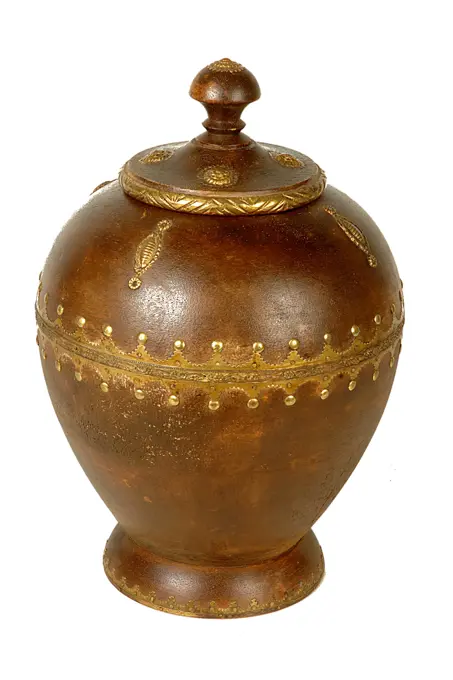
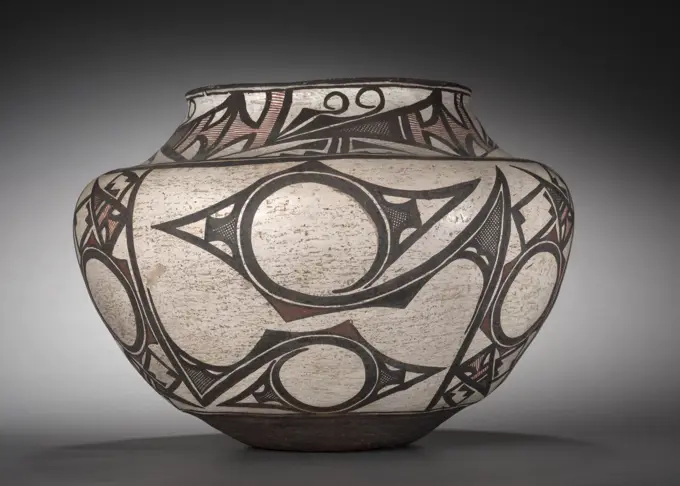
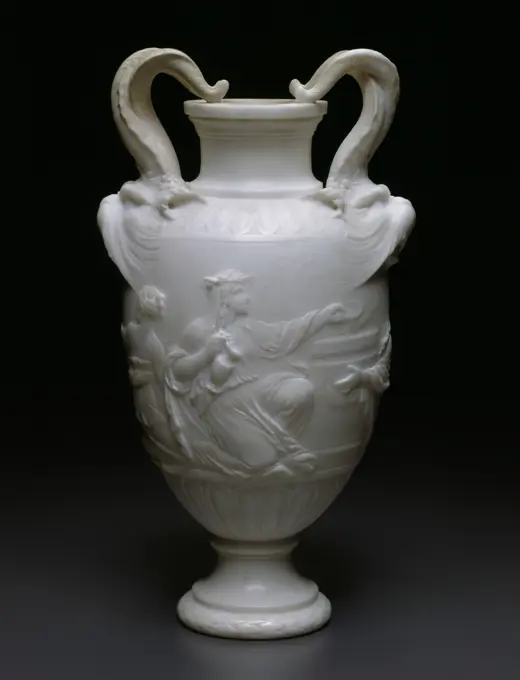
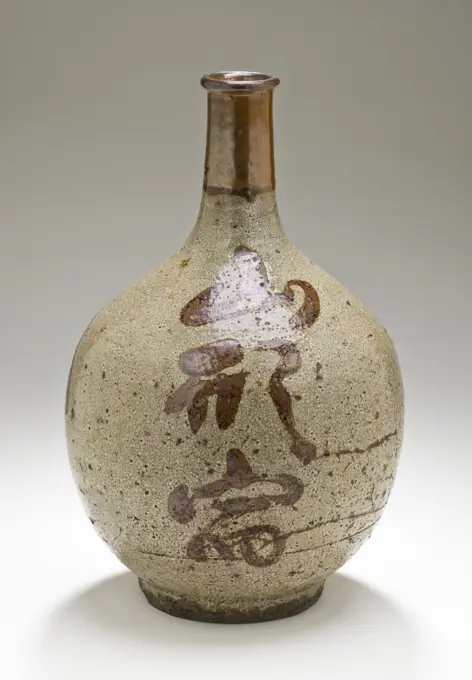
Ancient Ceramics

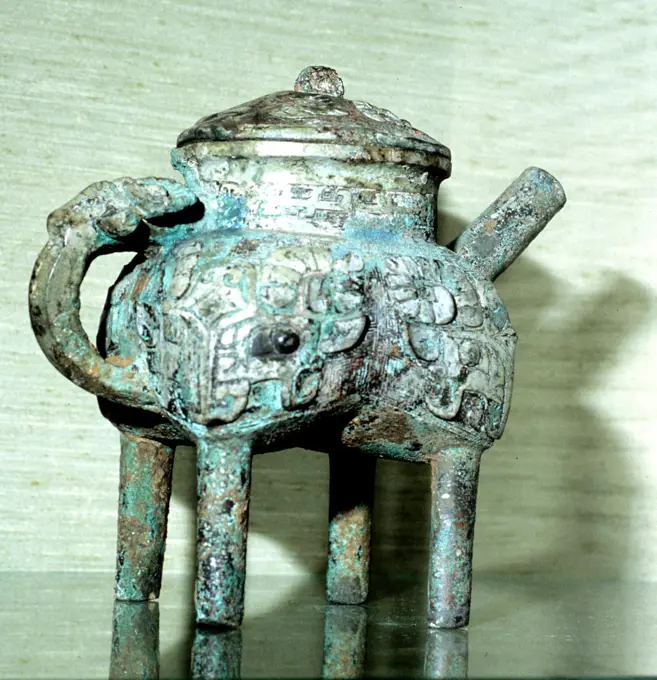
Variety of historic ceramic vessels including Minoan, Roman, and Chinese designs, highlighting ancient art and pottery techniques from different cultures.
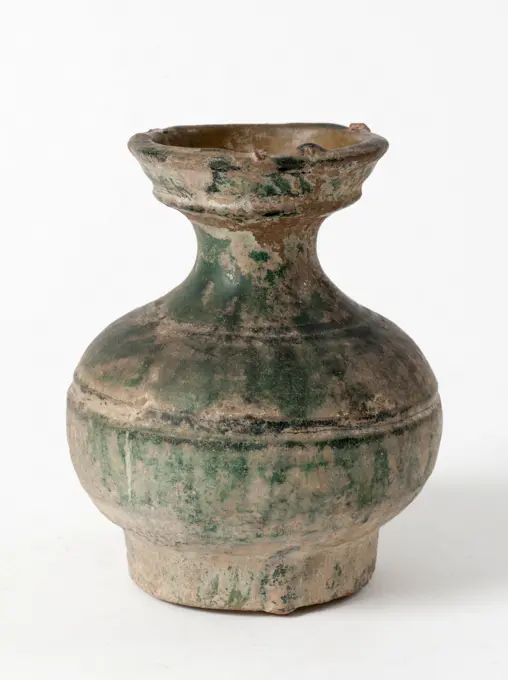
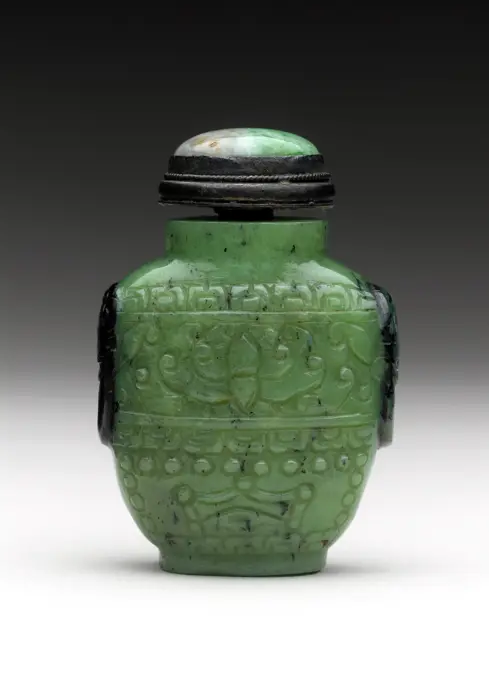
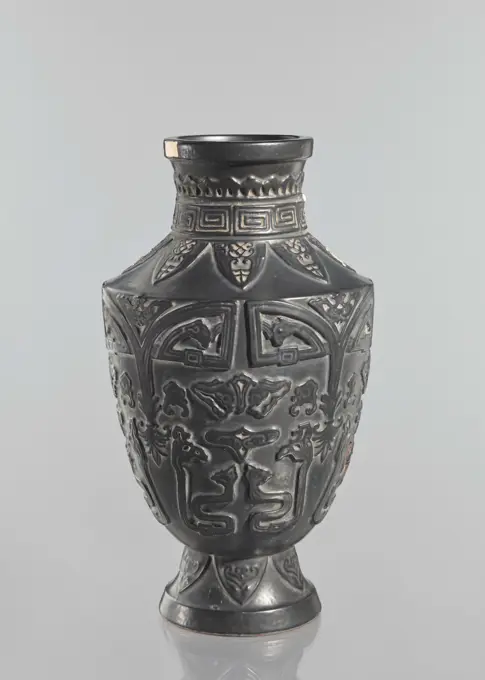
Vase Hu ". Terracotta with green lead glaze. Han dynasty (206 BC J.-220). Paris, Cernuschi museum. Chinese art, Chinese ceramic, han dynasty, green lead, terracotta, hum
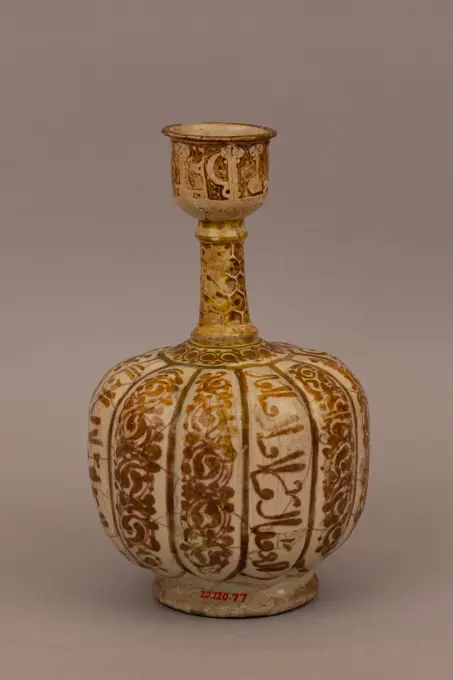
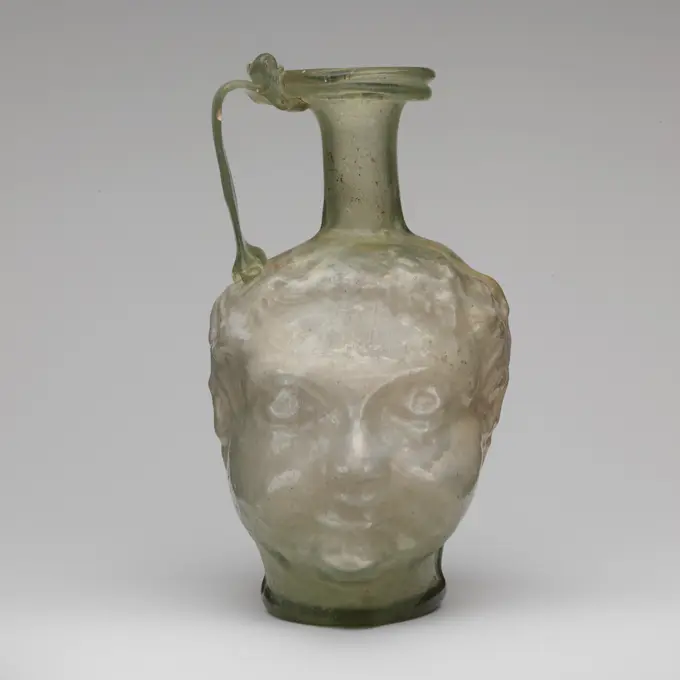
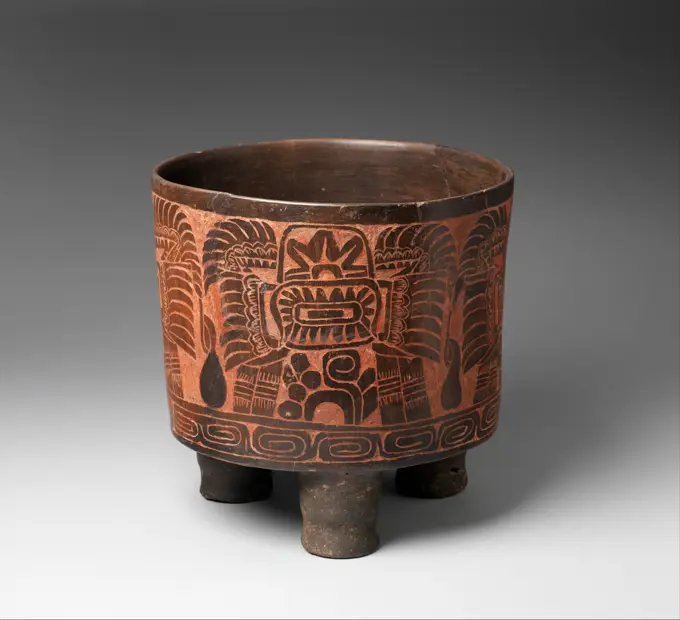
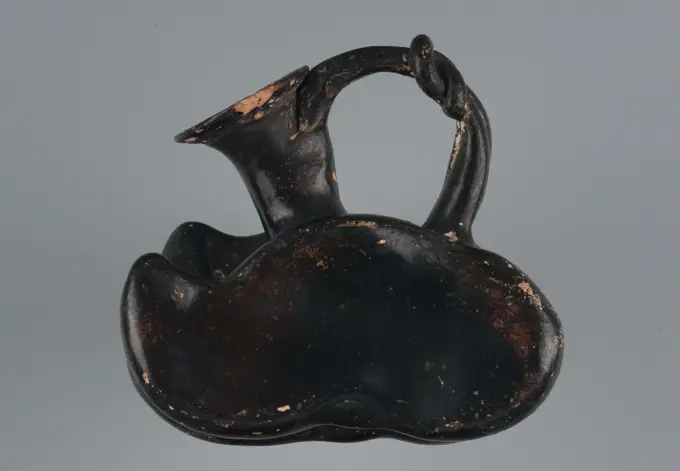
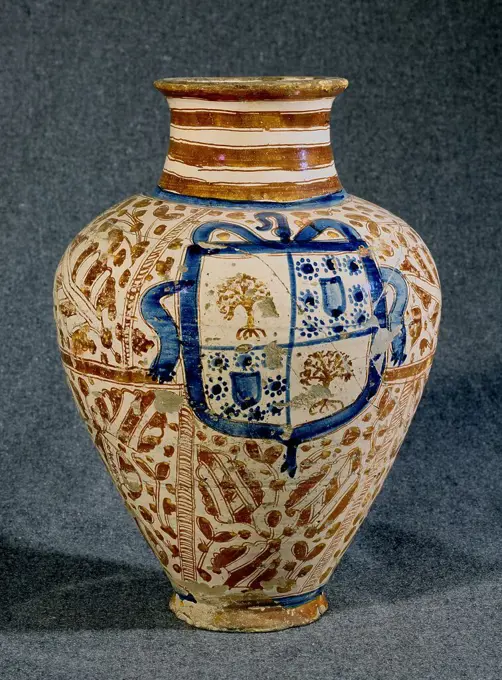
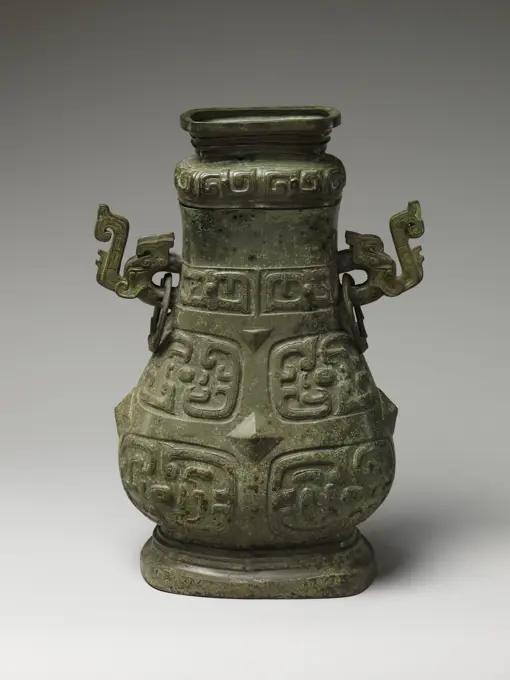
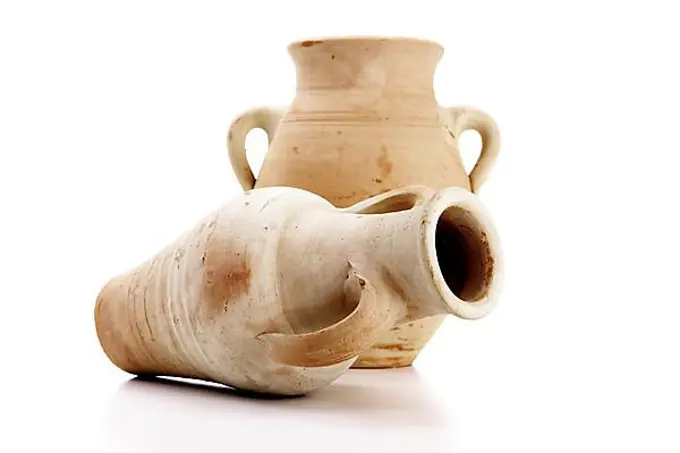
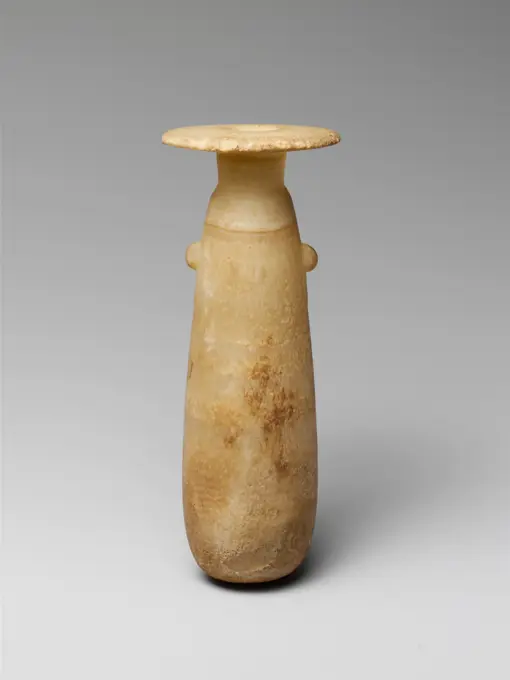
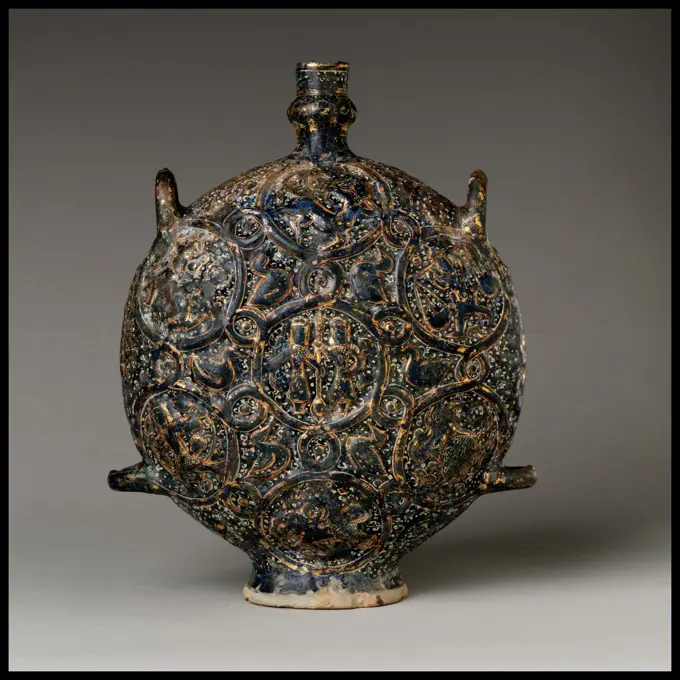
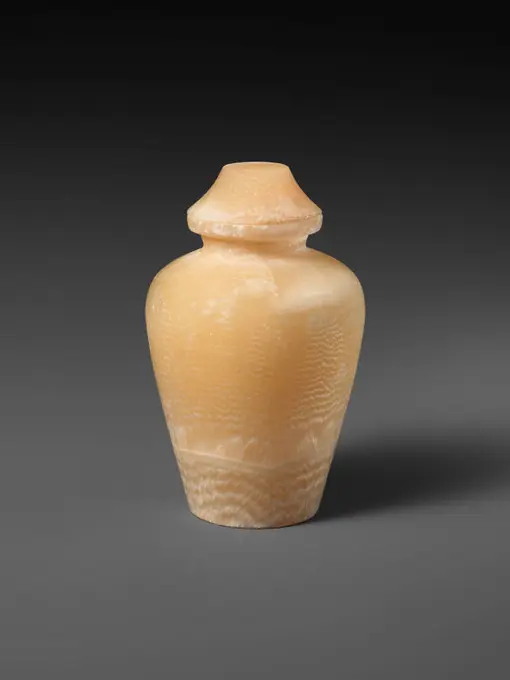
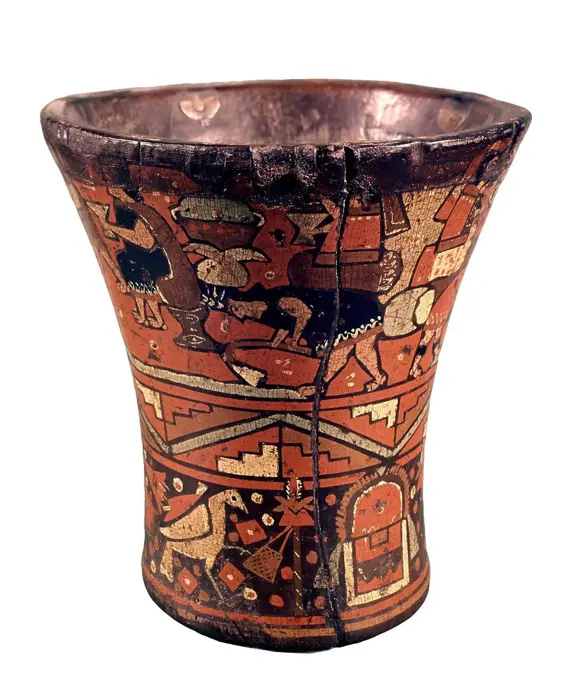
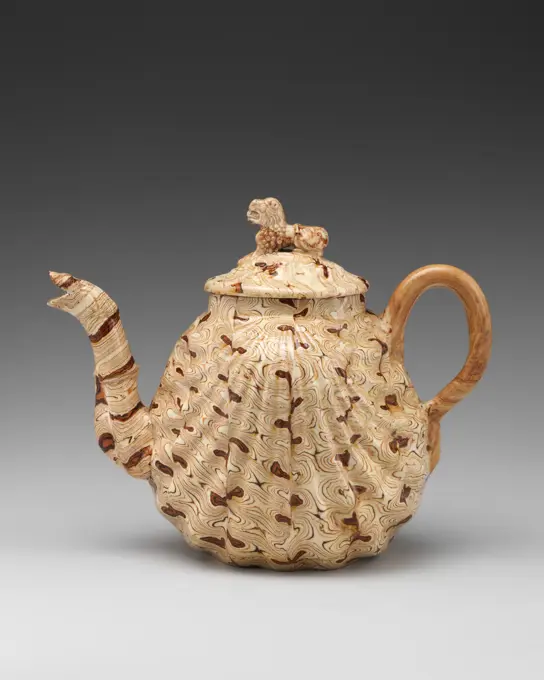
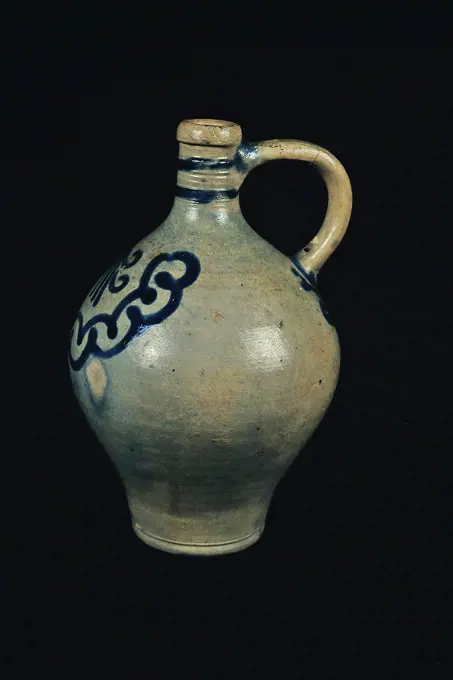
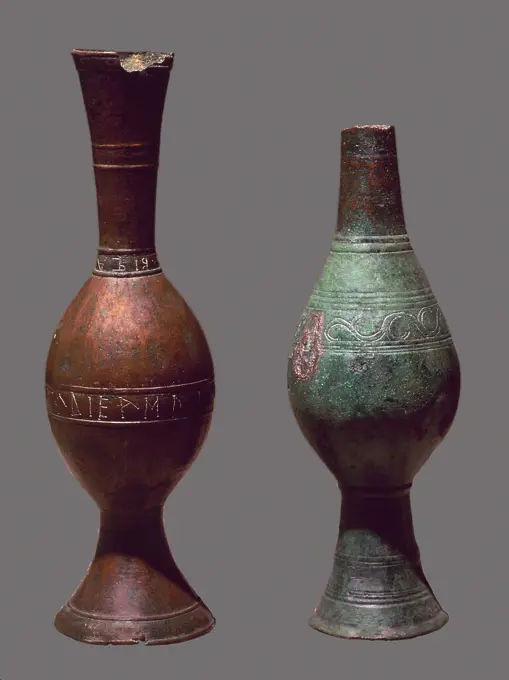
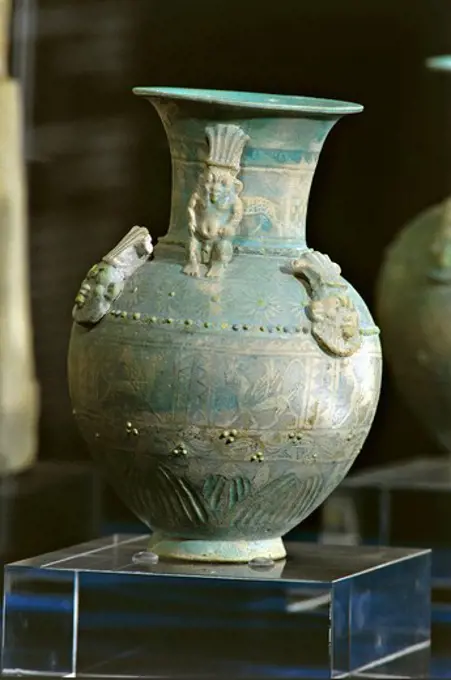
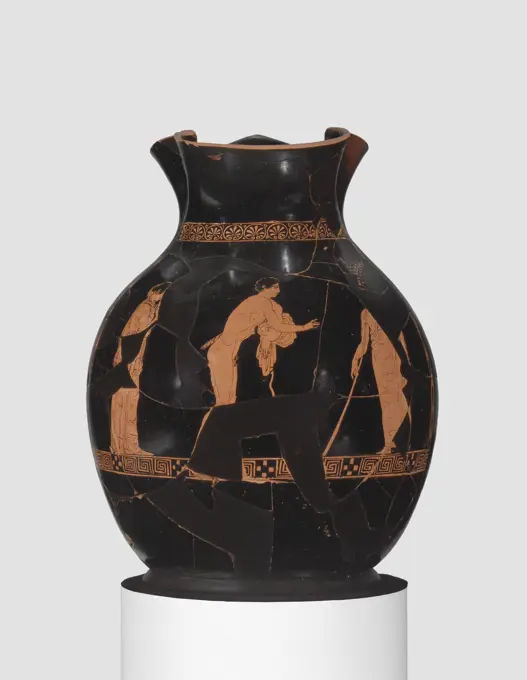
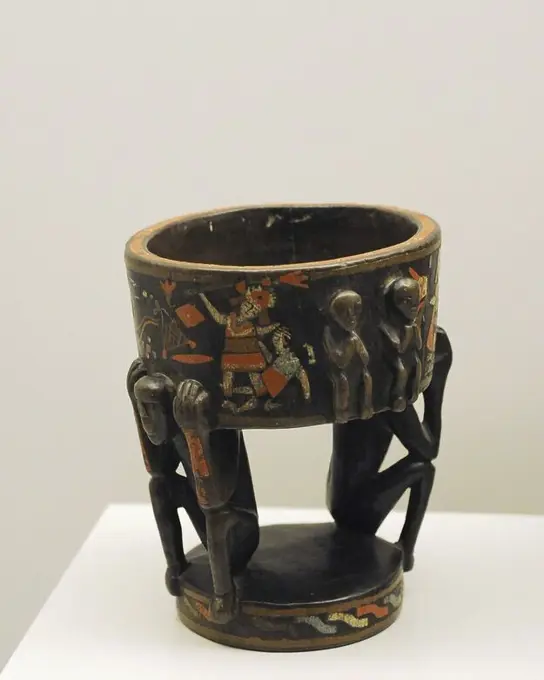
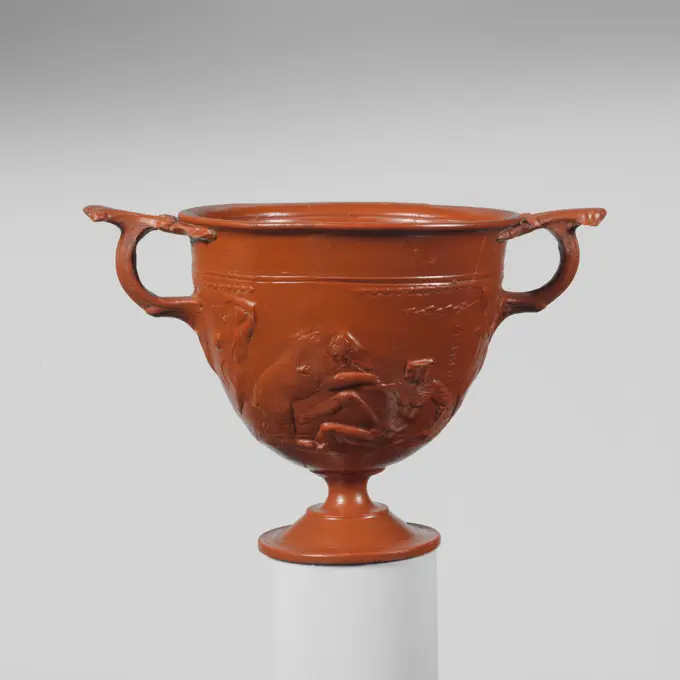
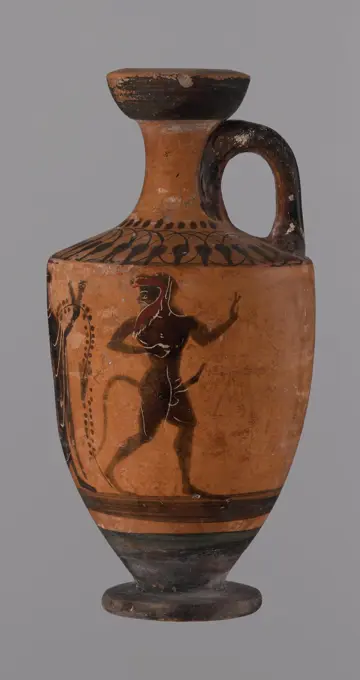
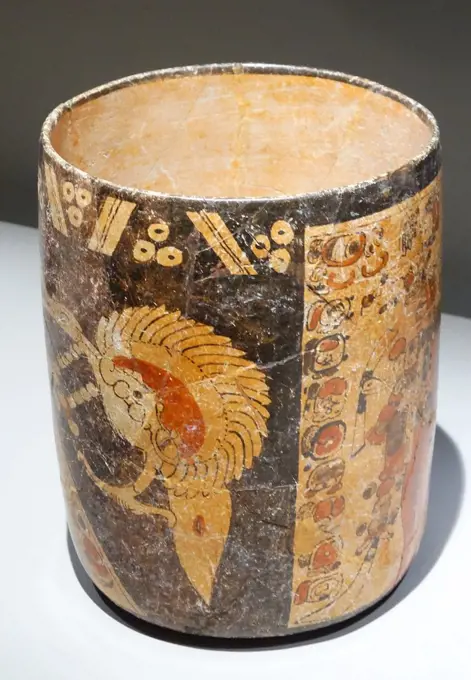
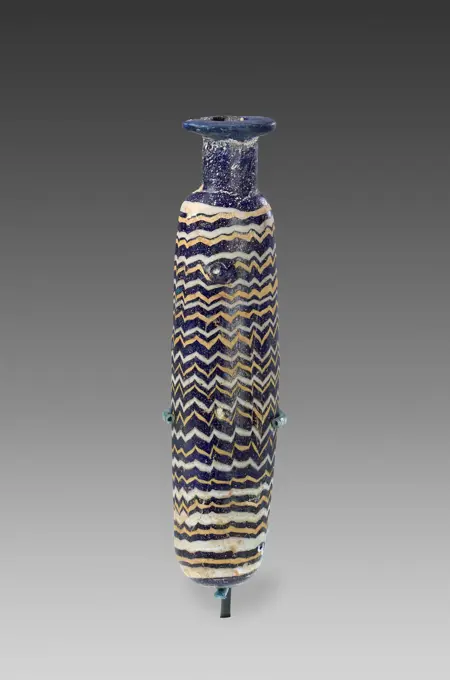
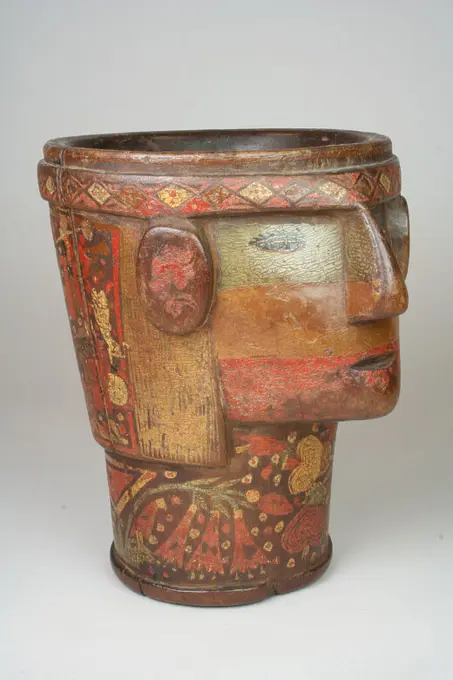
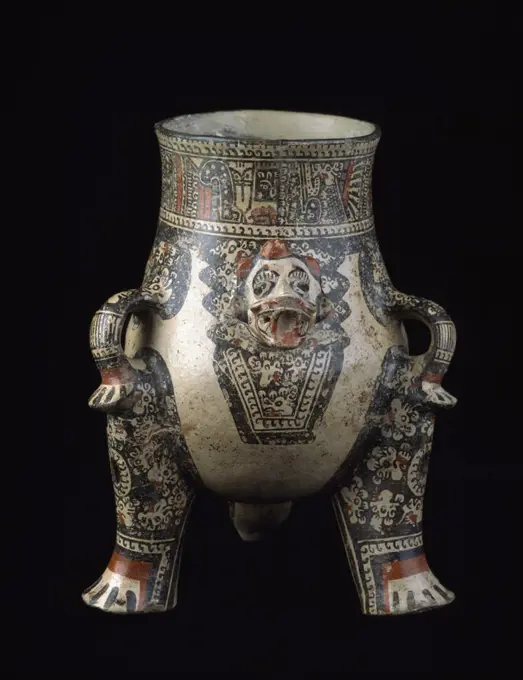
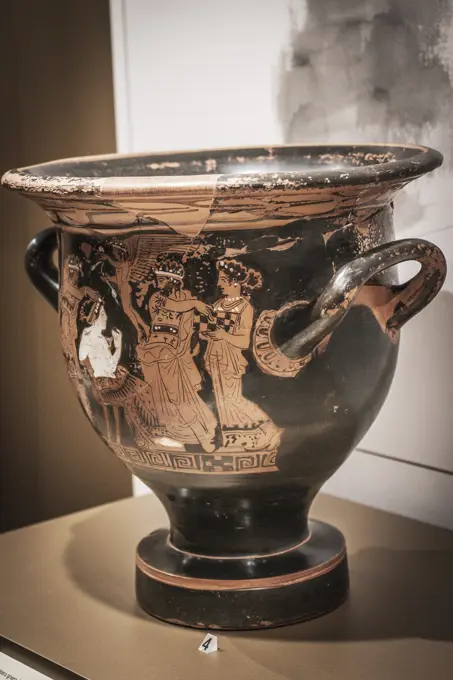
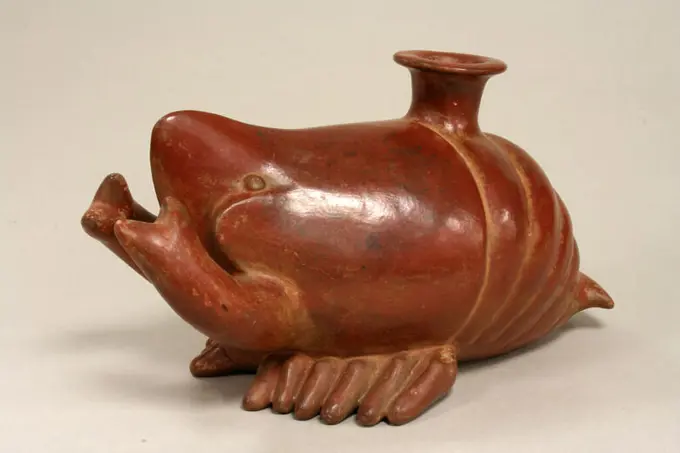
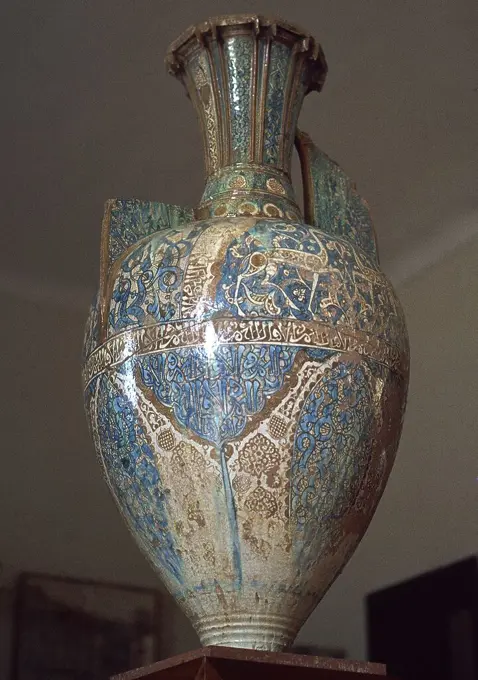
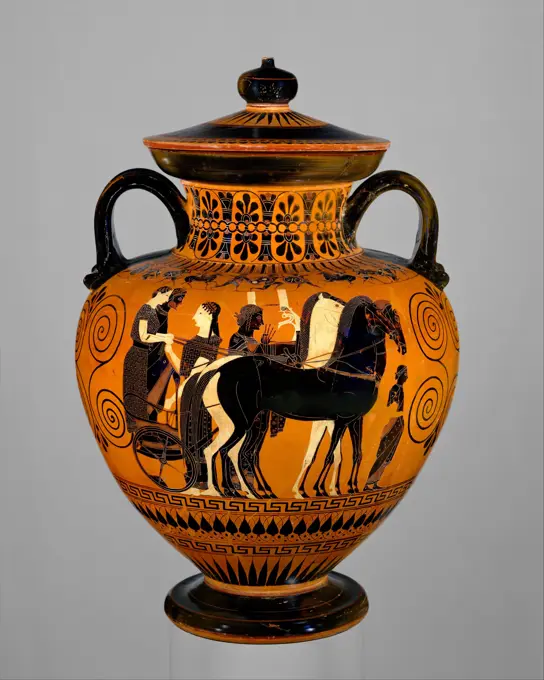
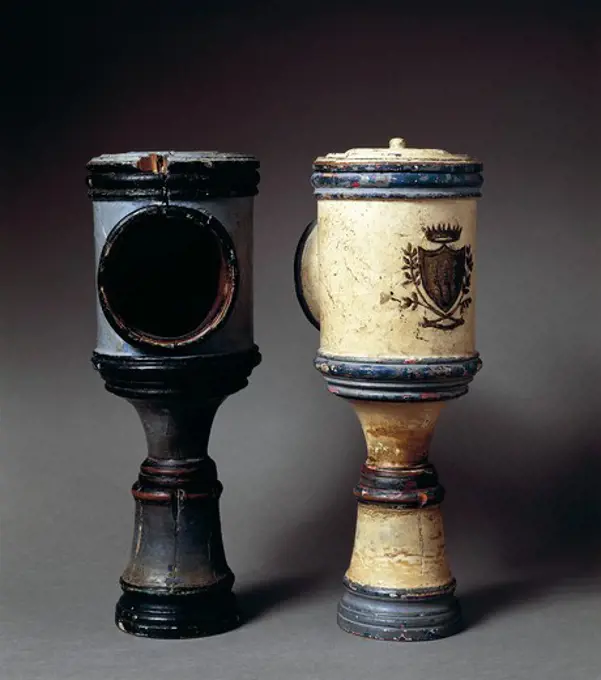
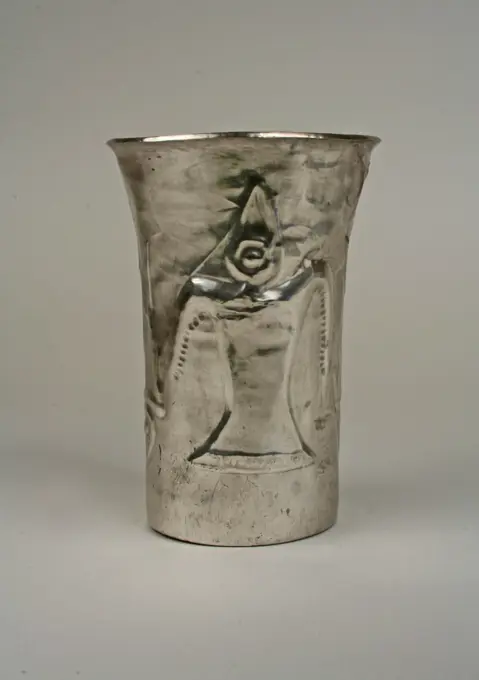
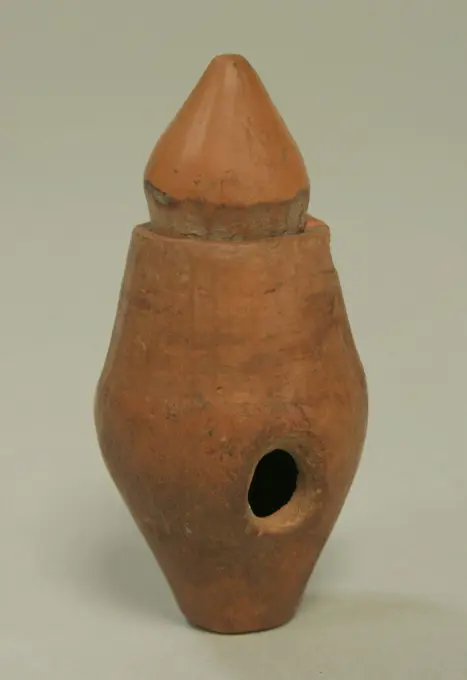
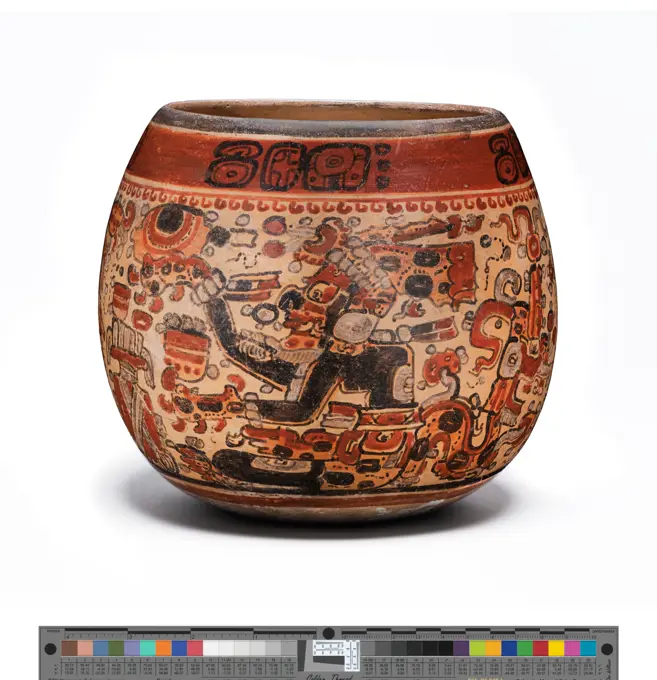
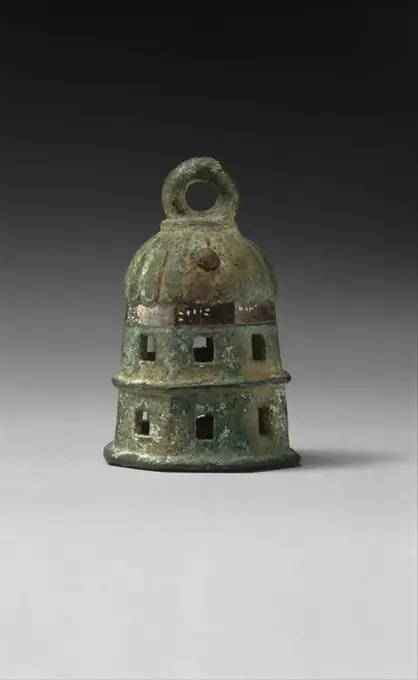
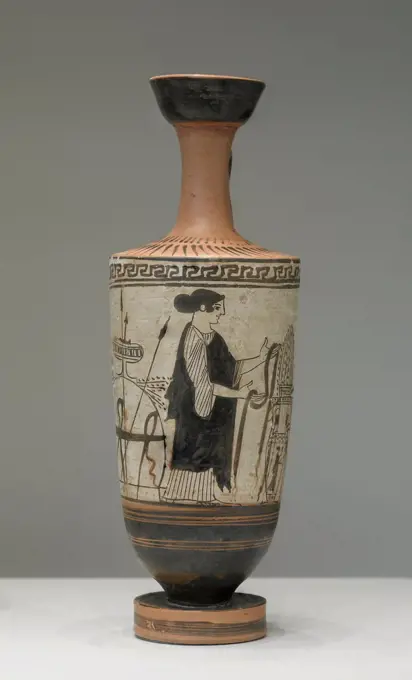
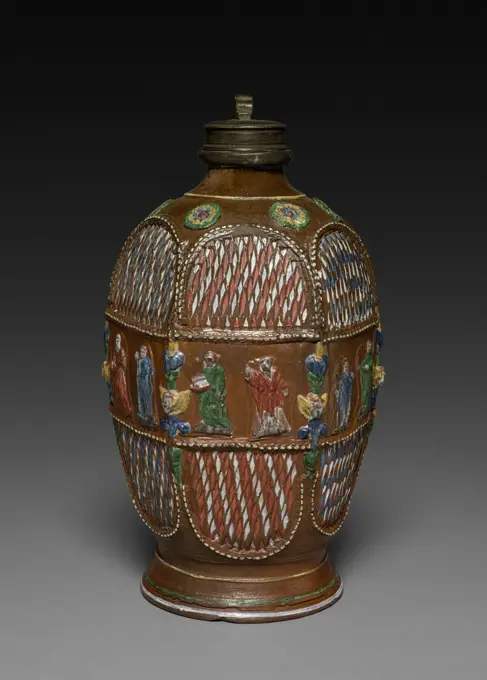
Bottle (Schraubflasche), c. 1660-80. German, Bavaria, Kreussen. Salt-glazed stoneware, applied and impressed decoration, pewter; overall: 34.3 cm (13 1/2 in.). Bottles or jars (kruken) of this type of six-sided form are most often associated with the ceramic tradition found in Kreussen (now Creussen) in the Bavarian region of Germany during the mid to late 1600s. With a threaded neck fitted with a pewter screw top and ring, they were ideal vessels for medicinal liquids as they could be easily connected to a belt for transport to the patient. Applied decoration depicting the twelve apostles, as on this example, allude to the spiritual nature of healing.Lazio Roma Grottaferrata Museo98. Hutzel, Max 1960-1990 German-born photographer and scholar Max Hutzel (1911-1988) photographed in Italy from the early 1960s until his death. The result of this project, referred to by Hutzel as Foto Arte Minore, is thorough documentation of art historical development in Italy up to the 18th century, including objects of the Etruscans and the Romans, as well as early Medieval, Romanesque, Gothic, Renaissance and Baroque monuments. Images are organized by geographic region in Italy, then by province, city, site complex and monument.Ewer 12th-13th century. Ewer. 12th-13th century. Attributed to Iran, Rayy. CeramicsGlass double head-shaped flask 1st half of 4th century A.D. Roman Translucent pale green, with same color handle and trail.Rounded and thickened rim; flaring mouth; cylindrical neck; body in the shape of a double head; irregular thick bottom, with central kick and traces of pontil scar; broad strap handle with combed outer surface attached to side of head above proper left ear, drawn up and slightly outward, then turned in and down, and trailed in folds onto underside of mouth and rim over trail decoration. A continuous mold seam runs from the base of neck, down body, and across bottom.On underside of mouth, a single thick horizontal trail; janiform body comprising two similar youthful heads, each with his ears, back to back: short-cropped, curly hair, circular, rather stylized ears with pendant earrings (), broad forehead, high arched eyebrows, almond-shaped eyes with indented pupils, chubby cheeks, open mouth showing teeth, and small prominent chin.Complete, except for large hole onGlass bottle in the shape of a bird 1st century A.D. Roman Translucent blue.Trefoil, slightly thickened and rounded rim, turned to one side from body; long neck, expanding downwards, that merges with horizontal ovoid body, drawn out at back into a long, thin tail with round tip; bottom of body slightly flattened (but vessel does not stand upright).Intact; thick, creamy brown weathering covering most of exterior with some patches of dulling and iridescence.Bluish and opaque blue onyx vase.. Glass bottle in the shape of a bird 249378Tripod Vessel 4th-5th century Teotihuacan Three cylindrical feet support this large brown vessel, the surface of which was carved in low relief and accented with red pigment. Around the body of the vessel, there are three icons that scholars have interpreted as a type of hieroglyphic construction, although its content remains undeciphered. The motif resembles a large feathered headdress, with a medallion in the center crowned with a half-star-like shape atop a symbol known as the reptile-eye.” These symbols may represent royal titles or place names in the visual language of Teotihuacan. A widespread style of cylindrical bowls with three sturdy feet and straight walls seems to have originated in the central highland metropolis of Teotihuacan. They are found elsewhere in Mexico and even into the Maya Lowlands, where contemporary city-states claimed political or commercial connections to the faraway city. Teotihuacan tripods were made in a wide range of size, color, and surface treatmentAskos czarnofirnisowany w formie astragala. unknown, authorGlass two-handled bottle (amphora). Culture: Roman. Dimensions: H.: 12 1/8 in. (30.8 cm)Diameter (Diameter w/ cross handles): 4 3/8 in. (11.1 cm)Diameter: 4 1/2 x 1 15/16 in. (11.4 x 5 cm). Date: 1st half of 1st century A.D..Translucent purple, with same color handles.Everted rim, folded over, in and down into mouth; cylindrical neck, flaring at base to join sloping shoulder; elongated piriform body, tapering to pointed base with rounded end; two strap handles with vertical ribbing attached to shoulder, drawn up vertically, turned inward, one in a curve, the other at a right angle, and trailed on to neck below rim.Intact; minor patches of soil encrustation; some dulling and iridescent weathering.This deep purple vase is remarkable for its size and elegant simplicity. No close parallel is known, but it may be regarded as a rare masterpiece of early Roman blown glass. Museum: Metropolitan Museum of Art, New York, USA.ORZA CON EL ESCUDO DE JAUME VALLS ABAD DEL MONASTERIO DE SANTES CREUS - CERAMICA MUEL - SIGLO XVI. Location: MUSEO DE CERAMICA-CERAMICA ARAGONESA. Barcelona. SPAIN.CERAMICA POPULAR DE TALAVERA.Wine Vessel (Hu) late 9th-early 8th century B.C. China As the Shang animal mask lost its symbolic meaning under the Zhou, it dissolved into an ornamental pattern, as here, where an eye” is encircled by curving hooked lines.. Wine Vessel (Hu). China. late 9th-early 8th century B.C.. Bronze. Western Zhou dynasty (1046-771 B.C.). MetalworkTerracotta jarsTerracotta oil lamp. Culture: Roman, Cnidian. Dimensions: Overall: 1 1/8 x 3 3/4 in. (2.9 x 9.5 cm). Date: early 2nd century A.D..Loeschcke Type 8. Mold-made. Discus: rosette with five heart-shaped petals. Large, slightly pointed nozzle. Within impressed ring base, faintly inscribed in Greek letters: ROMANE/SIS, with small circle below. Slip across top but only in small patches on sides and base. Museum: Metropolitan Museum of Art, New York, USA.Askos black -refreshed in the form of astragala;  5th century BC (-500-00-00--401-00-00);Alabaster alabastron (perfume vase) 6th-4th century B.C. Cypriot There are two lugs on the body and a wide, slightly convex lip.. Alabaster alabastron (perfume vase) 243983Snuff Bottle (Biyanhu) with Mock Mask Handles. China, Chinese, middle Qing dynasty, about 1700-1800. Tools and Equipment; bottles. Abraded jadeFlask with Zodiac Medallions first half 14th century, with additions first half 20th century The blue flasks two sides present the objects stratified history. A close investigation recently revealed that the painted and gilded decoration, once on both sides, is a modern enhancement applied to a plain surface— probably while the flask was in fragments before being reassembled. A sticker still glued to the vessels interior wall suggests that the restoration was executed in Iran.. Flask with Zodiac Medallions. first half 14th century, with additions first half 20th century. Stonepaste; molded, blue-glazed, overpainted, and gilded. Attributed to Iran, Kashan. CeramicsLibation jar with with lid. Dimensions: Overall: H. 8.9 cm (3 1/2 in.); Diam. 5.1 cm (2 in.)Jar: H. 7.3 cm (2 7/8 in.); Diam. 5.1 cm (2 in.)Lid: H. 1.7 cm (11/16 in.); Diam. 3.2 cm (1 1/4 in.). Date: ca. 1887-1750 BC.This small jar currently has no known parallel, although its form is reminiscent of the large magical water water jar from Sithathoryunet's tomb. Museum: Metropolitan Museum of Art, New York, USA.KERO PERUANO. Location: MUSEO DE AMERICA-COLECCION. MADRID. SPAIN.Vase; iridized glassBottle 12th-13th century China. Bottle 50567Islamic civilization, Mameluca art. Brass ewer with name of sultan, Sihab Al-Din Ahman, inlaid in silverKYLIX: CON ESCENA DE HETERAS. GRIEGO CERAMICA. (DEPOSITO: MUSEO ARQUEOLOGICO NACIONAL).Teapot mid-18th century Style of Whieldon type Listen to experts illuminate this artwork's story Listen Play or pause #407. Teapots Supported by Bloomberg Philanthropies We're sorry, the transcript for this audio track is not available at this time. We are working to make it available as soon as possible.. Teapot. British, Staffordshire. mid-18th century. Agateware (glazed earthenware). Ceramics-PotteryCologne jug with two blue bands around neck, on shoulder and belly rosette of curved blue lines, jug crockery holder soil find ceramic stoneware glaze salt glaze, hand turned decorated glazed baked stoneware jug cologne on stand with light soul ball round jug slightly stretched to the foot Slim neck with rings and two blue piping Thickened neck edge Fors and standing ear. Blue volutes on the shoulder as decoration also around the attachment of the ear archeology indigenous pottery import store store basement serving drinkJARROS LITURGICOS VISIGODOS. Location: MUSEO ARQUEOLOGICO-COLECCION. Oviedo. ASTURIAS. SPAIN.Lazio Latina Sezze Antiquarium Comunale39. Hutzel, Max 1960-1990 German-born photographer and scholar Max Hutzel (1911-1988) photographed in Italy from the early 1960s until his death. The result of this project, referred to by Hutzel as Foto Arte Minore, is thorough documentation of art historical development in Italy up to the 18th century, including objects of the Etruscans and the Romans, as well as early Medieval, Romanesque, Gothic, Renaissance and Baroque monuments. Images are organized by geographic region in Italy, then by province, city, site complex and monument.VesselRitual wine cup, anonymous, c. -1700 - c. -800 Ritual wine cup. Division by tires into three zones; Very fine spiral decor from fond and ornamentation. China bronze (metal) Ritual wine cup. Division by tires into three zones; Very fine spiral decor from fond and ornamentation. China bronze (metal)Terracotta spindle bottle. Culture: Cypriot. Dimensions: H. 18 1/4 in. (46.4 cm). Date: 1600-1050 B.C..Spindle-shaped bottle with handle and no decoration. Museum: Metropolitan Museum of Art, New York, USA.Storage Jar with Horizontal Bands of Interlocking Scrolls 875 CE-1130 Southwest. Ancestors of the modern Pueblo Indians, the Anasazi people flourished in the southwestern United States beginning about two thousand years ago. Ruins of their spectacular cliff dwellings and multistory towns of sandstone masonry are widely scattered in northern New Mexico, Arizona, and southern parts of Utah and Colorado. Skilled farmers, the Ancestral Pueblo (Anasazi) were also creative artisans, as seen in this large, striking olla, a storage vessel. Dramatically decorated in the black-on-white ground of the Black Mesa style, the vessel displays a continuous swirling band of barbed, interlocking S shapes. This strong rhythmic pattern is best perceived from above, suggesting that the ollaís usual placement was on the floor. Like most ollas, this vessel originally had a taller neck, which broke off and was ground down by its owner. In Ancestral Pueblo (Anasazi) tradition, as among the Pueblos today, cerami'Jar - T'ang period', c7th-8th century, (1945). Creator: Unknown.Pewter drinking jug with lid, Drinkware holder tin, cast Horizontal soldered flat bottom raised edge flattened spherical body narrowing upwards and to wide board passing flat lid with raised medallion thumb rest with two acorns question mark-shaped ear. Concentric rings on board and lid embossed on acorns some spots gold patina on body marks on lid: old coat of arms of Rotterdam two upright lions with vertical bar in between and square coat of arms with Gothic letters V W drinkGlass double head flask. Culture: Roman. Dimensions: H.: 2 1/4 in. (5.7 cm)Diam.: 1 3/8 x 1 in. (3.5 x 2.5 cm). Date: ca. 2nd century A.D..Semi-translucent deep turquoise blue.Thick everted oval rim, folded over and in; uneven cylindrical neck with horizontal indents; body in the shape of a double head; oval base with flattened bottom, with raised ridge below one head. Mold seam runs from lower half of neck, down sides of heads, and across one side of bottom ().On body, two heads, back to back, with different features, one with rounded face, chubby cheeks, and straps () below chin, the other face more oval, snub nose, straight lips, and possibly horns on forehead: on both, hair rendered as horizontal wavy lines swept back from sides of the faces, deep recessed pupils for eyes, and open mouth.Intact; pitting, dulling, and patchy iridescent weathering, with blackish weathering and encrustation on interior. Museum: Metropolitan Museum of Art, New York, USA.Kantharos bucchero nero. unknown, authorBird Jar 1st-6th century Nasca. Bird Jar. Nasca. 1st-6th century. Ceramic. Peru. Ceramics-ContainersVase. unknown, craftsmanPunch pot ca. 1760-70 Probably made at Jackfield Pottery, Shropshire, England. Punch pot. British, probably Shropshire. ca. 1760-70. Glazed earthenware. Ceramics-PotteryLampka. nieznany warsztat egipski, authorFaience vase with applied figures of the god BesClose-up of white urnChalice "a cilindretto". UnknownAnonymous / "Pitcher", XII-XIII Century, Ceramics (Terracotta decorated with partial dry string), 10.5 x 16 cm.Aryballos Shaped LekythosBird Effigy Bowl. Panama, 1100-1300. Ceramics. Slip-painted ceramicRed-figure oinochoe(chous)Copa ceremonial (Kero). Madera policromada. Cultura Inca, Horizonte Tardío (1400-1533 d. C.). Cuzco, Perú. Museo de América. Madrid. España.Drummer and a snail on a bronze vessel, snake handles, 17th cent. BENIN.Terracotta scyphus (drinking cup) ca. 15 B.C.-A.D. 60 Roman This cup is stamped by M. Perennius Tigranus, who owned one of the most prolific workshops operating at Arretium (modern Arezzo, Italy) during the Julio-Claudian period. The relief decoration depicts heroic seminude hunters pitted against a bear and a boar.. Terracotta scyphus (drinking cup). Roman. ca. 15 B.C.-A.D. 60. Terracotta; Arretine ware. Early Imperial, Julio-Claudian. VasesGreek pot from IV century AD, archeological museum of Linares, Jaen province, Spain, EuropeBlack -of -inch leek; unknown, unknown attic workshop; approx. 500 BC (-505-00-00--495-00-00);Antique glass, stone items, 1898, Middle EastMug; Manufaktura M.P.Radziwi  A in Nieborów; 1881-1886 (1881-00-00-1886-00-00);Celtic vase, Museum of the Romanization, Calahorra, La Rioja , Spain, Europe.Ceramic vessel Nazca culture 100 BC-800 BC Perú.Straight-walled polychrome vase representing a double stage on a light and dark background. The dark background contains a representation of a bird while the light shows a male character richly dressed and standing beside a column and a band of decorative glyphsAlabastron (Container for Scented Oil) 550 BCE-250 BCE Eastern Mediterranean Region. The flaring rims of these alabastra functioned as applicators to spread the thick, scented oil over the skin. The vessels themselves fit comfortably in the userís hand.. Glass, core-formed technique . Ancient Eastern MediterraneanCeramic, clay cezve on black backgroundCeramics cup and saucer isolated on white background. Wide photo. Free space for text.Terracotta trick vase 750-600 B.C. Cypriot The spout and neck are in the form of a woman's head. The "trick" in the vase consists of a hole in the underside of the foot. When the opening was unplugged, the contents of the vase would flow out.. Terracotta trick vase 240155Stirrup Spout Bottle with Stacked Containers. Culture: Moche. Dimensions: Overall: 8 7/8 in. (22.54 cm)Other: 5 3/8 in. (13.69 cm). Date: 2nd-6th century. Museum: Metropolitan Museum of Art, New York, USA.Libation Cup, 18th century, 5 1/2 x 5 1/8 x 3 1/4in. (14 x 13 x 8.3cm), Rhinoceros horn, China, 18th centuryKero. Culture: Quechua. Dimensions: H. 8 5/8 in. (21.9 cm). Date: late 17th century.The painted faces on keros of this type indicate that they are meant to represent the forest-dwelling Anti. The eastern slopes of the Andes, descending to the tropical forest of the great river basins, were populated by this ethnically separate group, also called Chunchos and considered savages by the inhabitants of the Incan empire in the high plateaus and the Pacific coast.Despite their resemblance to face beakers of the Precolombian era, keros shaped in the form of human heads are widely believed to have evolved in a later colonial phase; the "free-style" images that frequently wrap around the backs come far closer to European narrative form in their arrangement than do the rigid depictions of humans on early colonial keros. Here the scene on the back depicts a procession of several figures in Spanish attire: two attendants follow an official who is preceded by two small musicians (one above the otRed -andech oinochoe with the representation of a woman with a mirror and Eros;  horse. 4th century BC (490-00-00-500-00-00);Italia Połudnn.Brass design fitting on antique wooden pot with cap , Jodhpur, Rajasthan, India Copyright: xSafatxAli/DinodiaxPhotoxWater Jar (Olla), c 1880. Southwest, Pueblo, Zuni, Post-Contact, Late 19th century. Slip-painted; overall: 26.5 x 37.5 cm (10 7/16 x 14 3/4 in.).Vase 1766 France. Marble . Clodion, (Claude Michel)Sake Bottle. Japan, Edo period (1615-1868), mid- to late 18th century. Ceramics. Hizen ware; stoneware with white slip and brown glazePainted Bowl with Birds 1st-4th century Nasca. Painted Bowl with Birds 309381Handle Spout Vessel in Form of a Parrot Made 100 BCE-500 CE North Coast. Ceramic and pigment . MocheShang bronze ritual vessel.Hu type for wine. 11-13th cent. BC. China.Jaguar effigy vessel from Chorotega,  Nicoya Area,  Costa Rica,  USA,  Florida,  Jacksonville,  The Museum of Contemporary Art,  Pre-Columbia Ceramic Collection,  circa 800-1200 A.D.Greek red-figure bell crater Greek red-figure bell crater, 4th century BC, Ategua,xIberian culture, Iberian Museum of Jaén, Andalusia, Spain Copyright: xZoonar.com/BartomeuxBalaguerxRotgerx 21704877Snuff Bottle, 17th-19th century, 2 3/4 x 1 5/8in. (7 x 4.1cm), Cinnabar lacquer, gilt bronze, China, 17th-19th centuryVessel Depicting K'awiil (God K) and Itzamna Exchanging Gifts 700 CE-800 CE Mexico. Ceramic and pigment . MayaCrayfish Vessel. Culture: Colima. Dimensions: H. 6-3/4 x L. 12-3/8 in. (17.1 x 32.4). Date: 200 B.C.-A.D. 300. Museum: Metropolitan Museum of Art, New York, USA.A jar from 960 AD in an exhibit at the Shanghai Museum, a museum of ancient Chinese art, situated on the Peoples Square in the Huangpu District of Shanghai, China.Campania Caserta Capua Museo Campano026. Hutzel, Max 1960-1990 Medieval: Byzantine architectural fragments; parchment fragments with miniatures (12th century) from Montecassino; painted wooden crucifix (13th century); Carolingian crucifixes; Bishop's miter (11th century) of gold and silver damask; fresco (13th century). Post-medieval: Architecture (15th century). Formerly the Palazzo Antignano. Unusual Catalan/Moorish-style portal; Paintings on panel and canvas (15th-18th centuries); marble intarsia (16th century); marble sculpture: busts of Christ and Mary (17th century); sculpture of saints in marble and in wood (15th century); painted and gilded sculpture in wood; marble grave sculpture (16th century); sarcophagus with allegorical carvings; gold reliquary "Rosa d'Oro"; crucifix made of elephant tusk Specific Location: Pianterreno Antiquities: Italic sculpture (seated women holding babies); inscription. Photo campaign #1: 533 photos. Roman relief and sculpture; cinerary urns; Greek aJARRON ARABE DE LAS GACELAS-VISTA GENERAL. Location: ALHAMBRA-MUSEO-CERAMICA. GRANADA. SPAIN.Knob from the lid of a neck-amphora, joins lid of 17.230.14 ca. 540 B.C. Greek, Attic Knob of an amphora lid.. Knob from the lid of a neck-amphora, joins lid of 17.230.14 250551Turkey, Central Anatolia, Cappadocia, Nigde province, Nigde museumSet ceramic jugs and vases with light reflection isolated on white backgroundFood container 1050 BCE-1000 BCE China. The handled tureen is one of an extensive array of bronze vessels commissioned by Chinaís royal family and political aristocracy for the preparation and offering of millet and other food in ceremonial banquets. This vesselís distinctive style, with its basin cast onto a hollow square base derived from an altar or stand, was introduced soon after the Zhou conquest of Chinaís first archaeologically verified dynasty, the Shang. Exuberantly imaginative creatures animate the surface. Two large, coiled dragons spread across each side of the bowl; animal-headed birds form the handles; and on the base, creatures with spiky, flame-like plumage display a clever ambiguity they may be read as addorsed birds or as elephant-headed ìdragonsî facing each other.Inside the bottom of the basin, an inscription of eleven characters is countersunk in the metal and runs from top to bottom in two columns reading right to left Zhong Cheng zuo you bao yi yong xiang wang nBasket, 1900-1942, 3/4 x 7/8 x 7/8in. (1.9 x 2.2 x 2.2cm), Plant fiber, United States, 20th centuryPainted wood ballot boxes used by Council of TwelveBeaker, Birds 12th-15th century Chimú. Beaker, Birds 310626Ceramic Whistle 3rd-1st century B.C. Paracas. Ceramic Whistle. Paracas. 3rd-1st century B.C.. Ceramic. Peru, Ica Valley. Ceramics-Musical InstrumentsPair of Beakers Depicting Birds in a Cornfield. Inca; Ica Valley, south coast, Peru. Date: 1100-1438. Dimensions: Each 7 × 7.3 cm (2 3/4 × 2 7/8 in.). Gold. Origin: Ica Valley. Museum: The Chicago Art Institute, Chicago, USA. Author: Inca.Spherical Cricket Container, 2 3/4 x 3 13/16 x 3 13/16 in. (7 x 9.68 x 9.68 cm), Gourd, pigment, cord, ChinaGlobular Bowl with Supernatural Enema Ritual. Belize or Guatemala, Maya, 550-700 CE. Ceramics. Slip-painted ceramicBell inscribed with the Urartian royal name Argishti. Culture: Urartian. Dimensions: 3.43 in. (8.71 cm). Date: ca. 789-766 B.C..This classical Urartian bell has a domed top, an octagonal and perforated body with a central raised ridge, and a loop for suspension. The Urartian cuneiform inscription reads: "From the arsenal of King Argishti.". Museum: Metropolitan Museum of Art, New York, USA.TINAJA SOBRE ASIENTO (PIE) DE ALFARERO-CERAMICA POPULAR S XX. Location: ALFARERIA. TERUEL. SPAIN.Attic White-Ground Lekythos; Unknown; Athens, Greece, Europe; about 460 B.C.; Terracotta; Object (body): H: 19.2 x Diam.: 6.5 cm (7 9/16 x 2 9/16 in.), Object (rim): Diam.: 4 cm (1 9/16 in.)Full view of case from Meissen Porcelain,  18th Century,  USA,  Florida,  Jacksonville,  The Cummer Museum of Art and GardensLarge Storage Jar for Cool Water With a Bejeweled Lion, Hare, and Deer 8th-10th century Other large jars, similar to this one, display inscriptions suggesting that they were used to store water, which would be kept cool by evaporation through the vessels unglazed porous walls. Whether incised, molded, stamped, or in the barbotine technique (in which rolled strips and circles of clay are applied to the surface), the vegetal and geometric motifs on these containers were likely inspired by pre-Islamic designs.. Large Storage Jar for Cool Water With a Bejeweled Lion, Hare, and Deer 453577Terracotta bell-krater (bowl for mixing wine and water). Culture: Greek, Boeotian. Dimensions: Other: 8 5/8 x 8 1/8 in. (21.9 x 20.6 cm). Date: late 5th century B.C..Obverse, head of a womanReverse, palmetteAlthough the significance of these representations is not known, and would have varied from region to region, the motif of a woman's head was extraordinarily widespread in the Greek world during the fifth and fourth centuries B.C. It is noteworthy also that there was no male counterpart. Museum: Metropolitan Museum of Art, New York, USA.GREECE, ATHENS, NATIONAL ARCHEAOLOGICAL MUSEUM, VASE WITH GEOMETRICAL DESIGN           LPZDecorative antique Amphora in the gardenEurope, Portugal, Algarve Region, Lagos district, Vila do Bispo, Nossa Senhora da ConceicaoSet of ancient vase hand drawn ink sketch. Engraved style vector illustration.