Ancient Cutting Tools

Various archaeological metal tools, including scissors and knives, showcasing historical craftsmanship found in soil.

Fork with four teeth and the stem with rounded end, fork cutlery soil find tin metal, Fork with four tines rounded handle end node stalk double archaeology Rotterdam rail tunnel food Soil discovery: rail tunnel Rotterdam.
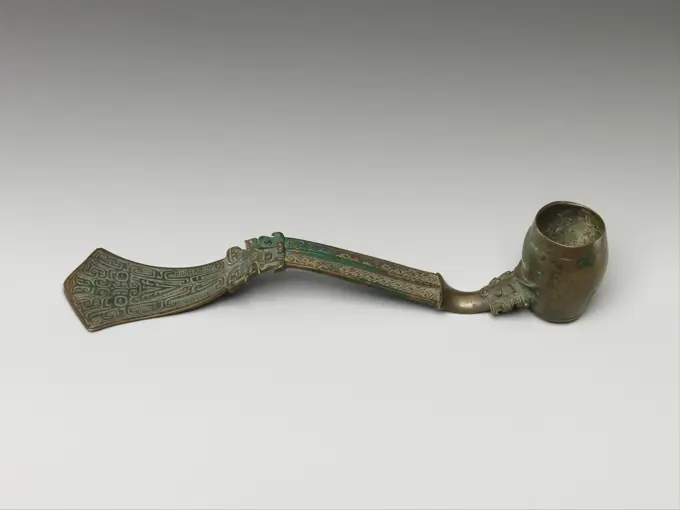
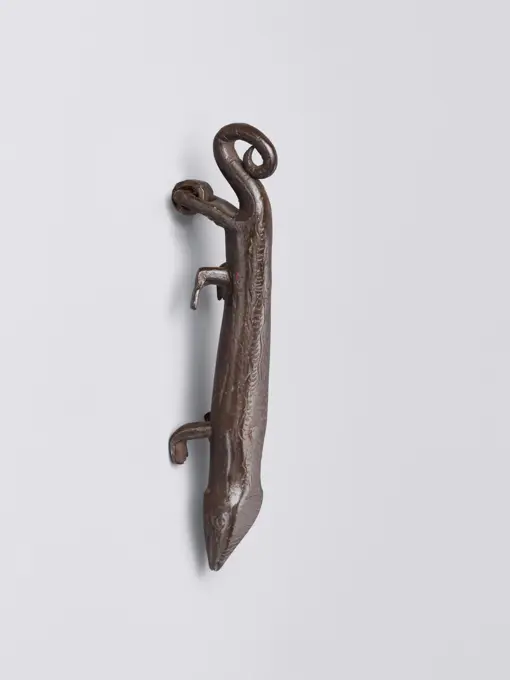
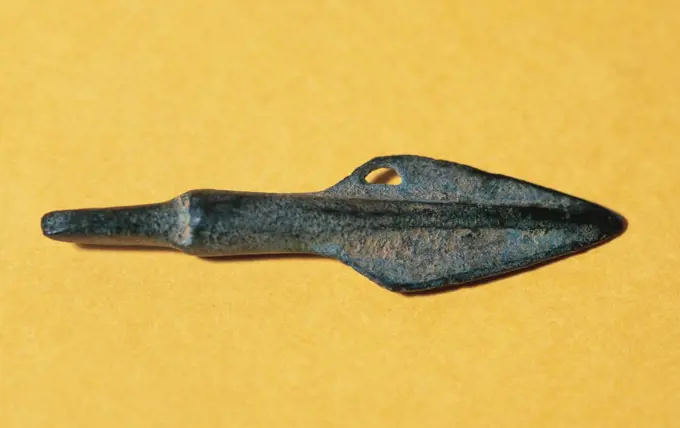
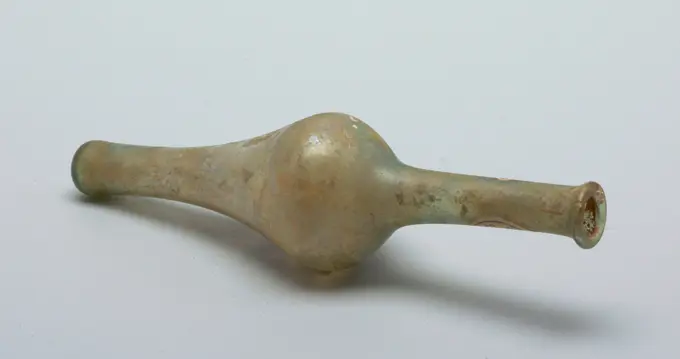
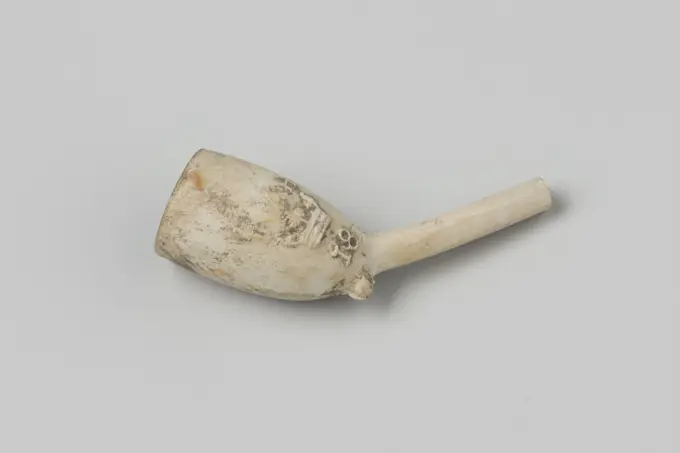
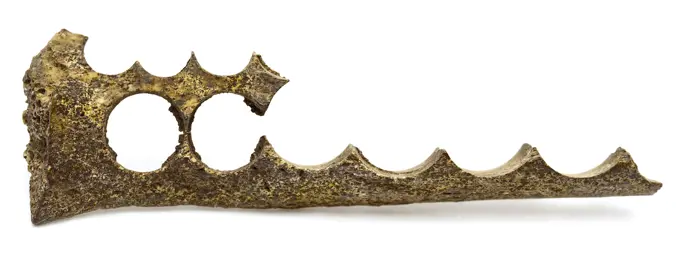
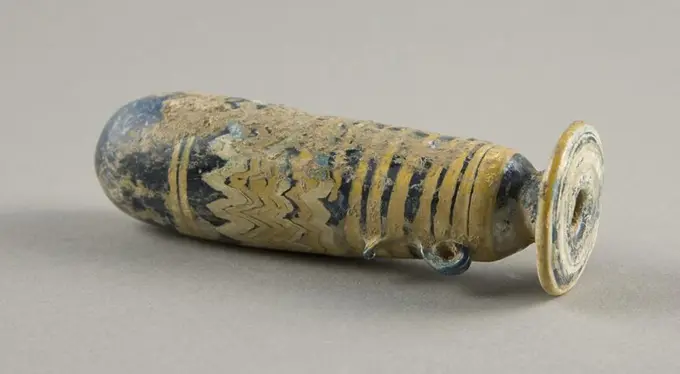
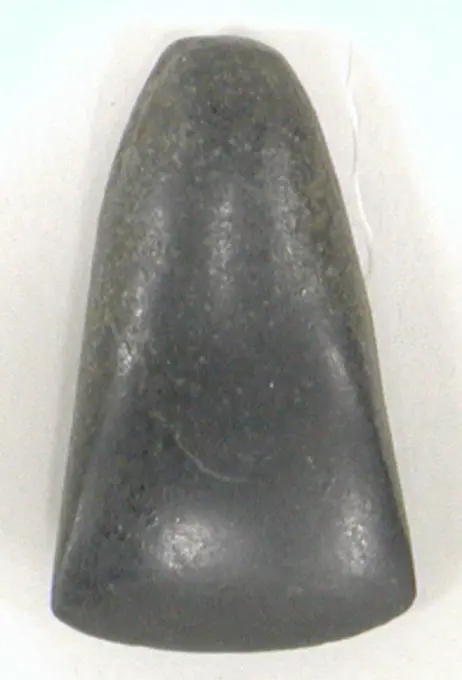
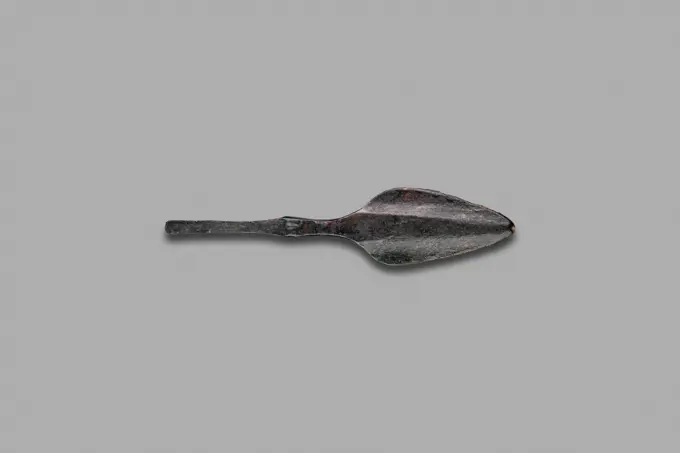
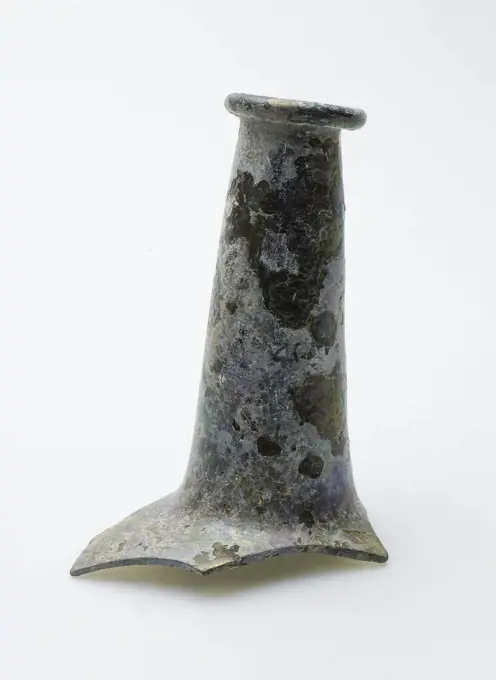
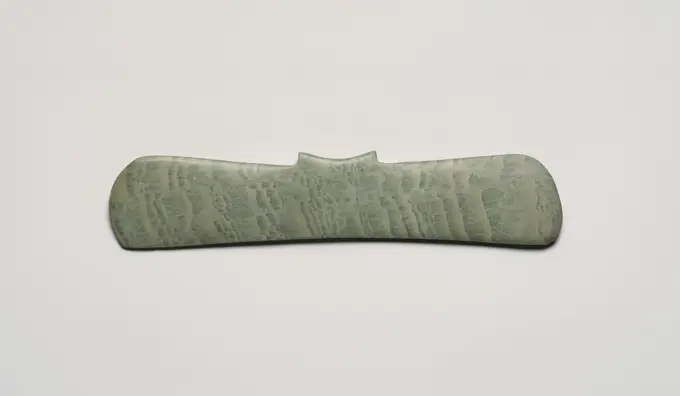
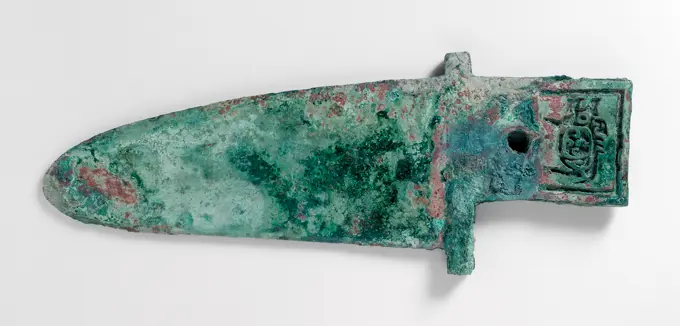
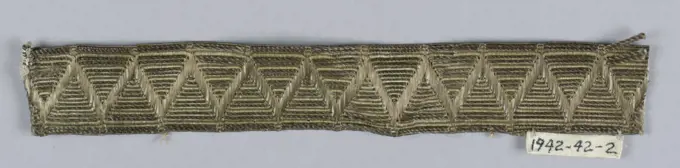
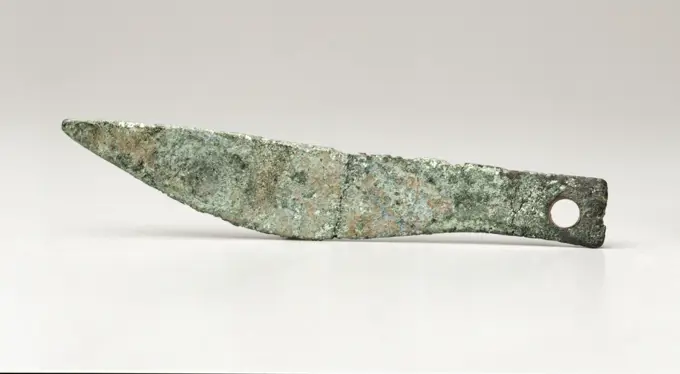
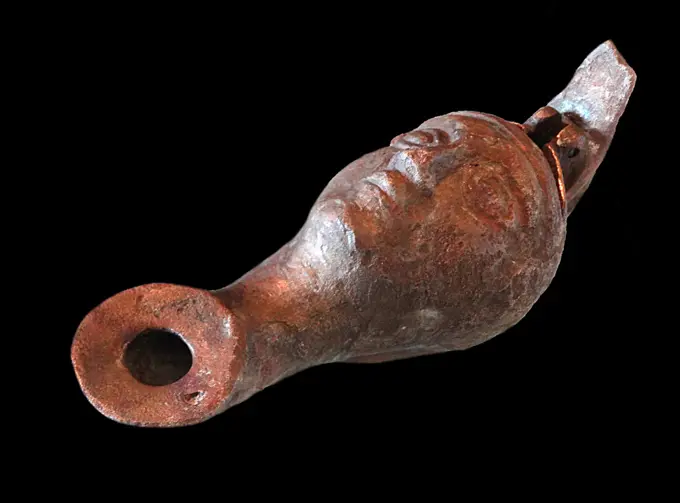
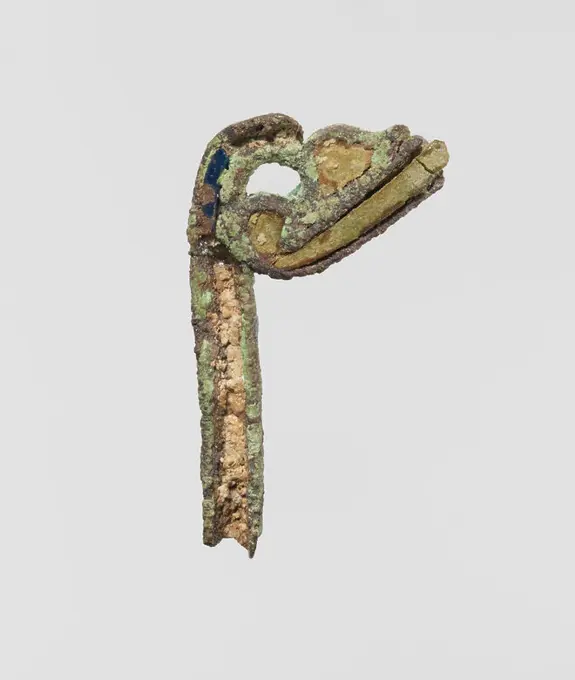
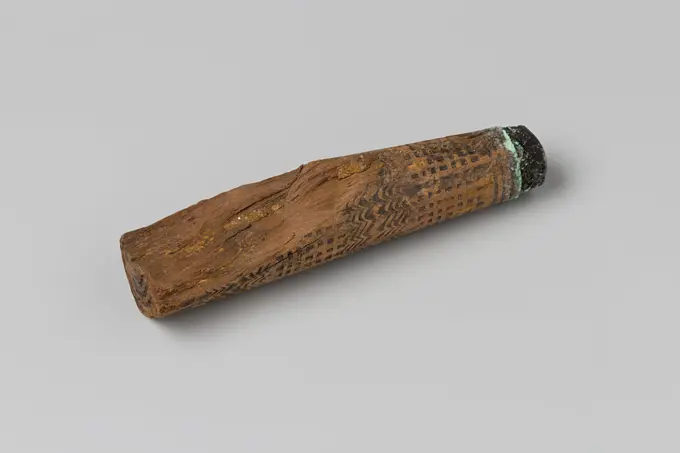
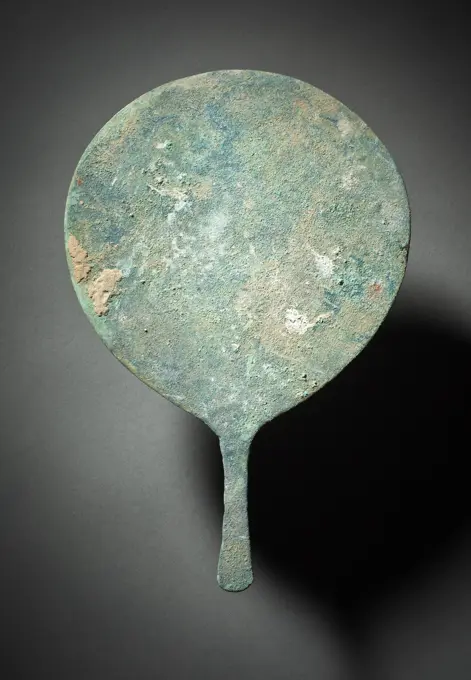
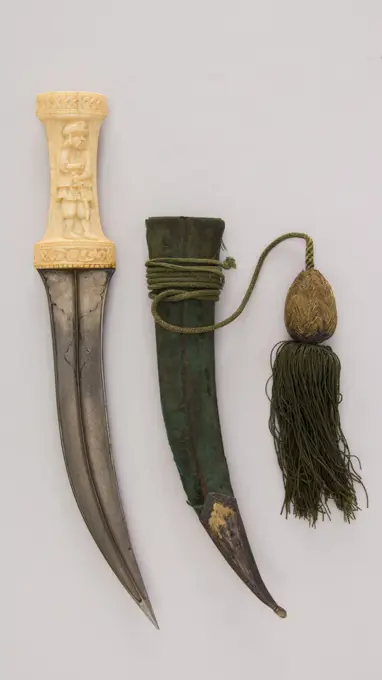
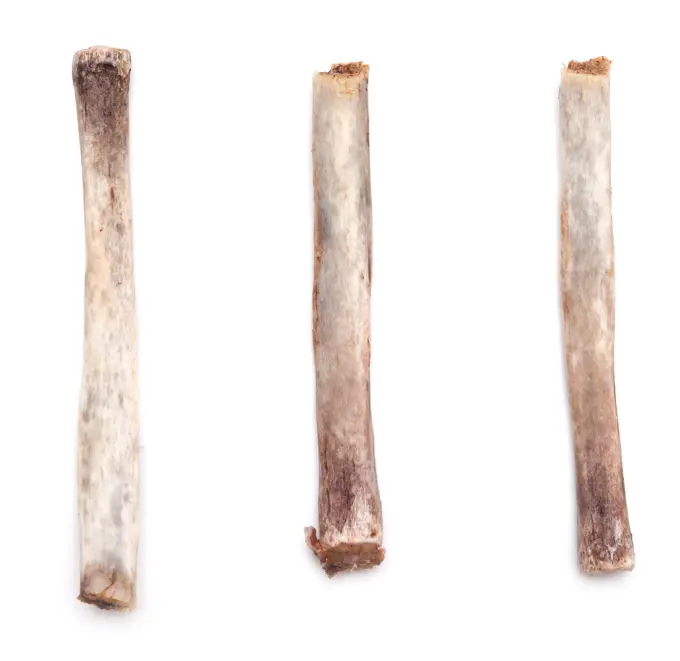
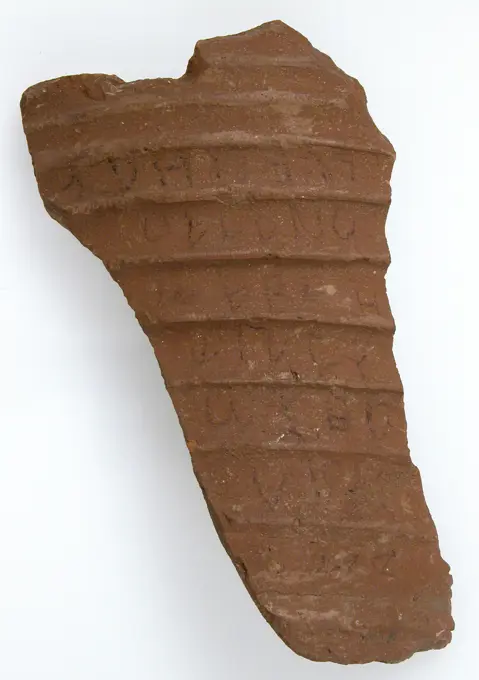
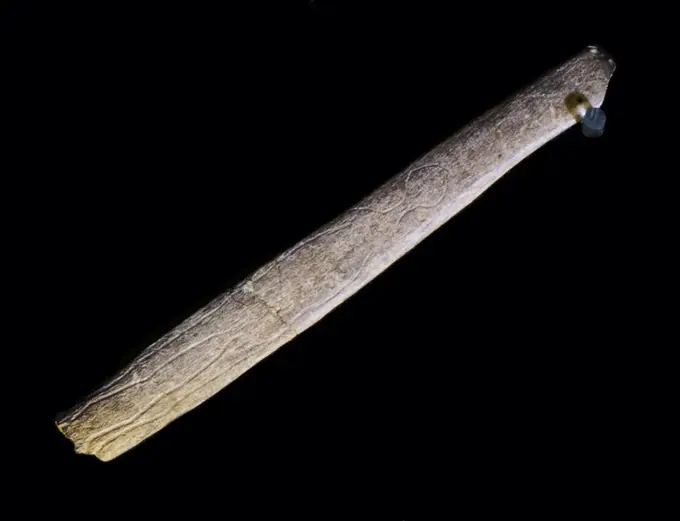
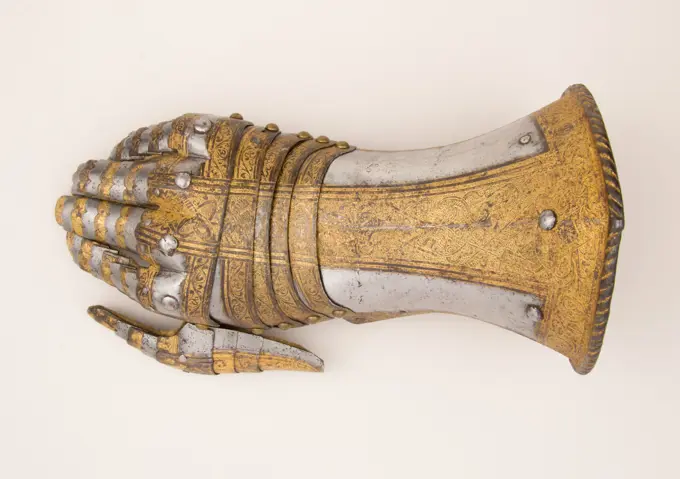
Gauntlet for the Right Hand ca. 1550-60 Italian, Milan This gauntlet is finely decorated with trophies or panoplies of arms, consisting of armor parts, weapons, musical instruments, and ribbons arranged in bands and set on a dotted ground. These motifs exist in many variations and are found regularly on Italian decorative art objects throughout much of the sixteenth century.. Gauntlet for the Right Hand 23255Ritual ladle (Shao) late 11th century B.C. China This elaborate set of wine vessels provides an idea of the splendor of Shang and early Zhou ritual ceremonies. The set is said to have come from a tomb uncovered in 1901; shortly thereafter, it entered the collection of Duan Fang, a senior Manchu official and one of the preeminent antiquarians of the late Qing period. The pieces vary in style and execution. Although eleven of the vessels are inscribed, only one grouping shares identical inscriptions: the two wine containers, or you (nos. 2, 3) and the tall wine container, or zun (no. 4). A second grouping has largely comparable inscriptions: the spouted water vessel, or he (no. 5) and one cup, or zhi (no. 11).A partial reconstruction of the sets arrangement in the tomb may be established from corrosion outlines on the three principal vessels—the two wine containers, or you, and the central tall wine container, or zun—that were etched onto the surface of the altar table. The diagram showHorseshoe, horseshoe herd ground find iron metal, Horseshoe with wide flat (thin) sole archeology Rotterdam railroad tunnel horse loadbearing farrier Soil discovery: rail tunnel Rotterdam.Knife Handle. Culture: Punuk. Dimensions: H. 1 1/2 x W. 5 1/2 in. (3.8 x 14 cm). Date: 11th-12th century. Museum: Metropolitan Museum of Art, New York, USA.Spears. In the center, a spearhead with tubular socket and blade with central rib. Iron. From the Visigothic necropolis of Tañine (province of Soria, Castile and Leon, Spain). Tomb 1. 5th-6th century. National Archaeological Museum. Madrid. Spain.Hairpin Fragment with Hand. Afghanistan, 1st-2nd century. Jewelry and Adornments; scepters. SilverAustria, Hallstatt, Pickaxe and shovel from the salt mineCopper. minerals. North America; USA; Michigan; Lake SuperiorCosmetic Applicator or Pin. Afghanistan, 3rd century. Jewelry and Adornments; pins. IvoryDoor knocker in the shape of a salamander 15th or 16th century Spanish The later Middle Ages was practically a second Iron Age, producing vast quantities of armor, weaponry and all manner of functional objects from nails to elaborate strap work hinges, ornate locks and household tools. A highly specialized craft, the best ironsmiths took pride in bringing decorative refinement to their works often elaborating surfaces that could not be seen and transfiguring the functional into the figural. These door knockers are fine examples of the wit, humor, and skill the best ironsmiths could bring to their products.This door knocker is in the shape of a salamander with a long flat body, a pointed head, a lowered tail curled upwards all supported on four short legs. The surface is chiseled with wavy lines and short parallel curves indicating the animal's rough skin.. Door knocker in the shape of a salamander. Spanish. 15th or 16th century. Wrought iron. Metalwork-IronDagger-Axe (Ge) Made 480 BCE-221 BCE China. Bronze inlaid with silver .Prehistory. Metal Age. Bronze Age. Bronze spear head. From Castelltercol, Catalonia. Episcopal Museum. Vic. Spain.Fragment of double folded sheet metal from the wreck of the East India Hollandia.parts or artifacts; eroded fragments: Materials; Copper.Vase; glassHandle of jug, pouring bottle or vase, jug bottle vase tableware holder soil find glass forest glass, free blown and formed glass application Fragment of jug serving bottle or vase in clear green glass (forest glass): handle with attachment. Top-mounted handle set on wall or neck and folded down and attached Remaining glass mass then archeology City Triangle Rotterdam Laurenskerk Soil discovery restoration Laurenskerk (1952-1968): sacristy 1st layer in discharge to the outside.Volute Handle. UnknownKarte von Nova Scotia auf rostigem Metall - Map of Nova Scotia on rusty metal Karte von Nova Scotia auf rostigem Metall - Map of Nova Scotia on rusty metal Copyright: xZoonar.com/lantapixx 14741012Fragment of a tobacco pipe., Anonymous, c. 1400 - c. 1950 Fragment of a tobacco pipe. On one side ivah, including a crown and 18.  earthenware. pipe clay   Slot Loevestein Fragment of a tobacco pipe. On one side ivah, including a crown and 18.  earthenware. pipe clay   Slot LoevesteinLegs block with row of holes, residue of button fabrication, waste soil found leg, drilled Fragment leg in which round holes have been drilled. Remnant of making knots the bored nuclei were used as the core of knot archeology Rotterdam rail tunnel closing knotting knotting knotter craft guild Soil discovery of tracé rail tunnel Rotterdam.Rowlock. Kaupang, Larvik k., Vestfold. 9th -10th century. Norway. Historical Museum. Oslo. Norway.Arrowheads, needles, hooks and harpoons. Culture: Japan. Dimensions: W. 1/4 in. (.6 cm); L. 1 3/8 in. (3.5 cm). Museum: Metropolitan Museum of Art, New York, USA.Lock with key, 1500 - 2000 A lock without a dish. (A lip is missing). With key.  metal A lock without a dish. (A lip is missing). With key.  metalAmphora (Storage Jar). Eastern Mediterranean. Date: 400 BC-201 BC. Dimensions: 10.8 × 3.3 × 3.3 cm (4 1/4 × 1 5/16 × 1 5/16 in.). Glass, core-formed technique. Origin: Egypt. Museum: The Chicago Art Institute, Chicago, USA. Author: ancient Mediterranean.Celt before 16th century Maya () Greenstone axe heads, commonly known as “celts,” were some of the most important works of art across ancient Mesoamerica and Central America. Created from jadeite mined from the Motagua River Valley of southern Guatemala, or using local green stones from highland Mexico, celts were first created by the Olmec peoples of the Gulf Coast after 1000 B.C. The Olmec conceived of green celts as sprouts of maize and thus “planted” celts in dedicatory offerings, activating ceremonial spaces and perpetuating agricultural fertility. For the later Maya peoples, celts also served as dedicatory materials, but more so as adornments for the royal bodies of kings and queens. Often the celts would be thinned into celt-shaped plaques, strung together in pairs and triads in order to create belt assemblages that would have clinked with the sound of jades striking one another. Tombs from the Classic Period (ca. AD 250-900) contain celts of jadeite and various greenstones froWakizashi sword in the vagina unknownKey, c. 1400 - c. 1950 Key.  iron (metal) Key.  iron (metal)Knife lifting out of the wreck of the East India hollandia.knife, handle, cylindrical: tapering; ID. NG 1979-403H, Ferrules, ID. NG 1980-27H426.Grot strzały. nieznany warsztat bliskowschodni, workshopFragment of shoulder, neck and lip of (medicine) Bottle, medicine bottle bottle holder soil find glass, cm - 1.6 cm) with flattened and wide lip (2.2 cm) archeology Rotterdam railway tunnel medicine drug Soil discovery: railway tunnel Rotterdam.Winged Pendant 10th-16th century Tairona Stone objects of this general shape are known to have come from an area stretching from southern Mexico to Venezuela and the Antilles in South America and the Caribbean. Their greatest concentration, however, is in the Tairona region of northwestern Colombia. Large numbers of finely crafted stone objects were excavated at Tairona sites. Usually found in caches buried in vessels under house floors or those of ceremonial structures, they are often carved of attractive pieces of stone. The stone objects include beads; axes in hafted shape carved from a single piece of stone; scepters or staffs; and thin, bar-shaped pendants with two holes or a suspension tube at the center such as the objects illustrated here, which seem to be sets of ritual artifacts.The lateral extensions of these objects may represent stylized spread wings of bats. Among the present-day Kogi and Ica, direct descendants of the Tairona, similar objects are used by religious speciaMessen Lifts from the wreck of the East Indians Hollandia, Anonymous, 1700 - in Or Before 1743  Knife, handle, cylindrical: tapering; id. NG 1979-403H, ferrule, id. NG 1980-27H426. Netherlands wood (plant material). copper (metal)   SecondHammered Silver Arc Ornament 12th-15th century Chimú. Hammered Silver Arc Ornament. Chimú. 12th-15th century. Silver, gilt. Peru. Metal-OrnamentsBasin or bucket with handle and attachments ca. 9th century B.C. Iran. Basin or bucket with handle and attachments 326219Fragment Sampler from the wreck of the East Indieschief Hollandia. Divider; Fragment or semicircular ring, ID. NG 1980-27H1669, eroded.Messenheft from the wreck of the East Indians Hollandia, 1700 - in or before 1743  Knife, handle, cylindrical: tapering; id. NG 1979-403H, ferrules, id. NG 1980-27H426. Netherlands wood (plant material). copper (metal)   SecondScale and deposits on the heating element of a washing machine on a white backgroundDagger Axe (Ge) with Pig and Whorls. China, probably Henan Province, Late Shang dynasty, Anyang phase, about 1300-1050 B.C.. Arms and Armor; axes. Cast bronzeHalberd probably third quarter 15th century Swiss. Halberd. Swiss. probably third quarter 15th century. Steel, wood (oak), iron. Shafted WeaponsTrimming, Medium: silk, linen, metallic thread Technique: compound weave, Gold and silk in a gun-metal color. The warp consists of thick threads of linen over which has been woven the gold weft as the background and a zigzag pattern. The space in between have been filled with floats of gun-metal colored silk warps., Russia, 18th century, trimmings, TrimmingMiniature Sword, 500-450 BC. Italy, Etruscan. Bronze; overall: 8.7 cm (3 7/16 in.).Antique dagger from Denmark, CSMVS Museum, Mumbai, Maharashtra, India, Asia India Copyright: xDuttagupta/DinodiaxPhotox -Knife lift from the wreck of the East India Hollandia. Knife, handle pistol grip-shaped; Oval in section, tapering.Bronze Lilla, Anonymous, c. 1896 - c. 1898 lilla Bronze Lilla, decorated with triangles of leaf ornament to mouths and zunden, without ears. Coming from the heads of Lahakia, Baik and Biroe (south coast of New Guinea) forming part of the fine imposed on them because of the killing of some people on board of the English cutter Lizzie in 1896. New Guinea whole: bronze (metal) casting  New GuineaPrehistory. Bronze Age. bronze weapons, found in Finland. National Museum of Finland. Helsinki.Fragment of Peruvian fabric unknownSugar Tongs Marked by A. T. American 1770-1800 View more. Sugar Tongs. American. 1770-1800. SilverESPUELAS - ACICATE. Location: PALACIO REAL-REAL ARMERIA DE MADRID. MADRID. SPANIEN.Vase Etruscan Garland of leaves.. Vase. Etruscan. Terracotta. VasesOil lamp used during the Great Revolt period on Masada. Masada is an ancient fortification in the Southern District of Israel situated on top of an isolated rock plateau on the eastern edge of the Judean Desert, overlooking the Dead Sea Dated 73 BCStożek mozaikowy. unknown, authorKey. Key for a porte brisee whose handle is connected to a hinge. The handle consists of C volutes and palmets. The shaft passes past the 3-shaped beard. Hold from bronze, shaft and beard of iron.Papyrus plant bent to the right that is an element from a pectoral. Dimensions: H. 2.3 cm (7/8 in.); W. 1.4 cm (9/16 in.); Th. 0.3 cm (1/8 in.). Date: ca. 1887-1750 BC.This stalk of papyrus with an umbel bending to the right was part of a pectoral. Museum: Metropolitan Museum of Art, New York, USA.Knife lift from the wreck of the East Indiesman Hollandia.knife, Handle, Cylindrical: tapering; ID. NG 1979-403H, Ferrule, ID. NG 1980-27H426.Fragments Pipe states from the wreck of the East India Hollandia.Pipe, voice; Fragments.Fragment, half wooden lid of oak, lid closure part holder soil find oak wood timber 13.0 d 1.3 cut sawn planed cut Fragment of oak lid Before the restoration half hole was clearly visible in the middle Heavy and well preserved wood archeology Capelle aan den IJssel House in Capelle castle packing transport storage close Soil discovery: castle Capelle Capelle aan den IJssel.Iron rod beam subject money, Fang ethnic group, northwestern Gabon; XIX W. Fang ethnic groupShoe buckle, buckle with oval frame in which wide barrels, buckle fastener component soil found brass copper metal, cast Shoe buckle clasp with oval bezel in which wide dowels as decoration. Curved model archeology Rotterdam rail tunnel attaching dressing shoes adorning fastening shoe Soil discovery: trajectory Rotterdam rail tunnel.Fragment. Culture: European or Middle Eastern. Dimensions: L. 1 3/4 in. (4.5 cm). Date: ca. 1150-ca. 1250. Museum: Metropolitan Museum of Art, New York, USA.Wood piece for making lace ca. 1840 British. Wood piece for making lace. British. ca. 1840. Wood. Textiles-Methods and MaterialsEventail-Cotillon in Cardboard case in the shape of a key ". Red Percale, Carton. Paris, Carnavalet museum. 100141-12 Fashion accessory, EventailSole of pointed leather shoe with stitching along edges, sole shoe footwear clothing part soil find leather, archeologyBelt accessory in the form of buckled buckle, without stinger, including suspension loop, buckle fastener component ground find copper metal, Rectangular bracket with middle post archeology Rotterdam rail tunnel confirm Soil discovery: trajectory rail tunnel Rotterdam.Sundial, Taipei, Taiwan, Asia,Bronze nail with rounded head . Lenght 3, 1 cm Thickness 0, 8 cm ( 1 st - 3 rd CE ) - Roman period, from the " House of Hyppolytus "- Archaeological site of Complutum in Alcalá de Henares ( Madrid ). SPAIN.Armored Belt Fragment. UnknownMessenheft from the wreck of the East Indians Hollandia, Anonymous, 1700 - in Or Before 1743  Knife, handle, cylindrical: tapering; id. NG 1979-403H, ferrules id. NG 1980-27H426. Netherlands wood (plant material)   SecondBranchAmulet of the Head of the God Anubis. Egyptian. Date: 1550 BC-664 BC. Dimensions: 1.9 × 1.1 × 0.5 cm (3/4 × 7/16 × 3/16 in.). Jasper. Origin: Egypt. Museum: The Chicago Art Institute, Chicago, USA. Author: Ancient Egyptian.Collection Dutch Heidematschappij. Axe. undated. GermanyLegs pointed with two barbs, pointed harpoon soil found leg, sawn cut cut Late stone age archeology Maglemose culture Rotterdam Maasvlakte prehistoric stone age late stone age fish fishing catch feeding hunt Soil discovery Maasvlakte Maglemose culture.Model adze blade. Dimensions: H. 11 × W. 3.3 cm (4 5/16 × 1 5/16 in.). Dynasty: Dynasty 2. Reign: reign of Khasekhemui. Date: ca. 2650 B.C.. Museum: Metropolitan Museum of Art, New York, USA.Split piece of driftwood resting on cool grey sandSpear Point, 1045-256 BC. China, Zhou dynasty (c. 1046-256 BC). Bronze; overall: 3.1 cm (1 1/4 in.).Wooden Kono Helmet mask, Bamana tribe; Mali; West Africa 20th centuryOrnament (Ruyi) 18th century China. Ornament (Ruyi). China. 18th century. Jade (nephrite). Qing dynasty (1644-1911). JadeKey 16th century Spanish. Key 186858wakley's artery forceps, medical equipment, surgical instrument, history of medicinehidden idol, Eras del Alcazar, Iberian culture, Archeological Museum. Úbeda, Jaén province, Andalusia, Spain.Reichenbach, Germany, A combine harvester stands out on a grain field in Reichenbach, 30.07.2021. Copyright, EuropeWith rubber filled shape of a bolt from concretion from the wreck of the East Indied's' t flying heart. The concretion has probably ever formed around an iron bolt. The originating cavity is filled with rubber. The cast in elongated and has a round diameter.Paint Brush ca. 1390-1352 B.C. New Kingdom. Paint Brush. ca. 1390-1352 B.C.. Palm Fiber, red paint. New Kingdom. From Egypt, Upper Egypt, Thebes, Malqata, Palace of Amenhotep III, Magazines, MMA excavations, 1910-11. Dynasty 18Map of Central America on rusty metalbig tailor shears isolated on white backgroundHammered Silver Miniature Spatula 11th-late 15th century Chimú or Chancay. Hammered Silver Miniature Spatula 309181Two half wooden oak lids, lid closure part ton barrel holder soil find oak wood, cut sawn planed inserted Fragments of oak wooden lids Remains of dowels on the straight sides old pin and hole joints On one side diagonal finished lines Possibly coming from beertons in view of the degree of preservation of archeology Capelle aan den IJssel House in Capelle castle packing transporting storage closing cooperage cooper storing disposal Soil discovery: castle Capelle Capelle aan den IJssel.Turkey legsIberian gallows from the 6th century BC, Giribaile, Vilches , Iberian Museum of Jaén, Andalusia, Spain.Mirror. Northeastern Afghanistan, 2200-1800 B.C.. Tools and Equipment; mirrors. BronzeDagger (Jambiya) with Sheath and Cord 19th century Persian, Qajar. Dagger (Jambiya) with Sheath and Cord 31761Bladderwhistle 19th century Native American (Kwakiutl). Bladderwhistle 502001Iron Concretion (secondary rubber filled) are created around an iron object that itself is completely digested from the wreck of the East Indies' t Vliegend Hart, 1700 - 1735 in 1735 concretionary stone The concretion once formed around a kind of round rod/rod or perhaps tube. The object could have been made of metal, wood, but also fiber. A rubber cast has been made.  rubber (material). concretionary stoneRib bones Rib bones isolated on white background Copyright: xZoonar.com/RuslanxNassyrovx 11963789Toggle -Inlay of a Leg. UnknownOstrakon 7th century Coptic. Ostrakon. Coptic. 7th century. Pottery fragment with ink inscription. Made in Byzantine Egypt. CeramicsCostume Ornament 11th-12th century Peru; central coast (). Costume Ornament 308687PIEZAS DE LA EXPOSICION "ARTE SIN ARTISTAS": "LA MUCHACHA DE BRUNIQUEL", GRABADO DE SILUETA HUMANA SOBRE HUESO. DEL ABRIGO DE MONTASTRUC. BRUNIQUEL, TARN-ET-GARON-NE (FRANCIA). GRAVETIENSE.Map of Portugal on rusty metalShoe. England. Date: 1501-1600. Dimensions: 22 × 9.5 × 5 cm (8 5/8 × 3 3/4 × 2 in.). Leather with one strap and buckle. Origin: England. Museum: The Chicago Art Institute, Chicago, USA.Pijpsleutel.Pipe wrench, more or less engraved.