My Boards
View Pictures
  • My Boards
← Artworks

Ancient Egyptian Artefacts

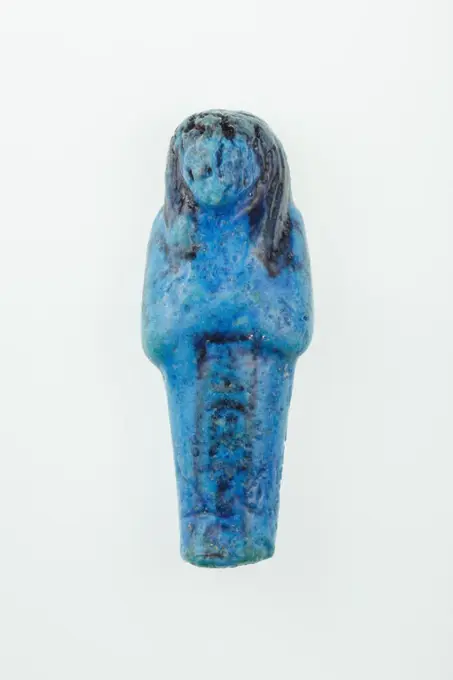
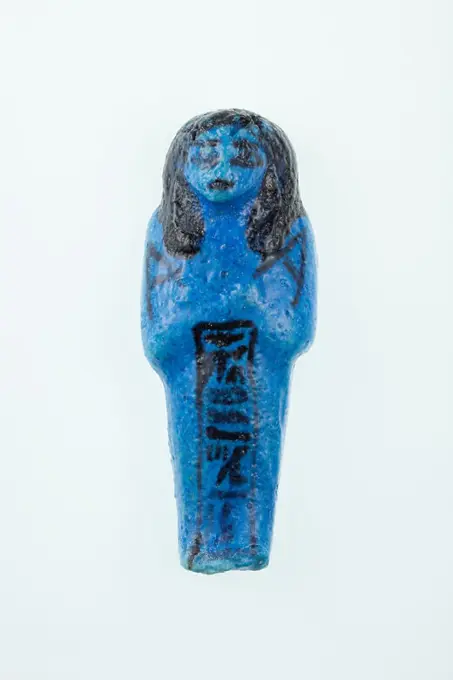
Small, intricately designed shabti figures from ancient Egypt, representing laborers in the afterlife, capturing the artisanal skill of the era.
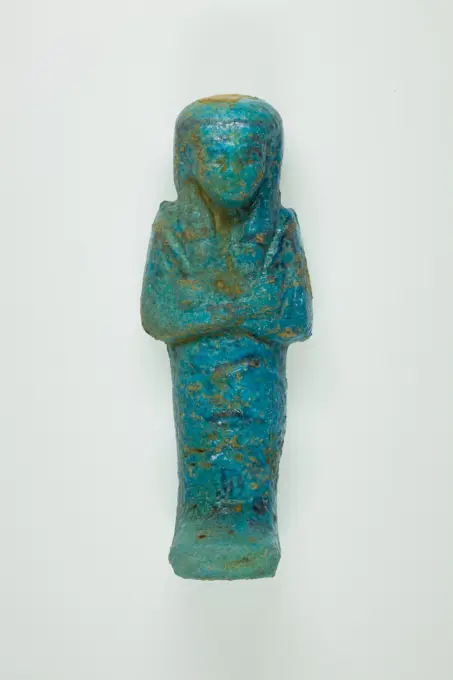
Worker Shabti of Henettawy (C), Daughter of Isetemkheb ca. 990-970 B.C. Third Intermediate Period. Worker Shabti of Henettawy (C), Daughter of Isetemkheb 625513
173 assets in this story
6145-29757763
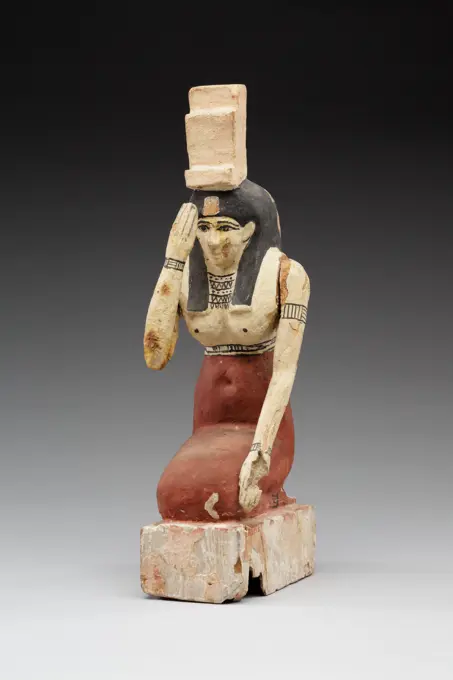
Mourning Isis 332-30 BC Ptolemaic Period The goddess Isis, identifiable by her hieroglyph on her head, kneels and raises a hand before her face in a gesture of mourning. The figure forms a pair with the figure of Isis 12.182.23a.Figures of the two mourning goddess accompany the body of Osiris in representations. In Late Period and Ptolemaic burials kneeling figures of the goddesses may be among the wooden figures in a burial. Presumably they were placed at either end of the sarcophagus of the deceased as they appear at either end of the body of Osiris.. Mourning Isis. 332-30 BC. Wood, gesso, paint. Ptolemaic Period. From Egypt
6145-29706407
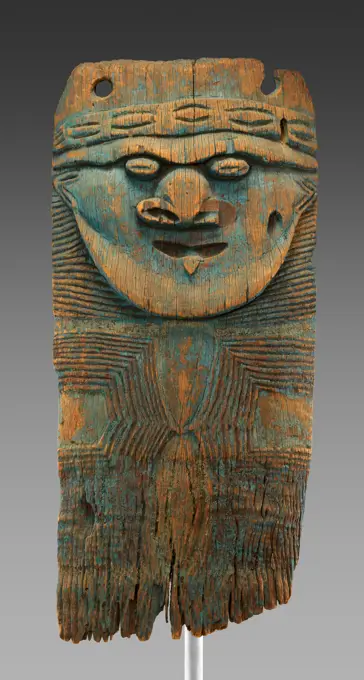
Door board (jovo) 19th century Kanak people Architectural carvings such as this pair of door boards (jovo or tale) are one of the primary forms of expression of the Kanak people of New Caledonia. Each of these rectangular, relief-carved door posts from New Caledonia is cut from a single panel of wood. The upper portion depicts an anthropomorphic face, likely the representation of a particular ancestor or the portrait of a recently departed chief. Each of the faces conform to a stylistic template common to the region and feature a prominent broad-based nose with large hollowed nostrils, large raised almond-shaped eyes which are set close under the ridge of the brow above, prominent raised cheeks and a mouth with parted lips as if breathing out or speaking. This pair also have the distinctive feature of an extended tongue that may be a reference to speech and oratory, an important skill demanded of leaders. A crescent-shaped flat panel extends below the mouth and spans out at an angle to
6145-29165270
Fragment of a terracotta plaque 7th century B.C. Greek, Cretan Nude, frontal female figure wearing a high polosThe figure may be a deity of Oriental origin.. Fragment of a terracotta plaque 254751 Greek, Cretan, Fragment of a terracotta plaque, 7th century B.C., Terracotta, 5 in x 2 in. (12.7 cm x 5 cm). The Metropolitan Museum of Art, New York. Gift of the Archaeological Institute of America, 1953 (53.5.26)
6145-29738571
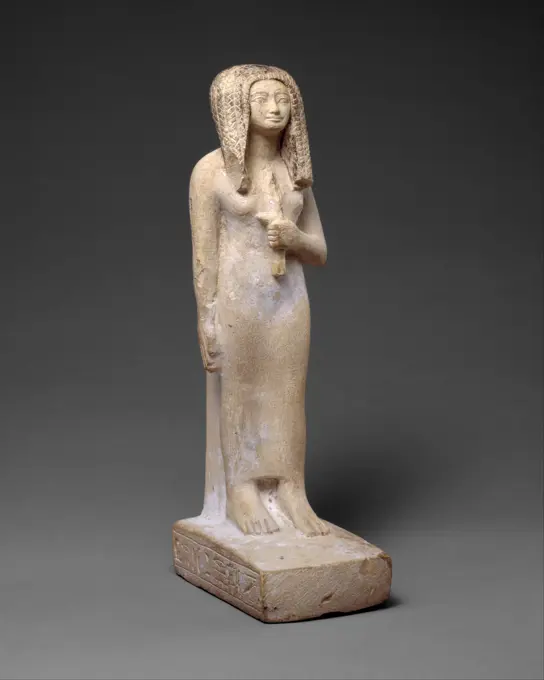
Statuette of Taweret ca. 1550-1504 B.C. New Kingdom Taweret stands with her left foot slightly advanced, suggesting movement. This pose is usually reserved for images of men in earlier periods. She also has one arm bent and holds a lotus bud in her raised hand, a gesture not previously seen in representations of women. The introduction of new poses and gestures in the statues of nonroyal women in the early New Kingdom may reflect the increasingly prominent roles played by women at all levels of Egyptian society at the beginning of this period.Taweret's hairstyle was fashionable from Dynasty 17 into early Dynasty 18. The front of the hairdo is a mass of braids pulled forward over the shoulders. In the back, three thick plaits are drawn together, exposing parts of the neck and shoulders.This statuette was dedicated to Taweret by her mother, suggesting that she was unmarried and lived at home. The lotus bud may refer to Taweret's youth. This unopened flower is rarely seen in statues. Here
6145-29754631
Shabti of Khonsu ca. 1279-1213 B.C. New Kingdom, Ramesside This molded pottery shabti is inscribed for Khonsu, a son of Sennedjem in whose tomb it was found. Other objects in the collection that were discovered in the same tomb can be viewed here.. Shabti of Khonsu. ca. 1279-1213 B.C.. Pottery, paint. New Kingdom, Ramesside. From Egypt, Upper Egypt, Thebes, Deir el-Medina, Tomb of Sennedjem (TT 1), Egyptian Antiquities Service/Maspero excavations, 1885-86. Dynasty 19
1746-21114850
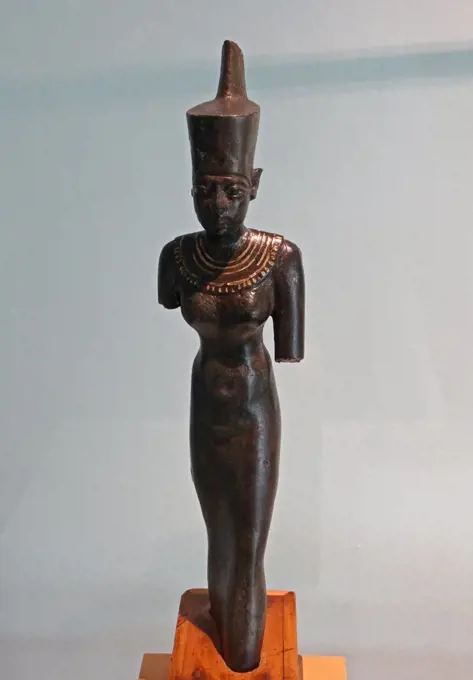
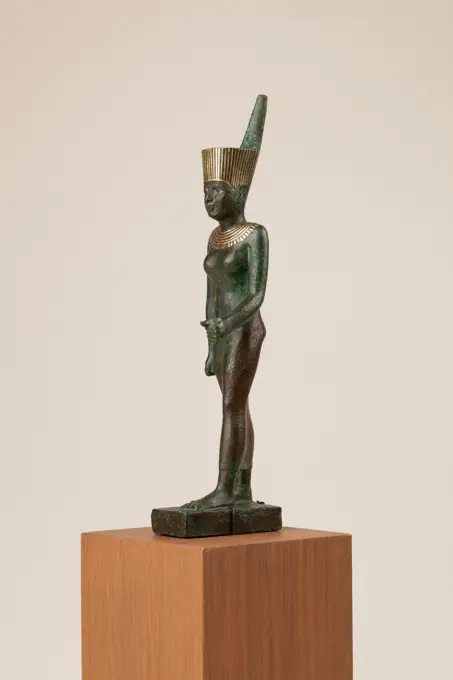
Figure of the goddess Neith. Bronze and gold. 26th Dynasty (664-525 BC) This goddess, from the city of Sais, wears her most distinctive attribute, the Red Crown of Lower Egypt . The Greeks identified her with Athena.
6145-48529758
Uszebti. unknown, author
6145-29729019
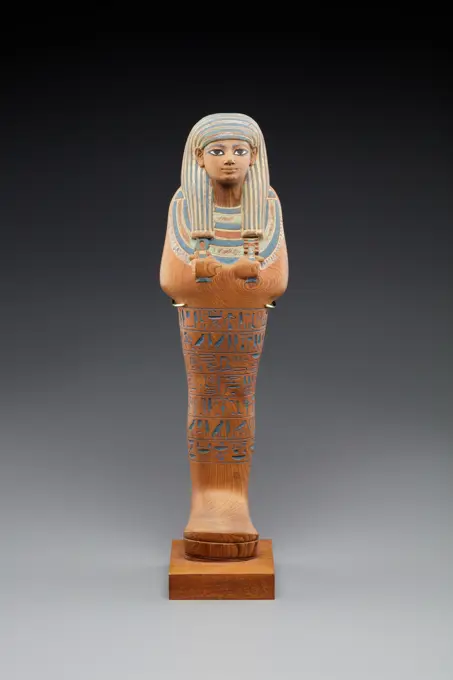
Shabti of Yuya ca. 1390-1352 B.C. New Kingdom As the parents of Queen Tiye, wife of Amenhotep III, Yuya and Tjuyu were granted burial in the Valley of the Kings. They were provided with funerary equipment from the finest royal workshops, as demonstrated by this superbly carved shabti on which even the knees are subtly indicated. The text on these mummiform figurines states that the shabti will substitute for the spirit in any obligatory tasks it is called upon to perform in the afterlife.Two other shabtis from this tomb (30.8.56 and 30.8.58) are also in the Museum's collection.. Shabti of Yuya. ca. 1390-1352 B.C.. Cedar, paint, Egyptian blue. New Kingdom. From Egypt, Upper Egypt, Thebes, Valley of the Kings, Tomb of Yuya and Tjuyu (KV 46), Davis/Quibell & Weigall excavations, 1905. Dynasty 18
4409-17546271
Bodhisattva Avalokiteshvara. Cambodia. Date: 1101-1300. Dimensions: 116.0 × 39.3 × 22.5 cm (45 3/4 × 15 1/2 × 8 7/8 in.). Sandstone. Origin: Cambodia. Museum: The Chicago Art Institute, Chicago, USA.
6145-43634822
Figurka boga Thota o głowie ibisa. unknown, author
6145-59138871
Emilia-Romagna Ferrara Ferrara Museo Civico di Schifanoia38. Hutzel, Max 1960-1990 General Notes: INCOMPLETE RECORD--NEGATIVES PROCESSED, PRINTS FILED German-born photographer and scholar Max Hutzel (1911-1988) photographed in Italy from the early 1960s until his death. The result of this project, referred to by Hutzel as Foto Arte Minore, is thorough documentation of art historical development in Italy up to the 18th century, including objects of the Etruscans and the Romans, as well as early Medieval, Romanesque, Gothic, Renaissance and Baroque monuments. Images are organized by geographic region in Italy, then by province, city, site complex and monument.
6145-30176965
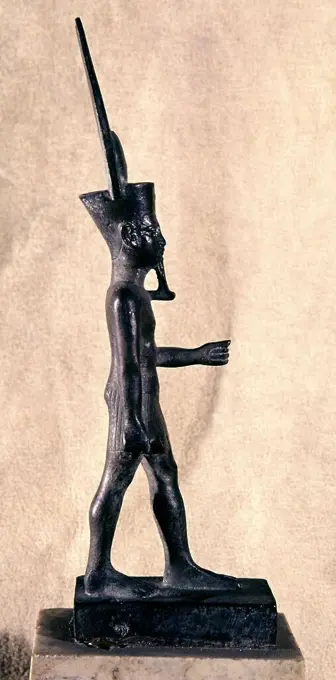
Statuette of the God Min 664 BCE-332 BCE Egypt. Copper alloy . Ancient Egyptian
6145-29754677
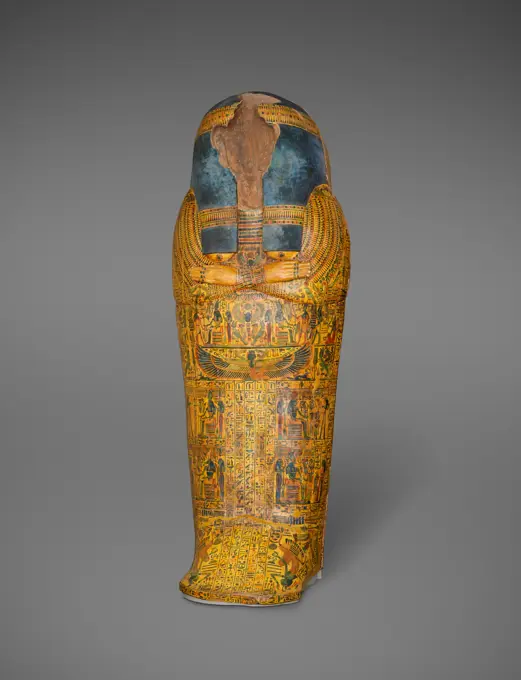
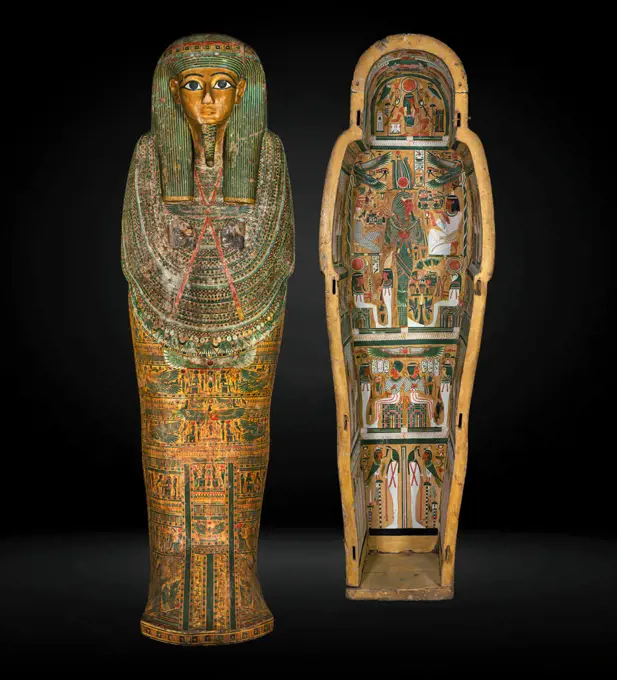
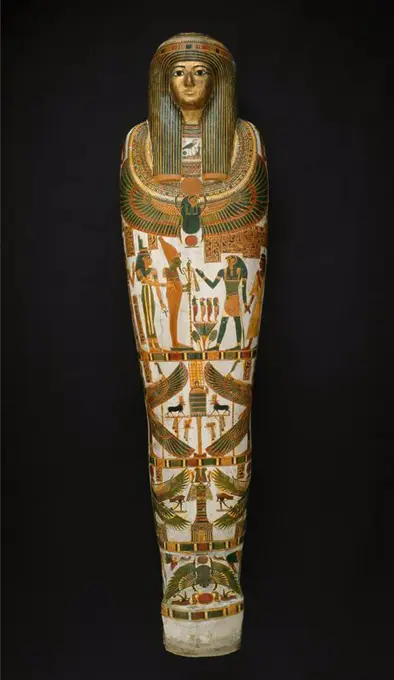
Outer Coffin of the Singer of Amun Nany ca. 1050 B.C. Third Intermediate Period Nany was buried in a set of nesting coffins which included an outer coffin (30.3.23a, b), an inner coffin (30.3.24a, b), and the mummy cover (30.3.25). The faces may originally have been gilded, which would explain why each was removed in ancient times.. Outer Coffin of the Singer of Amun Nany. ca. 1050 B.C.. Sycomore wood, mud, glue, stucco, paint, varnish, plaster. Third Intermediate Period. From Egypt, Upper Egypt, Thebes, Deir el-Bahri, Tomb of Meritamun (TT 358, MMA 65), second corridor, MMA excavations, 1928-29. Dynasty 21
6145-30177468
Figure of a Seated Chieftain 100 BCE-250 CE Nayarit. Large terracotta figures were made to accompany the remains of high-ranking people in ancient West Mexican tombs. Figures are often found in male-and-female pairs, likely commemorating the marriage of the deceased. Nayarit artists also depicted other major rites of passage, such as the presentation of a baby, the initiation of warriors and chiefs, young women reaching the age of courtship and marriage, and funerary rites. Such tomb figures testified to the earthly status of the deceased, qualifying the individual as a venerable ancestor-spirit expected to intercede with cosmic forces on behalf of the living community.. Ceramic and pigment . Nayarit
6145-59135675
Campania Salerno Nocera Inferiore Museo dell'Agro Nocerino. Hutzel, Max German-born photographer and scholar Max Hutzel (1911-1988) photographed in Italy from the early 1960s until his death. The result of this project, referred to by Hutzel as Foto Arte Minore, is thorough documentation of art historical development in Italy up to the 18th century, including objects of the Etruscans and the Romans, as well as early Medieval, Romanesque, Gothic, Renaissance and Baroque monuments. Images are organized by geographic region in Italy, then by province, city, site complex and monument.
6145-29072563
Shawabty of Ditamenpaankh, 715-656 BC. Egypt, Late Period, Dynasty 25. Terracotta; overall: 5.6 x 1.5 x 1 cm (2 3/16 x 9/16 x 3/8 in.).
6145-43649078
Uszebti. unknown, author
6145-29154787
Standing Female Figure 1st century B.C.-A.D. 3rd century Tala-Tonalá. Standing Female Figure 318961
6145-59068608
God of chons;  664-332 BC; Half-ny (0-00-00-0-00-00);
6145-30374518
Female Guardian Reliquary Figure (Byeri) holding a Staff () with a Human Head
6145-29082657
Male Figure, 1900s. Guinea Coast, Nigeria, Hausa, 20th century. Wood and paint;
888-8071B
Mossi and Bobo statue from Mossi Culture,  Upper Volta,  USA,  Florida,  Jacksonville,  The Museum of Contemporary Art,  African Art Collection
6145-29137910
Fitting. Western Inner Mongolia, 4th-3rd century B.C.. Sculpture. Bronze, cast
6145-58993165
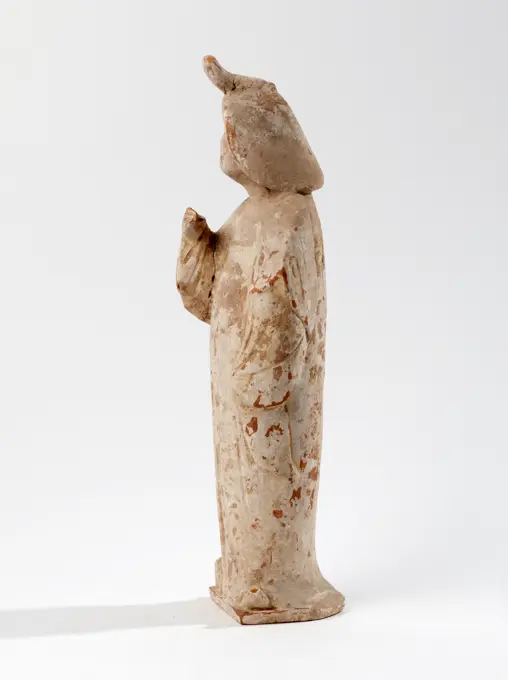
Lady of Court ". Terracotta. China, Tang dynasty. Paris, Cernuschi museum. 72691-60 Chinese art, court lady, standing, tang dynasty, woman, statuette, terracotta, profile view
4409-17266490
FIGURA FUNERARIA-OSIRIS. Location: MUSEO ARQUEOLOGICO NACIONAL-COLECCION. MADRID. SPAIN. OSIRIS DIOS EGIPCIO.
4409-17426933
Worker Shabti of Nany. Dimensions: H. 8.8 × W. 3.3 × D. 2 cm (3 7/16 × 1 5/16 × 13/16 in.). Dynasty: Dynasty 21. Reign: reign of Psusennes I. Date: ca. 1050 B.C..See 30.3.28.1a, b. Museum: Metropolitan Museum of Art, New York, USA.
4409-20894013
Mars Balearicus, siglo IV-III antes de Jesucristo. Son Amer, Son Carrió.Museu regional d'Artà, sala de arqueología.Artà.Mallorca.Islas Baleares. España.
6145-30178359
Statuette of Herakles 399 BCE-200 BCE Etruria. Bronze . Ancient Etruscan
1788-22401
Young woman, bronze
4409-17435631
Worker Shabti of Nany. Dimensions: H. 8.8 × W. 3.3 × D. 2.4 cm (3 7/16 × 1 5/16 × 15/16 in.). Dynasty: Dynasty 21. Reign: reign of Psusennes I. Date: ca. 1050 B.C..See 30.3.28.1a, b. Museum: Metropolitan Museum of Art, New York, USA.
1788-19165
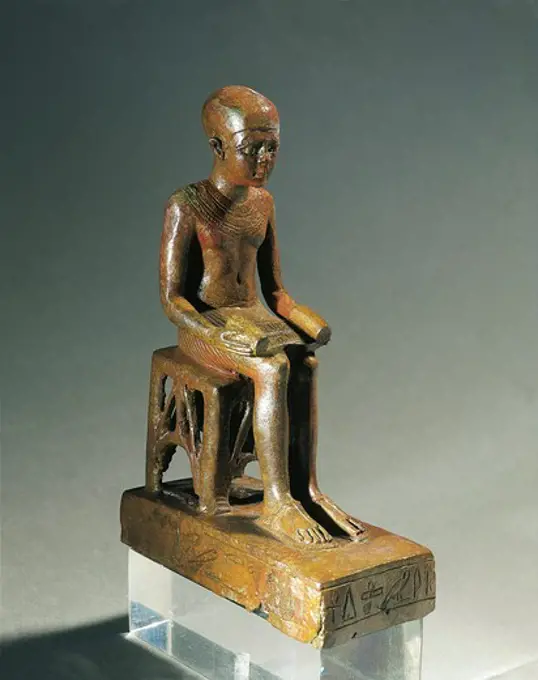
Statue of Imhotep, architect who designed the Step Pyramid at Saqqara and author of earliest medical treatises, considered the son of the god Ptah and worshiped as the god of medicine
6145-59138211
Emilia-Romagna Bologna Bologna Museo Civico Archeologico Sale III, IV, V34. Hutzel, Max 1960-1990 Specific Location: Sale III, IV, V (Egyptian antiquities) Owner: Museo Civico Archeologico Antiquities: III: basalt sculptural fragments; reliefs from the tomb of Horemheb; funerary stele; dynasties XVIII, XIX, XX, Ptolomeic dynasty reliefs, generally in limestone. IV: XVIII, XIX dynasty sculptures in granite, limestone, sarcophagi, statuette in basalt, statuette in wood, statuettes in bronze, statuette faience, mummy mask: V: basalt sculptures of Horus, Sekhmet, limestone stele (Antiq. count: 202); Republican portrait sculpture, Republican cippi with portrait bust, cippus with portraits (single and group), cippi with inscriptions from all periods, architectural fragments, basin with inscription, torso fragment of cuirassed figure of the 1st century AD (Nero) (Antiq. count: 185); disk lamps from the late republic to 6th century, with erotes, animals, erotica, mythological scenes, menorah,
6145-29062783
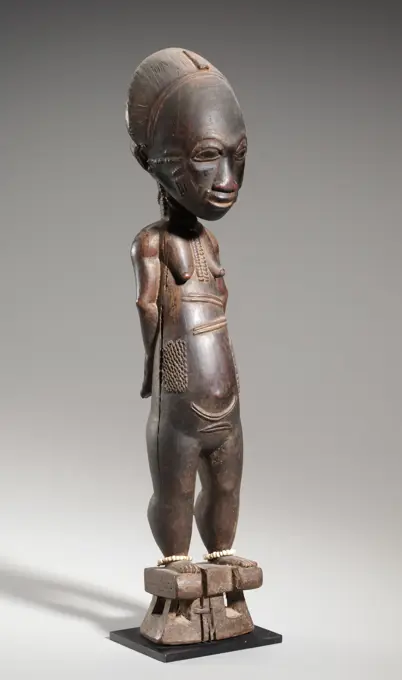
Female Figure from a Pair (asye usu), late 1800s-early 1900s. Africa, West Africa, Côte dIvoire, Baule-style carver. Wood, resin, glass beads, plant fiber, and metal; overall: 47.7 x 10 x 11 cm (18 3/4 x 3 15/16 x 4 5/16 in.). Baule figures carved as pairs usually represent untamed spirits of the wilderness called asye usu. These spirits may intervene in the lives of individuals by taking possession of them. If this possession does not result in madness, it can lead to the human hosts becoming a diviner who can enter into a trance to reveal the causes of ailments and other misfortunes. People who feel their lives are being interrupted by the asye usu commission carvings representing idealized male and female forms whose grace and beauty in both anatomy and adornment will seduce the spirits and compel them to use the sculptures as their temporary homes.
6188-61002019
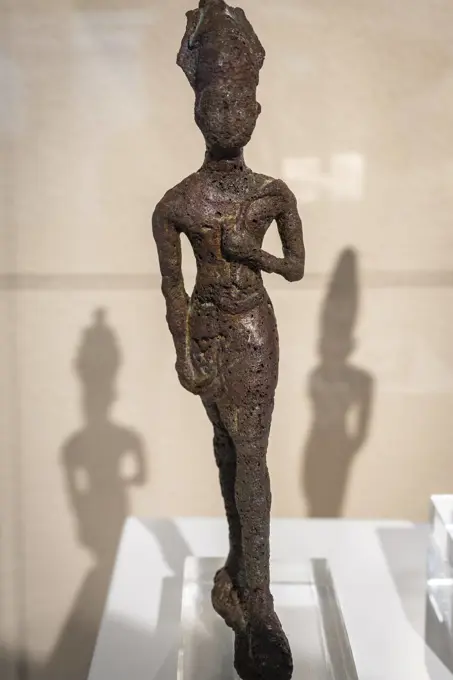
figurine of Anat figurine of Anat, Semitic goddess of fertility, bronze, Huelva Museum, Huelva, Andalusia, Spain Copyright: xZoonar.com/BartomeuxBalaguerxRotgerx 21720798
4409-17305417
BAÑISTA - 1925 - ESCULTURA. Author: MATEO HERNANDEZ (1884-1949). Location: Museo Municipal. Béjar. SALAMANCA. SPAIN.
4409-43650
Ancestral male figure called Malabi. 1890-1910. Papua New Guinea. Middle Sepik River Region. Yamok Village. Sawos people. Wood and paint. Melanesia, Oceania. Dallas Museum of Art. State of Texas. United States.
6145-30176717
Amulet of the Goddess Tawaret (Thoeris) 1550 BCE-1295 BCE Egypt. Faience . Ancient Egyptian
4409-17519512
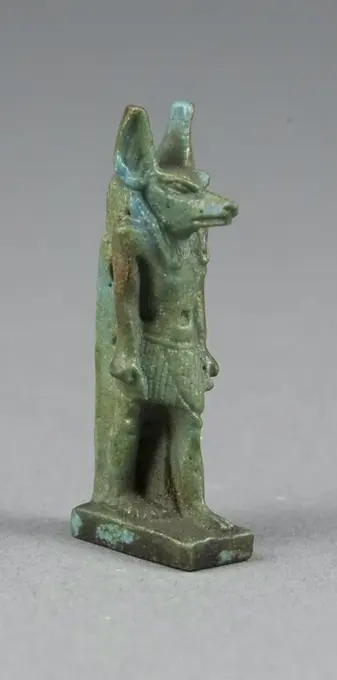
Amulet of the God Anubis. Egyptian. Date: 1070 BC-656 BC. Dimensions: 4.1 × 1.1 × 1.6 cm (1 5/8 × 1/2 × 5/8 in.). Faience. Origin: Egypt. Museum: The Chicago Art Institute, Chicago, USA. Author: Ancient Egyptian.
1746-21108236
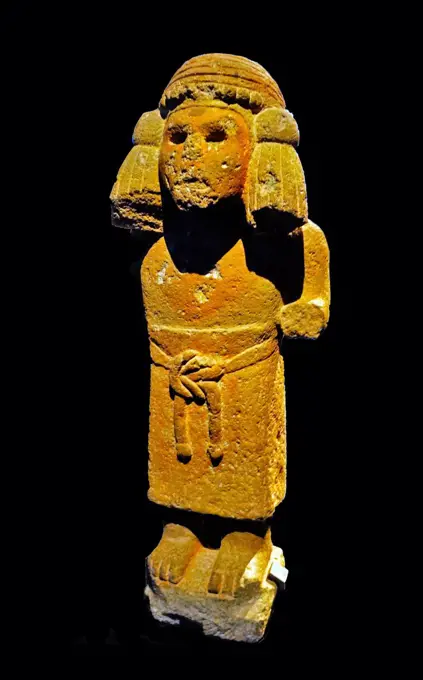
Chalchtiuhtclicue the Aztec goddess of water. Made from volcanic rock which has been painted. 1325-1521 AD, Mexico
7155-70383475
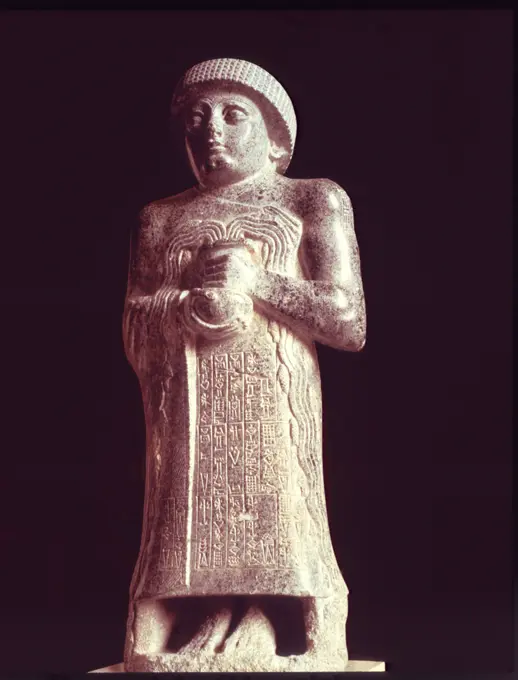
Gudea of Lagash with vase symbolising life and fertility. 3rd mill BC. Sumerian sculpture, Mesopotamia.
6145-29118831
Figure of Taweret. Egypt, New Kingdom (1600 - 1081 BCE). Sculpture. Wood
4409-17398511
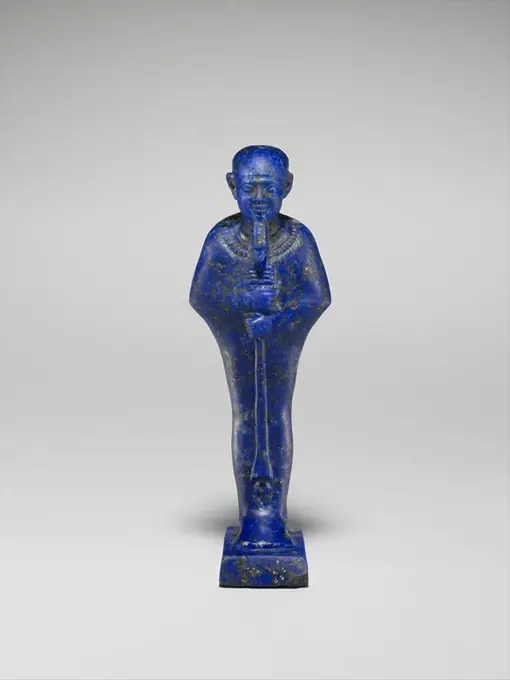
Cult Image of the God Ptah. Dimensions: Height of figure 5.2 cm (2 1/16 in); w. 1.8 cm (11/16 in); d. 1.1 cm (7/16 in.); Height of dais 0.4 cm (3/16 in); w 1.0 cm (3/8 in); d 1.6 cm (5/8 in). Date: ca. 945-600 B.C..This statuette depicts Ptah, the chief god of Egypt's capital city Memphis, who is easy to identify by his tight-fitting cap and enveloping shroud. Other iconographic details, such as the royal beard, the large and detailed broad collar, the scepter of merged "was" and "djed" signs, and a platform representing the hieroglyph for universal order, as well as the brilliant blue stone, communicate four important epithets: Lord of Lower Egypt, Master Craftsman, Lord of Truth, and Lord of the Sky.The superior carving of the god's face, scepter, and jewelry is astonishing for a piece of such diminutive size and hard stone. Its style and quality suggests the sculpture was made in a royal workshop and most likely intended for use as a votive piece in Ptah's large temple at Memphis
1746-30015692
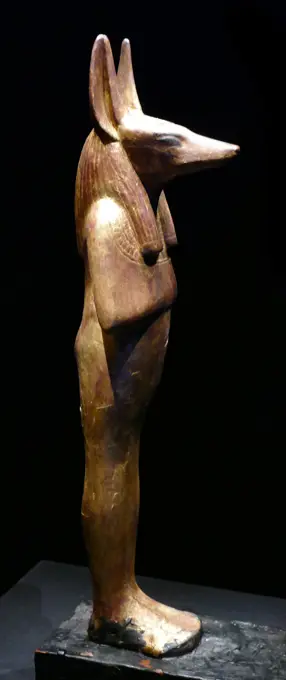
Gilded wooden statues of Herwer (Horus the elder) and Jackal headed Daumutef, From the tomb of King Tutankhamun. 1326 BC
6145-29164788
Statuette, Neith 664-380 B.C. Late Period Beginning in Dynasty 26, Sais became more prominent as the home of the kings. The main goddess of Sais was Neith, and many statues of the goddess were created during Dynasty 26, both for Sais, but certainly also for cities where her cult was respected such as the capital Memphis or the emporium Naukratis that lay downstream from Sais. After Dynasty 26, the goddess and the city both retained some prominence, although the city was no longer the dynastic seat.The level brows and narrow but full-lipped slightly smiling mouth closely resemble features that may be seen in the bronze statuette of king Amasis (35.9.3) or stone statuettes of his officials such as General Amasis (66.99.68).. Statuette, Neith 550888
6145-29777008
Figure of a warrior 3rd-4th century China. Figure of a warrior 52560
6145-29129589
Cylinder Vase with Seated Male
4409-20926769
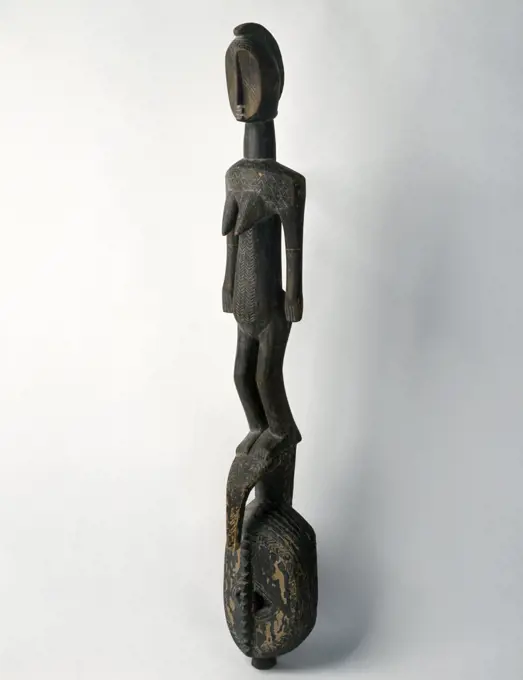
Wood drum by Senufo people, Ivory Coast. Museum: Musée National des Arts d'Afrique et d'Océanie, Paris, France.
4409-17323928
FIGURA DE BRONCE - VISTA LATERAL -. Location: EGYPTIAN MUSEUM. KAIRO. EGYPT.
6019-19243986
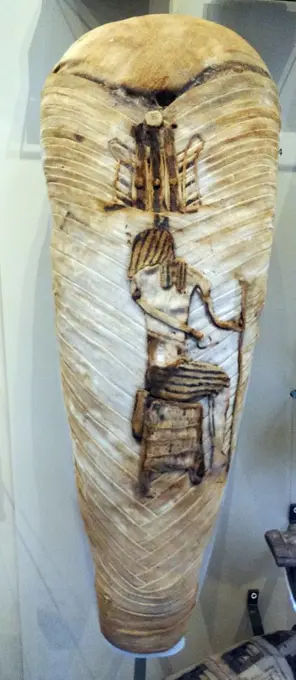
Coffin of Bakenmut c. 1000-900 BC
4443-28732701
Canopic Deity, 736-341 BCE, 2 3/8 x 5/8 x 1/4 in. (6 x 1.6 x 0.6 cm), Ceramic, Egypt, 8th-4th century BCE
6145-29738226
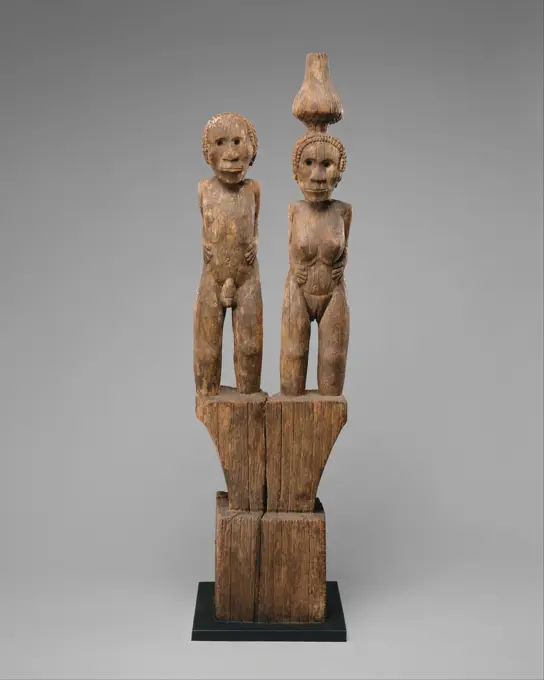
Couple 17th-late 18th century Sakalava peoples This Madagascar couple ranks as the foremost artistic achievement of a region where African and Pacific Island influences meet. It was created by a Sakalava artist in western Madagascar to grace the pinnacle of a "hazomanga," a tall wooden monument set in a place of honor near the house of a clan elder. It constituted the focal point for prayers, sacrifices, and boys' circumcision ceremonies. Measuring around six feet in height, the hazomanga was a striking element of the architectural landscape and a potent reminder of kinship, both past and present.Set side by side, these figures engage the viewer with their intense expressions and deeply recessed eyes. Their subtle stylization simultaneously unifies them and amplifies what makes them different, producing an eloquent statement on the fundamental complementarity of man and woman. As the centerpiece of circumcision rights performed to promote the virility of each generation, the couple emp
6145-29747388
Seated Male Figure 10th century Afghanistan. Seated Male Figure. Afghanistan. 10th century. Terracotta. Sculpture
6145-48530173
Popiersie kobiety w czepku. Bohdanowicz, Jadwiga (-1943), sculptor
4409-17373991
King Sahure and a Nome God. Dimensions: H. 64 cm (25 3/16 in.); W. 46 cm (18 1/8 in.); D. 41.5 cm (16 5/16 in.). Dynasty: Dynasty 5. Reign: reign of Sahure. Date: ca. 2458-2446 B.C..This is the only preserved three-dimensional representation that has been identified as Sahure, the second ruler of Dynasty 5. Seated on a throne, the king is accompanied by a smaller male figure personifying the local god of the Coptite nome, the fifth nome (province) of Upper Egypt. This deity offers the king an ankh (hieroglyph meaning "life") with his left hand. The nome standard, with its double-falcon emblem, is carved above the god's head. Sahure wears the nemes headcloth and straight false beard of a living pharaoh. The flaring hood of the uraeus, the cobra goddess who protected Egyptian kings, is visible on his brow. The nome god wears the archaic wig and curling beard of a deity.The statue may have been intended to decorate the king's pyramid complex at Abusir, about fifteen miles south of Giza.
4409-37366
Pre-Columbian art. Mexico. Ancestor or deity figure, ca. 1-800 AD. From Teotihuacan. Denver Art Museum. Denver, Colorado, United States.
4409-17502774
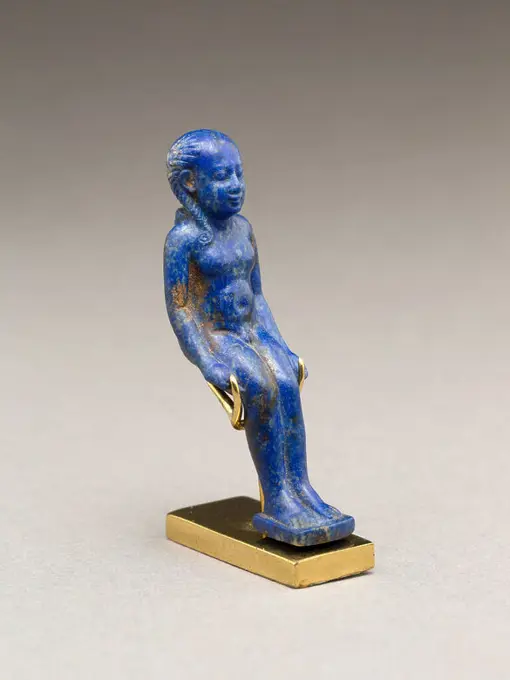
Chld god (Harpokrates) amulet. Dimensions: H. 4.3 × W. 1.2 × D. 1.6 cm (1 11/16 × 1/2 × 5/8 in.). Date: 664-30 B.C..The beautiful blue lapis lazuli figure represents a child god in a seated/reclining position, as he would have been held on his mother's lap. The child is distinguished from an adult gods by iconographic clues: his nudity and the thick sidelock on the right side of his head that is a sign of childhood. The detailed treatment of this small figure is notable: large eyes, smiling mouth, and the luxuriant lock growing naturally from his head evoke the beautiful promising child, while the rounded belly and prominent penis hint at his ability to bring about prosperity and abundance.Child gods grew in popularity and cult from the Third Intermediate Period onwards, rivaling even the most powerful and ancient gods, especially as temple offerings. The best known is Horus the Child (Harpokrates), who was the son of Isis and Osiris, but many others existed, including Khonsu the Ch
4409-61880739
Mars Balearicus, 4th-3rd century BC. Son Favar I. Small bronze warrior, Museu regional d'Artà, archaeology room. Artà. Mallorca. Balearic Islands. Spain.
4409-17543970
Coffin and Mummy of Paankhenamun. Egyptian. Date: 945 BC-715 BC. Dimensions: 170.2 × 43.2 × 31.7 cm (67 × 17 × 12 1/2 in.). Cartonnage, gold leaf, pigment, and human remains. Origin: Thebes. Museum: The Chicago Art Institute, Chicago, USA. Author: Ancient Egyptian.
6145-46804155
Ancestor Figure (AnaDeo)
4409-20920568
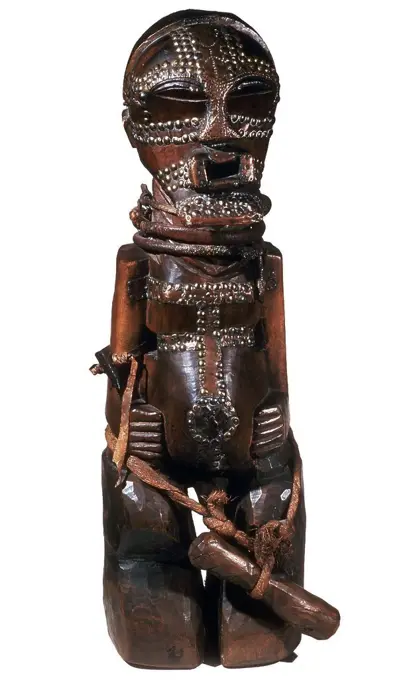
FETICHE DEL CONGO. Location: Rijksmuseum. Amsterdam. HOLANDA.
6176-67077181
Hawaiian statue. Artist: Unknown
4409-17402403
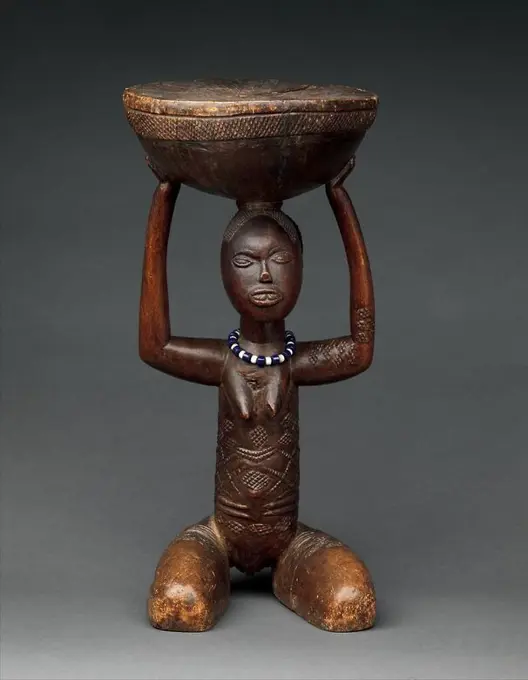
Prestige Stool: Female Caryatid. Culture: Luba peoples, Shankadi group. Dimensions: H. 23 1/4 x W. 11 x D. 10 7/8 in. (59.1 x 27.9 x 27.6 cm). Date: 19th century ().The Luba peoples occupy a land of rivers and savanna in the southeast of what is today The Democratic Republic of the Congo. As early as the seventeenth century, Luba society consisted of an extensive, centrally organized state structured on the principles of divine kingship and rule by council.This ornate and impressive seat of leadership belonged to a Luba chief. Luba leaders trace their ancestry to a dynasty of sacred kings, and Luba royal seats are intended to replicate an original seat of office owned by the progenitor of this divine lineage. Such works associate their owner with the source of his legitimacy.Despite their functional form, royal stools are never used for sitting but, rather, are sacred insignia preserved within a king's palace. They serve as metaphorical, not literal, seats of kingship. The design o
6145-29761726
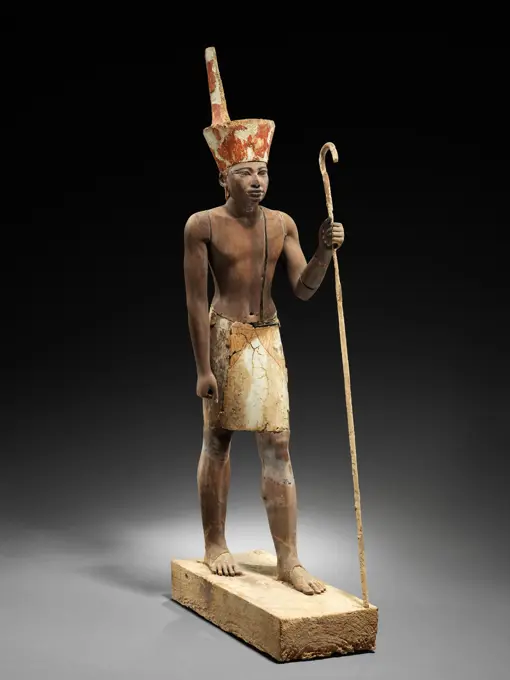
Guardian Figure ca. 1919-1885 B.C. Middle Kingdom This figure wears the red crown of Lower Egypt and the face appears to reflect the features of the reigning king, most probably Amenemhat II or Senwosret II. However, the divine kilt suggests that the statuette was not merely a representation of the living ruler. Together with its counterpart wearing the white crown of Upper Egypt, now in the Egyptian Museum, Cairo, the figure was discovered standing behind a shrine that contained an object sacred to the god Anubis, the so-called Imiut (14.3.18 and .19), and the two figures could be understood to have functioned as guardians of the Imiut. The ensemble was discovered in 1914 in the area surrounding the pyramid of Senwosret I at Lisht South during the Museum's excavation of a mud-brick enclosure surrounding the mastaba of Imhotep, a Twelfth Dynasty official. A chamber had been built into the south part of the enclosure wall and in it the statuettes and shrine were hidden, doubtlessly afte
4409-17336785
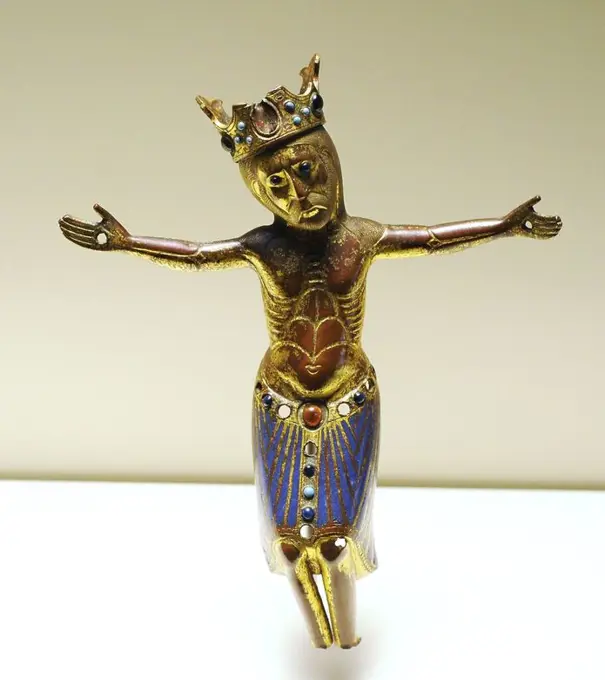
Christ. Anonymous. Ca.1200-1220. Limoges. Romanesque. Provenance unknown. Chased and gilded copper. National Art Museum of Catalonia. Barcelona. Catalonia. Spain.
1788-19068
Egyptian civilization. Wooden statue of a dwarf
1788-15993
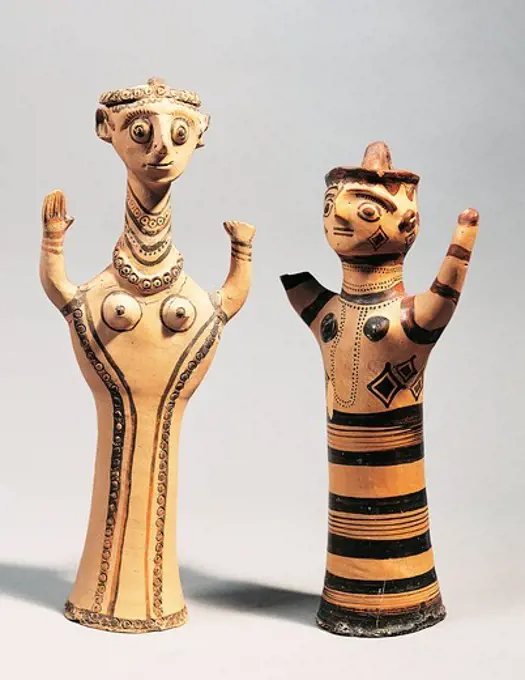
Mycenaean civilization, terracotta female idols, from Mycenae Necropolis Greece
4409-63010528
Garra (claw), shield-like figure, carved wood with natural pigments. Bahinemo, Salumei river. Papua, New Guinea. 20th century.
6176-67064495
Bronze statue of the Egyptian God Horus, 26th (Saite) Dynasty, Ancient Egypt, 664-525BC. Artist: Unknown
1746-19698009
Mummy of an Ibis embellished by the figure of Thoth with the head of an Ibis Bird. Found a Saqqara. Ptolemaic-Roman300-50 BC
4409-17435147
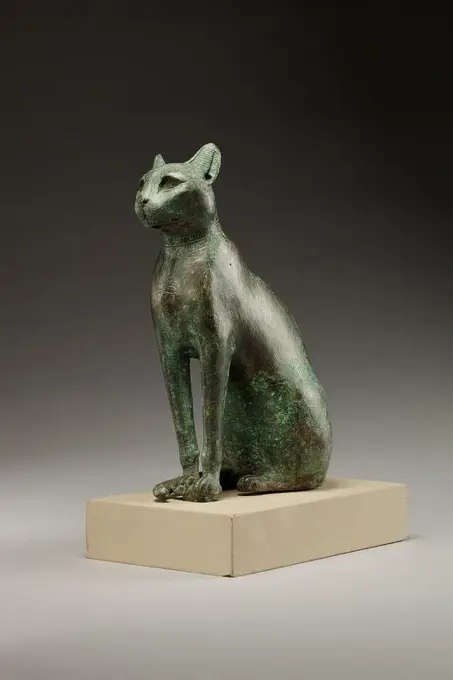
Cat. Dimensions: H. 15.8 cm (5 7/8 in.); W. 5.8 cm (2 5/16 in.); L. 11.5 cm (4 1/2 in.)H. (with tang): 17.8 cm (6 5/8 in.). Date: 664-30 B.C..Bastet was a powerful goddess of Lower Egypt, one who was protective and could bring about great prosperity. In zoomorphic form, she was represented as a cat and cats were considered sacred to her. As a cat, she is poised and alert, on guard against external forces.Like cat-headed Bastet statuettes, these seated cats often have special adornments, but this figure is even more elaborate than most. It has deep-cut eyes for inlay and ears pierced for earrings, probably of precious metal. Incised decoration includes a scarab on the top of its head, a beaded collar, and a wedjet amulet hanging below the collar. The wedjet eye, or Eye of Horus, was personified by the goddess Wadjet, who was closely linked with Bastet as both goddesses were protectors of Lower Egypt. Cat statuettes like this one were among some of the most common zoomorphic dedicati
4409-17403561
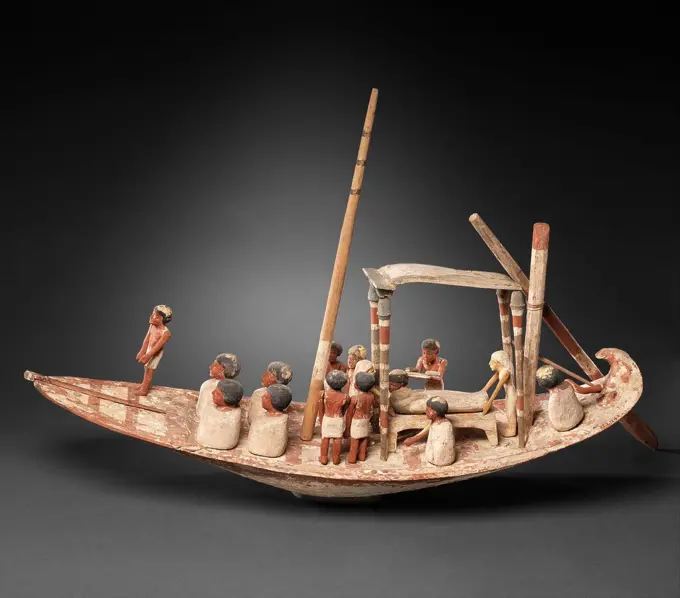
Model Sailing Boat Transporting a Mummy. Dimensions: L. 80.6 cm (31 3/4 in.); W. 21.2 cm (8 3/8 in.); H. to top of mast 54 cm (21 1/4 in.)Beam L. 23 cm (9 1/16 in.). Dynasty: Dynasty 12. Reign: Amenemhat II, late. Date: ca. 1900-1885 B.C..A group of sailors standing by the mast hoists the sail (not preserved) for this boat which carries a mummy on a bier under a baldaquin. The mummy is tended by two women - perhaps impersonating the goddesses Isis and Nephthys - while a priest reads from a papyrus scroll. Four men sit crouched before the mast and baldaquin. Their posture is akin to the so-called "block statues" or "cube statues," well known from Middle Kingdom art. It has been argued that this posture indicates the person so represented is partaking in rituals. The steersman and another person at the side of the bier crouch in a similar position, although each of them has one arm free for action. Museum: Metropolitan Museum of Art, New York, USA.
1788-20761475
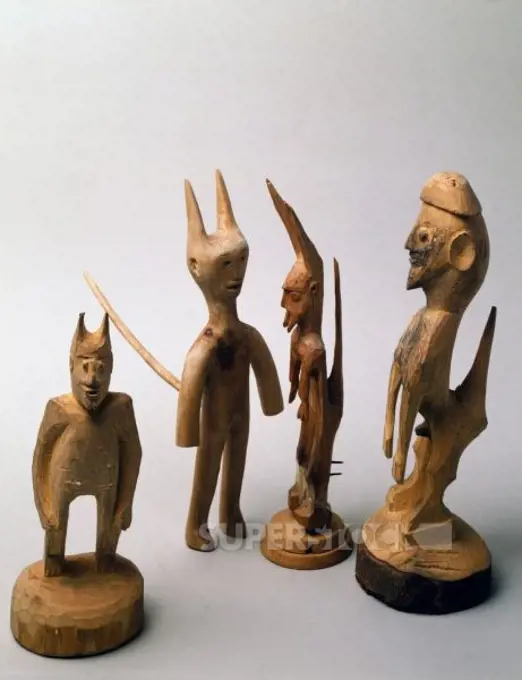
Idols to protect the livestock used by the shepherds, Sicilian Arte Povera (poor art), Italy.
6176-67082604
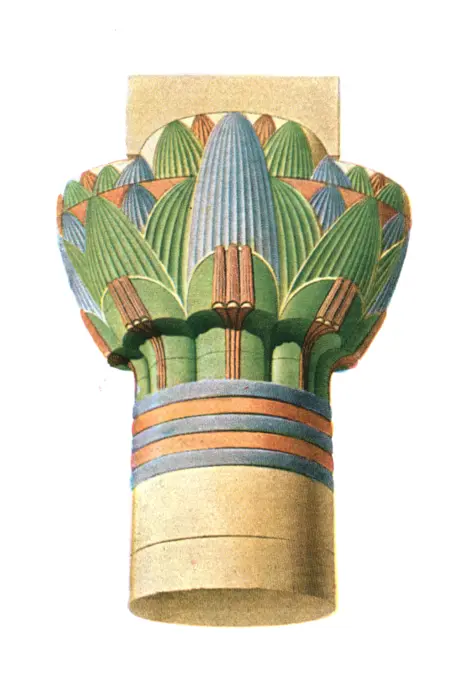
Ptolemaic capital, Edfu, Egypt, (1928). 'Spreading capital with open blossom of Nymphaea lotus from the Temple of Horus, Edfu. The edifice was begun 237 B.C. by Ptolemy III and completed by Ptolemy XIII (Neos Dionysus) 57 B.C.' After Prisse d'Avennes. Plate IV, fig 7, from "An Encyclopaedia of Colour Decoration from the Earliest Times to the Middle of the XIXth Century" with explanatory text by Helmuth Bossert. Ernst Wasmuth Ltd., Berlin, 1928
PREVIOUS
of 2
NEXT
2401 S. Ervay, Suite 206
Dallas, Texas 75215
United States
Get Started
Free ResearchMy BoardsMy Cart
For Creators
How To License Your ContentContributor PortalFrame of Mind
Resources
API accessPricing
Contact
+1 866 236 0087help@viewpictures.co.uk Contact form
©2026 View Pictures. All Rights Reserved. -A
This site is protected by reCAPTCHA and Google Privacy Policy and Terms of Service apply.