My Boards
View Pictures
  • My Boards
← Artworks

Ancient Egyptian Hieroglyphs

Intricate reliefs and hieroglyphics from temples in Egypt, showcasing ancient art, culture, and religious symbolism.
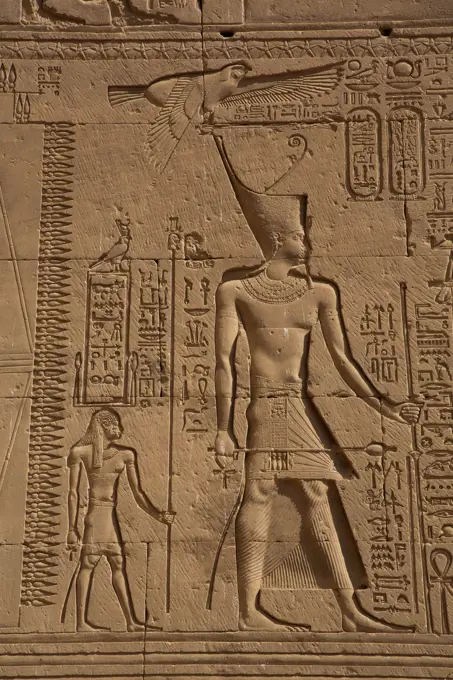
Pharaoh, Exterior Reliefs, Temple of Hathor, Dendera, Qena, Egypt, North Africa, Africa
230 assets in this story
7012-69849407
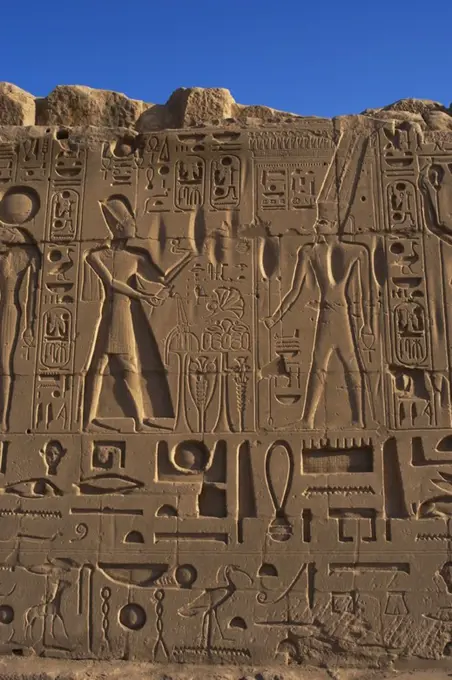
Egypt, Luxor, East Bank, Karnak Temple. Hieroglyphics detail.
1890-131093
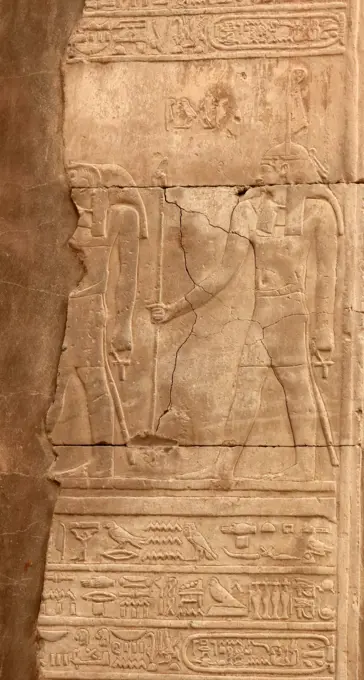
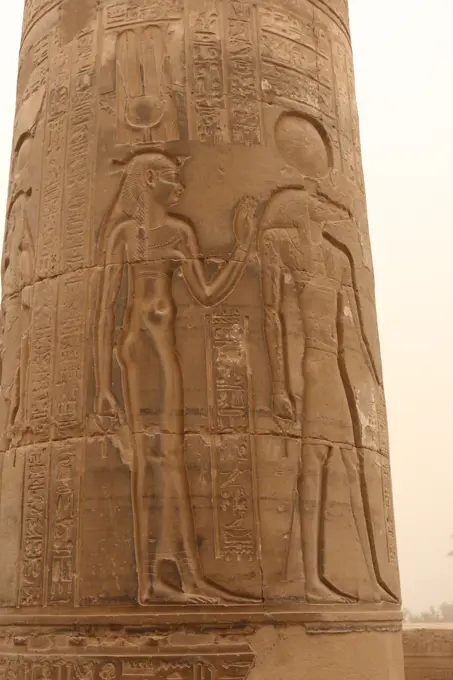
Bas relief, Temple of Sobek and Haroeris, Kom Ombo, Egypt, North Africa, Africa
1890R-12396829
Relief carving in the ancient Egyptian Temple of Kom Ombo near Aswan, Egypt, North Africa, Africa
1848-55369691
Hieroglyphs at the columns and walls in the Great Hypostyle Hall, Temples of Karnak, Luxor, Nile Valley, Egypt, Africa
1746-29965993
First Pylon at the Temple of Rameses II at Medinet Habu, Egypt. The Mortuary Temple of Ramesses III at Medinet Habu was an important New Kingdom period temple structure in the West Bank of Luxor in Egypt. The temple has inscribed reliefs depicting the advent and defeat of the Sea Peoples during the reign of Ramesses III. Initial excavation of the temple took place sporadically between 1859 and 1899
1848-62632387
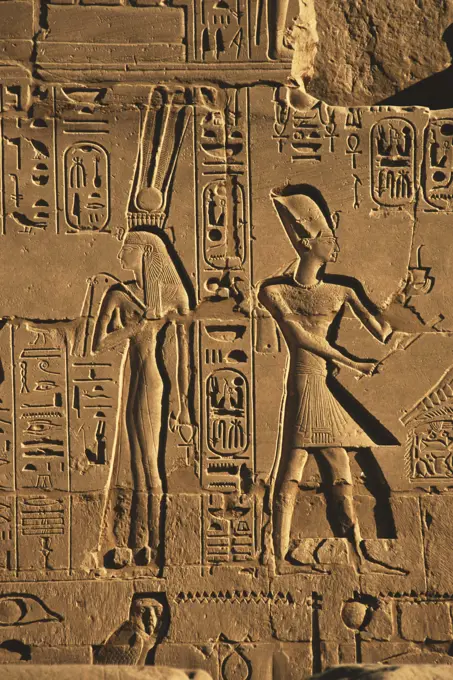
Wall relief in Karnak Temple, Luxor, Egypt, Africa
4409-60709
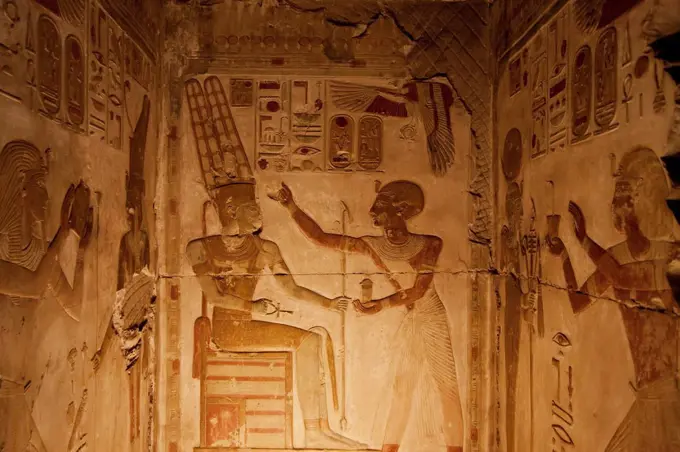
Egyptian Art. The Karnak Temple Complex. Relief depicting the Pharaoh Ramesses II, wearing the red crown or deshret, making an offering to the god Min. 19th Dynasty. New Kingdom. Egypt.
1890-60647819
Pharaoh, Exterior Reliefs, Temple of Hathor, Dendera, Qena, Egypt, North Africa, Africa
1746-30016264
Abydos, one of the oldest cities of ancient Egypt; Goddess Sekhmet
1746-29962742
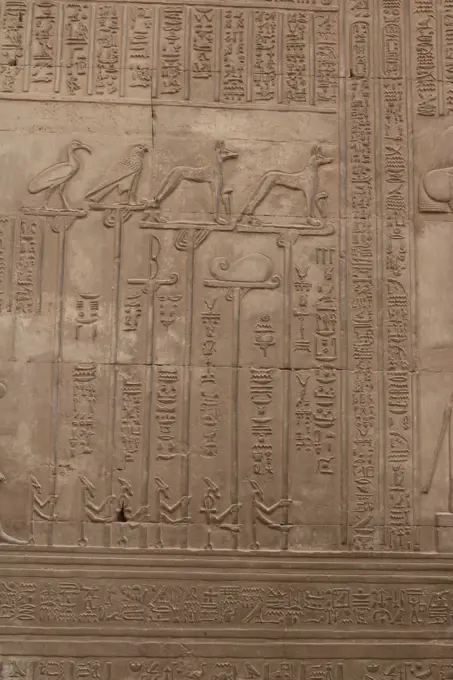
Temple of Kom Ombo, Upper Egypt. Constructed during the Ptolemaic dynasty, 180-47 BC. Some additions to it were later made during the Roman period. The building is unique because its 'double' design meant that there were courts, halls, sanctuaries and rooms duplicated for two sets of gods. The southern half of the temple was dedicated to the crocodile god Sobek. the northern part of the temple was dedicated to the falcon god Haroeris ("Horus the Elder"), along "with Tasenetnofret, a special form of Hathor
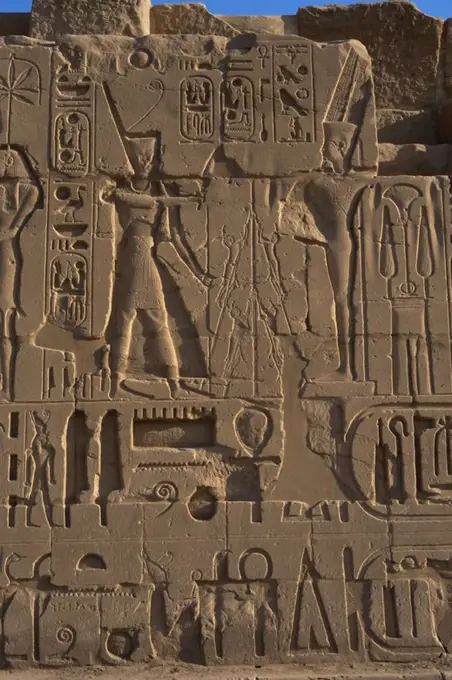
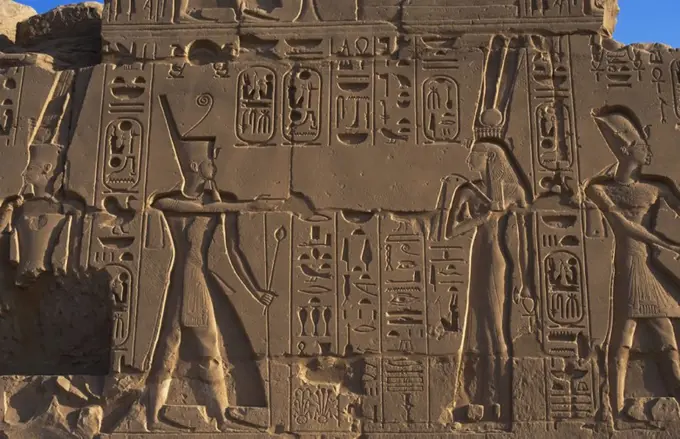
4409-60694
Egyptian Art. The Karnak Temple Complex. Relief depicting a pharaoh, wearing the Deshret or Red Corwn, before a god. New Kingdom. Egypt.
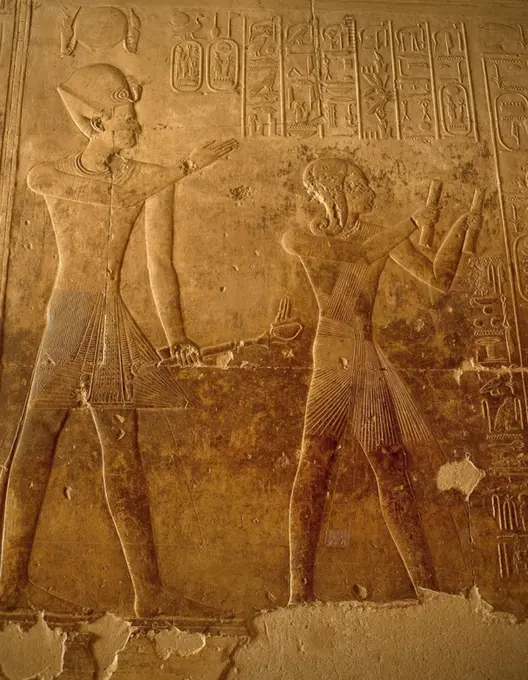
4409-72206
ARTE EGIPCIO. TEMPLO DE SETI I. Bajo relieve con la representación de SETI I (h.1306-1290 a.C.), faraón de la dinastía XIX, con Ramsés II niño (1290-1224 a.C.) Abydos. Egipto.
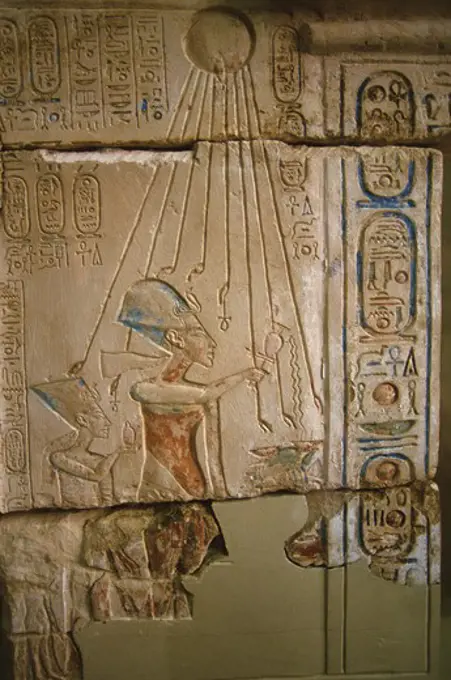
4163-7100
EGYPT, CAIRO, EGYPTIAN MUSEUM OF ANTIQUITIES, UPPER ALTAR PART OF NEFERTITI
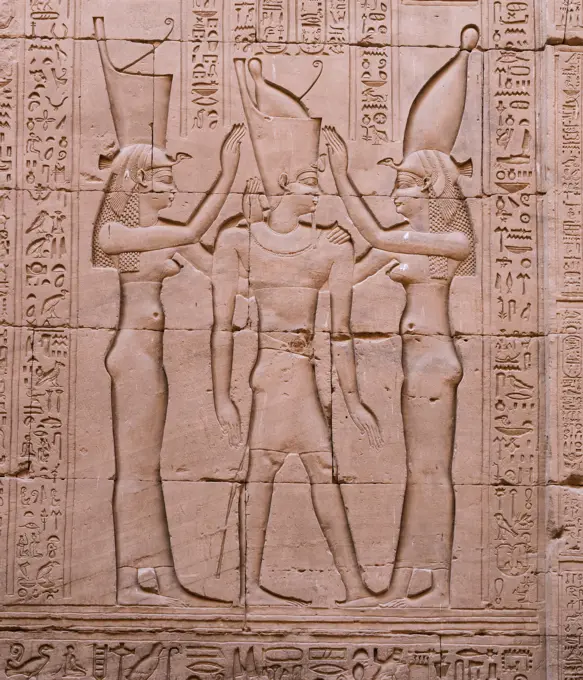
6188-69058739
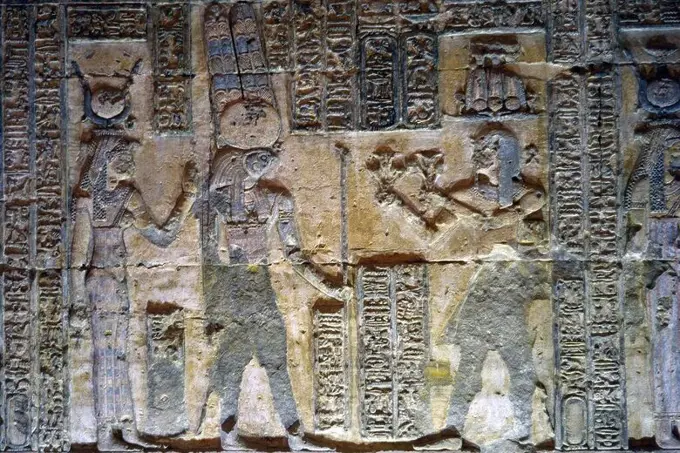
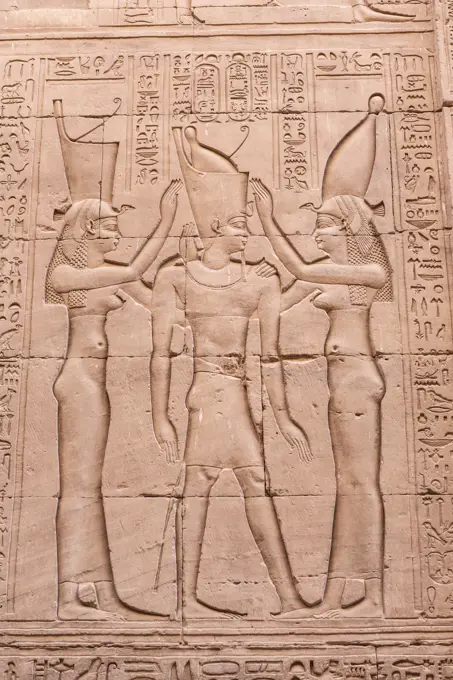
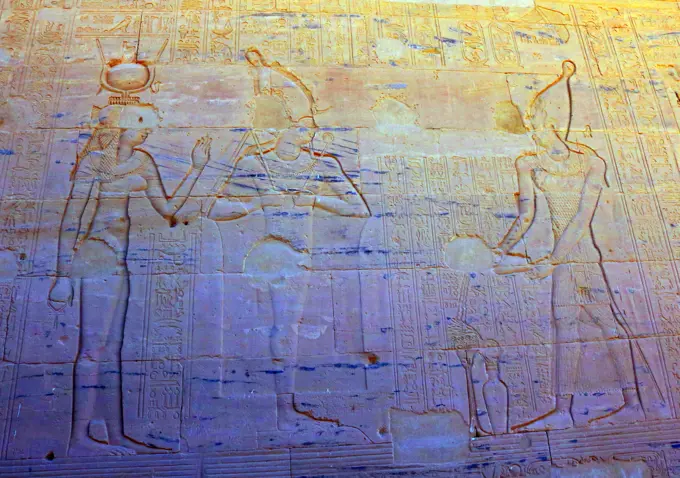
Detail von Göttinnen, die den Pharao in den Wänden des Tempels von Edfu begrüßen Detail of goddesses greeting pharoah in walls of Edfu Temple near Luxor in Egypt LicenseRF Copyright: xZoonar.com/StevenxHeapx 23384892
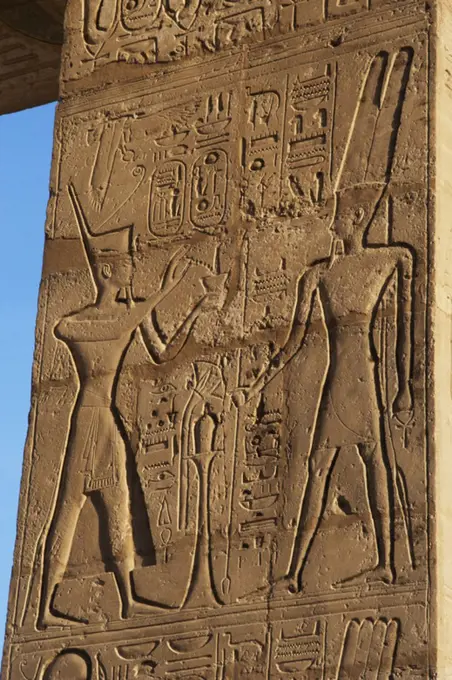
4409-49063
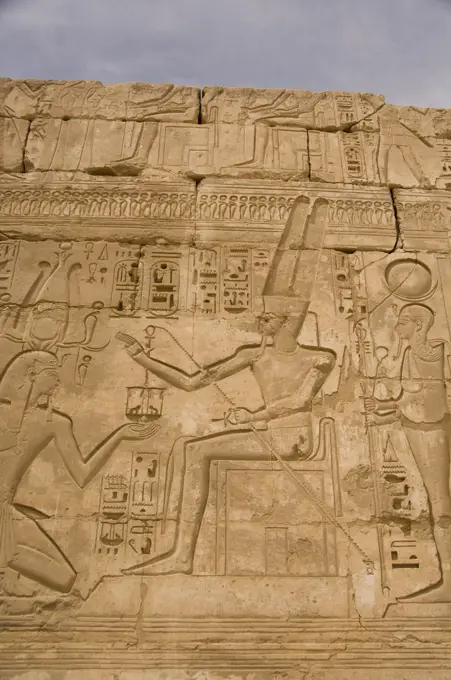
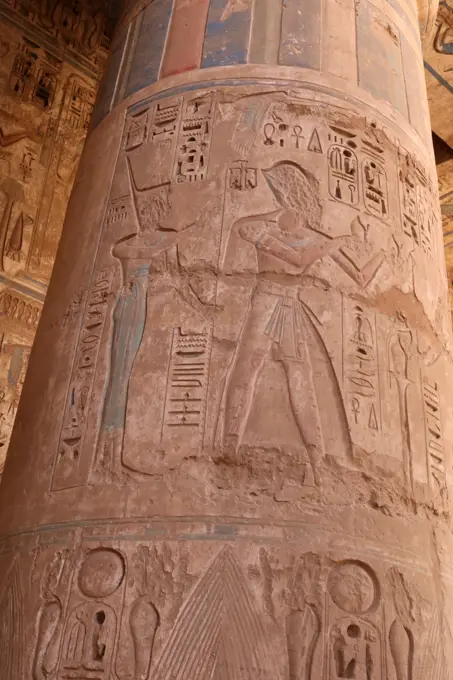
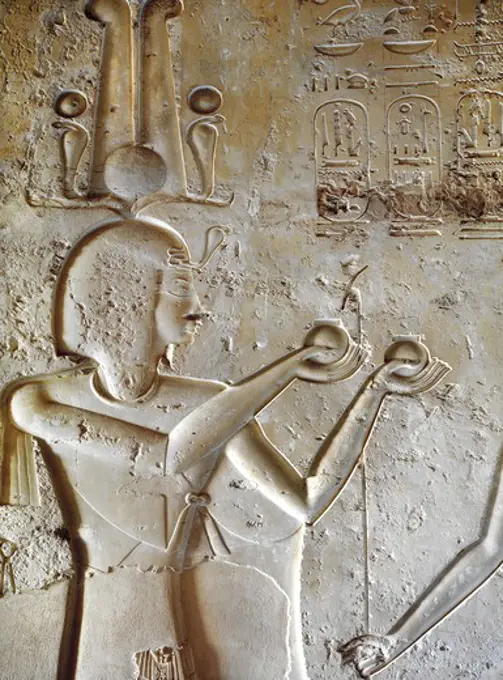
Relief depicting a Pharaoh making offerings to the god Amun. Ramesseum. 13th century. Nineteen dynasty. New Kingdom. Necropolis of Thebes. Valley of the kings. Egypt.
7008-69757507
Visual Art worked into Stone Temple of Luxor, Luxor Egypt.
442-8987
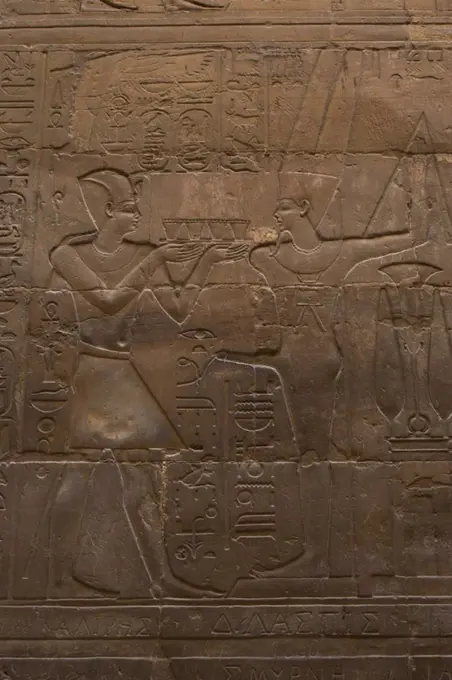
Close-up of the pictorial reliefs of Ramses II in front of Amun and Sethi I, Luxor Temple, Aswan, Egypt
4409-21486273
TEMPLO DE DENDERA, DEDICADO A LA DIOSA HATHOR: PUERTA DE DOMICIANO Y TRAJANO.
1746-29971524
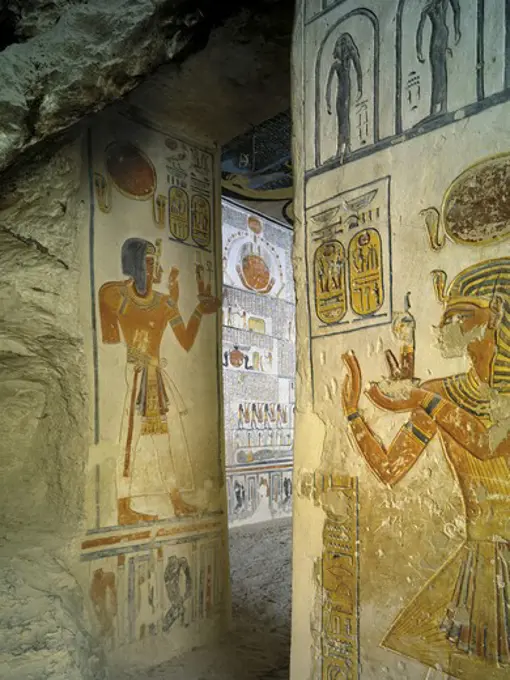
Wall frieze from the tomb of Ramesses VI. Tomb KV9 in Egypt's Valley of the Kings was originally constructed by Pharaoh Ramesses V. He was interred here, but his uncle, Ramesses VI, later reused the tomb as his own. The layout is typical of the 20th dynasty - the Ramesside period. Ramesses VI Nebmaatre-Meryamun was the fifth ruler of the Twentieth Dynasty of Egypt. He reigned for about eight years in the mid-to-late 12th century BC
1746-29962707
Temple of Kom Ombo, Upper Egypt. Constructed during the Ptolemaic dynasty, 180-47 BC. Some additions to it were later made during the Roman period. The building is unique because its 'double' design meant that there were courts, halls, sanctuaries and rooms duplicated for two sets of gods. The southern half of the temple was dedicated to the crocodile god Sobek. the northern part of the temple was dedicated to the falcon god Haroeris ("Horus the Elder"), along "with Tasenetnofret, a special form of Hathor
1899-17319683
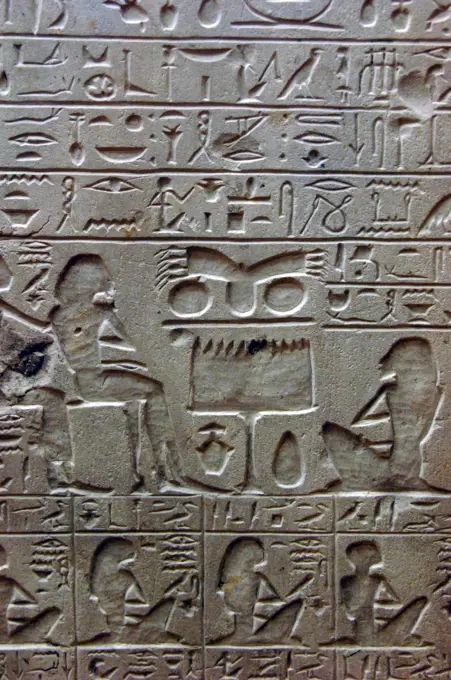
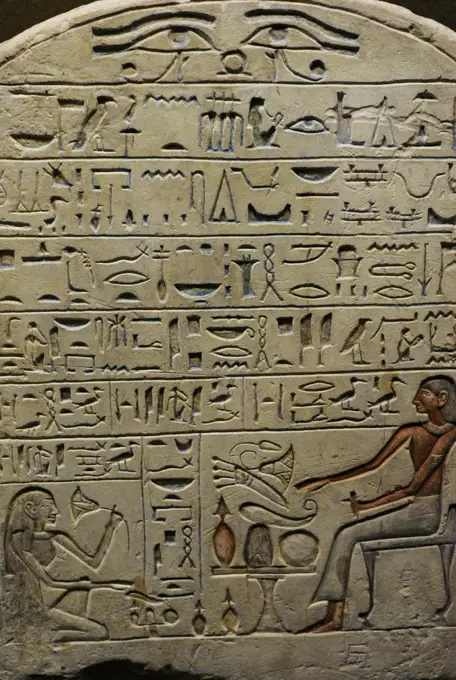
Egypt. Funerary stela of Amenehat-Sen-nen-chem-sen. Limestone. The State Hermitage Museum. St. Petersburg. Russia.
1783-11724
Carvings at Karnak Temple, Close Up, Luxor, Egypt
4409-21485993
Templo de Isis. Egipto.
4409-40833
Relief depicting a pharaoh making offerings to the god MIN, god of fertility. Chapel dedicated to Amun-Min. New Empire. Temple of Luxor. Egypt.
7012-69849560
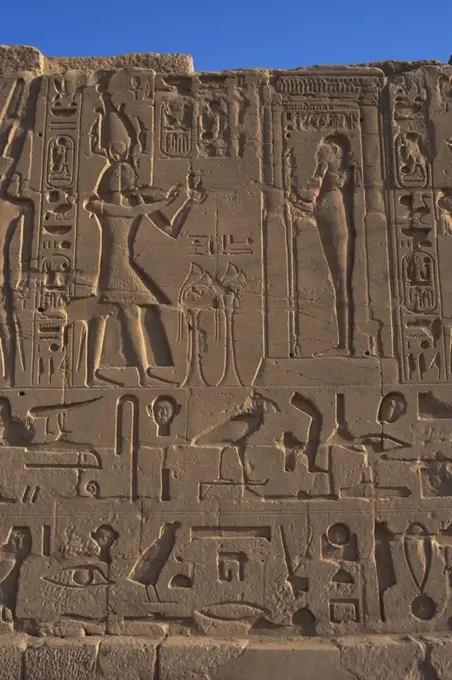
Egypt, Luxor, West Bank, Medinet Habu Temple (aka Djanet). Highly carved hieroglyphic covered wall detail.
1746-29962672
Temple of Kom Ombo, Upper Egypt. Constructed during the Ptolemaic dynasty, 180-47 BC. Some additions to it were later made during the Roman period. The building is unique because its 'double' design meant that there were courts, halls, sanctuaries and rooms duplicated for two sets of gods. The southern half of the temple was dedicated to the crocodile god Sobek. the northern part of the temple was dedicated to the falcon god Haroeris ("Horus the Elder"), along "with Tasenetnofret, a special form of Hathor
1828R-39381
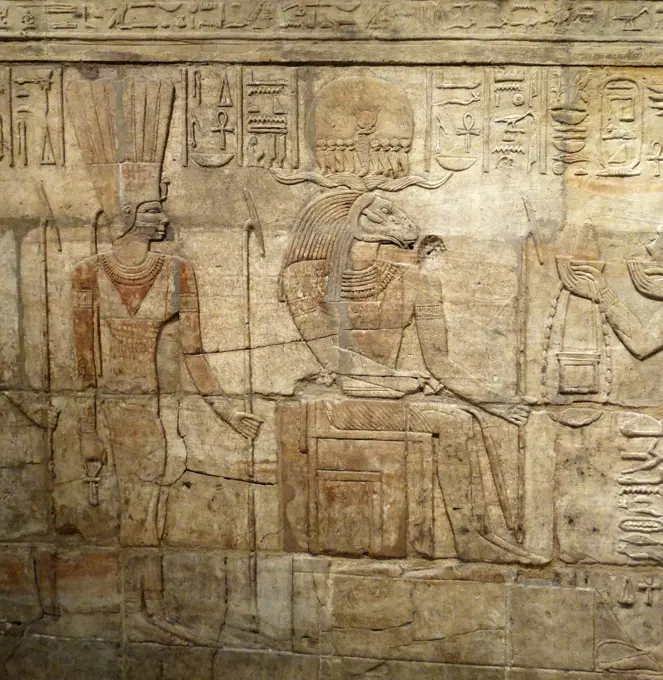
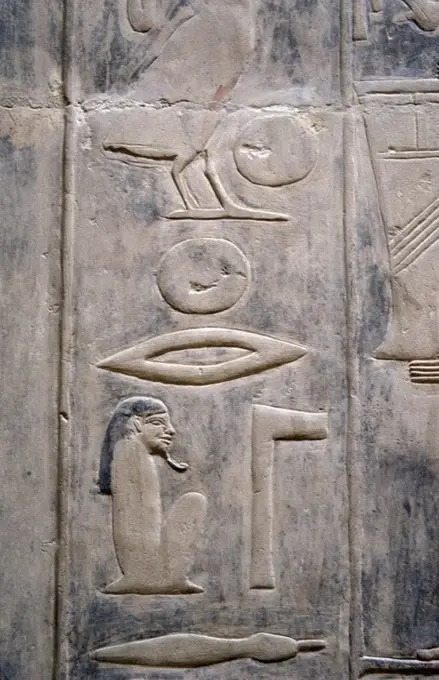
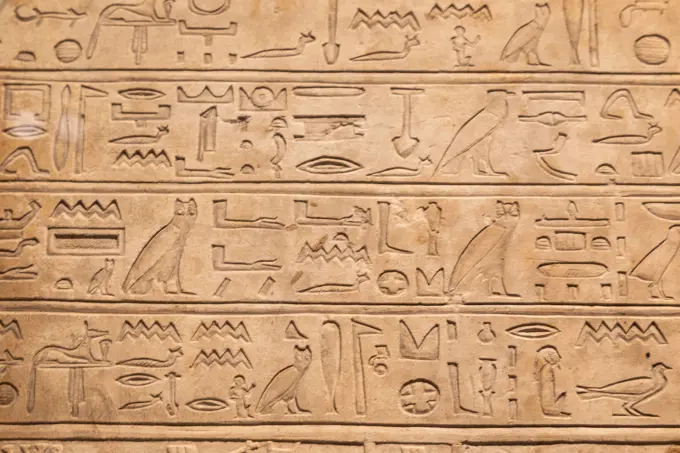
Hieroglyphics at the Egyptian Museum, Cairo, Egypt
1746-30012476
A photograph taken of Philae, an island in the reservoir of the Aswan Low Dam, Egypt. Philae was initially located near the expansive First Cataract of the Nile in Upper Egypt and was the site of an Egyptian temple complex. The temple complex was dismantled and moved to nearby Agilkia Island as part of the UNESCO Nubia Campaign project, protecting this and other compounds before the 1970 completion of the Aswan High Dam. The most ancient was a temple for Isis, built in the reign of Nectanebo I during 380-362 BC, the other ruins date from the Ptolemaic Kingdom (282-145 BC), with many traces of Roman work in Philae dedicated to Ammon-Osiris.
1746-29962637
Temple of Kom Ombo, Upper Egypt. Constructed during the Ptolemaic dynasty, 180-47 BC. Some additions to it were later made during the Roman period. The building is unique because its 'double' design meant that there were courts, halls, sanctuaries and rooms duplicated for two sets of gods. The southern half of the temple was dedicated to the crocodile god Sobek. the northern part of the temple was dedicated to the falcon god Haroeris ("Horus the Elder"), along "with Tasenetnofret, a special form of Hathor
1525-22054158
Ancient hieroglyphs on wall, Temple of Karnak,
1606-199962
Egypt, Hight Nile Valley, Edfu, Horus Temple
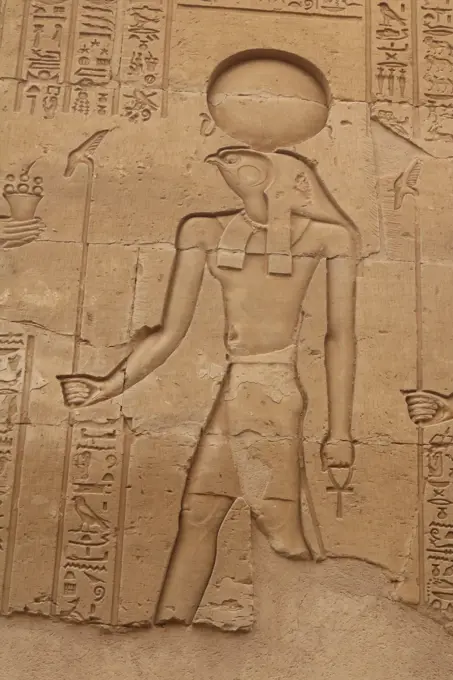
4409-47550
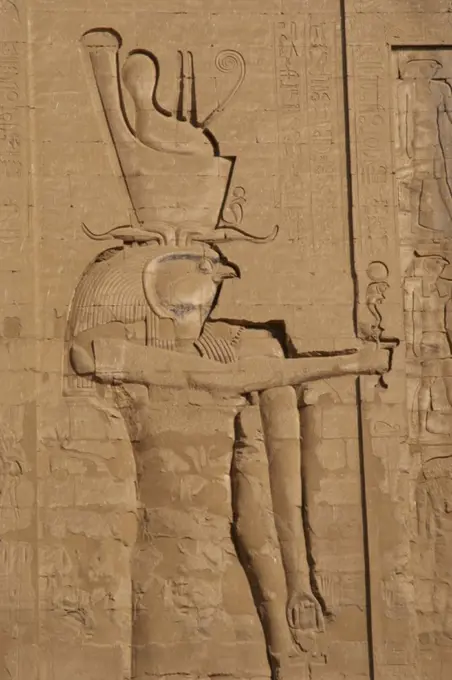
Temple of Horus. God Horus with double crown. Main entrance. First pylon. Detail. Edfu. Egypt.
4409-37299
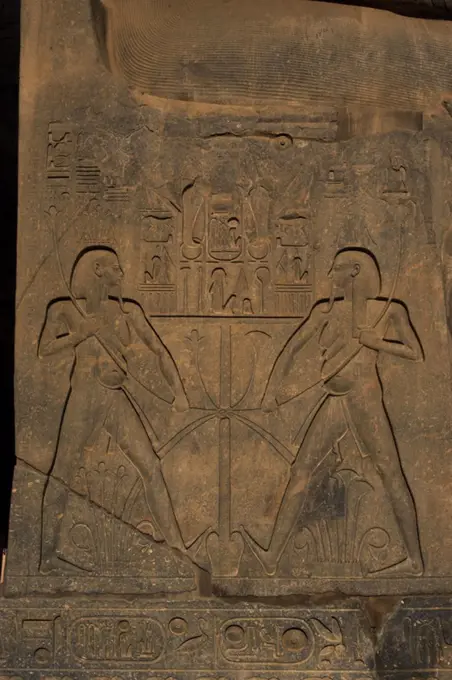
Relief depicting the union between Upper Egypt (reeds) and Lower Egypt (Papyrus). Base of the statue of Ramses II in front of the Temple of Luxor. Dated at the XIX Dynasty. New Kingdom. Egypt.
1746-19698740
detail from the Shrine of Taharqa is a sandstone shrine built by King Taharqa (690-664 BC)
1746-21099868
detail from the Shrine of Taharqa is a sandstone shrine built by King Taharqa (690-664 BC)
4409-60588
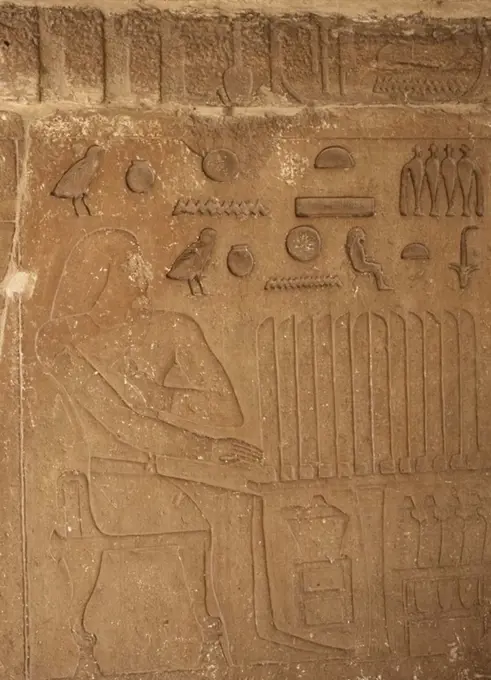
Egypt. Necropolis of Saqqara. Mastaba of Kagemni (2350 BC). Chief Justice and vizier of the Pharaoh Teti. Hieroglyphic characters. 6th Dynasty. Old Kingdom.
7136-70459183
Egypt, Luxor (aka Thebes), Stone reliefs in Amun Temple enclosure at Temples (Large format sizes available)
4409-60649
Egyptian Art. The Karnak Temple Complex. Relief depicting the Pharaoh Ramesses II, wearing the Atef crown, making an offering to the god Ptah. 19th Dynasty. New Kingdom. Egypt.
4409-38500
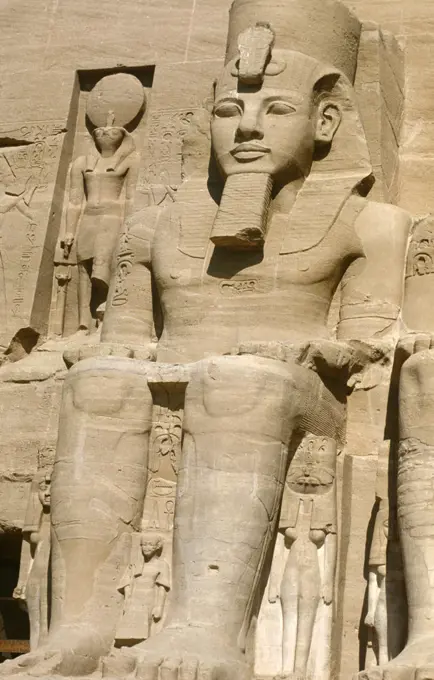
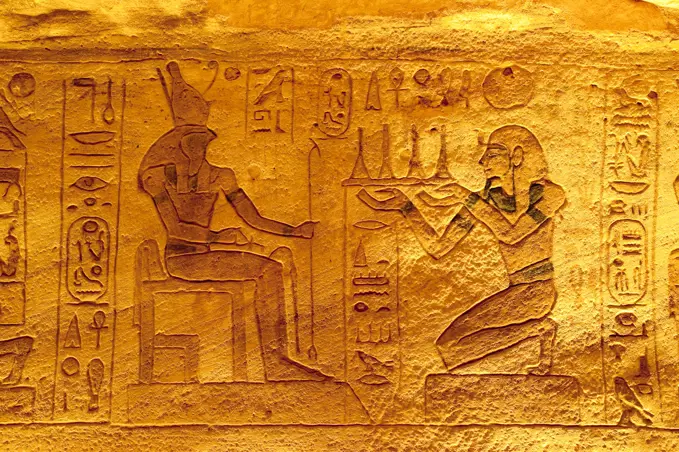
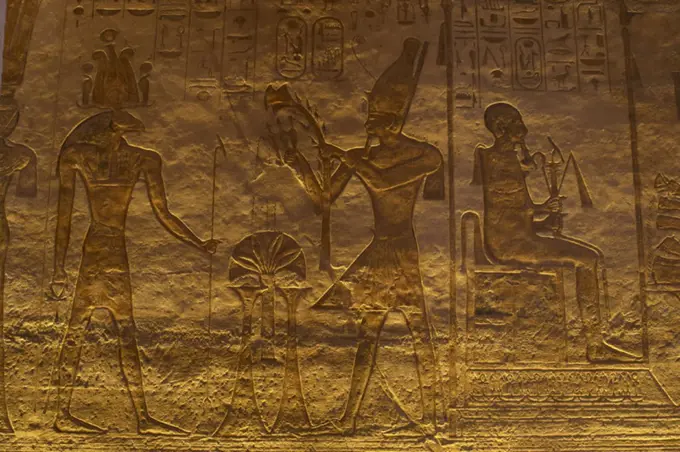
Egyptian art. Small Temple or Temple of Hathor. 19th dynasty. New Empire. Relief depicting the pharaoh Ramses II offering to the god. Abu Simbel. Egypt.
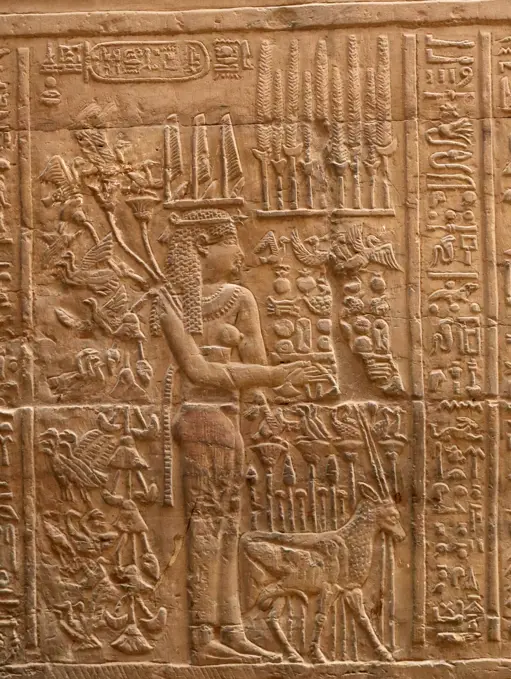
1848-49518362
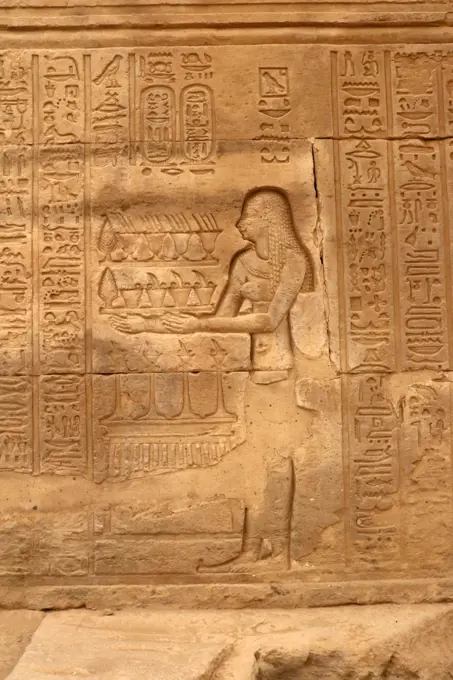
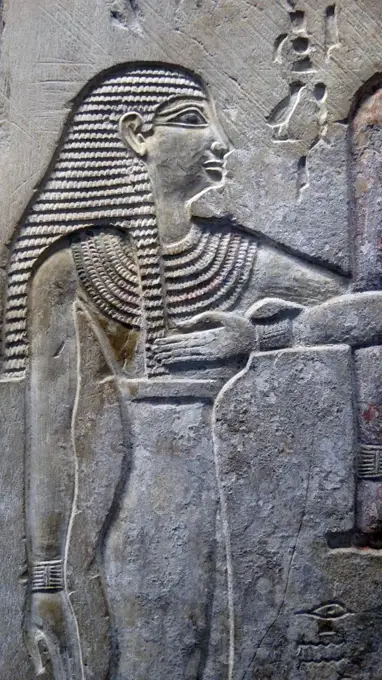
Relief, Woman with grain, Temple of Horus, Edfu, Egypt, Africa
1848-78932973
The Egyptian Museum in Cairo, EMC, Cairo, Egypt
6188-58178760
fragment relief of a tomb fragment relief of a tomb, limestone, Memphis, 18 Dynasty, Gregorian Egyptian Museumn Musei Vaticani, State of the Vatican City, Roma, Lazio, Italia Copyright: xZoonar.com/BartomeuxBalaguerxRotgerx 21378211
1848-50227070
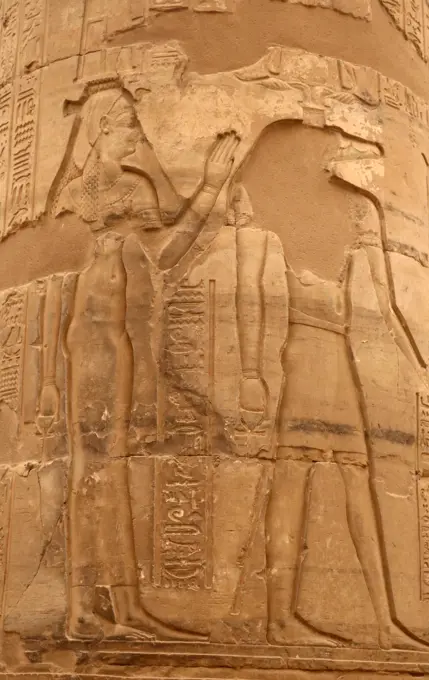
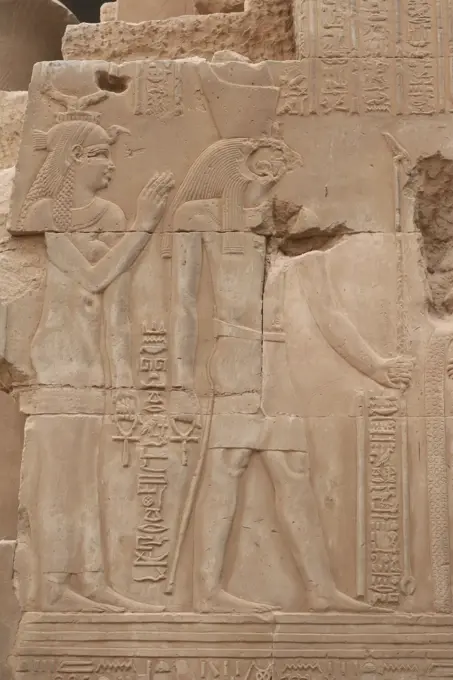
Representation of the goddess Harthor, reliefs and engravings on the walls of the Kom Ombo temple on the Nile, Egypt, Africa
1525-25084763
ancient egypt images and hieroglyphics on wall in karnak temple
4409-60712
Egyptian Art. The Karnak Temple Complex. Relief depicting the Pharaoh Ramesses II, wearing the blue crown, making an offering with incense burner to the god Amun. 19th Dynasty. New Kingdom. Egypt.
1848-61467625
Seated statue of Ramses II in front of Luxor Temple, Luxor, Egypt, Africa
1746-29965965
Courtyard of the Temple of Rameses III at Medinet Habu, Egypt. The Mortuary Temple of Ramesses III at Medinet Habu was an important New Kingdom period temple structure in the West Bank of Luxor in Egypt. The temple has inscribed reliefs depicting the advent and defeat of the Sea Peoples during the reign of Ramesses III. Initial excavation of the temple took place sporadically between 1859 and 1899
1746-29966040
Second Courtyard of the Feasts, Medinet Habu, Thebes, Egypt. Temple of Rameses II at Medinet Habu, Egypt. The Mortuary Temple of Ramesses III at Medinet Habu was an important New Kingdom period temple structure in the West Bank of Luxor in Egypt. The temple has inscribed reliefs depicting the advent and defeat of the Sea Peoples during the reign of Ramesses III. Initial excavation of the temple took place sporadically between 1859 and 1899
1746-29962884
Temple of Kom Ombo, Upper Egypt. Constructed during the Ptolemaic dynasty, 180-47 BC. Some additions to it were later made during the Roman period. The building is unique because its 'double' design meant that there were courts, halls, sanctuaries and rooms duplicated for two sets of gods. The southern half of the temple was dedicated to the crocodile god Sobek. the northern part of the temple was dedicated to the falcon god Haroeris ("Horus the Elder"), along "with Tasenetnofret, a special form of Hathor
4030-1429
Abu Simbel Great Temple, Egypt
1889-12425100
Bas-Relief In A Chapel Of The Temple Of Seti I, Abydos, Sohag, Egypt
7192-70580362
Stele with inscriptions. Detail. Museum of Fine Arts. Budapest. Hungary
1848-49824528
Temple of Philae, Temple of Isis, relief, Agilkia Island, Aswan, Egypt, Africa
1848-75599843
Egypt Luxor Karnak Temple
1890-41764
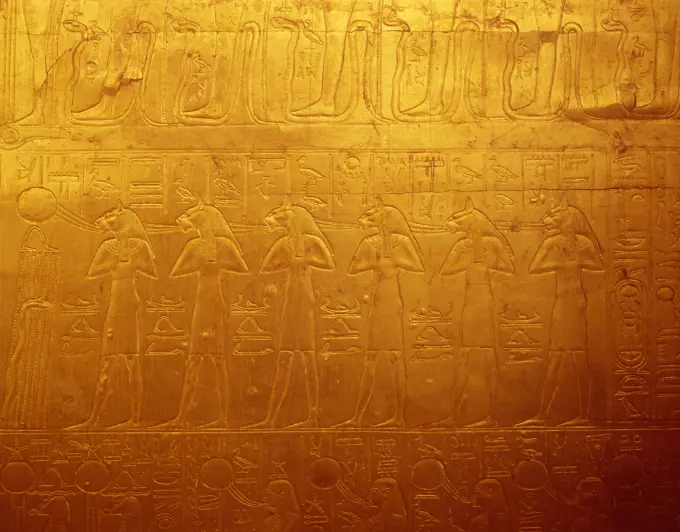
Detail of Sekhmet freize on shrine of Tutankhamun, Cairo Museum, Egypt, North Africa, Africa
1848-50677790
Barque of the Gods, Medinet Habu, Mortuary Temple of Ramses III Luxor, Thebes West, Egypt, Luxor, Thebes, West, Egypt, Africa
1746-29962871
Temple of Kom Ombo, Upper Egypt. Constructed during the Ptolemaic dynasty, 180-47 BC. Some additions to it were later made during the Roman period. The building is unique because its 'double' design meant that there were courts, halls, sanctuaries and rooms duplicated for two sets of gods. The southern half of the temple was dedicated to the crocodile god Sobek. the northern part of the temple was dedicated to the falcon god Haroeris ("Horus the Elder"), along "with Tasenetnofret, a special form of Hathor
1848-50224962
Temple of Chnum, wall reliefs inside the temple complex in the city of Esna, Egypt, Africa
1746-30012894
A photograph taken of the Red Chapel of Hatshepsut (the Chapelle Rouge) constructed initially as a barque shrine during the reign of Hatshepsut, the fifth pharaoh of the eighteenth dynasty of Ancient Egypt and ruled from approximately 1479 to 1458 BC. Although it had been demolished and parts were reused in antiquity, following rediscovery, the chapel has been reconstructed using its original materials. Its original location is thought to have been in the central court of the temple of Amun at Karnak, near Thebes.
1848-55373858
Hieroglyphs in the Luxor Temple, Luxor, Nile Valley, Egypt, Africa
1788-2444
Egypt - Cairo - Ancient Memphis (UNESCO World Heritage List, 1979). Saqqara. Necropolis. Private funerary mastaba of vizier Ptahhotep, Old Kingdom, 5th Dynasty. Relief of bark builders
4409-60518
Egypt. Necropolis of Saqqara. Relief depicting a deceased seated before a table offering food to the gods. Old Kingdom.
1746-21112606
Limestone tomb Stela of Anhurnakht from Naga el-Deir. Dated 21st Century BC
1848-50844622
Basrelief, temple of Seti I, Abydos, Egypt, Africa
1890-100873
Abu Simbel, Nubia, Egypt, North Africa, Africa
1899-17319680
Egypt. Funeral stele of Pepi ceramist. Polychromed limestone. Dated in 18th century B.C. Middle Kingdom. The State Hermitage Museum. St. Petersburg. Russia.
1746-29962630
Temple of Kom Ombo, Upper Egypt. Constructed during the Ptolemaic dynasty, 180-47 BC. Some additions to it were later made during the Roman period. The building is unique because its 'double' design meant that there were courts, halls, sanctuaries and rooms duplicated for two sets of gods. The southern half of the temple was dedicated to the crocodile god Sobek. the northern part of the temple was dedicated to the falcon god Haroeris ("Horus the Elder"), along "with Tasenetnofret, a special form of Hathor
1848-55111057
Wall relief, area of Amun-Re, Karnak temple complex, near Luxor, Egypt, Africa
1746-30012673
Tomb of Ramesses III, Pharaoh of the Twentieth Dynasty in Ancient Egypt. reigned from 1186 to 1155 BC and is considered to be the last monarch of the New Kingdom to wield any substantial authority over Egypt. Tomb KV11 is located in the main valley of the Valley of the Kings. The tomb has been open since antiquity, and has been known variously as Bruce's Tomb (named after James Bruce who entered the tomb in 1768) and The Harper's Tomb (due to paintings of two blind harpers in the tomb).
1788-10643
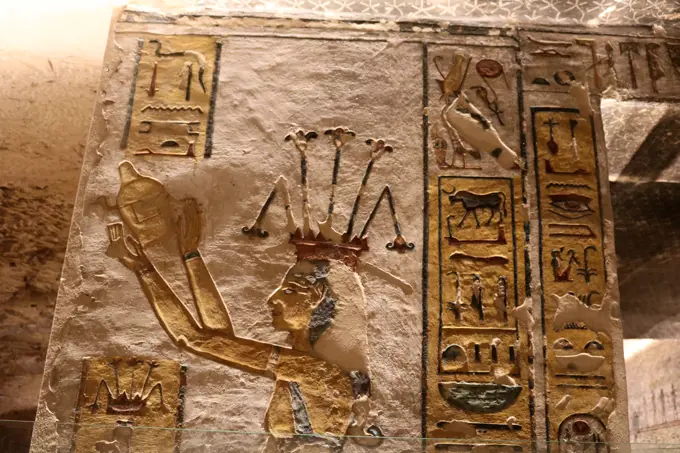
Egypt, Thebes, Luxor, Valley of the Kings, Tomb of Ramses VI, mural paintings in Burial chamber from 20th dynasty
6188-68122862
Ägyptisches Museum in Turin, Italien. Antike Hieroglyphen Turin, Italy - December 26 2024: Egyptian Museum, stela of the priest Qemnen and his wife. Limestone, 1980-1939 B.C. LicenseRF Copyright: xZoonar.com/PaoloxGallox 23235073
1848-50874194
Colossal statue at Hathor temple of queen Nefertari, Abu Simbel, Egypt, Africa
1848-50678130
In front of Ramses III, cut hands of his defeated enemies are counted, Medinet Habu, mortuary temple of Ramses III Luxor, Thebes-West, Egypt, Luxor, Thebes, West, Egypt, Africa
4409-36671
Temple of Ramses III. Great colossal statues of Ramses III deified as Osiris, attached to pillars. New Kingdom. (1550-1069 b.C). Twentieth dynasty. Thebes. Medinet-Habou. Egypt..
1606-199980
Egypt, Hight Nile Valley, Aswan, Philea Temple, (Unesco World Heritage)
1788-10447
Egypt, Thebes, Luxor, Valley of the Kings, Tomb of Ramses II, relief of hieroglyphics illustrating Litany of Ra from 19th dynasty
1746-29962789
Temple of Kom Ombo, Upper Egypt. Constructed during the Ptolemaic dynasty, 180-47 BC. Some additions to it were later made during the Roman period. The building is unique because its 'double' design meant that there were courts, halls, sanctuaries and rooms duplicated for two sets of gods. The southern half of the temple was dedicated to the crocodile god Sobek. the northern part of the temple was dedicated to the falcon god Haroeris ("Horus the Elder"), along "with Tasenetnofret, a special form of Hathor
7002-69563621
Kom Ombo, Aswan, Egypt. Carving of the vulture goddess Mut at Kom Ombo temple.
7173-70342187
Upper Egypt, West bank of the Nile. Temple of Edfu. (Editorial Use Only)
1848-55111039
Reliefs, Ptolemaic cult, Edfu, Idfu, temple of Horus, Egypt, Africa
4375-111
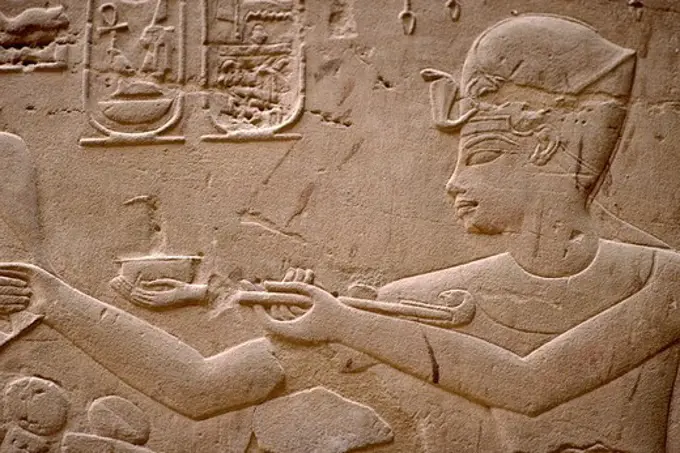
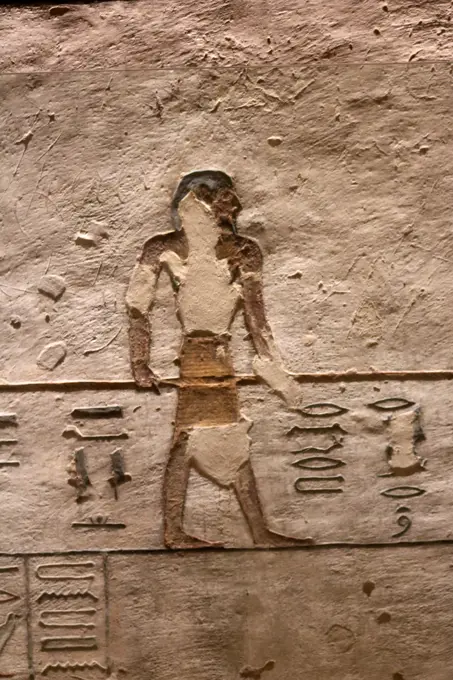
Egyptian Carving of Man Offering Drink
1746-29966026
Hypostyle Hall at the Temple of Rameses IIII at Medinet Habu, Egypt. The Mortuary Temple of Ramesses III at Medinet Habu was an important New Kingdom period temple structure in the West Bank of Luxor in Egypt. The temple has inscribed reliefs depicting the advent and defeat of the Sea Peoples during the reign of Ramesses III. Initial excavation of the temple took place sporadically between 1859 and 1899
6176-67081748
An Egyptian limestone relief, c1400 BC (1936). Artist: Unknown
1788-10683
Egypt, Thebes, Luxor, Valley of the Kings, Tomb of Seti II, entrance relief of Ra from nineteenth dynasty
4409-21488109
El Templo de Edfu está ubicado en la ciudad de Edfu (Egipto), que durante el periodo grecorromano fue conocida como Apolinópolis Magna, dedicada al dios de los dioses, Horus-Apolo.
1746-30012689
Tomb of Ramesses III, Pharaoh of the Twentieth Dynasty in Ancient Egypt. reigned from 1186 to 1155 BC and is considered to be the last monarch of the New Kingdom to wield any substantial authority over Egypt. Tomb KV11 is located in the main valley of the Valley of the Kings. The tomb has been open since antiquity, and has been known variously as Bruce's Tomb (named after James Bruce who entered the tomb in 1768) and The Harper's Tomb (due to paintings of two blind harpers in the tomb).
4409-45239
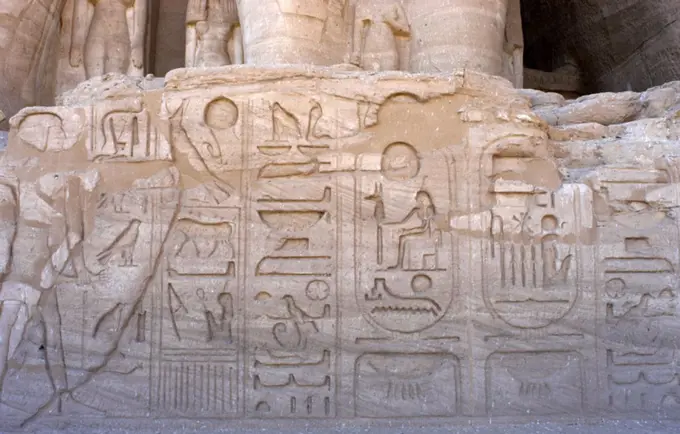
Egyptian Art. Hieroglyphic writing on the outside walls of the Great Temple of Ramses II.19th Dynasty. New Kingdom. Abu Simbel. Egypt.
1848-64409594
Relief paintings in the temple of Sethos I in Abydos, Egypt, Africa
1746-29971987
Relief from the Temple of Philae set on an island in the reservoir of the Aswan Low Dam, downstream of the Aswan Dam and Lake Nasser, Egypt. The temple complex was dismantled and moved to nearby Agilkia Island as part of the UNESCO Nubia Campaign project, before the 1970 completion of the Aswan High Dam. The island temple was built during the Ptolemaic Kingdom 380-362 BC. The principal deity of the temple complex was Isis
1746-30012508
A photograph taken of Philae, an island in the reservoir of the Aswan Low Dam, Egypt. Philae was initially located near the expansive First Cataract of the Nile in Upper Egypt and was the site of an Egyptian temple complex. The temple complex was dismantled and moved to nearby Agilkia Island as part of the UNESCO Nubia Campaign project, protecting this and other compounds before the 1970 completion of the Aswan High Dam. The most ancient was a temple for Isis, built in the reign of Nectanebo I during 380-362 BC, the other ruins date from the Ptolemaic Kingdom (282-145 BC), with many traces of Roman work in Philae dedicated to Ammon-Osiris.
1838-22213067
Ceiling Decorations, Medinat Habu Temple, Luxor, Egypt
4409-17371598
Relief of a goddess offering a palm rib. Dimensions: H: 41.9 x W: 38.1 x Th.3.8 cm (16 1/2 x 15 x 1 1/2 in.). Dynasty: Dynasty 22. Reign: reign of Sheshonq III, approximately. Date: ca. 825-773 B.C..This temple relief depicts a goddess raising her right hand behind what remains of a notched reed along the right margin of the block. The slightly raised position of the goddess's hanging left arm suggests that it was bent at the elbow so that her left hand grasped the reed. The palm branch, stripped of its leaves and notched to serve as a tally, was an Egyptian sign for "year," and gods were believed to present the reed, usually accompanied by either the sign for "one hundred thousand" or multiple jubilee signs, to the king as a promise of a long reign. Such presentations usually occurred in connection with birth, coronation-like ceremonies, or heb-sed festivals-jubilees traditionally celebrated after thirty years of rule.Behind the goddess is a left-facing inscription that relates to a
1848-55987836
Horus (falcon god) statue at the Temple of Edfu, Edfu, Egypt, Africa
1788-17691
Egypt, Dandarah (Dendera), Roman mammisi of Augustus. Detail of the outside wall relief's
6176-67053274
Hieroglyphic relief, Temple of Kom Ombo, Egypt, 20th Century. Artist: Unknown
1746-29962668
Temple of Kom Ombo, Upper Egypt. Constructed during the Ptolemaic dynasty, 180-47 BC. Some additions to it were later made during the Roman period. The building is unique because its 'double' design meant that there were courts, halls, sanctuaries and rooms duplicated for two sets of gods. The southern half of the temple was dedicated to the crocodile god Sobek. the northern part of the temple was dedicated to the falcon god Haroeris ("Horus the Elder"), along "with Tasenetnofret, a special form of Hathor
1746-30015840
Relief depicting a Lion attacking an ox depicted in relief on the Eastern Stairway of the Apadana or Audience Hall of Persepolis
7155-70374146
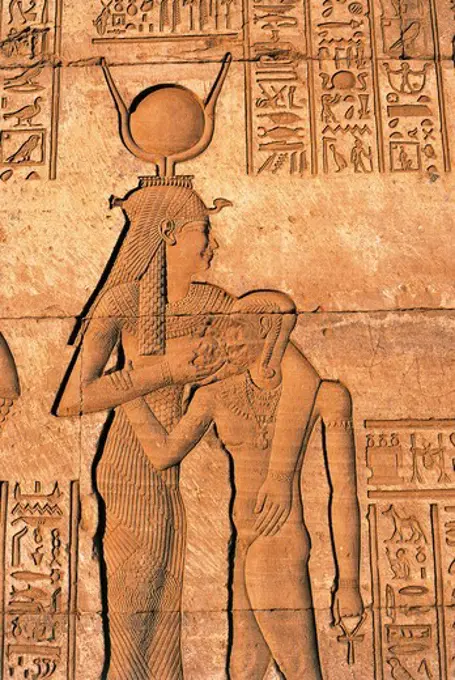
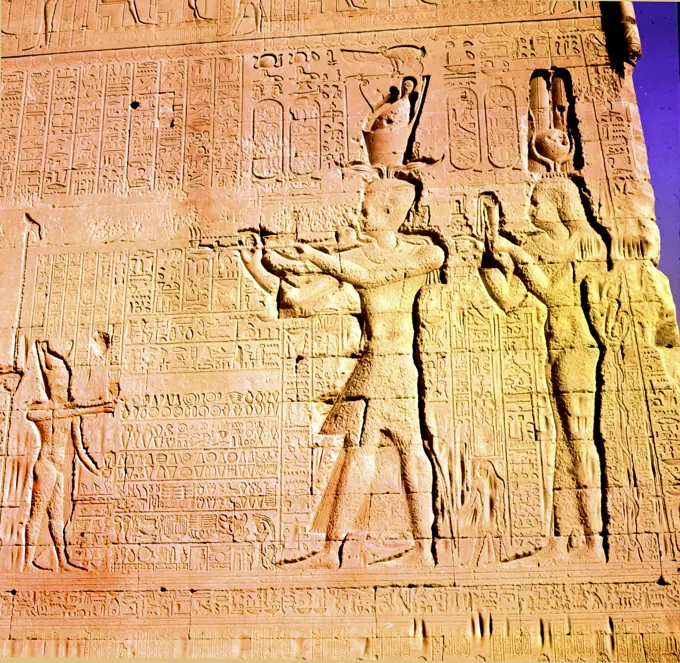
Caesarion and Cleopatra relief. Dendera Temple. Ancient Egyptian temple relief. EGYPT.
4409-17267373
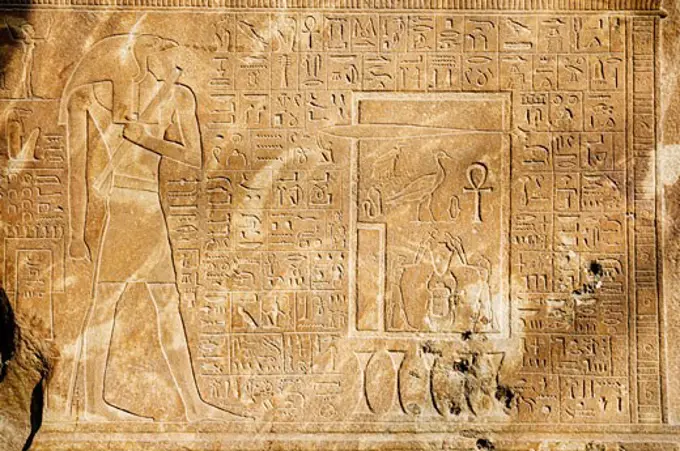
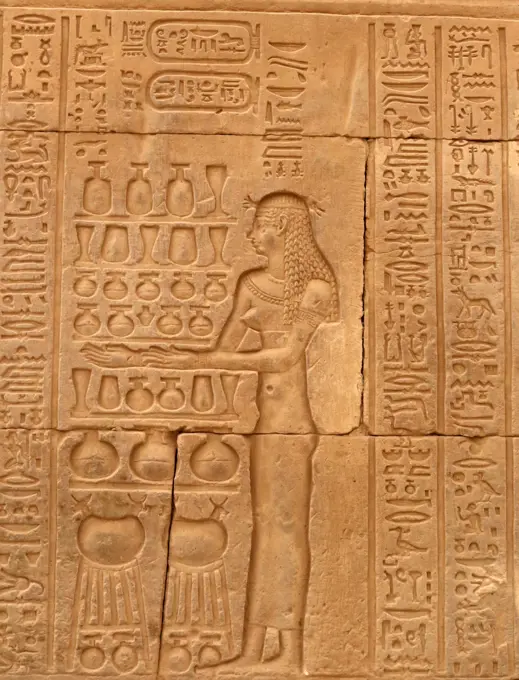
RELIEVES DE UTILES MEDICOS DEL TEMPLO DEDICADO A HORUS Y A SOBEK - REALIZADO ENTRE 1350 AC Y 180 AC - FOTO AÑOS 80. Location: TEMPLO. KOM OMBO. EGYPT.
1599-13473
Egyptian Sculpture at the Louvre Museum, Paris, France
PREVIOUS
of 3
NEXT
2401 S. Ervay, Suite 206
Dallas, Texas 75215
United States
Get Started
Free ResearchMy BoardsMy Cart
For Creators
How To License Your ContentContributor PortalFrame of Mind
Resources
API accessPricing
Contact
+1 866 236 0087help@viewpictures.co.uk Contact form
©2026 View Pictures. All Rights Reserved. -B
This site is protected by reCAPTCHA and Google Privacy Policy and Terms of Service apply.