My Boards
View Pictures
  • My Boards
← Artworks

Ancient Egyptian Reliefs

Hieroglyph-covered sandstone and stone reliefs depicting pharaohs and deities, showcasing the artistry and cultural significance of Ancient Egypt.
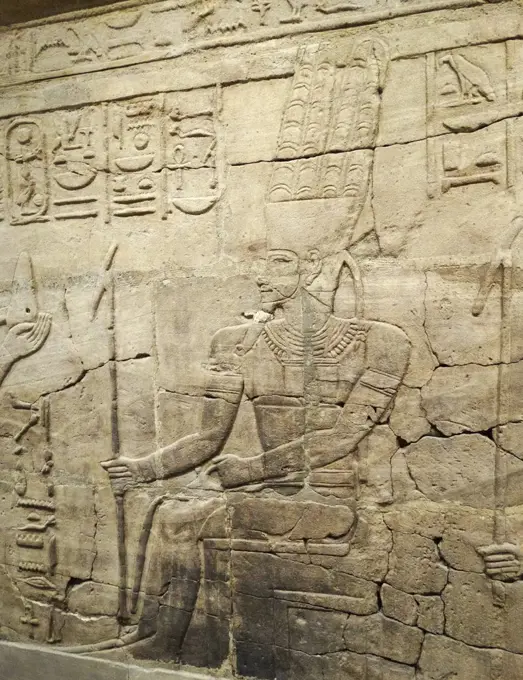
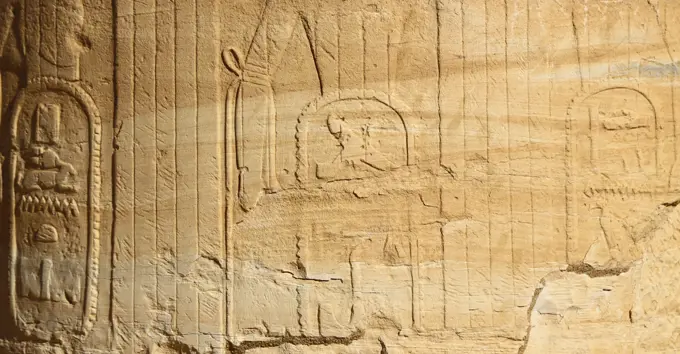
detail from the Shrine of Taharqa is a sandstone shrine built by King Taharqa (690-664 BC)
347 assets in this story
6145-29071166
Fragment of a Tomb Relief, 1401-1391 BC. Egypt, Probably Thebes, New Kingdom, Dynasty 18, reign of Tuthmosis III or slightly later, 1479-1425 BC. Limestone; overall: 40 x 37.5 cm (15 3/4 x 14 3/4 in.).
6145-59138138
Emilia-Romagna Bologna Bologna Museo Civico Archeologico Sale III, IV, V9. Hutzel, Max 1960-1990 Specific Location: Sale III, IV, V (Egyptian antiquities) Owner: Museo Civico Archeologico Antiquities: III: basalt sculptural fragments; reliefs from the tomb of Horemheb; funerary stele; dynasties XVIII, XIX, XX, Ptolomeic dynasty reliefs, generally in limestone. IV: XVIII, XIX dynasty sculptures in granite, limestone, sarcophagi, statuette in basalt, statuette in wood, statuettes in bronze, statuette faience, mummy mask: V: basalt sculptures of Horus, Sekhmet, limestone stele (Antiq. count: 202); Republican portrait sculpture, Republican cippi with portrait bust, cippus with portraits (single and group), cippi with inscriptions from all periods, architectural fragments, basin with inscription, torso fragment of cuirassed figure of the 1st century AD (Nero) (Antiq. count: 185); disk lamps from the late republic to 6th century, with erotes, animals, erotica, mythological scenes, menorah, p
1525-25233425
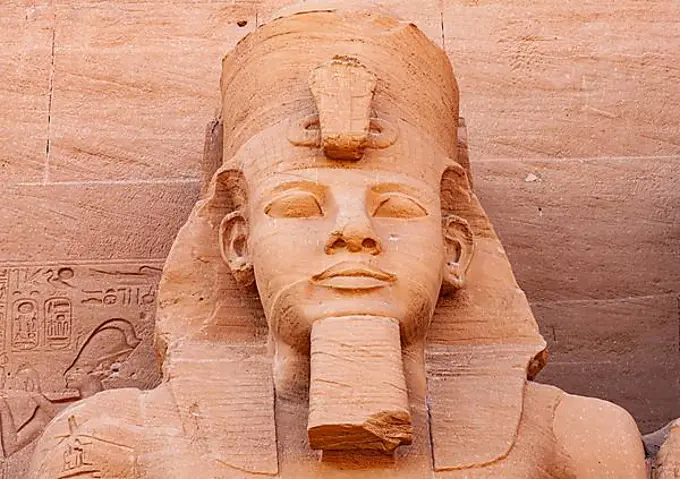
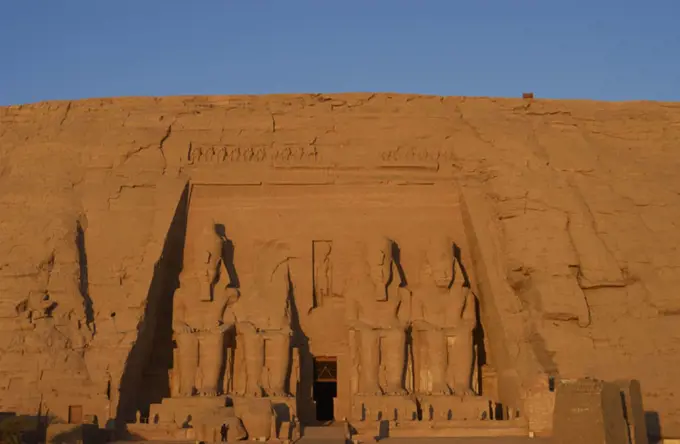
Landmark of the famous Ramses II statues at Abu Simbel in Egypt
1525-27694982
in africa sudan soleb  the antique temple of the black pharaohs in the middle of the desert
4435-3639
Book of the Dead or Papyrus of Any. ca. 1275 BC. 19th Dynasty. From left to right: the cat of Ra; the snake Apofis, symbol of evil; Khefri on her boat; the god Atum. Egyptian art. New Kingdom. Painting. UNITED KINGDOM. ENGLAND. London. The British Museum. Proc: EGYPT. QUENA. Luxor. Thebes.
1890-61093877
Statue of Queen Nefetari, Karnak Temple Complex, UNESCO World Heritage Site, Luxor, Egypt, North Africa, Africa
6145-54569551
Louxor: bas relief. 1860 - 1869. Photographs. The Miriam and Ira D. Wallach Division of Art, Prints and Photographs: Photography Collection. Egypt , Antiquities, Hieroglyphics, Archaeological sites , Egypt , Luxor, Bas-reliefs , Egypt , Luxor
1525-26137670
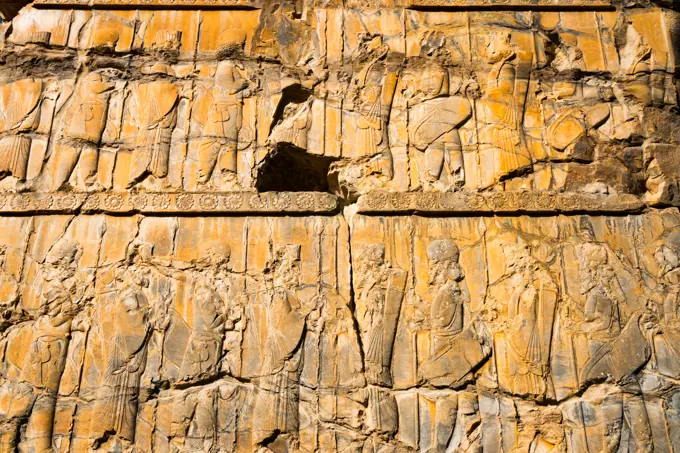
blur  in iran persepolis the old   ruins historical destination monuments and ruin
1746-30012332
A photograph taken of the Abu Simbel Temple, in Nubia, Southern Egypt, near the border with Sudan. The complex is a UNESCO World Heritage Site. The temple dates to the 13th century BC, during the 19th dynasty reign of the Pharaoh Ramesses II. It is a monument to the king and commemorates his victory at the Battle of Kadesh. The complex was relocated in its entirety in 1968 under the supervision of a Polish archaeologist, Kazimierz Michalowski, on an artificial hill made from a domed structure, high above the Aswan High Dam reservoir.
1788-23466
Iraq, Nimrud, Detail of Ivory plaquette representing a figure sitting on throne
4435-3809
Sesostris I being Embraced by the God Ptah. 1971 BC. From the Temple of Amun. It is one of the reliefs that covers one of the pillar sides, where appears the suject of the brotherly welcomes of the most important gods from Egypt. God Ptah, patron saint of the craftsmen. Egyptian art. Middle Kingdom. Relief on rock. EGYPT. CAIRO. Cairo. Egyptian Museum. Proc: EGYPT. QUENA. Karnak.
4409-45572
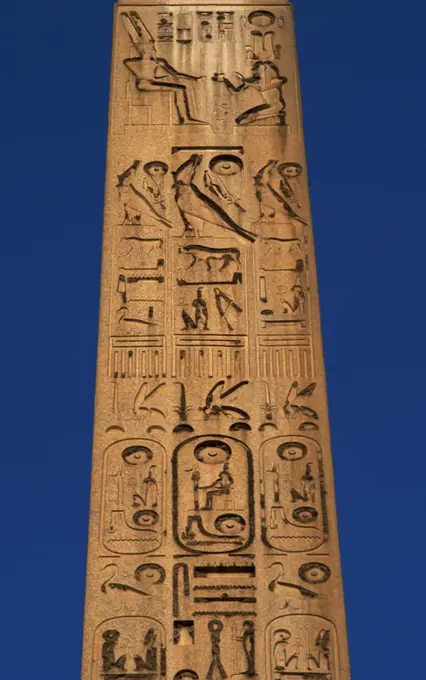
Egypt. Hieroglyphic writing. Obelisk of Ramesses II (1300-1213, reign 1279-1213 b.C.). Detail. Temple of Luxor. Dynasty XIX. New Kingdom. Ancient Thebes "Waset".
4443-75469066
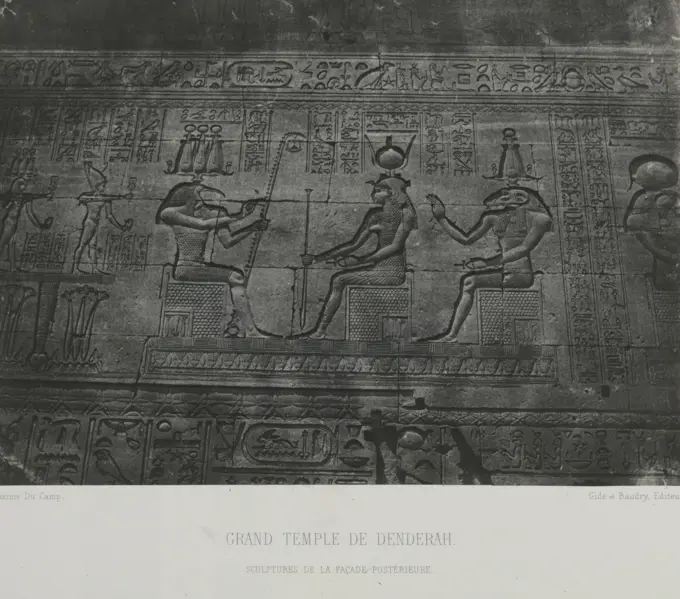
Haute Égypte. Grand Temple de Denderah, sculptures de la façade postérieure, 1852. Issued in Paris by Gide et J. Baudry., 16 x 24 cm on mount 31 x 44.5 cm
6145-54682891
Tablet from the foundation deposit of Mentuhotep II Middle Kingdom ca. 2060-2010 B.C. This tablet comes from a foundation deposit placed at the southeast corner of the terrace of Mentuhotep II's mortuary temple. There were four such deposits, each containing food offerings laid out in pottery dishes and miniature jars with mud stoppers that once held wine or beer. Across the top of each deposit were laid four flat mud bricks. One of these was solid; embedded in each of the other three was tablet, inscribed with the king's names and made out of one of the other materials to be used for building the temple, namely wood, stone, or metal. This example is made of travertine (Egyptian alabaster). View more. Tablet from the foundation deposit of Mentuhotep II. ca. 2060-2010 B.C.. Travertine (Egyptian alabaster). Middle Kingdom. From Egypt, Upper Egypt, Thebes, Deir el-Bahri, Temple of Mentuhotep II, foundation deposit, SE corner, MMA excavations, 1920-22. Dynasty 11
1746-29016376
Assyrian wall relief depicting the royal lion hunt. Assyrian, about 645-635 BC From Nineveh, North Palace.
4409-17293031
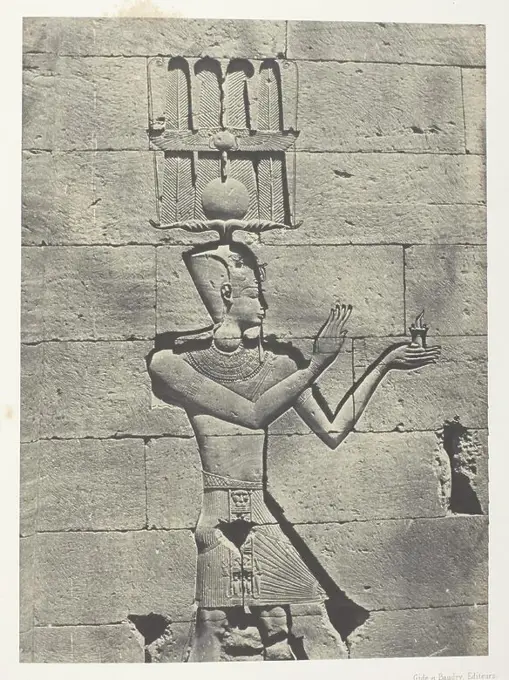
Kalabscheh, Sculptures De La Façade Postérieure Du Temple; Nubie. Maxime Du Camp; French, 1822-1894. Date: 1849-1851. Dimensions: 21.6 × 15.9 cm (image/paper); 43.1 × 29.9 cm (album page). Salted paper print, plate 91 from the album "Egypte, Nubie, Palestine et Syrie" (1852). Origin: France. Museum: The Chicago Art Institute, Chicago, USA.
6145-55179339
Capture of Kulisu, and ceremonies at the source of the river.. Birch, Samuel (1813-1885). Photographs, Illustrations. 1880 - 1902. General Research Division. Gates , Assyria, Bas-reliefs , Assyria, Shalmaneser III, King of Assyria, active 9th century B.C. , Palaces
1848-54736839
Zoom in View of Statue of Pharaoh Ramses II in front of The Great Temple of Ramses II in the village of Abu Simbel, Aswan, Upper Egypt
1746-19672344
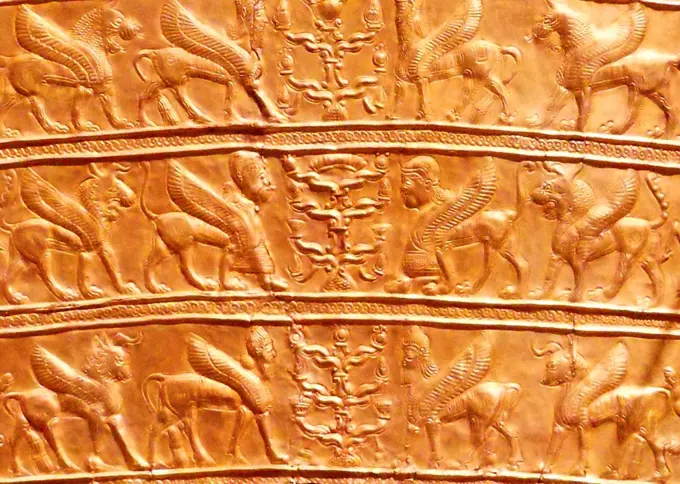
Plaques with winged creatures approaching stylised trees. Made from gold, circa 8th-7th century BC. From north-western Iran, possibly Ziwiye.
7125-70420914
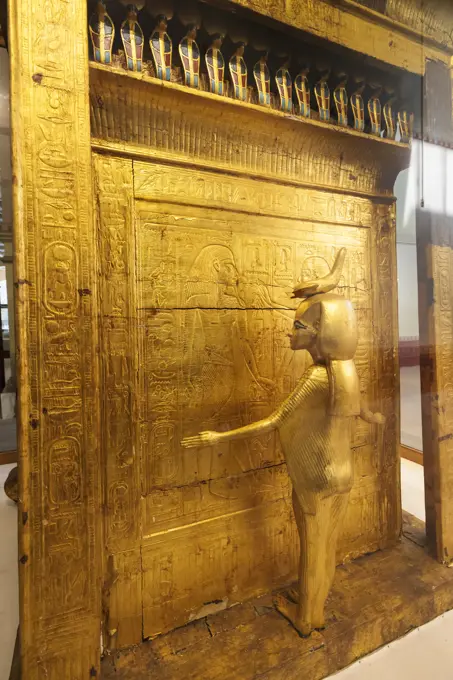
Golden sculpture at The National Military Museum. Cairo, Egypt.
1890-54949
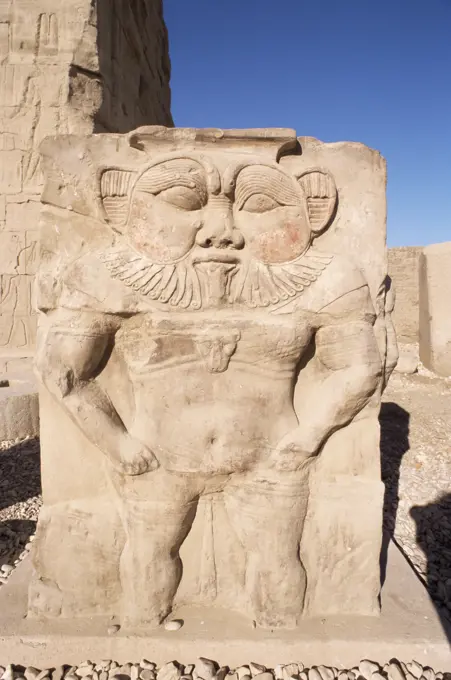
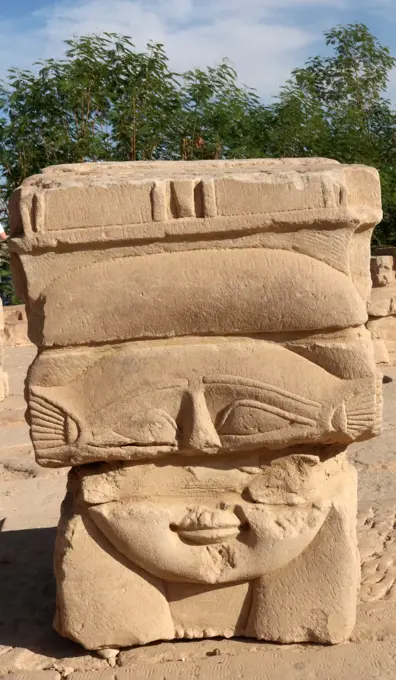
Statue of the ancient Egyptian god Bes, Temple at Dendera, Egypt, North Africa, Africa
1848-51605397
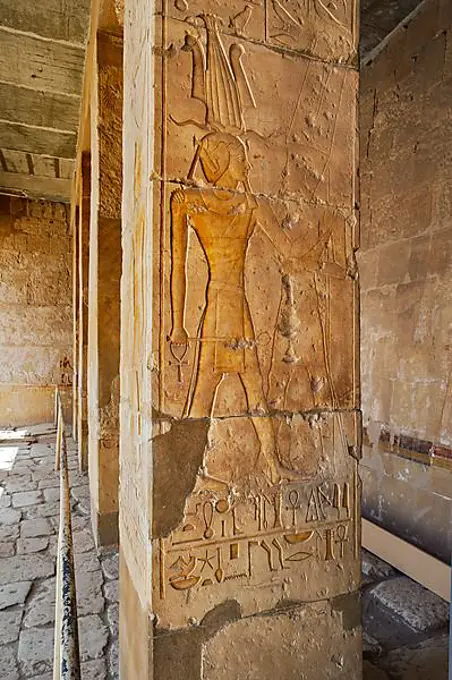
Column with bas-relief, Hatshepsut Temple, Thebes, Luxor Governorate, or Luxor, Egypt, Africa
1525-26138784
blur  in iran persepolis the old   ruins historical destination monuments and ruin
1890-13582470
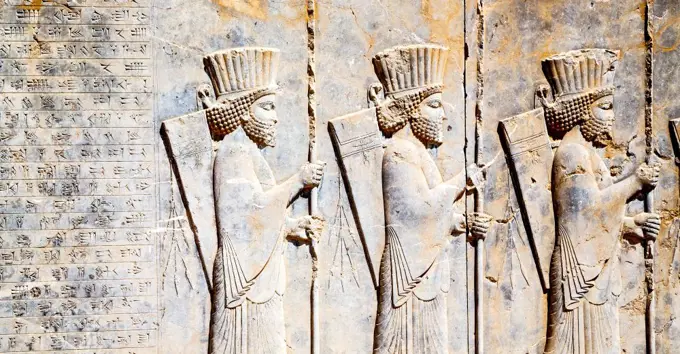
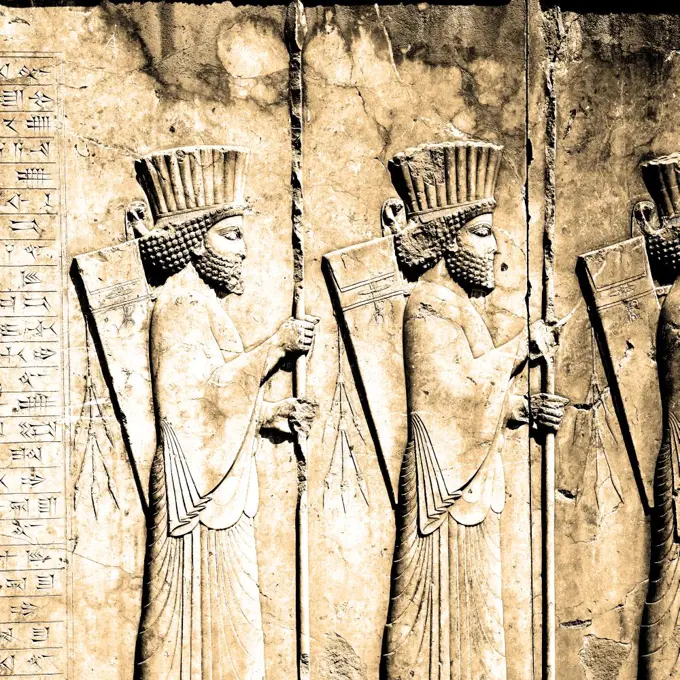
Detail from relief of 100 soldiers on a door jamb of the Palace of 100 Columns, Persepolis,UNESCO World Heritage Site, Iran, Middle East
4292-79250
Piedmont, Turin, Egyptian Museum
4409-21486293
Obeliscos en templo de Karnak. Egipto.
7008-69757500
Visual Art worked into Stone Temple of Luxor, Luxor Egypt.
4409-40920
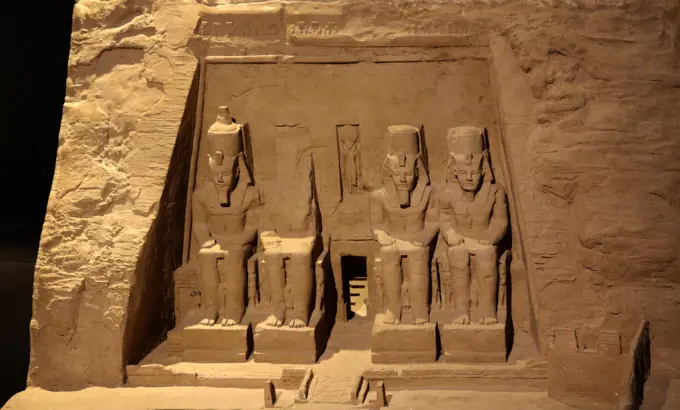
Egyptian art. Great Temple of Ramses II. Four colossal statues depicting the pharaoh Ramses II (1290-1224 BC) seated with the nemes head and surmounted by the double crown. 19th Dynasty. New Kingdom. Abu Simbel. Egypt.
1848-54738030
Statue of Seated Pharaoh Thutmose III at the Festival Hall of Thutmose III in The Temple of Karnak Complex, Luxor, Upper Egypt
1850-1397
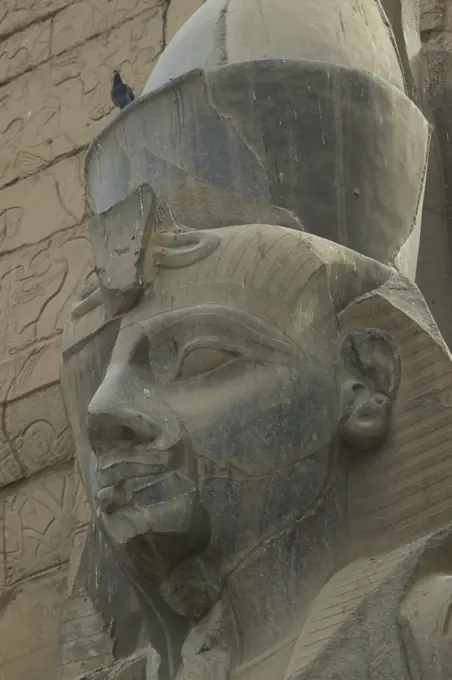
Egypt, Nile Valley, Thebes, 'The Ramesseum, Large Fallen Carved Stone Head Of Ramses Ii At Foot Of The Remains Of Osiride Columns Which Depict Ramses As Osiris, God Of The Underworld.'
1848-50874192
Colossal statue at Hathor temple of queen Nefertari, Abu Simbel, Egypt, Africa
6145-29166453
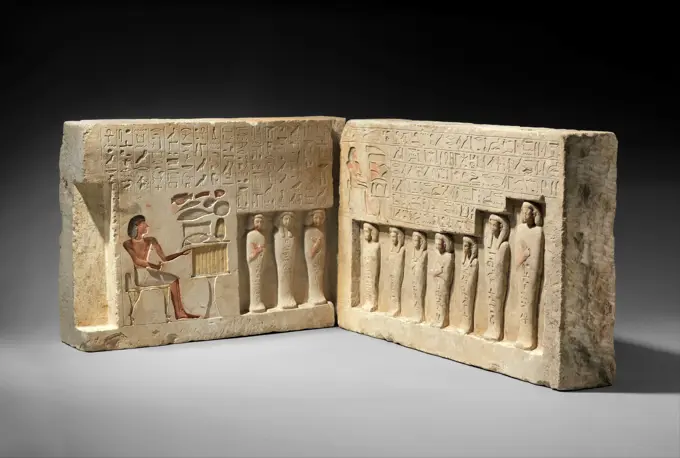
Reliefs from the Chapel of the Overseer of the Troops Sehetepibre ca. 1802-1640 B.C. Middle Kingdom The "overseer of troops" Sehetepibre, son of Sitankhu, was the owner of a commemorative chapel at Abydos, presumably built on the "Terrace of the Great God" near the Osiris Temple. From here, he could magically and eternally participate in the festivals celebrating this god that were held each year. The two surviving walls of this chapel depict Sehetepibre seated at an offering table (on slab 65.120.1) with formulaic inscriptions that request provisions from the deities worshipped at Abydos.The lower portions are deeply cut back to form ten niches, each occupied by a mummiform figure that is identified by an inscription. Although Egyptian hieroglyphs could be written in either direction, the preference was right to left. Thus, the list of Sehetepibre's family begins on slab (65.120.2 and continues on (65.120.1. The largest figure (on slab 65.120.2) is Sehetepibre himself. To his right is
7002-69579532
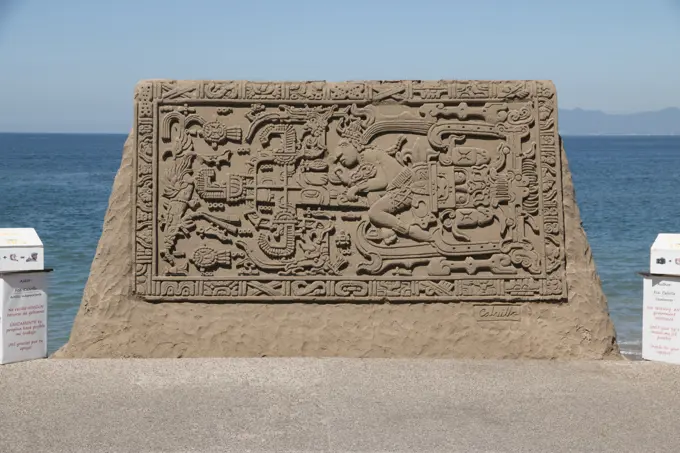
North America, Mexico, Puerta Vallarta. Sand Sculptures. (Editorial Use Only)
1788-1085
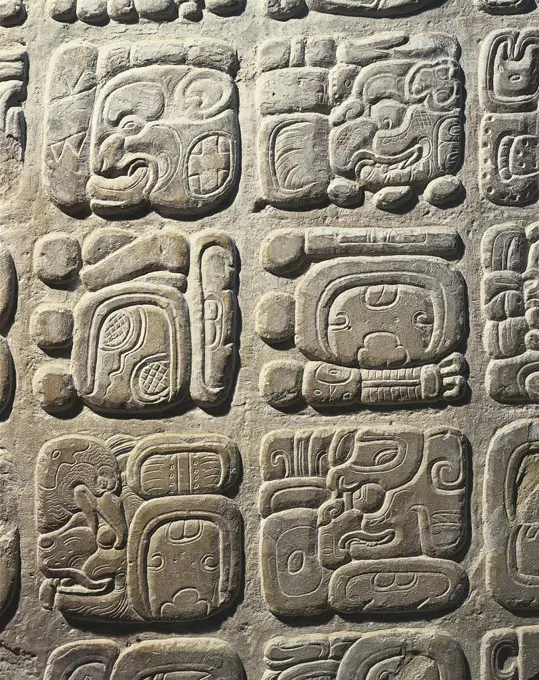
Mexico - Maya Civilization - Chiapas State - Palenque archaeological site - Stone with non-coded hieroglyphics (11th century A.D.)
1890-68926577
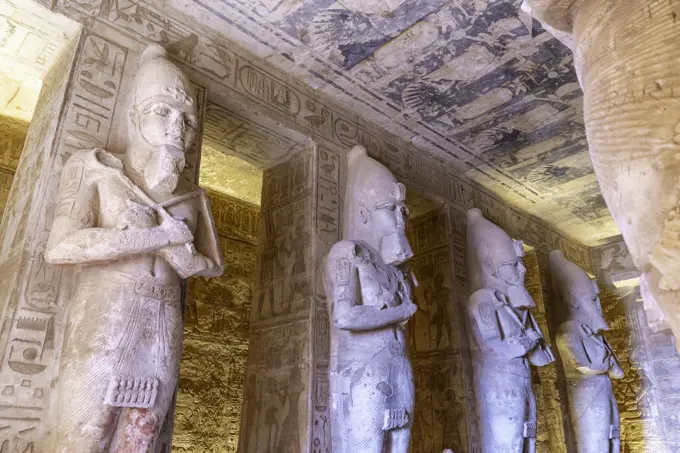
Interior view of the sculptures of the pharaohs in the Abu Simbel Temple next to Lake Nasser, Temple of the Pharaohs, Ramses II, Nubia, Egypt, Africa
1848-61322051
Relief with winged creature as symbol of the Zoroastrians, Persepolis, Persepolis, Iran, Asia
7137-70487783
A sand sculpture on the beach at Le Touquet-Paris-Plage in the department of Pas-de-Calais, France.
6145-29772933
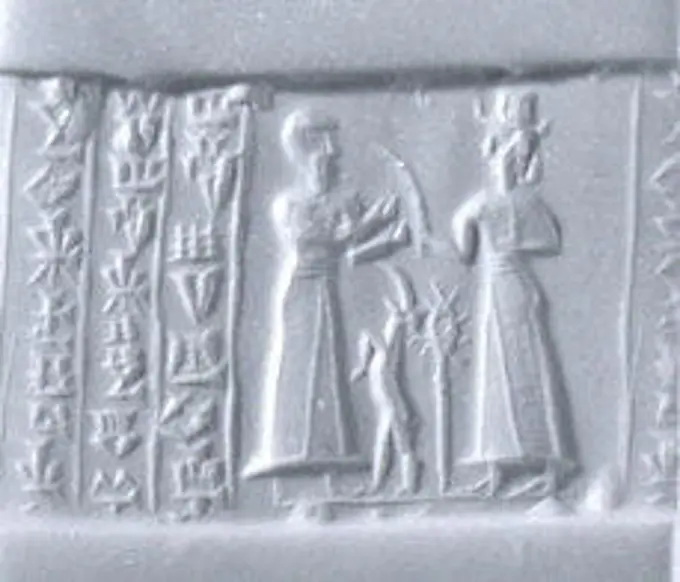
Cylinder seal ca. 18th-17th century B.C. Elamite. Cylinder seal. Elamite. ca. 18th-17th century B.C.. Hematite. Old Elamite. Southwestern Iran
7003-69609792
Middle East, United Arab Emirates, Dubai, Pyramids Club, Wafi Shopping Center
1746-29971597
Relief from the Temple of Philae set on an island in the reservoir of the Aswan Low Dam, downstream of the Aswan Dam and Lake Nasser, Egypt. The temple complex was dismantled and moved to nearby Agilkia Island as part of the UNESCO Nubia Campaign project, before the 1970 completion of the Aswan High Dam. The island temple was built during the Ptolemaic Kingdom 380-362 BC. The principal deity of the temple complex was Isis
1890-61093874
Statues of Thutmose III, Pylon 7, Karnak Temple Complex, UNESCO World Heritage Site, Luxor, Egypt, North Africa, Africa
1848-62773068
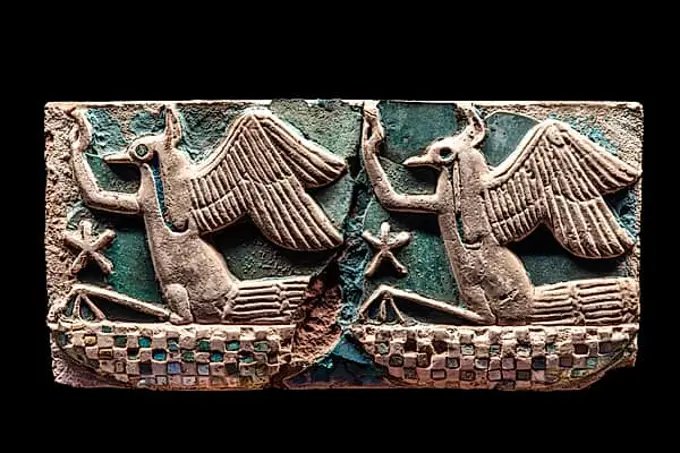
Tile from the frieze with Rechit birds from the exhibition: Ramses the Great and the Gold of the Pharaohs, Cologne, North Rhine-Westphalia, Germany, Europe
4449-28887789
Close-up of the wall decoration in the Alhambra, Granada, Andalusia, Spain
1525R-49066
4409-60318
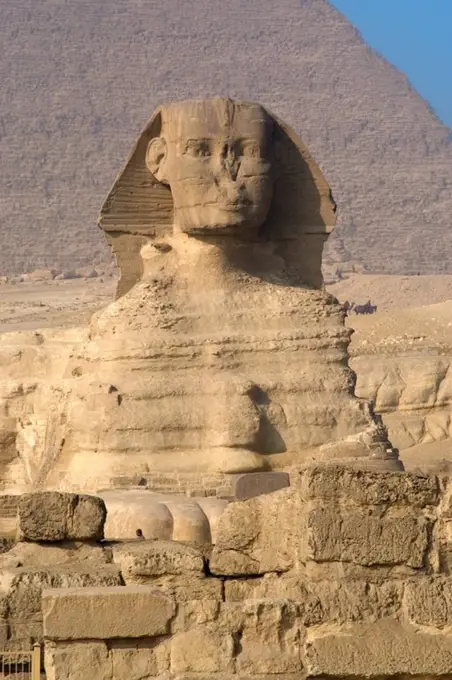
Egypt. Great Sphinx of Giza. Limestone statue with lion body and human head. Is believed that represents the Pharaoh Khafra. Built as a protective guard on the banks of the River Nile. Old Kingdom. 2500 B.C. approximately. 4th Dynasty.
7208-70658348
Tenochtitlan, Templo Mayor, Aztec, Calendar, Mexico, Archaeology, Mexico City, instituto Nacional de Anthropologia e Historia, National Museum of Anthropology and History
6019-28720873
Alabaster sphinx in Egypt captured on a sunny day
PREVIOUS
of 4
NEXT
2401 S. Ervay, Suite 206
Dallas, Texas 75215
United States
Get Started
Free ResearchMy BoardsMy Cart
For Creators
How To License Your ContentContributor PortalFrame of Mind
Resources
API accessPricing
Contact
+1 866 236 0087help@viewpictures.co.uk Contact form
©2026 View Pictures. All Rights Reserved. -A
This site is protected by reCAPTCHA and Google Privacy Policy and Terms of Service apply.