My Boards
View Pictures
  • My Boards
← Artworks

Ancient Egyptian Sculptures

Artifacts representing significant deities and pharaohs from Ancient Egypt. Crafted from stone and wood, these sculptures embody religious and cultural significance.
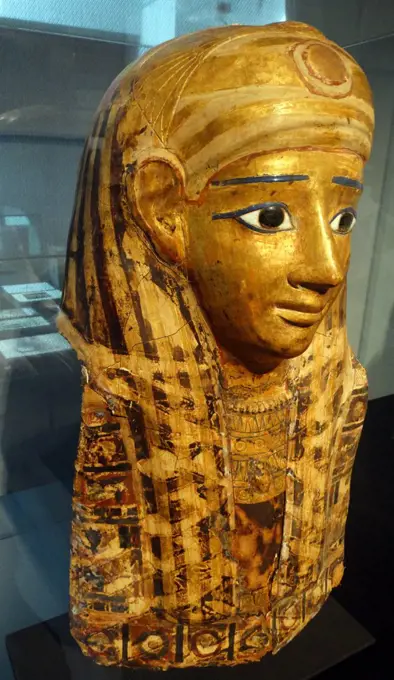
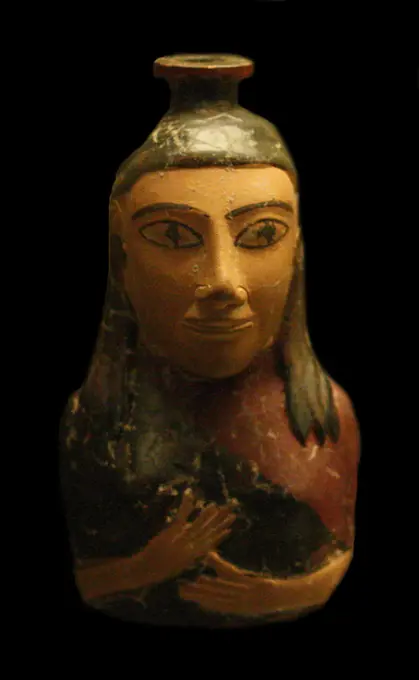
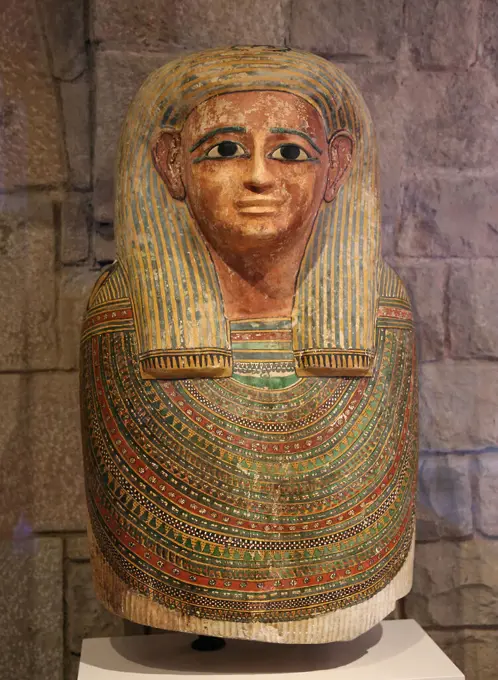
Ancient Egyptian funeral mask. Greco-Egyptian, Ptolemaic (304-30 A.D.)
191 assets in this story
6145-29065136
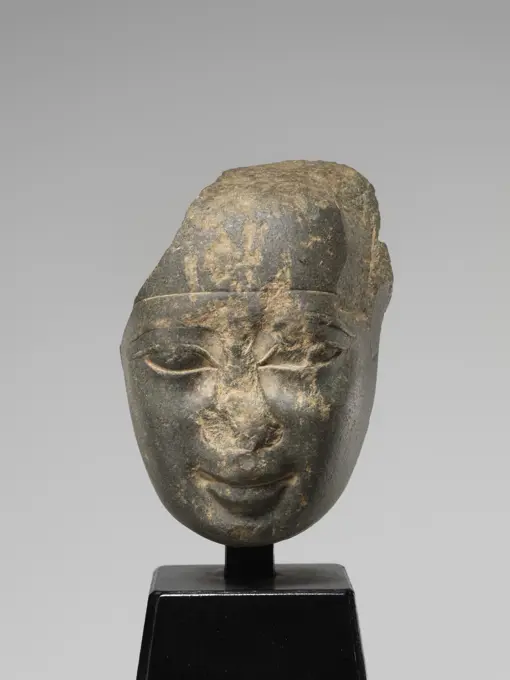
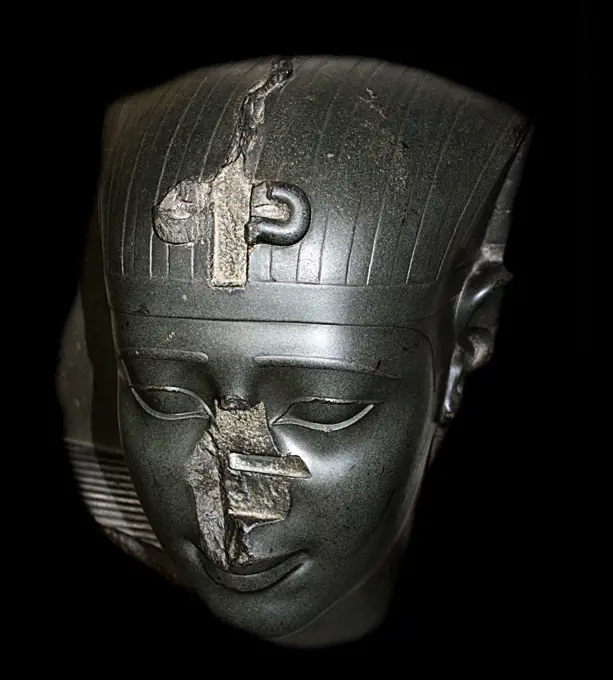
Head of Amenhotep III Wearing the Blue Crown, c. 1391-1353 BC. Egypt, New Kingdom, Dynasty 18, reign of Amenhotep III. Granodiorite; overall: 39.1 x 30.3 x 27.7 cm (15 3/8 x 11 15/16 x 10 7/8 in.).
6145-29795816
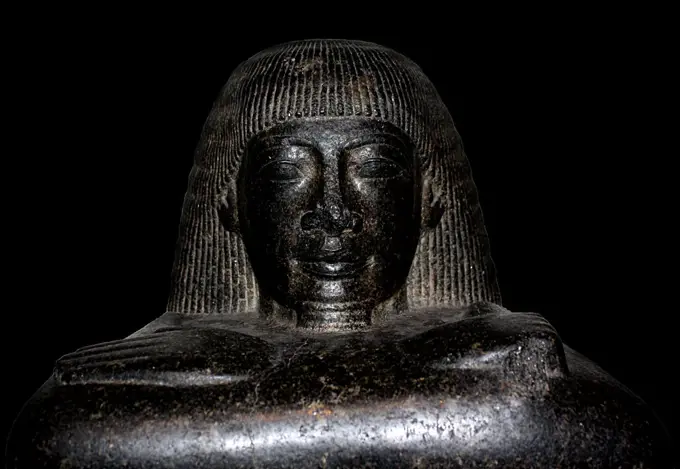
Double Shabti of Benermerut and His Mother, Ikhem ca. 1479-1425 B.C. New Kingdom. Double Shabti of Benermerut and His Mother, Ikhem. ca. 1479-1425 B.C.. Gabroic rock, possibly serpentinite. New Kingdom. From Egypt. Dynasty 18
1746-19669914
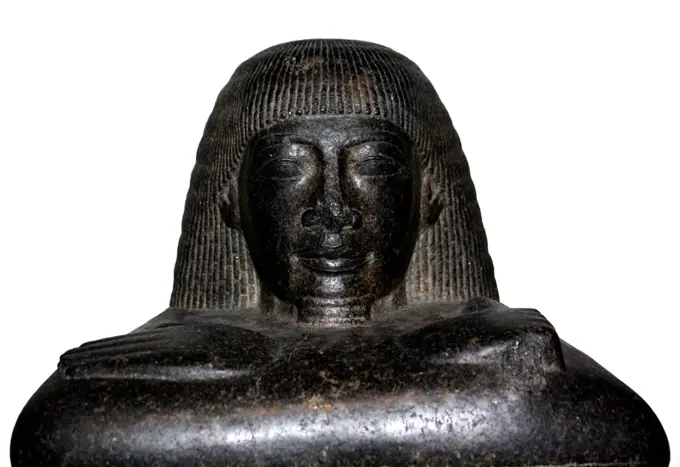
Granodiorite statue of Amenhotep. Eighteenths Dynasty, about 1400 BC From Abydos. Amenhotep held the title of overseer of the royal palace in Memphis.
6145-29157107
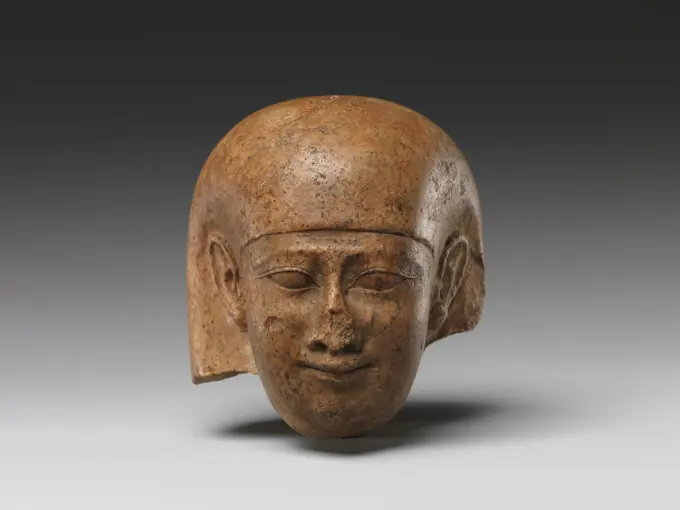
Head of an official 400-200 B.C. Late Period-Early Ptolemaic Period Although the size of this head testifies to a very small statue, its commissioner was able to acquire a fine dense quartzite stone. The head shows no evidence of adjacent horizontal surfaces such as one would expect with a block statue, so it was most probably part of a small striding statue, and could also have held a divine figure or a naos.. Head of an official 551350
1848-53498659
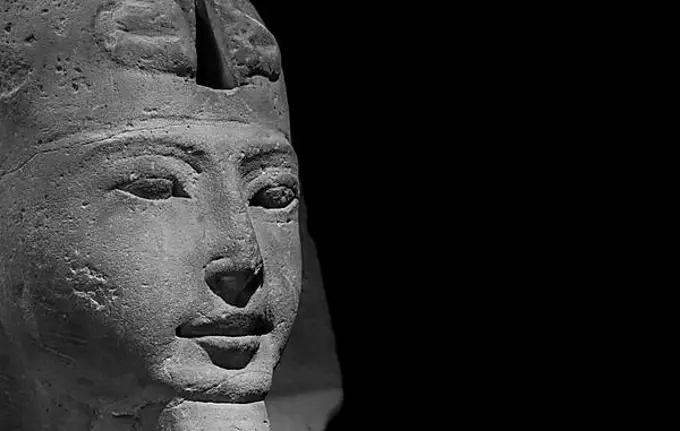
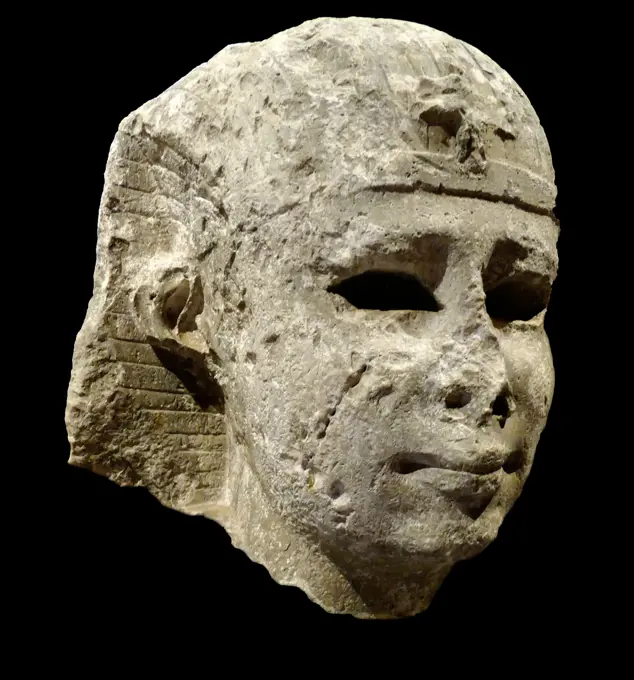
Detail of an Egyptian Sphinx - Ramesside Period
4409-63010430
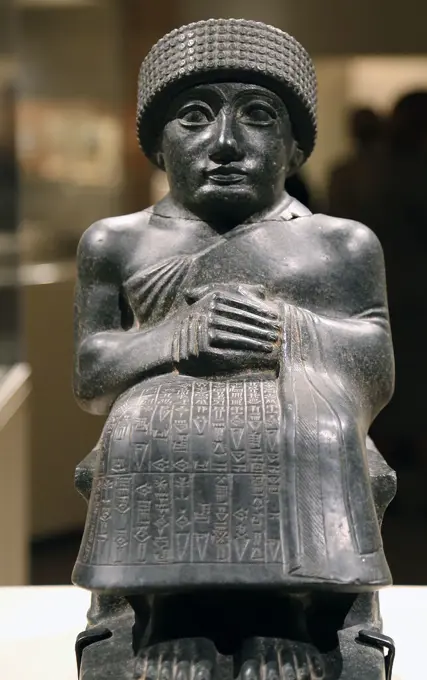
Statue of Gudea. Neo-Sumerian. ca. 2090 BC. Mesopotamia, probably from Girsu (modern Tello). Diorite. Metropolitan Museum of Art. Ny. Usa.
6145-29196446
Trial Piece of a Queen's Head, on the reverse a falcon's head ca. 1353-1336 B.C. New Kingdom, Amarna Period. Trial Piece of a Queen's Head, on the reverse a falcon's head. ca. 1353-1336 B.C.. Limestone. New Kingdom, Amarna Period. From Egypt, Middle Egypt, Amarna (Akhetaten), Sculptors' school in the town, Petrie/Carter excavations, 1891-92. Dynasty 18
1746-19670538
Two Uschebtis with hoes and grain sacks New Kingdom, 18th and 20th Dynasty around 1500 BC and 1100 BC Western Thebes, limestone, painted.
6145-29739705
Shabti inscribed for Nesbanebdjed ca. 380-342 B.C. Late Period This shabti comes from a tomb chamber discovered in 1902 at the site of the ancient city of Mendes (Tell el-Ruba), the capital of Egypt for a short time during the Late Period. On top of a slab over this chamber were over 360 complete shabtis, plus a number of fragments and several amulets; in the chamber beneath was a mummy adorned with trappings of gold leaf (see Cairo CG 53465-53469). Most of the shabtis were inscribed, like this one, for the priest Nesbanebdjed. Of these, 322 had the type of T-shaped inscription seen here (see also 10.130.1044a and b). Several of Nesbanebdjeds shabtis remained in Egypt; others can be found in museum and private collections around the world.Nesbanebdjeds priestly titles associate him with the cult of the ram-god Banebdjed, who was part of the Mendesian triad with the goddess Hatmehyt and the child god Harpocrates. See below for a translation of the inscription.. Shabti inscribed for N
6176-67078004
Egyptian relief of a pharaoh. Artist: Unknown
4409-17407035
Horus falcon figure. Dimensions: H. 8.2 cm (3 1/4 in.); W. 2.5 cm (1 in.); L. 6.3 cm (2 1/2 in.). Date: 664-30 B.C..The falcon god Horus stands with his wings swept back. He wears the double crown of Egypt, a royal crown that symbolizes the union of Lower and Upper Egypt, and highlights Horus' role as the legitimate ruler of the entire land. The falcon wears the double crown because Horus and the concept of kingship were closely tied, as early as the Predynastic Period. The falcon stands on a rectangular platform, which could have functioned in a number of ways. The figure could have been attached to a separate cupreous metal or wooden base, or it could have topped a standard modeled after those used in festival processions and on sacred barks. The falcon also could have sat on top of a hollow box intended for holding an animal mummy, like 41.160.107. Such falcon mummy boxes, or sarcophagi, would have been offered for deposition in animal necropoleis, not just in relation to the cult o
866-8697
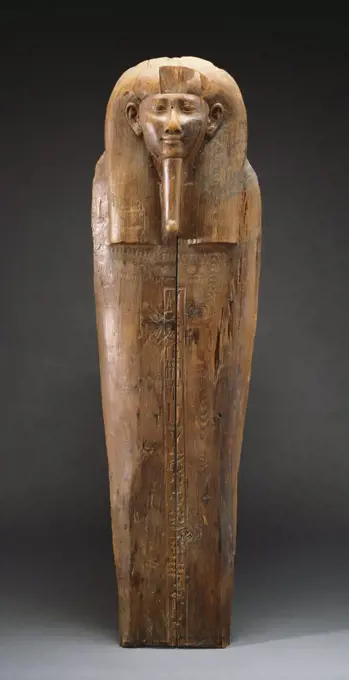
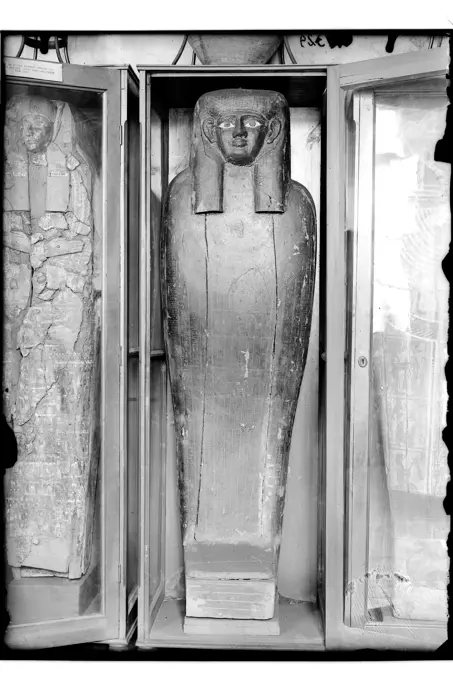
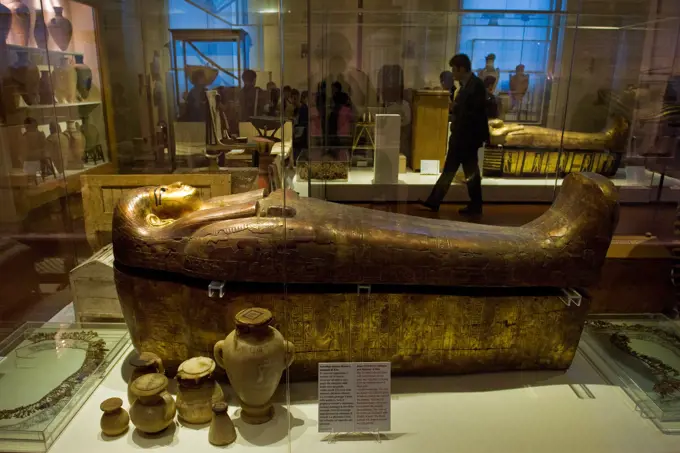
An Egyptian Wood Sarcophagus Lid. Late Period, Dynasty XXX to Early Ptolemaic Period, 380-280 B.C. 155.6cm long.
4409-17499961
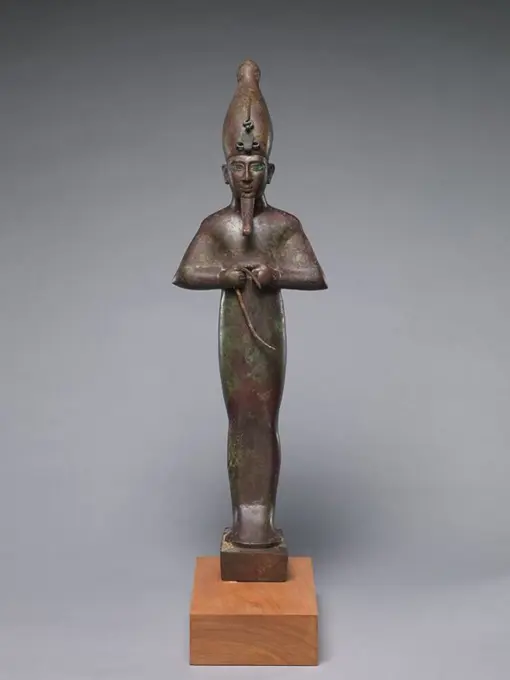
Osiris inscribed for Harkhebit, son of Padikhonsu and Isetempermes. Dimensions: H. 76 cm (29 15/16 in.); H. without tang 72 cm (28 3/8 in.); W. 22.3 cm (8 3/4 in.); D. 18.5 cm (7 5/16 in.). Date: 600-300 BC.During the first millennium B.C. Osiris's cult became dominant and was observed in seemingly every temple in the land. This large Osiris was dedicated somewhere at Memphis. After a period, which might even be hundreds of years, it was removed with other figures - including 10.175.131, .132 and .134 - for respectful burial within the temple precincts.The statue's facial features - upturned eyes and a small curved mouth - recall early to mid-Saite Period style. Various factors need consideration, but it may be that this statue, like the statue of Nefertum 10.175.131 that has similar features, dates to a period long before it was cached away, probably sometime in the fourth or third century. The name of the dedicator's mother means Isis-is-in-the-birth-house and she gave her son, th
7058-70083455
Vienna, Austria. Kunsthistorisches Museum. (Editorial Use Only)
4409-63999
Egyptian Art. Sarcophagus of Nesi-Hor. C. 200 B.C. Detail. Face. Ptolemaic Egypt. Carlsberg Glyptotek Museum. Copenhagen. Denmark.
1746-19984778
Funerary coffin for the mummy of the priest Hornedjitef. From Thebes, Egypt, Early Ptolemaic Period, 3rd century BC
6145-29707059
Head of a Man ca. 595-570 B.C. Mid-Saite Period This elegant head represents a northern type of late Twenty-sixth Dynasty private sculpture. It originates from a modestly proportioned male figure.. Head of a Man. ca. 595-570 B.C.. Basalt or metagraywacke. Mid-Saite Period. From Egypt. Dynasty 26
1746-19670362
Limestone kouros (youth) and man playing double pipes. Made in Cyprus, 600-570 BC From Kamiros, Rhodes
1746-29016036
Colossal head from a Royal statue from Ancient Egypt. Built from Numulitic stone from Alexandria. Dated 300 BC
1848-53498444
Pharaoh Amnhotep II, 1400 BC, statue made of granite
1746-19661575
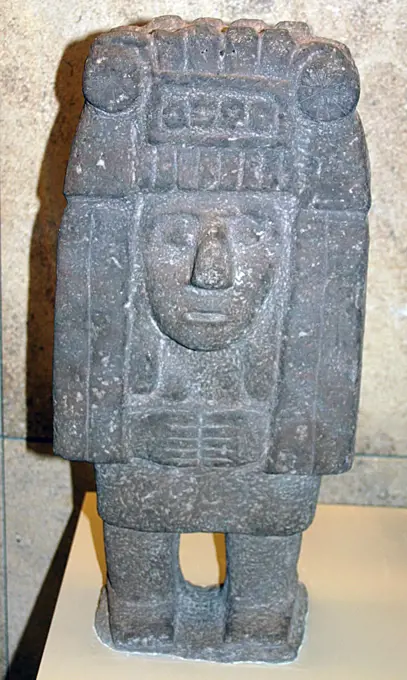
Standing figure of Chicomecoatl female deity associated with Maize and food. Aztec 1300-1521 AD. Pre-Columbian Mesoamerican Mythology Sculpture
1746-30016720
Anthropoid Sarcophagus, White Marble; Necropolis of Magharat Tablun, Sidon, Lebanon, 5th century BC Egyptian
6145-59112752
Double -sided gingerbread form
6145-52892187
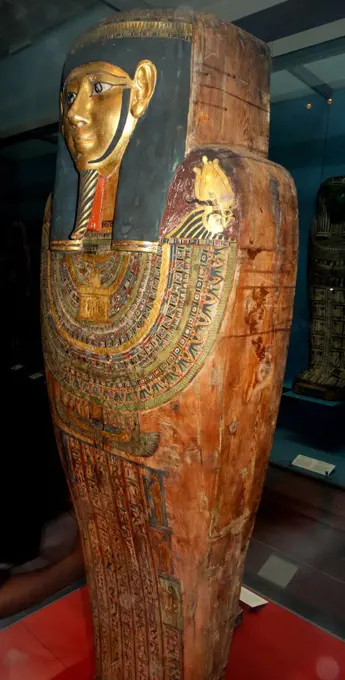
Painted plaster on wood coffin belonging to Lady Tadi-en-hent awy daughter of Nes-Khonsu, 650-500 BC, Late Period (26th Dynasty)
4048-2805
Colossal statue of a winged lion (lamassu) from the North-West Palace of Ashurnasirpal II, from Nimroud, ca 883-859 BC; photo ca 1860
1746-19669499
Head from a statue of a king. Thirtieth Dynasty, about 370 BC. This royal head is an example of the very fine quality work produced in late period Egypt, often in a choice of very hard stones. Although there is no inscription on the pieve to identify the king, stylistic comparison suggests the it belongs to the thirtieth Dynasty and probably represents King Nectanebo.
1746-19669907
Granodiorite statue of Amenhotep. Eighteenths Dynasty, about 1400 BC From Abydos. Amenhotep held the title of overseer of the royal palace in Memphis.
6145-29721481
Warrior 7th century China. Warrior. China. 7th century. Unfired clay with pigment. Tang dynasty (618-907). Tomb Pottery
1746-19676956
Head of a Standing Male Figure. Karnack
4409-28808246
probably head of pharaoh Shabaka, granite, 25th dynasty, 716-702 BC, probably Heliopolis, Egypt, collection of the British Museum.
1788-20330
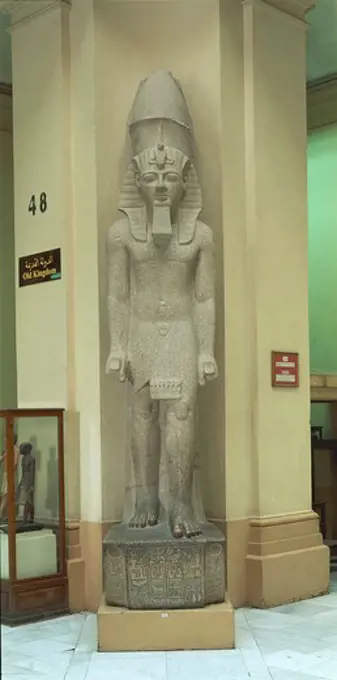
Egypt, Cairo, Egyptian Museum, Colossal stone statue of Ramses II from Khmenu
1746-19664238
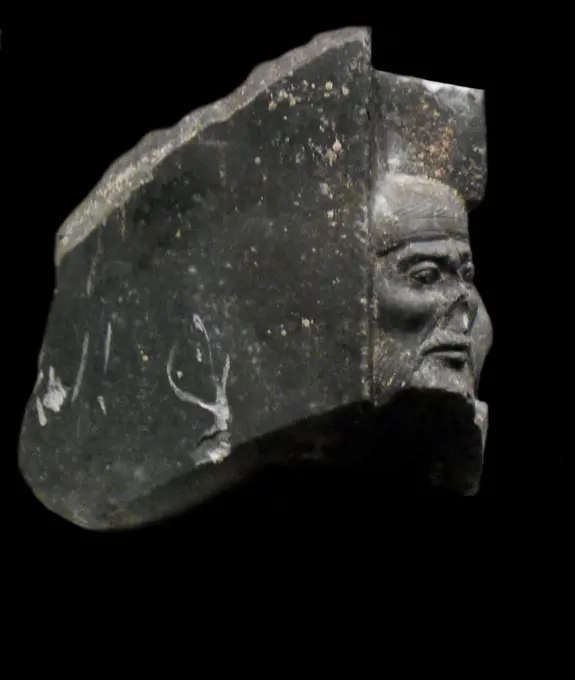
Fragment of a sculptured statue showing an Asian prisoner. 19th Dynasty, Reign of Ramses I or Seti I. ca. 13001250 B.C. Egypt
6145-29724560
Door Jamb of Sitepihu ca. 1479-1458 B.C. New Kingdom This doorjamb probably stood on the right side of a door in the tomb of Sitepihu, who was Mayor and Overseer of Priests at Thinis, in the area of modern Abydos. Satepihu was also closely associated with the royal court through one of his female relatives, Tinetiunet, who was a royal wet-nurse. In the inscription, he is referred to as one who is favored by the Lord Wadjet-renput, one of the royal names of the female pharaoh, Hatshepsut. The offering formula on the jamb invokes the gods Ptah-Sokar and Anubis. A block statue of Sitepihu (now in the University Museum in Philadelphia, E9217) and the jamb were found during excavations at Abydos that were sponsored by the Egypt Exploration Fund.. Door Jamb of Sitepihu. ca. 1479-1458 B.C.. Limestone. New Kingdom. From Egypt, Northern Upper Egypt, Abydos, Cemetery D, Tomb D9, Egypt Exploration Fund excavations, 1900. Dynasty 18
6145-59151666
Lazio Rieti Cantalupo in Sabina Palazzo Camuccini8. Hutzel, Max 1960-1990 Post-medieval: Architecture. The palazzo was built by the architect Giovan Domenico Bianchi (16th century) for Cardinal Pierdonato Cesi, on the site of a medieval castle, parts of which were used in the new structure. The facade consists of a portico surmounted by a loggia. Antiquities: Sculpture. A collection of ancient artifacts is housed in the palazzo. German-born photographer and scholar Max Hutzel (1911-1988) photographed in Italy from the early 1960s until his death. The result of this project, referred to by Hutzel as Foto Arte Minore, is thorough documentation of art historical development in Italy up to the 18th century, including objects of the Etruscans and the Romans, as well as early Medieval, Romanesque, Gothic, Renaissance and Baroque monuments. Images are organized by geographic region in Italy, then by province, city, site complex and monument.
1848-62773791
Statue of Chaemwaset holding a figure of Ptah from the exhibition: Ramses the Great and the Gold of the Pharaohs, Cologne, North Rhine-Westphalia, Germany, Europe
900-711
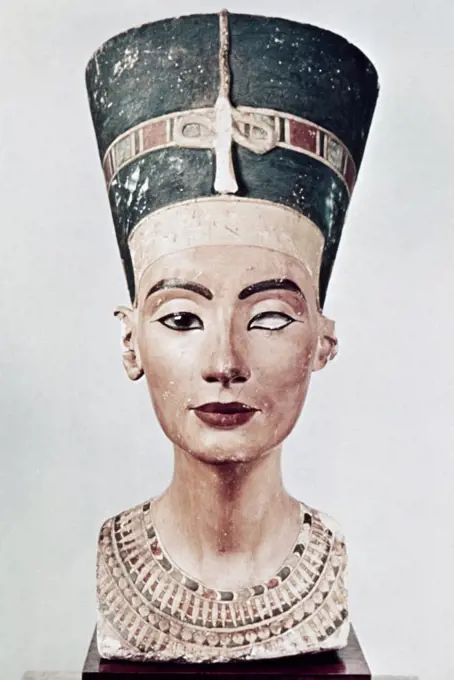
Nefertiti (Front)  1350 BC Egyptian Art(- ) Limestone Staatliche Museen Preussischer Kulturbesitz, (Agyptisches Museum und Papyrussammlung), Berlin
6145-29835955
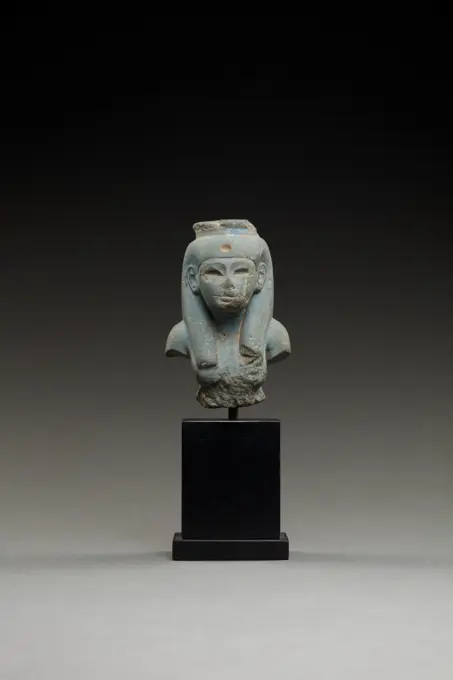
Upper part of Isis, from a figure of the goddess nursing Horus ca. 945-700 B.C. Third Intermediate Period Egyptian blue was a synthetic pigment used most frequently to add color to objects composed of other materials or for small objects such as scarabs. It was occasionally also used for larger objects, such as this small sculpture representing Isis. Only the upper part of the sculpture is preserved, but in the complete piece, the goddess likely would have been shown seated, with Horus, her son with the god Osiris, on her lap (see 55.121.5). Traces on the left breast were most likely left by her missing right hand, with which she would have offered milk to her baby.. Upper part of Isis, from a figure of the goddess nursing Horus. ca. 945-700 B.C.. Egyptian blue. Third Intermediate Period. From Egypt. Dynasty 22-23
4409-43476
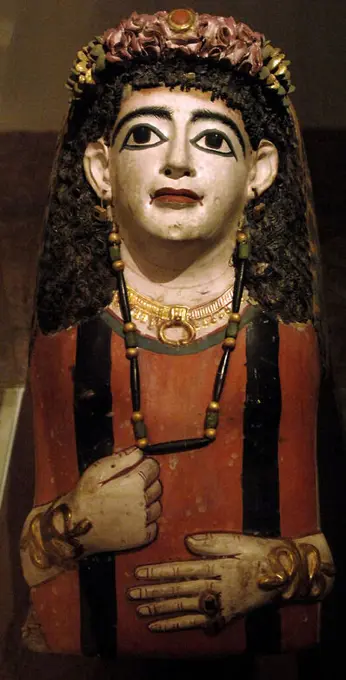
Egyptian Art. Mummy mask. Roman Period. 6070 A.C. Middle Egypt. Probably, it comes from Meir (Mir). Egypt. Metropolitan Museum of Art. New York. United States..
1788-19169
Mummy of Queen Nedjemet, wife of Herihor, face detail
1848-50677975
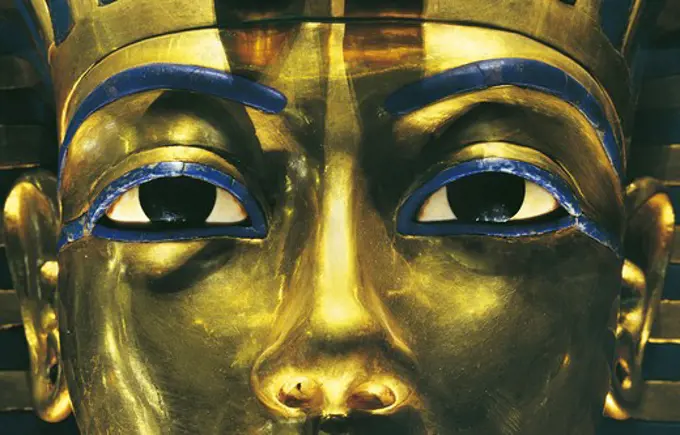
Eleven-kilogram mask made of solid gold with inlays of glass paste and gemstones, Tutankhamun's burial treasures, archaeological world sensation, replicas, Valley of the Kings, most famous burial site in the world, Luxor, Thebes West, Egypt, Luxor, Thebes, West, Egypt, Africa
1746-19664797
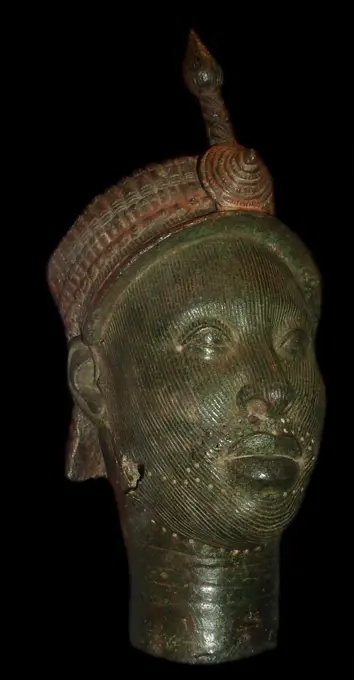
Cast brass head with red pigment Ife, Yoruba people, Nigeria. 12-15th century
4409-28811491
head of pharaoh Tuthmosis III, green siltstone, 18th dynasty, reign of Tuthmosis III, 1479-1425 BC, Karnak, Thebes, Egypt, collection of the British Museum.
6145-29741882
Figure 14th-early 15th century Aztec. Figure 319240
1746-19691877
Granodiorite statue of Amenhotep, 18th Dynasty, about 1400 BC From Abydos. Amenhotep held the title of Overseer of the royal palace in Memphis.
4042-20588204
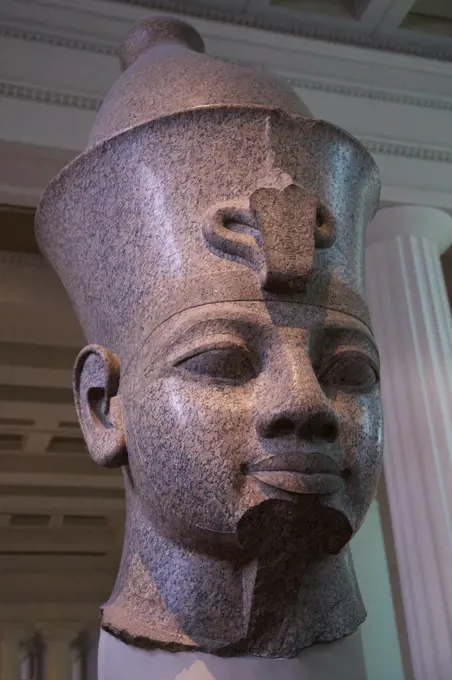
Head of Colossal Figure of King, 1390 BC, British Museum, London, UK
4409-17279251
ESCULTURA EGIPCIA. Location: EGYPTIAN MUSEUM. KAIRO. EGYPT.
6145-29196319
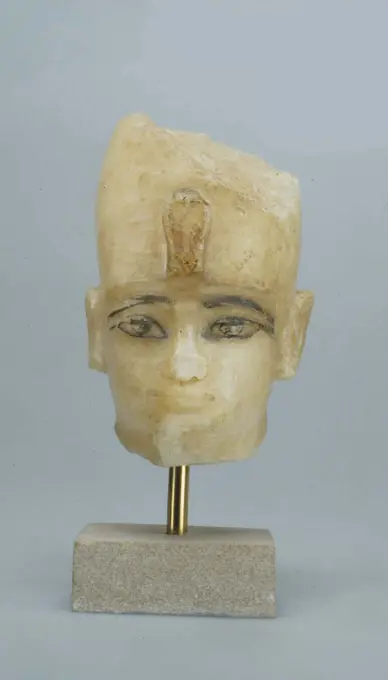
Head of Amenhotep III ca. 1390-1352 B.C. New Kingdom. Head of Amenhotep III. ca. 1390-1352 B.C.. Travertine (Egyptian alabaster), paint. New Kingdom. From Egypt, Upper Egypt, Thebes, West Valley of the Kings, Tomb of Amenhotep III (WV 22), Napoleonic Expedition 1898. Dynasty 18
4266-20345
The Nefertiti Bust by Ancient Egypt  / Staatliche Museen, Berlin/ ca 1350 BC/ Egypt/ Limestone/ The Oriental Arts/ Portrait
4409-63013118
Sarcophagus tap stuck and painted wood. bronze and ivory incrustations. Dinasty 26th. Saite period. 664-525 BC. Late period of ancient Egypt. Museum of world cultures. Barcelona. Spain.
6145-29831618
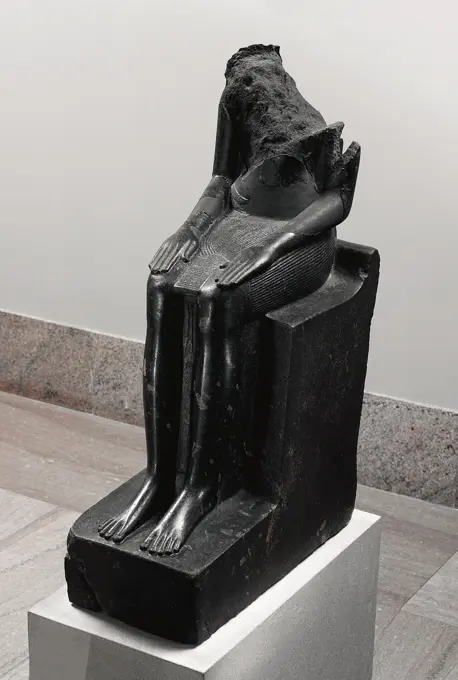
Lower Part of a Statue ca. 1479-1458 B.C. New Kingdom There is no inscription to identify the king depicted in this seated statue. However, the fact that it was found in fragments with the smashed statues of Hatshepsut suggests that this, too, represented the female pharaoh. For more than 1500 years before Hatshepsut ascended the throne, the ideal Egyptian king had been represented as a young man in the prime of life. This ideal applied whether the ruler was an old man, a young child, or a woman. Two of Hatshepsut's statues depict her as a female ruler (29.3.2), but most of them depict her as the ideal king (30.3.1). However, this should not be taken as a sign that she was trying to fool anyone into believing she was a man. The inscriptions on the masculine statues generally included either a feminine grammatical form or her personal name, Hatshepsut, which literally means "Foremost of Noblewomen." She had also been in the public eye since childhood, first as "king's daughter" of Thutm
105-2415
Egyptian Painting on Papyrus
1899-65660382
This carved sculpture of Amenhotep III is from Thebes. Amenhotep III was the ninth pharaoh of the 18th Dynasty (New Kingdom). His rule marked the high point of Egyptian civilization. He ruled Egypt from about 13901352 B.C. A great builder, Amenhotep controlled an empire that stretched from Syria to Nubia to the western shore of the Red Sea. His successor was his son, Amenhotep IV, the king who changed his name to Akhenaten and called for the worship of the Aten, the light in the sun disk.
6176-66081959
Portrait of Pharaoh Ramses II, he is considered the greatest, famous and most powerful pharaoh of the Egyptian Empire and oppressor of the Jews, ancient Egyptian empire. Egypt. Old engraving illustration from the book Universal history by Oscar Jager 1890
1848-53643447
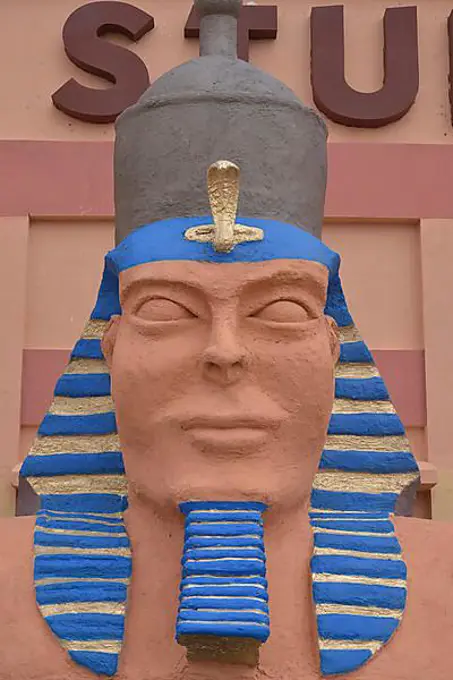
Sphinx at the entrance to the CLA film studios or Atlas Corporation Studios, Ouarzazate, Ouarzazate Province, Morocco, Africa
4409-17404229
Senwosret III as a Sphinx. Dimensions: L. 73 × W. 29.5 × H. 42.5 cm, 114.3 kg (28 3/4 × 11 5/8 × 16 3/4 in., 252 lb.). Dynasty: Dynasty 12. Reign: reign of Senwosret III. Date: ca. 1878-1840 B.C..Because of their strength, ferocity, imposing mane, and awesome roar, lions were associated with kingship since prehistoric times. As divine guardians against evil, they also symbolized in cosmic myths the place on the horizon where the sun was reborn every day. With the body of a lion and the head of a human, the sphinx symbolically combined the power of the lion with the image of the reigning king. In this magnificent example, the face belongs to Senwosret III of Dynasty 12 whose features are very distinctive (see 26.7.1394). He wears a pleated linen headcloth, called a nemes headdress, which is symbolic of kingship. The nemes is surmounted by a cobra, which represents the goddess Udjo, one of the protectors of the king. The cobra's hood and head were either carved separately or they were r
4409-37641
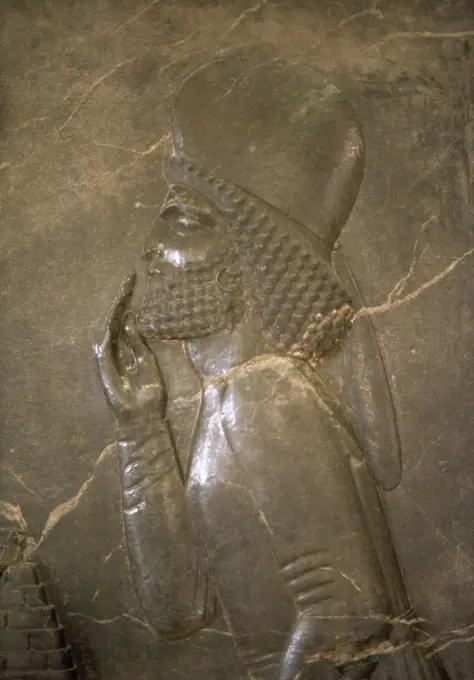
Achaemenid Empire. Relief of a Mede senior official (round cap) during a reception with Darius the Great (521-485 BC), 5th century BC. From Persepolis. Archaeological Museum of Tehran, Islamic Republic of Iran.
6188-67181644
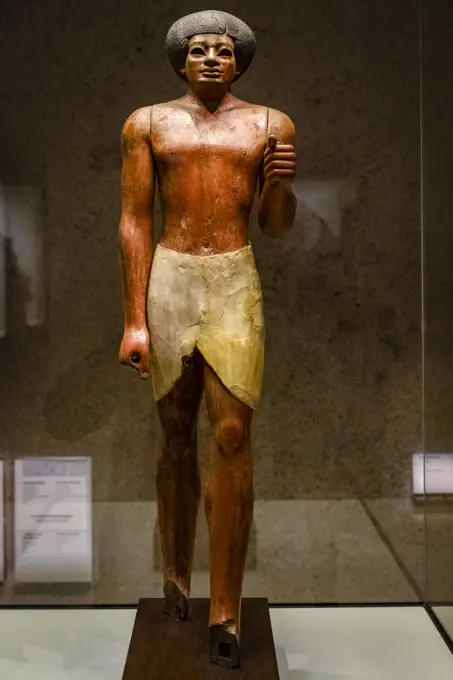
Grabstatue Funerary statue, Middle Empire of Egypt, 11th dynasty, 2000 BC, polychrome ebony wood, Calouste Gulbenkian Foundation, Fundação Calouste Gulbenkian, Lisbon, Portugal Copyright: xZoonar.com/Tolox 22896968
6145-43648517
Egipt - Okres Późny/Okres Ptolemejski, Sarkofag Amenhotepa, drewno polichromowane, widok całości en face; ze zbiorów Muzeum Narodowego w Warszawie, nr inw. 236804 (17329). Ryś, Jan (1889-1939), photographer
442-37907
UK, England, London, British Museum, Egyptian Room, Display of Egyptian Mummy
1746-30015665
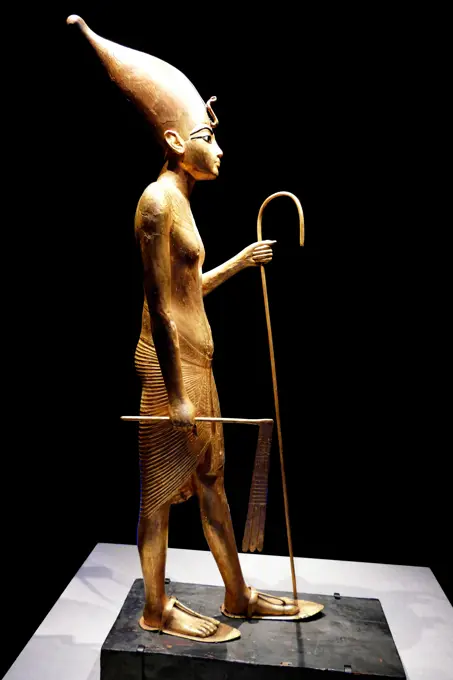
Gilded wooden statue of King Tutankhamun. 1326 BC From the tomb of King Tutankhamun
6145-48886997
The Colossus of Memnon. John Beasley Greene (American, born France, 1832 - 1856)
1746-19670770
Case of the inner coffin of Nespamal, showing the goddess Nut. 27 Dynasty, 500 years BC
4042-2805
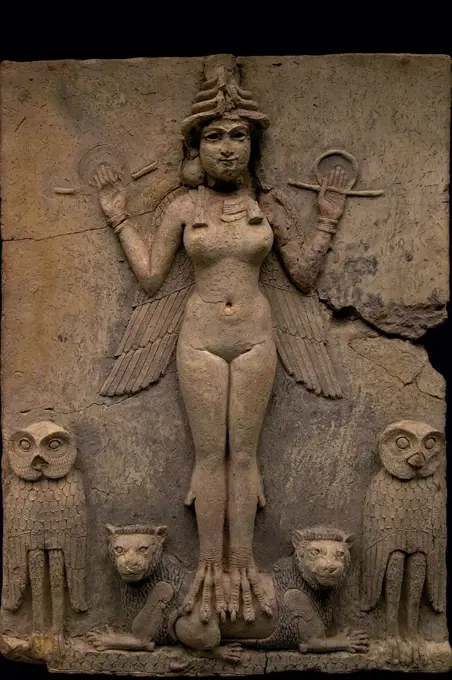
UK, England, London, British Museum, Relief Queen of the Night, 1750 BC
4409-63989
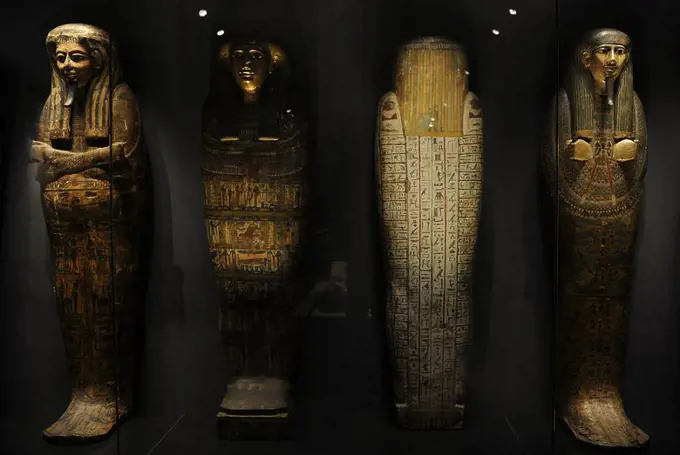
Carlsberg Glyptotek Museum. Copenhagen. Denmark. Room. Egyptian art section. Sarcophagus.
1746-19676380
Egyptian Sarcophagus (Coffin of Udiaersen) 400 B.C. Goddess Nut can be seen in two different forms.
6145-59210935
Abruzzo L'Aquila S. Giuliano (L'Aquila environs) Museo27. Hutzel, Max 1960-1990 Views of the four collections housed in museum: Roman coins; Pre-Columbian art brought from Central America in 17th century; Greek and Roman sculpture; Egyptian sculpture and minor arts. Museum Roman coins; Greek and Roman sculpture; Egyptian sculpture and minor arts; Pre-Columbian sculpture. German-born photographer and scholar Max Hutzel (1911-1988) photographed in Italy from the early 1960s until his death. The result of this project, referred to by Hutzel as Foto Arte Minore, is thorough documentation of art historical development in Italy up to the 18th century, including objects of the Etruscans and the Romans, as well as early Medieval, Romanesque, Gothic, Renaissance and Baroque monuments. Images are organized by geographic region in Italy, then by province, city, site complex and monument.
6145-29763284
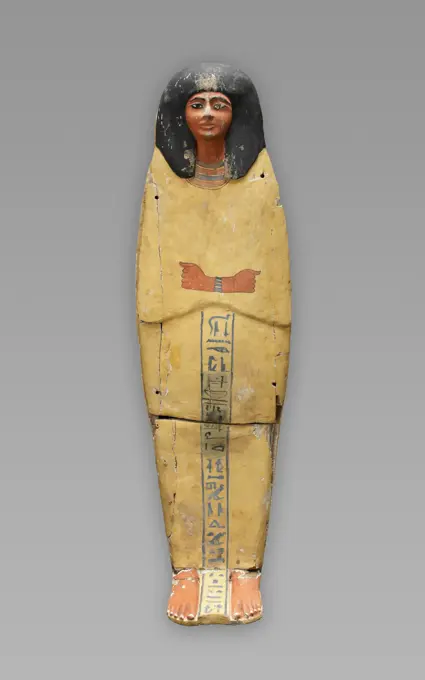
Coffin of Prince Amenemhat ca. 1186-945 B.C. Late New Kingdom to early Third Intermediate Period This coffin contains the plundered mummy of a royal infant who may have lived during the first part of Dynasty 18 and was reburied in this simple wooden child's coffin from a later era. Amenemhat's name and title (he is called here "King of Upper and Lower Egypt") were roughly painted over a inscription already on the lid. On the chest of the child's rewrapped mummy, the priests tied a painted wooden pectoral (19.3.210) depicting the deified Amenhotep I. Garlands of persea leaves (25.3.146a) and long-stemmed lotus buds (25.3.146b) were laid within the coffin, and a rough pottery bowl filled with dates and other fruits (19.3.211) provided eternal sustenance for Amenemhat. The coffin was discovered by the Museum's Egyptian Expedition beneath a large rock high in the cliffs of the Theban massif, not far from the Royal Cache (DB 320) in which many of the kings and queens of the New Kingdom had
7208-70657752
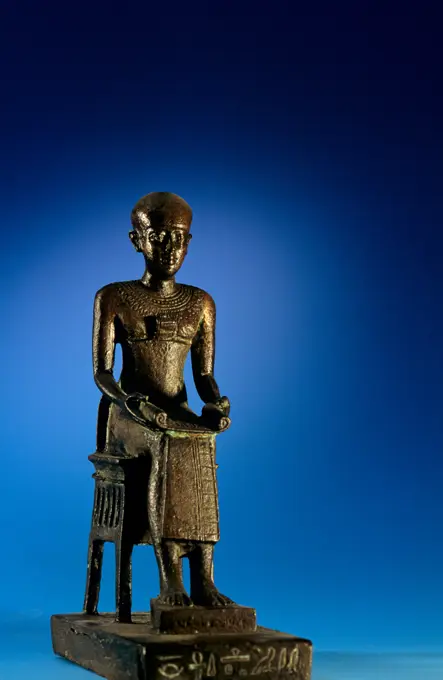
Egypt, Cairo, Egyptian Museum, Statue of Imhotep, Djoser's Architect
1746-21110691
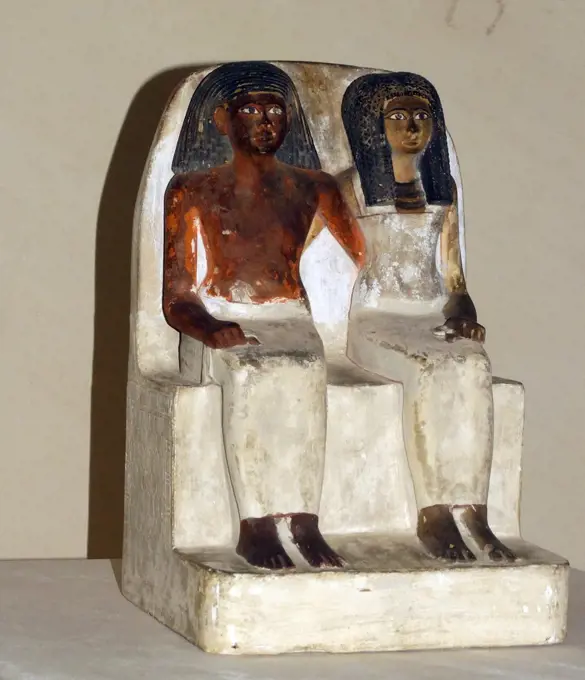
Painted limestone statue of an unnamed man and his wife from a tomb-chapel at Thebes, 18th Dynasty about 1350 BC.
4409-17301204
FIGURA DEL DIOS HORUS (HALCON) - FOTO AÑOS 80. Location: HORUS TEMPLE. EDFU. EGYPT. HORUS DIOS EGIPCIO.
6145-29185958
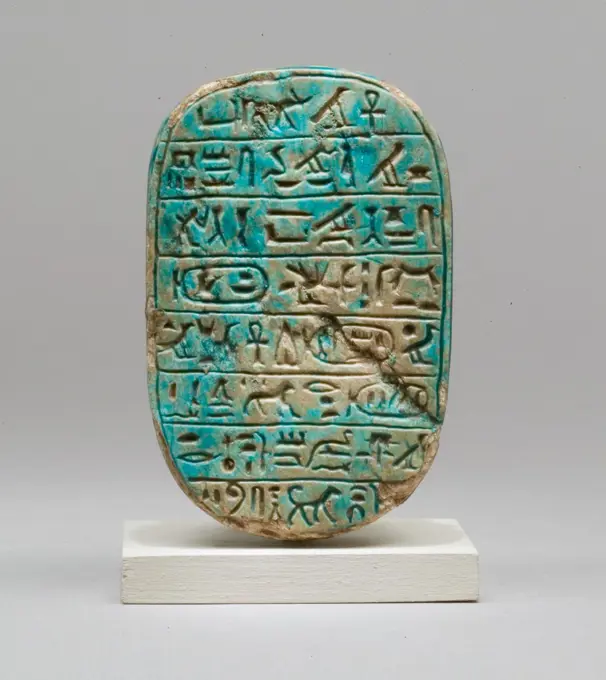
Commemorative Scarab of Amenhotep III Recording a Lion Hunt ca. 1390-1352 B.C. New Kingdom During Amenhotep's reign, a series of large glazed steatite scarabs were issued commemorating events in the king's life. This scarab commemorates the king's prowess as a lion hunter.. Commemorative Scarab of Amenhotep III Recording a Lion Hunt 547781
6145-51815704
Cairo, Egypt, Africa Statue of Alabaster of the Queen Amenardis at the Egyptian Museum , 1914 - Egypt - Auguste Léon - (January -February) (French - Le Caire , Egypte , Afrique Statue d' albtre de la reine Amenardis au musée égyptien). Statue, museum, interior view, sculpture, Egyptian polytheism, Antiquity, Habitat , Architecture , Art , Religion, Egypt, Cairo Museum, Aulbish statue of the Queen Aménerthaie (XXVE Dynasty)
4409-17288667
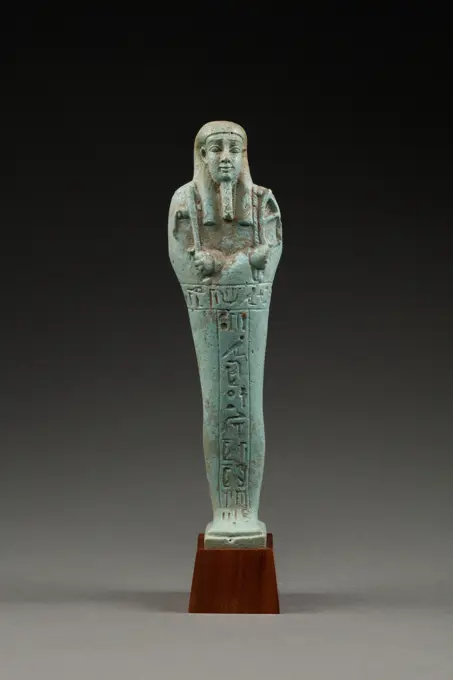
Madrid, M.A.N. Arte Egipcio. Ushebti de Fayenza. XXVI Dinastía.
6145-29186717
Mummy Board of Itamun, inscribed for Nesiamun ca. 1070-1000 B.C. Third Intermediate Period. Mummy Board of Itamun, inscribed for Nesiamun. ca. 1070-1000 B.C.. Wood, gesso, paint. Third Intermediate Period. From Egypt, Upper Egypt, Thebes, Unfinished Temple ("Seankhkare") Valley, Pit Tomb MMA 1008/1016 (Mond 8), MMA excavations, 1920-21. early Dynasty 21
6145-29209617
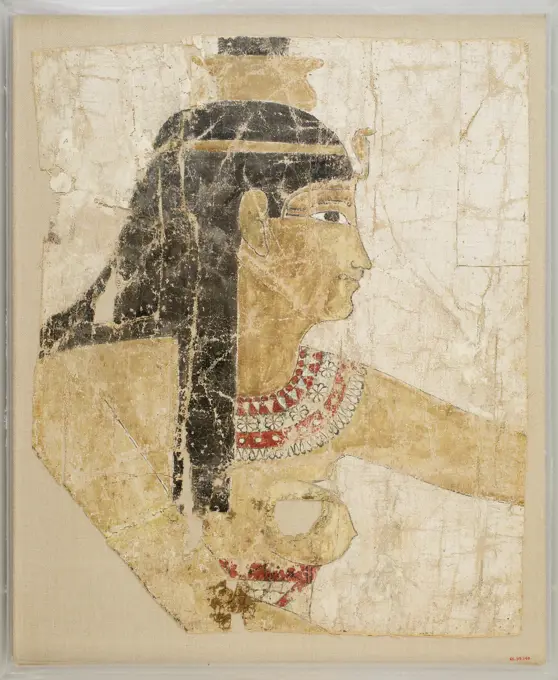
Painted Shroud Fragment 1st century BC-1st century AD Ptolemaic or Roman Period As wife and sister of Osiris, Isis and Nephthys were twinned in funerary beliefs. These heads of the two goddesses, 66.99.140 and 66.99.141, come from a single linen shroud, which probably showed them raising their arms in a gesture of care and reverence on either side of the frontal, mummified image of Osiris. When wrapped about the mummy, the images on the shroud would have identified the deceased with Osiris and placed him or her under the protection of the goddesses. Although they are no longer distinguished from one another by any sufficiently preserved attribute, the two goddesses would have originally worn their different symbols atop the modius on the head. One goddess is a deep green below the head, a color associated with rebirth/afterlife divinities but also more widely used by this time.. Painted Shroud Fragment. 1st century BC-1st century AD. Linen, gesso, paint. Ptolemaic or Roman Period. From
1746-29955522
Statue of King Tutankhamen as the god Khonsu. Khonsu was the son of Amun, the most important god of New Kingdom Egypt.
6145-29118108
Four Sons of Horus. Egypt, 26th dynasty (circa 664-525 B.C.). Sculpture. Wood
1848-55221831
Bust of a Native American, Park Modo Verde, Landgraaf, Limburg, Netherlands, Europe
6176-67047770
Head of Rameses, 1848. Artist: Unknown
1525-22571904
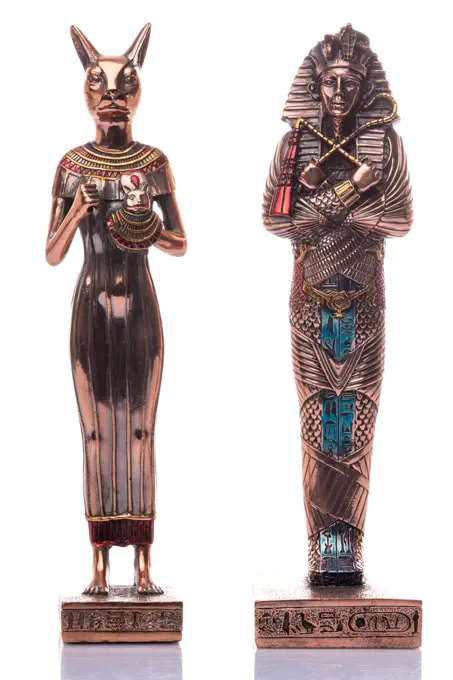
Egyptian cats and pharaon on a white background. Egyptian pharaoh Statue
1788-10731
Egypt, Thebes, Luxor, Valley of the Kings, Tomb of Tutankhamon, Treasures of Tutankhamon, Gold mask of the pharaoh
6176-67041767
A daughter of King Ikhnaton, 1936. Artist: Unknown
4168-21957470
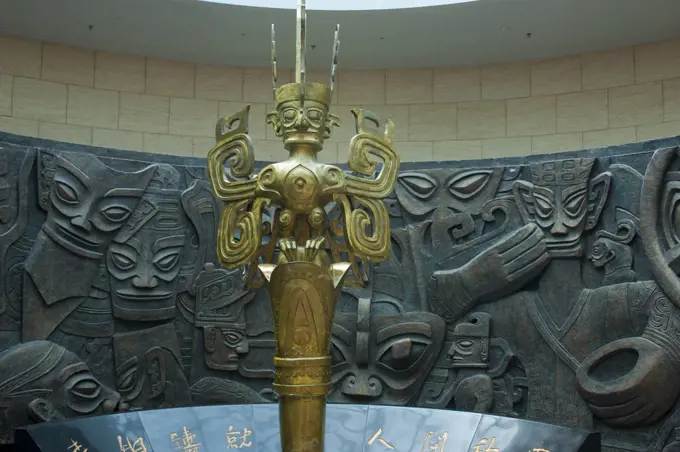
A bronze statue in the exhibit of ancient artifacts at the Sanxingdui Museum in Sanxingdui near Chengdu, Sichuan Province in China.
1788-17916
Anthropomorphic sarcophagus of man from Spain
1746-19686947
Head of a Queen Mother, Cast brass, Benin, Nigeria, 16th century. A special altar for Queen Mother was maintained within the royal city. Queen Idia, mother of Oba Esigie, king of Benin from the late fifteenth to the early sixteenth century, played a key role in her son's military campaigns against the Igala people, which may have been over control of the Niger waterway. Benin finally won these wars and made the Igala king a vassal of the Oba. British Museum
1558-13364475
statue, woman with violin
1848-50664506
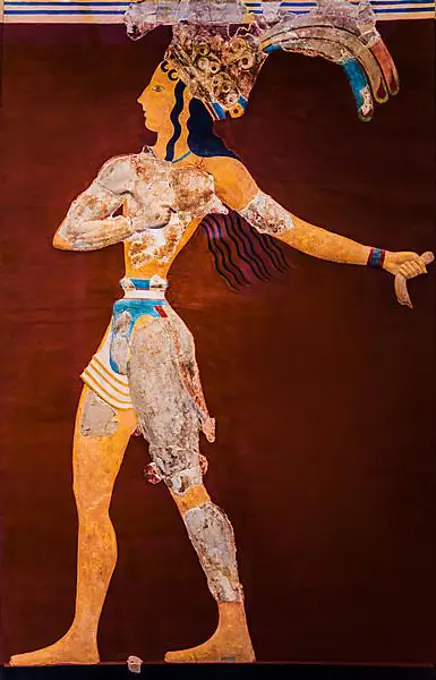
Prince of the Lilies, reconstitution of the so-called
6145-48886217
Detail, Throne of Venus, National Museum. James Anderson (British, 1813 - 1877)
1525-24507060
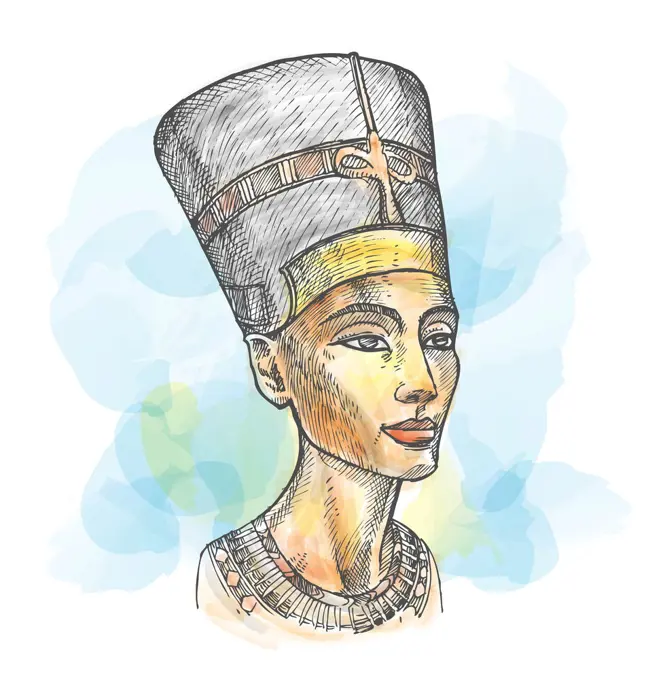
Bust of Nefertiti hand drawn watercolor
1910-1513
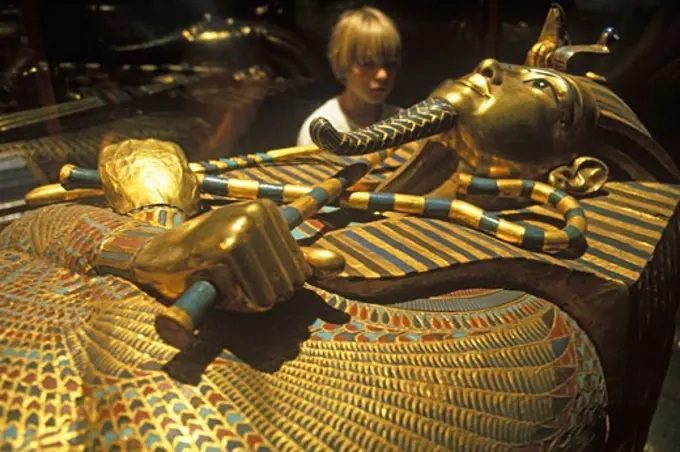
Boy 8 yrs looking at tomb of Tutankhamun at th Egyptian Museum Cairo Today Tutankhamun is the most famous Egyptian pharaoh The boy king died in his late teens and remained at rest for over 3300years EGYPT Cairo
4292-159382
Italy, Piedmont, Turin, Egyptian Museum, Merit sarcophagus
PREVIOUS
of 2
NEXT
2401 S. Ervay, Suite 206
Dallas, Texas 75215
United States
Get Started
Free ResearchMy BoardsMy Cart
For Creators
How To License Your ContentContributor PortalFrame of Mind
Resources
API accessPricing
Contact
+1 866 236 0087help@viewpictures.co.uk Contact form
©2026 View Pictures. All Rights Reserved. -A
This site is protected by reCAPTCHA and Google Privacy Policy and Terms of Service apply.