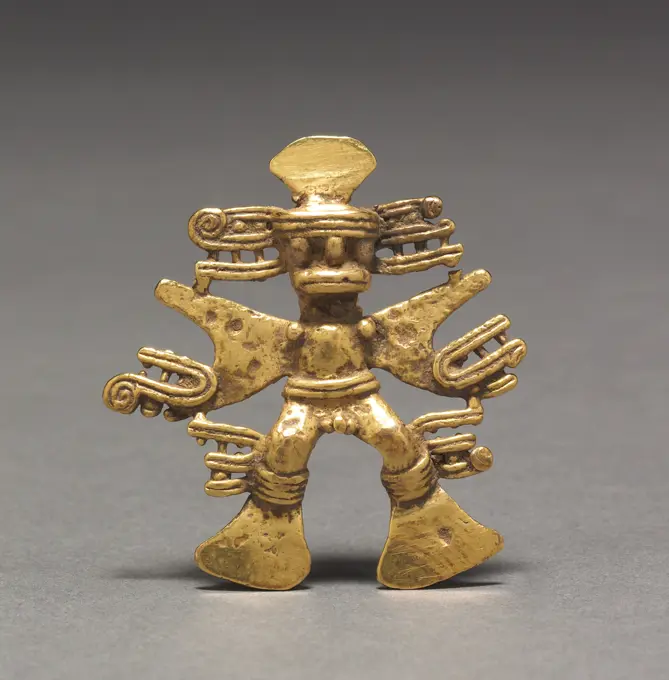
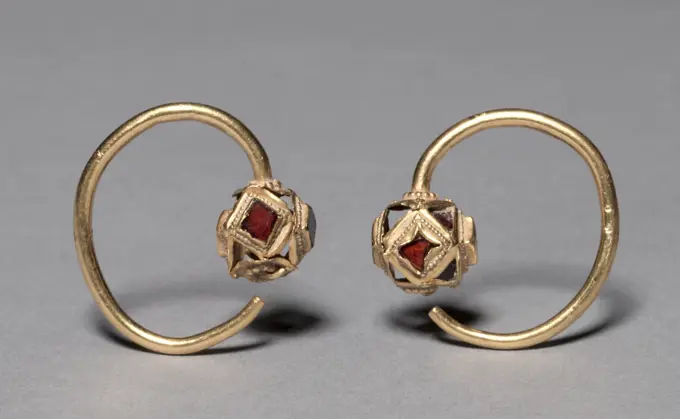
Ancient Gold Jewelry

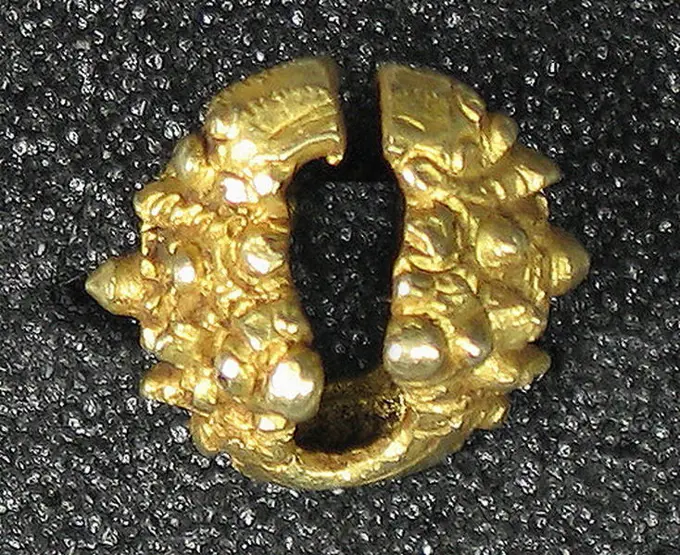
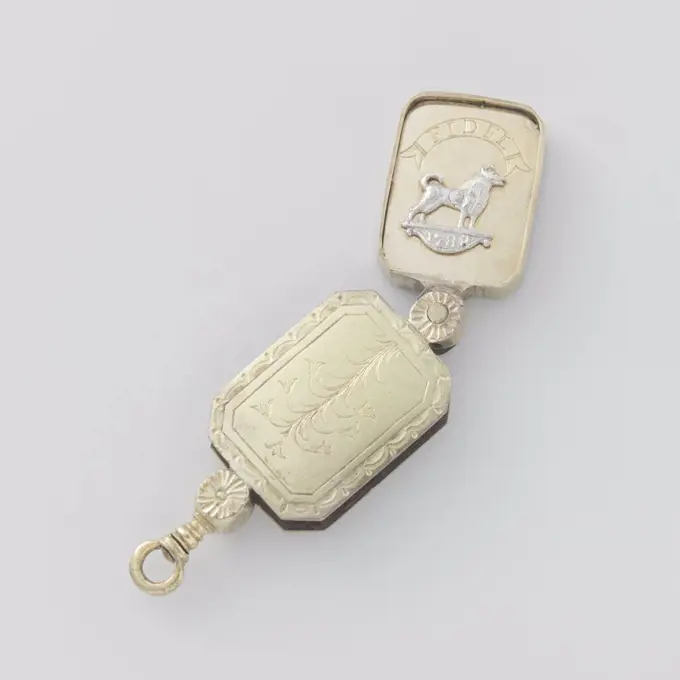
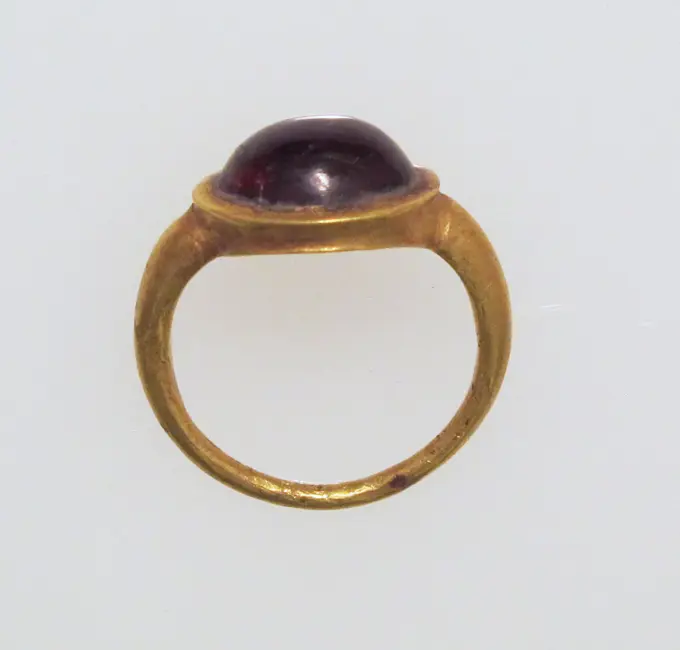
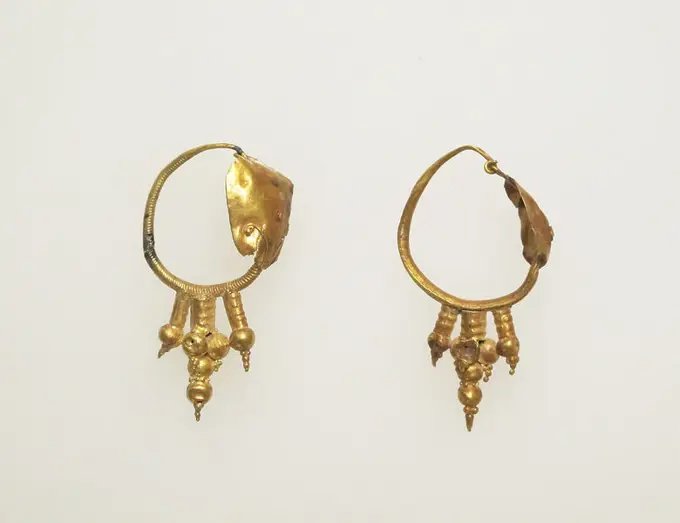
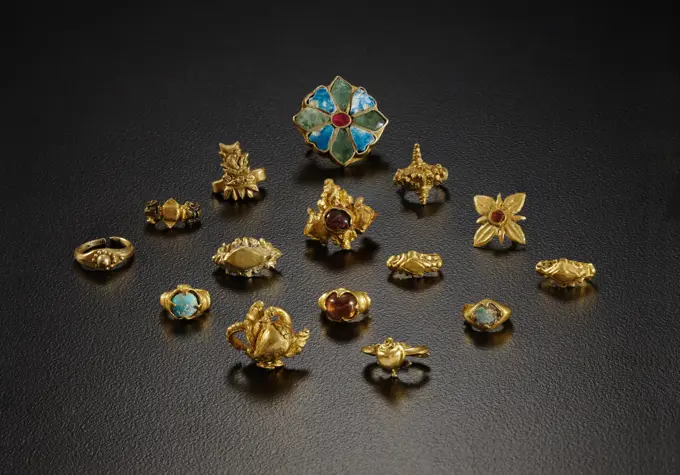
An assortment of exquisite gold earrings and rings with simple and elaborate designs, reflecting the craftsmanship of ancient jewelry making.

Washington Monument, Washington, D.C., Brass, Oblong, curves and counter-curves around perimeter, middle of sides cinched, featuring raised decoration of Washington Monument, inscribed below 'Washington Monument, Washington, D.C.', all surrounded by long, sinuous, stem-like lines at edges and flowers at corners. Reverse features horizontal decoration of the Capitol, inscribed below 'The Capitol, Washington, D.C.', surrounded by same decoration as front. Lid hinged on side. Striker on bottom., ca. 1900, containers, Decorative Arts, Matchsafe, Matchsafe
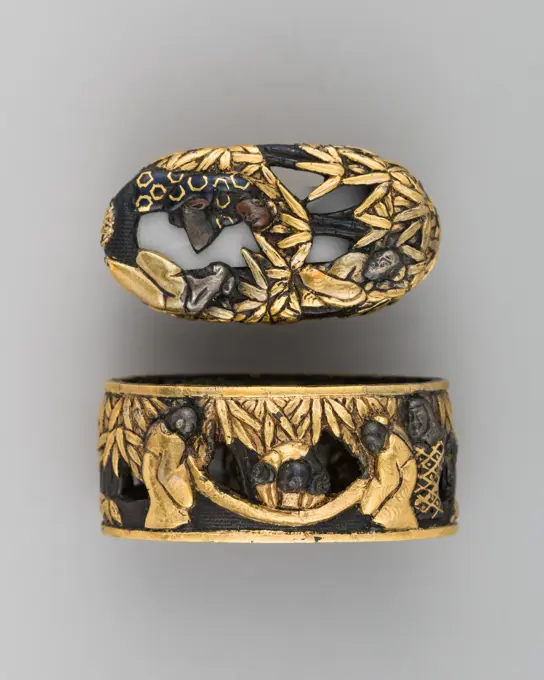
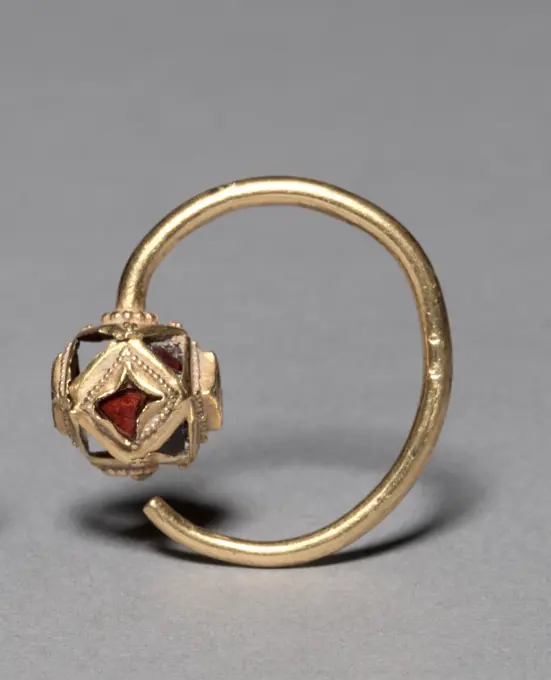
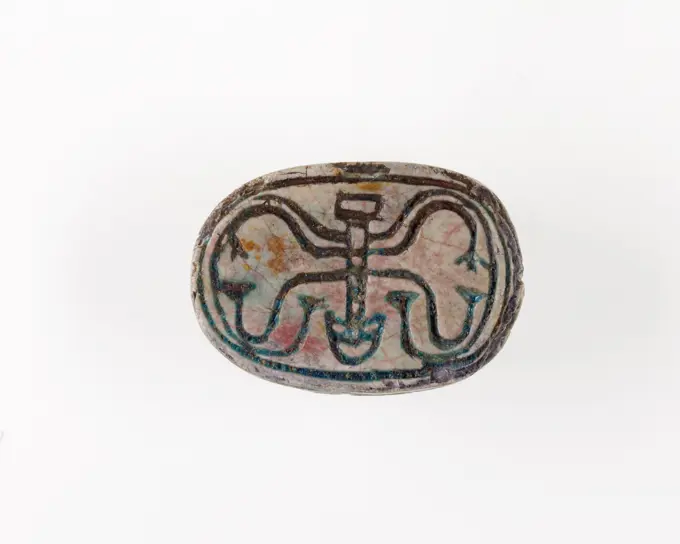
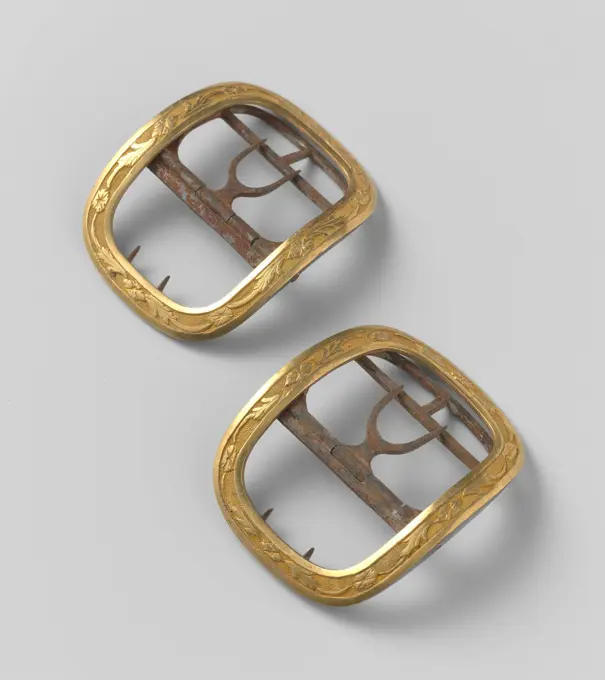
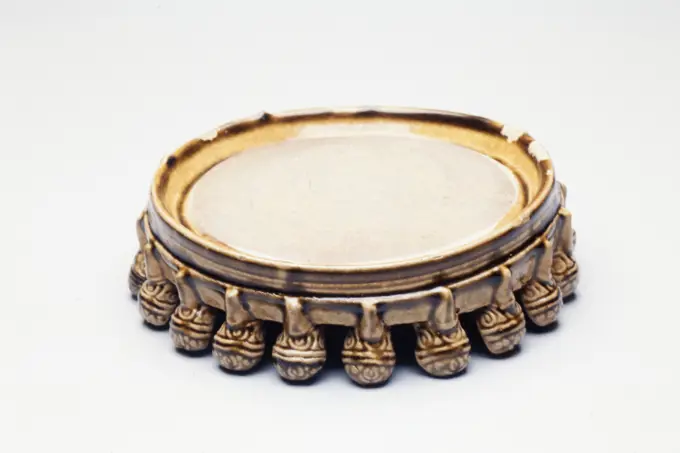
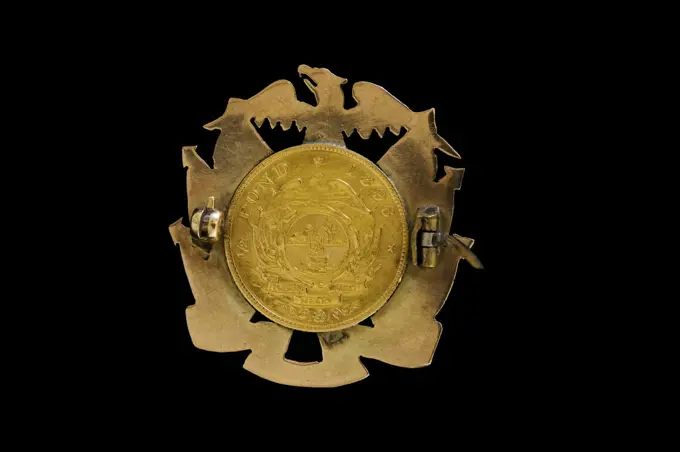
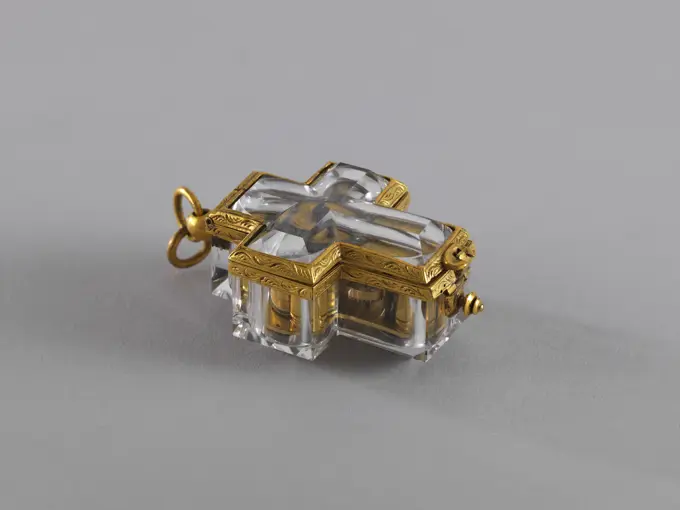
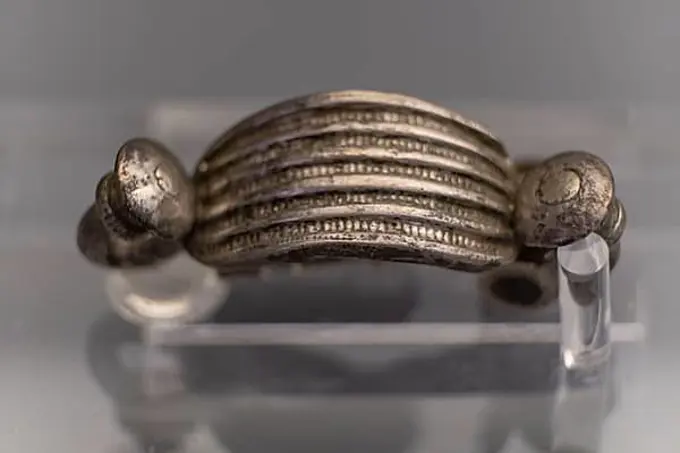
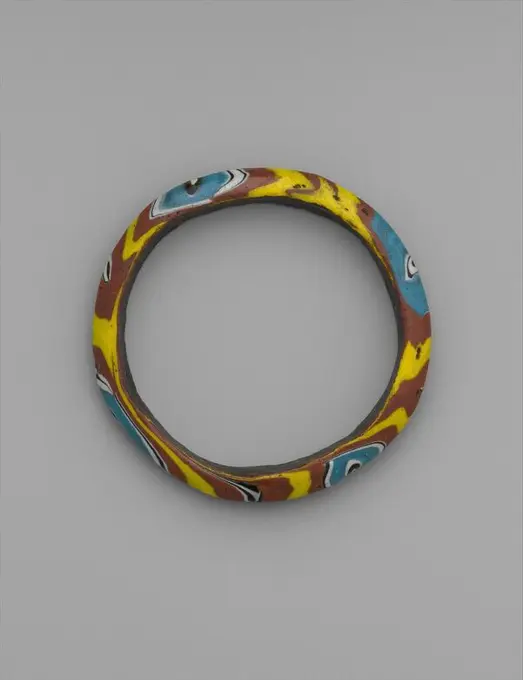
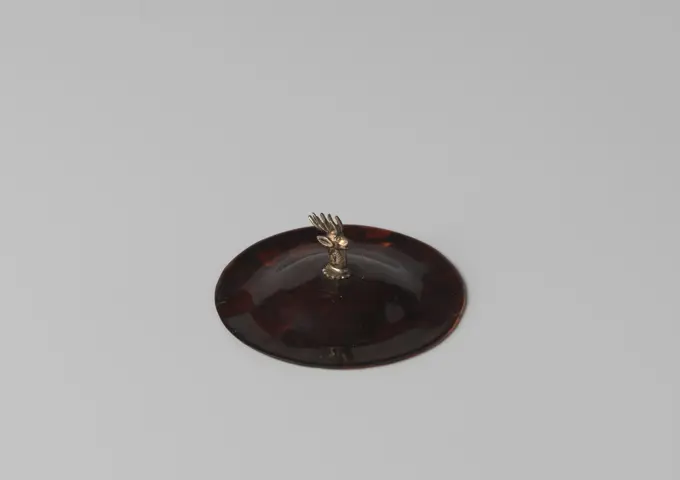
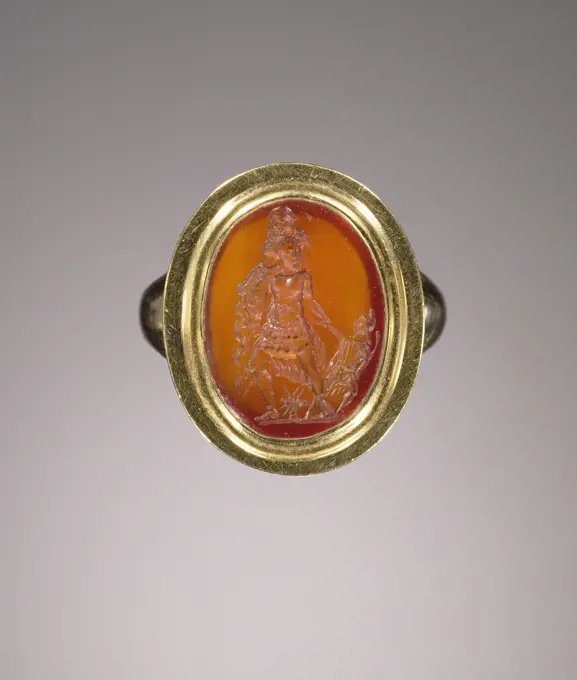
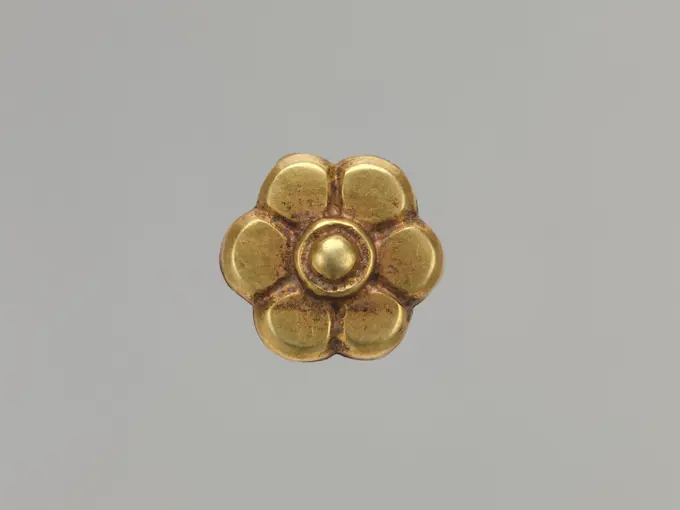
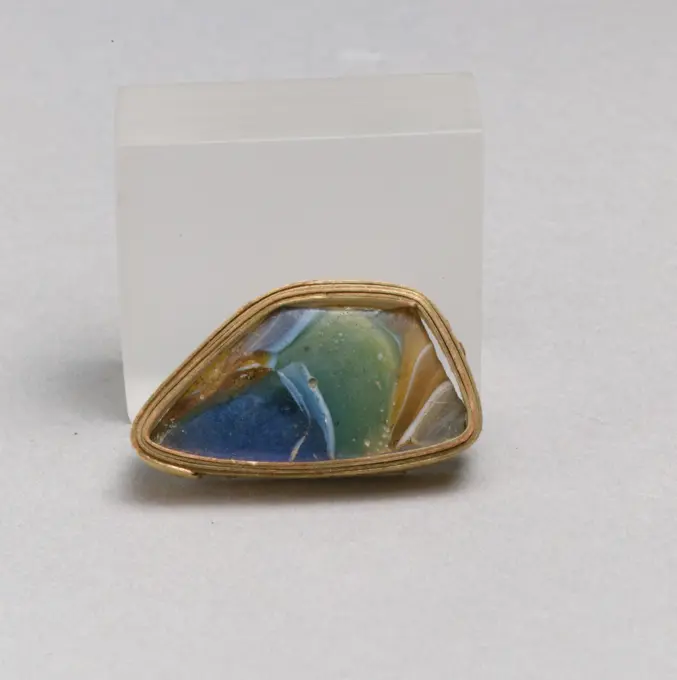
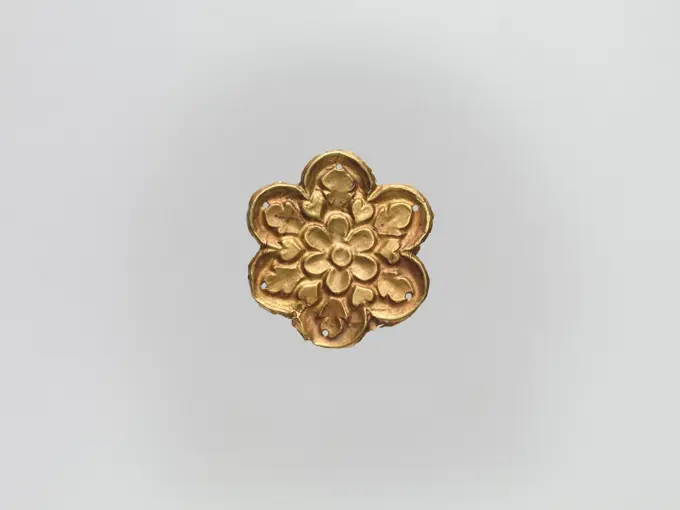
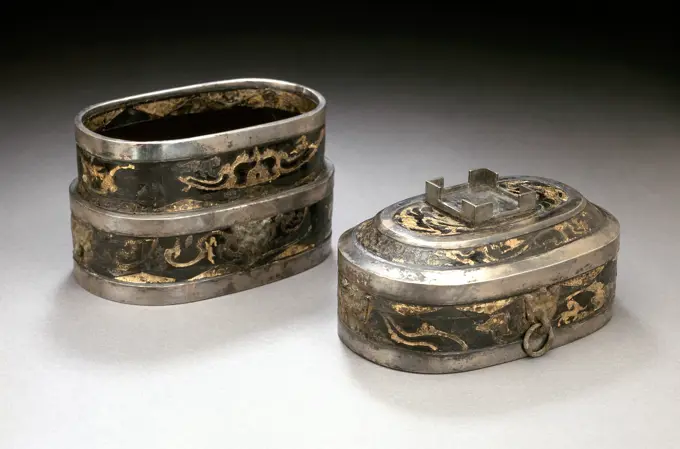
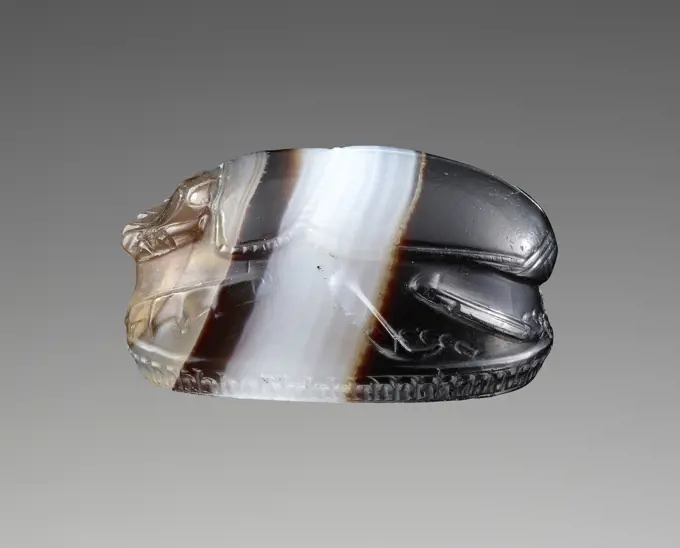
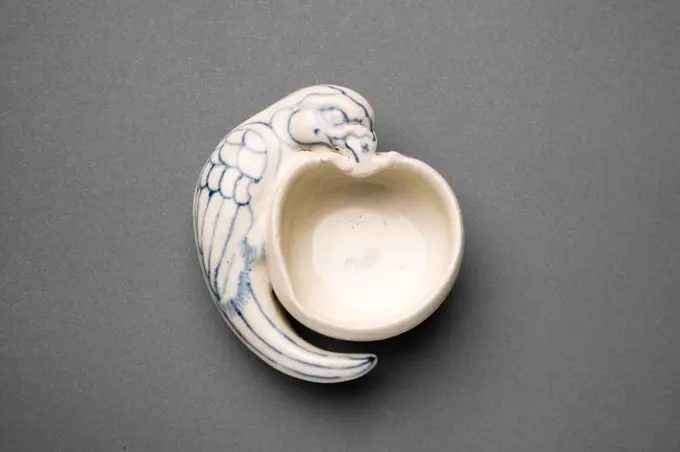
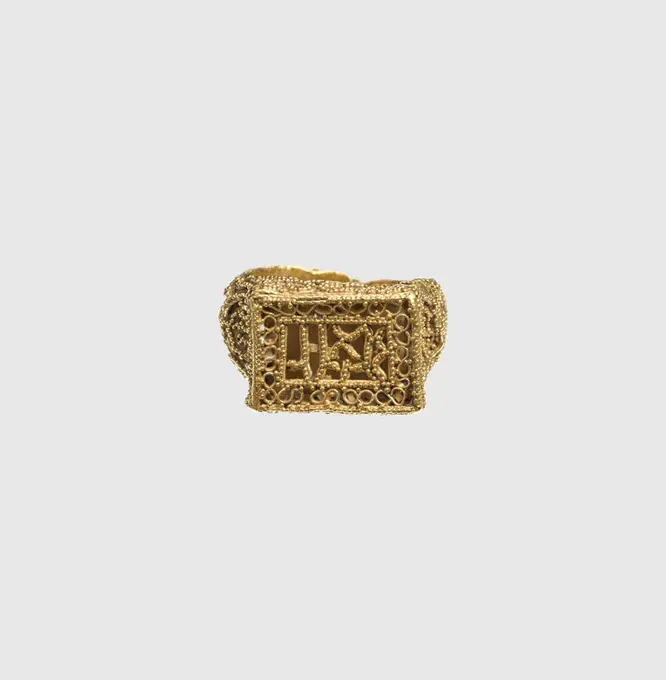
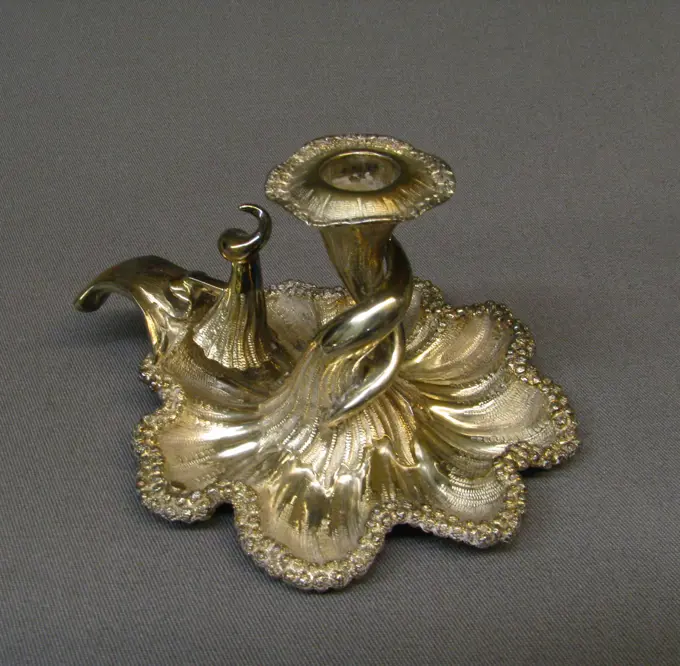
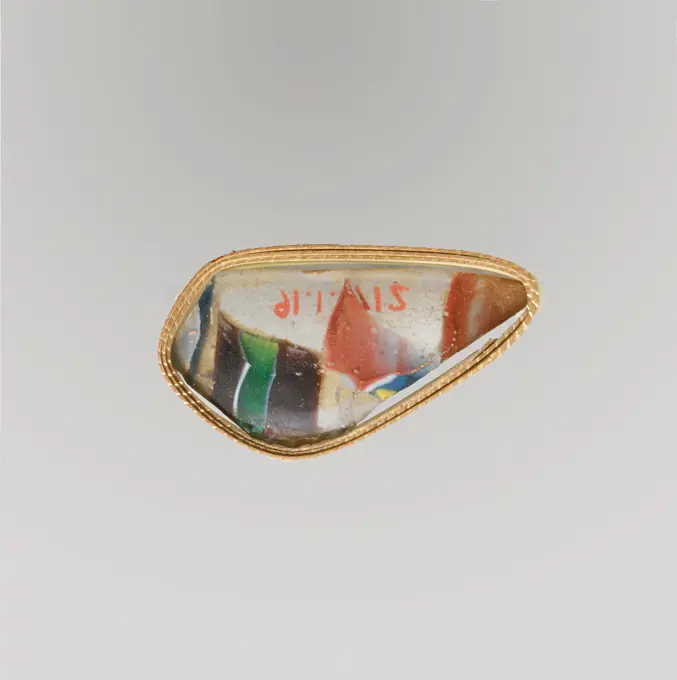
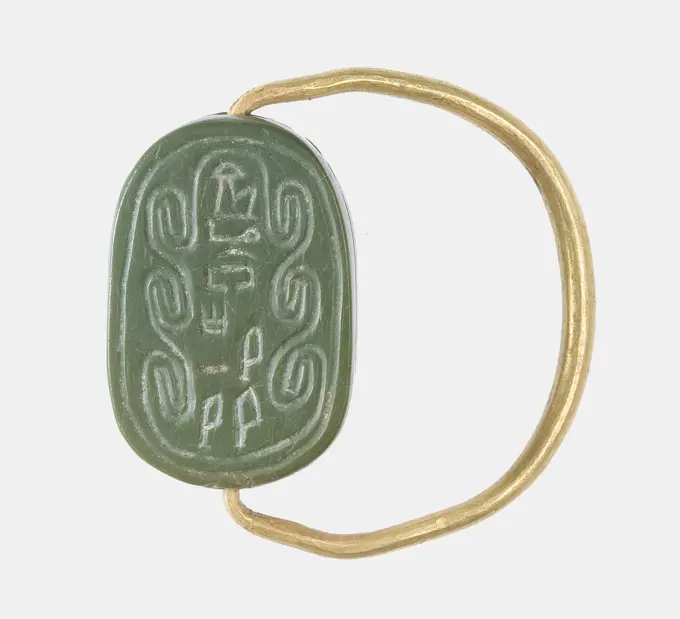
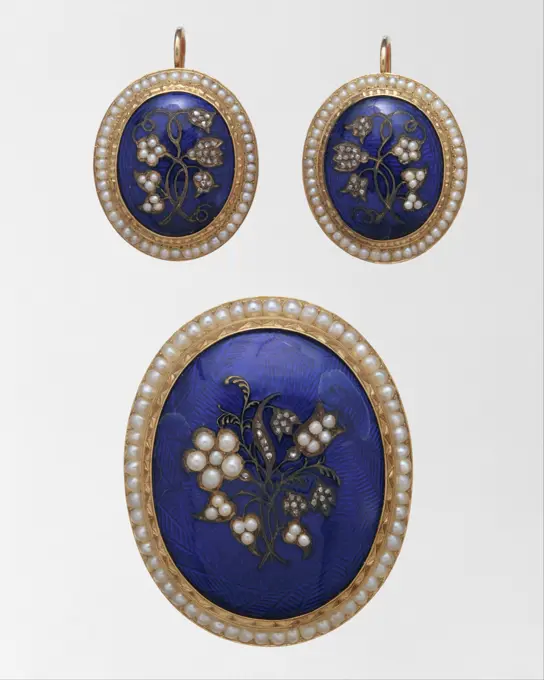
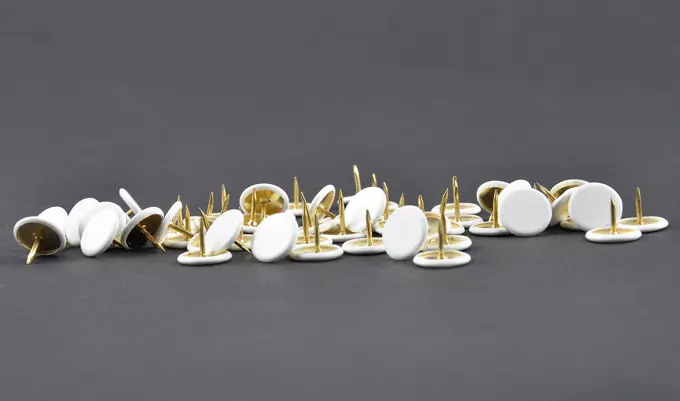
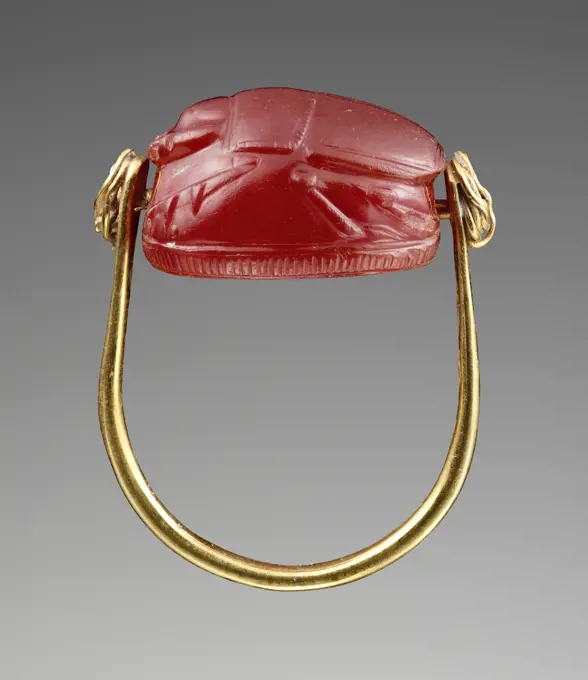
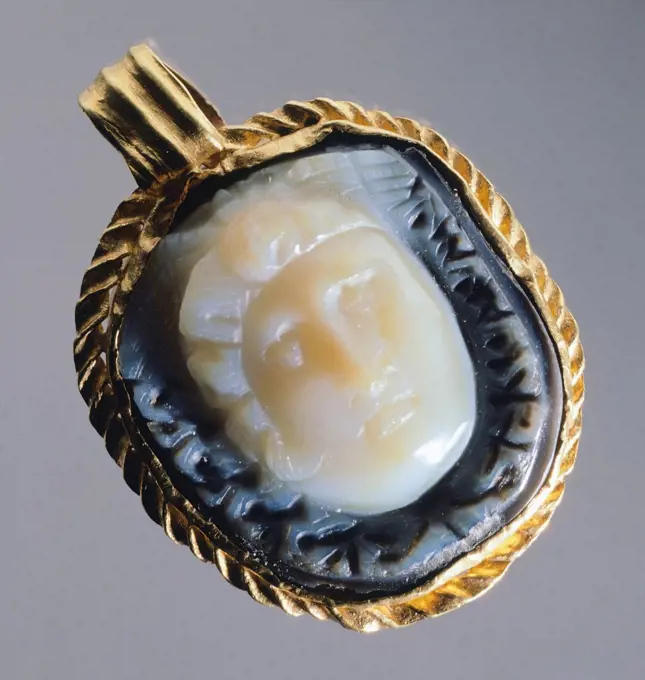
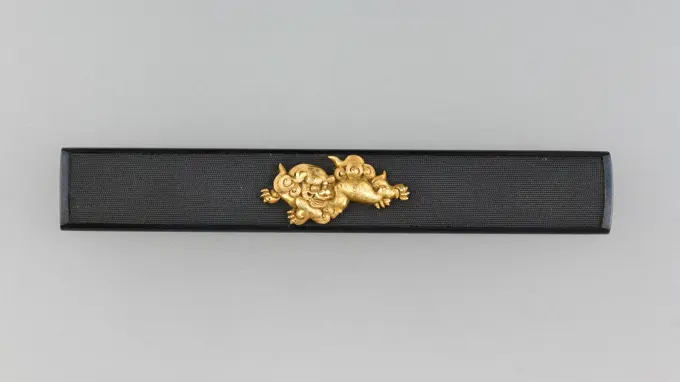
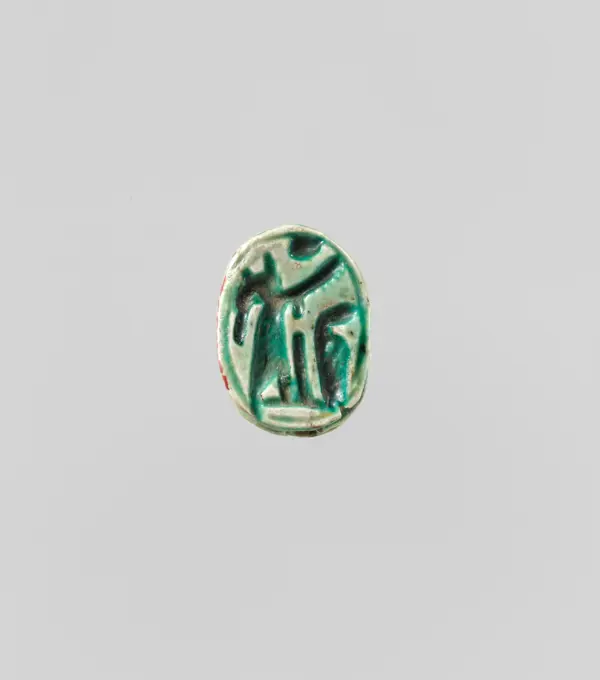
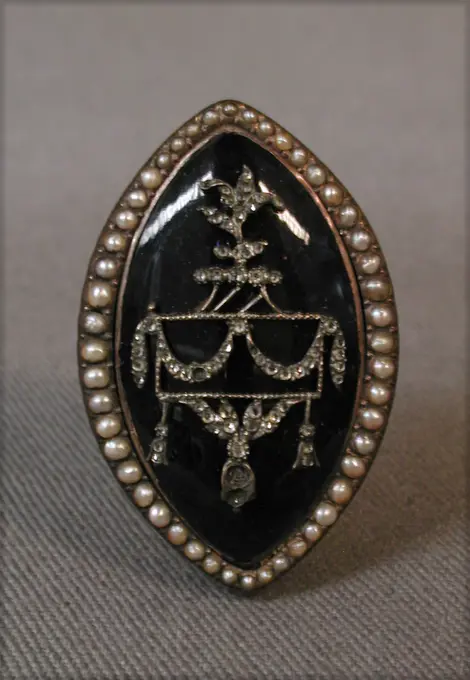
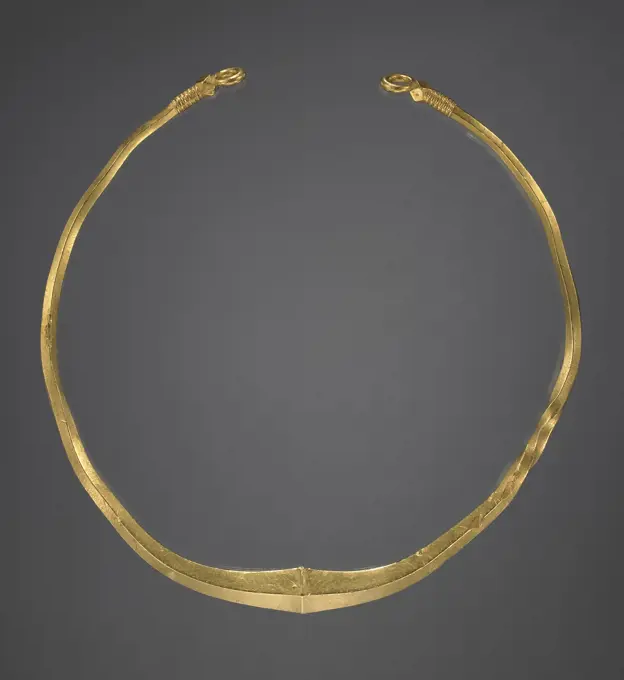
Earrings (pair), 400s. Ostrogothic, Migration period, 5th century. Gold with garnets; overall: 3.5 x 3.4 x 1.2 cm (1 3/8 x 1 5/16 x 1/2 in.).Drinking cup. The creature on the rim seems to want to drink from the dish - despite the fact that a monster lurks at the bottom. As the dish is drained, one finds oneself looking straight into the monsters gaping maw. The playfulness and virtuoso execution of this piece reveal Lutmas skills as a silversmith.RosetteSword-Hilt Collar and Pommel (Fuchigashira) late 16th-early 17th century Japanese A fuchigashira is a pair of matching sword fittings comprising the fuchi (collar at the base of the grip of the sword hilt) and kashira (pommel cap at the end of a sword hilt).. Sword-Hilt Collar and Pommel (Fuchigashira). Japanese. late 16th-early 17th century. Copper-gold alloy (shakud), gold. Sword Furniture-Fuchi-KashiraEarring, 400s. Ostrogothic, Migration period, 5th century. Gold with garnets; overall: 3.5 x 3.6 x 1.1 cm (1 3/8 x 1 7/16 x 7/16 in.).Ring with Greek Inscription to Hera. UnknownGlass mosaic fragment late 1st century B.C.-early 1st century A.D. Roman Thin-walled bottom () fragment.Translucent purple, turquoise blue, opaque yellow and white, and colorless.Almost flat but curving upward at two corners.Composite mosaic pattern formed from polygonal sections of three canes: one in a purple and colorless ground with a rosette of seven small yellow spirals; another in a purple ground with a concentric white circle and a central yellow spiral, and the third in a turquoise blue ground with yellow concentric circles and a central yellow rod.Polished exterior; pitting of surface bubbles on exterior; dulling and creamy weathering on interior and edges.. Glass mosaic fragment 257307Love ring, anonymous, c. 1375 - c. 1500 Golden ring with an inscription on the inside: Amours Portent Mon Cuer à Mon Ami, or "Love leads my heart to my love". The rule is interrupted by a black -spotted white dog and a heart. The outside of the ring is engraved with two repetitive motifs, a gothic letter Y and and star. jeweler: Southern Netherlands (possibly)Paris (possibly) gold (metal). Golden ring with an inscription on the inside: Amours Portent Mon Cuer à Mon Ami, or "Love leads my heart to my love". The rule is interrupted by a black -spotted white dog and a heart. The outside of the ring is engraved with two repetitive motifs, a gothic letter Y and and star. jeweler: Southern Netherlands (possibly)Paris (possibly) gold (metal).Gold earring with rosette disk 3rd century A.D. Roman The center of the rosette and the pendant below are missing the pearls or precious stones that once hung on the earring.. Gold earring with rosette disk 243406Archer's Ring. Culture: Indian. Dimensions: L. 1 7/8 in. (4.8 cm); W. 1 1/8 in. (2.9 cm); Wt. 0.5 oz. (14.2 g). Date: 17th-18th century. Museum: Metropolitan Museum of Art, New York, USA.Pair of Hoop Earrings with Ibex Head Finials. UnknownScarab Decorated with Symbol of Unification ca. 1981-1295 B.C. Middle Kingdom A popular motif on Middle Kingdom scarabs is the sema-tawy, the symbol of the unification of Egypt. The motif consists of a windpipe entwined with lotus and papyrus plants, floral symbols that respectively represent Upper and Lower Egypt. While many early Middle Kingdom scarabs (late Dynasty 11-early Dynasty 12, ca. 2030-1850 B.C.) show the sema-tawy alone, the compositions of the late Middle Kingdom (late Dynasty 12-mid Dynasty 13) often display two sema-tawy motifs in symmetric opposition or combine it with other motifs such as spirals or hieroglyphs. The motif does not disappear after the Middle Kingdom but continues to appear on Egyptian and Canaanite scarabs during the Second Intermediate Period (Dynasty 14-17, ca. 1640-1550 B.C.) when, ironically enough, the kingdom was no longer unified. The accompanying motifs or the details in the shape of the scarab allow dating these scarabs more precisely.. ScarabPair of Earrings 8th-12th century Indonesia (Central Java). Pair of Earrings 64399Scarab Ring, 1540-1069 BC. Egypt, New Kingdom. Turquoise faience (mounted on swivel bezel in modern gold ring); diameter: 2.2 cm (7/8 in.); diameter including bezel: 1.2 cm (1/2 in.).Silver loop, minimum titration of 800/1000 before 1893. Openwork strip, 2 dotted edges, diamonds center, 2 knot patterns containing a flower in the middle and lowMiniature Round Basket, late 1800s-early 1900s. California, Pomo, late 19th-early 20th century. Plant materials; diameter: 0.6 cm (1/4 in.).. Shoe buckle, rectangular model with rounded corners and bent. Decoration: Between smooth lists, a leaf and floral ran relies on a granulated ground. Beach: both are equal and made of steel with two arcuate eyes on the spindle, one of which has two sharp points and the other a cross-shaped support for the loose, hinged tongue (), Which also has two points. The bar is riveted in separately applied side cheeks. Condition: The undercut is completely rusted.Multiple-Legged Ink Stone, 222-589, 2 3/8 x 8 13/16 in. (6.03 x 22.38 cm), Yue ware Stoneware with celadon glaze, China, 3rd-6th century, Ceramic ink stones with green glazes have been retrieved from numerous Six Dynasties (220-581) tomb burials and most date to eastern Qin (317-420). This ink stone is raised on several droplet-shaped legs with incised decor and there isa a deep groove (bi yong) which acts as the ink well encircling the round, unglazed grinding surface. A similar bi yong style greenware ink stone was excavated at the Luohu kiln site at Fengcheng in Jiangxi province.Gold spiral. Culture: Cypriot. Dimensions: L. 3/4 in. (2 cm). Date: ca. 1600-1100 B.C..Of plain wire with one turn. Museum: Metropolitan Museum of Art, New York, USA.Bracelets with Confronting Makara Heads (Karas) 1801-1900 India. Gold, diamonds, and crystalline inset in the kundan technique, with polychrome enamel (minakari) .Earrings (France); gilt, pearls, paste stonesOne of a Group of Bone Ornaments. Culture: Japan. Dimensions: H. 3/8 in. (1 cm); Diam. 3/4 in. (1.9 cm). Museum: Metropolitan Museum of Art, New York, USA.South African Half Pond Coin refashioned into pendant by Anglo-Boer War POW'sDISC (common name), 2400. CERUNUSCHI Museum, Asia Museum of Asia in the city of Paris. Rapace decor with widely deployed wings and largely overflowing openwork interlacing.One of a Set of Four Earrings 8th-12th century Indonesia (Central Java). One of a Set of Four Earrings 64438Dog, lapel badge in honor of Henry Danielsz. Hooft, Mayor of Amsterdam The Netherlands, AnonymousRing with carbuncle. Ring with carbuncle 243677Bamboo Leaves Matchsafe; China; silver; 5.3 x 3.2 x 1 cm (2 1/16 x 1 1/4 x 3/8 in. ). The round, cast button rests on a slightly strangled tape with a profiled top edge, with which it was attached to the rotting. Above a basic bottom edge, he widens itself to the vaulted top. The bottom edge is decorated with C-Volutes, seed beads and a flower garland. Above it is the Wand Raondom decorated with a representation of the judgment of Solomon. In an interior with a tiled floor and a colonnade that overlooks a landscape, Solomon sits on a throne seat with an asymmetrical back, which has been loaded by C-Volutes, which is placed on a raised platform under a canopy with the chest columns. The Dead Baby is in front of him. A covered warrior wants to cross the living baby, but is thereby stopped by the mother, while the mother of the dead child has considered unspring. Spectators they two women, a boy and a warrior, who holds a shield with an Asymetric cartouche on it. The scene is closed from above by an edge of C-Volutes with seed beads, leaf garlands, capitals and engraved Combret, Pierre (n.1570 - D.1622), watch in the shape of a Latin cross (main title), 1600. Brass and silver chiseled and engraved, iron, cut rock crystal. Petit Palais, Museum of Fine Arts of the City of Paris.Earring with discs and pyramids. Dimensions: Other (.3): 9/16 × 7/8 × 1 9/16 in. (1.4 × 2.2 × 4 cm)Other (.4): 7/16 × 7/8 × 1 5/8 in. (1.1 × 2.3 × 4.2 cm). Museum: Metropolitan Museum of Art, New York, USA.Fibula de La Tene I de doble prolongacion, numancia, Garray, siglo II a.C, museo Numantino de Soria, Soria, Comunidad Autonoma de Castilla, Spain, EuropeBracelet. Dimensions: H. 3/8 in. (1 cm)Diam. 2 9/16 in. (6.5 cm)Wt. 0.5 oz. (14.2 g). Date: 14th-16th century or later.The earliest known examples of this type of seamless mosaic glass bracelet are from the late thirteenth century; it continued to be produced well into the nineteenth century at Hebron, in Palestine. These two bracelets, together with thirty-two others in the collection, come from UpperEgypt and were probably made during the Mamluk period. Museum: Metropolitan Museum of Art, New York, USA.Ear Ornament Second half of the 8th-second half of the 10th century Indonesia (Java). Ear Ornament 49957Lid of turtle with Hertekop of silver (series of 28 pieces A to BB), Anonymous, c. 1700 - c. 1799 Turtle of turtle with Hertekop of silver (series from 28 pieces A to BB), Indonesia, 18th century Indonesia silver (metal) Turtle of turtle with Hertekop of silver (series from 28 pieces A to BB), Indonesia, 18th century Indonesia silver (metal)Aeneas and Anchises Escaping from Troy; Roman Empire; 1st century; Gem: carnelian; Ring: gold; 1.4 cm (9,16 in.)Punic Carthaginian Jewellery, c3rd-4th Century AD. Located in the Bardo Museum, Tunis.Eye of Horus (Wedjat) Finger Ring 1350 BCE Egypt. Multi-colored faience . Ancient EgyptianTeenage ring with Round button of silver, c. 1960 - c. 1970 Teenage ring with Round button of silver. The button consists of circles in different textures. The outer circle is rough and gushed, inside a smooth circle, inside a puffy and finally a clinic dot. Schoonhoven silver (metal) Teenage ring with Round button of silver. The button consists of circles in different textures. The outer circle is rough and gushed, inside a smooth circle, inside a puffy and finally a clinic dot. Schoonhoven silver (metal)Carnavalet museum, medal collection Count of Chambord's bust right on the left; Count of Chambord's Bust Revers on the left.Flower-Shaped Plaque 7th-9th century China (Xinjiang Autonomous Region, Central Asia) The nomadic communities of Central Asia used such plaques to embellish clothing and horse trappings. As these nomadic cultures herded animals and were constantly moving, their artistic production was expressed in portable objects that marked the wearers status and wealth. The outstanding preservation of these fragile ornaments suggests they were used in conjunction with burials, where the body was aggrandized with valuable textiles and augmented with gold. Although it is difficult to date and place these objects geographically, their presence in Central Asia and has a long, established history.. Flower-Shaped Plaque. China (Xinjiang Autonomous Region, Central Asia). 7th-9th century. Gold. Period of Tibetan Empire. MetalworkGlass mosaic bowl fragment late 1st century B.C.-early 1st century A.D. Roman Body fragment.Translucent blue, honey brown, and opaque white.Convex curving side.Short-strip or similar mosaic pattern formed from lengths of several canes set randomly or at right angles to one another: one in a blue ground with white streaks, another in a brown ground with white streaks, and a third in mixed colors appearing greyish green.Polished exterior; pitting of surface bubbles on exterior; dulling and creamy weathering on interior and edges.. Glass mosaic bowl fragment 257309Women's court shoes. Marczewski, Józef (Warszawa ; pracownia szewska ; ca 1830-ca 1840), authorRing with Bezel Created of Twisted Wire Second half of the 8th-second half of the 10th century Indonesia (Java). Ring with Bezel Created of Twisted Wire 50410Flower-Shaped Clothing Plaque 7th-9th century China (Xinjiang Autonomous Region, Central Asia) The nomadic communities of Central Asia used such plaques to embellish clothing and horse trappings. As these nomadic cultures herded animals and were constantly moving, their artistic production was expressed in portable objects that marked the wearers status and wealth. The outstanding preservation of these fragile ornaments suggests they were used in conjunction with burials, where the body was aggrandized with valuable textiles and augmented with gold. Although it is difficult to date and place these objects geographically, their presence in Central Asia and has a long, established history.. Flower-Shaped Clothing Plaque 65205Bracelet 3rd century Pontine. Bracelet. Pontine. 3rd century. Silver-gilt. Metalwork-SilverSponge Box 1825-1835 Denmark. Silver .Food Section of the Central Citizens' Committee of the Capital City of WarsawGlass mosaic fragment late 1st century B.C.-early 1st century A.D. Roman Thin-walled rim fragment.Semi-opaque greyish blue, translucent deep purple, opaque white and yellow.Vertical, beveled rim; almost straight side, tapering downward.Mosaic pattern formed from polygonal sections of a single cane in a purple ground outlined in white and surrounded by an irregular blue band, a yellow circle in a purple ground with a central white rod; on interior, horizontal cut band below rim.Polished exterior; pitting and weathering of surface bubbles; dulling, pitting, and creamy weathering on interior, rim, and edges.Cut down into a triangle with rounded corners.. Glass mosaic fragment 257298British Footbal Player, inscribed 'Saved', Plated metal, Rectangular, image/text reads horizontally, featuring raised decoration of British football player in mid-stride on playing field, reaching towards a thrown ball, inscribed below right 'Saved', identical on reverse. Link attached to lid top. Lid hinged on long side, thumb catch on opposite side. Striker on bottom., late 19th century, containers, Decorative Arts, Matchsafe, MatchsafeEye, 1900s. America, 20th century. Watercolor on ivory set in a ring with split pearl border; unframed: 1 cm (3/8 in.); diameter of frame: 1.5 cm (9/16 in.).DistortedcoinHammered Silver Miniature Crown 11th-mid-16th century Peru; north or central coast (). Hammered Silver Miniature Crown 309043Bracelet with Two Facing Frogs 300 B.C.-A.D. 400 Thailand. Bracelet with Two Facing Frogs 53263Pair of gold boat-shaped earrings 1st-2nd century A.D. Roman Boat-shaped earrings with three balls attached at the fastening.. Pair of gold boat-shaped earrings. Roman. 1st-2nd century A.D.. Gold. Imperial. Gold and SilverGold ring with plasma ring stone 5th century B.C. Greek Gold filigree ring with plain stone of plasma.. Gold ring with plasma ring stone. Greek. 5th century B.C.. Gold, plasma. Classical. Gold and SilverPair of Ear Ornaments, Pyramid Type 8th-12th century Indonesia (Central Java). Pair of Ear Ornaments, Pyramid Type 64229Ring withGemPair of Sword-Grip Ornaments (Menuki) 1720-84 Japanese Menuki are a pair of ornamental sword fittings attached to either side of a sword hilt.. Pair of Sword-Grip Ornaments (Menuki). Japanese. 1720-84. Gold, copper-gold alloy (shakud?). Sword Furniture-MenukiOval Lidded Cosmetic Box (Duoyuan He) with Scrolling Clouds, Animals, and BirdsEngraved Scarab; Etruria; 400 - 380 B.C; Banded brown and white agate; 1.1 × 0.9 × 1.7 cm (7,16 × 5,16 × 5,8 in.)Scarab. UnknownValise Matchsafe; Probably George Unite; England; silver; 5.2 x 3.3 x 1.5 cm (2 1/16 x 1 5/16 x 9/16 in. )Bowl with Relief Parrot. Vietnam. Date: 1401-1500. Dimensions: 3.6 x 9.3 x 8.9 cm (1 3/8 x 3 5/8 x 3 3/8 in.). Porcelain with blue underglaze. Origin: Vietnam. Museum: The Chicago Art Institute, USA.Ring. Dimensions: Max. Diam. 15/16 in. (2.3 cm)Width. 7/16 (1.1 cm)BezeL. L. 5/8 in. (1.6 cm). Date: 11th century.The construction of this gold ring is entirely wire filigree and granulation, with a thin gold sheet lining the interior. An "s" shaped border, also seen in a pair of earrings (1979.278.2a, b), borders the central design. It is difficult to make out whether the ring is inscribed with "Allah" or whether it is a closely resembling pseudo-epigraphic design. The ring may have had an apotropaic function, similar to those of talismanic scrolls and tiraz fabrics also produced in the Fatimid world. Museum: Metropolitan Museum of Art, New York, USA.Gold ornament with cloisons. Culture: Roman. Dimensions: Other: 1 11/16 in. (4.3 cm). Date: 3rd-4th century A.D. or later.Oblong bead ornament. Museum: Metropolitan Museum of Art, New York, USA.Chamber candlestick 1846-47 British, London. Chamber candlestick. British, London. 1846-47. Silver. Metalwork-SilverGlass mosaic bowl fragment late 1st century B.C.-early 1st century A.D. Roman Rim fragment.Translucent blue, purple, turquoise blue mixed with yellow appearing green, pale purple mixed with white appearing brick red, opaque white and yellow, and colorless.Rounded, slightly inverted, vertical rim; convex curving side, tapering downward.Short-strip mosaic pattern formed from rectangular lengths of different canes, one consisting of stripes in purple and green, another in red and white, and a third apparently in colorless.Polished on exterior; pitting of surface bubbles on exterior; dulling, pitting, and patches of weathering on interior, rim, and jagged edges.This fragment is unusual since it does not have a separate network cane attached as a rim.. Glass mosaic bowl fragment. Roman. late 1st century B.C.-early 1st century A.D.. Glass; cast. Early Imperial. GlassGlass mosaic fragment late 1st century B.C.-early 1st century A.D. Roman Thin-walled body fragment.Translucent deep purple, turquoise blue green, opaque white and yellow.Shallow convex curving side.Composite mosaic pattern formed from polygonal sections of two canes: one in a purple ground with a white circle, and central white rod surrounded by a narrow blue ground within a yellow circle, and the other in a blue ground with a yellow spiral.Polished exterior; pitting of surface bubbles on exterior; pitting and iridescent creamy weathering on interior and jagged edges.Probably from the same vessel as 91.1.1888.. Glass mosaic fragment 257291RingSilver Ornament Second half of the 8th-second half of the 10th century Indonesia (Java). Silver Ornament. Indonesia (Java). Second half of the 8th-second half of the 10th century. Silver. Central Javanese period. JewelryPendant with Inlaid Stones Surrounded by Foliate Motif Last quarter of the 10th-last quarterof the 15th century Indonesia. Pendant with Inlaid Stones Surrounded by Foliate Motif 50106Floral Motif EarOrnamentBlue Gem EarOrnamentScarab Finger Ring of an Official ca. 1802-1640 B.C. Middle Kingdom Administrative changes during Dynasty 12 lead to an increase in bureaucracy and, subsequently, in the production and use of seals. This is reflected in the beginning of the mass production of scarabs, the most popular shape for amulets, in late Dynasty 12 through Dynasty 13 (ca. 1850-1640 B.C.). Thousands of these late Middle Kingdom scarabs bear the names and titles of officials, who would wear them as amulets, but who could also use them to seal documents, containers or doors. However, the scarabs primary function remained that of a protective amulet. Several inscriptions add a funerary epithet to the owners name, indicating that the amulet was manufactured after the owner had passed away. This scarab is inscribed for a chamber-keeper named Ameny.. Scarab Finger Ring of an Official. ca. 1802-1640 B.C.. Green jasper. Middle Kingdom. From Egypt, Memphite Region, Lisht North, south of Tomb of Nakht (493), south cemeteEarrings ca. 1836-50 Edward Burr American By the mid-nineteenth century, Americans were experiencing an era of innovation in science and industry. Among the latter was the jewelry industry, which, like fashions in dress, looked to Europe for inspiration. A nostalgic romanticism infused contemporary styles in both England and America. Such mid-eighteenth-century motifs as flowers and scrolls began to reappear. This lovely half-set of brooch and earrings emulates French and English designs in the use of dark blue enamel set with diamonds and pearls. Enameling was still a little-practiced art in America, requiring the skills of a specialized craftsman. The process involved heating vitreous (glassy) enamels to bond them onto a metal surface, in this case gold. This jewelry is still housed in its original box, the lid of which is imprinted with the name and address of the jeweler: E. W. BURR / 573 B.WAY / NEW-YORK. City directories indicate that Edward Burr moved to 573 Broadway by 1858, heZipes on black - Drawing Pins on Black Zwachen on black - Drawing Pins on BlackGem Engraved with a Warrior Looking at His Helmet; Etruria; 450 - 400 B.C; Carnelian and gold; 0.9 × 1.5 × 1 cm (3,8 × 9,16 × 3,8 in.)Medallion with cameo of the bust of Athena, from Durostorum, today Silistra, Bulgaria. Goldsmith art. Thracian Civilization, 3rd Century BC.Pair of Sword-Grip Ornaments (Menuki). Culture: Japanese. Dimensions: L. of each 1 5/8 in. (4.1 cm); Wt. of each 0.2 oz. (5.7 g). Date: 18th century. Museum: Metropolitan Museum of Art, New York, USA.Ear Clip with Opaline Stones Second half of the 8th-second half of the 10th century Indonesia (Java). Ear Clip with Opaline Stones 50013Knife Handle (Kozuka) 1729-1800 Japanese A kozuka is a handle of a by-knife that is part of a sword mounting. It is kept in a slot on the reverse of a katana scabbard, often with a matching kōgai (hairdressing tool).. Knife Handle (Kozuka) 29709foaming non -monetary - a necklace with Conus shells;  19th/20th century (1890-00-00-1910-00-00);Bliżej Kultury unknown. Shoe buckle of strass, put in a double oval silver-colored setting. A vertical attachment at the back.Earring-hook type with sphere ends. Earring-hook type with sphere ends 243425Scarab with Figure of Winged Seth-Baal ca. 1295-1070 B.C. New Kingdom The ancient Egyptians adored the dung beetle as a symbol of the daily passage of the sun, as it pushed the dung ball forward it mirrored the sun disk moving across the sky. From the First Intermediate Period to the Late Period, the scarab was a popular shape for small amulets and stamp seals as a symbol for creation and resurrection. Already in the early 2ndmillennium B.C., Egyptian scarab seals spread to the Levant and Crete and soon local imitations began to appear.On this scarab, an aroused cobra (uraeus) is placed in front of a figure of the god Seth-Baal, identified by his outstretched wing, long ears and snout. Above him is a sun disk. Such representations were very popular on stamp seals during the late New Kingdom, when Seth became a kind of patron deity of the kings of the Ramesside dynasties (Dynasty 19-20, ca. 1295-1070 B.C.). Seth was closely identified with the Near Eastern god Baal, becoming a ‘hybrid’Chamberstick 1773-75 Gottlieb Satzger. Chamberstick 206242Castro Culture of the Northwest. Hoard from Castro of Recouso. 4th-1st centuries BC. Gold and alloy of gold and silver. From Oroso (La Corua province, Galicia, Spain). Museum of Pilgrimage and Santiago. Santiago de Compostela, Galicia, Spain.Finger-ring in silver and coral. 18th century AD, TibetBrooch late 18th century British or French. Brooch. British or French. late 18th century. Gold, pearl, brilliantsbeautiful door knocker on an old doorEngraved Scaraboid with Athlete. Attributed to Epimenes (Greek, active about 500 B.C.)Necklace; Parthia; 2nd century B.C; Gold; 19 cm, 0.0378 kg (7 1,2 in., 1,16 lb.);Earring, 1800s. Russia, 19th century. Silver, enamel and red glass beads; overall: 6.4 x 2.6 cm (2 1/2 x 1 in.).Earring-hook type with ball pendant and paste setting. Earring-hook type with ball pendant and paste setting 243395Gold earring with head of a gazelle 3rd century B.C. Greek Circlet of twisted gold wire, which tapers from the animal's head at the front end to a hooked point which passes through a loop below its throat.. Gold earring with head of a gazelle. Greek. 3rd century B.C.. Gold. Hellenistic. Gold and SilverJewellery- gold earrrings, 5th cent. BC. GREECE.Figurine Pendant, c. 700-1550. Southern Costa Rica, (Diquís Region), Diquís Style, c. 700-1550. Cast and hammered gold; overall: 5.2 x 4.8 x 1.2 cm (2 1/16 x 1 7/8 x 1/2 in.).Pendant Necklace. Unknown