Ancient Gold Jewelry Artifacts

A collection of intricate gold ornaments and decorative items from ancient cultures, showcasing elaborate designs and rich historical significance.
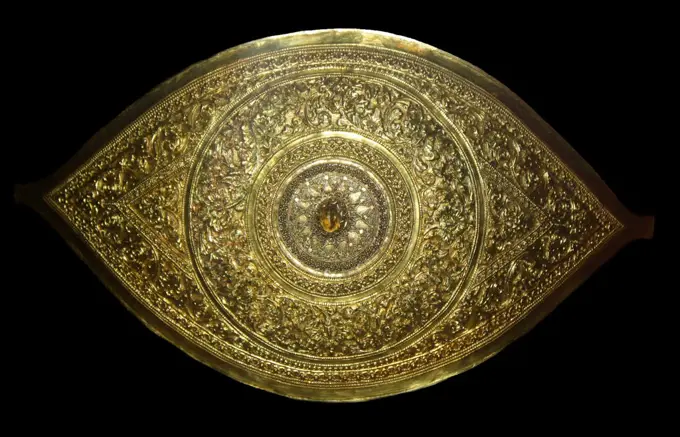
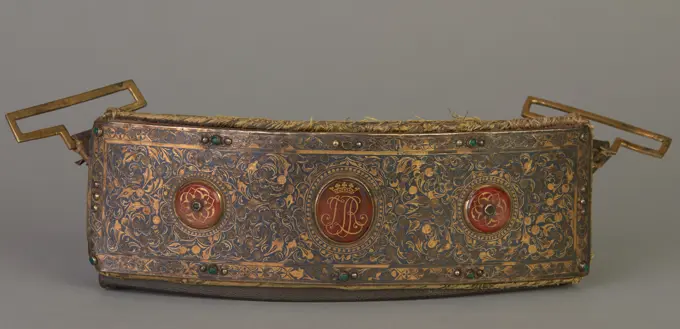
Buckle, 1800-1900. Gilded silver, Malaysia. Malay men usually wore a sash with a buckle to hold up their sarong or lower garment. This especially elaborate waist buckle once belonged to a noble of the 2nd rank, Abdul Wahab bin Toh Muda Abdul Aziz. He was the Chief Minister of Perak between 1948 and 1957.
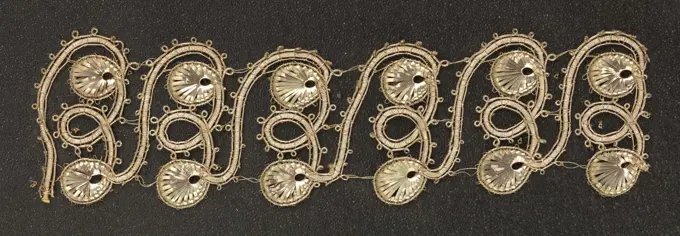
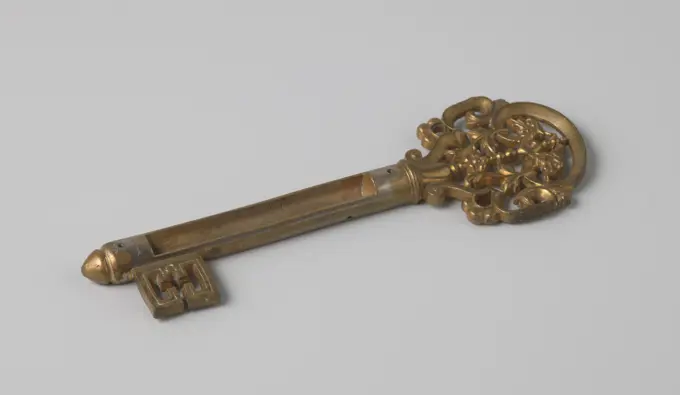
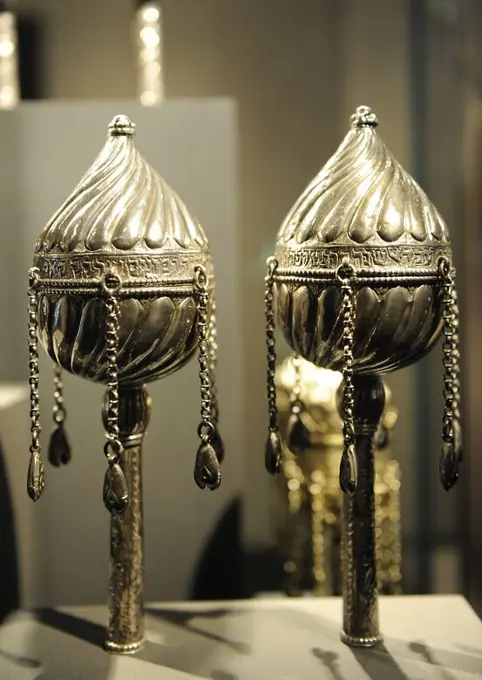
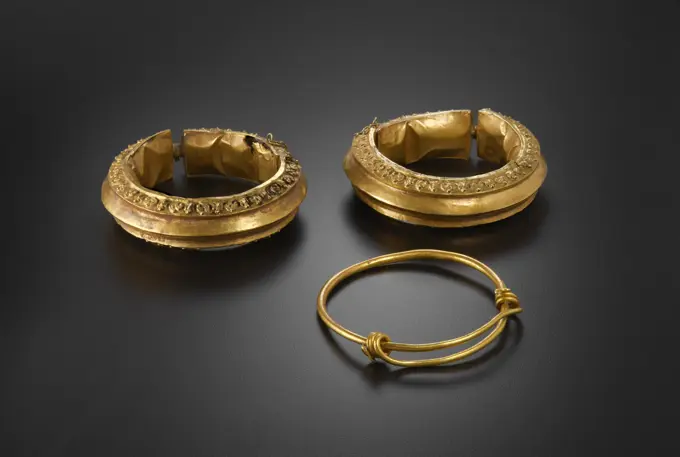
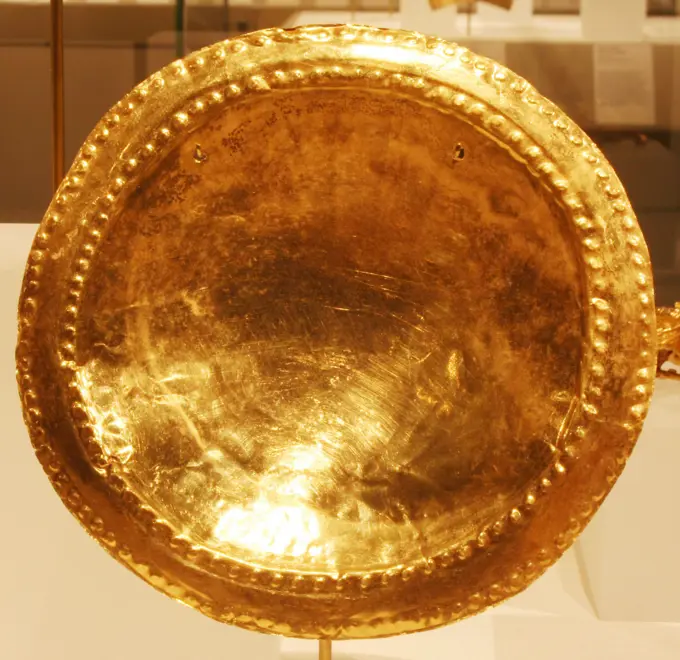
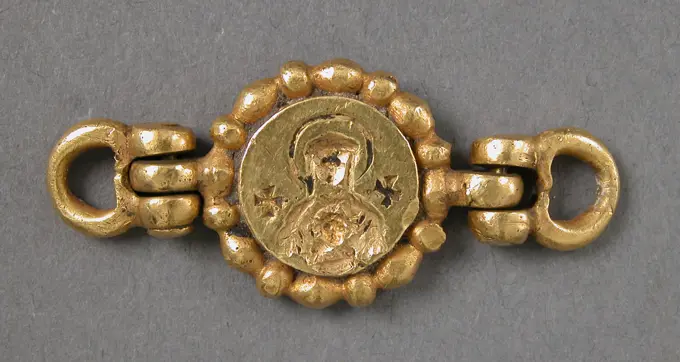
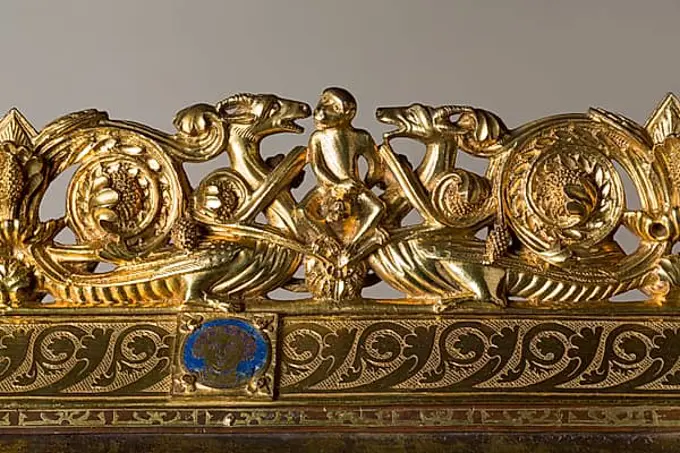
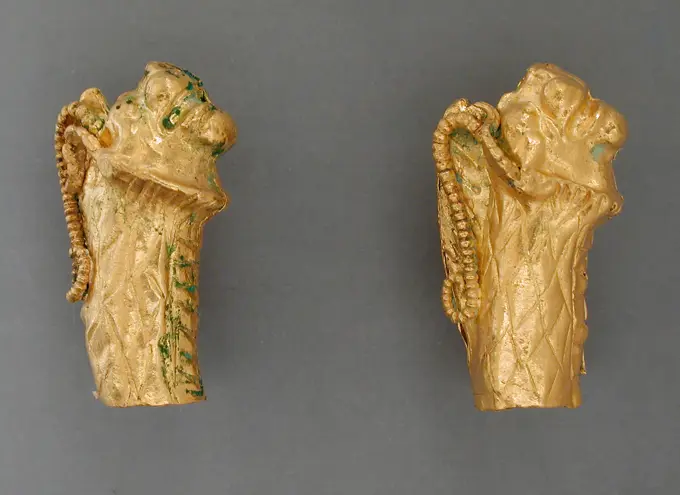
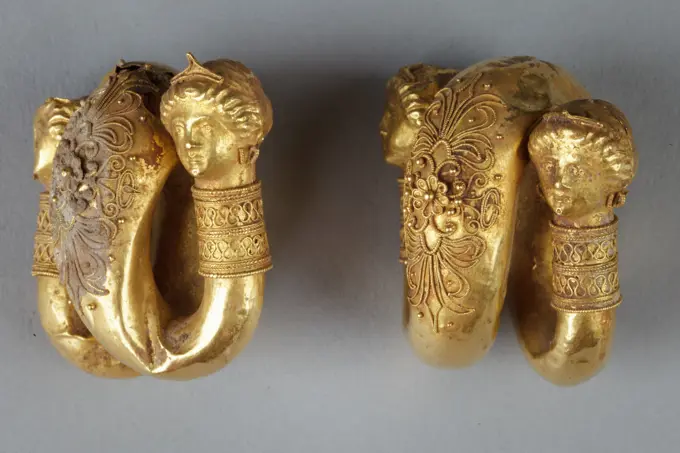
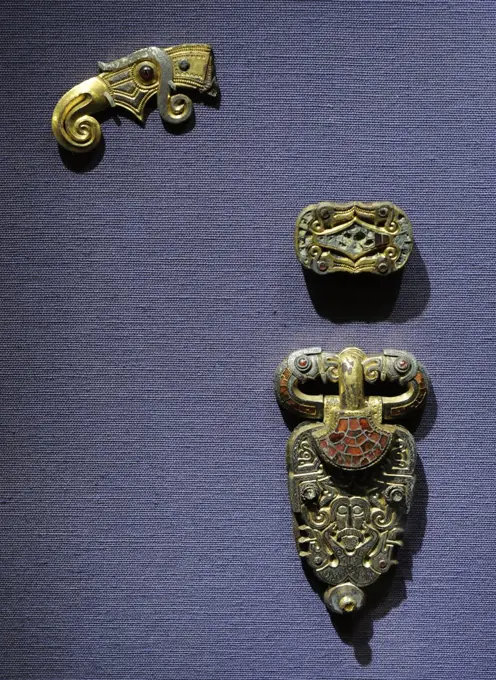
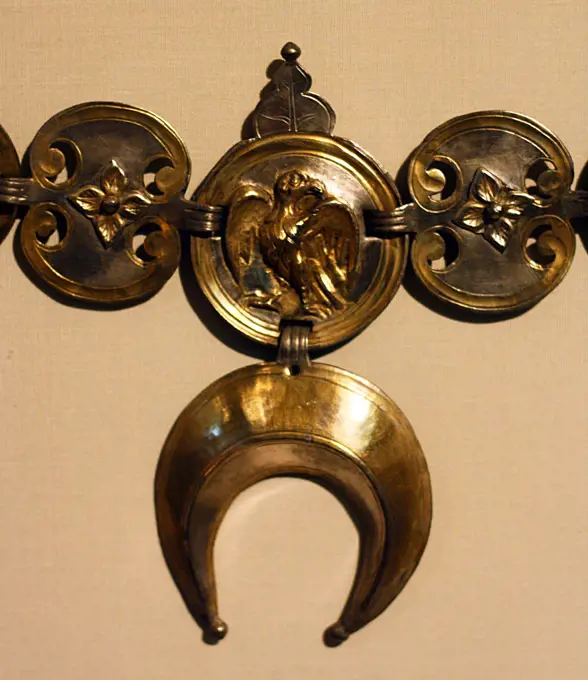
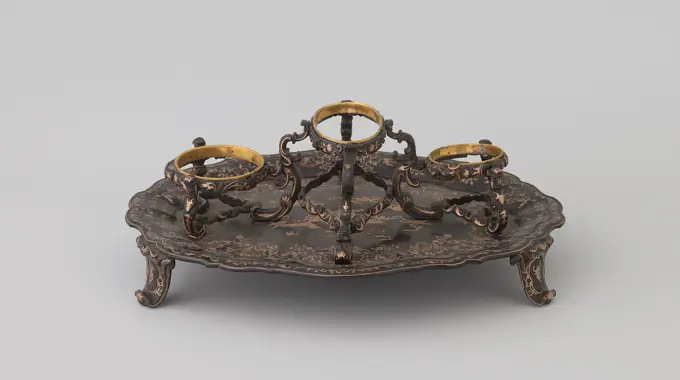
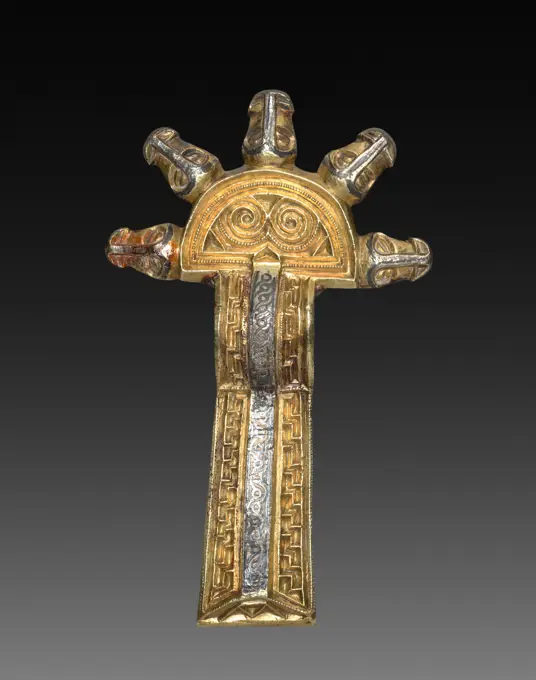
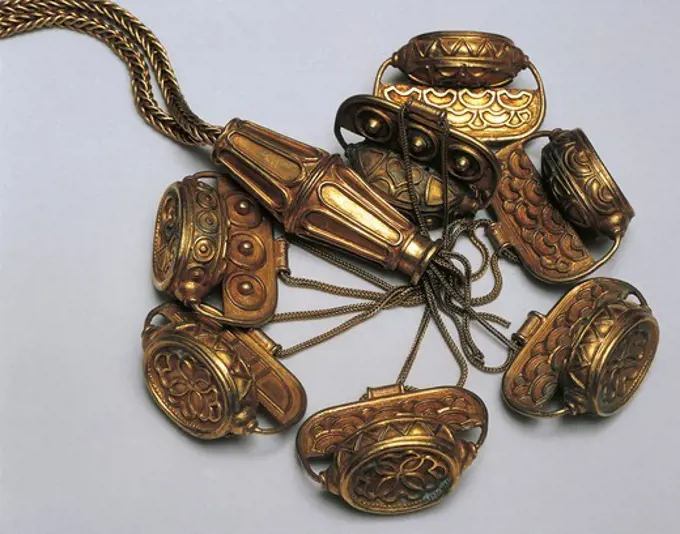
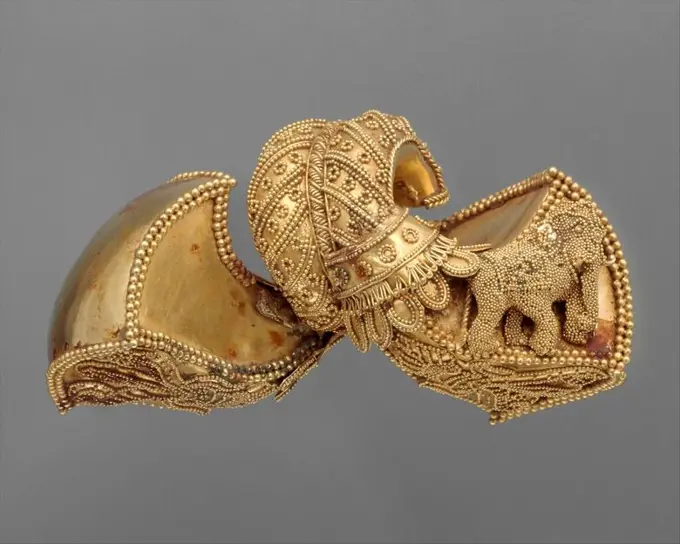
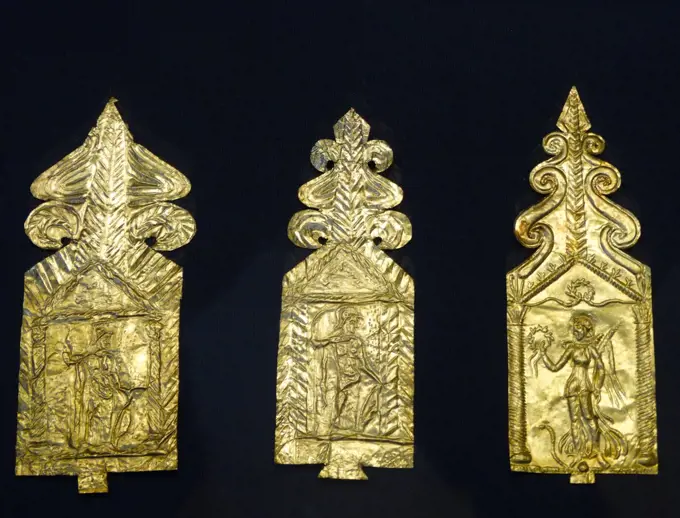
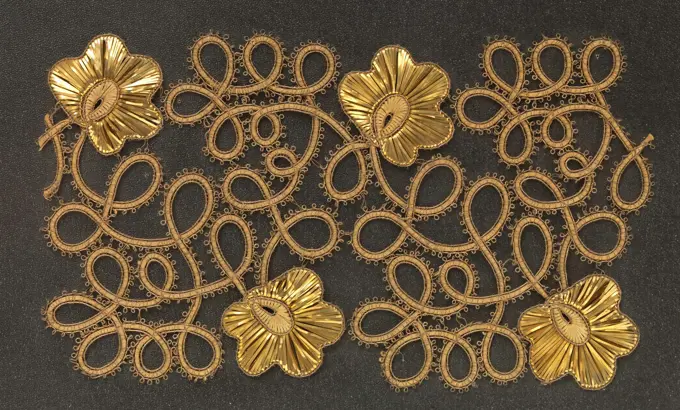
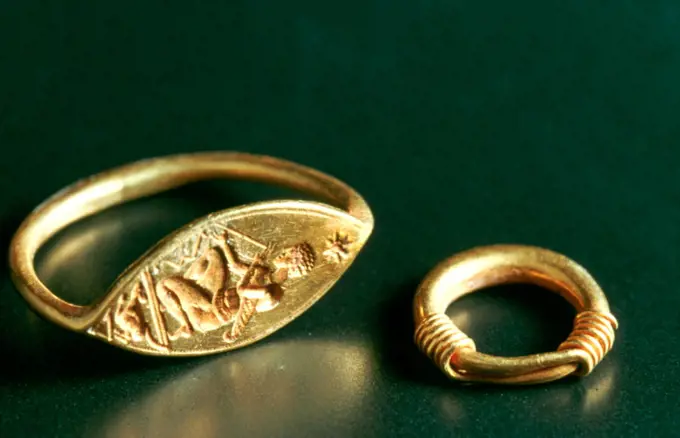
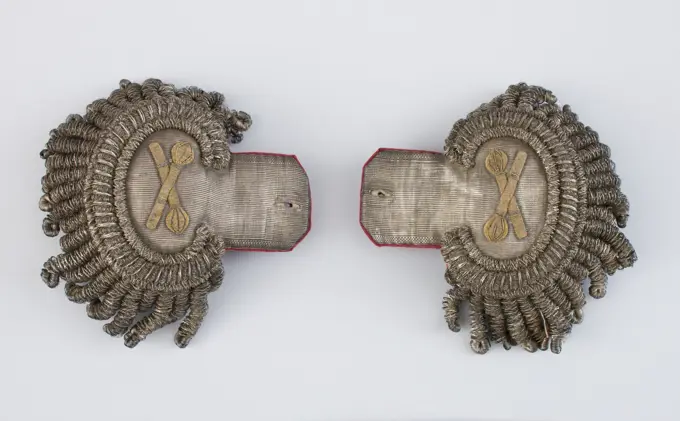
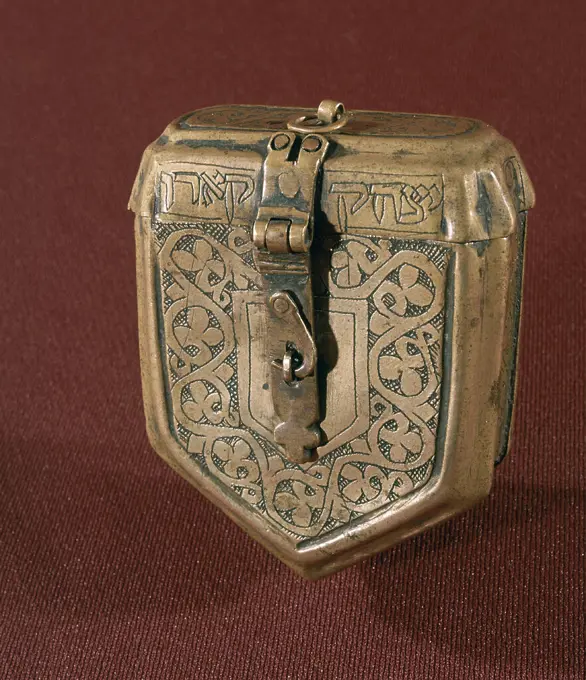
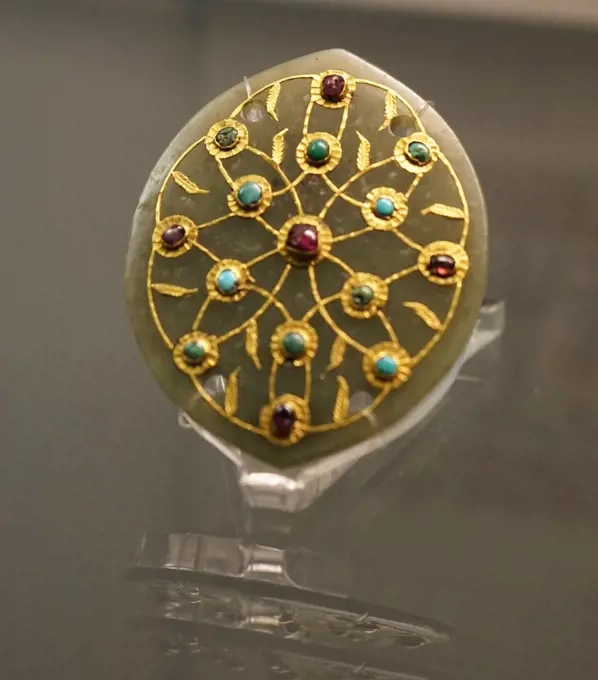
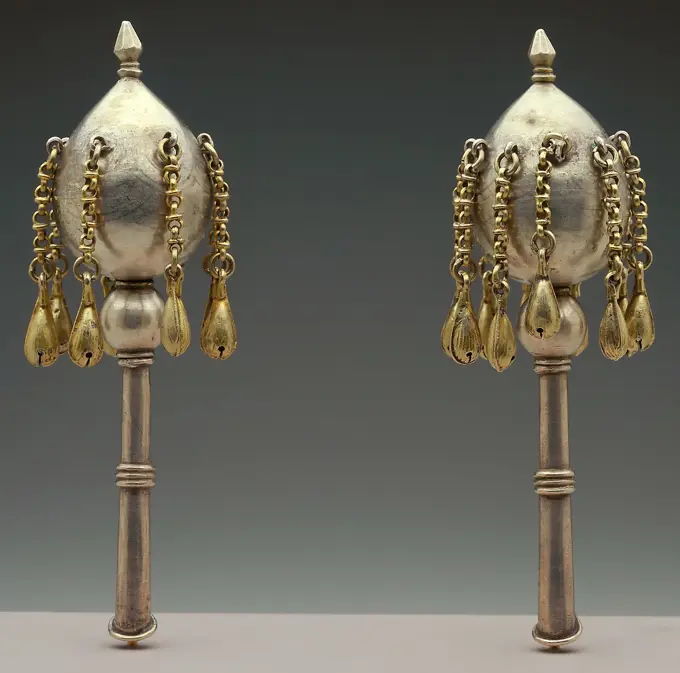
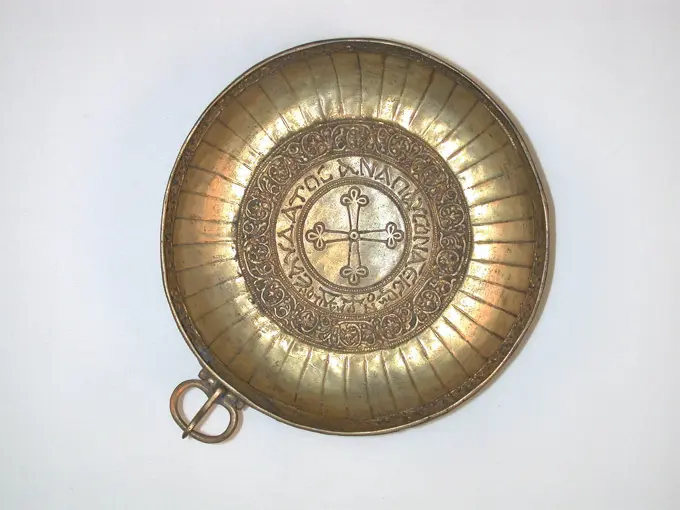
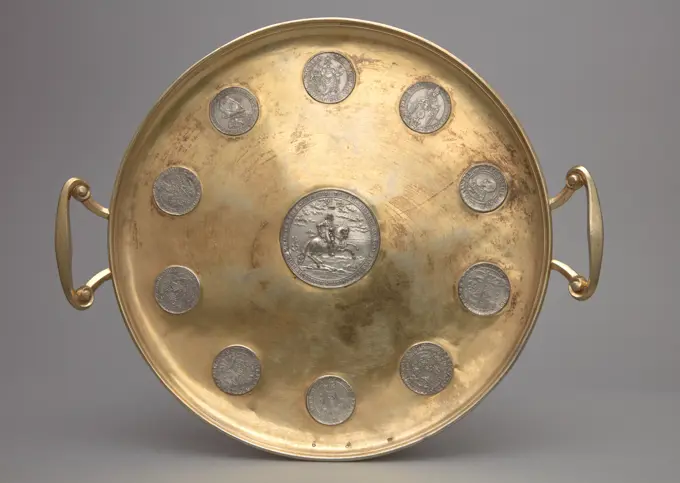
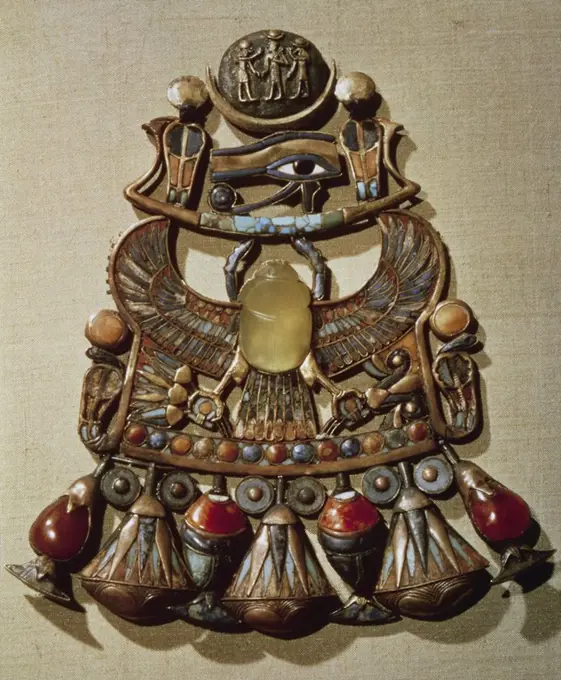
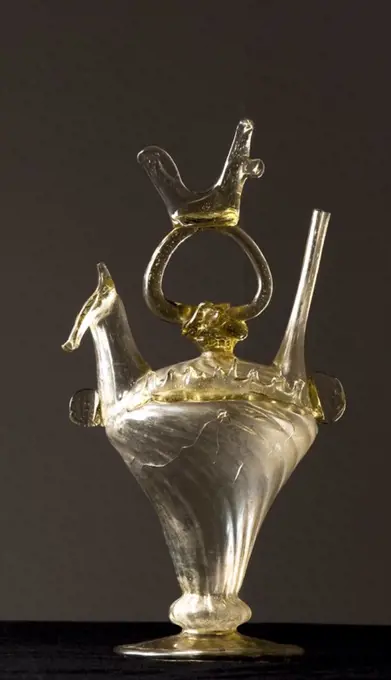
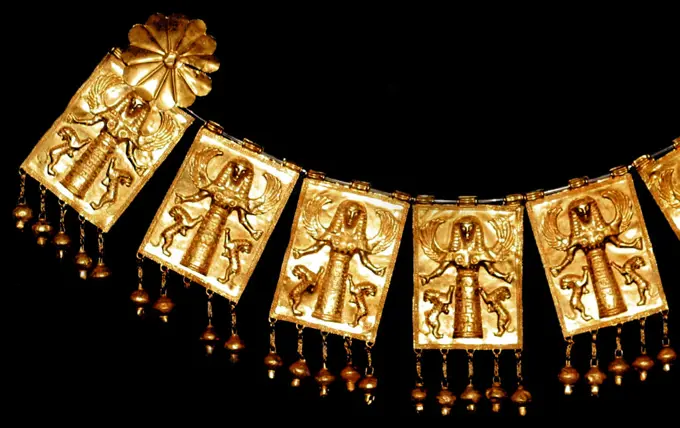
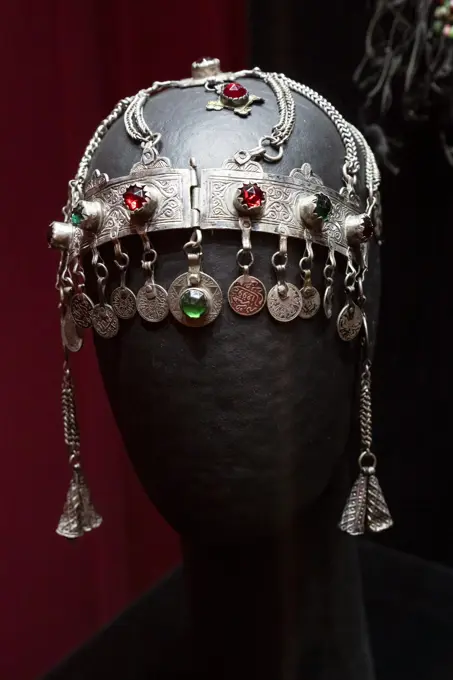
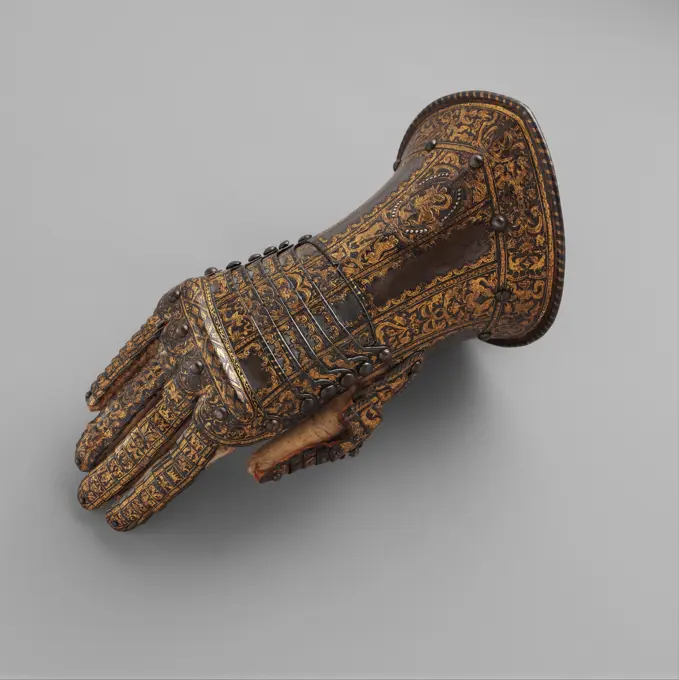
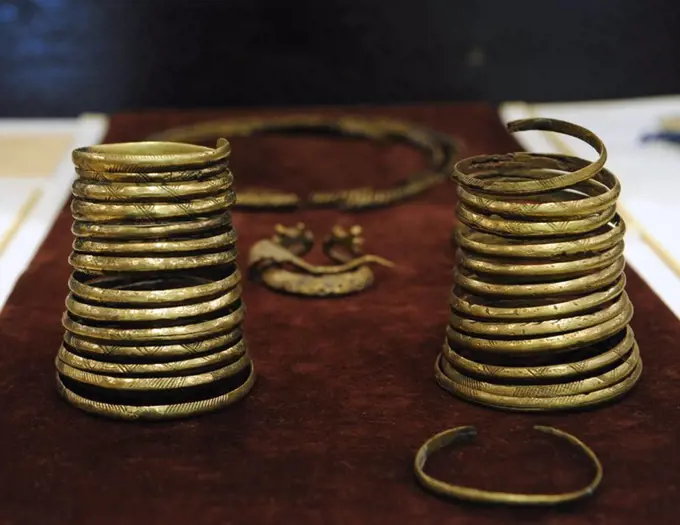
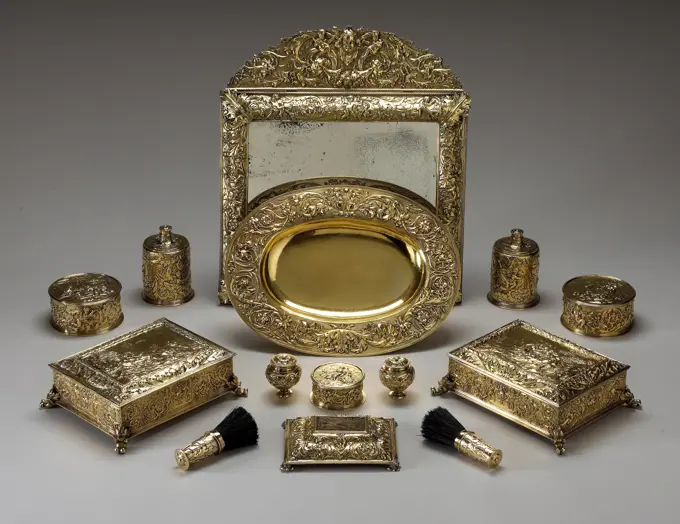
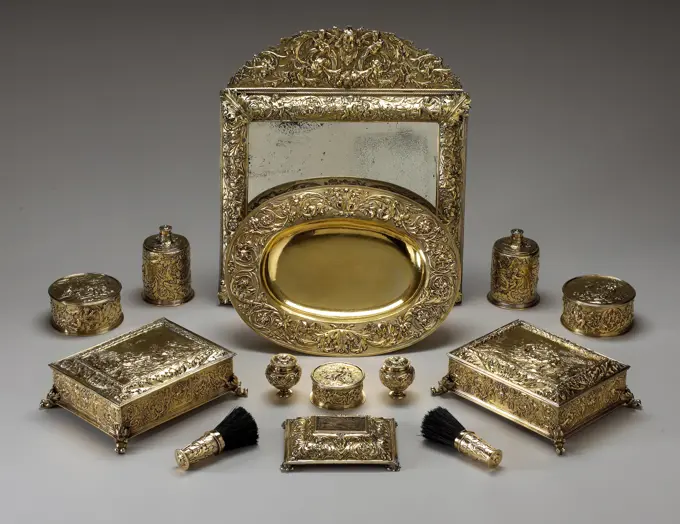
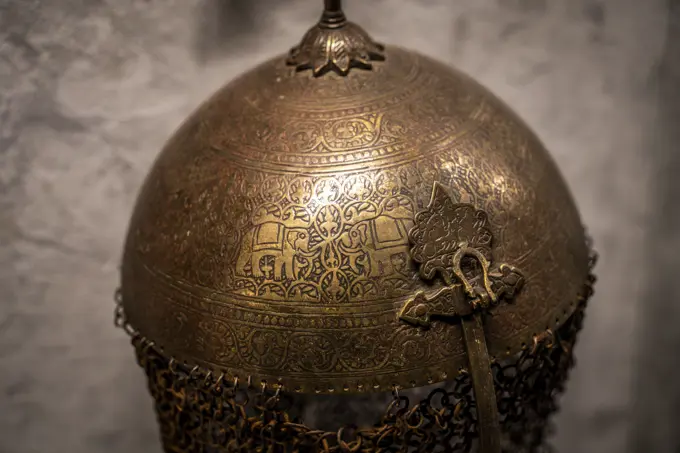
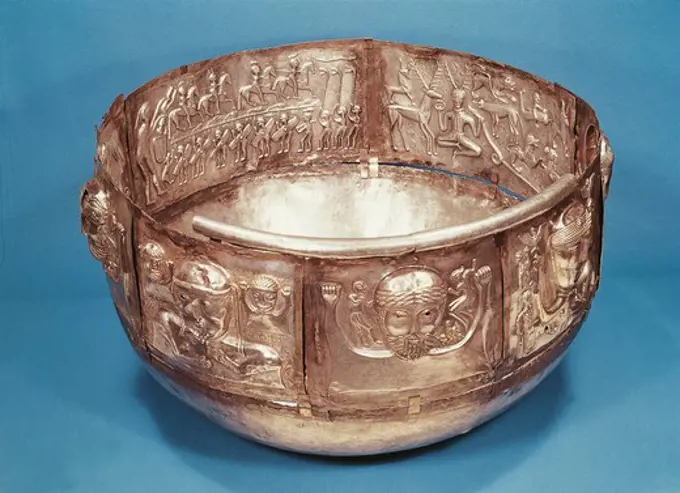
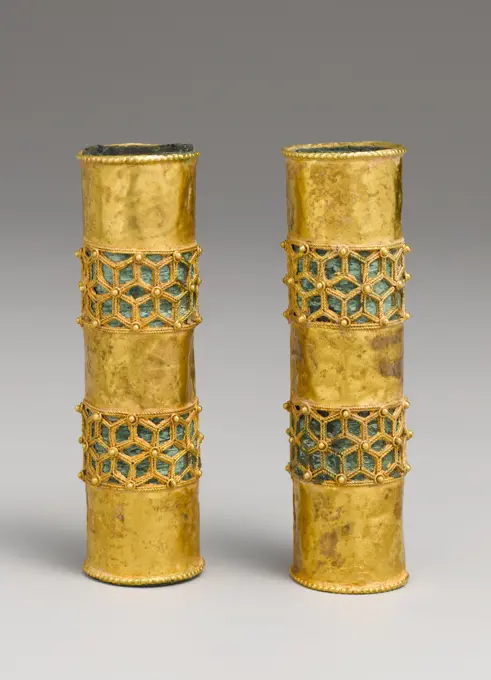
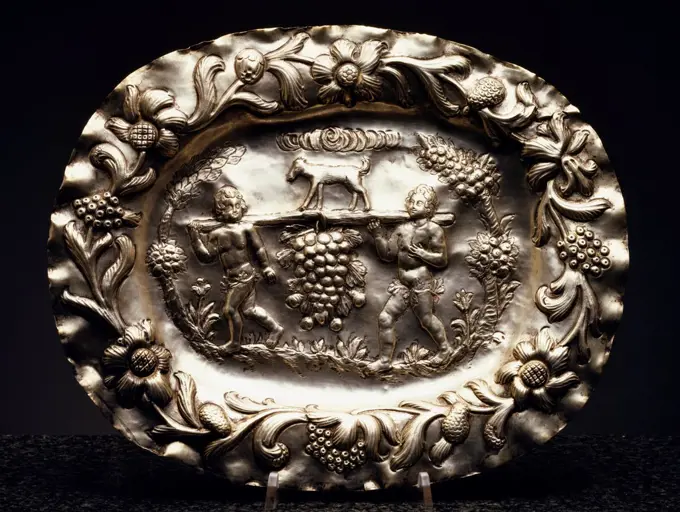
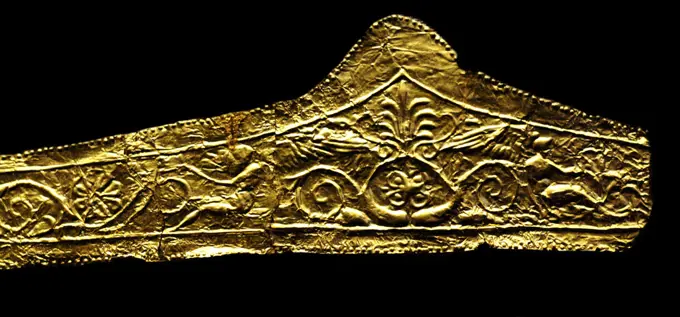
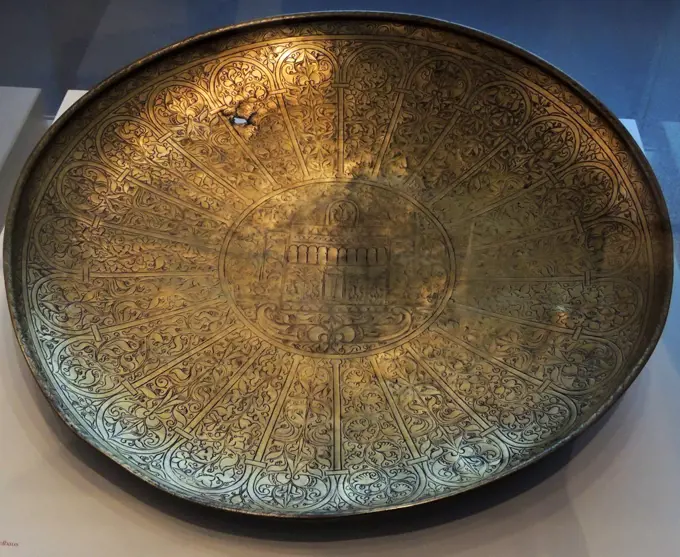
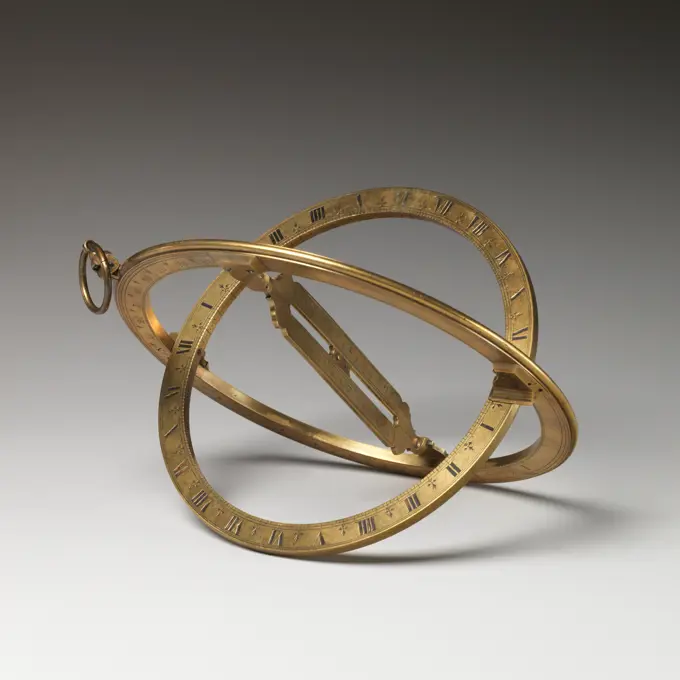
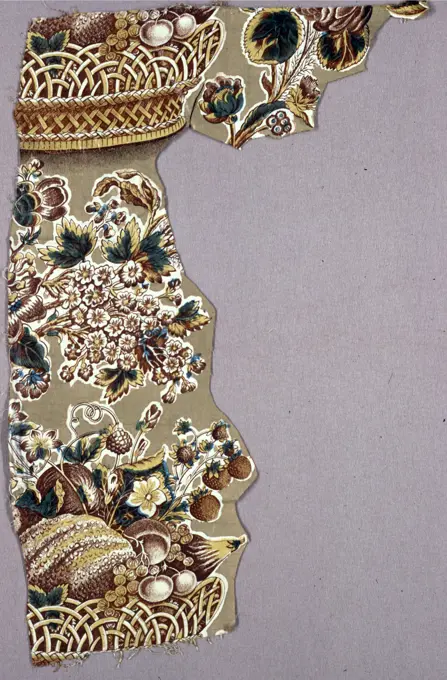
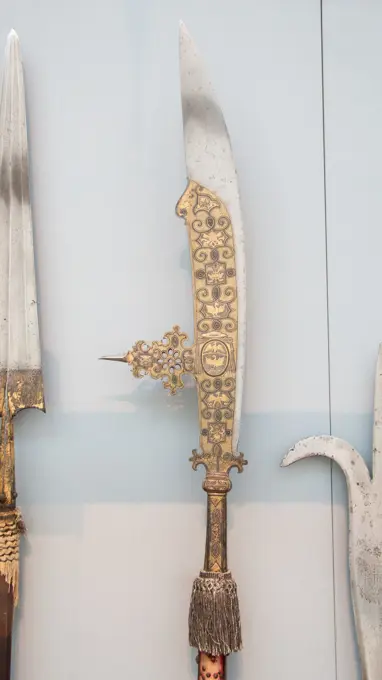
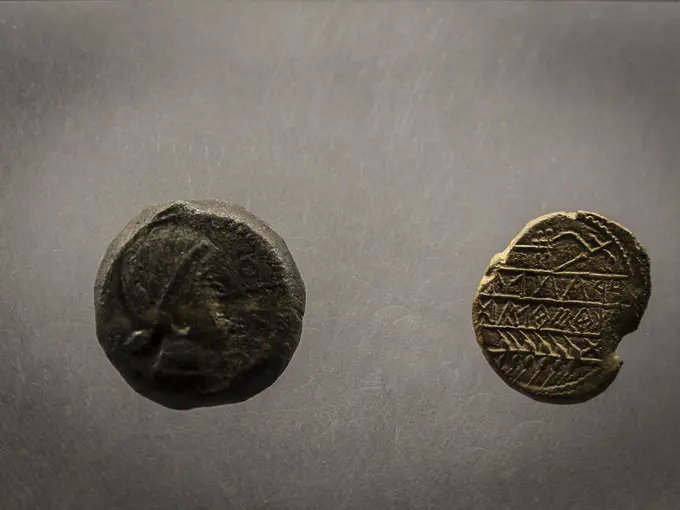
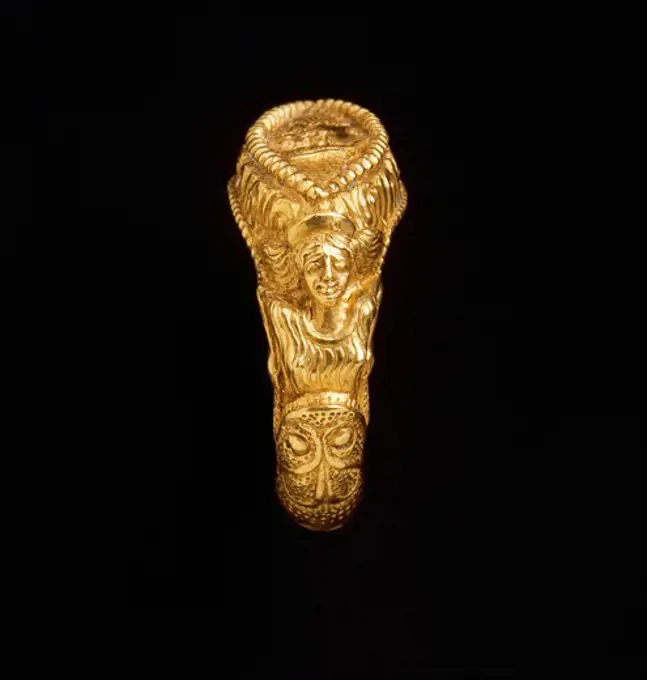
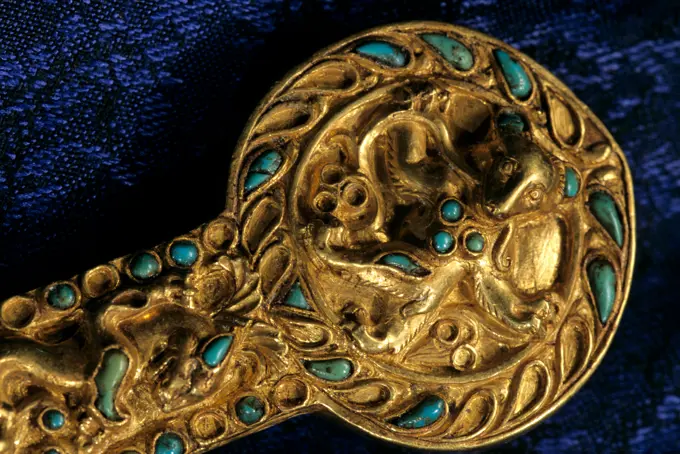
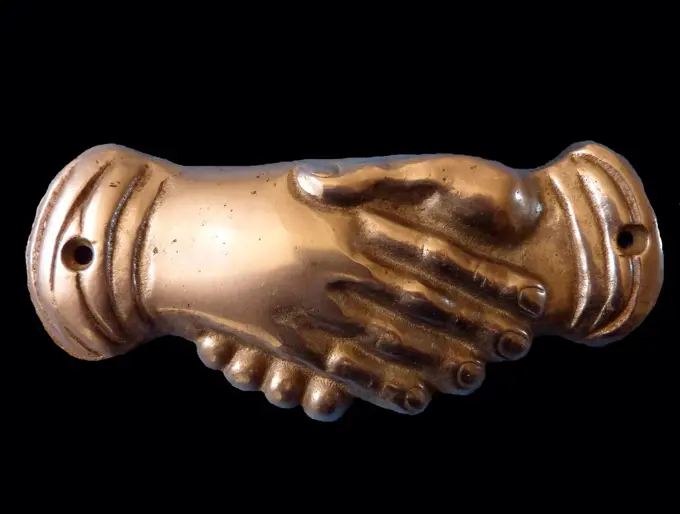
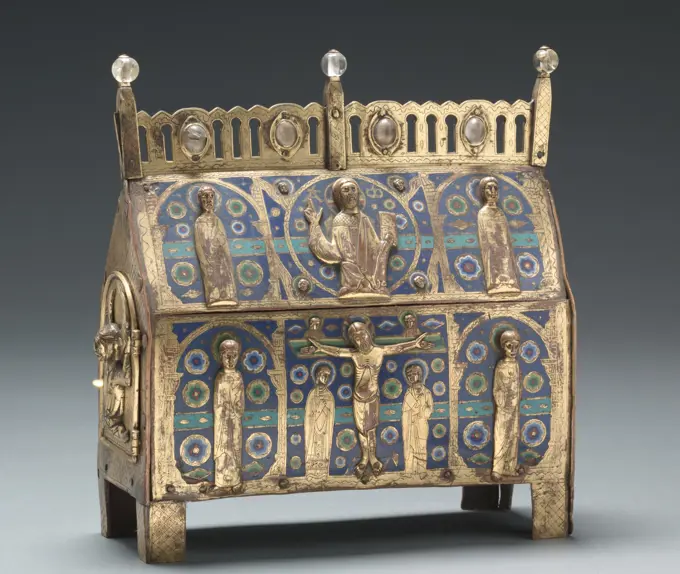
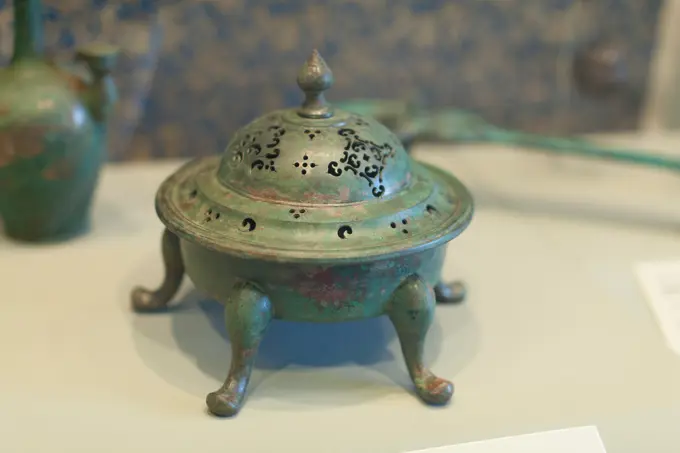
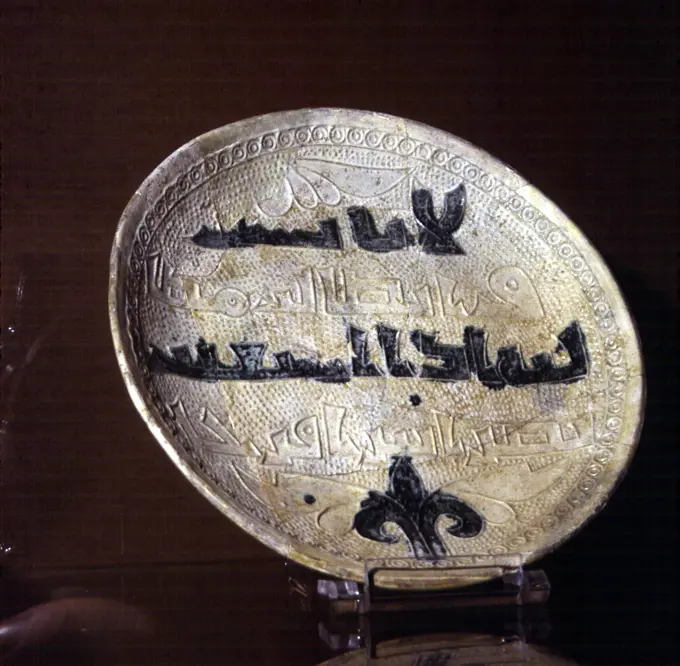
Treasure of El Carambolo. Tartessian/ Phoecian culture. 5th-7th BCE. From Camas. Archaeological Museum of Seville. Spain.Gold pendant and gold disc earrings, Italy. Goldsmith art. Greek civilization, Magna Graecia.Fragment goudgalon.Fragment gold galon, decorated with garlands with flowers and a branch with leaves and flowers.Belt adornment with an eagle and its prey ca.1st-2nd century A.D. Parthian or Kushan This solid gold ornament is in the form of a roundel with two projecting elements that have slots for the attachment of a strap. The rim of the roundel, consisting of eighteen thumbnail-shaped cells for turquoise inlay in the manner of some Sarmatian roundels, frames the openwork figure of an eagle in high relief. Grasping a small, crouching animal in its talons, the bird perches in three-quarter view, facing right, with its chest extended and the rest of its body receding into the background. Its wings are outspread, the one on the left seen emerging from behind the swelling of the chest and the one on the right receding into the back plane. The body and legs carry ridges and linear patterning to suggest the texture of feathers. The bird's head is in profile, with a cell for the prominent ear, a protrusion at the eye area, a curved beak, and a downcurved line for the mouth. The entire figure is workedBowl or Deep Plate 19th century (original dated 1330) French. Bowl or Deep Plate 468754Buckle, 1800-1900. Gilded silver, Malaysia. Malay men usually wore a sash with a buckle to hold up their sarong or lower garment. This especially elaborate waist buckle once belonged to a noble of the 2nd rank, Abdul Wahab bin Toh Muda Abdul Aziz. He was the Chief Minister of Perak between 1948 and 1957.Key-shaped holder. Key-shaped holder of some instrument, presumably a thermometer in the form of a key. The handle consists of a downwardly used C volute in animal heads ending and resting on two tagged volutes. Furthermore with leafwork and flowers decoratedTorah finials. Persia, ca. 1921. Silver, repousse and cast. Gift of the Hafetz Hayyims synagogue, Moshav Beit Nekofa, through Hananiah Der'i. Israel Museum. Jerusalem.Gold ornament from a chairMitre, silver, gilt silver and gems, 1648, Hermitage of Sao Bras, Museum of Evora, Evora, Alentejo, Portugal, Europe.Twisted WireBraceletOne of a Pair of RepousseAnkletsEarring 3rd century Pontine. Earring 465156 Pontine, Earring, 3rd century, Gold, garnet or glass paste cabochon, Overall: 13/16 x 9/16 x 3/16 in. (2 x 1.4 x 0.5 cm). The Metropolitan Museum of Art, New York. Gift of J. Pierpont Morgan, 1917 (17.192.102)Przeszo Przyszoci unknownPectoral Disk 8th-12th century Coclé (Macaracas). Pectoral Disk 316672Bag Fischel, Nessler & CompanyPair of Stirrups. Culture: Mapuche, Chile. Dimensions: 42.50.440; H. 10 in. (25.4 cm); W. 9 in. (22.9 cm); D. 4 in. (10.2 cm); Wt. 2 lb. 13.4 oz. (1287.1 g); 42.50.441; H. 10 in. (25.4 cm); W. 9 in. (22.9 cm); D. 4 1/2 in. (11.4 cm); Wt. 2 lb. 13.6 oz. (1292.7 g). Date: 19th century.These large, heavy and elaborated Mapuche stirrups may have been used for rituals and ceremonies in which horses were adorned with rich and elaborate tack. Their general shape is inspired from Argentinian <i>campana</i> stirrups, themselves evolved from 18th-century European types. The carved geometric designs refer to Mapuche symbolism and cosmogony. The circle with the cross represents <i>meli witran mapu</i> (literally the land of the four places), the four parts of the world. The circles with a central dot, on the lower rim, may be representations of the sun or stars and the crown-shaped symbols may represent the head of Lukutuwe, or the First Man, as he appears on many Mapuche textiles. Hearts and leafClasp with Intaglio Medallion of the Virgin and Child 6th century Byzantine The incised image and the inscription on the reverse expressed the owners devotion to the Virgin as the Theotokos, Mother of God.As Christianity became the dominant religion in Byzantine society, Christian imagery was increasingly found on jewelry. Crosses appear by the fifth century; the Virgin Mary, saints, angels, and other holy figures became popular in the sixth century. The images were thought to protect the wearer, aid in prayers, and even perform miracles.. Clasp with Intaglio Medallion of the Virgin and Child 463392Silver bowl, 17th century. Artist: UnknownLeech fibula;  VI century BC (-600-00-00--501-00-00);EtruriaTreasury, Anno Shrine, workshop of Nicholas of Verdun and Cologne, around 1183, ridge crest with monkey and goatsMirror frame. unknown, craftsmanDish late 15th century Spanish. Dish. Spanish. late 15th century. Tin-glazed earthenware. Made in probably Manises, Valencia, Spain. CeramicsPair of EarringsGold pommel cap decorated with filigree.EarringsScandinavia. Scandinavia. Shield grip. Buckle plate. Aker, Vang, Hedmark, About year 600. Norway. Historical Museum. Oslo. Norway.Silver-gilt horse trappings. Found in Rome, at the foot of the Esquiline Hill. Dated late AD 300s.Ink set of turtle, inlaid with gold, anonymous, c. 1800 - c. 1900 Ink set decorated with piqué technology, turtle inlaid with gold ornaments. Three standards are attached to an oval scalloped plateau, in which the bottles can be placed. Northern Netherlands (possibly)Netherlands (possibly) gold (metal) Ink set decorated with piqué technology, turtle inlaid with gold ornaments. Three standards are attached to an oval scalloped plateau, in which the bottles can be placed. Northern Netherlands (possibly)Netherlands (possibly) gold (metal)Fibulae, 500s-600s. Alemannic, Migration Period, 6th-7th century. Cast silver, parcel-gilt, with niello; overall: 10.5 x 6.5 x 2 cm (4 1/8 x 2 9/16 x 13/16 in.). A woman of high rank might have worn these twin fibulae on her shoulders, one fastening her inner garment on the right, the other her outer garment on the left. She might also have suspended them from her belt as decorative ornaments.Gold ornament produced by the Nias people, native to Nias, an island off the west coast of North Sumatra, Indonesia early 20th centurySpain, Madrid, Gold necklace with pendants, Carambolo Treasure found in Camas, Spain, detailOne from a Pair of Royal Earrings. Culture: India. Dimensions: H. 1 1/2 in. (3.8 cm); W. 3 in. (7.6 cm); L. 1 9/16 in. (4 cm). Date: ca. 1st century B.C..This exquisite pair of gold earrings in rare in having survived. While splendid jewelry adorns the regal and divine figures represented on early stone sculptures and terracotta plaques, few actual ornaments still exist. It is thought that jewelry was not kept and reused but instead was melted down possibly to avoid transmitting the karma of the former owner. In addition to clusters and rows of beads, each earring is decorated with a winged lion, and elephant and two vases filled with vegetation. Put on by slipping through a distended earlobe from the back, they are worn with the lion facing the wearer's cheek and the elephant on the outside. The place of these earrings in the history of Indian art is assured, not only for their intrinsic beauty, but also because of the light they shed on the superb quality of early gold-smithing in Gold votive plaques from the Roman Empire. 2nd century ADView of a gold jewelry seen from the storeTiger Claw Necklace on aTorqueJapanese warrior&acute;s helmetDish early 16th century German. Dish. German. early 16th century. Brass. Metalwork-BrassHorse-collar mount. Lille Elverums. Gjende, Stjordal k., Nord-Trondelang.10th century. Norway. Historical Museum. Oslo. Norway.Fragment goudgalon.Fragment gold galon, decorated with garlands with flowers and a branch with leaves and flowers.Punic Carthaginian Jewellery, c3rd-4th Century AD. Located in the Bardo Museum, Tunis.Uniformed shoulder pads according to the tradition of Prince Józef Poniatowski (1763 1813) unknownRELICARIO CON INSCRIPCIONES HEBREAS. Location: CATEDRAL-INTERIOR. Toledo. SPAIN.Ancient golden engraved egg with gradient backgroundElectrotype copy of the gold helmet of MeskalamdugJade plaque from a quiver, encrusted with rubies and turquoises in a gold tracery. From Ottoman Turkey. Dated 16th CenturyRimmonim (Torah finial) (one of a pair), early 20th century, 7 1/2 x 2 5/16 in. (19.05 x 5.87 cm), Silver, gilt, Iraq, 20th centuryCup or Bratina 19th century Scythian. Cup or Bratina 463221Model collar of Hapiankhtifi. Dimensions: W. 17 × Th. 1.5 cm (6 11/16 × 9/16 in.). Dynasty: Dynasty 12. Date: ca. 1981-1802 B.C..Elaborate broad collars were worn by the Egyptian elite for a variety of festival and religious occasions. These could be floral, made from actual plant material, or crafted from individual elements of faience, metal, or semi-precious stone. This model collar of wood, gilded and engraved with representations of small beads in rows, echoing an actual example, was found on the chest of Hapiankhtifi's mummy. A string would have been passed through the holes in the two ends and tied around the mummy's neck. Unlike a real collar, this is inflexible, emphasizing its character as a funerary model. Museum: Metropolitan Museum of Art, New York, USA.A tray blown with numismates Dietrich, Michael (1673 1748)Egyptian art. Tutankhamun's pectoral with solar and lunar emblem and Scarab. Dynasty 18. 1332-1322 BC. New Kingdom of Egypt. Egyptian Museum Cairo.Lluís Masriera / Pasador para el pelo con marco recubierto de diamantes, oro, esmeraldas y aplicaciones de nácar. Colección privada. Author: LLUÍS MASRIERA I ROSÉS.Glass baptism bottle. Museum of Mataró.Seven linked plaques with a winged goddess between lionsSelection of Colombian gold work. Dated 12th CenturyBerber diadem from Tiznit Berber diadem from Tiznit, Morocco, Corral del Carbón , al-fundaq al-yadida, 14th century, Granada, Andalusia, Spain Copyright: xZoonar.com/BartomeuxBalaguerxRotgerx 21956830Gauntlet for the Right Hand, Belonging to the Armor of Don Alonzo Pérez de Guzman el Bueno (1550-1619), Count of Niebla and Duke of Medina-Sidonia ca. 1580 Italian, Milan The gauntlet's elaborately chiseled and damascened decoration exemplifies the highest quality of late Renaissance Milanese metalworking. The owner's crowned monogram on the cuff identifies the gauntlet as belonging to the armor of Don Alonzo Pérez de Guzman el Bueno (1550-1619), count of Niebla and duke of Medina-Sidonia, the commander of the ill-fated armada sent against England in 1588. The rest of the duke's armor, a heavy bulletproof harness that was practical despite its rich decoration, is preserved in the Royal Armory, Madrid.. Gauntlet for the Right Hand, Belonging to the Armor of Don Alonzo Pérez de Guzman el Bueno (1550-1619), Count of Niebla and Duke of Medina-Sidonia 26586Middle Ages. Jewelry. Spiral bracelets and bangles 13th century. Museum of History and Navigation. Riga. Latvia.Turkish Ottoman style water tap examplesPowder box, from a toilette service, 1683, William Fowle, English, 1658-1684, 2 5/8 x 5 1/8 x 5 1/8 in. (6.67 x 13.02 x 13.02 cm), Vermeil (gilt silver), England, 17th centuryScent flask, from a toilette service, 1683, William Fowle, English, 1658-1684, 5 13/16 x 3 7/8 x 3 7/8 in. (14.76 x 9.84 x 9.84 cm), Vermeil (gilt silver), England, 17th centuryPersian helmet with engraved elephant scene Persian helmet with engraved elephant scene, 16th century, Álava Armory Museum, Vitoria, Basque Country, Spain Copyright: xZoonar.com/Tolox 21930552Denmark, Aalborg, Votive cauldron, iron ageHair Ornament, One of a Pair 12th-13th century Tubular hair ornaments have a deep history in the region of Iran and Central Asia, dating to pre-Islamic times. Worn around a thick lock of hair, this ornament would have created a striking image, especially with a brightly colored cloth slipped between the copper alloy core and the gold of the exterior, where it would have peeked through the geometric patterning of gold wire and granulation.. Hair Ornament, One of a Pair. 12th-13th century. Gold; cast, fabricated, engraved, with a copper alloy inner sleeve, decorated with twisted wire and granulation. Found Iran, Gurgan. JewelryAnonymous / 'Case for rock crystal vase with scroll-shaped handles and a decoration of roses'. 1550 - 1610. Leather, Wood, Metal, Velvet. Museum: Museo del Prado, Madrid, España.England, London, British Museum, Display of Arc-shaped Jade Pendant from China, Qing Dynasty 18th-19th centuryPlate in embossed silver foil, Basilica of Sant'Eustorgio, Milan. Italy, 16th-17th century.Gold pediment-shaped diadems 330-300 BC. These diadems are made of thin sheet gold with die-formed designs. The most elaborate of them has a central palmette and winged figures on either side with scroll work beyond. The Kyme Treasure contained fragments of at least 11 such diadems: they were probably made especially for the tomb.Shallow bowl, showing a more domed building. Iran. Bronze engraved,8th century ADRingUniversal ring sundial 18th century Jonathan Sisson. Universal ring sundial. British. 18th century. Brass. HorologyTextile (England); cottonFauchard of the Bodyguard of Cardinal Scipione Borghese-Caffarelli (1576-1633) ca. 1600-1610 Italian The blade on this fauchard is very similar to another staff weapon in the Metropolitan Museum's collection (acc. no. 14.25.273), but this example is without the pierced rosettes. Except for the tip and the cutting edge, the blade is decorated similarly on both sides with a series of medallions and ornamental strapwork cartouches outlined in silver-encrusted dots and set against a blued background finely damascened with gold scrolls. The ornament within the medallions and cartouches is chiseled and gilt on a punched background and includes, from top to bottom, a grotesque, the papal tiara and crossed keys of Saint Peter, three palm branches projecting through a crown, a basilisk, the Borghese arms (a dragon displayed, on a chief an eagle displayed) surmounted by an archbishop's hat with ten tassels, an eagle, and a grotesque. The side straps and their rivets are decorated with punched anTibetan Buddhist Dorje vajra ceremonial item on wooden backgroundThe Battersea Shield, Celtic.Fragment goudgalon, 1800 - 1900 Fragment golden galon, decorated with garlands with flowers and a branch with leaves and flowers.  . Fragment golden galon, decorated with garlands with flowers and a branch with leaves and flowers.  .Rapier by Pietro Caino and Francesco Rivolta. 1665-1670. Milan. Italy. Knights' Hall. The State Hermitage Museum. Saint Petersburg. Russia.support for a cross in the shape of two angels, 1170, bronze, Amsterdam, Netherlands.Iberian period coins, Iberian culture, Iberian Museum of Jaén, Andalusia, Spain.Three bronze phalarae found in the River Avon in Melksham, part of the Melksham Hoard. With permission of Wiltshire Museum, Devizes, England, UKEar Ornament, c. 500-200 BC. Peru, North Highlands, Chavín de Huantar(), Chavín style (1000-200 BC). Hammered and cut gold; diameter: 9.6 cm (3 3/4 in.); overall: 2.6 cm (1 in.).Tray first half 14th century This tray was used to carry food placed on saucers that fit in the six sunken pierced medallions. The inscription around the raised center is a dedication to an anonymous high-ranking Mamluk official.. Tray 444533Fili Anka with a view of Ponte Salario in Rome, a saucer with a trail of a floral flagella.; Baranówka (Porcelain Manufaktura; 1804-2012); 1830 (1830-00-00-1830-00-00);Gold ring, from Bologna, Italy, Etruscan civilizationClaw Set Gem BirdRingAfghanistan, Detail of dagger, gold artifacts from Tillya Tepe find, Burial 4, six tombs of Bactrian nomadsThe beautiful shoulder clasp of a Bhutanese woman wearing national dress called kira.BULGARIA TOURISM NESSEBAR UNESCO SITE NESSEBAR, BULGARIA - JUNE 17, 2023: Tourists view an exhibition in the Nessebar Archaeological Museum wich is situated in Nessebar old city, UNESCO World Heritage Site at the Black Sea coast, Bulgaria. Copyright: xZoonar.com/AntonxChalakovx 20686751Pair of Arm Guards Indian, probably Sikh 18th century View more. Pair of Arm Guards. Indian, probably Sikh. 18th century. Steel, gold, velvet, textile, copper alloy. Armor PartsSilver gilt dish inscribed in Pahlevi, A King's feast, minstrels play. 8th-10th cent. Mazandaran. IRAN.Masonic handshake. Symbol by Anonymous    Private Collection  End of 19th cen.  Great Britain  Bronze  Object  History,ObjectsTwo Snake Armlets, ancient egypt, gold,Europe, Bulgaria, The Panagjuriste treasure, embossed goldRoman blown glass bottle decorated with various colors, from Cologne, Germany, 3rd CenturyGold pendants from a necklace; Dated 350 BCCutout. Designer: Lockwood de Forest (American, New York 1850-1932 Santa Barbara, California). Dimensions: H. 7 3/16 in. (18.3 cm)W. 7 1/4 in. (18.4 cm). Date: ca. 1892.A key figure in the Aesthetic movement, New York-born artist Lockwood de Forest (1850-1932) was very inspired by Indian arts and crafts, and created the Ahmedabad Woodcarving Company in Gujarat, which exported many items to the United States. These cut and chased brass cutouts, designed by de Forest, were based on examples found in wood, plaster, and stone in Indian architecture. In his designs, they would have been used as ornament on architecture or furniture. Museum: Metropolitan Museum of Art, New York, USA.Chasse, c. 1225-1250. France, Limousin, Limoges, Gothic period, 13th century. Copper: repoussé, engraved, stippled, and gilded; champlevé enamel; oak core; overall: 24.7 x 24.2 x 10.4 cm (9 3/4 x 9 1/2 x 4 1/8 in.). A chasse is a container with a pyramid-shaped roof that once served as a shrine for sacred relics. During the medieval period, chasses like this one were placed on church altars during high feast days to allow the faithful to venerate their sacred contents. The chasses design and imagery follow a common formula with Christs Crucifixion and Majesty decorating the central fields of its principal face. The back consists of two panels with identical decoration. Each features three busts of angels inscribed in medallions. Of the chasses lateral sides, only one is preserved in its original state, decorated with the figure of an imposing angel emerging from a bank of clouds. Here, the dark blue enamel background shows an even greater variety of rosettes and other decorative moCovered Incense Burner, 7th-8th century, 8 1/2 x 9 13/16 x 9 13/16 in. (21.59 x 24.92 x 24.92 cm), Bronze, China, 7th-8th century, Intended for incense burning, probably at a Buddhist altar, this deep basin is raised on five cabriole legs. Its high domed cover is pierced with regularly spaced clusters of small holes grouped in threes and fives, interspersed with comma-shaped cloud motifs in the concave outer border. The dome is pierced with petal-shaped panels comprised of multiple scroll form openings. The knob takes the form of a lotus bud, the flower symbolic of Buddhism. This vessel is quite rare and its form is unique to the Tang dynasty. Of the few bronze censers with pierced lids like this one that are known, this is one of the largest. It was most likely used at a domestic Buddhist altar and buried with its owner for use in the afterlife.DETALLES COLLAR. (DEPOSITO: MUSEO ARQUEOLOGICO PROVINCIAL DE CORDOBA).Dish stamped with Kufic script. Mohammed Ibn Bashir. IRAN 8th cent. AD.