My Boards
View Pictures
  • My Boards
← Artworks

Ancient Greek Ceramics

A collection of intricately designed terracotta vases featuring mythological and everyday scenes, showcasing black-figure and red-figure techniques from ancient Greece.

Red -support crater; Painter sitting Nike (approx. 350-340 BC), a group of dotted stones (approx. 355-ok. 320 BC), Kr 3. W. 4th century BC (-350-00-00--326-00-00);
169 assets in this story
6145-29788662
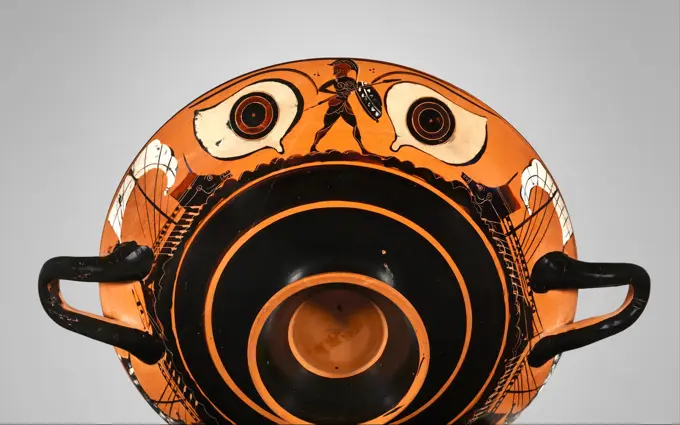
Terracotta kylix: eye-cup (drinking cup) ca. 520 B.C. Greek, Attic Interior, gorgoneion (Gorgon's face)Exterior, obverse and reverse, between eyes, warriorThis is one of a few Attic cups with a so-called Chalcidizing foot that is characteristic of black-figure cups made by Greek potters in southern Italy. Though the question of priority has been much debated, the Attic examples are probably the earlier ones. The motif of ships occurs particularly on kraters (bowls for mixing wine and water) and kylikes during the late sixth century B.C. Analogies between sailing and the symposium (drinking party) appear in literature. Indeed, the effect of ships circumnavigating a drinking vessel full of wine must have been intoxicating in itself. Listen to experts illuminate this artwork's story Listen Play or pause #1022. Terracotta kylix: eye-cup (drinking cup) Supported by Bloomberg Philanthropies We're sorry, the transcript for this audio track is not available at this time. We are working to make
6176-67049477
Amphora, Theseus and the Minotaur, 6th century BC.  Artist: Unknown.
6145-29753081
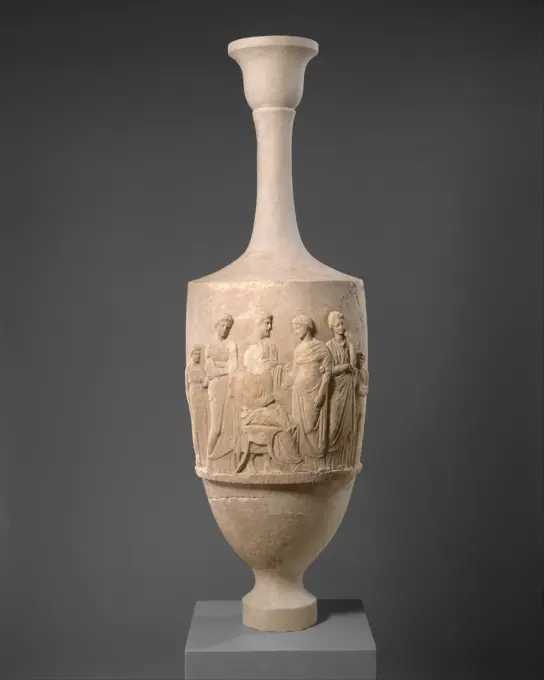
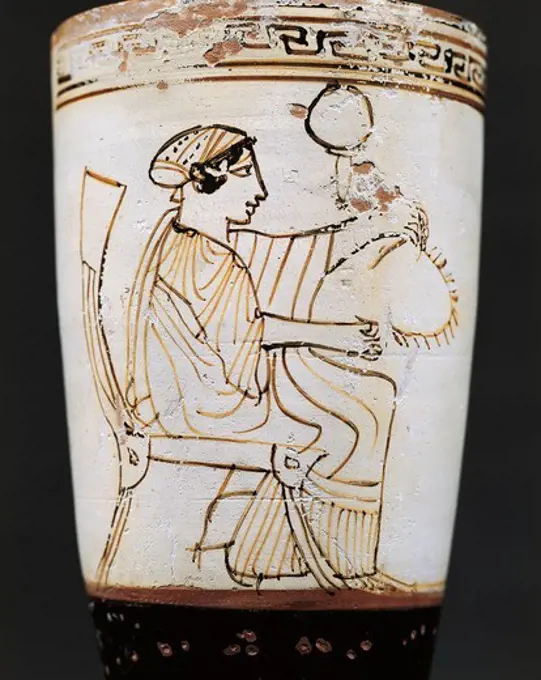
Marble funerary lekythos of Aristomache ca. 375-350 B.C. Greek, Attic Inscribed above the large standing figures, from left to right, Stratokleia Aiolos Aristomache Axiomache; below the seated woman, LeonikeRestored foot, mouth, and most of neck and handleThe deceased is presumably Aristomache, standing before her parents. She clasps the hand of her seated mother, while her father gestures to her. The group is flanked by two other female members of the family and two small servants.. Marble funerary lekythos of Aristomache. Greek, Attic. ca. 375-350 B.C.. Marble, Pentelic. Late Classical. Stone Sculpture
6176-67049301
Vase-painting of Achilles and Ajax playing dice. Artist: Unknown
6145-52507437
Amphore (Vulci). still image. Prints. 1862 - 1864. The Miriam and Ira D. Wallach Division of Art, Prints and Photographs: Picture Collection. Diana (Roman deity), Artemis (Greek deity), Apollo (Greek deity), Spears , To 499, Horses , Greece , To 499, Greeks , Clothing & dress , To 499, Leto (Greek deity)
6145-44279170
Attic Red-Figure Lekythos. Oionokles Painter (Greek (Attic), active about 470 B.C.)
1788-18170
Vase attributed to the Painter of Cambridge, scene of dance lesson, red-figure pottery, detail
4409-132207
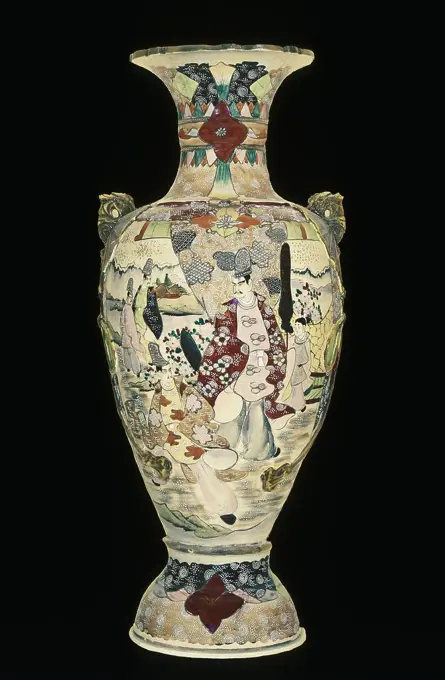
JARRON SATSUMA - LOCERIA DE SATSUMA - JAPON - FINALES DEL SIGLO XIX - LOZA ESTANNIFERA BROCADA. Location: BANCO HIPOTECARIO. MADRID. SPAIN.
1746-19686970
Black bowl painted in added colour showing a hunter seated on a rock with his dog beside him. Probably made in southern Etruria. About 300-280 BC. British Museum.
6145-29732276
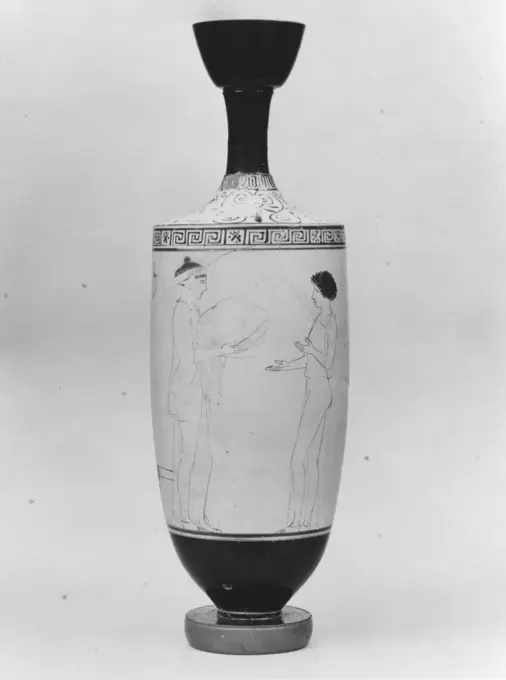
Terracotta lekythos (oil flask) ca. 440 B.C. Attributed to the Achilles Painter Woman and servantThe setting here is the interior of a house, probably the women's quarters an indicated by the stool and the oinochoe (jug) on the wall. The lady hands a bundle of garments to her maid. The women's clothing was originally painted. The color is gone, however, and one now sees the contours that the artist sketched in for reference.. Terracotta lekythos (oil flask) 254803
4409-137531
ANFORA CON PINTURA DE MASCARA TEATRAL. GRIEGO CERAMICA. (DEPOSITO: MUSEO ARQUEOLOGICO NACIONAL).
6145-29202609
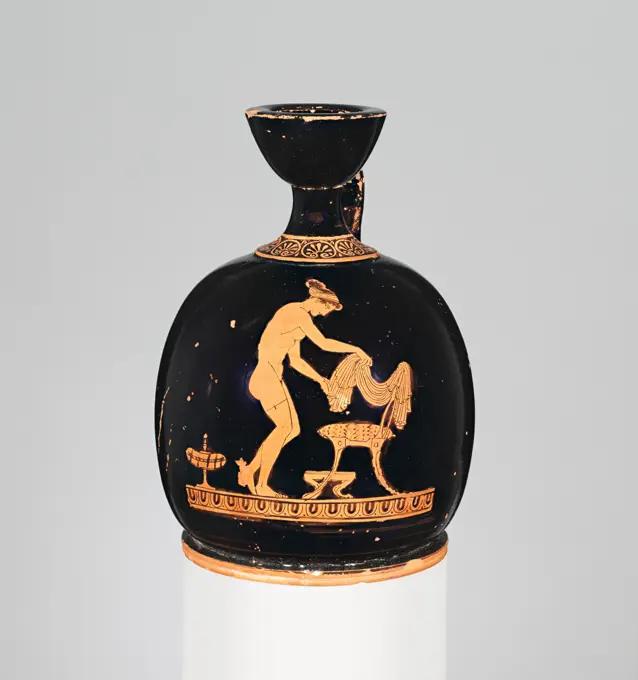
Terracotta squat lekythos (oil flask) ca. 430 B.C. Attributed to the Washing Painter Woman dressingThis charming, intimate vignette shows a woman who has already done her hair and put on a necklace and thigh band. Behind her stands a large plemochoe, a vase for scented oil. She lifts her chiton from the chair, which is provided with a pillow and, in the background, a footstool.. Terracotta squat lekythos (oil flask). Greek, Attic. ca. 430 B.C.. Terracotta; red-figure. Classical. Vases
6145-52503827
Hydria. Genick, A.. still image. Prints. 1883. The Miriam and Ira D. Wallach Division of Art, Prints and Photographs: Picture Collection. Trojan War, Helen of Troy (Greek mythology), Kidnappings, Chariots , Greece, Greeks , Clothing & dress , To 499, Theseus (Greek mythology)
6145-29185204
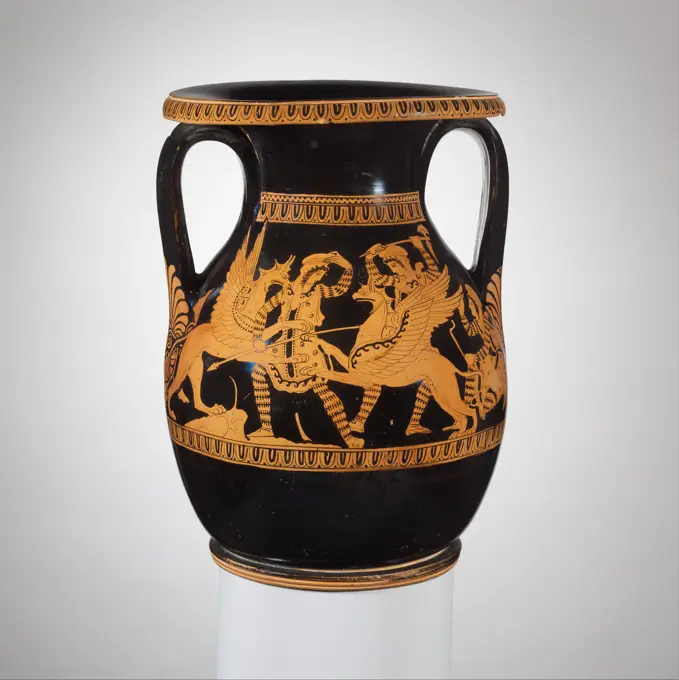
Terracotta pelike (wine jar) ca. 375-350 B.C. Attributed to the Painter of Munich 2365 Obverse, battle between Arimaspeans and griffinsReverse, three youths conversingThe Greek historian Herodotus described a legendary race of one-eyed men living in the far north who were in constant battle with the griffins guarding hoards of gold. The men were called Arimaspeans by the nomadic Scythians who dominated the steppes north of the Black Sea, and also by the Greeks.The subject matter is appropriate indeed for a group of fourth century Attic vases that were found in considerable quantity in southern Russia, specifically Kerch, whence that name, which is often used for them.. Terracotta pelike (wine jar). Greek, Attic. ca. 375-350 B.C.. Terracotta; red-figure. Late Classical. Vases
1788-41055
Lekane showing a gynaeceum scene, attica red-figure pottery from Tomb 1131 in Valle Trebbia, Italy. Detail of the lid. Greek civilization, Magna Graecia, 4th Century BC.
1746-21110946
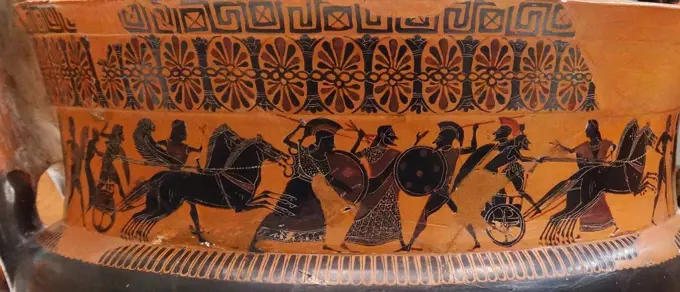
Greek Black-figured volute-krater (bowl for mixing wine and water): Herakles and Kyknos Made in Athens about 540-510 BC; signed by Nikosthenes as potter
6145-59046246
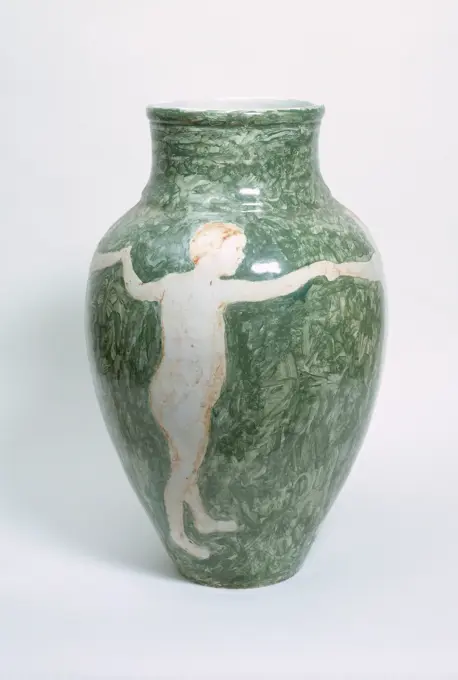
Mary Cassatt (1844-1926), André Metthey (1871-1920). Vase "La Ronde des children". Ceramic, earthenware, around 1900. Museum of Fine Arts of the city of Paris, Petit Palais. 25525-2 Ceramic, dancing, earthenware, little boy, round child, vase
6145-52506914
Archaic Attic amphora depicting Hermes and Athena, at center, escorting Herakles, with club and bow, to meet Zeus, left, on Olympos still image. 1883. The Miriam and Ira D. Wallach Division of Art, Prints and Photographs: Picture Collection. Pottery , Greece, Pottery, Greek, Antiquities, Athena (Greek deity), Amphoras, Mythology, Greek, Hermes (Greek deity), Containers , To 499, Vases, Greek, Heracles (Greek mythology), Zeus (Greek deity), Vases
1788-22880
Italy, Lazio, Capena, Etruscan-Corinthian alabastron, painted by Bobuda Painter
4409-63013271
Eye-cup (Kylix) decorated with young figures scene and two eyes. Pre-classical Greek Archaic Period. 6th century BC. Emporion, Girona.
6145-29799673
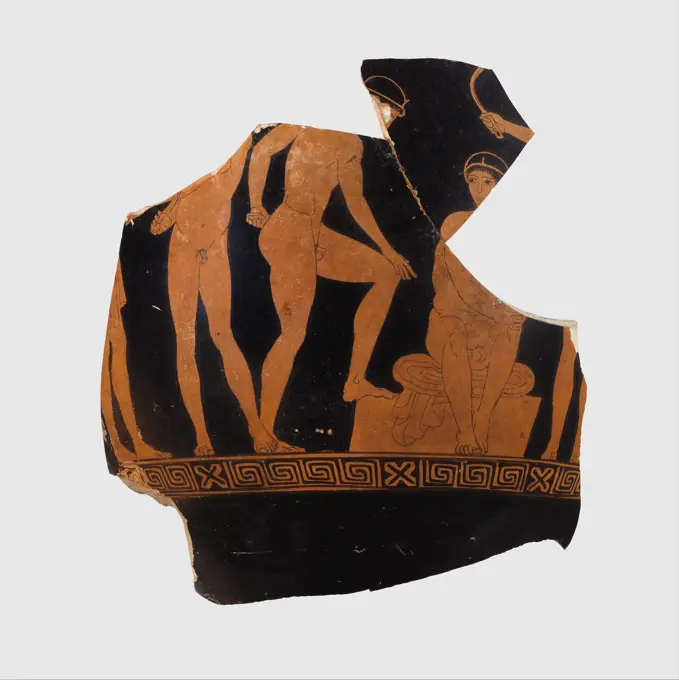
Fragment of a terracotta bell-krater (bowl for mixing wine and water) ca. 450-440 B.C. Attributed to the Group of Polygnotos Five athletesThe names of the figures were inscribed. Those preserved are Megakles and Euthykles. Representations of athletes afforded artists the opportunity to depict the human body in varying poses. Of note here is the frontal face, which suggests an interest in conveying not only physical appearance but also a state of being.. Fragment of a terracotta bell-krater (bowl for mixing wine and water). Greek, Attic. ca. 450-440 B.C.. Terracotta; red-figure. Classical. Vases
1899-18611424
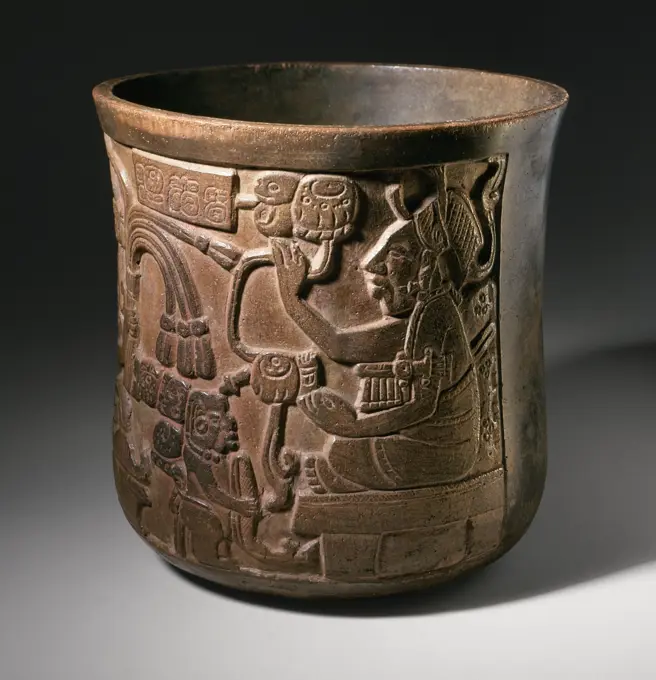
Vase decorated with courtly scenes. Painted ceramics. Maya culture. Late Classic Period (600-900 AD). Mesoamerica. Maya region. Museum of the Americas. Madrid, Spain.
6145-29212300
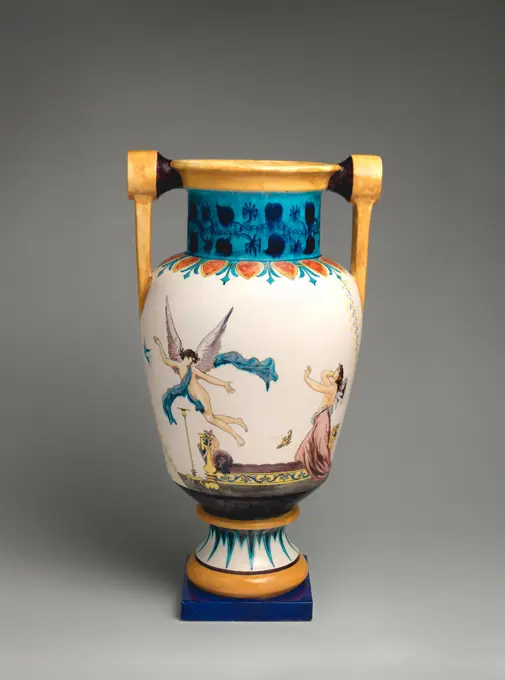
Vase with mythological scenes 1867 Joseph-Théodore Deck French Artist-potters associated with Art Nouveau condemned historical revivalism. Ceramicists were not, however, opposed to utilizing Neoclassical forms and themes, as long as they were modernized. Here Deck updates the shape of a Greek column-krater with a bright color palette that is purely nineteenth-century in style.. Vase with mythological scenes. French, Paris. 1867. White earthenware. Ceramics-Pottery
6145-48886912
Cameo set in a modern mount. Unknown
6176-67035621
Detail of a Greek vase. Artist: Unknown
4409-20926639
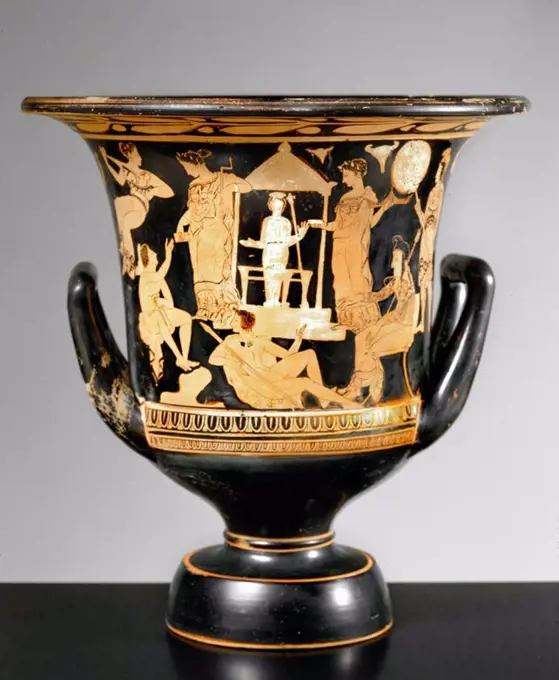
Attic krater red-figure by Iphigenia painter, IVth century b.C. with Orestes and sister Iphigenia in temple of Artemis. Museum: ARCHAEOLOGICAL MUSEUM, FERRARA, ITALIA.
1788-22335
Detail of red-figure cup depicting the sacrifice of a pig painted by Epidromos painter
4409-171005
CRATERA ATICA - S V AC. Location: MUSEO DEL LOUVRE-CERAMICA, PARIS, FRANCE.
4409-17377165
Terracotta lekythos (oil flask). Culture: Greek, Attic. Dimensions: H.: 18 3/8 in. (46.7 cm). Date: ca. 450-440 B.C..Youth and woman at a tombThe woman is tying a fillet around the funerary monument. The youth carries a fillet over his shoulder. Is one to make an association with the stele. Museum: Metropolitan Museum of Art, New York, USA.
6145-29201231
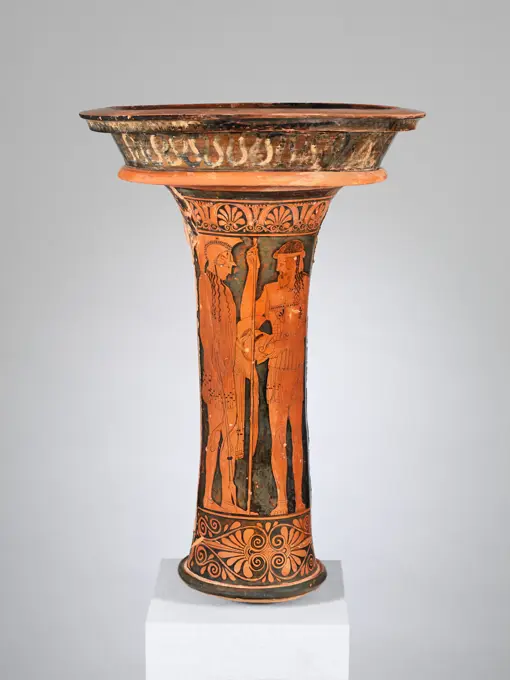
Fragment of a terracotta loutrophoros (ceremonial vase for water) ca. 460 B.C. Attributed to the Painter of Bologna 228 Obverse, old man and warriorReverse, two warriorsThe fragment is the neck of a loutrophoros, marble examples of which are exhibited in the fourth-century B.C. sculpture gallery. The tall slender shape emphasizes the statuesque quality of the figures. It is noteworthy that the figures seem to represent three generations, from the old man on the obverse to the youth on the reverse.. Fragment of a terracotta loutrophoros (ceremonial vase for water). Greek, Attic. ca. 460 B.C.. Terracotta; red-figure. Classical. Vases
4435-7591
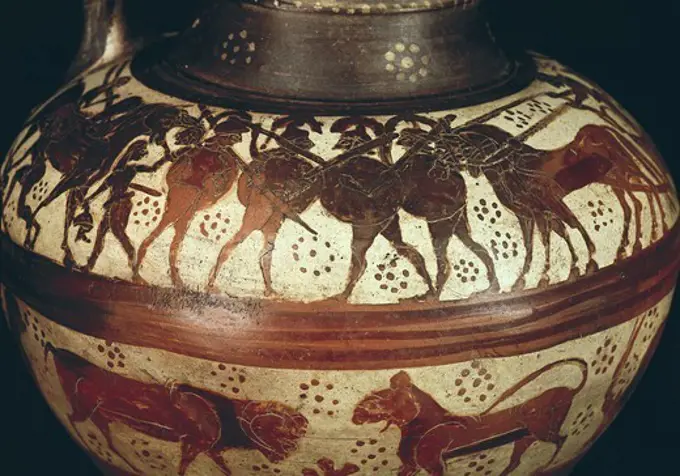
Oenochoe with representation of an army. 630 A.C. Following the Corinthian-style. Etruscan art. Ceramics. FRANCE. ëLE-DE-FRANCE. Paris. National Library. Proc: ITALY. LAZIO. VITERBO. Montalto di Castro. Vulci.
6176-67038572
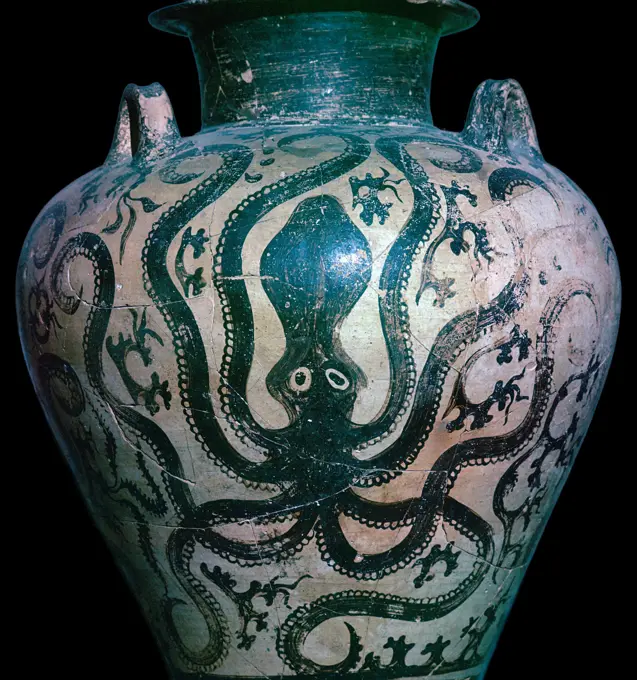
Mycenaean amphora with an octopus, 15th century. Artist: Unknown
6176-67038229
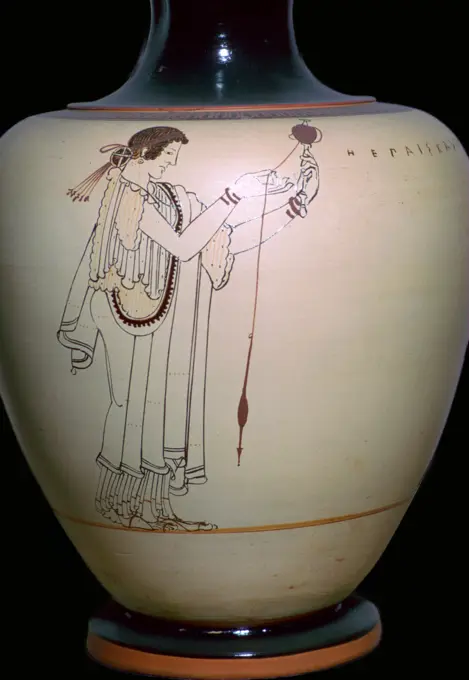
Vase-painting of a woman spinning, 5th century BC.
6145-59129408
Campania Caserta Capua Museo Campano049. Hutzel, Max 1960-1990 Medieval: Byzantine architectural fragments; parchment fragments with miniatures (12th century) from Montecassino; painted wooden crucifix (13th century); Carolingian crucifixes; Bishop's miter (11th century) of gold and silver damask; fresco (13th century). Post-medieval: Architecture (15th century). Formerly the Palazzo Antignano. Unusual Catalan/Moorish-style portal; Paintings on panel and canvas (15th-18th centuries); marble intarsia (16th century); marble sculpture: busts of Christ and Mary (17th century); sculpture of saints in marble and in wood (15th century); painted and gilded sculpture in wood; marble grave sculpture (16th century); sarcophagus with allegorical carvings; gold reliquary "Rosa d'Oro"; crucifix made of elephant tusk Specific Location: Pianterreno Antiquities: Italic sculpture (seated women holding babies); inscription. Photo campaign #1: 533 photos. Roman relief and sculpture; cinerary urns; Greek a
1746-19674438
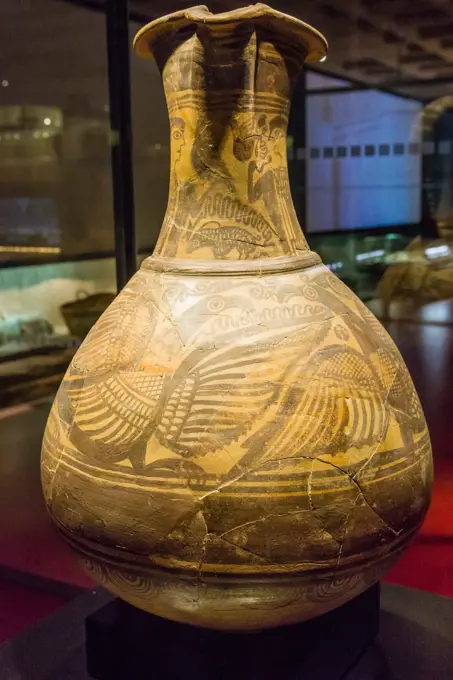
An ancient Greek open work with geometric and floral decoration. Barcelona. Spain 2013
6145-48874240
Attic Black-Figure Column Krater. Close to Painter of Louvre F311 (Greek (Attic))
6145-48838525
Attic Black-Figure Hydria Fragment (comprised of 2 Joined Fragments). Unknown
4409-17546691
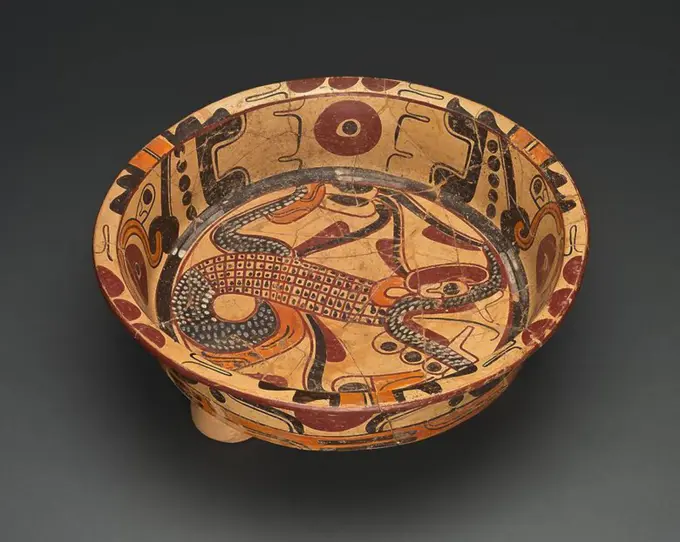
Tripod Polychrome Bowl Depicting a Serpent with Scales and Feathers and Fluid Motifs. Classic Veracruz; Los Tuxtlas, southern Veracruz, Mexico. Date: 500 AD-750 AD. Dimensions: Diam. 34.4 cm (13 1/2 in.). Ceramic and pigment. Origin: Veracruz, southern. Museum: The Chicago Art Institute, Chicago, USA.
6145-44289197
Attic Red-Figure Plastic Lekythos. Unknown
4409-58557458
Red-figure vase representing the embassy to Achilles, derived from Iliad book 9. ElderlyPhoenix is on the left, Odysseus is kneeling, Achilles is seated and Patroclus is on the right;c. 490 bc.
6145-29224301
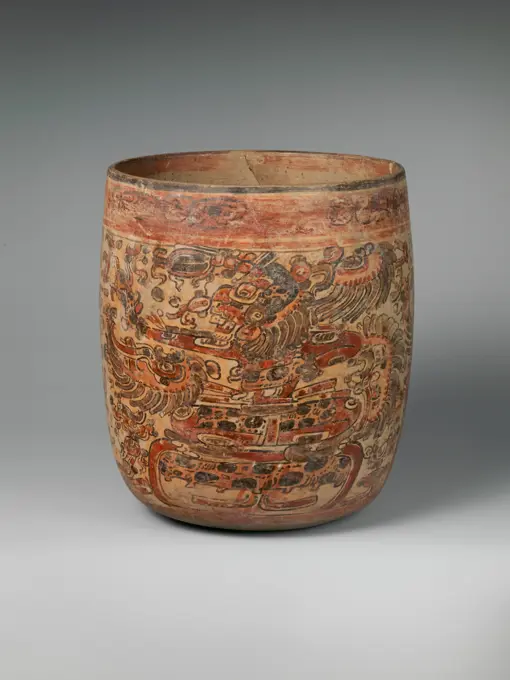
Vessel, Seated Deities 6th-7th century Maya This large, barrel-shaped polychrome cylinder vessel contains three images of a deity seated on thrones around its body. The rim of the vessel contains a band decorated with lightly painted pseudo-glyphs, images that give the appearance of writing without being actually legible. The baroque scene with the deities, covered in jewels and elaborate regalia, may pertain to a long-lost Maya myth from the 5th-6th centuries. The deity depicted in the two scenes sits cross-legged and raises its right arm while folding its left arm over its torso. The body of the deity is painted red and decorated with pill-shaped motifs that have been identified as marks of shininess in Maya art. Though the feet of the deity, painted in a gray wash, appear human, the gesturing hands are in the form of clawed jaguar paws. The loincloth is also a jaguar pelt, as is the cushion of the throne. The jaguar ears, along with the square-shaped eye with spiraled pupil, crulle
6145-29129025
Vessel with Palace Scene. Mexico, Yucatan, Northern Lowlands, Chocholá style, Maya, 600-900 CE. Ceramics. Burnished ceramic
1788-16404
Lekythos, oil flask attributed to Tymbos Painter depicting woman weaving crown, 5th century B.C.
1788-17102
Red-figure pottery, Vessel depicting arrival of athlete at Olympic Games, 480 b.c.
4266-24355
Wine Cup with Pentathletes by Carpenter Painter (active 515-500 B.C.) J. Paul Getty Museum, Los Angeles 505-500 BC Clay, paint H 110 Greece Classical Antiquities Objects Applied Arts
4409-17520768
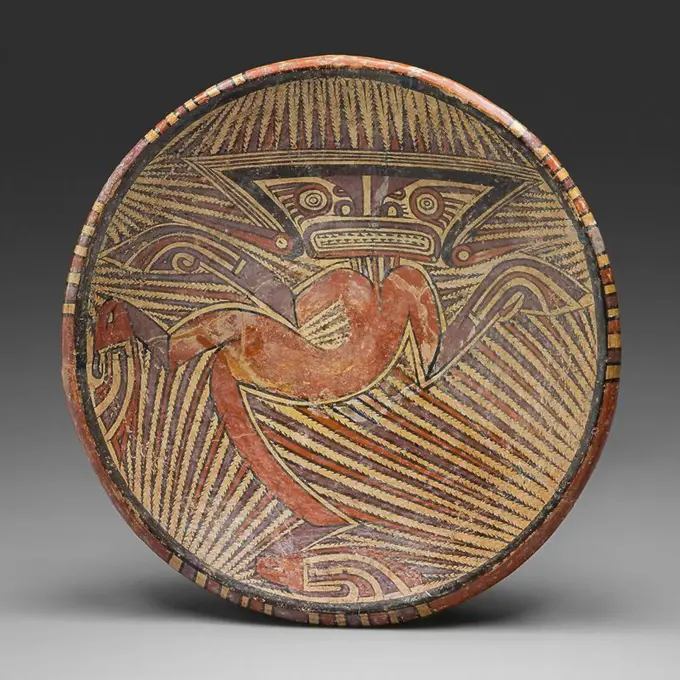
Pedestal Bowl Depicting an Anthropomorphic Saurian Figure. Coclé; Possibly La Peña, Veraguas province, Panama. Date: 1100-1300. Dimensions: 21.6 × 26.7 cm (8 1/2 × 10 1/2 in.) (ma×.). Ceramic and pigment. Origin: Veraguas, Provincia de. Museum: The Chicago Art Institute, Chicago, USA.
4409-26786
AQUILES ARRASTRANDO EL CADAVER DE HECTOR - TONDO DE UNA TAZA DE CERAMICA ATICA DE FIGURAS ROJAS - 490480 AC - Diam. 33.4 cm -. Author: HIERON ALFARERO / MACRON PINTOR. Location: MUSEO DEL LOUVRE-CERAMICA. France. ACHILLES. HECTOR. GORGONA-MITOLOGIA GRIEGA. MEDUSA-MITOLOGIA GRIEGA.
7155-70378897
Greek Vase. Athletes- Long Jumper, Javelin and Discus Thrower. Black Figure style. Olympic Games.
6145-29807298
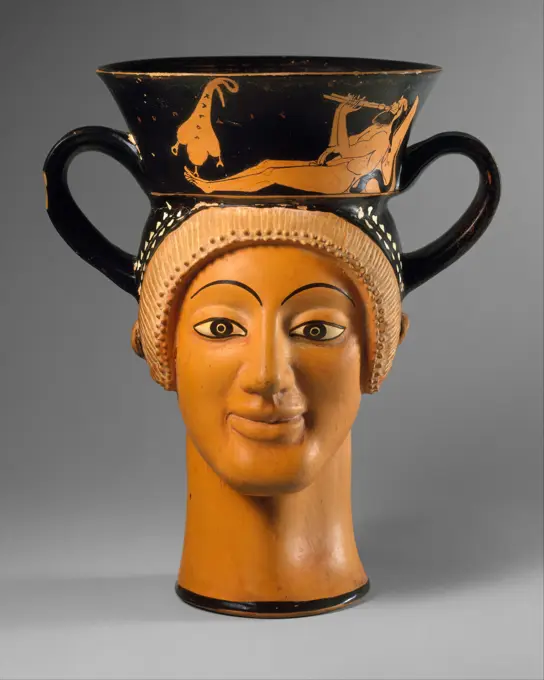
Terracotta kantharos (drinking cup with high handles): two female heads ca. 490-480 B.C. Attributed to the Brygos Painter Obverse, satyr playing aulos (double flute)Reverse, satyr playing krotala (castanets)The form and iconography strongly suggest that this vase was used in a symposium (drinking party). The satyrs are particularly winningthey provide entertainment for the gathering and enjoy it at the same time.. Terracotta kantharos (drinking cup with high handles): two female heads. Greek, Attic. ca. 490-480 B.C.. Terracotta; red-figure. Archaic. Vases
1746-19984583
Mayan polychrome pottery plate representing a scene in a palace; Shows a seated lord surrounded by servants 600-900 AD
4409-16195
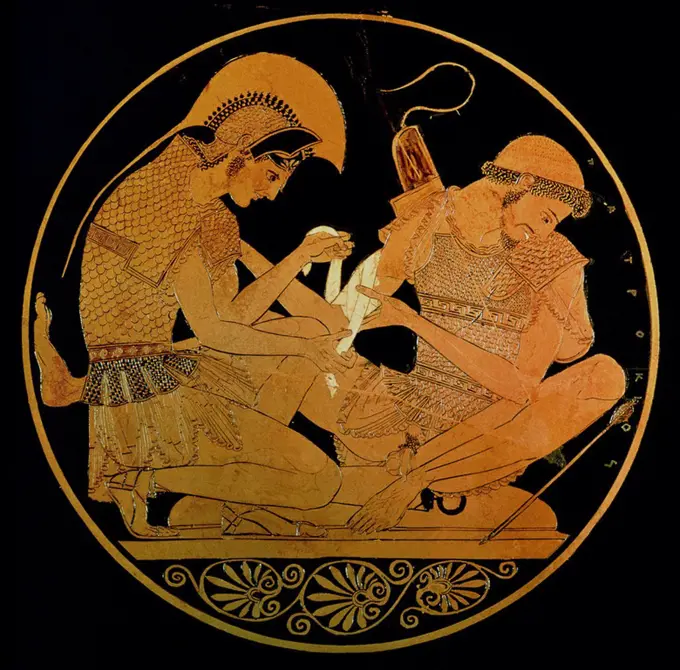
CUP OF SOSIAS - "AQUILES BANDAGES THE WOUND OF PATROCLUS" - CERAMIC GREEK - 5th CENTURY BCE - REDRAWED BY C. FERNANDEZ. Author: SOSIAS (VASE PAINTER). Location: CHARLOTTENBURG. BERLIN. GERMANY. ACHILLES. PATROKLOS.
6145-29155283
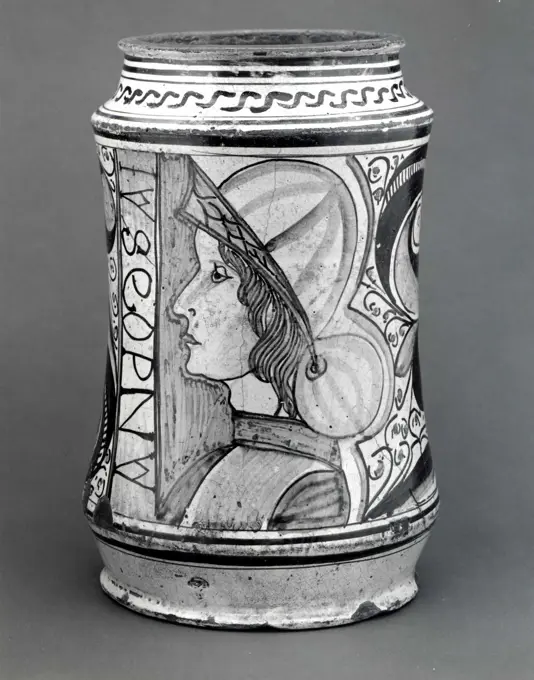
Maiolica: Apothecary jar (albarello) late 15th century Italian (probably Naples). Maiolica: Apothecary jar (albarello). Italian (probably Naples). late 15th century. Maiolica (tin-glazed earthenware). Ceramics-Pottery
1746-111904387
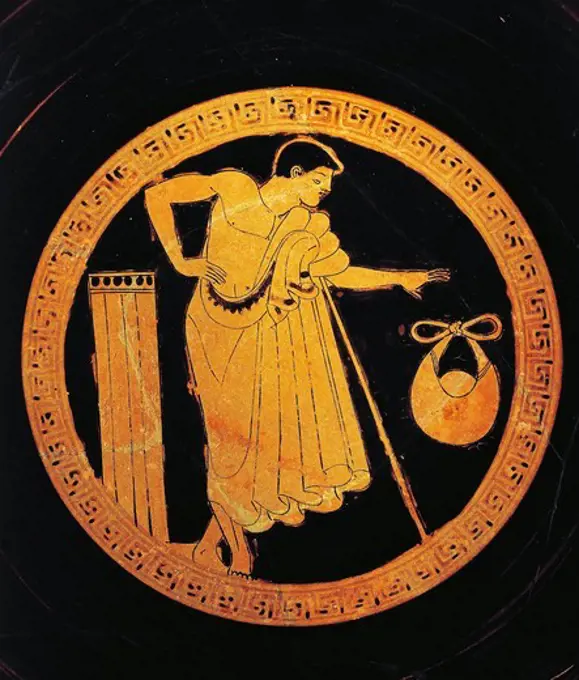
A Vulci attic red- figured Kylix depicting a courtesan tieing up her himation. Dated 490 B.C.
6145-48834419
Squat Lekythos. Unknown
4028-2047
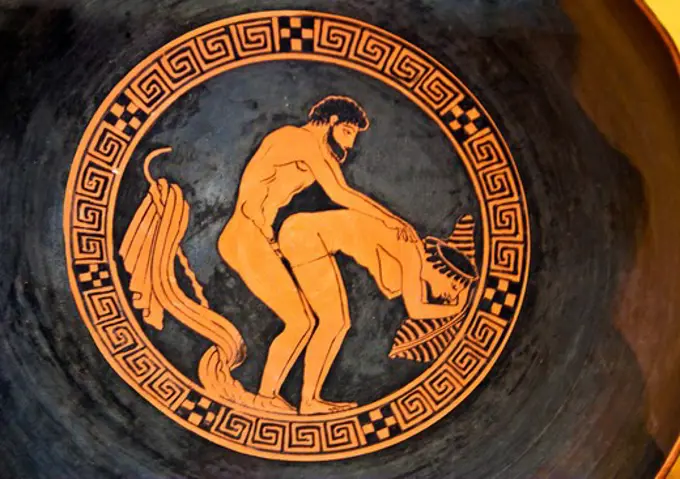
Red figure cylix with an erotic scene in the Secret Cabinet of the National Archaeological Museum (museo archeologico nazionale) in Naples, Italy.
6145-59181737
Lazio Viterbo Viterbo Museo Civico38. Hutzel, Max 1960-1990 Views of paintings (Middle Ages through 18th c.), frescoes, a tabernacle, coffin, sculpture reliefs, portal fragments, busts, sculpture, tapestry found in the Pinacoteca, Second floor gallery and Second floor cloister sequences. Antiquities: Many views of Etruscan and Roman fragments, sculpture, sarcophagi, pottery, masks, jewelry and other objects found in the Storeroom sequence (inventory numbers on back of prints), and the Cloister, Second floor Cloister, Valle Giulia, Sala Romana and Sala Etrusca sequences. General Notes: There are eight separate numerical sequences for this location. The cloister as an architectural structure, rather than museum site, is documented in the record and file for S. Maria della Verita, Cloister, all views of which are stored in Medieval core collection. Five views from the Museo Civico Second floor cloister sequence are stored in Medieval. German-born photographer and scholar Max Hutzel (1911-
6145-29125229
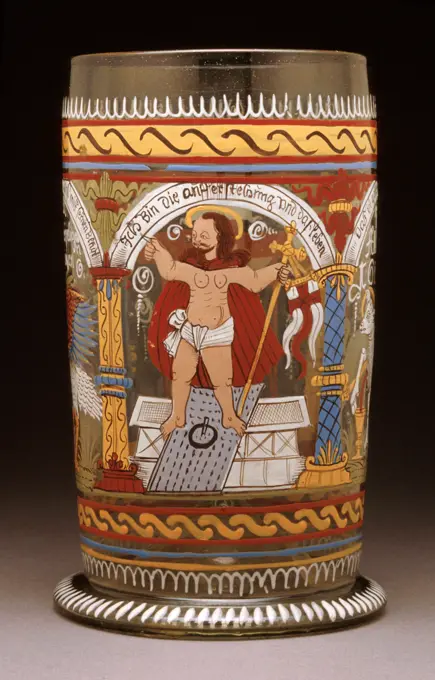
Beaker with Scenes from the Passion. Germany, probably Franconia, 1665. Furnishings; Serviceware. Glass, enamel, gilt
6145-30178055
Kylix (Drinking Cup) 510 BCE-500 BCE Attica. On the interior of this drinking cup, within a line border, a satyr stands to the right, bending slightly at the knees, both arms outstretched in front of him (the fragment that might have shown what he was holding is lost). In the field is written hopaiskalos (retrograde). On one side of the exterior, Theseus hobbles the Bull of Marathon; there is a tree in the background. This group is flanked on left and right by duels between naked warriors. In the field is written hopais. On the other side of the exterior, there is, on the left, a duel between two naked warriors (shield device of the falling warrior is a snake; there is red blood under his armpit). In the centre is a naked warrior with a horse to the right. Beyond this, on the right, is a warrior with shield and spear facing to the right and a warrior (helmet up) to the left, stooping to take his shield out of its covering. In the field is written hopais kalos.. terracotta, de
6145-48870624
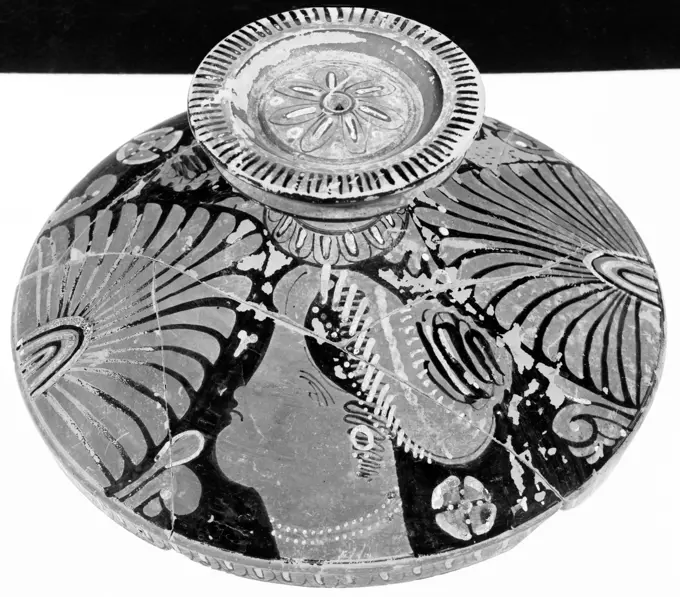
Apulian Red-Figure Lekanis Lid. Unknown
6145-30400449
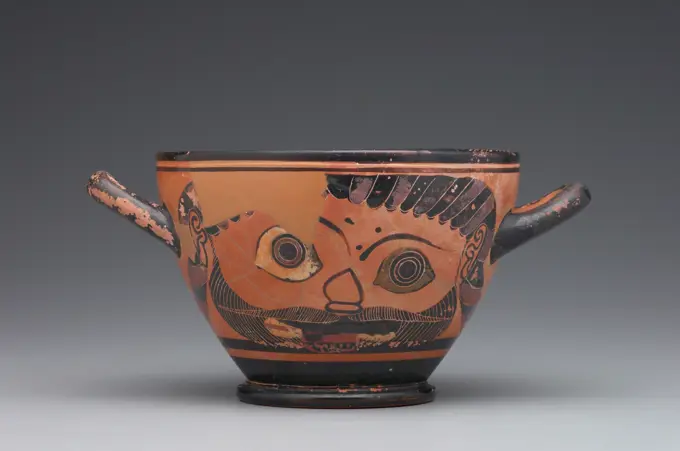
Black-FigureSkyphos
4409-10323
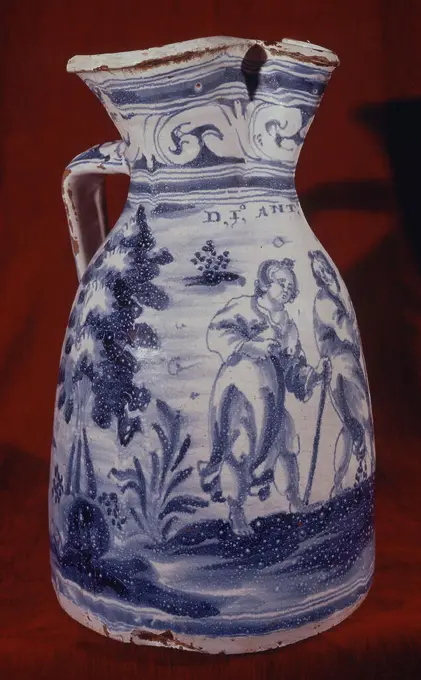
JARRA DE CERAMICA DE TALAVERA-S XVII. Location: MUSEE D'ARTS DECORATIFS. MADRID. SPAIN.
1788-17168
Black-figure pottery, Kylix depicting lyre player from Civita Castellana, ancient Falerii, Rome province, Italy, Etruscan civilization
6145-48828954
Apulian Red-Figure Loutrophoros. Attributed to the Painter of Louvre MNB 1148 (Greek (Apulian), active 350 - 330 B.C.)
7155-70378833
Women at fountain. Attic Greek Black Figure style vase. Athens.
6189-55132555
Enocoe, museo arqueologico y de historia de Elche Alejandro Ramos Folqués, Elche, Alicante, comunidad Valenciana, Spain, Europe.
6145-44294223
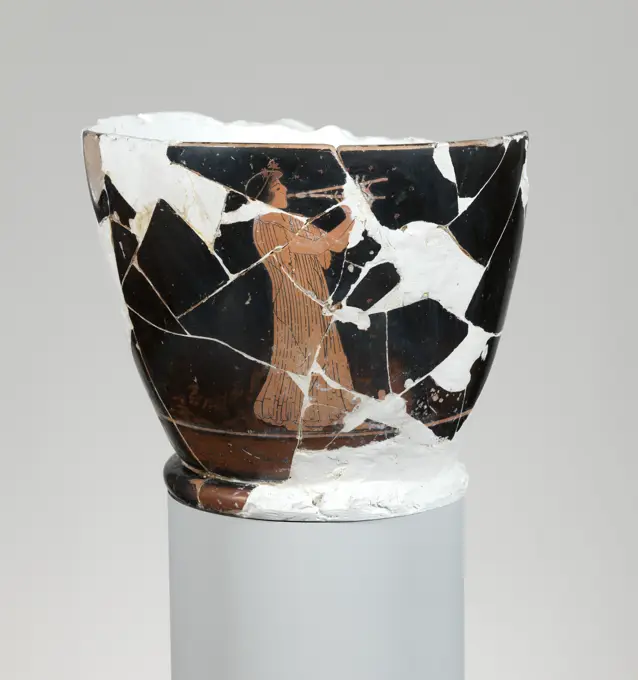
Attic Red-Figure Cup Fragments (5). Attributed to the Penthesilea Painter (Greek (Attic))
6145-52505616
Vases Corinthiens trouvés a Cærè en Étrurie: Funérailles d'Achille ; Tydée et Ismène Damon Painter (Corinthian vase painter, active ca. 575-after 550 BCE). Fraillery. still image. 1880. The Miriam and Ira D. Wallach Division of Art, Prints and Photographs: Picture Collection. Pottery , Greece, Pottery, Greek, Antiquities, Mythology, Amphoras, Achilles (Greek mythology), Vases, Greek, Vases
6145-29215458
Skyphos ca. 490-480 B.C. Attributed to the Brygos Painter. Skyphos. Greek, Attic. ca. 490-480 B.C.. Terracotta; red-figure. Late Archaic. Vases
1890-172852
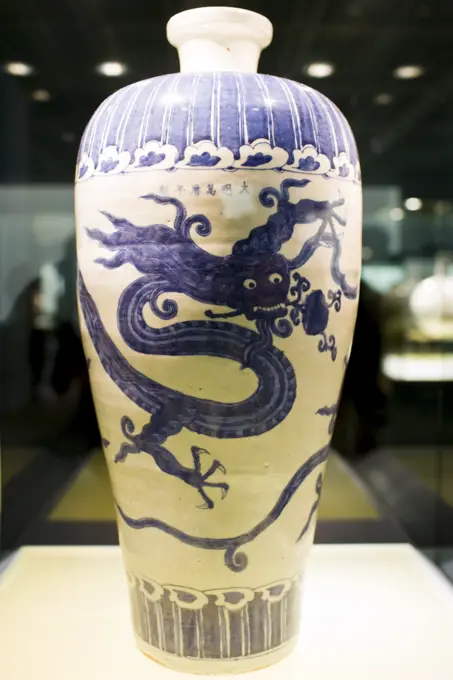
Ming vase on display in the Shanghai Museum, China
PREVIOUS
of 2
NEXT
2401 S. Ervay, Suite 206
Dallas, Texas 75215
United States
Get Started
Free ResearchMy BoardsMy Cart
For Creators
How To License Your ContentContributor PortalFrame of Mind
Resources
API accessPricing
Contact
+1 866 236 0087help@viewpictures.co.uk Contact form
©2026 View Pictures. All Rights Reserved. -B
This site is protected by reCAPTCHA and Google Privacy Policy and Terms of Service apply.