My Boards
View Pictures
  • My Boards
← Artworks

Ancient Greek Pottery

Collection of ancient Greek pottery including amphorae and hydria showcasing mythological themes and daily life scenes, featuring black-figure and red-figure techniques.
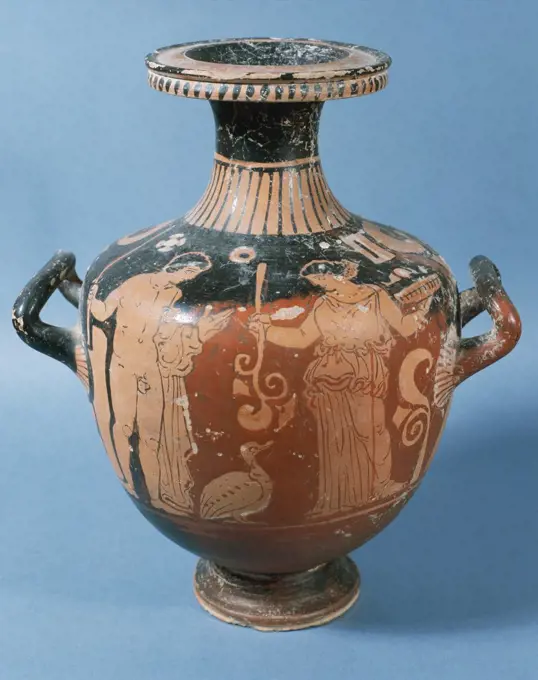
Greek art. Spain. Pelike. Ceramic piece 4th century century. From Empuries. Alt Emporda. Catalonia. Spain. Archaeological Museum of Girona. Catalonia. Spain.
161 assets in this story
4409-17412661
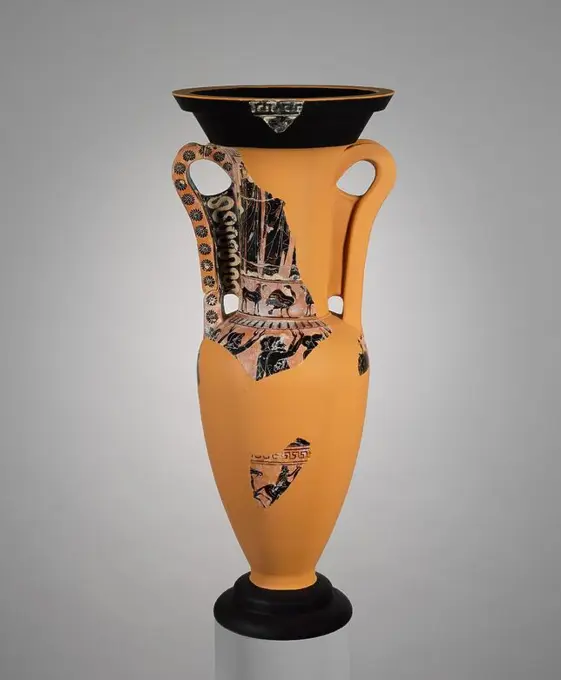
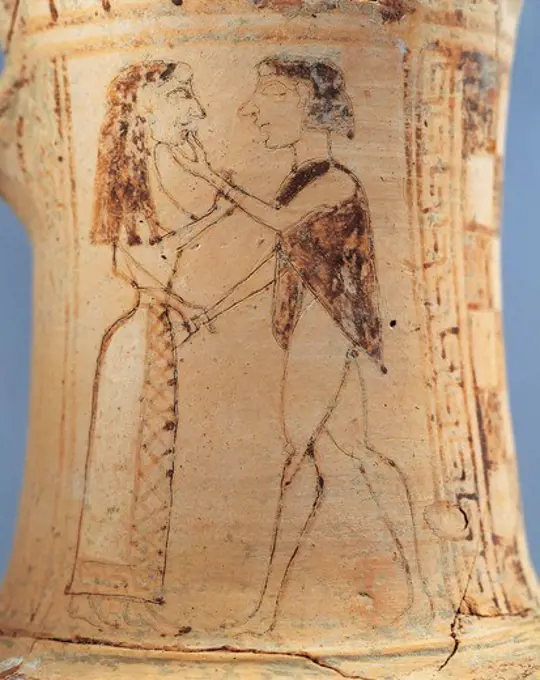
Terracotta loutrophoros (ceremonial vase for water). Culture: Greek, Attic. Dimensions: H.: 27 7/8 in. (70.8 cm). Date: last quarter of 6th century B.C..On the body, obverse, prothesis (laying out of the deceased) with mournersReverse, male mourners; subsidiary frieze, file of horsemenOn the neck, obverse, mourning womenReverse, mourning women; subsidiary frieze, siren between panthersIt is very unfortunate that this loutrophoros is so damaged and so incomplete. It was richly decorated with principal and subsidiary subjects on the obverse and reverse. The remaining figures are well drawn with much added white preserved. The women here clearly tear their hair, illustrating a traditional part of their lamentations. Museum: Metropolitan Museum of Art, New York, USA.
6145-29202955
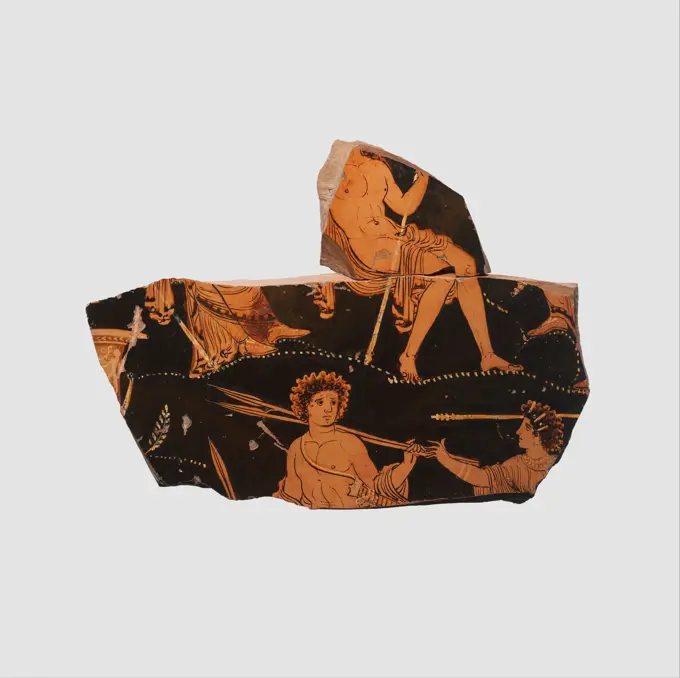
Volute-krater fragment 4th century B.C. Greek, South Italian, Apulian. Volute-krater fragment. Greek, South Italian, Apulian. 4th century B.C.. Terracotta; red-figure. Late Classical. Vases
4409-157416
CERAMICA DE TALAVERA-JARRON S XVIII. Location: PRIVATE COLLECTION. MADRID. SPAIN.
4409-17544511
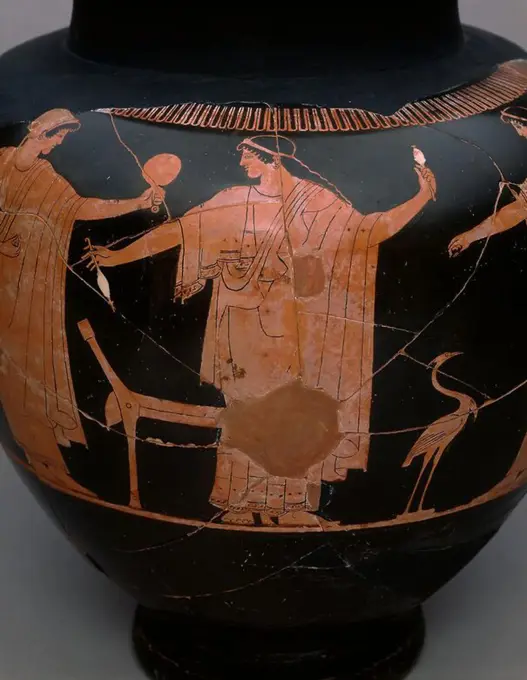
Stamnos (Mixing Jar). Greek; Athens; Attributed to Syriskos (formerly the Copenhagen Painter). Date: 480 BC-470 BC. Dimensions: 38.1 × 45.72 × 14.1 cm (15 ×18 × 5 1/2 in.). Terra-cotta, decorated in the red-figure technique. Origin: Athens. Museum: The Chicago Art Institute, Chicago, USA.
6145-58990168
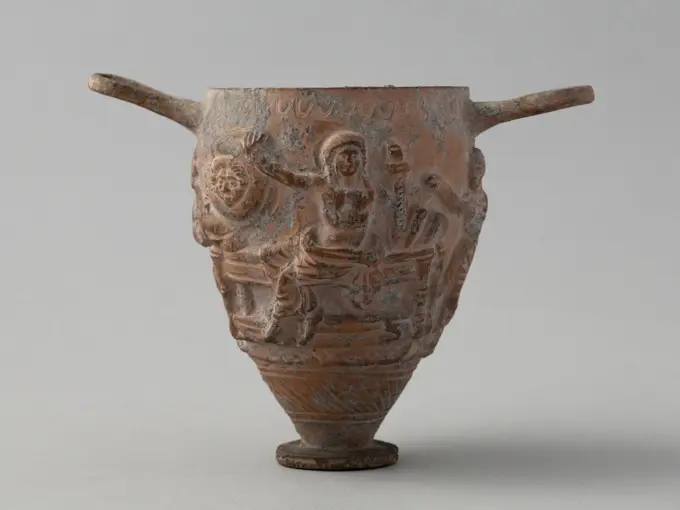
Skyphos with relief decor. Italy, 3rd century BC. AD Museum of Fine Arts of the City of Paris, Petit Palais. 58653-1 Anse, antiquity, Greek-Roman antiquity, ancient art, Greek art, drink, Decor Applique, Decor en relief, IIIEME IIII III 3rd 3rd century before Av. JC, ancient scene, Skyphos relief, trophee, vase, ancient vase
4409-17503958
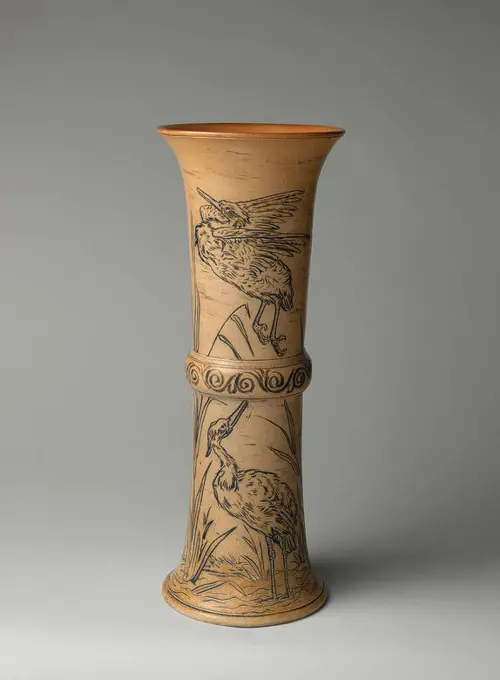
Beaker vase. Culture: British, Lambeth, London. Decorator: Hannah Bolton Barlow (British, Little Hadham, Hertfordshire 1851-1916 London). Dimensions: Overall (confirmed): 18 7/16 × 6 3/4 in. (46.8 × 17.1 cm). Manufactory: Doulton Manufactory (British). Date: 1874.Determined that pottery vessels should be regarded as true works of art, avant-garde ceramicists in France in the last decades of the nineteenth century transformed their craft into an intellectual and emotional endeavor. The pioneers of this revival were Jean Carriès, Ernest Chaplet, Théodore Deck, and Auguste Delaherche. These revolutionary artist-potters embraced artisanal traditions while pursuing lost techniques through exhaustive experimentation. Reacting to what they viewed as an excessive and improper use of ornament, they celebrated the simplicity and sincerity of their medium, following the tenets of the Art Nouveau style taking place in Europe. Based on the principles of the British Arts and Crafts movement, Art No
4409-17377130
Fragmentary terracotta loutrophoros (ceremonial vase for water). Culture: Greek, Attic. Dimensions: H. as restored 18 1/4 in. (46.4 cm). Date: ca. 440 B.C..Battle of Greeks and AmazonsThe large figures in fierce combat admirably fill the tall field of the loutrophoros. Museum: Metropolitan Museum of Art, New York, USA.
4409-21348951
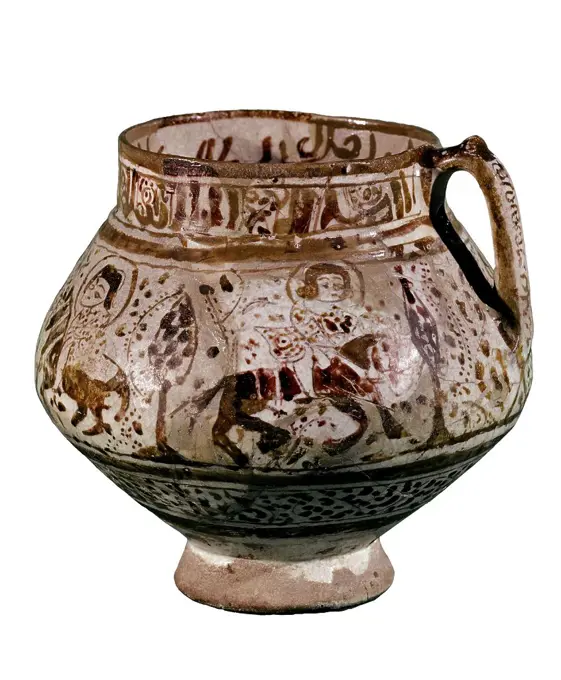
CERAMICA IRANI-TAZON DE BARRO ROSADO Y VIDRIADO- RAVY S XII- DECORACION FIGURADA. Location: MUSEO ARQUEOLOGICO NACIONAL-COLECCION. MADRID. SPAIN.
6145-29805985
Terracotta kylix (drinking cup) ca. 550 B.C. Attributed to the Painter of the Nicosia Olpe Obverse and reverse, birth of Athena from the head of ZeusAthena, the patron goddess of Athens, had the distinction of being born fully formed and fully armed from the head of Zeus, the chief of the gods. Much favored during the first half of the sixth century B.C., scenes of this event include numerous figures and allow for various responses to the unusual circumstances. Here the birth has occurred, and Athena is about to sally forth from her father's lap.. Terracotta kylix (drinking cup) 247515
1788-16865
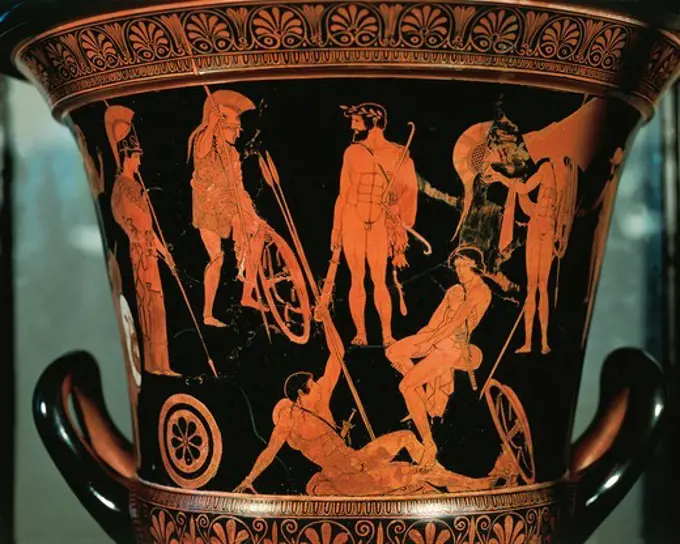
Red-figure pottery. Attic krater depicting Heracles and Argonauts from Orvieto, Umbria region, Italy, 475-450 B.C., Greek civilization
4443-21958664
Attic Red-Figure Skyphos; Workshop of Penthesilea Painter; Athens, Greece, Europe; about 450 B.C; Terracotta; 17 x 30 x 20.2 cm (6 11,16 x 11 13,16 x 7 15,16 in.)
6145-44299558
Apulian Bell Krater. Attributed to Malibu Painter, Chevron Group (Greek (Apulian))
4443-21960740
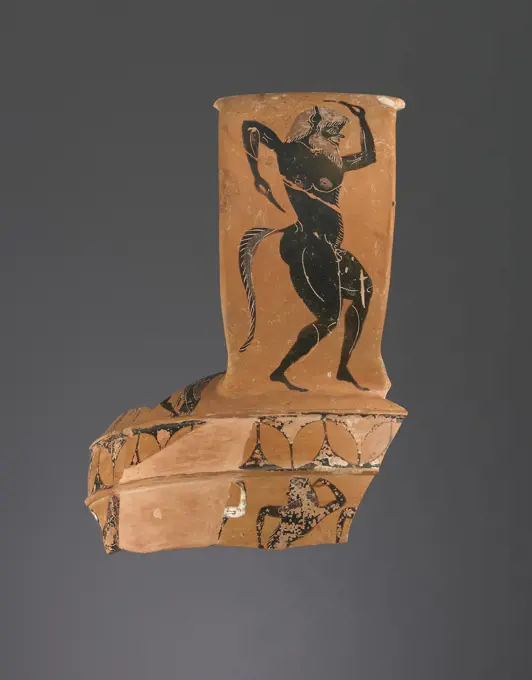
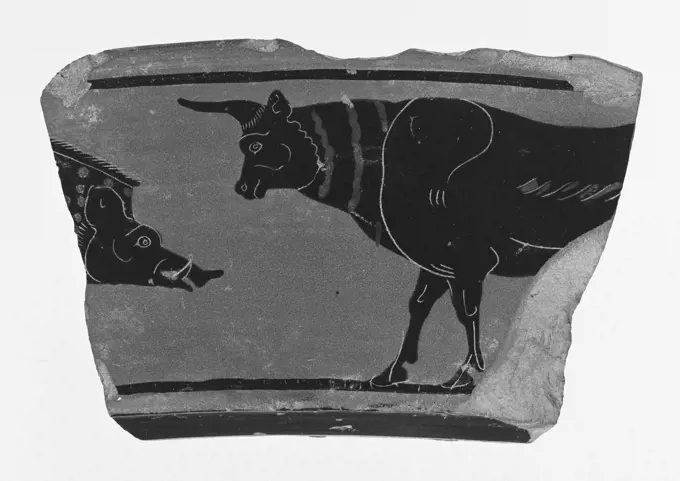
Attic Black-Figure Nikosthenic Amphora Fragment; Painter N, Thiasos Group; Athens, Greece; about 550 - 540 B.C; Terracotta; 16.8 × 13.3 cm (6 5,8 × 5 1,4 in.)
6145-59181384
Lazio Viterbo Viterbo Museo Civico94. Hutzel, Max 1960-1990 Views of paintings (Middle Ages through 18th c.), frescoes, a tabernacle, coffin, sculpture reliefs, portal fragments, busts, sculpture, tapestry found in the Pinacoteca, Second floor gallery and Second floor cloister sequences. Antiquities: Many views of Etruscan and Roman fragments, sculpture, sarcophagi, pottery, masks, jewelry and other objects found in the Storeroom sequence (inventory numbers on back of prints), and the Cloister, Second floor Cloister, Valle Giulia, Sala Romana and Sala Etrusca sequences. General Notes: There are eight separate numerical sequences for this location. The cloister as an architectural structure, rather than museum site, is documented in the record and file for S. Maria della Verita, Cloister, all views of which are stored in Medieval core collection. Five views from the Museo Civico Second floor cloister sequence are stored in Medieval. German-born photographer and scholar Max Hutzel (1911-
6145-59181291
Lazio Viterbo Viterbo Museo Civico95. Hutzel, Max 1960-1990 Views of paintings (Middle Ages through 18th c.), frescoes, a tabernacle, coffin, sculpture reliefs, portal fragments, busts, sculpture, tapestry found in the Pinacoteca, Second floor gallery and Second floor cloister sequences. Antiquities: Many views of Etruscan and Roman fragments, sculpture, sarcophagi, pottery, masks, jewelry and other objects found in the Storeroom sequence (inventory numbers on back of prints), and the Cloister, Second floor Cloister, Valle Giulia, Sala Romana and Sala Etrusca sequences. General Notes: There are eight separate numerical sequences for this location. The cloister as an architectural structure, rather than museum site, is documented in the record and file for S. Maria della Verita, Cloister, all views of which are stored in Medieval core collection. Five views from the Museo Civico Second floor cloister sequence are stored in Medieval. German-born photographer and scholar Max Hutzel (1911-
4443-21958665
Attic Black-Figure Column Krater; Close to Painter of Louvre F311; Athens, Greece; about 530 B.C; Terracotta; 32.4 × 35.5 × 31.1 cm (12 3,4 × 14 × 12 1,4 in.)
4409-17376960
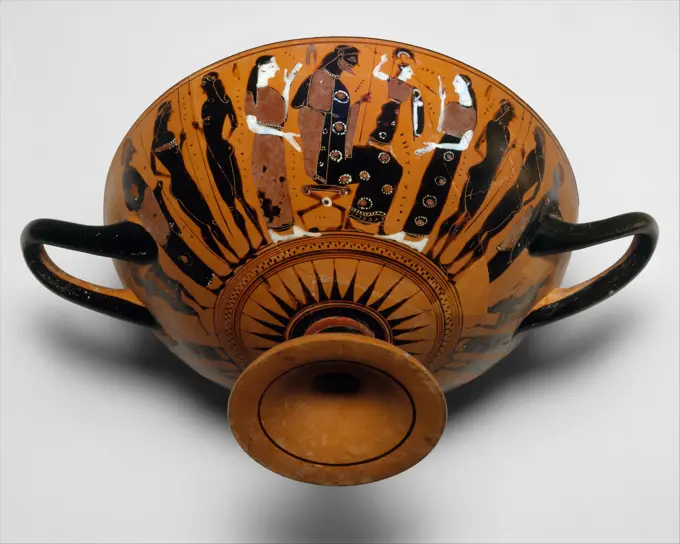
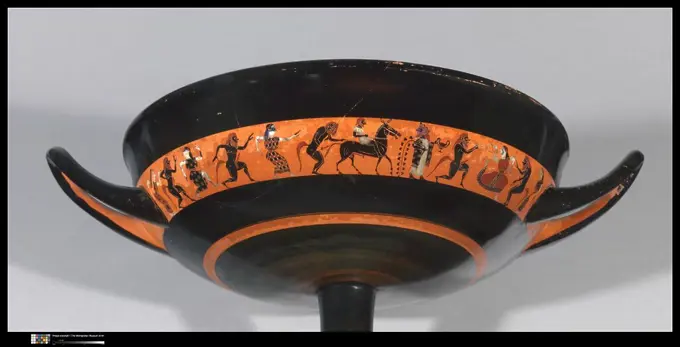
Terracotta kylix: band-cup (drinking cup). Culture: Greek, Attic. Dimensions: H. 6 7/16 in. (16.4 cm)diameter 11 3/16 in. (28.4 cm). Date: ca. 550 B.C..Obverse, return of HephaistosReverse, Dionysos, the god of wine, and Ariadne among satyrs and maenadsThe subject here is the same as on the two kraters by Lydos. The band is treated as a frieze with particular emphasis on the central motif. Hephaistos, who rides his mule as though it were a horse, is escorted by Dionysos. The wine god reappears on the reverse with Ariadne, whom he had rescued when she was abandoned on the island of Naxos. The lively figures and considerable added red and white are most appropriate for a drinking cup that could well have been used with kraters (bowls for mixing wine and water) like those by Lydos. Museum: Metropolitan Museum of Art, New York, USA.
1746-21125563
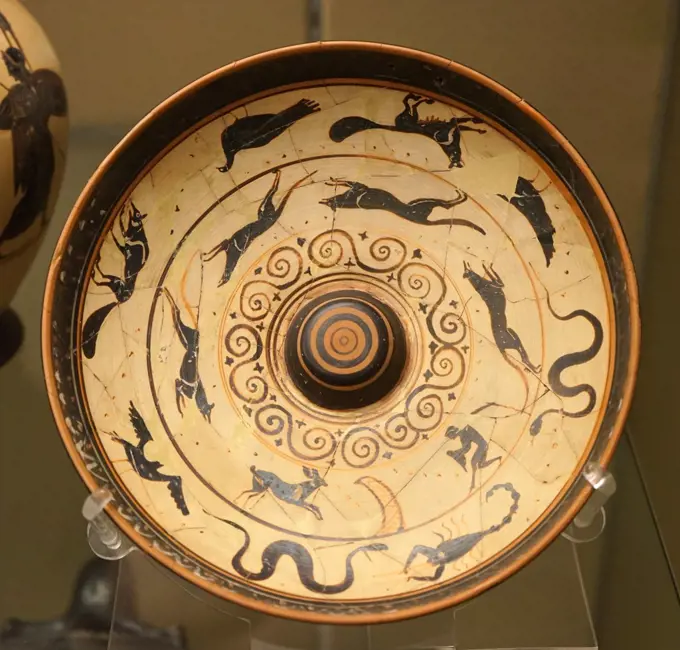
Phiale (offering-dish) made in Athens. The plate depicts a black-figure and white-ground, with friezes of a hare hunt, animals and birds. Dated 5th Century BC
6145-29065540
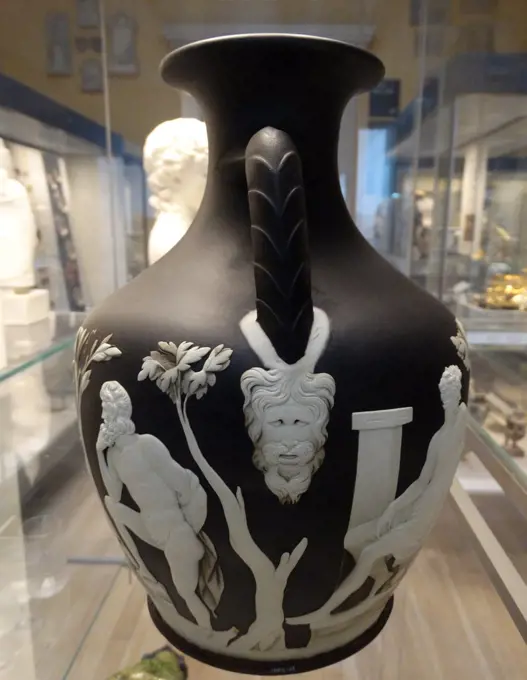
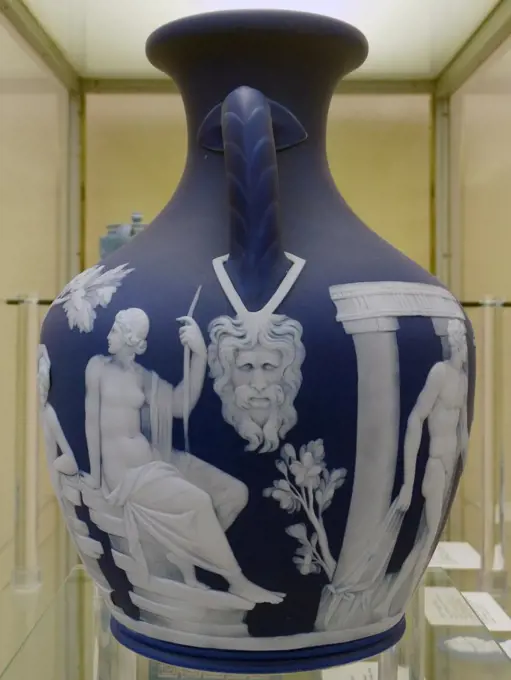
Portland Vase, c.1790. Josiah Wedgwood and Sons (Britain, Staffordshire, est. 1759). Jasperware with applied decoration; overall: 26.4 x 17.8 cm (10 3/8 x 7 in.).
6145-44298492
Attic White-Ground Alabastron with a Black African archer. Group of the Negro Alabastra (Greek (Athenian), active 490 - 470 B.C.)
1788-15035
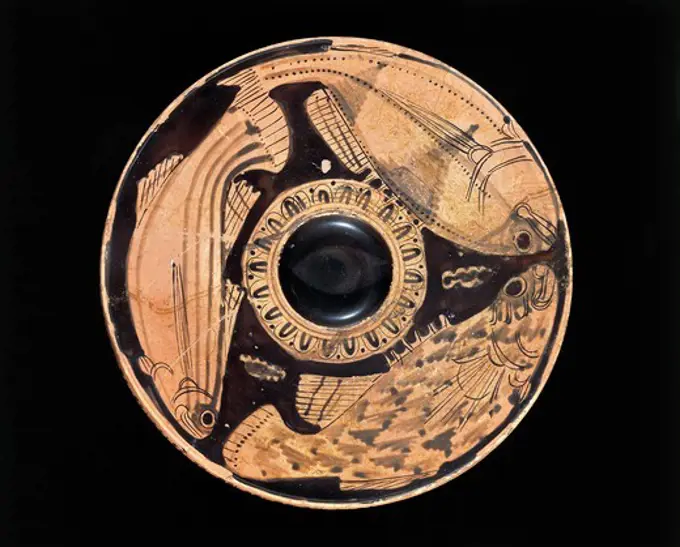
Etruscan civilization, Red-figure pottery, Plate depicting fish, From Spina, Ferrara Province
1788-15745
Detail of Oinochoe (wine jug) depicting Ariadne and Theseus
4409-20926664
Alexander the Great (356-323 b.C) with lance charging Persian King Darius in his chariot from amphora. Museum: ARCHAEOLOGICAL MUSEUM, BERLIN, ITALIA. ALEJANDRO MAGNO (ALEJANDRO III).
6145-29184482
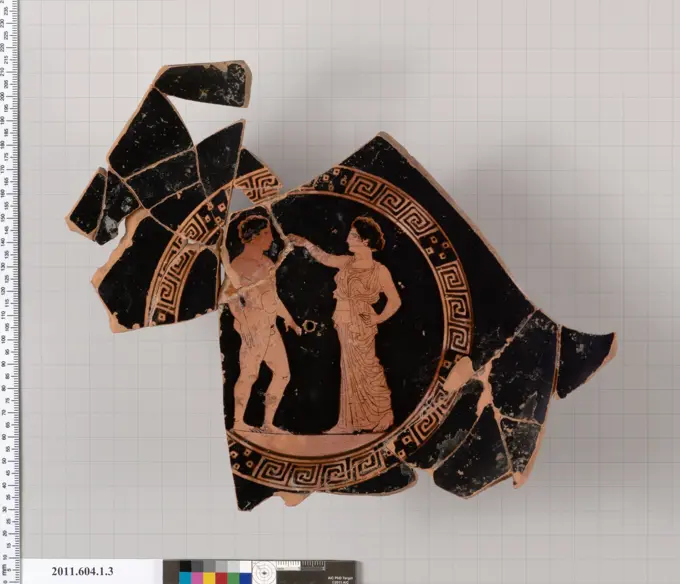
Terracotta kylix (drinking cup) mid-5th century B.C. Greek, Attic Interior, on the exergue, wreathed youth to right facing a draped woman to left, holding a sprig in her raised right hand; Obverse, lower legs of a youth to right, lower drapery and feet of a woman to left, part of the lower torso, left forearm and hand, and legs of a youth to left; Reverse, lower legs of a youth to right, lower drapery of a woman to left; lower legs of a youth to left; separating the obverse and reverse, handle palmettes with tendrils. Terracotta kylix (drinking cup) 667485
4409-26785
ESCENA DE PALESTRA - LINOS Y SU DISCIPULO MOUSAIOS - TONDO DE UNA TAZA DE CERAMICA ATICA DE FIGURAS ROJAS - 440-435 AC - Diam. 25.4 cm. Author: PINTOR DE ERETRIA. Location: MUSEO DEL LOUVRE-CERAMICA. France.
6145-29784192
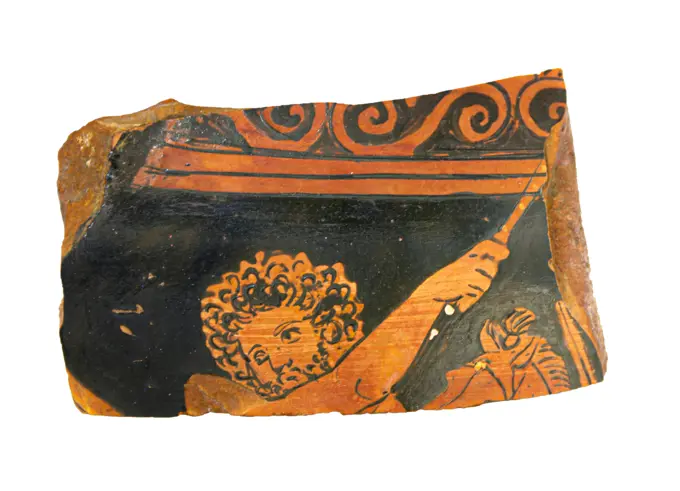
Fragment of a terrracotta volute-krater (bowl for mixing wine and water) mid-4th century B.C. Attributed to the Painter of the Dublin Situlae Pentheus attacked by a womanThis piece consists of two joined fragments, 19.192.81.2 and .8. Pentheus is shown holding two spears and a sword. He brandishes the latter in defense against a woman who attacks him from the right with a thyrsos (fennel stalk with ivy). The death of Pentheus is the main subject of the front of the vase. His expression is masterfully conveyed by the relief lines.. Fragment of a terrracotta volute-krater (bowl for mixing wine and water) 250825 : Attributed to the Painter of the Dublin Situlae, Fragment of a terrracotta volute-krater (bowl for mixing wine and water), mid-4th century B.C., Terracotta, Overall: 9 3/4 x 4 1/2in. (24.8 x 11.4cm). The Metropolitan Museum of Art, New York. Rogers Fund, 1919 (19.192.81.2)
1746-19686901
Small Black figured Hydra (Water Jar), depicting warriors fighting. Greco-Italian made in Italy 550-540 BC
6145-44300628
Attic Red-Figure Kylix. Attributed to the Triptolemos Painter (Greek (Attic), active about 490 - 470 B.C.)
6145-29093598
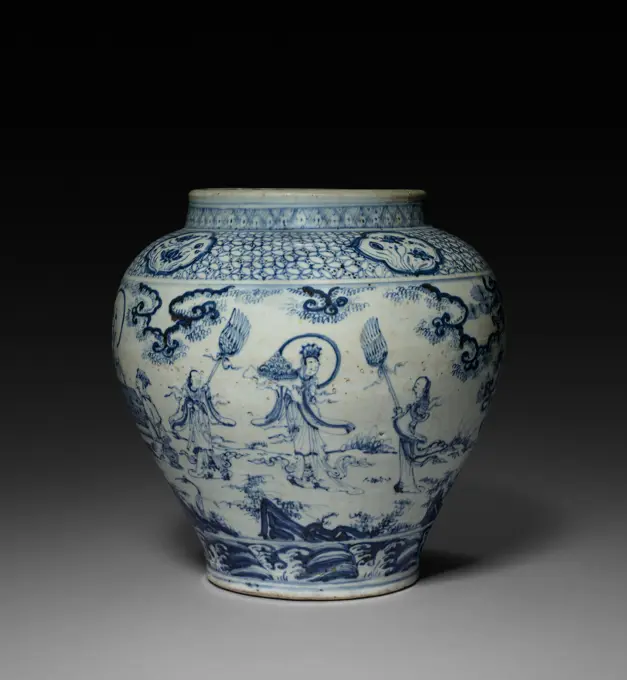
Jar with Scenes from the Land of Daoist Immortals, early 1400s. China, Ming dynasty (1368-1644). Porcelain with underglaze blue decoration; overall: 36.3 cm (14 5/16 in.).
4435-4929
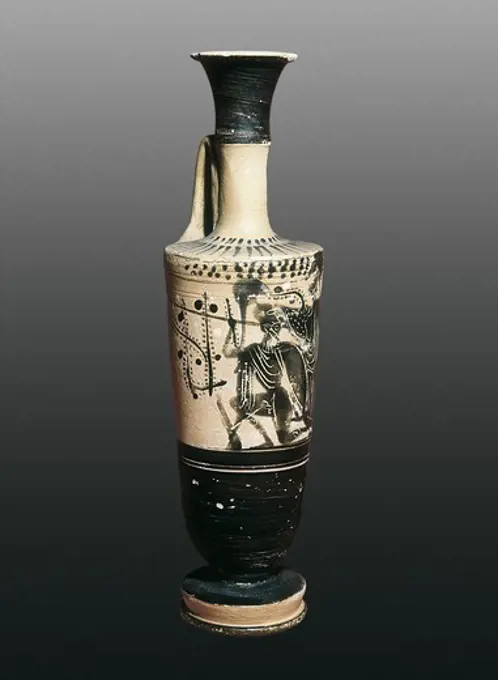
Lekythos decorated with a soldier figure. 5th c.BC. Black-figure ceramics. Archaic Greek art. Ceramics. SPAIN. CATALONIA. BARCELONA. Barcelona. Archaeology Museum of Catalonia. Proc: SPAIN. CATALONIA. GERONA. L'Escala. Empœries.
6145-59126617
Attic Red-Figure Bell Krater Fragment (comprised of 5 joined fragments). Unknown 5th century B.C. Upper part of the vessel. Exterior: komos scene. At left, bearded male, with a himation over his shoulder, holding a staff and looking back to the left. He may hold the cup that is partially visible at the left edge of the fragment. To the right, a second bearded male, right arm outstretched, looking left. Ovolo band above. Interior, black, with a reserved line.
6145-29118384
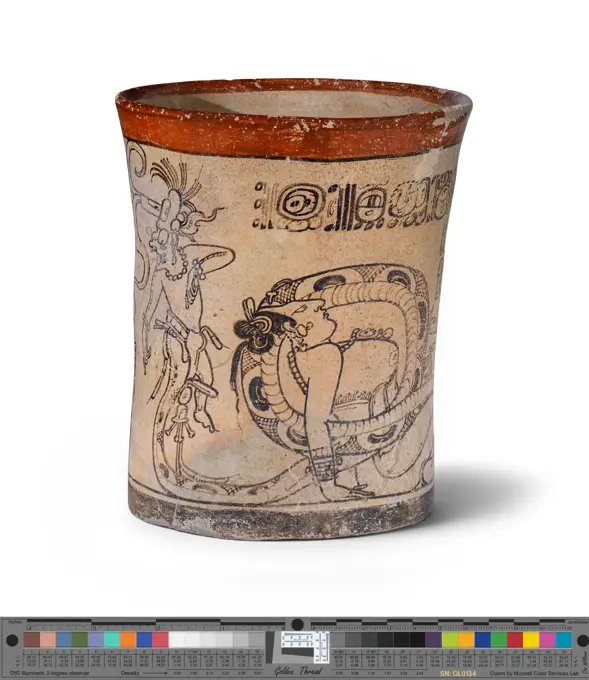
Vessel with Snake-Lady Scene. Mexico or Guatemala, Southern Campeche or Northern Petén, Maya, 650-800 CE. Ceramics. Slip-painted ceramic
6145-48842261
Situla with a Frieze of Athletic Contests. Unknown
6145-29076467
Bowl, 900s. Iran, Nishapur, Samanid Period, 10th Century. Earthenware with underglaze slip-painted decoration; overall: 11.5 x 28 cm (4 1/2 x 11 in.).
6145-52522795
Amphora. Genick, A.. still image. Prints. 1883. The Miriam and Ira D. Wallach Division of Art, Prints and Photographs: Picture Collection. Lyres, Heroes, Amphoras, Musicians , Greek, Temples , Greece
6145-58990225
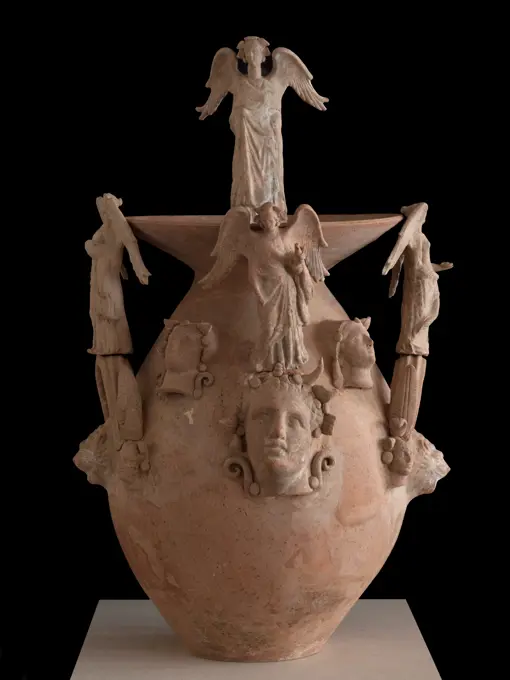
Crater with erect handles (sphageion). Applique decor and statuettes. Canosa (Italy). Museum of Fine Arts of the City of Paris, Petit Palais. 58802-20 Allegorie, Anse Dressed, Antiquity, Ancient Art, Boisson, Ceramic, Cratere, Decor Applied, God, Greek-Roman Divin, Woman, River, Great Greek, Young Man, Nike, Ancient Periode, Wing character, Content, Sphageion, Statuette, Ancient vase, victory
6145-30170430
Vessel of the Dancing Lords 700 CE-850 CE Petén department (Object made in), Naranjo (Object Probably made in), Guatemala (Object made in). According to ancient Maya belief, after several failed attempts the gods succeeded in populating the earth when they created humanity out of maize, the staff of life. In the Popol Vuh, a sixteenth-century epic of the Kíicheí Maya, the death and resur¨rection of the maize god was likened to seed corn that sprouted and produced new life. This vessel from the Late Classic period (600ñ800) depicts a Maya ruler attired as the maize god in three almost-identical panels. On his back, the ruler wears an enormous rack containing brilliant feathers, heraldic beasts, and related emblems. Just as maize plants sway to and fro, the maize god dances to the rhythm of lifeóoften, as seen here, in the company of a dwarf. Among the Maya, dwarfs were seen as special beings with powerful spiritual connections to the earth and the interior world below. This vase refers
6145-46803148
Athenian red-figure vase fragment depicting Eos pursuingTithonos.  Artist, attributed to: Syracuse Painter, Greek, Attic, active ca. 480-ca. 450 B.C.
4266-25396
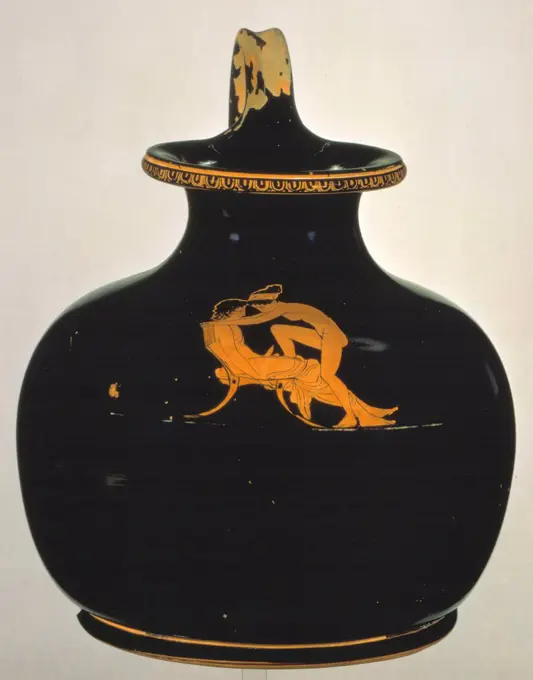
Oinochoe. Love-making (naked girl climbing on to a boy's lap) by Shuvalov Painter (active 440-410 BC) Staatliche Museen, Berlin ca 430 BC Clay, paint H 19 Greece Classical Antiquities Objects Archaeology
4443-28730013
Vase, c. 450-700 CE, 9 11/16 x 4 3/8 in. (24.6 x 11.11 cm), Clay, pigments, Mexico or Guatemala, 5th-7th century, Playful and mischevious black howler monkeys encircle this vase, with juveniles taunting their mothers who hold cacao (chocolate) pods. Rodents, birds, and monkeys in the Maya area of Mesoamerica play a critical role in the propagation of cacao, breaking open the pods to suck out the sweet gooey pulp and then casting away the bitter seeds. The circle with three dots motif in the background may represent cacao seeds. For human consumption, cacao seeds are fermented, dried, roasted, and ground, much like coffee beans, into unsweetened chocolate. The ancient Maya combined chocolate, water, and chiles in tall, cylindrical vases like this one, then pouring the contents into smaller vessels like the chocolate pot also in this case to create a frothy beverage.
4443-21961677
Attic Red-Figure Nestoris; Attributed to Polygnotos (Greek (Attic), active 450 - 430 B.C.); Athens, Greece; about 440 B.C; Terracotta; 41.6 × 35.9 cm (16 3,8 × 14 1,8 in.)
6145-44274595
Attic Red-Figure Kylix. Attributed to Dokimasia Painter (Greek (Attic))
1746-21110468
Copy of the Portland vase, by Josiah Wedgwood & Sons, Etruria, known work of Roman cameo. Staffordshire, about 1790. glass, in 1784
1746-21124934
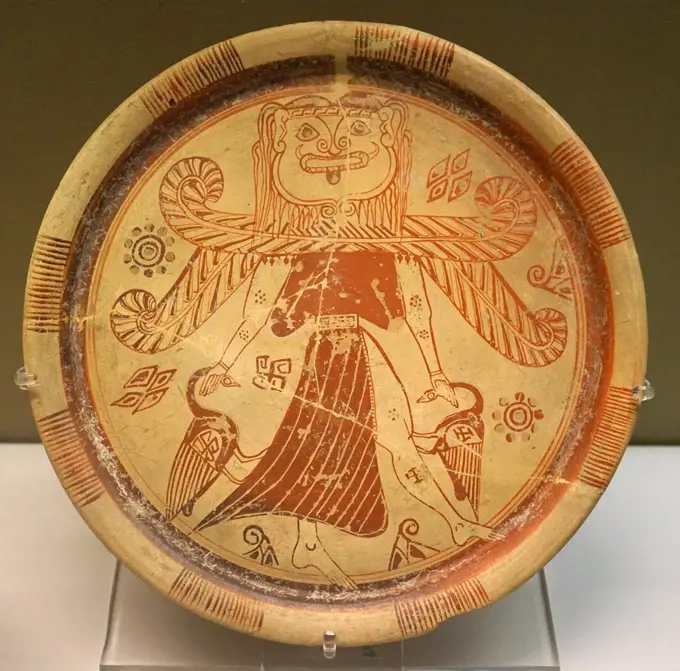
Plate depicting a winged goddess with a Gorgon's head with a bird in each hand. From Kamiros, Rhodes, Greece. Dated 600 BC
4409-16184
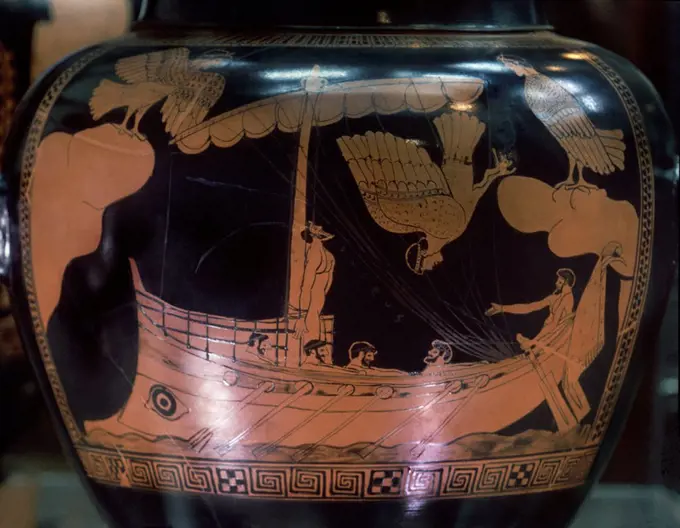
ANFORA GRIEGA - ULISES Y LAS SIRENAS. Location: BRITISH MUSEUM. LONDON. ENGLAND.
4409-11125
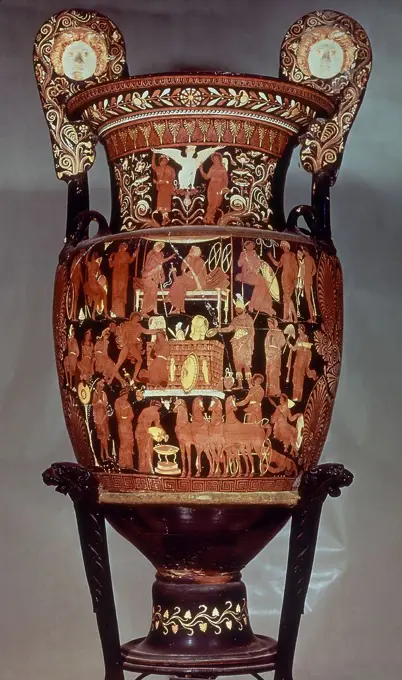
CRATERA DE PATROCLO CON SUS CENIZAS 350 AC. Location: NATIONAL MUSEUM OF ARCHAEOLOGY. NEAPEL. ITALIA.
1788-18855
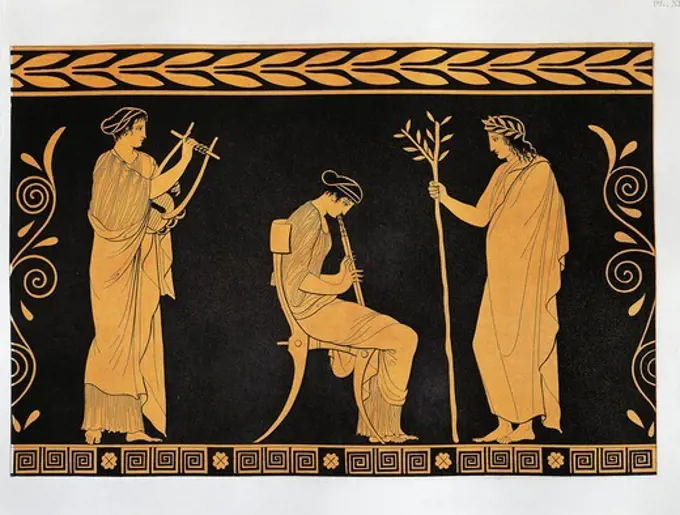
Scene from ancient Greek vase with Nymphs playing lyre and flute before Apollo by Piringer (after Greek original), engraving
1788-22806
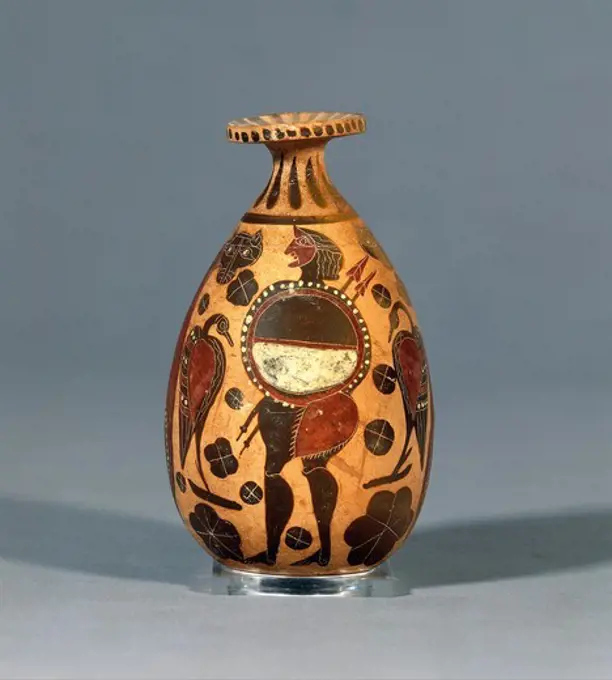
Etruscan-Corinthian alabastron depicting a warrior figure, painted by the Pescia romana Painter
6145-29067172
Fragment of a Red-Figure Bell-Krater or Calyx-Krater (Mixing Vessel): Female Head (Aglauros), c. 460-450 BC. Attributed to Nausicaa Painter (also known as Polygnotos III; Greek, Attic, active c. 460-440 BC). Ceramic; overall: 6.8 x 7.5 cm (2 11/16 x 2 15/16 in.).
7155-70378868
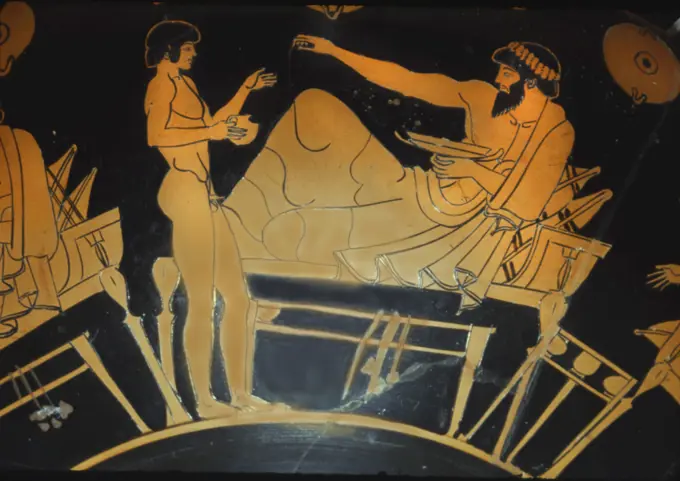
Symposium scene. Man and Youth. Greek Vase Painting. Red Figure style. 5th cent. BC. GREECE.
6145-29140448
Bottle 1700 Japan. Bottle. Japan. 1700. White porcelain decorated with polychrome enamels (Arita ware). Edo period (1615-1868). Ceramics
4409-9951
PLATO VIDRIADO Y PINTADO CON UNA CARA EN EL CENTRO - CERAMICA SIGLO XVI. Location: ALFARERIA. TERUEL. SPAIN.
6145-29738886
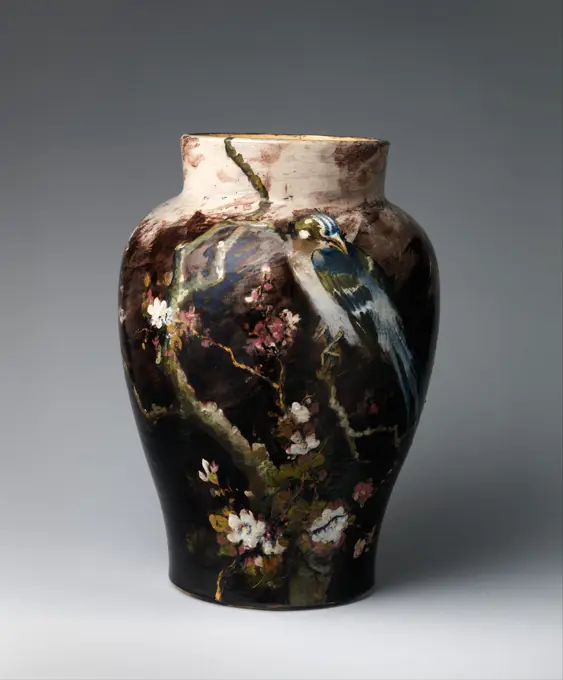
Vase with blue jay ca. 1880 François Laurin French Determined that pottery vessels should be regarded as true works of art, avant-garde ceramicists in France in the last decades of the nineteenth century transformed their craft into an intellectual and emotional endeavor. The pioneers of this revival were Jean Carriès, Ernest Chaplet, Théodore Deck, and Auguste Delaherche. These revolutionary artist-potters embraced artisanal traditions while pursuing lost techniques through exhaustive experimentation. Reacting to what they viewed as an excessive and improper use of ornament, they celebrated the simplicity and sincerity of their medium, following the tenets of the Art Nouveau style taking place in Europe. Based on the principles of the British Arts and Crafts movement, Art Nouveau artists sought to reform the decorative arts by emphasizing uniqueness and a return to craftsmanship. Artist-potters found inspiration in Asian ceramics, particularly Japanese stoneware (a hard, dense type of
6176-66100048
This illustration shows an amphora from Caere (present-day Cerveteri), about 30 miles northwest of Rome, with the scene representing a sacrifice. An amphora is a tall ancient Greek or Roman jar with two handles and a narrow neck. The Etruscan civilization flourished, mostly in northern Itlay, before the rise of Rome. TheEtruscansflourished in centralItalyfrom the 8th to 3rd century BCE, and one of their greatest legacies is the beautifully painted tombs found in many of their important towns.Tarquinia,Cerveteri,Chiusi, andVulci, in particular, possess tombs with outstandingwallpainti
4443-21960736
Attic Black-Figure Volute Krater Fragment; Athens, Greece; about 530 B.C; Terracotta; 11.3 cm (4 7,16 in.)
1746-21118865
Copy of a Portland Vase, with White Jasper, ornamented with blue jasper dip, applied reliefs and moulded decoration, Wedgewood. Dated 1877
6145-52506954
3. Apulian jug ; 4. Black figured Attic jug, with Apollo and Dionysus ; 6. Archaic lekythoi lekythos, early Attic, with sphinxes and serpent, and hunting dog ; 7. Archaic lekythoi lekythos, early Attic, steer with hunting dog chasing rabbit. Kannen still image. 1883. The Miriam and Ira D. Wallach Division of Art, Prints and Photographs: Picture Collection. Pottery , Greece, Pottery, Greek, Pitchers, Decoration and ornament , Greece, Containers , To 499, Vases, Greek, Lecythi, Vases
4409-17414700
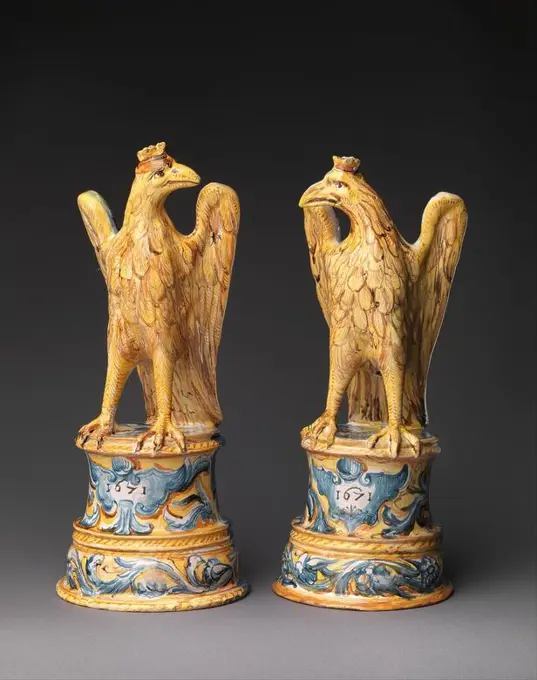
Crowned eagle (one of a pair). Artist: Perhaps Workshop of Ippolito Rombaldoni (Italian, active Urbania, Marche, 17th century). Culture: Italian, probably Urbania or Rome. Dimensions: Overall (confirmed): 13 1/8 × 5 3/4 × 5 5/8 in. (33.3 × 14.6 × 14.3 cm). Date: 1671. Museum: Metropolitan Museum of Art, New York, USA.
6176-67037697
Depiction of chariot-racing on an Attic kylix, 6th century BC. Artist: Unknown
1746-21133798
Medallion; A Sacrifice to Hymen. Jasper under a Jasper stoneware dip decorated with applied reliefs. Wedgewood and Bentley; 1775-80.
6145-29159680
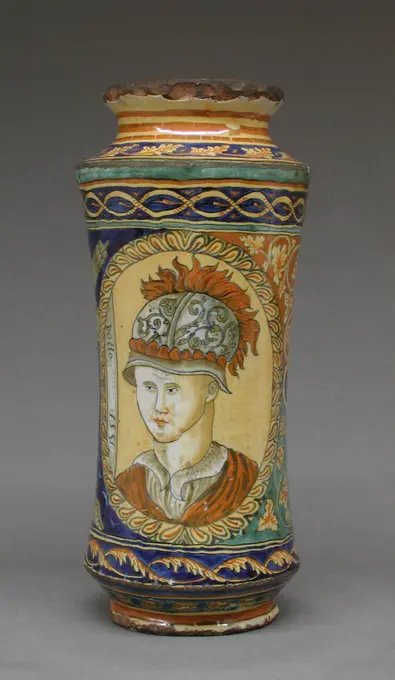
Pharmacy jar (albarello) dated 1551 possibly Italian, Sicily Storage vessels were among the most frequently produced maiolica wares in late medieval and Renaissance Italy. Made in fairly standard shapes, they were designed to fit with dozens of others on a shelf, often in a pharmacy or shop. Their handles therefore tend to fit within the vessels profile, and the cylindrical albarello type is generally narrower at the middle than at the top or bottom, making it easy to grip. Other common features include inscriptions indicating contents and flanged lips to help secure cloth or paper seals. The decoration, usually more elaborate on one side than the other, can sometimes link pieces to a known dispensary or specific workshop or artist.. Pharmacy jar (albarello). possibly Italian, Sicily. dated 1551. Maiolica (tin-glazed earthenware). Ceramics-Pottery
PREVIOUS
of 2
NEXT
2401 S. Ervay, Suite 206
Dallas, Texas 75215
United States
Get Started
Free ResearchMy BoardsMy Cart
For Creators
How To License Your ContentContributor PortalFrame of Mind
Resources
API accessPricing
Contact
+1 866 236 0087help@viewpictures.co.uk Contact form
©2026 View Pictures. All Rights Reserved. -B
This site is protected by reCAPTCHA and Google Privacy Policy and Terms of Service apply.