My Boards
View Pictures
  • My Boards
← Artworks

Ancient Greek Terracotta Vases

A collection of Greek terracotta vases from the Archaic period, depicting mythical scenes, warriors, and Dionysian themes, featuring intricate black-figure decorations.
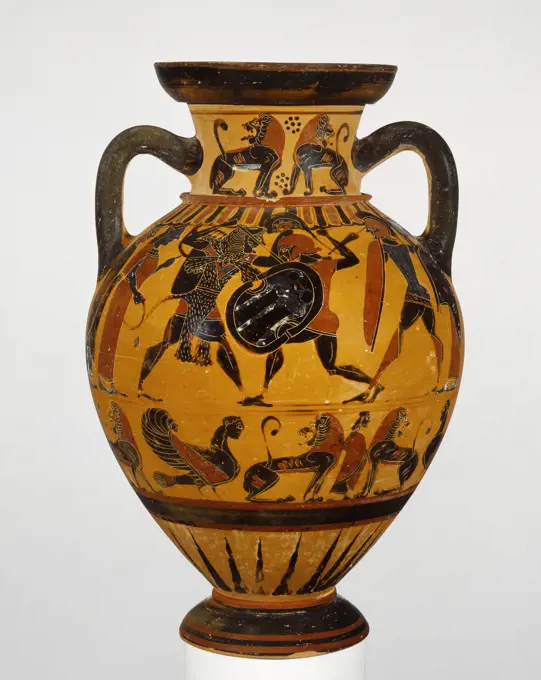
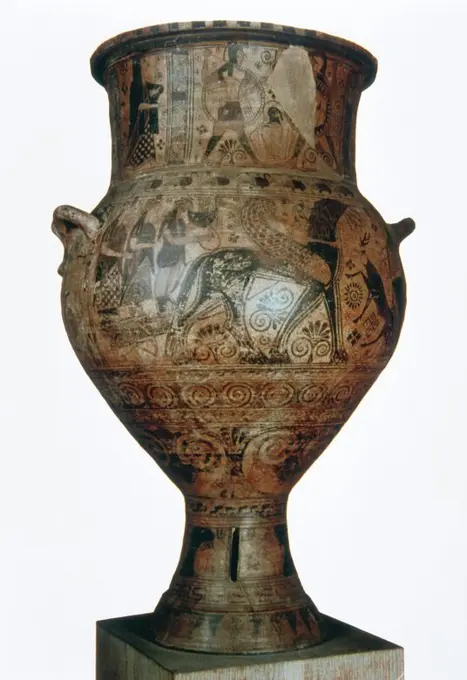
Storage Jar with Herakles Battling Kyknos; Euboea, Greece; about 570 - 560 B.C; Terracotta; 35.8 × 23.8 cm (14 1,8 × 9 3,8 in.)
176 assets in this story
6145-52959314
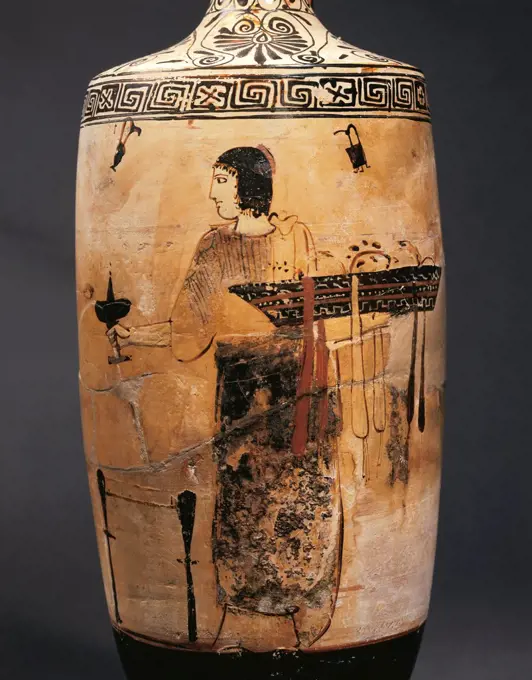
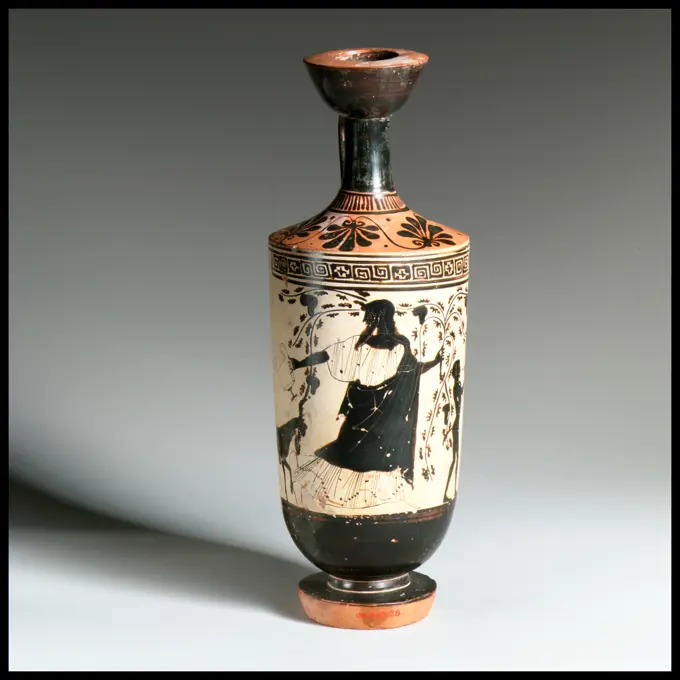
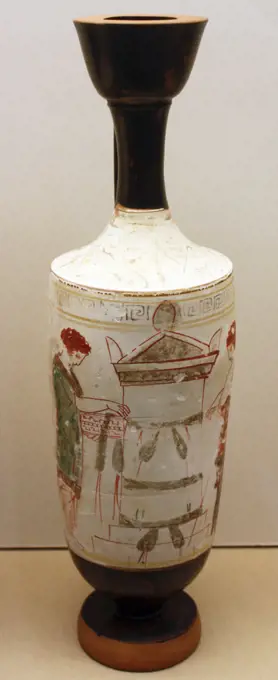
Lekythos Attributed to the Painter of Athens 9690 ca. 500-490 BCE View more. Lekythos. Attributed to the Painter of Athens 9690. Greek, Attic. ca. 500-490 BCE. Terracotta; black-figure, white-ground. Archaic. Vases
535-156
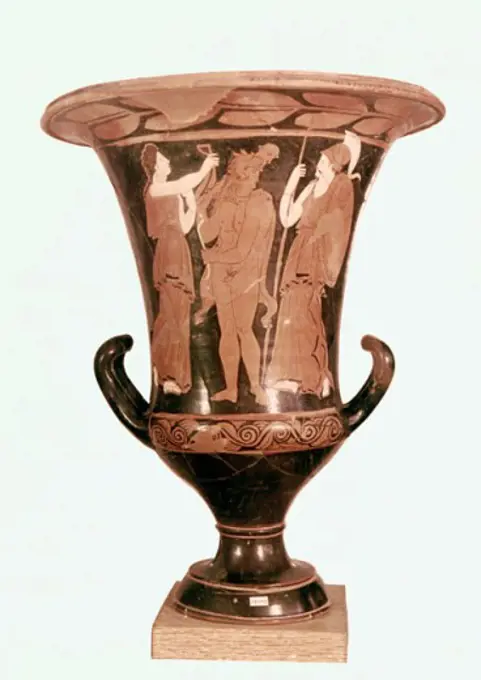
Calyx Krater Vase  C.450 BC Greek Art(- ) Ceramic
4409-10527
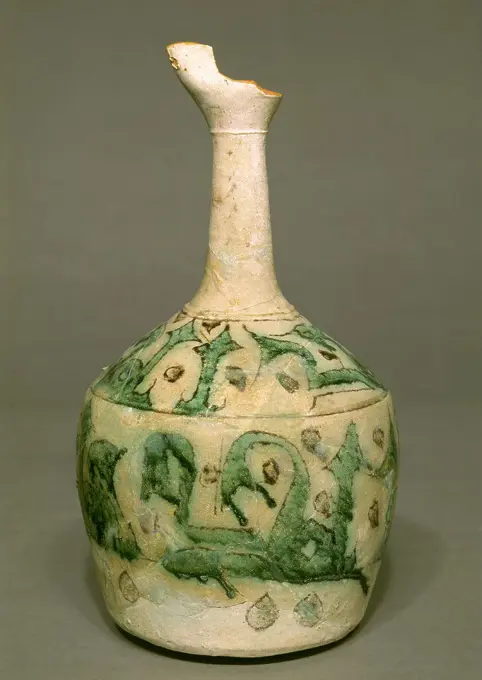
REDOMA CALIFAL EN VERDE Y MANGANESO CON DECORACION CUFICA - SIGLO X - CERAMICA OMEYA PROCEDENTE DE MEDINA AZAHARA. Location: MUSEO ARQUEOLOGICO-COLECCION. CORDOBA. SPAIN.
4409-17336513
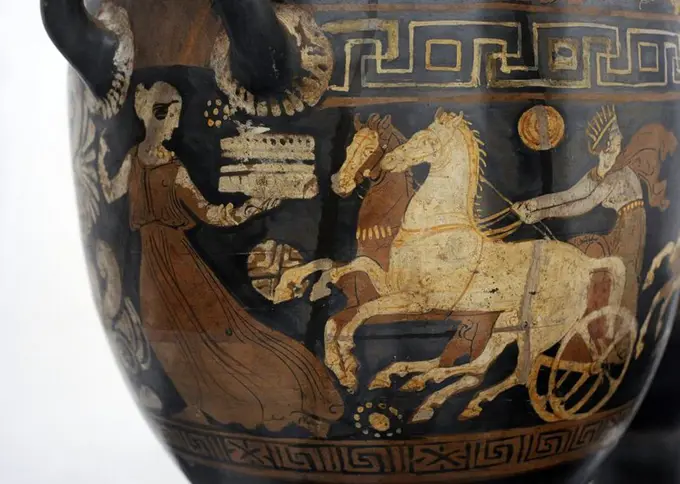
Campanian red figure hydria decorated with a chariot race led by Nikai. From Cuma. 330-320 BC. Detail. Cumana Collection. National Archaeological Museum. Naples. Italy.
4409-40931
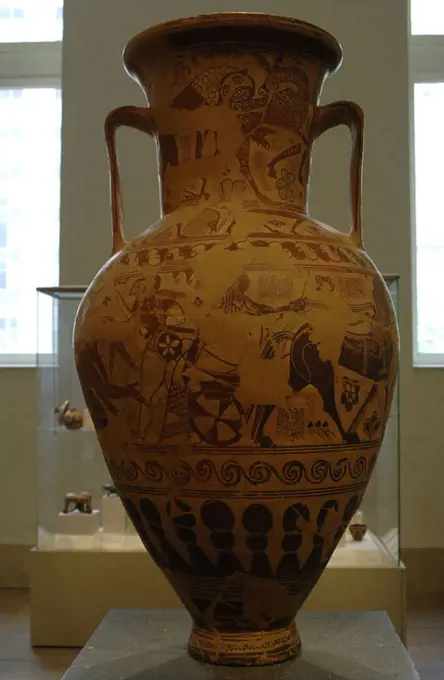
Greek art. Greece. Terracotta neck amphora. 7th century BC. Proto-Attic Period. It represents Herakles grabbing the hair of the centaur Nessus. Behind Herakles, a four-horse chariot and a driver. It comes from Attica. Metropolitan Museum of Art. New York. United States.
6145-29835715
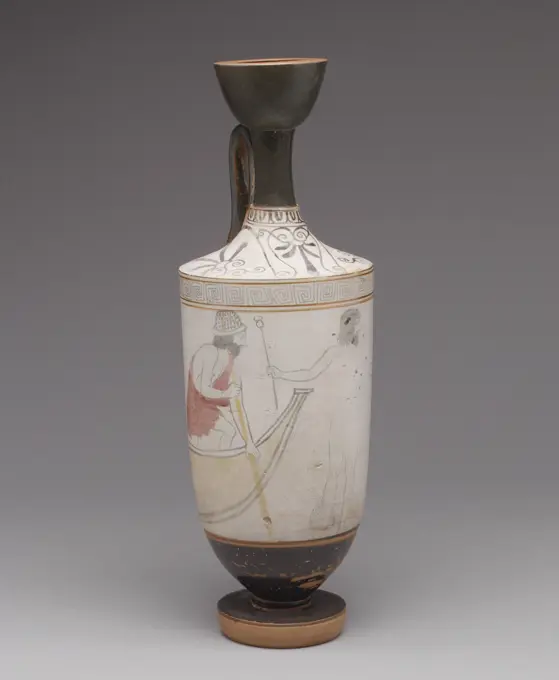
Terracotta lekythos (oil flask) ca. 450 B.C. Attributed to the Sabouroff Painter Charon, Hermes, and youthHermes, identifiable by his winged boots and herald's staff, beckons a young man, the deceased, toward Charon's boat. Charon wears the clothing typical of a Greek workmanthe exomis, a tunic that is fastened on one shoulder and leaves both arms free and bare, and a cap with a narrow brim.. Terracotta lekythos (oil flask) 251043 : Attributed to the Sabouroff Painter, Terracotta lekythos (oil flask), ca. 450 B.C., Terracotta, H. 12 7/16 in. (31.6 cm). The Metropolitan Museum of Art, New York. Rogers Fund, 1921 (21.88.17)
6145-29792648
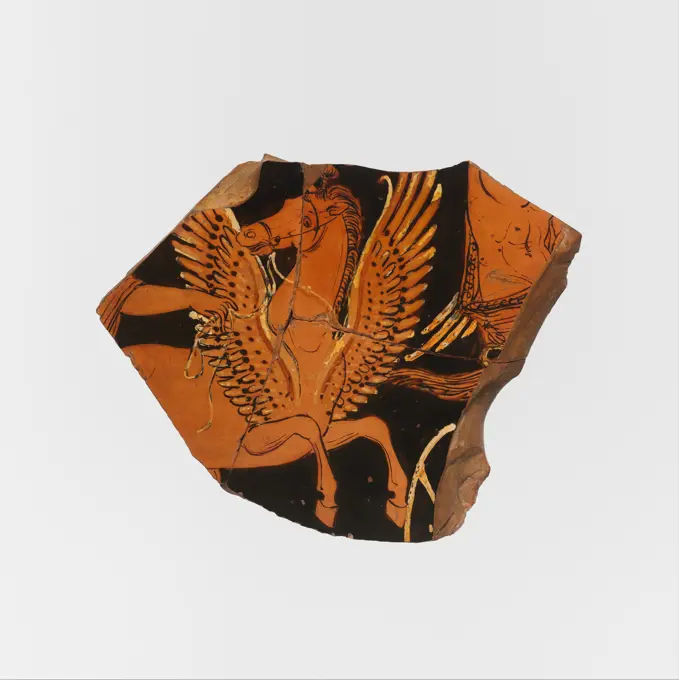
Fragment of a terracotta volute-krater (bowl for mixing wine and water) mid-4th century B.C. Attributed to the Painter of the Dublin Situlae Forepart of PegasusThis fragment, and another in the same case (19.192.81.2, .8), belongs to a volute-krater that depicted the death of Pentheus on the obverse and the battle of gods and Titans on the reverse. The piece shows the winged horse looking back at Bellerophon, whose left hand appears holding one rein. To the right is Zeus seated in his chariot. The bit of wing belongs to a figure of Nike.. Fragment of a terracotta volute-krater (bowl for mixing wine and water) 250869 : Attributed to the Painter of the Dublin Situlae, Fragment of a terracotta volute-krater (bowl for mixing wine and water), mid-4th century B.C., Terracotta, Overall: 4 7/16 x 5 9/16in. (11.2 x 14.1cm). The Metropolitan Museum of Art, New York. Rogers Fund, 1919 (19.192.81.6)
7155-70378895
Greek Vase. Odysseus and the Sirens. Scene from the Odyssey. Red Figure Amphora. Greece.
6145-46871865
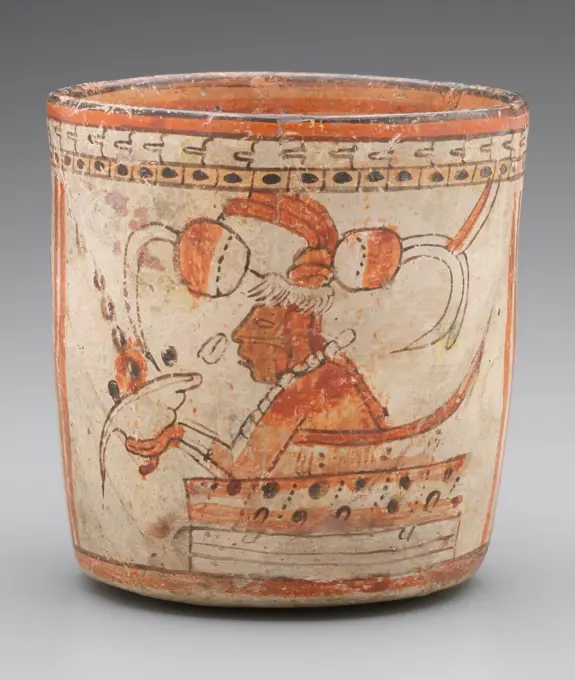
Vessel with Scribes holding Shell PaintPalettes.  Artist: Unknown
4409-17280838
MENADE EN TORNO AL IDOLO DE DIONISIO -VASIJA-. Location: NATIONAL MUSEUM OF ARCHAEOLOGY. NEAPEL. ITALIA.
1788-41432
Lekythos showing a gynaeceum scene, white ground pottery and black figure pottery, Italy. Detail. Ancient Greek civilization, Magna Graecia, 5th Century BC.
7155-70378873
Ancient Greek Vase. Painting of female acrobat. Foundling painter. 340-330 BC.
4443-21960026
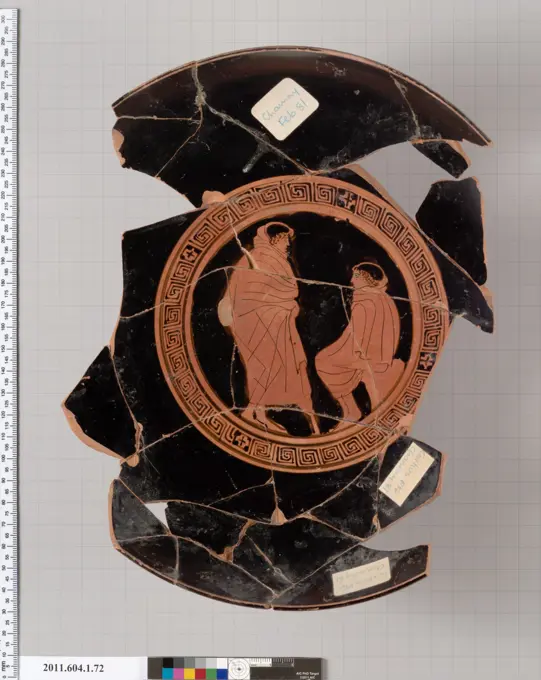
Fragmentary Wine Cup with Achilles; Douris (Greek (Attic), active 500 - 460 B.C.), Kleophrades (Greek (Attic), active about 490 B.C.); Athens, Greece; about 490 B.C; Terracotta; 36 × 32.3 × 24.1 × 13 cm (14 3,16 × 12 11,16 × 9 1,2 × 5 1,8 in.)
6145-59157225
Lazio Roma Grottaferrata Museo53. Hutzel, Max 1960-1990 German-born photographer and scholar Max Hutzel (1911-1988) photographed in Italy from the early 1960s until his death. The result of this project, referred to by Hutzel as Foto Arte Minore, is thorough documentation of art historical development in Italy up to the 18th century, including objects of the Etruscans and the Romans, as well as early Medieval, Romanesque, Gothic, Renaissance and Baroque monuments. Images are organized by geographic region in Italy, then by province, city, site complex and monument.
6145-48881785
Corinthian Alabastron. Attributed to Painter of Palermo 489 (Greek (Corinthian), active 640 - 600 B.C.)
6145-29157063
Terracotta lekythos (oil flask) ca. 480 B.C. Attributed to the Workshop of the Bowdoin Painter Dionysos (god of wine) with a satyr and goatThe decoration on the body is executed in a combination of black silhouette and outline drawing on a white ground. Such works, known as semioutline lekythoi, are associated with the workshops of two closely related artists, the Bowdoin Painter and the Athena Painter. The technique represents a modification of black-figure at a time when red-figure was gaining popularity.. Terracotta lekythos (oil flask). Greek, Attic. ca. 480 B.C.. Terracotta; black-figure, white-ground. Classical. Vases
4430-3654
fine arts, ancient world, Greece, vase painting, amphora, ceramic, painted, height 26 cm, Lower Italy, circa 700 B.C., private collection,
4409-17395355
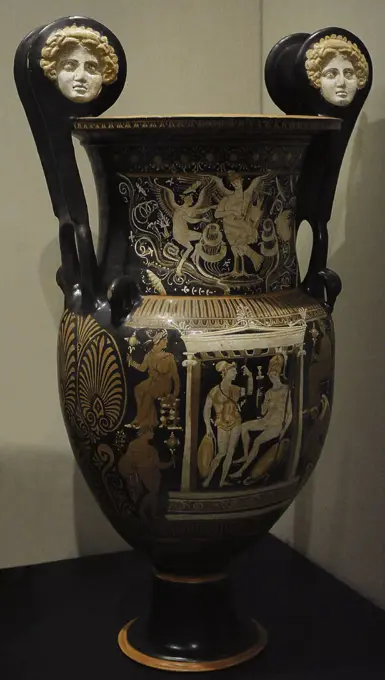
Greek krater dedicated to a dead warrior. Made by the Baltimore Painter, 340-320 BC. Depiction of the deceased warrior with his weapons and an ephebe inside a naiskos. Four offeror figures placed on the sides of the temple, two naked males and two females. A siren sings and waits for him to begin the transit to the afterlife. On the neck, a siren on a large floral chalice playing the zither next to Eros in a paradisiacal garden. On the handles, Gorgonas. From Apulia (Italy). National Archaeological Museum. Madrid. Spain.
6145-59181740
Lazio Viterbo Viterbo Museo Civico40. Hutzel, Max 1960-1990 Views of paintings (Middle Ages through 18th c.), frescoes, a tabernacle, coffin, sculpture reliefs, portal fragments, busts, sculpture, tapestry found in the Pinacoteca, Second floor gallery and Second floor cloister sequences. Antiquities: Many views of Etruscan and Roman fragments, sculpture, sarcophagi, pottery, masks, jewelry and other objects found in the Storeroom sequence (inventory numbers on back of prints), and the Cloister, Second floor Cloister, Valle Giulia, Sala Romana and Sala Etrusca sequences. General Notes: There are eight separate numerical sequences for this location. The cloister as an architectural structure, rather than museum site, is documented in the record and file for S. Maria della Verita, Cloister, all views of which are stored in Medieval core collection. Five views from the Museo Civico Second floor cloister sequence are stored in Medieval. German-born photographer and scholar Max Hutzel (1911-
6145-52518035
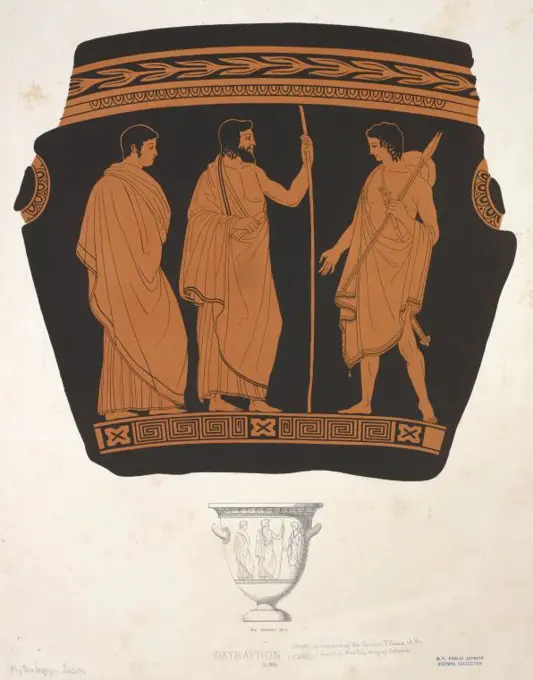
Jason, in search of the Golden Fleece, at the court of Aeetes, King of Colchis still image. Illustrations. 1862 - 1864. The Miriam and Ira D. Wallach Division of Art, Prints and Photographs: Picture Collection. Jason (Greek mythology), Men , Clothing & dress , Greece , To 499, Staffs (Sticks) , To 499, Urns , Greece , To 499, Greeks , Clothing & dress , To 499, Pottery, Greek
6145-48676903
Napoli - Museo Nazionale. Vaso a girelle con un combattimento fra Greci ed Amazzoni (Ruvo) , Antiquities, Vases. Nicholas Catsimpoolas Collection
4409-20920593
KYLIX-REUNION DIVINIDADES OLIMPICAS CON ZEUS. Location: NATIONAL MUSEUM. TARQUINIA. ITALIA.
1788-14445
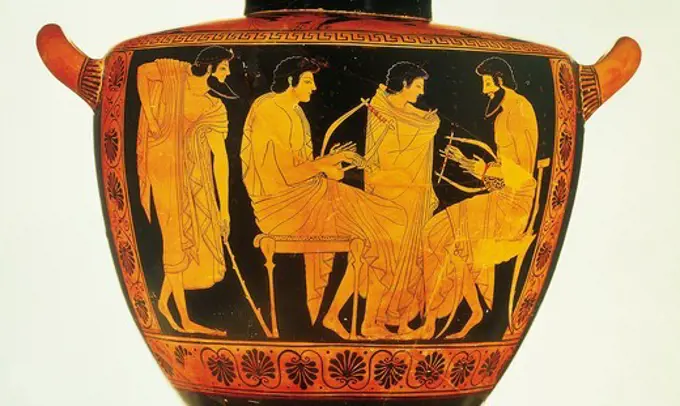
Red-figure pottery, Attic hydria by Phintias portraying music lesson
1746-28993790
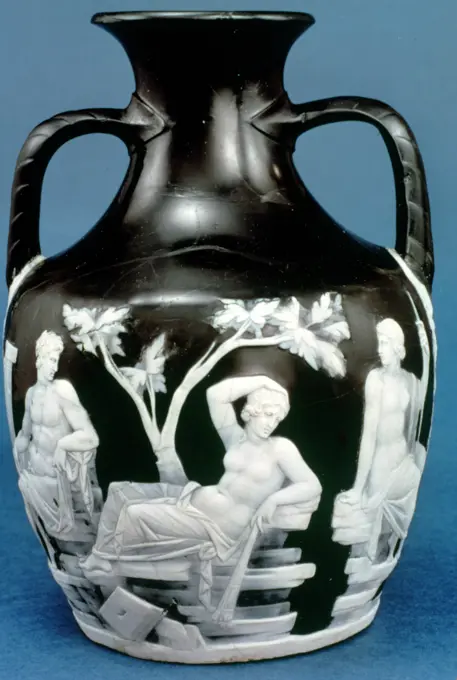
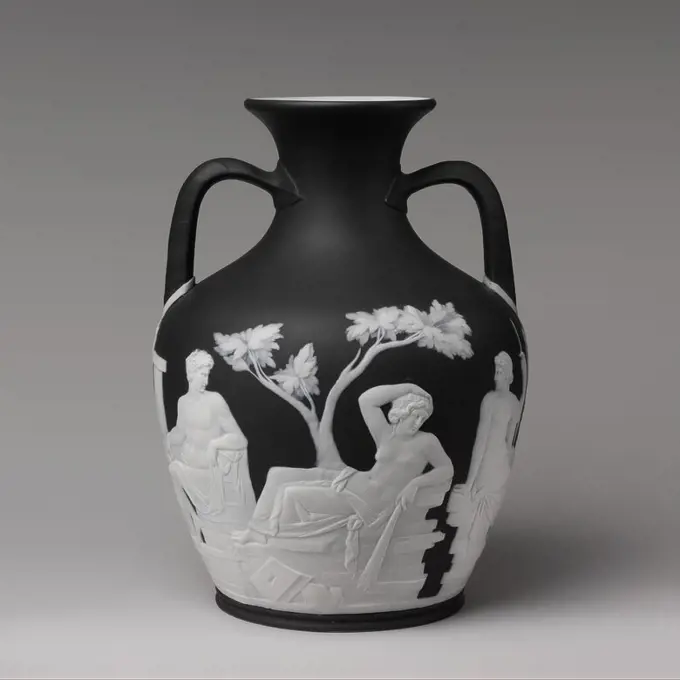
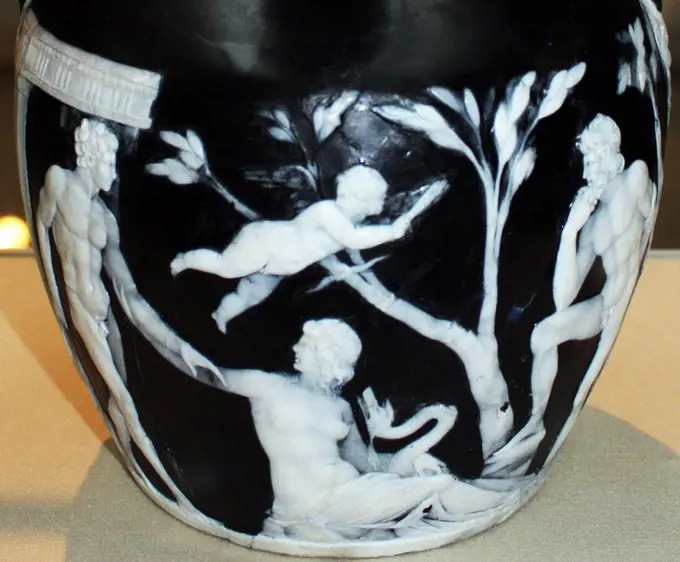
The Portland Vase is a Roman cameo glass vase, which is dated to between AD 1 and AD 25. The woman languishing is Octavia Minor, abandoned by Mark Antony, between her brother Augustus (left, as a god and Venus Genetrix, the ancestor of Augustus and Octavia's Julian gens.
6145-48834502
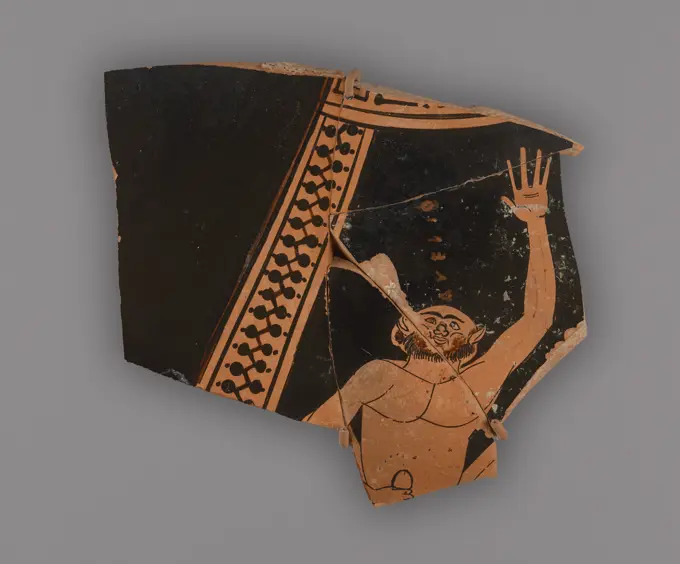
Attic Red-Figure Kalpis Fragment. Attributed to Kleophrades Painter (Greek (Attic), active 505 - 475 B.C.)
7155-70378827
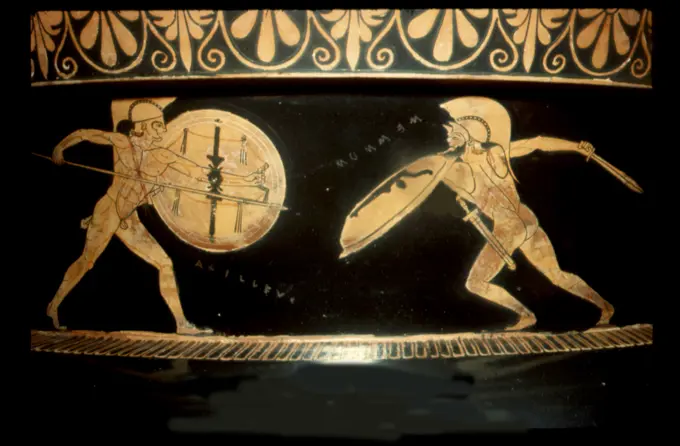
Achilles and Memnon. Krater from Cervetari. By Berlin Painter. 490 BC. GREECE.
4409-17354280
Model vase. Dimensions: H. 19 × Diam. 12.5 cm (7 1/2 × 4 15/16 in.). Dynasty: Dynasty 18. Date: ca. 1479-1390 BC. Museum: Metropolitan Museum of Art, New York, USA.
6176-67035659
Minoan vase from Phaestos, 21st century BC. Artist: Unknown
1746-21125569
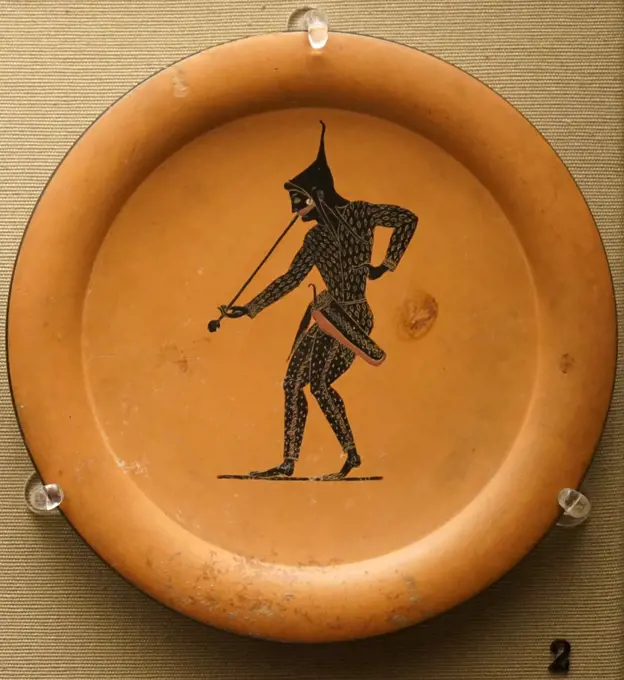
Black-figured plate, depicts an archer blowing a trumpet, made in Athens. Dated 6th Century BC
6145-59129403
Campania Caserta Capua Museo Campano052. Hutzel, Max 1960-1990 Medieval: Byzantine architectural fragments; parchment fragments with miniatures (12th century) from Montecassino; painted wooden crucifix (13th century); Carolingian crucifixes; Bishop's miter (11th century) of gold and silver damask; fresco (13th century). Post-medieval: Architecture (15th century). Formerly the Palazzo Antignano. Unusual Catalan/Moorish-style portal; Paintings on panel and canvas (15th-18th centuries); marble intarsia (16th century); marble sculpture: busts of Christ and Mary (17th century); sculpture of saints in marble and in wood (15th century); painted and gilded sculpture in wood; marble grave sculpture (16th century); sarcophagus with allegorical carvings; gold reliquary "Rosa d'Oro"; crucifix made of elephant tusk Specific Location: Pianterreno Antiquities: Italic sculpture (seated women holding babies); inscription. Photo campaign #1: 533 photos. Roman relief and sculpture; cinerary urns; Greek a
6145-58990205
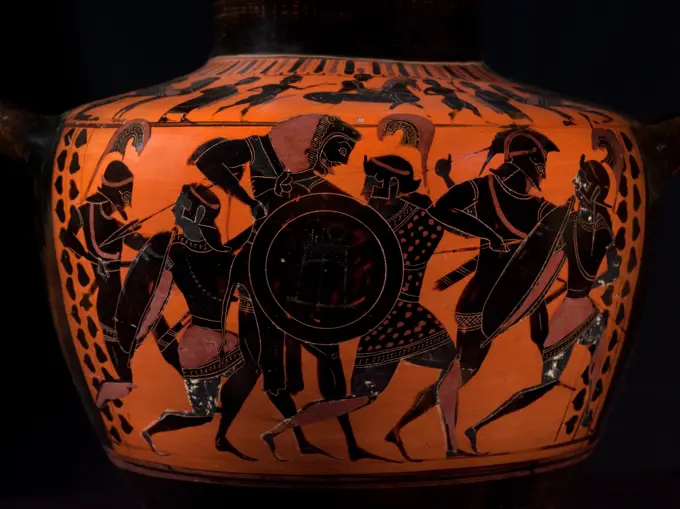
Ready Painter. Hydria. Black figures. 530-520 BC. AD Museum of Fine Arts of the City of Paris, Petit Palais. 58658-8 Anse, antiquity, battle, beat, shield, ceramic, detail, black figure, warrior, hydrie, character representation, warpm, base, ancient vase, vieme life VI 6th 6th 6th 6th century AV.JC, fight, lance
7155-70379506
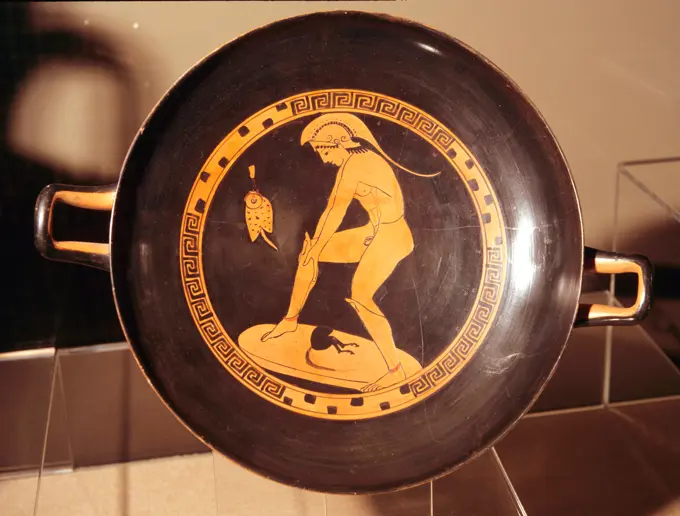
Greek vase painting, Kylix wine cup, warrior arming himself.
4409-59179485
Apollo's wedding to Helen, bell crater from the funerary chamber of Prince Iltirtiiltir, 4th century BC, necropolis of Piquia, Arjona, Iberian culture, Iberian Museum of Jaén, Andalusia, Spain.
4409-42770
Art greek. Archaic. Amphora of Melos. Datd between 650-600 BC. Apollo and muses in chariot drawn by winged horses. National Archaeological Museum of Athens. Greece.
6145-29731932
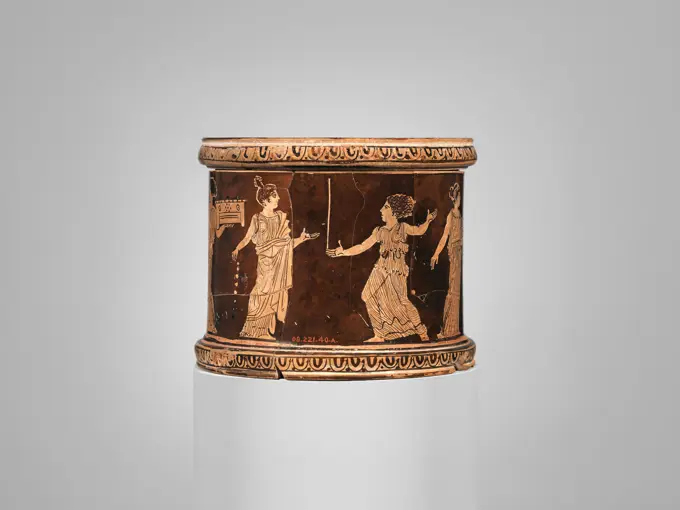
Terracotta pyxis (box) ca. 420-410 B.C. Attributed to the manner of the Meidias Painter Aphrodite attended by ladiesThe representation here shows the typical Athenian lady surrounded by attendants holding caskets and vases for oil. Its significance is altered by the inscriptions, which identify Aphrodite as the seated figure and her companions as Peitho (Persuasion), Hygeia (Health), Eudaimonia (Good Fortune), Eukleia (Good Repute), Eunomia (Good Order), Paidia (Play). The pyxis was undoubtedly a wedding gift.. Terracotta pyxis (box). Greek, Attic. ca. 420-410 B.C.. Terracotta; red-figure. Classical. Vases
4443-21957929
Oil Jar with a Man Holding a Lyre; Eucharides Painter (Greek (Attic), active about 500 - 470 B.C.); Athens, Greece; about 480 B.C; Terracotta; 33.8 cm (13 5,16 in.)
6145-59157199
Lazio Roma Grottaferrata Museo48. Hutzel, Max 1960-1990 German-born photographer and scholar Max Hutzel (1911-1988) photographed in Italy from the early 1960s until his death. The result of this project, referred to by Hutzel as Foto Arte Minore, is thorough documentation of art historical development in Italy up to the 18th century, including objects of the Etruscans and the Romans, as well as early Medieval, Romanesque, Gothic, Renaissance and Baroque monuments. Images are organized by geographic region in Italy, then by province, city, site complex and monument.
1788-17813
Attic vessel depicting charioteer, black-figure pottery, 550-530 B.C., detail
6145-54680771
Dish Probably by Samuel Malkin first half 18th century View more. Dish. British, Staffordshire. first half 18th century. Slipware. Ceramics-Pottery
6145-46869640
Black-Figure Amphora Fragment Showing Herakles and theBoar
1746-19669555
Greek white-ground oil bottle (Lakythos) made in Athens circa 420-410 BC. Depicting commemorative rite at a tomb where a woman leaves garlands on a gravestone, while a youthful figure looks on.
6145-29184483
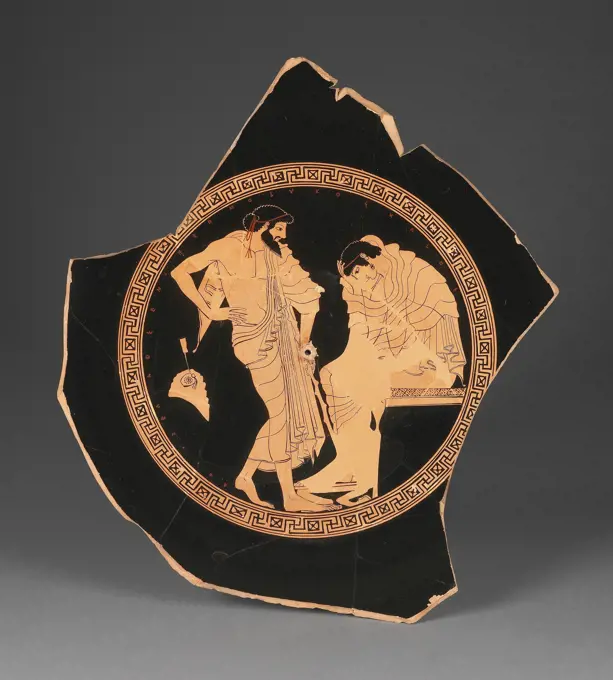
Terracotta fragments of a kylix (drinking cup) second quarter of the 5th century B.C. Attributed to the Curtius Painter Interior, youth leaning on staff; seated youth on rock; Obverse, two youths leaning on staffs, in the center, a draped youth; in field, tablets, shield in shield cover, and scabbard; Reverse, lower part of youth with stick, youth with strigil, torch holder, youth with stick. Terracotta fragments of a kylix (drinking cup) 667656
6145-46802783
LargeAlabastron.  Artist: Erlenmeyer Painter, Greek, Corinthian, active ca. 600-575 B.C. Artist Close to: Painter of Louvre E574, Greek, Corinthian, ca. 600 - 575 B.C.
4409-17374281
Portland vase. Culture: British, Staffordshire. Dimensions: Height: 10 3/8 in. (26.4 cm). Factory: Josiah Wedgwood and Sons (1759-present). Date: ca. 1840-60.Josiah Wedgwood, whose ceramic creations evoked the styles and themes of antiquity so popular in the late eighteenth century, produced a copy of the celebrated Portland Vase in black-and-white jasper-ware. The original, attributed to the Roman gem-cutter Dioskourides, is in the style of works made between 30 and 20 B.C. After its discovery in the late sixteenth century in the tomb of the Emperor Septimius Severus, it became one of the most admired works of antiquity and passed through an illustrious series of collections, among them those of Cardinal Barberini, Sir William Hamilton, and finally, the duchess of Portland, who donated it to the British Museum. The iconography of the original black-and-white cameo-cut glass vessel remains a mystery, though many interpretations have been offered. A recent theory is that the frieze de
1746-2177
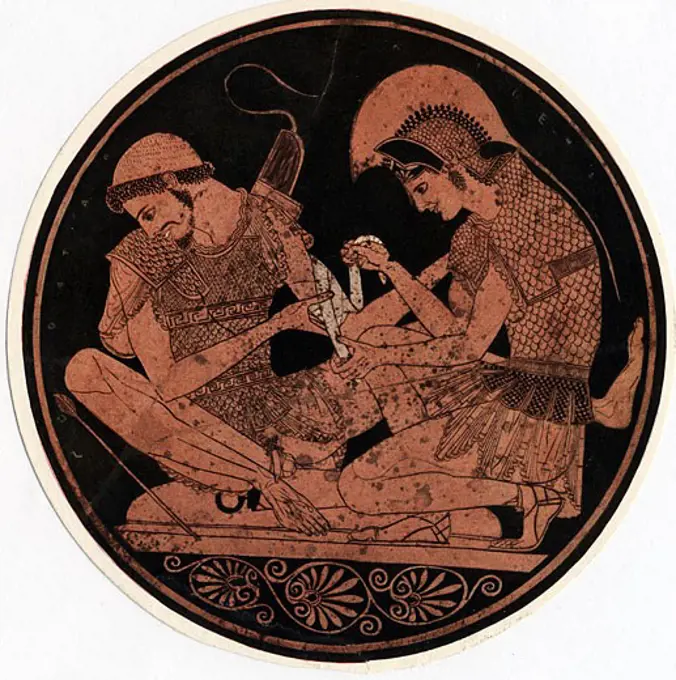
Achilles, hero of Homer's epic poem Iliad, bandaging the wound of his firend Patroclus. Decoration on the base of an antique vase
6145-29238042
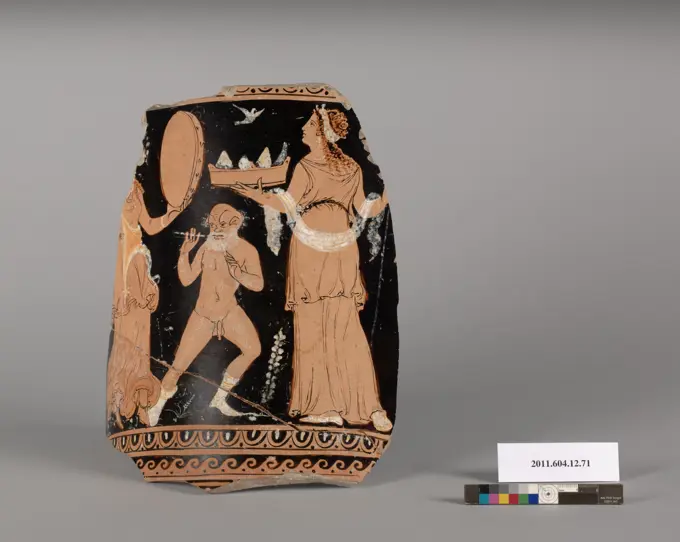
Terracotta fragment of a situla (bucket) 400-380 B.C. Attributed as Sicilian Draped woman to right, wearing a peplos, nebris, and shoes, holding a tympanum in her left hand; bearded, frontal satyr, wearing white shoes, playing the aulos; draped woman seen from the back, wearing a peplos, with her hair tied back in a white band, wearing jewelry, holding a tray with cakes in her left hand, with a sash draped over her forearms and around her lower back; above the tray, a bird; below the picture, an egg pattern with dots in the interstices; benath the egg pattern, wave pattern with dots. Terracotta fragment of a situla (bucket). Greek, Sicilian. 400-380 B.C.. Terracotta; red-figure. Classical. Vases
6145-29288291
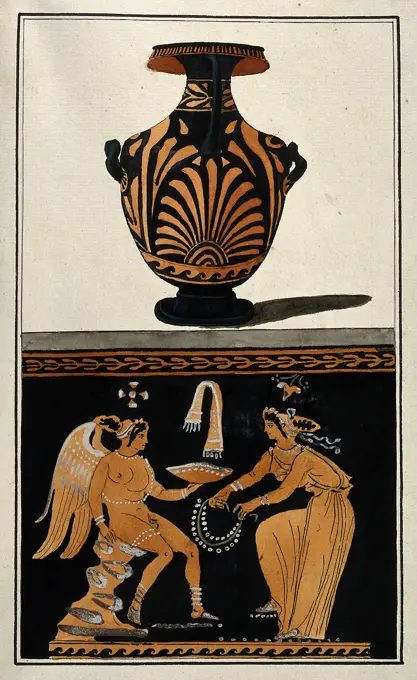
Above, a Greek red-figured water-jar (hydria); below, detail of the decoration showing a woman offering jewellery to a winged seated figure. Watercolour by A. Dahlstein, 1760/1780 ().
4409-11166
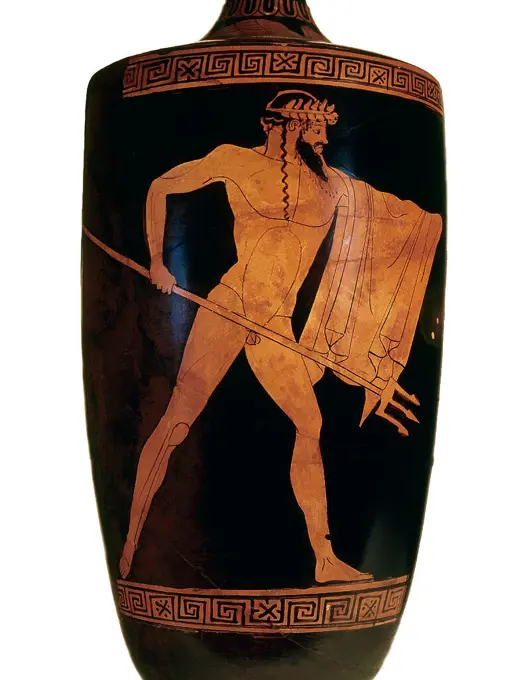
LEKYTOS CON LA FIGURA DE POSEIDON - SIGLO V AC. Location: NATIONAL MUSEUM. PALERMO. ITALIA.
6145-59139427
Emilia-Romagna Ferrara Ferrara Museo Civico di Schifanoia68. Hutzel, Max 1960-1990 General Notes: INCOMPLETE RECORD--NEGATIVES PROCESSED, PRINTS FILED German-born photographer and scholar Max Hutzel (1911-1988) photographed in Italy from the early 1960s until his death. The result of this project, referred to by Hutzel as Foto Arte Minore, is thorough documentation of art historical development in Italy up to the 18th century, including objects of the Etruscans and the Romans, as well as early Medieval, Romanesque, Gothic, Renaissance and Baroque monuments. Images are organized by geographic region in Italy, then by province, city, site complex and monument.
6145-52506893
Heracles slaying the monster Geryon ; Greek athlete with halteres still image. Reproductive prints. 1862 - 1864. The Miriam and Ira D. Wallach Division of Art, Prints and Photographs: Picture Collection. Pottery , Greece, Pottery, Greek, Monsters, Mythology, Hercules (Roman mythology), Athletes, Greeks , To 499, Armor , To 499, Arms & armament , Greek , To 499, Fighting , To 499, Heracles (Greek mythology), Geryon (Classical mythology)
4409-20075
ATAIFOR - PLATO TAIFA DE CUERDA SECA PARCIAL HALLADO EN ALCALA LA VIEJA MADRID - SIGLO XI. Location: MUSEO ARQUEOLOGICO NACIONAL-COLECCION. MADRID. SPAIN.
6145-30177646
Beaker Depicting Rows of Figures with Weapons and Band of Human Faces 180 BCE-500 CE South Coast. Ceramic and pigment . Nazca
6145-29811032
Base of a terracotta lebes gamikos (jar associated with weddings) ca. 400 B.C. Attributed to the Talos Painter Athena between Herakles and Iolaos; woman or goddess in front of Zeus or PoseidonIn Attic vase-painting, large vases appear with greater frequency at the end of the fifth century B.C. than at any other time since the Geometric period. While some artists fill the space with many smaller figures, the Talos Painter is among those who work on a large scale, depicting figures of great presence and nobility.. Base of a terracotta lebes gamikos (jar associated with weddings) 248685
6145-44286523
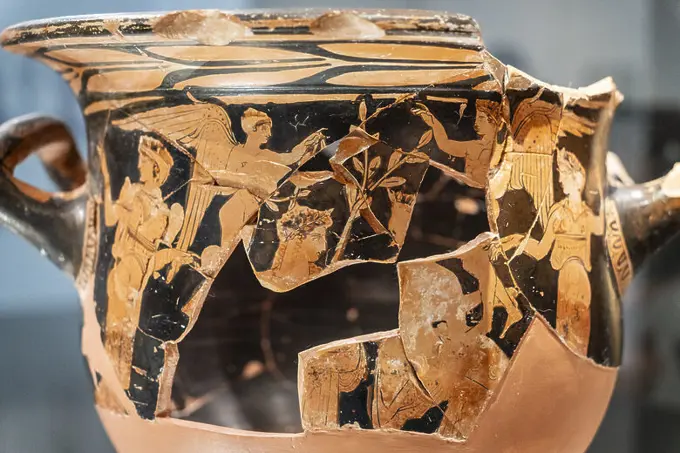
Attic Red-Figure Krater Fragment. Unknown
6145-29774120
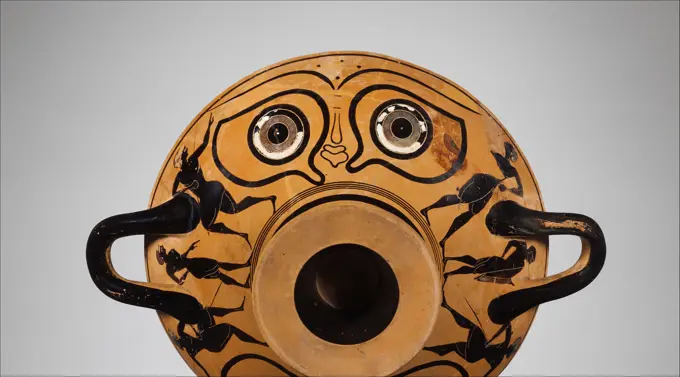
Terracotta kylix: eye-cup (drinking cup) ca. 520-510 B.C. Greek, Attic Exterior, obverse and reverse, between eyes, nose At the handles, youthsThe eye-cup lent itself to many variations. Here the eyes, supplemented by the main features of a face, become the principal decoration of each side. The youths may be interpreted as athletes or revelers.. Terracotta kylix: eye-cup (drinking cup) 246569
4443-28733441
Serving Dish from a Royal Berlin China Service, 20th century, 1 9/16 x 10 1/4 x 6 5/16in. (4 x 26 x 16cm), Porcelain, Germany, 20th century
1746-19669532
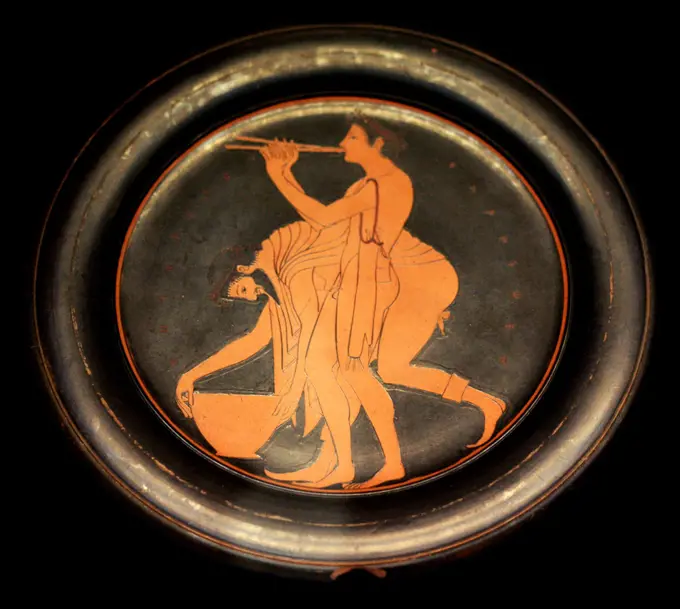
Plate signed by Epikleitos as painter. Epikleitos was a pupil of the first painters to use the red figure technique, invented in Athens in about 530 BC. He decorated numerous cups and several plates. His clarity of line and the deliecacy of the two revellers enable us to recognise even his unsigned works. Made in Athens about 520-500BC
6145-52893719
Hydria, 400-200 BC. Sicily, Italy. Ancient Greek Hydria (pitcher with three handles).
1746-19670490
The Portland Vase. Cameo glass, probably made in Rome About 15BC - AD 25. The Portland Vase is one of the finest surviving pieces Roman glass, and is named after the Duke of Portland who owned it from 1785 to 1945. It made of cameo glass a technique in which vessels and plaques, sometimes free-blown, sometimes cast, are created with two layers of glass. The outer layer (usually white) is carved away from the underlying dark layer (usually blue) to create decorative scenes and patterns.
6145-29193503
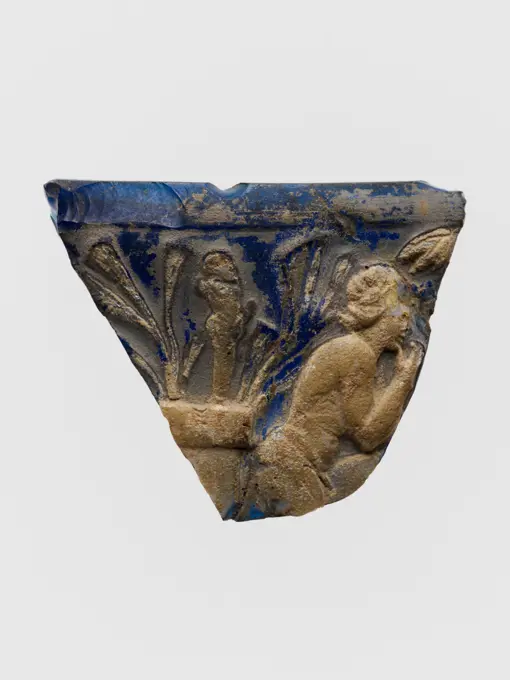
Cameo-glass cup fragment end of 1st century B.C-beginning of 1st century A.D. Roman Translucent cobalt blue with overlay in opaque white.Vertical rim with top edge ground flat; narrow sloping collar below rim on exterior; cylindrical body with slightly convex curving side.On interior, two deep horizontal grooves below rim; on exterior, below plain collar in relief naked male figure in white, facing right, with proper left leg raised and proper right arm also raised with hand near mouth; above his head to right is a hanging leaf; behind him to left is a squared plinth on which stands a small herm of Silenus, naked, armless, and ithyphallic, in profile to right, flanked to either side by leafy sprays. The figure may be identified as a dancing satyr.Rim fragment with chips and cracks, broken at sides and bottom; dulling, slight pitting, whitish weathering on exterior, and faint iridescence.Rotary grinding marks on interior.The fragment depicts a figure facing right and a small statue of P
6176-67052100
Hades and Persephone Banqueting: Altic Red-figure Kylix, c430 BC. Artist: Codrus Painter.
6145-59139087
Emilia-Romagna Ferrara Ferrara Museo Civico di Schifanoia24. Hutzel, Max 1960-1990 General Notes: INCOMPLETE RECORD--NEGATIVES PROCESSED, PRINTS FILED German-born photographer and scholar Max Hutzel (1911-1988) photographed in Italy from the early 1960s until his death. The result of this project, referred to by Hutzel as Foto Arte Minore, is thorough documentation of art historical development in Italy up to the 18th century, including objects of the Etruscans and the Romans, as well as early Medieval, Romanesque, Gothic, Renaissance and Baroque monuments. Images are organized by geographic region in Italy, then by province, city, site complex and monument.
7155-70378848
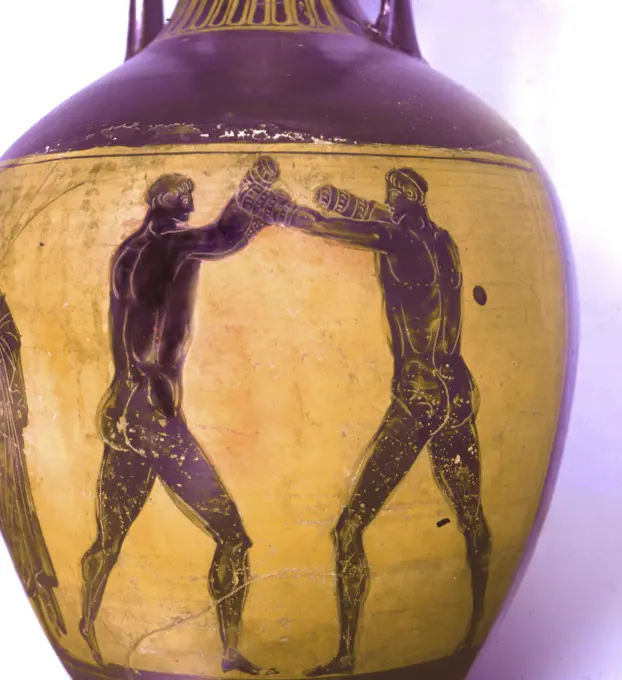
Boxers Vase. 4th cent. BC. Greek vase painting.
4409-17544149
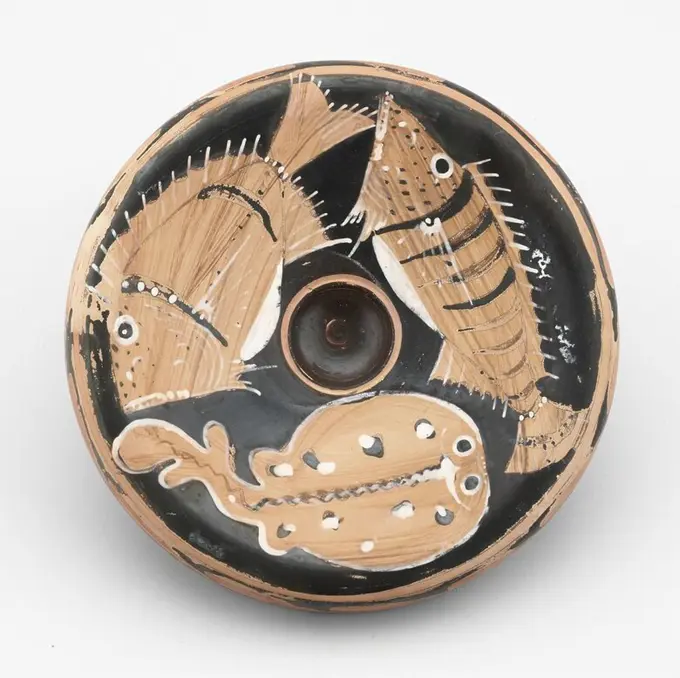
Fish Plate. Greek; Campania, Italy; Attributed to the Dotted Stripe Painter. Date: 350 BC-330 BC. Dimensions: 4.2 × 19.6 × 19.6 cm (1 5/8 × 7 3/4 × 7 3/4 in.). Terra-cotta, decorated in the red-figure technique. Origin: Campania. Museum: The Chicago Art Institute, Chicago, USA. Author: ANCIENT GREEK.
1746-28994054
11th century Egyptian Islamic style ceramic plate depicting a man with a leopard.
4443-28728705
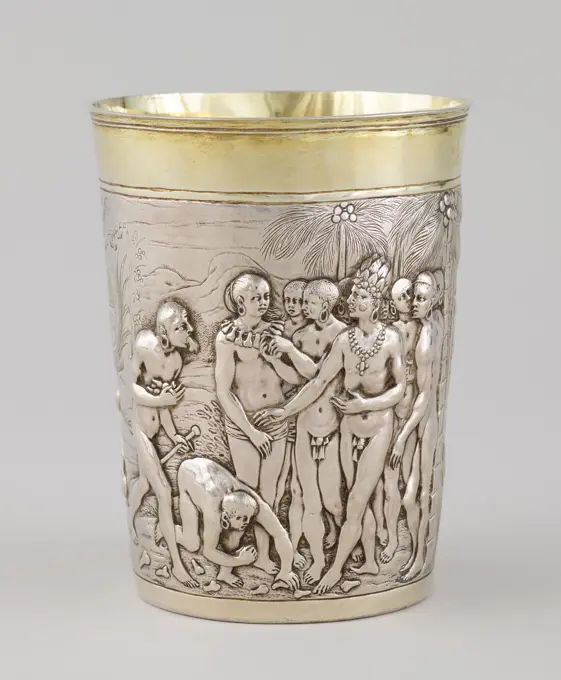
Beaker, 1647-1650, Melchior Lauch, German, documented 1622 - 1659, 5 1/2 × 4 7/8 × 4 7/8 in. (14 × 12.38 × 12.38 cm), Silver, gilt, Germany, 17th century, This beaker depicts the battles and warfare of different tribes in Mozambique, as described and imagined by the Dutch merchant Jan Huyghen van Linschoten (1563-1611), who had lived in Goa, India, for six years, and wrote an influential account of his travels through Africa and India. It was made in Leipzig, Germany, which was a center of trade, based on engravings in Jan Huyghens book. Such depictions of exotic peoples in faraway places were not always accurate. Here a Mozambiquian chief is pictured as a Native American.
6145-29786767
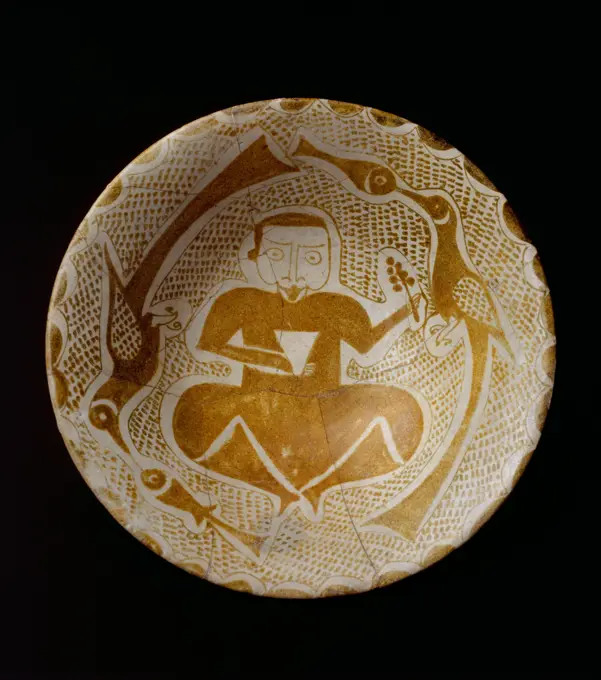
Bowl depicting a Man holding a Cup and a Flowering Branch 10th century Luster ceramics from Samarra often include stylized human figures. In this example, the lively caricatural quality of the seated man holding a cup and a flowering branch is enhanced by the two birds that hold fish in their beaks but look like they are kissing. The foot bears an Arabic inscription that reads baraka (blessing) in kufic script.. Bowl depicting a Man holding a Cup and a Flowering Branch 452833
1746-21124652
Red-figured bell-krater with Eos pursuing Kephalos, and a second youth. Dated 430 BC
6176-67051923
Orestes at Delphi with Iphigenia, Attic Red Figure Krater, c5th century BC. Artist: Unknown.
4409-156875
JARRO DE CERAMICA S XVI-ITALIANA. Location: MUSEO LAZARO GALDIANO-COLECCION. MADRID. SPAIN.
7155-70379371
Oedipus and the sphinx, Greek red figure vase, 5th c. BC.
6145-59182070
Lazio Viterbo Viterbo Museo Civico65. Hutzel, Max 1960-1990 Views of paintings (Middle Ages through 18th c.), frescoes, a tabernacle, coffin, sculpture reliefs, portal fragments, busts, sculpture, tapestry found in the Pinacoteca, Second floor gallery and Second floor cloister sequences. Antiquities: Many views of Etruscan and Roman fragments, sculpture, sarcophagi, pottery, masks, jewelry and other objects found in the Storeroom sequence (inventory numbers on back of prints), and the Cloister, Second floor Cloister, Valle Giulia, Sala Romana and Sala Etrusca sequences. General Notes: There are eight separate numerical sequences for this location. The cloister as an architectural structure, rather than museum site, is documented in the record and file for S. Maria della Verita, Cloister, all views of which are stored in Medieval core collection. Five views from the Museo Civico Second floor cloister sequence are stored in Medieval. German-born photographer and scholar Max Hutzel (1911-
4409-19322156
Cáliz de Galcera de Vilanova, 1390. Museu Diocesà d'Urgell.
4409-17272162
JARRA DE LOZA CON HOMBRE CON LEVITA Y BASTON. Location: PRIVATE COLLECTION. MADRID. SPAIN.
1788-22900
Greece, Athens, Red-figure kylix depicting a banquet scene
1899-65660322
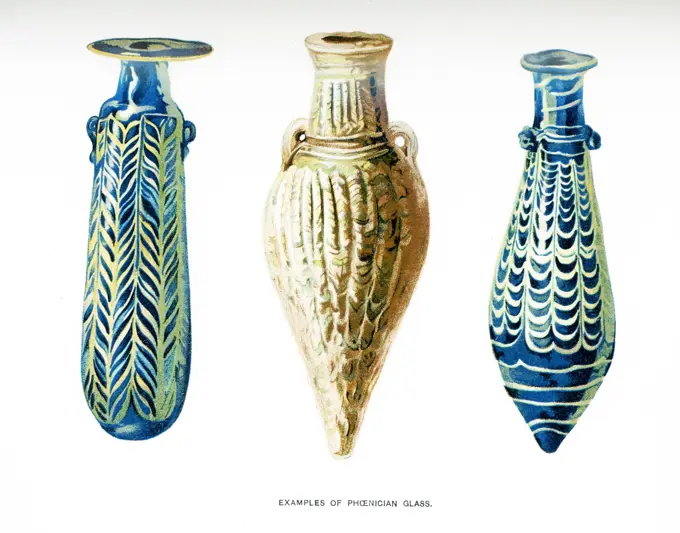
The caption accompanying this 1903 illustration in Gaston Masperos book on  History of Egypt reads: Examples of Phoenician Glass..
PREVIOUS
of 2
NEXT
2401 S. Ervay, Suite 206
Dallas, Texas 75215
United States
Get Started
Free ResearchMy BoardsMy Cart
For Creators
How To License Your ContentContributor PortalFrame of Mind
Resources
API accessPricing
Contact
+1 866 236 0087help@viewpictures.co.uk Contact form
©2026 View Pictures. All Rights Reserved. -B
This site is protected by reCAPTCHA and Google Privacy Policy and Terms of Service apply.