Ancient Jewelry and Artifacts

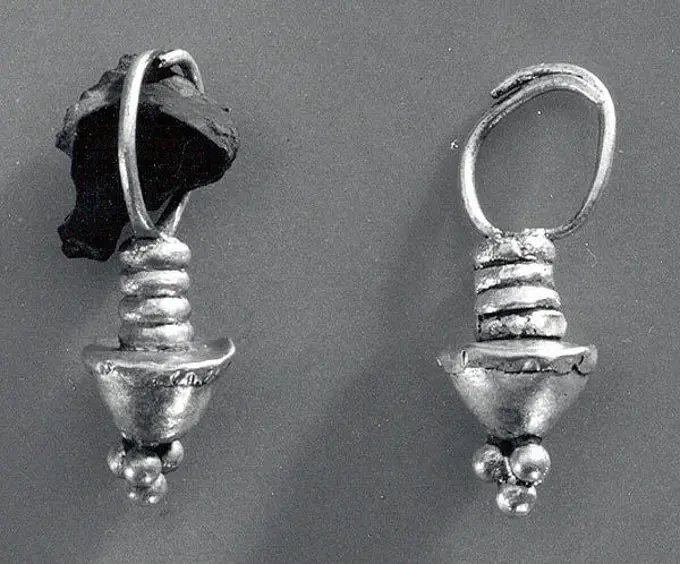
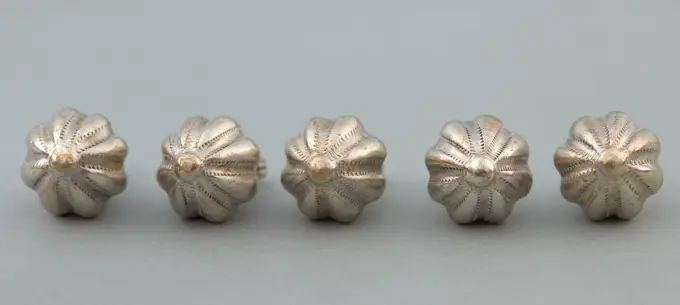
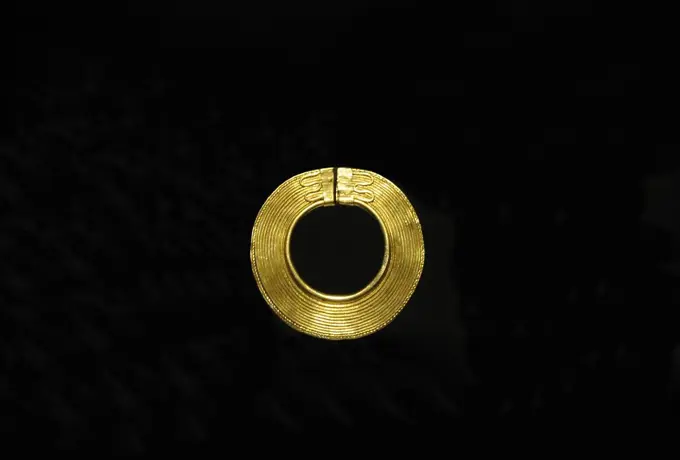
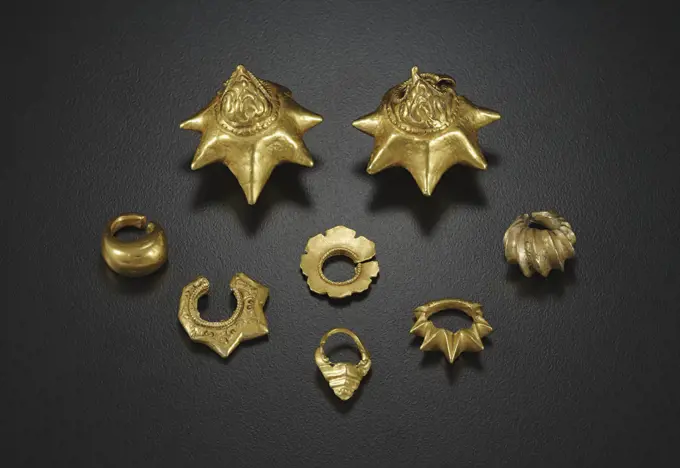
A series of intricate ancient ornaments and decorative pieces, including earrings and ear decorations, crafted from gold and bronze, showcasing historical artistry.

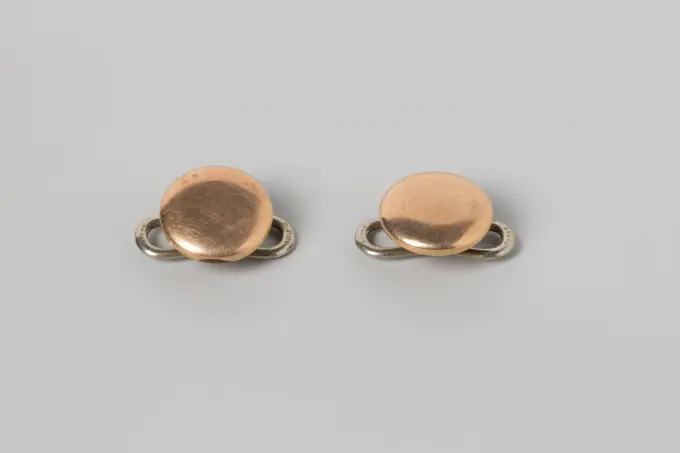
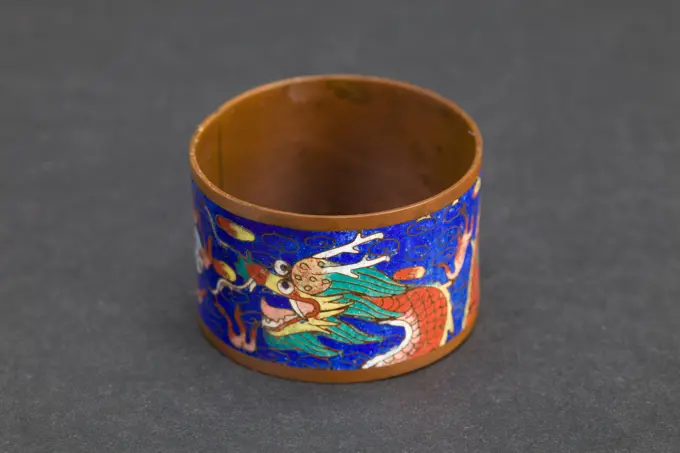
Nail protector;  19th century (1801-00-00-1900-00-00);
Nail protector; 19th century (1801-00-00-1900-00-00);
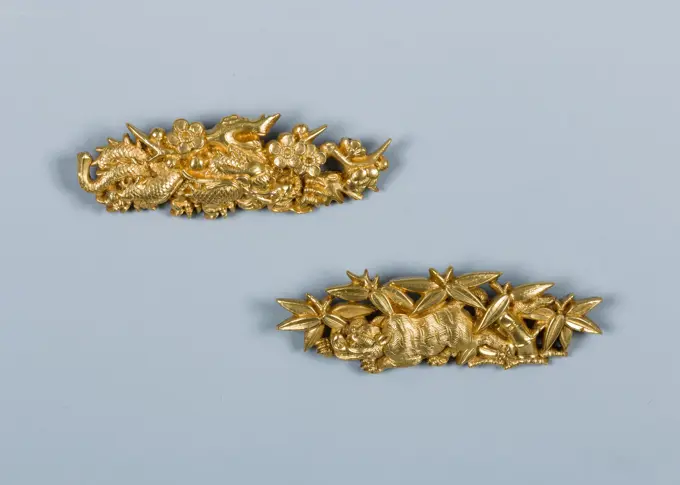
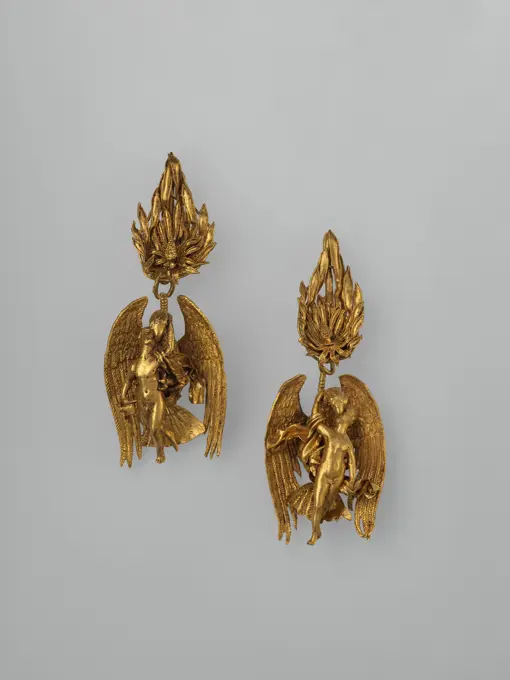
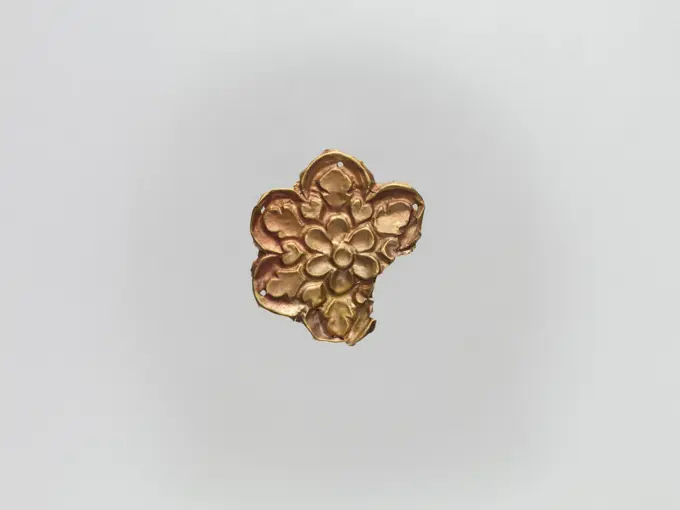
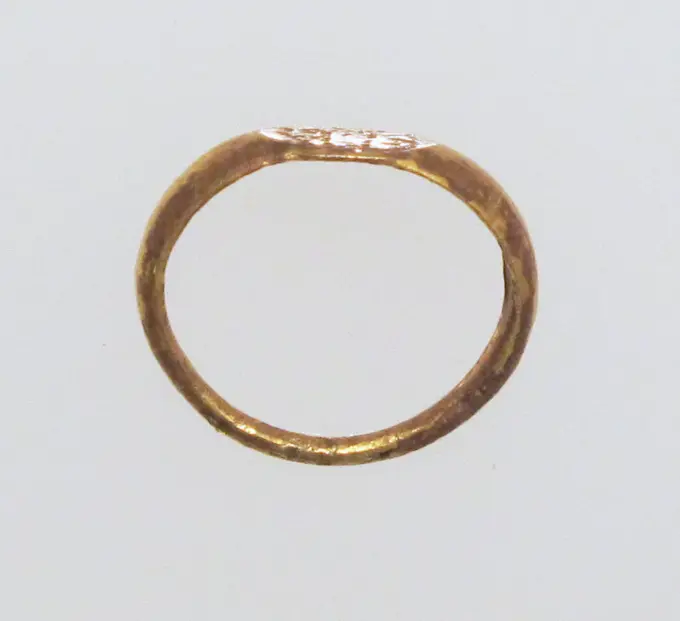
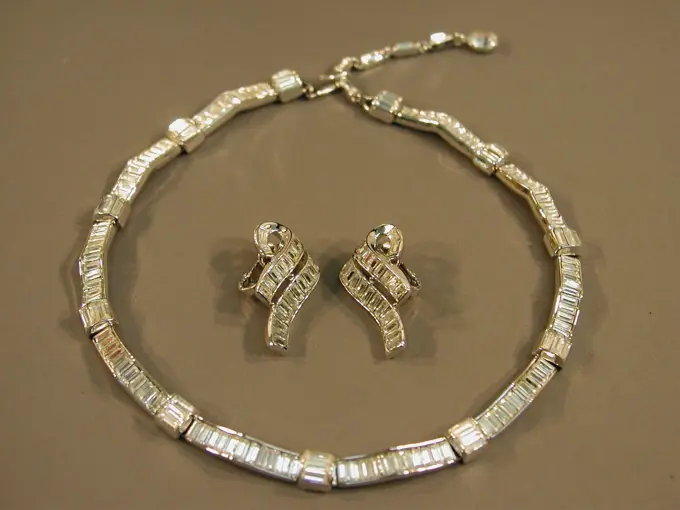
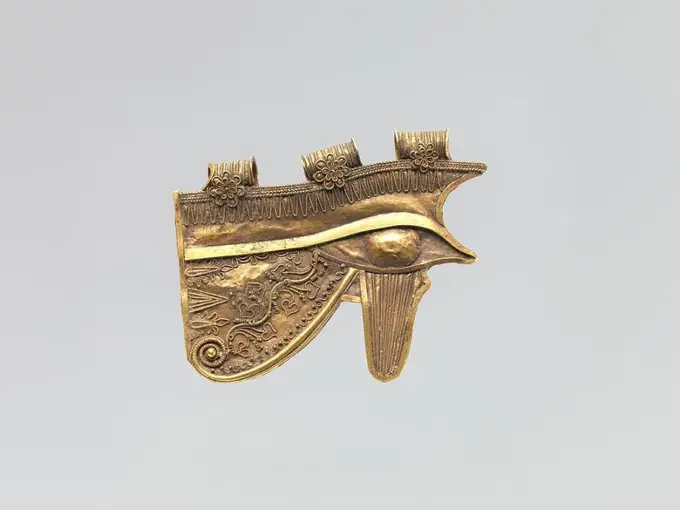
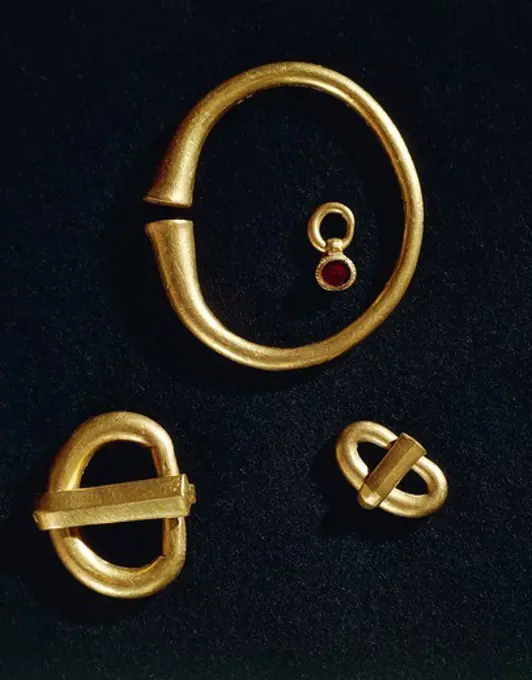
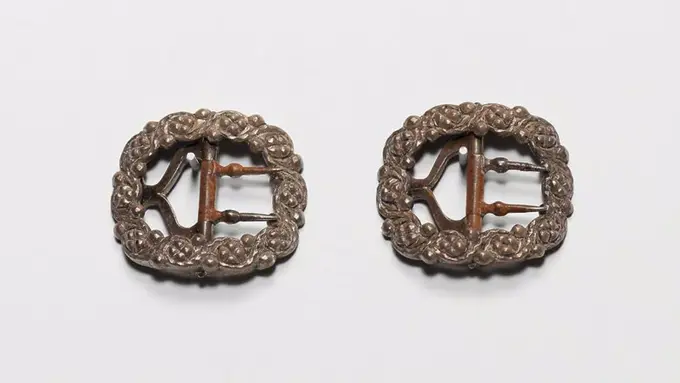
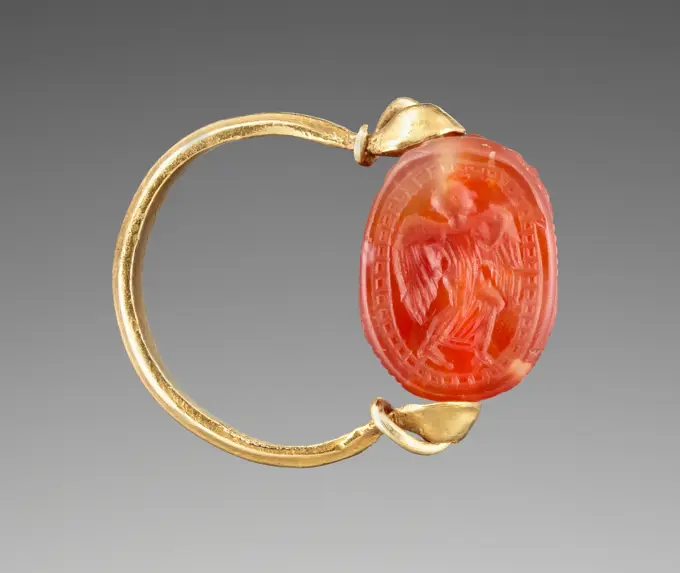
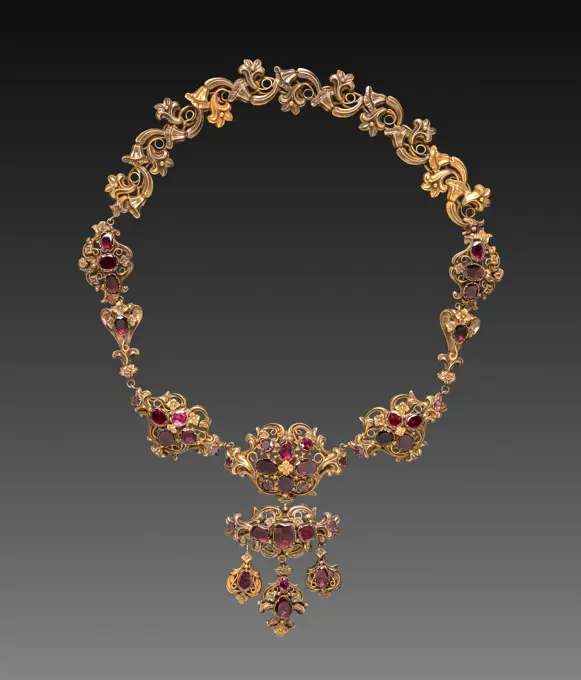
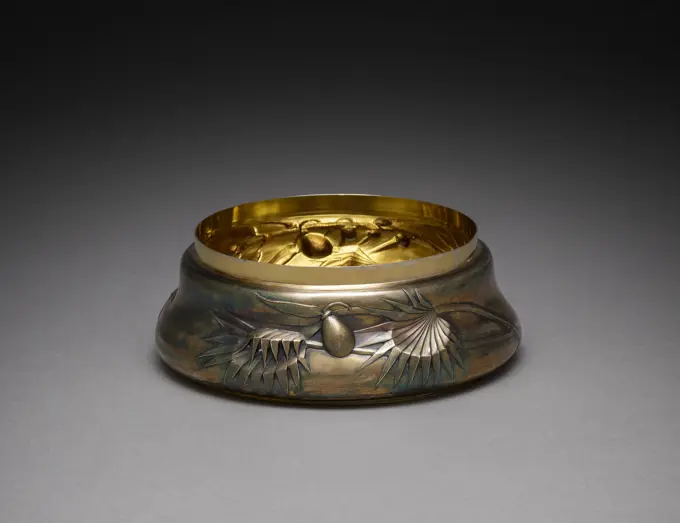
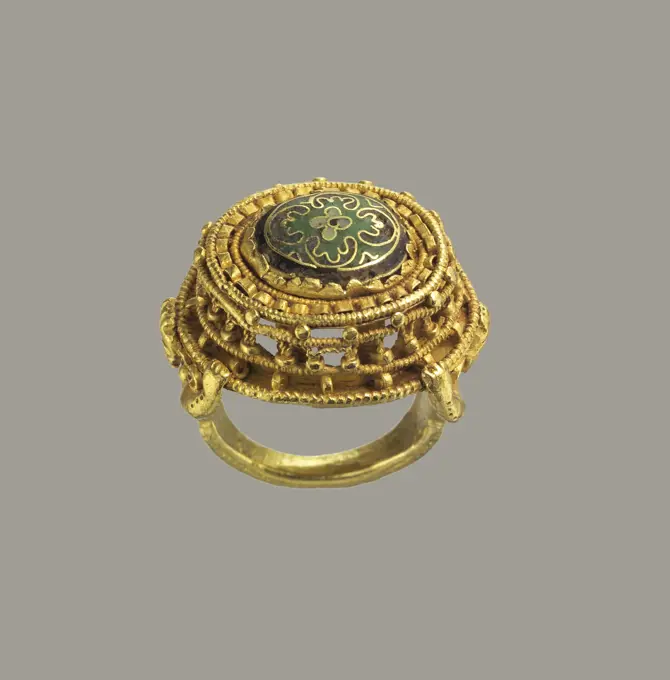
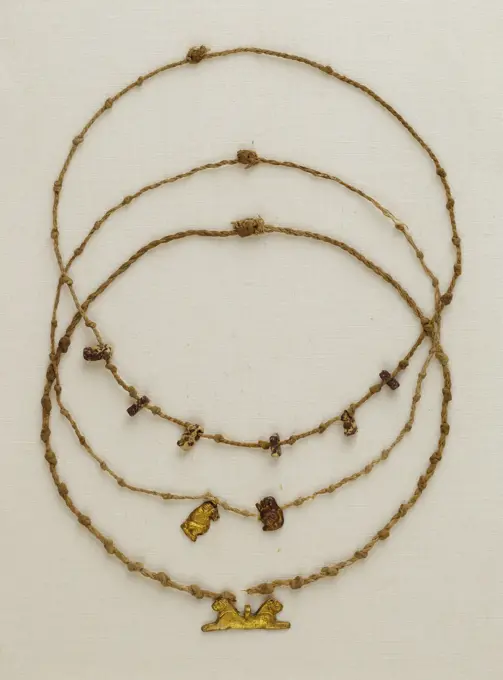
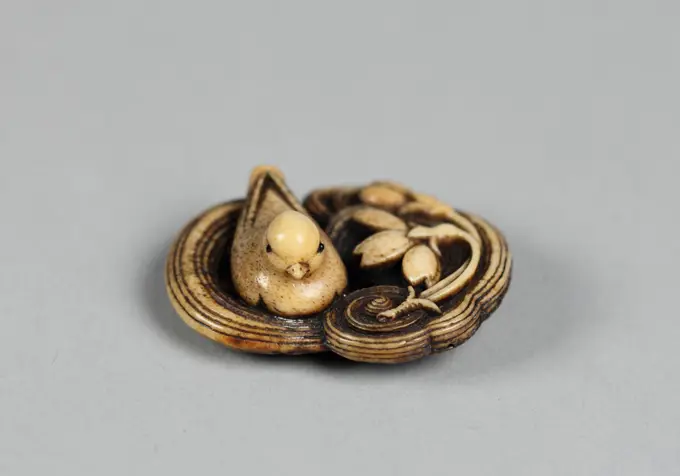
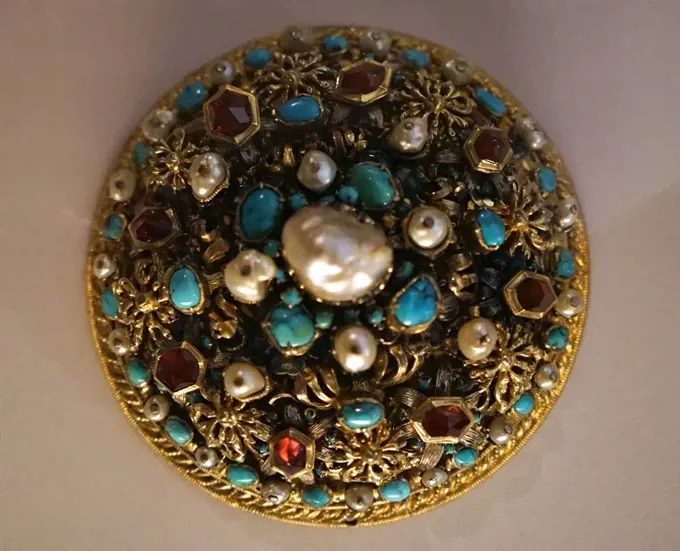
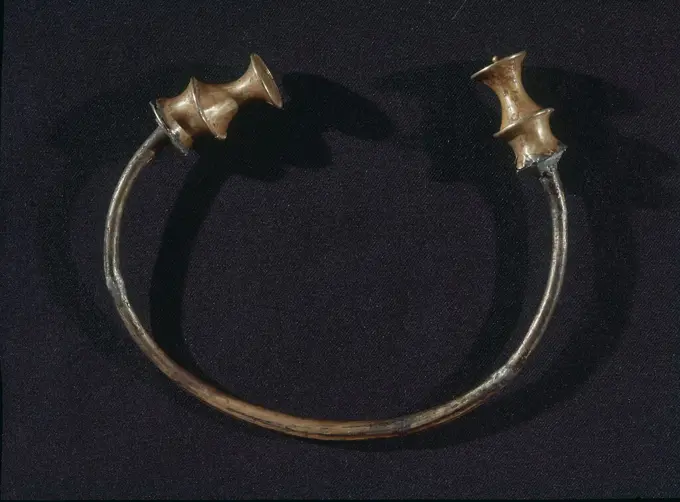
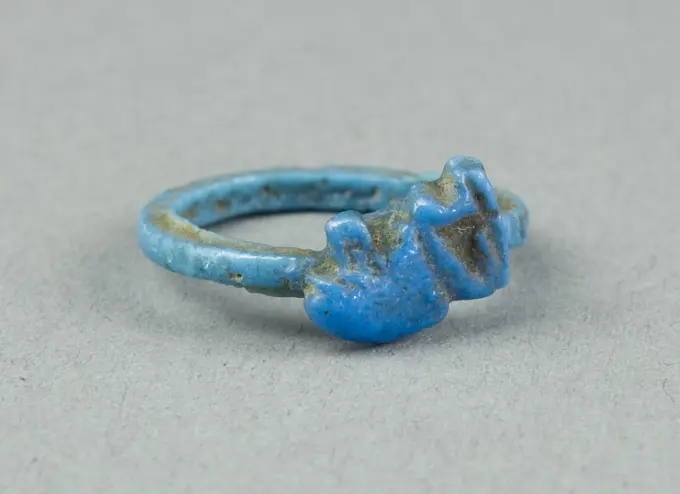
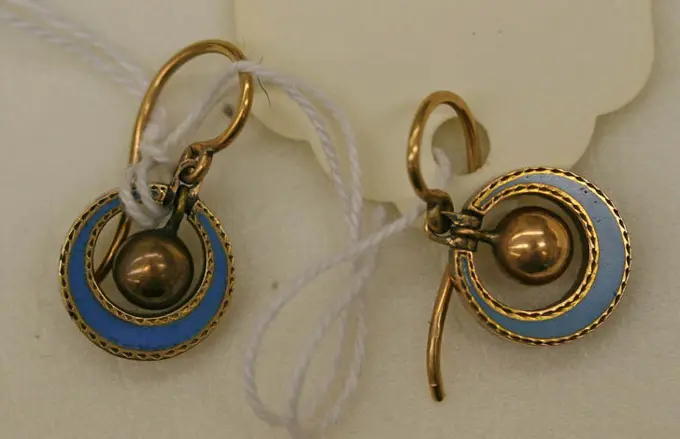
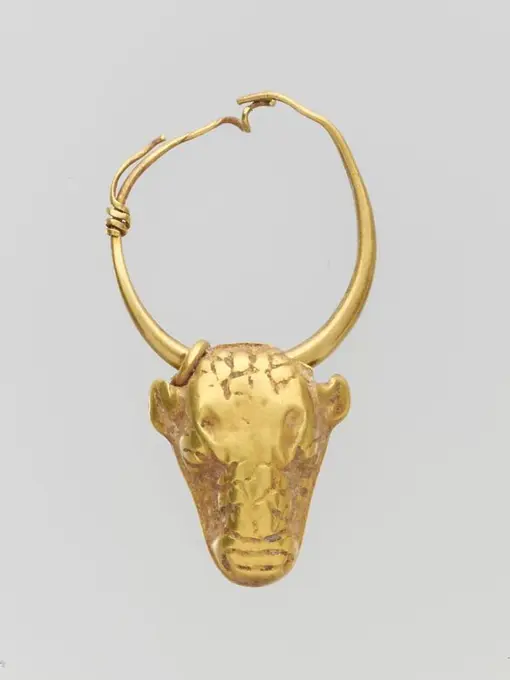
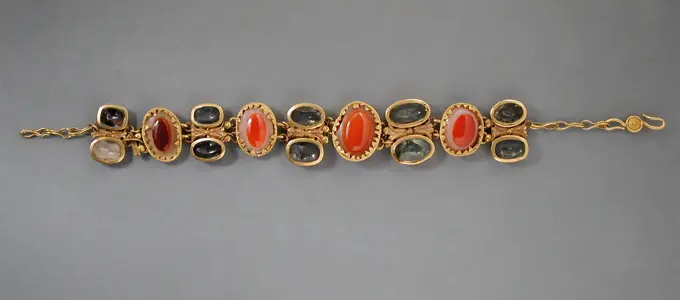
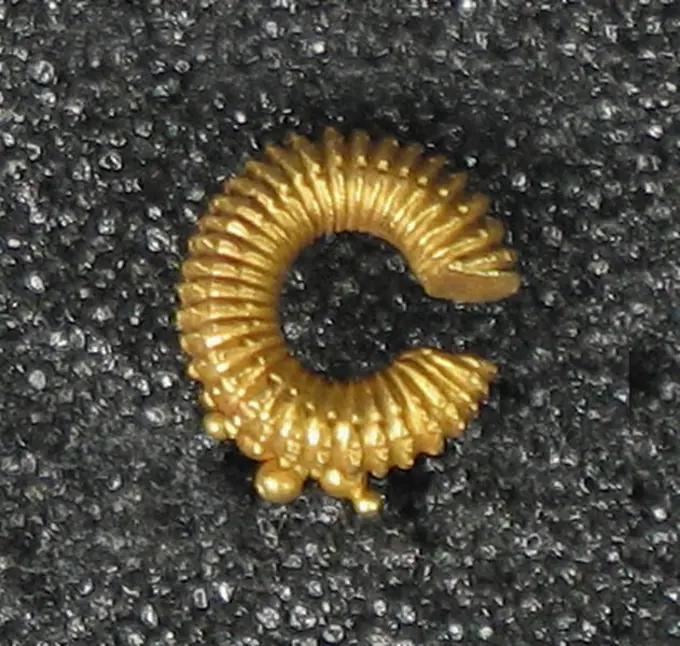
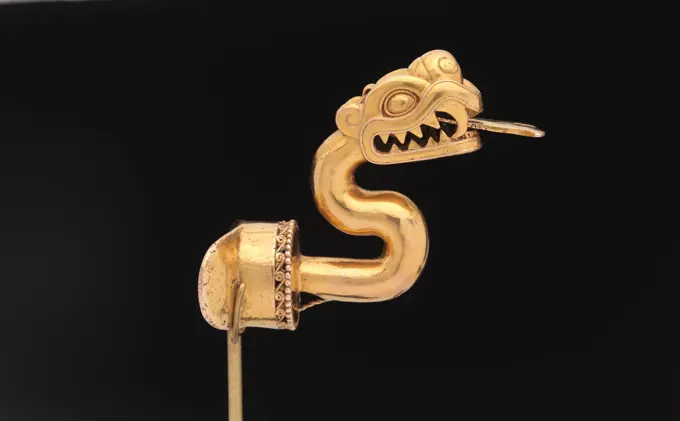
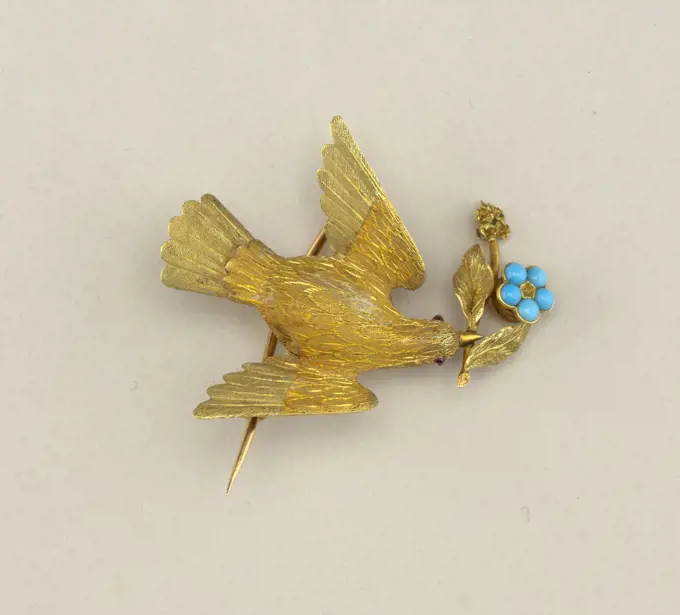
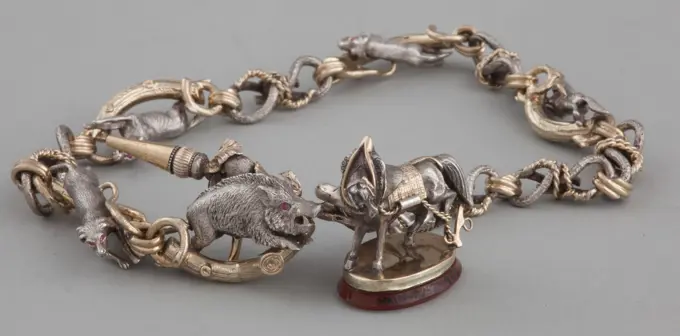
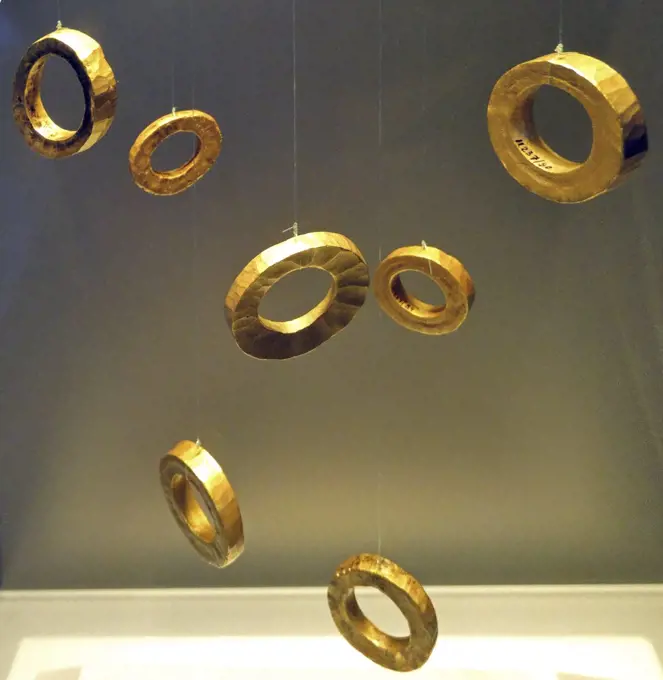
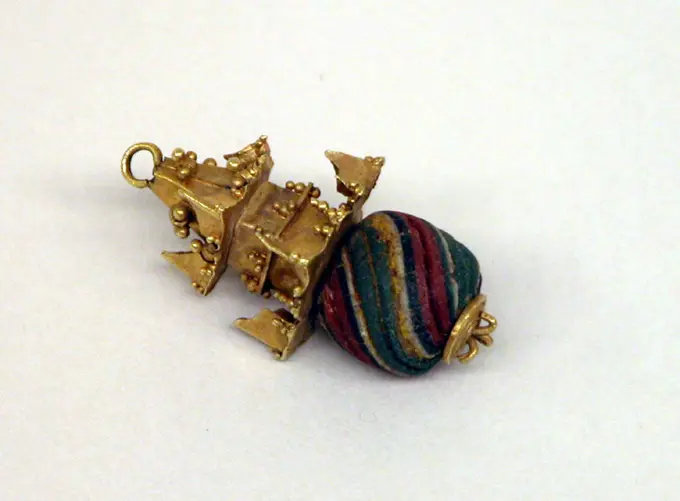
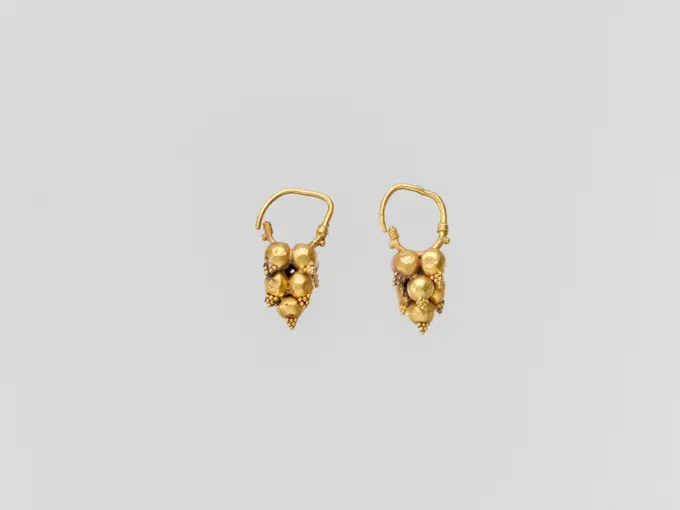
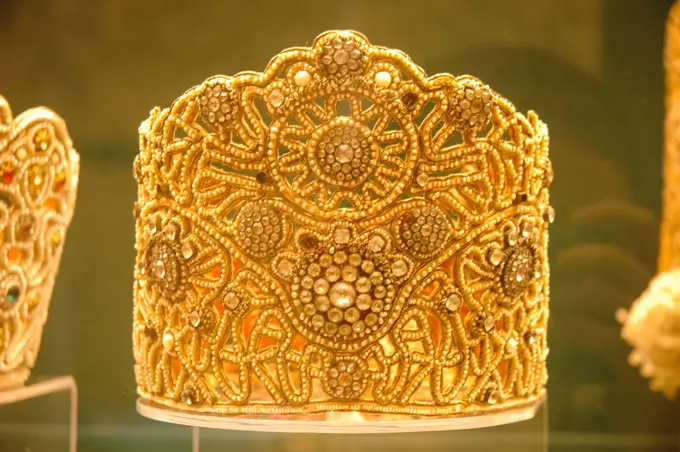
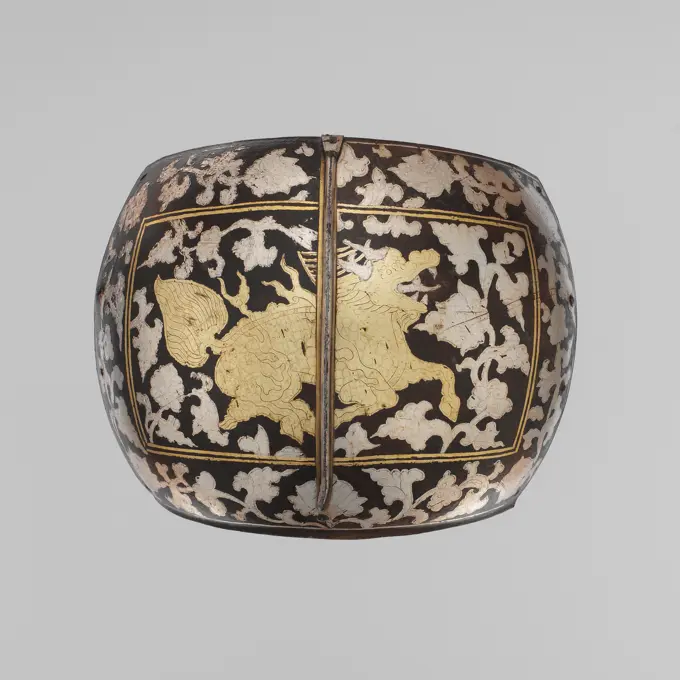
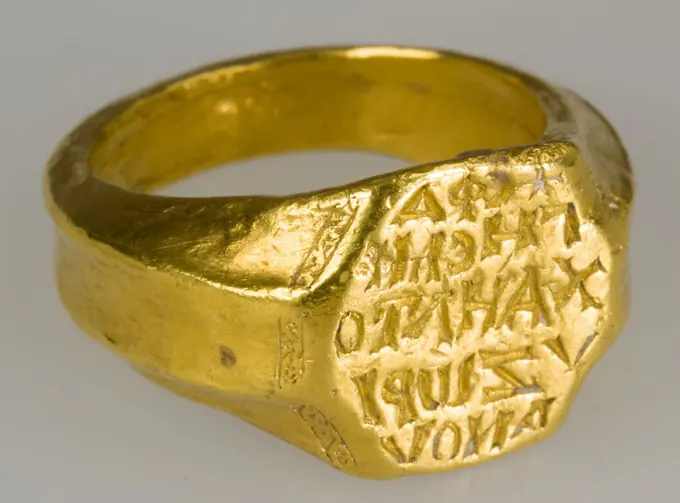
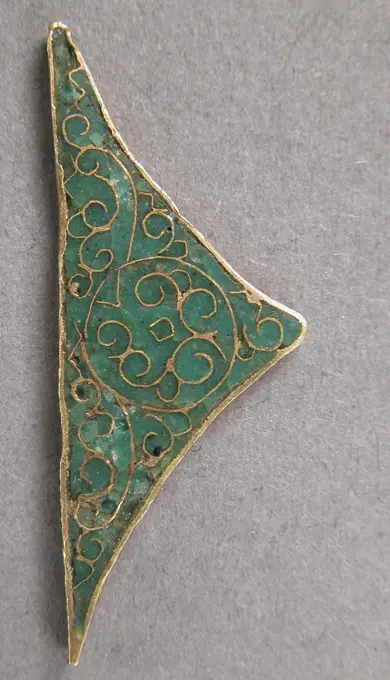
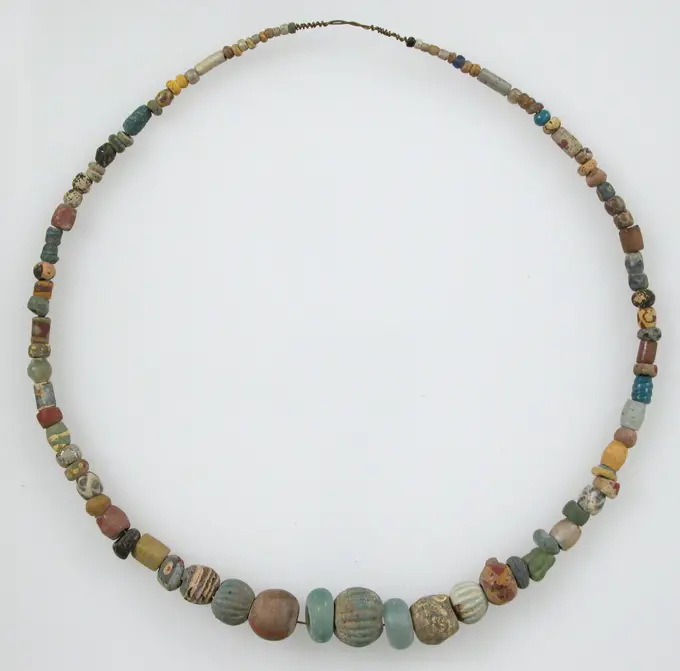
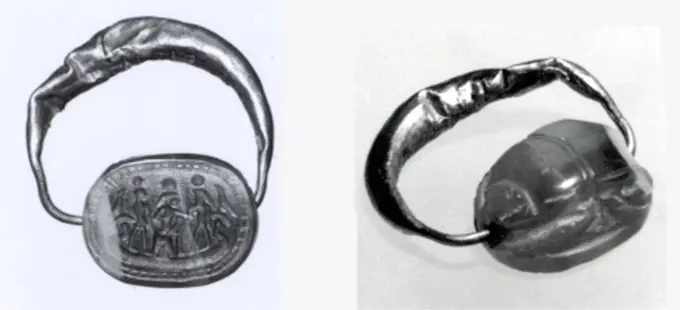
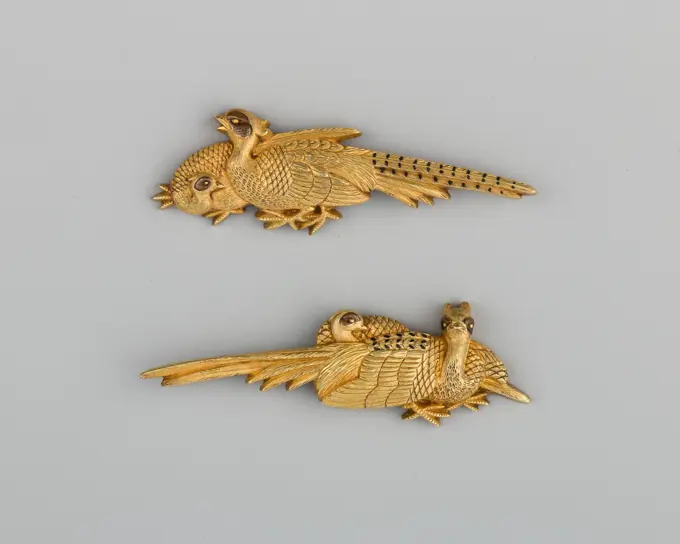
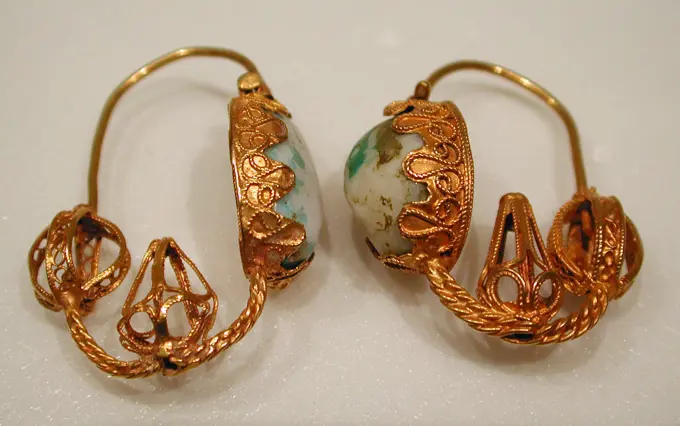
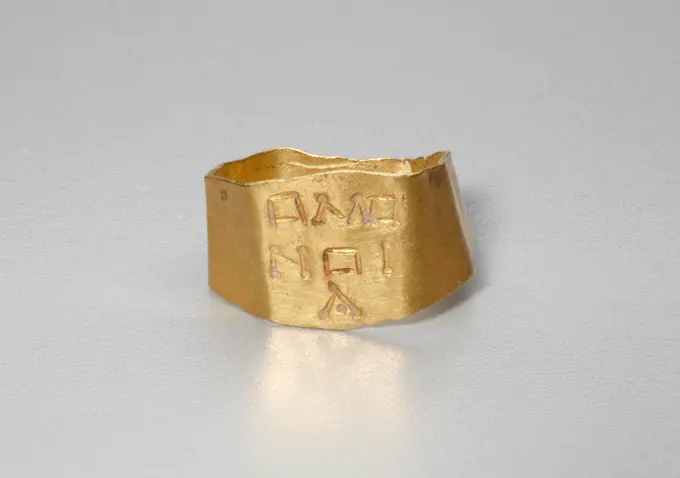
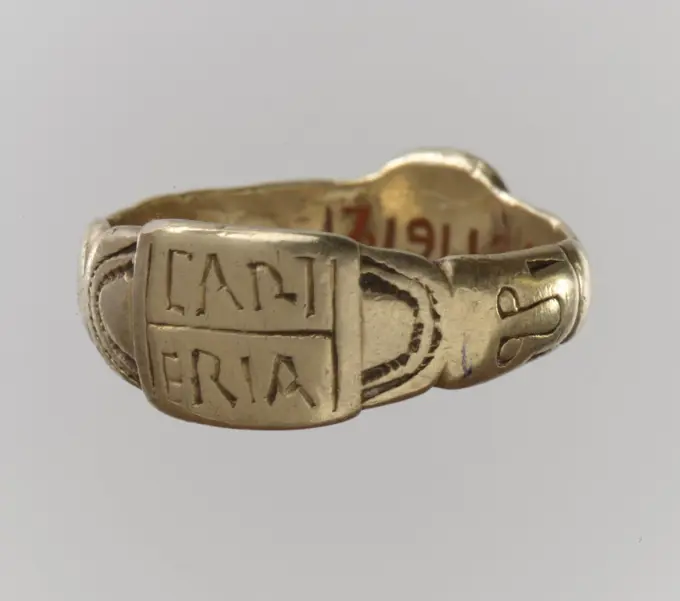
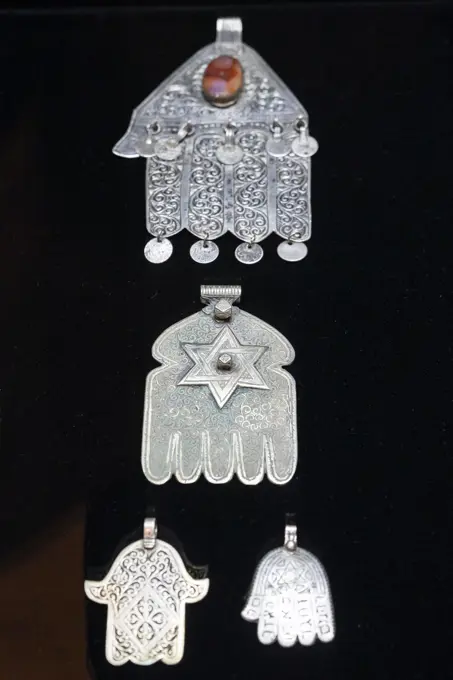
Carnavalet Museum, Medals CollectionSword-Grip Ornaments (Menuki) 17th century Got Teij (Mitsumasa) Japanese These menuki feature a design of a dragon and a tiger.. Sword-Grip Ornaments (Menuki). Japanese. 17th century. Gold. Sword Furniture-MenukiPair of gold earrings with Ganymede and the eagle ca. 330-300 B.C. Greek These superb earrings consist of a large honeysuckle palmette below which hangs a finely worked three-dimensional figure of the Trojan prince Ganymede in the clutches of Zeus, who has assumed the guise of an eagle. Coveted by Zeus for his beauty, Ganymede was carried off to Mount Olympos to be a cup-bearer for the gods. The pendants are sculptural masterpieces in miniature, which no doubt reflect in their basic conception a famous large-scale bronze group of the same subject, made by Leochares in the first half of the fourth century B.C. The airborne theme is ingeniously adapted here to an object that hangs freely in space.. Pair of gold earrings with Ganymede and the eagle. Greek. ca. 330-300 B.C.. Gold. Classical. Gold and SilverFlower-Shaped Clothing Plaque 7th-9th century China (Xinjiang Autonomous Region, Central Asia) The nomadic communities of Central Asia used such plaques to embellish clothing and horse trappings. As these nomadic cultures herded animals and were constantly moving, their artistic production was expressed in portable objects that marked the wearers status and wealth. The outstanding preservation of these fragile ornaments suggests they were used in conjunction with burials, where the body was aggrandized with valuable textiles and augmented with gold. Although it is difficult to date and place these objects geographically, their presence in Central Asia and has a long, established history.. Flower-Shaped Clothing Plaque 65221Gold ring with inscribed bezel 1st century B.C.-3rd century A.D. Roman. Gold ring with inscribed bezel. Roman. 1st century B.C.-3rd century A.D.. Gold. ImperialEar Clip in the Shape of a Starfruit Second half of the 8th-second half of the 10th century Indonesia (Java). Ear Clip in the Shape of a Starfruit 49948MountNecklace andearrings.  Manufacturer: Trifari, American, founded 1925Earring (one of a pair) 6th-7th century Byzantine Earrings like these are found throughout the Byzantine world.. Earring (one of a pair). Byzantine. 6th-7th century. Gold, pearls. Metalwork-GoldWedjat eye with filagree ornament. Dimensions: H. 4.5 cm (1 3/4 in); W. 5.5 cm (2 3/16 in). Date: 332-30 B.C..This amuletic wedjat eye is a hollow construction beautifully decorated with vegetal ornament - rosettes, garlands, leaves, and tendrils. The ornament is created with granulation and various types of decorative wires. Three loops at the top would permit the wedjat to be suspended. The deformation of the left hand loop, in particular, suggests that this jewel saw a lot of use. Museum: Metropolitan Museum of Art, New York, USA.Ring with Oval-Shaped Red Stone Second half of the 8th-second half of the 10th century Indonesia (Java). Ring with Oval-Shaped Red Stone 50131Earring, crescent-shaped. Earring, crescent-shaped. Gold. Gold and SilverPair of Twisted Wire EarOrnamentsBarbarian civilizations, France, 5th century. Goldsmith's art. Treasure of Pouan, princely burial of a Germanic warrior. Gold bracelet and belt buckles.Pair of Buckles. England. Date: 1775-1799. Dimensions: 2.4 × 2.1 cm (15/16 × 13/16 in.). Silver and steel. Origin: England. Museum: The Chicago Art Institute, Chicago, USA.Scarab. UnknownNecklace, c. 1840. Germany, possibly, 19th century. Gold and jewels; pendant: 8.2 cm (3 1/4 in.); chain: 45.9 cm (18 1/16 in.).Box, c. 1850-1900. Ingeborg Plockross-Iminger (Danish, 1872-1962), Bing & Grøndahl (Danish, est. 1853). Porcelain, silver-gilt; overall: 20 x 46.6 x 21 cm (7 7/8 x 18 3/8 x 8 1/4 in.). This figure featuring three monkeys was designed by the Danish ceramicist Ingeborg Plockross-Iminger. The figure is displayed with a French silver mount that references Japonisme and Art Nouveau styles that were popular at the end of the 1800s and experienced a resurgence in the 1920s because of increased importation of Japanese goods to the West.Glass beadnecklaceRing 10th-11th century German This ring consists of multiple elements soldered together to create a rich, micro-architectural form, a feature typical of Ottonian goldsmithing. The varied techniques used in its fabrication resulted in areas of granulation, swabbed and twisted wires, and ribbons of bent wire, as well as cast, punched, and chased elements. At the center is a flowerlike ornament in cloisonné enamel. The ring bears witness to the high degree of sophistication at the court of the Ottonian emperors, who ruled central Europe from 936 until 1024.. Ring. German. 10th-11th century. Gold with cloisonné enamel. Made in Germany. Metalwork-GoldCast Gem with Scylla attacking a Sailor set into a Ring; second half of 1st century B.C; Gem: glass; ring: gold; 1.8 × 1.3 cm (11,16 × 1,2 in.)Earring rosette and pendant Greek. Earring rosette and pendant 243025Necklace with 6 Taweret amulets ca. 1000-945 B.C. Third Intermediate Period This is one of three necklaces of two-ply linen found around the neck of Henettawys mummy. Instead of beads, the linen has been knotted at regular intervals, with six Taweret amulets of red and yellow breccia added. A composite of three of the most dangerous animals in the Egyptian landscape—the hippopotamus, crocodile, and lion—Taweret was a household deity whose principal role was to protect mothers from harm during pregnancy and childbirth.. Necklace with 6 Taweret amulets 577535Earring with acorn pendant. Earring with acorn pendant 243037Bracelet, Gold, diamonds, rubies, pearls, enamel, Wide gold and enamel bracelet with 100 cabochon rubies, 55 round diamonds, and 88 half pearls., London, England, ca. 1890, jewelry, Decorative Arts, BraceletGold earring with head of a lion 4th3rd century B.C. Greek. Gold earring with head of a lion 242925Ring with Square Bezel and Javanese Calligraphy 8th-12th century Indonesia (Central Java). Ring with Square Bezel and Javanese Calligraphy. Indonesia (Central Java). 8th-12th century. Gold. JewelryNetsuke of Bird on her Nest 19th century Japan. Netsuke of Bird on her Nest. Japan. 19th century. Ivory. Edo (1615-1868) or Meiji period (1868-1912). Netsuke17th Century clasp from Romania, set with pearls, turquoise and faceted garnets. Dated 1600Curled EarOrnamentPrince's grave in the vaulted tomb beneath the Basilica's south nave. Biskupija-Crkvina. Croatia. Museum of Croatian Archaeological Monuments, Split, Croatia.MountGoldsmith's art, Italy, 19th century. Fortunato Pio Castellani (1794-1865), gold and agate demi parure, 1820-1830.Gold spiral 7th-6th century B.C. Etruscan With four revolutions; ornamented with beading.. Gold spiral 245945Slide Guard dated 1650 Italian. Slide Guard. Italian. dated 1650. Brass. Miscellaneous-Buckles & OrnamentBracelet.  Manufacturer: Trifari, American, founded 1925CULTURA DE LOS CASTROS - ALLER - TORQUES. Location: MUSEO ARQUEOLOGICO-COLECCION. Oviedo. ASTURIAS. SPAIN.Gold earring with convex disc. Culture: Roman. Dimensions: Other: 1 1/16 in. (2.7 cm). Date: 2nd century A.D..Convex disc in front of the fastening. Museum: Metropolitan Museum of Art, New York, USA.Ear Clip with Vajra Mounting Second half of the 8th-second half of the 10th century Indonesia (Java). Ear Clip with Vajra Mounting 50048Ring Figure of Seated Baboon (Thoth) 1390 BCE Egypt. Faience . Ancient EgyptianGold bracelet from ancient Egypt.Monster-Mask Fitting with Ring Handle Artist's working dates 206 BCE-220 CE China. Gilt bronze .Earrings 1875 American. Earrings 124280Gold pendant in the form of a bull's head. Culture: Cypriot. Dimensions: L. 11/16 in. (1.8 cm). Date: ca. 1600-1050 B.C..Most of the raw materials for Cypriot jewelry came from the East. Gold became plentiful in the Late Bronze Age, when Syria and Egypt were the primary sources. These earrings are a Cypriot creation, an ornament in the form of a bull's head. Museum: Metropolitan Museum of Art, New York, USA.Bracelet. Eastern Mediterranean, Roman, circa 1st-2nd century A.D.. Jewelry and Adornments; bracelets. Gold-mounted crystal and sardonyxCast Earring with Granulation 8th-12th century Indonesia (Central Java). Cast Earring with Granulation. Indonesia (Central Java). 8th-12th century. Gold. JewelrySerpent Labret with Articulated Tongue A.D. 1300-1521 Aztec Superbly crafted in the shape of a serpent ready to strike, this labreta type of plug inserted through a piercing below the lower lipis a rare survival of what was once a thriving tradition of gold-working in the Aztec Empire. Gold, in Aztec belief, was teocuitlatl, a godly excrement, closely associated with the sun’s power, and ornaments made of it were worn by Aztec rulers and nobles. Historical sources describe a variety of objects made of gold, including a serpent labret sent by Hernán Cortés as a gift to the Holy Roman Emperor, Charles V, yet nearly all of these objects were melted down at the time of the Conquest and shortly thereafter, converted to gold ingots for ease of transport and trade. The serpent’s head features a powerful jaw with serrated teeth and two prominent fangs. Scales are represented in delicate relief on the underside of the lower jaw. A prominent snout with rounded nostrils rises above the maw of tPair of Sword-Grip Ornaments (Menuki). Culture: Japanese. Dimensions: Diam. of each 13/16 in. (2.1 cm); Wt. of each 0.2 oz. (5.7 g). Date: 18th century. Museum: Metropolitan Museum of Art, New York, USA.NotBird brooch, Gold, turquoise, England, ca. 1850, jewelry, Decorative Arts, Brooch, BroochModern reconstruction of ancient pendants and beads 7th-5th century B.C. Italic or Etruscan Reconstructed necklace of amber pendants and beads.. Modern reconstruction of ancient pendants and beads 256114String of Beads, 1st-5th century, 7 3/4 x 1/2 x 1/2 in. (19.7 x 1.3 x 1.3 cm), Glass, Ptolemaic Egypt, 1st-5th centuryNecklace of gold and carnelian beads, with gold-capped carnelian pendant. Culture: Cypriot. Dimensions: Length (73 elements): 15 1/4 in. (38.7 cm) (37 gold, 35 carnelian elements, 1 pendant)pendant: 1 7/16 × 1/2 in. (3.6 × 1.3 cm)Diameter (large carnelian bead): 1/2 in. (1.2 cm)Diameter (smallest carnelian bead): 1/8 in. (0.4 cm). Date: 5th-4th century B.C.. Museum: Metropolitan Museum of Art, New York, USA.Hollow Ring, Foliate and Oval 12th-14th century Indonesia (East Java). Hollow Ring, Foliate and Oval 64423Earrings ca. 9th century B.C. Iran This pair of earrings is made of gold coils and granulation. They are among the thousands of artifacts of terracotta, bronze, iron, gold, silver, and ivory which were recovered from monumental buildings at the site of Hasanlu in northwestern Iran. Hasanlu is best known for its early first-millennium B.C. occupation. At that time, it was a major local center of commerce and artistic production with close ties to other political and creative centers of the Near East. In 1957, the University Museum of the University of Pennsylvania initiated large-scale excavations at the site with the Iranian Archaeological Service. The Metropolitan Museum of Art co-sponsored the excavations from 1959 to 1977 and received a share of the finds. Many of these objects are now on display in the Museum. Hasanlu was settled from the sixth millennium B.C. through the Achaemenid Persian period of the fifth and fourth centuries B.C., as well as later in the thirteenth and fourteFive tumorsGolden disk. 1000-801 BC. Late Bronze Age. Extremadura. National Archaeological Museum. Madrid. Spain.Ring Head of Hathor 1390 BCE Egypt. Faience . Ancient EgyptianScarab with a Warrior Looking at his Helmet. UnknownStar shaped EarOrnament, mid-7th to 10thcentury, Gold; cast, 1.625 × 1.455 cm, 4.794 g (5/8 × 9/16 in., 4.794g), Made in Java, Indonesia, Java, 7th-10thcentury, JewelryVest button of metal, anonymous, c. 1900 - c. 1940 Round vest button of metal. Netherlands (possibly) metal Round vest button of metal. Netherlands (possibly) metalJewelry from Indian Arts and Crafts Board displayWatch chain with sealing piston and keyCirclets from Nahal Qanah Cave, Western Samaria from 6,500-5,500 years ago. Made from gold and electrum.Sword Pommel ca. 1400 Italian. Sword Pommel. Italian. ca. 1400. Rock crystal. Swords-AccessoriesRoundel, disk with coin impressions 4th century B.C.. Roundel, disk with coin impressions 243085Ring with Gemstone Depicting Athena HoldingNikePendant with Striated Multicolored Bead Last quarter of the 10th-last quarter of the 15th century Indonesia (Java). Pendant with Striated Multicolored Bead. Indonesia (Java). Last quarter of the 10th-last quarter of the 15th century. Gold. Eastern Javanese period. JewelryCarved Bead 19th century Japan. Carved Bead. Japan. 19th century. Ivory. OjimePeru, Pre-Inca civilization, Chimu culture, Golden vessels with turquoises, From Lambayeque treasureTear-shaped Elements 11th-12th century. Tear-shaped Elements 453019Roman false teeth in a gold setting. ITALY.Anonymous. Glass pearl bracelet. Polychrome and glass glass paste. 6th century -. Paris, Carnavalet museum. Jewel, bracelet, polychrome dough, glass pearl, archeological vestigeCorno, siglo XVIII. Museo de la Música, Barcelona.Egyptian Artifact Matchsafe; silver; 5 x 3 x 1.2 cm (1 15/16 x 1 3/16 x 1/2 in. )Gold earring with clustered spheres and pyramidal granulation 2nd-3rd century A.D. Roman Gold earrings with mulberry ornament.. Gold earring with clustered spheres and pyramidal granulation. Roman. 2nd-3rd century A.D.. Gold. Imperial. Gold and SilverKokoshnik, Element of Russian national costume of women. Russian national clothing. Kokoshnik, Element of the Russian national costume of women. Russian national clothing. Copyright: xZoonar.com/DenisxPomortsevx 16449841Knee or Shoulder Defense 13th-15th century possibly Mongolian or Chinese. Knee or Shoulder Defense 26639Gold Signet Ring of Michael Zorianos. Culture: Byzantine. Dimensions: 9/16 × 15/16 in., 0.882oz. (1.4 × 2.4 cm, 25g)Bezel: 9/16 × 1/2 in. (1.4 × 1.3 cm)Inside circumference: 2 1/4 in. (5.7 cm). Date: ca. 1300.A Michael Zorianos was the first officer of the despot of Epiros in west-central Greece and one of the founders of a church in the town of Mokista sometime around the year 1300. Perhaps this ring belonged to him and was used to seal official documents. Museum: Metropolitan Museum of Art, New York, USA.Element of an Icon Frame 11th century Byzantine. Element of an Icon Frame 464521 Byzantine, Element of an Icon Frame, 11th century, Cloisonn enamel, gold, copper, Overall: 3/8 x 1 1/16 x 1/16 in. (1 x 2.7 x 0.2 cm). The Metropolitan Museum of Art, New York. Gift of J. Pierpont Morgan, 1917 (17.190.650)Jewellery- gold necklace with amphorae shaped pendants, Athens GREECE.Beaded Necklace 500-600 Frankish. Beaded Necklace 465590 Frankish, Beaded Necklace, 500600, Glass, glazed earthenware (faience), Overall: length of string 27 3/4 x 13/16 in. (70.5 x 2.1 cm). The Metropolitan Museum of Art, New York. Gift of J. Pierpont Morgan, 1917 (17.193.264)Gold ring with chalcedony scarab 6th-5th century B.C Cypriot. Gold ring with chalcedony scarab 243553Claw set Gem BirdRingPair of Sword-Grip Ornaments (Menuki) 18th century Japanese Menuki are a pair of ornamental sword fittings attached to either side of a sword hilt.. Pair of Sword-Grip Ornaments (Menuki). Japanese. 18th century. Copper, gold, copper-gold alloy (shakud). Sword Furniture-MenukiEarring, One of a Pair 12th century Traces of bluish-green glaze can be seen on the surface of the quartz stones in these earrings in an effort to imitate turquoise. Sourced locally in Iran, turquoise was a favorite stone in the medieval period, and according to eleventh-century scholar Al-Biruni, was believed to protect from the evil eye. Glazing stones to modify their appearance is a practice that is known since antiquity and provided a more economical alternative to sourcing expensive gemstones.. Earring, One of a Pair 451066A ring for an enamel napkin  two dragons on a sapphire background unknownJewelry from Indian Arts and Crafts Board displayEngagementRingRingCOLLAR(DEPOSITO: MUSEO ARQUEOLOGICO PROVINCIAL DE CORDOBA).Earring with pendant of grapes Greek or Roman. Earring with pendant of grapes. Greek or Roman. Gold. Gold and SilverMedallionEarring 6th-7th century Langobardic or Byzantine Fashionable in Italy for at least a century before the arrival of the Langobards, earrings of the basket” variety, like the many shown in this case, quickly became part of Langobardic women’s dress.. Earring 469006RingGold Finger Ring with Inscription late 6th-early 7th century Frankish. Gold Finger Ring with Inscription 464792 Frankish, Gold Finger Ring with Inscription, late 6thearly 7th century, electrum () /gold, Overall: 3/8 x 13/16 in. (0.9 x 2.1 cm). The Metropolitan Museum of Art, New York. Gift of J. Pierpont Morgan, 1917 (17.191.104)Beaded Necklace 1st-mid-16th century Peru; north coast (). Beaded Necklace 309238Pair of Sword-Grip Ornaments (Menuki). Culture: Japanese. Dimensions: L. of each 2 in. (5.1 cm); Wt. of each 0.3 oz. (8.5 g). Date: 18th century. Museum: Metropolitan Museum of Art, New York, USA.Earrings ca. 1850 probably American. Earrings. probably American. ca. 1850. gold, garnet, pearlMoroccan hand of fatima Moroccan hand of fatima, Corral del Carbón, al-fundaq al-yadida, 14th century, Granada, Andalusia, Spain Copyright: xZoonar.com/BartomeuxBalaguerxRotgerx 21956768