Ancient Keys and Fasteners

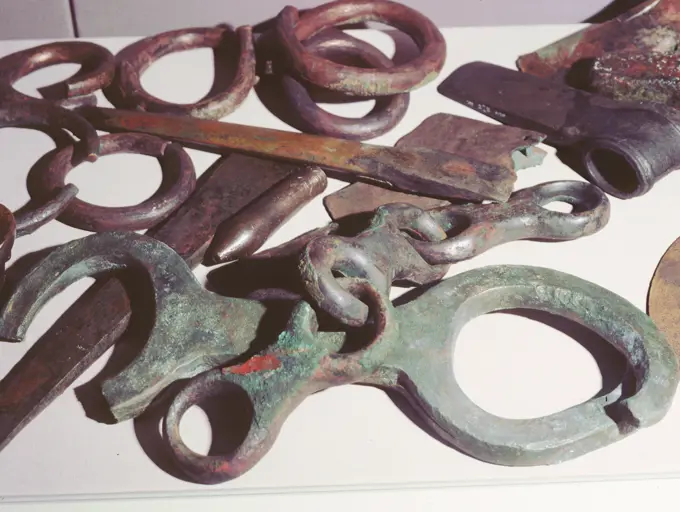
A collection of antique keys and fasteners made from metal, showcasing historical designs and craftsmanship from ancient times.
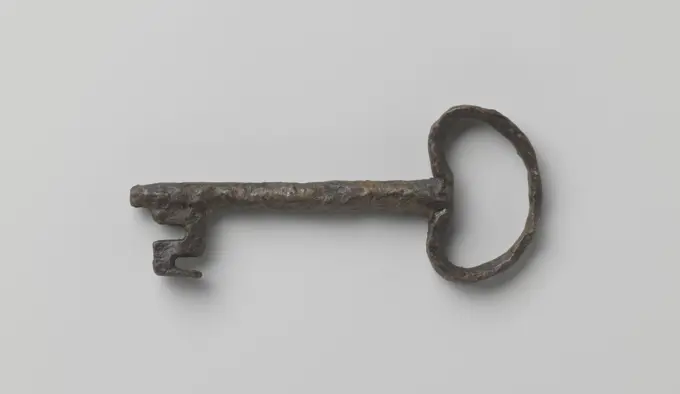
Key, c. 1500 - c. 1600 Key with bean -shaped eye and small crochet -shaped beard. The shaft runs past the beard.  iron (metal) Key with bean -shaped eye and small crochet -shaped beard. The shaft runs past the beard.  iron (metal)
Key, c. 1500 - c. 1600 Key with bean -shaped eye and small crochet -shaped beard. The shaft runs past the beard. iron (metal) Key with bean -shaped eye and small crochet -shaped beard. The shaft runs past the beard. iron (metal)
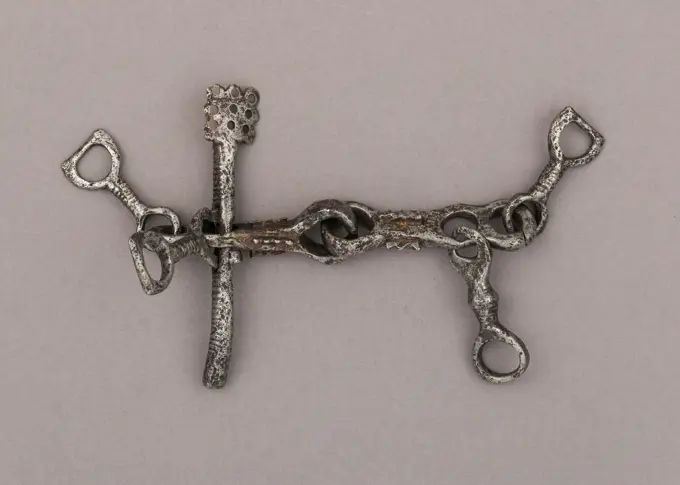
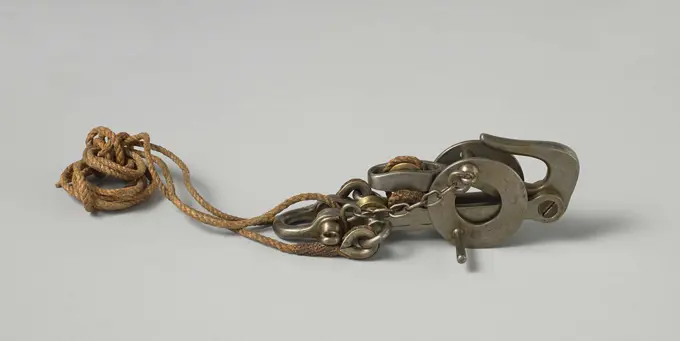
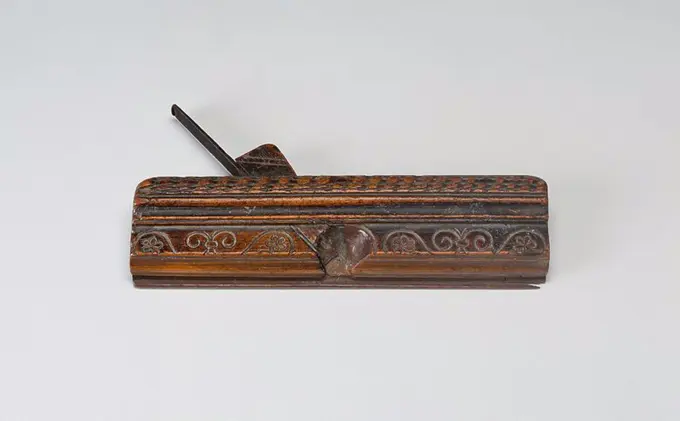
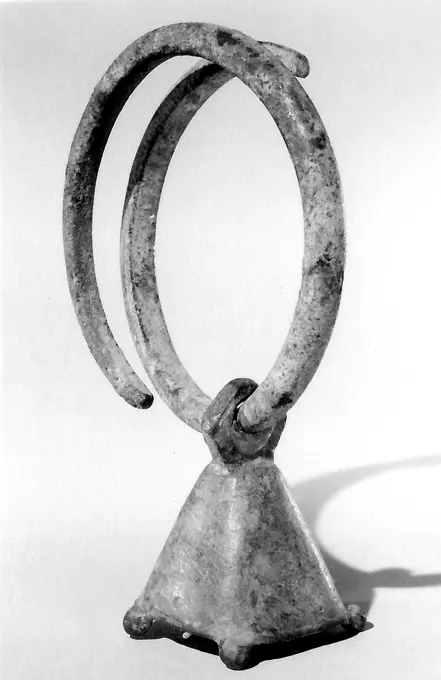
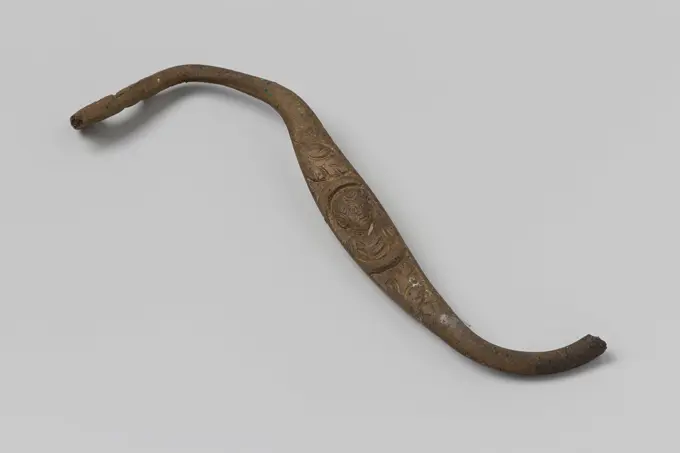
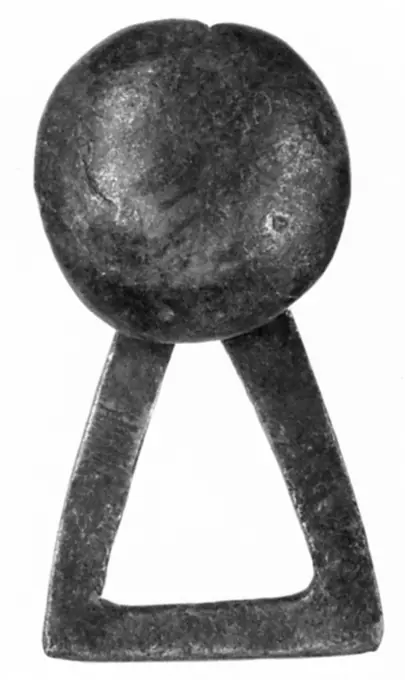
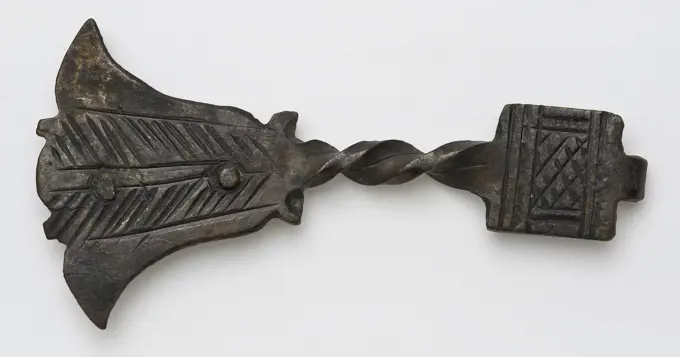
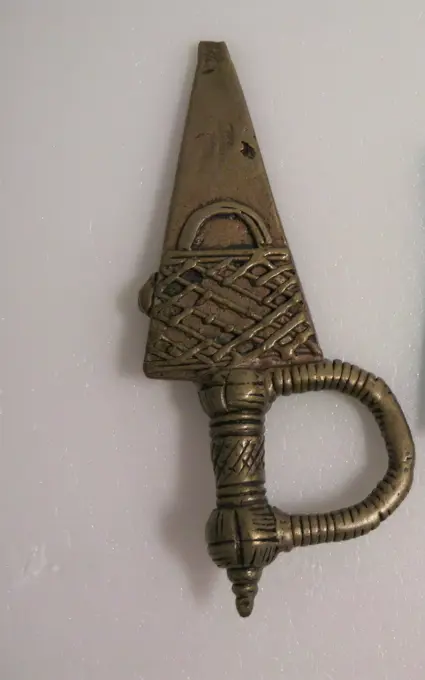
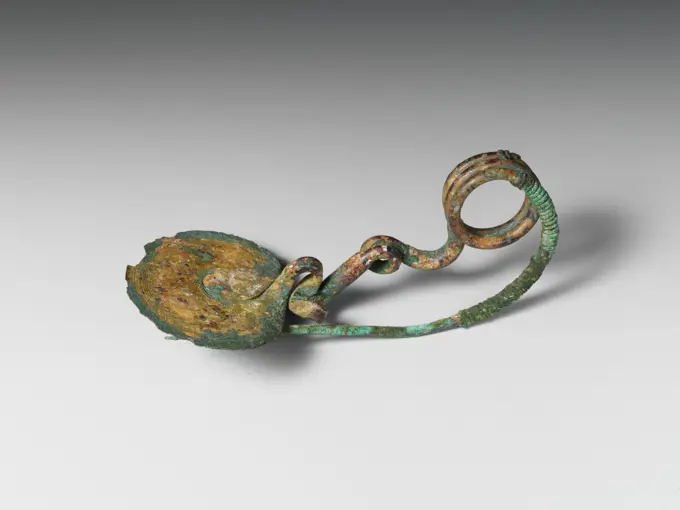
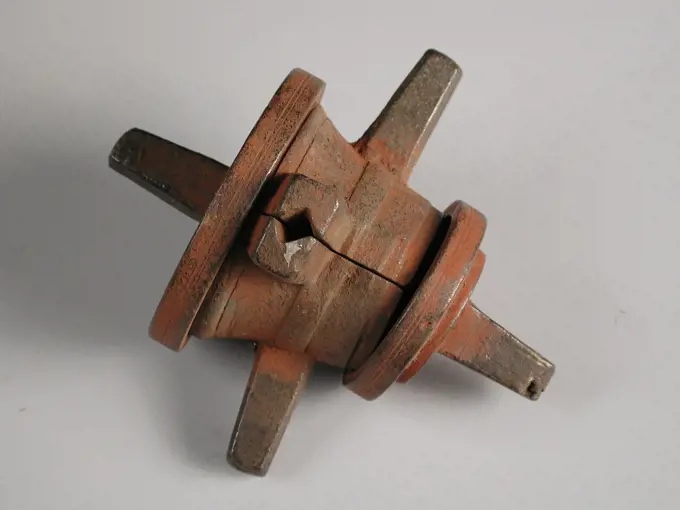
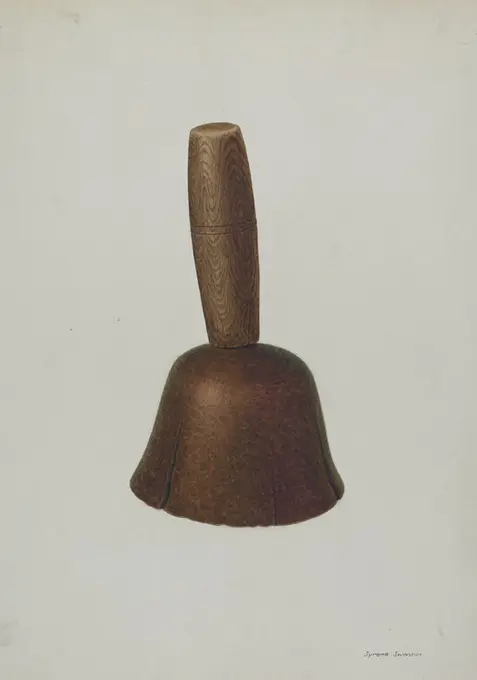
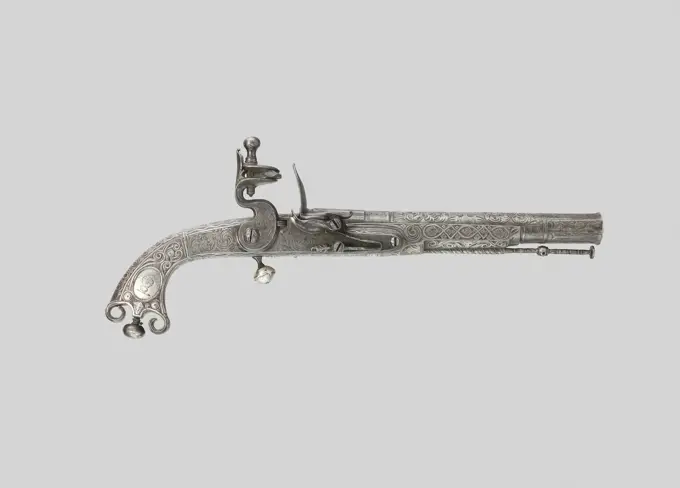
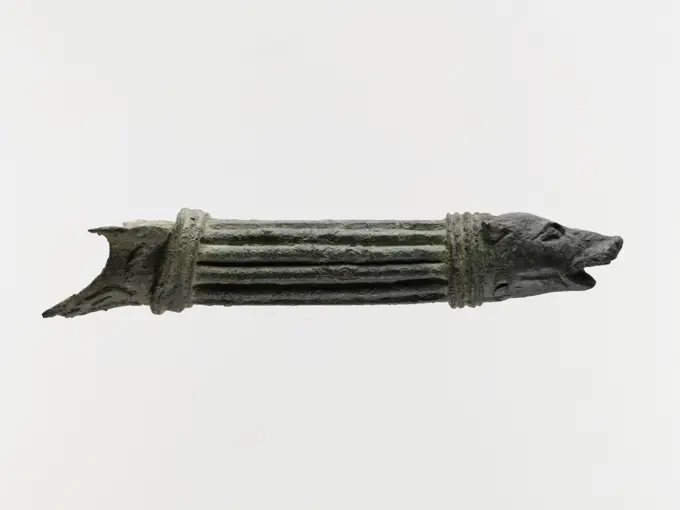
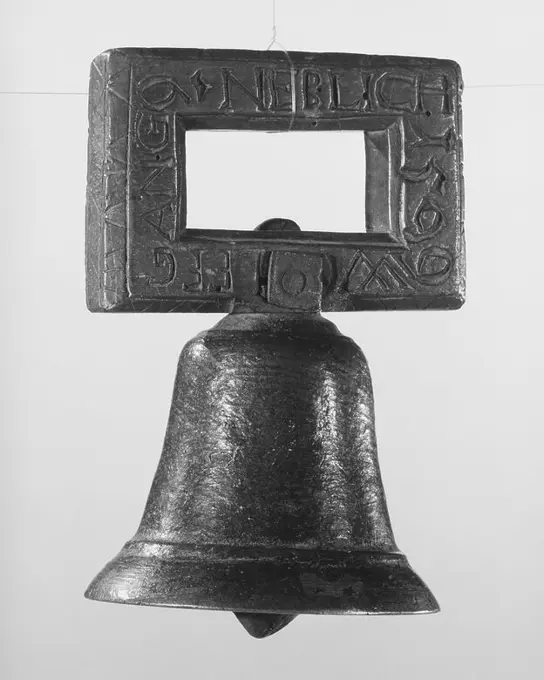
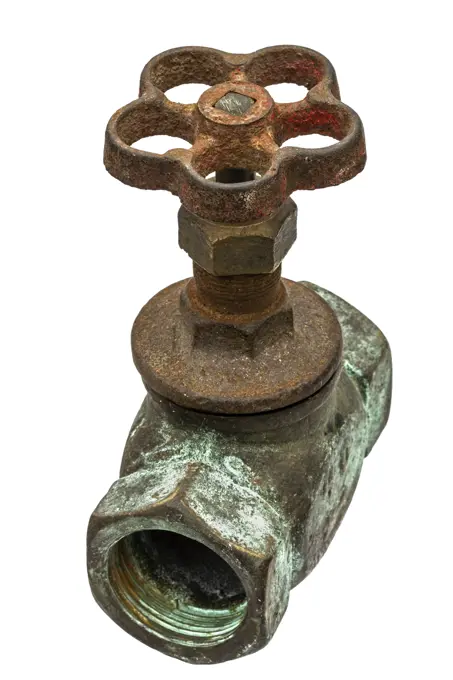
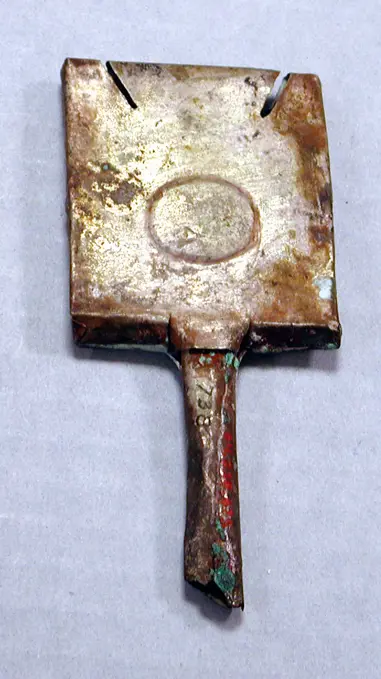
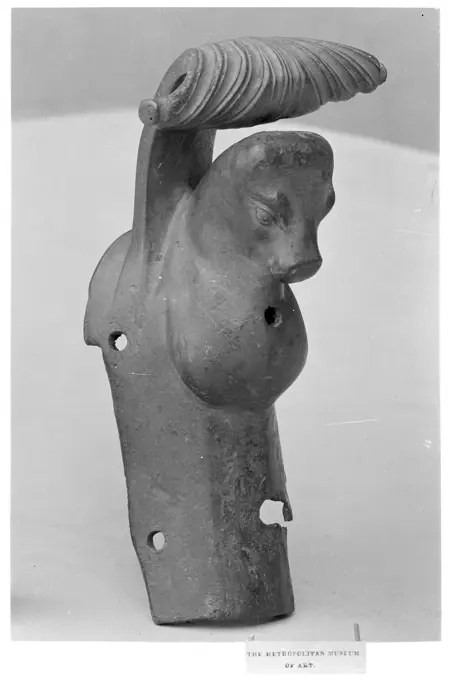
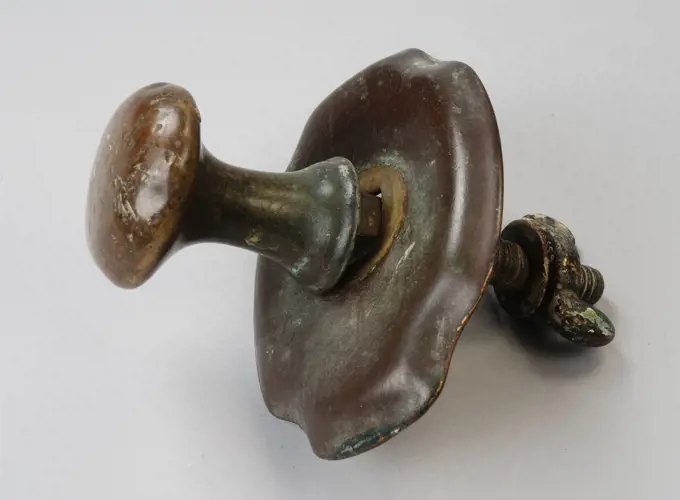
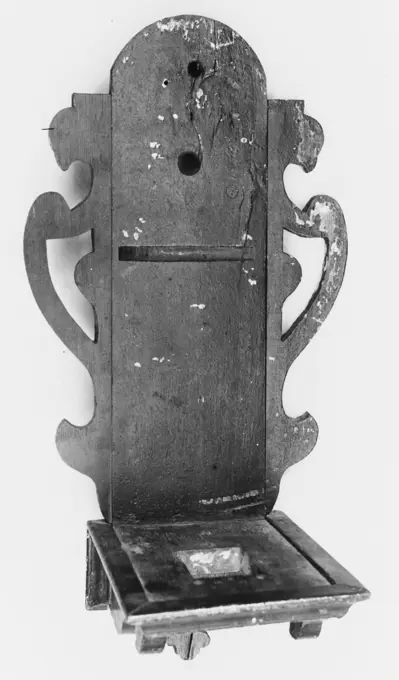
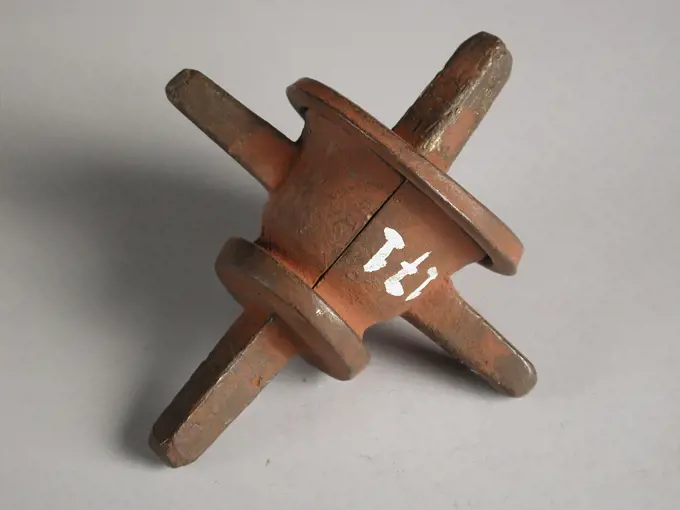
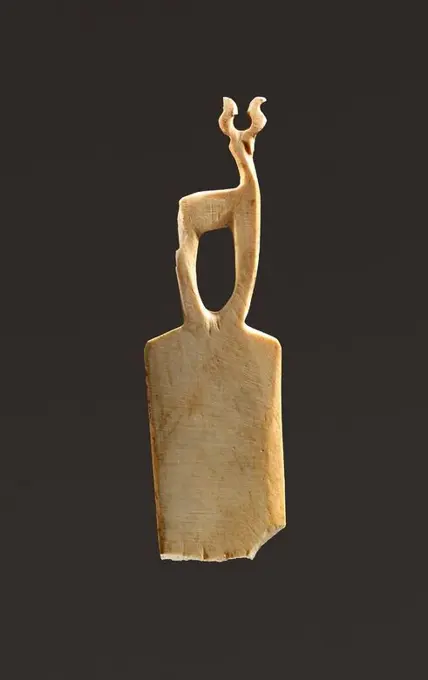
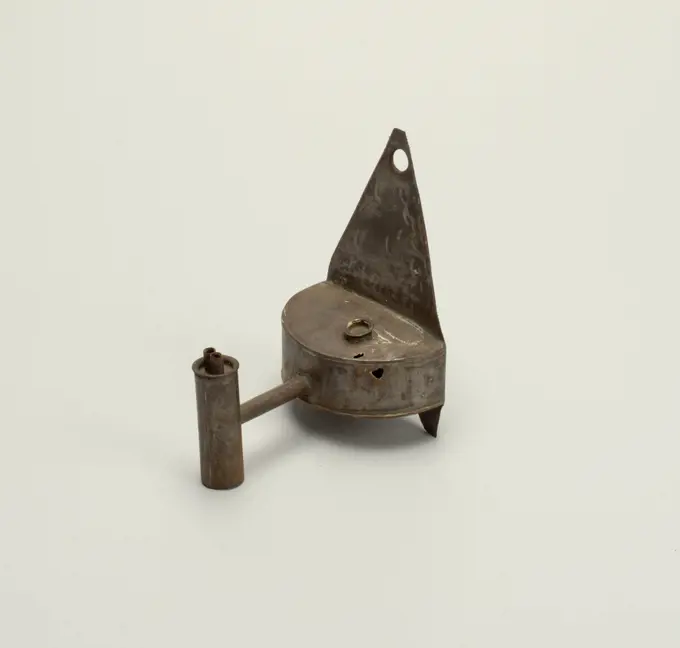
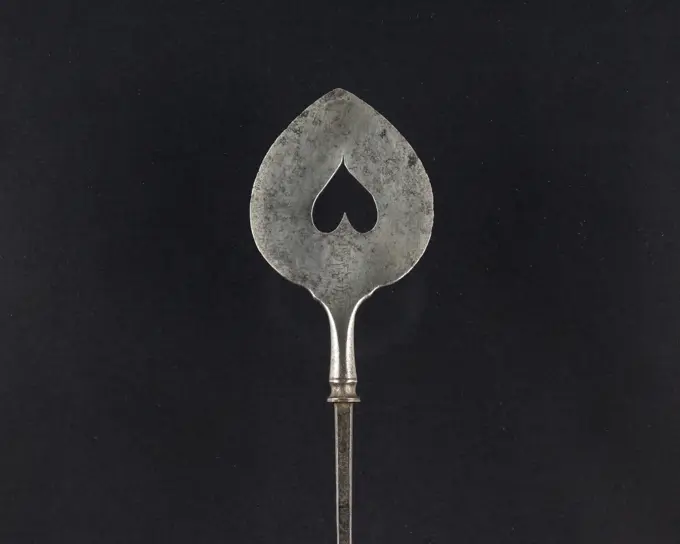
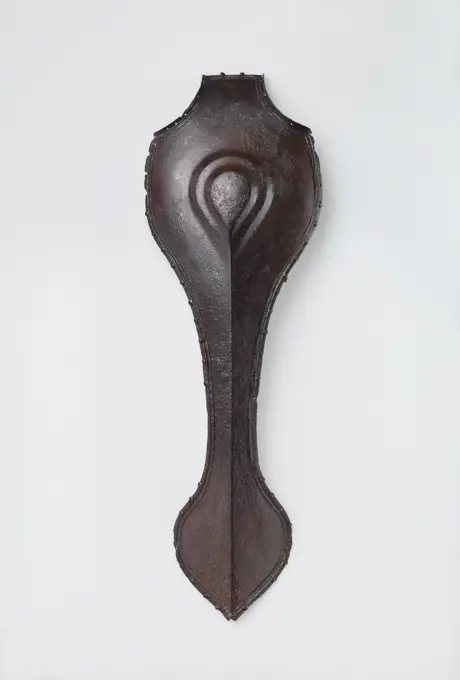
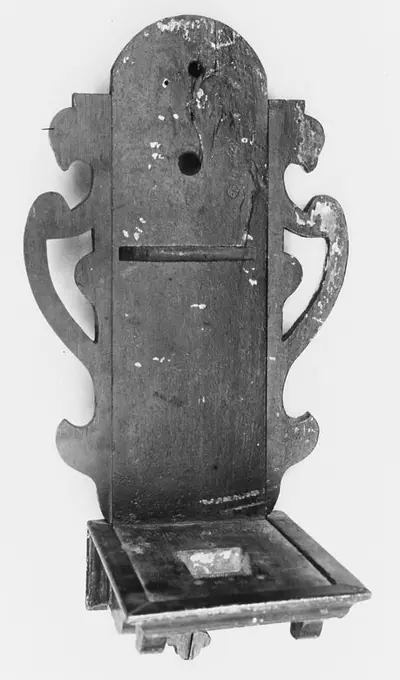
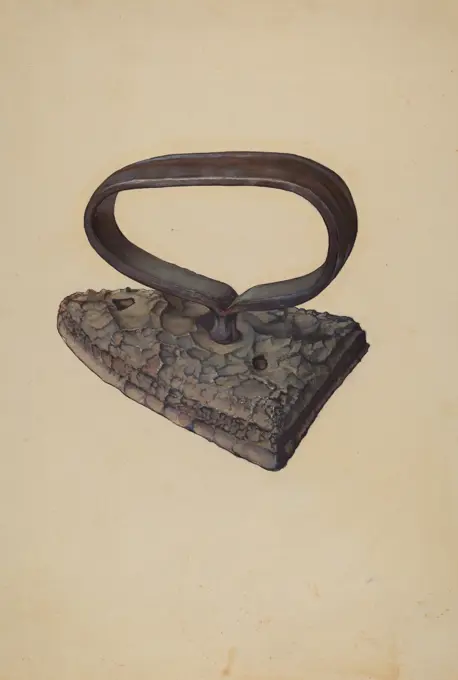
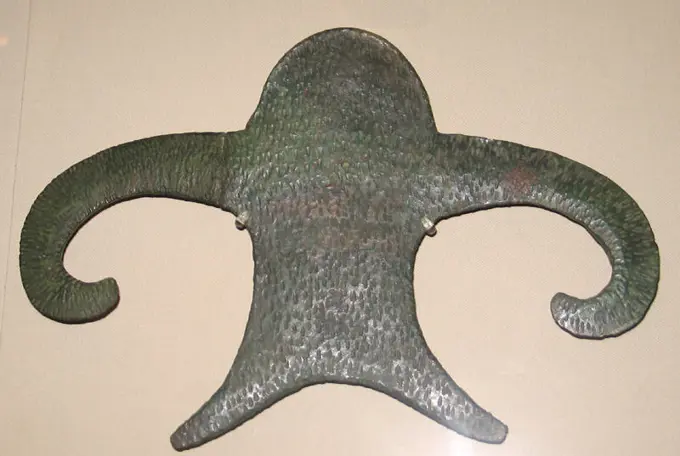
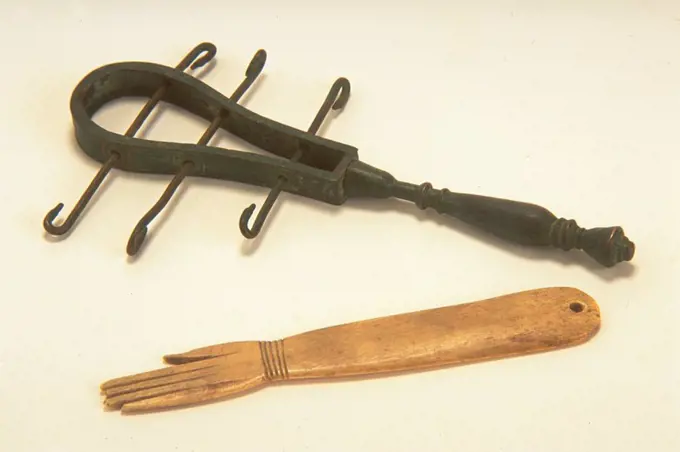
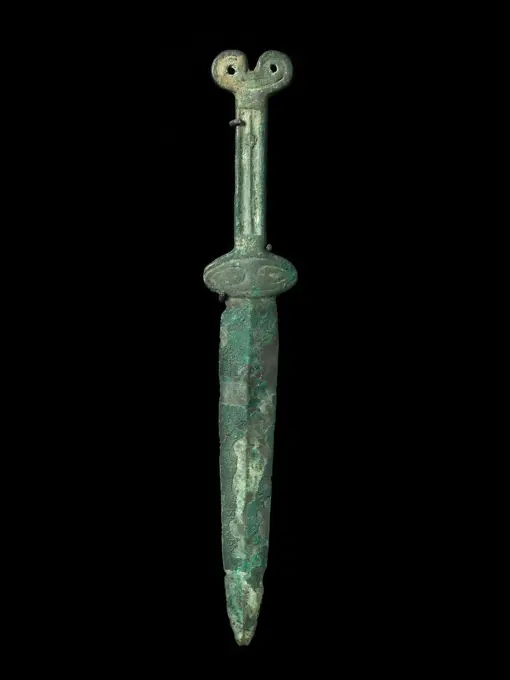
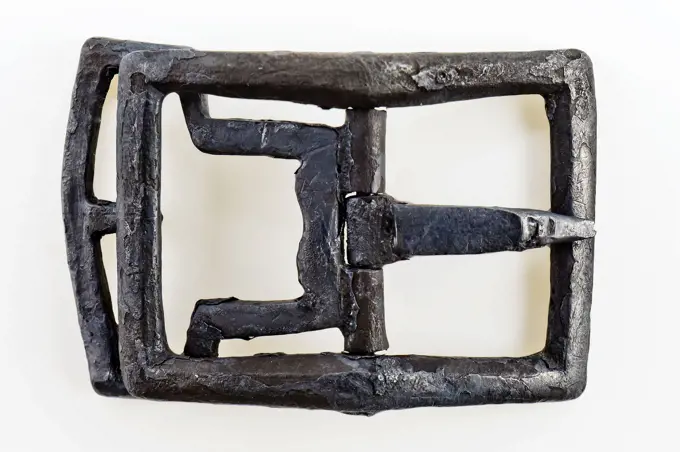
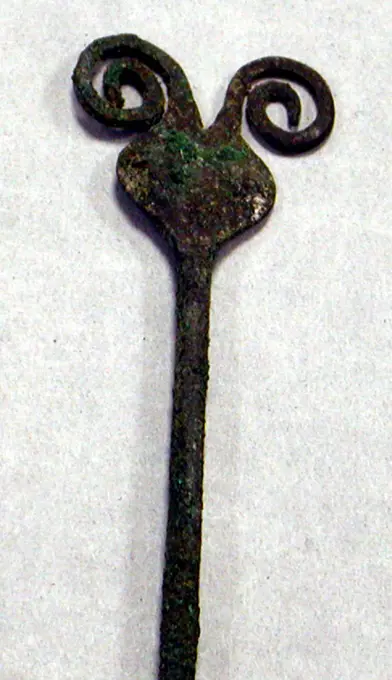
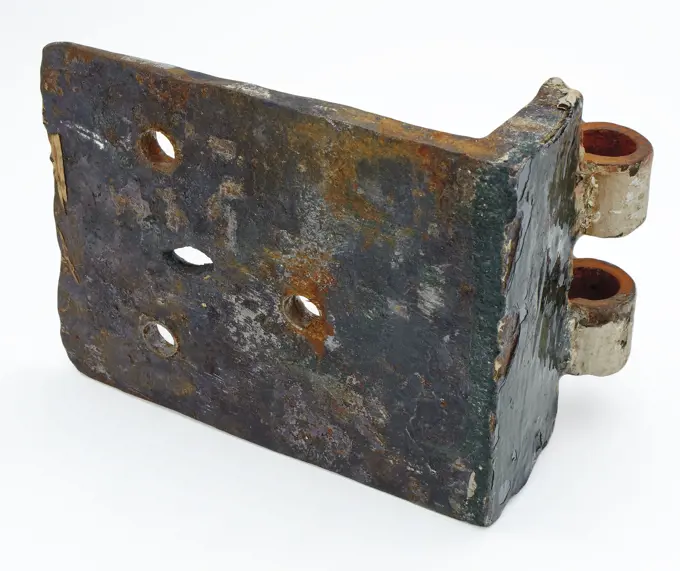
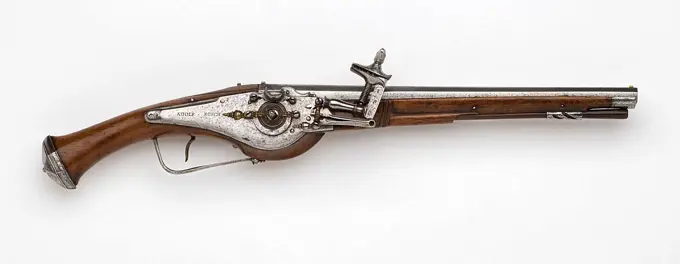
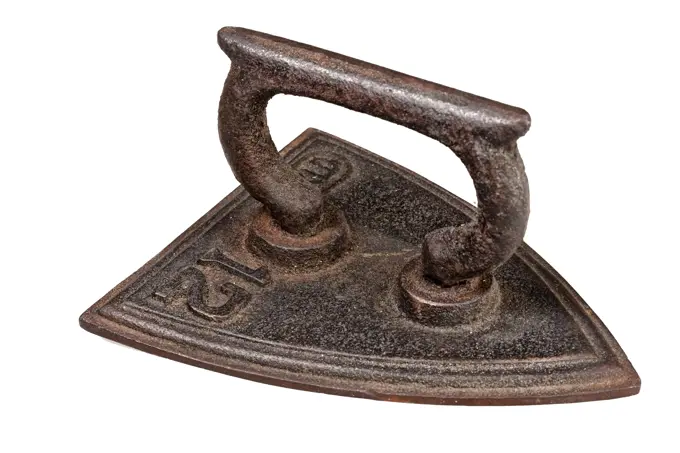
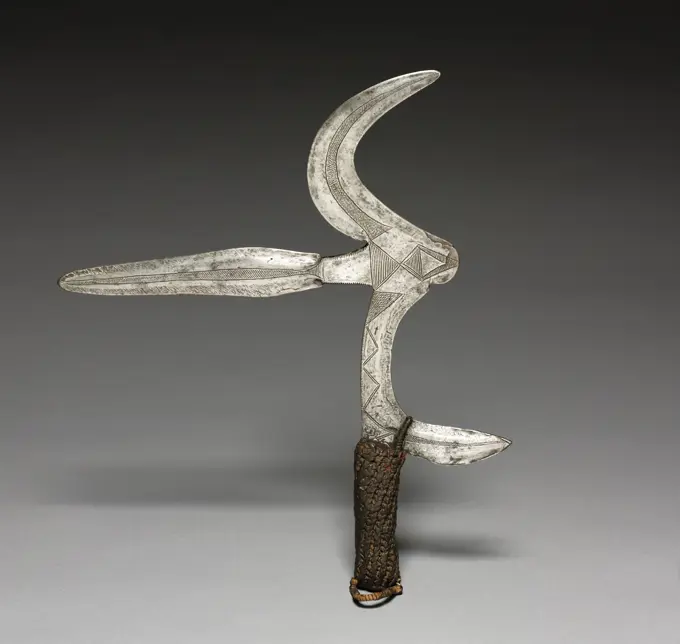
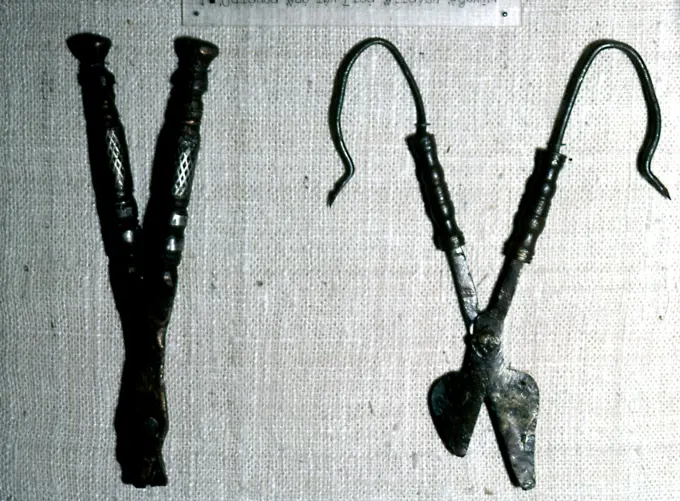
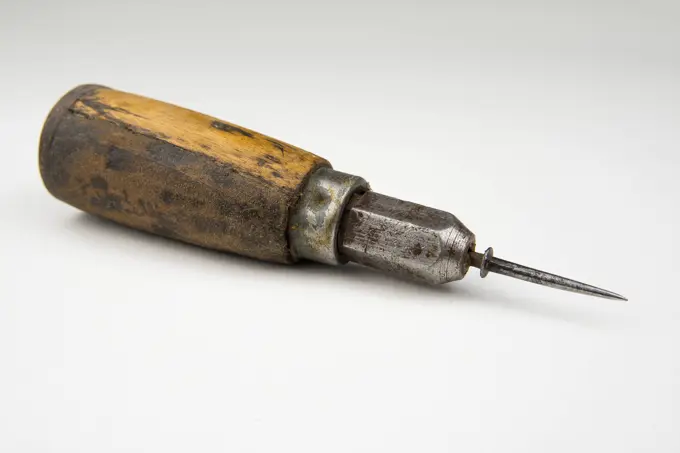
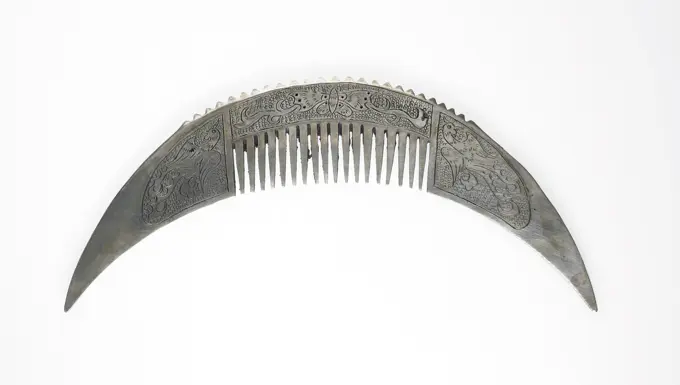
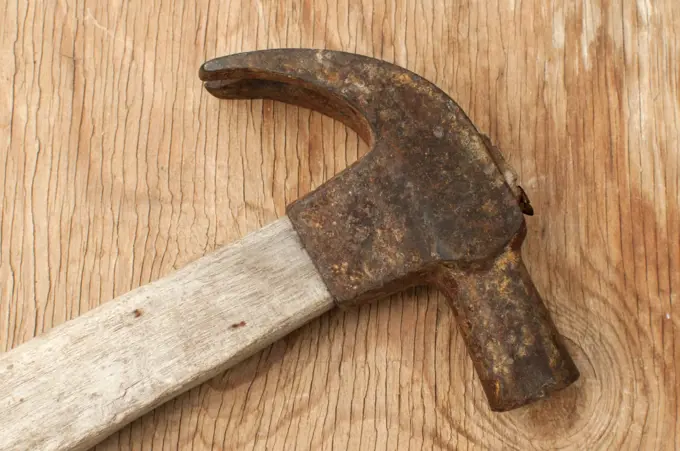
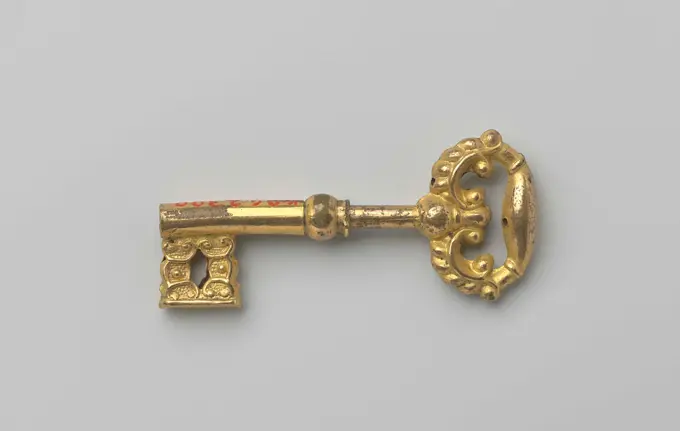
Pijpsleutel.Pipe key with oval eye and square beard, both built up from C volutes. The thin part of the shaft is separated from the wide by a nodus.Tweezer ca. 1295-1070 B.C. New Kingdom, Ramesside. Tweezer 568378Key;  16th century (1501-00-00-1600-00-00);Snaffle Bit 7th century Visigothic The snaffle bit is the simplest type of horse bit, and has an effect on the bars (part of the horses jaw without teeth) and the corners of the lips. The mouthpiece of this bit consists in two articulated links, square in section and with a serrated ridge on each face, welded with copper. The mouthpiece is flanked on one side by a long vertical cheekpiece, and by a simple link with a ring on the other, probably reused from another bit to replace the missing piece. The remaining original cheekpiece, used to hang the bit from the bridle, is composed of a ribbed vertical bar, with a flat pierced square ornament at the bottom, a decoration characteristic of Visigothic bits. Reins were attached to the ribbed D-shaped rings hanging from each side of the bit.The serrated ridges on the mouthpiece make it harsh, preventing the horse from grasping the bit with its jaws (the horse needed to have a relaxed jaw for the bit to be effective). When they were pulled, Slip Hook for Lifeboats. Irrize slip hook, consisting of three parts: a hook with a disc at the end and turning around a shaft that is placed in the bend; a frame consisting of two metal strips, connected to the one side by the axis of the hook and on the other by a disk and a harp; Two round metal plates around hook and frame, which turn around a shaft through in the hook. In eyes at the ends of the axis of the disc in the frame are two extra lines.HIGA - FIGURA EN FORMA DE PUÑO USADA COMO AMULETO. Location: PRIVATE COLLECTION. MADRID. SPAIN. SETI I.Rusty iron Old rusty iron over white background Copyright: xZoonar.com/Lakhesisx 1948149Treated ring, held by a fish, presumably part of a ring puller. Forged iron grinding ring held by a fish with curled tail, presumably a ring puller.Molding Plane. Germany. Date: 1691. Dimensions: 21.6 x 10.2 cm (8 1/2 x 4 in.). Carved wood, old iron knife. Origin: Germany. Museum: The Chicago Art Institute, Chicago, USA.Bracelet Bell 1st century A.D. Italian (Ancient Roman) Instruments and musical ideas were shared, exploited, and adapted throughout the Mediterranean world and West Asia. While one culture preferred harps, another emphasized the virtues of the lyre. Instruments could symbolize or personify gods. In Greece, lyres were associated with Apollo, while the aulos (Roman: tibia), a wind instrument, was emblematic of Dionysus, god of wine and theater, and deemed less prestigious. Percussion instruments like cymbals, clappers, and frame drums provided rhythmic emphasis for dance, rituals, recitation, and melodic instruments. Romans used bells in ritual and secular contexts. Examples like this one may have hung from the necks of small animals, were worn as talismans or as anklets by servants.. Bracelet Bell. Italian (Ancient Roman). 1st century A.D.. Bronze.. Rome, Italy. Idiophone-Struck-bell-clapperBow Fibula (wire) 800 BCE-600 BCE Greece. This precious bronze object is a votive, or devotional gift, made as an offering to the gods. They come in many forms, such as animals, beads and brooches. Many seem once to have been attached to something else. Votives were hung from sacred trees or placed in sanctuaries around Greece. Once a shrine was full, the votives were ceremonially buried to make room for more offerings.. Bronze . Ancient GreekRusted scissors Ancient rusted scissors archeological finding in a wrecked ship under the sea Copyright: xZoonar.com/ClaudioxDiviziax 7535640Fist bracket from the wreck of the East India Flying Heart. Fist bracket, brass or copper winding curved rod, edited with oval portrays, broken down into both ends halfway through the middle of thickness. Knuckle guard.Stud Button. UnknownPhoto tandard, 1880 - 1900    wood (plant material). metalMetal book fitting with tulip-shaped end, decorative fittings soil finds copper metal, whipped riveted engraved Book fittings with hook; the fitting part (in which two pegs) fan out has smaller attachment plate on the reverse side. twisted rod and rectangular picture with hook archeology Rotterdam rail tunnel book close up Soil discovery: trajectory rail tunnel Rotterdam.Goldweight Dagger, 19th-20th century, 2 7/8 x 1 3/8 in. (7.3 x 3.49 cm), Brass, Ghana, 19th-20th centuryleather belt with a buckle on a green backgroundKrzyż ręczny. unknown, authorBelt accessories in the form of buckle with bent middle post, including hanging loop, buckle fastener component ground find copper metal, bracket with deepened and partially cut-away wacey-shaped sides rectangular basic shape Middle style archeology Rotterdam rail tunnel attachment Soil discovery: trajectory rail tunnel Rotterdam.Bronze serpentine-disc type fibula (safety pin) 9th century B.C. Villanovan Serpentine fibulae have distinctive coiled bows. Disk-type have an enlarged clasp in the shape of an ovoid disk. This fibula incorporates both elements.. Bronze serpentine-disc type fibula (safety pin) 256011Four-piece bronze mold for top of bottle, mold casting tool tools equipment metal-bronze bronze, molded turned Four-part bronze mold for pouring the top with screw thread of feeding bottle Rotterdam tin foundry tin pourer tin Meeuws Druy craft Shapes are from the originally 18th-century Rotterdam tinnegieter J Druy. The large molds that were not signed or dated were the property of the tinker guild and were rented to the small tin caster.Military identity plaque 1918 and its bracelet, from Gustave Pommier (title awarded), 1938. Metal. Museum of the Liberation of Paris - General Leclerc Museum - Jean Moulin Museum.Spoons (2). Culture: possibly French, possibly German. Dimensions: a) L. 7 in. (17.8 cm); b) L. 5 1/2 in. (14 cm). Date: dated 1270. Museum: Metropolitan Museum of Art, New York, USA.Buckle late 15th century German. Buckle. German. late 15th century. Steel. Miscellaneous-Buckles & OrnamentSilver -sole of the nineteenth century in the style of Louis XV in the collections of the National Museum in Warsaw - a general view on the front;  around 1920-1922 (1918-00-00-1922-00-00);Holder for hourglass on rotating arm of brass. The holder and arm are no longer attached to each other.Sanctus Bell. Dated: 1937. Dimensions: overall: 35.5 x 24.4 cm (14 x 9 5/8 in.) Original IAD Object: Exact size. Medium: watercolor, colored pencil, and graphite on paper. Museum: National Gallery of Art, Washington DC. Author: Syrena Swanson.Flintlock Belt Pistol 1775 Scotland. Steel, silver, and horn . Thomas MurdochThree-armed fragment of a hanging or wall sconce. A fragment of an iron hanging or wall sconce, made in a whole. The teared, broken strain, which runs up in a bend, branches in three tossed arms ending in round candle holders, which are closed.Horse Trapping 18th-19th century. Horse Trapping 444634Key;  XIX W (1801-00-00-1870-00-00);Club -Herman O Stroh, Pipe Wrench, 1940 Pipe WrenchFragment of a screw plate of a musket from the Zeeland Chamber of the VOC from the wreck of the East Indies' t Vliegend Hart, 1700 - 1735 in 1735  Fragment with an eye of a screw plate of a musket. Side-Plate.  copper (metal)Bronze handle of a patera (shallow saucepan) 1st century A.D. Roman The finial in the form of a wolf's head is typical of Roman bronze vessels.. Bronze handle of a patera (shallow saucepan). Roman. 1st century A.D.. Bronze. Imperial. BronzesDoor handle and two Escutcheon plates 16th century German. Door handle and two Escutcheon plates 468796Cutting Pliers, 1600s. Germany, 17th century. overall: 7.7 x 23.5 cm (3 1/16 x 9 1/4 in.).Loop. 2 gorges and row of pearls.Bell. Culture: German. Dimensions: Height: 5 1/2 in. (14 cm)Diameter: 2 1/2 in. (6.4 cm). Date: 1599.This bell has a curious square wooden handle. Printed on one side: Wolffgang Neblich 1599. Museum: Metropolitan Museum of Art, New York, USA.Sweden, Blekinge, Blekinge, Karlskrona, Karlskrona, external marina (depicted, town).Sweden, Blekinge, Blekinge, Karlskrona, Karlskrona, External War Gogs (depicted, City)Pin from the wreck of the East Indies Hollandia, Anonymous, 1700 - in Or Before 1743  Tools and instruments, sewing and sailmaking, pin; fragm, bow, id. NG 1980-27H3265. Netherlands copper (metal)   SecondBuckle 15th-16th century European. Buckle. European. 15th-16th century. Bronze. Miscellaneous-Buckles & OrnamentOld water faucet, isolated on white background Old water faucet, isolated on white background Copyright: xZoonar.com/OleksandrxKostiuchenkox 8897911Batter, c. 1400 - c. 1950   iron (metal)   iron (metal)Hammered Silver Mirror Back () 11th-mid-16th century Peru; north or central coast (). Hammered Silver Mirror Back () 309201Fragment of a bronze leg or support 5th century B.C. or later Possibly Greek The object was a decorative adjunct to a utensil, as indicated by the shaft and holes for attachment. The curled leaf could have served as one of several supports for a basin or the equivalent. Alternatively, the whole piece could have embellished a piece of furniture. Dating is difficult because the bull's head has a rather archaic appearance, while the stylization of the leaf suggests a late date.. Fragment of a bronze leg or support. Possibly Greek. 5th century B.C. or later. Bronze. Classical. BronzesCopper door knob, oval handle and door plate, from the front door of the Schielandshuis, door handle handle door fitting accessory trim iron copper, Bush shaped knob or handle (top oval) running out into spindle with thread (). To spindle oval door plate, with the four corners out and slightly spherical formed simple disc-shaped ring (c) and wing nut (d) screwed on door and door Schielandshuis Rotterdam City Triangle Museum Boymans Was probably the doorknob of the front door van het Schielandshuis Presumably applied after the restoration of 1868.Clock bracket 1690-1700 British. Clock bracket. British. 1690-1700. Wood. Made in EnglandFour-piece bronze mold for bell-shaped bowl, mold casting tool tools equipment base metal bronze, cast turned Four-piece bronze mold for casting bell-shaped bowl possible salt shaker or bottom pepper steamer or mustard keg top: 835 Rotterdam tin casting tin tin dolls toy Meeuws Druy handicrafts Forms come from the originally 18th century Rotterdam tinnegieter J Druy. The large molds that were not signed or dated were the property of the tinker guild and were rented to the small tin caster.Bone comb with an antelope. Dimensions: h. 9.7 x w. 2.9 x d. 0.3 cm (3 13/16 x 1 1/8 x 1/8 in.). Date: ca. 3900-3500 B.C.. Museum: Metropolitan Museum of Art, New York, USA.Priesthood. Priesthood with top piece in the form of halberd.Bronze axe head from Mesopotamia, which borders modern day Iraq and Iran. Dated 16th Century BCwhale oil lamp, Tin, brass, One of a pair of whale oil lamps. Flat semicircular container with brass cup over the filling hole; attached to a triangular piece of tin, arched below and with hole at top; at the front of the container a pipe connecting with upright cylinder which is fitted with two brass tubes and a brass plate. -a and -b are the same., early 19th century, lighting, Decorative Arts, whale oil lampBuckle Shank first half 6th century Visigothic. Buckle Shank. Visigothic. first half 6th century. Copper alloy. Miscellaneous-Buckles & OrnamentArrowhead (Yanone) 18th century Japanese Although today Japanese warriors are renowned most for their swordsmanship, archery, especially from horseback, has been an essential part of samurai warfare and culture for centuries. Arrows were fitted with heads of varying shape according to their intended use in war, the hunt, or target practice. Arrowheads made for use on the battlefield incorporated different designs intended for specialized purposes such as the piercing of armor or to cause maximum damage to horses and unarmored personnel.Large arrowheads, pierced and elaborately chiseled with landscapes, birds, flowers, dragons, and Buddhist divinities, were created to be admired for the beauty of their metalwork and design rather than for use in archery. Such highly elaborate examples may have been made for presentation or as a votive offerings to a shrine.. Arrowhead (Yanone). Japanese. 18th century. Steel. Archery Equipment-ArrowheadsShaffron (Horse's Head Defense) dated A.H. 1026/A.D. 1617-18 Indian, Deccan, Golconda Horse armor was used widely in India. It was usually made from a combination of iron, textile, and leather, the centerpiece of which was an iron shaffron such as this one, which protected the front of a horse's head from the muzzle to the ears. In addition to the date, the Arabic inscription seen near the top edge of this shaffron includes the name of Sultan Muhammad Qutb Shah, ruler of the kingdom of Golconda in southern India from 1612 to 1626. Very few pieces of Indian horse armor can be dated so closely, or associated with a specific ruler, making this example extremely rare and important.. Shaffron (Horse's Head Defense) 35635wrench in a woman hand isolated on whiteax on white backgroundClock bracket. Culture: British. Dimensions: 25 x 12 1/4 x 9 1/2 in. (63.5 x 31.1 x 24.1 cm). Date: 1690-1700. Museum: Metropolitan Museum of Art, New York, USA.Alf Bruseth, Flatiron, c 1937 FlatironHistorical Surgical ToolsAnthropomorph 1500-1000 B.C. India These anthropomorphic figures, harpoons, ax blades (celts), and antennae swords were cast and hammered from unalloyed copper. They may be dated to 1500 to 1000 B.C. Given that pure copper is a relatively soft metal and most of the objects show little or no signs of wear, it seems likely that their function was largely dedicatory. Hoards of such objects have been found across north India, the greatest concentration being in Uttar Pradesh. The findspots suggest they were ritually deposited in rivers or marshes, though several related antennae swords were recorded in late Indus Valley civilization (ca. 1500 B.C.) burials at Sanauli.. Anthropomorph. India. 1500-1000 B.C.. Copper. MetalworkINSTRUMENTOS MUSICALES: CASTAÑUELAS Y SISTRO. EGIPCIO. (DEPOSITO: MUSEO ARQUEOLOGICO NACIONAL).STYLE. Ordos. 5th century BC. Paris, Cernuschi museum. 35406-4 Armament, weapon, bronze, hetao, meridional Mongolia, ordos, prehistory, prehistoric, stylusShip Builder's Auger. Dated: 1938. Dimensions: overall: 35.6 x 27.9 cm (14 x 11 in.) Original IAD Object: 26" long, 1" bit; 1/2" thickness of blade. Medium: watercolor, pen and ink, and graphite on paperboard. Museum: National Gallery of Art, Washington DC. Author: Erwin Stenzel.. Breeuw or Kalphate Iron, type of flat chisel with a round, cut, handle with button.FRENO ENTRERRIANO CON CAPAS Y RIENDAS DE CUERO. Location: MUSEO DE AMERICA-COLECCION. MADRID. SPANIEN.Shoe buckle, rectangular bracket with middle post with angel and bounce, buckle fastener component soil find tin copper metal, Rectangular bracket with middle post with angel and bounce. Tin or tinned copper archeology Rotterdam rail tunnel fastening shoe Soil discovery: trajectory rail tunnel Rotterdam.Tupu (pin) A.D. 1400-1533 Inca () This object is a tupu (also written as "topu" or "topo"), a Quechua term for a metal pin that women in the Andes use to fasten garments. Tupus have a basic form that consists of a head and stem. There is often wide variation in the head design and decoration. In this case, the head is comprised of a circular shape from which emerge two spirals at top. The spirals are rectangular in cross section and narrow at their ends to a slight point. The overall design of the head is similar to that of Metropolitan Museum of Art 64.228.701. In the latter case, however, a greater length of metal contributes to the spirals at top, and the spirals are more tightly spaced. Furthermore, the latter is significantly larger in total length and width, and there is a perforation in its head. Such a perforation may have been used for threading the tupu onto a cord connecting it with other ornaments, including another tupu (Angélica Casas of Tupe, Peru wears tupus in this waKnife from Board ofRevenue.  Mint: Board of Revenue Artist: UnknownHinge of front door Schielandshuis, hinge part iron paint metal, forged Half of weft hinge with sharp wedge-shaped plate in the wood of the door of front door Schielandshuis Seat for hinge pin consists of two tubular eyes front door Schielandshuis Rotterdam Stadscentrum Stadsdriehoek Korte Hoogstraat build hinges and locks. Tools and instruments, case of drawing instruments; (12); a: (1) case, oval in section, slightly tapering (6.9h, 4.7-4.1w, 2.3d), engraved decoration of floral motifs with plain central panel, moulded upper rim with three-lugged hinge on short side, lid and bottom missing; b: (1) partition frame with slots for instruments; c: (1) pen, straight tube (2.4l, 0.5d) with dip pen inserted (0.4d); d: (1) pencil, tube (2.9l, 0.4d) with inverted baluster-shaped finial, (w) pencil inserted (0.3d); e: (1) pen(cil) holder, cylinder, octagonal faceted, tapering (7l, 1.1-0.9d), with lid; f: (1) pair of compasses (4l), circular hinge, legs with faceted ends, oval recess on inner edges; g: (4)fragm(1) of folding ruler, (2) strips, straight (6.4l, 0.4w, 0.1t) with engraved scale, (2)fragm of hinge, splayed strips with small fitting holes and engraved scale; h: (1) pointed strip; i: (1) cylindrical piece of fluted foil.Buckle, anonymous, -206 - 220 Two splays, A and B. China bronze (metal). gilding (material) gilding Two splays, A and B. China bronze (metal). gilding (material) gildingHollands radslotpistool.Standard Radlot gun from the state army 1620-1630, part of a torque. The rooster of the lock is engraved with brords; The external wheel is from gold-plated geelkoper; The lock plate is stamped with a brand in the form of a crowned moror head and provided with a signature with separately applied letters. The loop has an iron back forizer and a glass of sight grain; On top of stamped with the same brand and signature as the lock. The flask is easily cut. The iron fittings consists, among other things, from a drawer cap, a loading cooker with oblique slits, a tractor bracket consisting of two round rods that come together at the ends with a cut-away elaboration in the bend and a hexagonal kolf cap that runs into a point; The Roodwood loading stick is equipped with an iron hood.Old Iron Old metal iron on isolated studio white background Copyright: xZoonar.com/AndreyxSkatx 14291499Bunch of old keysTibet: Singing Bowl.Throwing Knife, before 1918. Africa, Central Africa, Democratic Republic of Congo, early 20th century. Iron and leather; overall: 29.2 cm (11 1/2 in.).Miniature key, c. 1400 - c. 1950 Miniature key with cloverleaf -shaped eye, upwards in a crown. Byzantium (possibly) silver (metal) Miniature key with cloverleaf -shaped eye, upwards in a crown. Byzantium (possibly) silver (metal)LLAVES DE ORAN. Location: MUSEO ARQUEOLOGICO NACIONAL-COLECCION. MADRID. SPAIN.Fragment stitch passer from the wreck of the East Indians Hollandia, Anonymous, 1700 - in Or Before 1743  Divider; fragment: leg id. NG 1980-27H1171: circular pivot end. Netherlands copper (metal)   SecondSurgical instruments, found in Athens. Roman Period.Case (possibly Germany); shark skin; L x W: 20.2 x 4.1 cm (7 15/16 x 1 5/8 in.); The Robert L. Metzenberg Collection, gift of Eleanor L. Metzenberg; 1985-103-176-aGauges for priming tubes. A flat rectangular piece of iron with seven different cuts and two holes to measure different parts of the impact pipe, and a handle. The cuts and holes are numbered 1 to 6.Cobra. Designer: Jean Dunand (French (born Switzerland), Lancy 1877-1942 Paris). Dimensions: 15 in. × 6 in. × 9 3/4 in. (38.1 × 15.2 × 24.8 cm). Date: ca. 1919.While Dunand is best known for his works in lacquer, his training as a sculptor is evident in the skillful modeling of these snakes, while the confident handling of the metal demonstrates his abilities as a craftsman.Each snake is cast in bronze; the scales were chased and highlighted with gilding afterward. Museum: Metropolitan Museum of Art, New York, USA.Key piece with gothic frame, anonymous, c. 1400 - c. 1950 Key piece of oak with gothic frame. Northern Netherlands (possibly) oak (wood). iron (metal). paint (coating) Key piece of oak with gothic frame. Northern Netherlands (possibly) oak (wood). iron (metal). paint (coating)Watch Watchmaker: John Stiles British ca. 1680 View more. Watch. British, London. ca. 1680. Rock crystal, gold, enamel. HorologyOld retro awl on a white Old retro awl on a white Copyright: xZoonar.com/OttoxxPleskax 21333087Pewter shoe buckle, rectangular and curved model, buckle fastener component soil find tin metal, cast Rectangular bracket of pewter shoe buckle Curved model. Casting on the inside is hardly finished Archeology Rotterdam rail tunnel attaching dressing fastening shoe soil finding: rail tunnel Rotterdam.Hair comb, 4 1/2 x 10 x 1/4 in. (11.43 x 25.4 x 0.64 cm), Silver, ChinaLock, Double-Face Mortise second half 15th century German. Lock, Double-Face Mortise 463367England, London, The Wellcome Collection, Display of Vintage Obsetrical ForcepsDelay sign, pin with a calf and gourd. Delay sign, pin with a calf and gourd. Bot pin with button and profile and an S-shaped hook to which two chains: on the one a silver gourd, on another a small silver nap; Inside and bottom of the sneaker of yellow metal.Military flint gun, Anonymous, 1690 - 1700 flintlock pistol Military flint gun for the German market; Simple, but of high quality; Part of a couple. The lock is not decorated. The barrel is blew and a ripple runs over it with the inscription Mastrich; The sight grain is made of iron, in the tail of the loop is a groove for the rear visor. The flask is simply cut. The iron batter includes a screw plate in the form of leaf vines, a thumb plate in the form of a reverse drop and a flask hood with a small, stepped pump cover with a dot on it; The chest of drawers has an iron roof. Maastricht iron (metal) engraving / cuttingOld coffee pot isolated on white background.Farm tools from Old Babylon, 1900-1750 BC. Kutalla. BABYLON.Old weathered grunge hammer adze head closeup on plywood surfaceHook in the shape of a man's figure. It is a whole-cast object as a whole-made man-dressed man, who is on a Leeuwekop. Two eyes under the Leeuwekop, to confirm possible a pouch. On the back a long narrow vertical part, to be able to crochet the whole.Knife Handle (Northern Italy); steel, mother-of-pearl; L x W: 6.5 x 0.9 cm (2 9/16 x 3/8 in.); The Robert L. Metzenberg Collection, gift of Eleanor L. Metzenberg; 1985-103-253-d