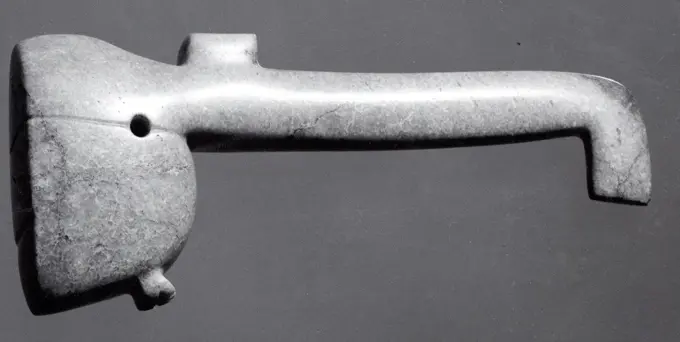
Ancient Keys and Fasteners

A collection of antique keys and fasteners made from metal, showcasing historical designs and craftsmanship from ancient times.
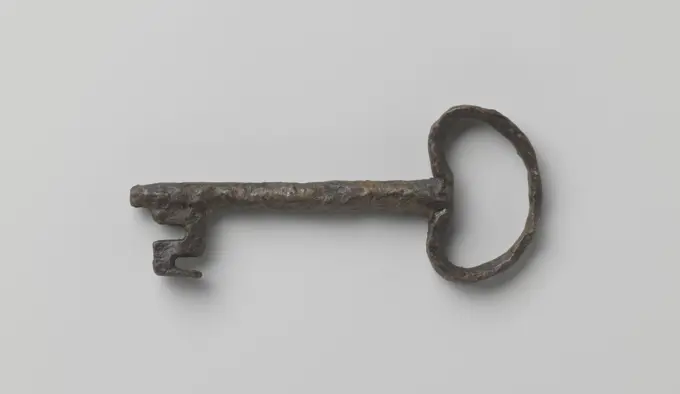
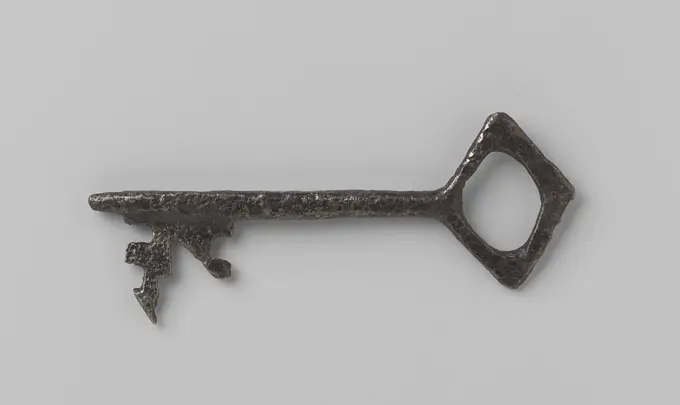
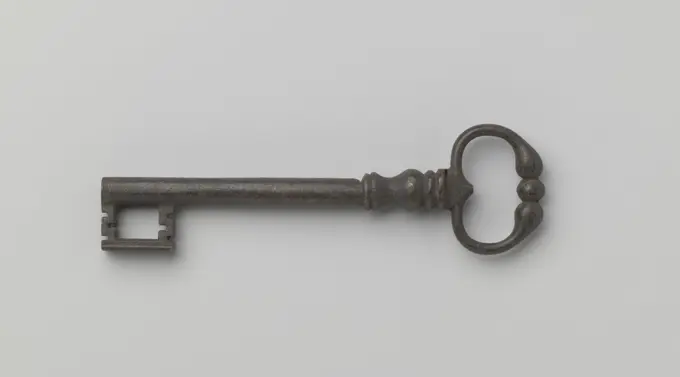
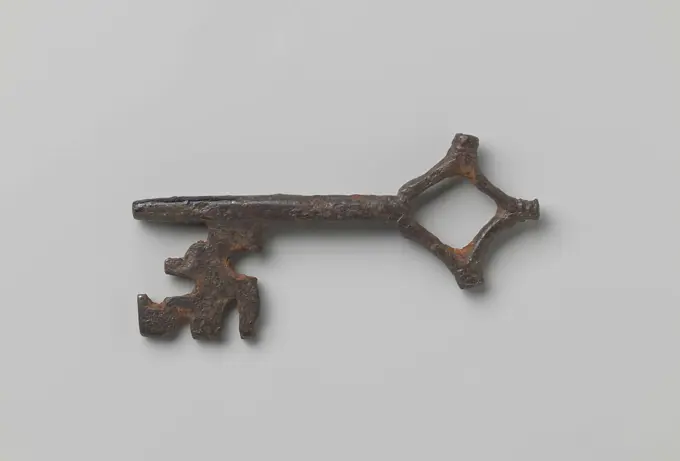
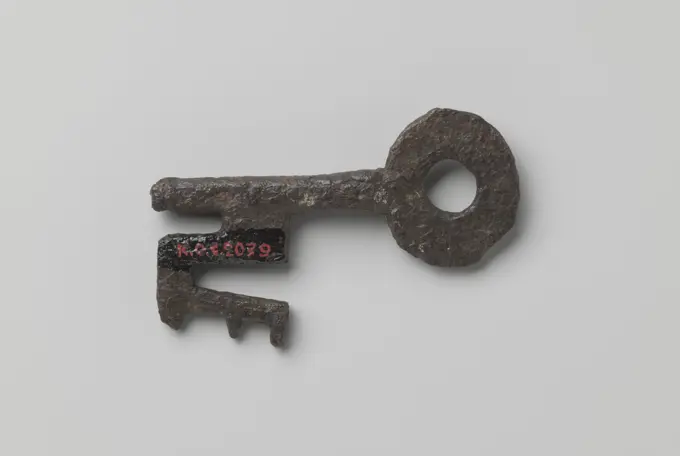
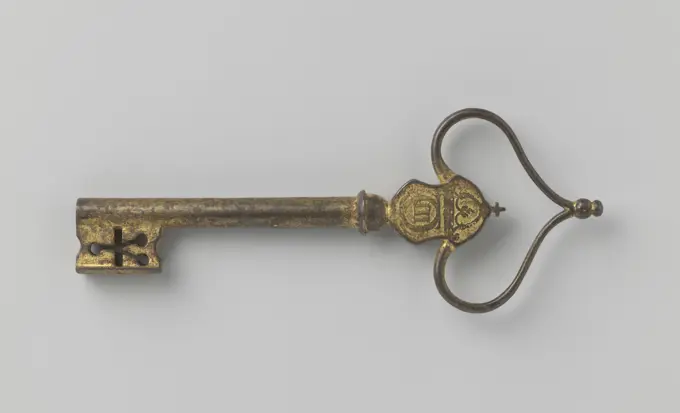
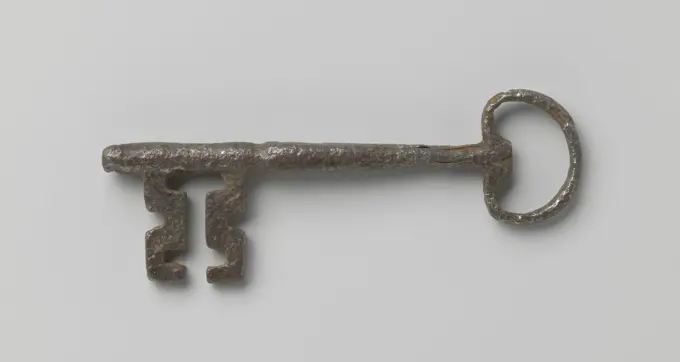
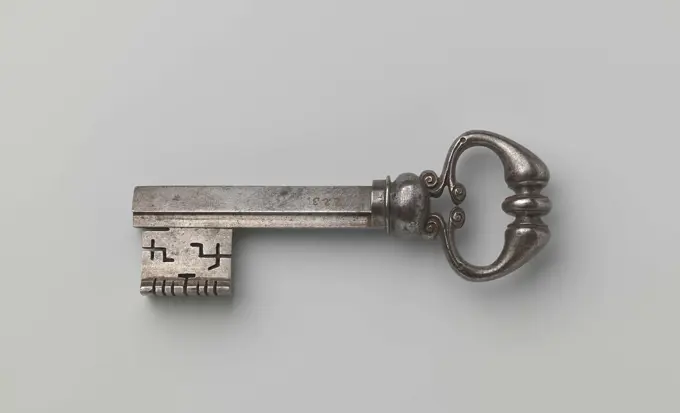
Key, c. 1500 - c. 1600 Key with bean -shaped eye and small crochet -shaped beard. The shaft runs past the beard.  iron (metal) Key with bean -shaped eye and small crochet -shaped beard. The shaft runs past the beard.  iron (metal)
Key, c. 1500 - c. 1600 Key with bean -shaped eye and small crochet -shaped beard. The shaft runs past the beard. iron (metal) Key with bean -shaped eye and small crochet -shaped beard. The shaft runs past the beard. iron (metal)
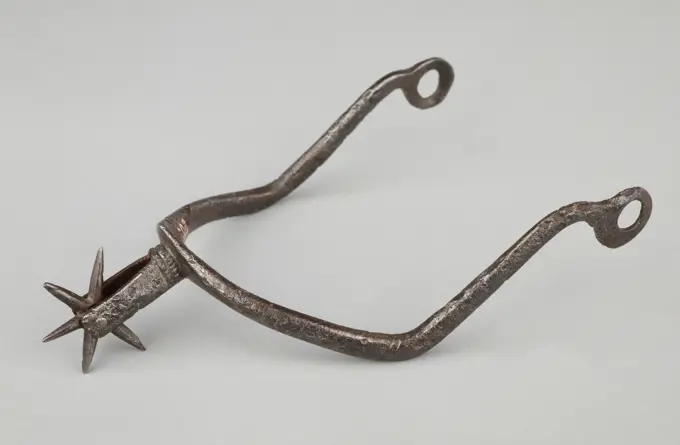
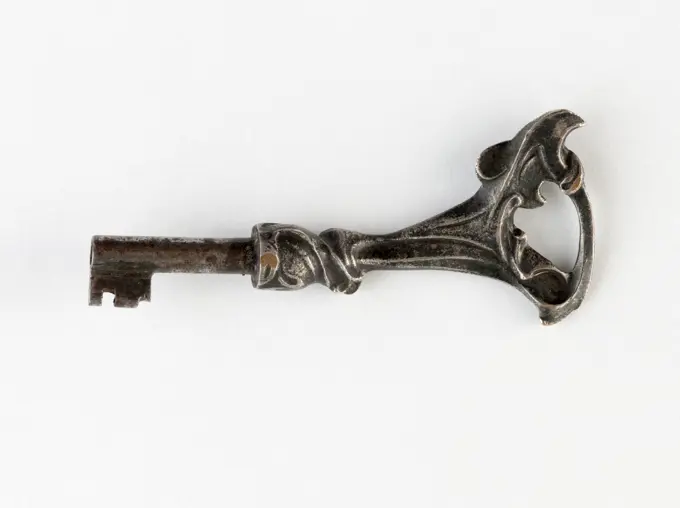
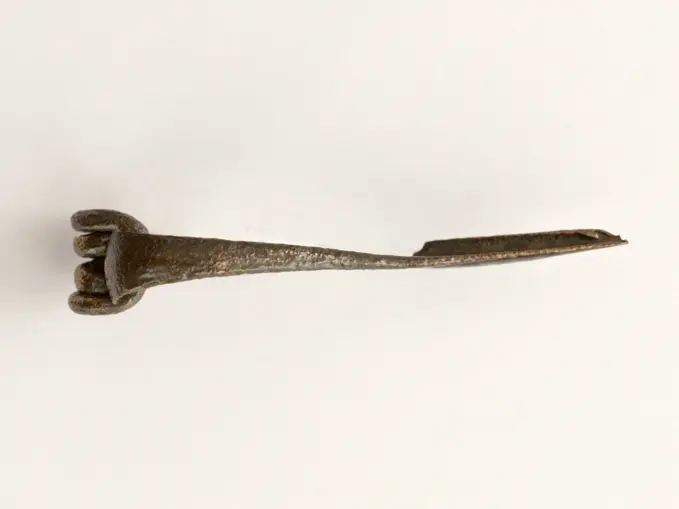
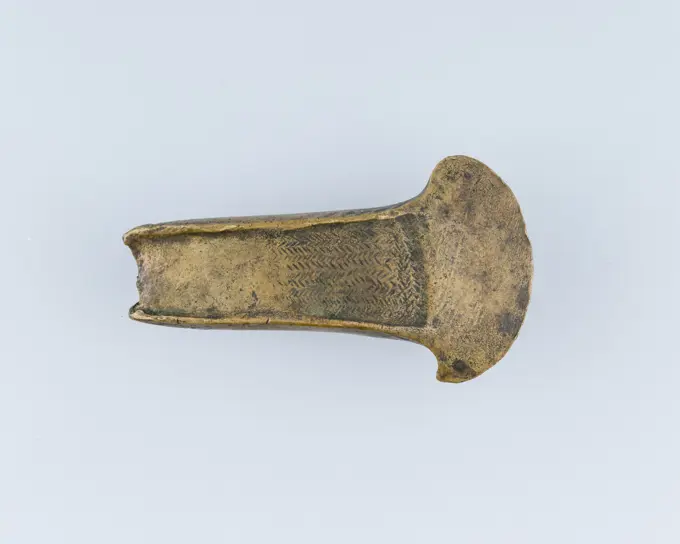
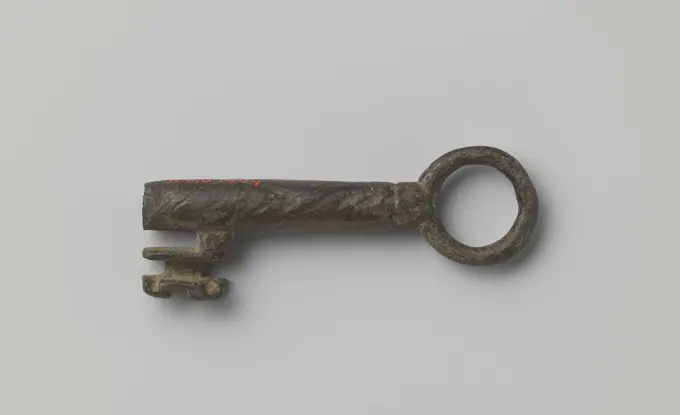
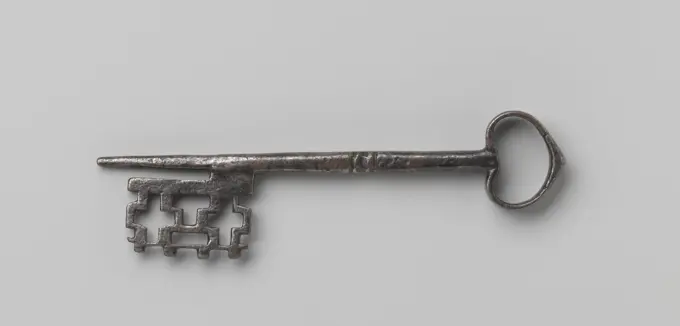
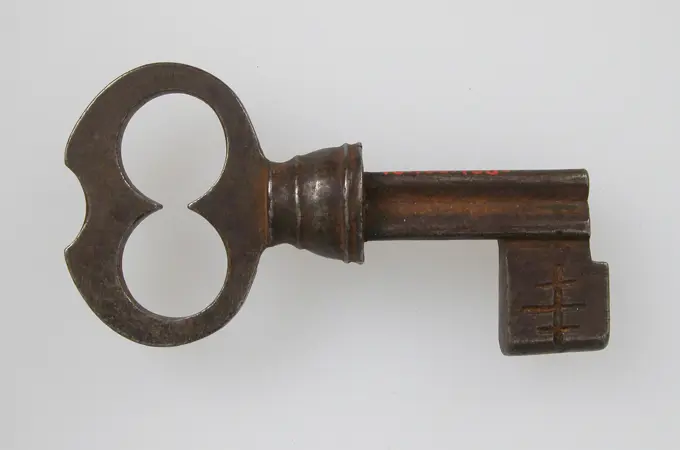
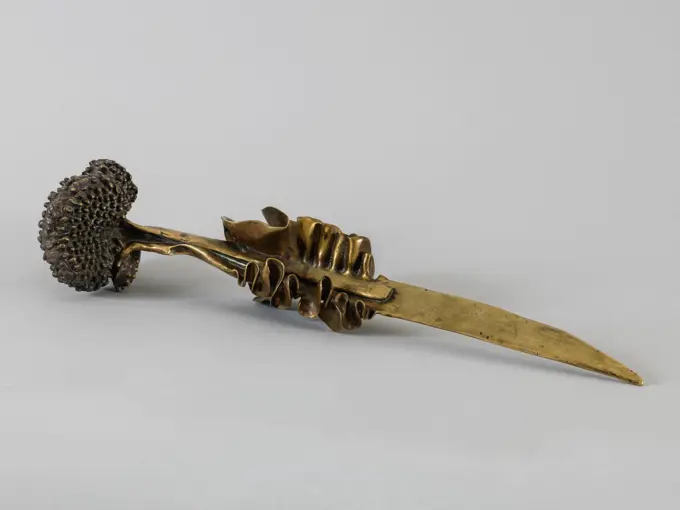
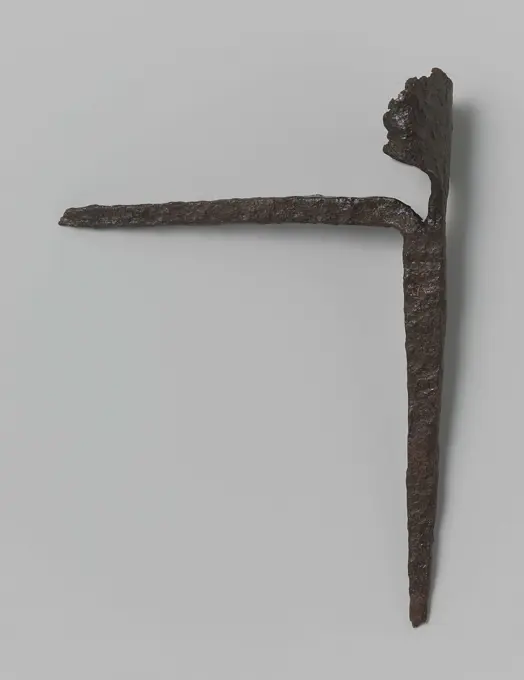
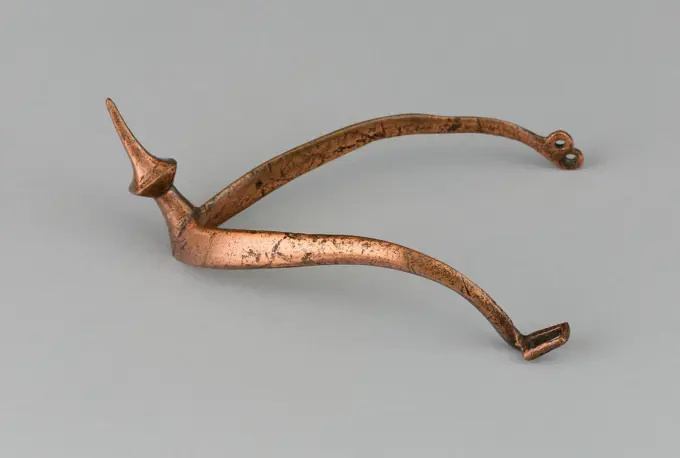
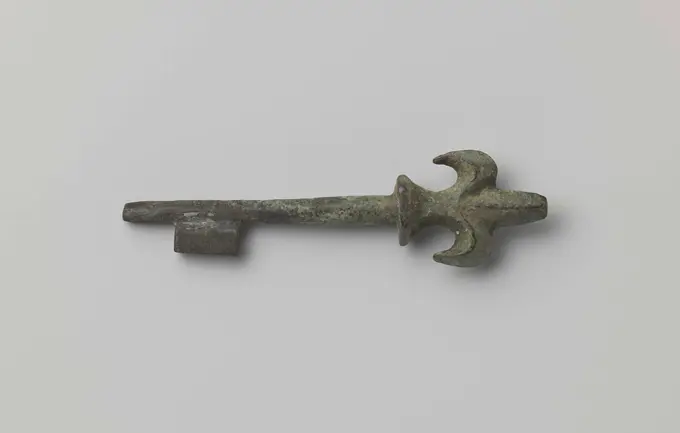
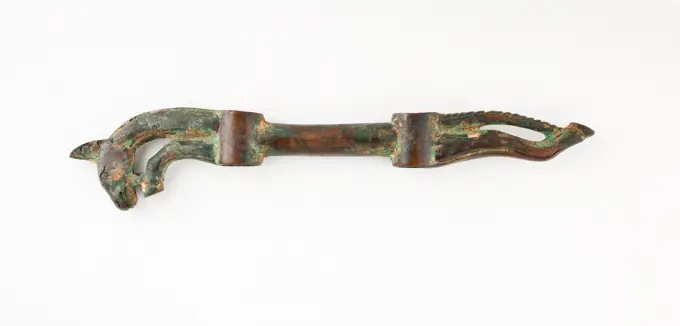
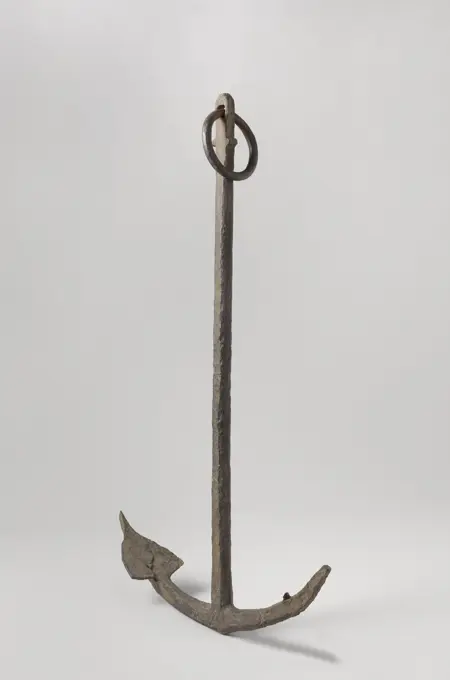
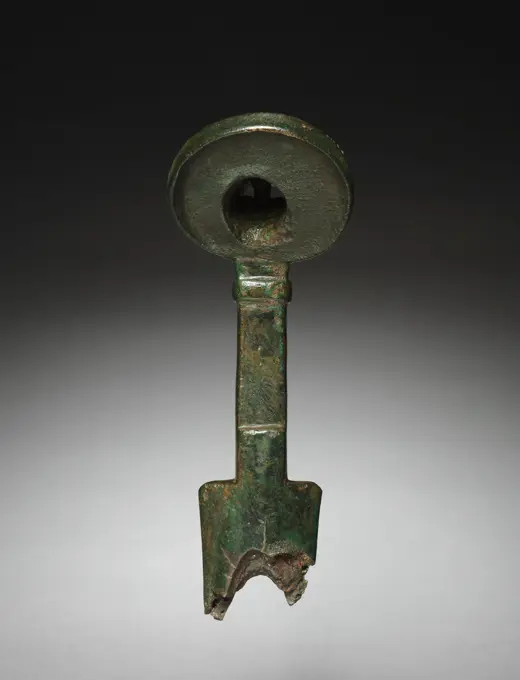
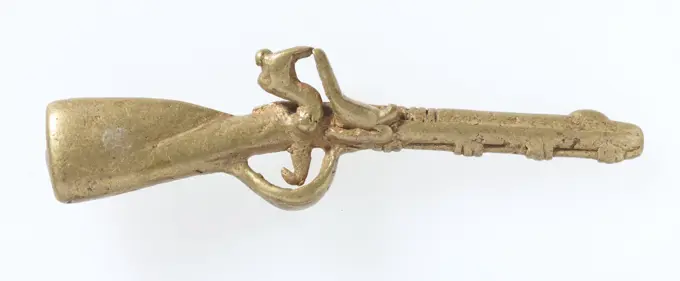
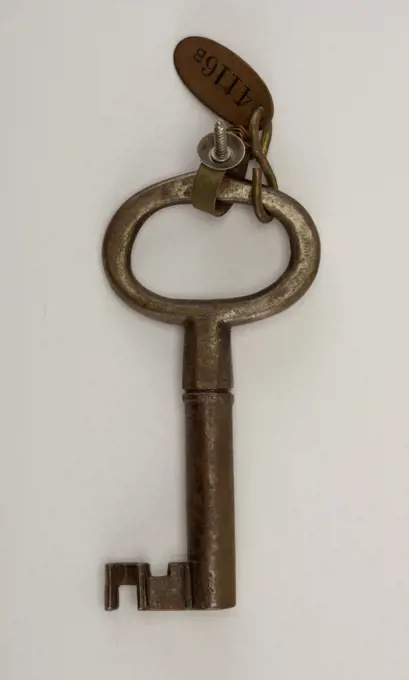
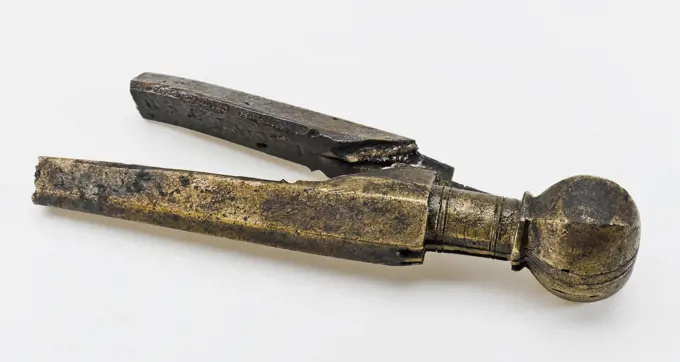
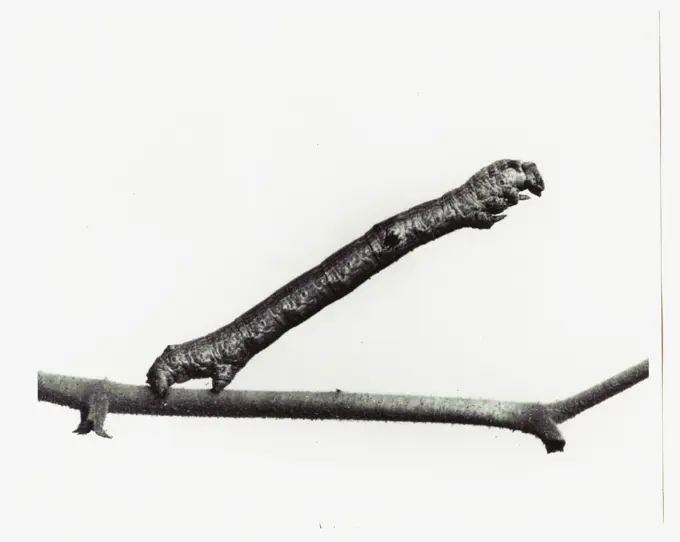
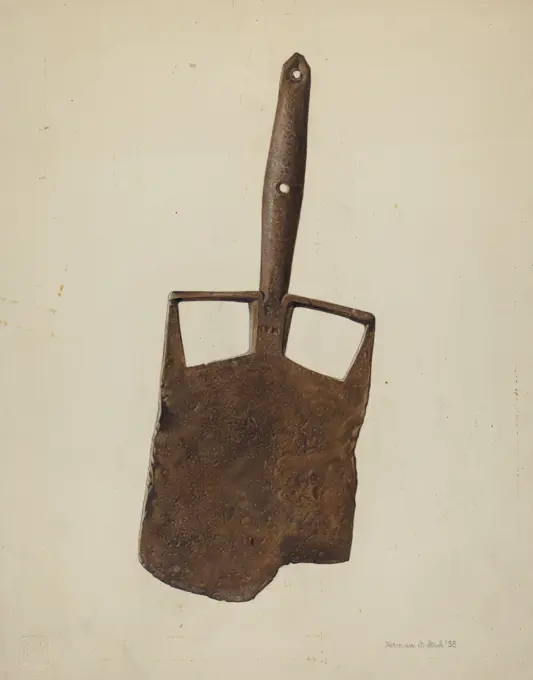
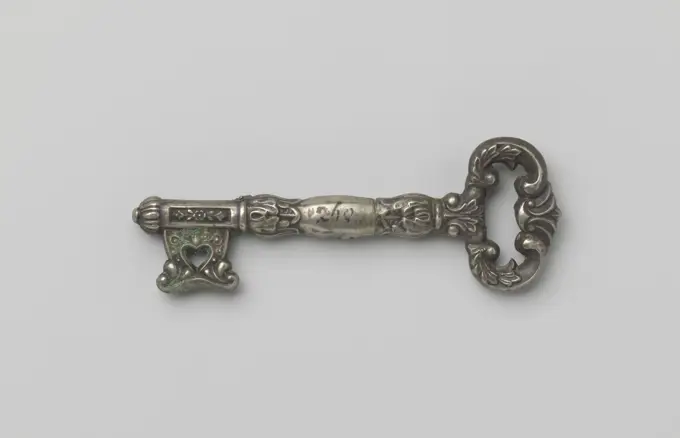
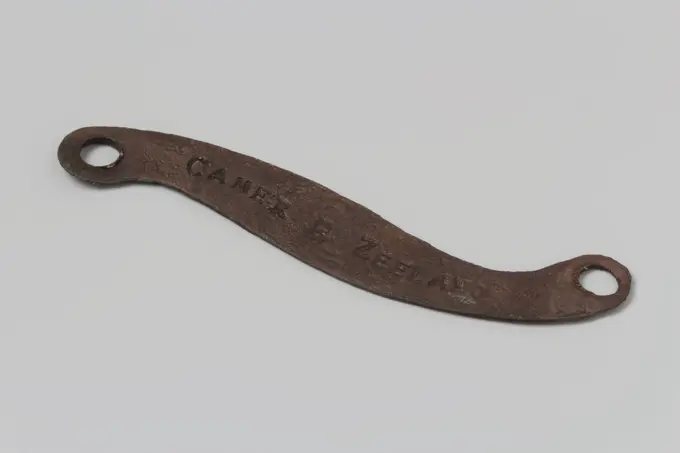
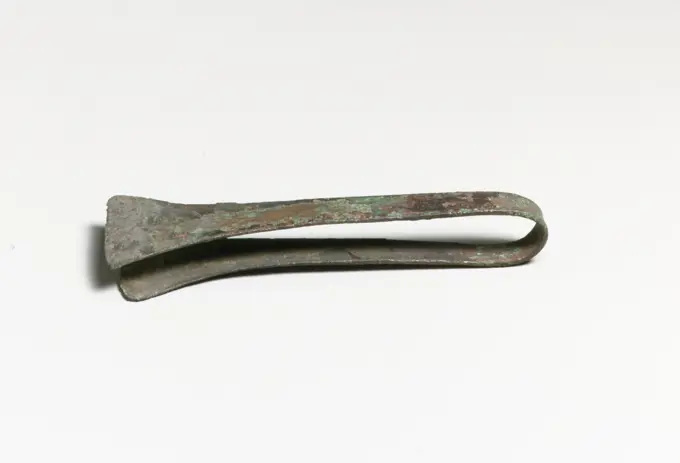
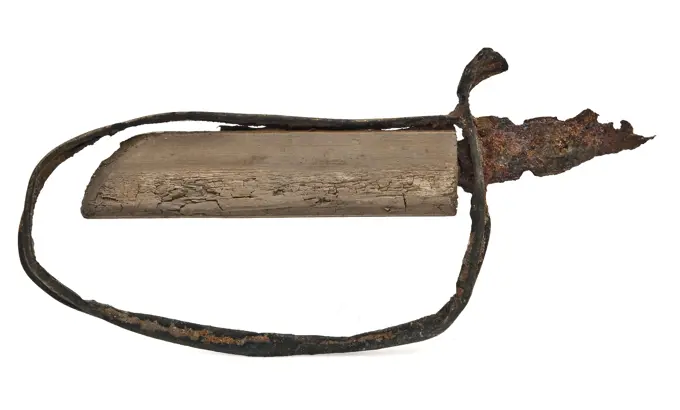
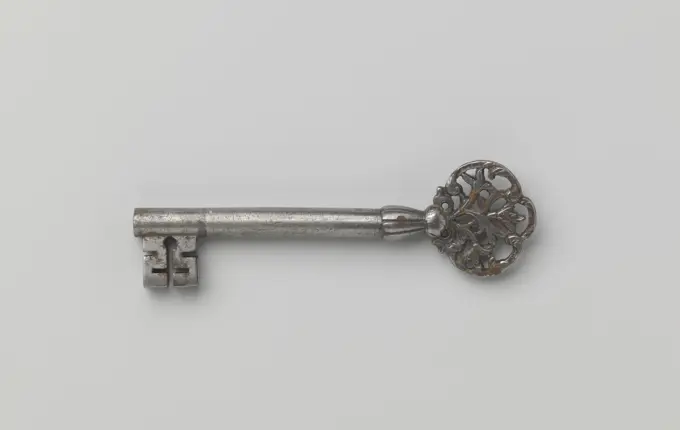
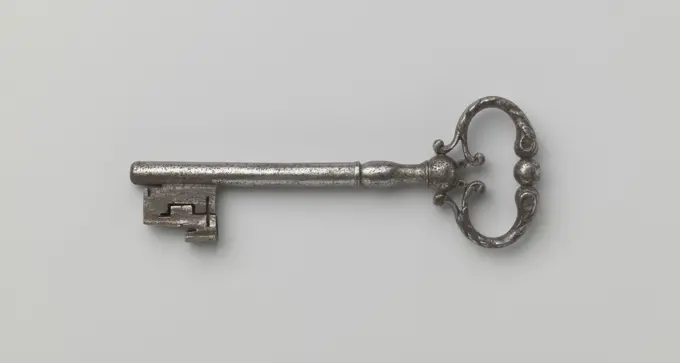
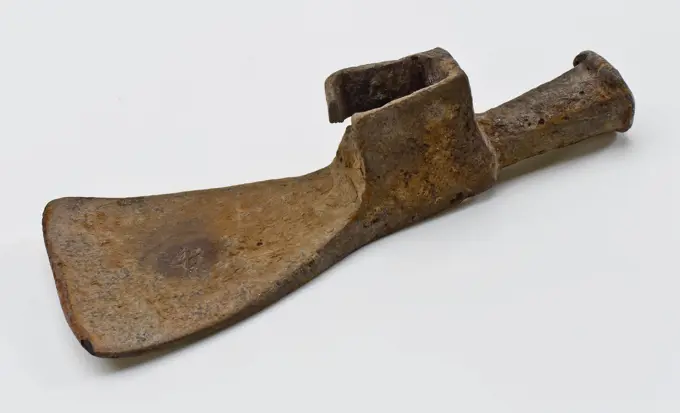
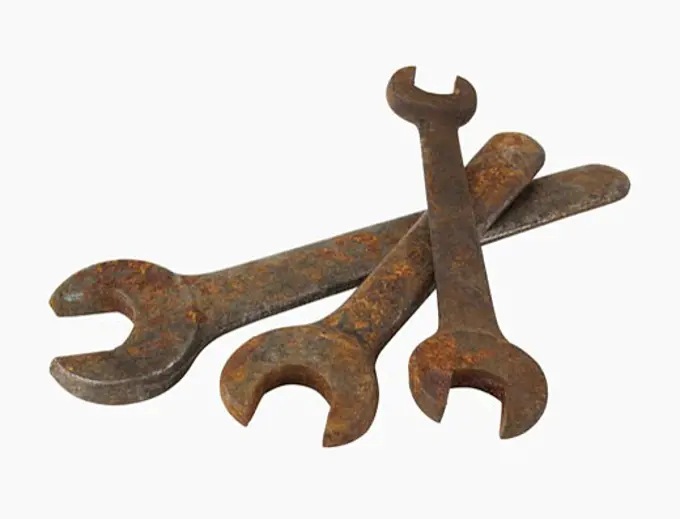
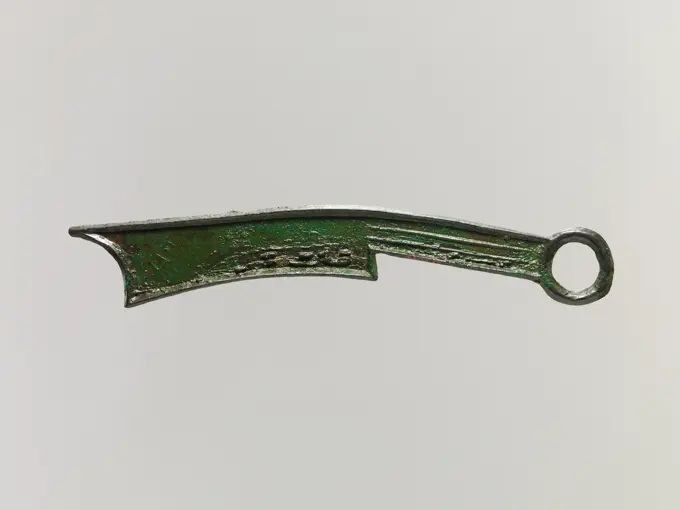
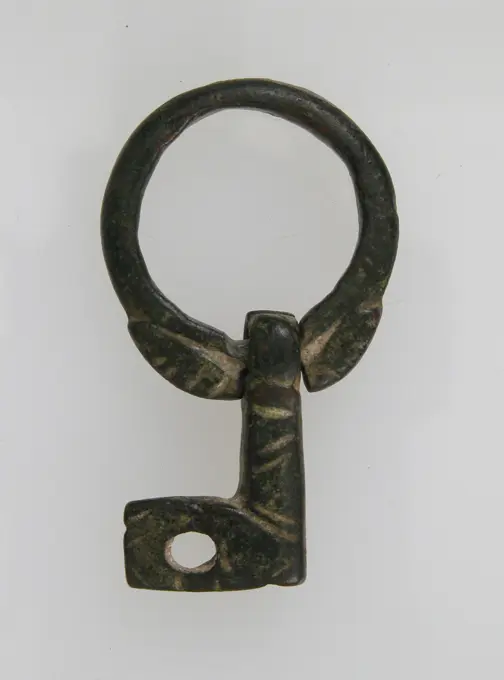
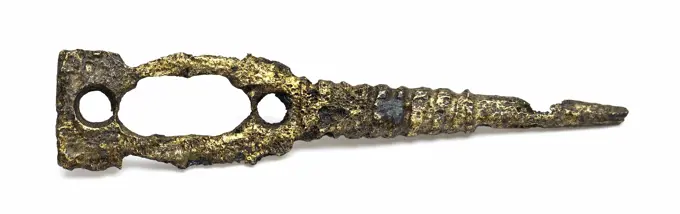
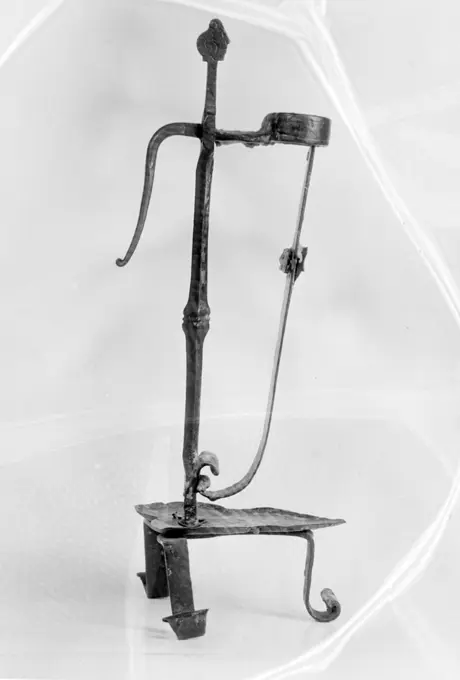
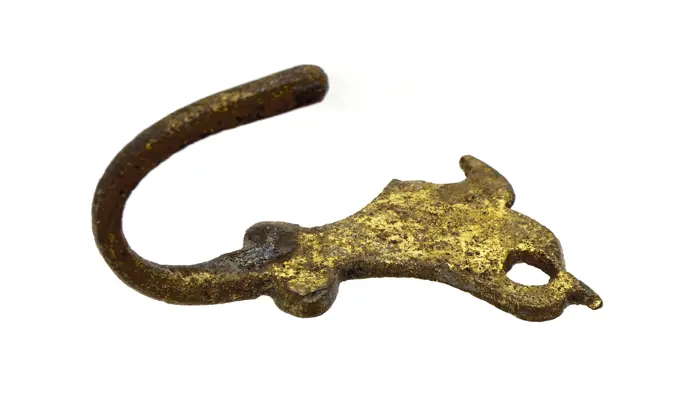
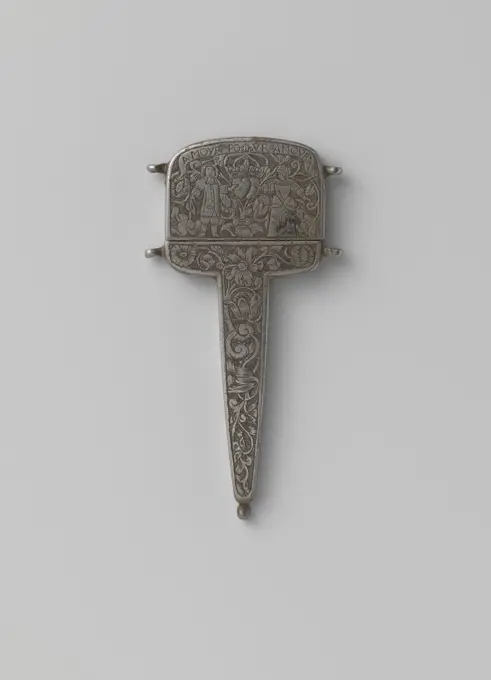
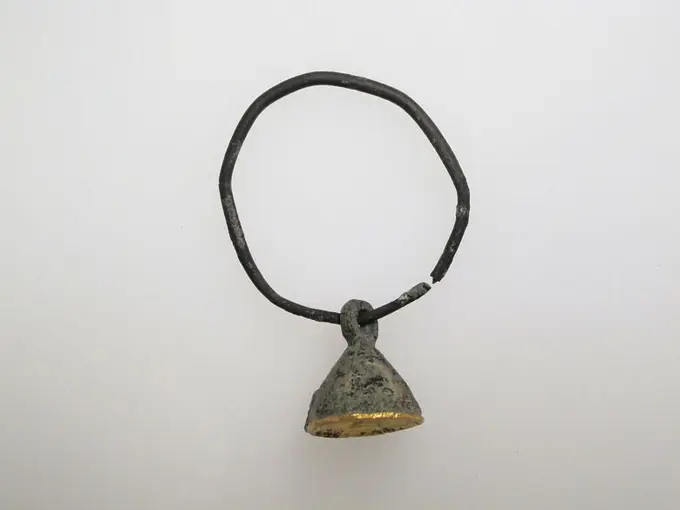
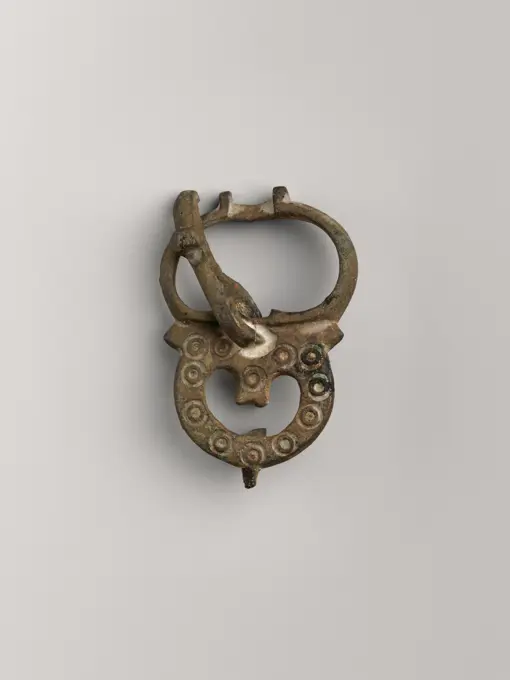
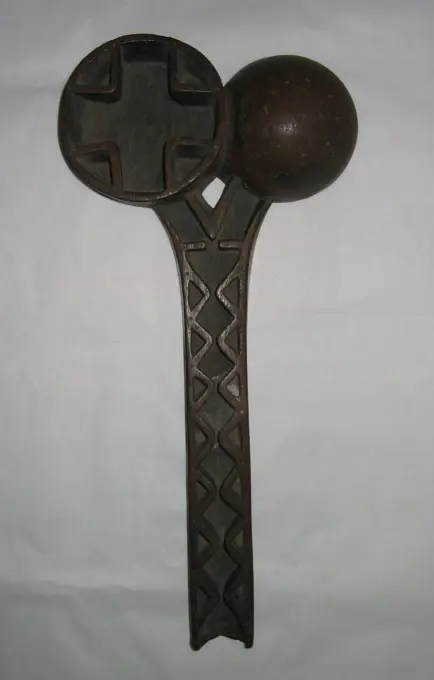
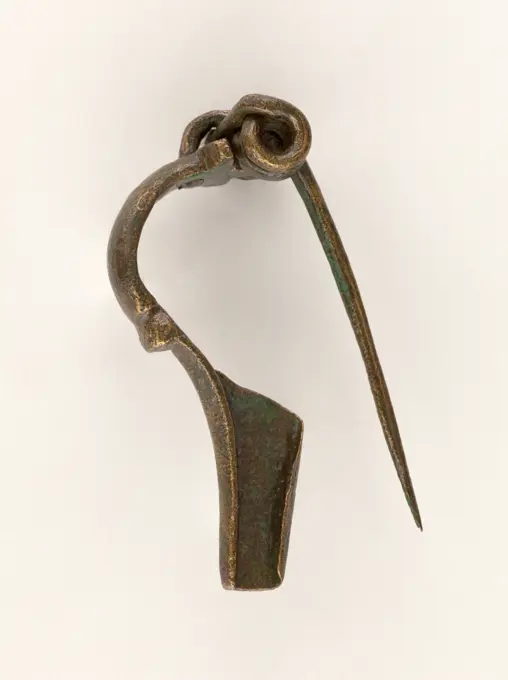
Fibula. Copper alloy. 1st century BC and 1st century AP.J.-C. Paris, Carnavalet museum. 51539-11 Staple, copper alloy, attachment, Gallo-Roman time, fibula, Gallo-RomanPipe key, c. 1400 - c. 1950 Pipe key with round eye and large solid beard ends in two similar pointed corners.  iron (metal) Pipe key with round eye and large solid beard ends in two similar pointed corners.  iron (metal)Sleutel.Key with erratic shaped beard, diamond-shaped hold in which an oval eye and a blurred shaft ending in a blunt point.Batter, c. 1400 - c. 1950   iron (metal)   iron (metal)Excavated spurKey; Easy final part on a side of stem, upper part oval ring; A bit rusty. (Been attached to cardboard where written on the back: Van Speyk)Hector Guimard (1867-1942). "Key". Bronze. 1909-1911. Museum of Fine Arts of the City of Paris, Petit Palais. 74618-21 Art Nouveau, bronze, key, key, decoration, metalKey probably Italian 17th-18th century Probably used for domestic purposes for a lock which could be opened from either side of a door. View more. Key. probably Italian. 17th-18th century. Wrought iron. Metalwork-IronKey, c. 1500 - c. 1600 Key with bean -shaped eye and small crochet -shaped beard. The shaft runs past the beard.  iron (metal) Key with bean -shaped eye and small crochet -shaped beard. The shaft runs past the beard.  iron (metal)Batter ..VOC brand. Brand with more or less round stem with a rum surface. At the front stalk, the brand is at the basis of the V (from the VOC brand). The handle runs through the handle and has a spherical end. The handle is baluster-shaped (slim) with sphere end and disk shape on stalk side. Misc is brass band with brand.Key. Culture: French. Dimensions: Overall: 4 1/16 x 1 1/2 x 13/16 in. (10.3 x 3.8 x 2 cm). Date: early 15th century.The decoration of Gothic iron locks and keys was often elaborate and of the highest standard of workmanship. The motifs were frequently drawn from Gothic architecture, reproducing on a miniature scale complicated tracery patterns and even tiny statuettes. A number of these tiny locks were compound, with some of the mechanisms concealed from view, and required two or even three keys used in sequence to open them. It has been suggested that the greatly expanded use of locks on doors, or coffrets and other types of storage chests was a result of the increasing urbanization of life and the new emphasis on material wealth and private ownership which developed in the late Middle Ages. Museum: Metropolitan Museum of Art, New York, USA.Pipe key, c. 1500 - c. 1600 Pipe key whose handle consists of an upstairs C-Volut. Two volutes that are held together by a button are rested on this. The capital is groaned spherical in the middle and wears a round disk on which the handle rests. There is a slot in the shaft. France iron (metal) Pipe key whose handle consists of an upstairs C-Volut. Two volutes that are held together by a button are rested on this. The capital is groaned spherical in the middle and wears a round disk on which the handle rests. There is a slot in the shaft. France iron (metal)Fibula. Copper alloy. 1st century BC .. Paris, Carnavalet museum. 51539-8 Clip, copper alloy, attachment, fibulaKey;  19th century (1701-00-00-1800-00-00);Key, c. 1400 - c. 1950 Key of iron.  iron (metal) Key of iron.  iron (metal)Sleutel.Key with handle with openwork and vertebrated impeller-shaped leaf filling, resting on a ball-shaped cap. The baluster-shaped shaft ends past the dual beard in a flat button.Flanged Ax ca. 1500-1400 B.C. British. Flanged Ax. British. ca. 1500-1400 B.C.. Bronze. Miscellaneous39 keys from the collection of Emmanuel Vita Israël.The Amsterdam apothecary and art collector Emmanuel Vita Israël. He donated his collection, comprising keys dating from Roman antiquity to the 19th century, to the Koninklijk Oudheidkundig Genootschap (Royal Antiquarian Society) in 1937. Vita Israël claimed that his key collection had grown more or less by accident: being one of the few collectors of keys, dealers automatically made their way to him.Hefsleutel, , c. 1400 - c. 1950 Hef key in the form of a T. heavily rusted. Rome iron (metal) Hef key in the form of a T. heavily rusted. Rome iron (metal)Key, c. 1400 - c. 1500 Key with a bean -shaped eye, somewhat pushing up above. The shaft has three notches in the middle and runs into a point under the beard. Two horizontal crosses were carved in the beard.  iron (metal) Key with a bean -shaped eye, somewhat pushing up above. The shaft has three notches in the middle and runs into a point under the beard. Two horizontal crosses were carved in the beard.  iron (metal)Key. UnknownCopper crane whose handle is composed of three 'rings', Anonymous, c. 1590 - c. 1596  Kraan of copper whose handle is composed of three 'rings'. Completely.  copper (metal) casting  Nova Zembla. Saving HuysPrestige Adze, mid 20th century, 9 x 3 1/4 x 13 3/4 in. (22.86 x 8.26 x 34.93 cm), Wood and metal, Democratic Republic of Congo, 20th centuryKey. Key with eye shaped by a V, covered by a saddle.Key 15th century German The decoration of Gothic iron locks and keys was often elaborate and of the highest standard of workmanship. The motifs were frequently drawn from Gothic architecture, reproducing on a miniature scale complicated tracery patterns and even tiny statuettes. A number of these tiny locks were compound, with some of the mechanisms concealed from view, and required two or even three keys used in sequence to open them. It has been suggested that the greatly expanded use of locks on doors, or coffrets and other types of storage chests was a result of the increasing urbanization of life and the new emphasis on material wealth and private ownership which developed in the late Middle Ages.. Key 463338Goldweight Padlock with Key, 19th-20th century, 1 7/16 x 1 1/4 x 1 11/16 in. (3.65 x 3.18 x 4.29 cm), Brass, Ghana, 19th-20th centuryEugene Bartz, Clamp Jack, c 1937 Clamp JackKeySarah Bernhardt (1844-1923), French artist. "Algae". Dagger. Bronze, 1900. Museum of Fine Arts of the City of Paris, Petit Palais. Algae, year 1900, art nouveau, weapon, bronze, dagger, laminar, metal, natureRapierSleutel.Key of iron.Kris van Bali with Schede, Anonymous, in or before 1894 kris Kris van Bali with black -damped blade with silver flames, with richly cut with silver mounted. Only half of the Schede is present. Taken on the Expedition of Lombok in 1894. Bali iron (metal). silver (metal). wood (plant material)   LombokNeedle tube, c. 1700 - c. 1800 Needle tube in the form of a key with the inverted initials A.P.S. In the handle that is crug.  iron (metal) Needle tube in the form of a key with the inverted initials A.P.S. In the handle that is crug.  iron (metal)Candle holder consisting of a sleeve for the candle and two perpendicular pins. Candle holder consisting of a sleeve for the candle and two perpendicular pins. The majority of deer candle sleeve has been demolished.Fibula, c. 700 BC. Italy, Etruscan, late 8th Century BC. Bronze; overall: 8.9 cm (3 1/2 in.).Prick Spur 1290-1310 Germany. Iron .Key to the main gate of the Citadel of Antwerp, 1800 - 1850  Black iron key with kidney -shaped handle, solid handle and simple beard with two notches. Marked; On the handle: VI. Antwerp (possibly) iron (metal) forging / sawing / filing  Citadel of Antwerp (19th century)39 keys from the collection of Emmanuel Vita Israël.The Amsterdam apothecary and art collector Emmanuel Vita Israël. He donated his collection, comprising keys dating from Roman antiquity to the 19th century, to the Koninklijk Oudheidkundig Genootschap (Royal Antiquarian Society) in 1937. Vita Israël claimed that his key collection had grown more or less by accident: being one of the few collectors of keys, dealers automatically made their way to him.Spiked axe head ca. 1200-900 B.C. Iran. Spiked axe head 322849Horse Accoutrement. Southern Siberia, Tagar, 6th-5th century B.C.. Tools and Equipment; horse trappings. Bronze, castKey 15th century German The decoration of Gothic iron locks and keys was often elaborate and of the highest standard of workmanship. The motifs were frequently drawn from Gothic architecture, reproducing on a miniature scale complicated tracery patterns and even tiny statuettes. A number of these tiny locks were compound, with some of the mechanisms concealed from view, and required two or even three keys used in sequence to open them. It has been suggested that the greatly expanded use of locks on doors, or coffrets and other types of storage chests was a result of the increasing urbanization of life and the new emphasis on material wealth and private ownership which developed in the late Middle Ages.. Key 463329Straw Splitting Tool, early 19th century. England, early 19th century. Iron; overall: 3.9 cm (1 9/16 in.).Anchor, anonymous, 1575 - 1593 anchor Iron anchor that belongs to the vessel that was discovered on 22 February 1822 in Capelle in the Langstraat and then dug up. Netherlands iron (metal)   Geertruidenberg. CapelleKey;  XVII century (1601-00-00-1700-00-00);Applique (Italy); wood covered with gesso, painted and gilded - iron pricketKey, c. 1300 - c. 1400 Key with flat round, pierced handle and short shaft.  iron (metal) Key with flat round, pierced handle and short shaft.  iron (metal)Sword Handle, 2nd-1st Millenium BC. Iran, Luristan (), 2nd-1st Millenium BC. Bronze; overall: 21 x 12.5 x 7.5 cm (8 1/4 x 4 15/16 x 2 15/16 in.).Goldweight Gun, 19th-20th century, 7/8 x 3 1/16 x 5/16 in. (2.22 x 7.78 x 0.79 cm), Brass, Ghana, 19th-20th centuryKamerheersleutel, c. 1700 - c. 1800 Chamber control wrench resting on a shield on which a crown is engraved, relating to Charles VII van Habsburg (1685-1740).  iron (metal) Chamber control wrench resting on a shield on which a crown is engraved, relating to Charles VII van Habsburg (1685-1740).  iron (metal)Lock and key, Cast and engraved steel, iron, Circular lock with openwork border depicting tulips, lions, and possibly monkeys. Mask at the bottom. Pair with -134, Spain, late 16th-mid- 17th century, metalwork, Decorative Arts, Lock and keyKey; 1919-10-1Cranequin (Winder) for a Crossbow. German. Date: 1500-1550. Dimensions: L. 78.7 cm (31 in.). Iron, wood, and cord. Origin: Europe. Museum: The Chicago Art Institute, Chicago, USA.Brass stitcher, passer measuring instrument soil found brass metal, cast Copper passer Beveled sides. Decorated with thick oval knob and circumferential ridges archeology measures measure navigating shipping traffic Rotterdam Soil discovery Rotterdam.Coniferous Loopers - All States. Photographs Relating to National Forests, Resource Management Practices, Personnel, and Cultural and Economic HistoryShort Sword, 1920-1940, 21 3/4 x 6 1/2 x 1 3/4 in. (55.25 x 16.51 x 4.45 cm), Metal, wood, Democratic Republic of Congo, 20th centuryDoor knocker in the shape of a small dog or puppy 15th or 16th century Spanish The later Middle Ages was practically a second Iron Age, producing vast quantities of armor, weaponry and all manner of functional objects from nails to elaborate strap work hinges, ornate locks and household tools. A highly specialized craft, the best ironsmiths took pride in bringing decorative refinement to their works often elaborating surfaces that could not be seen and transfiguring the functional into the figural. These door knockers are fine examples of the wit, humor, and skill the best ironsmiths could bring to their products.This door knocker is in the form of a small dog or puppy, crouching on the tang and striker, tail curled up over its rump, ears cocked and mouth open.. Door knocker in the shape of a small dog or puppy. Spanish. 15th or 16th century. Wrought iron. Metalwork-IronCeremoniesleutel.Ceremonies key with a large round eye with six round protrusions. The key is flat and unprocessed and decorated with hammered circles.Key, c. 1600 - c. 1699 Key with bean -shaped eye and dual beard. The four -sided shaft that widens something down to the bottom passes into a thinner part at the beard.  iron (metal) Key with bean -shaped eye and dual beard. The four -sided shaft that widens something down to the bottom passes into a thinner part at the beard.  iron (metal)Oscar Bluhme, Pump Stock Reamer, c 1940 Pump Stock ReamerRing Brooch 13th century European. Ring Brooch. European. 13th century. Copper alloy. Metalwork-Copper alloyClose-up of keys on a key ringPendant gold plated crown-shaped. (6th - 7 th CE ) - Visigoth period, from the " Villa del Val" - Archaeological site of Complutum in Alcalá de Henares ( Madrid ). SPAIN.Prestige Battle Axe, 20th century, 17-3/4 x 1-1/2 x 9 in. (45.1 x 3.8 x 22.9 cm), Wood, metal, beads, Tanzania, 20th centuryHerman O Stroh, Spade, 1938 SpadeSiersleutel, c. 1800 - c. 1900 Processed decorative key Waavan The eye consists of two mooring to each other, C-Voluten decorated with leaf vines. The shaft under the eye and above the beard is surrounded by Acanthus leaf; She ends in a profiled button. The beard has a heart -shaped opening.  silver (metal) Processed decorative key Waavan The eye consists of two mooring to each other, C-Voluten decorated with leaf vines. The shaft under the eye and above the beard is surrounded by Acanthus leaf; She ends in a profiled button. The beard has a heart -shaped opening.  silver (metal)Side plate of a musket or pistol with reference to the East India chamber Zeeland from the wreck of the Dutch East Indiaman 't Vliegend Hart, , 1700 - 1735  Copper screw plate of a musket with the inscription 'Camer Zeeland'. Side plate. Middelburg copper (metal)Scissors, element for scrapbooking, isolated on a white background, with clipping path Scissors, element for scrapbooking, isolated on a white background, with clipping path Copyright: xZoonar.com/OleksandrxKostiuchenkox 9747048pliers tool isolated on white backgroundPipe key, c. 1700 Pipe key whose handle consists of incised half -moons and leaf motif, at the top of an eye. The upper half of the shaft consists of three tori between discs. England iron (metal) Pipe key whose handle consists of incised half -moons and leaf motif, at the top of an eye. The upper half of the shaft consists of three tori between discs. England iron (metal)Bronze tweezers ca. 2500-1900 B.C. Cypriot Early and Middle Bronze Age Cypriot bronze workers were conservative in their craft, and the repertoire of objects they produced consisted primarily of a limited variety of weapons, tools, and personal items.. Bronze tweezers. Cypriot. ca. 2500-1900 B.C.. Bronze. Early Bronze Age. BronzesMultiple rusty nuts are stacked around a bolt, highlighting the effects of corrosion in a workshop environment. The metal parts show signs of aging and degradation from useHandle in which handle with part of blade, toy table, saber toy relaxant soil find iron wood metal, Oval open handle in which handle with part of blade Possibly toy table archeology Rotterdam railway tunnel arming play child child play game Soil discovery: railway tunnel Rotterdam.Key, c. 1700 Key with beautifully processed ring. Germany iron (metal) Key with beautifully processed ring. Germany iron (metal)Key, c. 1600 - c. 1699 Key whose shaft at the top goes vase -shaped and turns into a toothed bullet. The handle is attached to this, consisting of two C-shaped leaf fillets, upstairs connected by a bullet and split at the bottom. Beard. France iron (metal) Key whose shaft at the top goes vase -shaped and turns into a toothed bullet. The handle is attached to this, consisting of two C-shaped leaf fillets, upstairs connected by a bullet and split at the bottom. Beard. France iron (metal)Arrowheads, needles, hooks and harpoons. Culture: Japan. Dimensions: W. 1 3/4 in. (4.4 cm); L. 3 in. (7.6 cm). Museum: Metropolitan Museum of Art, New York, USA.Carpenter's drawbar with drawbar on one side and hammer on the other side, carpenter drawbar drawbar tool equipment ground find iron metal, forged drawbar Curved top and hammer head on the other side. Seat for handle with rectangular opening Marked at the bottom in the curvature of the blade. All around traces of excessive use: the cutting edge of the cutting blade is curled up the hammer head deformed and the seat of the handle is torn into the underside of the blade: X or two crossed drawbars in circular cartouche archeology Rotterdam rail tunnel wood machining carpenter craft shipbuilding Soil discovery: rail tunnel Rotterdam.Necklace with oval links and metal plate on which female figure, chain soil find brass metal, Chain consisting of oval links At the end an embossed plate with two holes. In one of the holes link. Embossed in the plate the image of female figure archeology Rotterdam confirm railroad tunnel Soil discovery: trajectory rail tunnel Rotterdam.Model of a Cat Block, anonymous, 1859 demonstration model Model of a three -disc block with open -house house; The discs are wheels with four spokes. A large hook is mounted on top, which can run in two directions. Russia (possibly) wood (plant material)Mashing Tape With Sticks And Sticks For Tamboer Schutterij Van Schuterland, Friesland. Mashing Tape With Sticks And Sticks For Tamboer Schutterij Van Schuterland, Friesland, CA. 1750-1800Key -shaped holder, c. 1900 Key -shaped holder of some instrument, presumably a thermometer in the form of a key. The handle consists of a down -desired C volute in animal heads ending and resting on two cracked volutes. Continue decorated with leafwork and flowers  copper (metal) Key -shaped holder of some instrument, presumably a thermometer in the form of a key. The handle consists of a down -desired C volute in animal heads ending and resting on two cracked volutes. Continue decorated with leafwork and flowers  copper (metal)Litter Bed 13th-15th century Chancay. Litter Bed. Chancay. 13th-15th century. Silver (hammered). Peru. Metal-SculptureClose-up of rusty wrenchesKnife Coin China. Knife Coin 61140Key 3rd-5th century Late Roman (). Key 463360Candlestick 1820-60 United Society of Believers in Christs Second Appearing (“Shakers”), Mount Lebanon, New York. Candlestick. American, Shaker. 1820-60. Tin. Made in New Lebanon, New York, United StatesSleutel.Key whose eye consists of two closed C-volutes, which cleave at the bottom and end up at the top of an onion-shaped thickening, collateral between them. The volutes are placed on a spherical capital. The drilled shaft is triangular.Shofar Jewish ca. 1850-1946 View more. Shofar. Jewish. ca. 1850-1946. Horn. Aerophone-Lip Vibrated-hornCopper fittings with long sting, two round fixing holes, batter finishing ironware part soil found copper brass metal, w 0.9 cast drilled Copper fittings. Narrow fitting with two fixing holes on both sides of an elongated hole Long angel with slanting grooves. Pointed end archeology Rotterdam City Triangle Botersloot Binnenrotte leather clothing belt decorate Soil discovery Rotterdam will pour Binnenrotte behind the Botersloot.Candlestick 16th century Spanish. Candlestick. Spanish. 16th century. Iron. Metalwork-IronBrass hook, wall hook or coat hook, hook fastener soil find copper metal, cast brass hook Curve hook wall plate with two mounting eyes and wavy top archeology hangingSouchetui,, 1650 - 1700 A scarf of forged and ciseled iron. Decorated with flowers on the two sides and also on one side with an amor that shoots on a winged heart with the inscription: Rantoy. Ceur. Full. (Rend toi Coeur Volage.) On the other side a Lord and Dame who reach each other a big heart under a crown with the inscription: Amour. Pour. Amour. Flanders iron (metal) forging A scarf of forged and ciseled iron. Decorated with flowers on the two sides and also on one side with an amor that shoots on a winged heart with the inscription: Rantoy. Ceur. Full. (Rend toi Coeur Volage.) On the other side a Lord and Dame who reach each other a big heart under a crown with the inscription: Amour. Pour. Amour. Flanders iron (metal) forgingBracelet with pendant. Culture: Roman. Dimensions: Other (overall): 2 13/16 in. (7.2 cm)Diameter (diameter of ring): 1 15/16 in. (4.9 cm)Other (pendant): 1 × 7/8 in. (2.5 × 2.3 cm). Date: 3rd century A.D.. Museum: Metropolitan Museum of Art, New York, USA.Belt buckle ca. 3rd-7th century A.D. Sasanian This bronze buckle is decorated with concentric circles on its frame. Two small pierced tabs extend from the back of the frame. The prong of the buckle has a slightly raised piece toward its center.The small town and fortress of Qasr-i Abu Nasr is located near Shiraz in southern Iran at a strategic point at the intersection of defensive mountains, available water sources, and along roads entering the Shiraz plain. The site was excavated by archaeologists from The Metropolitan Museum of Art for three seasons from 1932-1935. The town was occupied, at least intermittently, from the Parthian period (3rd century B.C.-3rd century A.D.) to the Muzaffarid period (13th-14th century A.D.). The major occupation, including the extensive fortress, dates to the Late Sasanian period (6th-7th century A.D.).The eastern part of Qasr-i Abu Nasr is a raised plateau of a roughly triangular shape. During the Sasanian period the plateau was fortified by a wall anFigure-top spoon probably third quarter 18th century Ate Scheverstein. Figure-top spoon 188320 Maker: Ate Scheverstein, 16931773, Figure-top spoon, probably third quarter 18th century, Silver, 6 15/16 x 1 7/8 in. (17.6 x 4.8 cm). The Metropolitan Museum of Art, New York. Gift of Mrs. Samuel P. Avery, 1897 (97.2.297)Triphallic amulet. Copper alloy. Gallo-Roman time. Paris, Carnavalet museum. Triphallic amulet Copper alloy, three-party amulet, ring, antiquity, Gallo-Roman, phallus, ancient timeDagger 500 B.C.-A.D. 300 Vietnam (North) or Korea. Dagger. Vietnam (North) or Korea. 500 B.C.-A.D. 300. Bronze. Bronze and Iron Age period. MetalworkPaccha 15th-early 16th century Inca. Paccha 316835Bird Pendant 4th-8th century Atlantic Watershed. Bird Pendant 313329Fragment 12th-13th century French. Fragment. French. 12th-13th century. Lead. Made in Bourges, France. Glass-Stained