My Boards
View Pictures
  • My Boards
← Documents & Records

Ancient Ostrakon and Texts

Collection of Coptic ostraka and papyrus documents featuring ancient writings, reflecting cultural and liturgical significance.
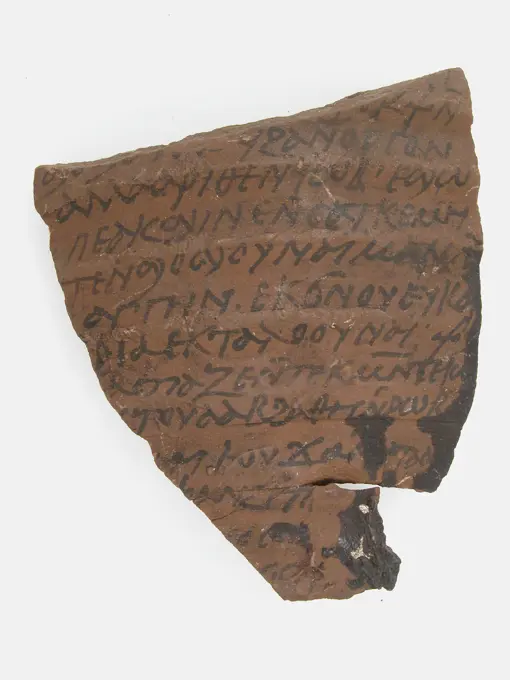
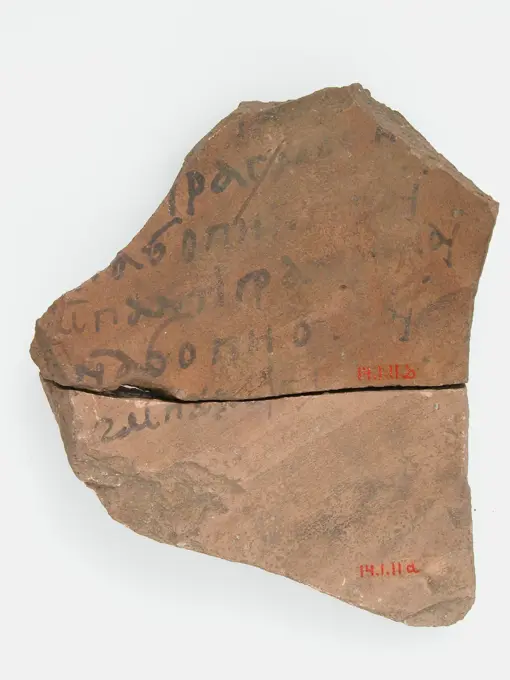
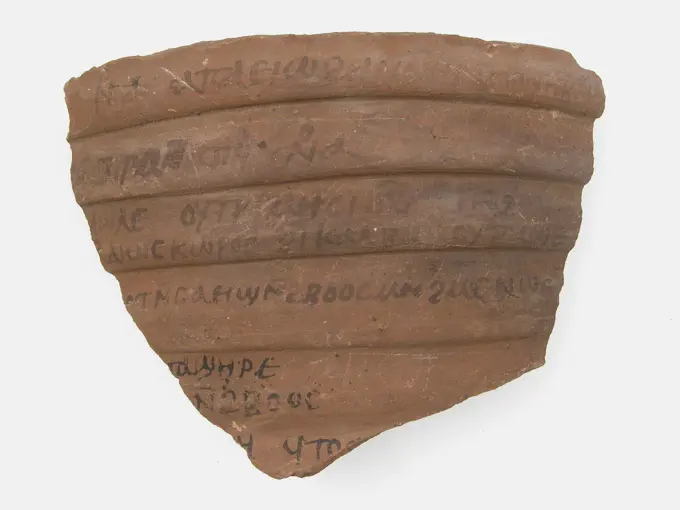
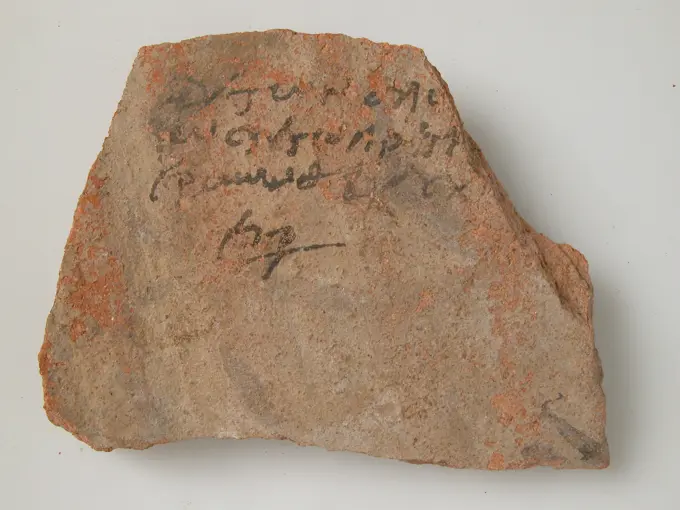
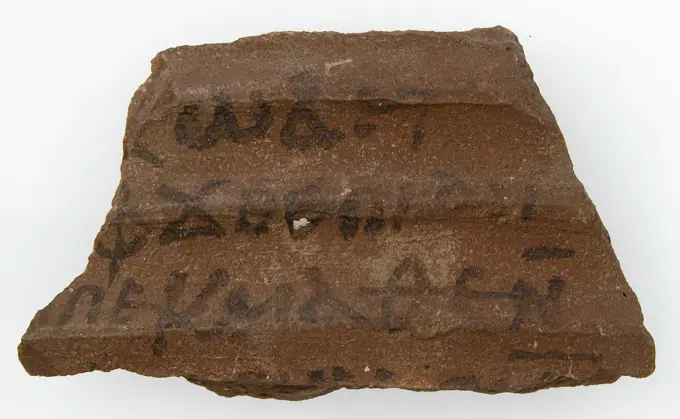
Ostrakon 7th century Coptic. Ostrakon 474611
365 assets in this story
6145-29763338
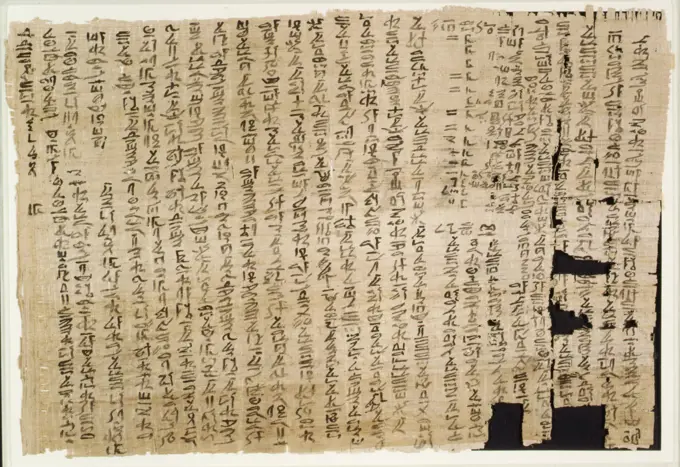
Heqanahkt Letter II ca. 1961-1917 B.C. Middle Kingdom Heqanakht was a native of Thebes (present day Luxor) during the early twelfth dynasty. As "ka-servant" of a high official he was responsible for the high official's statue cult and the administration of the land and income that had been endowed to maintain this cult. The letters and accounts written by Heqanakht and one or more scribes on sheets of papyrus were discovered by Museum excavator Herbert E. Winlock in the excavation season of 1921-1922 in the tomb of Meseh, who had a side passage and crypt in the tomb complex of the vizier Ipy, one of the rock cut tombs along the cliff overlooking the temples at Deir el-Bahri. The documents - some still folded, tied and sealed, when found - provide unique insights into the domestic and financial affairs of an average middle class family that lived almost four thousand years ago. According to this letter, Heqankhat's wife was mistreated by a few members of his household, Heqankhat advises
6145-51829479
Book of the Dead of the Goldworker of Amun, Sobekmose Book of the Dead of the Goldworker of Amun, Sobekmose, ca. 1500-1480 B.C.E. Papyrus, ink, pigment, 14 x 293 in. (35.6 x 744.2 cm).   Egyptian, Classical, Ancient Near Eastern Art ca. 1500-1480 B.C.E.
4409-20932928
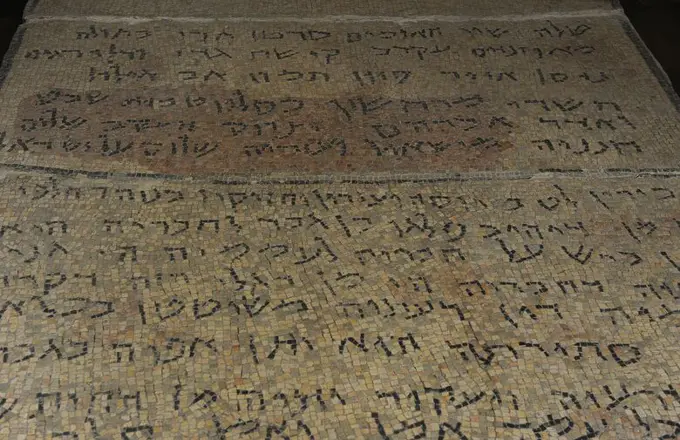
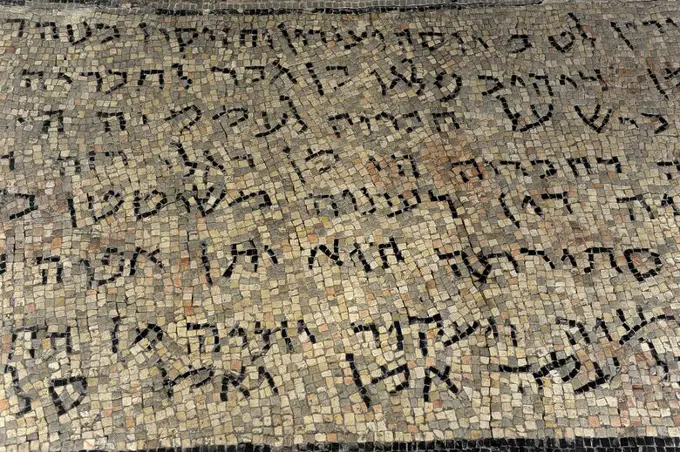
Hebrew and Aramaic Inscriptions on a Mosaic Floor Synagogue at Ein Gedi. 6th century CE. Rockefeller Archaeological Museum. Jerusalem. Israel.
4290-1101
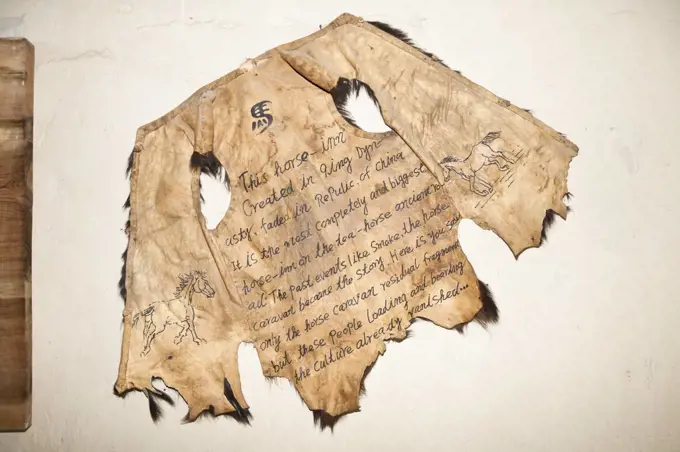
Animal skin exhibit, Yunnan Horse Caravan Cultural Museum, Yunnanyi, Yunnan Province, China
6145-59130395
Papyrus Fragment. Unknown 1st - 2nd century
6145-51828469
The Brooklyn Oracle Papyrus The Brooklyn Oracle Papyrus, October 4, 651 B.C.E. Papyrus, pigment, ink, Overall: 10 15/16 × 210 5/16 in. (27.8 × 534.2 cm).  The Brooklyn Oracle Papyrus records the petition of a man named Pemou on behalf of his father, Harsiese. Harsiese was an ordinary priest in the service of the god Amun-Re at Karnak, but he wished to leave that god's service and join the priesthood of the neighboring temple of Montu-Re-Horakhty. Because temple personnel were seen as the property of the divinity, the god had to be consulted about any change in staff. Pemou asked for the god's advice on behalf of his father, and the god responded favorably. To record the verdict, Pemou had this papyrus drawn up and decorated. The papyrus shows the procession of a image of Amun-Re, the fragments of whose shrine can be seen above the carrying poles borne by the priests. Above the shrine appear two ostrich-feather fans shading the god from the sun. In front of the priestly file stand the h
6145-59141976
Emilia-Romagna Forli Cesena Biblioteca Comunale70. Hutzel, Max 1960-1990 .. Medieval: Manuscripts: 1) Laurentius Rusius: "De cura equorum" (15th century) BCM S.XXVI.2 2) Paolo Veneto: "History of the Origins of the World through Henry VII" (14th century) BCM S.XI.5 3) S. Isidorus: "Etymologies" (late 8th-early 9th centuries) BCM S.XXI.5 4) Gospel Book (Evangeliario), Greek (10th century) BCM D.XXVII.4 5) Pentateuch, Prophets, and Hagiographies, Hebrew (1348) BCM S.XXIX.1 6) "Somnium Scipionis", misc. (14th-15th centuries) BCM S.XII.6 7) Boethius: "De Consolatione Philosophie" (14th century) BCM D.XIV.1 8) Justinian: "Institutiones" (14th century) BCM S.IV.I 9) Bible (Old and New Testaments) (13th-14th centuries) BCM D.V.2 10) Giabir Ibn Afla "Almagestus" (De Astronomia) (13th and 15th centuries) BCM S.XXVII.2. Post-medieval: Manuscripts: 1) St. Augustine: "Enarrationes in Psalmos" (1452) BCM D.III.2 2) Herodotus: Histories (15th century) BCM S.X1V.1 3) St. Augustine: "De Civitate Dei"
6145-29808098
Ostrakon 600 Coptic. Ostrakon 474716
1746-28982118
2nd Century Ink writing tablet. Found in Northumberland.
6145-51831602
Portion of a Historical Text Portion of a Historical Text, ca. 1809-1743 B.C.E. Papyrus, ink, 35.1446a-e: 11 1/2 × 71 5/8 in. (29.2 × 182 cm).  When complete, the papyrus to which this fragment belonged measured almost seven feet long. The texts are written in a cursive form of hieroglyphs called hieratic. Differences in handwriting and in the historical events described demonstrate that different scribes added new inscriptions over several generations. The most important text recounts the efforts of a Thirteenth Dynasty Theban noblewoman named Senebtisi to establish legal ownership of ninety-five household servants, whose names indicate that forty-five were of Asiatic origin. The presence of so many foreigners in a single household suggests that the Asiatic population was increasing rapidly in Thirteenth Dynasty Egypt. As was customary, some of these foreigners no doubt married Egyptians, adopted Egyptian beliefs and cultural traditions, and were absorbed into the cultural mainstream.
6145-48828494
Folio 160, Verso. Roger Fenton (English, 1819 - 1869)
6145-52955490
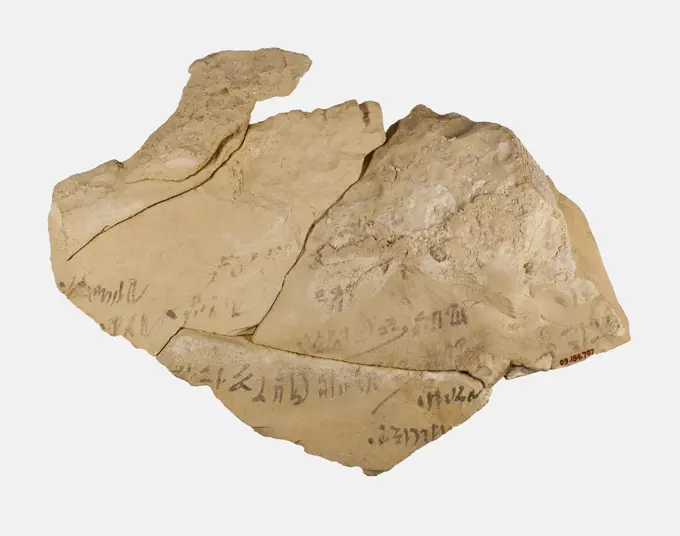
Hieratic ostracon New Kingdom, Ramesside ca. 1295-1070 B.C. Ostraca (plural for ostracon) are potsherds used as surfaces on which to write or draw. The term is used, by extension, to refer to chips of limestone, which were employed for similar purposes. Despite their humble appearances, ostraca bear a wide range of images and texts, including administrative documents, literary texts, and depictions of royal and divine figures. The texts were mostly written with reed pen and ink of two colors, red and black, and inscribed in Hieratic, the cursive script of ancient Egypt throughout most of its periods. This ostracon is inscribed with an hieratic text noting distribution of lamps/torches. View more. Hieratic ostracon. ca. 1295-1070 B.C.. Limestone, ink, paint. New Kingdom, Ramesside. From Egypt, Upper Egypt, Thebes, Valley of the Kings, Davis excavations. Dynasty 19-20
6145-51829542
Book of the Dead of the Goldworker of Amun, Sobekmose Book of the Dead of the Goldworker of Amun, Sobekmose, ca. 1500-1480 B.C.E. Papyrus, ink, pigment, 14 x 293 in. (35.6 x 744.2 cm).   Egyptian, Classical, Ancient Near Eastern Art ca. 1500-1480 B.C.E.
4409-17218549
Manuel Blanch i Puig / Score singing to the Virgin in the month of May, 19th century.
6145-29157763
Hieratic Ostracon Recording a Royal Name and a List of Names ca 1184-1070 B.C. New Kingdom, Ramesside Ostraca (plural for ostracon) are potsherds used as surfaces on which to write or draw. The term is used, by extension, to refer to chips of limestone, which were employed for similar purposes. Despite their humble appearances, ostraca bear a wide range of images and texts, including administrative documents, literary texts, and depictions of royal and divine figures. The texts were mostly written with reed pen and ink of two colors, red and black, and inscribed in Hieratic, the cursive script of ancient Egypt throughout most of its periods. This ostracon records the name list of workmen amd a few absences.. Hieratic Ostracon Recording a Royal Name and a List of Names 561349
6145-29136847
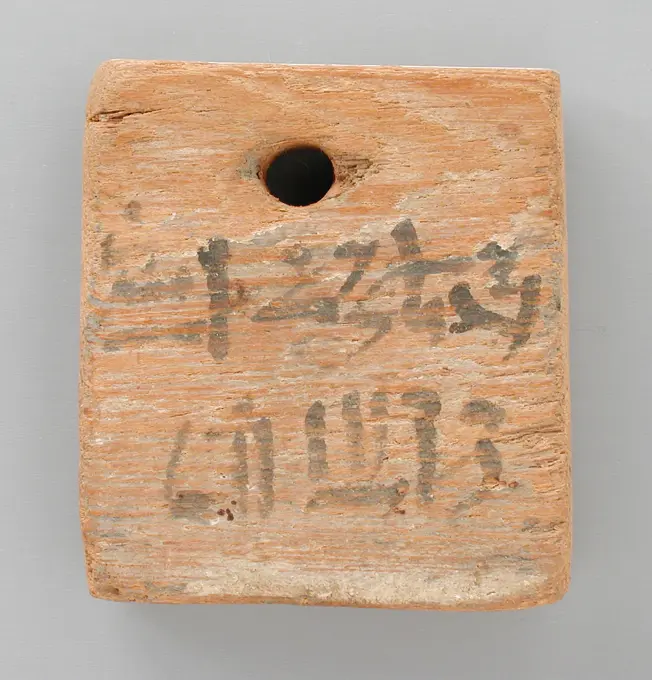
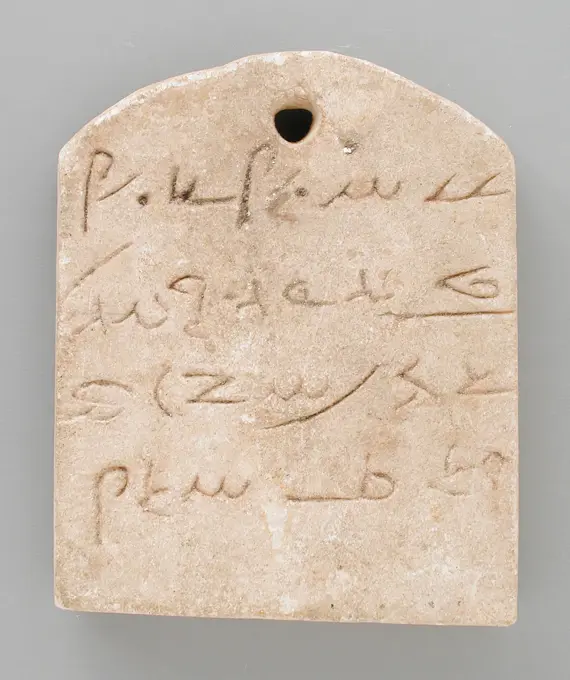
Label with Hieratic Inscription. Egypt, Ramesside Period-Third Intermediate Period (1100-711 BCE). Tablets. Wood
6145-29772752
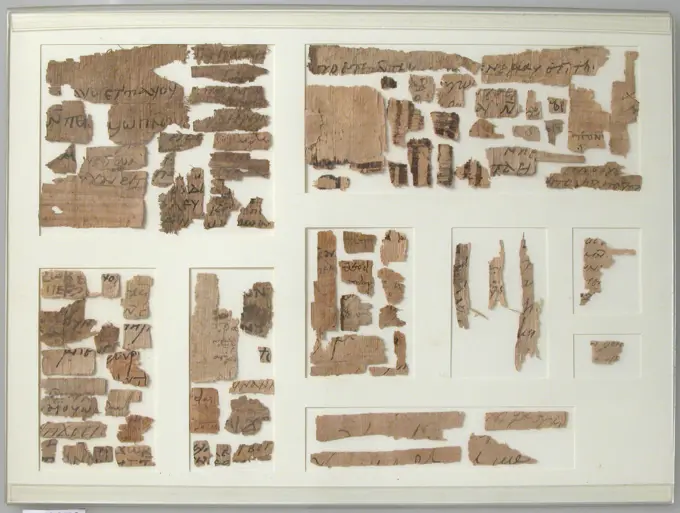
Papyri Fragments 7th century Coptic. Papyri Fragments 479273
4409-17521301
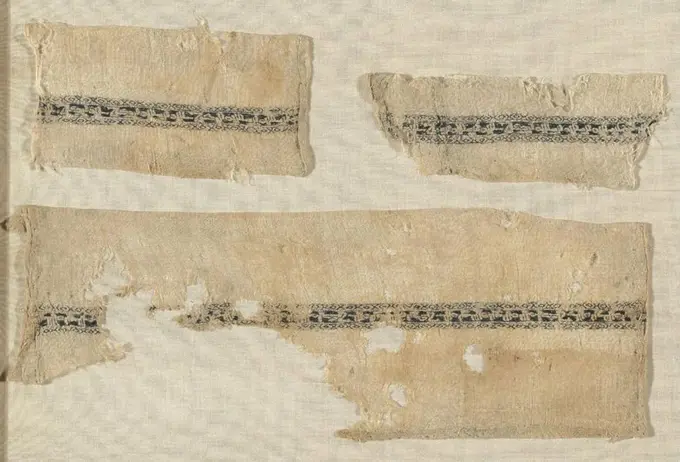
Fragment. Egypt. Date: 969 AD-1171. Dimensions: 19 × 23.5 cm (7 1/2 10 1/4 in.). Plain simple cloth. Origin: Egypt. Museum: The Chicago Art Institute, Chicago, USA. Author: Islamic.
6145-51831110
Papyrus Inscribed in Greek Papyrus Inscribed in Greek, ca. 215 C.E. (recto); 3rd century C.E. (verso). Papyrus, ink, Glass: 8 1/16 x 12 5/8 in. (20.5 x 32 cm).   Egyptian, Classical, Ancient Near Eastern Art ca. 215 C.E. (recto); 3rd century C.E. (verso)
6145-59130550
Papyrus Fragment. Unknown 1st-2nd century A.D.
6145-59130561
Papyrus Fragment. Unknown 1st - 2nd century
6145-59130573
Papyrus Fragment. Unknown 1st - 2nd century
6145-51830672
Papyrus Fragments Inscribed in Demotic Demotic. Papyrus Fragments Inscribed in Demotic, 305-30 B.C.E.. Papyrus, ink, Largest Fragment: 3 3/8 × 1 in. (8.5 × 2.5 cm).   Egyptian, Classical, Ancient Near Eastern Art 305-30 B.C.E.
1890-28806557
Close-up detail of traditional old Torah scroll book, Jewish Museum of Florida, Miami Beach, Florida, United States of America, North America
6145-29116946
Mummy Label with a Demotic Incription. Egypt, late Ptolemaic Period- early Roman Period (100 BCE-100 CE), perhaps reign of Augustus (30 BCE-41 CE). Tablets. Limestone
6145-51829510
Book of the Dead of the Goldworker of Amun, Sobekmose Book of the Dead of the Goldworker of Amun, Sobekmose, ca. 1500-1480 B.C.E. Papyrus, ink, pigment, 14 x 293 in. (35.6 x 744.2 cm).   Egyptian, Classical, Ancient Near Eastern Art ca. 1500-1480 B.C.E.
6145-29798538
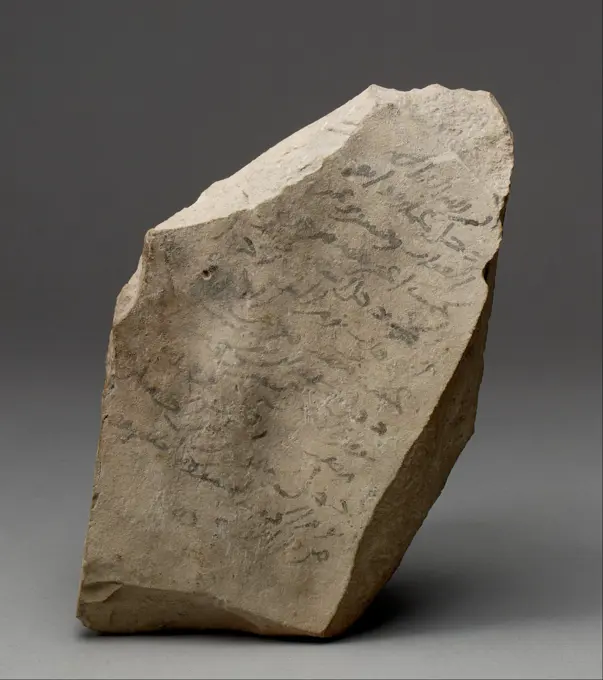
Slab first half 8th century The faded black paint used to inscribe this limestone slab does not permit a proper reading of the text, which was written in a cursive script typical of the early Islamic era. No date is fully legible, thus the inscription cannot be definitively attributed. The only available, though hearsay, information is that the slab was perhaps found at Khirbat al-Mafjar (in present-day Palestine), the site of an Umayyad palace of the first half of the eighth century. The text, beginning with the standard formula "In the name of Allah, the Merciful, the Compassionate," seems to represent nothing more than graffiti, a practice as old as history itself in the area, recording the names of visitors who entered an unnamed building. Here are included three men named Abu al-Ghaffar, Khusraw, and al-Wahhab.. Slab 451853
6145-29749878
Ostrakon 7th century Coptic. Ostrakon 474577
4443-19542167
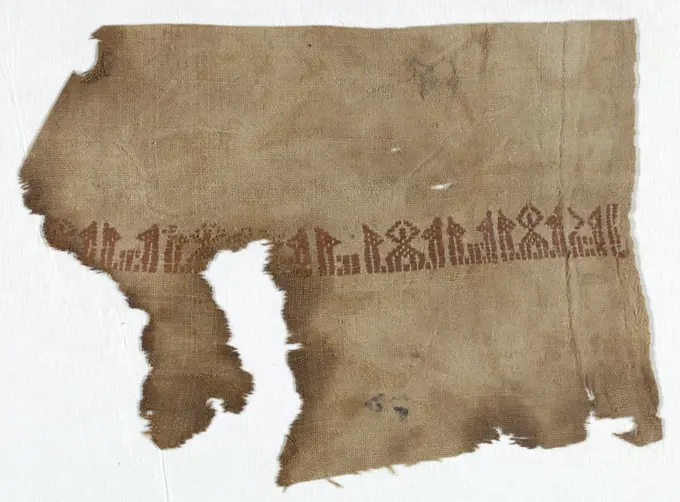
Fragment, Medium: silk on linen Technique: counted running stitch on plain weave, Fragment with an embroidered inscription in red that repeats the word 'Vigorous.', Egypt, 13th century, embroidery & stitching, Fragment
6145-29795955
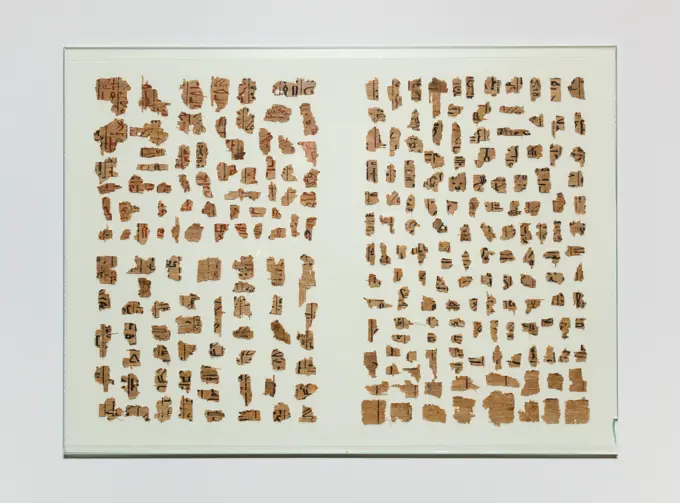
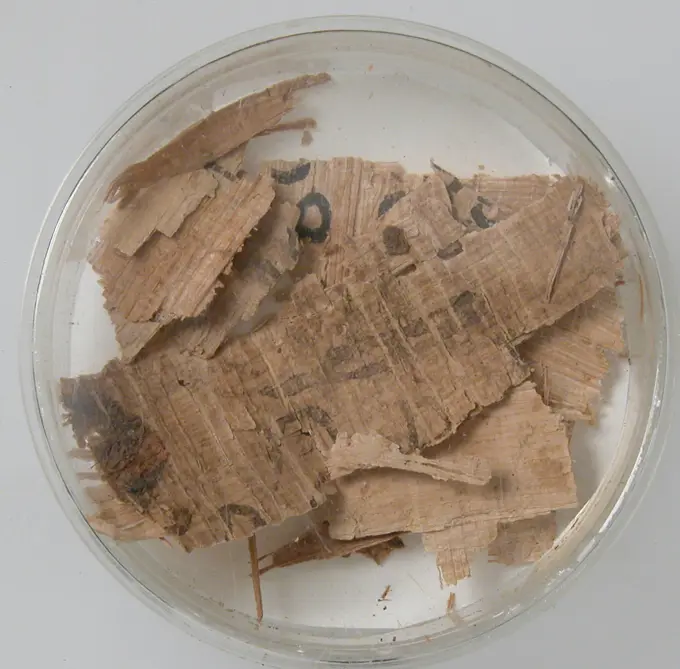
Fragments from a Book of the Dead ca. 1390-1353 B.C. New Kingdom Fragments of a papyrus mounted in four frames, with additional fragments in two dishes, discovered in Tomb MMA 831 (TT 297). This tomb belonged to an 18th Dynasty official named Amenemotep (also called Djehutynefer) and thus the papyrus may date to this era, specifically to the reign of Amenhotep III; however, a Ramesside date for the papyrus has also been suggested. The text is in vertical columns, primarily in black ink with rubrics in red. The hand is large and very fine. The vignettes used a polychrome palette that included red, black, yellow, white, red, and blue.This frame includes many small fragments of papyrus containing complete and partial hieroglyphs.. Fragments from a Book of the Dead 733992
6145-51836217
Manuscript of the Qur'an Manuscript of the Qur'an, A.H. 889/1484 C.E. Ink, opaque watercolors, and gold on paper, Paper: 3 3/4 x 3 3/4 in. (9.5 x 9.5 cm).  The patron who commissioned this manuscript of the Quran spared no expense—from the first few folios, replete with lush illumination, to the binding, elaborately engraved with the Chinese-inspired lotus blossoms and cloud bands common to the art of the Timurid dynasty in Iran and Central Asia. The second and third pages displayed here feature intricate vegetal ornamentation in gold on a background of cobalt blue, both materials prized for their value and beauty. The right-hand page contains the Arabic text of the Qurans first sura, or chapter, which plays a part in many Muslims daily lives; the following chapter begins on the left. The script is known as ghubar, which literally means “dust,” because the letters were thought to be as minute as grains of powder. The small overall size of the codex suggests that it was meant for tr
6145-29135393
Mummy Label with Bilingual Inscription. Egypt, Roman Period (30 BCE - 300 CE). Tablets. Wood
4409-20932929
Hebrew and Aramaic Inscriptions on a Mosaic Floor Synagogue at Ein Gedi. 6th century CE. Rockefeller Archaeological Museum. Jerusalem. Israel.
6145-29805445
Ostrakon 4th-7th century Coptic Pottery fragments with ink inscriptions are called Ostraka. Written in Greek, ostraka represent a Hellenized and elite Christian community in Kharga. This example is a receipt related to the military and indicate the presence of the members of the Roman army at Kharga in this period.. Ostrakon 478526
4266-10954
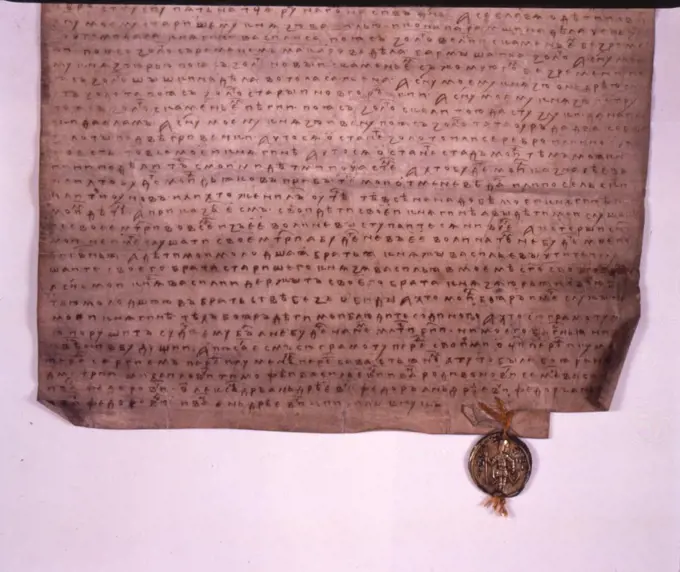
Historical document. ink on parchment, 1389, Russia, Russian State Archives of Ancient Documents
4409-21479883
memorias , Glikl bas Juda Leib ,1646-1724,facscimil,Museo Judío de Berlín , Berlin, Alemania, Europe.
4409-62027163
suras, Quranic text, 19th century, Iran, Anthropology National Museum, Madrid, Spain.
6145-29782327
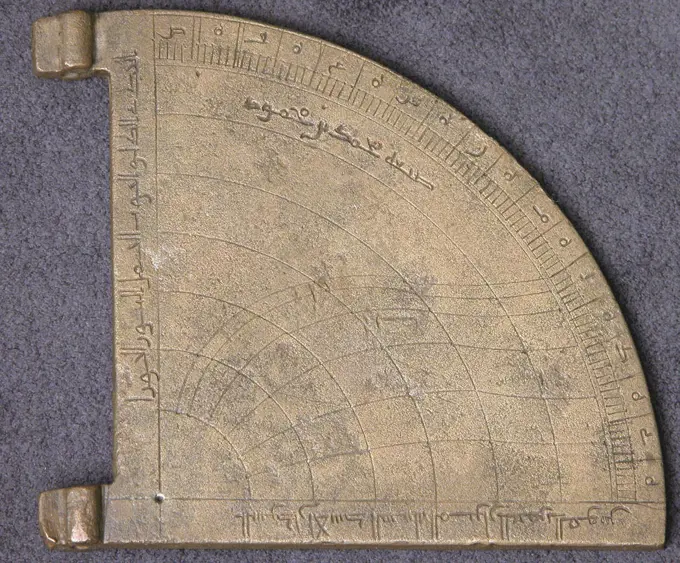
Horary Quadrant 10th century Muhammad ibn Mahmud. Horary Quadrant 449085
6145-29746898
Ostrakon 7th century Coptic. Ostrakon 474608
4168-9926
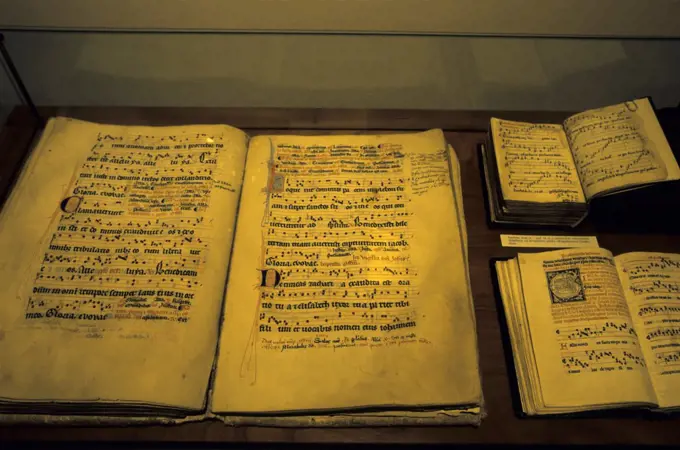
Croatia, Hvar Island, Starigrad, Dominican Monastery, Museum, Old Books
4409-62727010
Madrid, 04/24/2024. Report on restoration at the National Library of Spain. Chronicles of Heredia (1396). Photo: Ignacio Gil. ARCHDC.
6145-58993888
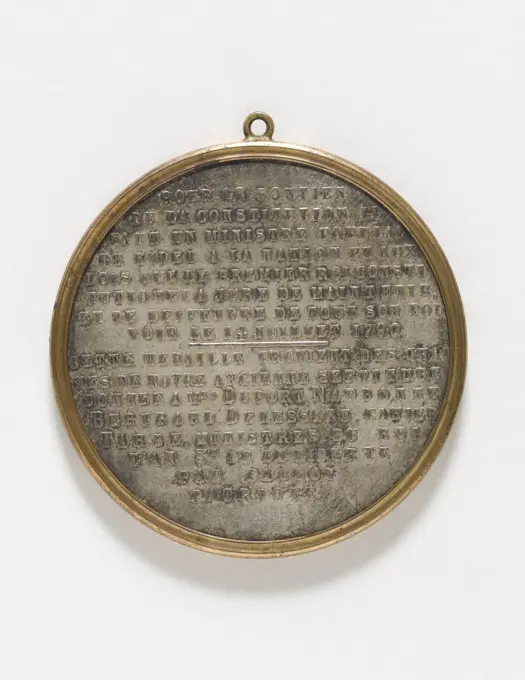
Pierre-François Palloy (1754-1835). "Tribute to the ministers". Tin circulated by brass. July 14, 1790. Paris, Carnavalet museum. Registration on sixteen lines. Etain Circle Brass, Tribute, Medal, Minister, French Revolution
6145-54682841
Hieratic ostracon with short list in red and black New Kingdom, Ramesside ca. 1295-1070 B.C. Ostraca (plural for ostracon) are potsherds used as surfaces on which to write or draw. The term is used, by extension, to refer to chips of limestone, which were employed for similar purposes. Despite their humble appearances, ostraca bear a wide range of images and texts, including administrative documents, literary texts, and depictions of royal and divine figures. The texts were mostly written with reed pen and ink of two colors, red and black, and inscribed in Hieratic, the cursive script of ancient Egypt throughout most of its periods. This ostracon is inscribed with names with red and black dots. View more. Hieratic ostracon with short list in red and black. ca. 1295-1070 B.C.. Limestone, ink, paint. New Kingdom, Ramesside. From Egypt, Upper Egypt, Thebes, Valley of the Kings, Davis excavations. Dynasty 19-20
6145-51833962
The Book of the Dead of Neferrenpet The Book of the Dead of Neferrenpet, ca. 1295-1185 B.C.E. Papyrus, pigment, ink, 35.1448a-o, as mounted: 20 1/16 x 15/16 x 51 1/8 in. (51 x 2.4 x 129.8 cm).   Egyptian, Classical, Ancient Near Eastern Art ca. 1295-1185 B.C.E.
6145-45328461
Fragment of Coptic fabric unknown
6145-29155560
Linen mark (Type XIV) ca. 1961-1917 B.C. Middle Kingdom. Linen mark (Type XIV). ca. 1961-1917 B.C.. Linen. Middle Kingdom. From Egypt, Upper Egypt, Thebes, Deir el-Bahri, Tomb MMA 507 (The Slain Soldiers), MMA excavations, 1926-27. Dynasty 12
6145-52335262
Ägyptischer Bucheinband; Seite aus einem marokkanischen Koran.. Prints. 1912. The Miriam and Ira D. Wallach Division of Art, Prints and Photographs: Art & Architecture Collection
6145-50509039
Fragment całunu. unknown, author
824-65832957
Guimet museum. Treatise on Ayurvedic medicine whose content is taken from the Sushruta samhita. Nepal 13 th Century. Paris. France.
6145-29830808
Sampler 1822 German. Sampler 217241
6145-51829376
Ananiah Gives Yehoishema a House Aramaic. Ananiah Gives Yehoishema a House, March 10, 402 B.C.E. Papyrus, ink, mud, linen, Glass: 15 3/8 x 19 1/2 in. (39.1 x 49.5 cm).   Egyptian, Classical, Ancient Near Eastern Art March 10, 402 B.C.E.
1525-23807518
Book pages with an Arabic manuscript on a table with a light and a magnifying glass. Paleography, the study of ancient Arabic writing. ancient Arabic manuscripts
6145-59503092
Notes about the first N.O. passing-out exhibition, 1594, Anonymous, c. 1594 - c. 1596  Notes about the first N.O. passing-on exhibition, 1594. This is a document of the trip of 1594 or perhaps a copied piece.  paper writing (processes)  Nova Zembla. Saving Huys
1848-54551645
Close-up view of ancient buddhist texts
1795R-4483
Close-up of Hebrew text
7012-69892453
Massachusetts, New Bedford. New Bedford Whaling Museum. Collection of traditional whalers Handmade scrimshaw.
6145-51830349
Eight Groups of Papyrus Fragments Inscribed in Demotic and Greek Eight Groups of Papyrus Fragments Inscribed in Demotic and Greek, 664 B.C.E.-395 C.E. Papyrus, ink, 47.218.17a-3: Largest fragment: 2 9/16 × 1 9/16 in. (6.5 × 4 cm).   Egyptian, Classical, Ancient Near Eastern Art 664 B.C.E.-395 C.E.
1899-17319601
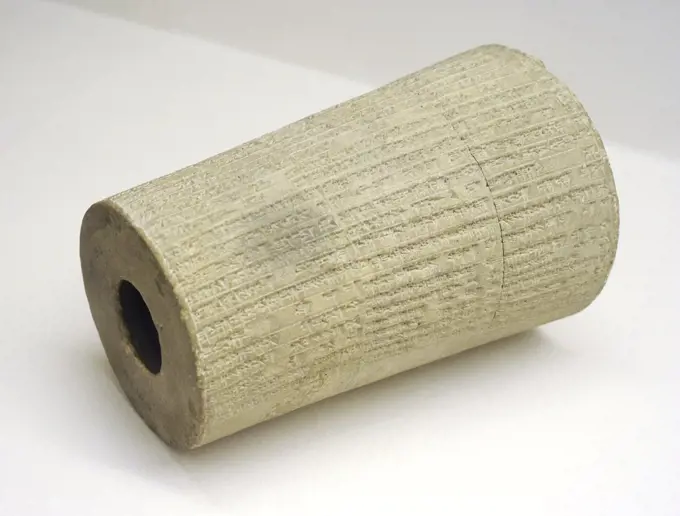
Mesopotamia. Neo-Babylonian Empire. Clay cone with an inscription of Nebuchadnezzar II (630-562 BC) deposited in the foundation of Lugal-Marad temple in the town of Marad. The text reports that in the course of works, the inscription of Naram-Suen of Agade (2236-2200 BC), the original founder of the temple had been found. The State Hermitage Museum. Saint Petersburg. Russia.
1606-72334
Ethiopie, Lalibela, Old book in Gabriel church, Lalibela
6145-44142352
Brahmi font fragments on parchment (top) and palm sheet (below)
6145-51834219
Papyrus Fragments Inscribed in Demotic or Greek Papyrus Fragments Inscribed in Demotic or Greek, 2nd century C.E. Papyrus, ink, a: Glass: 8 1/16 x 10 1/16 in. (20.5 x 25.5 cm).   Egyptian, Classical, Ancient Near Eastern Art 2nd century C.E.
1848-50681755
Largest book in the world, marble tablets with the teachings of Theravada Buddhism, Kuthodaw Pagoda, Mandalay, Myanmar, Asia
6145-46812457
4 Momme 6 Fun of Emperor Komei fromAkita. Ruler: K?mei, Emperor of Japan, Japanese, 1831-1867, ruled 1846-67 Mint: Akita Artist: Unknown
6145-29830044
Papyri Fragments 7th century Coptic. Papyri Fragments 479239
6145-29787338
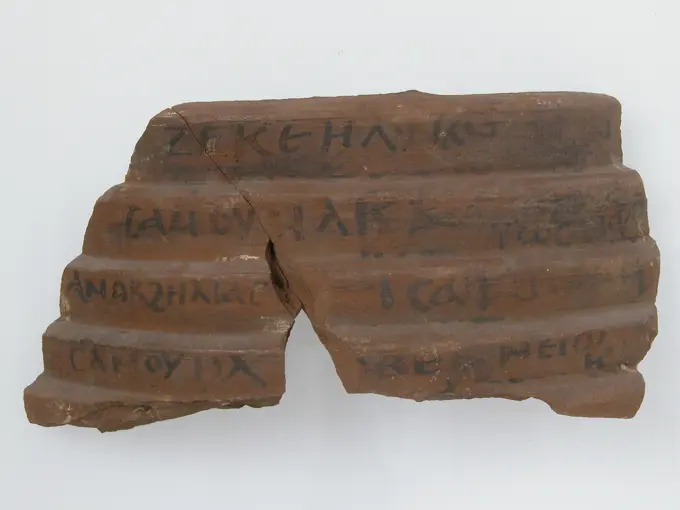
Ostrakon 600 Coptic. Ostrakon 474759
PREVIOUS
of 4
NEXT
2401 S. Ervay, Suite 206
Dallas, Texas 75215
United States
Get Started
Free ResearchMy BoardsMy Cart
For Creators
How To License Your ContentContributor PortalFrame of Mind
Resources
API accessPricing
Contact
+1 866 236 0087help@viewpictures.co.uk Contact form
©2026 View Pictures. All Rights Reserved. -A
This site is protected by reCAPTCHA and Google Privacy Policy and Terms of Service apply.