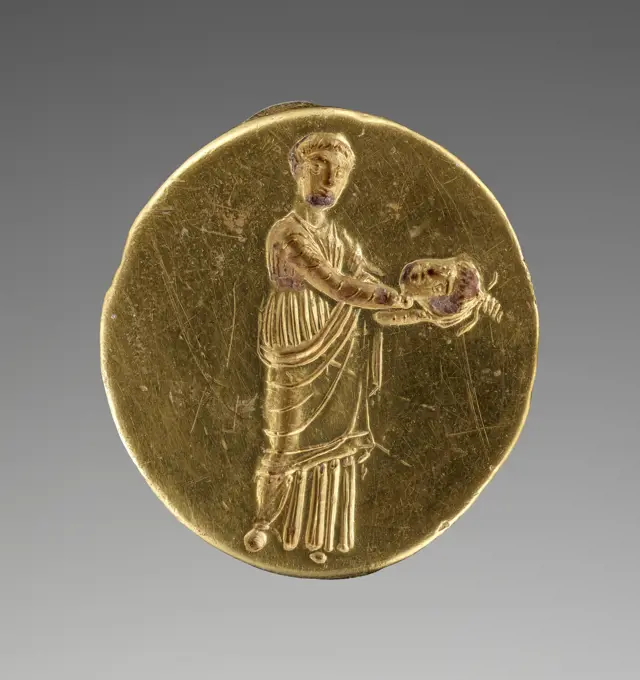
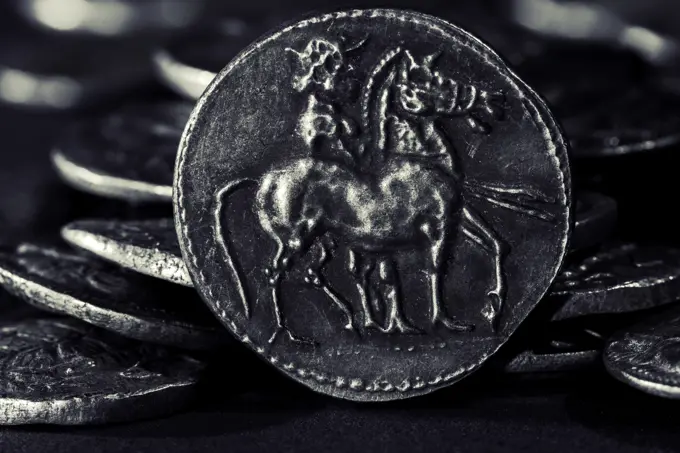
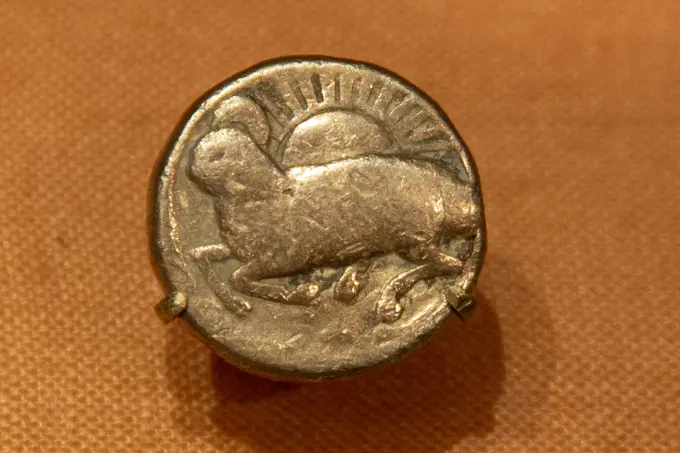
Ancient Roman Coins

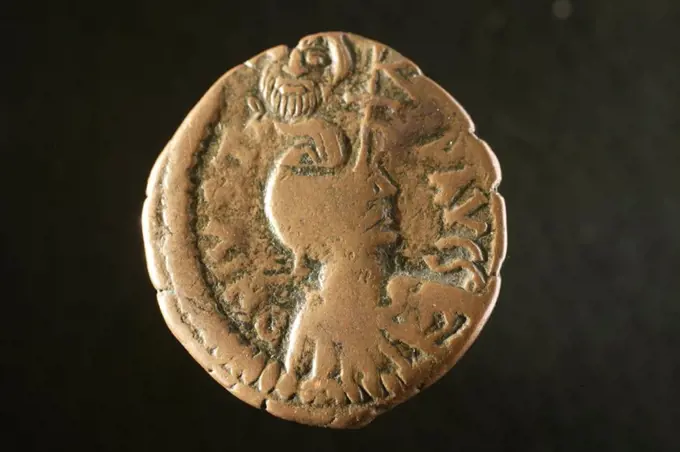
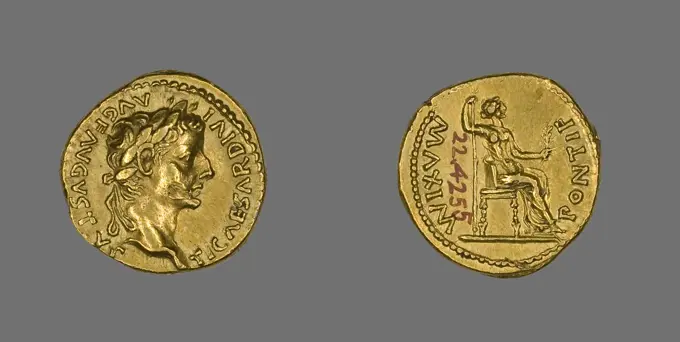
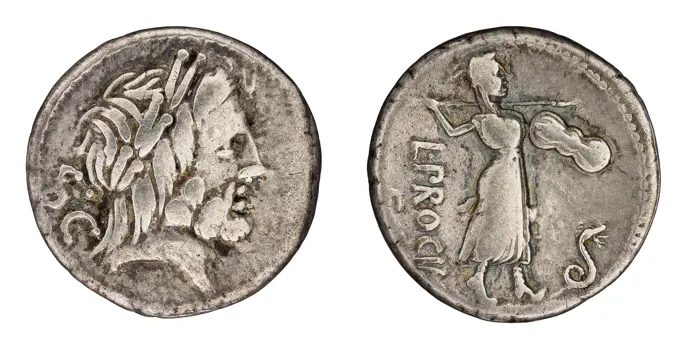
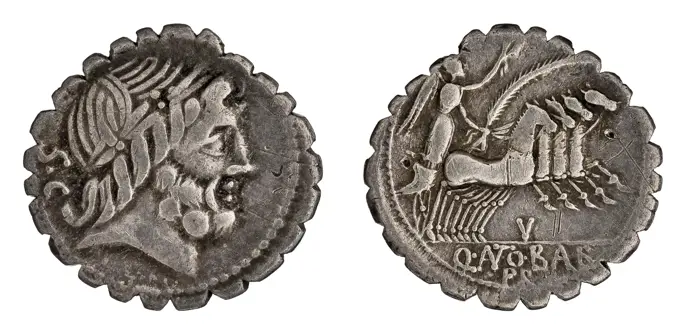
A selection of ancient Roman coins depicting emperors and empresses, showcasing historical artifacts with inscriptions and detailed craftsmanship.

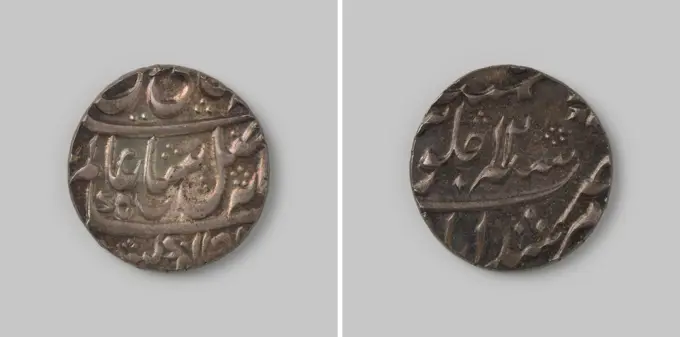
Repoie from Bengalen in India of the English Oostindische Compagnie (EIC) in the name of Shah Alam I, 1193 = 1779 ,, 1779 coin Silver coin. Front: In Arabic characters in three lines with the inscription with at the bottom of the year: 1185. Championship: In Arabic characters in three lines in the inscription. Above the second line indication of the "eternal" government year: 19 with the far right of it (part of a) star = coinage Murshidabad. Smooth edge.  silver (metal) striking (metalworking)
Repoie from Bengalen in India of the English Oostindische Compagnie (EIC) in the name of Shah Alam I, 1193 = 1779 ,, 1779 coin Silver coin. Front: In Arabic characters in three lines with the inscription with at the bottom of the year: 1185. Championship: In Arabic characters in three lines in the inscription. Above the second line indication of the "eternal" government year: 19 with the far right of it (part of a) star = coinage Murshidabad. Smooth edge. silver (metal) striking (metalworking)
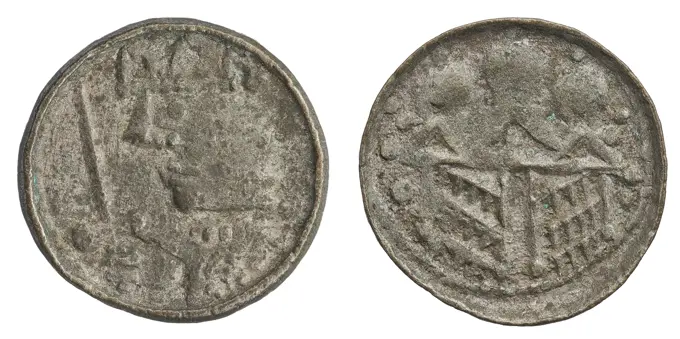
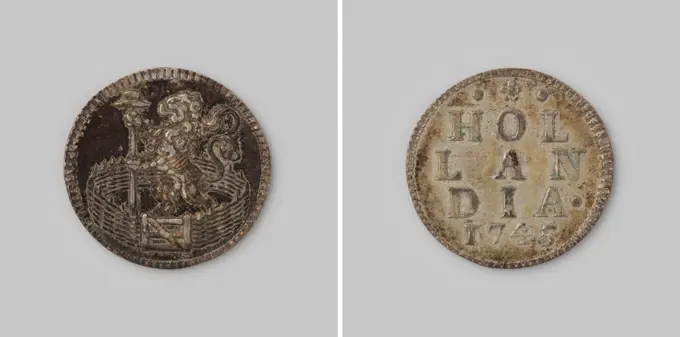
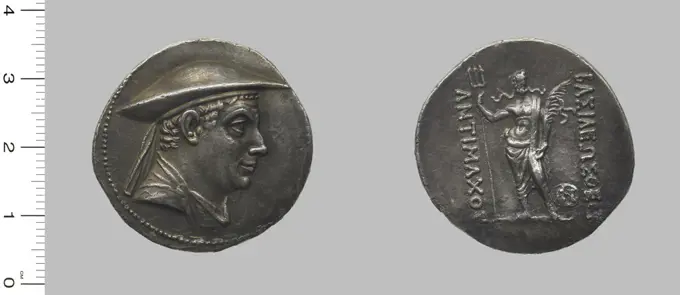
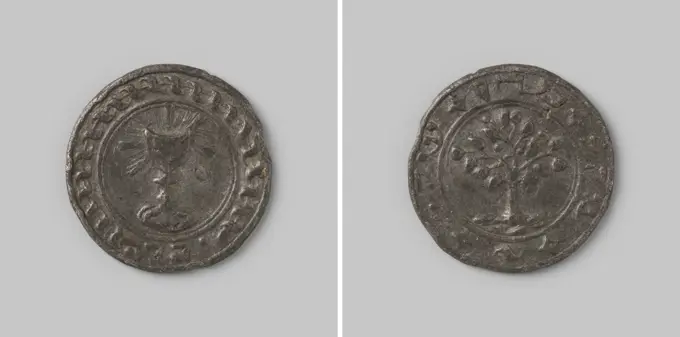
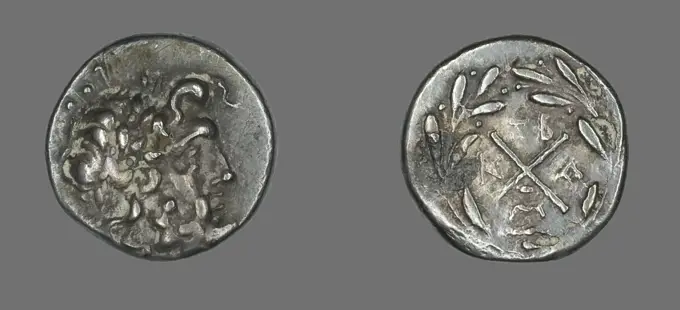
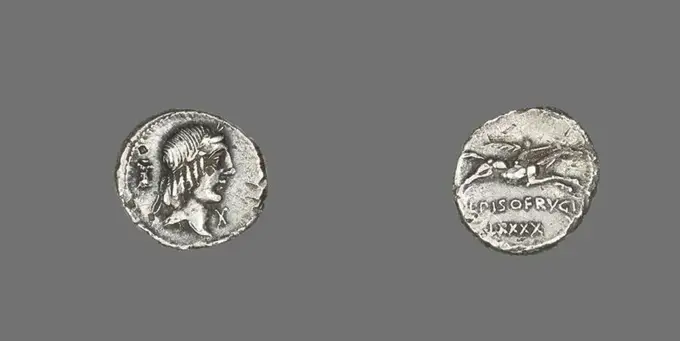
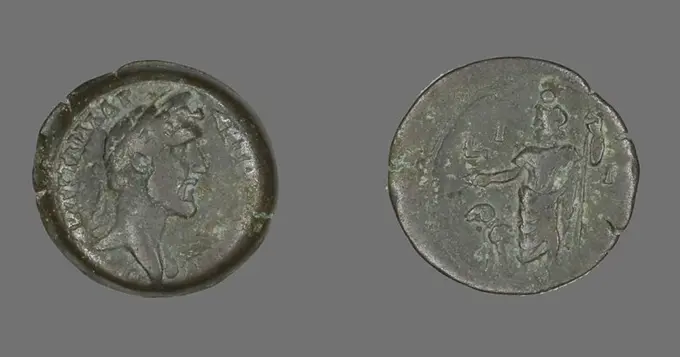
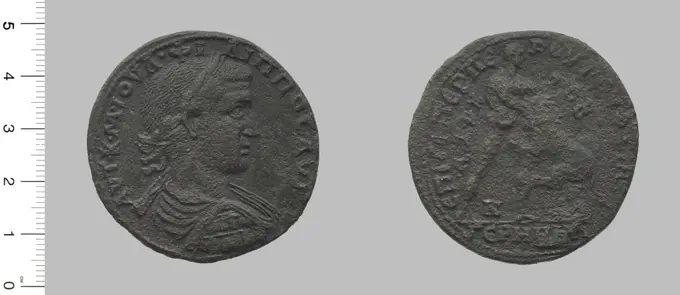
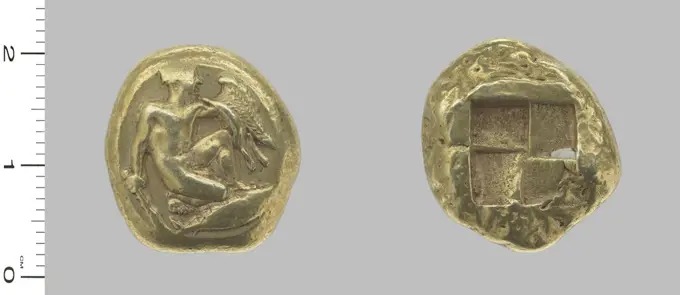
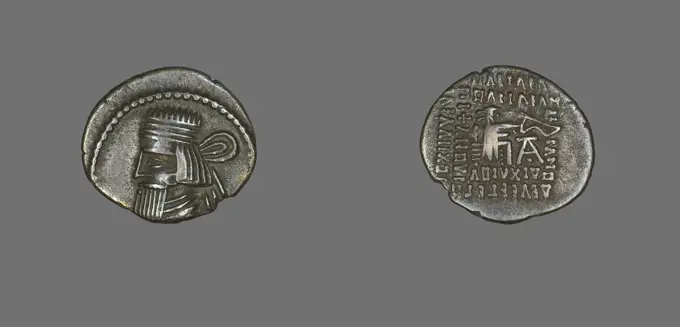
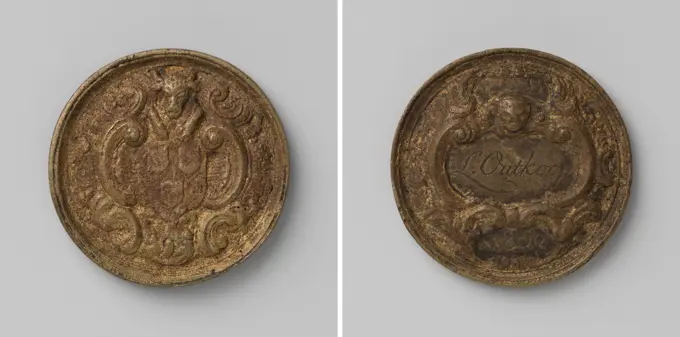
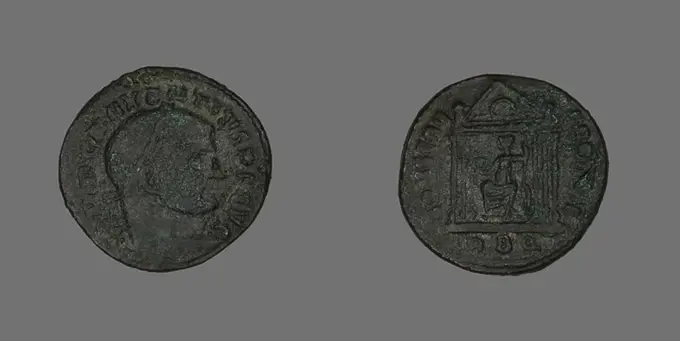
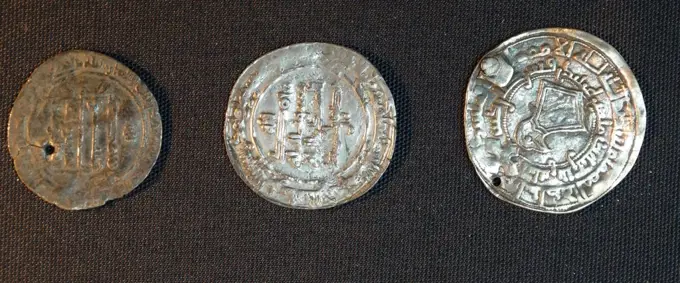
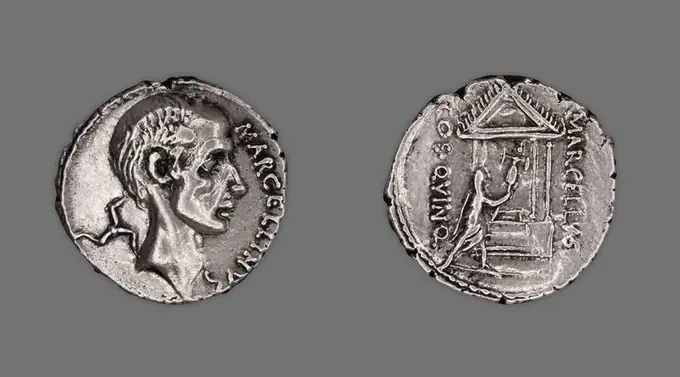
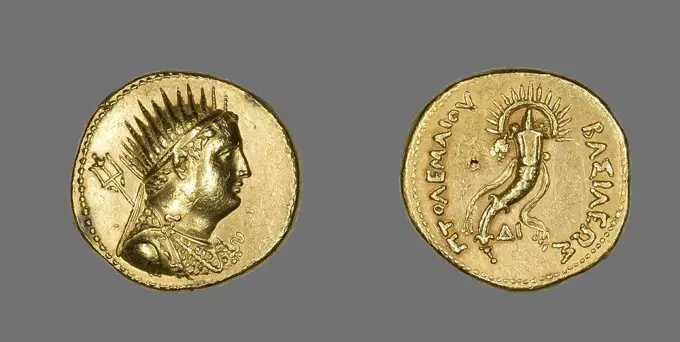
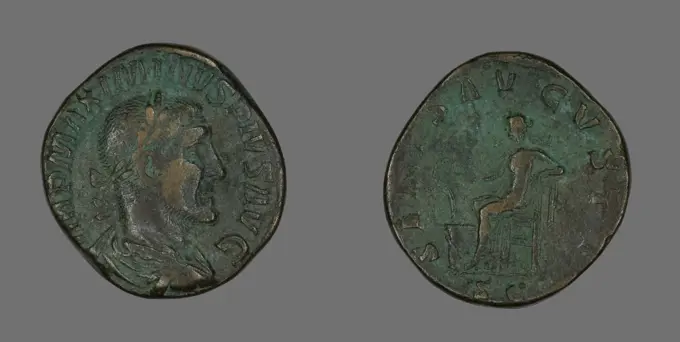
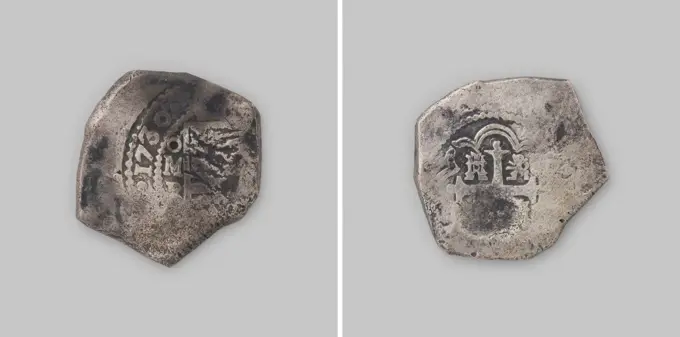
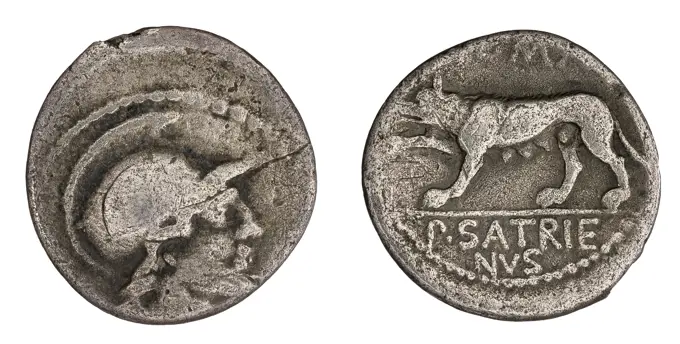
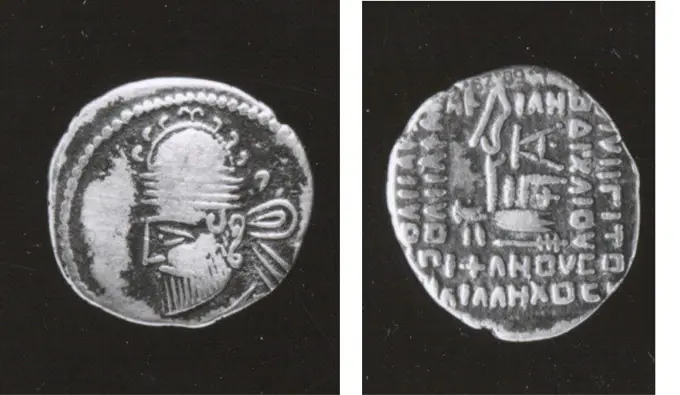
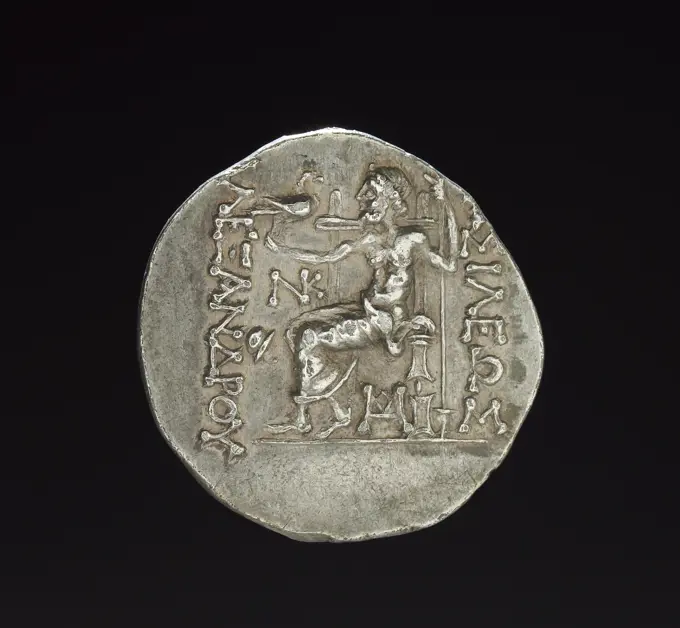
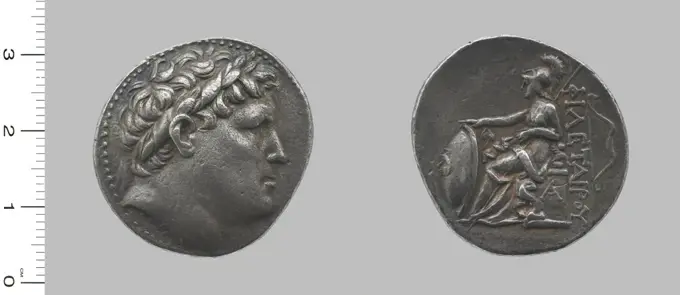
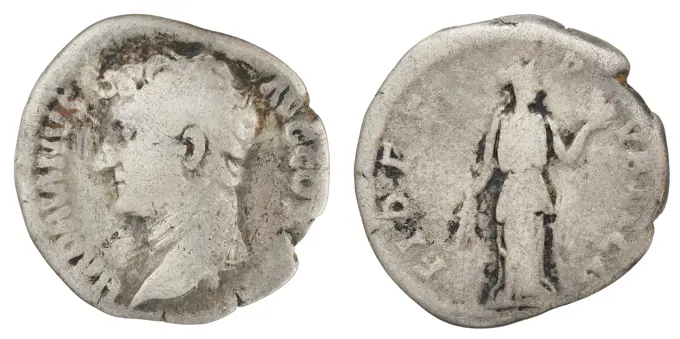
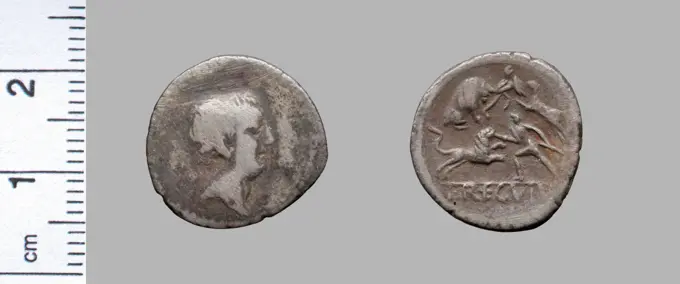
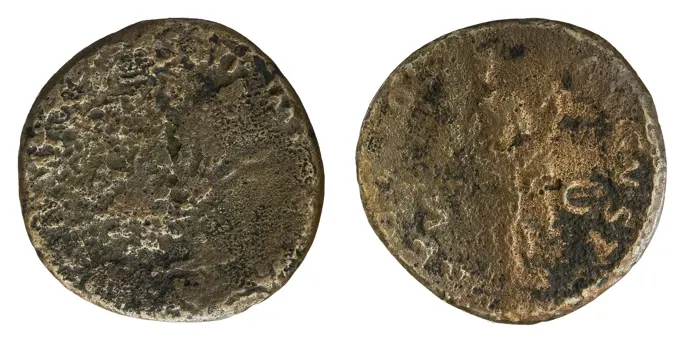
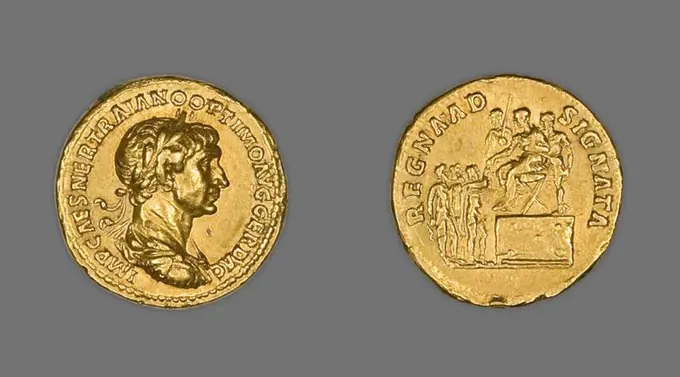
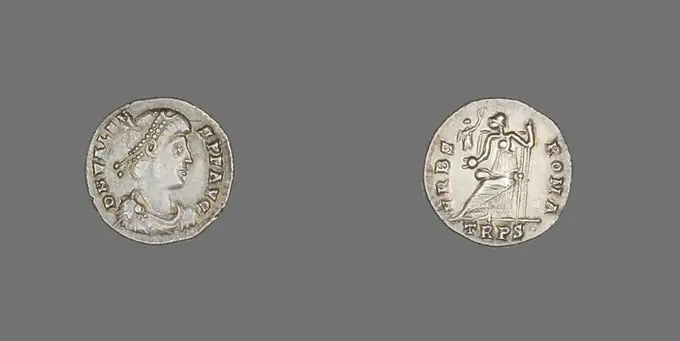
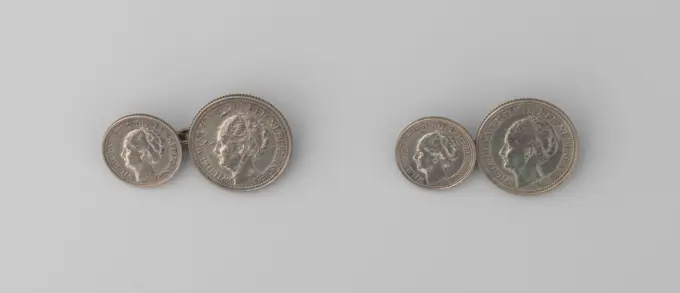
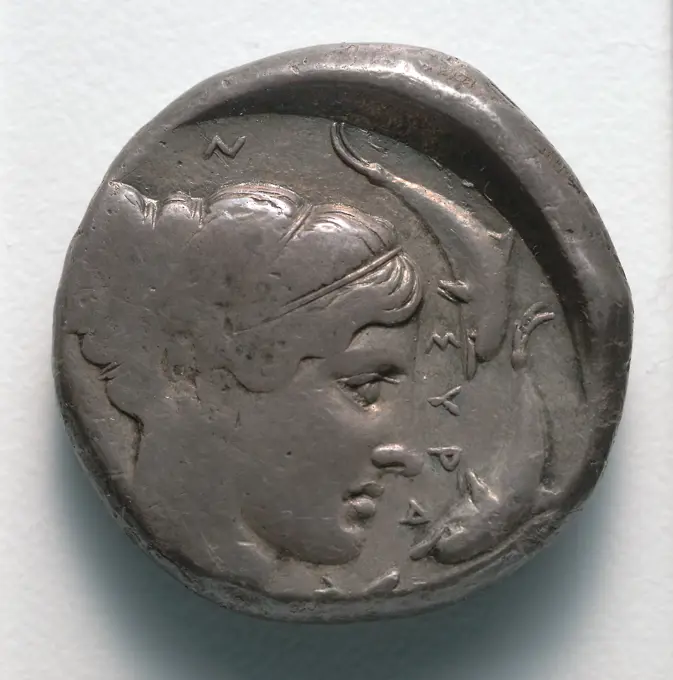
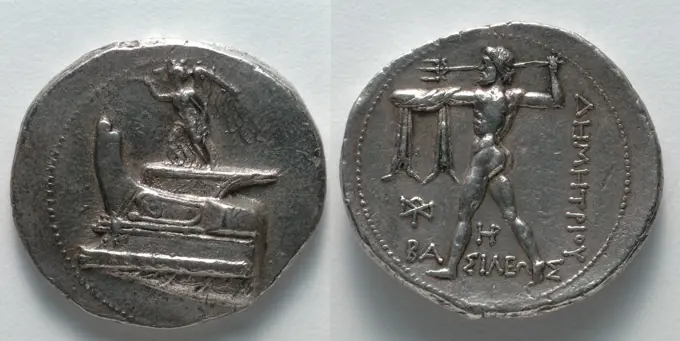
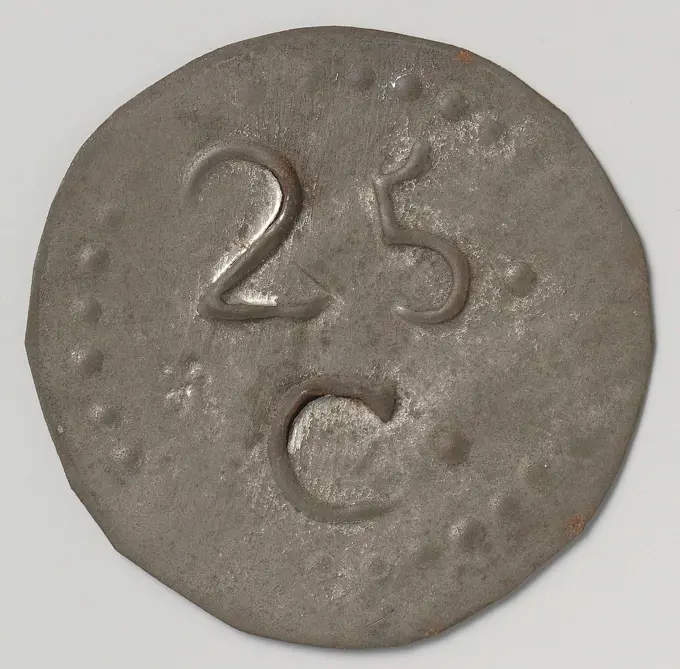
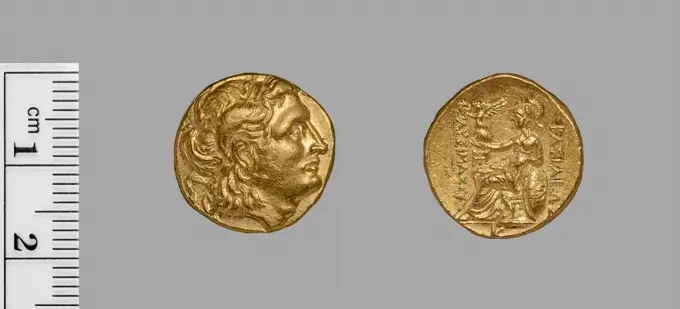
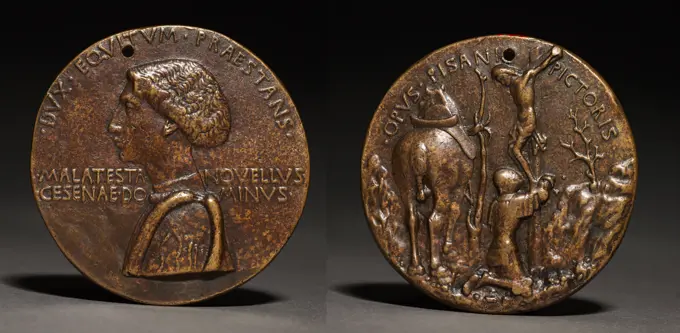
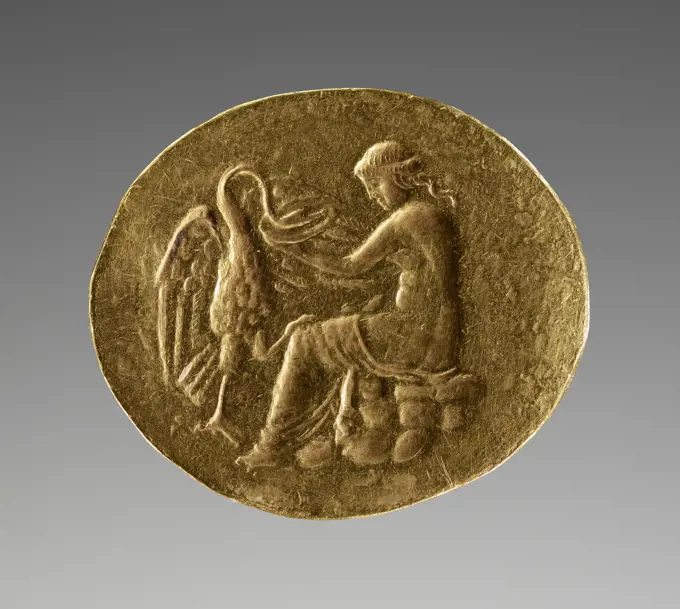
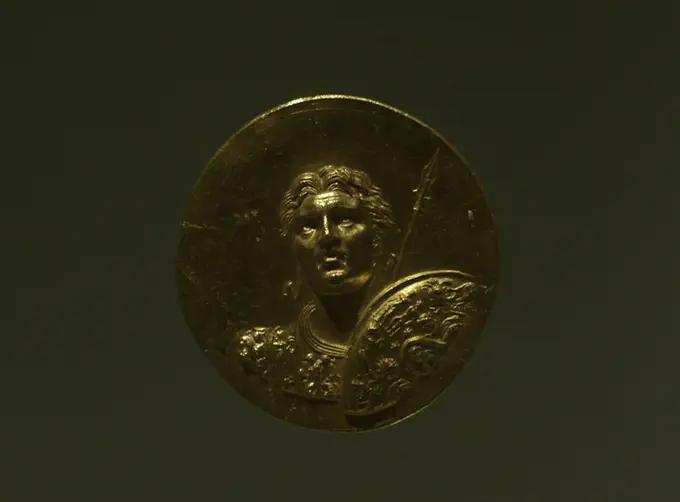
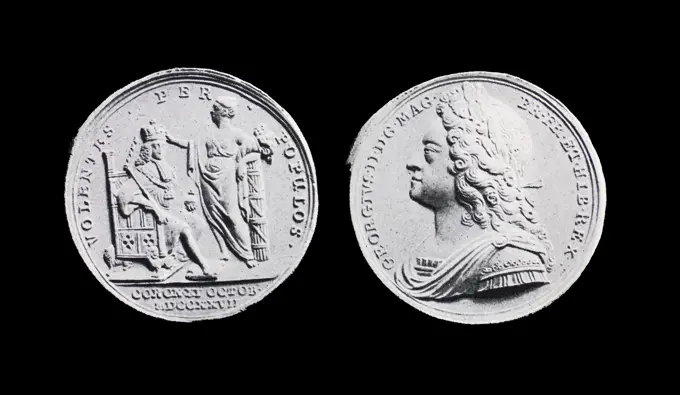
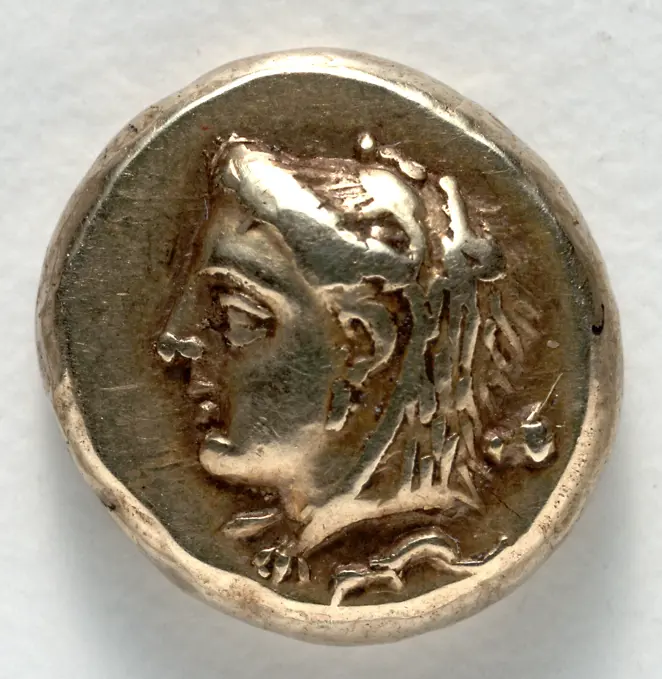
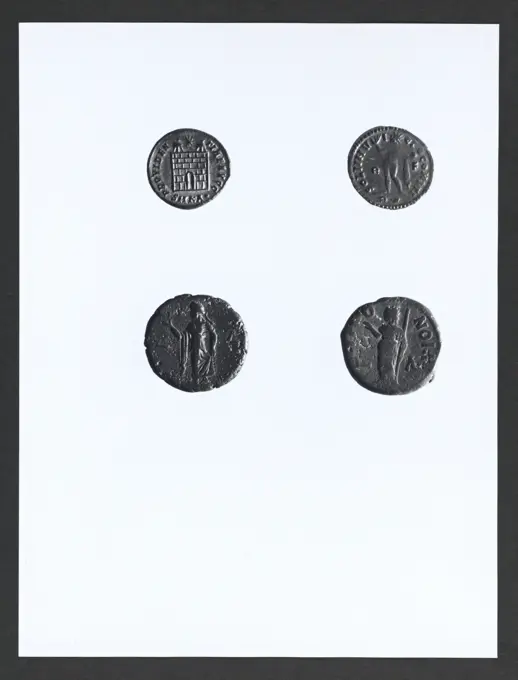
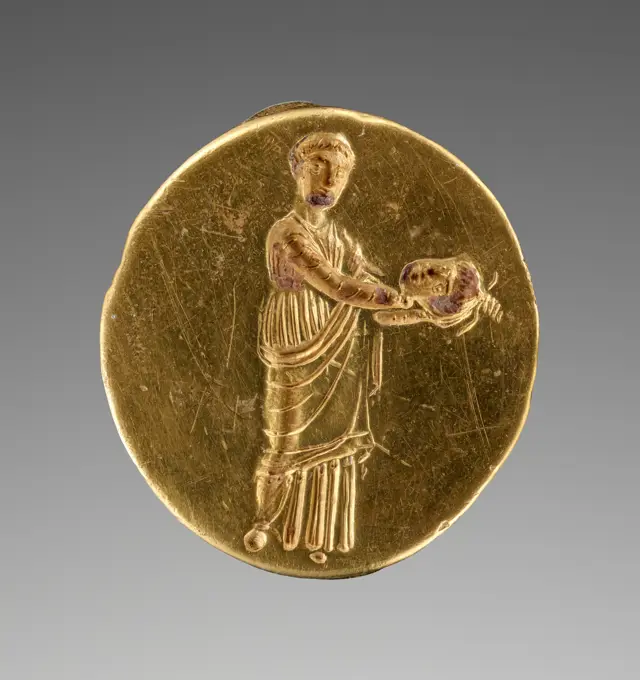
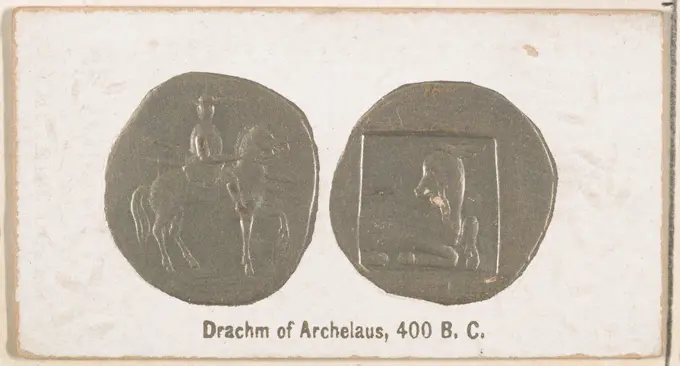
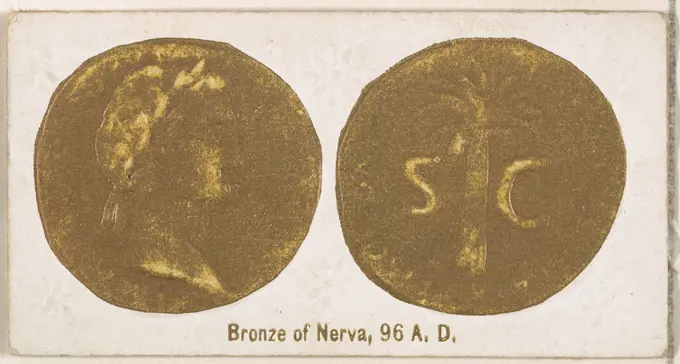
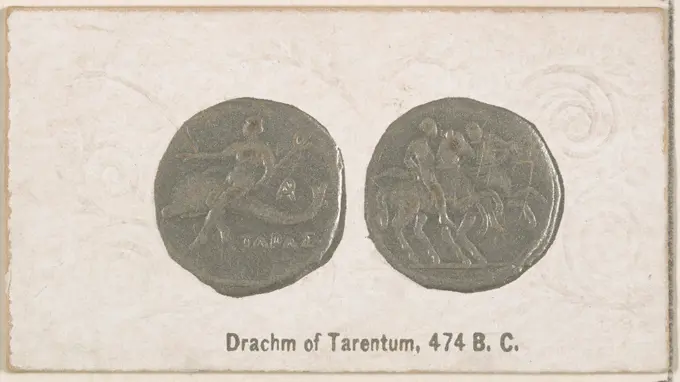
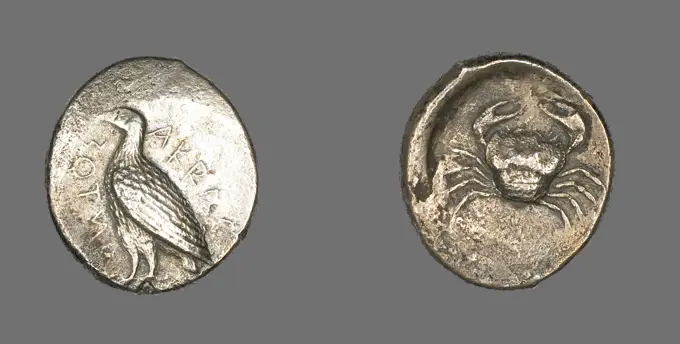
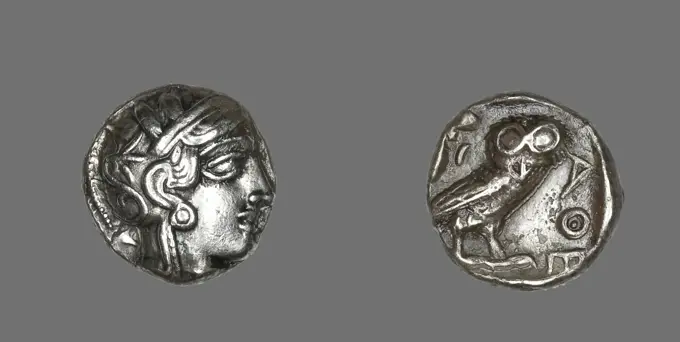
Tetradrachm (Coin) Depicting an Eagle 472 BCE-413 BCE Ancient Greece. The front (obverse) of this coin depicts an eagle standing with wings closed. The back (reverse) depicts a crab.. Silver . Ancient Greekdenarius (royal type). Bolesław II Śmiały (król Polski ; 1058-1079), ruler1 Nummus of Constantius II, Emperor of Rome fromSirmium. Ruler: Constantius II, Emperor of Rome, A.D. 317-361, ruled A.D. 337-61 Mint: SirmiumHekte (1/6 Stater) fromIonia.  Artist: Unknown1 Nummus of Valentinian III, Augustus 425455. Ruler: Valentinian III, Emperor of Rome, 419-455 Artist: UnknownHollandse Duit, 1744. Afslag in silver, Province of Holland, 1744 coin Silver coin. Front: Inside fence standing lion with freedom hat on spear. Reversal: Inscription: Provincial name in three lines, including year. Dordrecht silver (metal) striking (metalworking)Ruler: Antimachus I, King of Bactria, ca. 174-165 B.C.Tetradrachm of Antimachus I, King ofBactria, ca. 174-165 B.C., Silver, 16.505 g, 12:00, 31.5mm, Made in uncertain, Bactria, Greek, 2nd century B.C., NumismaticsTwo Vintems of 40 Travel from Portugal by King Alfonso VI, 1656-1683 ,, 1656 - 1683 coin Silver coin. Front: Kroon, including value designation: XXXX. Dischanging ending in: D. downside: Short -Feeded Cross, with dots in the corners.  silver (metal) striking (metalworking)Imitation Jewish Shekel (Görlitz) ,, c. 1600 - 1800 history medal Lead medal, on the front a radiant grail within a border with spiral decoration and some Hebrew characters, on the reverse an olive tree within an edge with Hebrew characters.  lead (metal) castingCistophorus of Hadrian, Emperor of Rome fromHypaepa. Ruler: Hadrian, Emperor of Rome, A.D. 76-138, ruled 117-38 Mint: Hypaepa Artist: UnknownHemidrachm (Coin) Depicting the God Zeus Amarios 191 BCE-146 BCE Ancient Greece. The front (obverse) of this coin depicts the head of Zeus Amarios, facing to the right. On the back (reverse) is a monogram symbol of the Achaean League within a laurel wreath.Zeus Amarios, along with Demeter Panachaia, were the protecting deities of the Achaean League, which was first formed in the fifth century BCE as a confederation of Greek city-states in the Peloponnese of Greece. Temples to both deities were situated side by side at Aegium, in the northwestern Peloponnese, where the main assemly of the League held its meeting. A second Achaean League was established in 280 BCE but was later conquered and dissolved by the Romans in 146 BCE.. Silver . Ancient GreekSurgeons Guild in Amsterdam, Access for the Hortus Medicus of Willem van Campen, Anonymous, 1725 medal Brass medal. Front: Death, depicted as a frame, in Bloemenveld with scythe in the right hand and with left hand on hourglass, which is on a pedestal. Reverse: vase with flowers between year; On vase: coat of arms above cartouche with inscription inside Omnipia. Amsterdam brass (alloy) casting / engraving  AmsterdamDenarius (Coin) Depicting the God Apollo. Roman, minted in Rome. Date: 90 BC. Dimensions: Diam. 1.8 cm; 3.93 g. Silver. Origin: Italy. Museum: The Chicago Art Institute, Chicago, USA. Author: ANCIENT ROMAN.Coin Portraying Emperor Antoninus Pius. Roman, minted in Alexandria, Egypt. Date: 149 AD-150 AD. Dimensions: Diam. 2.9 cm; 11.36 g. Bronze. Origin: Egypt. Museum: The Chicago Art Institute, Chicago, USA. Author: ANCIENT ROMAN.Ruler: Philip, the Arabian, Emperor of Rome, A.D. 204-249, ruled 244-49, Mint: Germe, Coin of Philip I, Emperior of Rome fromGerme, 244-49, Copper, 32.55 g, 7:00, 45mm, Made in Germe, Galatia, Roman, 3rdcentury, NumismaticsMint: Cyzicus, Stater fromCyzicus, 460-420 B.C.(?), Electrum, 16.065 g, 19mm, Made in Cyzicus, Mysia, Greek, 5th century B.C., Numismaticsshekel (siglos). Artakserkses II (404-358 p.n.e.), rulerDenarius of Galba, Emperor of Rome fromTarraco. Ruler: Galba, Emperor of Rome, 3 B.C.-A.D. 69, ruled A.D. 68-69 Mint: Tarraco Artist: UnknownCoin Depicting the Hero Herakles 300 BCE-200 BCE Ancient Greece. Bronze . Ancient GreekDrachm (Coin) Portraying King Gotarzes II Struck 40 CE-51 CE Khorasan. The front (obverse) of this coin portrays the head of King Gotarzes II, wearing a diadem. The back (reverse) depicts the legendary founder of the Parthian empire King Arsaces to the right.. Silver . IranianAs (Coin) Portraying Emperor Galerius. Roman, minted in Alexandria. Date: 305 AD-311 AD. Dimensions: Diam. 2.5 cm; 7.17 g. Bronze. Origin: Ancient Mediterranean. Museum: The Chicago Art Institute, Chicago, USA.St. Lucasgilde van Amsterdam, Gildepenning van L. Outkoop, sculptor, Anonymous, 1803 medal Brass medal. Front: OS holds Lucasschild in his legs; Praise around it. Reverse: Cartouche with inscription under animal head, and cartouche with letter B, above Cartouche with year Amsterdam brass (alloy) casting / engraving  AmsterdamRevolution of 1795, Anonymous, 1795 history medal Unilateral silver medal. Front: galloping horse inside Covering. Reverse: Blanco. Netherlands silver (metal) casting  NetherlandsSestertius (Coin) Portraying Emperor Severus Alexander 231 CE Roman Empire. The front (obverse) of this coin portrays the emperor Severus Alexander, facing right and wearing a crown of laurels.On the back (reverse), the goddess Victory stands facing left holding a wreath and a palm.. Bronze . Ancient RomanHouse Munt Goten by order of the Society of Benevolence worth 1 Cent, for the ordinary colonies, Anonymous, 1818 - 1859 coin Sink mint. Front: Inscription top value indication. Tours side: inscription G and K Netherlands zinc striking (metalworking)Carnavalet museum, tokens collectionAdministration last Rights Reunis', Anonymous, 1812 - 1813  Irregularly formed lead with holes in the side, with remnants of rope. Front: in round pearl edge: eagle. Road side: in round pearl edge: inscription. Amsterdam lead (metal) striking (metalworking)  AmsterdamHemidrachm fromSicyon.  Mint: SicyonDidrachm (Coin) Depicting the God Janus. Roman. Date: 225 BC-214 BC. Dimensions: Diam. 2.3 cm; 6.20 g. Silver. Origin: Roman Empire. Museum: The Chicago Art Institute, Chicago, USA. Author: ANCIENT ROMAN.Coin of Septimius Severus, Emperor of Rome fromPautalia. Ruler: Septimius Severus, Emperor of Rome, A.D. 146-211, ruled 193-211 Mint: Pautalia Artist: Unknown Honorand: Julia Domna, Empress of Rome, A.D. 160-217Follis (Coin) Portraying Emperor Maxentius. Roman, minted in Rome. Date: 308 AD-310 AD. Dimensions: Diam. 2.5 cm; 6.34 g. Bronze. Origin: Roman Empire. Museum: The Chicago Art Institute, Chicago, USA. Author: ANCIENT ROMAN.Siege of Gulik by Albrecht, Archduke of Austria, emergency coin with the weight of a quarter of the Rijksdaalder, made from Dicken of Johann II, count of Pfalz -Zweibrucken, labeled with the MO, Anonymous, 1621 - 1622 coin. siege coin Unilateral, hint -sided emergency coin. Front: Eight stamps: Large stamp in Central, seven the same, smaller stamps around it; Large stamp: Monogram of letters F and P, that year and inscription interrupts; Smaller stamps: monogram of letters F and P, that interrupts the year and value indication; K.Z: Blanco. Dicken. Gulik silver (metal) striking (metalworking) / snipping  GulikIslamic silver Coins. The upper coin, minted in Merv (Turkmenistan) and found in Latvia, was used in a pendant. The lower pendant imitates the shape and inscriptions of an Islamic coin, and bears the Christian symbols of a cross and dove-like bird.Denarius (Coin) Portraying Marcus Claudius Marcellus. Roman, minted in Rome. Date: 50 BC-49 BC. Dimensions: Diam. 1.8 cm; 3.93 g. Silver. Origin: Rome. Museum: The Chicago Art Institute, Chicago, USA. Author: ANCIENT ROMAN.Octodrachm (Coin) Portraying King Ptolemy III Euergetes. Greco-Egyptian. Date: 221 BC-205 BC. Dimensions: Diam. 2.6 cm; 27.78 g. Gold. Origin: Alexandria. Museum: The Chicago Art Institute, USA. Author: ANCIENT GREEK.Sestertius (Coin) Portraying Emperor Maximinus 235 CE-236 CE Roman Empire. Bronze . Ancient RomanAureus (Coin) Portraying Emperor Nero 57 CE-58 CE Rome. Obverse Head of Nero right, bareReverse Oak wreath with inscription EX. SC. Gold . Ancient RomanTetradrachm (Coin) Depicting the Goddess Athena Struck 490 BCE-322 BCE Ancient Greece. The use of coins as a form of money was invented in western Asia Minor in the early 7th century BCE. At the time when the coins in this case were struck, Greece was made up of separate city-states that issued their own currency. Made of gold, silver, bronze, and electrum (a gold-silver alloy), coins were literally worth their weight, but their value varied according to the percentage of their precious metal content. Occasionally a city needed more money than it had in reserves. By reducing the amount of precious metal and substituting a base metal, a coin could be produced of the same weight but no longer of the same value. Some currency was only honored within its own city walls, but trustworthy money encouraged trade. Athens had the biggest economy, and its coin became the standard in the Greek world.The population was largely illiterate, but it could identify the place of origin of a coin by its iRuler: Augustus, Emperor of Rome, 63 B.C.-A.D. 14, ruled 27 B.C.-A.D. 14, Mint: Italy (uncertain mints)Denarius of Augustus, Emperor of Rome from Italy (uncertainmints), ca. 29-27 B.C., Silver, 3.79 g, 9:00, 19mm, Made in Uncertain, Italy, Roman, 1st century B.C., NumismaticsReaal van Achten, beaten in Mexico, mint from the wreck of the East Indians' t Vliegend Hart, Nicolas de Roxes, 1730  Highly worn silver coin, beaten on irregular coin plate. Front: coat of arms; on the left: letters omr, placed one above the other; Van Overschruit is only visible at the top left. Reverse: part of the cross in multi -pass; Between cross arms: arms figures. Mexico silver (metal) striking (metalworking)  Mexicodenarius. Satrienus, P. (fl. 77 a.C.), monetary officer, Republika Rzymska, issuerRepoie from India van Shah Alam II, 1174 = 1760, beaten in Banaras ,, 1760 coin Silver coin. Front: Inscription in Arabic characters. Reverside: In Arabic characters in four lines, inscription with indication year 2 = 1174 and designation coinplaats: Banaras.  silver (metal) striking (metalworking)Coin Portraying Emperor Gallienus. Roman. Date: 253 AD-268 AD. Dimensions: Diam. 2.4 cm; 7.30 g. Bronze. Origin: Roman Empire. Museum: The Chicago Art Institute, Chicago, USA. Author: ANCIENT ROMAN.Oord, quarter penny of the Catharina-Gasthuis van Leiden, circulated in the period 1573-1576 as a change in Leiden, Anonymous, 1573 coin Silver medal. Front: crowned wheel. Reverse: coat of arms under the year within Kovernschrift. Leiden silver (metal) striking (metalworking)  LeidenSestertius (Coin) Portraying Emperor Gordianus. Roman. Date: 238 AD-244 AD. Dimensions: Diam. 2.8 cm; 17.71 g. Bronze. Origin: Roman Empire. Museum: The Chicago Art Institute, Chicago, USA. Author: ANCIENT ROMAN.Repoie from Bengalen in India of the English Oostindische Compagnie (EIC) in the name of Shah Alam I, 1185 = 1771 ,, 1771 coin Silver coin. Front: In Arabic characters in three lines with the inscription with at the bottom of the year: 1185. Championship: In Arabic characters in three lines in the inscription. Above the second rule indication of Governmentjaaar: 12 with the far right of it (part of a) star = coin place Murshidabad. Smooth edge.  silver (metal) striking (metalworking)Portrait of John VIII Palaoelogus, Emperor of Constantinople, 1424-1428 (reverse), c. 1438-1439. Pisanello (Italian, Ferrara, c. 1395-1455). Lead; diameter: 10.4 cm (4 1/8 in.). The art of the medal was introduced into Italy by Pisanello, His work as a medalist began with the portrait medal of this emperor, who, in 1438, visited the Council of Ferrara.Drachm ca. A.D. 78-110 Parthian Numismatists - the scholars who study coins - refer to the front’ side of the coin, which usually features the head of a person or god, as the obverse,’ and the back’ side as the reverse.’On the obverse of this silver coin, a bust of the king faces to the left. He has a short beard rendered with vertical lines, and wears a domed hat (called a tiara’) with a diadem (the headband worn by victorious athletes in ancient Greece) tied over it. The tiara is decorated with curls. He also wears a torque or necklace around his neck. A border of dots surrounds the image.The reverse shows a seated man facing right. He wears sleeves and trousers under a cloak, as well as a diadem, of which only the ends are visible at the back of his head. In his hand he holds a bow with the bowstring upwards. A cross and horizontal line beneath him and a vertical line bisected four times seem to represent a high-backed throne on which he is seated. In front of him is a monogramIndo-Greek Coin, 200-1 BC. Afghanistan, Bactria, c. 2nd-1st century BC. Silver; diameter: 3.2 x 0.5 cm (1 1/4 x 3/16 in.).Ruler: Eumenes I, ruler of Pergamum 263-241 B.C.Mint: Pergamum, Honorand: Philetaerus, ruler of Pergamum 282-263 B.C., Tetradrachm of Eumenes I, ruler of Pergamum fromPergamum, 263-241 B.C., Silver, 16.91 g, 12:00, 29mm, Made in Pergamum, Mysia, Greek, 3rd century B.C., NumismaticsCoin Portraying Emperor Severus Alexander. Roman. Date: 235 AD. Dimensions: Diam. 3.1 cm; 22.23 g. Bronze. Origin: Roman Empire. Museum: The Chicago Art Institute, Chicago, USA. Author: ANCIENT ROMAN.denarius. Hadrian (Roman emperor; 117-138), emperorDenarius fromRome. Mint: Rome Artist: Unknown Magistrate: L. Livineius RegulusCoin Portraying Emperor Valerian (). Roman. Date: 253 AD-260 AD. Dimensions: Diam. 1.9 cm; 4.08 g. Bronze. Origin: Roman Empire. Museum: The Chicago Art Institute, Chicago, USA. Author: ANCIENT ROMAN.as. Nerwa (cesarz ; 96-98), issuerImitation of a rooster grout ,, 1780 - 1830 coin Copper mint. Imitation of a rooster grout. Front: Haan to the right. Reverse: not to decipher signs. Banjarmasin copper (metal) striking (metalworking)Aureus (Coin) Portraying Emperor Trajan. Roman, minted in Rome. Date: 114 AD-115 AD. Dimensions: Diam. 2 cm; 7.36 g. Gold. Origin: Rome. Museum: The Chicago Art Institute, Chicago, USA. Author: ANCIENT ROMAN.Drachm (Coin) Depicting a Gorgon 500 BCE-401 BCE Greece. The front of this coin depicts the head of a Gorgon.The back features a simple, geometric design.. Silver . Ancient GreekTetradrachm (Coin) Portraying Philetairos of Pergamon Struck 241 BCE-197 BCE Pergamon. Obverse Head of Philetairos diademed to rightReverse Athena seated to left, crowning the name, shield against the seat, bow behind. Silver . Ancient GreekImitation As of Geta Lucius Septimius, Emperor of Rome fromAllobroges. Ruler: Geta Lucius Septimius, Emperor of Rome, A.D. 189-211 Mint: Allobroges Artist: UnknownSiliqua (Coin) Portraying Emperor Valens. Roman, minted in Trier. Date: 364 AD-378 AD. Dimensions: Diam. 1.8 cm; 2.46 g. Silver. Origin: Trier. Museum: The Chicago Art Institute, Chicago, USA. Author: ANCIENT ROMAN.Cuff knot of Dutch silver coins, c. 1940 - c. 1950 Cuff knot of Dutch silver coins. The knot consists of a dime and a quarter with the sculptor of Wilhelmina. The coins are connected by a chain. Netherlands silver (metal) Cuff knot of Dutch silver coins. The knot consists of a dime and a quarter with the sculptor of Wilhelmina. The coins are connected by a chain. Netherlands silver (metal)Pair of cufflinks from Dutch silver coins, c. 1940 - c. 1950 Pair of cufflinks from Dutch silver coins. The buttons each consist of a dime and a quarter with the sculptor of Wilhelmina. Netherlands silver (metal) Pair of cufflinks from Dutch silver coins. The buttons each consist of a dime and a quarter with the sculptor of Wilhelmina. Netherlands silver (metal)NUMISMATICA. MONEDA MONEDAS BIZANTINAS DE ORO Y BRONCE. REAL ACADEMIA DE LA HISTORIA.Aureus (Coin) Portraying Emperor Tiberius 26 CE-37 CE Roman Empire. The front of this coin portrays the Emperor Tiberius facing right and wearing a crown of laurels. He is encircled by the inscription TICAESARDIVI AUGFAUGUSTUS and a partial border of dots.On the back a seated figure of Tiberius holds a staff in one hand and an olive branch in the other. He is encircled by the inscription PONTIF MAXIM and a partial border of dots.. Gold . Ancient RomanFifty Pfennig from Germany, emergency coin of the Stadt Kempen-Rhein, 1921 ,, 1921 coin. siege coin Aluminum emergency coin. Front: Seated between dates Thomas a Kempis. Reverse: coat of arms of the city, including value designation in a rule. Place designation as a change. Cartel edge.  aluminum (metal) striking (metalworking)denarius. Procilius, L. (fl. 80 a.C.), monetary officer, Republika Rzymska, issuerDouble penny from Negapatnam for Ceylon, United Oostindische Compagnie, 1695 coin Copper mint. Front: corrupted human figure (Kali). Two circles diagonally above each other above the left shoulder. Reverse: Tweeregelig inscription in Tamil. Smooth edge. Non -non copper (metal) striking (metalworking)denarius (serratus). Antonius Balbus, Q. (fl. 83-82 a.C.), monetary officer, Republika Rzymska, issuerTetradrachm: Head of Arethousa, r., surrounded by dolphins (Reverse), 466-413 BC. Greece, Syracuse, 5th century BC. Silver; diameter: 2.4 cm (15/16 in.).Lazio Frosinone Casamari Museo Archeologico5. Hutzel, Max 1960-1990 Post-medieval: paintings on canvas, paintings on wood, wooden church furnishings Governing Body: Abbazia di Casamari General Notes: This record is for the pinacoteca which is part of the Museo Archeologico, housed within the Abbey of Casamari. Hutzel assigned it a separate numbering sequence. German-born photographer and scholar Max Hutzel (1911-1988) photographed in Italy from the early 1960s until his death. The result of this project, referred to by Hutzel as Foto Arte Minore, is thorough documentation of art historical development in Italy up to the 18th century, including objects of the Etruscans and the Romans, as well as early Medieval, Romanesque, Gothic, Renaissance and Baroque monuments. Images are organized by geographic region in Italy, then by province, city, site complex and monument.Taler, emergency coin from Gotha by Johan Frederik II Duke of Saxony, beaten during the siege by the troops of Elector August van Saxony, Anonymous, 1567 coin. siege coin Unilateral, diamond -shaped emergency coin with beveled corners. Front: a rectangular stamp: letters H, HF, G and K above coat of arms between the year. Reverse: Blanco Gotha silver (metal) striking (metalworking)  GothaDenarius of Vespasian, Emperor of Rome fromAntioch. Ruler: Vespasian, Emperor of Rome, A.D. 9-79, ruled 69-79 Mint: Antioch Artist: UnknownMedal of Ludovicus deGonzaga.  Artist: Pisanello, Italian, ca. 1395-1455Honorand: Lodovico de GonzagaTetradrachm, c. 300-295 BC. Greece, reign of Demetrius Poliorcetes ("The Beseiger"), late 4th century BC. Silver; diameter: 3 cm (1 3/16 in.).PRISON PRESENCIES OMMERSCHANS, house coin beaten at the society of beneficiality worth 25 cents. Unilateral coin. Front: value indication within pearl edge; Left: Brand. Downside: blankIberian period coins Iberian period coins, Iberian culture, Iberian Museum of Jaén, Andalusia, Spain Copyright: xZoonar.com/BartomeuxBalaguerxRotgerx 21720809Stater of Lysimachus, King of Thrace fromLysimacheia. Ruler: Lysimachus, King of Thrace, ca. 360-281 B.C., ruled 306-281 B.C. Mint: Lysimacheia, ThraceMAUGER, Jean (n.1648-D.1722-09-09), TURIN (Main title), 1643. BRONZE. Metal. Petit Palais, Museum of Fine Arts of the City of Paris.Portrait Medal of Domenico Novello Malatesta (obverse) Portrait Medal of Domenico Novello Malatesta (reverse), c. 1445. Pisanello (Italian, Ferrara, c. 1395-1455). Bronze; diameter: 8.3 cm (3 1/4 in.).Denarius of Vespasian, Emperor of Rome from  MintO. Ruler: Vespasian, Emperor of Rome, A.D. 9-79, ruled 69-79 Mint:  Mint OHonorand: Domitian, Emperor of Rome, A.D. 51-96, ruled 81-96Ancient medals. N � 24 Ancient medals. N � 24. Black and white projection plate. 1900-1930. Photograph of Jacques-Ernest Bulloz (1858-1942).Ring (Leda and the Swan); about 300 B.C; Gold; 2.1 × 1.9 cm (13,16 × 3,4 in.)Medaillon depicting a cuirassed bust of Alexander the Great wearing a diadem with round shield. Aboukir Medallions. 3rd-4th centuries. Found in Abukir (Egypt). Greek. Gold. Calouste Gulbenkian Museum. Lisbon, Portugal.Owl on a Greek Gold Stater struck by Lachares, 300BC-295BC. Artist: Unknown.Coronation medal of George II of England, 1727. Black and White Illustration from the Connoisseur, an Illustrated Magazine for Collectors Voll 3 (May-Aug 1902) published in London.Hecte (1/6 Stater): Head of Omphale in lion-skin, club, seal (Obverse), 500-300 BC. Greece, Phokaia (Ionia). Electrum (gold-silver alloy); diameter: 0.9 cm (3/8 in.).Abruzzo L'Aquila S. Giuliano (L'Aquila environs) Museo2. Hutzel, Max 1960-1990 Views of the four collections housed in museum: Roman coins; Pre-Columbian art brought from Central America in 17th century; Greek and Roman sculpture; Egyptian sculpture and minor arts. Museum Roman coins; Greek and Roman sculpture; Egyptian sculpture and minor arts; Pre-Columbian sculpture. German-born photographer and scholar Max Hutzel (1911-1988) photographed in Italy from the early 1960s until his death. The result of this project, referred to by Hutzel as Foto Arte Minore, is thorough documentation of art historical development in Italy up to the 18th century, including objects of the Etruscans and the Romans, as well as early Medieval, Romanesque, Gothic, Renaissance and Baroque monuments. Images are organized by geographic region in Italy, then by province, city, site complex and monument.Seis piezas circulares de bronce con adornos circulares, arte griego (III).Engraved Ring with an Actor Holding a Theater Mask. UnknownRing Engraved with a Muse Holding a Mask; 325 - 300 B.C; Gold; 2.2 × 2.1 cm (7,8 × 13,16 in.)Image of the medal of Zygmunt III Vasa with Tethys and Cerera, 1595, in: Collector's album: Figures of Polish medals to the work of X.B. Albertrande: Polish history with medals certified. prepared by Prince Henryk Lubomirski 1822 1830 arranged in order according to the List of Polish Medals by Feliks Bentkowski 1832 (item 65) unknown, Geiger, Andreas (1765 1856), Monogramista HDAncient Greek Coin, Oktadrachm, Alexander I. Horseman wearing chlamys, Quadripartite incuse square, Silver Ancient Greek Coin, Oktadrachm, Alexander I. Horseman wearing chlamys, Quadripartite incuse square, Silver 498-454 BC Copyright: xZoonar.com/AleksandarxVukicevicx 22057943Group of Zodiac Coins--Aries, Leo, Pisces, Taurus, Capricorn dated A.H. 1027/ A.D. 1617-18 Adorned with his portrait or signs of the zodiac, the coins issued by Jahangir (r. 1605-27) are a development from the epigraphic, aniconic coins issued by most Muslim rulers. His father Akbar (r. 1556-1605) had also experimented with different imagery, including hawks and ducks. Group of Zodiac Coins--Aries, Leo, Pisces, Taurus, Capricorn. dated A.H. 1027/ A.D. 1617-18. Silver. Attributed to India. CoinsDrachm of Archelaus, 400 B.C., from the Ancient Coins series (N180) issued by Wm. S. Kimball & Co. 1888 Issued by William S. Kimball & Company Trade cards from the "Ancient Coins" series (N180), issued in 1888 by W.S. Kimball & Co.. Drachm of Archelaus, 400 B.C., from the Ancient Coins series (N180) issued by Wm. S. Kimball & Co.. 1888. Commercial color lithograph. Issued by William S. Kimball & CompanyBronze of Nerva, 96 A.D., from the Ancient Coins series (N180) issued by Wm. S. Kimball & Co. 1888 Issued by William S. Kimball & Company Trade cards from the "Ancient Coins" series (N180), issued in 1888 by W.S. Kimball & Co.. Bronze of Nerva, 96 A.D., from the Ancient Coins series (N180) issued by Wm. S. Kimball & Co.. 1888. Commercial color lithograph. Issued by William S. Kimball & CompanyDrachm of Tarentum, 474 B.C., from the Ancient Coins series (N180) issued by Wm. S. Kimball & Co. 1888 Issued by William S. Kimball & Company Trade cards from the "Ancient Coins" series (N180), issued in 1888 by W.S. Kimball & Co.. Drachm of Tarentum, 474 B.C., from the Ancient Coins series (N180) issued by Wm. S. Kimball & Co.. 1888. Commercial color lithograph. Issued by William S. Kimball & Company