My Boards
View Pictures
  • My Boards
← Artworks

Ancient Sculptures

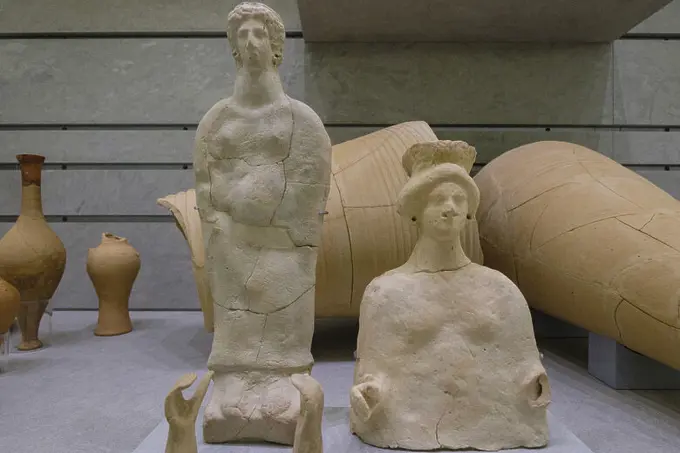
Artifacts representing ancient civilizations, showcasing figurines and decorative pieces made from terracotta and ivory, indicative of cultural symbolism.

The goddess Lakshmi, Indian ivory statue found at Pompeii, Italy. Indian Civilisation, 1st century.
163 assets in this story
1746-21101242
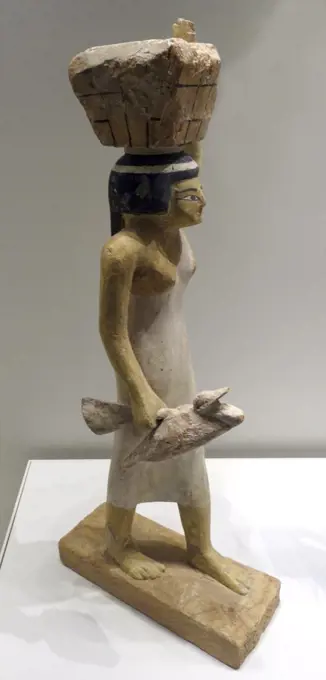
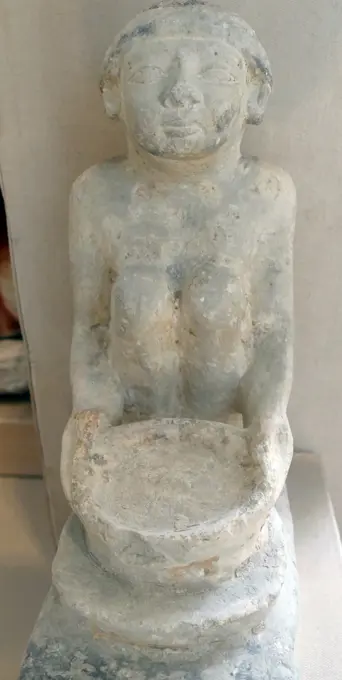
Statuette of a female offering bearer carrying a box filled with flour and holding a duck. From the 20th-19th century BC.
6145-29819300
Plaque 6th-7th century. Plaque 449527
4409-58490515
lion, limestone, 2nd-1st century BC, Iberian Museum of Jaén, Jaén province, Andalusia, Spain.
4443-21910029
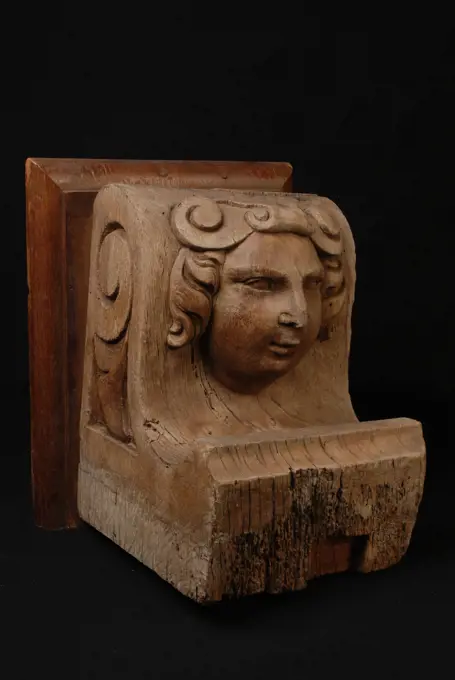
Sculpted console of Prinsenkerk, Rotterdam, console building element carvings sculpture sculptures oak wood, sculpted sawn Sculpted console of gutter of Prinsenkerk. Console with head: thick face with double chin Volute with sides St. Agnietenklooster monastery Prinsenhof Prinsenkerk church Municipal Library 1923 1608 demolition 1912 1638 1659 Botersloot Rotterdam City Triangle Originated by the former Prinsenkerk at the Botersloot Rotterdam.
6145-29776633
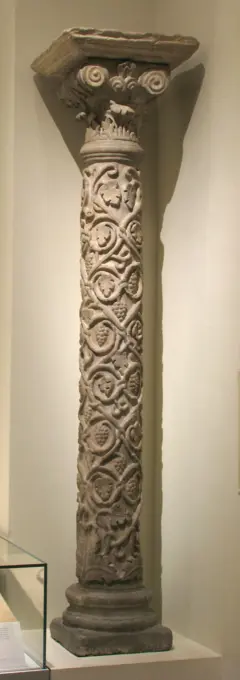
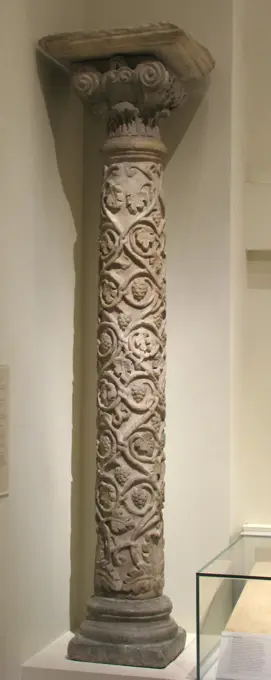
Column 5th-6th century Frankish This column (with its pair acc. no. 21.172.1), along with some twenty others, are all that remain of the Golden Church” of La Daurade. The church, which derived its name from the Latin word meaning gilded” (deaurata), was famous for the gold mosaics that covered the niches and walls of its seven-sided sanctuary. Rows of elegant columns framing the niches contributed to its lavish interior. Founded about 399 as a convent, the church had been converted to a monastery by the 800s, before being destroyed in 1761.. Column 466333
6145-30148793
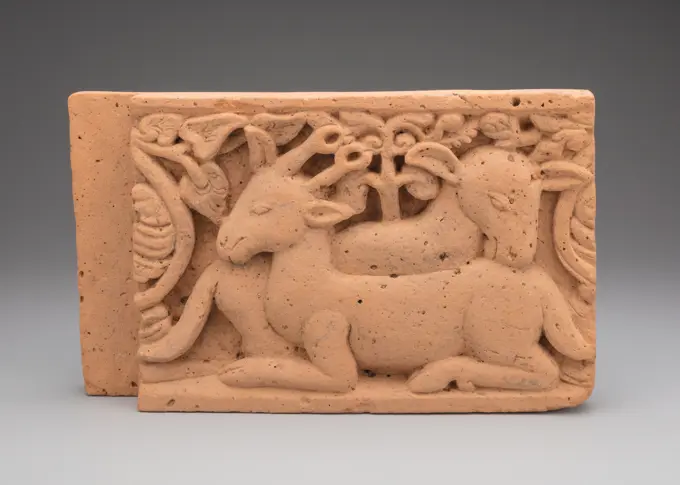
Architectural Panel with Deer 1301-1500 Eastern Java. Terracotta .
4409-17431461
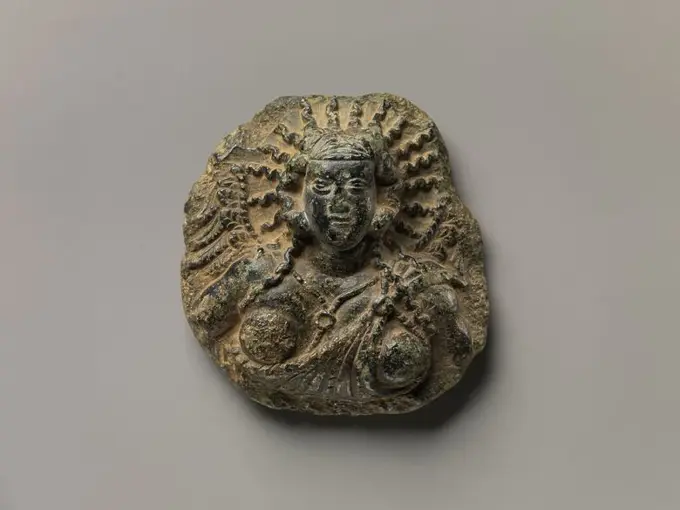
Roundel with a Winged Female Deity. Culture: Pakistan (ancient region of Gandhara). Dimensions: Diam. 3 3/16 in. (8.1 cm). Date: 1st-2nd century. Museum: Metropolitan Museum of Art, New York, USA.
1848-49568233
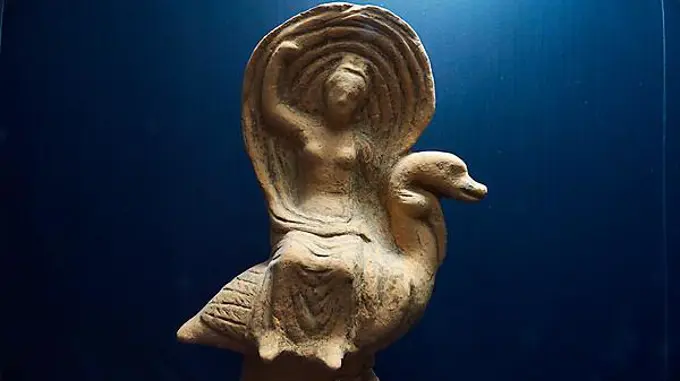
Terracotta figure, Leda and Zeus as swan, blue background, Arachaeological Museum, Lefkada Town, Capital, Lefkada Island, Lefkas, Ionian Islands, Greece, Europe
4409-17432880
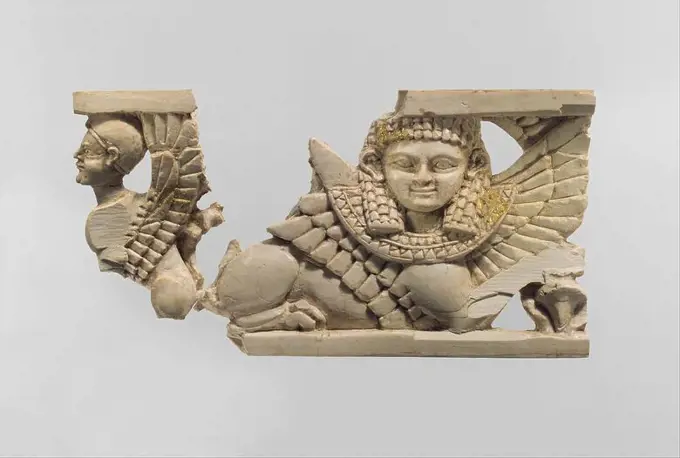
Openwork furniture plaque with two sphinxes. Culture: Assyrian. Dimensions: H. 2 1/2 x L. 4 1/4 in. (6.4 x 10.8 cm). Date: ca. 9th-8th century BC.During the early first millennium B.C., ivory carving was one of the major luxury arts that flourished throughout the ancient Near East. Elephant tusks were carved into small decorative objects such as cosmetic boxes and plaques used to adorn wooden furniture. Gold foil, paint, and semiprecious stone and glass inlay embellishments enlivened these magnificent works of art. Based on certain stylistic, formal, and technical characteristics also visible in other media, scholars have distinguished several coherent style groups of ivory carving that belong to different regional traditions including Assyrian, Phoenician, North Syrian and South Syrian (the latter also known as Intermediate).Several ivories in the Metropolitan Museum's collection are from the Aramaean town of Arslan Tash, ancient Hadatu, in northern Syria just east of the Euphrates
6145-29195550
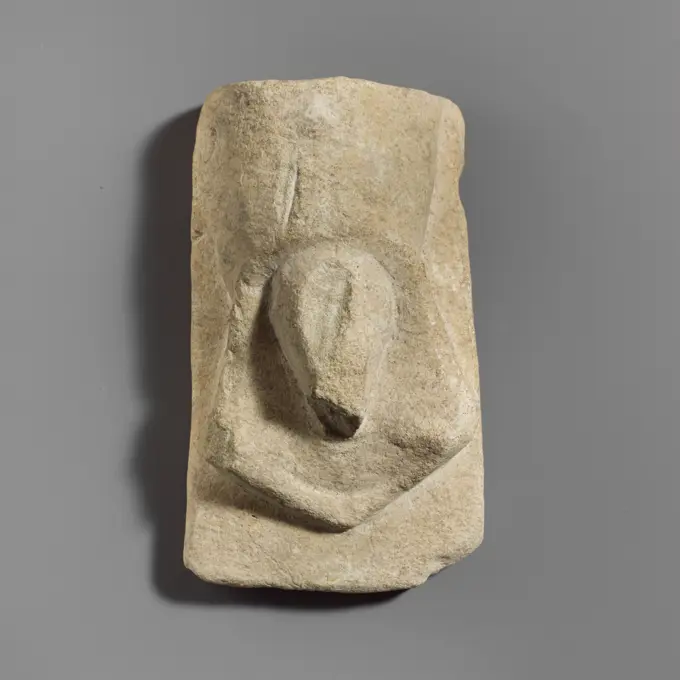
Stone votive relief of male genitalia 4th-3rd century B.C. Cypriot On a rectangular plaque, there is the end of a penis, revealing the glans, in front of the testicles.. Stone votive relief of male genitalia 244055
4409-20897331
Marble ape, Roman period, Evora Museum, Evora, Alentejo, Portugal, Europe.
4409-17413245
Matrices, Cast. Culture: French or German. Dimensions: Overall: 11 3/4 x 7 1/8 x 3 in. (29.8 x 18.1 x 7.6 cm). Date: 13th century. Museum: Metropolitan Museum of Art, New York, USA.
1788-16401
Painted terracotta statue of man grating cheese
4409-20911123
SPAIN - La Huerta de Murcia (district) - MURCIA. Murcia (capital); Monasterio / Museo de Las Claras; pileta de abluciones musulmana en forma de vivienda (siglo XIII)
4443-21931896
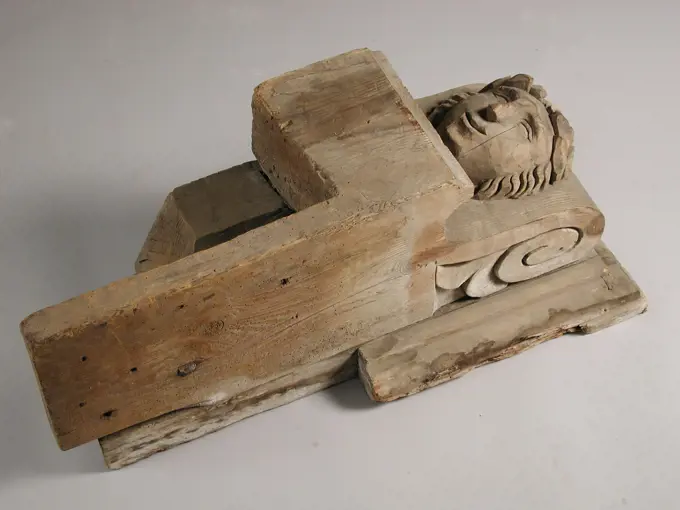
Sculpted console of gutter of Prinsenkerk, console building element carvings sculpture sculptures pine wood, sculpted sawn Sculpted console of gutter of Prinsenkerk. Profiled cover plate. Drilled over the entire length probably for the purpose of anchoring. Console with raw chopped head of women (cushion) with laurel wreath on the head and volutes with slate (sides) St. Agnietenklooster monastery Prinsenhof Prinsenkerk church Municipal Library 1923 1608 demolition 1912 1638 1659 Rotterdam City Triangle Botersloot Originating from the former Prinsenkerk on the Botersloot The Prinsenkerk was demolished in 1907.
4409-20999622
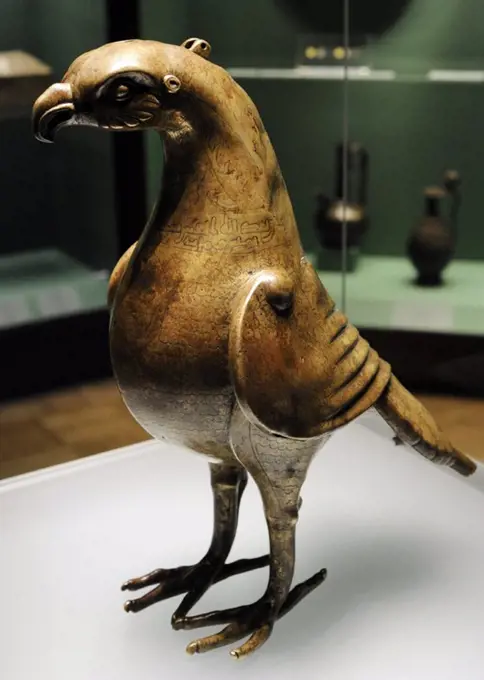
Middle East. Iraq. Master Suleiman. Eagle Aquamanile. Bronze. C. 796. The State Hermitage Museum. Saint Petersburg. Russia.
1746-1178
Celtic Art: Bronze boar from Sanctuary of Newy (Loiret). Musee d'Orleans.
4409-19652794
Figure, probably a human representation, originally carved in rock in an artificial cave at Ras il-Wardija. Punic-Roman sanctuary in the environs of Ta' Kercem. It probably dates from the medieval period, when the cave may have served as a hermitage. Gozo Museum of Archaeology. Cittadela of Victoria in Gozo. Malta.
4409-17429225
Seal amulet in the form of a seated female and modern impression. Dimensions: 5/8 x 7/8 x 1 1/8 in. (1.5 x 2.3 x 3 cm). Date: ca. 3300-2900 B.C..This tiny but finely carved seal amulet is in the shape of a squatting female wearing a diadem. The single row of small cavities on the diadem, as well as those on her breasts and in her eye, were probably filled with inlay. Her head is shown in profile with a prominent nose. One visible arm rests on her torso, with her hand on a folded knee, while the other knee is held up. Similar squatting figures are known both on cylinder seals from Iran, Mesopotamia, and Syria and as small sculpture in the round from the Iranian site of Susa. Dating from the end of the late fourth into the early third millennium B.C., such depictions are today known as "pig-tailed women" and, although many appear to be engaged in pottery or textile manufacture, they may also have had some religious meaning, perhaps depicting a gesture of worship. The other side of the am
1746-30004469
Ancient terracotta figurines from the 12th Century BC
1746-29955489
Servant figure making bread. from a noble's tombs in the Egyptian mid-old Kingdom (ca. 2500 BC). these served the deceased in the afterlife, and ensured an eternal supply of essentials such as food.
6145-29713972
Centennial Pedestal 1876 Designed by Karl L. H. Müller American Listen to experts illuminate this artwork's story Listen Play or pause #4525. Centennial Pedestal Supported by Bloomberg Philanthropies We're sorry, the transcript for this audio track is not available at this time. We are working to make it available as soon as possible.. Centennial Pedestal 5563
1746-19664425
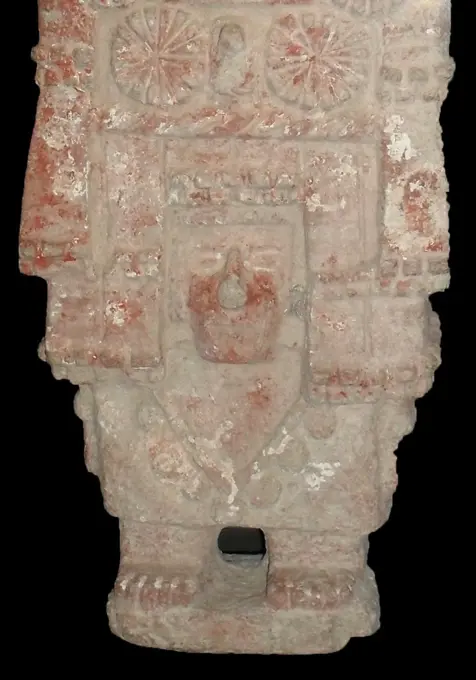
headdress represents a temple or grain store. the carved flowers were given as offerings. Aztec 1300-1521 AD, Mexico
6145-45531335
Bust of a Woman
4409-72968302
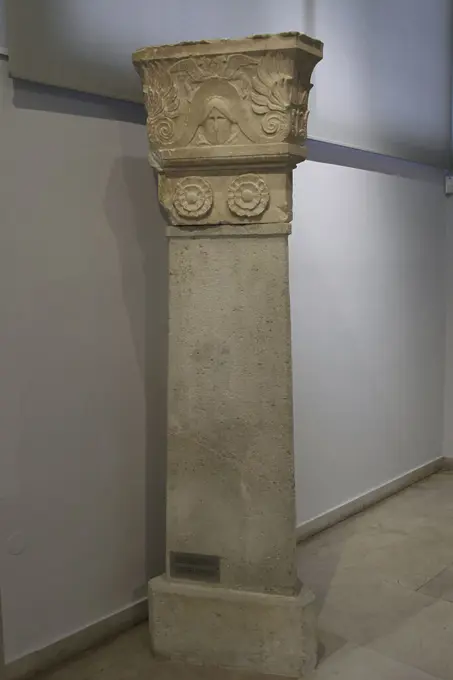
Crowning member of a three-sided funerary stele, which probably belonged to a War Memorial. The names of the dead were inscribed on the body of the stele, below the rosettes. Second half of the 4th century BC. Archaeological Museum of Piraeus. Greece.
6145-29732133
Bronze bust of a young satyr first half of the 2nd century A.D. Roman The young satyr holds grapes, quinces, and pomegranates in a fold of his garment. The whites of the eyes are inlaid with silver, the lips with copper.. Bronze bust of a young satyr 250559 Roman, Bronze bust of a young satyr, first half of the 2nd century A.D., Bronze, silver, copper, H. 14 cm. The Metropolitan Museum of Art, New York. Rogers Fund, 1917 (17.230.25)
6145-29186891
Limestone votive statuette of a hound seizing a hare 5th-1st century B.C. Cypriot This statue may have been a gift for a hunter. Traces of red paint remain on the mouth and collar of the hound and on the hare's ears.. Limestone votive statuette of a hound seizing a hare 242215
1746-28970391
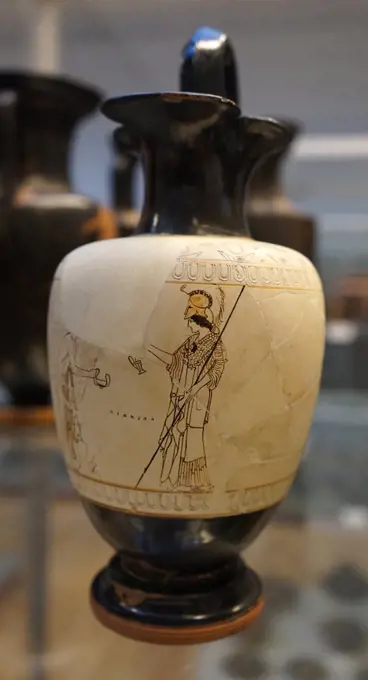
White-ground jug depicting Athena. Dated 4th Century BC
6145-29150501
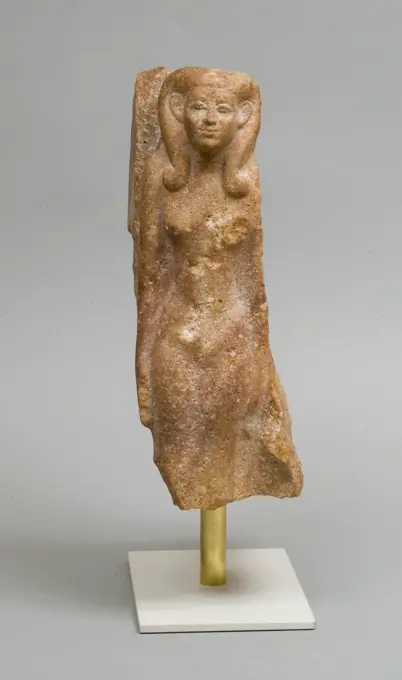
Female figure from a group statue ca. 1981-1640 B.C. Middle Kingdom One of two female figures that flanked the legs of a larger seated male statue, this was found  together with its companion female figure (33.1.5a, b) and fragments of other statues  in a shaft within the funerary enclosure of Senwosretankh at Lisht South. Senwosretankh’s mastaba dates to the late years of Senwosret I or the early years of his successor Amenemhat II. However judging by its style, this figure was created during the later Middle Kingdom. The complete piece must therefore have been dedicated during a time when additional burials were made in the precinct.The woman stands, wearing a close-fitting sheath dress, with the front parts of her wig ending over her breasts in two large curls, a hair style often associated with the goddess Hathor.. Female figure from a group statue. ca. 1981-1640 B.C.. Quartzite. Middle Kingdom. From Egypt, Memphite Region, Lisht South, tomb of Senwosretankh, Pit 23, MMA excavati
1746-28979577
Early Anatolian Stone moulds. These mould could be used to make female figurines, seals, amulets and pins. Dated 23rd Century BC
4409-131138
'Feathered Serpent, stone'. Museum: MUSEO ARQUEOLOGICO, Mexico D. F., CIUDAD DE MEXICO.
4409-20895927
Vaso de terracota representando la diosa madre.Museo de Menorca. Maó.Baleares.España.
1746-21125904
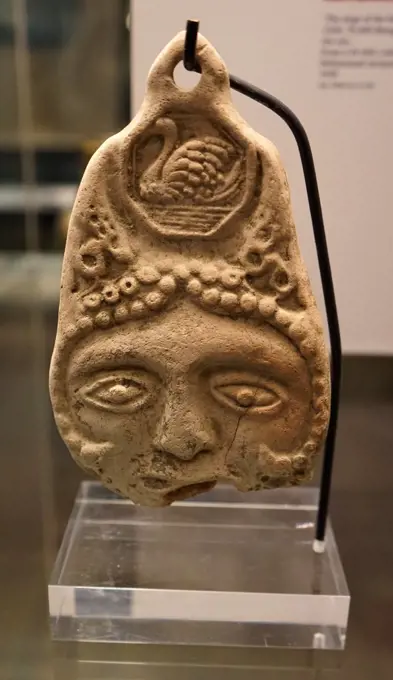
Double-sided plaque with face, swan motif in head-dress and hole for suspension. Dated 13th Century
1746-30020005
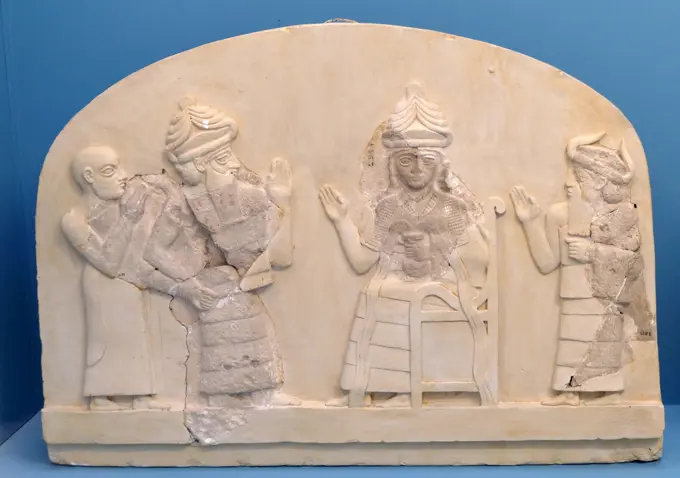
Relief from the era of Gudea a ruler (ensi) of the state of Lagash in Southern Mesopotamia, who ruled c2080-2060 BC (short chronology) or 2144-2124 BC. Gudea ruled at a time when the centre of Sumer was ruled by the Gutian dynasty. Under Gudea, Lagash had a golden age, and seemed to enjoy a high level of independence from the Gutians
1746-19665899
John Michael Rysbrack (1694-1770) circa 1728-30. Sunna is from a unique series of Saxon gods that Lord Cobham commissioned for his gardens at Stowe. Each god was traditionally associated with a day of the week, with Sunna representing Sunday. This figure was lost and only rediscovered in 1996.
4409-63011625
Lamassu from the Palace of Sargon II. Assyrians. 721-705 BC. Khorsabad Palace. Detail head. Louvre Museum. Paris. France.
6145-29163098
Table screen with landscape scene 18th-19th century China. Table screen with landscape scene 42149
4409-28810620
restos del hipogeo 1 de la calle Lleo, Museo arqueológico de Ibiza y Formentera, Patrimonio de la Humanidad «Ibiza, biodiversidad y cultura», Ibiza, balearic islands, Spain.
4409-24799967
Milestone of Segóbriga (Cuenca province, Spain). 4th century. Constantine II. Copy. Sephardic Museum. Toledo. Castile-La Mancha. Spain.
6145-29151358
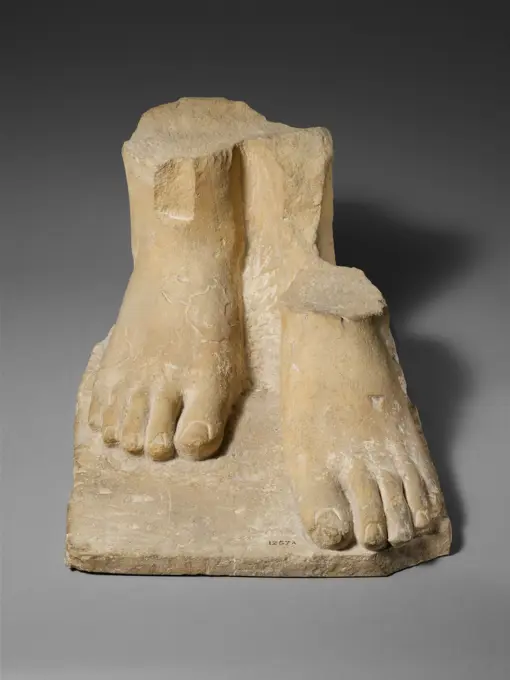
Limestone plinth with the feet of a colossal male statue middle or 2nd half of the 6th century B.C. Cypriot The feet stand on a remarkably thin plinth, the left advanced. The right foot is of a piece with what appears to be some kind of support. The toes are very long and there is considerable separation between them.. Limestone plinth with the feet of a colossal male statue 242234
4409-17425559
Openwork furniture plaque showing a cow suckling a calf. Culture: Assyrian. Dimensions: 2.37 x 4.25 in. (6.02 x 10.8 cm). Date: ca. 9th-8th century B.C..During the early first millennium B.C., ivory carving was one of the major luxury arts that flourished throughout the ancient Near East. Elephant tusks were carved into small decorative objects such as cosmetic boxes and plaques used to adorn wooden furniture. Gold foil, paint, and semiprecious stone and glass inlay embellishments enlivened these magnificent works of art. Based on certain stylistic, formal, and technical characteristics also visible in other media, scholars have distinguished several coherent style groups of ivory carving that belong to different regional traditions including Assyrian, Phoenician, North Syrian and South Syrian (the latter also known as Intermediate).Several ivories in the Metropolitan Museum's collection are from the Aramaean town of Arslan Tash, ancient Hadatu, in northern Syria just east of the Eup
6145-29089534
Male Deity, 925-950. Cambodia, Koh Ker-Khleong style, 10th century. Sandstone; overall: 135 cm (53 1/8 in.). The distinctive swath of pleated cloth and the anchor-shaped ends of the lower garment suggest that this sculpture was make when this method of wrapping the sampot was fashionable. During that time, Cambodian temples were dedicated to Hindu deities, whose images were dramatically installed alone on a pedestal in a temple's sanctum. When consecrated, gold tokens were installed under the pedestal; many sculptures were broken when people toppled them to get the gold.
4409-17545638
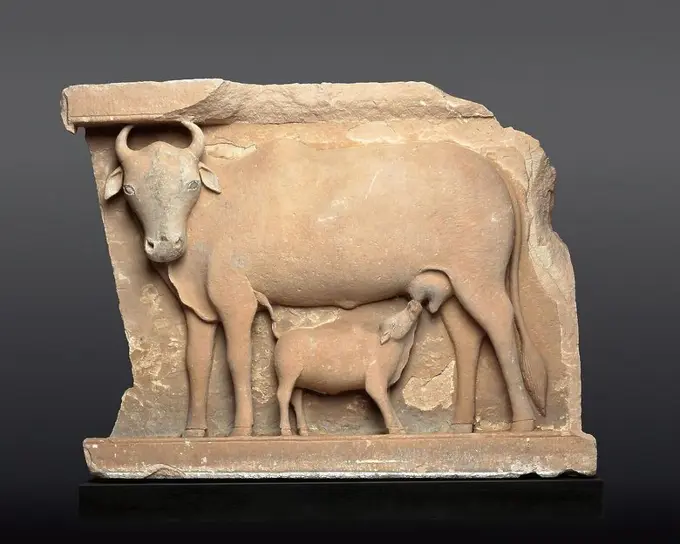
Cow Suckling a Calf. India; Madhya or Uttar Pradesh. Date: 801 AD-900 AD. Dimensions: 55.3 × 73.7 × 9.6 cm (22 3/4 × 29 × 3 3/4 in.). Sandstone. Origin: India. Museum: The Chicago Art Institute, Chicago, USA.
1746-28998947
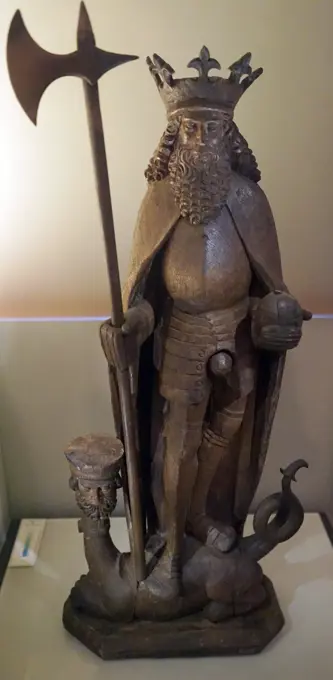
King Olav Haraldsson of Norway, who converted Norwegians to Christianity, died in 1030 ad. Figure of St. Olav, King of Norway, carved in oak and originally painted in various colours. The figure, made in Lübeck, Germany, in the i6th century, depicts him in the armour of that period. He holds his axe Hel (Death”) and his orb of office, as he tramples the Devil.
4409-17338190
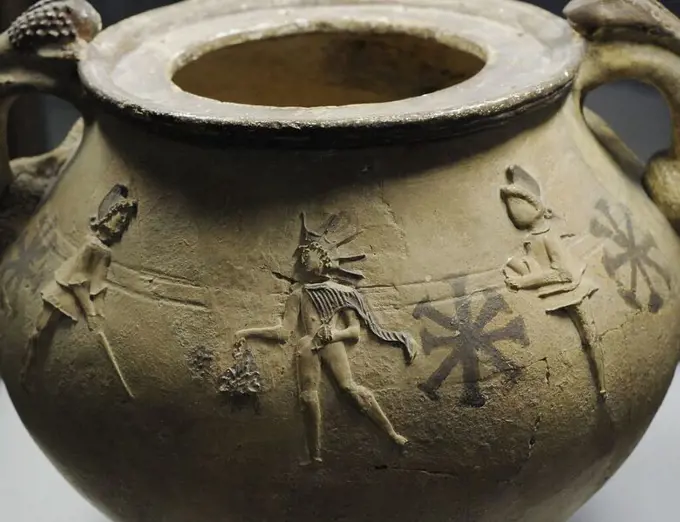
Pottery depicting Mithras surrounded by the torch-bearers Cautes and Cautopates. 2nd-3rd centuries. From Cologne, Germany. Roman-Germanic Museum. Cologne. Germany.
6145-29774762
Figure of the goddess Maat ca. 945-712 B.C. Third Intermediate Period. Figure of the goddess Maat. ca. 945-712 B.C.. Feldspar. Third Intermediate Period. From Egypt. Dynasty 22
1746-21125634
White-ground jug depicting Athena. Dated 4th Century BC
4409-63013037
Symbols and motifs. Teotihuacan Culture. Mexico. Middle classical period. Mesoamerica. ANMH, Ny, USA.
1788-18693
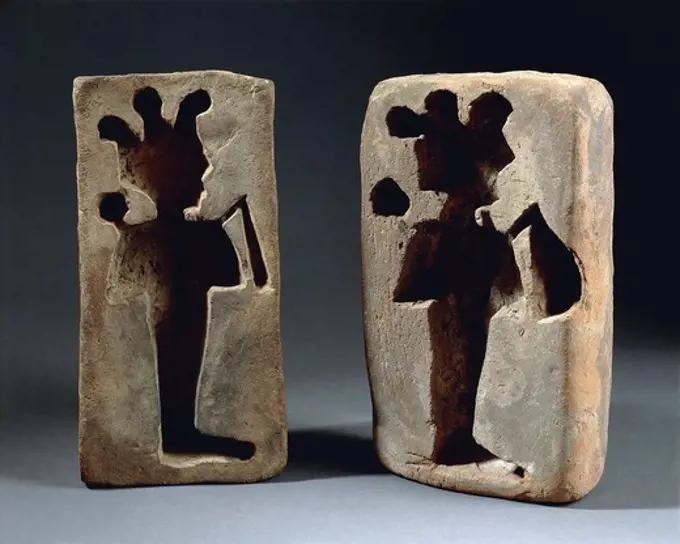
Two sculptor moulds of Osiris figure, from Abydos
4409-17397073
Gothic latticework ending. 14th century. Spain. Archaeological and History Museum (San Anton Castle). A Corua, Galicia, Spain.
4443-19552356
A Recumbent Sphinx, red crayon on paper, A lion with a human head and Egyptian head dress., Italy, mid- 18th century, classicism, Drawing, Drawing
1746-21116890
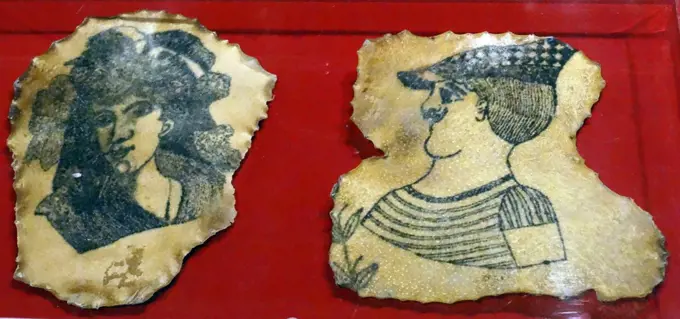
Tattoos on pieces of human skin. French, 1850-1900.
4409-19312980
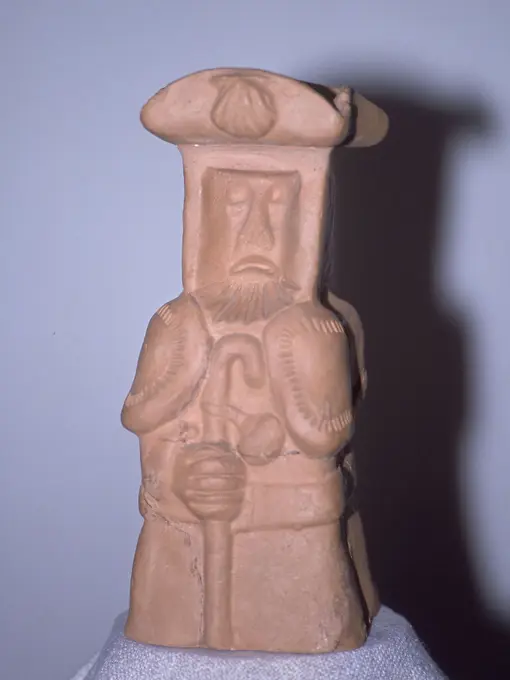
FIGURA DEL APOSTOL SANTIAGO EN BARRO COCIDO - S XX. Location: ALFARERIA. BUÑO. A CORUÑA. SPAIN. APOSTOL SANTIAGO PEREGRINO. Apóstol Santiago el Mayor.
6145-29198203
Relief of a hand with part of necklace - see 26.3.353-3 ca. 2051-2030 B.C. Middle Kingdom. Relief of a hand with part of necklace - see 26.3.353-3. ca. 2051-2030 B.C.. Limestone, paint. Middle Kingdom. From Egypt, Upper Egypt, Thebes, Deir el-Bahri, Tomb of Neferu (TT 319, MMA 31), MMA excavations, 1923-25. Dynasty 11
6176-61999587
Toronto, ON, Canada - November 20, 2022: Exibits in the Royal Ontario Museum
4409-154677
Egyptian art. Replica of the cult vessel with inlays. 20th BC. Neues Museum. Berlin. Germany.
1848-56654232
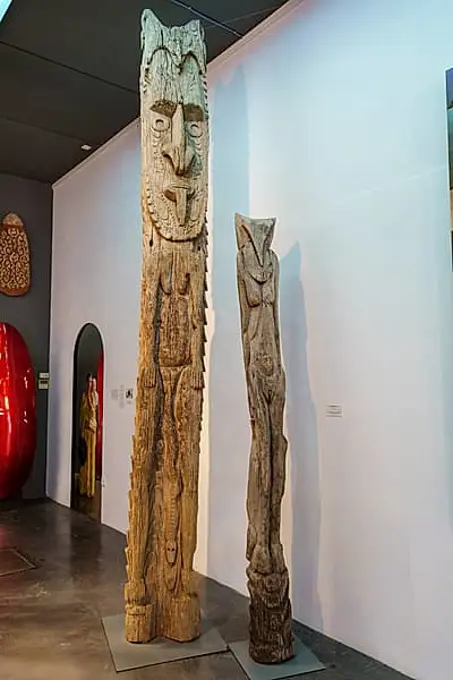
House ceremonial post, papua new guinea, Sa Bassa Blanca Museum (msbb) Yannick Vu and Ben Jakober, Alcudia, Majorca, Spain, Europe
4409-21480515
museo arqueologico y de historia de Elche Alejandro Ramos Folqués, Elche, Alicante, comunidad Valenciana, Spain, Europe.
6145-29724983
Column 5th-6th century Frankish This column (with its pair acc. no. 21.172.2), along with some twenty others, are all that remain of the Golden Church” of La Daurade. The church, which derived its name from the Latin word meaning gilded” (deaurata), was famous for the gold mosaics that covered the niches and walls of its seven-sided sanctuary. Rows of elegant columns framing the niches contributed to its lavish interior. Founded about 399 as a convent, the church had been converted to a monastery by the 800s, before being destroyed in 1761.. Column. Frankish. 5th-6th century. Marble. Made in Toulouse, Southern France. Sculpture-Architectural
4409-12955
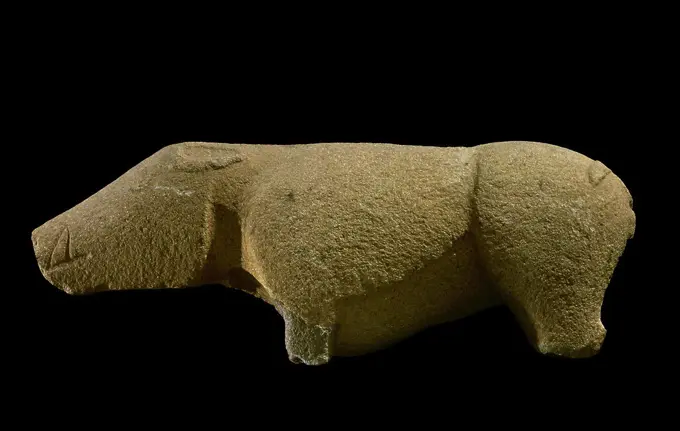
VERRACO PRERROMANO PROCEDENTE DEL YACIMIENTO DE MADRIGALEJO (CACERES) - SIGLO III AC - GRANITO. Location: MUSEO DE CACERES / PALACIO DE LAS VELETAS. CACERES. SPAIN.
6145-46801938
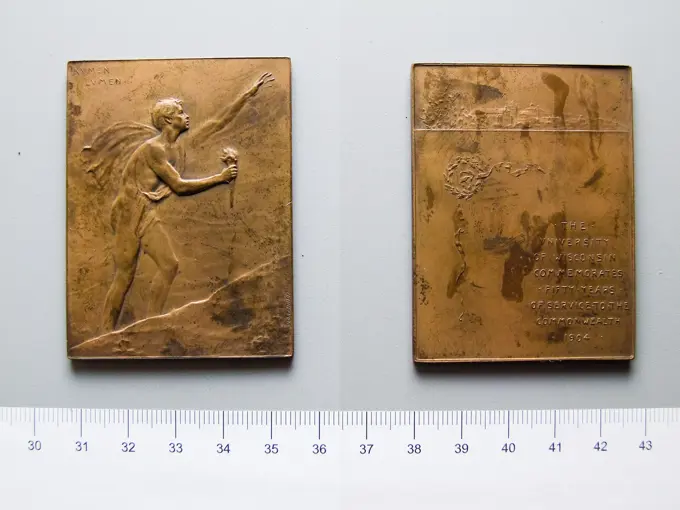
Bronze plaquette commemorating The University of Wisconsin, fifty years ofservice.  Artist: Victor Brenner, American, 1871-1924
4409-62026707
Shiva Narataja, lord of the dance, India, 20th century, bronze, and bull Nandi, Anthropology National Museum, Madrid, Spain.
1746-28995221
Men's house pillar with female figure from Papua New Guinea. Dated 20th Century
PREVIOUS
of 2
NEXT
2401 S. Ervay, Suite 206
Dallas, Texas 75215
United States
Get Started
Free ResearchMy BoardsMy Cart
For Creators
How To License Your ContentContributor PortalFrame of Mind
Resources
API accessPricing
Contact
+1 866 236 0087help@viewpictures.co.uk Contact form
©2026 View Pictures. All Rights Reserved. -A
This site is protected by reCAPTCHA and Google Privacy Policy and Terms of Service apply.