My Boards
View Pictures
  • My Boards

Ancient Statues and Figures

Historical sculptures and relics reflecting various religious figures and deities, highlighting cultural heritage and artistic expression.

Statue with characteristics of God of Fire, detail
190 assets in this story
7012-69866173
North America, Canada, British Columbia, Victoria, Thunderbird Park. Native totem poles located in downtown park. Detail of wood carved figure.
1899-18720978
Tiye (c. 1398 BC - 1338 BC, also spelled Taia, Tiy and Tiyi) was the daughter of Yuya and Tjuyu (also spelled Thuyu). She became the Great Royal Wife of the Egyptian pharaoh Amenhotep III and matriarch of the Amarna family from which many members of the royal family of Ancient Egypt were born. Tiye's father, Yuya, was a wealthy landowner from the Upper Egyptian town of Akhmin, where he served as a priest and superintendent of oxen. It sometimes is suggested that Tiye's father, Yuya, was of foreign descent due to the features of his mummy and the many different spellings of his name, which might imply it was a non-Egyptian name in origin. Some suggest that the queen's strong political and unconventional religious views might have been due not just to a strong character, but to mixed Nubian, Sudanese or Asian origin.
1848-53499080
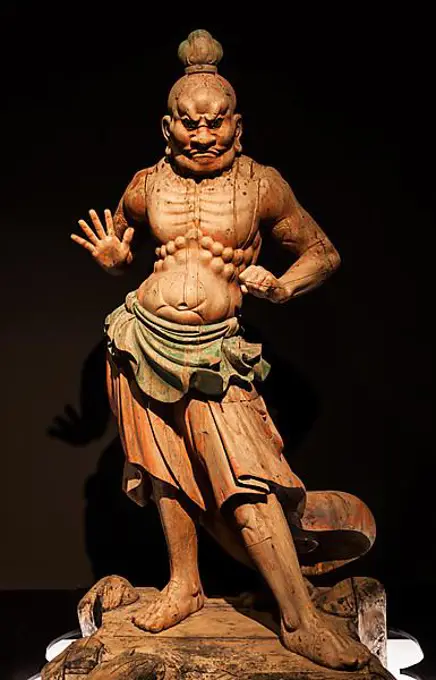
Japan, woodmade Kongorikishi statue, the muscular guardians of the Buddha, 13 century, Asia
6176-66100215
An Egyptian servant carries his master's baggage in this photo by 19th-century German Egyptologist Heinrich Karl Brugsch.
1746-21129542
Samburu painted clay dolls, Kenya, East Africa.
1899-28575784
Thailand / China: Yao shaman's mask from northern Thailand. The Yao nationality (its great majority branch is also known as Mien) is a government classification for various minorities in China. They form one of the 55 ethnic minority groups officially recognized by the People's Republic of China, where they reside in the mountainous terrain of the southwest and south. They also form one of the 54 ethnic groups officially recognized by Vietnam. In the last census, they numbered 2,637,421 in China, and roughly 470,000 in Vietnam. In Thailand they number 40,000 and in Laos 20,000.
4409-17388717
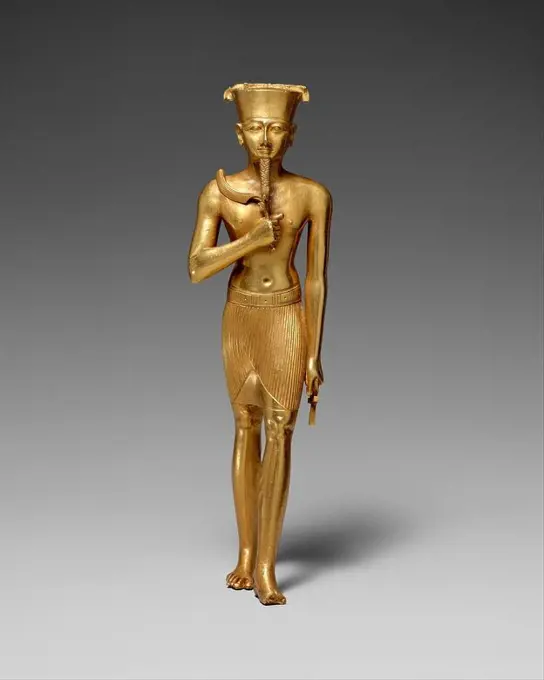
Statuette of Amun. Dimensions: h. 17.5 cm (6 7/8 in); w. 4.7 cm (1 7/8 in); d 5.8 cm (2 1/4 in); weight 0.9 kg. (2 lbs). Dynasty: Dynasty 22. Date: ca. 945-712 B.C..The god Amun ("the hidden one") first came into prominence at the beginning of the Middle Kingdom. From the New Kingdom onward, Amun was arguably the most important god in the Egyptian pantheon. As a creator god, Amun is most often identified as Amun-Re (in the typical Egyptian blending of deities, Amun is combined with the main solar deity, Re). His main sanctuary was the immense temple complex at Karnak on the east bank of the Nile at the southern edge of modern Luxor.In this small figure Amun stands in the traditional pose with the left leg forward. He is identified by his characteristic flat-topped crown, which originally supported two tall gold feathers, now missing. He wears the gods' braided beard with a curled tip and carries an ankh emblem in his left hand and a scimitar across his chest. On pylons and temple wal
6176-67039793
Bronze and gold Canaanite deity. Artist: Unknown
6145-29193108
Head of a Buddha 10th century() Cambodia. Head of a Buddha. Cambodia. 10th century(). Stone. Sculpture
4409-103970
CAPILLA DE LA VISITACION - SEPULCRO DE DON ALONSO DE CARTAGENA - 1490/1495 - ALABASTRO - GOTICO. Author: Gil De Siloe. Location: CATEDRAL-INTERIOR. BURGOS. SPAIN.
824-63219215
Legba voodoo protection outside a house. Togoville. Togo.
1815R-84598
Old African mask, close_up
7012-69882056
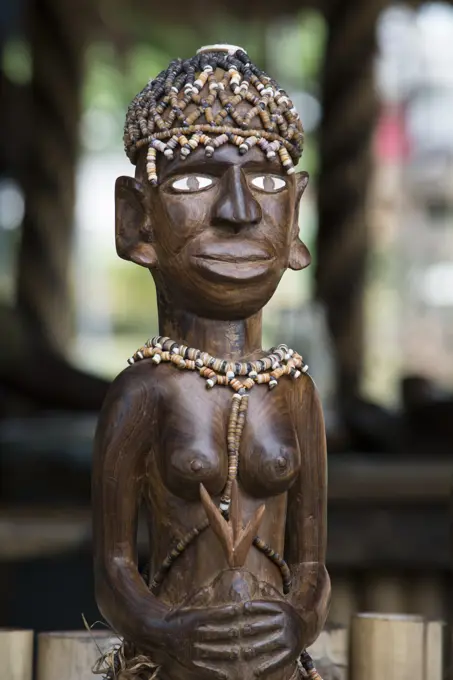
Melanesia, Solomon Islands, Guadalcanal Island, capital city of Honiara. Detail of traditional wood carving figure with shells and inlay.
1788-42167
Painted wooden mask and fabric depicting a young monk. Korean civilization, Choson period, 18th century.
6188-62401312
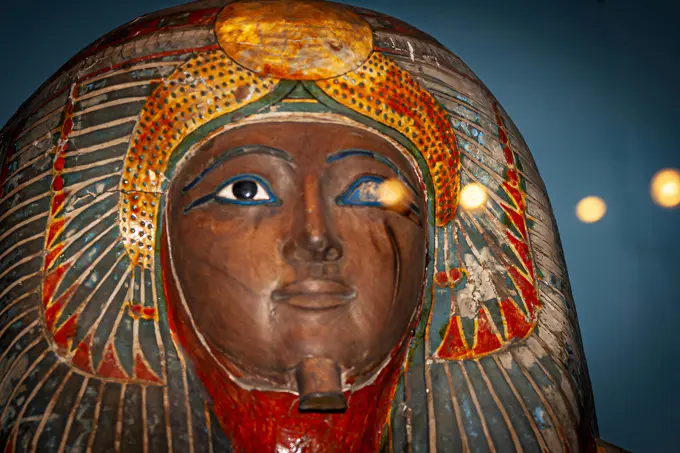
Ancient Egyptian pharaoh mythology archeology ancient civilization, sarcophagus mummification of human as part of Egyptian culture Ancient Egyptian pharaoh mythology archeology ancient civilization, sarcophagus mummification of human as part of Egyptian culture, good for multimedia content creation Copyright: xZoonar.com/AntokxSenax 22143827
7222-71300400
Japan, Honshu, Yamagata Prefecture, Risshaku-ji Yamadera temple, Juzo statue
1850-22242
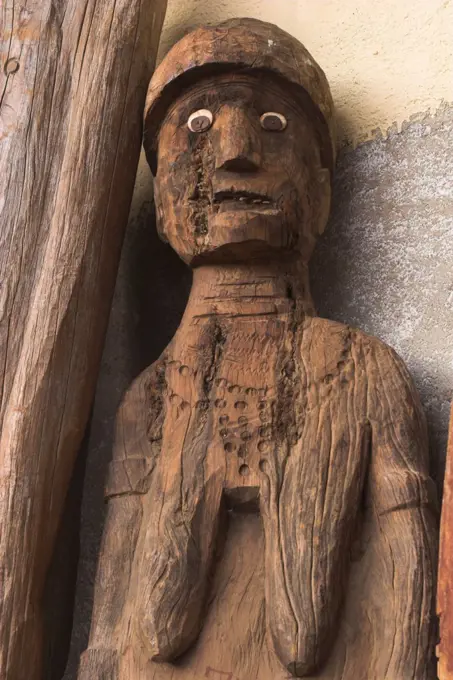
Ethiopia, South, Konso - Waga (Wakka), 'Famous Carved Wooden Effergies Of Chiefs And Warriors, Which Are Now Becoming Rare As Many Have Been Stolen By Art Collectors '
1889R-11635
Celtic Archaeology, Bishop's Head, Killadeas, Co Fermanagh, Ireland
1746-19984387
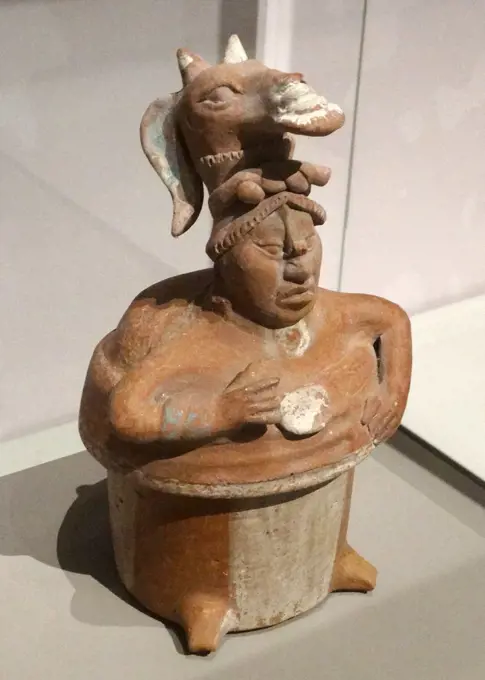
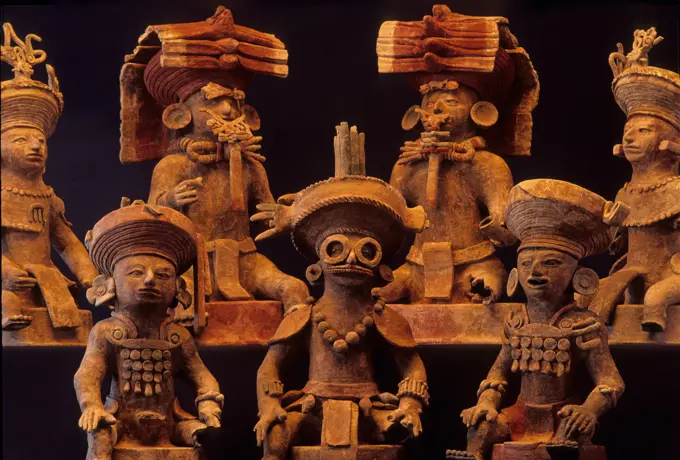
Anthropomorphic pot with lid wearing a cap representative of a deer's head. This hat suggests that the figure belongs to Mayan nobility or that the wearer is -more likely - a priest. The animal's head was usually reserved for the High Priest to eat grilled while the rest of the dignitaries ate the remained of the body. 600-900 A.D.
1899-28575778
Thailand / China: Yao shaman's mask from northern Thailand. The Yao nationality (its great majority branch is also known as Mien) is a government classification for various minorities in China. They form one of the 55 ethnic minority groups officially recognized by the People's Republic of China, where they reside in the mountainous terrain of the southwest and south. They also form one of the 54 ethnic groups officially recognized by Vietnam. In the last census, they numbered 2,637,421 in China, and roughly 470,000 in Vietnam. In Thailand they number 40,000 and in Laos 20,000.
5514-65781585
A sculpture of a Mexica priest is displayed in the National Museum of Anthropology and History, Mexico City, March 18, 2012.PLEASE NOTE: This image is part of Aurora's myPhone Co
1746-19664804
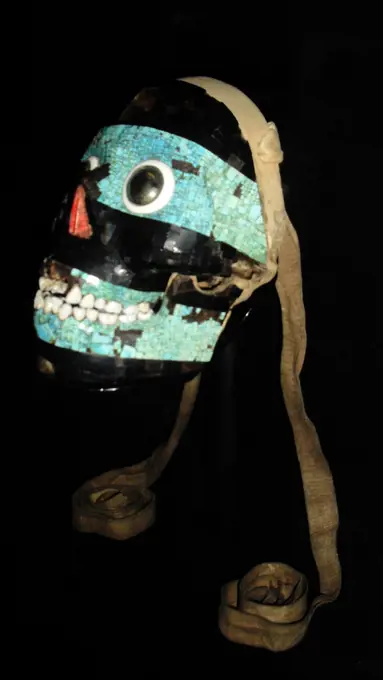
Turquoise mosaic mask of Tezcatlipoca, Mixtec-Aztec, AD 1400-1521. A human skull forms the base for this mask of Tezcatlipoca. Smoking Mirror, one of four powerful creator gods in the Aztec pantheon. The Aztec believed that the defeat of Quetzalcoatl by Tezcatlipoca marked the beginning of the current era of creation. The emblem of Tezcatlipoca, an obsidian mirror, symbolises his control over the hidden forces of creation and destruction. The mask is decorated with a mosaic of turquoise, lignite and shell; the eyes have been made from polished iron pyrites. The skull was probably tied around the waist by the leather straps as indicated in the Codex image.
1818-22194420
Tribal mask, Vietnam
6145-30157273
Buddhist Goddess Tara 1401-1500 Nepal. Wood with traces of polychrome .
1746-28978868
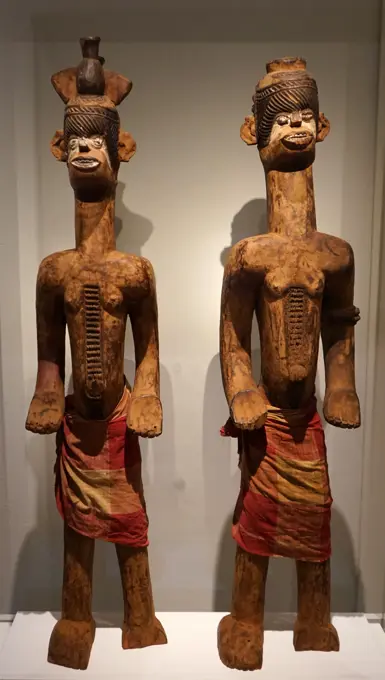
Alusi figure for worship; Igbo tribe; Nigeria, West Africa 1900
7012-69862690
Thailand, Ayutthaya. Phra Mongkonbophit. Ancient stone Buddha head covered in tiny squares of gold leaf. UNESCO
1746-28978890
Ibeji figure used in a cult of twin worship; Yoruba tribe; Nigeria; West Africa 20th century
4141-28746277
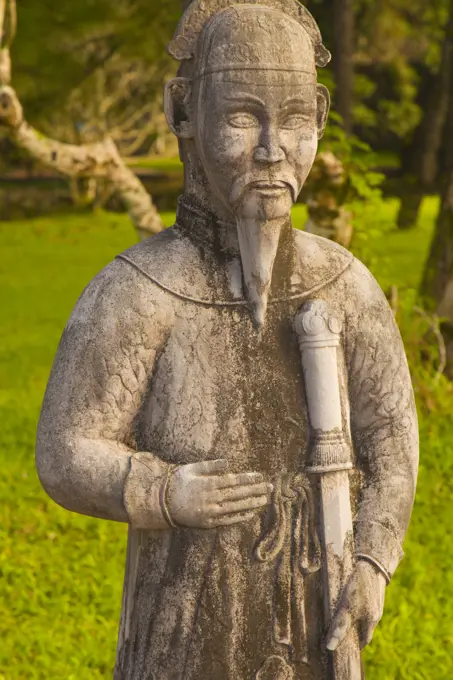
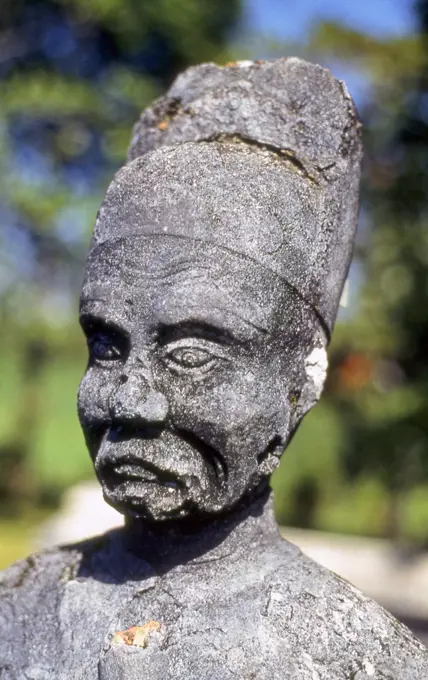
Vietnam, Hue, Minh Mang Tomb,
7155-70374946
Magical six-headed figure, Baluba people, Zaire
6145-29180172
Rustic Dancers China. Rustic Dancers 49535
1899-18859206
The Dvaravati (Thai: วารวดี, RTGS: Thawarawadi) period lasted from the 6th to the 13th centuries. Dvaravati refers to both a culture and a disparate conglomerate of principalities. By the 10th century, Dvaravati began to come under the influence of the Khmer Empire and central Thailand was ultimately invaded by the Khmer king Suryavarman II in the first half of the 12th century. Haripunchai survived its southern progenitors until the late 13th century AD. when it was incorporated in the Lanna Kingdom. The people of the region used the ancient Mon language, but whether they were ethnically Mon is unknown. There is evidence that these principalities may comprise many cultural groups of people, including Malays and Khmers. The theory of Thai migration into Dvaravati has been refuted and is now known to have happened much later. The term Dvaravati derives from coins which were inscribed in Sanskrit with śrī dvāravatī. The Sanskrit word dvāravatī means 'with many gates'. Its name may deriv
475-1683
Shaman's Spirit Mask ca.1850-75 Native American Art Smithsonian Institute, Washington D.C., USA
6145-48885885
Dedicatory Statues of Kings or Priests, showing the influence of an Assyrian style. Stephen Thompson (British, about 1830 - 1893)
6188-64528759
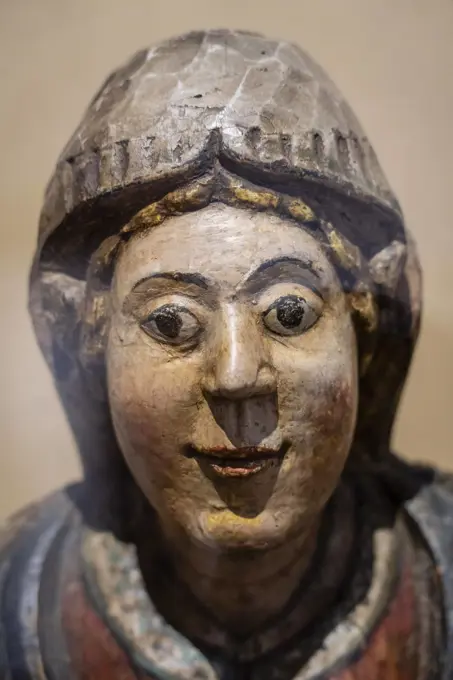
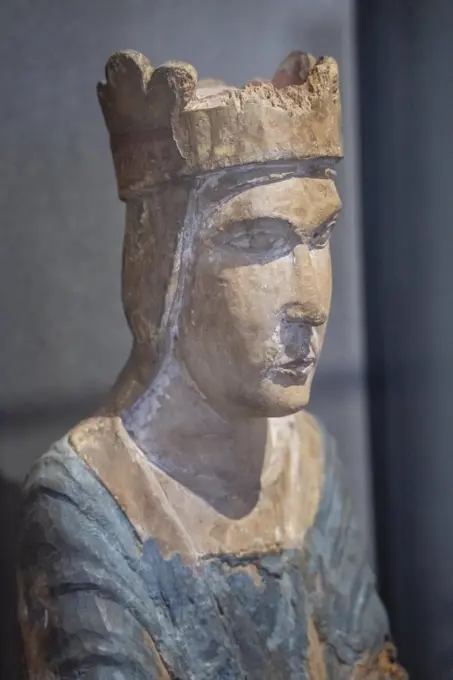
Mutter Gottes von Agulles Mother of God of Agulles, twelfth century Church of the Mother of God of the Agulles, near Sadernes, Girona art museum, Girona, Catalonia, Spain Copyright: xZoonar.com/TOLOxBALAGUERx 22282792
442-11189
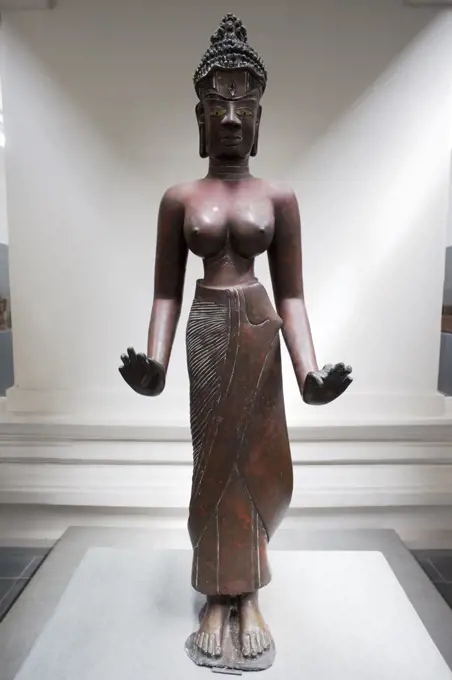
Statue of Tara the female Bodhisattva in a museum, Museum Of Cham Sculpture, Danang, Vietnam
7155-70384037
Tezcatlipoca, God of Night Sky, Aztec mosaic decorated skull, 1400, Mexico.
4409-21480868
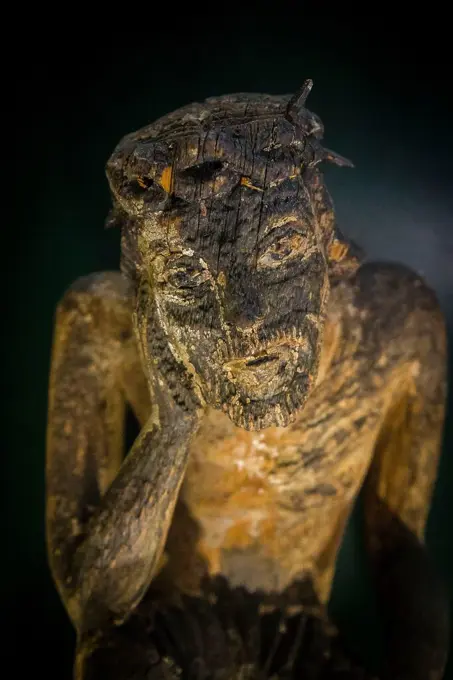
Cristo preocupado, escultura de madera, siglo XIX, museo de los iconos, castillo Real, Sanok, voivodato de subcarpacia,,Polonia, eastern europe.
6145-52958270
Priest in a leopard skin cloak with an inscription and Osiris on his skirt Third Intermediate Period-Saite Period ca. 712-650 B.C. Over the leopard skin this man is wearing is a banderole inscribed with the remnants of his name and titles: God’s Father, God’s Beloved,. .Haty.. .” It has been suggested that the presence of the titles and names of the subject rather than the king may be characteristic of the Kushite or very early Saite Period. If true, this would agree with the stylistic traits—broad neck, round skull, and small chin—that also link this figure to that era. View more. Priest in a leopard skin cloak with an inscription and Osiris on his skirt. ca. 712-650 B.C.. Leaded bronze. Third Intermediate Period-Saite Period. From Egypt. Dynasty 25-early Dynasty 26
1848-53964005
Hanuman, an ape-like humanoid Hindu deity of the Ramayana, orange statue in front of a blue wall, Nasik or Nashik, Maharashtra, India, South Asia, Asia
6145-43933078
Polychrome ceremonial mask , Masks, Kuba African people, Peabody Museum of Archaeology and Ethnology, Tichnor Brothers Collection, postcards of the United States
6188-64597110
metalcraft, madhya pradesh, india Copyright: xHarixMahidhar/DinodiaxPhotox
1899-18714568
Emperor Đồng Khánh (also known as Nguyễn Phúc Ưng Kỷ; 19 February 1864 - 28 January 1889) was the 9th Emperor of the Nguyễn Dynasty of Vietnam. He reigned 3 years between 1885 and 1889, and was considered one of the most despised emperors of his era. Hue was the imperial capital of the Nguyen Dynasty between 1802 and 1945. The tombs of several emperors lie in and around the city and along the Perfume River. Hue is a UNESCO World Heritage Site.
1788-15394
Ceremony of offerings, figures and stele in jade from La Venta, Mexico
1746-21099092
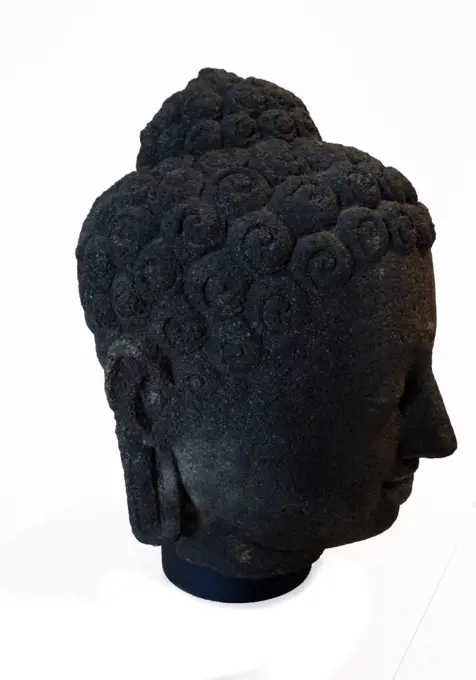
Volcanic Stone Buddha Head. Indonesian. Dated 9th Century
6145-59425050
Stone Cross, Celtic of Irish, Francis Edmond Currey, 1851 - 1890 photograph  Great Britain paper albumen print cross as symbol of Christ Great Britain
1899-18713583
Jayavarman VII (1125-1215) was a king (reigned c.1181-1215) of the Khmer Empireat Angkor. Cambodia. He was the son of King Dharanindravarman II (r. 1150-1160) and Queen Sri Jayarajacudamani. He married Jayarajadevi and then, after her death, married her sister Indradevi. The two women are commonly thought to have been a great inspiration to him, particularly in his unusual devotion to Buddhism, as only one prior Khmer king had been a Buddhist. Over the 30 some years of his reign, Jayavarman embarked on a grand program of construction that included both public works and monuments. As a Mahayana Buddhist, his declared aim was to alleviate the suffering of his people. One inscription tells us, 'He suffered from the illnesses of his subjects more than from his own; the pain that affected men's bodies was for him a spiritual pain, and thus more piercing'. This declaration must be read in light of the undeniable fact that the numerous monuments erected by Jayavarman must have required the la
6145-45849037
Stone cross, Celtic or Irish.
1848-53409086
Golden pre-Columbian Inca mask, replica, sheet brass with semi-precious stones, souvenir, Cusco, Peru, South America
7208-70658132
Copan, Honduras, Maya
1848-55298704
Old wooden manlike figure as a totem pole, Konso, Ethiopia, Africa
6145-46833332
Puppet (Wayang Klitik) of ArjunaSasrabau
6145-51833813
Mantle ("The Paracas Textile") Nasca. Mantle ("The Paracas Textile"), 100-300 C.E. Cotton, camelid fiber, 24 5/8 × 58 11/16 in. (62.5 × 149 cm).  This extraordinarily complex mantle, or cloak, is one of the most renowned Andean textiles in the world. It was most likely used as a ceremonial object. The ninety figures decorating the border, created by needle knitting, have been interpreted as a microcosm of life on Perus South Coast two thousand years ago, with a particular focus on agriculture. Many of the images illustrate native flora and fauna as well as cultivated plants. Costumed figures may represent humans impersonating gods and acting as intermediaries between the real and supernatural worlds. Severed human trophy heads are shown as germinating seeds, suggesting the practice of ritual sacrifice and the interconnected cycles of birth and death. Este extraordinariamente complejo manto, o capa, es uno de los textiles andinos más conocidos en el mundo. Fue usado probablemente como
1746-30015708
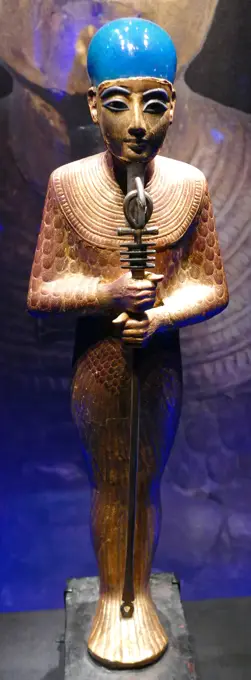
Gilded wooden statue of the God Ptah; wearing a cobalt blue glass cap. He carries a staff with the Ankh symbol and Djed pillar. Tomb of King Tutankhamun. 1326 BC
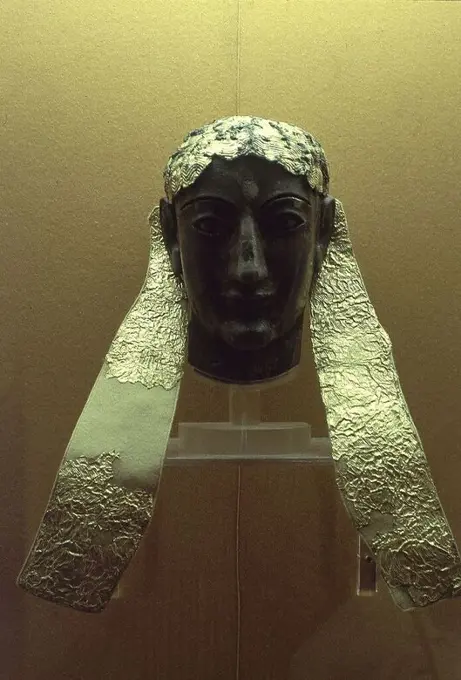
4409-17283512
CABEZA CRISELEFANTINA POSIBLE REPRESENTACION DEL DIOS APOLO - SIGLO VII AC - PROCEDENTE DE JONIA - ORO Y MARFIL. Location: MUSEO. DELPHI. GREECE.
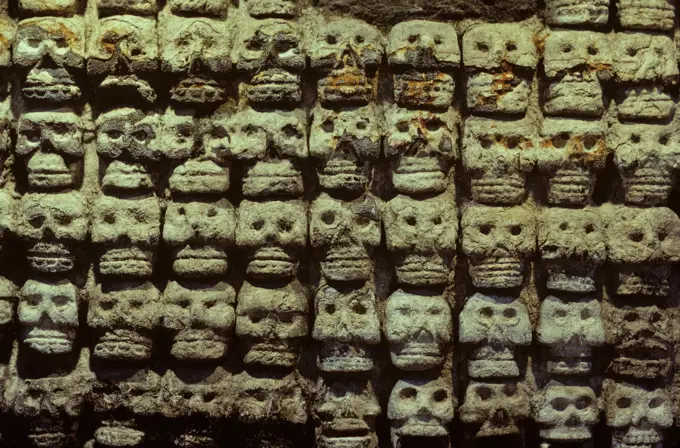
7208-70658342
Skull rack or Tzompantli, Aztec, Mexico, Templo Mayor
4409-17276823
PENDENTIFS DE ORO Y LAPISLAZULI - TRIADA TRES DIOSES PROTECTORES DE OSORKON II - HORUS, OSIRIS, ISIS - DE IZQUIERDA A DERECHA - SIGLO VIII AC. Location: MUSEO DEL LOUVRE-ORFEBRERIA. France. HORUS DIOS EGIPCIO. OSIRIS DIOS EGIPCIO. ISIS DIOSA.
6176-59907566
Old wooden bear figure on top of a totem pole of the Tlingit Nation exhibited in the Totem Heritage Center in Ketchikan, Alaska, USA
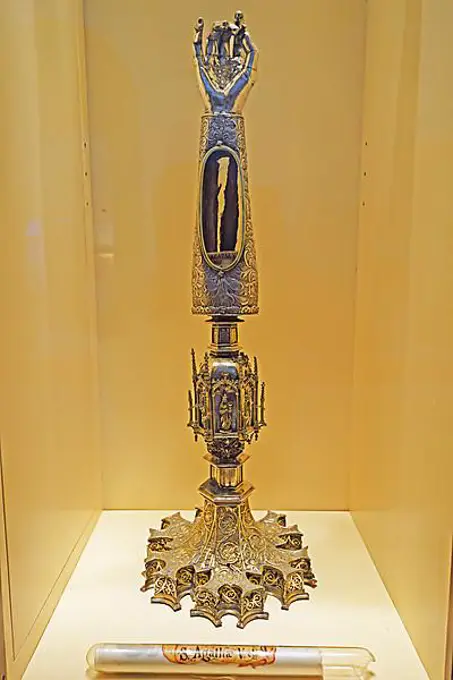
1848-50771603
Golden monstrance with forearm bone as relic, Palermo Cathedral, Sicily, Italy, Europe
6188-64597638
Buddha modelling figure, Muttam 5th century ad, Tamil Nadu, India Copyright: xMxAmirtham/DinodiaxPhotox
7007-69754465
Mexico, Oaxaca, Human skull covered with Aztec jade mask on display inside Museum of Oaxacan Cultures by the Iglesia de Santo Domingo
1525-22309390
Boy looking at a statue in a castle, Himeji Castle, Himeji, Japan
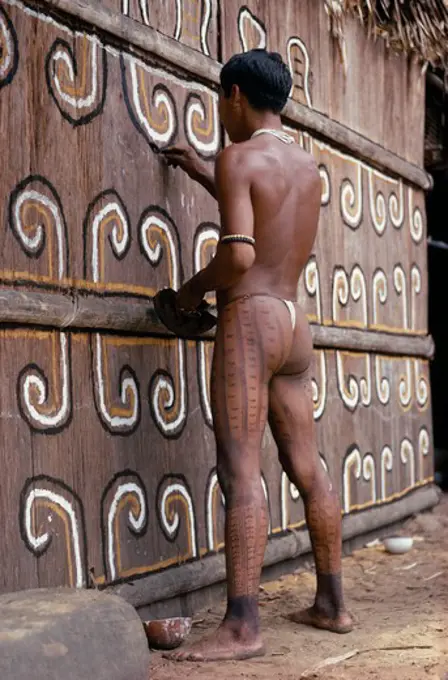
1850-24378
Colombia, North West Amazon, Tukano Indigenous Tribe, 'Barasana Man (Sub Group Of Tukano) With We Body Paint, White Glass Bead Necklace  Forest Seed Elbow Bands  Painting The Front Of Maloca With White And Yellow Clays And Black Charcoal For Festival '
6188-64528615
mutter gottes von salvador mother of god of salvador, 12th century, polychrome wood, hermitage of sant salvado, parish of cogolla, la garrotxa, Girona art museum, Girona, Catalonia, Spain Copyright: xZoonar.com/TOLOxBALAGUERx 22282593
1746-28980814
The protectress Palden Lhamo como Magzor Gyalmo. Dated 14th Century
7153-70514675
Myanmar. Shan State. Shwenyaung. Shwe Yan Pyae Monastery. Glass mosaics depicting pipe-smoking British soldiers, in the 19th century monastery.
1525-21083144
Oriental mask
1746-19698723
In Ancient Egyptian religion; Montu was a falcon-god of war. originally a manifestation of the scorching effect of the sun; Ra,
7073-70251982
Carved Chinook totem of a man decorates the support beam inside a traditional longhouse, Washington
6145-29118722
Fukurokuju: God of Wisdom
1397R-74213
The Temple of Confucius, Bronze Bell, Tainan, Taiwan, Asia,
1746-19676669
Linguist Staff 19th Century. Ghana. This would have been carried by high-ranking officials within the courts of Akan chiefs in an area of West Africa (The Gold Cost)
1848-56094136
THA Thailand Bangkok Wat Arun monastery. Monk figures covered with gold leaf. |
1848-55342446
Dayak statue as protector on a traditional long house of the Punan Dayak, Kapuas Hulu, West Kalimantan, Borneo, Indonesia, Southeast Asia, Asia
7017-69902425
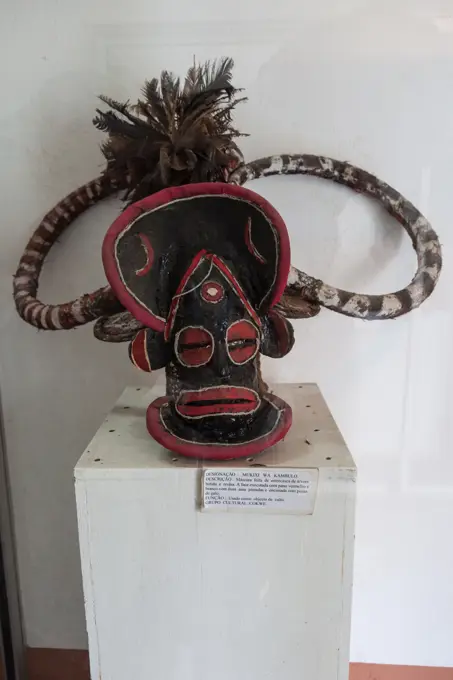
Africa, Angola, Luanda. Worship object masks made of tree bark, resin and rooster feathers used for the Mukanda ceremony in the National Museum of Anthropology.
1848-67284227
Choir stalls from the 13th century, Cephalopod, St., Saint, Saint
4409-17338327
Mithras. Persian Solar God. Object of Mithraic cult, very widespread in the Roman Empire.
6145-29805569
The Christ Child Holding the Orb early 17th century Spanish or Portuguese This depiction of the Child holding the orb, which signifies His dominion over the earth, features the glass eyes typical of Iberian sculpture but lacks the expected polychromy. Despite its vigorous modeling, the figure was probably meant to be dressed in a luxurious garment and a wig. The faithful supplied such precious accoutrements as acts of devotion.. The Christ Child Holding the Orb 202577
6145-46840470
Shadow Puppet (Wayang Kulit) of Rasasa Hutan, from the set KyaiDrajat
6188-63964301
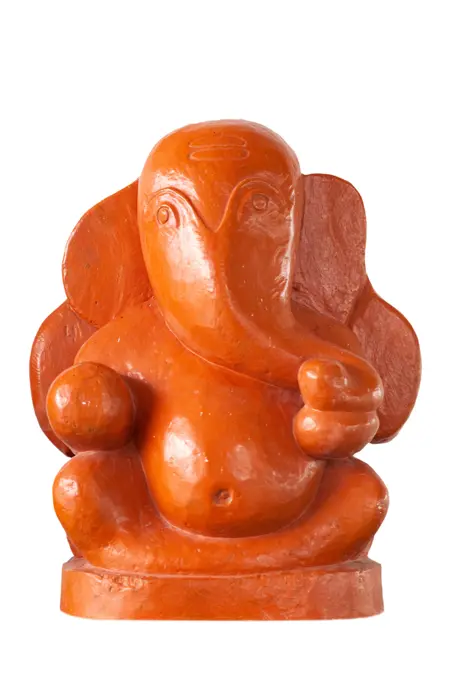
Replica of idol of shree mayureshwar moreshwar of moregaon  Pune  Maharashtra  India 2010 Copyright: xNitinxKelvalkar/DinodiaxPhotox
6145-46840473
Shadow Puppet (Wayang Kulit) of Buto Kimpul, from the set KyaiDrajat
1848-55228255
Stone sculpture of a Mandarin man, mausoleum of the Emperor Minh Mang, Hue, North Vietnam, Vietnam, Southeast Asia, Asia
6176-59905262
Decorated wolf head, 1870. Nuu-chah-nulth Tribal from Pacific Coast of Canada.
6145-46841050
Shadow Puppet (Wayang Kulit) of Cingkarabala, from the set KyaiDrajat
1899-18794923
Yaksha (Sanskrit: क्ष yakṣa, Pali: क्ख yakkha, Tamil: யாக்க Yākka, Thai: ยักษ์ yaksa, Chinese: 夜叉 yèchā or yaochā, Korean: 야차/夜叉 yacha, Japanese: 夜叉 yasha, Tibetan: གནོད་སྦྱིན ་ gnodsbyin) is the name of a broad class of nature-spirits, usually benevolent, who are caretakers of the natural treasures hidden in the earth and tree roots. They appear in Hindu, Jain and Buddhist mythology. The feminine form of the word is yakṣī. The Sunga Empire or Shunga Empire was a royal Indian dynasty from Magadha that controlled vast areas of the Indian Subcontinent from around 185 to 73 BCE. The dynasty was established by Pusyamitra Sunga, after the fall of the Maurya Empire. Its capital was Pataliputra, but later emperors such as Bhagabhadra also held court at Vidisha, modern Besnagar in Eastern Malwa. Pushyamitra Sunga ruled for 36 years and was succeeded by his son Agnimitra. There were ten Sunga rulers. The empire is noted for its numerous wars with both foreign and indigenous powers. They fough
7110-70364059
North America, Mexico, Chiapas, Metzabok, Selva Lacandona. Incense-stained "god-pots" in the sacred cave shrines of Metzabok.
6188-63964298
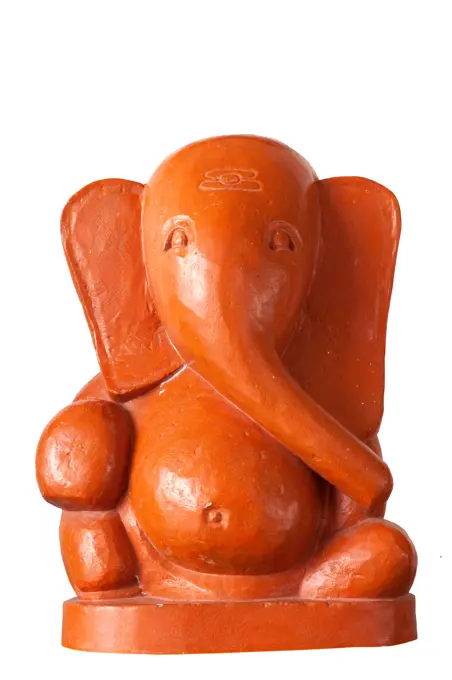
Replica of idol of shree varadavinayak of mahad  Raigad  Maharashtra  India 2010 Copyright: xNitinxKelvalkar/DinodiaxPhotox
1606-21718129
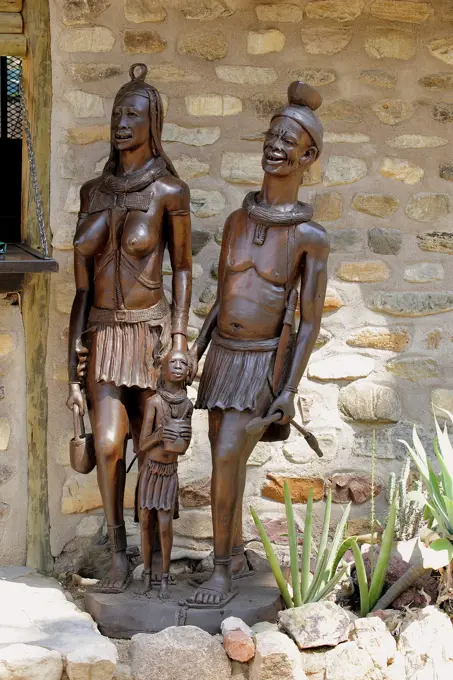
Africa, Southern Africa, Namibia of the North, Region of Kunene, Province of Kaokoland,  Waterfall of Epupa (Border with Angola), Artisanat : Himba
1848-55223403
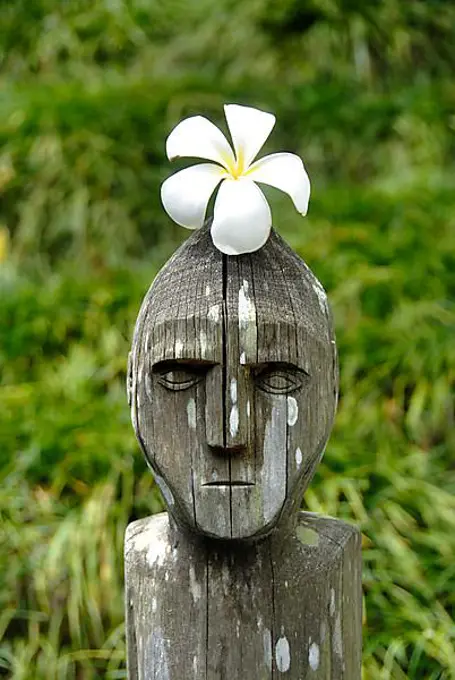
Balinese snapshot, simple decoration, wood carved human figure, Frangipani (Plumeria) flower on its head, Bali, Indonesia, Southeast Asia, Asia
1746-21124513
Painted wooden statue of Osiris, god of the underworld, from Thebes. Dated 1170 BC
5513-18726150
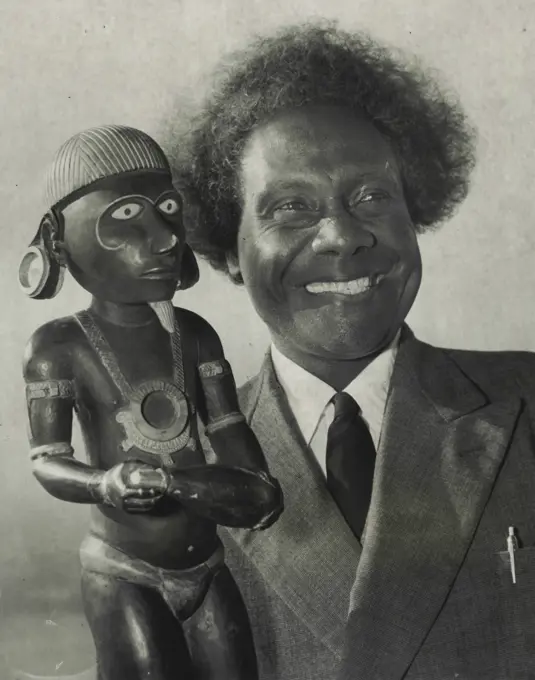
This idol, Kimbo, was worshipped by Solomon Islanders in cannibal days as a god of war.It was brought to Sydney today by Pastor Kata Ragoso, president of Western Solomons Seventh Day Adventist Mission and chief of the Marovo tribe, which saved 200 Allied airmen during the war.Pastor Ragoso, who is on his way home, arrived in Sydney today in the Oronsay, after attending a conference of his church in San Francisco.He is in charge of 4000 parishoners, 56 schools and two hospitals. June 28, 1954.
PREVIOUS
of 2
NEXT
2401 S. Ervay, Suite 206
Dallas, Texas 75215
United States
Get Started
Free ResearchMy BoardsMy Cart
For Creators
How To License Your ContentContributor PortalFrame of Mind
Resources
API accessPricing
Contact
+1 866 236 0087help@viewpictures.co.uk Contact form
©2026 View Pictures. All Rights Reserved. -B
This site is protected by reCAPTCHA and Google Privacy Policy and Terms of Service apply.