Ancient Terracotta Fragments

Historical fragments of Greek kylikes from the 6th to 5th centuries B.C., showcasing black glaze and intricate designs in archeological context.

Fragment of a Martavan from V.O.C. ship De 'Witte Leeuw', Anonymous, Before 1613  Fragment of a martavan from V.O.C. ship the 'Witte Leeuw'. Martaban (possibly) stoneware. porcelain   Sint-Helena
Fragment of a Martavan from V.O.C. ship De 'Witte Leeuw', Anonymous, Before 1613 Fragment of a martavan from V.O.C. ship the 'Witte Leeuw'. Martaban (possibly) stoneware. porcelain Sint-Helena
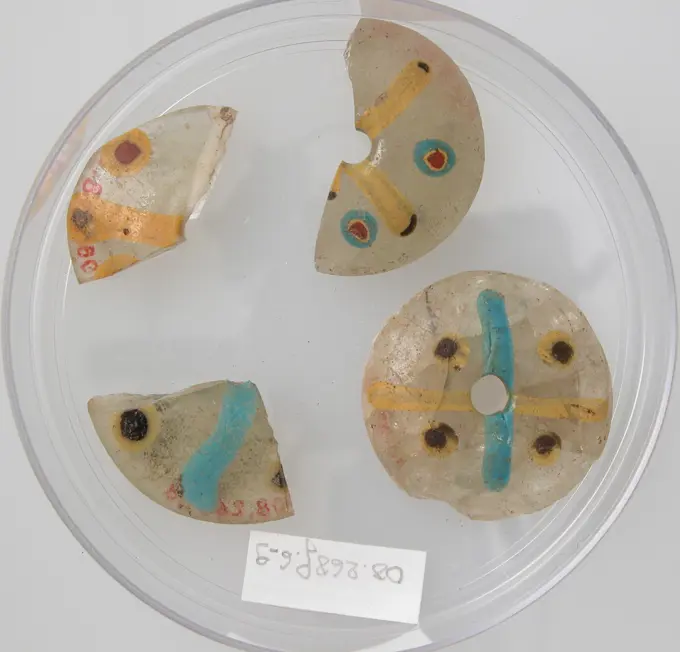
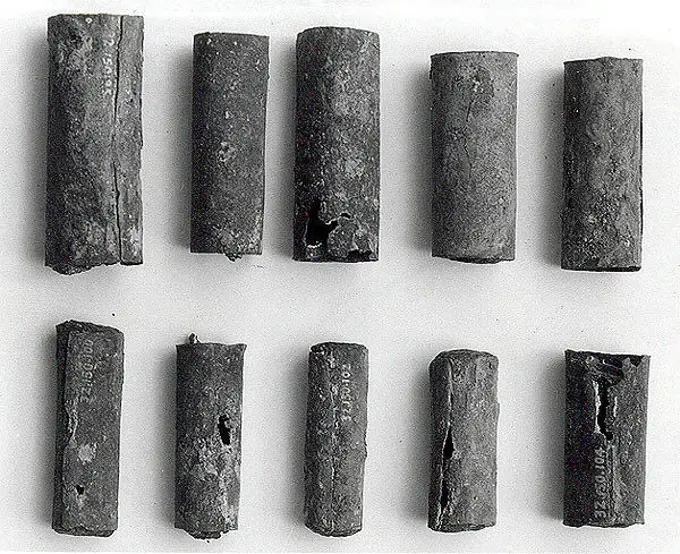
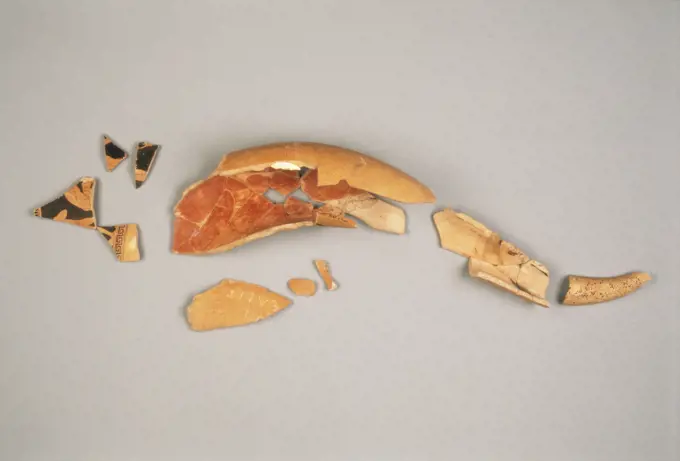
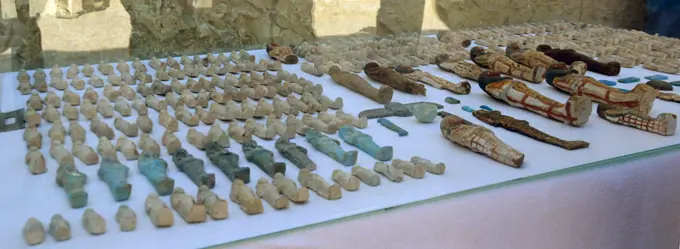
Shards of a sign from V.O.C. ship De 'Witte Leeuw', Anonymous, Before 1613 plate (dishes) Shards of a sign from V.O.C. ship the 'Witte Leeuw'. Shatou porcelain   Sint-HelenaCopper Peapod Ornament 12th-15th century Chimú (). Copper Peapod Ornament 315320Bead Fragments 4th-early 5th century Coptic. Bead Fragments 477072Spanish silver coins from the 17th century. Maritime Museum. Lisbon, Portugal.Amulet case ca. mid-1st millennium A.D. Sasanian A group of ten amulet cases (32.150.95, 32.150.96, 32.150.97, 32.150.98, 32.150.99, 32.150.100, 32.150.101, 32.150.102, 32.150.103, 32.150.104) were found inside a plain unglazed jar (32.150.94). The cases are made from sheet copper rolled into cylinders and the ends stopped with bitumen. Although only one fragment of papyrus was found, the texts probably contained exorcisms or blessings. The city of Ctesiphon was located on the east bank of the Tigris River, 20 miles (32 km) south of modern Baghdad in Iraq. It flourished for more than 800 years as the capital of the Parthians and the Sasanians, the last two dynasties to rule the ancient Near East before the Islamic conquest in the seventh century. Systematic excavations in the Ctesiphon area were undertaken by an expedition in 1928-29 sponsored by the German Oriental Society (Deutsche Orient-Gesellschaft). The Metropolitan Museum of Art and the Staatliche Museen, Berlin, undertook a joiAncient Egypt. Funerary servants figures ushabtis. Vatican Museums.Attic Red-Figure Keras Fragment (comprised of 22 joined fragments); Athens, Greece; about 470 B.C; Terracotta; 24 cm (9 7,16 in.)Canada, British Columbia, Britannia Beach, British Columbia Museum of Mining, historic Copper Mill Number 3, ore samplesPorcelain Shards from V.O.C. ship De 'Witte Leeuw', Before 1613  Porcelain shards from v.o.c.-ship the 'Witte Leeuw' Jingdezhen bone china (material)   Sint-HelenaRoman monetary system, republican and imperial coinages, 2nd-5th century AD, Huelva Museum, Huelva, Andalusia, Spain.A photograph taken within a tomb in the Draa Abul-Naga burial site for noblemen on the left bank of the Nile, near the Valley of the Kings. The tomb contains mummies believed to be a goldsmith called Amenemhat, who lived sometime between 1550 BC to 1292 BC