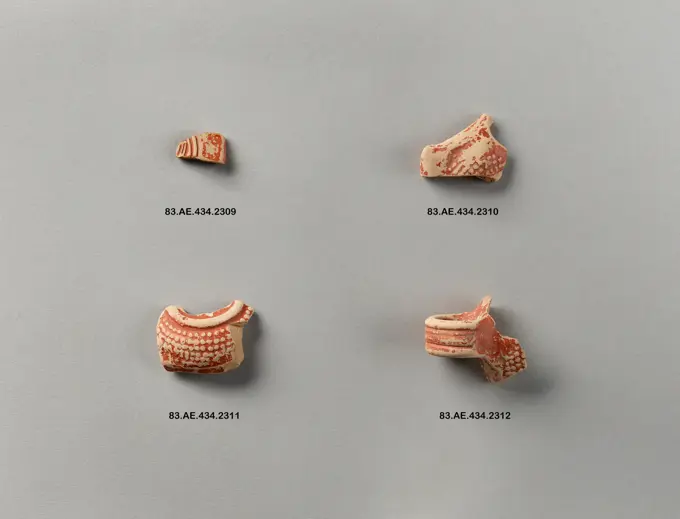
Ancient Terracotta Fragments

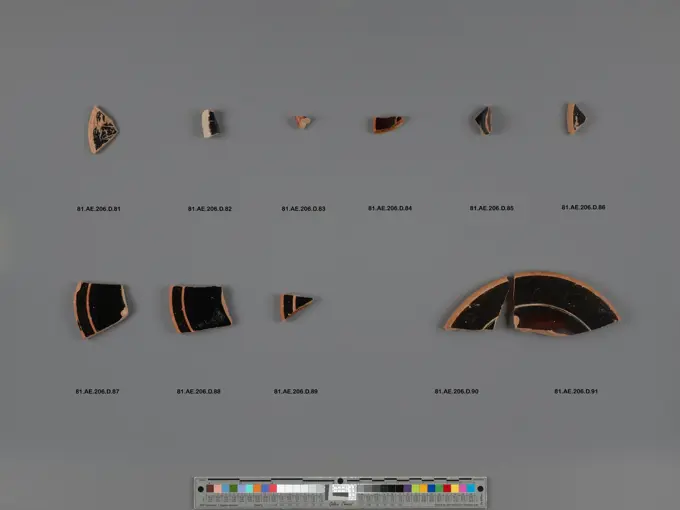
Pieces of ancient Greek drinking cups showing intricate designs and figures from the Archaic to Classical periods.

Attic Red-Figure Skyphos Fragment. Unknown
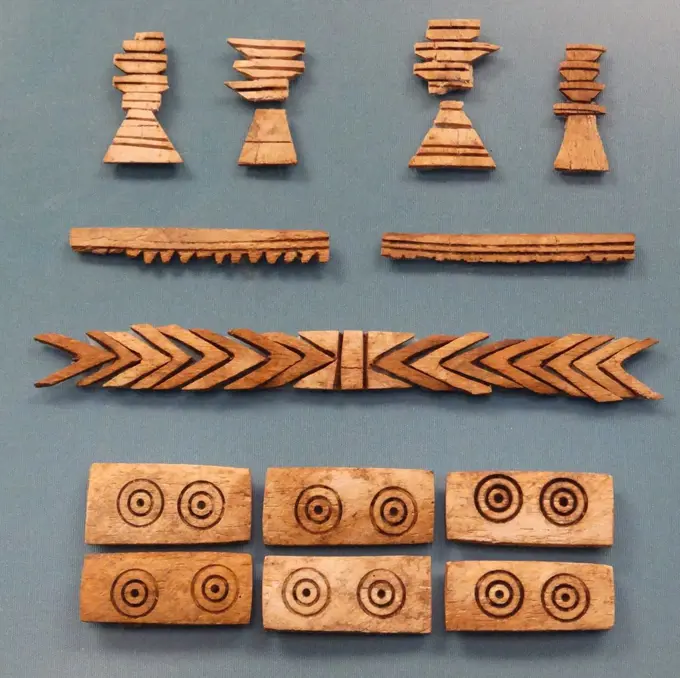
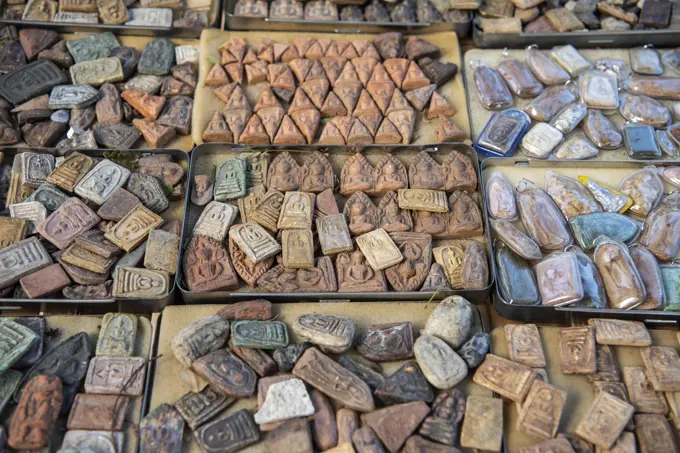
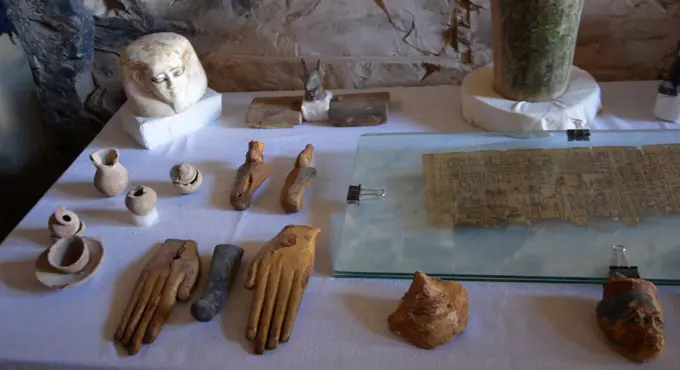
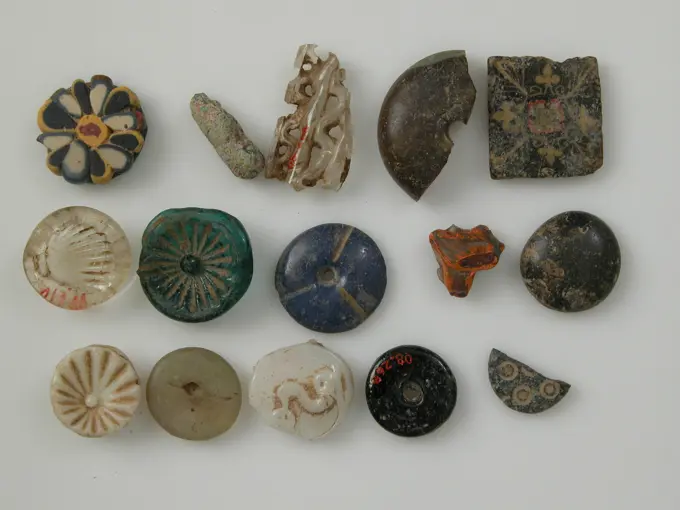
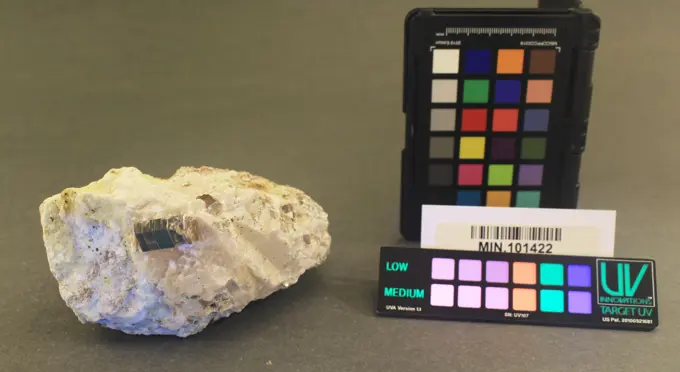
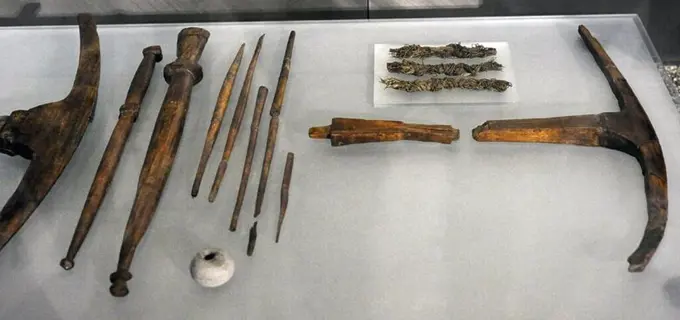
Button, Brass, Convex button with 'Colonie de Citeaux'. Brass back and shank., On card E, France, 19th century, costume & accessories, Decorative Arts, ButtonPapyrus Fragments Inscribed in Hieratic Papyrus Fragments Inscribed in Hieratic, ca. 1938-1630 B.C.E. Papyrus, ink, a: Glass: 12 x 12 in. (30.5 x 30.5 cm).   Egyptian, Classical, Ancient Near Eastern Art ca. 1938-1630 B.C.E.Decorative bone inlay (1750-1550 BC) from Jericho in Palestine. fragments were found scattered on the floor of Tomb P19. Some were undoubtedly applied to small rectangular or cylindrical wooden boxes, parts of which were recovered. Others might have been used to ornament items of furniturePLATERIA ARAUCANA - ORFEBRERIA CHILENA - SIGLO XVIII. Location: MUSEO DE AMERICA-COLECCION. MADRID. SPAIN.THAILAND UBON RATCHATHANI AMULET MARKET a Thai Amulet market in the city centre of Udon Ratchathani and Province Ubon Ratchathani in Thailand. Thailand, Ubon Ratchathani, November, 25, 2023 Copyright: xZoonar.com/URSx 2141705418th Dynasty tomb of Paheri, at Elkab,south of Thebes, Egypt. dating from of the New Kingdom in the middle of the 18th Dynasty, under the reign of Thutmosis III. The tomb had already been located by the scholars of the Egyptian expedition in 1799. The titles associated with Paheri are those of nomarch (governor prince) and scribe. He is often called nomarch of Nekheb and AnytIn September 2018, Egypt's Ministry of Antiquities, announced the discovery of an 18th dynasty tomb, in Draa Abul-Naga, a burial site for noblemen on the left bank of the Nile, near the Valley of the Kings. the tomb contains mummies believed to be a goldsmith called Amenemhat, who lived sometime between 1550 B.C. to 1292 B.C. The burial chamber has a niche at one end, which holds a statue of Amenemhat who sits on a chair next to his wife, Amenhotep. The Eighteenth Dynasty dates back to the 13th century BC, a period noted for some of the most well known Pharaohs, including Tutankhamen and Ramses II. The chamber has two burial shafts. In one, archaeologists found sarcophagi and remains dating from the later 21st and 22nd Dynasties. Those included the remains of a woman and her two grown children. She showed signs of bacterial bone disease and cavities. The other shaft contains funerary masks and statues depicting the goldsmith's family. The tomb hoses deteriorated mummies with their skulAttic Red-Figure Cup Fragment. UnknownProduction image.Assyrian merchants. Old Assyrian culture. 1920-1740 BC. Cylinder seal. From Mardin, Turkey. British Museum. London. GRB.Fragments 4th-7th century Coptic. Fragments 475433Plain Panel with Sewn Silverfish and Danglers 11th-13th century Central coast (). Plain Panel with Sewn Silverfish and Danglers. Central coast (). 11th-13th century. Cotton, silver. Peru. Textiles-WovenFragments of tobacco pipes, c. 1800 - c. 1900 Fourteen fragments of tobacco pipes, including ten fragments of white pipe earth without, or with marginal decoration (brand); Three richly decorated fragments of Pijpaarde (two pipe heads with the weapon of Friesland and one with P. Goedewaag, Gouda, Holland), and one pipe head of an alloy of tin and lead. The excerpts are stored in a cigar box. Netherlands pipe clay. lead (metal). tin (metal) Fourteen fragments of tobacco pipes, including ten fragments of white pipe earth without, or with marginal decoration (brand); Three richly decorated fragments of Pijpaarde (two pipe heads with the weapon of Friesland and one with P. Goedewaag, Gouda, Holland), and one pipe head of an alloy of tin and lead. The excerpts are stored in a cigar box. Netherlands pipe clay. lead (metal). tin (metal)Powellite. minerals. North America; USA; New Jersey; Sussex County; Franklin DistrictMosaic Glass Fragments 4th-early 5th century Coptic Between 1907 and 1909, the Metropolitan Museum excavated at Ain et-Turba in the Kharga Oasis. Archaeologists found large numbers of glass fragments, many of high quality and expensive manufacture. Hundreds of glass fragments were recovered. The mosaic glasswork technique used on some of the fragments is similar to millefiori, "thousand flowers" in Italian. This method fused tiny rods of colored glass and created flower-like patterns. In this case are examples of painted glass as well. One shows a tiger attacking an antelope, surrounded by leaves and flowers. No other excavation from this Late Antique Egyptian region contained the amount and quality of glass discovered in Ain et-Turba. In Bagawat, there was evidence that glass like this was placed in the plaster of the tombs domes in order to have a glittering effect on the rooms.. Mosaic Glass Fragments 477119Attic Red-Figure Kylix Fragment. UnknownPhlogopite. minerals. North America; USA; New York; Essex County; NewcombChild gloves of Gijs Zemkin. Left child gloves from Gijs Zemkin. Three ljen on the back and close with pearl nuts button at the back of the hand.Attic Black-Figure Plate Fragment. UnknownSketchbook with 63 magazines, Johannes Taventrate, 1840 - 1868  Sketchbook consisting of 63 magazines with mainly mountain and forest landscapes in the Netherlands and Germany, figure studies and animals. Cleves paper. ink. watercolor (paint). boekband: cardboard. boekband: leather. pencil pen / brush mountains. city-view, and landscape with man-made constructions. forest, wood. horse Cleves. Hillegersberg. Liebenstein. Schwarzburg. Rijsbergen. Zuid-Holland. Rotte. Rijn. Eisenach. Weimar. Resin. Saksen. Germany. RuhlaViking art. Tools for the manufacture of textiles. Thread winders in beech wood, tools for spinning and thread balls. Viking Ship Museum. Oslo. Norway.Sodalite. minerals. Asia; Afghanistan; Badakhshan ProvinceHydrozincite. minerals. North America; USA; Nevada; Clark County; Goodsprings; Monster MineRed-Glaze Lamp Fragment. Unknown