Ancient Tools and Weapons

A selection of historical tools and weapons including pendants, knives, and daggers, featuring various materials and intricate designs.

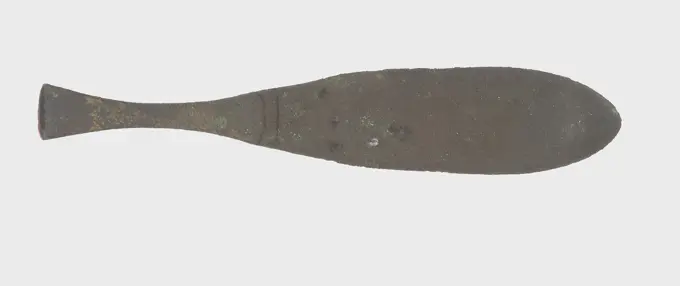
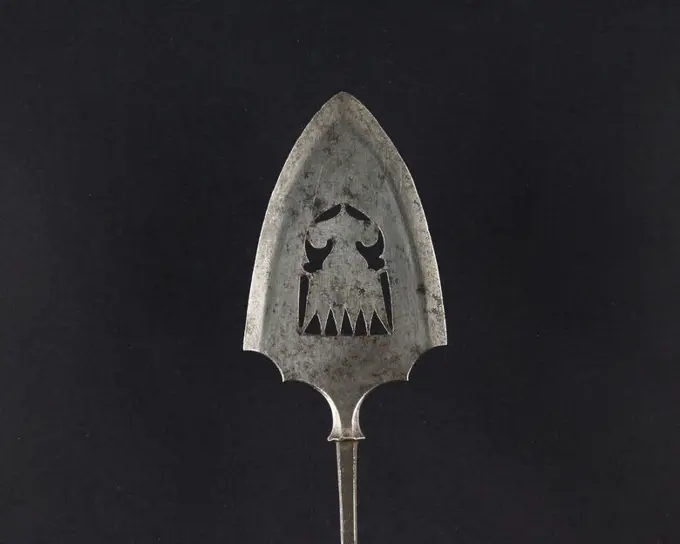
Hendrick van Duyveland, Spoon with an oval bowl and flat handle with cord-shaped end, small size, spoon cutlery soil find tin metal, cast Oval bowl short rat tail straight handle with an accolade stem end. Marked on the underside of the stalk Reverse side of stipe struck mark representing winged figure with raised sword in an oval why the text ... DRICK VAN ... archeology Rotterdam eating railroads Soil discovery: rail tunnel Rotterdam.
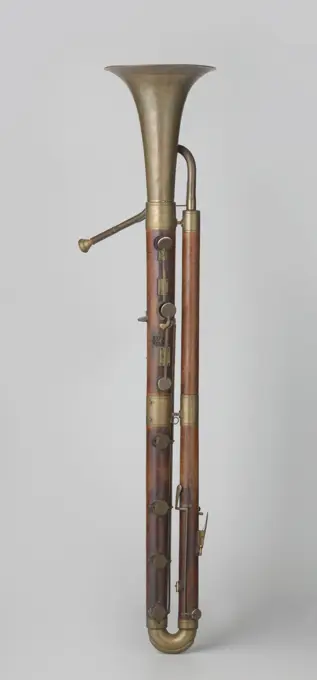
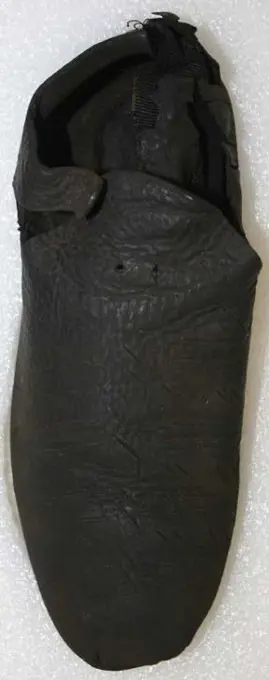
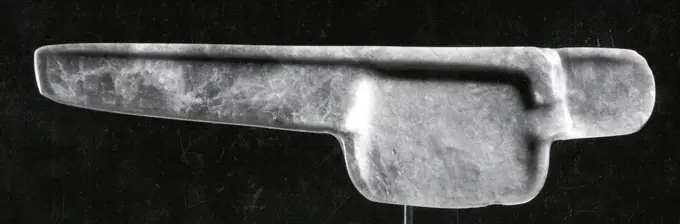
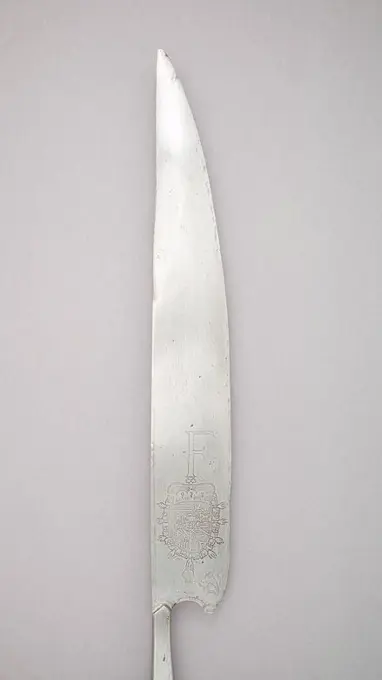
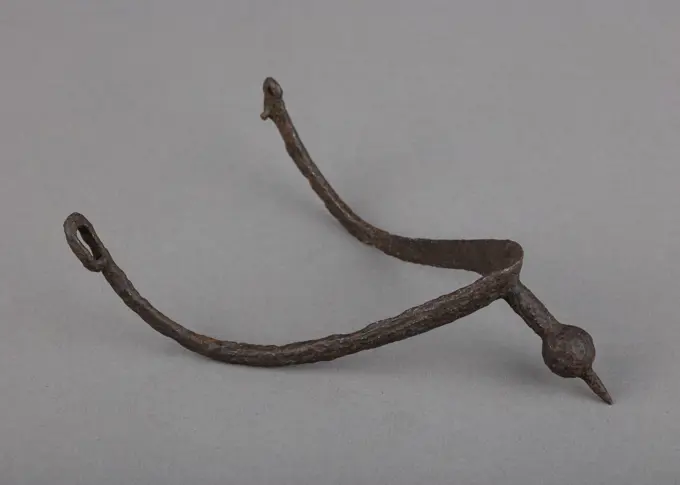
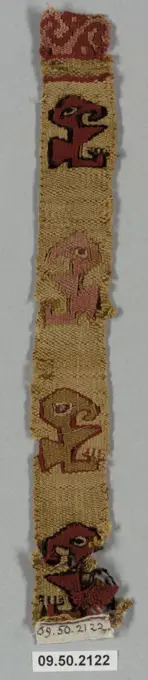
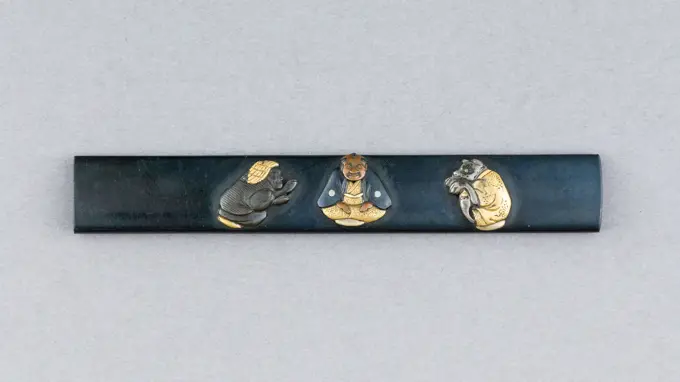
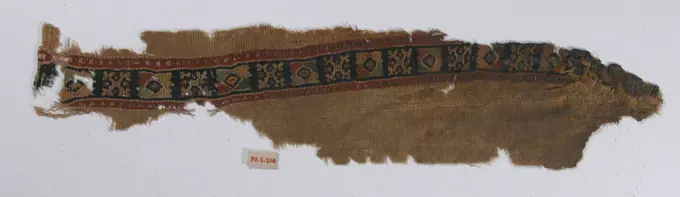
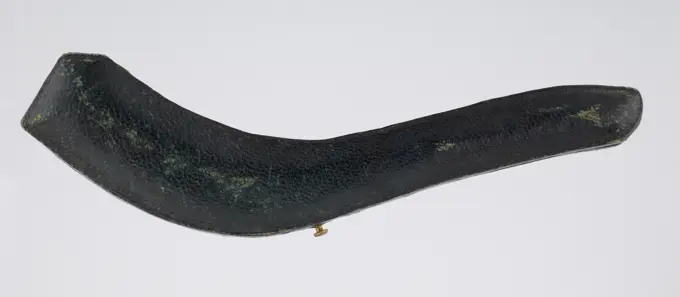
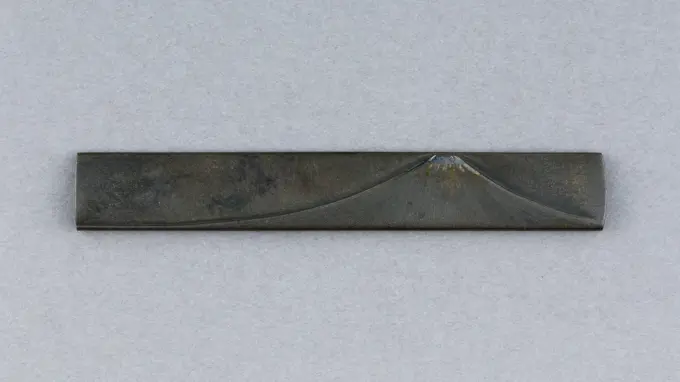
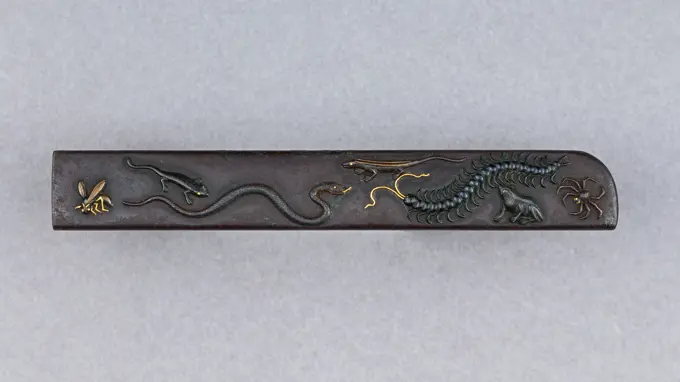
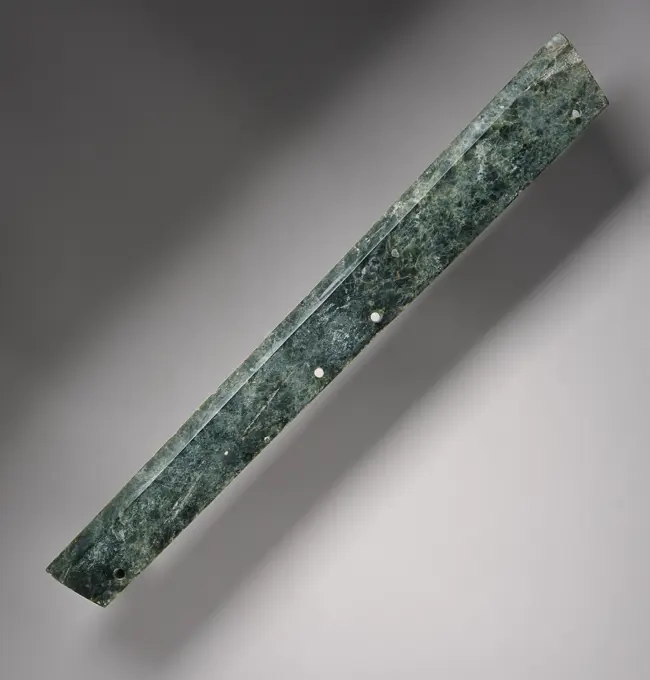
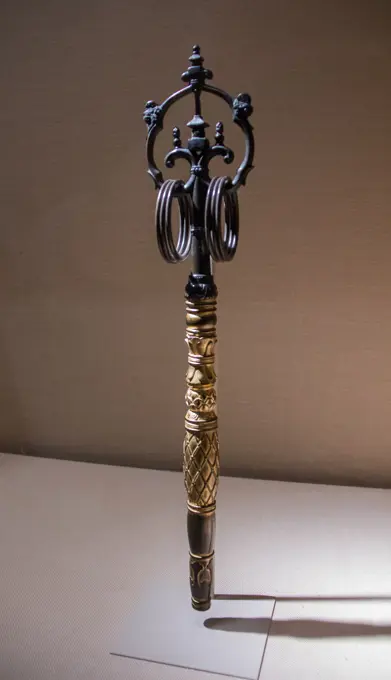
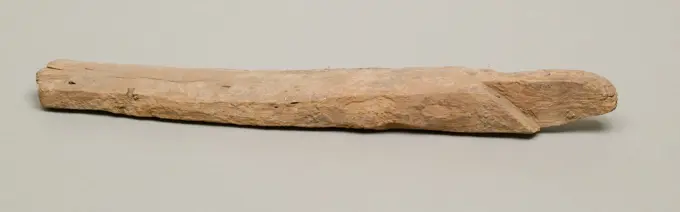
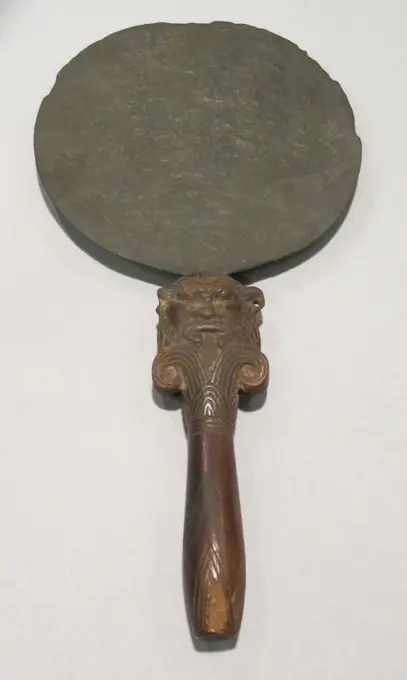
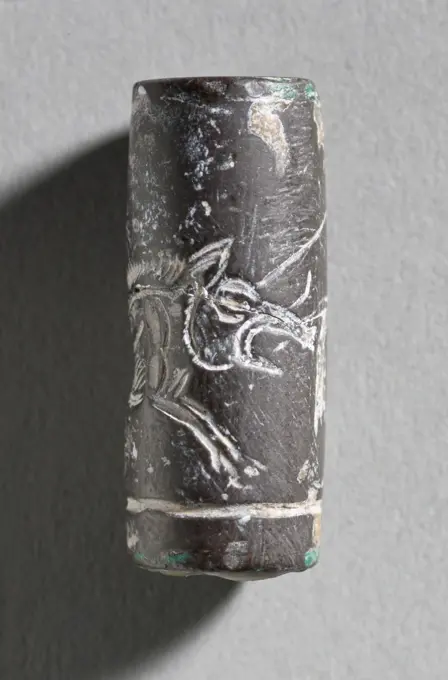
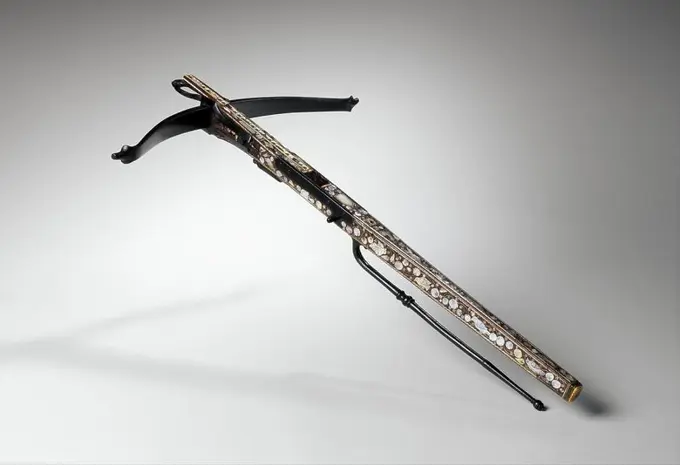
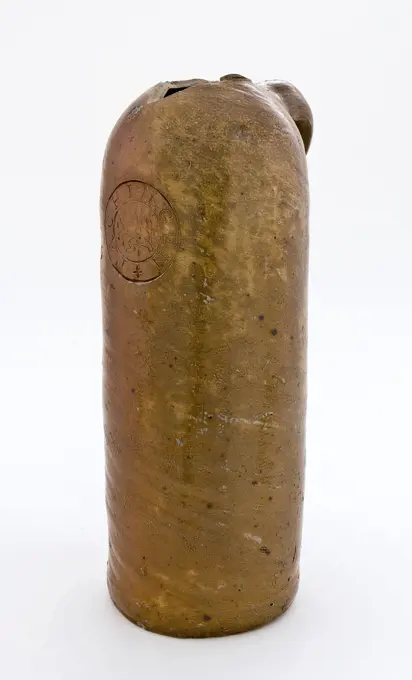
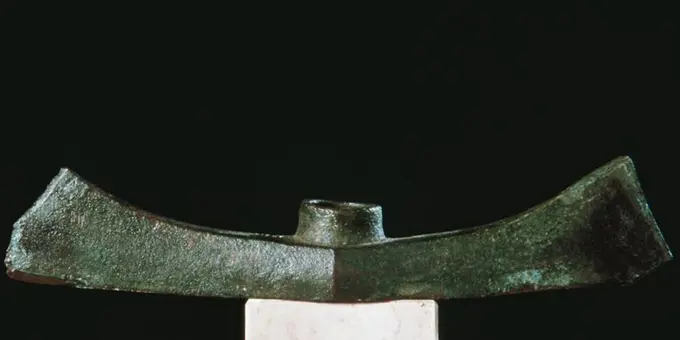
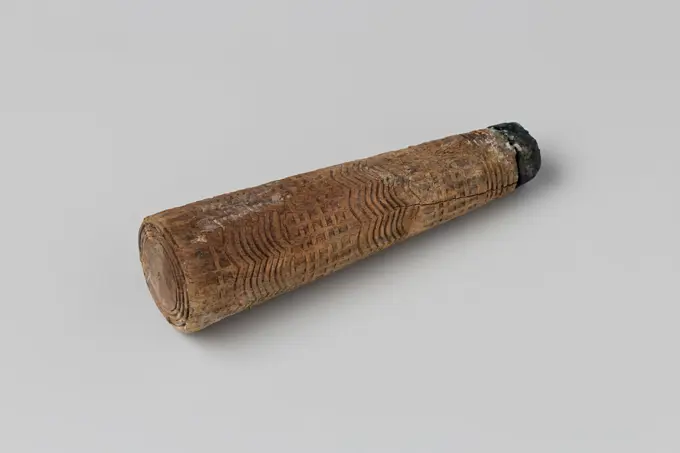
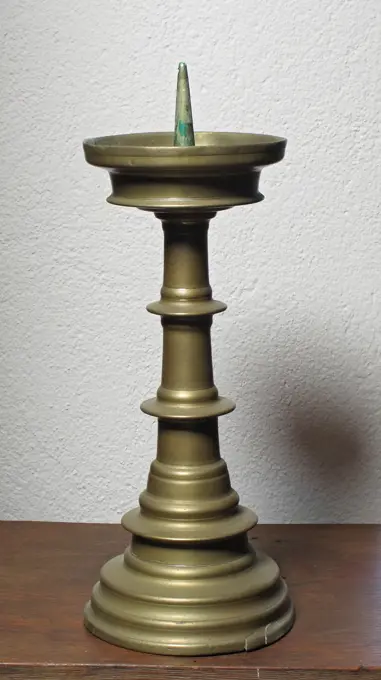
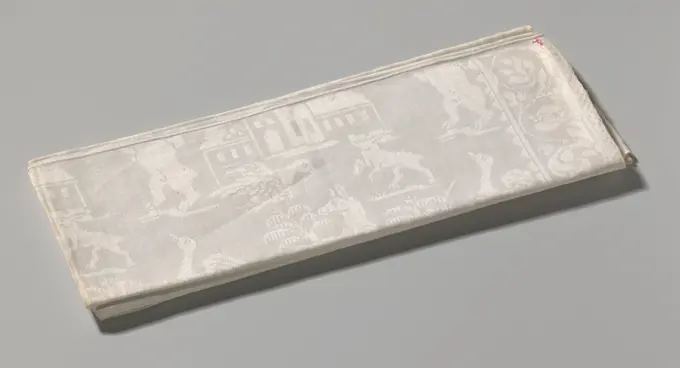
Tablecloth with Orpheus in the midst of the animals, anonymous, c. 1650 - c. 1699 White linen dams of tablecloth with Orpheus and the animals. Germany (possibly) linen (material) damask White linen dams of tablecloth with Orpheus and the animals. Germany (possibly) linen (material) damaskSabre (Nimcha) or Michiel de Ruyter, Anonymous, c. 1640 - c. 1664  Algerian Sabel of Nimcha with Schede by Admiraal Michiel de Ruyter. Hurt: Handle of turtle, inlaid with mother -of -pearl and email. Top in the shape of a stylized bird head. Silver batter with engraved leaf motifs and birds. Pre -bridge and pare rod of copper with engraved decoration, the points crown -shaped. Kling: One, partly two-bearing (Jelman) with inscription. Two channels. Schede: Wood covered with red sheet and decorated with cut leather in which pieces of velvet on which a string to close the sheath. On the sheath a belt with copper buckle. Algeria sabel: iron (metal). sabel: copper (metal). sabel: silver (metal). sabel:. sabel: mother of pearl. sabel:. schede: wood (plant material). schede: leather. schede: cloth. schede: velvet (fabric weave) forging / engraving / inlay (process) / sawing / sewing  DirtySnow beater -Chromatic bass horn, Johann Heinrich Gottlieb Streitwolf, 1790 - 1837 Houten Bashoorn Met Koperen Beker, noted: invented and manufactured by dispute in Göttingen. Göttingen wood (plant material). copper (metal) Houten Bashoorn Met Koperen Beker, noted: invented and manufactured by dispute in Göttingen. Göttingen wood (plant material). copper (metal)Staff, 20th century, 60 x 4 7/8 x 2 1/2 in. (152.4 x 12.4 x 6.4 cm), Wood, iron, Democratic Republic of the Congo, 20th centuryTool  Nail cleaner  Roman. Tool  Nail cleaner  250630 Roman, Tool  Nail cleaner , Bronze, Other: 3 1/2 in. (8.9 cm). The Metropolitan Museum of Art, New York. Rogers Fund, 1917 (17.230.103)Shoes 17th century probably British. Shoes 101805Ritual Spoon Pendant 10th-4th century B.C. Olmec This T-shaped pendant takes the form of a winged oyster (Pteria sp.) represented in a translucent blue-green jadeite. The central part of the asymmetrical T is marked by a depression, signaling the interior of the bivalve, earning these types of works the formal nickname as spoon” pendants. The sculptor skillfully rendered the ridgelike hinge of the bivalve towards the upper part of the spoon. Blue-green jade represented agricultural fertility of maize in Olmec art, thus the sculptor created a layered visual and material metaphor for bounty and marine abundance. The pendant conveyed this symbolic power onto the wearer, and several lines of evidence suggest that these valued objects passed down for generations and were traded widely as luxury goods. Representations of individuals in Olmec sculpture feature such pendants worn as pectorals, and later cultures in Mesoamerican art created similar T-shaped pendants. The T-shape in Maya hierogStaff Weapon. Culture: Austrian. Dimensions: L. 99 1/2 in. (252.1 cm); L. of head 29 1/4 in. (74.3 cm); W. 3 1/2 in. (8.9 cm); Wt. 6 lbs. 4 oz. (2835 g). Date: 1600-1615. Museum: Metropolitan Museum of Art, New York, USA.Prick Spur (Left) 13th century possibly Italian The prick spur was the first type of spur to be invented, and it consists of a goad or prick, more or less pointed, connected to side arms or a heel plate. The earliest spurs were probably simple thorns attached at the back of the heel, before they started to be made out of metal in antiquity. Prick spurs were the main type of spurs used in the Middle Ages until the mid-14th century, when they were supplanted by rowel spurs, which appeared in Europe a century before and with which they had cohabitated for a time. As a knights status was closely related to his horse, spurs became one of the symbols of chivalry, and one of the tokens given to him during his knighting.. Prick Spur (Left). possibly Italian. 13th century. Iron alloy, copper alloy. Equestrian Equipment-SpursTapestry Fragment 10th-15th century Peru; central coast (). Tapestry Fragment 307814Knife Handle (Kozuka) ca. 1615-1868 Japanese A kozuka is a handle of a by-knife that is part of a sword mounting. It is kept in a slot on the reverse of a katana scabbard, often with a matching kgai (hairdressing tool).. Knife Handle (Kozuka). Japanese. ca. 1615-1868. Copper-gold alloy (shakud), gold, silver, copper, copper-silver alloy (shibuichi). Sword Furniture-KozukaFragment of a Tunic 5th-6th century. Fragment of a Tunic 443700Cigar holder casePin ca. late 3rd-early 2nd millennium B.C. Bactria-Margiana Archaeological Complex. Pin 326784Knife Handle (Kozuka) 19th century Japanese A kozuka is a handle of a by-knife that is part of a sword mounting. It is kept in a slot on the reverse of a katana scabbard, often with a matching kōgai (hairdressing tool).. Knife Handle (Kozuka) 29777Baluster with stabbed C and S-Voluten, Anonymous, c. 1740 - c. 1760 S-shaped baluster with stabbed C and S-Voluten with rocaille shells. Northern Netherlands wood (plant material) S-shaped baluster with stabbed C and S-Voluten with rocaille shells. Northern Netherlands wood (plant material)SELLO DE LA PARROQUIA DE SANTIGO MILLAZ - DETALLE. Location: PALACIO EPISCOPAL-MUSEO DE LOS CAMINOS. ASTORGA. LEON. SPAIN.Wall lamp. .Empty wooden cutting board on gray textured concrete background Empty wooden cutting board on gray textured concrete background. Cutlery, preparation for dinner Copyright: xZoonar.com/TetianaxChernykovax 21909301Przeszo Przyszoci unknownKnife ca. 1390-1353 B.C. New Kingdom. Knife. ca. 1390-1353 B.C.. Bronze. New Kingdom. From Egypt, Upper Egypt, Thebes, Malqata, Palace of Amenhotep III, MMA excavations, 1910-11. Dynasty 18SpoonToe stall ca. 1479-1425 B.C. New Kingdom. Toe stall 547651PIEZA DE JOYERIA, PULSERA DE VIDRIO AZUL SOGUEADA CON HILO ROJO (EN EL MUSEO DE SANTA CRUZ).Fan Case with Bottle Gourds and Vines. Culture: China. Dimensions: Overall: 12 1/4 x 2 1/2 in. (31.1 x 6.4 cm). Date: 18th-19th century. Museum: Metropolitan Museum of Art, New York, USA.Chopstick, 918-1392. Korea, Goryeo period (918-1392). Bronze; overall: 24.7 cm (9 3/4 in.).White pipe bowl with stylized rose on the kettle, clay pipe smoking equipment smoke floor pottery ceramics pottery, pressed pressed White pipe cup with stylized rose on the kettle On the pipe is written in ink: FOUND ON 11 SEPTEMBER 1827 UNDER THE TOWN HALL (poorly readable) archeology City Hall Kaasmarkt City Triangle City Center Rotterdam indigenous product smoking tobacco Soil discovery: city hall 1827 Rotterdam.Applique, anonymous, c. -600 - c. -100 Applique in the form of a crocodile-like beast with bound jaws. Ban Chiang bronze (metal) Applique in the form of a crocodile-like beast with bound jaws. Ban Chiang bronze (metal)wooden geometric shapes on a blue backgroundPowder Horn. Culture: Colonial American, Shrewsbury, Massachusetts. Dimensions: L. 15 1/4 in. (38.7 cm); Diam. 2 3/4 in. (7 cm); Wt. 12.2 oz. (345.9 g). Date: dated 1749.This horn is one of the earliest dated American engraved powder horns in existence. It is engraved with the owner's name, Asa Hapgood, of Shrewsbury, Massachusetts. Museum: Metropolitan Museum of Art, New York, USA.Detail of a ship at the Viking Ship Museum, Bygdoy, Oslo, Norway, Scandinavia, EuropeDolabra (military axe) with a reconstructed wooden handle. Dated 1st Century AD Yeah; Tauron-Parisot (couples; Factory; 1839-); XIX-XX century (1901-00-00-2000-00-00);Band, 1100-1532. Peru, Chimú or Chimú-Inka, 12th-16th century. White cotton; plain weave; overall: 5.1 cm (2 in.).Kris. Culture: Philippine, Jolo. Dimensions: L. 25 5/8 in. (65.1 cm); L. of blade 21 1/2 in. (54.6 cm); W. 4 3/4 in. (12.1 cm); Wt. 1 lb. 5 oz. (595.3 g). Date: 18th-19th century. Museum: Metropolitan Museum of Art, New York, USA.Candlestick 15th century French or Italian. Candlestick 468222Shofar 18th century () This shofar is made of ram's horn that has been heated and worked to give it a distinctive, flattened profile. It bears a Hebrew inscription that is often found on shofarot:     "Tiku ba'chodesh shofar, ba'keseh l'yom chagainu", The text can be literally translated as "Blow the shofar when the moon is covered", i.e. when the moon is small, on the 1st day of the month.This is a reference to the 81st Psalm: “Blow at the new moon, a horn. At the full moon, for the day of our feast.” In modern synagogues and temples the shofar is mostly heard on Rosh Hoshanna and Yom Kippur.. Shofar. 18th century (). ram's horn. Aerophone-Lip Vibrated-horn. Decoration with five church blossoms, three of which are open and two still in button; The decoration is in silver against a brown background.Ancestor Figure(Aitos)Knife Handle (Kozuka) ca. 1615-1868 Japanese A kozuka is a handle of a by-knife that is part of a sword mounting. It is kept in a slot on the reverse of a katana scabbard, often with a matching kōgai (hairdressing tool).. Knife Handle (Kozuka) 25791Candlestick with profiled foot and trunk, resting on three lions, anonymous, c. 1850 - c. 1900 The candlestick is composed of the following parts: the foot and the trunk, which are cast in one whole, the fat catcher, the candle pin and the three pedestals. The foot is hollow from the inside to the bottom knot. The profiled Konian foot turns into the round trunk with three knots. This is located at the fat catcher with on top of the large unprovilated candle pin. The round -deepened fat catcher has a flat lying edge, which turns into a narrow raised edge with eight uneven tilts. Four decorations have been installed in the raised edge of the fat catcher, consisting of a perforation in the form of a five pass. Foot, trunk and fat catcher are decorated with grooved rings. The candlestick has three cams at the bottom of the inside, in which iron bolts are attached, in which the lions are clank that serve as pedestals. West-Europa brass (alloy). iron (metal) casting / soldering The candlestiClaude Bourdillat (Me in 1773-active until 1789). Studd in scales, doubled and mounted in gold. 1781-1782. Paris, Cognacq-Jay museum. 56032-1 Etui Ecaille, OR, OrfevrerieKnife, Cut and honed steel, carved wood, cut sheet brass, Scimitar-shaped blade with rounded end. Octagonal socket of plain brass. Handle of wood carved with female virtues: Faith, Hope and Charity all holding their attributes., England, ca. 1700, cutlery, Decorative Arts, KnifeOblong storage bottle with cap, apothecary bottle perfume bottle bottle holder soil find glass no.1, free blown and molded into mold elongated stock bottle with cap also called pharmacy bottle or eau-de-colognefles in clear light green glass. Pontil mark under slightly raised soil. Elongated body at the bottom bulging with narrow shoulders and slightly rejuvenated neck with dilated mouth archeology health care packing pharmacyBaluster mid-18th century British. Baluster. British. mid-18th century. Deal. WoodworkCeremonial Harvesting Knife (Dao)Knife (possibly Germany); steel, enamel, brass; L x W: 15.3 x 1.4 cm (6 x 9/16 in.); The Robert L. Metzenberg Collection, gift of Eleanor L. Metzenberg; 1985-103-70Ritual Staff (Shakujō) early 19th century Japan In Japan, the shakujō usually consists of a wooden handle or pole topped with a metal finial with two sections, each with three rings. When begging, a monk rattles this staff to announce his arrival at the door or gate of a household without breaking his vow of silence. The shakujō is still used by followers of shugendō, an ascetic Buddhist practice undertaken in mountainous areas.. Ritual Staff (Shakujō). Japan. early 19th century. Bronze; handle of lacquered wood with silk cord. Edo period (1615-1868). MetalworkBlade 2500 BCE-2000 BCE China. Jade .Quartz. mineralsmixed media composition by French-Algerian artist Yves Baume; Born 1933Hammered Copper Needle 1st-mid-16th century Peru; north coast (). Hammered Copper Needle 308878Plumb bobs, antique surveying equipmentBottle probably 18th-19th century. Bottle 444727Close-up of a candleKnife Handle (Kozuka) ca. 1615-1868 Japanese A kozuka is a handle of a by-knife that is part of a sword mounting. It is kept in a slot on the reverse of a katana scabbard, often with a matching kgai (hairdressing tool).. Knife Handle (Kozuka). Japanese. ca. 1615-1868. Copper, silver, gold, copper-gold alloy (shakud). Sword Furniture-Kozukaold carpenter tools isolated on white backgroundSealing wax case (étui) 1782-83 Nicolas-Jean-Baptiste Choconain-Delauney In eighteenth-century Europe, Paris led the production of high-quality luxury goods. Parisian goldsmiths made a wide range of small, personal articles such as snuffboxes; étuis to hold sealing wax, tweezers, or utensils for sewing; souvenirs, which contained thin ivory tablets for note taking; and shuttles for knotting lace. Gold snuffboxes and boxes decorated with portrait miniatures were prized and frequently given as royal gifts, often to ambassadors or members of the court in lieu of cash payments for their services. Coveted and admired, these boxes were produced from a variety of materials. The best were skillfully made of gold and embellished with diamonds, enameled decoration, lacquer, and other luxurious materials. By the middle of the century, the taking of snuff had become an entrenched social ritual, and the snuffbox, too, had become an important social prop. Snuffboxes were considered highly fashionablInitial Piotr Radziwi (1853-1903); Radziwi , Micha Piotr (1853-1903); 1881 (1881-00-00-1886-00-00);Pricked Spur, 1200s. Spain, 13th century. Steel; overall: 14.9 x 7.9 cm (5 7/8 x 3 1/8 in.). The spur was an essential part of the knight's equipment. Fastened to his heels by means of straps and buckles, it was used to prod a horse into action. These examples represent the oldest type recorded, the "pricked" spur, so-called because its neck terminated in a spike. The pricked spur was replaced during the Middle Ages by the "rowel" spur, with a rotating spiked wheel.Rusty Bullets 3D render Isolated on a gray background. Rusty Bullets 3D renderTerracotta fragment of a column-krater (bowl for mixing wine and water) or dinos (bowl for mixing wine and water) late 6th/early 5th century B.C. Greek, Attic Part of the neck of a column-krater; at the juncture of the neck and shoulder, a band of tongues. Terracotta fragment of a column-krater (bowl for mixing wine and water) or dinos (bowl for mixing wine and water). Greek, Attic. late 6th/early 5th century B.C.. Terracotta; black-figure. Archaic. VasesPart of hoe or plow ca. 1295-1070 B.C. New Kingdom, Ramesside. Part of hoe or plow. ca. 1295-1070 B.C.. Wood. New Kingdom, Ramesside. From Egypt, Memphite Region, Lisht North, Late New Kingdom Settlement, MMA excavations, 1920-22. Dynasty 19-20Mirror with a Lotus Handle Decorated with the Head of Bes ca. 1550-1295 B.C. New Kingdom. Mirror with a Lotus Handle Decorated with the Head of Bes. ca. 1550-1295 B.C.. Bronze or copper alloy. New Kingdom. From Egypt. Dynasty 18Baluster second half 17th century British. Baluster. British. second half 17th century. Oak. WoodworkNeedle case of Ivory, Anonymous, c. 1800 - c. 1900 Ivory needle tube, circumcised.  ivory Ivory needle tube, circumcised.  ivoryHuman hair dyed with henna, female hair, extreme macro, Germany, EuropeCylinder Seal. Iran, circa 700-639 B.C.. Tools and Equipment; seals. HematitePartisan ca. 1530 Flemish. Partisan 25931Close-up of wheatBobbin ca. 1840 British. Bobbin. British. ca. 1840. Wood. Textiles-Methods and MaterialsCrossbow. Culture: probably British, possibly London. Dimensions: L. 27 3/4 in. (70.5 cm); W. 18 3/8 in. (46.6 cm); Wt. 8 lb. 9 oz. (3,890 g). Date: ca. 1600-1625. Museum: Metropolitan Museum of Art, New York, USA.Arrowhead (Yanone). Culture: Japanese. Dimensions: L. 10 7/8 in. (27.7 cm); L. of head 3 3/4 in. (9.5 cm); W. 2 1/8 in. (5.4 cm); Wt. 1.7 oz. (48.2 g). Date: 18th century. Museum: Metropolitan Museum of Art, New York, USA.Belt, 20th century, 36 x 2 3/4 in. (91.44 x 7 cm), Wool, Mexico, 20th centuryDetail, Front of Confessional. Dated: 1937. Dimensions: overall: 35.8 x 24.4 cm (14 1/8 x 9 5/8 in.) Original IAD Object: 2"x 6 1/2" x 1/2". Medium: watercolor, colored pencil, and graphite on paper. Museum: National Gallery of Art, Washington DC. Author: William Kieckhofel.Stoneware mineral water pitcher, cylindrical with round shoulder, sausage ear and short neck, mineral water pitcher jar product packaging container soil find ceramic stoneware glaze salt glaze approx., hand turned glazed baked Stoneware mineral pitchers cylindrical with round shoulder short neck and sausage ear. Stand area with traces of deduction and soul. Glazed. Marked under the ear and marked on the front with medallion Medallion in the medallion: FACHINGEN in the midfield left clawing lion archeology Rotterdam Kralingen-Crooswijk Struisenburg Oostmaaslaan Boslaan Buizengat advertising indigenous pottery import drinking water drinking medicine packaging Soil discovery: Buizengat Oostmaaslaan Boslaan Rotterdam an old landfill of urban waste.Knife Handle (Kozuka). Culture: Japanese. Dimensions: L. 3 13/16 in. (9.7 cm); W. 9/16 in. (1.4 cm); thickness 3/16 in. (0.5 cm); Wt. 1.1 oz. (31.2 g). Date: 19th century. Museum: Metropolitan Museum of Art, New York, USA.Prehistory. Neolithic.Pre-Nuragic. Bronze ax with Aegean influences. 12th-11th centuries. Archaeological Museum of Cagliari. Sardinia. Italy.Knife lift from the wreck of the East Indiesman Hollandia.knife, Handle, Cylindrical: tapering; ID. NG 1979-403H, Ferrule, ID. NG 1980-27H426.Labret in rock crystal. Mali, Neolithic. 2,5 cm.Pair of Knives (Dha) with Sheath. Culture: Burmese. Dimensions: H. with sheath 12 5/8 in. (32.1 cm); knife (a); H. without sheath 11 7/8 in. (30.2 cm); W. 1 1/8 in. (2.9 cm); Wt. 4.3 oz. (121.9 g); knife (b); H. without sheath 11 7/8 in. (30.2 cm); W. 1 1/8 in. (2.9 cm); Wt. 4.2 oz. (119.1 g); sheath (c); Wt. 2.2 oz. (62.4 g). Date: 19th century. Museum: Metropolitan Museum of Art, New York, USA.Aluminum air hose Aluminum air hose spiral for building ventilation Copyright: xZoonar.com/MarkoxBericx 6886127Candlestick with three -sided foot, decorated with dragon heads and human figures in the middle of ranks, anonymous, c. 1400 - c. 1500 In the ornament on the three sides of the foot there is a dragon's head in the middle, from which the rank ornament sprouts, in which a figure has been absorbed on every corner. The three -sided foot originally formed the basis of a candlestick, which consisted of a nodus, fat catcher and candle pin at the top. These were probably replaced in the fifteenth century or later with a round trunk with two knots and an almost cylindrsiche candle holder with two openings in the form of standing rectangles. At the bottom of the foot, the trunk is soldered with tin. West Germany copper alloy engraving / soldering / casting In the ornament on the three sides of the foot there is a dragon's head in the middle, from which the rank ornament sprouts, in which a figure has been absorbed on every corner. The three -sided foot originally formed the basis of a candlesticCandlestick late 15th century German or South Netherlandish. Candlestick. German or South Netherlandish. late 15th century. Copper alloy. Metalwork-Copper alloyCross. Pere Lachaise graveyard Cemetery. France. Horn African late 19th century View more. Horn. African. late 19th century. animal horn. Aerophone-Lip Vibrated-hornGoldweight Drum, 19th-20th century, 3/4 x 1 7/16 x 7/8 in. (1.91 x 3.65 x 2.22 cm), Brass, Ghana, 19th-20th centuryFeatherBrooch Fragment. Gjonnes, Larvik k., Vestfold, 8th-9th century. Brooch. Unknown. 8th-9th century. Brooch. Rosland, Bamble k., Telemark, Iron Age. Norway. Historical Museum. Oslo. Norway.'Votive Plaque with a Representation of Standing Buddha'. Siam (now Thailand). Bangkok art, 19th century. Dimensions: h. 8,5 cm. Museum: State Hermitage, St. Petersburg.Terracotta fragment of a kylix (drinking cup) 470-450 B.C. Greek, Attic Lip from a stemless cup; on the inside, below the lip, coral red; on the exterior, below the lip, a band of reserve. Terracotta fragment of a kylix (drinking cup). Greek, Attic. 470-450 B.C.. Terracotta; red-figure. Classical. VasesBROCHE DE CINTURON. VISIGODO.(DEPOSITO: MUSEO ARQUEOLOGICO NACIONAL).Quartz. minerals. South America; Colombia; Boyacá; Peña Blanca mineNecklace 500 B.C.-A.D. 900 Indigenous American (Costa Rican) This collection of largely ethnographic jewelry includes examples from cultures in South America, North America, Europe, Asia, and Africa and dates from the Pre-Columbian period to the twentieth century. Owned by renowned art collector and fashion enthusiast Muriel Kallis Newman, the collection represents her knowledge and appreciation of a wide range of jewelry design and making traditions. Numerous items in her collection are composite artifacts made from various cultures and time periods reappropriated as modern jewelry creations by or for Muriel. It is important to note that Newman wore many of the pieces in the collection, interpreting them to suit and express her own singular, often avant-garde style.. Necklace 141756Sword Japan. Sword. Japan. Iron with gilt bronze. Kofun period (ca. 300-710). Metalworkthrowing knife, 19th century, central Africa, Álava Armory Museum, Vitoria, Basque Country, Spain.Detail of dining room chair in new build home, New Delhi, India, Asiafragment of orientalizing Thymaterium of Cypriot type, bronze decorated with lotus buds, 6th century BC, Los Villares de Andújar, Iberian culture, Iberian Museum of Jaén, Andalusia, Spain.A Pair of Chopsticks, 918-1392. Korea, Goryeo period (918-1392). Bronze; overall: 26 cm (10 1/4 in.). In Korea, chopsticks made of metal such as brass, silver, and gold were excavated from ancient tombs and ruins dated to the 6th century at the earliest. Burial goods often include utilitarian objects such as table wares and utensils because the dead were believed to need them in the afterlife.