Ancient Tools and Weapons

A selection of historical tools and weapons including pendants, knives, and daggers, featuring various materials and intricate designs.

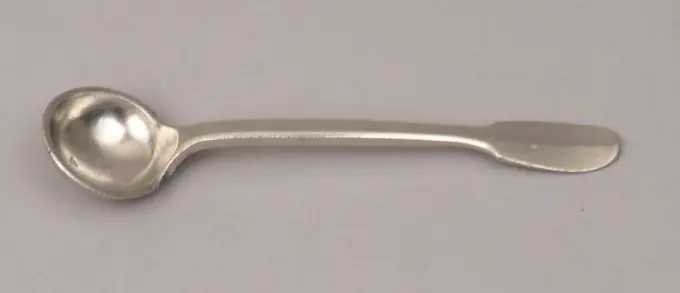
Hendrick van Duyveland, Spoon with an oval bowl and flat handle with cord-shaped end, small size, spoon cutlery soil find tin metal, cast Oval bowl short rat tail straight handle with an accolade stem end. Marked on the underside of the stalk Reverse side of stipe struck mark representing winged figure with raised sword in an oval why the text ... DRICK VAN ... archeology Rotterdam eating railroads Soil discovery: rail tunnel Rotterdam.
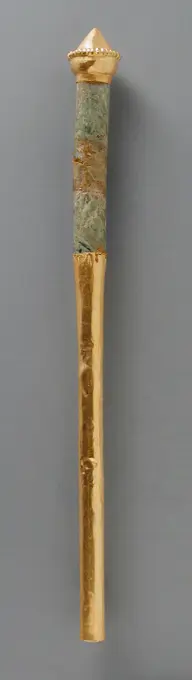
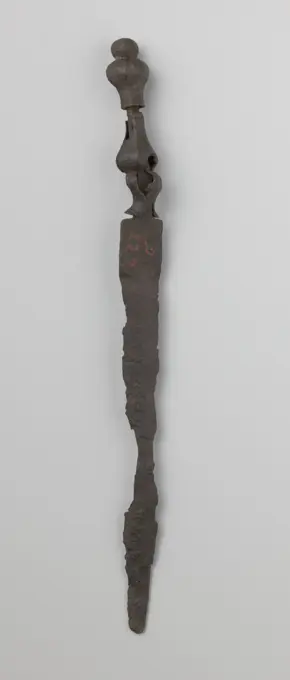
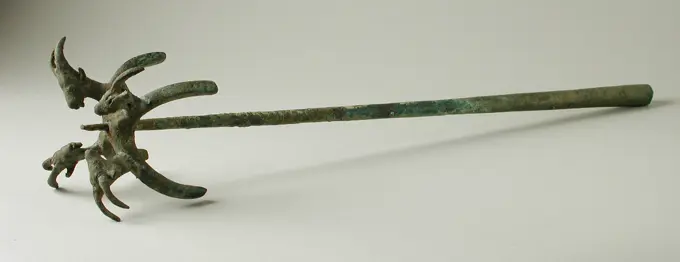
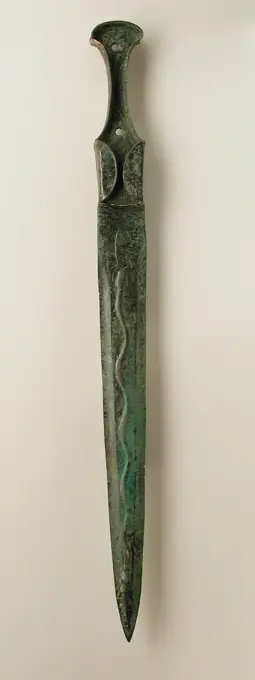
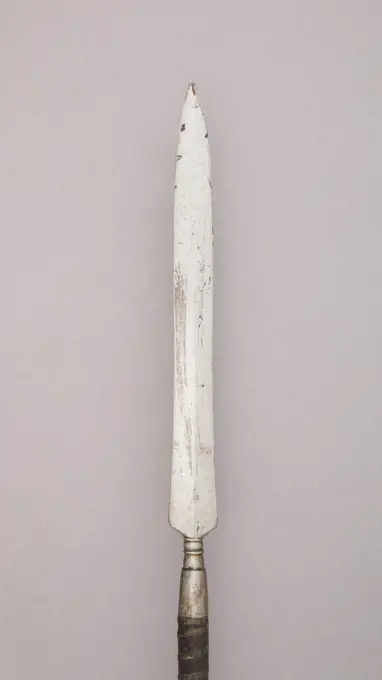
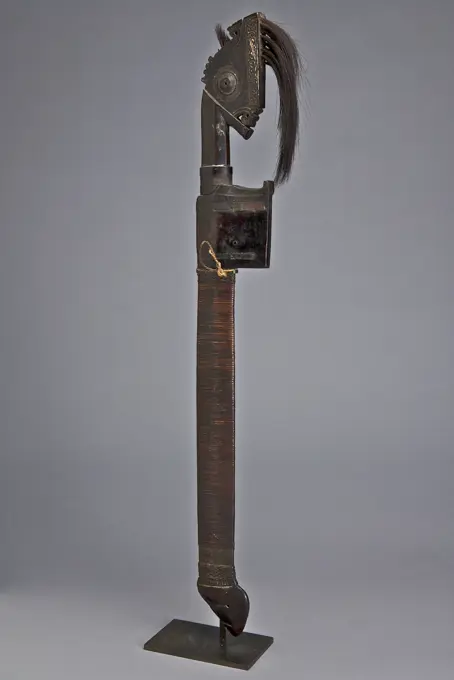
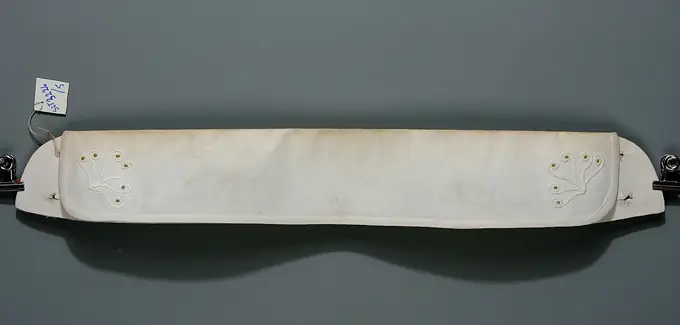
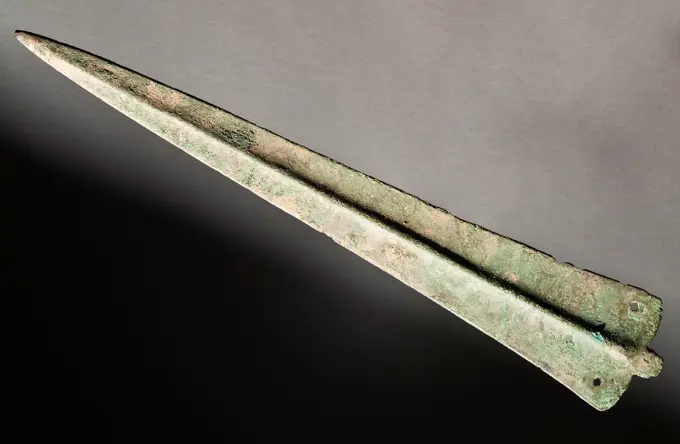
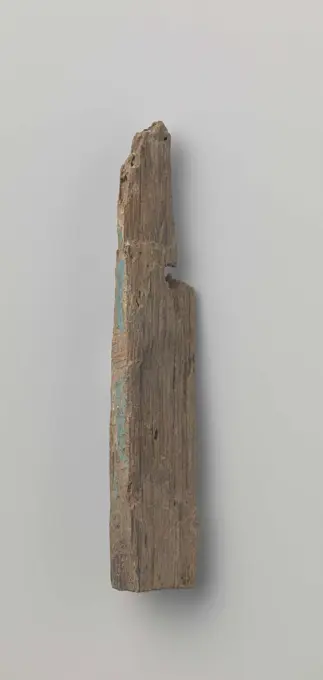
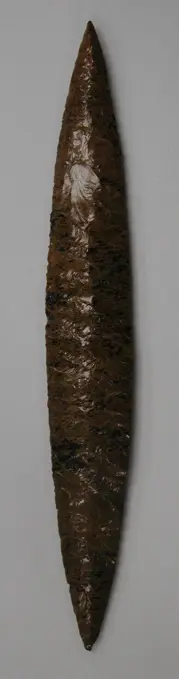
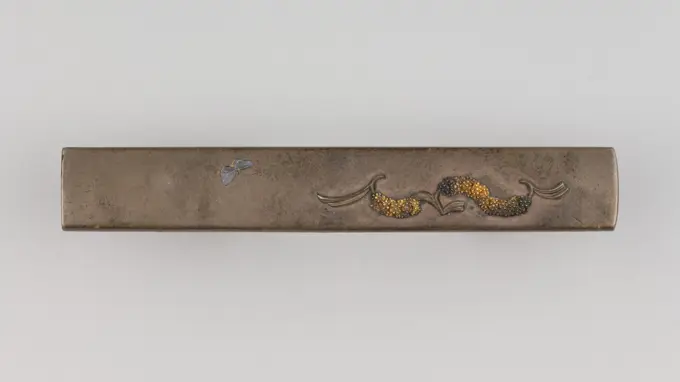
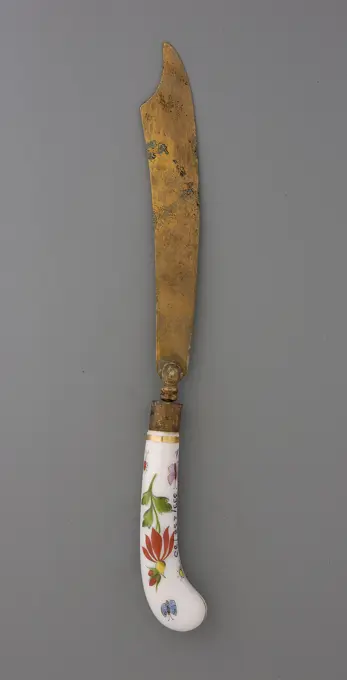
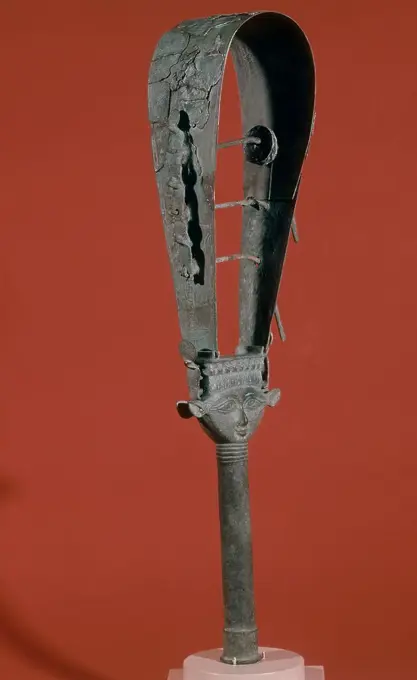
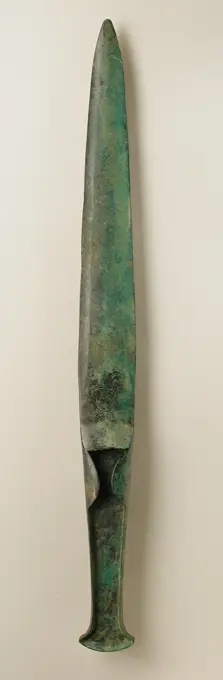
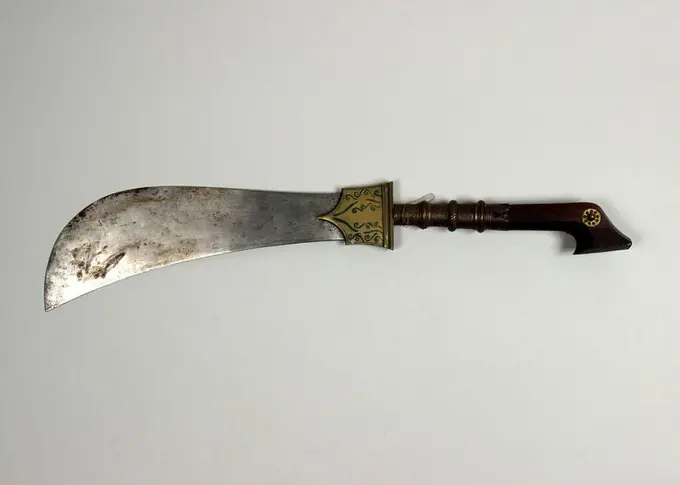
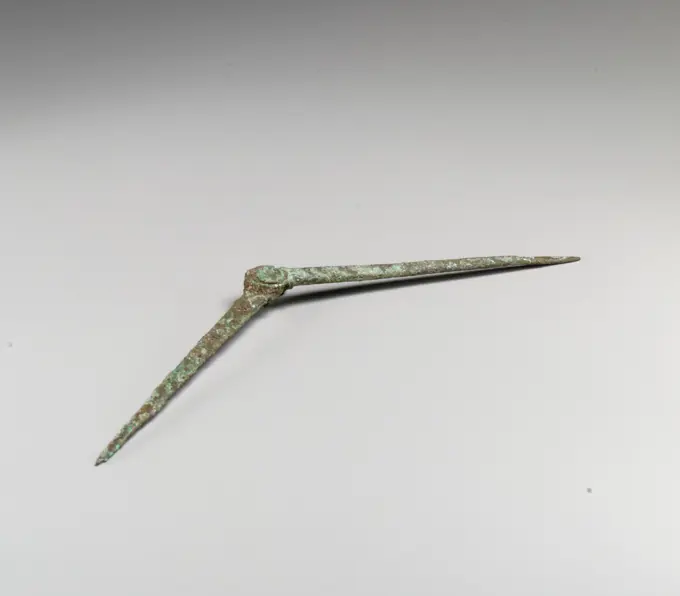
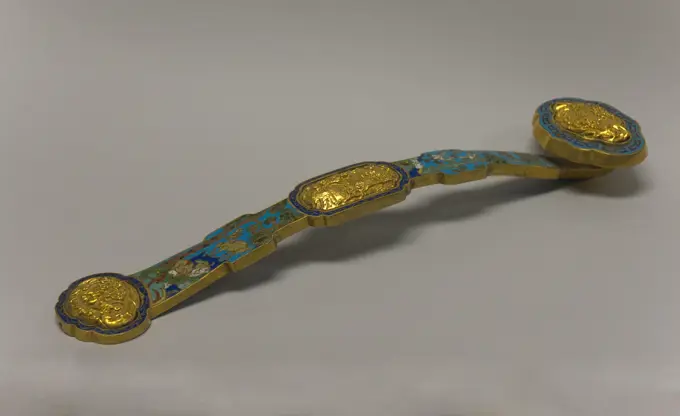
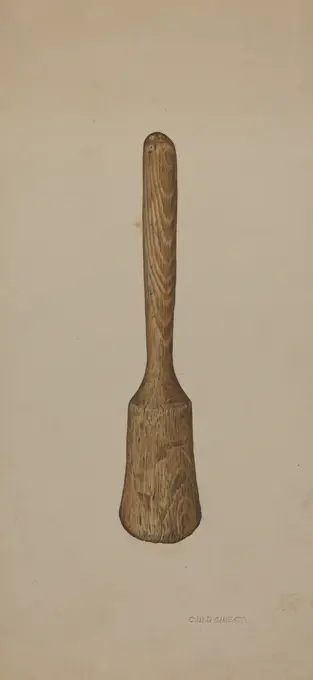
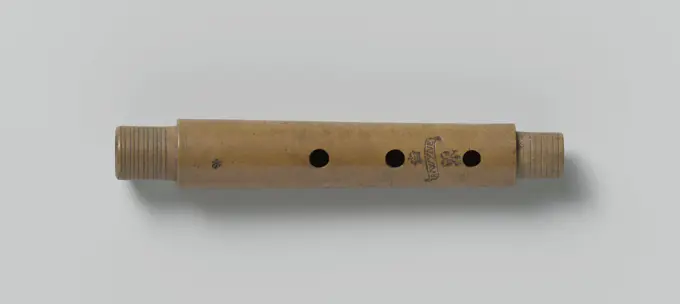
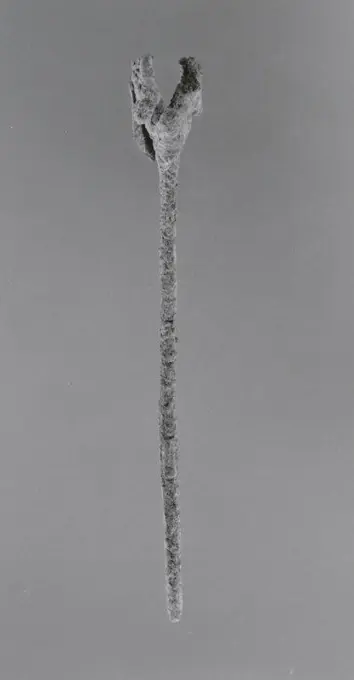
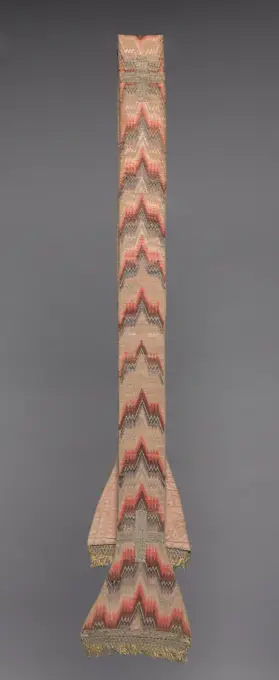
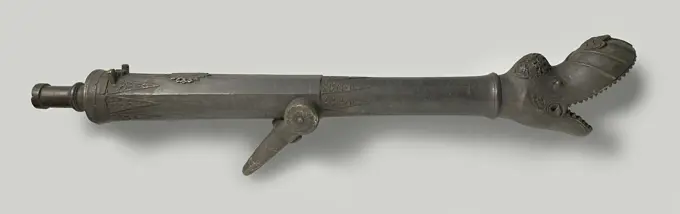
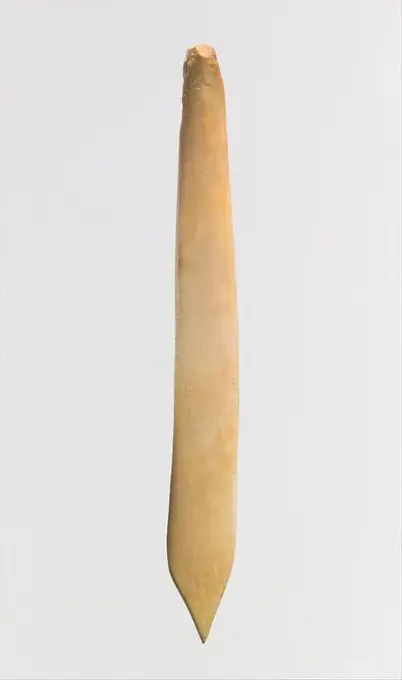
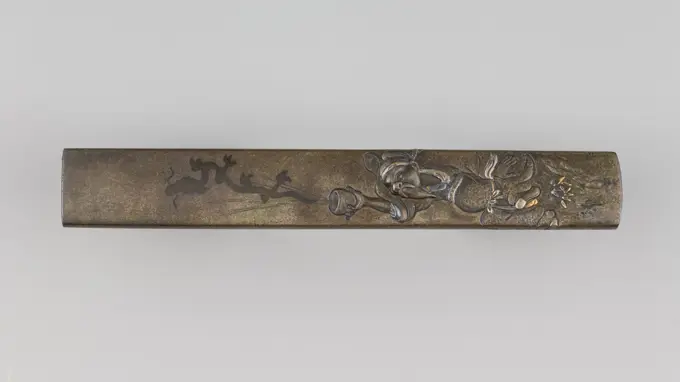
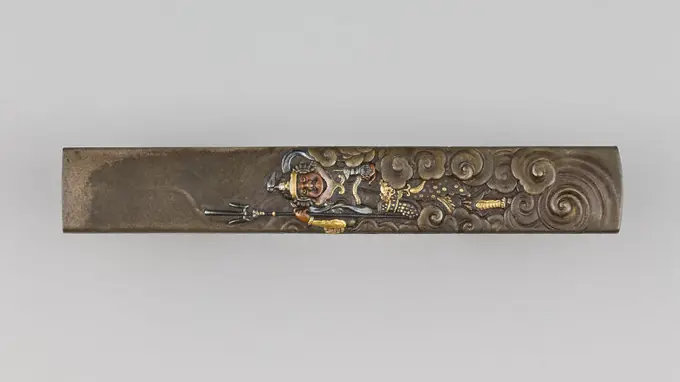
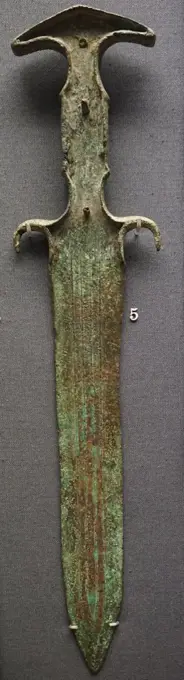
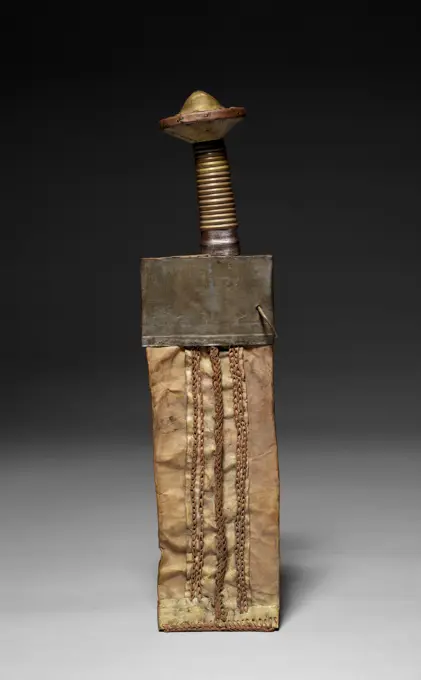
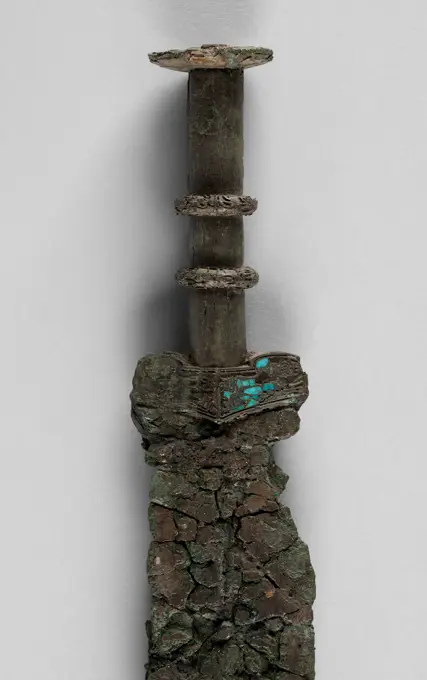
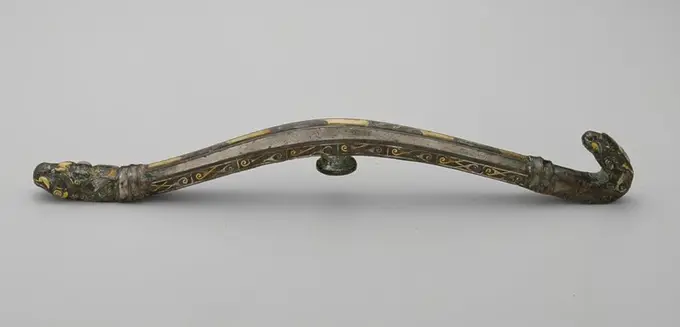
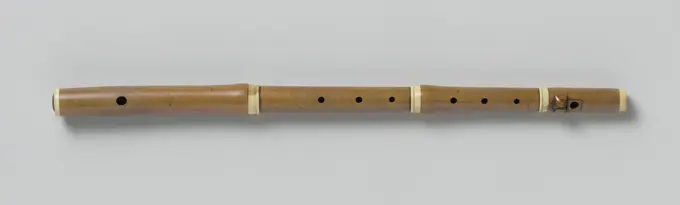
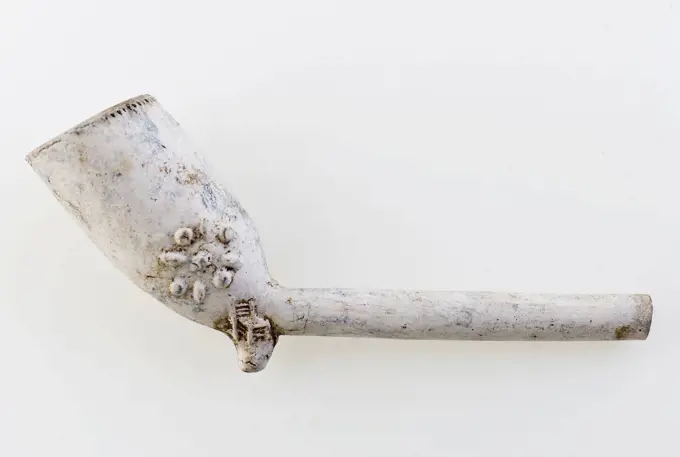
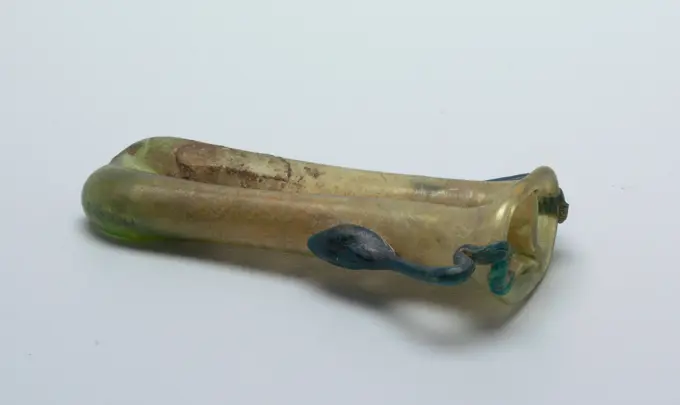
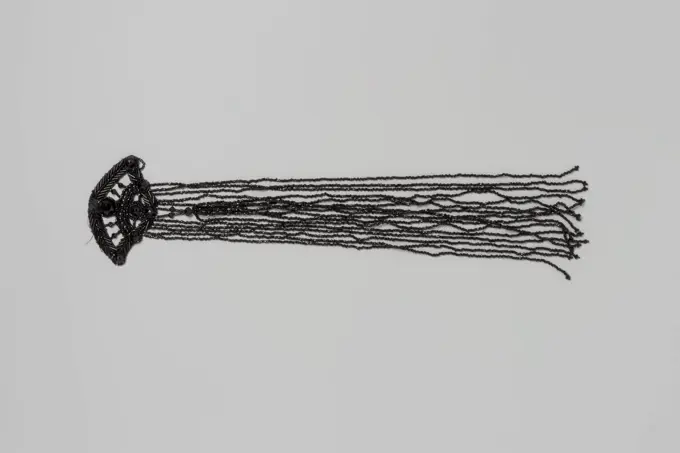
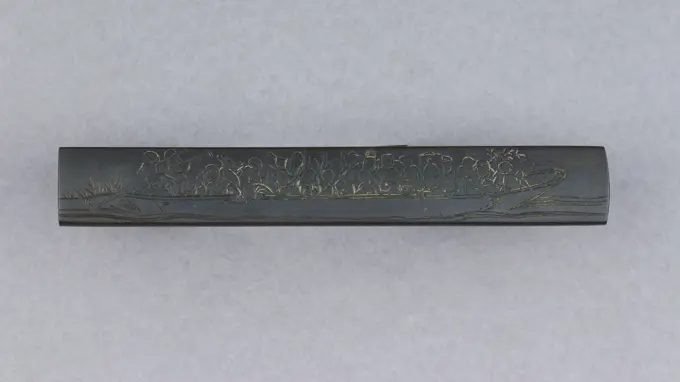
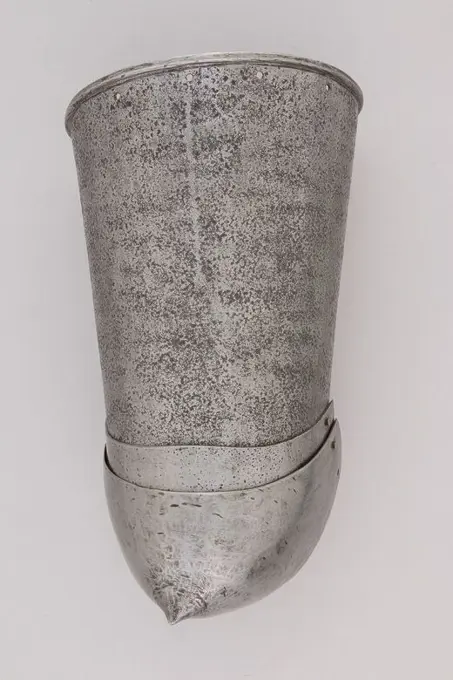
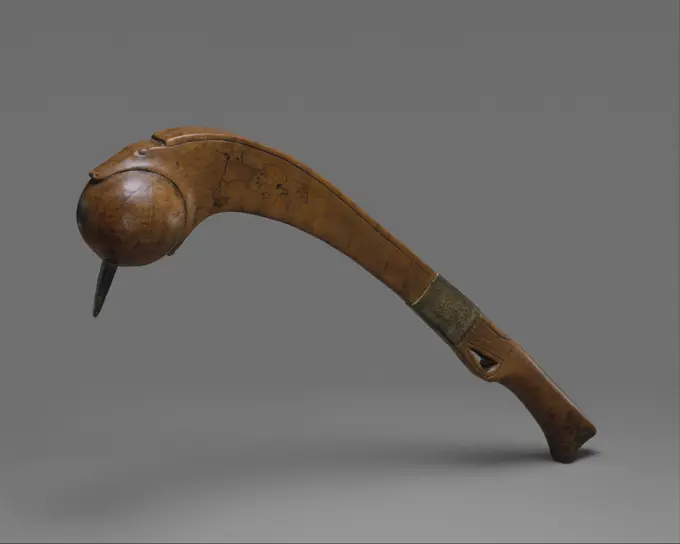
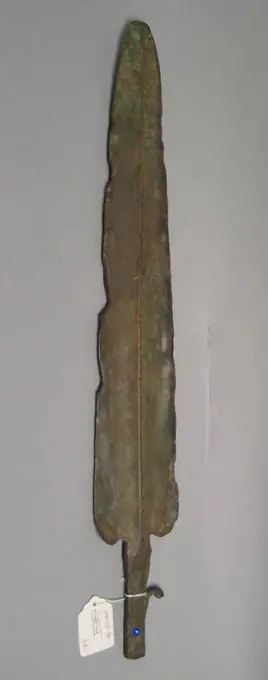
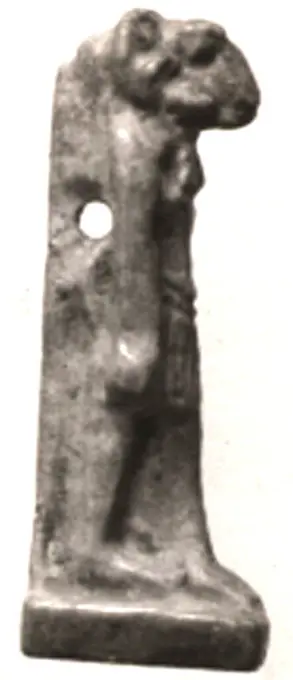
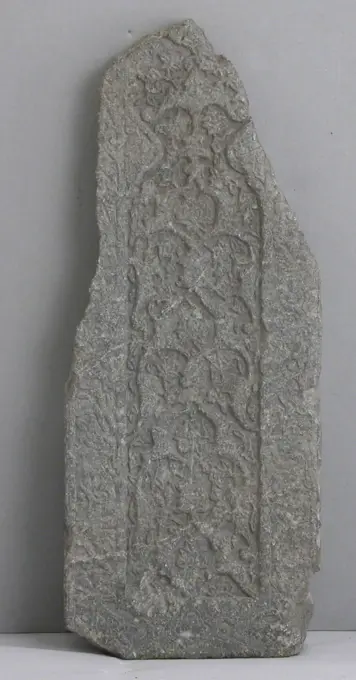
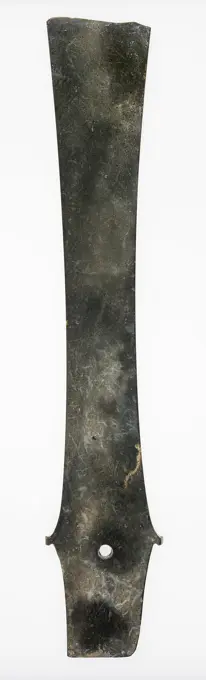
Winged Pendant 10th-16th century Tairona. Winged Pendant 317447Ear Rod. Panama, Venado Beach, Coclé, 500-1550 CE. Metal. Jade and goldTable knife with lifting of Hoorn. Table knife with lifting of Hoorn. The lifting protector has been profiled to cut out The lifetime is cracked in the longitudinal direction.Dolk or sword of iron, anonymous, c. 1000 - c. 1800 dagger. sword Dolks of iron with octagonal hilt button. The handle is damaged. The blade is double -cut and tapered in a point. Europe iron (metal)   EuropeDagger. Northern Iran, circa 1350-1000 B.C.. Arms and Armor; daggers. Bronze, castBracelet. Western Iran, circa 1000-650 B.C.. Jewelry and Adornments; bracelets. Bronze, castHairpin Part 1st-4th century Roman. Hairpin Part 465100 Roman, Hairpin Part, 1st4th century, Bone, Overall: 1 5/8 x 1/8 in. (4.2 x 0.3 cm). The Metropolitan Museum of Art, New York. Gift of J. Pierpont Morgan, 1917 (17.191.52)Hendrick van Duyveland, Spoon with an oval bowl and flat handle with cord-shaped end, small size, spoon cutlery soil find tin metal, cast Oval bowl short rat tail straight handle with an accolade stem end. Marked on the underside of the stalk Reverse side of stipe struck mark representing winged figure with raised sword in an oval why the text ... DRICK VAN ... archeology Rotterdam eating railroads Soil discovery: rail tunnel Rotterdam.Molding; wood, carvedDagger. Iran, Luristan, circa 1350-1000 B.C.. Arms and Armor; daggers. Bronze, castSabel, anonymous, c. 1600 - c. 1700 sabre Sabel with ivory hilt. Button in the form of Leeuwenkop and gilt -lane rod.  iron (metal). ivory. brass (alloy) forging / cutting / etchingFan box of wood with copper hinges and closure, c. 1760 Fan box consisting of two uneven, hinged halves made of wood, covered with black paper and with two copper closures with hook and eye. Red Ripszijde lining. Netherlands (possibly) whole: Wood (plant material). Decoration: Paper. Batter: copper (metal). Lining: Silk sawing Fan box consisting of two uneven, hinged halves made of wood, covered with black paper and with two copper closures with hook and eye. Red Ripszijde lining. Netherlands (possibly) whole: Wood (plant material). Decoration: Paper. Batter: copper (metal). Lining: Silk sawingClay pipe, marked with stem decorated with fleur de lis stamps, clay pipe smoking equipment smoke floor pottery ceramic pottery, pressed finished baked Clay pipe marked with fleur de lis stamps decorated stem Rad decoration under lip top edge along entire circumference boiler. Decoration consists of two separate stamps next to each other on the axis of the stem Hielmerk. heel mark: I II in between small triangle under crown in pearl edge archeology Rotterdam City Center Cool Schiedamse Vest Mainland City Triangle Runway indigenous earthenware smoking tobacco craft Soil discovery: Vasteland-Baan Schiedamse Vest Rotterdam Complex of discovery with material from pottery and pipe making and house waste from the 17th century.Spear 16th-19th century Javanese. Spear 30688Sword(Har)Women's non -circle;  19th/20th century (1890-00-00-1950-00-00);gift (provenance), collarEarflare Fragment with Stone Inlay 8th-mid-16th century Peru; north or central coast (). Earflare Fragment with Stone Inlay 309270Goldweight Sword, 19th-20th century, 4 x 5/8 x 3/8 in. (10.16 x 1.59 x 0.95 cm), Brass, Ghana, 19th-20th centuryBronze specillum (probe) 1st-2nd century A.D. Roman Small spatula.. Bronze specillum (probe) 251900 Roman, Bronze specillum (probe), 1st2nd century A.D., Bronze, Other: 6 3/4 in. (17.1 cm). The Metropolitan Museum of Art, New York. Fletcher Fund, 1925 (25.78.120)Spearhead. Iran, Luristan, circa 1000-550 B.C.. Arms and Armor; spears. BronzeBronze Scales (20scales)Chopstick, 918-1392. Korea, Goryeo period (918-1392). Bronze; overall: 20.6 cm (8 1/8 in.).Alabastron (Container for Scented Oil) 600 BCE-301 BCE Mediterranean Region. Initially affordable only among the wealthy, glass was used in ancient Rome to create tableware and containers for oils and perfume. In the ancient Mediterranean world, scented oils, usually olive oil based, were used more frequently than alcohol-based perfumes. This vessel is called an alabastron because objects of this shape were originally made of alabaster. To create it, an oblong, heat-resistant form was dipped into molten glass and then removed, leaving behind the core-formed glass object. The patterned exterior was created by trailing different colored threads of glass over the body of the vessel and then combing the threads with a pointed tool.. Glass, core-formed technique . Ancient MediterraneanFragment; (possibly) belonging to the retable of Soest ..Bronze dagger blade ca. 2500-1900 B.C. Cypriot Leaf-shaped blade with a hooked tang.. Bronze dagger blade 244148Flint Blade before 16th century Mexico (). Flint Blade 317323Tab knife (attributed title). Bronze. Carnavalet museum, history of Paris.Knife Handle (Kozuka) 19th century Japanese A kozuka is a handle of a by-knife that is part of a sword mounting. It is kept in a slot on the reverse of a katana scabbard, often with a matching kgai (hairdressing tool).. Knife Handle (Kozuka). Japanese. 19th century. Copper-silver alloy (shibuichi), gold, silver. Sword Furniture-KozukaAwl. Awl. IvoryPoker (part of a set). Culture: British. Dimensions: Length: 34 1/4 in. (87 cm). Date: ca. 1675.This set of fire tools 68.141.156-.159) was probably made for John Maitland on the occasion of his wedding to the Countess of Dysart. In 1647 Maitland raised an army to rescue Charles I. After the Battle of Worcester, when he was taken prisoner by Commonwealth troops, he was sent to the Tower. After his release (166) he became Prime Minister and Secretary of State. On May 1, 1672, he was created Marquess of March and Duke of Lauderdale, and on June 3 he was installed at Windsor as Knight of the Garter. Museum: Metropolitan Museum of Art, New York, USA.Ink tablet inscribed Melodious Harp Studio” 19th century Workshop of Jian Guzhai Chinese This ink tablet is from a sixty-four-tablet set (30.76.216-.279) commissioned by the Jiaqing emperor from the Studio for Appreciating the Antique (Jiangu Zhai) manufactory of the Wang Jinsheng family in Huizhou, Anhui Province. Each ink tablet commemorates a hall or pavilion in one of the imperial gardens. Each site’s name is written in gilt characters on one side; a view of the site is presented on the other. Such inks were purely decorative and not intended for use.. Ink tablet inscribed Melodious Harp Studio” 41810Trowel used for first stone of the N.V. Arbeiderspers, Gerritsen and Van Kempen, 1950 - 1952 trowel Triangular trowel with rounded corners. Octagonal stem from which the beginning and end are wider. Halfway through the stem the handle, of dark -colored wood, is attached. Zeistmaker: Utrecht silver (metal). wood (plant material). metal engraving  ArnhemFish knife. Korzec (manufaktura porcelany ; 1790-1832), factoryWarp spacer  ca. 1295-1070 B.C. New Kingdom, Ramesside. Warp spacer . ca. 1295-1070 B.C.. Bone. New Kingdom, Ramesside. From Egypt, Memphite Region, Lisht North, Late New Kingdom Settlement, MMA excavations, 1920-22. Dynasty 19-20SISTRO COMPLETO - BRONCE EGIPCIO (850 AC). Location: BRITISH MUSEUM. LONDON. ENGLAND.Hammer  selective focus over black backgroundDagger. Iran, Luristan, circa 1350-1000 B.C.. Arms and Armor; daggers. Bronze, castIndian ritual sword  Tega (Tegha) with the vagina unknownOpenwork PinMoplah Knife. Culture: Indian, Coorg. Dimensions: H. 22 1/2 in. (57.2 cm); W. 2 3/4 in. (7 cm); Wt. 1 lb. 5.8 oz. (618 g). Date: 18th-19th century. Museum: Metropolitan Museum of Art, New York, USA.Needle Roman. Needle. Roman. Bronze. BronzesCompass or divider, fragment Roman. Compass or divider, fragment 250596 Roman, Compass or divider, fragment, Bronze, Other: 7 1/2 in. (19.1 cm). The Metropolitan Museum of Art, New York. Rogers Fund, 1917 (17.230.63)Close up of a crescent wrench.Brass book fittings with simple decoration, decorative fittings ground find copper brass metal, whipped riveted engraved Double fittings with hook at the end Other ends fan in two pointed triangles Two holes with pins archeology Rotterdam rail tunnel book close adornment Soil discovery: trajectory Rotterdam rail tunnel.Ruyi Scepter 18th-19th century China One translation of the Chinese term ruyi is "as you wish," and scepters in this shape were often given as gifts because of the good wishes they implied. Although they may have had certain ritual functions, scepters frequently appeared in displays, either placed on stands or in vases and brush pots alongside other functional and/or exotic goods. Ruyi scepters were made in a range of materials including metals, various types of wood, and ivory.. Ruyi Scepter. China. 18th-19th century. Cloisonné enamel with gilt-bronze medallions. Qing dynasty (1644-1911). CloisonnéCabinet hinge. Hinge probably an open holder. Has probably been part of a coffin.Shichigenkin ( 弦琴) 19th century Japanese. Shichigenkin ( 弦琴) 500535SchiavonaClarence W Dawson, Potato Masher, c 1940 Potato MasherWhite clay pipe, unnoticed, with smooth handle, clay pipe smoking equipment smoke floor pottery ceramics pottery, pressed finished baked white clay pipe unnoticed with smooth handle Pipe shows many shrinkage and cracks in the pottery archeology smoking tobaccoPin ca. late 3rd-early 2nd millennium B.C. Bactria-Margiana Archaeological Complex. Pin. Bactria-Margiana Archaeological Complex. ca. late 3rd-early 2nd millennium B.C.. Copper alloy. Bronze Age. Bactria-MargianaScepter ca. 7th century India. Scepter. India. ca. 7th century. Bronze inset with turquoise, and iron shaft. MetalworkOrnament, Christmas Tree (USA); doughSpoon Russian early 19th century View more. Spoon. Russian. early 19th century. Platinum. Metalwork-Gold and PlatinumWooden coffin panel, owner unknown, floor, leftsectionSpoon with the end of the stem in the form of an eagle head, anonymous, c. 1575 - c. 1600 Spoon of Jasper mounted with gilded silver. Steel end in the form of an Arendskop.  silver (metal). jasper gilding Spoon of Jasper mounted with gilded silver. Steel end in the form of an Arendskop.  silver (metal). jasper gildingPiccolo (middle joint), Robert Wijne, c. 1750 Middle part of a piccolo with three holes. Nijmegen wood (plant material) Middle part of a piccolo with three holes. Nijmegen wood (plant material)Pin ca. late 3rd-early 2nd millennium B.C. Bactria-Margiana Archaeological Complex. Pin 326771SpoonEmbroidered Stole, 1800s. Italy, 19th century. Bargello, silk on linen; overall: 242.6 x 9.6 cm (95 1/2 x 3 3/4 in.).After Java was brought entirely under Dutch rule during the Java War (1825-1830), the Dutch sought to gain control of the other Indonesian islands as well. Various military expeditions were mounted to force the rulers of these islands to recognize Dutch authority. These cannons were seized during those battles. One is an old Dutch East India Company cannon of 1667.Stylus or bone point. Dimensions: 0.63 x 5.59 in. (1.6 x 14.2 cm). Date: 3rd-2nd millennium B.C.. Museum: Metropolitan Museum of Art, New York, USA.Knife Handle (Kozuka) 18th century Hamano Yasuyuki Japanese A kozuka is a handle of a by-knife that is part of a sword mounting. It is kept in a slot on the reverse of a katana scabbard, often with a matching kgai (hairdressing tool).. Knife Handle (Kozuka). Japanese. 18th century. Copper-silver alloy (shibuichi), silver, gold. Sword Furniture-KozukaPair ofTablespoons.   Maker: Eliakim Hitchcock, 1726-1788Knife Handle (Kozuka). Culture: Japanese. Dimensions: L. 3 13/16 in. (9.7 cm); W. 9/16 in. (1.4 cm); thickness 3/16 in. (0.5 cm); Wt. 1.2 oz. (34 g). Maker: Ichijosai Hironaga (Hirotoshi) (Japanese, died ca. 1800-25). Date: 19th century. Museum: Metropolitan Museum of Art, New York, USA.Bronze dagger, Mycenaean, from Ithaca. Dated 12th Century BCPlane, 1600s. France, 17th century. Wood; overall: 12.5 x 88 x 6.7 cm (4 15/16 x 34 5/8 x 2 5/8 in.).SWORD KNIFE HILT, GOTO MITSUYASU, 1500-1900 Presentation of a monk that is checked by two dogs, one of which is in gold; Signed Goto Mitsuyasu. Japan gold (metal) Presentation of a monk that is checked by two dogs, one of which is in gold; Signed Goto Mitsuyasu. Japan gold (metal)Ceremonial Knife (Tumi) 2nd-7th century Moche. Ceremonial Knife (Tumi) 315245Skein;  1779 (1779-00-00-1779-00-00);Sickle Blade, 1980-1801 BC. Egypt, Middle Kingdom, Dynasty 12. Flint; overall: 5 cm (1 15/16 in.).Kohl tube and stick ca. 1550-1458 B.C. New Kingdom This container for an eye cosmetic called kohl, is a marvelous little portable makeup kit. It consists of an octagonal wooden tube with an ivory base and lid. The lid swivels around a wooden peg. Four wire loops are attached to the main body of the container. The two on the front hold a piece of ivory carved in the shape of an ancient Egyptian door bolt. When pushed upward this bolt fit into another wire loop on the lid (now missing) and closed the container. The two loops on the side of the container hold the kohl stick with which the owner applied the cosmetic.This kohl tube was found in a basket with a set of cosmetic implements (26.7.837a-d), which includes a mirror, a razor, a whetstone, and a pair of tweezers.. Kohl tube and stick 547624Bottle probably 18th-19th century. Bottle 444746Knife, F. Nicoud, French, active 1890, Engraved and gilded silver, carved mother-of-pearl, Blade shows an engraved and gilded pear tree design., ca. 1890, cutlery, Decorative Arts, KnifeBaluster mid-18th century British. Baluster. British. mid-18th century. Deal. WoodworkHalberd with Bronze Handle from the Shang Dynasty. Dated 11th Century BCKnife, 1800s. Central Africa, Democratic Republic of the Congo, 19th century. Iron, wood, copper alloy, metal, rawhide, and plant fiber; overall: 57.4 cm (22 5/8 in.); blade: 24.2 cm (9 1/2 in.).saw, model of a foundation deposit tool, 18th dynasty reigning Hapshepsut, Deir el-Bahari, Thebes, Egypt, Egipto, collection of the British Museum.Wheellock Spanner with Powder Measure and Screwdriver 1600-1700 Germany. Iron .Anonymous, glaive (usual name), 0453. CERUNUSCHI Museum, Museum of Asia Arts in the city of Paris.Garment Hook (Daigou). China. Date: 399 BC-200 BC. Dimensions: 19.4 × 1.3 cm (7 1/2 × 1/2 in.). Bronze inlaid with gold and silver. Origin: China. Museum: The Chicago Art Institute, Chicago, USA.Flute, Jean Baptiste Martin (possibly), c. 1790 Palmhout flute with a valve. Marked: Martin. Sewing wood (plant material). boxwood Palmhout flute with a valve. Marked: Martin. Sewing wood (plant material). boxwoodClay pipe with embossed two stylized tudor roses on the kettle and chair, clay pipe smoking equipment smoke floor earthenware ceramic pottery, pressed finished baked Clay pipe with embossed two stylized tudor roses on the kettle Under the rose on the left small chair just above the heel Heel without stamping surface. Rose consists of circle of four dots interspersed with four ovals around center spot archeology indigenous pottery smoking tobaccoGuisarme early 16th century Italian. Guisarme. Italian. early 16th century. Steel, wood, textile, copper alloy. Shafted WeaponsKnife Italian 17th centuryLecythus (Roman Empire, probably Syria); glassCostumePplique van Gitten in the form of a fan with hanging bead frills, anonymous, c. 1910 - c. 1920 Costumeplique van Gitten, Jugendstil. The Applique consists of a fan shape with one large and six small sharpened gitten on which a black bead frain hangs. Netherlands (possibly) jet (coal). paillette Costumeplique van Gitten, Jugendstil. The Applique consists of a fan shape with one large and six small sharpened gitten on which a black bead frain hangs. Netherlands (possibly) jet (coal). pailletteKnife Handle (Kozuka) 19th century Japanese A kozuka is a handle of a by-knife that is part of a sword mounting. It is kept in a slot on the reverse of a katana scabbard, often with a matching kōgai (hairdressing tool).. Knife Handle (Kozuka) 26111Baluster top spoon first quarter 17th century Dutch, Zierikzee The custom of presenting a silver birth spoon (geboortelepel) to a child at his christening gave rise to the expression "to be born with a silver spoon in ones mouth." Cherished as family heirlooms, such spoons could be inscribed with the name or initials of the recipient and his birth date. The style was often highly localized; those made in Zierikzee, an important fishing and trading city in the coastal province of Zeeland, usually have a baluster-shaped finial, square stem, and fig-shaped bowl with engraved decoration.. Baluster top spoon. Dutch, Zierikzee. first quarter 17th century. Silver. Metalwork-SilverPair of Arm Defenses. Culture: Italian. Dimensions: Arm defense (a); H. 11 1/2 in. (29.2 cm); W. 5 in. (12.7 cm); D. 7 1/4 in. (18.4 cm); Wt. 2 lbs. 0.6 oz. (924.2 g); arm defense (b); H. 11 1/2 in. (29.2 cm); W. 4 3/4 in. (12.1 cm); D. 6 7/16 in. (16.4 cm); Wt. 2 lbs. 3.3 oz. (1000.7 g). Date: arm defense (b), ca. 1450; arm defense (a), later restoration. Museum: Metropolitan Museum of Art, New York, USA.Fragment silk tissue of a seat cover., C. 1805 Fragment yellow silk tissue, from a seat cover. The pattern has pink palmets and arabesks on a yellow ground. The fragment is part of thirteen fragments with invnr. BK-1992-18-A to BK-1992-18-M. France silk Fragment yellow silk tissue, from a seat cover. The pattern has pink palmets and arabesks on a yellow ground. The fragment is part of thirteen fragments with invnr. BK-1992-18-A to BK-1992-18-M. France silkBall-headed Club late 18th century Western Great Lakes At once elegant and deadly, ball-headed clubs combine refinement of form with a fearsome efficiency of function. In use for more than two to three hundred years, they were associated with many different American Indian peoples of the Northeast and Great Lakes region. Several of the clubs appear in portraits of distinguished Europeans, particularly during the eighteenth century. By the nineteenth century they were becoming obsolete as pipe tomahawks gained preference. Distinguished by its narrow yet strong profile, the club displayed here would have been a formidable weapon in the hands of its warrior owner. When a club was successful, reports say, it was left beside the body of its victim. The ball of this club is tightly clenched in the jaws of an animal, possibly an otter, and feathers were once tied through the hole above the grip to increase the weapons supernatural power.. Ball-headed Club. Western Great Lakes. late 18th centSpoon with elongated, oval bowl and hexagonal handle, spoon cutlery soil find tin metal, cast Elongated oval box rat tail hexagonal stalk archeology Rotterdam rail tunnel food Soil discovery: rail tunnel Rotterdam.Steel pliers for tambourish in a leg holder. Steel pliers for tambourish in a leg holder. The end of the button is sliced as a thread.Throw stick. Dimensions: L. 40 cm (15 3/4 in). Dynasty: Dynasty 12-13. Date: ca. 1981-1640 B.C.. Museum: Metropolitan Museum of Art, New York, USA.Harpoon 1500-1000 B.C. India These anthropomorphic figures, harpoons, ax blades (celts), and antennae swords were cast and hammered from unalloyed copper. They may be dated to 1500 to 1000 B.C. Given that pure copper is a relatively soft metal and most of the objects show little or no signs of wear, it seems likely that their function was largely dedicatory. Hoards of such objects have been found across north India, the greatest concentration being in Uttar Pradesh. The findspots suggest they were ritually deposited in rivers or marshes, though several related antennae swords were recorded in late Indus Valley civilization (ca. 1500 B.C.) burials at Sanauli.. Harpoon 50595Amulet of Khnum. Dimensions: H. 3.5 cm (1 3/8 in). Date: ca. 712-343 B.C.. Museum: Metropolitan Museum of Art, New York, USA.Knife 17th century Italian. Knife 27540Tombstone 16th century. Tombstone. 16th century. Stone; carved. Probably from Iran, Nishapur. StoneBlade 1610 BCE-1035 BCE China. Jade .