Antique Cabinets and Furniture

Historical wooden cabinets and bureau tables from various centuries, showcasing ornate carvings and rich finishes, emphasizing traditional craftsmanship and design.
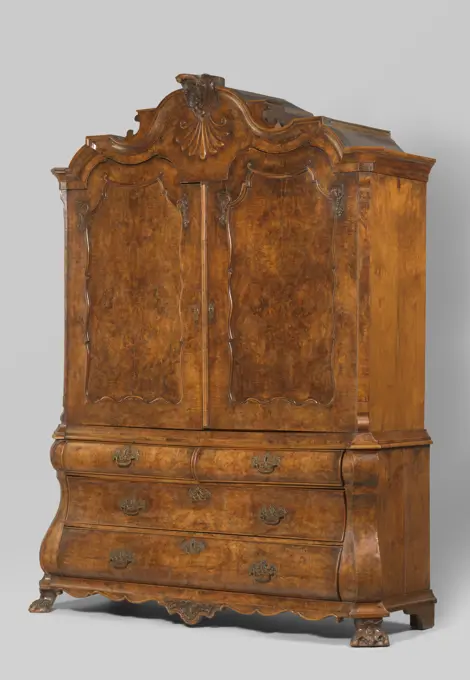
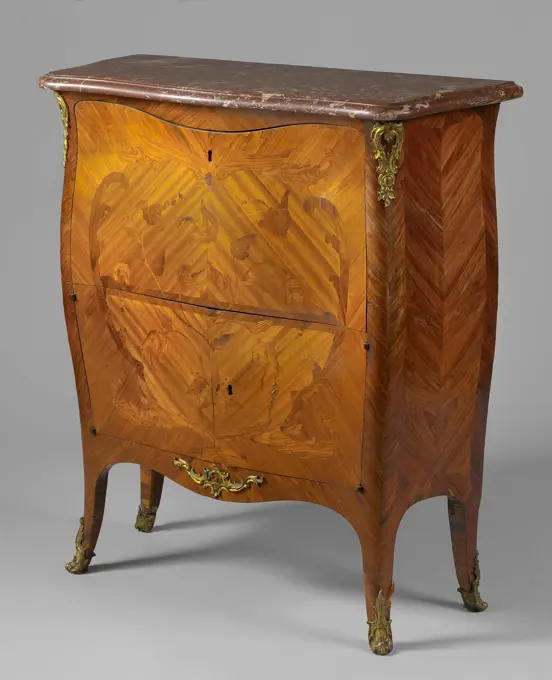
Cabinet of Mahoniehout, decorated with scalloped parts and rocaille motifs. Top cabinet with two doors; base cabinet double vaulted with four drawers., Anonymous, 1750 - 1800 Oak cabinet glued with root nut wood. The claw -shaped front legs and scalloped bottom rule show a rocaillem motif. The front corner styles are placed overhoeks. The bottom is double arched and contains four drawers with copper fittings. The two doors of the upper cabinet wear panels with sculpted frames; A flower pattern in the upper corners. The scallop list carries a shell -shaped rocaillem motif in the middle. The cabinet offers space for a cupboard set. Northern Netherlands oak (wood). copper (metal) Oak cabinet glued with root nut wood. The claw -shaped front legs and scalloped bottom rule show a rocaillem motif. The front corner styles are placed overhoeks. The bottom is double arched and contains four drawers with copper fittings. The two doors of the upper cabinet wear panels with sculpted frames; A flowe
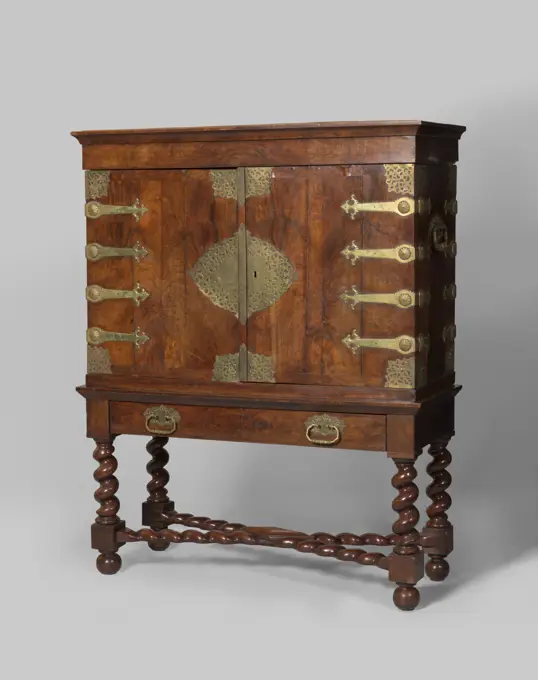
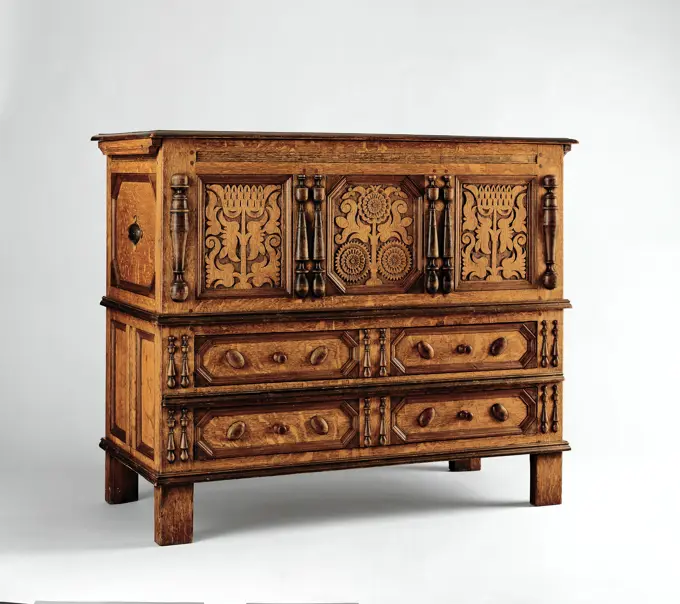
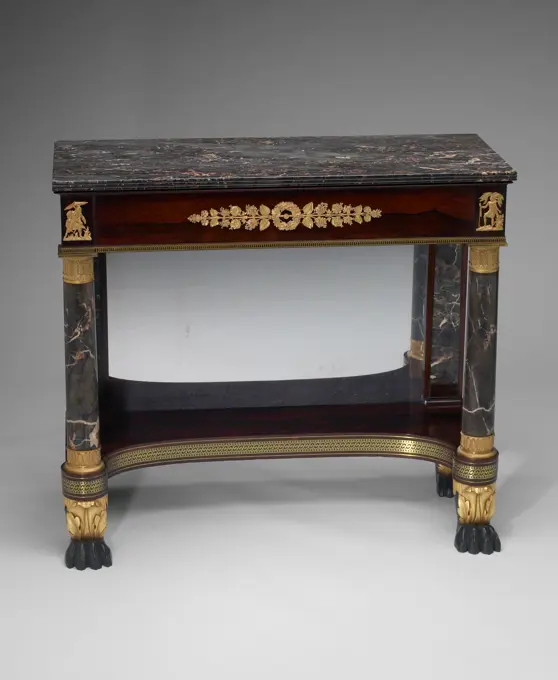
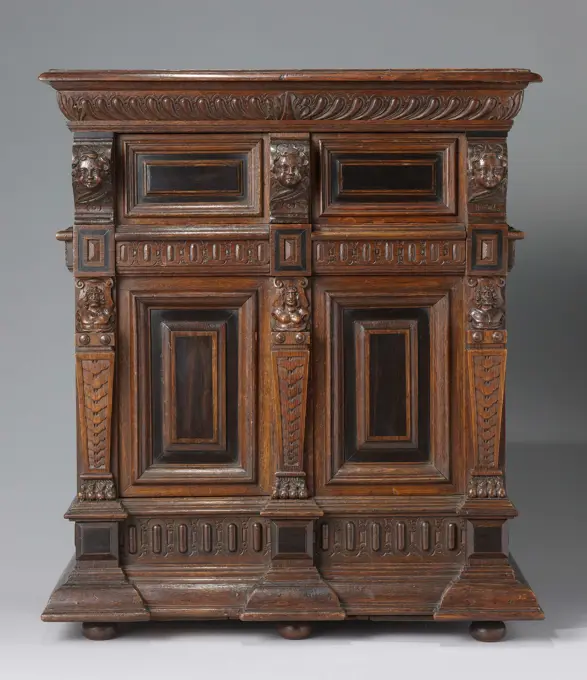
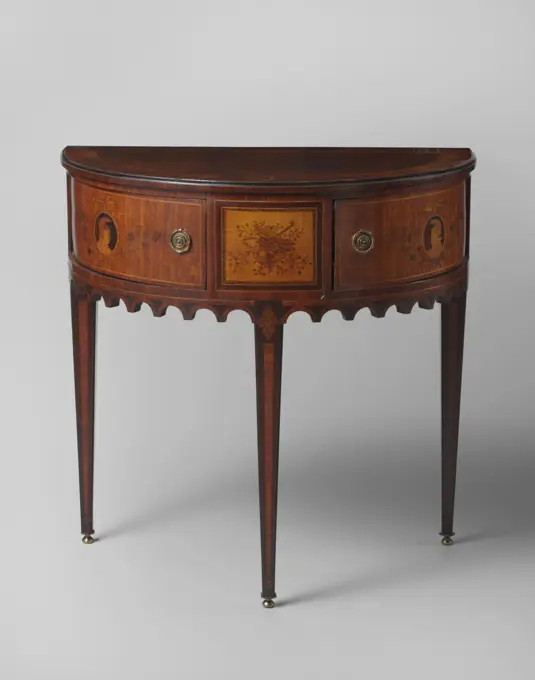
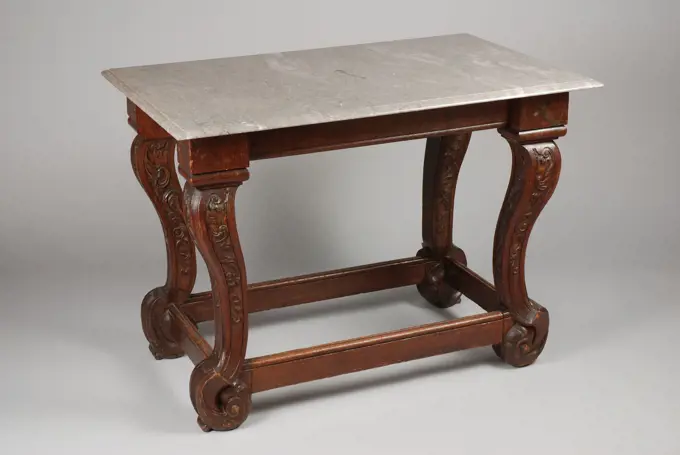
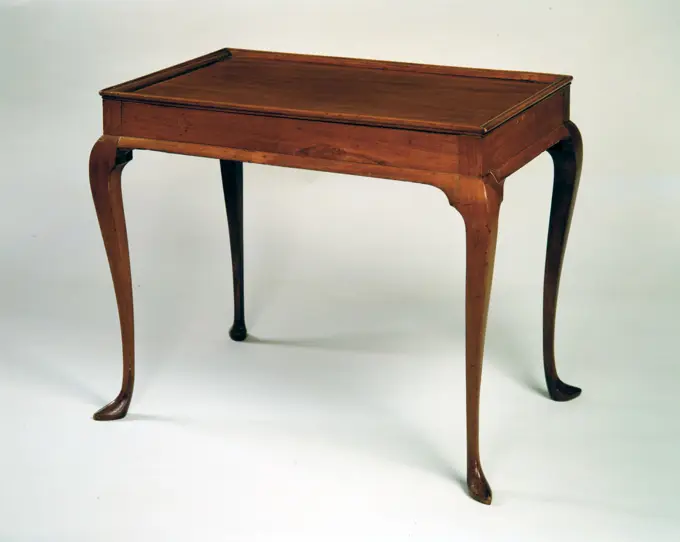
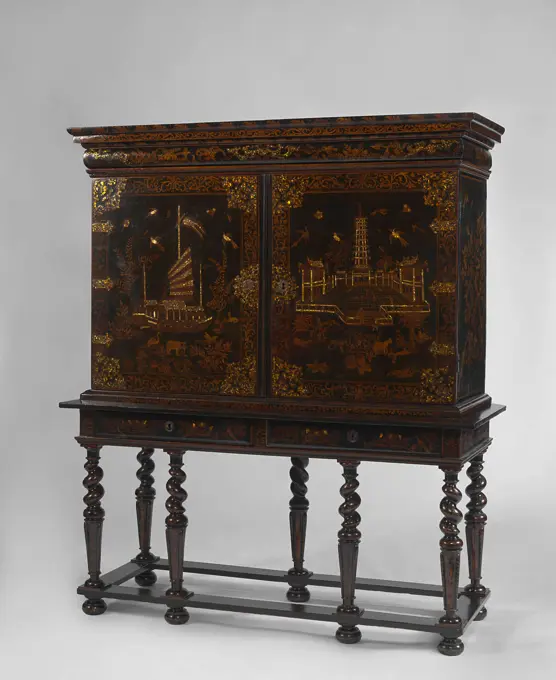
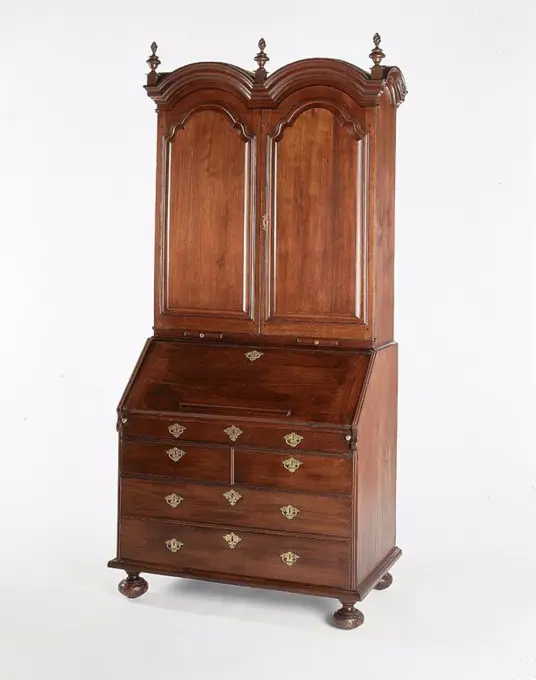
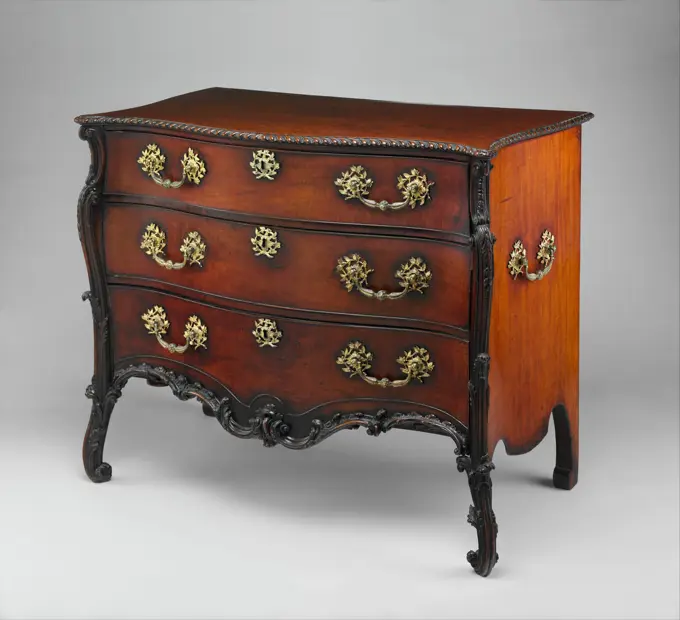
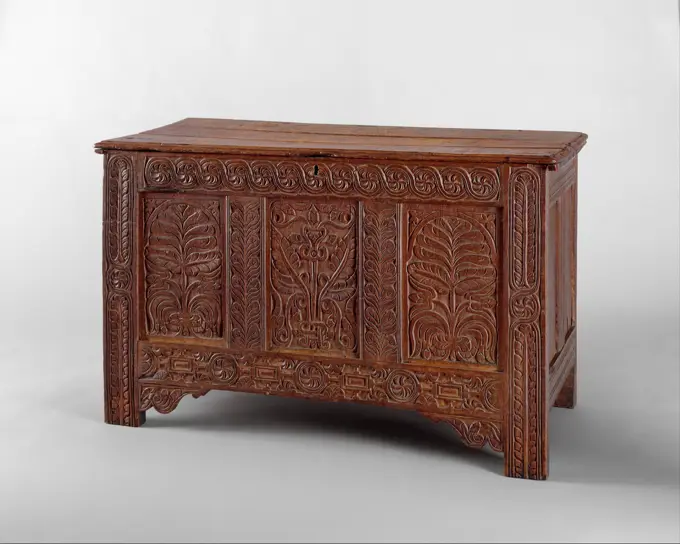
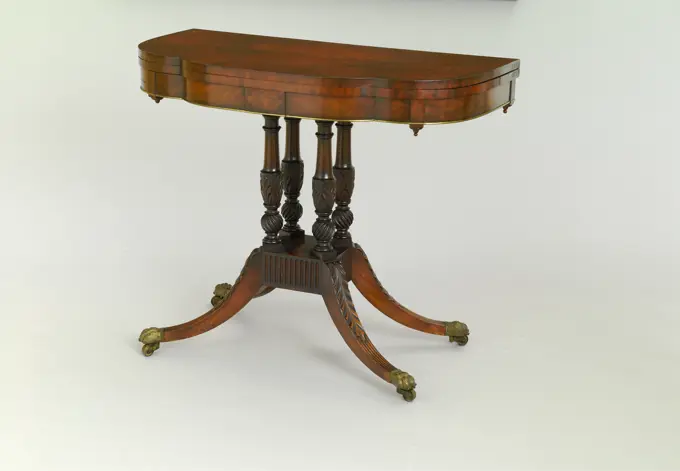
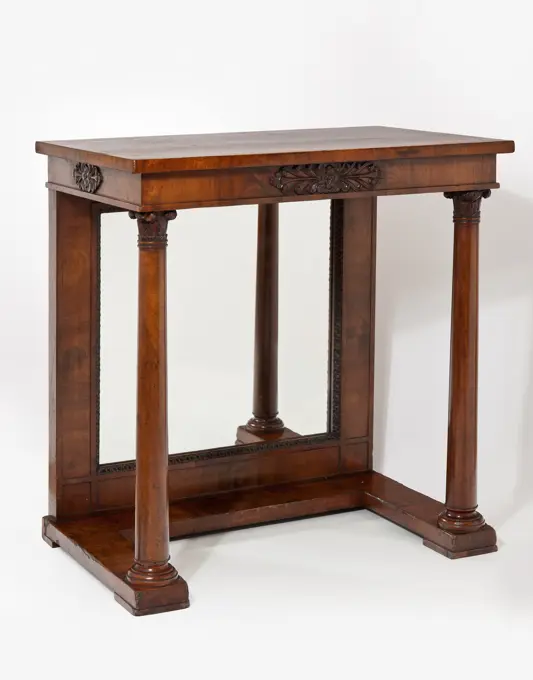
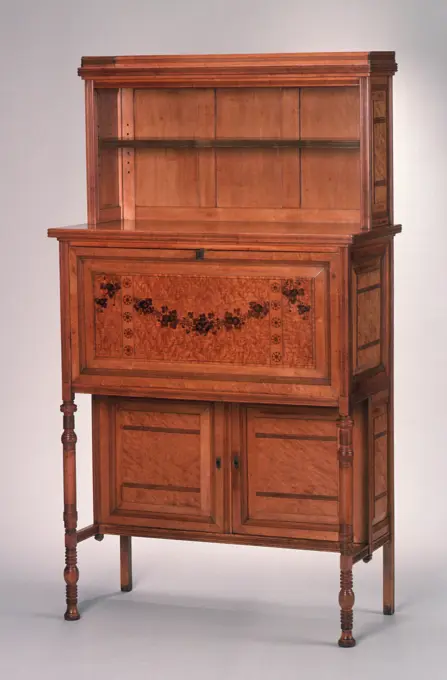
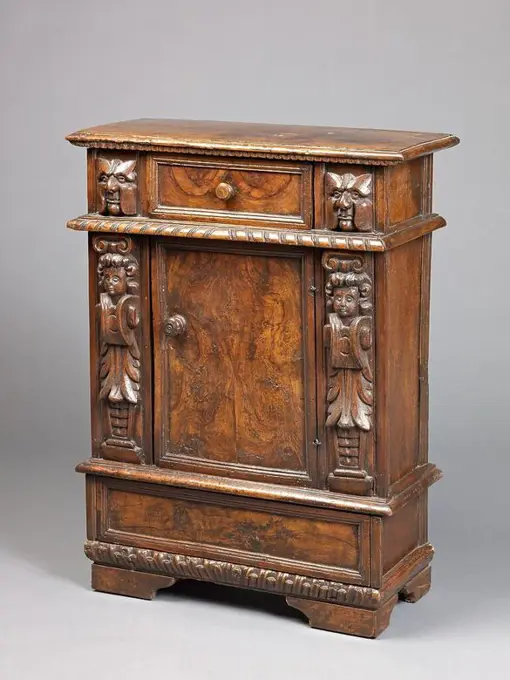
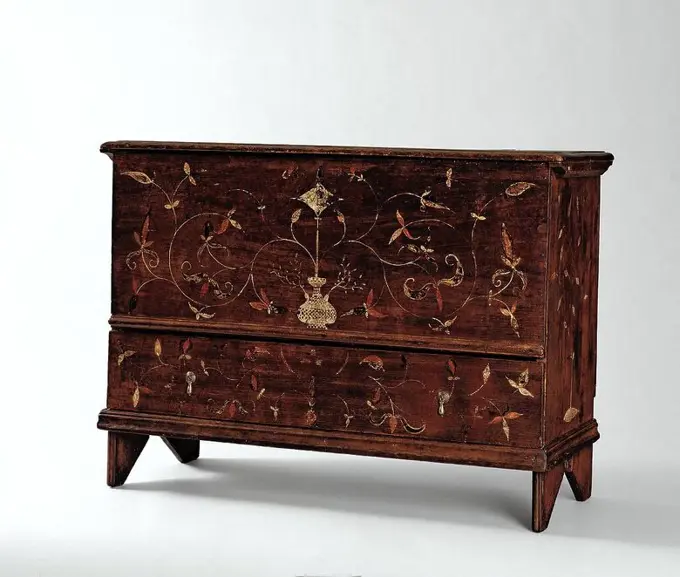
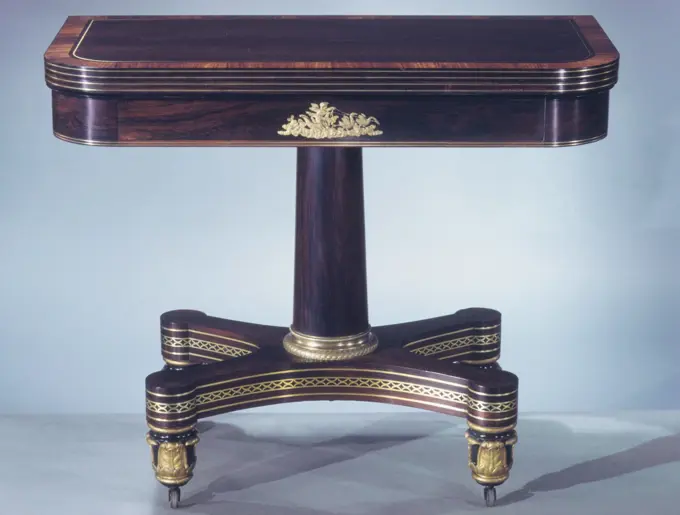
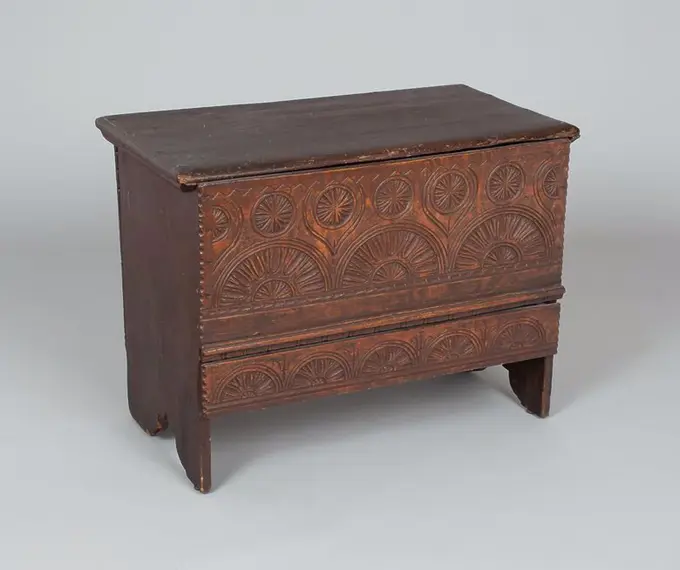
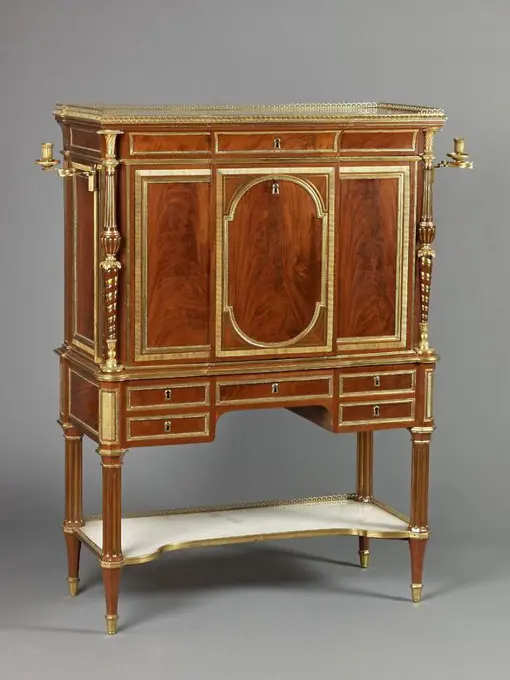
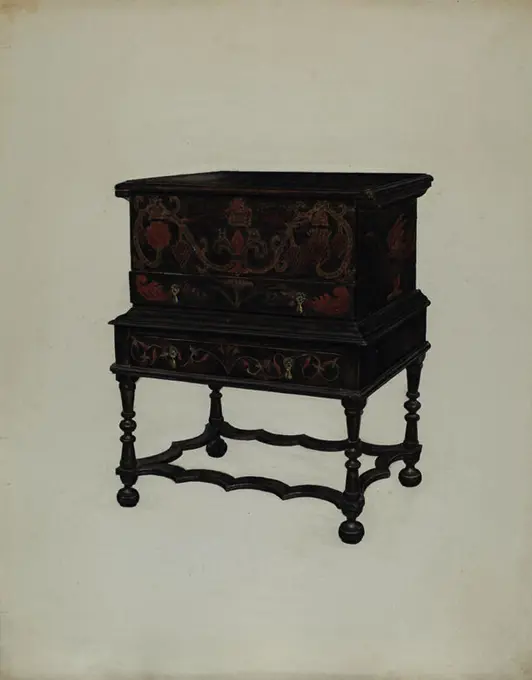
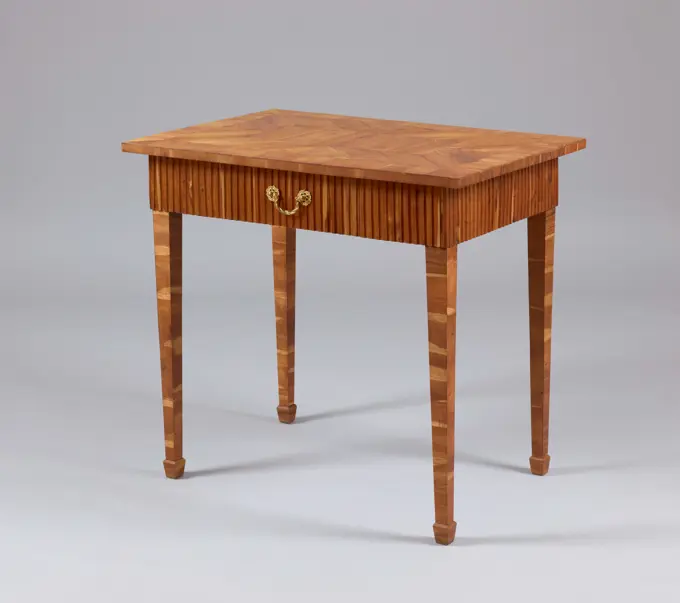
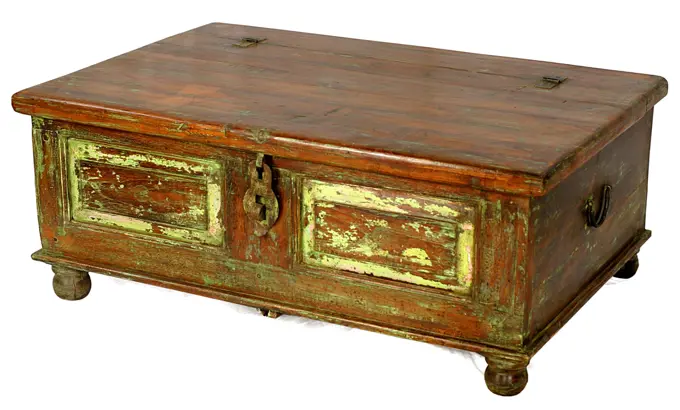
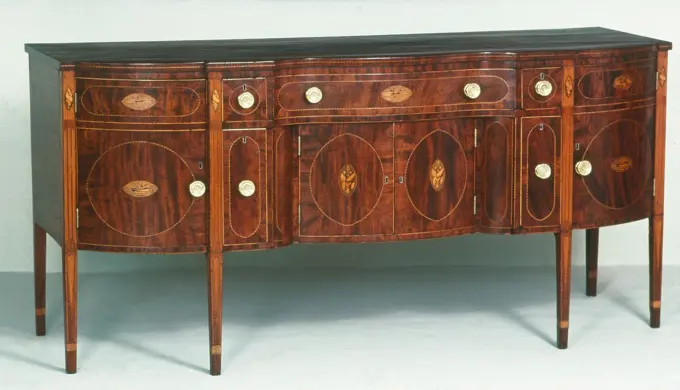
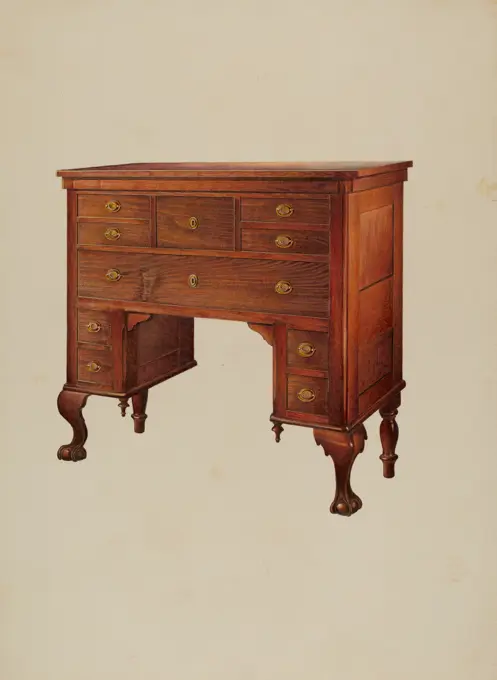
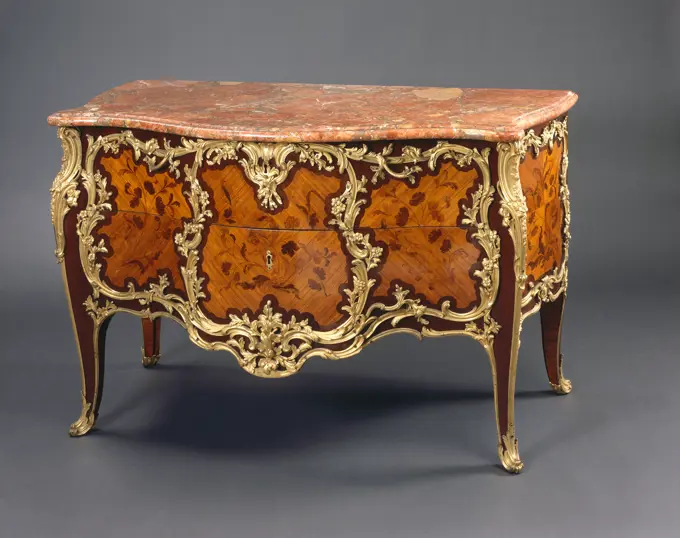
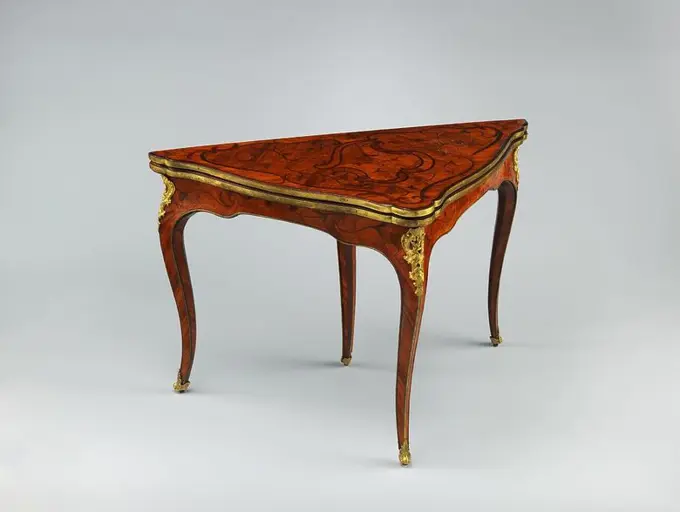
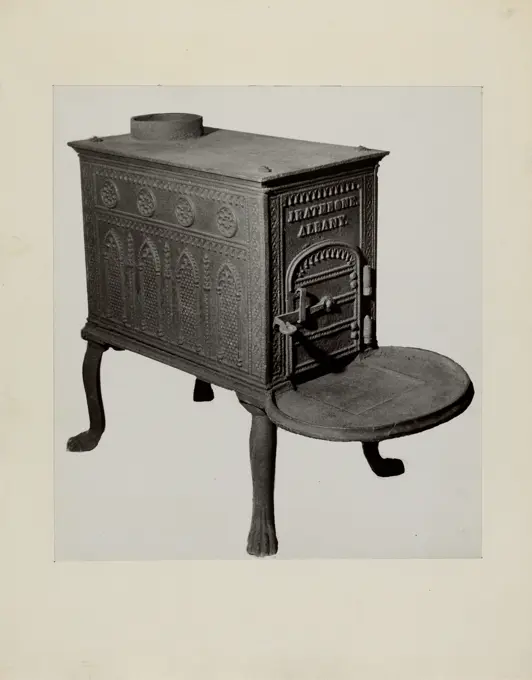
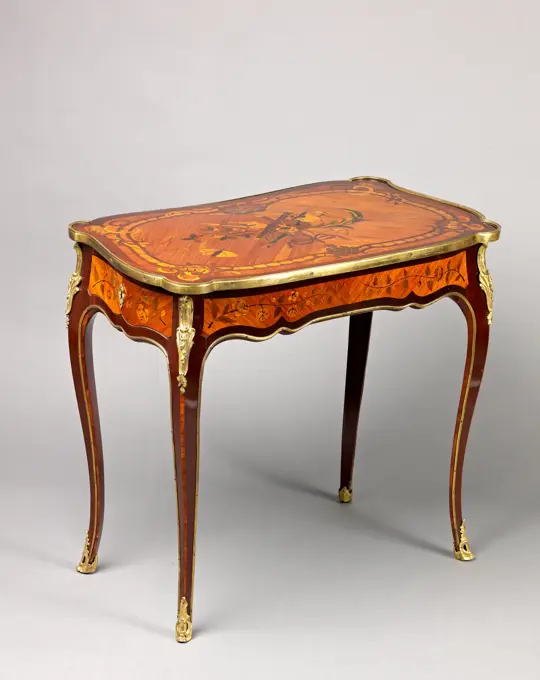
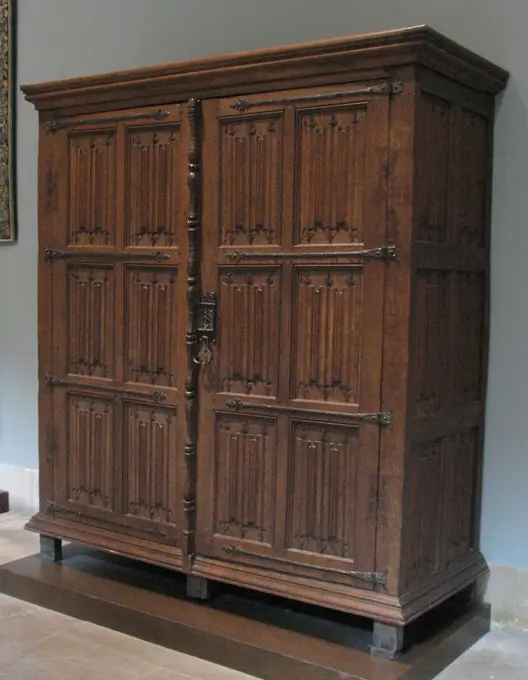
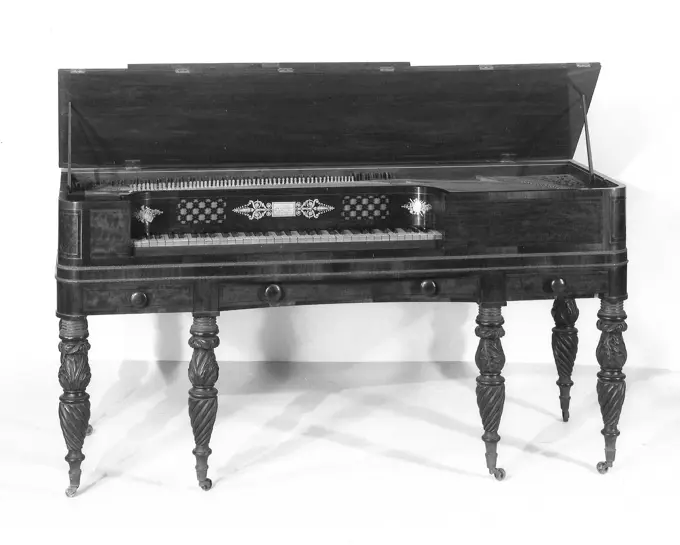
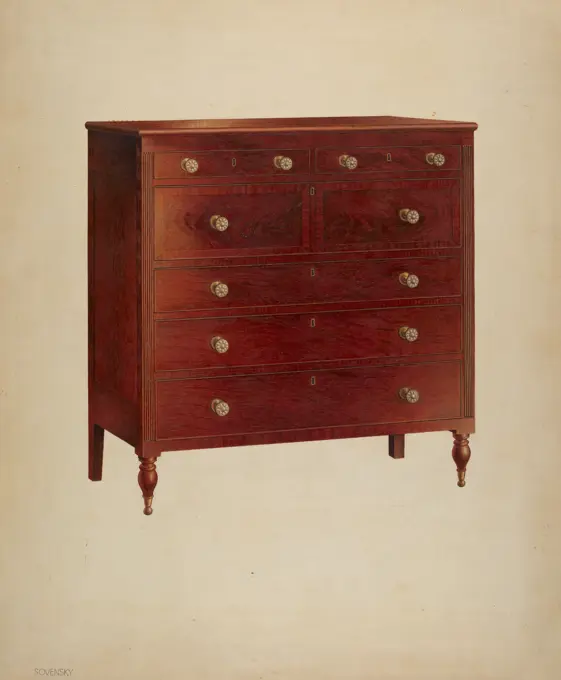
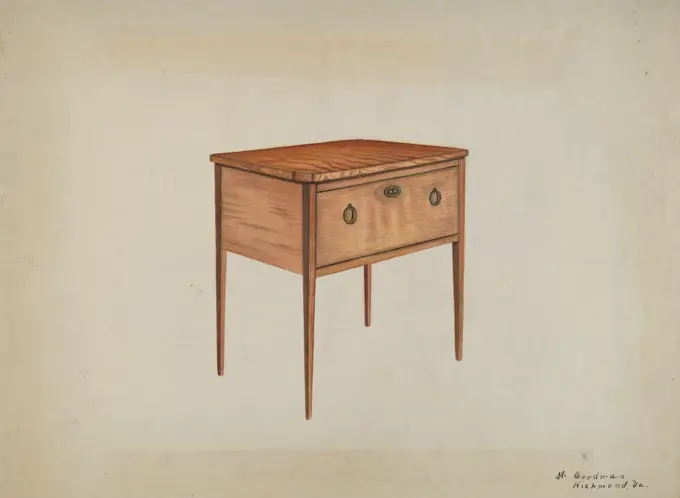
Cabinet;  2. PO. 16th century (1550-00-00-1600-00-00);Cabinet on stand ca. 1700 British. Cabinet on stand 204655Bureau table ca. 1765 American. Bureau table 20592Bureau table. Culture: American. Dimensions: 34 3/8 x 36 1/2 x 20 1/2 in. (87.3 x 92.7 x 52.1 cm). Maker: Attributed to John Townsend (1732-1809). Date: ca. 1765.In eighteenth-century Newport, a thriving seaport ninety miles south of Boston, local cabinetmakers produced some of the most creative and uniquely American of all colonial furniture. One of their innovations was the introduction of carved, lobed shells to terminate the projecting or receding blocking on the fronts of chests and desks. On this example, a bureau table or kneehole chest, there are four shells in the distinctively elegant and crisp style of the master craftsman John Townsend. Museum: Metropolitan Museum of Art, New York, USA.Penning cabinet with two doors behind which ten drawers, a drawer and valve. Pennice cabinet on four twisted legs, with two doors behind which ten drawers with brass buttons. The doors have engraved hinges. There is a drawer under the doors; The cabinet has a valve at the top. Handles on the sides of the furniture. Doors and drawer with a lock. (Furniture, Anonymous, 1685 - 1700 Oak cabinet glued with root nuts, resting on a chassis with flinged legs, connected to the houses by a driven X-shaped cross. The chassis contains a drawer with openwork bronze batter pieces with handles, which also occur on the sides. The upper cabinet shows openwork fittings on all corners; In the middle of the two doors, two batter pieces form an oval at the barrier. Bronze stuffed handles with rosettes form the connections between all sides. Northern Netherlands wood (plant material). oak (wood). bronze (metal). rosewood (wood) Oak cabinet glued with root nuts, resting on a chassis with flinged legs, connected to the houses by a driven X-shaped cross. The chassis contains a drawer with openwork bronze batter pieces with handles, which also occur on the sides. The upper cabinet shows openwork fittings on all corners; In the middle of the two doors, two batter pieces form an oval at the barrier. Bronze stuffed handles with rosettes form the connectioChest with Drawers 1675-1705 Workshop of Peter Blin. Chest with Drawers 2043Cabinet of Mahoniehout, decorated with scalloped parts and rocaille motifs. Top cabinet with two doors; base cabinet double vaulted with four drawers., Anonymous, 1750 - 1800 Oak cabinet glued with root nut wood. The claw -shaped front legs and scalloped bottom rule show a rocaillem motif. The front corner styles are placed overhoeks. The bottom is double arched and contains four drawers with copper fittings. The two doors of the upper cabinet wear panels with sculpted frames; A flower pattern in the upper corners. The scallop list carries a shell -shaped rocaillem motif in the middle. The cabinet offers space for a cupboard set. Northern Netherlands oak (wood). copper (metal) Oak cabinet glued with root nut wood. The claw -shaped front legs and scalloped bottom rule show a rocaillem motif. The front corner styles are placed overhoeks. The bottom is double arched and contains four drawers with copper fittings. The two doors of the upper cabinet wear panels with sculpted frames; A floweAnonymous, small bahut with children's heads at the angles - Decor of Hauteville II, Maison de Juliette Drouet in Guernsey (title awarded). Drink. House of Victor Hugo - Hauteville House.. Closet of oak, divided into upper and lower cabinet. The styles are decorated with ionic half-columns with festans. The upper cupboard has two doors decorated with reliefs, left birth, on the right the circumcision. The doors of the lower case are each decorated with two reliefs: left three-kings and baptism, on the right the flight to Egypt and the temptation. The medium defress shows hunting scenes. The frieze shows performances with ships, sea horses, tritons and nymphs. Dated Tray: Anno 1659.PierTable. Cabinet in miniature of oak, decorated with ebony. The high base cabinet and the lower cupboard have two doors; Two drawers have been made. The baselice is strongly crocked on the corners and in the middle and the styles exhibit from top to top a mirror, karyatide, field with ebony frame with diamond head and a cherub head. The sides of the lowercase show four unratered panels and that of the upper cupboard a inlaid motif. Mirrors and edges on the doors; Furthermore grazing and cutting.Cabinet, consisting of a stuff with two doors and a lower case with three drawers. Arch cabinet glued with walnut on oak core. The upper cupboard has two doors and three shelves; The lower case has three draw trays.. Secretaire decorated with marquetery of pink, rosewood and other types of wood on oak core. The overhoeks places places, the front with S-shaped corner styles, switch to the scalloped rule and side rules. The abbrate front shows a heart-shaped shield shaped by leaf volutes in which a tulip bouquet. The upper half serves as a writing sheet for a, parent cabinet in two; The deputy has two doors. Rocaille batter at the bottom of the legs, at the top of the styles and by line.Halvema table, decorated with marqueterie, including a trophy with musical instruments, anonymous, c. 1785 - c. 1800 Halvema table decorated with marqueterie of pink, satin and other woods on oak core, on three, rejuvenating, legs with pink wood and a rosette. As a rule, including a hired toothlist, there are two quarter -round drawers. The rule is decorated with a trophy with musical instruments and on the drawers with medallions with heads in profile, hanging on a bow and worn by flower branches. The leaf has a centrifugally veneered frame. Northern NetherlandsNetherlands wood (plant material). oak (wood). rosewood (wood). purpleheart (wood). maple (wood). satinwood (wood). rosewood (wood). copper (metal). gilding (material) gilding Halvema table decorated with marqueterie of pink, satin and other woods on oak core, on three, rejuvenating, legs with pink wood and a rosette. As a rule, including a hired toothlist, there are two quarter -round drawers. The rule is decorated with a tropMenning cabinet with two doors behind which ten drawers, a drawer and valve, c. 1690 - c. 1710 Penning cabinet on four turned legs, with two doors behind which ten drawers with brass buttons. The doors have engraved hinges. There is a drawer under the doors; The cabinet has a valve at the top. Handles on the sides of the furniture. Doors and drawer with a lock.  oak (wood). walnut (hardwood). brass (alloy) Penning cabinet on four turned legs, with two doors behind which ten drawers with brass buttons. The doors have engraved hinges. There is a drawer under the doors; The cabinet has a valve at the top. Handles on the sides of the furniture. Doors and drawer with a lock.  oak (wood). walnut (hardwood). brass (alloy)Cabinet, anonymous, c. 1655 - c. 1660 Kunstkabinet glued with turtle on a red underlay on an oak core. Two doors in the middle. On both sides of this, above and below eleven drawers. Behind the doors ten drawers to a mirrors covered with mirrors, plunged by Tuscan columns with a floor, glued with turtle and ivory. These drawers are made of oak and walnut, the front board topped with pink wood. The doors wear mirrors on the inside. The furniture stands on a chassis with six columns and a floor of Ambon rootwood. Antwerp wood (plant material). oak (wood). ebony (wood). walnut (hardwood). softwood. rosewood (wood).. ivory. glass. bone (material). silver (metal) Kunstkabinet glued with turtle on a red underlay on an oak core. Two doors in the middle. On both sides of this, above and below eleven drawers. Behind the doors ten drawers to a mirrors covered with mirrors, plunged by Tuscan columns with a floor, glued with turtle and ivory. These drawers are made of oak and walnut, the front boaOak Dutch Régence wall table with marble top, side table table furniture interior design wood oak marble stone, S-legs of which only the front is worked gray marble top with cut profile edge régenceConsole table or stand. unknown, authorGate-leg Drop-leaf Table 1700-1750 American. Gate-leg Drop-leaf Table 3913Console Table, 1820-30. America, 19th century. Mahogany and mahogany veneer with marble top; overall: 96.2 x 120 x 49 cm (37 7/8 x 47 1/4 x 19 5/16 in.).Square Tea Table 1740-60 American This is a perfect example of what tea tables made in Newport between 1740 and 1760 looked like: a simple rectangular top with raised molded edges, plain skirts, and cabriole legs of extreme delicacy terminating in pointed pad feet. The design is masterful in its elegant simplicity. Several dozen tables of this model survive today, their differences being only in the skill with which the legs were shaped.. Square Tea Table. American. 1740-60. Mahogany, white pine. Made in Newport, Rhode Island, United StatesChest with drawers. Culture: American. Dimensions: 36 x 36 1/2 x 21 in. (91.4 x 92.7 x 53.3 cm). Date: 1670-1700.Most surviving joined chests with drawers from New England date to the late seventeenth century. Although the pair of large square panels at the top gives the appearance of cupboard doors, this chest actually has a lift-top opening to a deep well for storing linens and two shallower double-paneled drawers below for keeping smaller goods. Museum: Metropolitan Museum of Art, New York, USA.Cabinet on stand. All over Europe craftsmen tried to imitate Chinese and Japanese lacquer, but the essential ingredient, the resin from the so-called lacquer tree, could not be obtained outside East Asia. The scenes depicted on this cabinet - the ship and the tower with bells - are partly based on the earliest illustrated description of China published in Europe. Written by the Dutchman Joan Nieuhof, it was printed in Amsterdam in 1665.Retailer: William Leverett, American, 1760-1811, Cardtable, Mahogany, mahogany veneer; eastern white pine (frame rails, glue blocks), black cherry (hinged rail), 29 1/8 × 35 11/16 × 17 7/16 in. (74 × 90.7 × 44.3cm), Made in Boston, Massachusetts, American, 19thcentury, FurnitureDesk and Bookcase. American; Boston, Massachusetts. Date: 1700-1735. Dimensions: 228.6 × 104.1 × 61.3 cm (90 × 41 24 1/8 in. ). Walnut and white pine. Origin: Boston. Museum: The Chicago Art Institute, Chicago, USA.Desk. Northern Italy. Date: 1735-1745. Dimensions: 121.9 x 132.1 x 53.3 cm (48 x 52 x 21 in.). Wood, walnut and pine, bronze mounts. Origin: Northern Italy. Museum: The Chicago Art Institute, Chicago, USA.Chest of drawers. unknown, authorCommode ca. 1760 Attributed to William Vile British. Commode 203850Chest 1663-80 Possibly William Searle The richest and most vigorous early colonial carving is that associated with the work of William Searle (1634-1667) and Thomas Dennis (1638-1706) of Ipswich. Paired leaves, with a naturalistic, three-dimensional quality rare in American furniture of the period, dominate the panels of this chest; the panels are carved in the popular seventeenth-century design of a stalk of flowers and leaves emerging from an urn, of which only the opening is indicated here. Searle and Dennis came from Devonshire, England, where a tradition of florid carving, using many of the motifs seen on this chest, flourished in the early seventeenth century.. Chest 1997Anonyme, Console (Nom Nom), 1850. Bood Rouge (qiu ou yimu). Musée Cernuschi, Musée for 200e de la Ville.Toilet Table. UnknownHigh Chest ofDrawersCard table 1810-15 Attributed to Duncan Phyfe Duncan Phyfe (1770-1854) was a Scottish émigré who established one of the most successful furniture-making operations in New York in the early nineteenth century. Phyfe produced furniture in the newest, Neoclassical style which was widely sought after by affluent consumers in New York and beyond in places as far south as the Caribbean. Thomas Cornell Pearsall (1768-1820), a New York merchant, commissioned Duncan Phyfe to make the spectacular swivel-top "pillar-and-claw" card tables for his family home on the East River known as "Belmont." The Pearsalls arranged Belmont with these card tables and another suite of chairs and sofas (1960.4.1-15), donated to the Metropolitan Museum in 1960, with a sella curulis or curule style crossed base designed after ancient Roman folding chairs.. Card table 821352Console;  1820-1840 (1820-00-00-1840-00-00);Orchestrion, Dietrich Nikolaus Winkel, c. 1815 - c. 1825 musical instrument. mechanical instrument. organ. barrel organ. orchestrion. mechanical organ Mechanical organ in the form of a secretary, of oak and mahogany (the valves of Fatinbet), the side pockets covered with green baai valves, Frisians and styles decorated with copper figures and ornament in classical style: Pans figures, centaures, dancing female figures, Meerminnen, Masksers . Track crown with white marble leaf. On the inside: two rolls and a pendulum. Marked: D.N. Shop à Amsterdam. Corresponding roller box BK-NM-14353-B. Amsterdam oak (wood). mahogany (wood). copper (metal). marble (rock)Anglo-Japanese Fall-Front DeskTable of oak with inverted bottle-shaped legs. Under table rules sculpted openwork decorations with putti, leaf and flower work and coat of arms of Selbach and year 1697. Table of oak. The inverseized bottle-shaped legs are connected by profiled, rules in the corners. Under the table rules are sculpted openwork decorative pieces with two putti in the middle of leaf and flower work, which stop a crowned coat of arms with the year 1697. It is about the coat of arms of Selbach Steven. The rules bear a rosette on the corners.Small cabinet. Culture: Italian (Northern). Dimensions: H. 87 cm, W. 67 cm, D. 28.3 cm. Date: late 19th or early 20th century (using older parts). Museum: Metropolitan Museum of Art, New York, USA.Chest with drawer. Culture: American. Dimensions: 33 1/4 x 46 x 19 in. (84.5 x 116.8 x 48.3 cm). Date: 1720-35.The painting technique employed on this chest is that of the Guilford-Saybrook, Connecticut school of painted furniture. Originally painted on yellow ground--a bit of which is still visible at the top of the left side--the floral elements are more limited and the compositions more formulaic than in earlier examples, (10.125.15; 10.125.16) suggesting a waning tradition. Museum: Metropolitan Museum of Art, New York, USA.BasinstandChest-with-drawer 1690-1710 American. Chest-with-drawer 2034. Wall cupboard from walnut, resting on a profiled bottom. The cupboard has a drawer at the bottom, above two doors, all with imposed panels with beveled corners. Both the tray and the doors are flanked by a similar narrower panel. The panels from and next to the tray have a pull button. The doors show bronze buttons in the form of winged cherub heads; In the lock an old key with ajour handle. The toppiece has many profiles and sticks out.Card Table ca. 1825 Attributed to the Workshop of Duncan Phyfe Scottish With their bold yet simple shape, these pillared card tables (see also 68.94.1) with rounded corners anticipate the simplified Grecian style of the 1830s. Possibly made in Duncan Phyfe's workshop, they are in the French Restoration style, which coincided in the United States with the Greek Revival mode in architecture. Veneered with exotic rosewood and inlaid with brass, the tables are further enriched with gilded brass ornaments centered on the aprons and with bronzed and gilded antique-style feet.. Card Table 1451Desk. Dated: 1940. Dimensions: overall: 57.9 x 45.7 cm (22 13/16 x 18 in.) Original IAD Object: 56"high; 31"wide. Medium: watercolor, colored pencil, and graphite on paperboard. Museum: National Gallery of Art, Washington DC. Author: Ferdinand Cartier.John Dieterich, Pier Table, 1936 Pier TableChest. American; Marshfield, Massachusetts. Date: 1687-1697. Dimensions: 61.5 × 82 × 44 cm (24 1/2 × 32 3/8 × 17 3/8 in.). Red oak and white pine. Origin: Marshfield. Museum: The Chicago Art Institute, Chicago, USA.Card Table. Culture: American. Dimensions: 30 3/4 x 36 x 17 11/16 in. (78.1 x 91.4 x 44.9 cm). Date: ca. 1800. Museum: Metropolitan Museum of Art, New York, USA.Nesting Table 1860-70 American. Nesting Table 8101Cabinet with corner styles in the form of semi -detached Tuscan columns, anonymous, c. 1600 - c. 1650 Low cabinet of oak. The corner styles and the back styles of the side walls have detached Tuscan columns; The middle style is a half column. They wear consoles with lion heads. The drawer in the front is decorated with dragons from whose body ranks jumps. The doors have cornissenses, crowned by semi -circular shells. The cornisses have a devil mask in the middle. The panels in the pedestal show a central vase motif that stems from. Southern Netherlands wood (plant material). oak (wood) Low cabinet of oak. The corner styles and the back styles of the side walls have detached Tuscan columns; The middle style is a half column. They wear consoles with lion heads. The drawer in the front is decorated with dragons from whose body ranks jumps. The doors have cornissenses, crowned by semi -circular shells. The cornisses have a devil mask in the middle. The panels in the pedestal show a centralSecretary (secrétaire à abattant). Artist: Attributed to Adam Weisweiler (French, 1744-1820). Dimensions: H. 137.2 cm, W. 90.2 cm, D. 38.1 cm. Date: ca. 1780-90. Museum: Metropolitan Museum of Art, New York, USA.Card Table 1715-1725 England. Walnut, gilding, metal hinges; needlework embroidery .Louis XIII table (dummy title). Drink. House of Victor Hugo - Hauteville House.Confraternity Board (Tabella di Confraternita) late 16th or early 17th century (with alterations) Italian, (Bologna). Confraternity Board (Tabella di Confraternita) 459722KneeholedeskDesk-on-standDining table ca. 1770-80 British. Dining table. British. ca. 1770-80. Mahogany. Woodwork-FurnitureBox Desk on Frame. Dated: c. 1937. Dimensions: overall: 36.8 x 29.7 cm (14 1/2 x 11 11/16 in.) Original IAD Object: 37"high; 30 1/2"long; 18 3/4"deep. Medium: watercolor, colored pencil, and graphite on paperboard. Museum: National Gallery of Art, Washington DC. Author: Francis Borelli.Leo Drozdoff, Washstand, c 1939 WashstandHepplewhite Drop Leaf Table. Dated: c. 1942. Dimensions: overall: 35.5 x 45.6 cm (14 x 17 15/16 in.) Original IAD Object: 28 5/8"high. See data sheet for details.. Medium: watercolor, colored pencil, graphite and heightening on paperboard. Museum: National Gallery of Art, Washington DC. Author: Hugh Ryan.Peter C Ustinoff, Desk, c 1940 DeskThrone-Form Mirror Stand, late 16th-early 17th century, 19 1/8 x 14 5/8 x 8 1/8 in. (48.58 x 37.15 x 20.64 cm), Huang-hua-li hardwood, China, 16th-17th century, Designed for the dressing table, this small mirror cabinet contains three drawers in its base surmounted by a three-sided, openwork frame resembling a throne with two arms and a tall back. The five-carved panels of the back display confronting dragons, a lotus pond with ducks and plum blossoms. The lower side panels are decorated with the swastika-shaped wau character denoting ten thousand good works. A round mirror would have been supported within the upper frame.Table. Dated: 1940. Dimensions: overall: 38.3 x 50.8 cm (15 1/16 x 20 in.) Original IAD Object: 73 cm high; 91 cm long; 53.5 cm deep.. Medium: watercolor, colored pencil, pen and ink, graphite and heightening on paperboard. Museum: National Gallery of Art, Washington DC. Author: Isidore Sovensky.Pembroke table 1790 British. Pembroke table. British. 1790. Mahogany top, deal frame and drawer; veneered with mahogany. Woodwork-FurniturePaul Farkas, Chest, c 1937 ChestSheet of red damaged marble. Tabletop made of red marble with a profiled edge on the front and the sides.Small table. unknown, creatorLibraryTableDeskIron design fitting on antique wooden storage box iron, Jodhpur, Rajasthan, India Copyright: xSafatxAli/DinodiaxPhotoxSideboardBox Stove. Dated: c. 1937. Dimensions: overall: 24.8 x 19.6 cm (9 3/4 x 7 11/16 in.) Original IAD Object: 10 3/4" wide; 25 1/4" deep; 20 7/8" high. Medium: black and white photograph. Museum: National Gallery of Art, Washington DC. Author: Charles Von Urban.Robert Pohle, Side Board, c 1937 Side BoardDesk or writing table ca. 1780-90 British. Desk or writing table. British. ca. 1780-90. Satinwood, inlaid. Woodwork-FurnitureJoseph Baumhauer, Chest of Drawers (commode), probably between 1767 and 1772 but possibly a decade earlier Joseph Baumhauer, Chest of Drawers (commode), German, active c. 1749 - 1772, probably between 1767 and 1772 but possibly a decade earlier, oak veneered with tulipwood, kingwood, casuarina, and purplewood; gilded bronze mounts; breccia marble top, Widener CollectionStool (1 of 2), 1700-25. China, Qing dynasty (1644-1911). Chicken-wing wood (jichimu); overall: 48.3 x 48.3 x 48.3 cm (19 x 19 x 19 in.).Circle of/Attributed to Duncan Phyfe, Drop-Leaf Library Table, c. 1810, carved mahogany.Foot Stool (England); walnut, blue flowered tapestry covered seatFolding card table (table de jeu brisée en angle). Culture: French, Paris. Dimensions: H. 27-5/8 x W. 42-3/8 x D. 21-3/4 in. (70.2 x 107.6 x 55.2 cm). Maker: Attributed to Bernard II van Risenburgh (ca. 1696-ca. 1767). Date: ca. 1755-65.In mentioning cards, I ought to observe, that . the French learn to play not barely for amusement, but also with a view to advantage; and, indeed, you seldom meet with a native of France, whether male or female, who is not a complete gamester, well versed in all the subtleties and finesses of the art.-- Tobias Smollett, Travels through France and ItalyAs gaming was the principal indoor diversion of eighteenth-century France, a variety of tables was created, often for specific games like three-handed ombre or tri, piquet, or brelan. A description of one example in Lazare Duvaux's account book suggests that this elegant folding table was used for quadrille. On August 9, 1753, the dealer sold a solid mahogany quadrille table "I" (folding on the diagonWalnut Louis Quatorze bench, bench furniture furniture interior design wood walnut damask copper plywood, Twisted legs and rules seat and upholstery of old-pink damask with copper nails attached Louis XIV Louis XIV Louis QuatorzeSecretary with settings;  1800-1825 (1800-00-00-1825-00-00);Gifts and shopping 1945-1947, VilniusBasin Stand 1815-20 American. Basin Stand. American. 1815-20. Mahogany. Made in New York, New York, United StatesWorktableChest;  End of the 16th century; End of the 19th century (1585-00-00-1600-00-00);Press Cupboard. Dated: c. 1936. Dimensions: overall: 27.4 x 22.7 cm (10 13/16 x 8 15/16 in.) Original IAD Object: none given. Medium: watercolor, colored pencil, pen and ink, gouache, and graphite on paperboard. Museum: National Gallery of Art, Washington DC. Author: Anne Ger.Joseph Cannella, Washstand, c 1941 WashstandCard Table 1800-1810 American. Card Table 1416Credenza, 1550-1599. Italy, 16th century. Walnut; overall: 130.2 x 155.6 x 62.2 cm (51 1/4 x 61 1/4 x 24 1/2 in.).Commode;   DF; Paris, France; about 1735; Oak veneered with kingwood, walnut, amaranth, and padouk; gilt bronze mounts; breche d'Alep top; 87 x 154.9 x 63.5 cm (34 1,4 x 61 x 25 in.)Chest ofDrawersCharles Von Urban, Box Stove, c 1942 Box StoveWriting table ca. 1760-70 Christophe Wolff French. Writing table. Christophe Wolff (French, 1720-1795). French, Paris. ca. 1760-70. Oak veneered with tulipwood, mahogany, and rosewood, with marquetry of partly shaded satinwood, partly stained, shaded, and engraved maple and barberry, and ebonized wood; gilt-bronze mounts.. Woodwork-FurnitureArmoir. Culture: North French or South Netherlandish. Dimensions: Overall: 72 1/2 x 65 5/8 x 27 in. (184.2 x 166.7 x 68.6 cm). Date: early 16th century.Armoires, decorated with linen fold panels, elaborately carved moldings, and hinge straps, furnished the interiors of both merchant and noble family homes in the late gothic period. Museum: Metropolitan Museum of Art, New York, USA.Square Piano 1822-27 Adam and William Geib John Geib emigrated from from London to New York in 1798. John Geib and Son are listed in New York directories 1804-1814. It is not known whether Geib's piano cases were made by his own workmen or by established cabinetmakers. John Geib Jr. was connected with Duncan Phyfe's shop.Technical description: Mahogany veneer over softwood, mahogany legs turned with helical reeding and carving with brass mountings and casters, pedal lyre suspended from leg (missing), case decorated with rosewood crossbanding, with rounded corners and striping of light and dark woods and brass and brass molding, nameboard veneered with rosewood with brass inlay and fretwork panels, three drawers with turned knobs beneath case, central drawer concave, ivory naturals with molded fronts, ebony accidentals, compass FF-c4 (68 keys), English double action (single escapement), crank type dampers with wires passing between and above strings and carrying cloth dampers, 1 damper Table on four high legs with an upper and bottom leaf, anonymous, c. 1900 - c. 1925 Table with two square table tops resting on four high legs. The four rejuvenating legs are painted black at the bottom and have inlaid a narrow tire at the top in a checkerboard motif. From the center of the legs, four sports with a wavy top end in a cross shape. The sports in the middle contain a round hole and feuds up from there. A second table top with veneer squares and an edge in a checkerboard motif rests on this. The top is divided into twenty -five veneer squares with a round of mother -of -pearl and an edge in a checkerboard motif on the intersections.  oak (wood) Table with two square table tops resting on four high legs. The four rejuvenating legs are painted black at the bottom and have inlaid a narrow tire at the top in a checkerboard motif. From the center of the legs, four sports with a wavy top end in a cross shape. The sports in the middle contain a round hole and feuds up from there. Sgabello Chair; Italy; carved walnutThrone chair;  after. 18th century (1740-00-00-1760-00-00);Isidore Sovensky, Chest of Drawers, c 1939 Chest of DrawersBureau Plat. Attributed to the Workshops of Boulle fils (French)Mattie P Goodman, Table with Deep Drawer, 1935 1942 Table with Deep Drawer