Antique Ceramics and Vases

Beautifully crafted ceramics from different cultures, showcasing intricate designs and historical significance in their artistry.

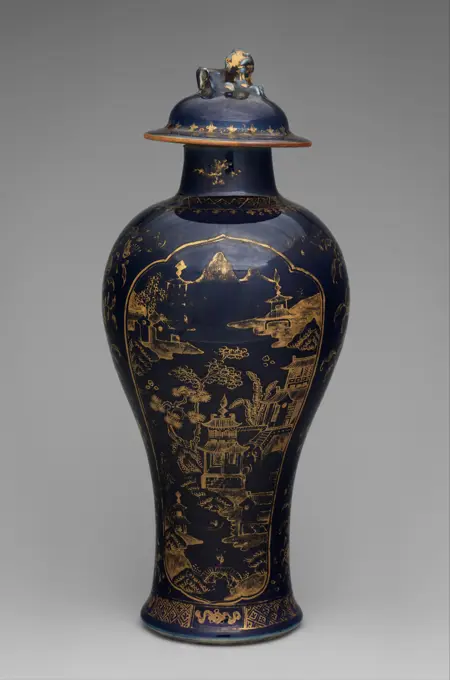
Bottle vase with landscape, bird on branch and neck decoration in underglaze blue, anonymous, c. 1800 - c. 1899 Bottle -shaped vase (lump of lessons) of porcelain, painted in underly glaze blue and on the glaze blue, red, green, yellow, eggplant, black and gold. The body is covered with butterflies and flowering plants on a black speckled soil, with two rectangular cartouches saved with a bird on a magnoliat branch in flowering plants and two people in a river landscape with rocks, trees and a pavilion; the neck with a decoration in underlaze blue of a tire with servetwork interspersed with a cartouche with a flower in reserve, above it a band with French point with flower vines in reserve with a flower branch, on the neck flower branches with a band with hanging leaf motifs with hanging tops above it Flower vines in reserve. Famle Verte. China porcelain. glaze. cobalt (mineral). gold (metal) painting / gilding / vitrification Bottle -shaped vase (lump of lessons) of porcelain, painted
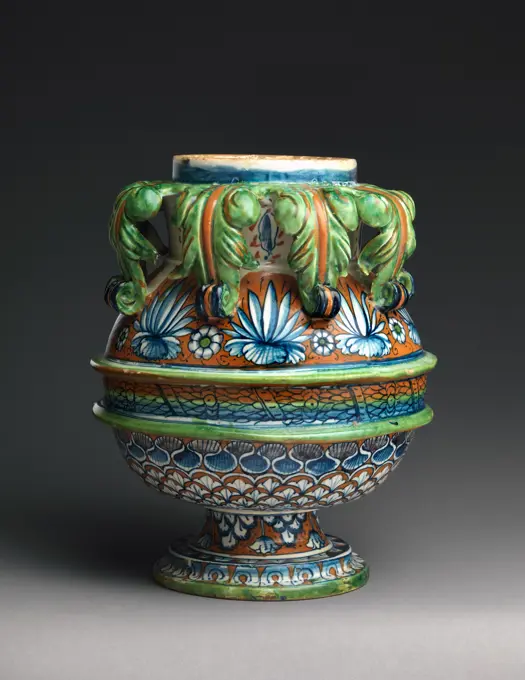
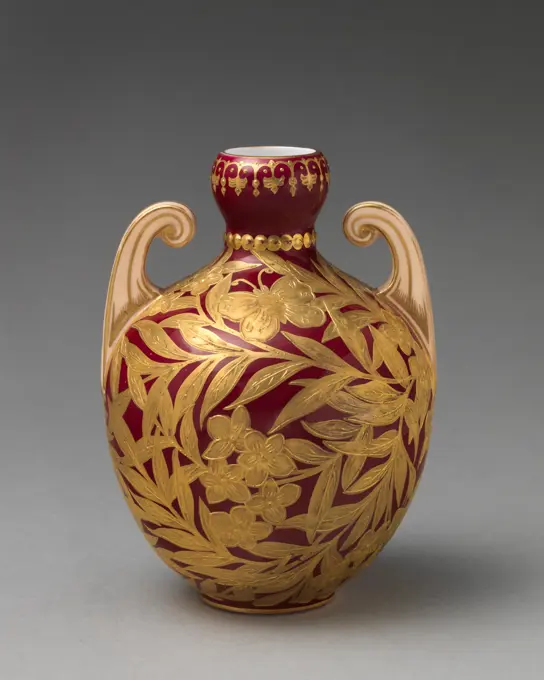
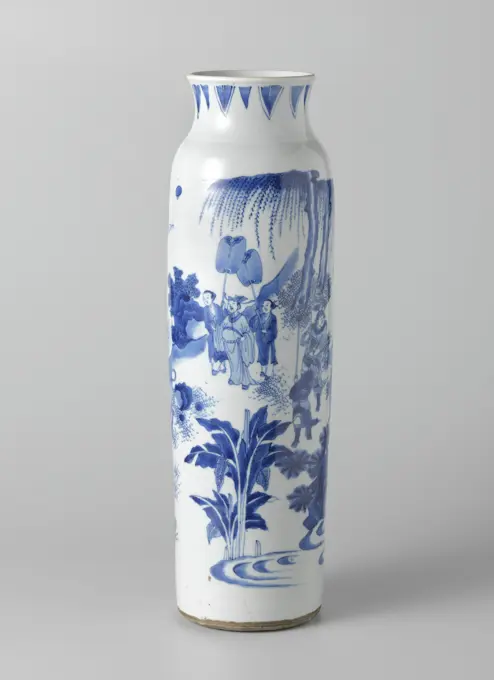
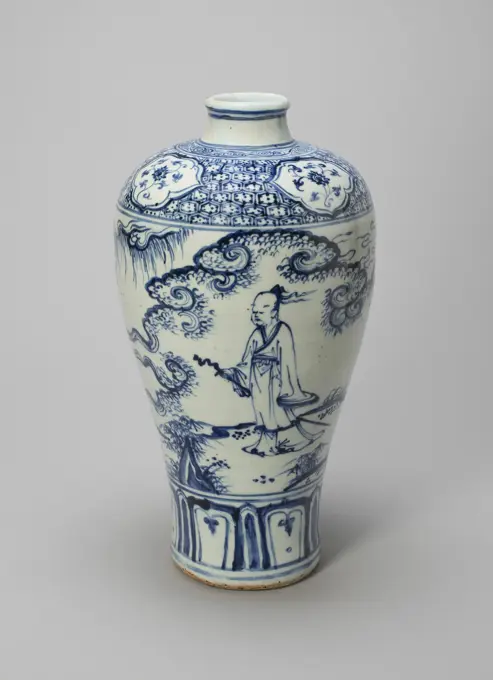
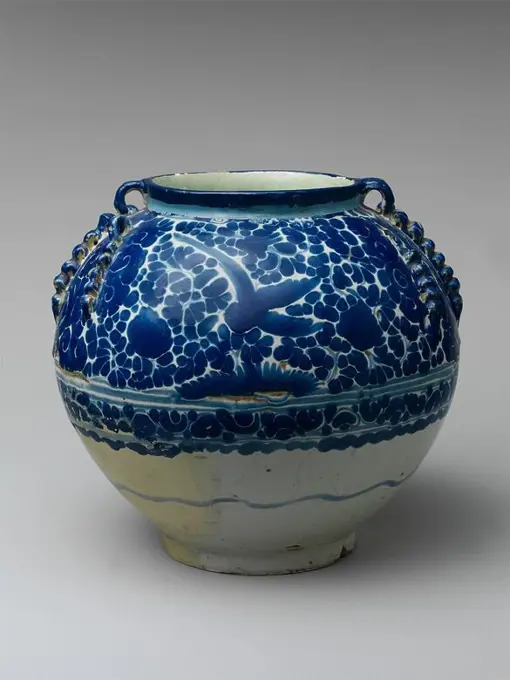
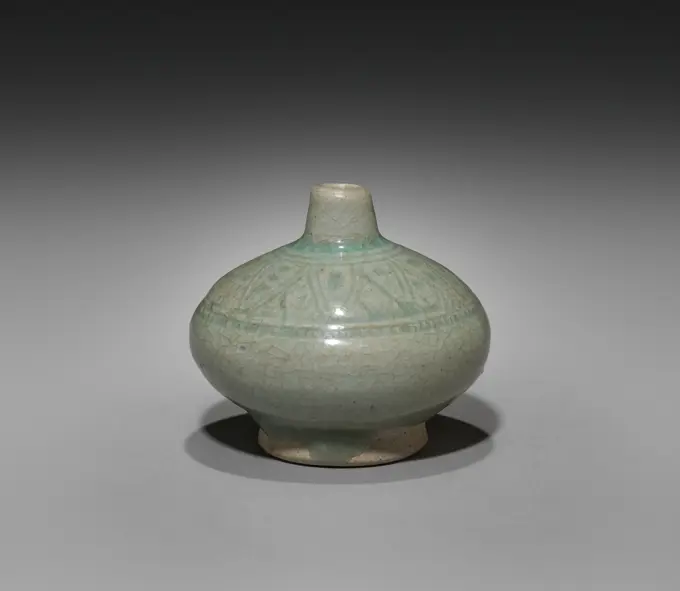
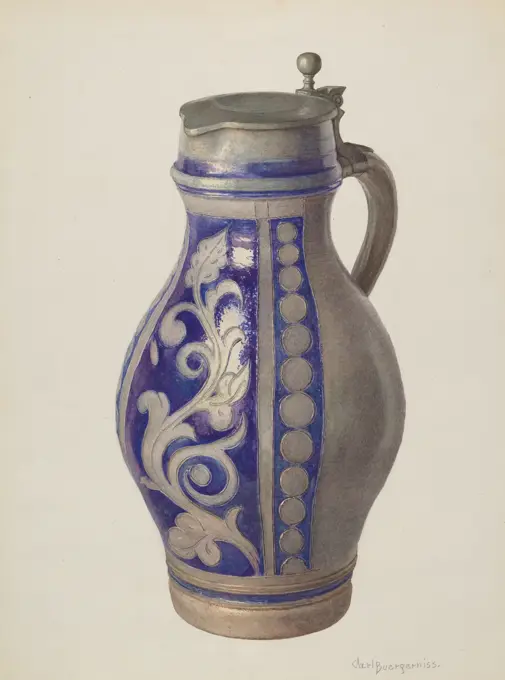
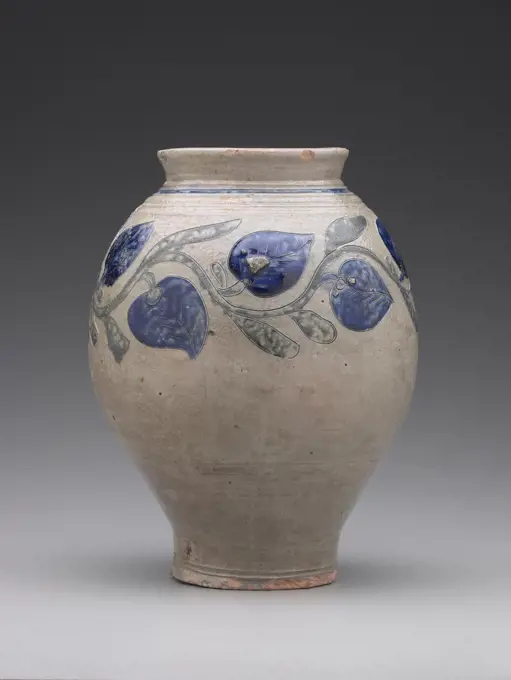
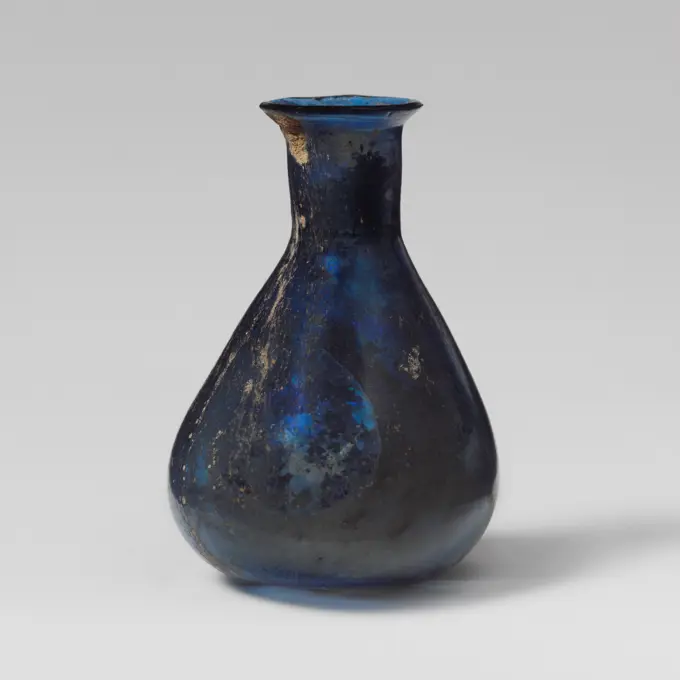
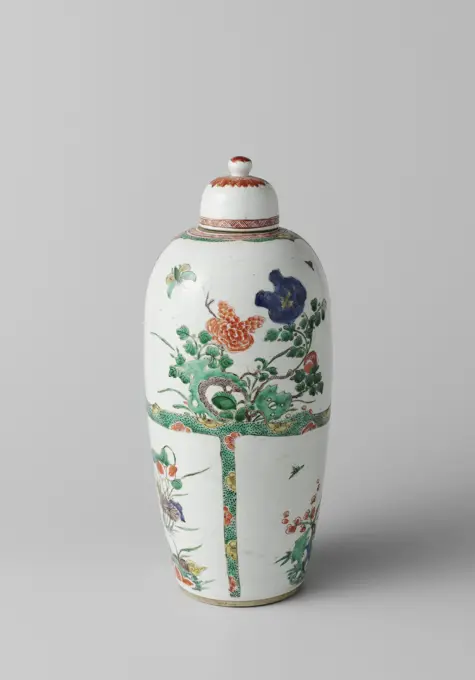
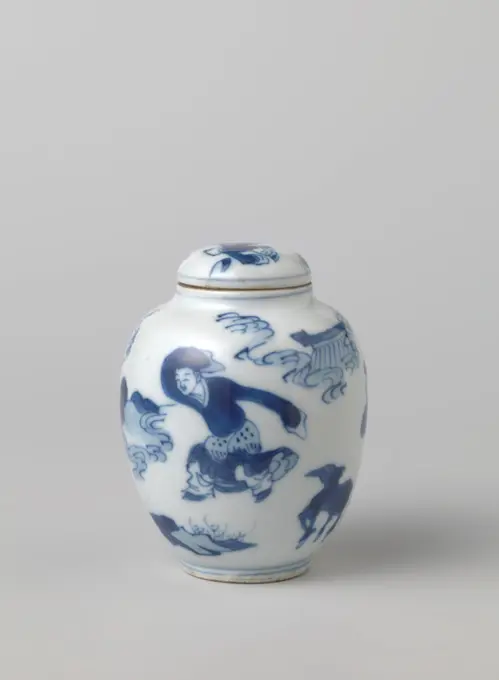
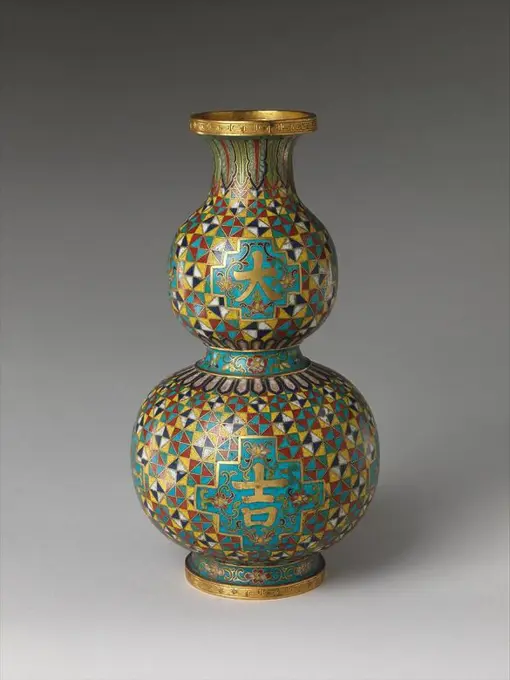
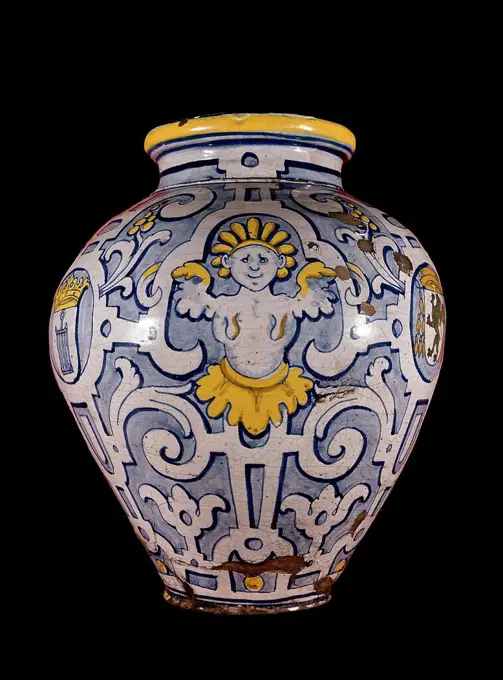
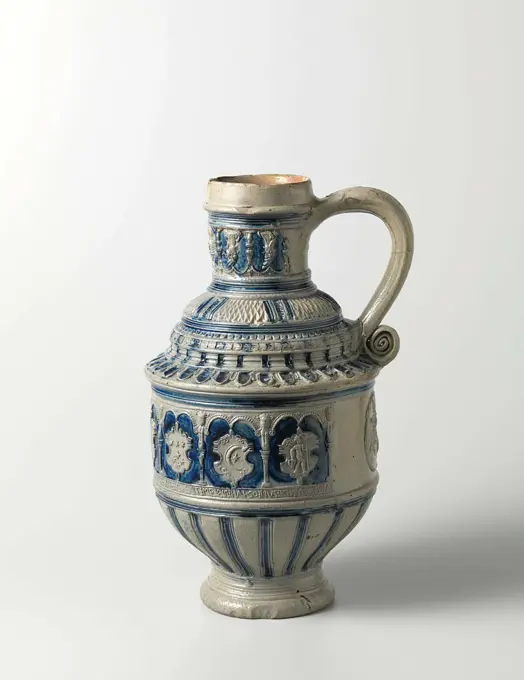
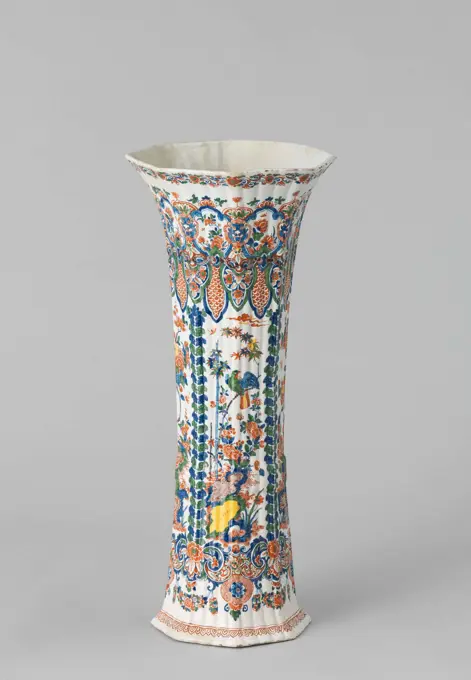
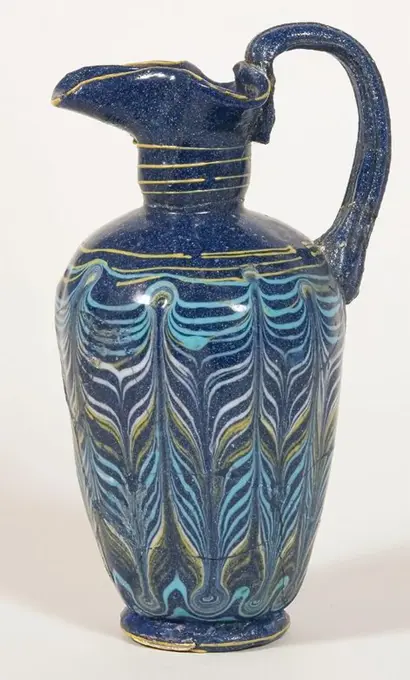
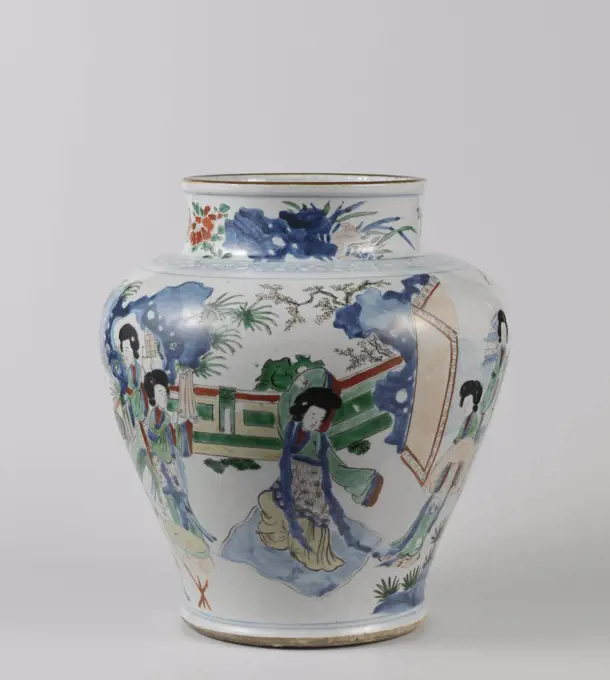
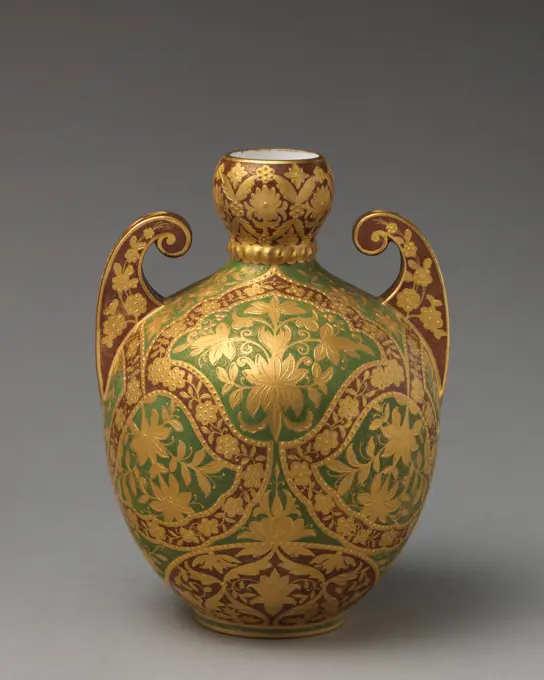
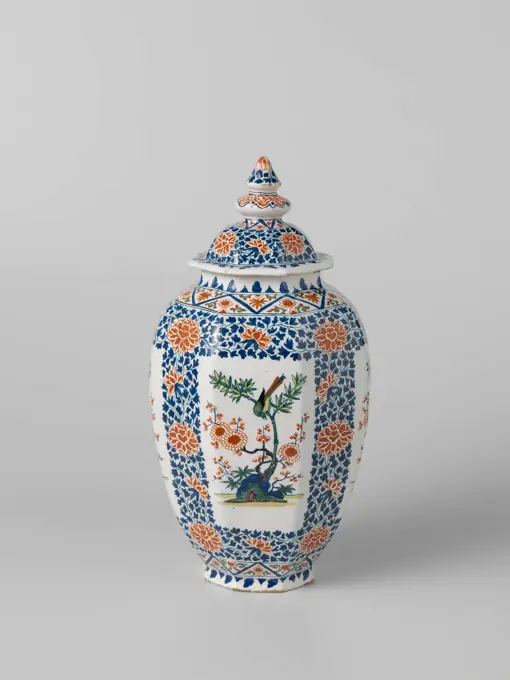
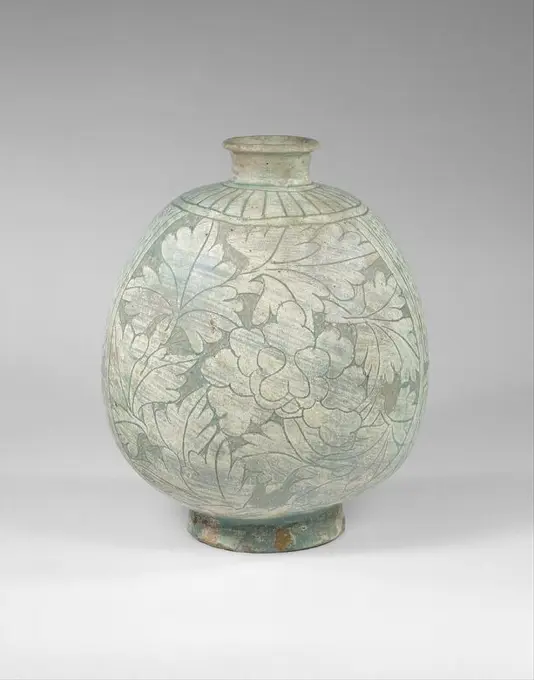
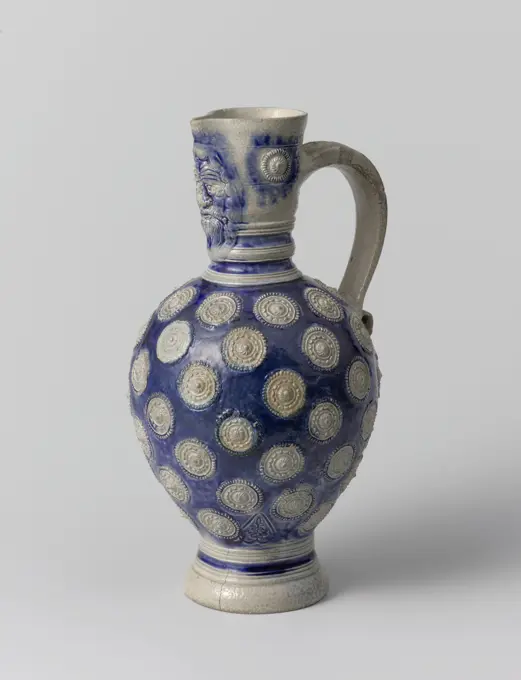
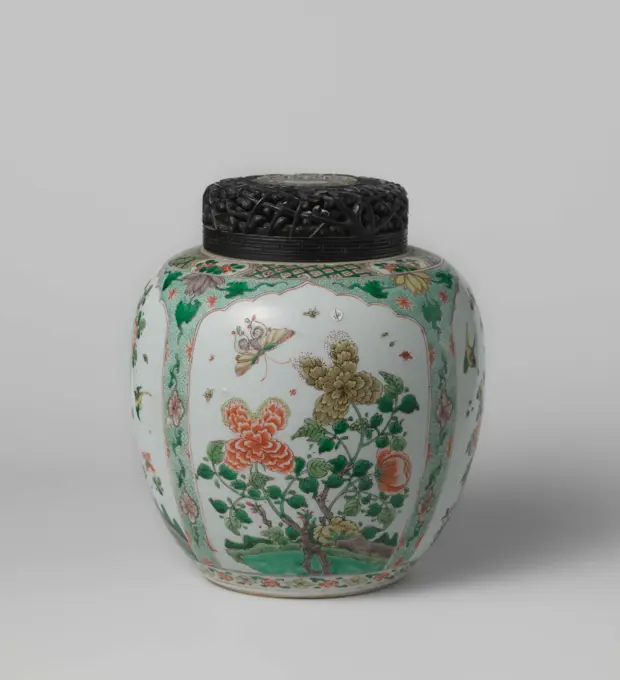
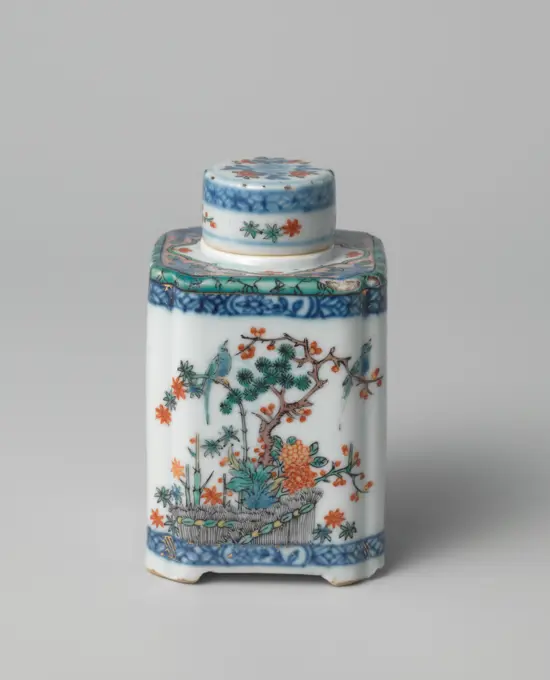
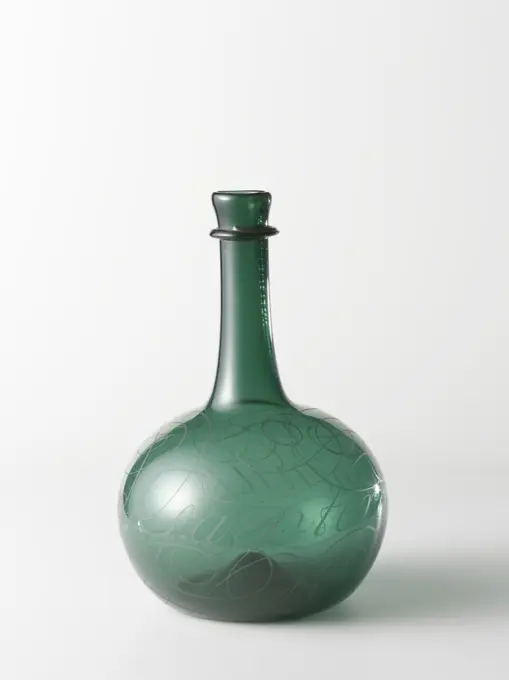
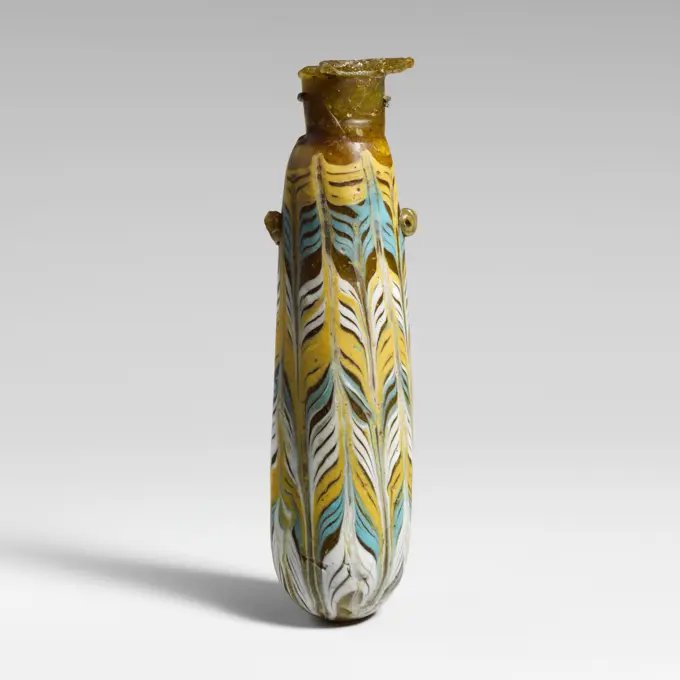
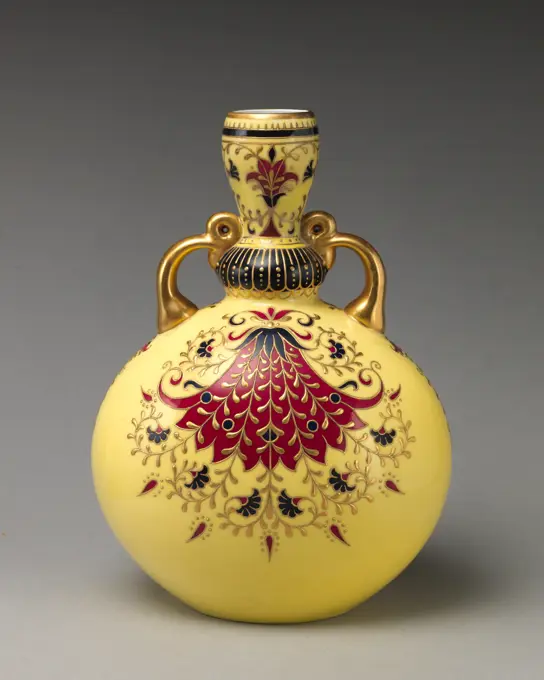
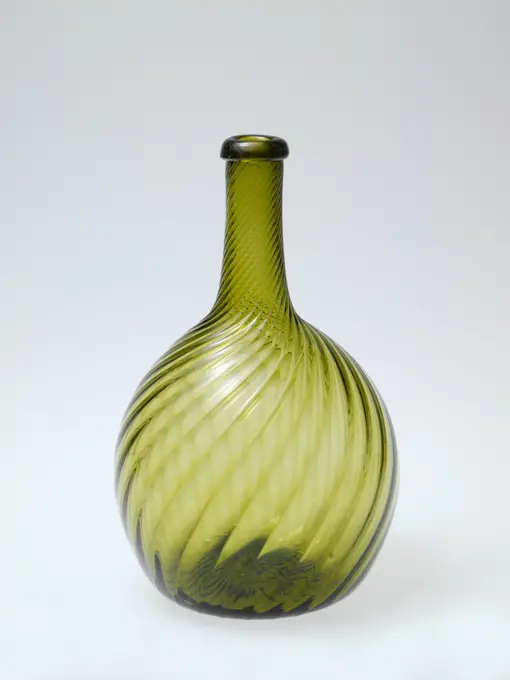
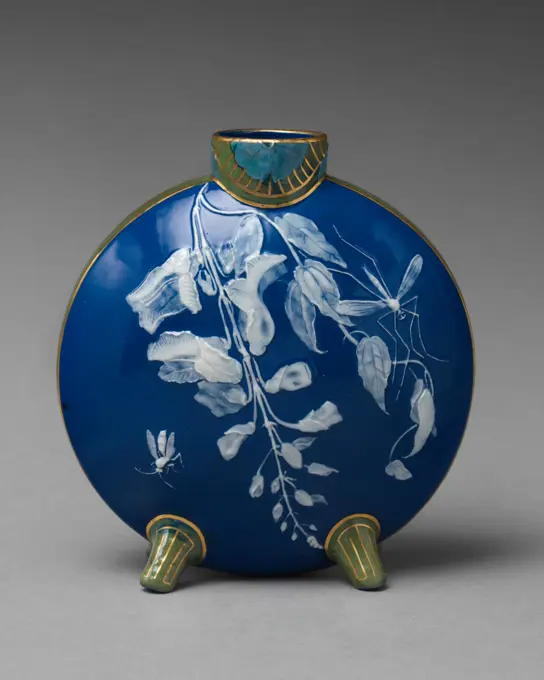
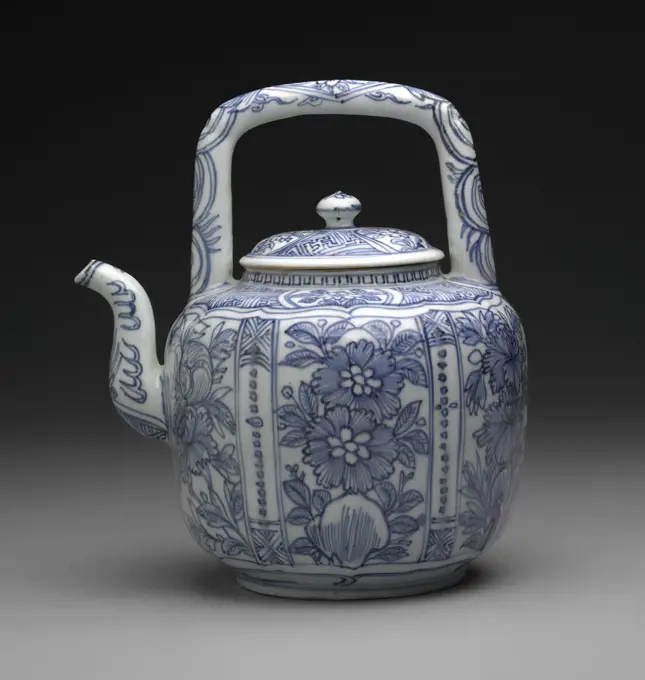
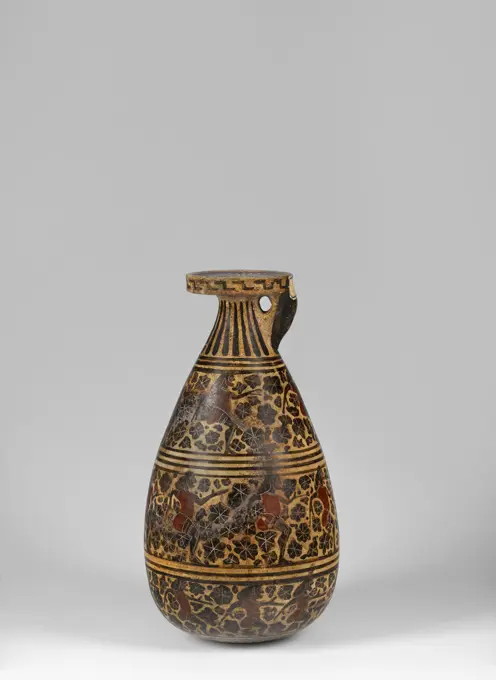
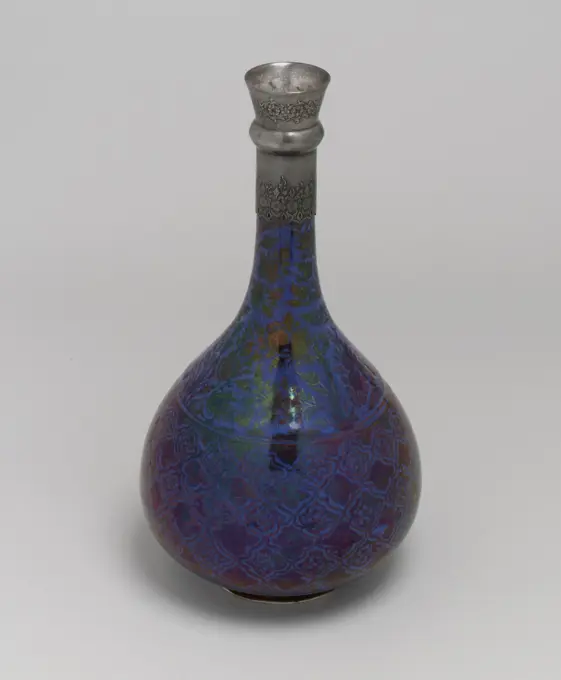
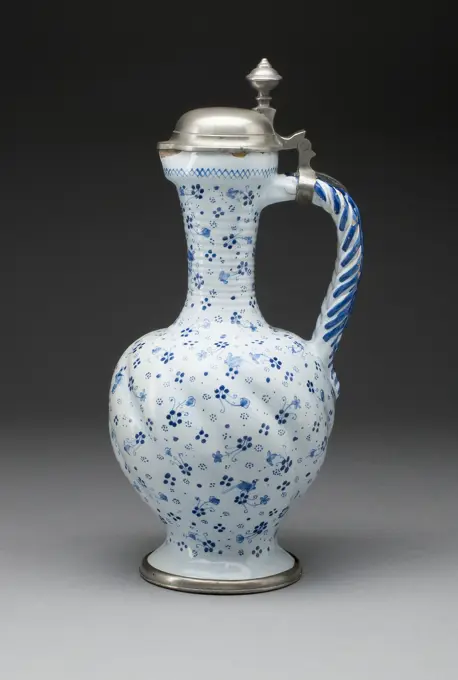
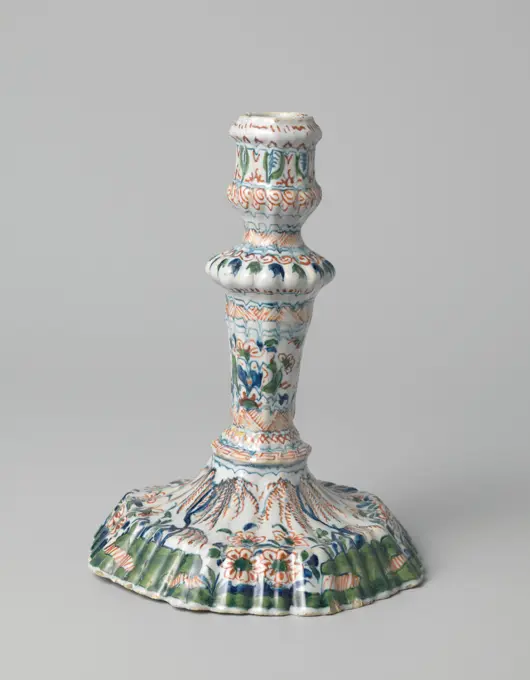
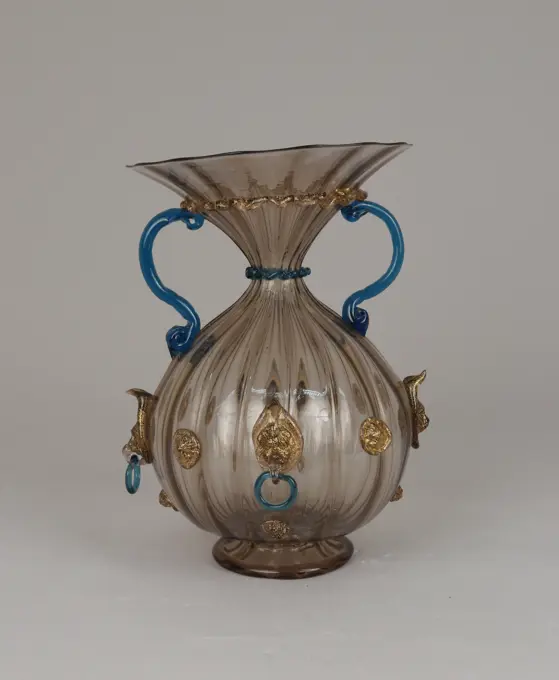
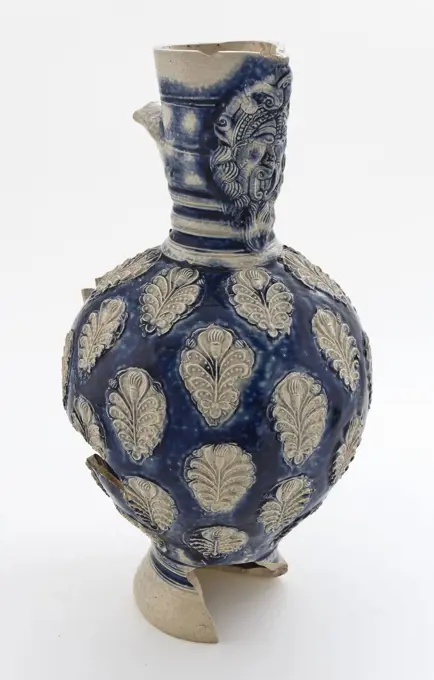
Stoneware jug be covered with mask under shawl, belly completely covered with flower appliqués on blue ground, jug crockery holder soil find ceramic stoneware glaze salt glaze, hand turned stamped glazed glazed baked stoneware jug light gray shard with salt glaze bandoor with curled tail profiled neck and foot pouring clip Bartmann jug mask or lion mask on the neck the belly four rows of oval appliques with floral pattern cobalt blue fond archeology import pottery serve serve serve wine beerVase or jar ca. 1490-1500 Italian, probably Pesaro This playful vessel takes an unusual form. The green fronds are impractical as handles, and the continuous decorationunnecessary if the pot were intended for storing goods on a shelfsuggests that it was meant to be seen in the round. The original function of this piece therefore remains open to debate, but it was perhaps better suited to displaying cut flowers. Renaissance paintings show maiolica vessels used in this way.. Vase or jar 199732Vase with handles 1884 Crown Derby The history of the Derby porcelain manufactory can generally be divided into two periods. The old Derby porcelain was produced from 1750 to 1848, and was foremost distinguished by the ownership of William Duesbury I and II. When the original factory closed in 1848, a number of former workers established a separate smaller factory at King Street, Derby, using Crown Derbys original molds and patterns and oftentimes incorporating the factory marks on its wares. Around 1876, a separate company established a factory at Osmaston Road under the name Derby Crown Porcelain Company (and eventually bought the King Street factory in 1935), although the firm did not being producing commercial pieces until two years later. In 1890, the factory was granted the privilege of using the title "Royal Crown Derby Porcelain Company." Although the new Crown Derby continued to produce the firms old eighteenth-century Japan patterns, it became known for making vessels lavisSmall vase. Gonda Hirosuke ( 1865-1937), craftsmanSleeve vase, anonymous, c. 1635 - c. 1650 Porcelain cylindrical vase (roller wagon) with a wide, spreading neck, painted in under -glaze blue. On the wall a continuous landscape with mountains, trees (willow, banana plant) and rocks. Here a dignitarary and his entourage. He meets an oxharder or boy on an ox. A scene is probably depicted from the story of the prince and the scholar/farmer Yi Yin. On the edge a band with hanging, pointed leaf motifs. Transitional porcelain in blue and white. China porcelain. glaze. cobalt (mineral) painting / vitrification Porcelain cylindrical vase (roller wagon) with a wide, spreading neck, painted in under -glaze blue. On the wall a continuous landscape with mountains, trees (willow, banana plant) and rocks. Here a dignitarary and his entourage. He meets an oxharder or boy on an ox. A scene is probably depicted from the story of the prince and the scholar/farmer Yi Yin. On the edge a band with hanging, pointed leaf motifs. Transitional porcelain in blElongated Bottle-Vase (Meiping) with a Scholar-Gentleman and Attendant 1400-1499 China. Porcelain painted in underglaze blue .Apothecary Jar. Culture: Mexican. Dimensions: H. 9 3/4 in. (24.8 cm). Date: 1660-80. Museum: Metropolitan Museum of Art, New York, USA.Vase with a domed lid decorated with cherry blossom, chrysanthemums, quails and insects amidst grass, Imari ware product. unknown, ceramistSake bottle with flower medallions 18th century Japan. Sake bottle with flower medallions. Japan. 18th century. Stoneware (Ko-Kiyomizu ware). Edo period (1615-1868). CeramicsJug, 19th century, Ceramics (polychrome earthenware, decorated with the coat of arms of the mercenary order, flanked by olive branches and crowned by a carrier pigeon with the inscription "D. Pedro Pasqual Llobet"), from Manises or Valencia (Valencia), Height: 18 cm. Museum: Museo Fundación Francisco Godia, Barcelona, Cataluña, España.Bottle, 1736-1795, 10 3/8 in. (26.35 cm), Porcelain with pale celadon glaze, China, 18th centuryVase with figural scene 16th century China. Vase with figural scene 50830Waza typu rożek, zdobiona feniksami, peoniami, zającami. unknown, ceramistSmall Jar: Sawankhalok Ware, 14th-15th Century. Thailand, 14th-15th century. Porcelain with celadon glaze; diameter: 9 cm (3 9/16 in.); overall: 7.5 cm (2 15/16 in.).Vase, Glass, USA, 1913, glasswares, Decorative Arts, VaseKutani, quadrilobate bottle with decorationsCarl Buergerniss, Three Quart Beer Pitcher, c 1940 Three Quart Beer PitcherJar, Salt-glazed stoneware, 11 in. (27.9 cm), Hard, nonporous, salt-glazed stoneware made an ideal vessel for food preparation and storage in the eighteenth century. The sinuous curves of this jar are patterned after forms used in ancient Greece and Rome. The potter decorated this piece with impressed rings at the shoulder and foot as well as with a serpentine vine-and-leaf design that was first incised into the surface of the jar and then filled in with colorful glaze. Unusually, this jar features both cobalt blue and blue-green glazes, while most jars of this type were decorated in only one color, usually cobalt. The colorful design makes an excellent contrast to the subtle orange peel texture that is characteristic of salt-glazedstoneware. , Made in New York, New York, American, 18thcentury, Containers -CeramicsGlass perfume bottle 1st century A.D. Roman Small perfume bottleTranslucent cobalt blue.Plain, rounded rim; flaring mouth; slightly convex, cylindrical neck, with tooling marks around base; piriform body; flat bottom with traces of a circular pontil mark.Intact; some pinprick bubbles; dulling and faint iridescence on exterior; patches of soli encrustation and iridescent weathering on interior.. Glass perfume bottle 239763Ovoid covered jar with flowering plants in panels, anonymous, c. 1700 - c. 1724 Porcelain lid with a button, painted on the glaze in blue, red, green, yellow, eggplant and black with two lobed cartouches on each other with rocks, flowering plants and butterflies separated by a band with sprinkling flowers against a green flat with black dots. On the lid a stylized chrysanthemum and a decorative bond with shadowing. Famle Verte. China porcelain. glaze. painting / vitrification Porcelain lid with a button, painted on the glaze in blue, red, green, yellow, eggplant and black with two lobed cartouches on each other with rocks, flowering plants and butterflies separated by a band with sprinkling flowers against a green flat with black dots. On the lid a stylized chrysanthemum and a decorative bond with shadowing. Famle Verte. China porcelain. glaze. painting / vitrificationOvoid covered jar with three figures and a deer in a landscape, anonymous, c. 1680 - c. 1720 Egg -shaped lid pot of porcelain, painted in underlaze blue. On the wall three men in a landscape with trees and rocks: two dancing with between them in a deer; one with a vase in his hands. On the lid two playing boys (fools) at a fence. Lid is glued; The pot is weighted. Blue White. China porcelain. glaze. cobalt (mineral) painting Egg -shaped lid pot of porcelain, painted in underlaze blue. On the wall three men in a landscape with trees and rocks: two dancing with between them in a deer; one with a vase in his hands. On the lid two playing boys (fools) at a fence. Lid is glued; The pot is weighted. Blue White. China porcelain. glaze. cobalt (mineral) paintingVase. Culture: China. Dimensions: H. 11 in. (27.9 cm); Diam. 6 in. (15.2 cm). Museum: Metropolitan Museum of Art, New York, USA.ORZA GLOBULAR DE BOTICA DECORADA DE TALAVERA S XVII. Location: INSTITUTO VALENCIA DE DON JUAN-COLECCION. MADRID. SPAIN.Weapon jar. Gray with blue can of stoneware. To the neck 6 heads of warmen in niches, these are upside down. There are 8 weapons in Nichen on the straight-walled center piece of the belly, with caption and the year 1596.Vase of multi-colored padded faience. Ribbed, octagonal multicolored painted vase. Part of a cabinet consisting of five parts.Oinochoe (Pitcher). Eastern Mediterranean or Italian. Date: 450 BC-325 BC. Dimensions: 13.7 × 4.5 × 6.6 cm (5 3/8 × 1 3/4 × 2 5/8 in.). Glass, core-formed technique. Origin: Eastern Mediterranean Region. Museum: The Chicago Art Institute, Chicago, USA. Author: Ancient Eastern Mediterranean.Covered Jar, 18th century, 41 in. (104.14 cm), Porcelain with enamel decoration, China, 18th century, Large covered jars, usually made in pairs, were used to decorate open courtyards, terraces or flanked the doorways of Chinese houses during the eighteenth century.Vase;  18th century (Czerep) (1701-00-00-1800-00-00);Big polychrome balusterpot with music-making ladies, Anonymous, c. 1645 - c. 1660Flask - snuff bottle. unknown, craftsmanVase 1830-70 American. Vase 9253Sake bottle with a bird on a rock with flowering plants, anonymous, c. 1660 - c. 1680 Bottle (sake blade) of porcelain with a cylindrical body, pedaling shoulder and a narrow, slightly spreading neck, covered with a celadon-colored glaze and painted on the glaze in blue, red, green, yellow and black. On the belly a bird on a rock with a flowering plant (peony). In the air a second bird, flames and clouds. On the shoulder a band with flower vines and a band with hanging Ruyi motifs. On the neck a band with small, standing leaf motifs. Arita, Kakiemon style. Japan porcelain. glaze. painting / vitrification Bottle (sake blade) of porcelain with a cylindrical body, pedaling shoulder and a narrow, slightly spreading neck, covered with a celadon-colored glaze and painted on the glaze in blue, red, green, yellow and black. On the belly a bird on a rock with a flowering plant (peony). In the air a second bird, flames and clouds. On the shoulder a band with flower vines and a band with hanging . FaKan van Faience, painted in blue with a water landscape, leaf drinks and flower branches.Vase 1550 BCE-1186 BCE Egypt. Glass, core-formed technique . Ancient EgyptianTerracotta squat lekythos (oil flask). Culture: Greek, Attic. Dimensions: H. 2 3/16 in. (5.5 cm). Date: 2nd half of 5th century B.C..Head of a youth wearing a petasos (traveler's hat). Museum: Metropolitan Museum of Art, New York, USA.Vase 1770-95 Chinese. Vase 2556Vase 1884 Crown Derby The history of the Derby porcelain manufactory can generally be divided into two periods. The old Derby porcelain was produced from 1750 to 1848, and was foremost distinguished by the ownership of William Duesbury I and II. When the original factory closed in 1848, a number of former workers established a separate smaller factory at King Street, Derby, using Crown Derbys original molds and patterns and oftentimes incorporating the factory marks on its wares. Around 1876, a separate company established a factory at Osmaston Road under the name Derby Crown Porcelain Company (and eventually bought the King Street factory in 1935), although the firm did not being producing commercial pieces until two years later. In 1890, the factory was granted the privilege of using the title "Royal Crown Derby Porcelain Company." Although the new Crown Derby continued to produce the firms old eighteenth-century Japan patterns, it became known for making vessels lavishly decorated. Converted egg-shaped, octagonal pot of multicolored faience, with a lid. The pot is painted in kakiemon style. Between flower tires are elongated limits in which a flowering tree has been painted on a ground. There is a bird in the tree. The pot has been marked.Cup. China, 15th century. Furnishings; Serviceware. Stoneware with underglaze blue painted decorationJar with carp in lotus pond mid-16th century China. Jar with carp in lotus pond. China. mid-16th century. Porcelain painted with cobalt blue under and colored enamels over transparent glaze (Jingdezhen ware). Ming dynasty (1368-1644), Jiajing mark and period (1522-66). CeramicsSnuff Bottle with Stopper, 1723-35. China, Jiangxi province, Jingdezhen kilns, Qing dynasty (1644-1911), Yongzheng reign (1722-35). Porcelain; overall: 7.7 cm (3 1/16 in.).Bottle Jar with Grapevines. Korea, 20th century. Furnishings; Serviceware. Wheel-thrown porcelain with cobalt painted decoration under clear glazeSmall jar with a continuous flower spray, anonymous, c. 1475 - c. 1499 Small pot of porcelain with a spherical body and narrow, short neck, painted in underly glaze blue. On the belly a wide band with continuous flower vines; Around the foot a band with stylized lotus leaves; On the shoulder lambrequins with lotus flowers, half a flower in between. Pot has been broken. Ming porcelain in blue and white. China porcelain. glaze. cobalt (mineral) painting / vitrification Small pot of porcelain with a spherical body and narrow, short neck, painted in underly glaze blue. On the belly a wide band with continuous flower vines; Around the foot a band with stylized lotus leaves; On the shoulder lambrequins with lotus flowers, half a flower in between. Pot has been broken. Ming porcelain in blue and white. China porcelain. glaze. cobalt (mineral) painting / vitrificationPear-shaped bottle vase with auspicious symbols, tassels and ornamental borders, anonymous, c. 1680 - c. 1720 Bottle -shaped vase made of porcelain with pear -shaped body and long neck, painted in underlaze blue. On the belly a vase on a low table twice. On the shoulder a tire with hanging Ruyi motifs with tendrils from which bows hang on the belly with brushes and rolls. The neck with decorative tires and medallions with geometric motifs. On the edge a band with flower vines. A crack in the neck. Blue White. China porcelain. glaze. cobalt (mineral) painting / vitrification Bottle -shaped vase made of porcelain with pear -shaped body and long neck, painted in underlaze blue. On the belly a vase on a low table twice. On the shoulder a tire with hanging Ruyi motifs with tendrils from which bows hang on the belly with brushes and rolls. The neck with decorative tires and medallions with geometric motifs. On the edge a band with flower vines. A crack in the neck. Blue White. China porcelaiFlask-shaped bottle with peony decoration. Culture: Korea. Dimensions: H. 8 1/4 in. (21 cm); Diam. 7 in. (17.8 cm). Date: late 15th century.The technique used to create the peony design here--incising outlines and carving away the white slip to create the background--is characteristic of buncheong ware produced in Jeolla Province. Museum: Metropolitan Museum of Art, New York, USA.Flower Vase (one of a pair) Made 1700-1725 Delft. Tin-glazed earthenware (Delftware) . Grieksche A Factory (Maker)Small dupula -shaped vase, c. 700 - c. 1399 Thick -walled drop -shaped vase without a foot or foot ring and with a flat lip. Two flat ears are turned on to the body on 2/3. Blue and white glass lanes have been applied around the entire body, the lower part straight and the upper wavy. Glassblower: Iranyriëegypt glass Thick -walled drop -shaped vase without a foot or foot ring and with a flat lip. Two flat ears are turned on to the body on 2/3. Blue and white glass lanes have been applied around the entire body, the lower part straight and the upper wavy. Glassblower: Iranyriëegypt glassJug with a mask and medallions, anonymous, c. 1650 - c. 1724 Can be made of stoneware on high foot with a narrow neck, egg -shaped body and a pinched spout in the edge. The C-shaped ear is attached to the neck and shoulder. Profiles on the neck and foot. Partly covered with cobalt blue on the glaze. On the foot and the neck some entry lines. The KAN is decorated with a relief decoration in which the abdomen is largely covered with printed, imposed medallions with a flower rosette against a blue background. A modeled mask has been applied to the neck under the spout, flanked by a rosette. Westerwald. Westerwald stoneware. glaze. cobalt (mineral) vitrification Can be made of stoneware on high foot with a narrow neck, egg -shaped body and a pinched spout in the edge. The C-shaped ear is attached to the neck and shoulder. Profiles on the neck and foot. Partly covered with cobalt blue on the glaze. On the foot and the neck some entry lines. The KAN is decorated with a relief decoration in wHexagonal tea caddy with floral scrolls and petal borders.Hexagonal teabus from porcelain on six short feet, painted in underglaze blue. On each side a lobd cartouche with flower reflections saved in a blue background. On the top and bottom three decorative tires: one blue, one with tendrils saved in blue and one with standing or dependent, pointed leaf motifs. The lid with flower drinks saved in blue. Blue White.Vase;  19th century (1801-00-00-1900-00-00);Bottle;  VIII-X century (701-00-00-1000-00-00);Semerau-Siemianowski, Władysław (1849-1938), Semerau-Siemianowski, Władysław (1849-1938)-collection, gift (provenance), Islamic artCovered, Ovoid Jar With Flower Sprays, Birds and Butterflies. Wooden lid of egg-shaped lid pot. Opened with a flower branch motif and six flowers and has a medallion of openwork jade. Famille Verte.Jug of stoneware with hexagonal belly. Jug of stoneware. With hexagonal belly, and blue decoration. The ground is partially striped.Square tea caddy with flowering plants, birds, butterflies and diaper patterns, anonymous, c. 1740 - c. 1760 Square porcelain tea lein with squeezed corners and on four feet, painted in underly glaze blue and on the glaze blue, red, green, yellow, black and gold. In China on the wall in underly glaze blue decorated with flower branches and two tires with servetwork interrupted by a flower branch in a cartouche; The shoulder with four flower branches. In Europe, decorated in email with a butterfly above a flowering plant on two sides and on two sides the 'three friends of the winter' (pine, prunus, bamboo) and birds tied behind hedges. The shoulder with a decorative band and 'crackled ice'. The lid with servetwork and a flower branch in underly glaze blue; Loose flowers, pine and prunus branch in enamel. Marked with five imitation Chinese characters on the bottom. Old label on the bottom with 'Collection Westendorp/ 42'. A few chips in the shoulder of the tea bus; A chip in the foot. ThCan with lid of silver in which a weapon with a helmet sign, anonymous, c. 1575 - c. 1625 Can of lead glaze pottery, with a silver blow lid. The jug has a spherical body and a long slender neck. A silver profiled frame is mounted around the foot. The ear is C-shaped. A weapon with a helmet sign is engraved in the lid. The jug is covered with blue, brown, green and purple sludge layers that are shaken. Matching Foedral (BK-1957-1-2). ItalyNetherlands earthenware. lead glaze. silver (metal) Can of lead glaze pottery, with a silver blow lid. The jug has a spherical body and a long slender neck. A silver profiled frame is mounted around the foot. The ear is C-shaped. A weapon with a helmet sign is engraved in the lid. The jug is covered with blue, brown, green and purple sludge layers that are shaken. Matching Foedral (BK-1957-1-2). ItalyNetherlands earthenware. lead glaze. silver (metal)Urn withDragonPitcher 1848-80 John Bell Pottery. Pitcher 4576Jug. Talavera de la Reina, factoryGlass bottle in the shape of a bunch of grapes. Culture: Roman, Syrian. Dimensions: H.: 5 1/8 in. (13 cm). Date: ca. 3rd century A.D..Translucent green.Tubular rim folded out, down, over, and up, with beveled, uneven outer lip; cylindrical neck with slight horizontal tooled indent around base; pushed-in shoulder, with hollow projecting roll below; ovoid body; low cylindrical base, with concave bottom. Pontil scar at center of bottom. Body blown into a three-part mold of two vertical sections, extending from base to top of body, and a disk-shaped base section.On body, a pattern of stylized grapes comprising eleven interlocking rows of twenty-two unevenly-spaced hemispherical knobs, and at top two indistinct leaves opposite each other, centered between the mold seams; on bottom, three narrow raised concentric circles.Complete, but large hole in one side of body; elongated bubbles in neck and black impurities in rim; patches brownish soil-encrusted weathering, and some faint iridescenJar. Dimensions: H. 13 1/4 in. (33.7 cm)Max. Diam. 9 1/4 in. (23.5 cm). Date: 14th century.Underglaze painting in blue and black on a white stonepaste body is characteristic of Mamluk production in Syria. The main decoration on this jar is the large inscription in thuluth: "Lasting glory, increasing prosperity, and good fortune.". Museum: Metropolitan Museum of Art, New York, USA.Two vases. Meissener Porzellan Manufakturpainted decoration: attributed to Johann Ehrenfried Stadler (1701-1741)Meissen, c. 1725hard-paste porcelainBottle, anonymous, 1683 Soul inserted. Spherical body, transfer in a slender neck, why a drip ring has been applied to the top. On the body, italian letters are calligraphy "Gaep terwyl one offers you porridge." Under the soil 'that hurts his tide. On the porridge continued and do not go; Good Aen commanded service Versmaed; There is to wish if it is too much. Around the pontil brand 'Willem van Heemskerk AE 70 AO 1683. Leiden'. glassblower: Low CountriesLeiden glass glassblowing Soul inserted. Spherical body, transfer in a slender neck, why a drip ring has been applied to the top. On the body, italian letters are calligraphy "Gaep terwyl one offers you porridge." Under the soil 'that hurts his tide. On the porridge continued and do not go; Good Aen commanded service Versmaed; There is to wish if it is too much. Around the pontil brand 'Willem van Heemskerk AE 70 AO 1683. Leiden'. glassblower: Low CountriesLeiden glass glassblowingTwo-handled flask, one of a pair, 1872, Philippe-Joseph Brocard, French, active 1867-1896, 15 9/16 x 8 1/2 x 5 7/8in. (39.5 x 21.6 x 14.9cm), Glass with enamel decoration, France, 19th century, During the early 1860s, aesthete, scholar and collector, Alfred Morrison (1821-1897) hired Owen Jones to furnish his estate in Wiltshire, Fonthill House and his house in Carlton Terrace in London in the Islamic style. Twenty years before, Jones published a pioneering work documenting Islamic style: Plans, Elevations, Sections and Details of the Alhambra. In his own designs, Owen drew upon Islamic elements and forms.Vase. unknown, craftsmanGlass alabastron (perfume bottle) late 4th-early 3rd century B.C. Greek, Eastern Mediterranean Translucent pale greenish yellow, with handles in same color; trails in opaque yellow, opaque turquoise blue, and opaque white.Horizontal rim-disk, made as a spiral coil around top of neck; cylindrical, slanting neck; small sloping shoulder; straight-sided cylindrical body, with upward taper; convex bottom; on body, two small ring handles, applied over trail pattern.A fine yellow trail attached at edge of rim-disk; on body, alternating bands of yellow, turquoise blue, and white, tooled from top of body to bottom into a close-set feather pattern in six vertical panels with alternating upward and downward strokes, forming long loops on bottom.Broken, most of rim-disk missing, internal cracks around neck, and other cracks and small holes around lower body; dulling, pitting, and faint iridescence.. Glass alabastron (perfume bottle) 249980Chinese, Snuff Bottle, porcelain.Vase, Meissener porcelain manufactory, c. 1725 - c. 1730 Vase of multi -colored painted light blue porcelain. The vase has a profiled, outstanding foot. The vase is decorated in relief with vines of white porcelain. The upper part of the foot is decorated with a rank ornament in gold between gold piping. Above the foot, a chinoiserie is painted on two sides on two sides on two sides. The vase is marked. Float porcelain Vase of multi -colored painted light blue porcelain. The vase has a profiled, outstanding foot. The vase is decorated in relief with vines of white porcelain. The upper part of the foot is decorated with a rank ornament in gold between gold piping. Above the foot, a chinoiserie is painted on two sides on two sides on two sides. The vase is marked. Float porcelainVase Karol Wolff's workshopVase probably 19th century Dutch, Delft. Vase 187733Vase ca. 1891 Minton(s) Minton was the most important ceramics factory during the Victorian period and began exhibiting products at the first Great Exhibition of 1851. Founded in 1793 by Thomas Minton at Stoke-on-Trent, the firm initially specialized in transferware pottery before expanding under the ownership of Thomass son Herbert Minton, beginning in 1836. Under the ownership of Colin Minton Campbell, who succeeded his uncle in 1858, the factory became recognized as a specialist producer of Aesthetics movement porcelain, which were inspired by a rich array of exotic and eclectic decorative motifs. Listen to experts illuminate this artwork's story Listen Play or pause #418. Christopher Dresser and the Birth of Industrial Design Supported by Bloomberg Philanthropies We're sorry, the transcript for this audio track is not available at this time. We are working to make it available as soon as possible.. Vase. British, Stoke-on-Trent, Staffordshire. ca. 1891. Bone china with enamel decoBottle American 1815-45 View more. Bottle. American. 1815-45. Pattern molded amber. Possibly made in Pennsylvania, United States; Possibly made in Ohio, United StatesMoon flask with mosquito motif 1870s Minton(s) Minton was the most important ceramics factory during the Victorian period and began exhibiting products at the first Great Exhibition of 1851. Founded in 1793 by Thomas Minton at Stoke-on-Trent, the firm initially specialized in transferware pottery before expanding under the ownership of Thomass son Herbert Minton, beginning in 1836. Under the ownership of Colin Minton Campbell, who succeeded his uncle in 1858, the factory became recognized as a specialist producer of Aesthetics movement porcelain, which were inspired by a rich array of exotic and eclectic decorative motifs.. Moon flask with mosquito motif. British, Stoke-on-Trent, Staffordshire. 1870s. Porcelain, decorated with pte-sur-pte technique. Ceramics-PorcelainWine Ewer andCover, Porcelain, 7 1/2 × 6 3/4 × 5 3/8in. (19.05 × 17.145 × 13.653cm), Made in China, Chinese, 17thcentury, Containers -CeramicsFlaskTubular Fitting 399 BCE-200 BCE China. Sumptuously inlaid bronze tubes were designed as fittings for weapons, scepters, and chariots. This bottle-shaped fitting may have formed part of the axel cap for the wheel of a ceremonial chariot. In its remarkable fluency, the inlaid design of volutes and spirals was largely inspired by contemporary lacquer painting.. Bronze inlaid with gold and silver .Jar. Culture: Mexican. Dimensions: H. 6 1/4 in. (15.9 cm). Date: ca. 1750. Museum: Metropolitan Museum of Art, New York, USA.Unknown (n. - d.), Vase roller decor black family (attributed title), 1662. Porcelain, cookie, polychrome enamels. Petit Palais, Museum of Fine Arts of the City of Paris.Pot with lid of multicolored faience painted. Ribbed, octagonal multicolored painted pot. With this jar comes a lid with a button in the shape of a dog. Part of a cabinet consisting of five parts.Hydriske 350 BCE-250 BCE Eastern Mediterranean Region. Glass, core-formed technique . Ancient Eastern MediterraneanAlabastron orientalizujący z przedstawieniami komastów. Malarz Altenburg (ok. 600 p.n.e.), author, warsztat Wellcome, workshopPot with lid, part of a cupboard set, anonymous, c. 1770 - c. 1810 Pot with fowence lid, painted in blue with a Dutch water landscape. Delft earthenware Pot with fowence lid, painted in blue with a Dutch water landscape. Delft earthenwareJar China. Jar 52732Ovoid covered vase with women, flower sprays and vases, anonymous, c. 1700 Porcelain lid of egg -shaped lid jar, painted in underlaze blue. On the lid valuables (window, pearl, artimisia leaf) between which three Chinese characters 'zhou', prosperity meaning and a blue button. Blue White. China porcelain. glaze. cobalt (mineral) painting / vitrification Porcelain lid of egg -shaped lid jar, painted in underlaze blue. On the lid valuables (window, pearl, artimisia leaf) between which three Chinese characters 'zhou', prosperity meaning and a blue button. Blue White. China porcelain. glaze. cobalt (mineral) painting / vitrificationVessel  bottleBottle 17th century This pear-shaped bottle with a silver top is in many ways typical of the pieces created during the late seventeenth-century revival of the lusterware technique. These were often small objects decorated with floral and vegetal motifs on a deep blue ground. Unlike the Chinese wares also popular at this time, the shape and design of these lusterwares were based on Near Eastern prototypes, and not those from the Far East. Most common were bottles, ewers, jars, huqqa bases, bowls, and goblets. To create the luster effect, the white frit body of the ceramic was coated with a slip, possibly of pure ground quartz, here stained deep blue, other times a turquoise or lemon yellow. The vessel was then covered with a transparent glaze and painted with a coppery colored luster pigment that contrasted nicely with the matte glaze.. Bottle. 17th century. Stonepaste; luster-painted on opaque blue glaze; silver. Made in Iran. CeramicsJug ca. 1765 Worcester factory. Jug 198497Double-Handled Bottle 501 CE-600 CE Syria. Glass vessels like this one were part of the luxurious domestic decoration displayed in wealthy households in both urban villas and rural estates in the later Roman and early Byzantine eras (about 300ñ725). Glass vessels were used for a variety of purposes, including cosmetic containers. In the kitchen and for dining, pitchers served water and wine, and small cups were used for drinking. Glass was also used for lamps to light the homeByzantine glass craftsmen improved upon the techniques, forms, and decorative motifs they had inherited from their Roman predecessors. An imperial edict of 337 exempted glassworkers from personal taxes and attested to their relative status in society; it remained in effect for several centuries. These artisans would, in turn, pass on their craft to successive generations, including those who worked under Islamic rule after the important Byzantine provinces of Egypt, Palestine, and Syria were conquered in the sevenWine Jug 1715-1725 Germany. Tin-glazed earthenware (faience) and pewter .Pot of multi -colored Faïence, Anonymous, c. 1730 - c. 1760 Pot of Faïence. Multicolored painted with flower decorations. The pot is part of a cupboard set. Delft . Pot of Faïence. Multicolored painted with flower decorations. The pot is part of a cupboard set. Delft .. Octagonal coffee pot of porcelain on three spherical feet, taps on running body with straight walls and C-shaped ear, painted in underglaze blue. The long spout is bent out at the end and connected to the body at the top with an S-shaped element. The wall is divided into two parts. The underside with a continuous representation of a hunting corporation in a landscape. The top consists of a wide, decorative bond with curlwork, shell motifs, napkin work, flower drinks and two cartouches containing the mythological representation of Europe and the bull. The spout and the ear with decorative tires; The top of the ear with a hole for a frame. The underside of the can with a worn, painted (European) Decoration of flower drinks and medallions. The lid with the same decoration, but with a putto in the cartouches. Lid knob in the shape of a shishi (lion dog). European form and show in blue and white.Phoenix-Headed Ewer. China. Date: 701 AD-750 AD. Dimensions: 32.2 × 13.0 cm (12.7 × 5.1 in.). Earthenware with molded decoration and three-color (sancai) lead glazes. Origin: China. Museum: The Chicago Art Institute, Chicago, USA.Candlestick with multicolored painting, c. 1690 Faïence candlestick, multi -colored painted under the glaze. Eight -sided foot, scanned trunk. Unnoticed. Delft . Faïence candlestick, multi -colored painted under the glaze. Eight -sided foot, scanned trunk. Unnoticed. Delft .Lid jug; Prószków L Ski (Factory of the Fajans; 1763-1853); End of the 18th century (1790-00-00-1800-00-00);Ribbed and fluted vase with lion masks 19th century Italian, Venice (Murano) The form is based on the common and very ancient Near Eastern carinated shape. However, this example has a higher, more constricted neck and a more rounded body, to which are applied lion masks and rings, symbols of Venice.. Ribbed and fluted vase with lion masks. Italian, Venice (Murano). 19th century. Glass. GlassVase. Culture: China. Dimensions: H. 17 in. (43.2 cm); W. 7 1/2 in (19.1 cm). Date: first half of the 19th century. Museum: Metropolitan Museum of Art, New York, USA.Vase. Culture: Italian, Venice (Murano). Dimensions: Height: 13 1/4 in. (33.7 cm). Date: 19th century. Museum: Metropolitan Museum of Art, New York, USA.Vase with a multicolored painting of flower branches on brown fond. Vase of multi-colored padded faience, with a brown fond. The vase is concave cylindrical. Flower branches are painted on the vase into the colors white, green, yellow, red, blue and purple. The vase is part of a couple. The other parts are an identical vase (BK-NM-13329-B) and two identical filling (BK-NM-13329-A and BK-NM-13329-C). The parts are marked.Cache pot  vessel GoneCylindrical bottle vase with warriors, anonymous, c. 1800 - c. 1924 Cilidrian, bottle -shaped vase of porcelain with flat shoulder and short neck, painted in underlaze blue and red. On the wall a continuous image of warriors in a landscape, two on horseback, a look between two rocks, in the sky a cloudy; A band with Ruyi motif around the shoulder; The neck with a decorative edge. A double circle on the bottom. Underglaze blue and copper red. China porcelain. glaze. cobalt (mineral). copper (metal) painting / vitrification Cilidrian, bottle -shaped vase of porcelain with flat shoulder and short neck, painted in underlaze blue and red. On the wall a continuous image of warriors in a landscape, two on horseback, a look between two rocks, in the sky a cloudy; A band with Ruyi motif around the shoulder; The neck with a decorative edge. A double circle on the bottom. Underglaze blue and copper red. China porcelain. glaze. cobalt (mineral). copper (metal) painting / vitrificationDouble-gourd-shaped Bottle: Ding ware, 1368- 1644. China, Ming dynasty (1368-1644). Porcelain; diameter: 22.3 cm (8 3/4 in.); overall: 43.2 cm (17 in.).