Antique Ceramics and Vases

Beautifully crafted ceramics from different cultures, showcasing intricate designs and historical significance in their artistry.

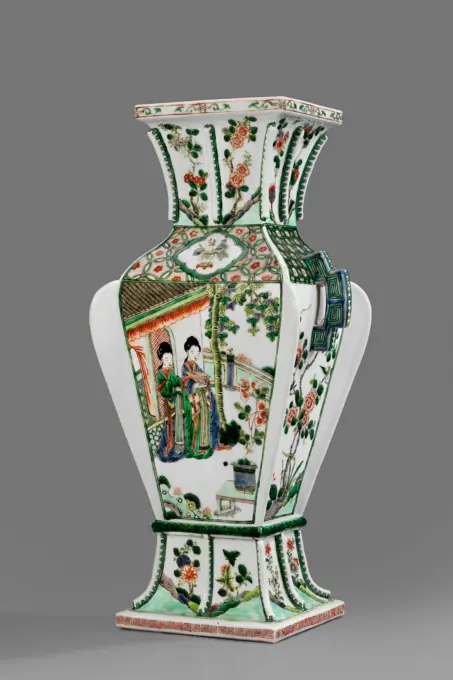
Bottle vase with landscape, bird on branch and neck decoration in underglaze blue, anonymous, c. 1800 - c. 1899 Bottle -shaped vase (lump of lessons) of porcelain, painted in underly glaze blue and on the glaze blue, red, green, yellow, eggplant, black and gold. The body is covered with butterflies and flowering plants on a black speckled soil, with two rectangular cartouches saved with a bird on a magnoliat branch in flowering plants and two people in a river landscape with rocks, trees and a pavilion; the neck with a decoration in underlaze blue of a tire with servetwork interspersed with a cartouche with a flower in reserve, above it a band with French point with flower vines in reserve with a flower branch, on the neck flower branches with a band with hanging leaf motifs with hanging tops above it Flower vines in reserve. Famle Verte. China porcelain. glaze. cobalt (mineral). gold (metal) painting / gilding / vitrification Bottle -shaped vase (lump of lessons) of porcelain, painted
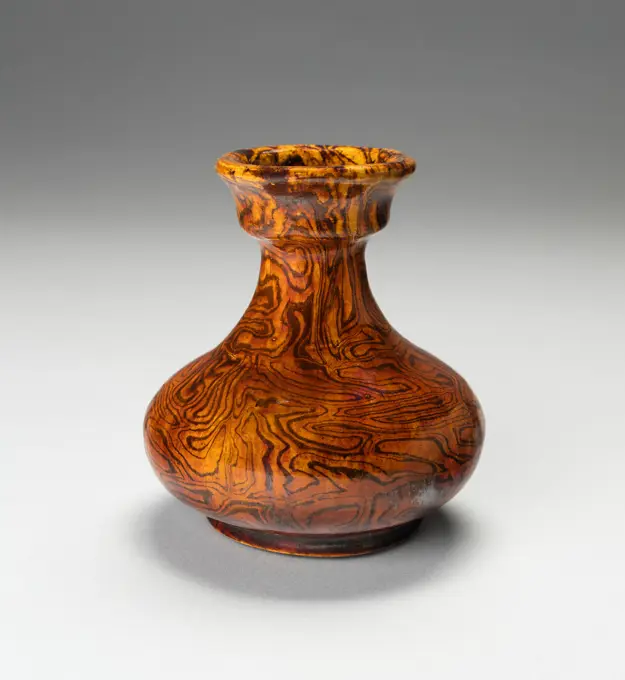
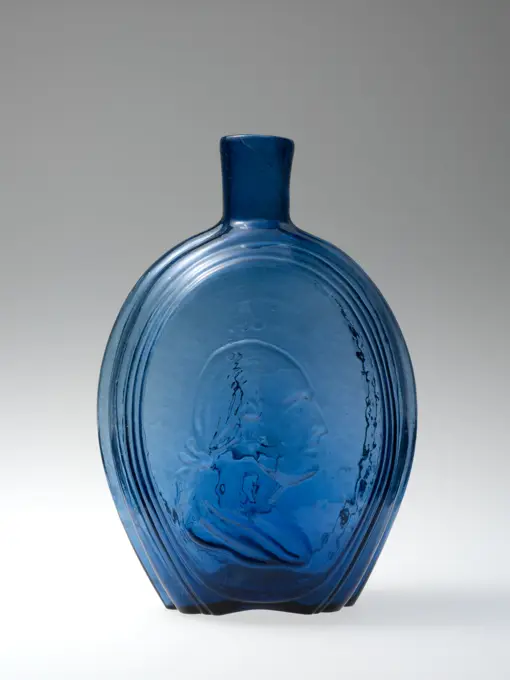
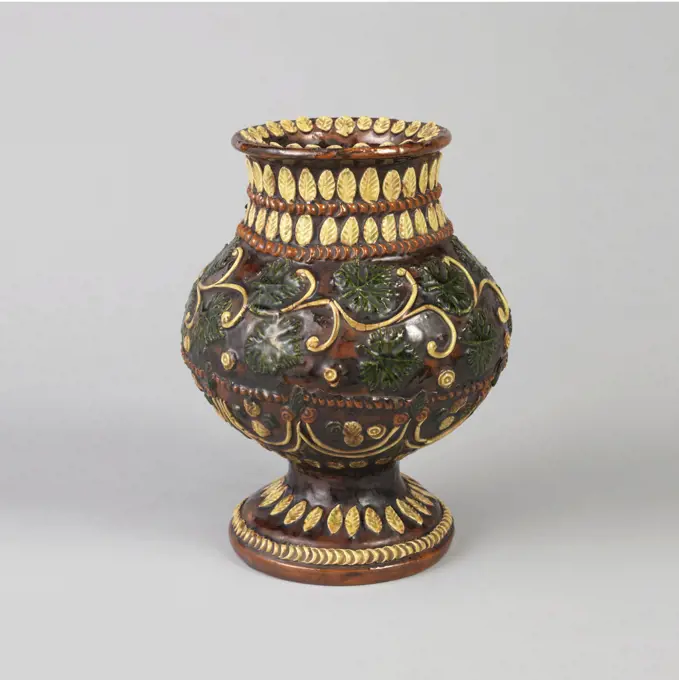
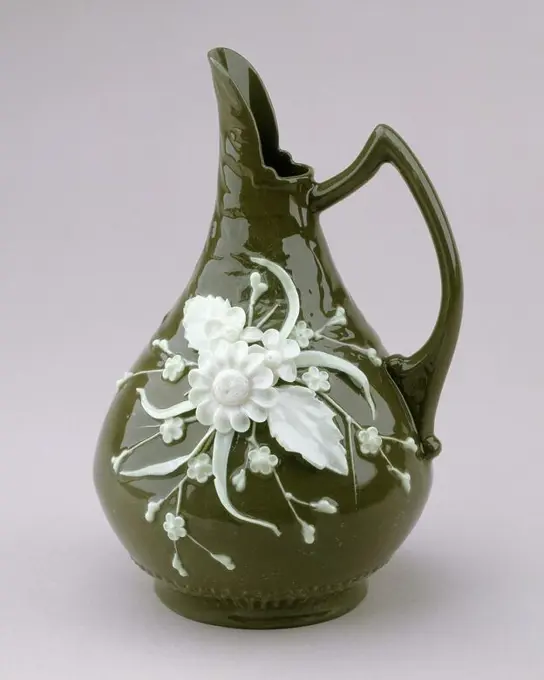
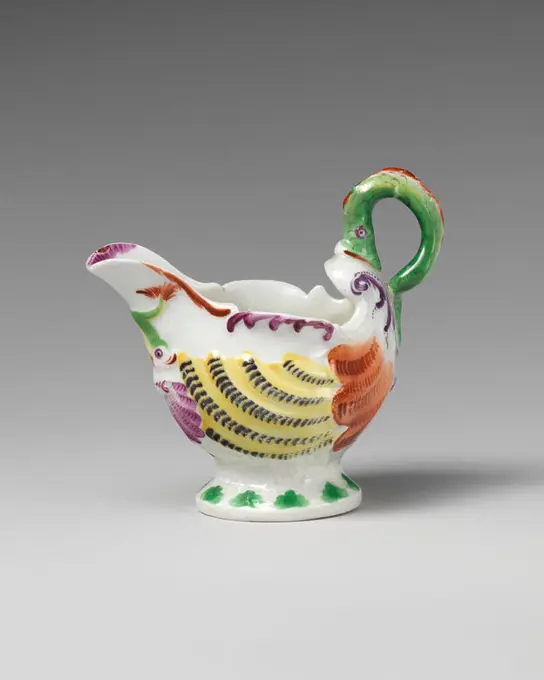
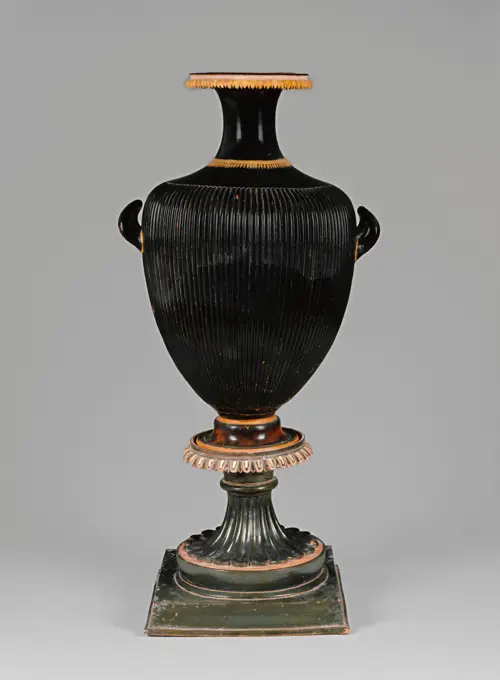
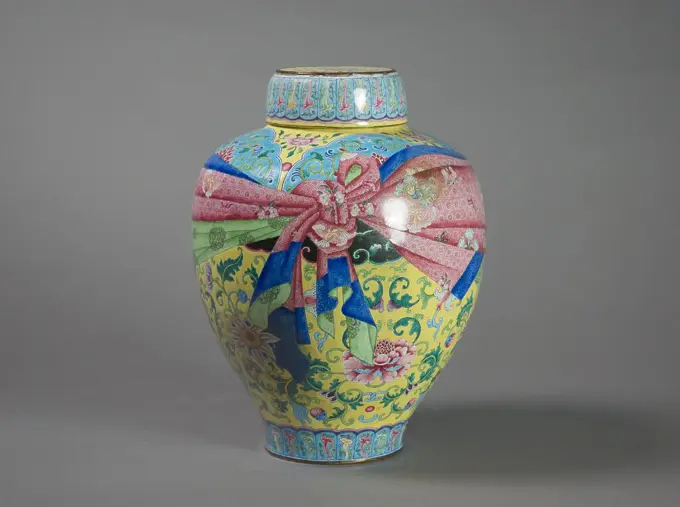
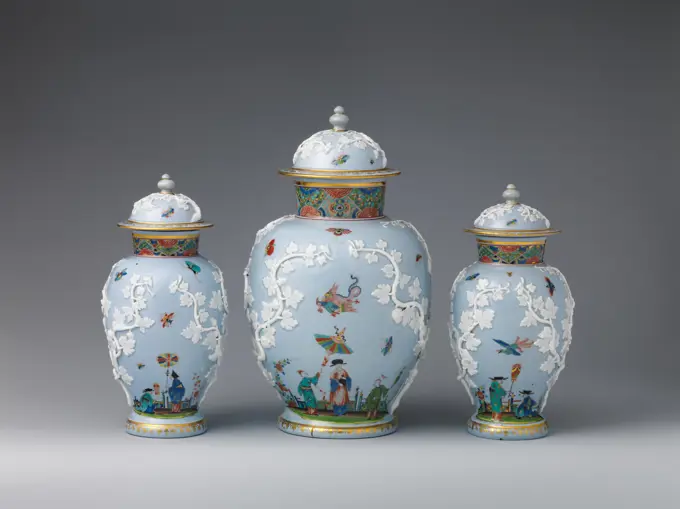
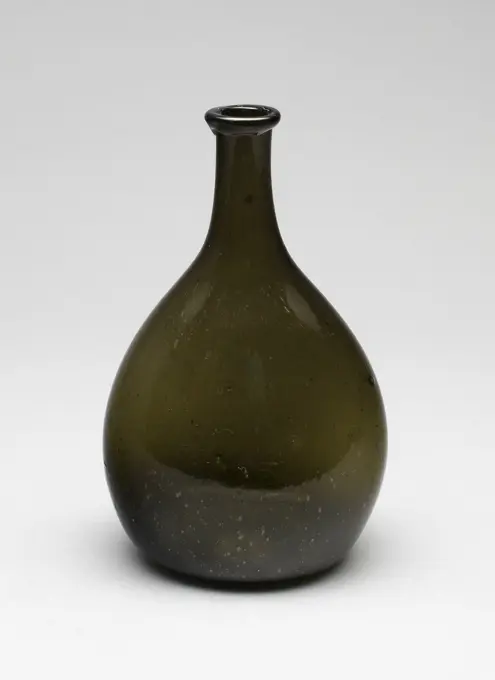
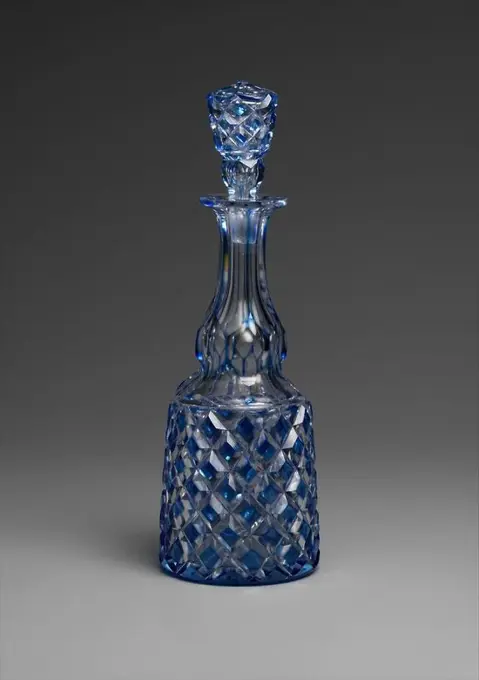
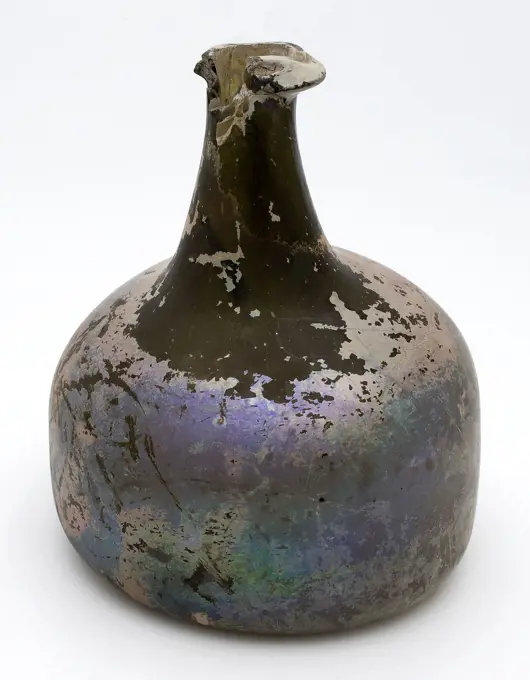
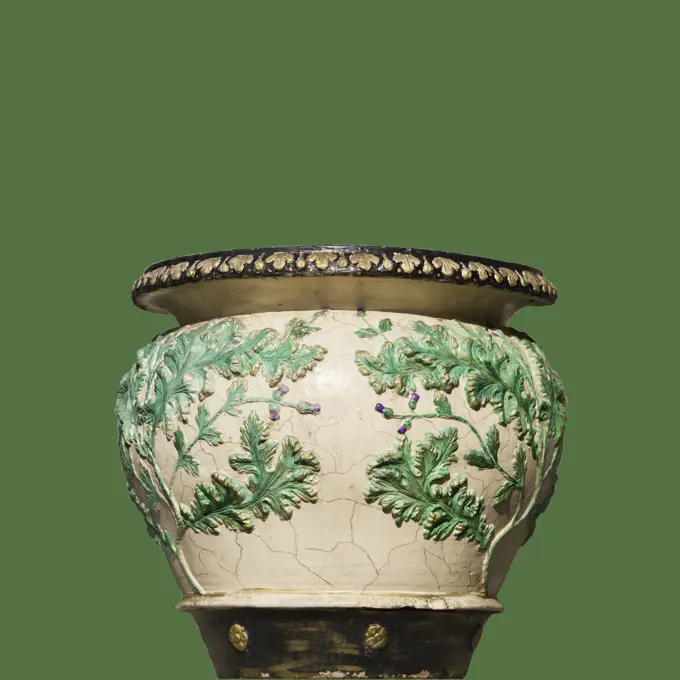
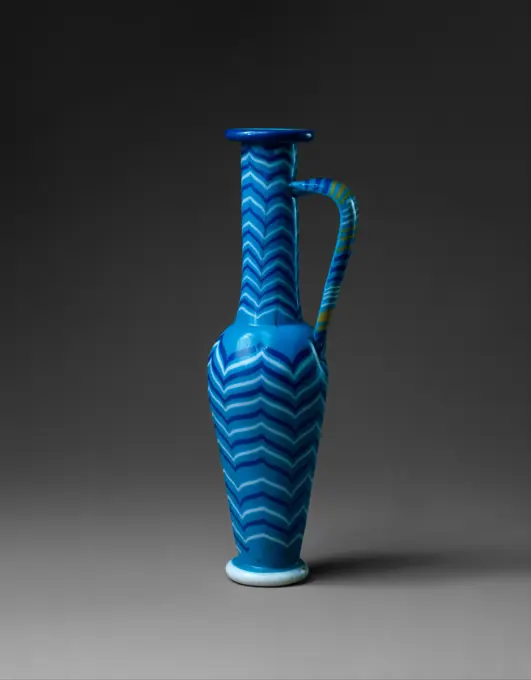
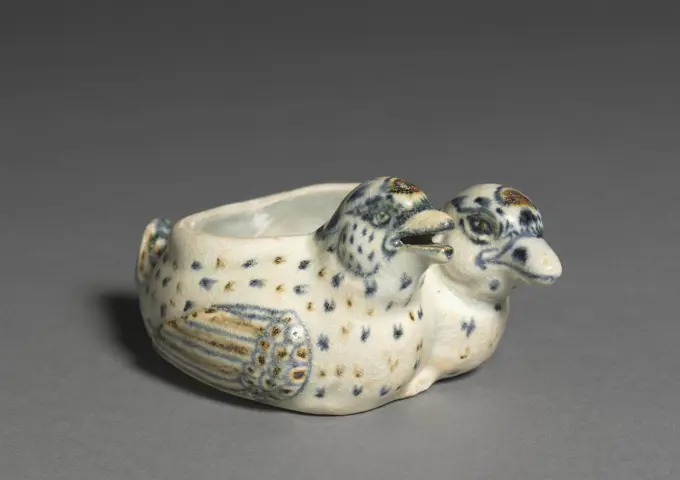
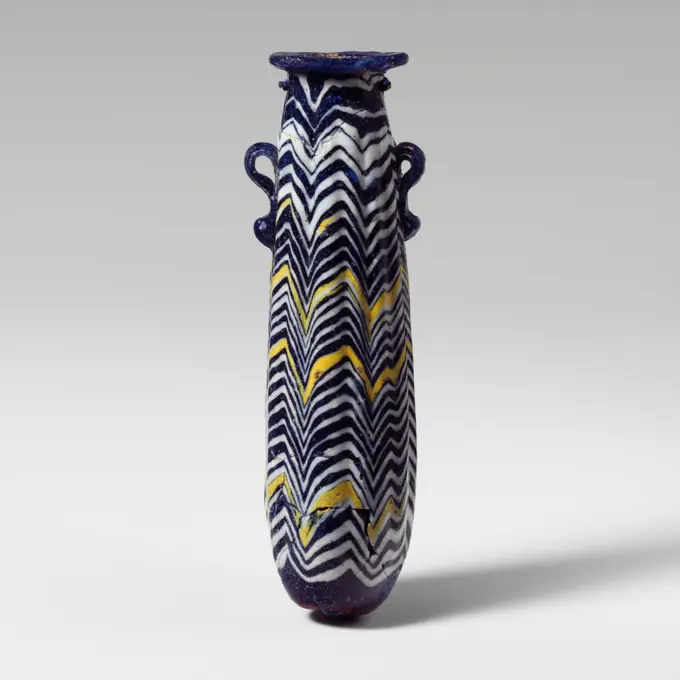
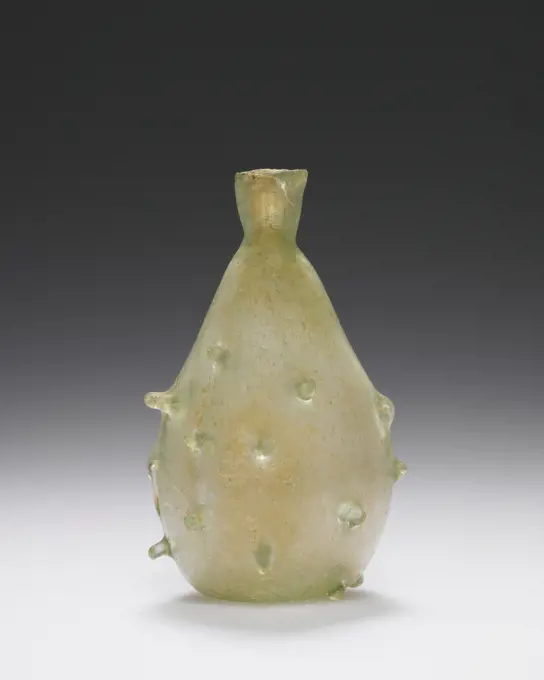
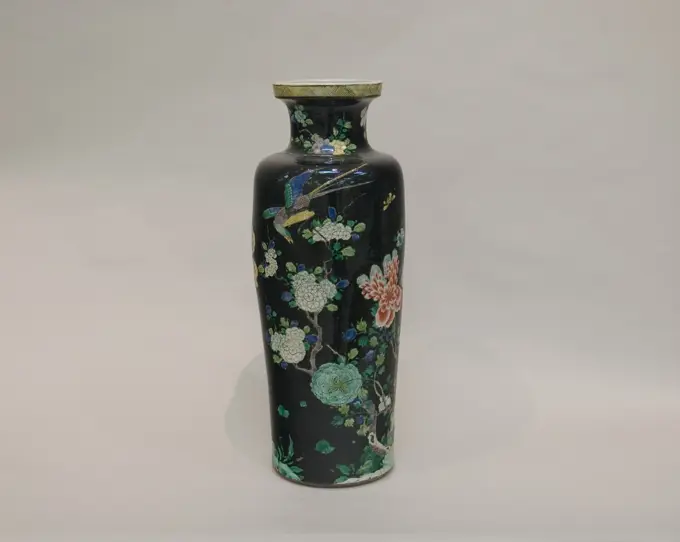
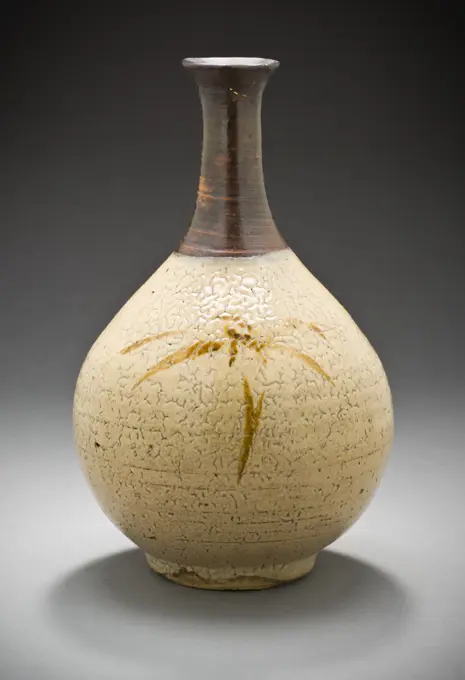
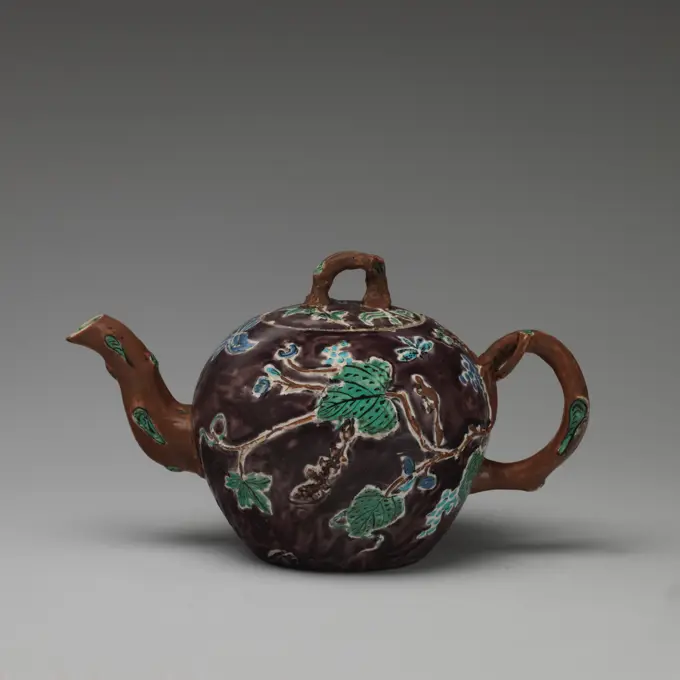
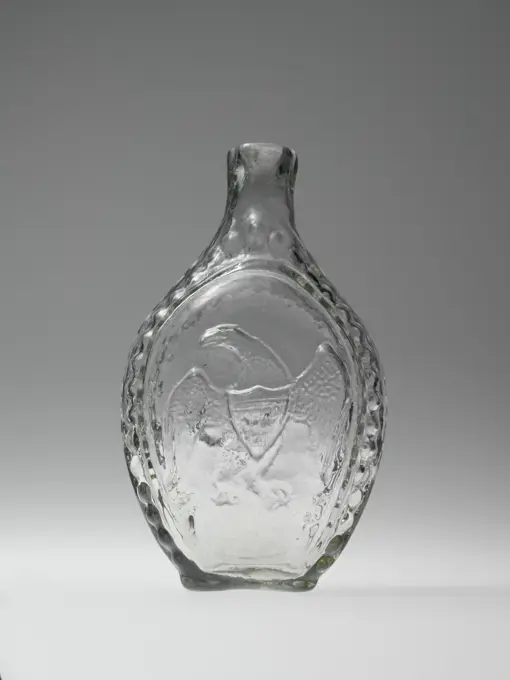
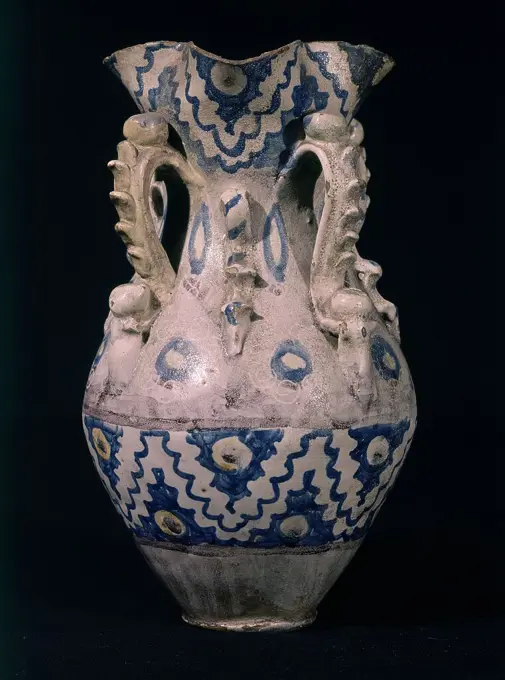
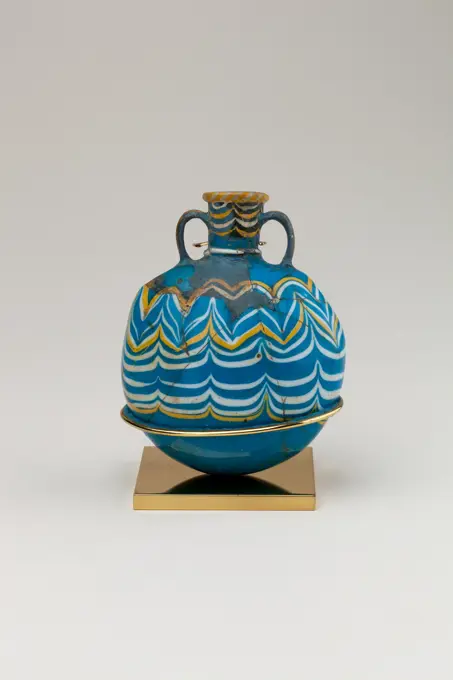
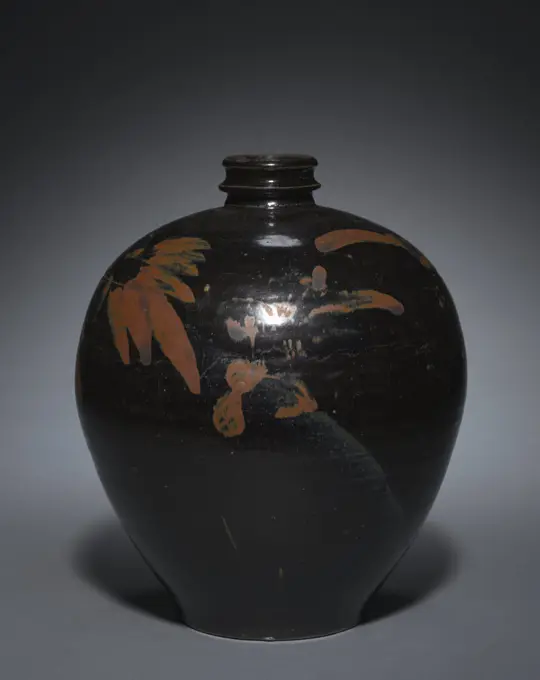
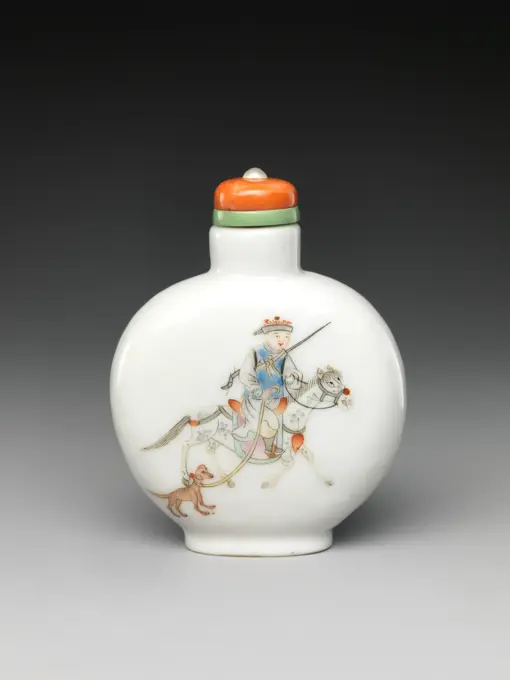
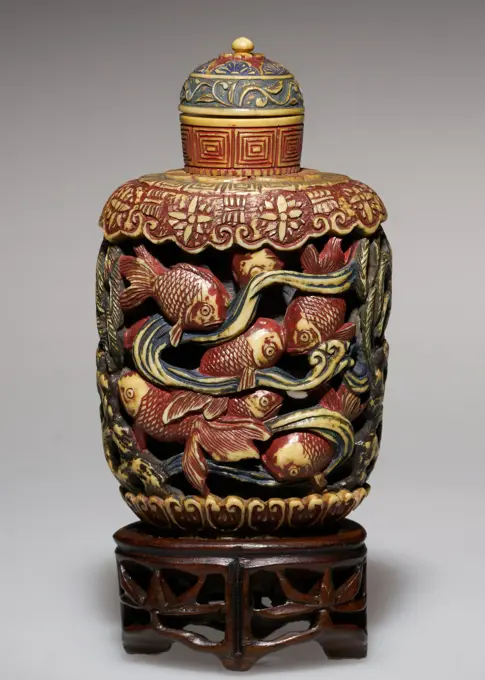
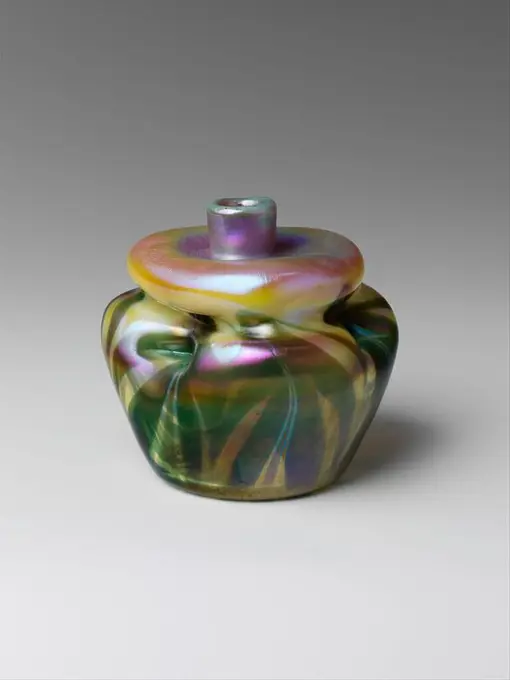
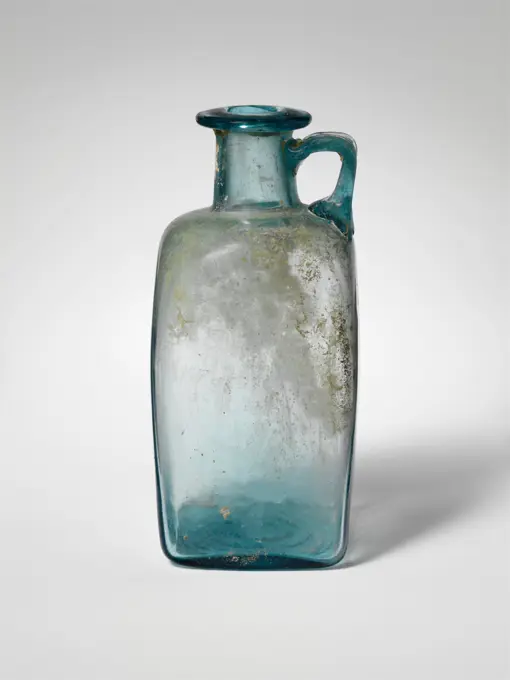
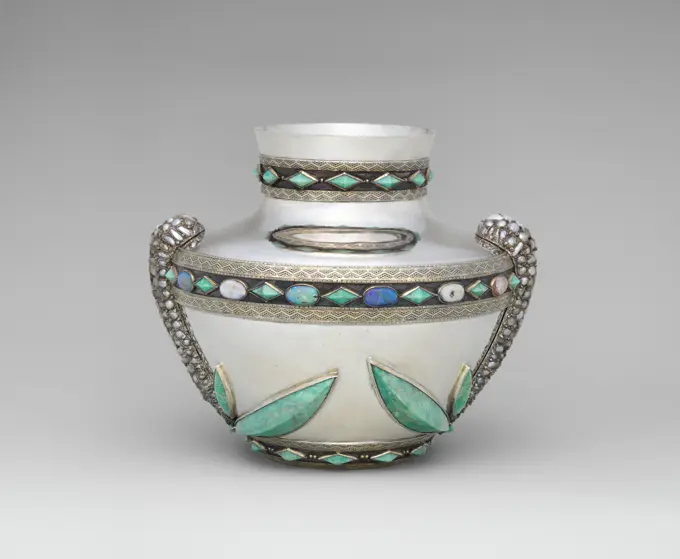
Vase 1900 Tiffany & Co. To celebrate the distinctive beauty of Native American art, Tiffany & Co.s gifted designer G. Paulding Farnham created three highly unusual silver vessels for the firms grand prize-winning display at the 1900 Paris Exposition Universelle. The present vase is based on the design of Navajo pottery, its hand-raised silver body ornamented with semi-precious stones sourced in America: turquoise-colored amazonite and bluish opals, as well as hundreds of freshwater pearls embedded in the "corn-cob" handles. The vase was also exhibited the following year at the Buffalo Pan-American Exposition. Paulding Farnham was one of Tiffany & Co.s most talented designers of both jewelry and silver. Having been apprenticed to Tiffanys artistic director Edward C. Moore around 1878, Farnham became the firms head jewelry designer in 1891 and continued to win gold medals at international fairs until departing the firm in 1904.. Vase. American. 1900. Silver, silver-gilt, freshwater Vase of multi-colored padded faience. Ribbed, octagonal multicolored painted vase. Part of a cabinet consisting of five parts.Can. Can be made from stoneware with pewter lid. The hexagonal belly passes into the wide, cylindrical neck. The six surfaces are decorated with around and around a blue fruit crank on uncoloured fond and uncoloured geometric ornament on blue fond.Vase;  19th century (1800-00-00-1900-00-00);Vase ca. 1600 China. Vase 52780Lotus-shaped cup, Colored faience (ceramic frit), Narrow bell-shaped body on tall flaring foot. Black design of pointed petals, rising from wavy line near bottom, on brilliant glossy, turquoise-colored body., Egypt, ca. 1100 BC, ceramics, Decorative Arts, Lotus-shaped cupFigured flask American 1820-30 View more. Figured flask. American. 1820-30. Blown-molded glass. Made in United StatesVaseBroad Pear-shaped Jar with Everted Mouth Rim 618 CE-906 CE China. Marbled earthenware with amber glaze .Jar. Culture: Mexican. Dimensions: H. 11 1/4 in. (28.6 cm). Date: ca. 1840. Museum: Metropolitan Museum of Art, New York, USA.Water Pipe Base second half 17th century. Water Pipe Base 452409CANTARO VIDRIADO-PINTADO EN AZUL-S XVIII-PROCEDE DE FAJALAUZA-GRANADA. Location: PRIVATE COLLECTION. MADRID. SPAIN.. Lid of bottle of porcelain, painted in blue, red, green, yellow, brown, black and gold. On the lid Symmetrical flower drinks and birds. Rosette in red and gold on button. Kakiemon decor.Vase late 19th century Factory of Ulisse Cantagalli. Vase. Italian, Florence. late 19th century. Maiolica (tin-glazed earthenware). Factory of Ulisse Cantagalli (Italian, 1839-1901). Ceramics-PotteryVase, two copies Necel, Franciszek (1868 1935)Chinese Porcelain Vase from The Art of the Chinese Potter     Date: 1925Jar with ear. Jar with ear, with three medallions in which Amsterdam's coat of arms.Figured flask 1825-35 Probably Baltimore Glass Works. Figured flask. American. 1825-35. Blown-molded glass. Made in Baltimore, Maryland, United StatesVase, Earthenware, Bulbous footed vase decorated in yellow, green, and brown relief, with pattern of leaves and C-curves., Switzerland, 18th century, ceramics, Decorative Arts, VasePitcher. Culture: American. Dimensions: 5 7/8 x 3 1/2 x 3 1/2 in. (14.9 x 8.9 x 8.9 cm). Maker: Knowles, Taylor, and Knowles (1870-1929). Date: 1891-97. Museum: Metropolitan Museum of Art, New York, USA.Pharmacy Jar early 1400s Italian. Pharmacy Jar 468168Box with diaper pattern and flowering plants in a panel decoration, anonymous, c. 1400 - c. 1600 Box with lid made of stoneware, painted in underly glaze blue and on the glaze red and green. On the wall of the box, continuously on the lid, scalloped cartouches with alternating servetwork or a flowering plant. The top of the lid with a flower rosette surrounded by a band with a kind of Ruyi motifs. Vietnam stoneware. glaze. cobalt (mineral) painting / vitrification Box with lid made of stoneware, painted in underly glaze blue and on the glaze red and green. On the wall of the box, continuously on the lid, scalloped cartouches with alternating servetwork or a flowering plant. The top of the lid with a flower rosette surrounded by a band with a kind of Ruyi motifs. Vietnam stoneware. glaze. cobalt (mineral) painting / vitrificationCream jug. Culture: British, Worcester. Factory: Worcester factory (British, 1751-2008). Factory director: Dr. Wall Period. Date: ca. 1765. Museum: Metropolitan Museum of Art, New York, USA.Vase William J. Walley ca. 1898-1918 View more. Vase. William J. Walley (1852-1919). American. ca. 1898-1918. Stoneware. Made in West Sterling, Massachusetts, United StatesCovered Vase, 1736-1795, 11 1/2 in. (29.2 cm), Jade, China, 18th centuryApulian Black-Gloss Hydria with Gilding and Stand. UnknownJar with Narcissus, Nandina Berries, Lingzhi Mushrooms, and Rocks 1723-1735 China. Porcelain painted in underglaze blue and overglaze enamels (doucai) .Bottle-shaped Vase, 1662-1722. China, Qing dynasty (1644-1911), Kangxi reign (1662-1722). Porcelain; overall: 24.5 cm (9 5/8 in.).Flask c 1840-1860 Midwest. Glass . Artist unknownBottle 16th-17th century China. Bottle. China. 16th-17th century. Stoneware with crackled glaze (Zhangzhou ware), metal mounts. Ming dynasty (1368-1644). CeramicsVase. Culture: American. Designer: Designed by Albert R. Valentien (American, Cincinnati, Ohio 1862-1925 San Diego, California). Dimensions: H. 7 in. (17.8 cm); Diam. 5 in. (12.7 cm). Manufacturer: Manufactured by Rookwood Pottery (American, Cincinnati, Ohio, 1880-1967). Date: ca. 1881. Museum: Metropolitan Museum of Art, New York, USA.Vase China. Vase 47441Glass amphoriskos (perfume bottle). Culture: Greek, Eastern Mediterranean. Dimensions: H.: 5 1/2 in. (14 cm). Date: 2nd to mid-1st century B.C..Translucent blue; handles in translucent greenish yellow; trail in opaque white.Uneven, slanting rim-disk, with thick rounded edge and sloping inward; thick cylindrical neck, with tooling indents around top; narrow angular shoulder; elongated ovoid body; pointed bottom; vestiges of two vertical handles applied in pads at different heights on shoulder, trailed up neck, and pressed on to top neck; a marvered blob of translucent greenish yellow glass applied over trail on lower body.Trail applied to rim-disk and wound spirally down, tooled into a feather pattern on body in nine irregular panels of alternating upward and downward strokes, then continuing on lower body in a spiral and ending on pointed bottom.Body complete, but most of handles missing; dulling, pitting, iridescence, and small areas of milky white weathering. Museum: MetropolitanBottle, dish;  VIII-X century (701-00-00-1000-00-00), IX-11th century (801-00-00-1100-00-00);Semerau-Siemianowski, Władysław (1849-1938), Semerau-Siemianowski, Władysław (1849-1938)-collection, gift (provenance), Islamic artAncient Egyptian pottery from the 21st Dynasty.Jar with Floral Scrolls and Wrapped-Cloth Design. Culture: China. Dimensions: H. 10 in. (25.4 cm); Diam. 7 1/2 in. (19.1 cm); Diam. of base 3 3/4 in. (9.5 cm). Date: 18th century.Invented in Limoges, France, during the fifteenth century, the technique of painting enamels onto metal was brought by the Jesuits to China in the early eighteenth century. Jars and other vessels made in this technique are sometimes known as "foreign porcelains" in China. Painted enamels for court use were made in one of the specialized workshops in the Forbidden City, and those for domestic use and export were produced in private workshops in Canton. Consequently, in the West such painted enamels are commonly called "Canton" enamels. Museum: Metropolitan Museum of Art, New York, USA.. Porcelain vase, multicolored decorated with two dragons inside an ornamental decor of flowers.Figured flask. Culture: American. Dimensions: H. 8 1/8 in. (20.6 cm). Maker: Probably Baltimore Glass Works (1800-ca. 1890). Date: 1825-35. Museum: Metropolitan Museum of Art, New York, USA.Anonymous. Burnt-sponsor and burnt-burning cover. Jade, Qianlong era (18th century). Museum of Fine Arts of the City of Paris, Petit Palais. 122743-12Vase (from a garniture of three) ca. 1725-30 Meissen Manufactory German The elaborate coat of arms and monogram of Victor Amadeus II (1666-1732), king of Sardinia, serve as the primary decoration of this beaker and saucer (54.147.75, .76), which belong to a tea and chocolate service presented as a gift by August II (1670-1733), commonly known as Augustus the Strong, elector of Saxony, king of Poland, in 1725. The porcelain service was part of a much larger diplomatic gift sent to Victor Amadeus II by the Saxon court, and due to its artistic and diplomatic significance, it has been well documented.1 This beaker and saucer belong to one of nine tea, coffee, and chocolate services that Victor Amadeus II received, and the gift included two small services for dining, five garnitures of vases, and a variety of other pieces of Meissen porcelain, some of which were part of the Saxon royal collections but nevertheless were selected to be presented to the Sardinian king.2 As has been noted bFlask 1840-60 Possibly Kentucky Glass Works. Flask 3737Candlestick ca. 1735-40 Chantilly. Candlestick. French, Chantilly. ca. 1735-40. Tin-glazed soft-paste porcelain. Chantilly (French). Ceramics-PorcelainTureen, c. 1750. Strasbourg Factory (French). Tin-glazed earthenware (faience) with enamel decoration; overall: 21.3 x 38 cm (8 3/8 x 14 15/16 in.).Bottle c 1815-1840 New England. Glass . Artist unknownDecanter with stopper. Culture: American. Dimensions: 10 in. (25.4 cm). Engraver: Possibly cut by Joseph Stouvenel and Company (1851-1857). Manufacturer: Brooklyn Flint Glass Company (New York, 1824-68). Date: 1850-55.New York City was an important center for machine-cut luxury glass in the middle of the nineteenth century. This partial group (2014.626.1a,b -.7) of blue-cut-to-clear glass is extraordinarily rare and perhaps even experimental when it was made in the 1850s. This is the only known blue plated cut glass attributed to the Brooklyn Flint Glass Works. The diamond pattern is thought to have been executed by Joseph Stouvenel, a highly skilled glass cutter whose works were exhibited at the New York Exhibition of 1853-54 and published during the period. Museum: Metropolitan Museum of Art, New York, USA.Triple gourd vase with dragon and flowers late 17th-early 18th century China. Triple gourd vase with dragon and flowers 45888Drug Jar. England. Date: 1695-1740. Dimensions: 17.8 × 14 cm (7 × 5 1/2 in.). Tin-glazed earthenware. Origin: England. Museum: The Chicago Art Institute, Chicago, USA.Pair or Vases, The Young Moriaanshooft (attributed to), c. 1685 - c. 1690 Vase Delft . Vase Delft .Belly bottle, belly bottle bottle holder soil find glass, free blown and shaped glass application Circular (hammer) bottle in clear green glass. Pontil mark under wide raised bottom Almost vertically ascending body to convex oblique shoulders and rejuvenated (5.0 - 2.6 cm) neck (chip) and imposed all round sharp glass thread and irregularly smoothed lip archeology Rotterdam Old Plantation packing Soil discovery Old Plantation 1957.Blumentopf Blumentopf Copyright: xZoonar.com/angetax 6007527Bowl 15th-16th century Italian. Bowl. Italian. 15th-16th century. Lead-glazed earthenware. Ceramics-PotteryReproduction of Sukhotai Ewer, 20th century, 8 x 5 3/8in. (20.3 x 13.7cm), Stoneware, Thailand, 20th centuryCandlestick with a conical bulb voice and candleholder and base with a water landscape. Candlestick of porcelain with conical stem with nine annular thickenings and a head-shaped candle holder with ribbed wall and lobed edge. Painted in underglaze blue. The annular nodules with blue tires. The cup with a continuous river landscape with pavilions, trees, rocks and boats on the water. The handle has been broken. Blue White.Covered Jar 18th century China. Covered Jar 48579Bottle vase with flowering plants and butterflies, anonymous, c. 1925 - c. 1950 Bottle -shaped vase of stoneware with a plate shoulder and a narrow, slightly spreading neck, painted on the glaze in blue, red, green and gold. On the abdomen a group of flowering plants (balloon bells) and two flying butterflies. A few leaves on the shoulder. The glaze is lightly crawling. Satsuma. Japan stoneware. glaze. gold (metal) painting / gilding / vitrification Bottle -shaped vase of stoneware with a plate shoulder and a narrow, slightly spreading neck, painted on the glaze in blue, red, green and gold. On the abdomen a group of flowering plants (balloon bells) and two flying butterflies. A few leaves on the shoulder. The glaze is lightly crawling. Satsuma. Japan stoneware. glaze. gold (metal) painting / gilding / vitrification. Vase of earthenware, covered with a feather frame and painted in green, yellow and brown with a dragon on yellow fond. Signature with: Amphora Hollandis CJ vd Hoef 242-R, in black. Reimburse: 242.Vase with raised green glass splinters and gold -colored irization, anonymous, c. 1900 - c. 1910 Flat bottom, curved body, stuck at the top at four places. Raised green glass splinters; Gold -colored irization. Bohemia glass glassblowing / iridescence Flat bottom, curved body, stuck at the top at four places. Raised green glass splinters; Gold -colored irization. Bohemia glass glassblowing / iridescenceDecorated Vase Isolated old vase with ornament Copyright: xZoonar.com/AndreyxSkatx 7747819Glass perfume bottle Roman late 1st-3rd century CE Translucent dark blue-green.Everted rim, folded over and in, with beveled upper surface and tapering outward lip; cylindrical neck with horizontal tooled groove at base; slender, conical body, curving in to thick, concave bottom.Intact; many bubbles; pitting of surface bubbles and brilliant iridescent weathering, and soil encrustation on interior. View more. Glass perfume bottle. Roman. late 1st-3rd century CE. Glass; blown. Imperial. GlassPair of Snuff Bottles with Floral Scrolls, 1736-95. China, Qing dynasty (1644-1911), Qianlong mark and reign (1736-95). Cloisonné enamel; overall: 7 cm (2 3/4 in.).Spindle Bottle with Handle ca. 1353-1336 B.C. New Kingdom, Amarna Period Egyptian glass vessels were often modeled after vessels originally made in other materials. This slender flask of turquoise glass was copied from an imported pottery "spindle bottle" of the type that Syrians are depicted carrying in contemporary Egyptian tomb paintings, actual examples of which would most likely have contained some sort of resin. The flask was core-formed and finished by hand, with the strap handle applied separately. The elongated, ovoid body and slender neck were decorated with finely executed zigzags of dark blue and white glass. The handle is embellished with repeating bands of dark blue, yellow, and white. Glass objects were first imported into Egypt from the Near East in the joint reign of Hatshepsut and Thutmose III. Egyptian craftsmen, who had more than a millennium of experience manufacturing the related substance faience, quickly added the art of glass making to their repertoire.. SpindlDouble Ducks Jar, 1400s. Vietnam (Annam), 15th century. Porcelain with underglaze blue and iron spots; overall: 6.7 cm (2 5/8 in.).Vase with chi dragons China. Vase with chi dragons. China. Jade (nephrite). Qing dynasty (1644-1911), Qianlong period (1736-95). JadeGlass alabastron (perfume bottle) late 6th-5th century B.C. Greek, Eastern Mediterranean Translucent cobalt blue, with handles in same color; trails in opaque white and opaque yellow.Slightly concave horizontal rim-disk, formed as a coil, with rough edge to mouth; no perceptible neck or shoulder; slightly convex side to cylindrical body, tapering upwards; rounded bottom, with central point; two vertical ring handles with knobbed tails, applied over trail decoration.White trail attached at neck under rim-disk, wound down unevenly, tooled into an irregular close-set zigzag pattern, with deep vertical ribs; four separate yellow trails added over white at intervals down sides.Broken and repaired, with some holes, chips, and cracks, especially on lower body; slight dulling, pitting, and weathering.. Glass alabastron (perfume bottle) 255490Miniature Bottle Vase With Flowering Plants And An Insect Near a Rock. Miniature bottle-shaped vase of porcelain with spherical body, painted in underglaze blue. Plants blooming on the abdomen (Aster, Prachtanjer) and an insect at a rock; on the shoulder a band with zigzag work; The neck with a plant twice. Blue White.Ovoid covered jar with women in a garden, anonymous, c. 1680 - c. 1720 Egg -shaped lid pot of porcelain, painted in underlaze blue. On the wall a scene in a garden with trees, rocks and plants: two women (long lines) looking at a flower vase on a table, a stool under the table; Two women in a two crutches, one wears a fan, the other has a twig in her hand. Marked on the underside with an artemisia leaf. A crack in the neck; A crack in the lid. Blue White. China porcelain. glaze. cobalt (mineral) painting / vitrification Egg -shaped lid pot of porcelain, painted in underlaze blue. On the wall a scene in a garden with trees, rocks and plants: two women (long lines) looking at a flower vase on a table, a stool under the table; Two women in a two crutches, one wears a fan, the other has a twig in her hand. Marked on the underside with an artemisia leaf. A crack in the neck; A crack in the lid. Blue White. China porcelain. glaze. cobalt (mineral) painting / vitrificationFlask; Roman Empire; 2nd - 3rd century; Glass; 7 x 3.7 cm (2 3,4 x 1 7,16 in.)Vase with birds and flowers 19th century China. Vase with birds and flowers. China. 19th century. Porcelain painted in overglaze polychrome enamels (Jingdezhen ware, famille noire). Qing dynasty (1644-1911). CeramicsVase;  around 1900 (1896-00-00-1905-00-00);Ming Dynasty vase with lotus decoration, China.Sake Bottle with Sasa Bamboo Design. Japan, Edo period (1615-1868), first half 18th century. Ceramics. Hizen ware; stoneware with white slip, iron and clear glazesTeapot ca. 1760 British, Staffordshire. Teapot. British, Staffordshire. ca. 1760. Salt-glazed stoneware. Ceramics-PotteryFigured flask 1836-40 American. Figured flask. American. 1836-40. Blown-molded glass. Probably made in Pittsburgh, Pennsylvania, United StatesVase 19th century Japan. Vase 53735Candlestick, anonymous, c. 1650 - c. 1670 FaaMence candlestick with a decoration inspired by the Chinese porcelain from the transition period Delft (possibly) . FaaMence candlestick with a decoration inspired by the Chinese porcelain from the transition period Delft (possibly) .JARRA DEL ESTUDIANTE VIDRIADA EN AZUL Y BLANCO-CERAMICA DE ANDUJAR-S XVIII.Vase;  1. W. 20th century (1801-00-00-1900-00-00);Roemer with lid, with the lamb of God and flower and leaf motifs, anonymous, 1659 Roemer with a green glass lid with four rows of brambles on the trunk. A pinched band on the separation of the chalice and the trunk. The chalice is decorated in Diamantgravure with a representation of the Lamb of God in a medallion and a four -line German text: Allin Auff Gott sets Dein Vertrauen, Auff Menschen Hilff Sollen Nicht Bauen, Gott Ist allin der Glauben Hellt, sonst ist Kein Glaub Mehr in der Welt. Below that: AO 1659. Between medallion and inscription flower and leaf motifs in Renaissance style. A narrow pendulum border and a row of fleurons have been installed along the top and bottom of the chalice. This decoration is repeated on the lid. NOTE: Roemer broken and glued; Lid button is missing. glassblower: Low CountriesRhineland glass glassblowing Roemer with a green glass lid with four rows of brambles on the trunk. A pinched band on the separation of the chalice and the trunk. The chalice isBottle ca. 1295-1070 B.C. New Kingdom, Ramesside Egyptian glassmaking, which had reached a high level of virtuosity in late Dynasty 18, continued to be practiced in the Ramesside Period; however, the quality, as well as quantity, of it production dropped off sharply in Dynasty 20. The "feathered" decoration of this bottle was achieved by winding thin colored glass rods around the vessel and pressing them onto the surface of the vessel while it was still soft, and then drawing the rods up or down with a metal instrument.. Bottle 549348Water or Wine Keg. Dated: c. 1940. Dimensions: overall: 54.6 x 45.7 cm (21 1/2 x 18 in.) Original IAD Object: 19" High(approx) 8" Dia(top)9 1/2" Dia(base). Medium: watercolor and graphite on paperboard. Museum: National Gallery of Art, Washington DC. Author: Giacinto Capelli.Gourd-shaped Sake Bottle. Japan, Edo period, 1615-1868, 19th century. Ceramics. Ōbori Sōma ware; stoneware with iron and nakoso glazesBottle. Roman or Byzantine; Eastern Mediterranean. Date: 101 AD-600 AD. Dimensions: H. 8 cm (3 in.); diam. 10.5 cm (4 1/2 in.). Glass, blown technique. Origin: Mediterranean Region. Museum: The Chicago Art Institute, Chicago, USA. Author: ANCIENT ROMAN.Jar, 1100s-1200s. Northern China, Jin dynasty (1115-1234). Glazed stoneware with black slip and iron-brown painted decoration; overall: 30.2 cm (11 7/8 in.).Double-Handled Jar 300 CE-450 CE Levant. Glass vessels were part of the luxurious domestic decoration displayed in wealthy households in both urban villas and rural estates in the later Roman and early Byzantine eras (about 300ñ725). Glass vessels were used for a variety of purposes, including cosmetic containers. In the kitchen and for dining, pitchers served water and wine, and small cups were used for drinking. Glass was also used for lamps to light the home.Byzantine glass craftsmen improved upon the techniques, forms, and decorative motifs they had inherited from their Roman predecessors. An imperial edict of 337 exempted glassworkers from personal taxes and attested to their relative status in society; it remained in effect for several centuries. These artisans would, in turn, pass on their craft to successive generations, including those who worked under Islamic rule after the important Byzantine provinces of Egypt, Palestine, and Syria were conquered in the seventh century.. GlVase Designed by Louis C. Tiffany American Tiffany Glass and Decorating Company American ca. 1900 This large-scale, baluster-shaped, golden iridescent vase with a lily-pad design was displayed in Tiffany's award-winning exhibit at the Paris Exposition Universelle of 1900. His participation in this fair was a triumph, gaining him international renown and clientele. Critics raved about his art glass in particular. The size, shape, color, and texture of the vase, which was later owned by Tiffany's sister, make it a remarkable example of Tiffany's best work.Candlestick with a conical bulb stem and candleholder and base with a water landscape, anonymous, c. 1775 - c. 1799 Porcelain candlestick with conical steel with nine ring -shaped thickening, bell -shaped base with a ribbed wall and a head -shaped candle holder with a ribbed wall and lobed edge. Painted in underlaze blue. The ring -shaped nodules with blue tires. The foot and head with a continuous river landscape with pavilions, trees, rocks and boats on the water. At the top of the foot, a fled circle on which the upper part of the candlestick is placed. Foot and stem are glued together. Blue White. Japan porcelain. glaze. cobalt (mineral) painting / vitrification Porcelain candlestick with conical steel with nine ring -shaped thickening, bell -shaped base with a ribbed wall and a head -shaped candle holder with a ribbed wall and lobed edge. Painted in underlaze blue. The ring -shaped nodules with blue tires. The foot and head with a continuous river landscape with pavilions, trees, . The shape and size of these two vases suggest that they stood in a garden. Depicted are the mythological figures of Vertumnus and Pomona (on one side), and Flora with her cornucopia (on the other side). Vertumnus is the god of the seasons, who seduced Pomona, the goddess of fruit trees; Flora is the personification of spring and flowers.Hu-type vase. unknown, craftsmanSnuff Bottle with Horse Rider China. Snuff Bottle with Horse Rider 41314Snuff Bottle, 19th century, 3 3/8 x 1in. (8.6 x 2.5cm), Ivory, China, 19th centuryVase 17th-18th century Spanish, Almería or Granada. Vase. Spanish, Almería or Granada. 17th-18th century. Glass. GlassVase 1830-70 American. Vase 9244Vase. Culture: American. Designer: Designed by Louis Comfort Tiffany (American, New York 1848-1933 New York). Dimensions: 2 7/8 x 3 1/8 in. (7.3 cm). Maker: Tiffany Glass and Decorating Company (American, 1892-1902). Date: 1893-96.This object forms part of a group of over forty given to the Museum in 1896 by Louisine and Henry Osborne Havemeyer (96.17.9-.56). The gift was the first American glass to enter the Museum's collection. Most likely prompted by Louis Comfort Tiffany, the Havemeyers presented their collection of Tiffany Favrile glass to the Museum only three years after Tiffany started making decorative blown-glass vessels. The shapes, colors, and finishes of Tiffany's vases and plaques were inspired by the natural world and ancient glass. This diminutive, scrunched bottle-shaped vase is reminiscent of Japanese forms. Museum: Metropolitan Museum of Art, New York, USA.Cilindrical vase with a continuous image with figures in a landscape, anonymous, c. 1650 - c. 1680 Porcelain cylindrical vase or roller wagon, with a short shoulder and flared neck, painted in underlaze blue. On the wall a continuous representation of a landscape with three standing people with a banner surrounded by three sitting people. In the landscape rocks, trees and plants. On the neck a tire with hanging points. Arita, Blauw-Wit. Japan porcelain. glaze. cobalt (mineral) painting / vitrification Porcelain cylindrical vase or roller wagon, with a short shoulder and flared neck, painted in underlaze blue. On the wall a continuous representation of a landscape with three standing people with a banner surrounded by three sitting people. In the landscape rocks, trees and plants. On the neck a tire with hanging points. Arita, Blauw-Wit. Japan porcelain. glaze. cobalt (mineral) painting / vitrificationVase. Porcelain, Qing dynasty (1644-1912). Provenance: China. Paris, Cernuschi museum. 78838-29 Asian art, Chinese art, art of living, ceramic, fine ceramic, Ching dynasty, Qing dynasty, tsing dynasty, porcelain, container, vaseVase with Cover (lid), 1661-1722. China, Jiangxi province, Jingdezhen kilns, Qing dynasty (1644-1911), Kangxi reign (1661-1722). Porcelain with underglaze blue decoration; lid: 14.2 cm (5 9/16 in.).Flask; Syria; 4th century; Glass; 13.6 cm (5 3,8 in.)Seif Yohei III mined the repertoire of Chinese vessel types, from ceramics modeled after ancient ritual bronzes to shapes developed in the Yuan (1279-1368) and Ming (1368-1644) dynasties. His designs tended to be formal and restrained, often featuring creamy white glazes suggestive of the hue of Ding ware and green glazes resembling Longquan ware. Seif Yohei IV continued to create works in the studio’s signature colors but also produced pieces with strong color and flare that were his interpretations of Qing dynasty (1644-1911) glazes. Gu-Shaped Vase with Patina, 1914-46. Seifū Yohei IV (Japanese, 1872-1951). Porcelain with overglaze color enamel; 31.2 x 16.5 cm (12 5/16 x 6 1/2 in.).Glass square bottle 1st-2nd century A.D. Roman Translucent light blue, with same color handle.Rim folded out, over, and in, and pressed into top of mouth, with slightly beveled top surface; cylindrical neck, expanding downwards; shoulder with rounded, sloping corners; slightly uneven, vertical sides, with slight downward taper; flat bottom; strap handle, with thick ribs on either side, attached to shoulder, drawn up vertically, turned in an acute angle and trailed onto neck.Molded decoration on bottom comprising five concentric rings and central dot in relief.Intact; pinprick bubbles and blowing striations; slight dulling and faint iridescence on exterior, with small patches of encrustation around neck and handle; areas of weathering and brilliant iridescence on interior.. Glass square bottle 245185Vessel on the pace;  XVIII/19th century (1796-00-00-1805-00-00);Paderewski, Ignacy Jan (1860-1941), Paderewski, Ignacy Jan (1860-1941)-collection, qing (style), ceramics, Chinese (culture), gift (provenance), inscriptions, colorful porcelain, Chinese art