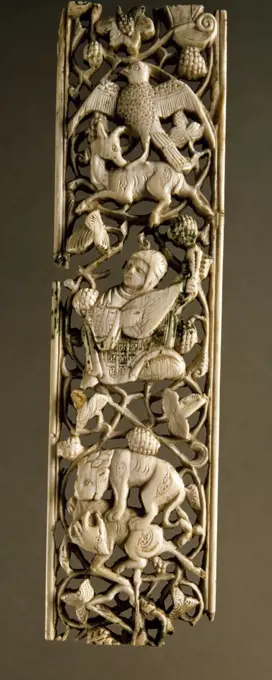
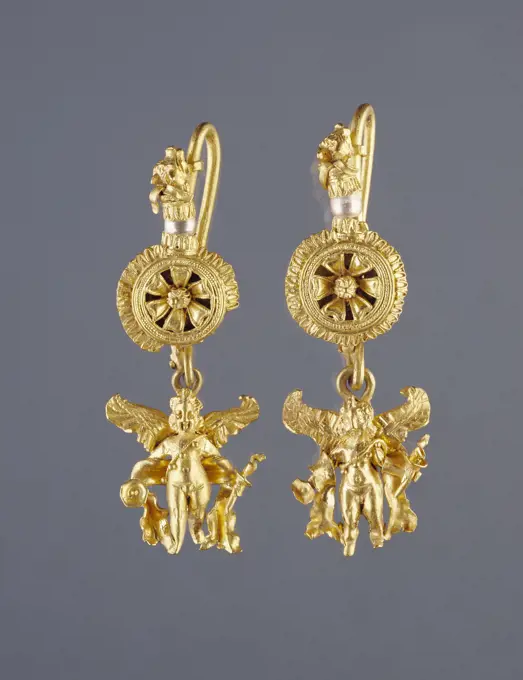
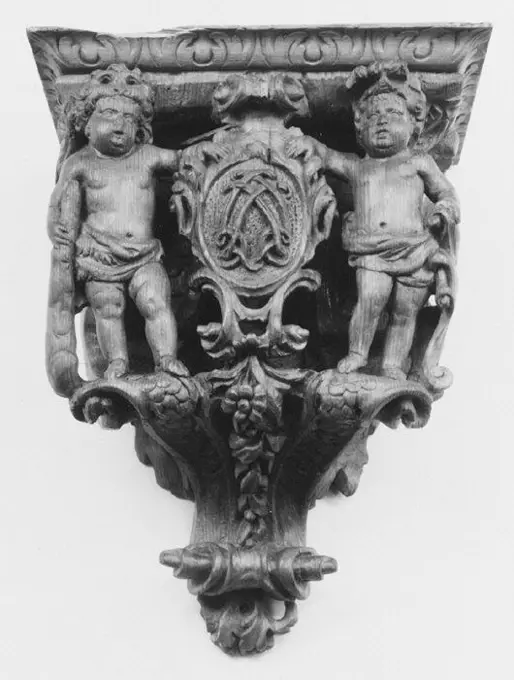
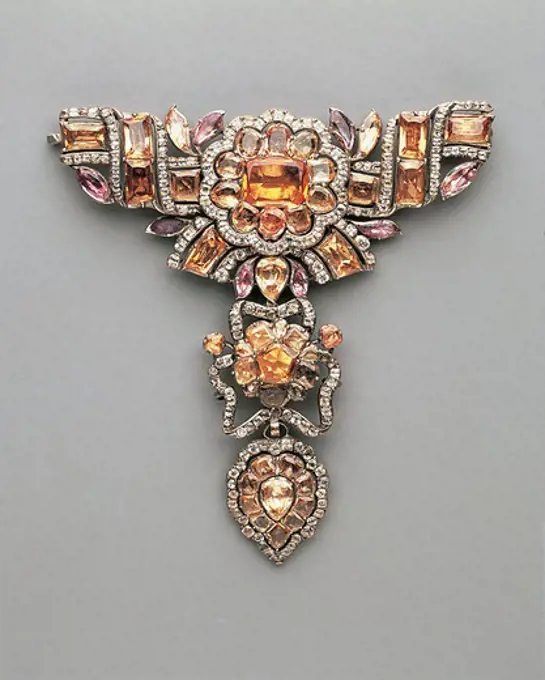
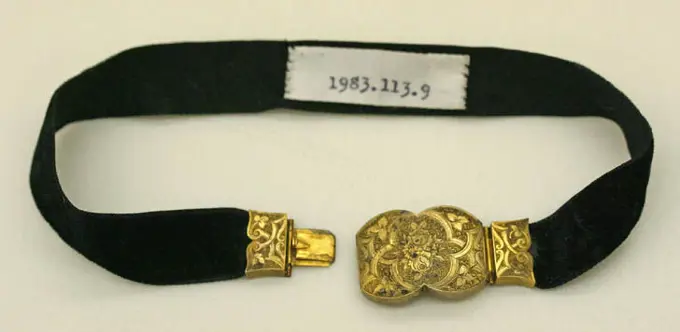
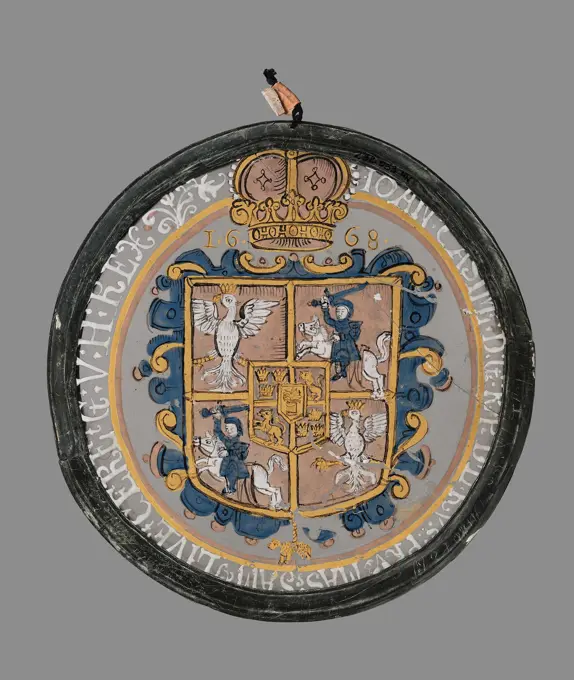
Antique Decoration Elements

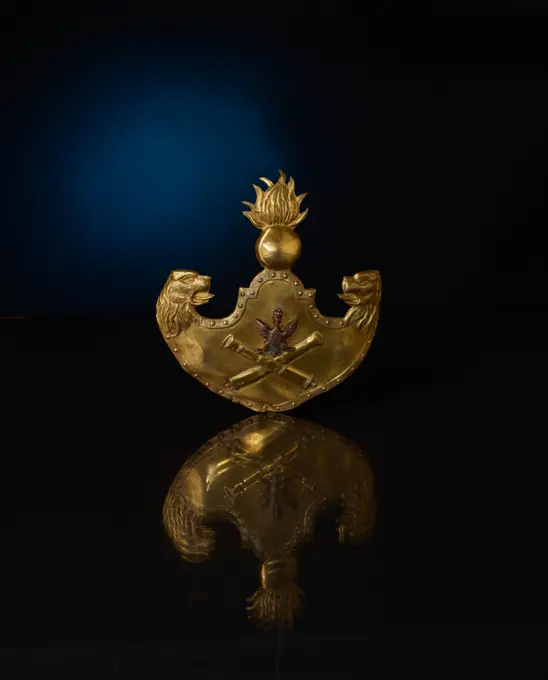
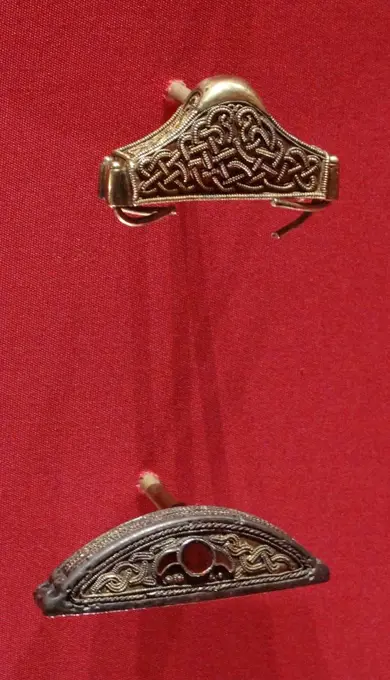
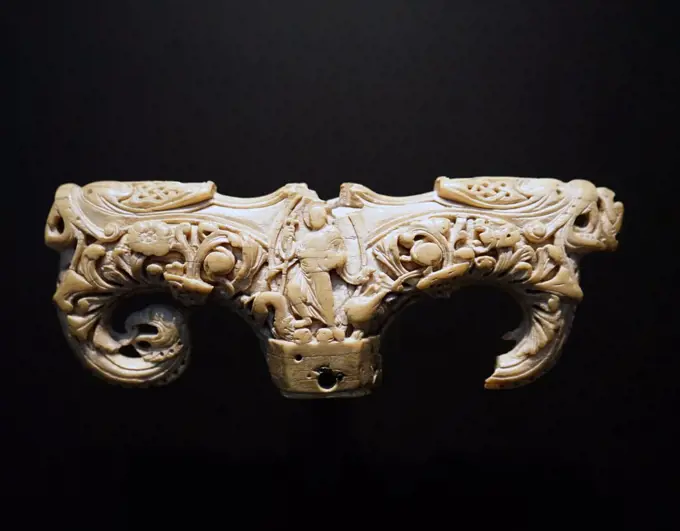
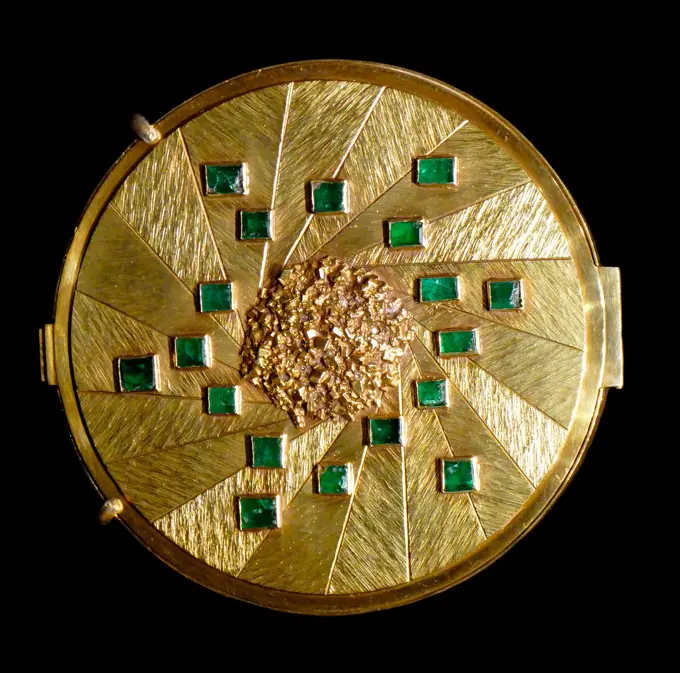
Historical decorative items, including mounts and ornamented bits. Showcase intricate designs, often related to equestrian and cultural heritage.
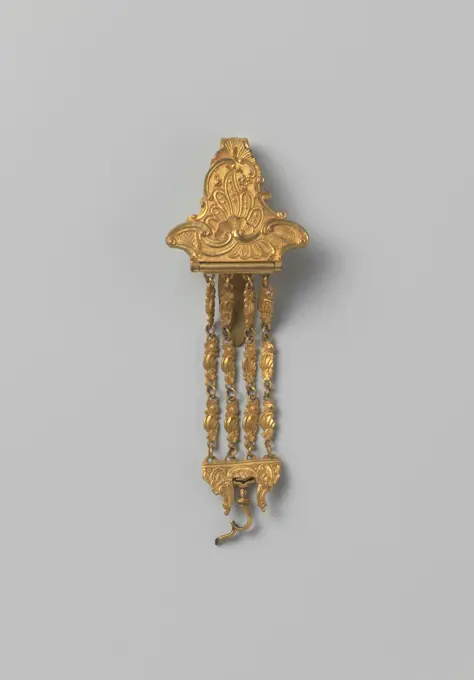
Chatelaine, intended for a watch consisting of a hook and four chains, anonymous, c. 1750 - c. 1775  The object is composed of the following mostly cast pieces: the hook, four chains, which are attached to a hinge and at the bottom of the element with a view to the watch. The decoration consists of C-Voluten. Netherlands brass (alloy) casting
Chatelaine, intended for a watch consisting of a hook and four chains, anonymous, c. 1750 - c. 1775 The object is composed of the following mostly cast pieces: the hook, four chains, which are attached to a hinge and at the bottom of the element with a view to the watch. The decoration consists of C-Voluten. Netherlands brass (alloy) casting
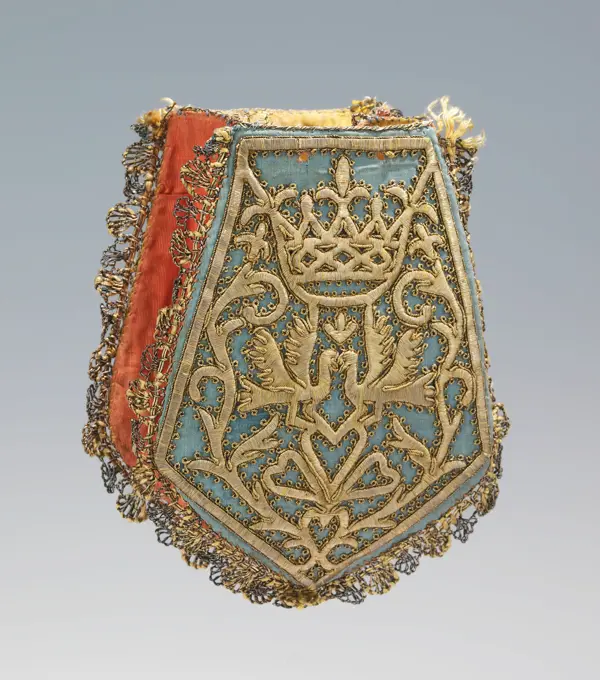
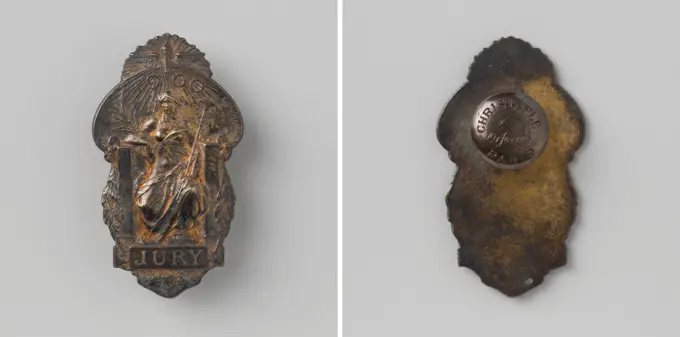
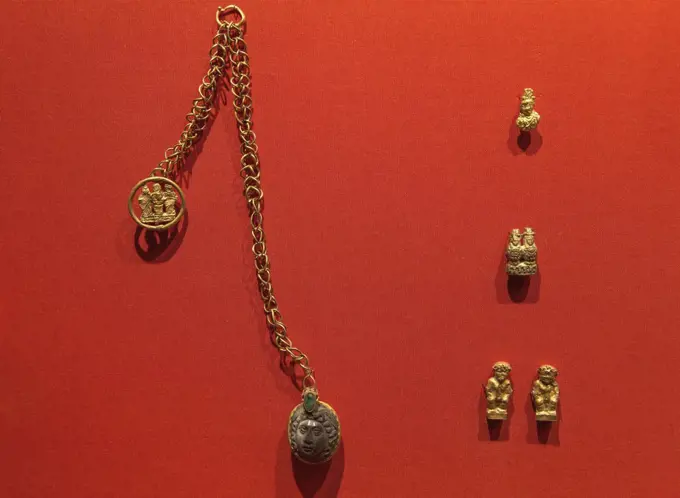
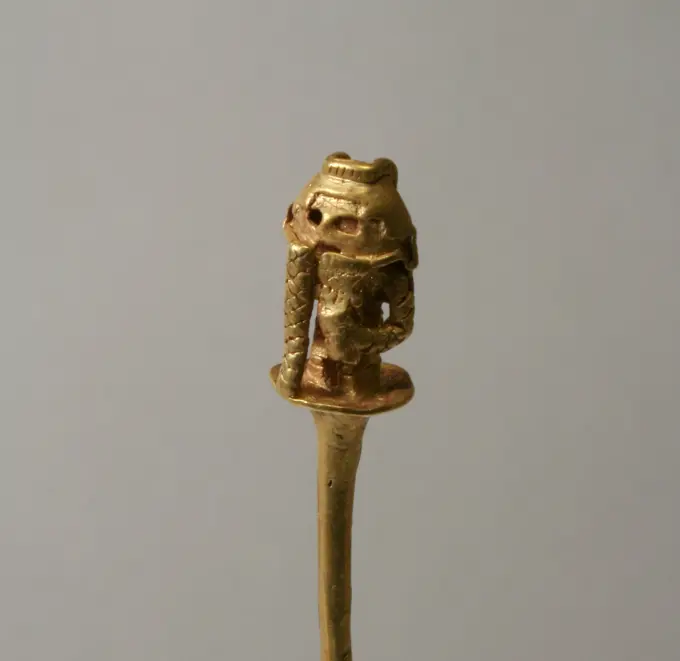
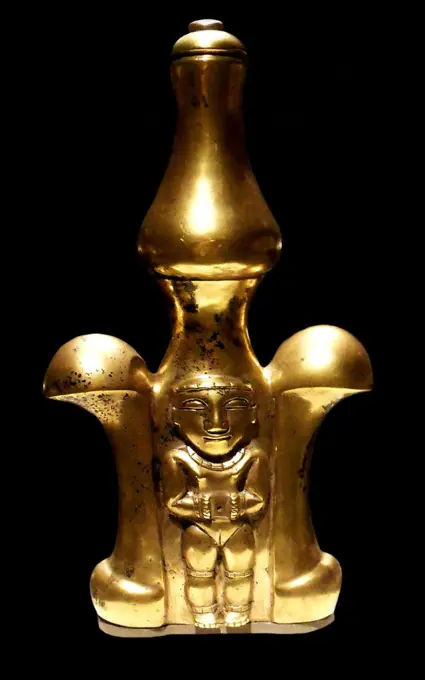
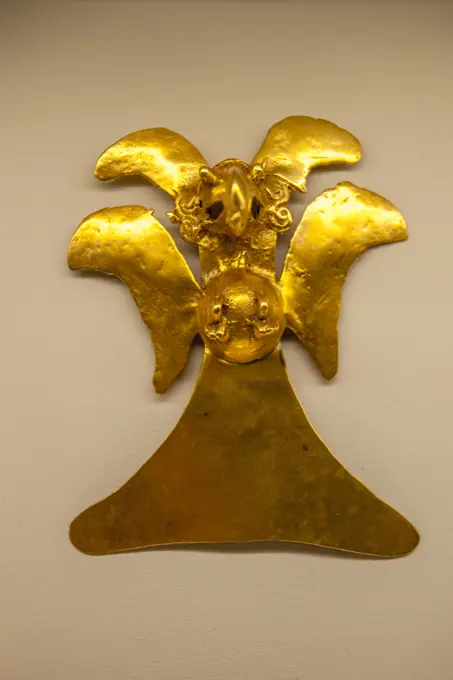
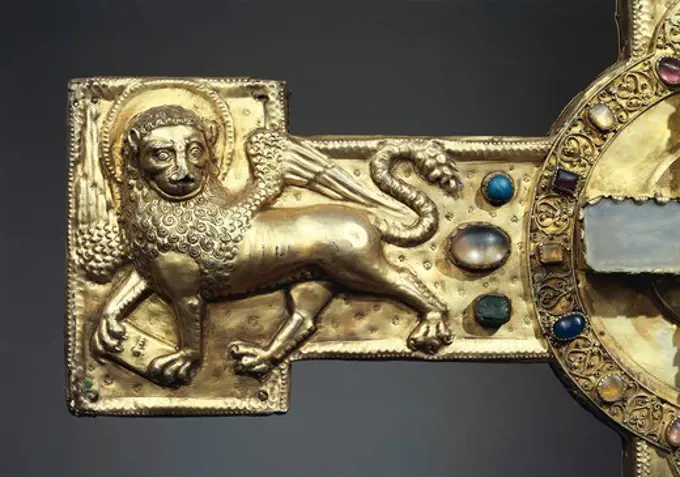
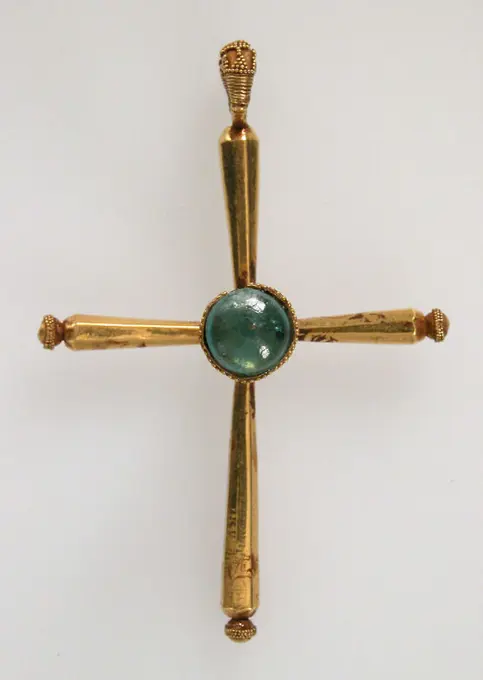
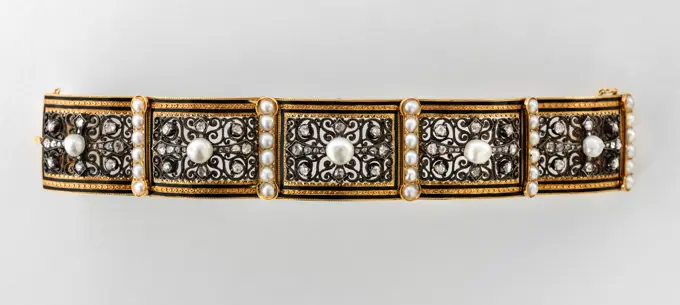
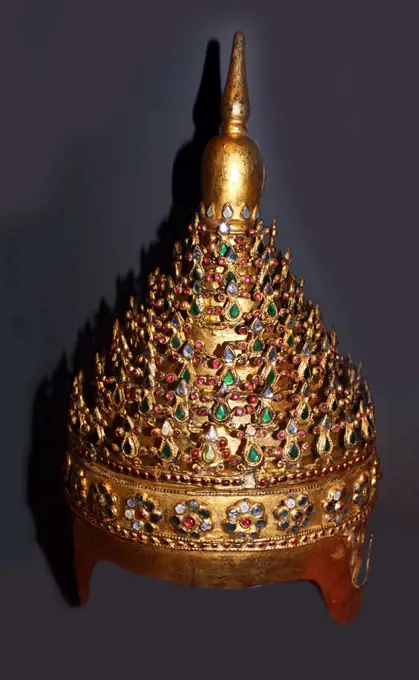
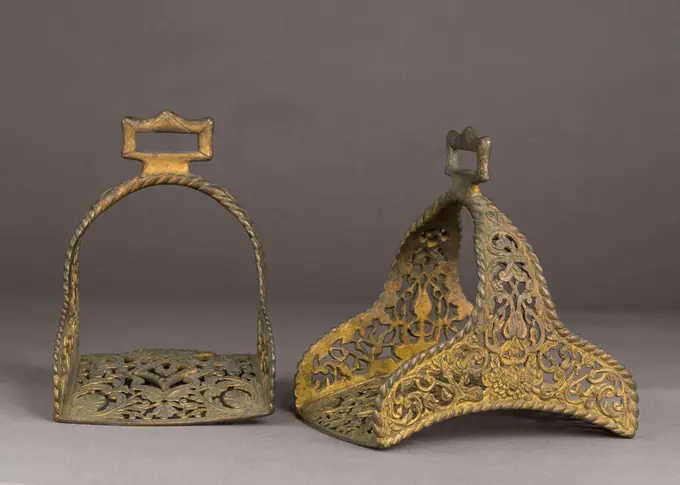
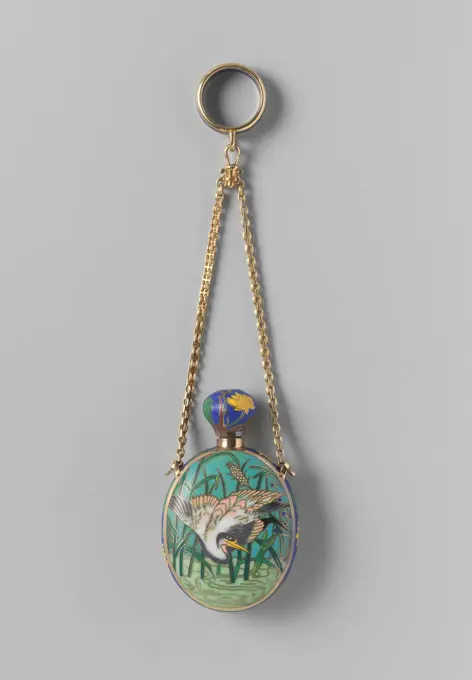
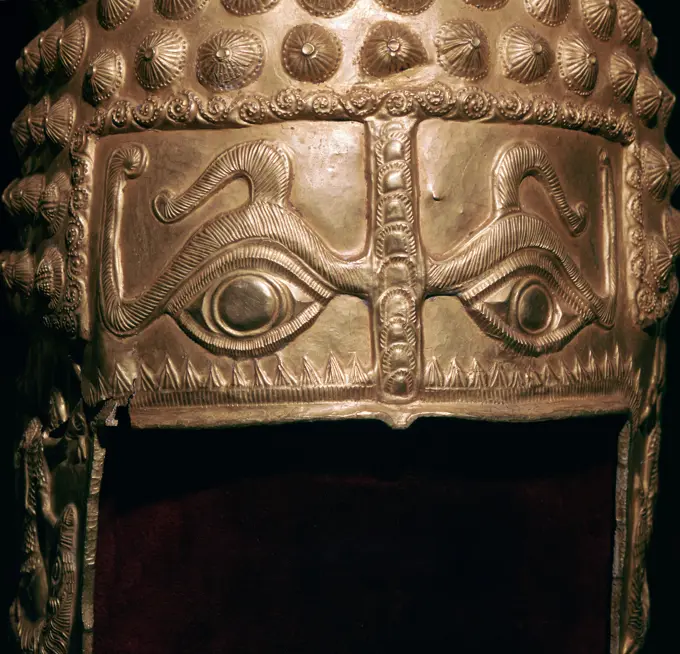
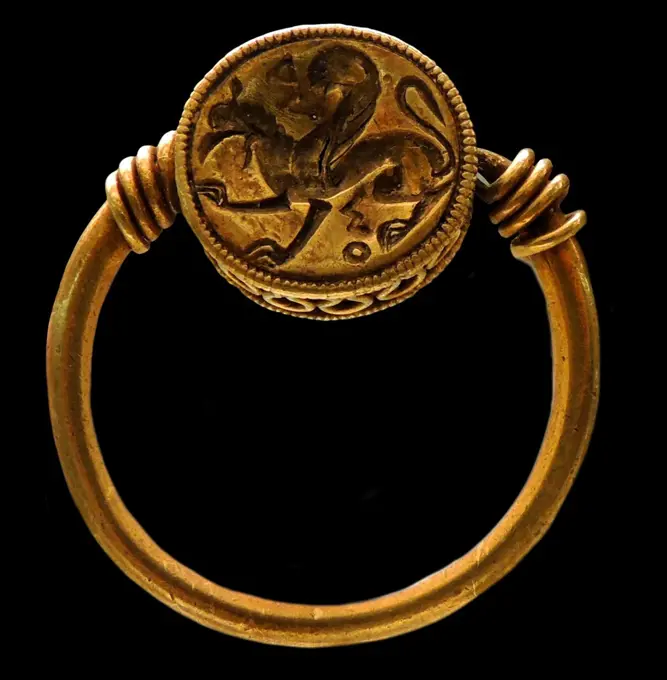
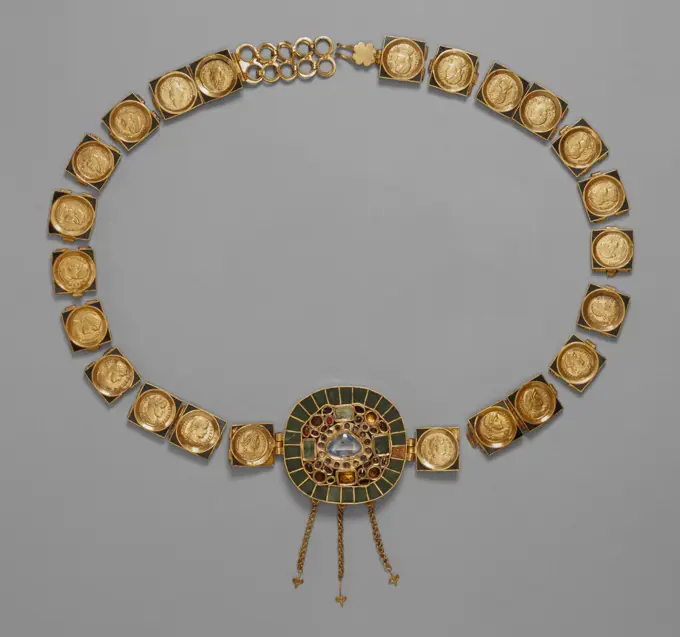
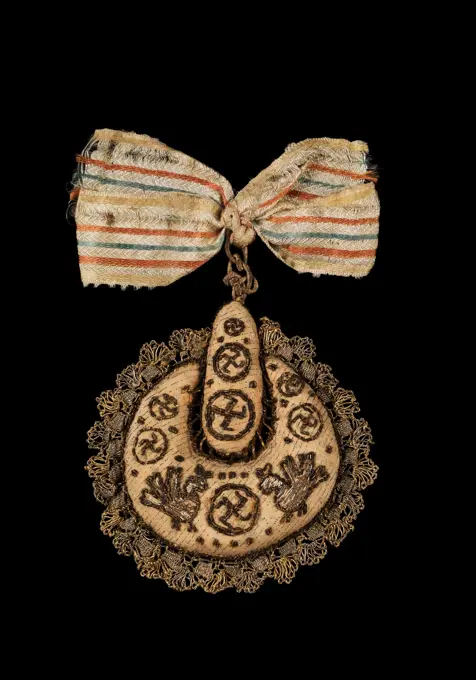
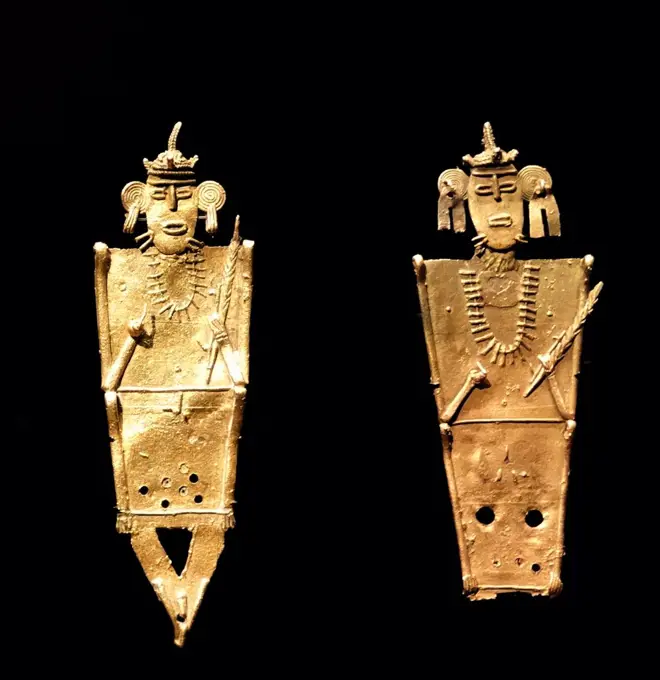
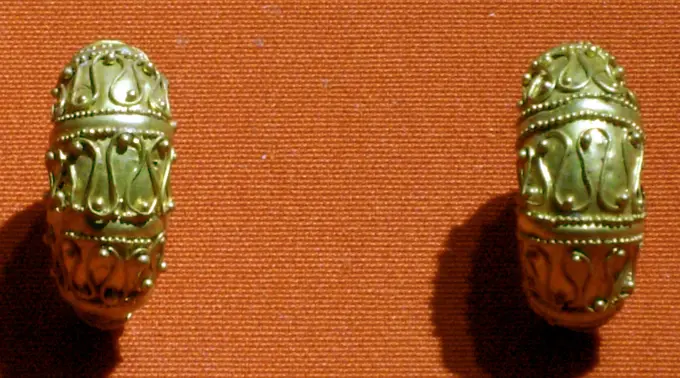
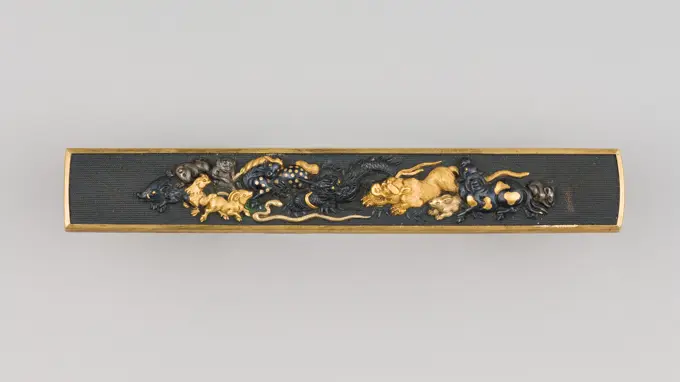
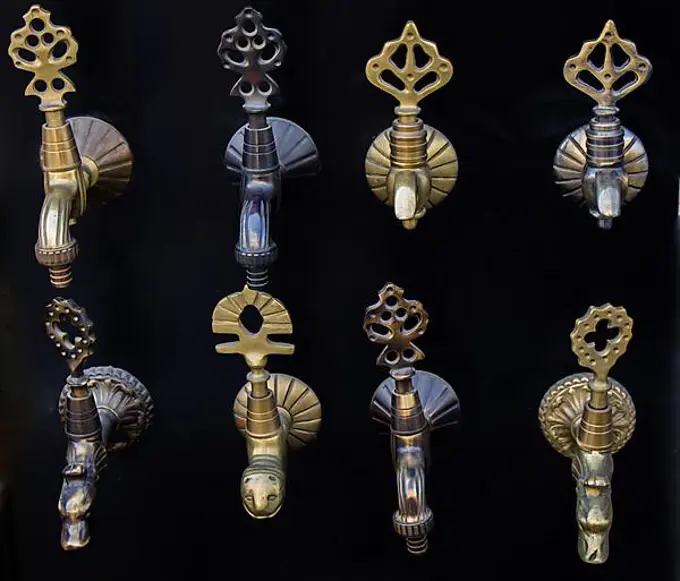
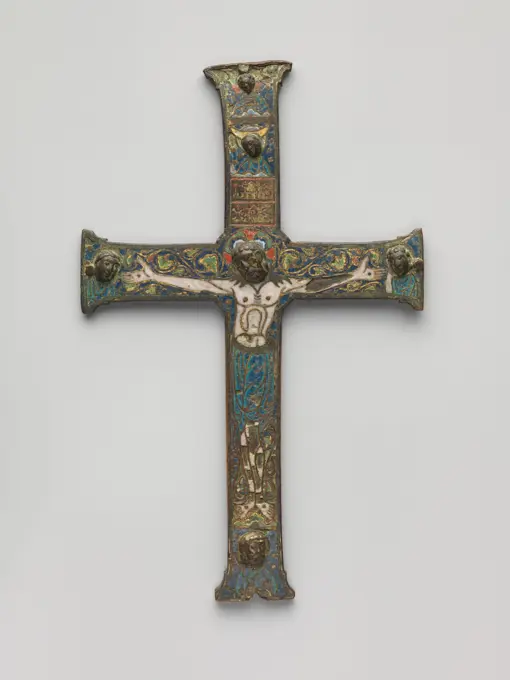
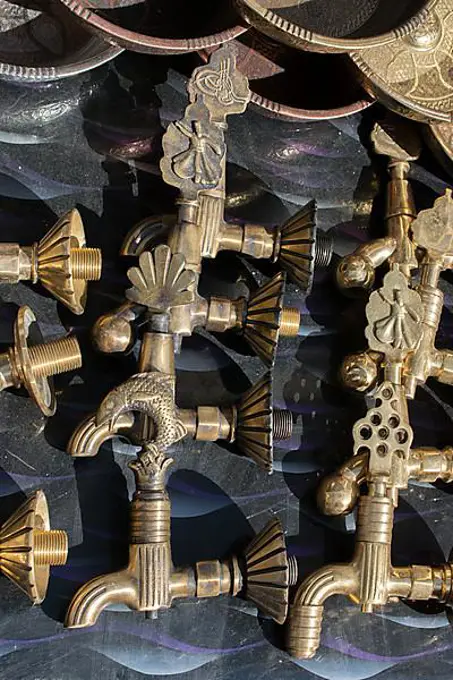
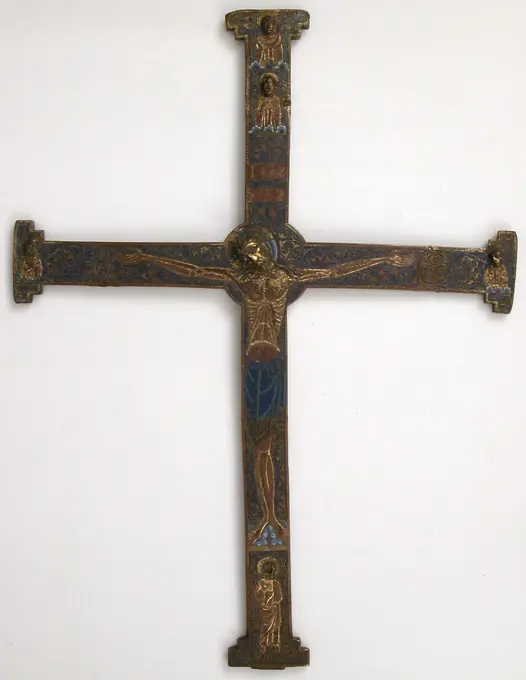
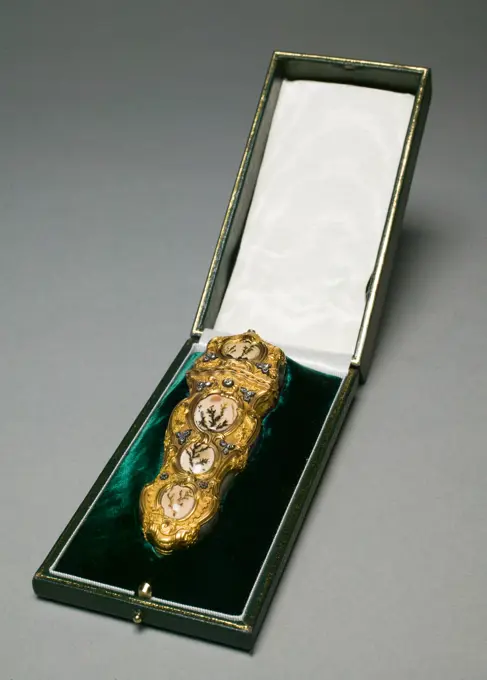
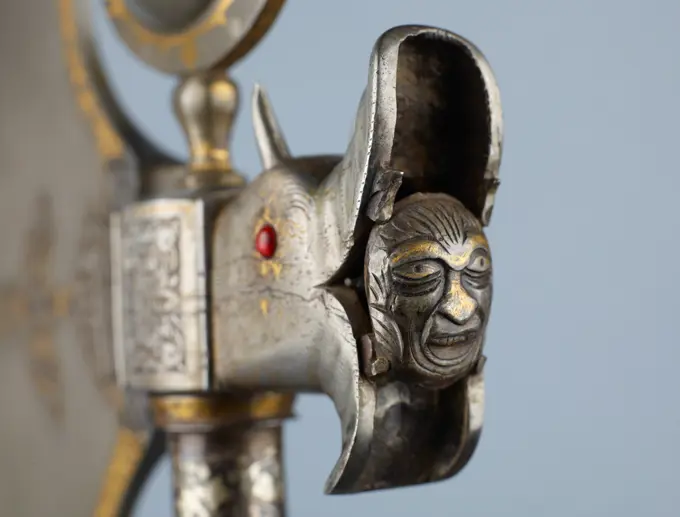
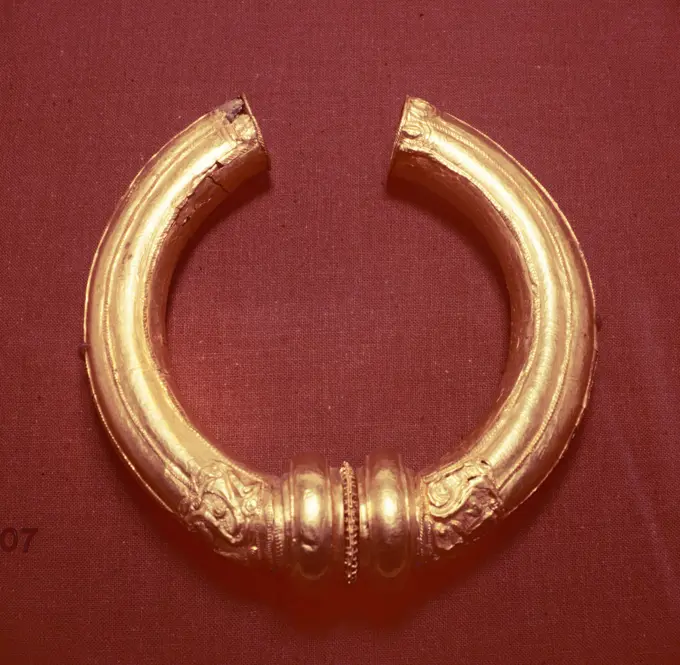
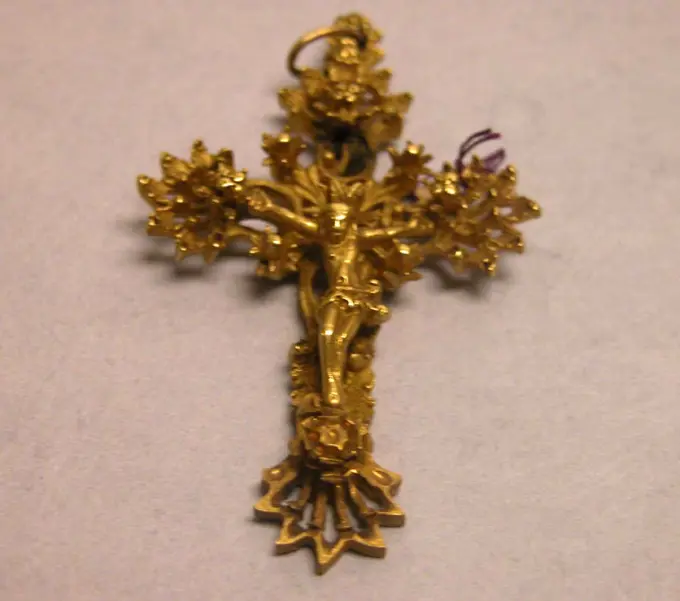
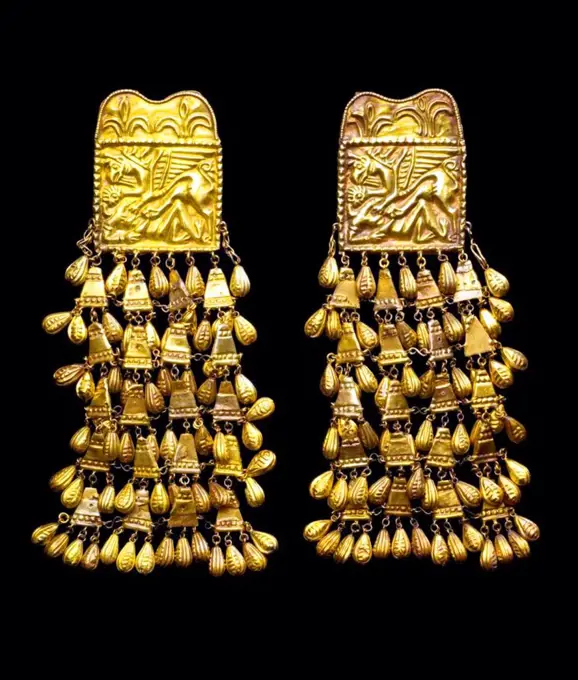
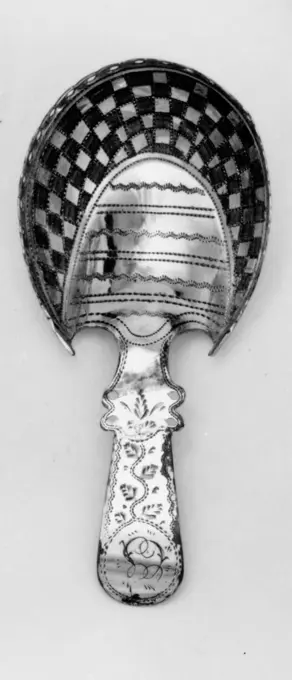
Cocks & Bettridge, Caddy Spoon, 1813/14, silver.Pouch 1730-50 Russian This object is from the collection of Natalia de Shabelsky (1841-1905), a Russian noblewoman compelled to preserve what she perceived as the vanishing folk art traditions of her native country. Traveling extensively throughout Great Russia, she collected many fine examples of textile art of the wealthy peasant class. From the 1870s until moving to France in 1902, Shabelsky amassed a large collection of intricately embroidered hand-woven household textiles and opulent festival garments with rich decoration and elaborate motifs. The Brooklyn Museum holdings include many fine examples including the majority of the garments. Portions of Shabelsky's collection are also housed at the Museum of Fine Arts, Boston, the Cleveland Art Museum, and the Russian Museum of Ethnography in St. Petersburg. The double-headed eagle is common to many cultures throughout history, most notably Byzantium. Through Ivan III's marriage to Zoe Palaeologina, niece of Byzantine emperor ConstantFrench button for jury members on unknown occasion, 1900, Christofle, 1900 history medal Gilt silver plate with button at the back, with the image of a woman, with palm branch and horn, sitting under a bright Mercury Staff, with inscriptions 1900 and jury Paris silver (metal) solderingPendants, 1st-4th century AD, Metropolitan Museum of Art, Manhattan, New York City, USA, North AmericaBerber diadem from Aurés, Algeria, "Corral del Carbón" , "al-fundaq al-yadida", 14th century, Granada, Andalusia, Spain.Bliżej Kultury unknownFurniture Mount (France); gilt bronzeBliżej Kultury unknownLime Dipper or Pin, Figure 5th-10th century Calima (Yotoco). Lime Dipper or Pin, Figure 309526Rasp made of palmhout decorated with coat of arms, Jos. Sergent Vitrarius, 1716 Rasp made of palmhout. On the back a crowned oval coat of arms, flanked by miter and staff, covered by an archbishop's hat. In the coat of arms of Charles Daniel Gabriel de Gerstel de Le 'Vie de Thubieres de Caylers. The coat of arms is composed as follows: celebrated. 1.heraldry to the right of red with shared shield head of gold, imoard. To the left of gold with three-cherry from Zwart, Leris-Nirepoix. 2 and 3. From blue with three lilies of gold. Bourbon Malause. 4. Shared, Heraldry to the right of silver with a slim of red, accompanied by six Andries crosses placed three to three, Gertel. Heraldic to the left of gold with three twigs of black. Louis-Mirepoix. Heart shield of blue with three six -pointed stars of gold in a shield head of the same. Thubieres de Caylus. France boxwood Rasp made of palmhout. On the back a crowned oval coat of arms, flanked by miter and staff, covered by an archbishop's hat.Collar late 19th century Japan. Collar 60232Lime container made from gold. Quimbaya, Colombian, 5th-10th centuryPre-Columbian Gold pendants. Old traditional pieces dating back to 500AD. The Gold Museum. San Jose. Costa Rica. Central America.Silversmith's art, 13th century. Silver gilt processional cross, made by a goldsmith from Casamari Abbey (Lazio Region) under Abbot Giovanni Bove, 1291. Back side. Detail: the lion, symbol of Saint Mark the Evangelist.Side Ornament China. Side Ornament 60810Five brass round buttons, connected (semi-finished), knot clothing accessory semi-finished clothing soil find brass copper metal, cast Five brass (brass) knots The knots are connected and not cut off. At the edges traces of casting archaeological remains Rotterdam City Triangle Delftsevaart rugs close button maker button manufacturing guild craft Soil discovery: Delftsche Vaart draining for new lift bridge in 1928.Bone strap end with falconer, 8th c. Moravsky Jan. Slovakia.Pendant, Latin Cross. Culture: Byzantine. Dimensions: 3 1/8 × 2 3/16 × 1 1/4 in. (8 × 5.5 × 3.2 cm)Other (conical bezel and stone): 15/16 × 1/2 in. (2.4 × 1.2 cm)Other (weight): 1.259oz. (35.7g). Date: late 19th-20th century. Museum: Metropolitan Museum of Art, New York, USA.Watch 18th century Watchmaker: Denis Miroglio (or Miroli). Watch. Swiss, Geneva. 18th century. Silver, niello, enamel. HorologyBlad from the cap at the Hiking Officer after General Jakub Redl, worn at the Battle of Leipzig unknown labelBliżej Kultury unknownMedallion with a knight of the Golden Vlies, Anonymous, c. 1600 - c. 1620 Oval medallion of blood jacket, in which a fleece knight has been cut with commandostaf. Around a frame of gold, email, table cut diamonds and a ruby. At the bottom of the Golden Fleece. Back side medallion from transparent, faceted glass with hinge on two sides. Germany gold (metal). diamond (mineral). ruby (mineral). glass Oval medallion of blood jacket, in which a fleece knight has been cut with commandostaf. Around a frame of gold, email, table cut diamonds and a ruby. At the bottom of the Golden Fleece. Back side medallion from transparent, faceted glass with hinge on two sides. Germany gold (metal). diamond (mineral). ruby (mineral). glassFlint;  1 PO. XIX (1801-00-00-1850-00-00);Roundel, medallion with head of Medusa, 2 Greek or Roman. Roundel, medallion with head of Medusa, 2. Greek or Roman. Gold. Gold and SilverEurope, Hungary. Nagysentmiklos treasure, gold vase showing a warrior on horseback. 9CPommel cap, with filigree-decoration in cloisonné garnets, from the Staffordshire Hoard. The Staffordshire Hoard is a collection of Anglo-Saxon. Discovered in a field near the village of Hammerwich, near Lichfield, in Staffordshire, England, in 2009. it consists of over 3, 500 items, dated to the 7th or 8th centuries, placing the origin of the items in the time of the Anglo-Saxon kingdom of Mercia.ARTE GOTICO. ESPAÑA. CIBORIO / OSTENTORIO (c.1595). De plata en su color fundida con elementos figurativos y vegetales (68 cm x 25cm x 18cm). Parroquia de Santa Maria de Vila-rodona. Provincia de Tarragona. Cataluña.Oblong Plaque mid-7th-9th century Northwest China/Eastern Central Asia. Oblong Plaque. Northwest China/Eastern Central Asia. mid-7th-9th century. Gold. period of Tibetan rule. MetalworkBell, Head 15th-16th century Aztec or Mixtec. Bell, Head 309973Anglo Saxon Crozier Head 11th century AD, used by a priest to display their authorityCUBILETE DE ORO CON DECORACION GRECO-ROMANA. Location: BRITISH MUSEUM. LONDON. ENGLAND.Vanity case, Compaq, French, made in Paris, 1922. Gold, emeralds and platinumFringe, 20th century, 53 1/2 x 5 x 1 in. (135.89 x 12.7 x 2.54 cm), Silk, cotton, metal, metallic thread, wood; passementerie, England (), 20th centuryEmile Froment Meurice (1837-1913). Bracelet. Gold, silver, diamonds, pearls, enamel. Around 1870. Museum of Fine Arts of the City of Paris, Petit Palais. Fashion accessory, jewelryTheatrical Headdress 1800-80 Konbaung period. Burma. Lacquer, wood and sheet metal, gilded and inlaid with pieces of glass. The high quality of this magnificent headdress suggests it was made at the Burmese court. It is similar in shape to the crowns worn by royalty, minor deities and Jambupati Buddhas.Pair of Stirrups and Ring Bit. Culture: Turkish. Dimensions: Stirrup (a); H. 6 1/2 in. (16.5 cm); W. 4 7/8 in. (12.4 cm); D. 6 1/2 in. (16.5 cm); Wt. 1 lb. 14.1 oz. (853.3 g); stirrup (b); H. 6 5/8 in. (16.8 cm); W. 5 in. (12.7 cm); D. 6 11/16 in. (17 cm); Wt. 1 lb. 14.4 oz. (408.2 g); bit (c); L. 12 in. (30.5 cm); W. 5 1/4 in. (13.3 cm); Wt. 1 lb. 9 oz. (708.7 g). Date: 19th century.If the shape of the stirrups, with their wide curved footplates and their flaring sides, as well as the ring bit, are typical of Turkish horse tack, their pierced decoration is European-inspired. The ring bit is a strong instrument distinguished by the fact that the curb chain is replaced by a ring attached at the top of the mouthpiece, going around the horse's lower jaw. The ring would press the sensitive chin of the horse when the reins are pulled. Typical of the Islamic world, ring bits were introduced to Spain during the Arab presence, and then kept by the Spaniards for their light cavalry (used in tHead of a King, Gilded silver, Iran. Sasanian period, 4th century A.D.. Both the crane motif and the type of enamel technique derive from Japanese applied art. Shortly before the renowned Paris jeweller Falize made this little bottle, Japanese objets dart were exhibited in Paris for the first time. These items had not been made for export to the West but for the Japanese internal market. The Japanese influence on Falize became evident in his work almost immediately after the exhibition.BROCHE CON ESMALTES ROMANICO. Location: CATEDRAL DE SANTA MARIA. ASTORGA. LEON. SPANIEN.Knife Handle (Kozuka). Culture: Japanese. Dimensions: L. 3 13/16 in. (9.7 cm); W. 9/16 in. (1.4 cm); thickness 1/4 in. (0.6 cm); Wt. 1.4 oz. (39.7 g). Date: 19th century. Museum: Metropolitan Museum of Art, New York, USA.CINTURON DE ORO Y PIEDRAS PRECIOSAS HELENISTICO. Location: MUSEO ARQUEOLOGICO-ORFEBRERIA. ATHENS. GREECE.Gold Thraco-Getic helmet, 4th century BC. Artist: UnknownGold ring with a swivelling bezel engraved with a griffin Greek, about 500-460 BCLobed Ball BirdRingPrayer Nut With The Nativity and the Adoration of the Magi. A small prayer noted in silver shell, consisting of two miniature reliefs of the birth of Christ and the worship of the kings. Both reliefs are made of boxwood and mounted in two hinged, silver half balls with closure and a small chain. The silver ball is completely decorated with extremely refined gothic engraving: on the one hand animals between leaves (a monkey, a dog, an owl and other birds), on the other hand five figures: Eva, a man who creates the ground with a shovel, a man with a man with A falcon, a man standing in the water and a man with a poker and fire. They are representations of the four elements (earth, air, water and fire) and also possible different social positions. The animals represent the 'reverse world' of lust and evil. Around the silver ball with a twisted wire made of turned gold is decorated, while a golden rosible is on the top and bottom.Ornament 18th century French. Ornament 190155 French, Ornament, 18th century, Gilt bronze, enamel, Overall (confirmed): 1 7/8  7  5/16 in. (4.8  17.8  0.8 cm). The Metropolitan Museum of Art, New York. Gift of J. Pierpont Morgan, 1906 (07.225.510.412)Two squares. UnknownPair of Convex Mirrors c 1810-1830 United States. Eastern white pine . Artist unknownHair accessory 1830-80 Russian This object is from the collection of Natalia de Shabelsky (1841-1905), a Russian noblewoman compelled to preserve what she perceived as the vanishing folk art traditions of her native country. Traveling extensively throughout Great Russia, she collected many fine examples of textile art of the wealthy peasant class. From the 1870s until moving to France in 1902, Shabelsky amassed a large collection of intricately embroidered hand-woven household textiles and opulent festival garments with rich decoration and elaborate motifs. The Brooklyn Museum holdings include many fine examples including the majority of the garments. Portions of Shabelsky's collection are also housed at the Museum of Fine Arts, Boston, the Cleveland Art Museum, and the Russian Museum of Ethnography in St. Petersburg.Braid ornaments were a common part of the maiden's festival costume in Russia. The swastika is an ancient symbol of good luck in Russian culture. The combination of this wUK, England, London, British Museum, Pair of gold armlets, Oxus treasure, 4th or 5th century BCThe Holy Crown of Hungary, Historic Object  Anthropomorphic figure pendant 5th-10th century Tolima. Anthropomorphic figure pendant 307883Star -shaped watch from Kristal, Gribelin, c. 1400 - c. 1950 jewellery Star -shaped watch from Kristal with a copper frame and ring and a silver dial Paris copper (metal). crystal (lead glass). silver (metal)Plaque of Ivory, France, Paris, Musee du LouvreDisk Pendant Earrings with a Figure of Eros; Alexandria, Egypt; 220 - 100 B.C; Gold and pearls; 4.8 cm (1 7,8 in.)Mount, Gilt bronze, Cherub with wreath, France, ca. 1740, metalwork, Decorative Arts, MountPre-Columbian Jewelry Moche culture 100 AC-800 AC Perú.Wall bracket late 17th century Dutch. Wall bracket 205580Visigothic broque from the 7th century, Mortera cave, Pielagos, Museum of prehistory and archeology (MUPAC), Santander, Cantabria, Spain.Hedwig Beaker, in association with St Hedwig, from Egypt. Dated 13th Centurygold alloy, copper and silver votive figurines. MexicanBand early 13th century French. Band 467779Plate ca. 1800 Worcester factory. Plate. British, Worcester. ca. 1800. Soft-paste porcelain. Worcester factory (British, 1751-2008). Ceramics-PorcelainPair of Sword-Grip Ornaments (Menuki) 18th century Japanese Menuki are a pair of ornamental sword fittings attached to either side of a sword hilt.. Pair of Sword-Grip Ornaments (Menuki). Japanese. 18th century. Gold. Sword Furniture-MenukiGolden Artifact From Yotoco Malagana Tribe (Sticks To Remove Lime From Container) In The Gold Museum In La Candelaria, The Old Town Of Bogota, ColombiaBoat-shaped earrings with filigree and granule decoration A.D. 1st-2nd century Roman Period Boat-shaped, sometimes called leech-shaped earrings, are a common type in Egypt and the eastern Mediterranean world, and few are well-dated.This earring with the addition of some granulation and and filagree decoration is likely to date from the late Ptolemaic Period into the second century AD.. Boat-shaped earrings with filigree and granule decoration. A.D. 1st-2nd century. Gold. Roman Period. From Egypt, Lower EgyptKnife Handle (Kozuka) 19th century Japanese A kozuka is a handle of a by-knife that is part of a sword mounting. It is kept in a slot on the reverse of a katana scabbard, often with a matching kgai (hairdressing tool).. Knife Handle (Kozuka). Japanese. 19th century. Copper-gold alloy (shakud), gold, silver, copper-silver alloy (shibuichi). Sword Furniture-Kozuka19th Century garter jewel presented to Benjamin DisraeliWall arm made of gold-plated bronze with two arms and linear stem. Gold-plated bronze wall arm, with two arms. At the bottom of the wind-shaped strain there is a saterrop with bacchus instruments and a hose on the top, which winds down through a festoon and ceased at the top by a bow. The C-shaped arms bear on top of a leaf voltreat, where a festoon with grape costs run through, which connect both arms. The fat catchers are surrounded by grape vents and fruits. See also: BK-16900-b.The heart shield of the coat of arms of M.A. de Ruyter, Anonymous, in or after 1677 shield Crowned wooden coat of arms, cut out in relief. Red, climbing lion to the left with golden crown on silver field. The edges of the shield are red, as well as the bottom of the crown, which is gilded. Netherlands wood (plant material)   SpainArabic 18th century planispheric astrolabe, 18th century. Artist: UnknownTurkish Ottoman style water tap examplesVulture amulet 664-380 B.C. Late Period. Vulture amulet 561568Double-Sided Pendant Reliquary Cross. German or Austrian. Date: 1467-1499. Dimensions: 9.5 × 4.9 cm (3 3/4 × 1 15/16 in.). Silver gilt and porphyry. Origin: Germany. Museum: The Chicago Art Institute, USA.Lipsanoteca, chest to keep relics, thirteenth century Maçanet de Cabrenys, Alt Empordà, Girona art museum, Girona, Catalonia, Spain.Berlin Gold Hat. Thin gold leaf. Late Bronze Age. 1000 BC. Unknown origin, probably South Germany. Neues Museum. Berlin. Germany.Engraved Gem with Bonus Eventus. UnknownCasa Loma, Toronto, Canada, 2012Crucifix ca. 1180-90 French. Crucifix. French. ca. 1180-90. Champlevé enamel, copper-gilt. Made in Limoges, France. Enamels-ChamplevéTurkish Ottoman style water tap examplesEdward Bashaw, Trivet, c 1942 TrivetCrown, Treasury of the Residenz, Munich, Bavaria, Germany, EuropeChess Figure Comrade Hussarya armored winged 1674  1696 Skirmuntt, Helena (1827 1874)Sweden, Blekinge, Blekinge, Karlskrona, Karlskrona, external marina (depicted, town).Sweden, Blekinge, Blekinge, Karlskrona, Karlskrona, External War Gogs (depicted, City)Japan, Nagoya, Castle, Hommaru Palace, interior,Silver necklace with topazes, amethysts and zirconsChoker 1870s American. Choker 124436Cross. Culture: French. Dimensions: Overall: 14 7/8 x 11 1/4 x 5/8 in. (37.8 x 28.6 x 1.6 cm). Date: ca. 1180. Museum: Metropolitan Museum of Art, New York, USA.Photograph of the Visigothic of treasure of Guarrazar (Toledo). This treasure is composed of twenty-six votive crowns and crosses. In the centre of the photograph is the Votive Crown of Recceswinth. Dated 2nd CenturyDetail of a baldrick buckle showing a human figure, 6th century. Artist: UnknownVanity Case (Etui), c. 1750. England, 18th century. Gold, agate. diamonds, interior fitted with implements; overall: 11.8 cm (4 5/8 in.).The Drake Jewel circa 1586. Family tradition records that Elizabeth 1 gave this jewel to Sir Francis Drake about 1540-1595. Although the jewel is dated 1586, it is possible that the gift was made in commemoration of Drake's role in the defeat of the Spanish Armada in 1588. The cameo has been skilfully cut to create two heads, using the contrasting coloured layers of stone.Handscreen, Fanfan et Colas; engraved and hand-colored paper leaf, turned wood handle; 1927-17-17Persian ceremonial axeGold toprque, Celtic artefact, France, La Tene III.Pendant 17th-19th century Philippines. Pendant 40584Gold Scythian bed hangings, 4th century BCE. Museum of Historical Treasures of Ukraine, Kiev. Image released to the press in 2009. The Scythians were an ancient Iranian people of horse-riding nomadic pastoralists who throughout Classical Antiquity dominated the Pontic-Caspian steppe, known at the time as Scythia. By Late Antiquity the closely-related Sarmatians came to dominate the Scythians in the west.Gilded Cooper Crozier head with Angels. Dated 13th CenturyStained glass;  1668 (1668-00-00-1668-00-00);Jan Kazimierz Waza (King of Poland - 1609-1672), Order of the Golden Runa, Rzeczpospolita both nations (coat of arms), Sweden (coat of arms), Tadeusz (1892-1974) - collection, Wawel (Kraków), Waza (coat of arms), Wierzejski, Dar (provenance), coats of arms, rulerStar-Shaped VotiveOffering