Antique Decoration Elements

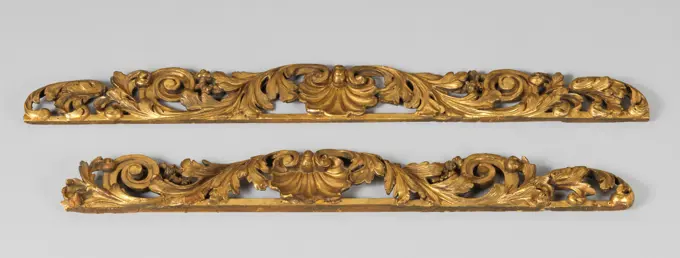
Historical decorative items, including mounts and ornamented bits. Showcase intricate designs, often related to equestrian and cultural heritage.
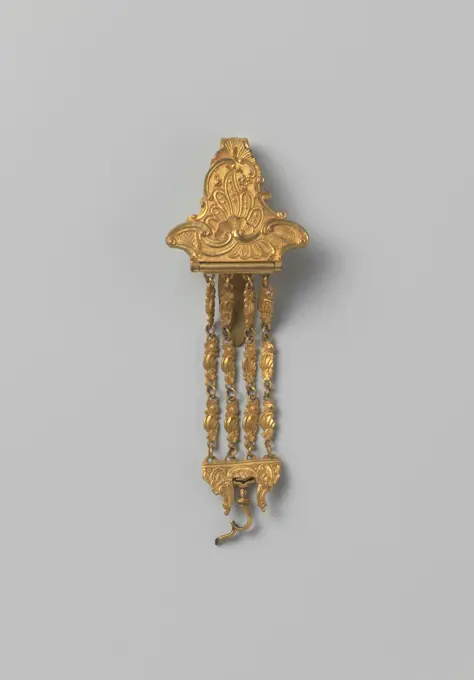
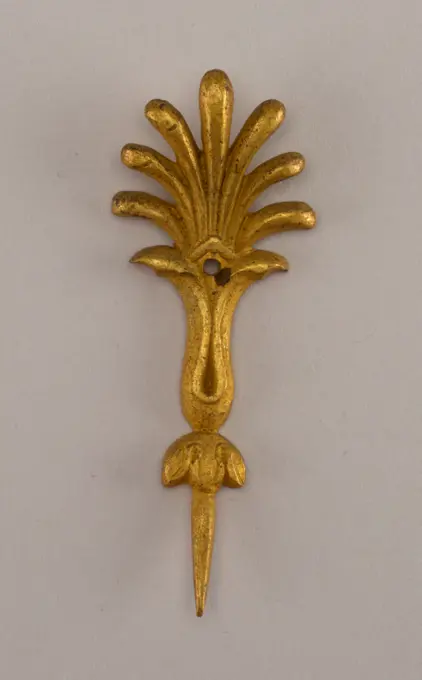
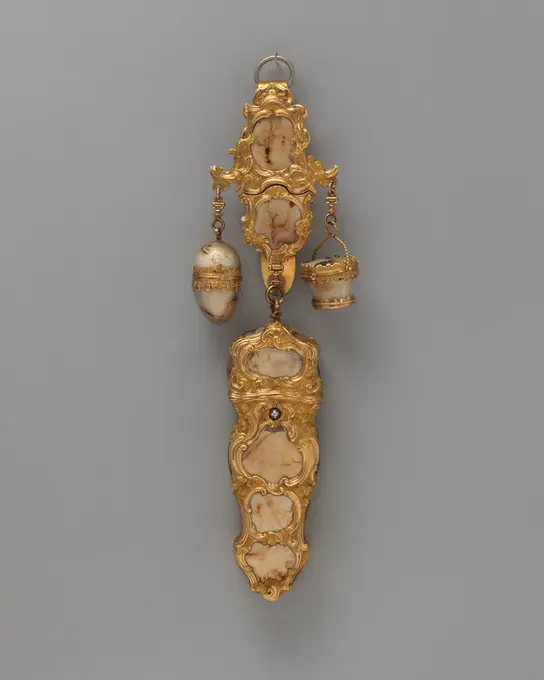
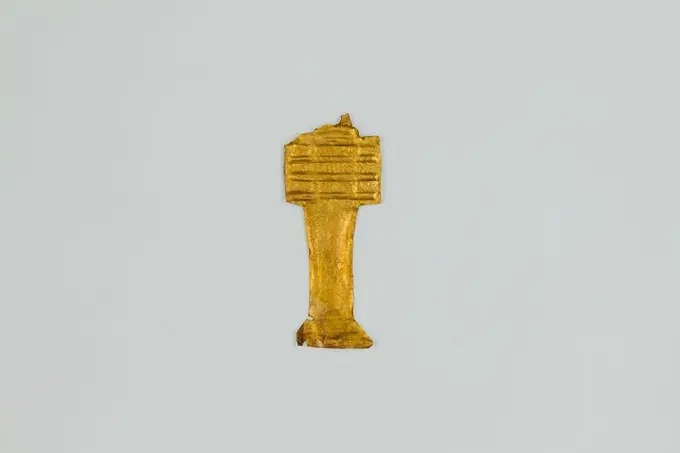
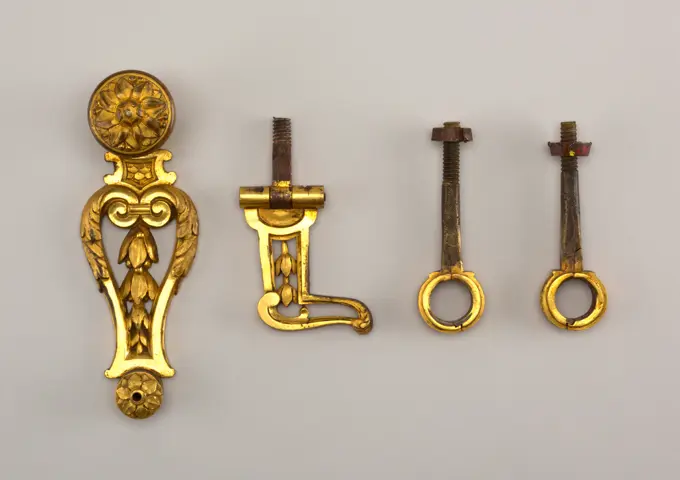
Chatelaine, intended for a watch consisting of a hook and four chains, anonymous, c. 1750 - c. 1775  The object is composed of the following mostly cast pieces: the hook, four chains, which are attached to a hinge and at the bottom of the element with a view to the watch. The decoration consists of C-Voluten. Netherlands brass (alloy) casting
Chatelaine, intended for a watch consisting of a hook and four chains, anonymous, c. 1750 - c. 1775 The object is composed of the following mostly cast pieces: the hook, four chains, which are attached to a hinge and at the bottom of the element with a view to the watch. The decoration consists of C-Voluten. Netherlands brass (alloy) casting
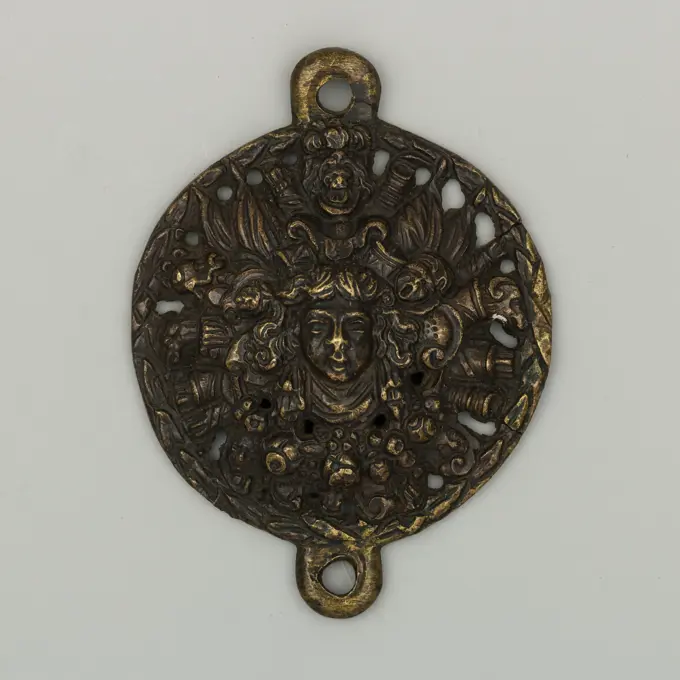
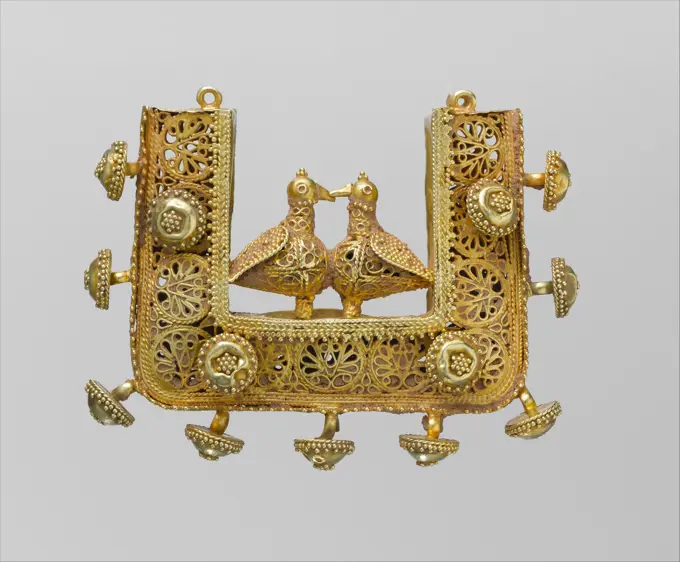
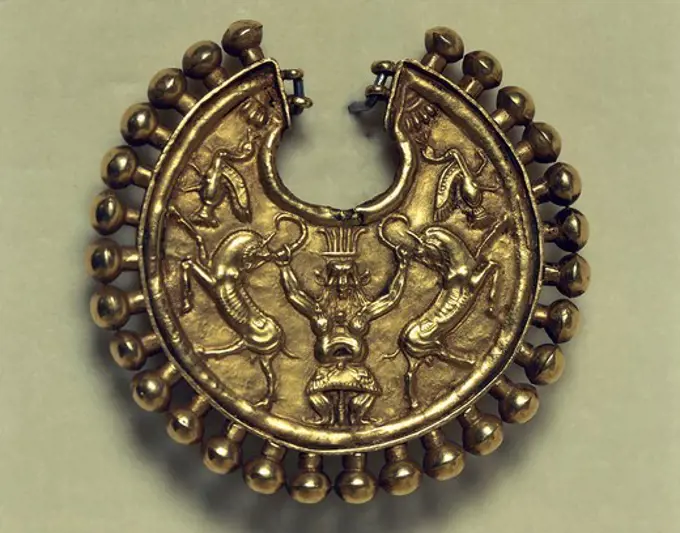
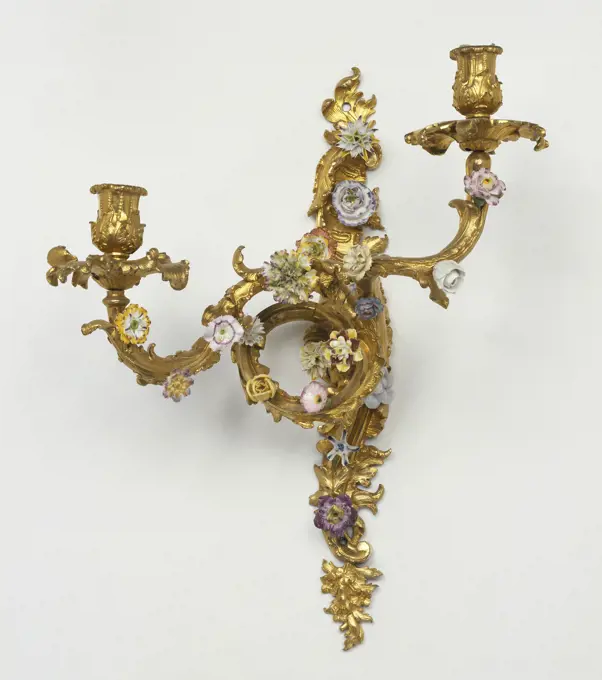
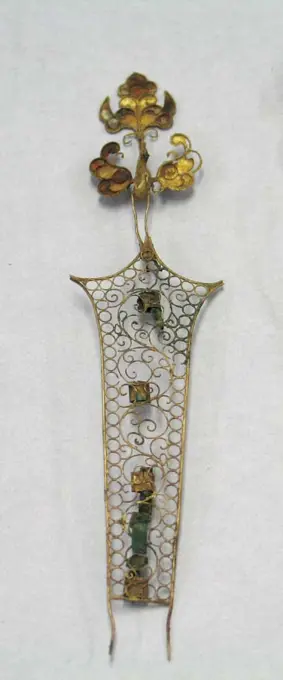
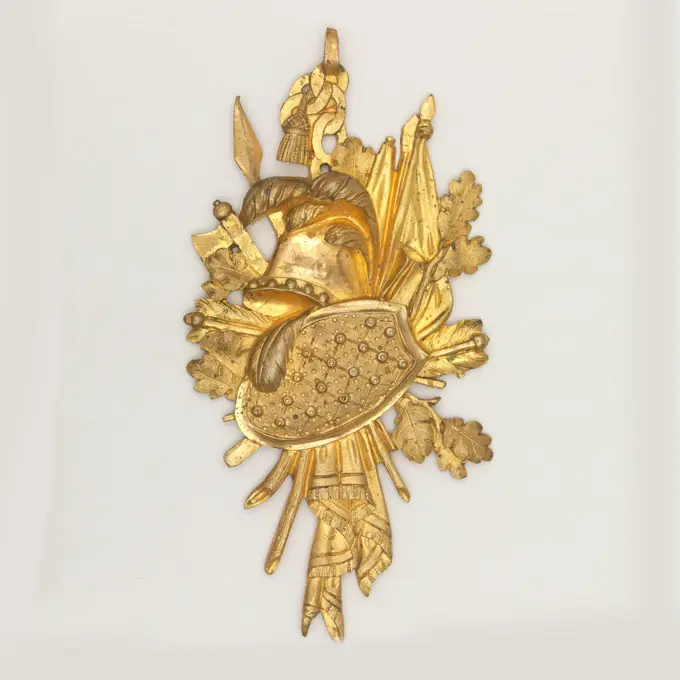
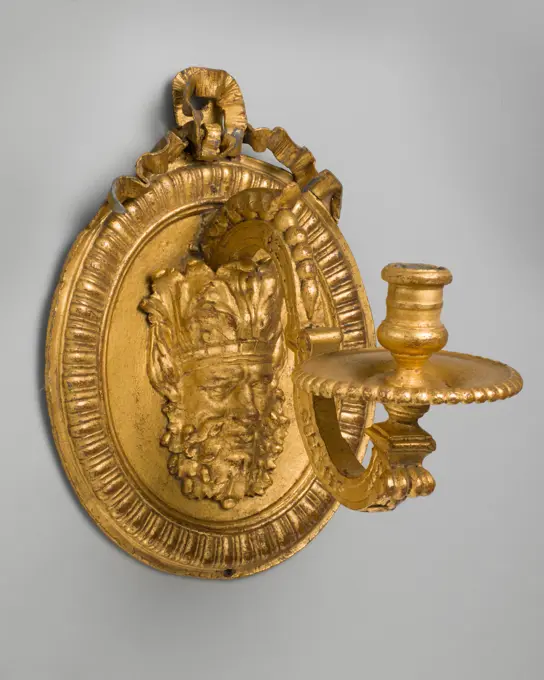
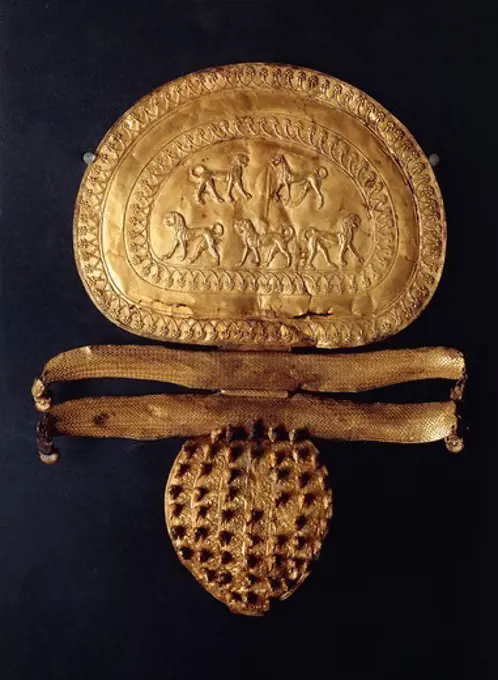
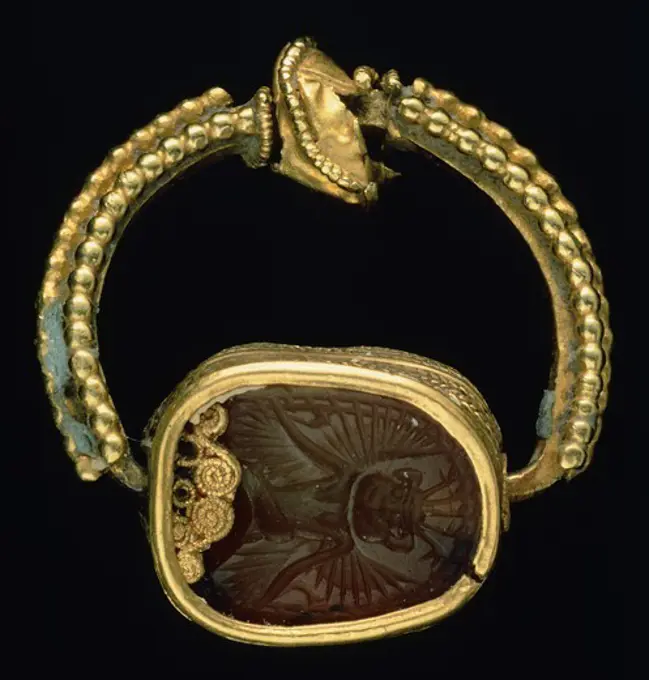
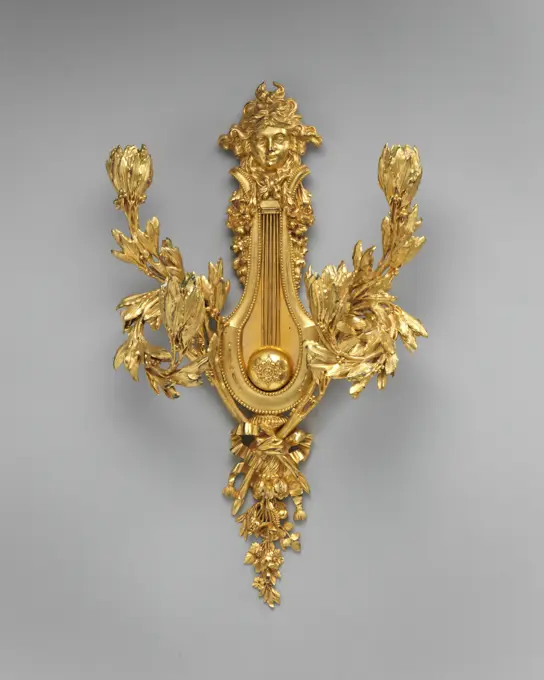
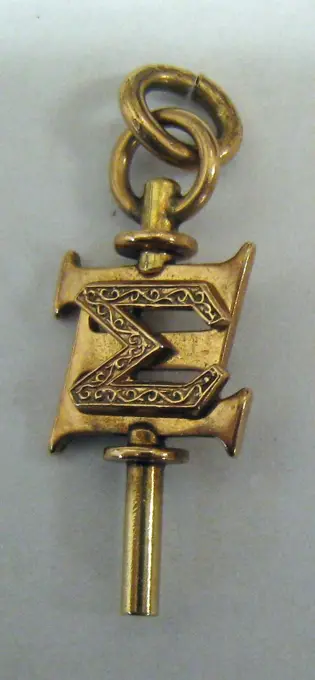
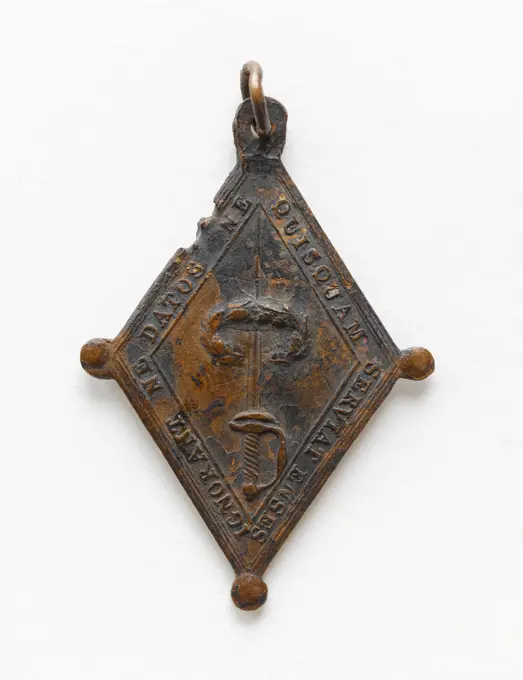
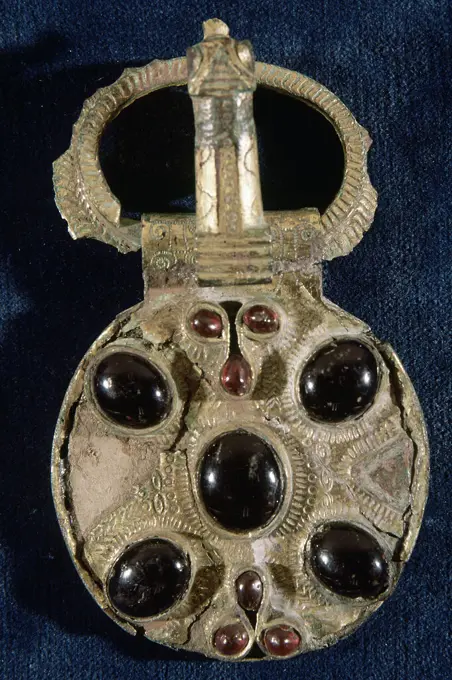
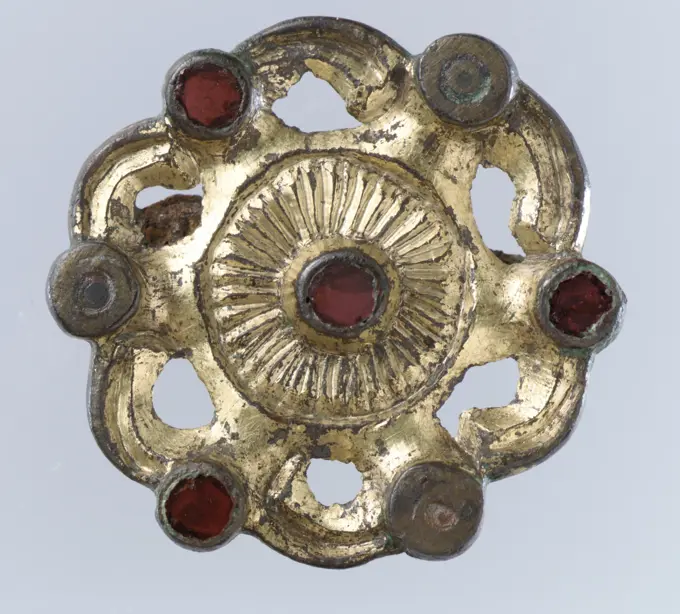
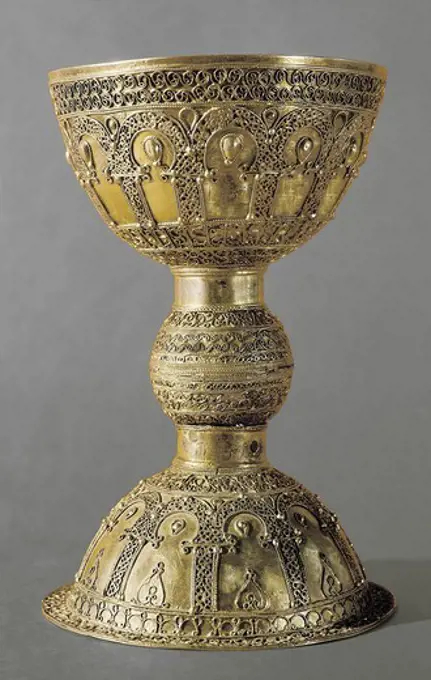
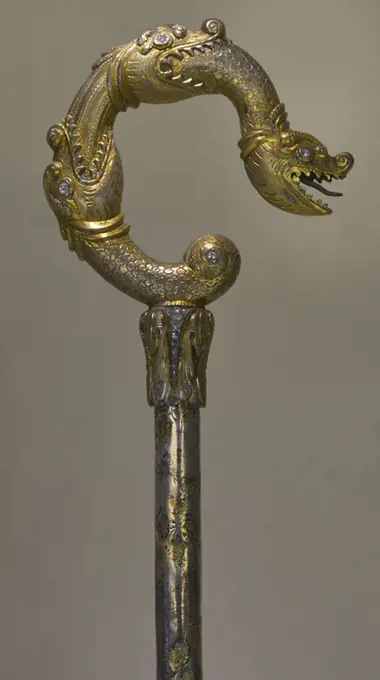
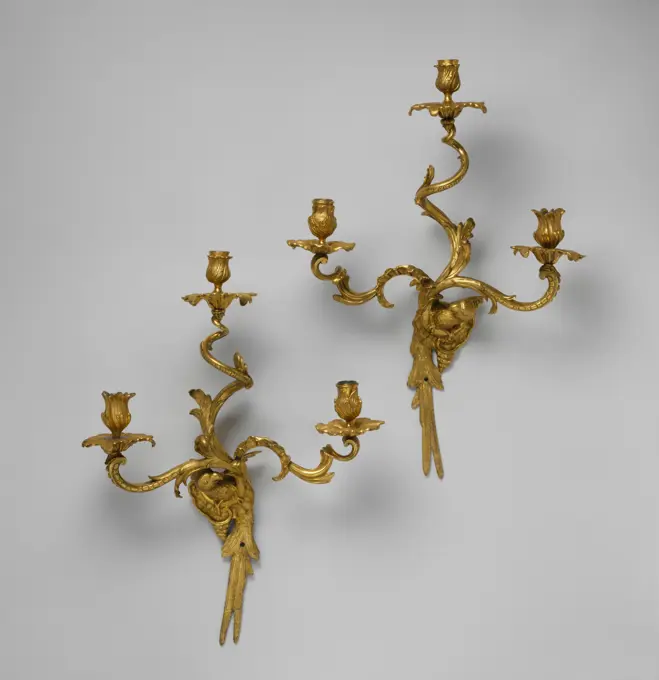
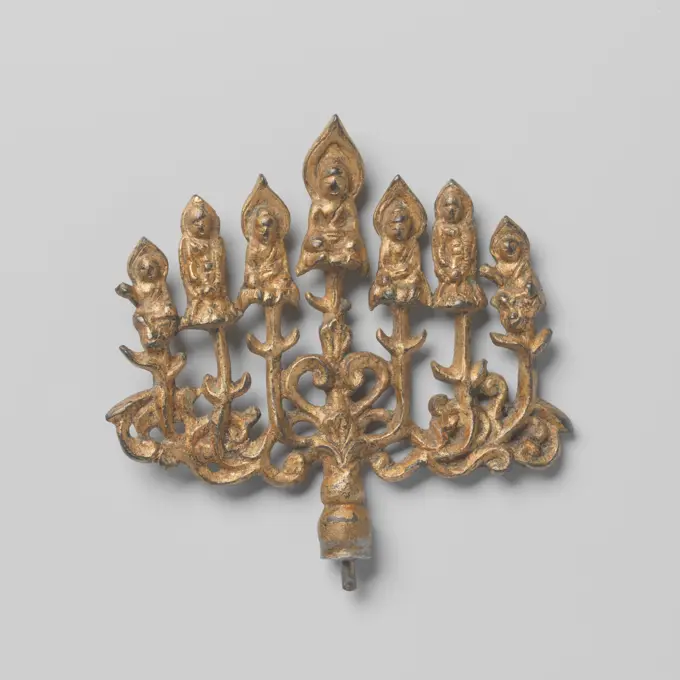
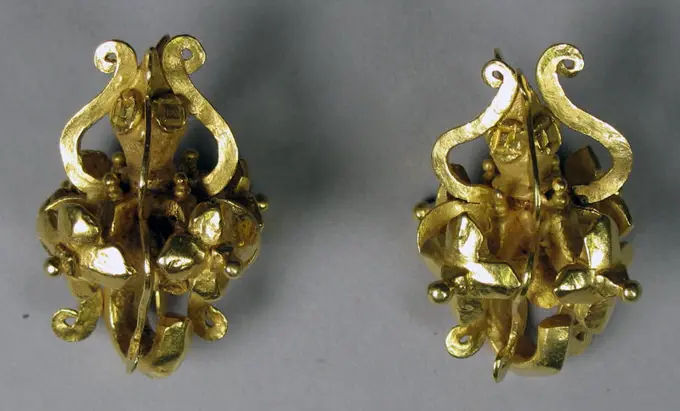
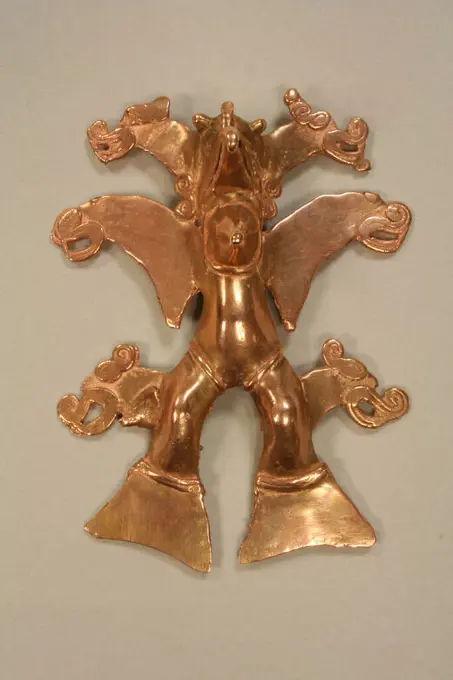
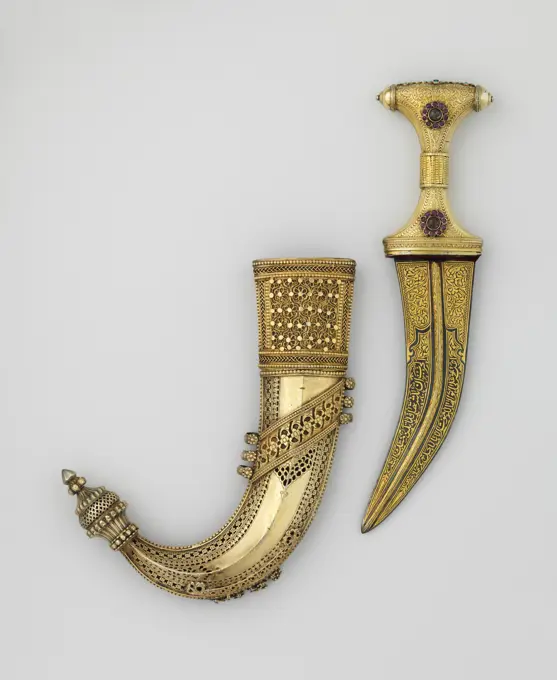
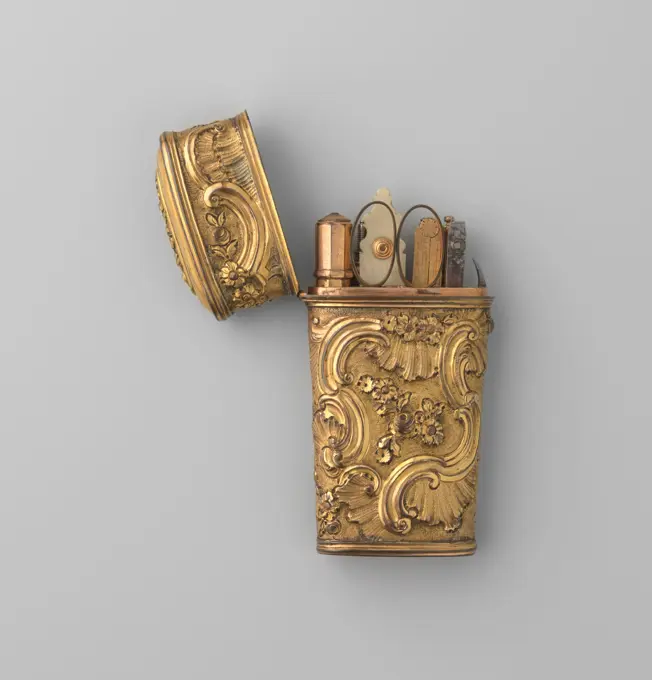
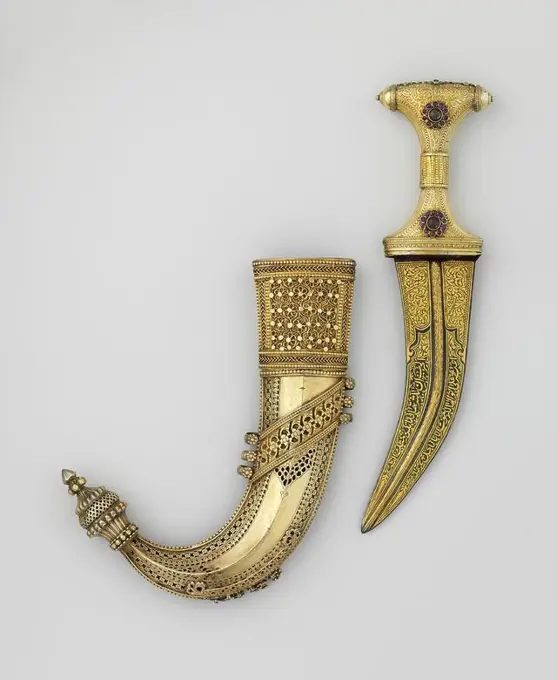
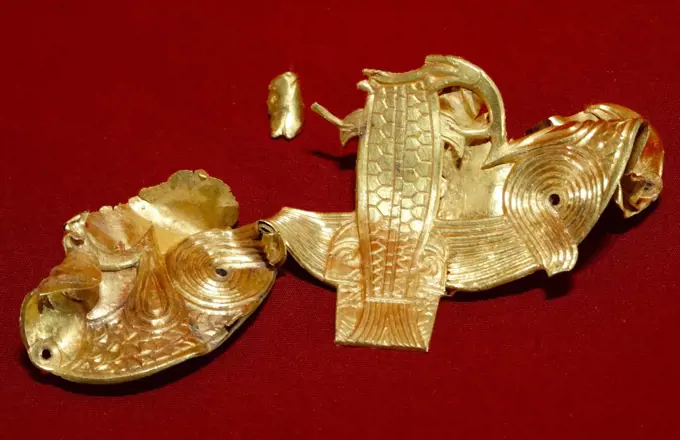
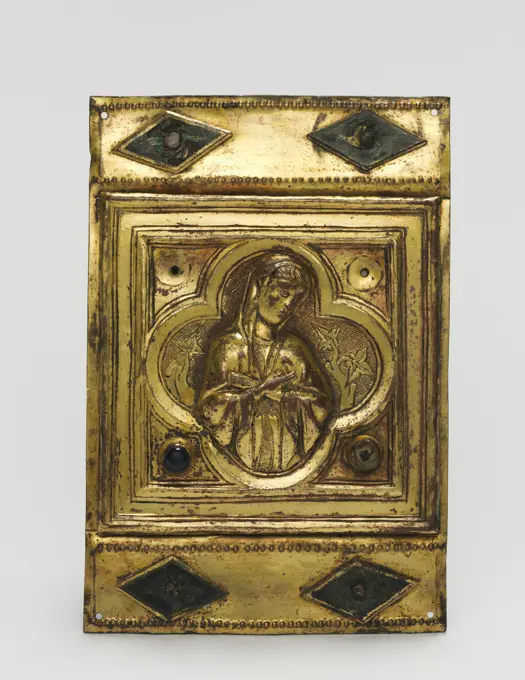
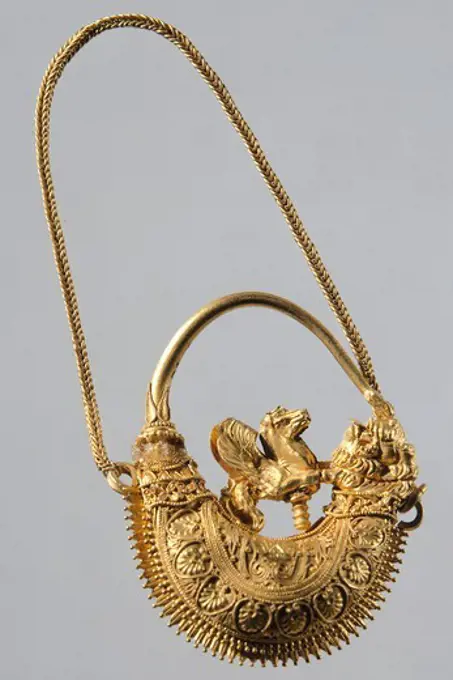
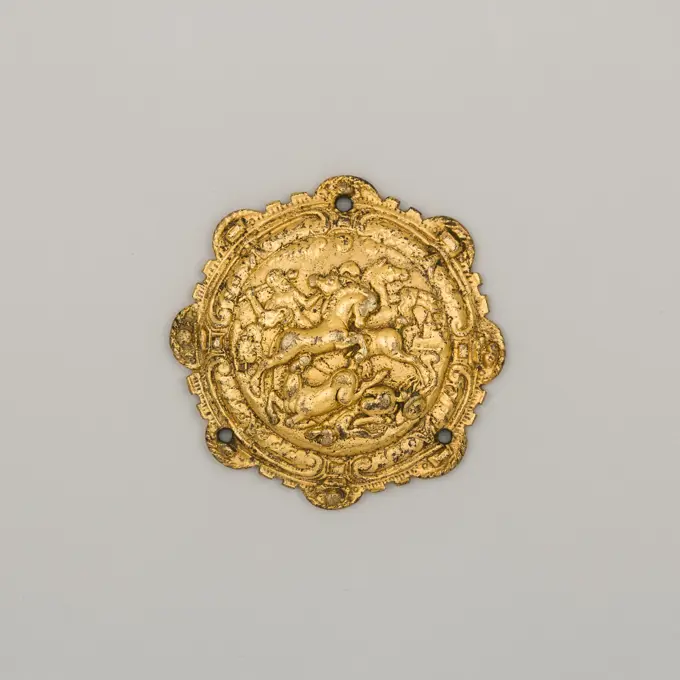
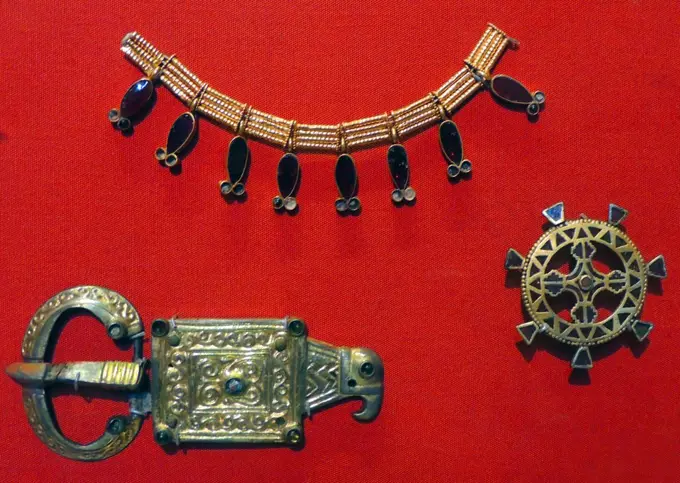
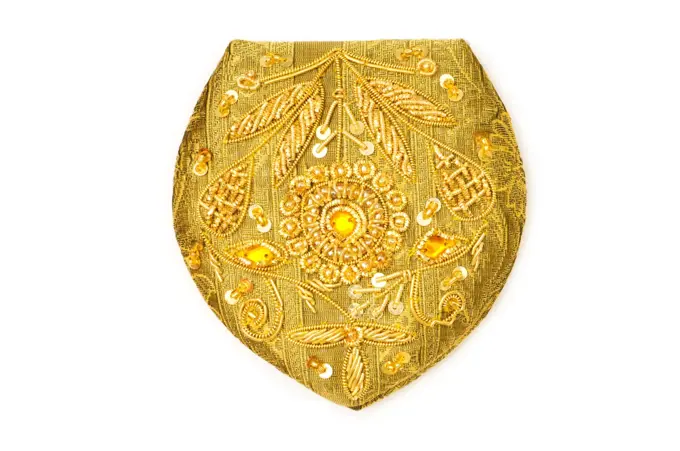
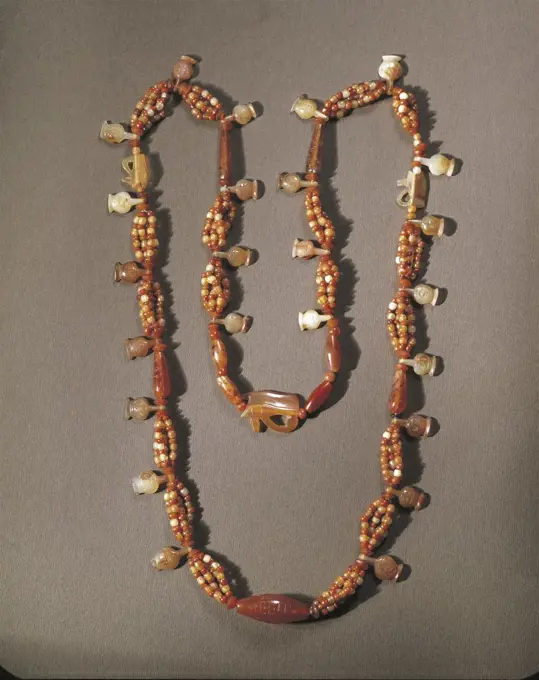
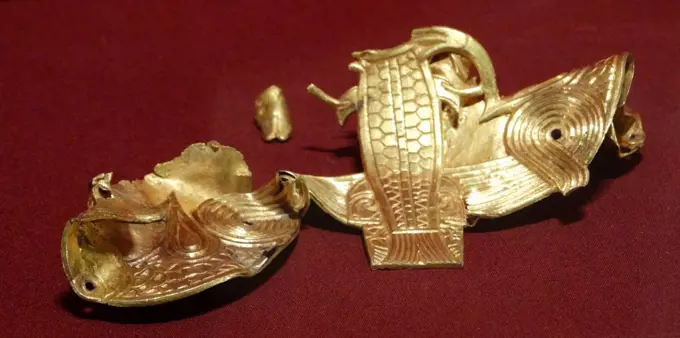
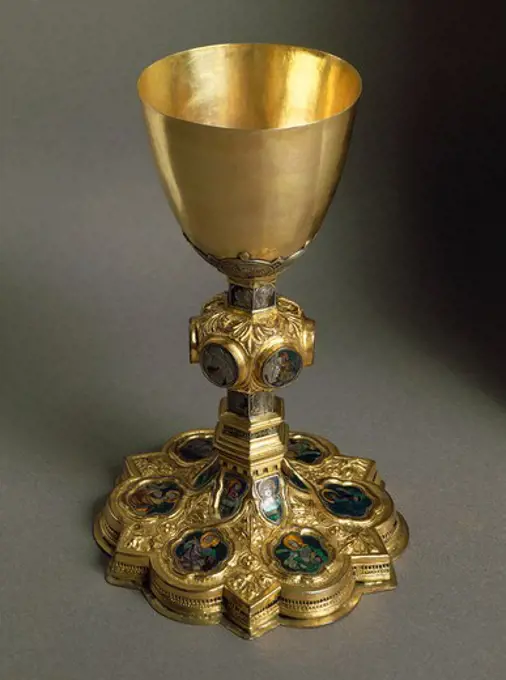
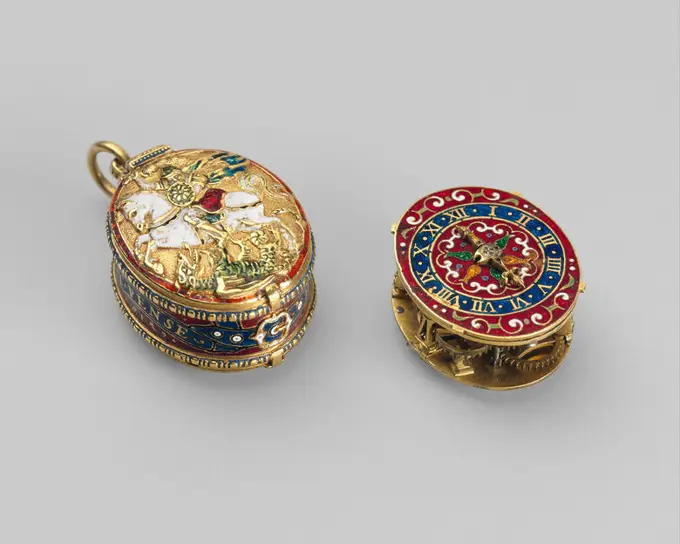
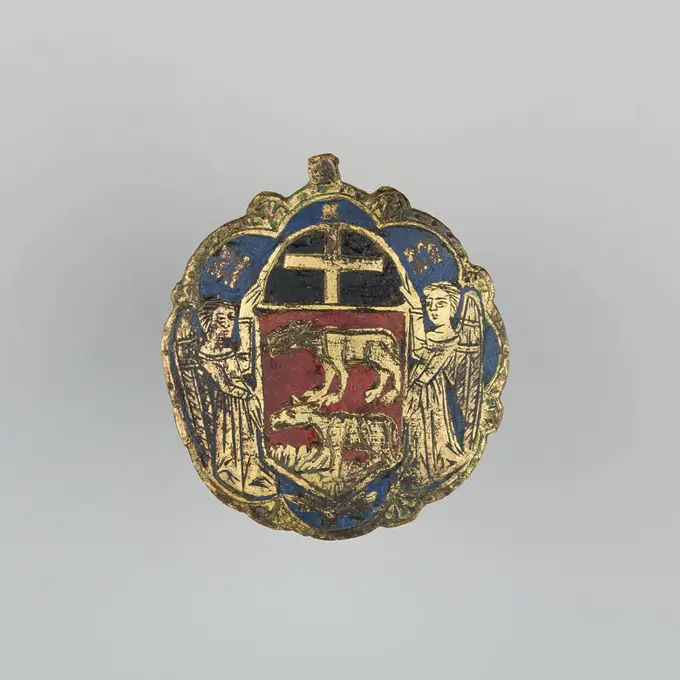
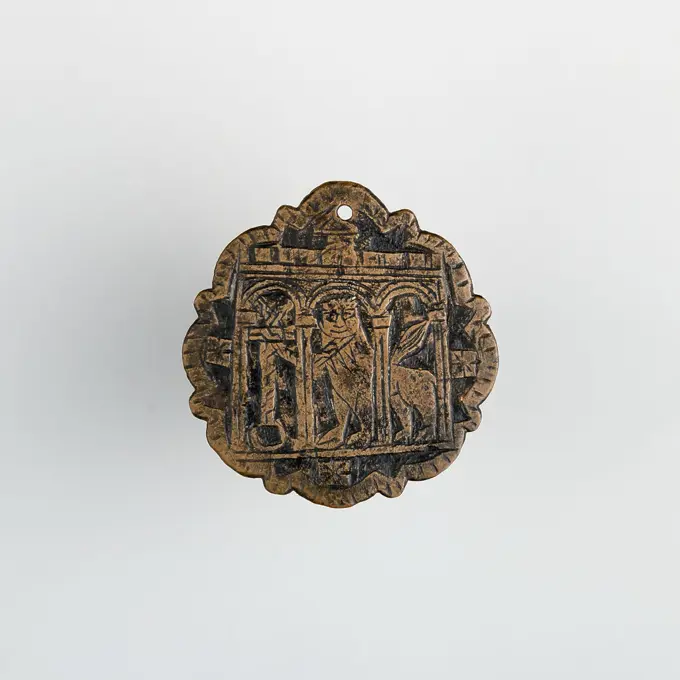
MountBit Boss ca. 1670 French The pierced decoration of this bit boss displays the head of Apollo in the center of a trophy of arms, flags, cannons, masks, flowers and fruits, with a plumed helmet adorned with a lion's head emerging at the top. These elements are arranged in such a way that they are radiating from the central head, visually recalling Louis XIV's emblematic Apollonian sun.Bit bosses were ornamental elements decorating both sides of a horse bit. A more luxurious version of the design of this boss was used for bits that were part of an equestrian gift sent by Louis XIV of France to King Charles XI of Sweden in 1673, now preserved in the Royal Armory of Stockholm.. Bit Boss. French. ca. 1670. Copper alloy. Equestrian Equipment-BitsMountRitual Scraper 14th century Sino-Tibetan. Ritual Scraper 61359BLIŻEJ KULTURY unknownChatelaine with cachet and watch key, Firma Marchand Fils, 1781 jewellery Corning with a watch of gold (BK-VBR-357-1). clockmaker: Parisjeweler: Switzerland (possibly)jeweler: Amsterdam gold (metal)Chatelaine, intended for a watch consisting of a hook and four chains, anonymous, c. 1750 - c. 1775  The object is composed of the following mostly cast pieces: the hook, four chains, which are attached to a hinge and at the bottom of the element with a view to the watch. The decoration consists of C-Voluten. Netherlands brass (alloy) castingChatelaine. Culture: British. Dimensions: Overall (confirmed): 7 3/4 × 1 7/8 × 7/8 in. (19.7 × 4.8 × 2.2 cm). Date: 1750-60.Chatelaines, which hung from the waist, were designed to hold sewing, writing, or toilet implements. Museum: Metropolitan Museum of Art, New York, USA.Bracket (France); gilt bronzeMountEarrings and Pendant 11th-12th century This pendant belongs to the same set as a pair of earrings the Museum acquired in 2006. It is constructed of gold sheet, wire, and filigree; the details of the decoration, including the two confronted birds joined by their beaks, were achieved with openwork filigree and fine granulation. A number of mushroom-shaped prongs decorated with granulation protrude from the pendant. The stem of each prong is pierced, suggesting that strings of tiny pearls once decorated this jewel. This beautifully constructed object has an immediate, strong aesthetic appeal. On the one hand, the best technical and aesthetic comparisons for it and the earrings can be found in the Greater Iranian region. On the other, the iconography of the confronted birds, the box construction, and, especially, strings of pearls were popular in Fatimid Syria and Egypt. That the prongs, a prominent feature of both the pendant and the matching earrings, appear to be unique makes a firm attFragment; wood, gildedHeaddress(Wutulai)Mount, Gilt bronze, Winged female sphinx facing right with acanthus leaf crown from which springs an ancanthus-like flower, a tall symmetrically leafed and berried stem and a long spiraled leafed stem ending in a rosette. Sphinx's tail is an elongated acanthus leaf ending in a double spiraled stem, each of which terminates in a rosette. Seven screw holes and two small threaded projections under feet for attachment to wood. End broken off center stem projecting from crown., ca. 1805, Decorative Arts, MountDouble Cup 1590-1600 Caspar Beutmüller the Elder German Caspar Beutmüller moved from Venice to Nuremberg in 1585, where he became a master goldsmith and a citizen of the city. He made this cup in about 1590-1600. He apparently kept it in his household until he sold and marked it three years before his death.. Double Cup 464504Molding; woodTiger Claw Pendant 8th-12th century Indonesia (Central Java). Tiger Claw Pendant 65109Defects (fragment);  19th century (1801-00-00-1900-00-00);Gold earrings with god Ahura Mazda between two mountain goats, Goldsmith artMountWall Light; Paris, France; about 1750; Soft-paste porcelain; gilt bronze; 45.7 x 34.3 x 19.7 cm (18 x 13 1,2 x 7 3,4 in.)Clasp And Buckle (Sweden); silver giltPendant Triptych with an Onyx Cameo of the Nativity, c. 1460-1500; cameo: c. 1250-1300. Pendant: France, Paris or Tours; Cameo: Italy, 13th-15th century. Basse-taille enamel on gold; onyx cameo; overall: 5.8 x 2 cm (2 5/16 x 13/16 in.); part 1: 4.5 x 3.5 cm (1 3/4 x 1 3/8 in.).Pendant, Medium: silk, metallic thread Technique: embroidered on satin weave, Flat, shield-shaped pendant of white satin embroidered in gold and sequins. The pattern, identical on both sides, represents a monstrance with sprays of wheat at the sides, and a border of floral scrolls. Silk tufts at three corners. Loop of gold cord to hang., France or Italy, 18th century, costume & accessories, PendantThe so called belt PrzeworskiMountBadge. Culture: Spanish. Dimensions: H. 2 3/4 in. (7 cm); W. 2 1/4 in. (5.7 cm); Wt. 1 oz. (28.3 g). Date: 14th century. Museum: Metropolitan Museum of Art, New York, USA.Ornament China. Ornament. China. Gold. Tang dynasty (618-907). JewelryRaw linen Ballantyne with golden, sequin and jet embroidery and glass little canes, golden braid handle, 1790, fashion accessories, Italy, 18th century.Furniture Applique (France); gilt bronzeMount, bronze (gilt), gold, France, ca. 1780, metalwork, Decorative Arts, Mount. These two wall-lights feature a Chinaman and a Chinese, or Japanese, woman. They may have been intended to decorate an interior fashioned in the Chinese style.Sconce ca. 1750 British. Sconce. British. ca. 1750. Lead, gilded. Metalwork-Base MetalCenser 12th century German. Censer 463411Gold disc fibula, from the Regolini-Galassi Tomb in Cerveteri (Lazio). Etruscan Civilization, 7th Century BC.Scarab ring. Etruscan civilization, 5th Century BC.Four-branched wall light in form of Lyre (one of a set of four) 1780s French The celebrated bronze worker Pierre Gouthière supplied a pair of wall lights in the form of a lyre with the head of Apollo and olive-leaf branches for the salon of the Duchess of Mazarin. Sold at auction in 1781, the pair was acquired by the Duchess of Mazarins daughter, Louise-Félicité-Victoire dAumont, Duchess of Valentinois. The model was very successful and was frequently reproduced but with some changes such as this set which is based on Gouthières design but is smaller in size.. Four-branched wall light in form of Lyre (one of a set of four). French. 1780s. Gilt bronze. Metalwork-Gilt BronzeSigma Xi watch windingkeyOpenwork PinheadBadge of the winners of the Bastille, 1789. Copper. Paris, Carnavalet museum. 60172-9 Ring, Averse, Weapon, Laurier Crown, Copper, Epee, Insignia, Numismatic, Revolutionary Periode, French RevolutionBROCHE DE CINTURON DE BRAMORTO-TECNICAS DE CABUJON Y FILIGRANA- ARTE VISIGODO SIGLO VI/VII. Location: MUSEO PROVINCIAL. LUGO. SPAIN.Bliżej Kultury unknownMountWhorl-Shaped Brooch 550-650 Frankish Garnets, worked in the cloisonné technique, featured prominently in the luxury jewelry of the Franks. Jewelers would solder small compartments arranged in geometric patterns onto the surface of a metal disk. In those cells, or cloisons, they would place a textured piece of gold foil, which would show through the thin translucent garnet that would then be set on top.. Whorl-Shaped Brooch 465344 Frankish, Whorl-Shaped Brooch, 550650, Copper alloy, gilding, niello, garnet, Overall: 1 5/16 x 5/16 in. (3.3 x 0.8 cm). The Metropolitan Museum of Art, New York. Gift of J. Pierpont Morgan, 1917 (17.192.38)Chalice. 1040. SPAIN. Santo Domingo de Silos. Monastery of Santo Domingo (St. Dominic). Made of golden silver. Mozarabic art. Jewelry.Silla de la reina, detalle. Monasterio de Pedralbes, Barcelona. Siglo XVI.Episcopal staff. 17th century (), Georgia (). Gilt and silver metal, diamonds. Calouste Gulbenkian Museum. Lisbon, Portugal.FIBULA DE PLATA CON MOTIVOS ZOOMORFOS. IBERICO JOYERIA.(DEPOSITO: MUSEO ARQUEOLOGICO NACIONAL).Set of four three-light wall brackets ca. 1745-49 Design attributed to Charles Cressent The tails of the parrots, perched on a shell-shaped rocaille, form an integral part of the overall design that has been attributed to Charles Cressent (1685-1768). They may have been cast and chased by Jacques Confesseur who collaborated with Cressent. In the catalogues of two sales that Cressent organized of his stock in 1749 and 1757 several pairs of wall lights with parrots of either lacquered bronze or gilded bronze were listed. Strictly against guild regulations, Cressent, who was trained both as a cabinetmaker and a sculptor, had furniture mounts, wall-lights, firedogs, and other furnishings of gilt bronze made in his own workshop. This brought him into conflict with the guild of casters and gilders on various occasions. Although this model was very popular and repeated a number of times, these wall lights are stamped with a crowned C, a tax mark in use between February of 1745 and February ofSculpture group, Anonymous, 618 - 907 Pedestment at the seven Buddhas of the past, resting on the ends of stylized tiflines. Possibly this is a counterfeit China bronze (metal) gilding Pedestment at the seven Buddhas of the past, resting on the ends of stylized tiflines. Possibly this is a counterfeit China bronze (metal) gildingMechanical watch. Culture: British, London. Dimensions: Diameter: 1 7/8 in. (4.8 cm). Date: ca. 1710. Museum: Metropolitan Museum of Art, New York, USA.Two lines of sculpted and gold-plated lion wood. Two parts heard at Table BK-1962-49.Pair of Large Hexagonal Ear Ornaments 11th-14th century Sulawesi, Eastern Java. Pair of Large Hexagonal Ear Ornaments 64233Crescent-Shaped Earring, 1000-1100. Byzantium, Constantinople, Byzantine period, 11th century. Gold filigree with cloisonné enamel; average: 2.3 x 2.6 cm (7/8 x 1 in.).HandleMountHarness Pendant 13th-early 15th century possibly Spanish Heraldry, or coat-of-arms, were vitally important in Europe throughout the Middle Ages and the Renaissance. Heraldic emblems were used to identify noble families, cities, regions, and even countries. In addition to being displayed on shields and flags, heraldry was incorporated into architectural decoration on the interior and the exterior of buildings, on furniture, works of art, clothing, and horse equipment. Harness pendants, like this example, would have been attached to a headstall, bridle, or other straps making up the tack of a horse ridden by a nobleman or noblewoman, or a member of their household. Many harness pendants also have decoration that is simply ornamental, or have symbols that are not specifically heraldic in nature.. Harness Pendant 25480Bracelet, One of a Pair 18th century. Bracelet, One of a Pair. 18th century. Gold, rubies, emerald. Attributed to India, Punjab or Rajasthan. JewelryBadge or Harness Pendant ca. 1400 Spanish Heraldry, or coat-of-arms, were vitally important in Europe throughout the Middle Ages and the Renaissance. Heraldic emblems were used to identify noble families, cities, regions, and even countries. In addition to being displayed on shields and flags, heraldry was incorporated into architectural decoration on the interior and the exterior of buildings, on furniture, works of art, clothing, and horse equipment. Harness pendants, like this example, would have been attached to a headstall, bridle, or other straps making up the tack of a horse ridden by a nobleman or noblewoman, or a member of their household. Many harness pendants also have decoration that is simply ornamental, or have symbols that are not specifically heraldic in nature.. Badge or Harness Pendant. Spanish. ca. 1400. Copper, gold, enamel. Miscellaneous-BadgesBliżej Kultury unknownRomantic set. Gold, brass, vermeil. France, around 1830. Museum of Fine Arts of the City of Paris, Petit Palais. Fashion accessory, jewelryStrainer (Russia), 1873; silver, gilding; L x W x D: 13.3 x 4.6 x 2.2 cm (5 1/4 x 1 13/16 x 7/8 in.)Pendant. Culture: Chiriqui (). Dimensions: H. 4 3/8 x W. 3 3/8 x D. 1 1/2 in. (11.1 x 8.6 x 3.8 cm). Date: 11th-16th century. Museum: Metropolitan Museum of Art, New York, USA.Chalice, detail, Goldsmith's art and textile art from the 16th to the 20th century, St., Sankt, SaintDagger (Jambiya) with Scabbard and Fitted Storage Case 1876-1909 Arabian, Medina A traditional jambiya Arab dagger, this example commemorates a Turks pilgrimage to Mecca. Inscriptions on the scabbard give the name of the owner and the city of manufacture, Medina, another pilgrimage site, while those on the blade include verses of poetry and the name of the maker, Izzet. The storage case, made in Turkey, bears the calligraphic cipher (tugra) of the Ottoman sultan Abdülhamid II (r. 1876-1909).. Dagger (Jambiya) with Scabbard and Fitted Storage Case 32370Bliżej Kultury unknownTwo lines of sculpted and gilded Lindehout, Anonymous, 1689 Two parts horning at Table BK-1962-49.  wood (plant material). gilding (material) gilding Two parts horning at Table BK-1962-49.  wood (plant material). gilding (material) gildingGalloon 17th-18th century Unknown. Galloon 213772Necessary of gilded copper in relief decorated with rocailles, anonymous, c. 1750 Necessary of gilded copper in relief decorated with rocailles, in which a scissors, travel cutlery to be screwed together, screw, prime, curved needle, folding lineal, slate, toothpick/ear tinkle, needle tube and pincet/file. Model: flat, tapered with lid, which hinges on the narrow back. The entire exterior and the inside of the lid are gold -plated. The part used is made of wood in which boxes for the various objects are sawn and finished with red copper at the top. Octagonal, tapered looped holder of red copper with a loose lid on the wide side and a thread on the narrow side. In it a smaller octagonal, tapered stem, which also has a loose lid on the wide side and a narrow side a thread. In the thicker handle, the iron blade of the large, rounded knife is screwed, while the thinner is intended for the two -way iron fork. Both stems can also be used for the iron screw, ditto prime and the small, pointedDagger (Jambiya) with Scabbard and Fitted Storage Case. Culture: Arabian, Medina. Dimensions: L. of dagger with scabbard 12 3/4 in. (32.4 cm); Wt. of dagger with scabbard (642.0 g); Dagger: L. 11 1/16 in. (28.1 cm); L. of blade 6 3/4 in. (17.2 cm); W. 2 7/8 in. (7.3 cm); Wt. 9.1 oz. (258 g); Scabbard: L. 8 7/8 in. (22.5 cm); Wt. 13.7 oz. (388.4 g); Case: H. 14 in. (35.6 cm); W. 3 1/2 in. (8.9 cm); Wt. 10.8 oz. (306.2 cm). Date: 1876-1909.A traditional jambiya Arab dagger, this example commemorates a Turk's pilgrimage to Mecca. Inscriptions on the scabbard give the name of the owner and the city of manufacture, Medina, another pilgrimage site, while those on the blade include verses of poetry and the name of the maker, Izzet. The storage case, made in Turkey, bears the calligraphic cipher (tugra) of the Ottoman sultan Abdlhamid II (r. 1876-1909). Museum: Metropolitan Museum of Art, New York, USA.JOYERO DE ISABEL CATOLICA - SIGLO XV. Location: CATEDRAL-CAPILLA REAL-INTERIOR. GRANADA. SPAIN.Artefact from the Staffordshire Hoard of Anglo-Saxon gold and silver metalwork. Discovered in a field near the village of Hammerwich, near Lichfield, in Staffordshire, England, on 5 July 2009, it consists of over 3,500 items from the Anglo-Saxon kingdom of Mercia.Rasp made of palmhout with musical instruments decorated ,, 1700 - 1750 Rasp made of palmhout. The flat back shows a trophee of musical instruments hung on a ribbon. At the top a maucaron flanked by Acanthusvoluten that end in eagle's heads. At the front in the iron grater, such a decoration was awarded and has an opened mouth at the bottom. France boxwood. iron (metal) Rasp made of palmhout. The flat back shows a trophee of musical instruments hung on a ribbon. At the top a maucaron flanked by Acanthusvoluten that end in eagle's heads. At the front in the iron grater, such a decoration was awarded and has an opened mouth at the bottom. France boxwood. iron (metal)Garrote para atar gavillas. Museu Català de les Arts i Tradicions Populars.Madrid 06-21-2012 report for the Madrid Section of the Hidden Corners of the Valley of the Fallen photo Jaime Garcia Archdc.Ornamental Plaque, c. 1380-1400. Italy, Tuscany, 14th century. Champlevé enamel, glass paste stones, and gilding on copper; overall: 11.2 x 7.7 cm (4 7/16 x 3 1/16 in.). These plaques appear to have been part of a larger ensemble forming a band of decoration affixed to a church altar. Each plaque is decorated in multiple techniques-embossing, engraving, enameling, and gilding-to create a sumptuous visual effect.Gold earring from Volos (Greece). Goldsmith art, Greek Civilization, 4th-3rd Century BC.Key mid-18th century German. Key 187106Fragment of the female dear decorations;  19th century (1801-00-00-1900-00-00);Two-light wall bracket. Culture: French, Paris. Dimensions: Overall: 9 × 11 1/2 × 5 3/4 in. (22.9 × 29.2 × 14.6 cm). Maker: Attributed to Antoine-André Ravrio (1759-1814). Date: ca. 1804-14.This crowned and bearded mask of an old man bears an inventory number from the Palais des Tuileries. One of a pair, the wall sconce was, according to an 1833 inventory, in the pavillon de la conciergerie in the apartment of Emmanuel-Louis-Nicolas Viollet-Le-Duc, keeper of the palace and father of the famous architect Eugène Emmanuel. An elongated ornament pendent from the palmette motif between the two branches is missing. This ornament is still present on a similar wall light, one of a pair that was supplied in 1808 to the chteau de Fontainebleau by bronze caster and chaser Antoine-André Ravrio, who was most likely also responsible for the Museum's wall sconce. Ravrio worked for the French court before the Revolution and later for Napoleon. Museum: Metropolitan Museum of Art, New York, USA.Djed pillar amulet. Dimensions: l. 2.5 cm (1 in.) × h. 1.1 cm (7/16 in.). Dynasty: Dynasty 26-29. Date: 664-380 B.C.. Museum: Metropolitan Museum of Art, New York, USA.Bit Boss with Hercules and Diomedes late 16th century German, probably Augsburg The central part of this bit boss depicts Hercules with the carnivorous mares of Diomedes in a landscape suggested by trees and a castle on the right. This scene is copied from an original composition found on a circular plaquette by Moderno (Galeazzo Mondella) dated 1508 showing the Death of Hippolytus, son of Theseus. Hercules and a fifth horse were added to Modernos scene, which shows four horses and Hippolytus at the bottom falling from his chariot, to transform it into Hercules and Diomedes (Hippolytus being reinterpreted as Diomedes killed by his own horses).German bronze founders would regularly use Italian medals or plaquettes as models for their works, including bosses, like this one, which decorated the sides of horse bits. They also produced similar decorative elements for powder flasks, staff weapons or even pistols. This scene seems to have been a common design for bit bosses and plaquettes maGold and Garnet Collar, Silver Eagle-headed buckle and a Gold and Garnet Disc Brooch 300 A.D. From KerchBadge or Harness Pendant ca. 1400 Spanish Heraldry, or coat-of-arms, were vitally important in Europe throughout the Middle Ages and the Renaissance. Heraldic emblems were used to identify noble families, cities, regions, and even countries. In addition to being displayed on shields and flags, heraldry was incorporated into architectural decoration on the interior and the exterior of buildings, on furniture, works of art, clothing, and horse equipment. Harness pendants, like this example, would have been attached to a headstall, bridle, or other straps making up the tack of a horse ridden by a nobleman or noblewoman, or a member of their household. Many harness pendants also have decoration that is simply ornamental, or have symbols that are not specifically heraldic in nature.. Badge or Harness Pendant. Spanish. ca. 1400. Copper, gold, enamel. Miscellaneous-BadgesEspagnoletteJewellery box isolated on the white backgroundEgyptian Civilisation, New Kingdom, 2nd millennium BC. Carnelian necklacePlaque in the shape of two birds of prey and a fish. Dated 6th CenturyGoldsmith's art, Italy, 15th century. Chalice from Vellano, Tuscany Region, 1400-1425.Watch in the form of a Lesser George. Culture: British, London. Dimensions: Overall: 1 7/16 × 15/16 in. (3.7 × 2.4 cm). Maker: Movement by Nicholas Vallin (recorded ca. 1590, died 1603). Date: ca. 1600.Made in the shape of an ensign of the English Order of the Garter, the case of this watch depicts Saint George fighting the dragon, and its band is enameled with the motto of the order: HONI.SOIT.QVI/ MAL.Y. PENSE. Its function as a timekeeper would have been incidental to its function as a jewel required to be worn by a knight of the order as part of his daily dress. Museum: Metropolitan Museum of Art, New York, USA.Two Beggars Medals, Jacques Jonghelinck (copy after), 1566  Silver oval medal with carrying eye and carrying ring on top, and wear on the bottom. Front: breastpiece man inside Covering and leafkrans. Reverse: Two collapsed hands stabbed by a begging bag inside the shifting and leaf wreath.  silver (metal). gilding (material) casting / gildingBadge (probablly from Horse Harness). Culture: Spanish. Dimensions: H. 2 1/2 in. (6.4 cm); W. 2 1/4 in. (5.7 cm); Wt. 1 oz. (28.3 g). Date: ca. 1400. Museum: Metropolitan Museum of Art, New York, USA.32.75.37a, b                           196972Corner with Simson destroys the temple, Anonymous, c. 1535 - c. 1550 Hattagraaf of gold and email. The performance of Simson that makes the walls of the Temple of Dagon collapse. France (possibly) gold (metal). Hattagraaf of gold and email. The performance of Simson that makes the walls of the Temple of Dagon collapse. France (possibly) gold (metal).Ear Spool, c. 400-900. Panama, Conte style, 5th - 10th century. Hammered gold; diameter: 3.1 cm (1 1/4 in.); overall: 3.2 cm (1 1/4 in.).Plaque, 400 BCE, 2 3/16 x 4 1/8in. (5.6 x 10.5cm), Bronze, Mongolia, Sino-SiberianMount, Gilded pressed copper, All over grapevine and grapes decoration, USA, ca. 1830-50, metalwork, Decorative Arts, MountBadge (probably from Horse Harness). Culture: Spanish. Dimensions: H. 2 5/16 in. (5.9 cm); W. 2 1/4 in. (5.7 cm); Wt. 1 oz. (28.3 g). Date: 14th century. Museum: Metropolitan Museum of Art, New York, USA.1/48 Stater from Sardis,Lydia. Mint, possibly by: SardisPlaque in the shape of two birds of prey and a fish. Dated 6th Century