Antique Decorative Items

Various historical decorative objects like candlesticks and bottles showcasing intricate metalwork and designs from different cultures and eras.
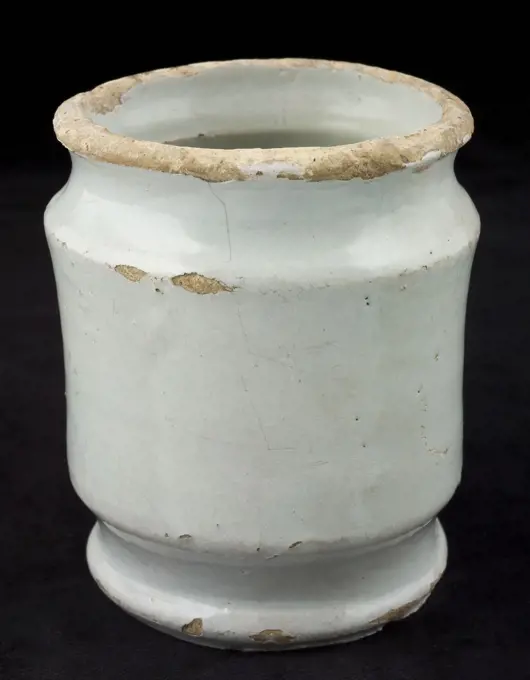
Pottery ointment jar, cylindrical, two constrictions, white glazed, ointment jar pot holder soil find ceramic earthenware glaze tin glaze, hand turned baked glazed baked Pottery ointment jar cylindrical in shape with two necking. Diameters of neck and bottom are smaller than those of the sidewall White glazed with blue tint Coarse craquelé in enamel Stand with soul Swirls on the inside. Delftware archeology health care indigenous pottery packing pharmacy store sell medicine drug craft
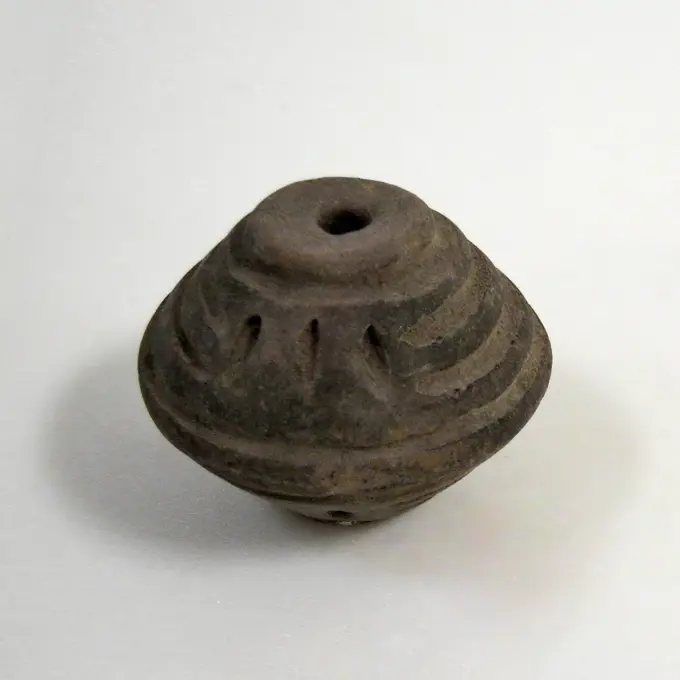
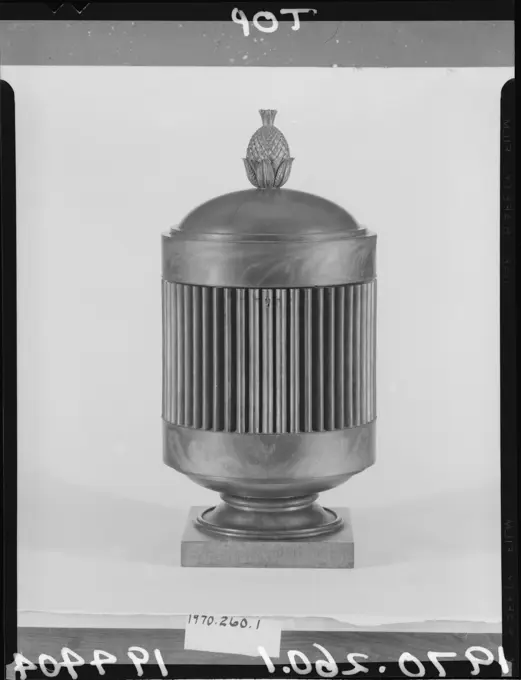
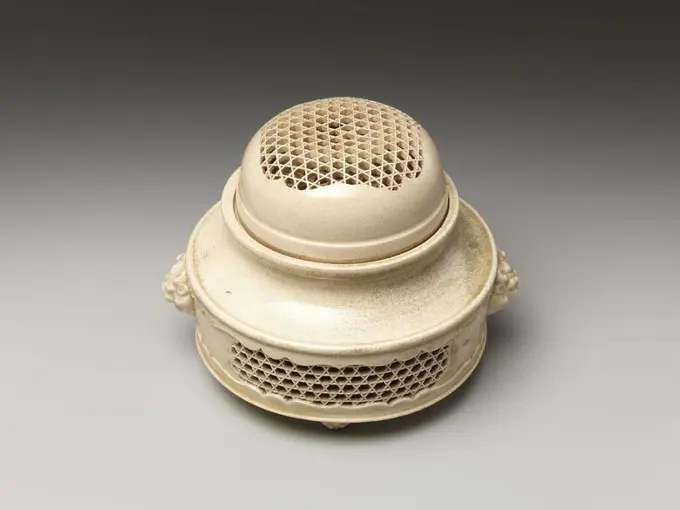
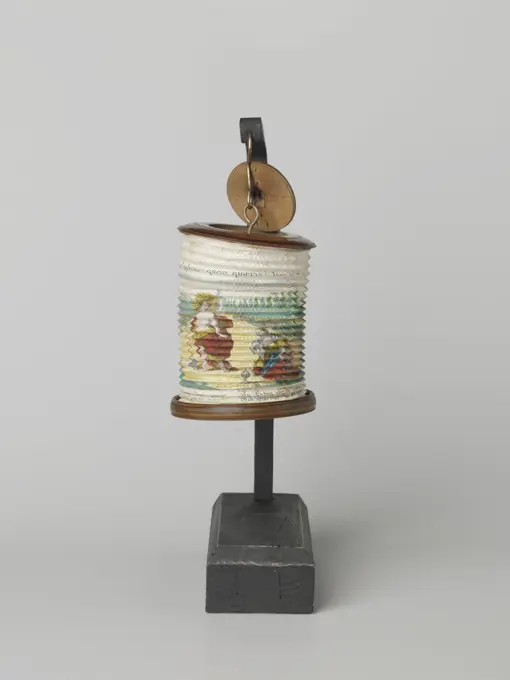
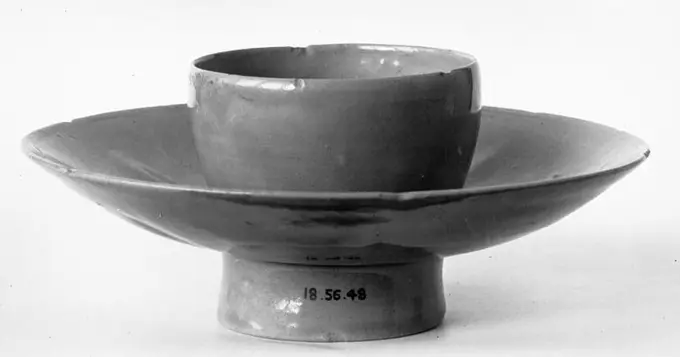
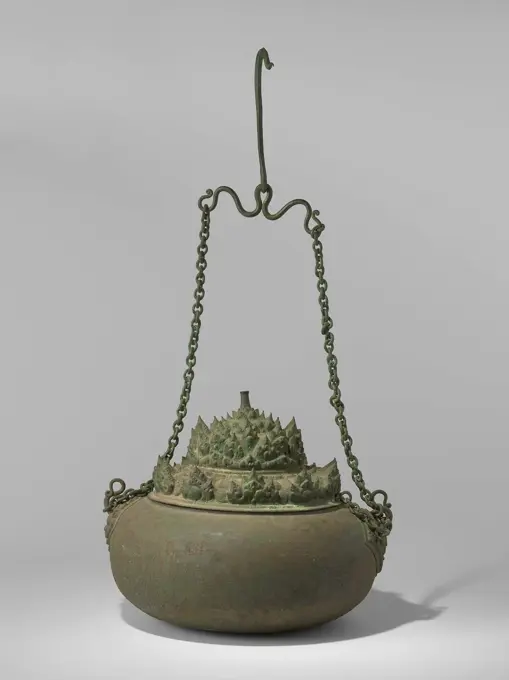
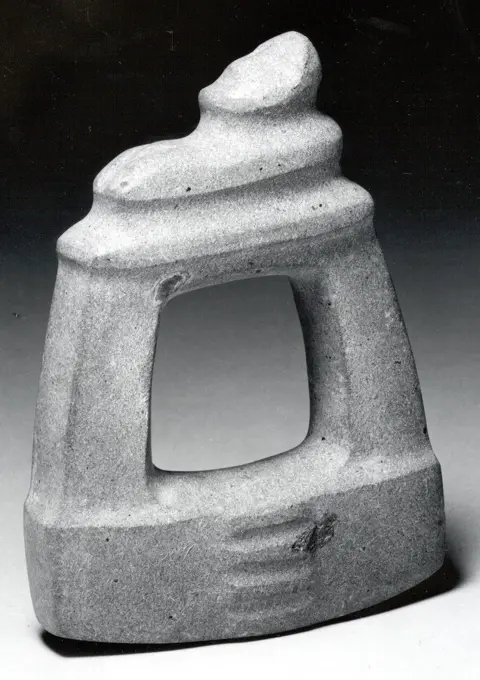
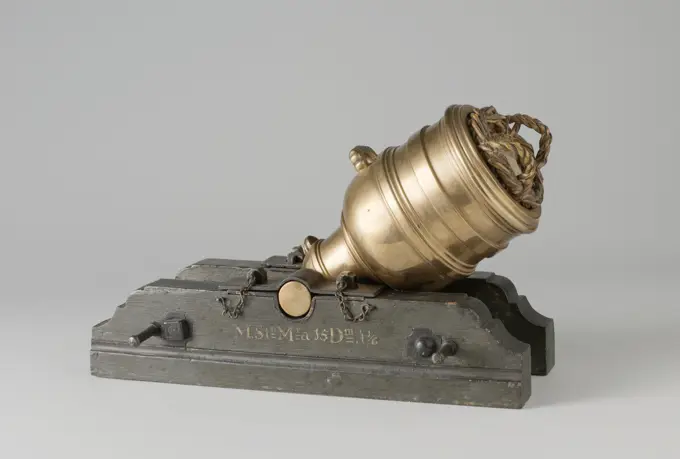
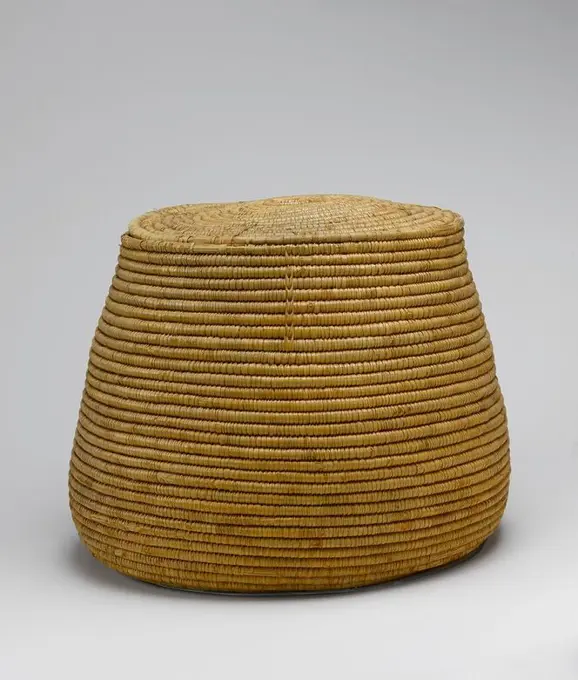
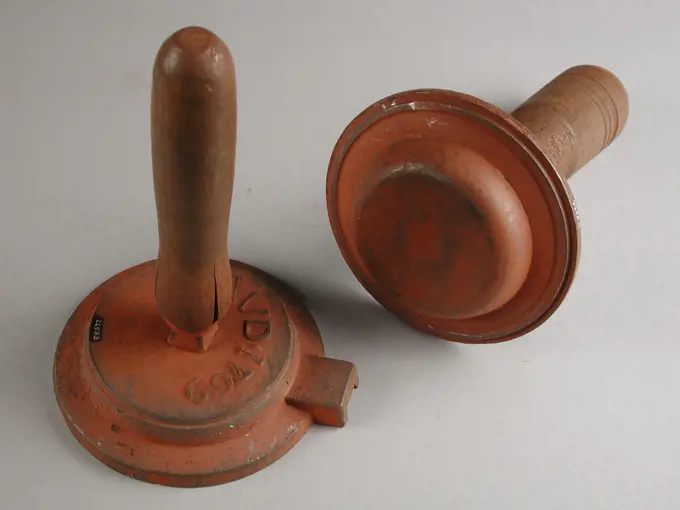
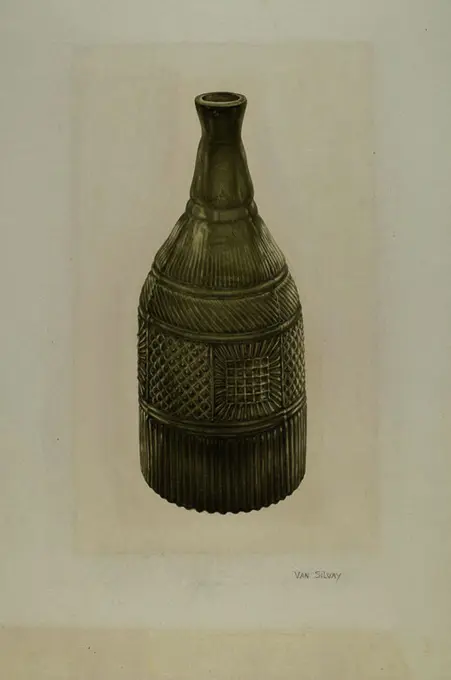
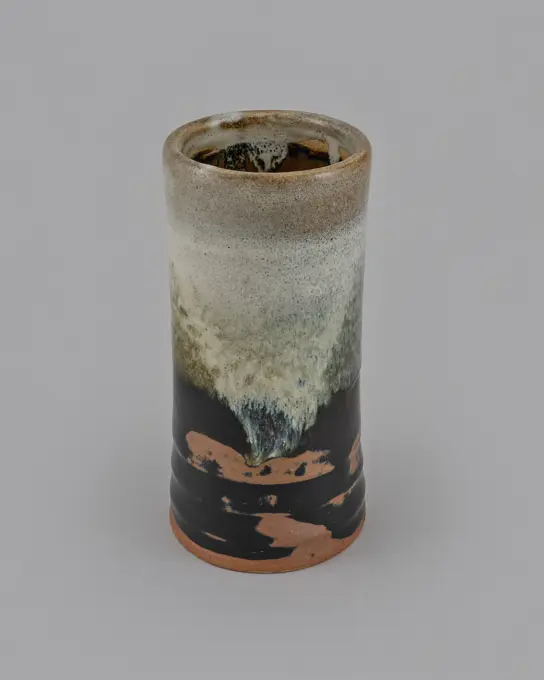
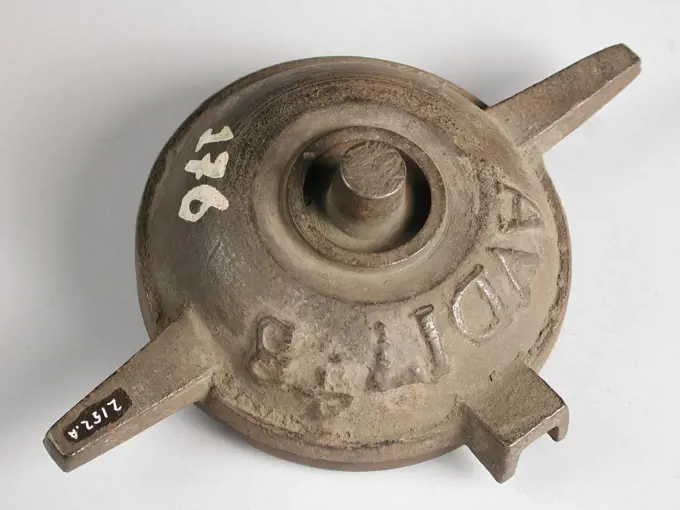
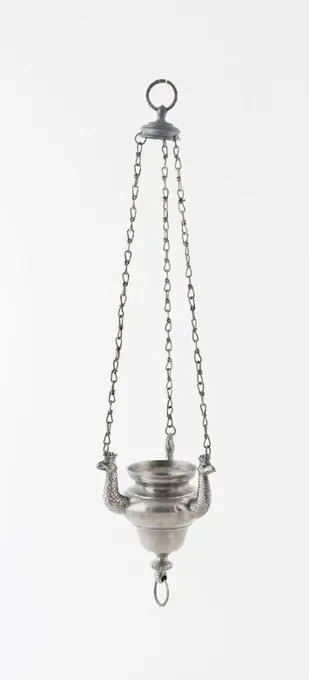
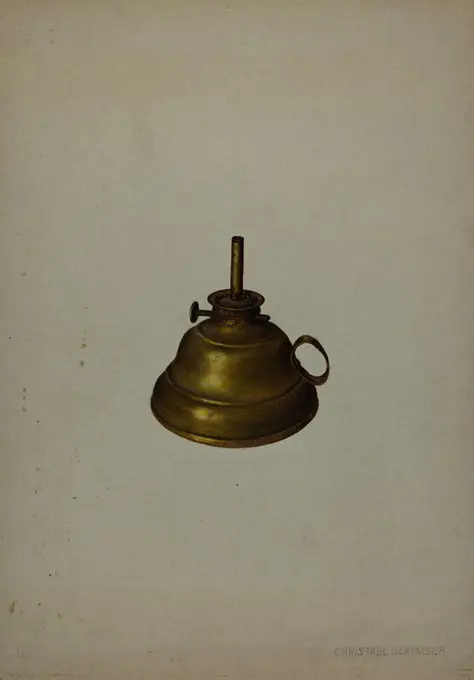
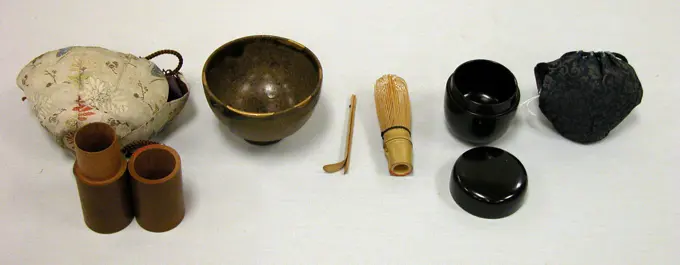
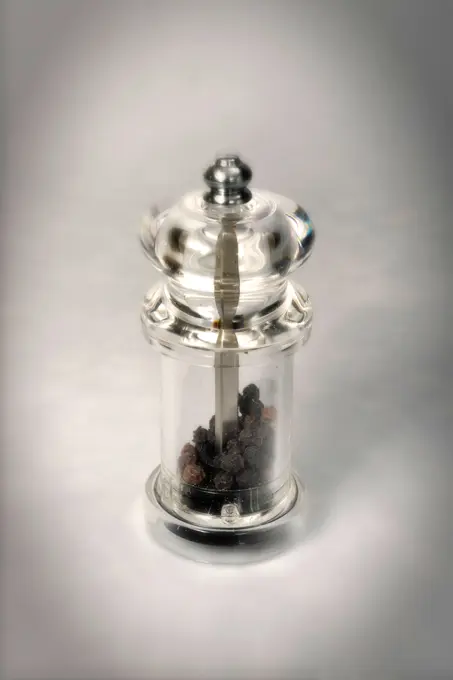
Glass alabastron (perfume bottle). Culture: Greek, Eastern Mediterranean. Dimensions: 4 × 1 7/16 × 1 in. (10.2 × 3.6 × 2.6 cm)Diam. of rim: 1 1/4 in. (3.1 cm). Date: late 6th-5th century B.C..Opaque dark red brown, with handles in same color; trails in opaque yellow and opaque white.Slightly uneven horizontal rim-disk, with jagged edge to mouth; short cylindrical neck, tapering downwards; narrow rounded shoulder; straight-sided cylindrical body, tapering upwards; convex bottom; two large vertical ring handles with knobbed tails, applied over trail decoration; one higher than the other.A thick yellow trail attached at edge of rim-disk; another yellow trail applied to base of neck together with a white trail, overlaid on the yellow; both wound in a close-set spiral around body to bottom; yellow trail ending in a swirl on bottom.Intact; very slight dulling, pitting, and weathering. Museum: Metropolitan Museum of Art, New York, USA.Caster (lid), c. 1770. John Andrew (American, 1747-1791). Silver; diameter: 4.7 cm (1 7/8 in.); overall: 13.9 cm (5 1/2 in.).Spindle Whorl, one of sixteen, 15th century, 1 1/4 x 1 5/8 in. (3.18 x 4.13 cm), Stone, Mexico, 15th centuryCricket Incubator with Cover, 19th century, 3 13/16 x 5 1/4 in. (9.7 x 13.34 cm), Ceramic, China, 19th centuryLoud clock with inscription. Bronze loud. At the top of a profiled fries with inscription in Latin Majuskels: L.Hain camp M.F. Hornae Ao 1781. Above the inscription a Frisian consisting of tendencies. Under the inscription also a frieze with tendrils. With round opening at the top.Copper paint stamp with the initials w.d. Van Willem Drees, Anonymous, 1900 - 1910  Stamp with wooden politoured handle on a round stamp containing the entangled letters W and D. Lakstamp by Willem Drees used to seal letters. Netherlands wood (plant material). copper (metal)   NetherlandsKnife Urn ca. 1820 American Knife boxes typically were displayed on the top of sideboards and contained all the silver cutlery required for dining. The cylindrical form and multiple reeds with pointed Gothic profiles around the bodies of these examples are design features specific to Baltimore.. Knife Urn. American. ca. 1820. Mahogany, mahogany veneer, white pine, tulip poplar. Made in Baltimore, Maryland, United StatesIncense Burner (koro) and Cover with Molded and Reticulated Design. Culture: Japan. Dimensions: H. (with cover) 3 3/4 in. (9.5 cm). Date: 18th century.The cover as well as the body of this three-legged incense burner is molded and reticulated. The earthenware body is covered with a transparent, slightly yellowish crackled glaze, a typical glazing technique for Satsuma ware. Satsuma ware was produced in Satsuma Province in Kyushu from the sixteenth century by Korean potters brought over to Japan; later Satsuma ware was produced in Kyoto as well (Kyoto Satsuma). The body's material represents a transition between porcelain and earthenware, fired at a lower temperature than porcelain. The harmonic proportions and the delicate curves of the object, as well as its undecorated surface, are indicative of the earlier history of Satsuma ware. By the mid-Meiji period (1868-1912), Satsuma ware was extensively decorated in overglaze polychrome paint and gold depicting bird-and-flower compositionsLantern with Christ in the Guise of a Gardener and Mary Magdalene, 1680 - 1720 lantern Lantern with a twisted wooden upper and top plate, with a folding print in between, with a colored and gold-beloved representation of 'Noli Me Tangere'.  paper. wood (plant material) engravingA Boisseau from Delft, Anonymous, c. 1800  Spans content measure for dry wares of 1 boisseau with block on which the weapon of Delft, v.z.v. Brand, label on a ribbon and labels. Delft wood (plant material)   DelftWandbak, anonymous, c. 1750 - c. 1800 Mahoniehout wall, with an eye in back plate to hang; intended for candles, knives or sulfur sticks. Amsterdam (possibly) mahogany (wood) Mahoniehout wall, with an eye in back plate to hang; intended for candles, knives or sulfur sticks. Amsterdam (possibly) mahogany (wood)Trencher Salt 1730-35 Jacob Ten Eyck. Trencher Salt 7064Vessel in the Shape of a Face, 20th century, 4 7/8 x 5 7/8 x 6 7/16 in. (12.4 x 14.9 x 16.4 cm), Ceramic, Nigeria, 20th centuryBowl. Culture: China. Dimensions: H. 3 3/4 in. (9.5 cm); Diam. 7 3/4 in. (19.7 cm). Date: late 17th-early 18th century. Museum: Metropolitan Museum of Art, New York, USA.Dripper of wood, anonymous, c. 1600 - c. 1699 Wooden dripper in cornice shape with tooth frame, running into a glans. The traces of painting with Arabesken are still present. Possibly a furniture fragment. Northern Netherlands (possibly)Netherlands (possibly) wood (plant material) Wooden dripper in cornice shape with tooth frame, running into a glans. The traces of painting with Arabesken are still present. Possibly a furniture fragment. Northern Netherlands (possibly)Netherlands (possibly) wood (plant material)Clay pot Clay pot of manual work. It is possible to store milk or other liquid Copyright: xZoonar.com/ValeryxxSibrikovx 2418762Grain size of 50 () L, anonymous, c. 1850  Chips contents of 50 () L. No content designation Netherlands wood (plant material)   NetherlandsCup and Stand. Culture: China. Dimensions: H. 2 3/4 in. (7 cm); W. 6 1/3 in. (16.1 cm). Museum: Metropolitan Museum of Art, New York, USA.. Hanging water vessel. Round barrel with layered lid. A chain has been confirmed.Binnacle, La Mola lighthouse museum, Formentera, Pitiusas Islands, Balearic Community, Spain, EuropePokrywka od pyksis. unknown, authorTemple Model 1st-8th century Mezcala. Temple Model 315077Model of a stone mortar, anonymous, c. 1750 - c. 1800 scale model Model of a stone mortar on chair, marked on both cheeks: M. St. N mr a 15 dm 't 1/6. Hereby a basket with stones. Mirror, bombing, wooden bomb and three handpacks are missing. A stone mortar is a mortar of a large caliber, in which the shot consists of a quantity of stones, for the attacking of living goals. Netherlands brass (alloy). wood (plant material). linen (material)Beaker 1850-60 Bohemian. Beaker 207898Studio Shot Of Old Fashioned Rubber StampBasket. Dimensions: H. 45 cm (17 11/16 in); w. 55 cm (21 5/8 in). Dynasty: Dynasty 18. Reign: reign of Amenhotep I. Date: ca. 1525-1504 B.C.. Museum: Metropolitan Museum of Art, New York, USA.Andreas van Duyveland, Two-piece bronze mold for plaque with initials AVD and 1769, cast molding tool tools kit metal_metal bronze wood iron, cast turned Two-piece bronze mold for casting plate. signed V D and year 1769 (Andreas van Duyveland) Rotterdam tin foundry tin stain tin Meeuws Druy craft Shapes are from the originally 18th century Rotterdam tinnegieter J Druy. The large molds that were not signed or dated were the property of the tinker guild and were rented to the small tin caster.Decanter. Dated: 1939. Dimensions: overall: 44 x 29.8 cm (17 5/16 x 11 3/4 in.). Medium: watercolor and graphite on paperboard. Museum: National Gallery of Art, Washington DC. Author: Van Silvay.Snuff Bottle, 19th century, 2 5/8 x 1 5/8in. (6.7 x 4.1cm), Agate, carnelian, China, 19th centuryVase (usual name). Sandstone covered with bunk enamels. Cernuschi Museum, Asia Museum of Asia in the city of Paris.Powder Flask. Dated: 1935/1942. Dimensions: overall: 34.7 x 27.6 cm (13 11/16 x 10 7/8 in.). Medium: watercolor and graphite on paper. Museum: National Gallery of Art, Washington DC. Author: American 20th Century.Toleware Canister. Dated: 1935/1942. Dimensions: overall: 28 x 20.3 cm (11 x 8 in.). Medium: oil paint on paperboard. Museum: National Gallery of Art, Washington DC. Author: Myra Newswanger.Handlants, C.C. Grimm, 1787 The object -shaped -shaped rank ornament made from copper plate, in which a candle can be placed, has a roundless glass on the front and a folding handle at the back, which is only partially present. Speyer brass (alloy). glass striking (metalworking) The object -shaped -shaped rank ornament made from copper plate, in which a candle can be placed, has a roundless glass on the front and a folding handle at the back, which is only partially present. Speyer brass (alloy). glass striking (metalworking)Bracelet: Leopard Heads and Ceremonial Swords. Culture: Edo peoples. Dimensions: Length 5-3/8 in.. Date: 17th-19th century. Museum: Metropolitan Museum of Art, New York, USA.Lamellar Helmet 15th-17th century probably Mongolian or Tibetan. Lamellar Helmet 26608Hammered Silver Miniature Drum 11th-mid-15th century Chimú or Chancay. Hammered Silver Miniature Drum 308972Bell, Church. Culture: Byzantine. Dimensions: Overall: 4 11/16 x 4 1/16 x 3 3/8 in. (11.9 x 10.3 x 8.5 cm). Date: 10th-12th century. Museum: Metropolitan Museum of Art, New York, USA.ChessmanA wooden vaseVase first half of the 19th century China. Vase. China. first half of the 19th century. Porcelain with flambé glaze. Qing dynasty (1644-1911). CeramicsBronze lamp Retro style bronze metal lamp shade decor Copyright: xZoonar.com/NikolaxObradovicx 16325067Brass design fitting on antique wooden pot with cap , Jodhpur, Rajasthan, India Copyright: xSafatxAli/DinodiaxPhotoxJar ca. 3rd-7th century A.D. Sasanian. Jar 322422Chess figure isolated on the white backgroundFour-piece bronze mold for top of jug, cast molding tool tools base metal bronze, cast turned Four-piece bronze mold for casting the collar top of jug top, Rotterdam tin foundry tin pewter Meeuws Druy craft Molds come from the originally 18th century Rotterdam tinnegieter J Druy. The large molds that were not signed or dated were the property of the tinker guild and were rented to the small tin caster.Candle Holder (Switzerland); iron wroughtTwo-piece bronze mold for bottom of chamber pot with initials HVDP and 1783, mold casting tool tools equipment metal_metal bronze, cast turned Two-piece bronze mold for casting the bottom of chamber pot with HVDP. signed, and 1783 (Hendrik van de Pol) Rotterdam tin foundry tinnegieter tin Meeuws Druy handicrafts Forms come from the originally 18th century Rotterdam tinnegieter J Druy. The large molds that were not signed or dated were the property of the tinker guild and were rented to the small tin caster.Prayer wheel. unknown, craftsmanStone Temple Model. Culture: Mezcala. Dimensions: Height 5 in.. Date: 1st-8th century. Museum: Metropolitan Museum of Art, New York, USA.Basket 19th century Japan. Basket. Japan. 19th century. Rattan. Edo (1615-1868) or Meiji period (1868-1912). BasketryBROCAL DE POZO EN MARMOL-REINO TAIFAS-AÑO 1037-67X60X07-. Location: MUSEO HOSPITAL DE SANTA CRUZ. SPAIN.Headrest. Dimensions: 7 7/8 x 9 1/4 in. (20 x 23.5 cm). Date: ca. 2030-1640 B.C.. Museum: Metropolitan Museum of Art, New York, USA.Jar in the shape of bronze container (hu) 1st-2nd century China. Jar in the shape of bronze container (hu) 48779Well from Baron Chassé. Round ink tube with flat ends, removable in three parts. The upper is the lid of the ink reservoir and on top of the middle decorated with a inlaid around ivory plate; The center piece is the glass ink reservoir-contained in palm wood; The lower part is the sand spreader. To reinforce the ink tube, different copper rings. Bag-well.Hourglass with sand Hourglass with sand inside isolated on white Copyright: xZoonar.com/melkiu.gallery.rux 9680155Three-piece mold for funnel, cast molding tool tools base metal cast iron , cast Three-part cast iron mold for pouring funnels; is the core part there are two channels to pour into the tin mixture on both sides at the same time Rotterdam tin casting tin tin Meeuws Druy craft Shapes are from the originally 18th century Rotterdam tinnegieter J Druy. The large molds that were not signed or dated were the property of the tinker guild and were rented to the small tin caster.Biberon 18th century Swiss. Biberon. Swiss. 18th century. Pewter. Metalwork-Pewtercaster, silver, Newcastle, England, 1783, metalwork, Decorative Arts, casterAndreas van Duyveland, Three-piece bronze mold for top cylindrical jug with initials AVD 1748, mold casting tool tools equipment base metal bronze, van Duyveland) Rotterdam tin foundry tin stain tin Meeuws Druy craft Shapes are from the originally 18th century Rotterdam tinnegieter J Druy. The large molds that were not signed or dated were the property of the tinker guild and were rented to the small tin caster.Tin ink set with inkwell, sandpot and feather. Tin ink set with writing spring. There is a rectangular plate with a raised edge at four caps. In the bin in the left rear corner a high pen cooker. In addition, almost against the rear wall to two circular layer, raised edges for the inkwell and the sand spreader. The inkwell in the middle has a cylindrical body. The inner box is narrower and the vaulted upper side falls over the outer pot. In the middle of the curvature a clock-shaped lid that can be opened with a two-headed hinge. In addition, the sand spreader with cylindrical body. The top is opened with small circles that form a star.Ear Spool A.D. 450-1000 Greater Coclé This ear spool is made of hammered metal sheet and consists overall of two separate components or halves” (hereafter designated a” and b”). Each half includes three joined pieces: a center piece with one end cylindrical and the other end conical, a piece with one end cylindrical and the other end flaring out, and a circular and relatively flat piece with geometric motifs. The metalsmith fit the first piece into the second and may have lightly hammered the exterior and interior of the cylindrical end to help secure the join. There does not appear to be any evidence of soldering of the two pieces. The third piece—flat with geometric motifs—was placed over the conical center and its ends were crimped over the second piece to help secure its placement. This crimping extended around the circumference in the case of each half, but there is a small area on half a” in which the bottom piece that is part of the join has been exposed. To wear the ear spoBowl with ring handles 18th-19th century China. Bowl with ring handles. China. 18th-19th century. Jade (nephrite). Qing dynasty (1644-1911). JadeInkstand Inkstand; Manufactured by J. P. Kayser & Sohn (Germany); pewter; Frame H x W x D: 14.6 x 30.5 x 8.9 cm (5 3/4 in. x 12 in. x 3 1/2 in.)Footed Salver, 1710-1720. John Dixwell (American, 1680-1725). Silver; diameter: 4.2 x 14 cm (1 5/8 x 5 1/2 in.).Brass rabbit design fitting on antique wooden box, Jodhpur, Rajasthan, India Copyright: xSafatxAli/DinodiaxPhotoxOld iron flatCone -shaped box of cardboard, decorated with blue piping; intended for a Sjako, Anonymous, 1870 Cone -shaped box of cardboard, decorated with blue piping. Intended for a Sjako. Great Britain cardboard. bies: paper. lint: linen (material) sewing Cone -shaped box of cardboard, decorated with blue piping. Intended for a Sjako. Great Britain cardboard. bies: paper. lint: linen (material) sewingMiniature pins. Culture: British, London. Dimensions: Height (each): 1 5/16 in. (3.3 cm). Maker: T.K., London. Date: ca. 1702-14. Museum: Metropolitan Museum of Art, New York, USA.Salt cellar; Elkington & Co Ltd (Birmingham; company Z Otniczy and Platernicza; Fl. 1830-1963); 1909/10 (1909-00-00-1910-00-00), 1899/1900 (1899-00-00-1900-00-00);Helmet (Hachi). Culture: Japanese. Date: 17th century. Museum: Metropolitan Museum of Art, New York, USA.Zoutvat, fragment.Pewter 'spreader', fragment, upper part of salt barrel.Incense Burner with Flowers and Dots, c. 1893-1914. Seifū Yohei III (Japanese, 1851-1914). Porcelain with creamy white translucent glaze and molded and incised design;A gunpowder chest, Anonymous, 1866Old brassy ship lanternBowl 3rd-7th century. Bowl 455079Pair of Earrings, 1800s. Burma. Silver gilt;Water hydrantSitula ca. 500 B.C.-A.D. 200 Vietnam. Situla. Vietnam. ca. 500 B.C.-A.D. 200. Bronze. Bronze and Iron Age period, Dongson culture. Metalworkwooden geometric shapes on a green backgroundBell, Adam Planer, 1729 Bronze loud. At the top a profiled Frisian with inscription in Latin Majuskels: Deo Gloria Soli. Above the inscription a Frisian consisting of stylized tibbles. The same frieze upside down under the inscription. At the bottom of the edge the inscription in Latin Majuskels: Adam Planer Goss Mich in Lybeck Anno 1729. With round opening at the top. With six -armed crown on the top. Lübeck bronze (metal) casting Bronze loud. At the top a profiled Frisian with inscription in Latin Majuskels: Deo Gloria Soli. Above the inscription a Frisian consisting of stylized tibbles. The same frieze upside down under the inscription. At the bottom of the edge the inscription in Latin Majuskels: Adam Planer Goss Mich in Lybeck Anno 1729. With round opening at the top. With six -armed crown on the top. Lübeck bronze (metal) castingTerracotta stemless kylix (drinking cup). Culture: Greek, South Italian, Campanian, Calenian. Dimensions: Overall: 2 7/8 x 7 3/4 in. (7.3 x 19.7 cm). Date: late 4th-3rd century B.C..Silver cups with medallions in low relief on the interior were favored luxury items in antiquity. Terracotta versions such as these suggest their appearance. One tondo shows the Eleusinian god Triptolemos in his snake-drawn chariot. The other cup features the head of the nymph Arethusa, taken from the reverse of a celebrated coin of Syracuse in Sicily. "Arethusa cups" were made and found principally in Campania. Museum: Metropolitan Museum of Art, New York, USA.Beaker ca. 1832-39 Oliver Trask. Beaker. American. ca. 1832-39. Pewter. Made in Beverly, Massachusetts, United StatesVector vase flat icon isolated. For flower front view illustration. Ceramic classic clay design antique ancientSword Pommel Made 1570-1600 Germany. Iron .PORTRät lens by Steinheil München, 39 lines, No. 9086, focal length 100 cm, glass with brass frame and wooden lens standard, circa 1875.Tea caddy with cover (part of a service) late 18th-early 19th century Chinese, for American market. Tea caddy with cover (part of a service) 201116Votive Lamp. Possibly Poland. Date: 1780-1799. Dimensions: 46.4 x 11.4 x 11.4 cm (18 1/4 x 4 1/2 x 4 1/2 in.). Pewter. Origin: Poland. Museum: The Chicago Art Institute, Chicago, USA.Flagon.  Maker: John Potwine, American, 1699-1792Drom, old model of the arches. Groom of the militia. The brass boiler is provided with a veal sheet on both sides, held by a hoop and tense by means of a tensioner with tractors and screws. Both hoops are decorated with a motif of triangles in the colors red, white and blue. With engraved numbers: 1855-33.Sugar Jar or TeaCaddyCamphene Lamp. Dated: c. 1940. Dimensions: overall: 35.6 x 25 cm (14 x 9 13/16 in.). Medium: watercolor and graphite on paperboard. Museum: National Gallery of Art, Washington DC. Author: Christabel Scrymser.Terracotta kylix (drinking cup). Culture: Greek, Attic. Dimensions: H. 3 7/8 in. (9.9 cm); diameter 9 1/4 in. (23.5 cm). Date: mid-5th century B.C..Interior, man with staffExterior, obverse, warriors arming and youth;reverse, men and youthThe figures depicted on this cup indicate the fine line between athletes and warriors. The young men with their cloaks and staves need only a change of equipment to go to war. Museum: Metropolitan Museum of Art, New York, USA.Watercolor empty, brown glass bottle or jar. Hand-drawn boho illustration. Empty vintage vase.. Watercolor empty, brown glass bottle or jar. Hand-drawn boho illustration. Empty vintage vaseTeabowl and Accessories 18th century Japan. Teabowl and Accessories 56167Antler Matchsafe; antler, metal; 5.5 x 2.8 x 1.9 cm (2 3/16 x 1 1/8 x 3/4 in. )Drum, before c. 1832 musical instrument. percussion instrument. drum Trom of the militia. The brass kettle is equipped with a veal sheet on both sides, held by a hoop and tense by means of a tension with tractors and screws. Both hoops are decorated with a motif of triangles in the colors red, white and blue. With engraved numbers: 1832-1b-15. Netherlands Kettle: Brass (Alloy). Hoop: Wood (Plant Material). Team resort: RopePencase and Inkwell. Turkey, 18th century. Lacquer. Painted lacquer and brassTea jar 18th century Japan. Tea jar. Japan. 18th century. Pottery (Mino ware, Oribe type). Edo period (1615-1868). CeramicsKitchen thing, pepper grinder on white background Copyright: xAnilxDave/DinodiaxPhotoxTiny Container With a Lid 1st century Pakistan (ancient region of Gandhara). Tiny Container With a Lid 38664