My Boards
View Pictures
  • My Boards
← Artworks

Antique Figurines and Ceramics

Intricately crafted porcelain and wooden figures from different cultures, celebrating artistry with detailed designs and historical significance.
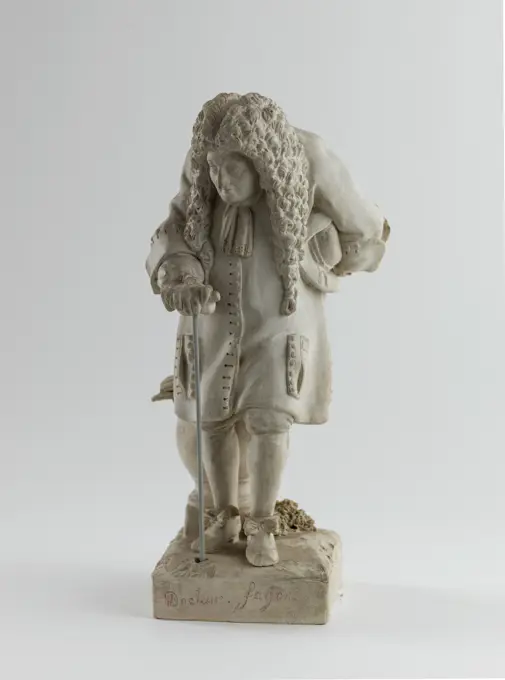
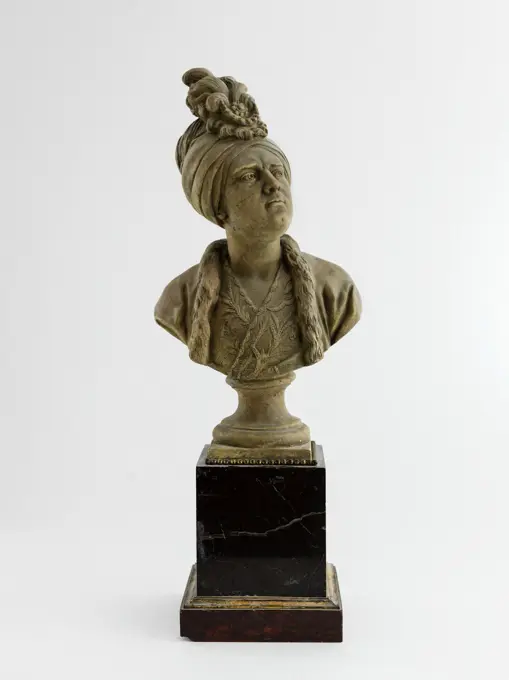
Sébastien François Leriche. Portrait de Fagon, doctor of Louis XIV. Statuette. Plaster. Paris, Carnavalet museum. Portrait
188 assets in this story
6145-46833111
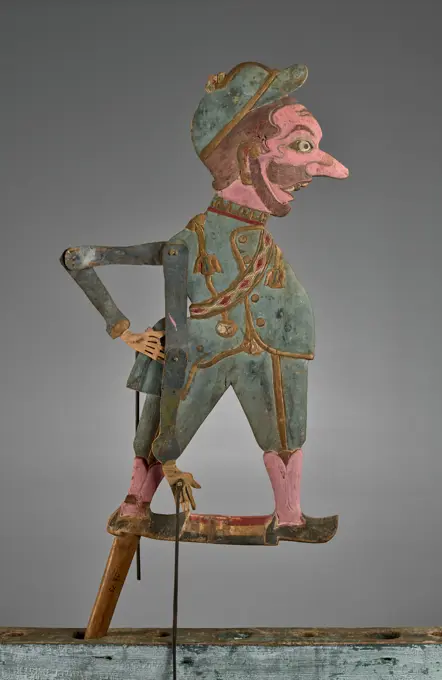
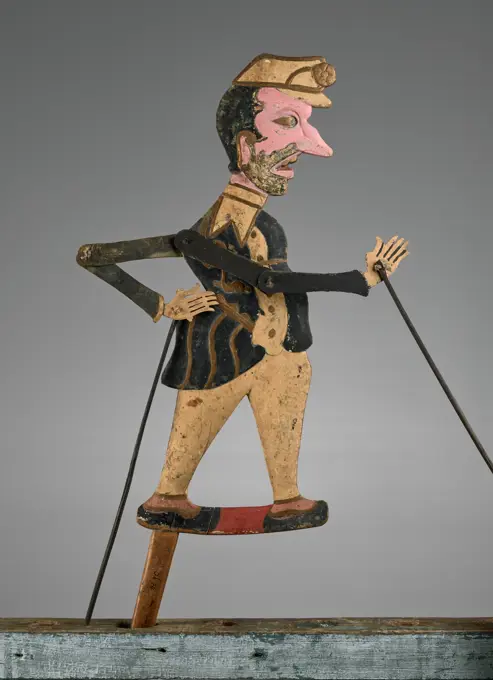
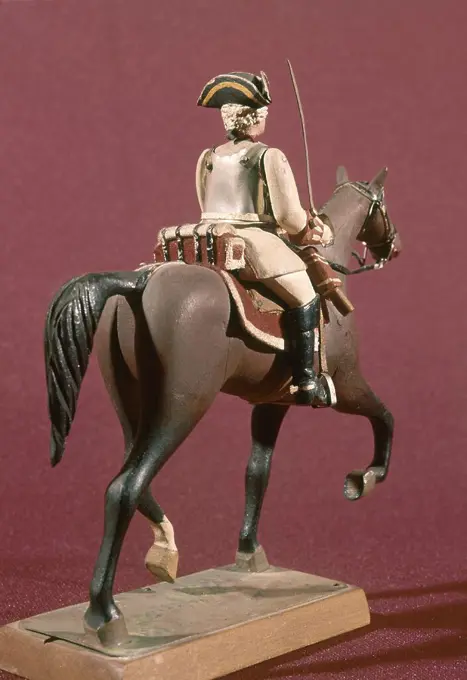
Puppet (Wayang Klitik) of a Dutch Soldier orHolländer
6145-29138852
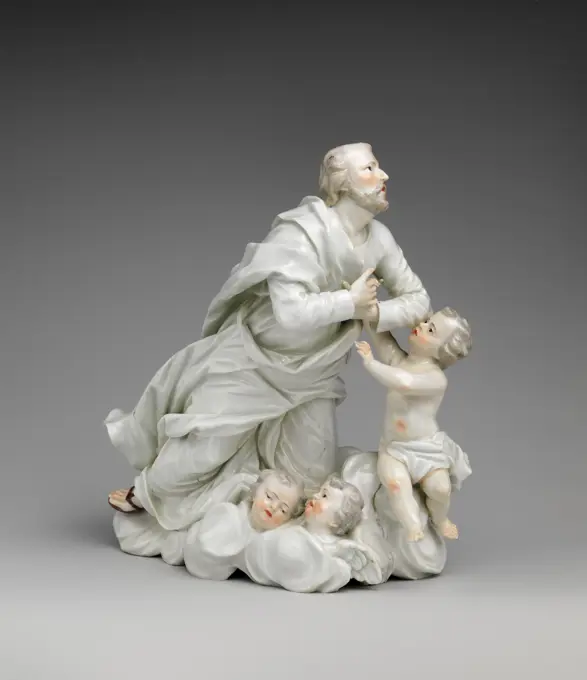
Journey of a Soul to Heaven ca. 1765 Frankenthal Porcelain Manufactory. Journey of a Soul to Heaven 199662
4409-17380931
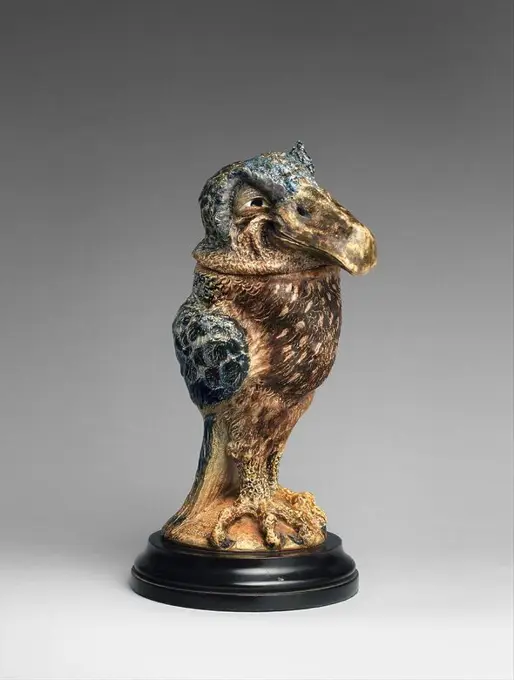
Bird. Culture: British, Southall, London. Dimensions: Overall (confirmed, on socle): 12 3/16 × 6 7/16 × 6 7/16 in., 6 lb. body (a) 4 lb., head (b) 2 lb. (31 × 16.4 × 16.4 cm, 2.7 kg). Maker: R. W. Martin and Brothers (British, 1873-1915). Date: 1888.Determined that pottery vessels should be regarded as true works of art, avant-garde ceramicists in France in the last decades of the nineteenth century transformed their craft into an intellectual and emotional endeavor. The pioneers of this revival were Jean Carriès, Ernest Chaplet, Théodore Deck, and Auguste Delaherche. These revolutionary artist-potters embraced artisanal traditions while pursuing lost techniques through exhaustive experimentation. Reacting to what they viewed as an excessive and improper use of ornament, they celebrated the simplicity and sincerity of their medium, following the tenets of the Art Nouveau style taking place in Europe. Based on the principles of the British Arts and Crafts movement, Art Nouveau artist
6145-52952675
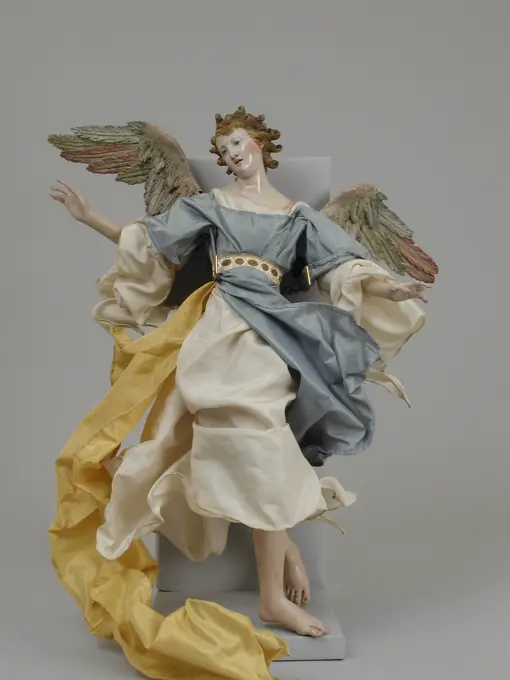
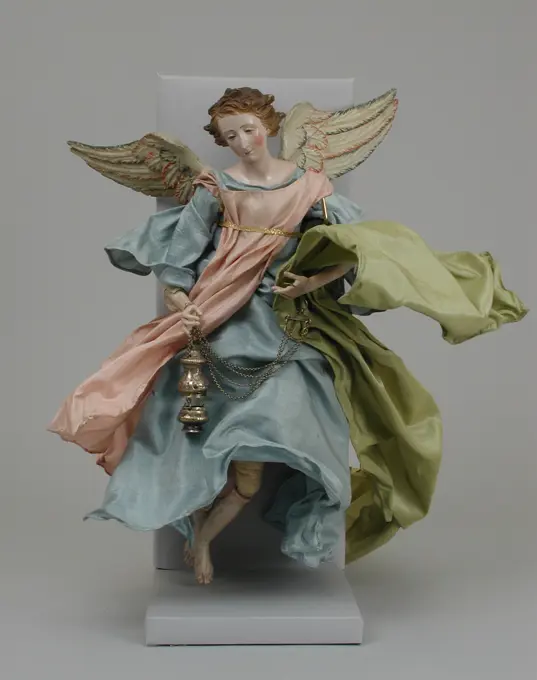
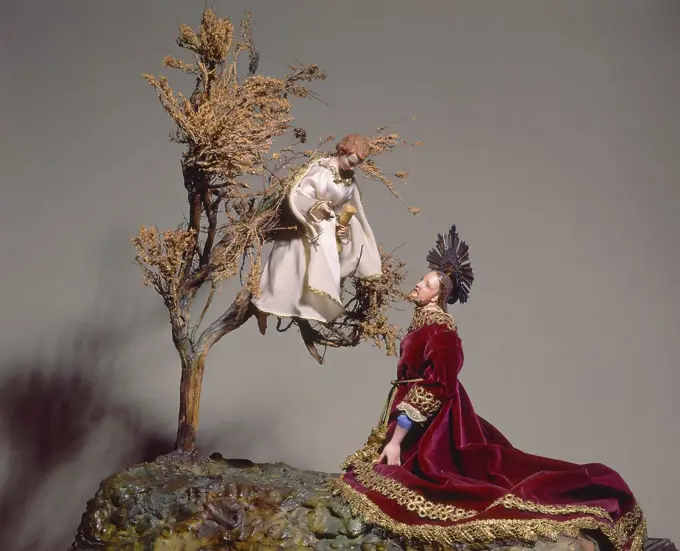
Angel Italian, Naples 18th-19th century View more. Angel. Italian, Naples. 18th-19th century. Polychromed terracotta head; wooden limbs and wings; straw and various fabrics; silver-gilt censer. Crèche
6145-29065886
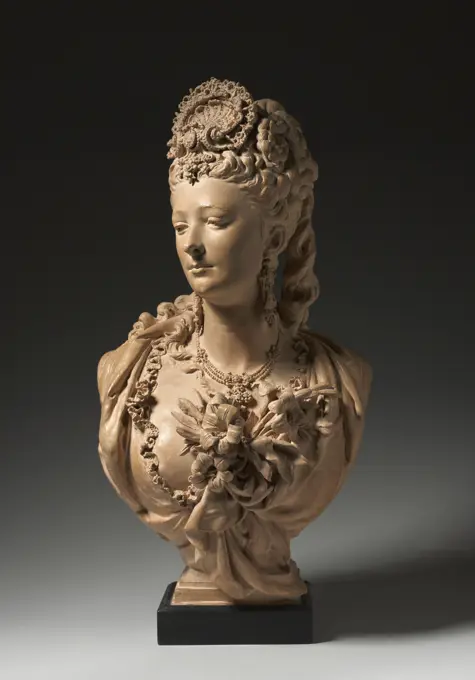
Portrait Bust, c. 1865. Albert-Ernest Carrier-Belleuse (French, 1824-1887). Terracotta; with base: 77.4 x 38.1 x 28.6 cm (30 1/2 x 15 x 11 1/4 in.).
4443-28733423
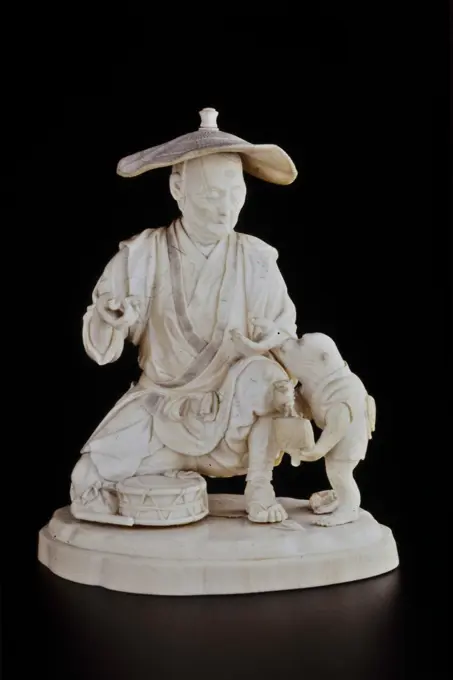
Monkey trainer, late 19th century, Shioda Toshichika, Japanese, 8 x 6 5/8in. (20.3 x 16.8cm), Ivory, Japan, 19th century
6145-30175256
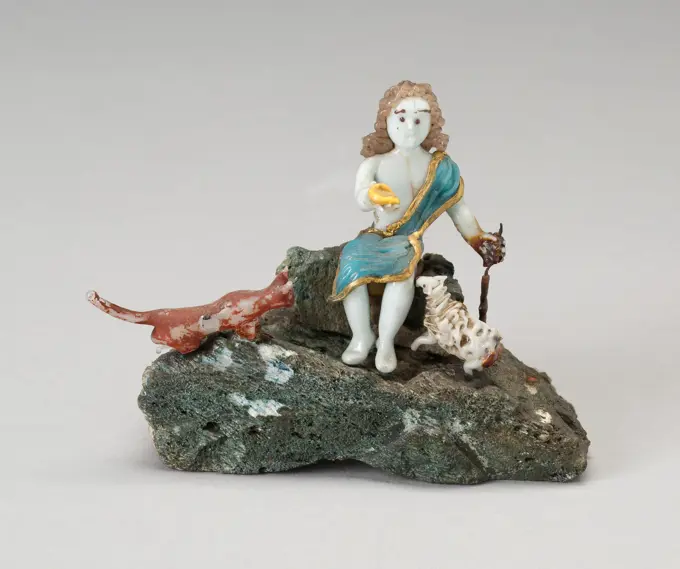
Orpheus 1775-1899 France. Glass; lampwork (verre de Nevers), metal armature .
1788-24096
Tullio d'Albissola, crib figurine from Presepe Strapaesano
6145-51789633
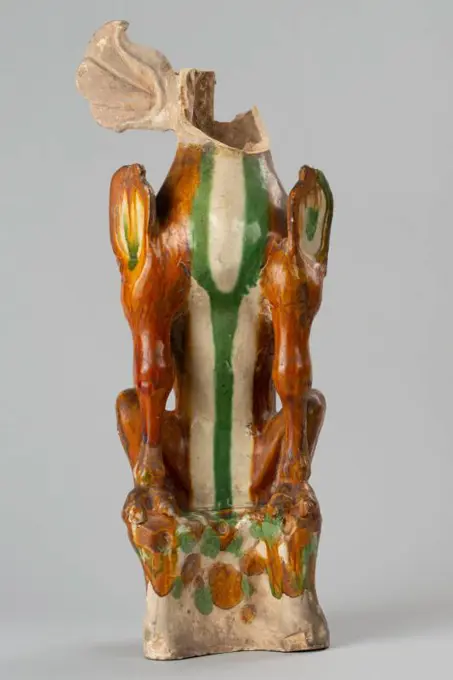
Earth Spirit of Ch'i-T'ou,  Tang Dynasty, 618-906
4409-4306
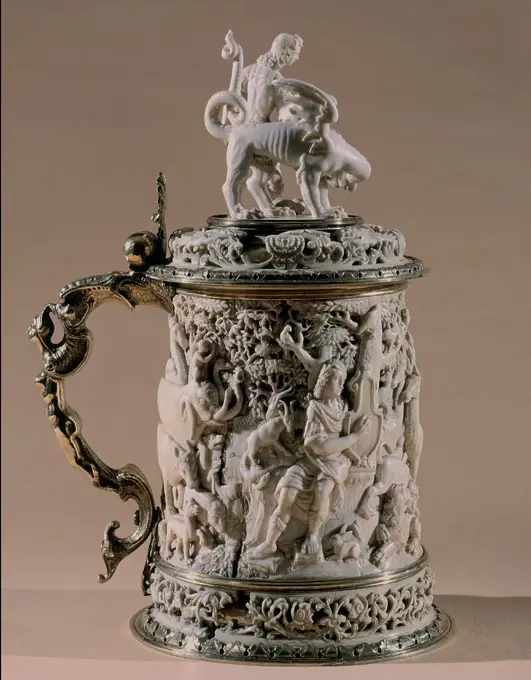
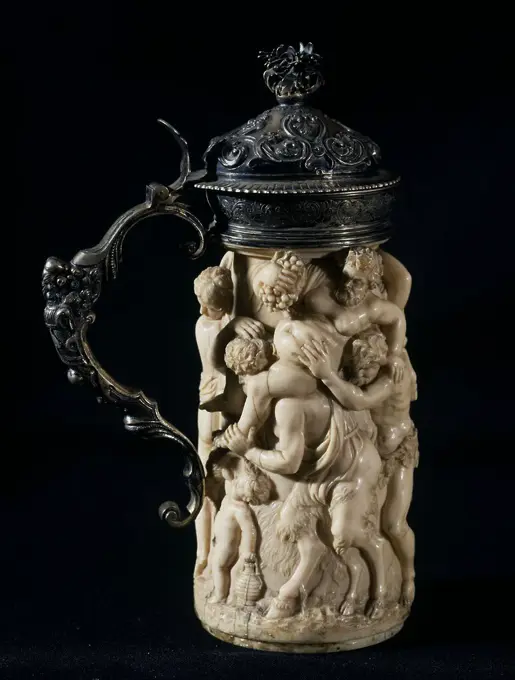
JARRA DE MARFIL Y PLATA DE CARLOS V NARRA LA HISTORIA DE DIANA Y ACTEON - SIGLO XVI - RENACIMIENTO ALEMAN. Author: ESCUELA ALEMANA. Location: MUSEO LAZARO GALDIANO-COLECCION. MADRID. SPAIN. ACTAEON. Charles I (V of the Holly Roman Empire). DIANA CAZADORA-DIOSA EN LA MITOLOGIA ROMANA. CARLOS V ALEMANIA-CARLOS I DE ESPAÑA (1500-1558).
6145-29812508
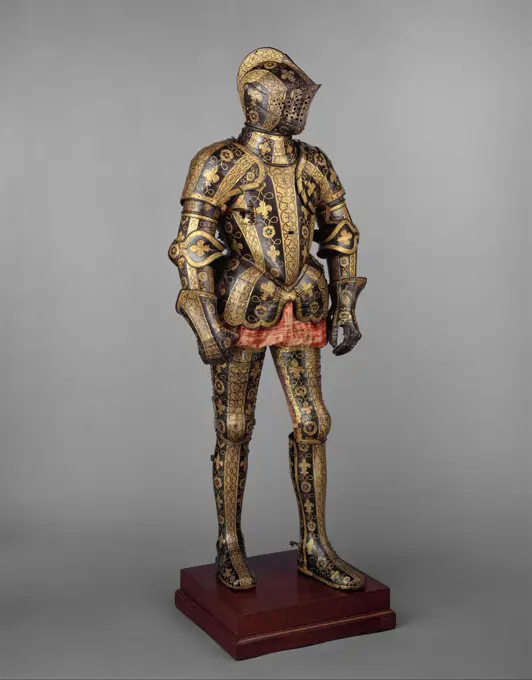
Armor Garniture of George Clifford (1558-1605), Third Earl of Cumberland 1586 Made under the direction of Jacob Halder George Clifford (1558-1605) was appointed Queens Champion in 1590 and was made a Knight of the Garter two years later. A favorite of Queen Elizabeth I (reigned 1558-1603), he chose for the decoration of this armor the Tudor rose, the French fleur-de-lis (then part of the English arms), and the cipher of Elizabeth, two Es back to back.The Cumberland armor is part of a garniture for field and tournament use. It was made in the royal workshops at Greenwich under the direction of the master armorer Jacob Halder (documented in England 1558-1608). The complete garniture is illustrated in the Jacobe Album, a late sixteenth-century manuscript of pen-and-wash drawings that records the decorated armors produced in the Greenwich workshops. The surviving pieces are the mans armor and several exchange or reinforcing elements--a grandguard (defense for the lower face and upper le
6145-29138861
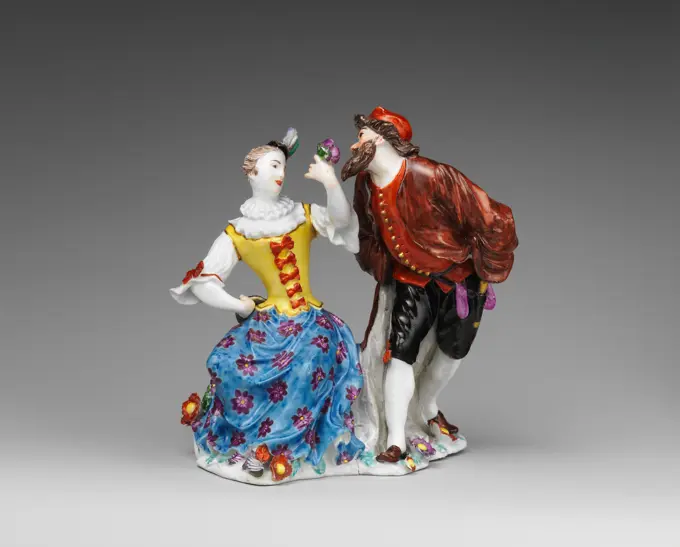
Columbine and Pantalone ca. 1736 Meissen Manufactory German The Meissen factory started producing small-scale sculpture shortly after its founding in 1710. These early works were made in red stoneware, as the technical mastery of porcelain had not yet been achieved (see catalog entry for 54.147.66). Once porcelain was developed for commercial production, small- scale figures were made beginning around 1713, most of which were either copies of or derived from Chinese prototypes.1 The few exceptions included several figures depicting characters from the commedia dell’arte2 or figures of dwarfs that date to the mid-1720s.3The project to produce large-scale animals for the Japanese Palace (see 1988.294.1) in the early 1730s reflected the factory’s first serious and organized commitment to the production of sculpture, and it subsequently absorbed all of the factory’s resources in this genre until the project was abandoned in 1736. By that date, the highly talented German modeler Johan
6145-30073881
Portrait of Henri-Louis Cain, says Lekain (17 cm28-17 cm78), actor and tragedian Anonymous. Portrait of Henri-Louis Cain, said Lekain (1728-1778), actor and tragedian. Bust on peddate. Tanned plaster.
6145-46833101
Puppet (Wayang Klitik) of a Dutch Soldier orHolländer
6145-30148891
Allegorical Figure Representing Asia 1746 Meissen. Hard-paste porcelain, polychrome enamels, and gilding . Meissen Porcelain Manufactory (Manufacturer)
6145-59045987
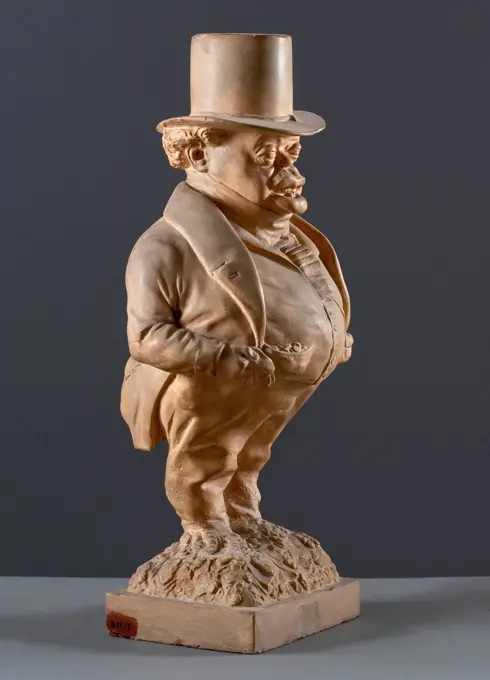
Jean-Pierre Dantan (1800-1869), said Dantan the young. Caricature of the banker Nathan-Meyer de Rothschild (1777-1836), so-called in the pillar of the Stock Exchange. Terracotta patinated plaster. 1832. Paris, Carnavalet museum. Banker, high-deck hat, so-called, purse pillar, patina patina, terracotta, caricature
6145-29066462
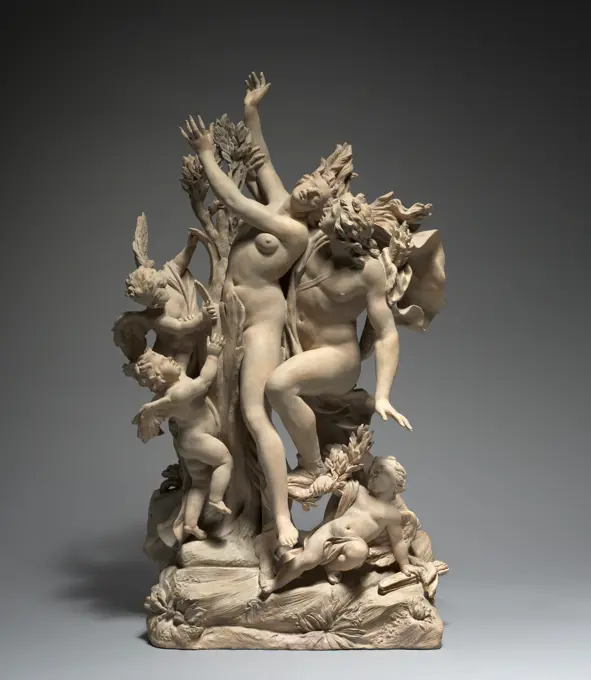
Apollo and Daphne, c. 1700. Massimiliano Soldani (Italian, 1656-1740). Terracotta; overall: 55.5 x 34.2 x 21.9 cm (21 7/8 x 13 7/16 x 8 5/8 in.).
4409-17398463
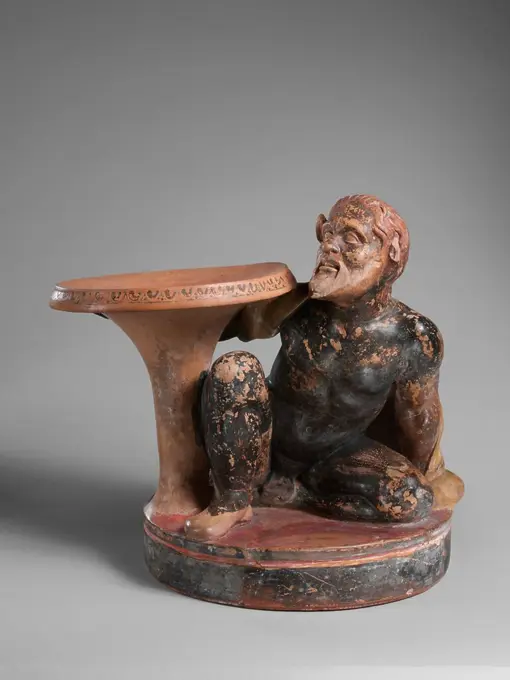
Terracotta stand with a satyr. Culture: Etruscan. Dimensions: total H. 9 3/4 in. (24.8cm); diameter of lip 5 15/16 in. (15cm). Date: late 4th century B.C..These objects, with squatting satyrs oriented to left and right, are clearly pendants. The funnel-shaped elements could function as vases, but they are more likely supports for vessels such as pointed amphorae, which could not stand alone. They are unique in Etruscan art for their combination of funnel-like supports with figural, three-dimensional sculptures. But a similar pair of nude males, perhaps also satyrs, appears painted on a wall of the Tomb of the Orcus II at Tarquinia that dates to about 325-300 B.C. Museum: Metropolitan Museum of Art, New York, USA.
6145-45448218
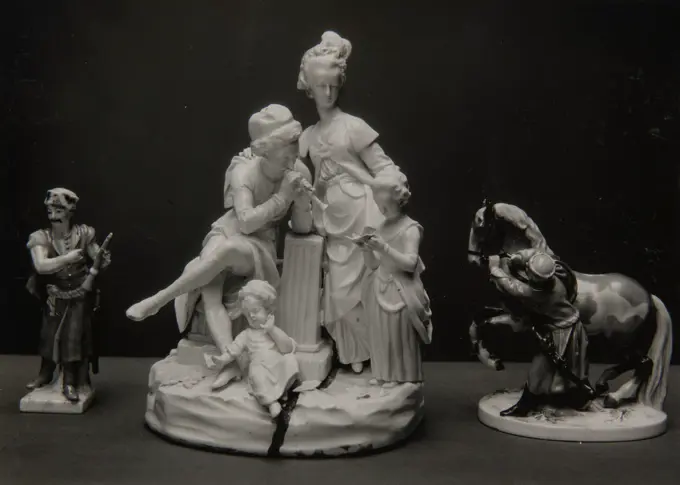
Kraków  Sukiennice  Exhibition of Muhammads, Asian and European ceramics; February April 1934 Światowida Photo Agency
6145-29727408
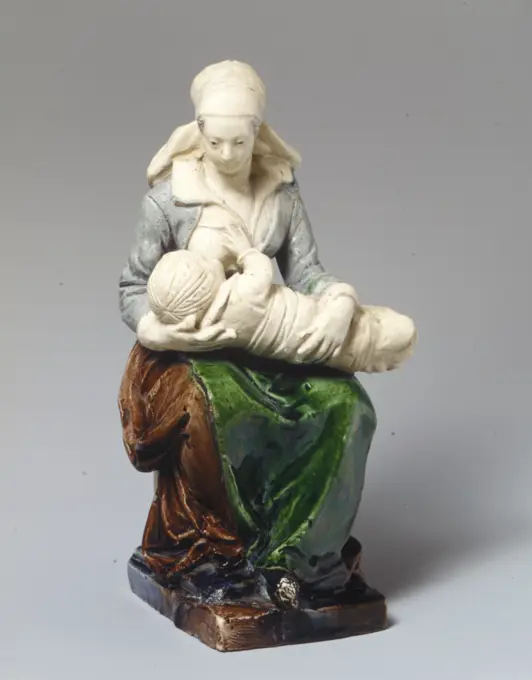
The Nurse model ca. 1607-8 Possibly after a model by Guillaume Dupré French This earthenware statuette of a wet nurse swaddling a large baby was popular throughout the seventeenth century and was copied in Chelsea porcelain in the eighteenth century. The figurine was probably created from a model by Guillaume Dupré, completed around 1608, and is evocative of the work of prolific ceramist Bernard Palissy.By the end of the nineteenth century, many of the small statuettes that were once attributed to Palissy were reattributed to ceramists working at Fontainebleau and nearby Avon. Claude Berthélemy (ca. 1555-1626) is among the earliest names linked to a school of ceramists at Fontainebleau. Berthélémy settled there around 1580 and established a ceramics atelier under the patronage of Henri IV. Henri IV's son, the young dauphin Louis de Bourbon and future King Louis XIII, frequented Berthélémy's boutique between 1604 and 1608, and owned a large collection of figures and animals bought on hi
6145-29826027
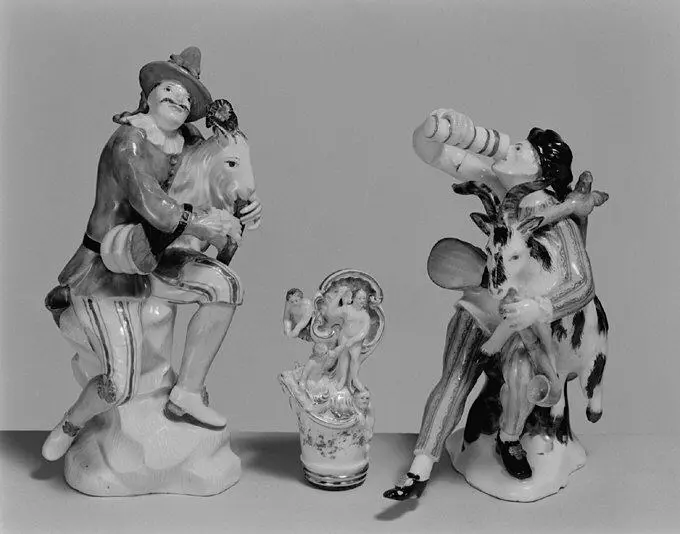
Musician with goat ca. 1755 Höchst Manufactory. Musician with goat. German, Höchst. ca. 1755. Hard-paste porcelain. Ceramics-Porcelain
4409-17503537
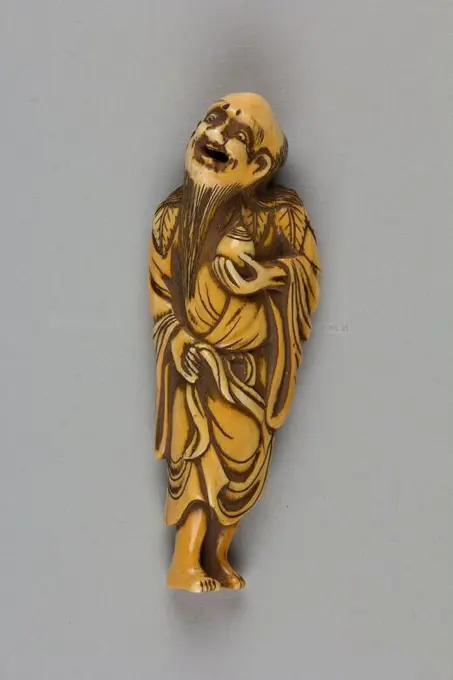
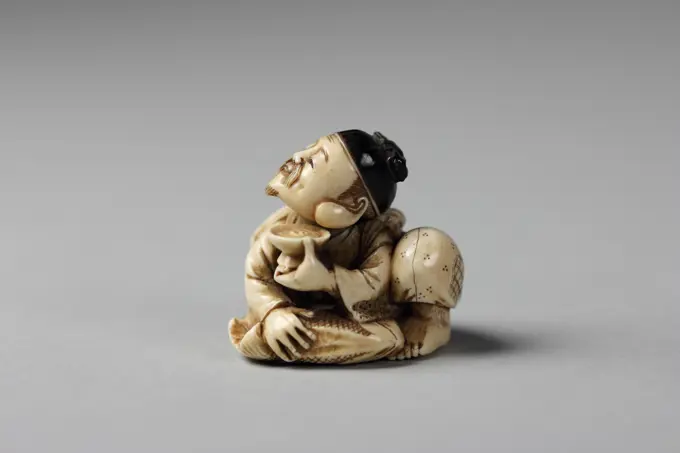
Netsuke of Man with Long Beard Carrying a Vase. Culture: Japan. Dimensions: H. 4 1/8 in. (10.5 cm). Date: 19th century. Museum: Metropolitan Museum of Art, New York, USA.
6145-59045810
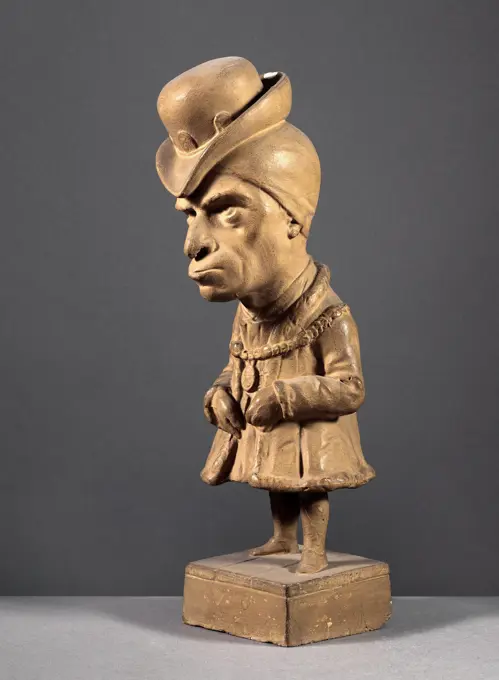
Jean-Pierre Dantan (1800-1869), said Dantan the young. Portrait charge of Pierre-Mathieu Ligier (1796-1872), actor, in Louis XI. Terracious patinated plaster. 1832. Paris, Carnavalet museum. Actor, french, patina patina, terracotta, caricature
4409-17430118
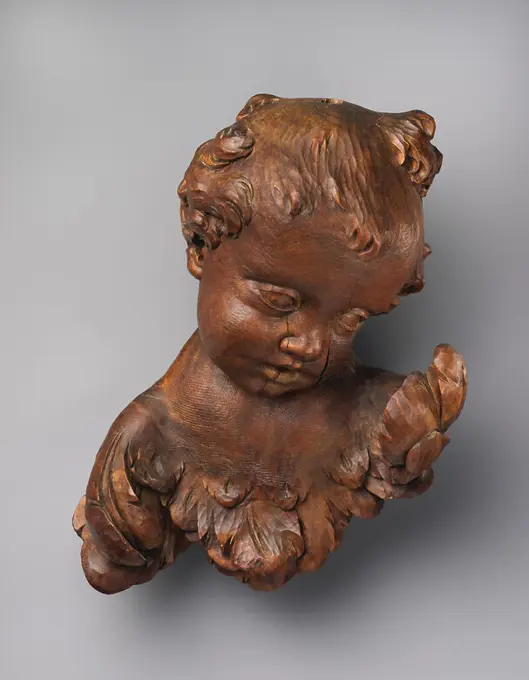
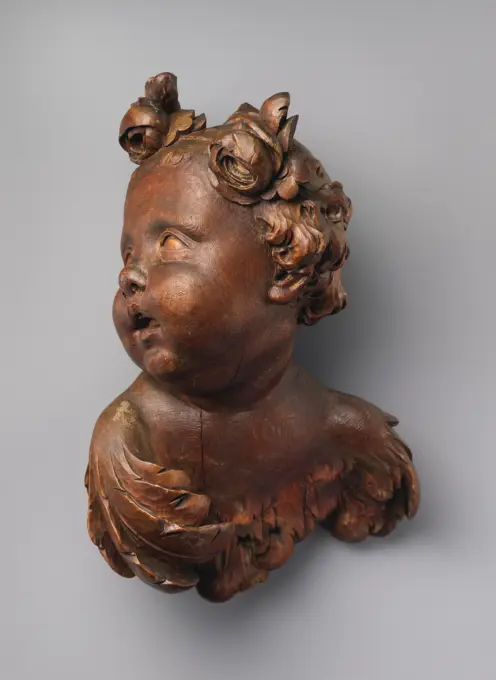
Angel. Artist: Workshop of Ignaz Günther (German, Altmannstein 1725-1775 Munich). Culture: Southern German. Dimensions: 9 5/8 x 6 1/4 in. (24.4 x 15.9cm). Date: ca. 1760-70. Museum: Metropolitan Museum of Art, New York, USA.
4443-28732247
Standing Figure of Woman, before 1950, Di.13-1/4 in., Terra cotta, China, 20th century
6145-29233760
Angel ca. 1760-70 Workshop of Ignaz Günther German. Angel. Workshop of Ignaz Günther (German, Altmannstein 1725-1775 Munich). Southern German. ca. 1760-70. Lindenwood, traces of gesso. Sculpture
6145-51789608
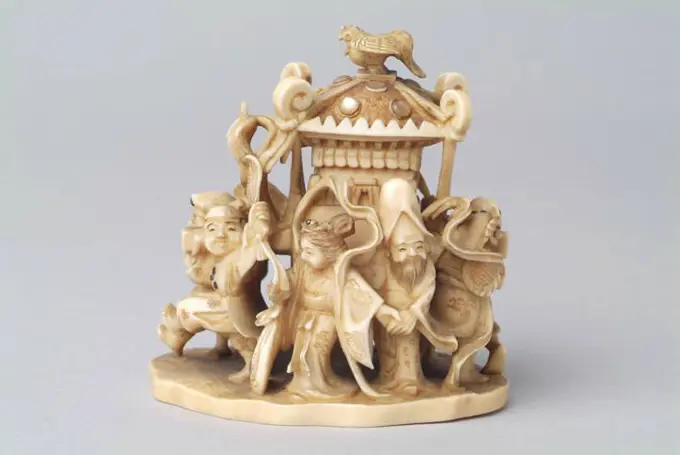
Japanese Okimono Carving of The Seven Deities of Good Fortune Dancing around a Shrine,  Meiji Period, 1868 - 1912
6145-29746713
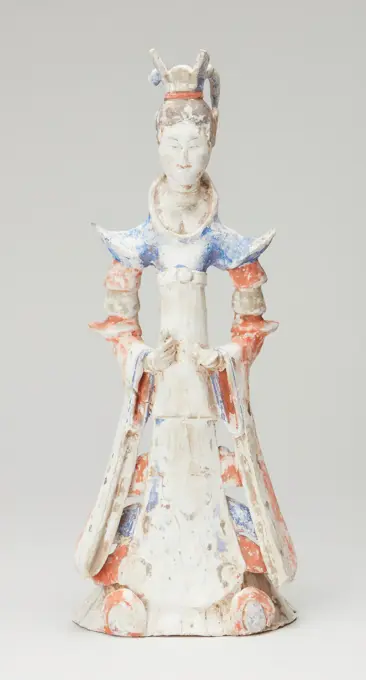
Standing Female Attendant late 7th-early 8th century China. Standing Female Attendant. China. late 7th-early 8th century. Wood with pigments. Tang dynasty (618-907). Sculpture
6145-29127693
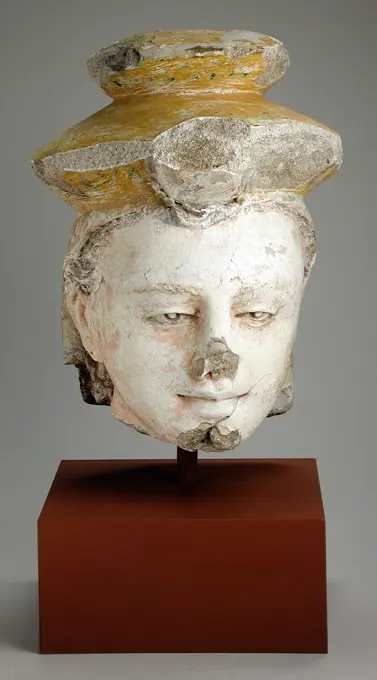
Head of a Bodhisattva. Sri Lanka, Kandy period, Mahavihara Bingiriya, 16th century. Sculpture. Stucco with paint
6145-29168392
Lady with silver basket second half 18th century Attributed to Giuseppe Gori In 1964, Loretta Hines Howard generously presented to the Museum over 140 Neapolitan crèche figures, dating from the second half of the eighteenth century. The varied assortment includes figures from the three traditional scenes of a complete Neapolitan presepio: the Nativity, with angels, shepherds, and sheep; the procession of the three Magi, with their colorful retinue of attendants; and the varied and gay crowd of country and town people thronging the tavern, or inn, of Bethlehem  the diversorium mentioned by St. Luke, where on the Holy Night there was no place for Mary and Joseph. Averaging between twelve and fifteen inches in height, according to the position they were to take in perspective in the stage set, the figures are pliable and can be given poses at will, according to their facial expressions. Their bodies are made of tow and wire, their arms and legs are finely carved of wood, and their heads
1788-8431
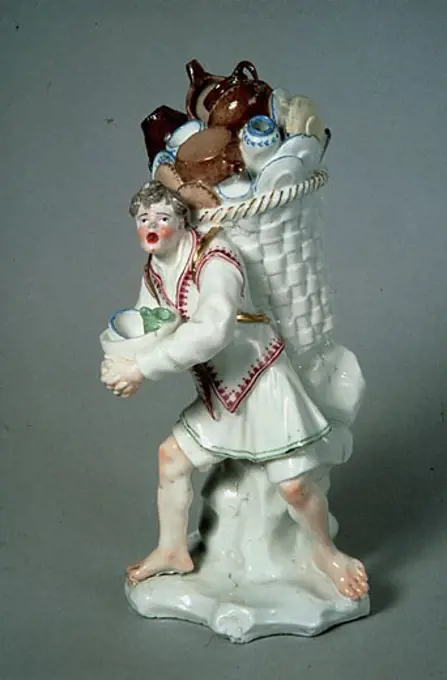
Ceramics, Italy 18th century. Capodimonte production. Pedlar. Series Voices from Naples” by Giuseppe Gricci
6145-29153348
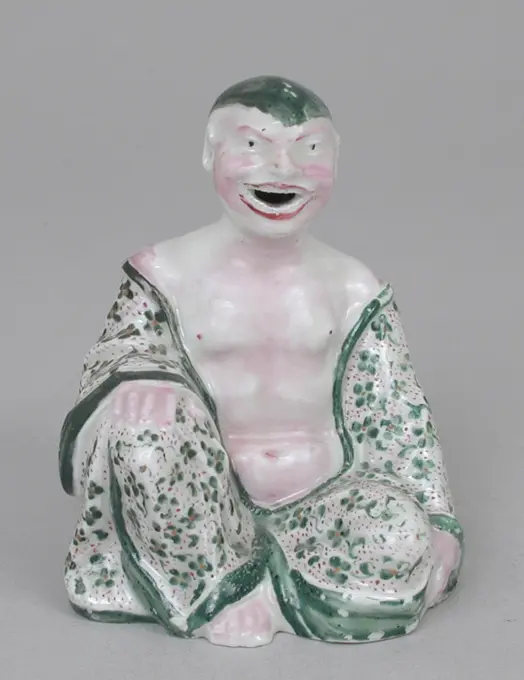
Buddhist Divinity made ca. 1715-20, decorated ca. 1718-20 Meissen Manufactory German. Buddhist Divinity. German, Meissen. made ca. 1715-20, decorated ca. 1718-20. Hard-paste porcelain. Ceramics-Porcelain
6145-45335625
Kid Bristol
6145-29725246
Terracotta statuette of a woman 3rd century B.C. Greek, Cypriot The figurine is mold-made and hollow. The back is mold-made. There is a round vent at the level of the waist.. Terracotta statuette of a woman 241282
6145-59043485
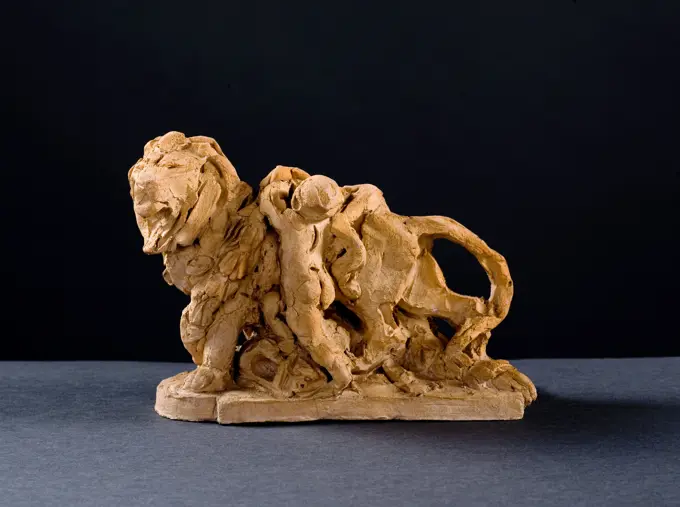
Aimé-Jules Dalou (1838-1902). "Lion of the Alexandre III bridge". Terracotta, around 1898. Museum of Fine Arts of the city of Paris, Petit Palais. Angel, Cherubin, child, lion, Alexandre III bridge, terracotta
6145-29168303
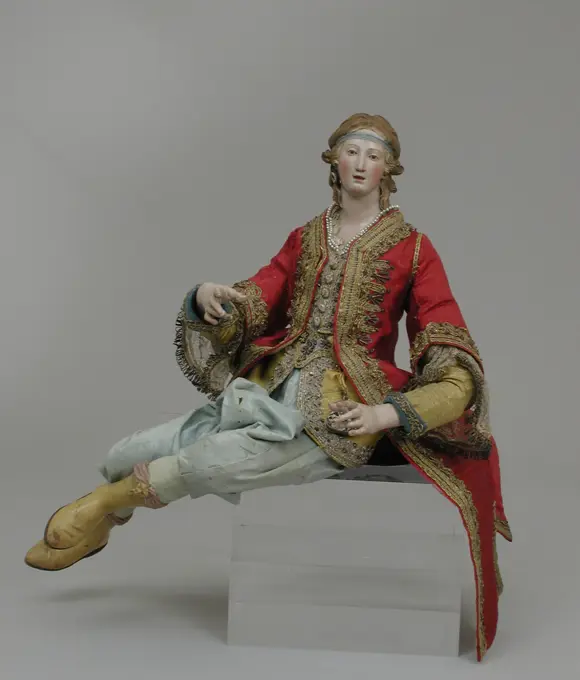
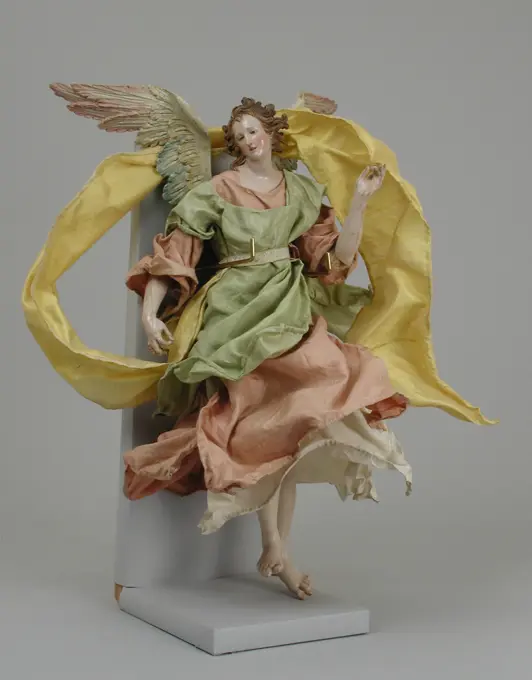
Angel late 18th-early 19th century Italian, Naples. Angel. Italian, Naples. late 18th-early 19th century. Polychromed wood and terracotta; silk robes. Crèche
6145-29232592
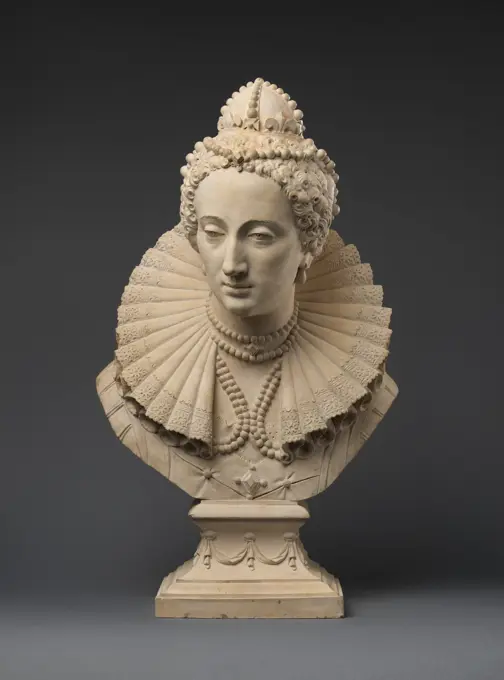
Queen Elizabeth I (1533-1603) ca. 1780 Model attributed to John Bacon the Elder Elizabeth I casts her dignified gaze slightly downward and right of center. The movement of her head tempers the otherwise rigid frontal symmetry of the Queens pose and stately attire. The rich ornamentation of her costume contributes to her dual status as beloved monarch and cultural relic, or jewel, of British history. Created almost two hundred years after her death, this fine under life-size Coade stone bust, fit for the domestic interior of a prosperous patron, exemplifies the enduring prevalence of the cult of Elizabeth I throughout the eighteenth century.Elizabeth I conveys the overlapping histories of two remarkable British women: the great Tudor Queen, Elizabeth I of England (1533-1603), and the pioneering businesswoman, Eleanor Coade (1733-1821). In 1769, Mrs. Coade, as she liked to be called despite never marrying, began producing artificial stone in her Lambeth factory from a then-secret formul
6145-29157940
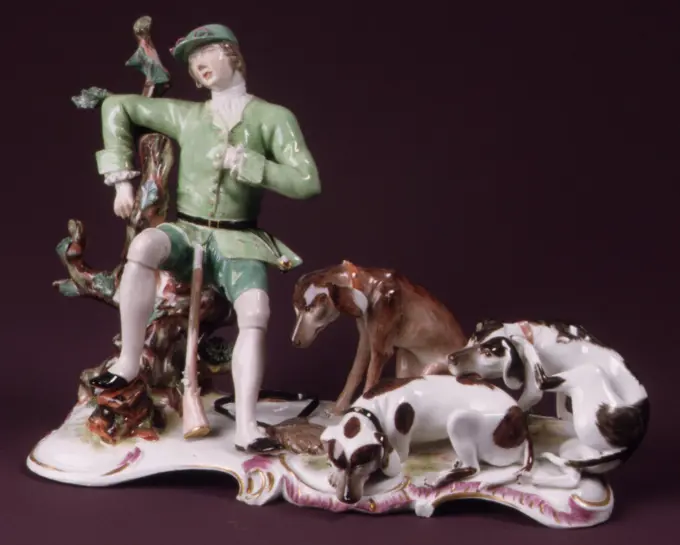
Hunter with Hounds ca. 1760 Höchst Manufactory. Hunter with Hounds. German, Höchst. ca. 1760. Hard-paste porcelain. Ceramics-Porcelain
4409-17548975
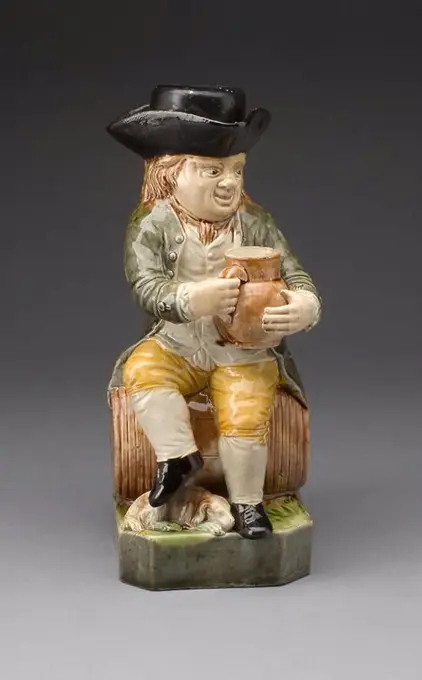
Toby Jug. England, Staffordshire. Date: 1780-1790. Dimensions: H. 25.4 cm (10 in.). Lead-glazed earthenware. Origin: Staffordshire. Museum: The Chicago Art Institute, Chicago, USA.
6145-58997490
Zoomorphic burn. Terracotta, polychrome glaze. Paris, Cernuschi museum. 78841-9 Asian art, burn-brurge, old ceramic, covered, email, glacide, refinement, terracotta, terracotta emaillee
6145-59045951
Jean-Pierre Dantan (1800-1869), said Dantan the young. Caricature of the singer and tenor at the Italian theater, Giovanni-Battista Rubini (1795-1854). Terracious patinated plaster. 1833. Paris, Carnavalet museum. Singer, pattero patina, tenor, terracotta, Italian theater, caricature
4409-17422125
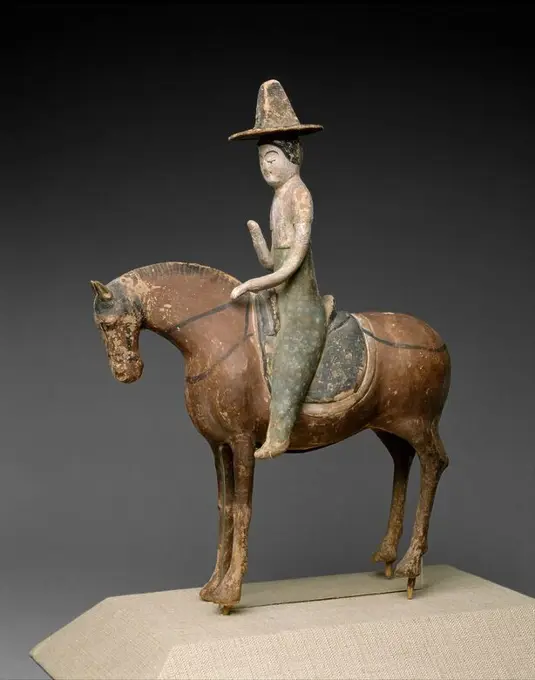
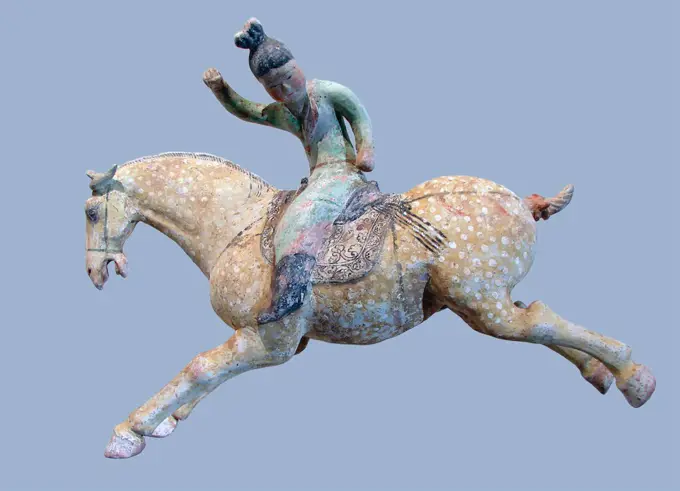
Horse and Female Rider. Culture: China. Dimensions: H. 14 1/4 in. (36.2 cm); L. 11 1/2 in. (29.2 cm). Date: 7th century.This painted clay figure likely comes from Astana, Xinjiang, in the far northwest of China. It reflects both the political reach of the Tang empire as it expanded into Central Asia and the influence of the West on the fashions of the time. Museum: Metropolitan Museum of Art, New York, USA.
4409-17418077
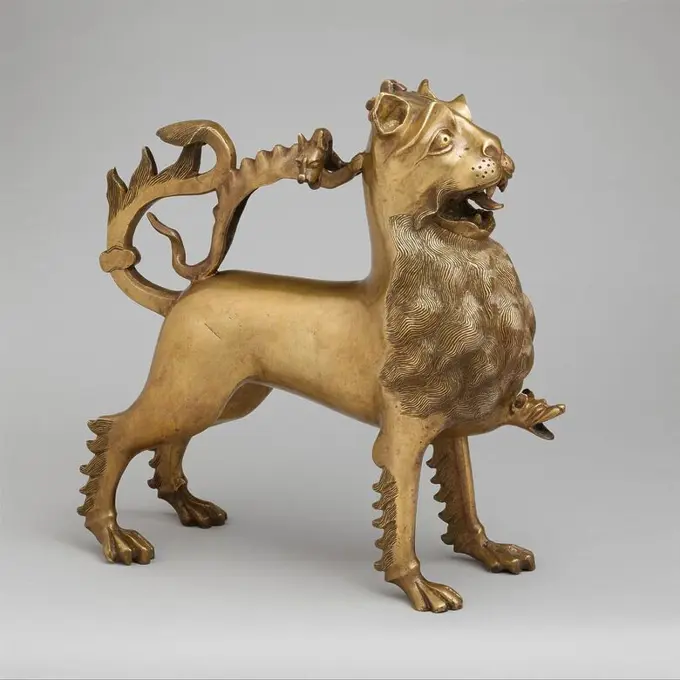
Aquamanile in the Form of a Lion. Culture: German. Dimensions: 12 9/16 x 4 5/8 x 12 1/2 in., 11.76lb. (31.9 x 11.8 x 31.8 cm, 5336g)Thickness: 1/16-1/8 in. (0.16-0.35 cm). Date: ca. 1400.This elaborate water vessel was intended for handwashing. A specialty of metalworkers in German-speaking lands for centuries--from the twelfth to the fifteenth--they are called aquamanilia, from the Latin words for water (aqua) and hand (manus). Broad-chested, mane protruding, and mouth open, the lion is unabashedly proud and alert. To create this exceptional king of the beasts, the artist first made a rough clay model and then molded wax around it. Next he coated the wax with a mixture of brick, clay, and ashes before melting the wax to form a space that could be filled with molten metal. Museum: Metropolitan Museum of Art, New York, USA.
1899-70251
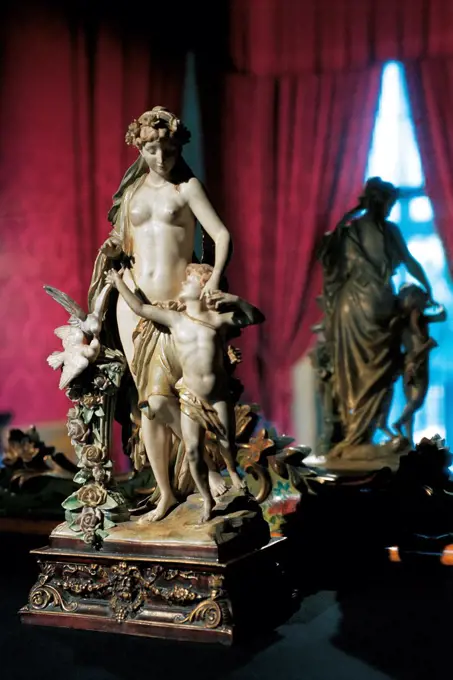
Venus and Cupid, 19th Century, porcelain,
6145-58853393
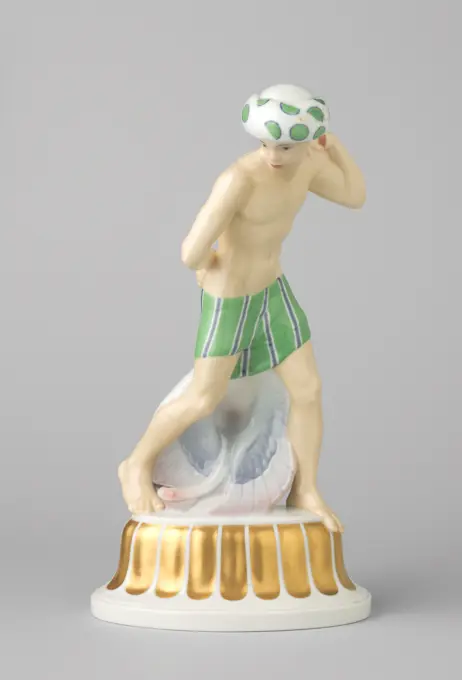
Figure in the Shape of a Man with a Turkey, Royal Porcelain Manufactory, 1915 Image of porcelain on high foot in the form of a man with a turban (Indian), A turkey behind him. Painted in underly glaze blue, red, green, beige, brown on the glaze gold. A band with golden compartments on the foot. Marked on the underside with the scepter, the figures 140/849, the Rijksappel with K.P.M in Blauw, Triangle and annual letter P. (March 1915), De Letter B., the number M15 HH  96168 (model from 1905). Signed on the pedestal with 'Amberg'. Art Nouveau. Berlin porcelain. glaze. gold (metal) painting / gilding / vitrification Image of porcelain on high foot in the form of a man with a turban (Indian), A turkey behind him. Painted in underly glaze blue, red, green, beige, brown on the glaze gold. A band with golden compartments on the foot. Marked on the underside with the scepter, the figures 140/849, the Rijksappel with K.P.M in Blauw, Triangle and annual letter P. (March 1915), De Letter B., the
1848-67225950
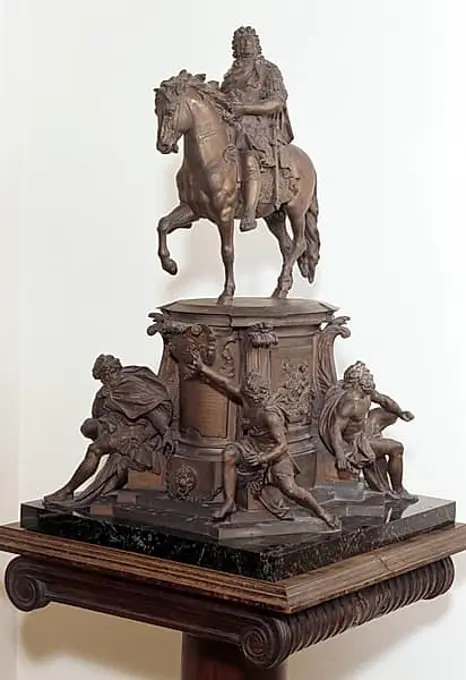
Spindlhof Palace, equestrian statue of Elector Frederick William of Prussia Bronze from the art collection
6145-29183997
Buddhist Divinity 1710-20 Meissen Manufactory German. Buddhist Divinity 206030
6145-59004978
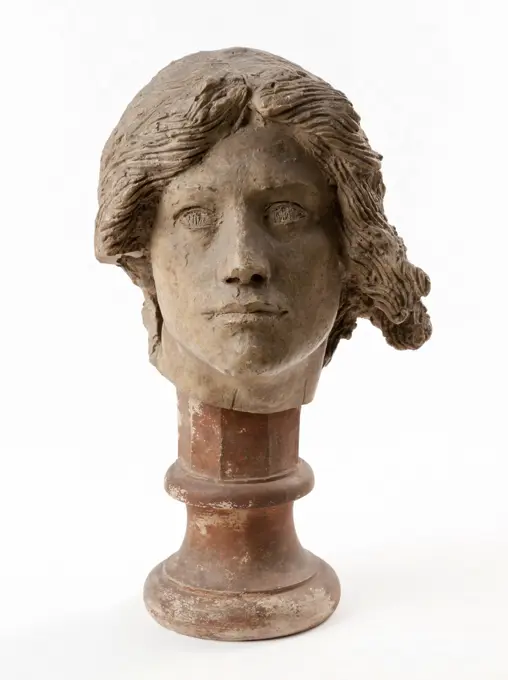
Alexandre Falguière (1831-1900). The poet or Apollo. Plaster tinted on Piédouche in brown-red painted plaster. 1880. Museum of Fine Arts of the City of Paris, Petit Palais. poet
4409-17290328
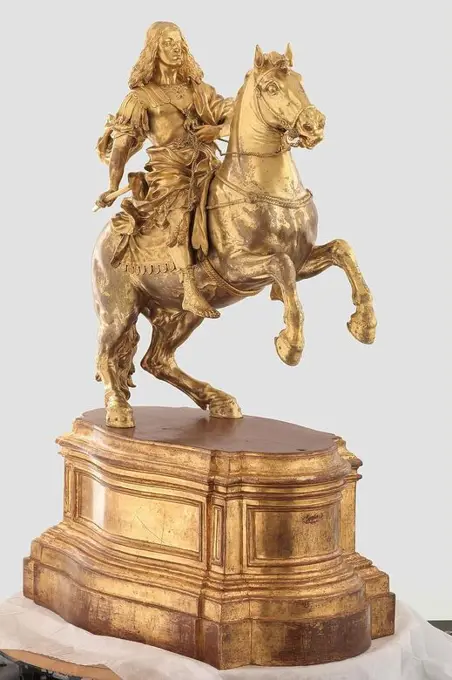
Giovanni Battista Foggini / 'Carlos II on Horseback'. 1698. Gilt-bronze. Museum: Museo del Prado, Madrid, España.
6145-29134182
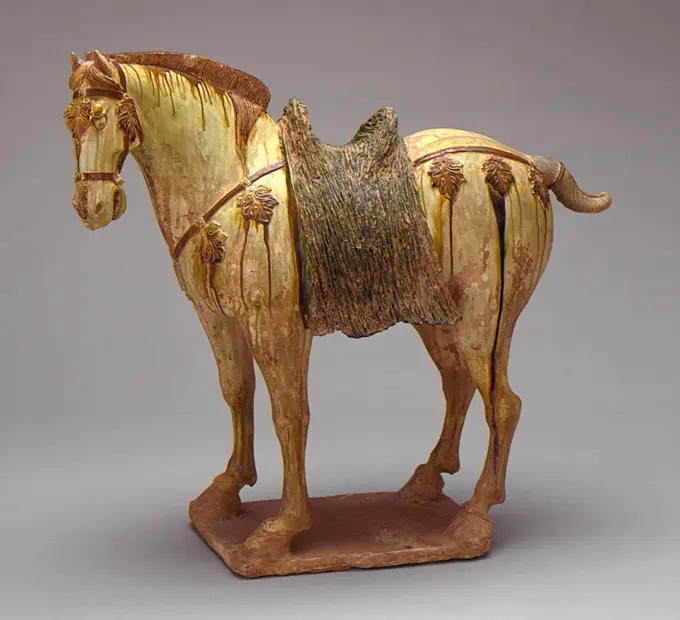
Funerary Sculpture of a Horse
4409-17421999
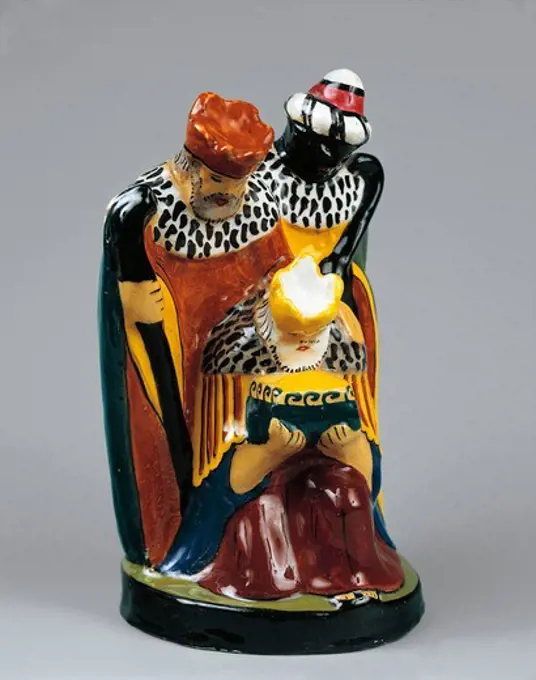
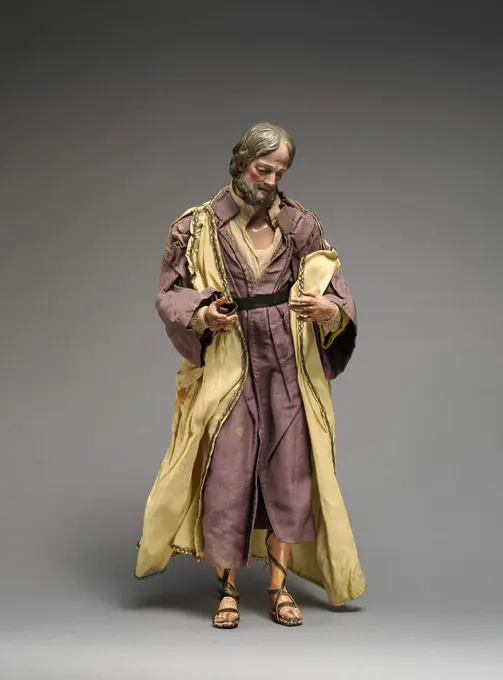
Large "Joseph" with purple and yellow robes. Culture: Italian. Dimensions: Overall (confirmed): 17 × 6 1/2 × 4 1/2 in. (43.2 × 16.5 × 11.4 cm). Date: second half 18th-mid-19th century.The practice of using crèche figures to restage religious events reached the height of its complexity and artistic excellence in eighteenth-century Naples, and the Metropolitan Museum of Art's group of Neapolitan crèche is one of the finest and most complete survivals of the art form. The ensemble consists of characters traditional to eighteenth-century Italian Christmas holiday customs. The Nativity, featuring the holy family, shepherds and their flocks, and a host of angels and cherubs is joined by the procession of the three Magi and colorful peasants, townspeople, and animals. The figures have articulated bodies of tow and wire with polychromed terracotta heads, and are all in partially distressed condition.These vibrant characters are further brought to life by a wide-ranging set of cloth, embroide
6145-29168328
Angel second half 18th century Attributed to Giuseppe Gori In 1964, Loretta Hines Howard generously presented to the Museum over 140 Neapolitan crèche figures, dating from the second half of the eighteenth century. The varied assortment includes figures from the three traditional scenes of a complete Neapolitan presepio: the Nativity, with angels, shepherds, and sheep; the procession of the three Magi, with their colorful retinue of attendants; and the varied and gay crowd of country and town people thronging the tavern, or inn, of Bethlehem  the diversorium mentioned by St. Luke, where on the Holy Night there was no place for Mary and Joseph. Averaging between twelve and fifteen inches in height, according to the position they were to take in perspective in the stage set, the figures are pliable and can be given poses at will, according to their facial expressions. Their bodies are made of tow and wire, their arms and legs are finely carved of wood, and their heads and shoulders are
6145-29774355
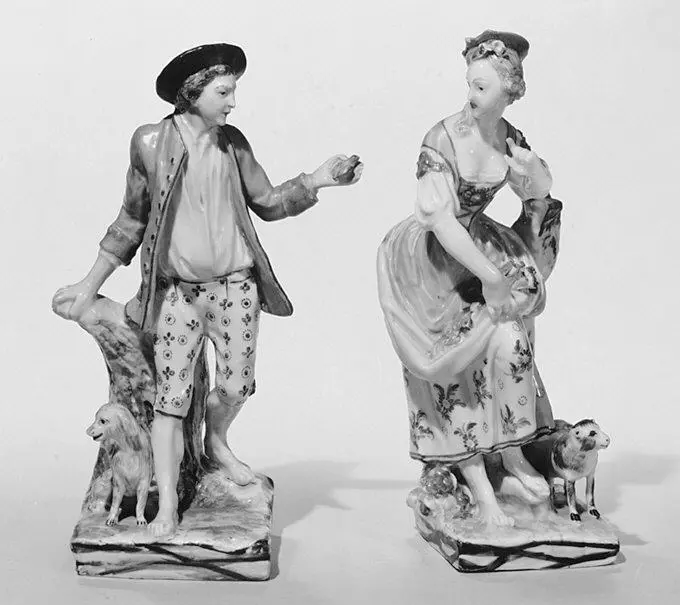
Shepherd and shepherdess ca. 1775 Bristol. Shepherd and shepherdess 203597
6145-29139204
Saint George and the Dragon ca. 1475 Attributed to Hans Klocker Listen to experts illuminate this artwork's story Listen Play or pause #862. Kids: Saint George and the Dragon Supported by Bloomberg Philanthropies We're sorry, the transcript for this audio track is not available at this time. We are working to make it available as soon as possible.. Saint George and the Dragon 466050
4409-20921522
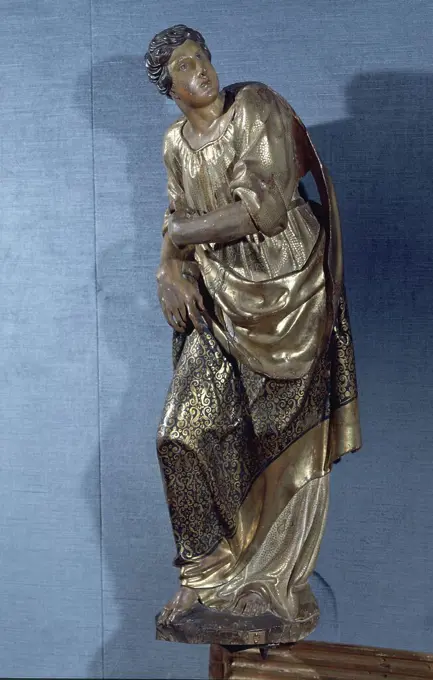
PROFETA - ESCULTURA DEL RETABLO DE SAN BENITO - 1526 - ESCULTURA MANIERISTA. Author: ALONSO BERRUGUETE (1488-1561). Location: MUSEO NACIONAL DE ESCULTURA-COLECCION. Valladolid. SPAIN.
6145-29234806
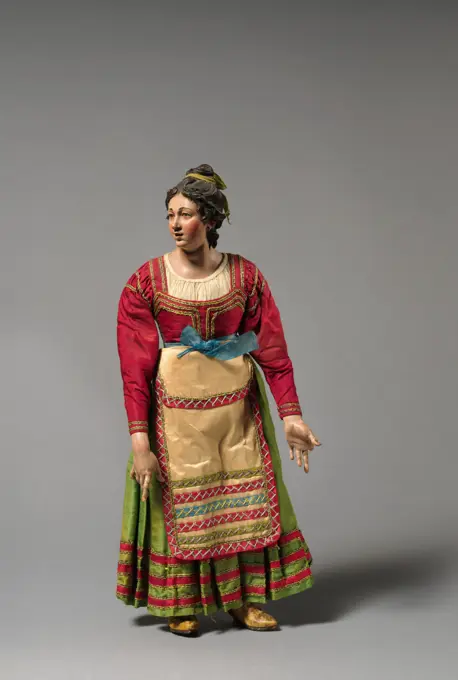
Young woman looking up in red top, green skirt, cream apron second half 18th-mid-19th century Italian The practice of using crèche figures to restage religious events reached the height of its complexity and artistic excellence in eighteenth-century Naples, and the Metropolitan Museum of Arts group of Neapolitan crèche is one of the finest and most complete survivals of the art form. The ensemble consists of characters traditional to eighteenth-century Italian Christmas holiday customs. The Nativity, featuring the holy family, shepherds and their flocks, and a host of angels and cherubs is joined by the procession of the three Magi and colorful peasants, townspeople, and animals. The figures have articulated bodies of tow and wire with polychromed terracotta heads, and are all in partially distressed condition.These vibrant characters are further brought to life by a wide-ranging set of cloth, embroidery, leather, wicker, wax, and silver accessories. Many of these, such as the figures
6145-29061083
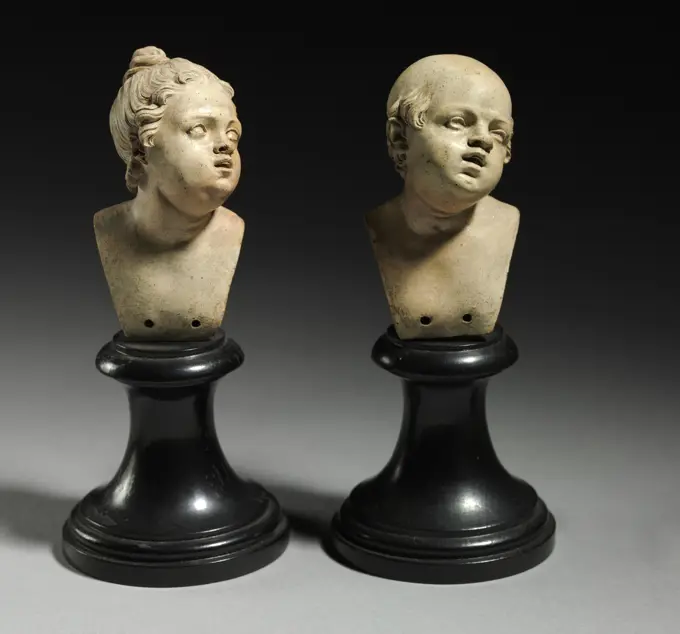
Bust Pair: Head of a Man and Head of a Woman, c. 1800. Italy, Naples(), early 19th Century. Terracotta; overall: 7 x 4 x 4.2 cm (2 3/4 x 1 9/16 x 1 5/8 in.). Each of these miniscule terracotta busts has allegedly been formed by hand, though the precision of the detailed features implies that they have been cast from a mold. Details such as the meticulously executed facial features and the thin, exact rows of hair on each figure suggest a manufactured method of creation. Furthermore, these figures lack any trace of fingerprints that handmade figures of this time typically bear. Small holes at the base of each bust suggest that the heads were once attached to bodies that may have been used as crèche figurines. The busts were created in Naples where large numbers of nativity scenes were produced around the turn of the nineteenth century. The similarity in size to archetypal terracotta crèche figurines as well as the vast production of nativities in Naples at this time suggest that these
6145-29749790
Netsuke of Ebisu 18th century Japan. Netsuke of Ebisu. Japan. 18th century. Ivory. Edo period (1615-1868). Netsuke
6145-29168304
Angel second half 18th century Italian, Naples In 1964, Loretta Hines Howard generously presented to the Museum over 140 Neapolitan crèche figures, dating from the second half of the eighteenth century. The varied assortment includes figures from the three traditional scenes of a complete Neapolitan presepio: the Nativity, with angels, shepherds, and sheep; the procession of the three Magi, with their colorful retinue of attendants; and the varied and gay crowd of country and town people thronging the tavern, or inn, of Bethlehem  the diversorium mentioned by St. Luke, where on the Holy Night there was no place for Mary and Joseph. Averaging between twelve and fifteen inches in height, according to the position they were to take in perspective in the stage set, the figures are pliable and can be given poses at will, according to their facial expressions. Their bodies are made of tow and wire, their arms and legs are finely carved of wood, and their heads and shoulders are modeled of t
4443-19550630
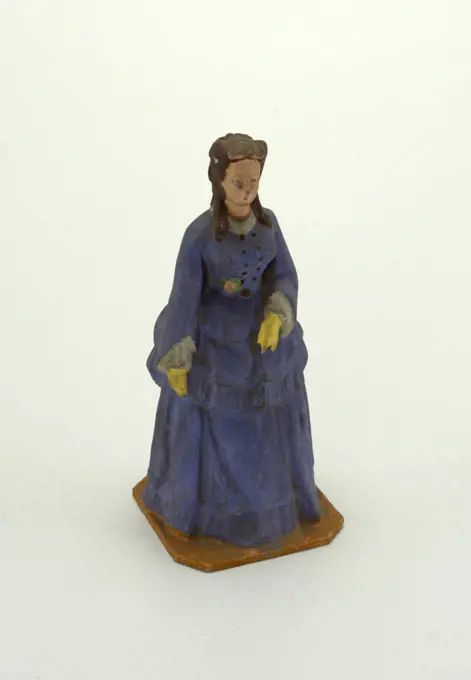
Figure, composition board (possibly paper mache), molded & painted. Possible masonite base, England, ca. 1840, Decorative Arts, Figure
1746-29012352
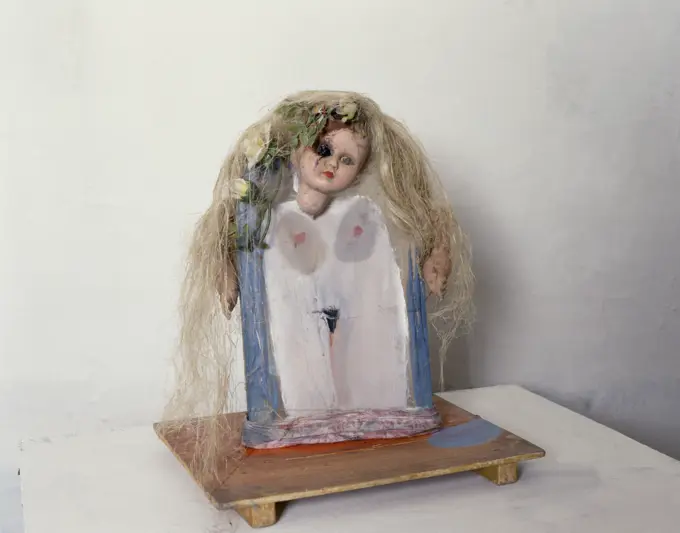
three dimensional mixed media composition of a nude woman, by French-Algerian artist Yves Baume; Born 1933
6145-29144256
Kanzan and Jittoku 1820 Japan. Kanzan and Jittoku. Japan. 1820. Pottery covered with enamels and with glaze, craquelé (Takatori ware). Edo period (1615-1868). Ceramics
6145-29737119
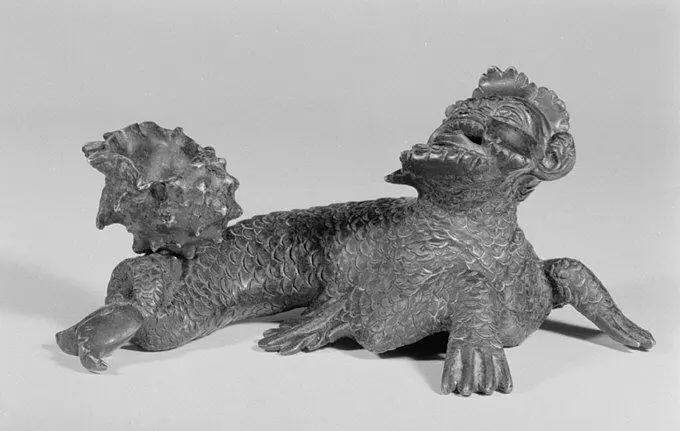
Dragon 19th-20th century After a composition by Severo Calzetta da Ravenna Italian. Dragon 205197
6145-29896171
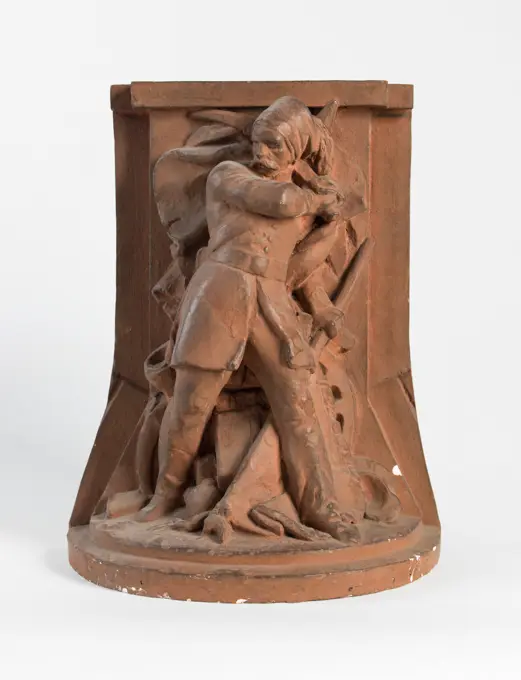
Zouave Dantan, Antoine Laurent (said old dantan). "Zouave". Patinated terracotta plaster.
6145-29235788
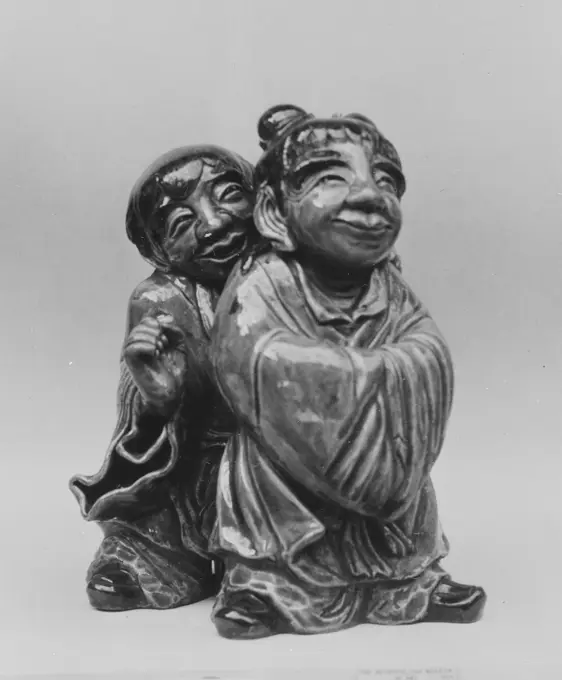
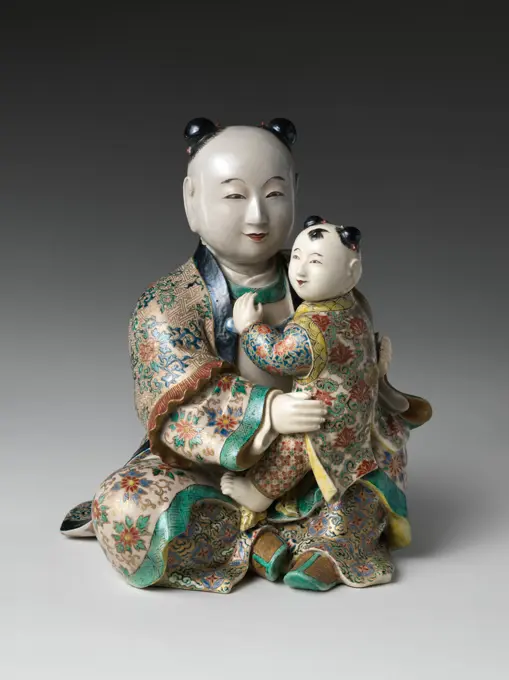
Seated Karako (Chinese boy) with a Child 18th-early 19th century Japan. Seated Karako (Chinese boy) with a Child. Japan. 18th-early 19th century. Stoneware with polychrome enamels and gold over finely crackled glaze (Satsuma ware). Edo period (1615-1868). Ceramics
6145-58998089
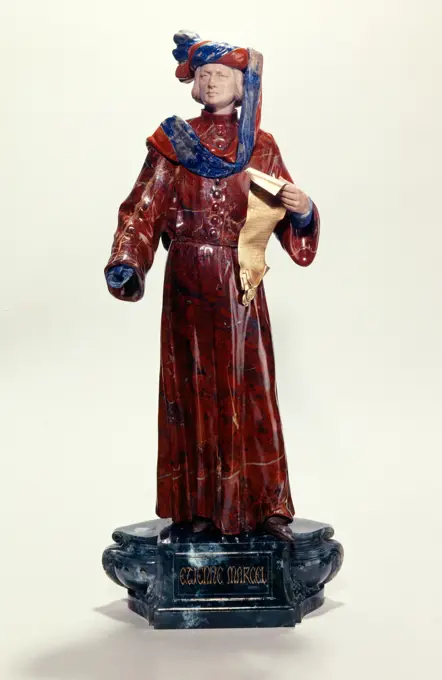
Georges Lemaire. Etienne Marcel. Red jasper, frothy agate, lapis, jasper from the Congo, opal crust, golden silver. Museum of Fine Arts of the City of Paris, Petit Palais. Foaming agate, gilded silver, opal crust, French politician, Congo jasper, red jaspe, lapis
6145-54680845
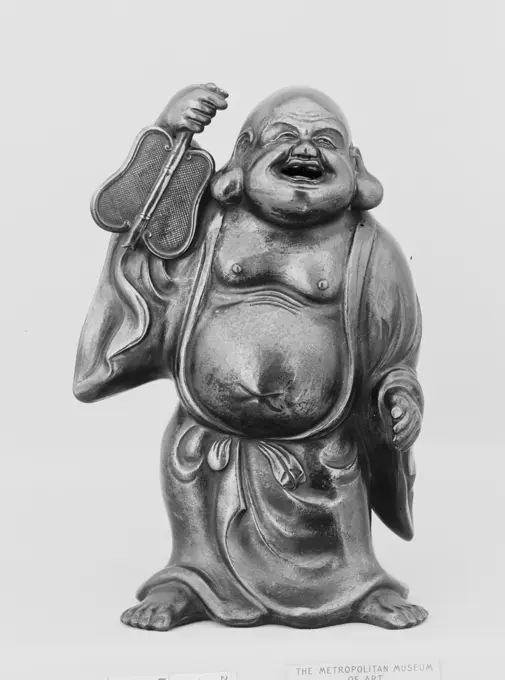
Figure of Hotei Japan 18th century View more. Figure of Hotei. Japan. 18th century. Clay covered with a thin glaze (Bizen ware, Imbe style). Edo period (1615-1868). Ceramics
4409-17409008
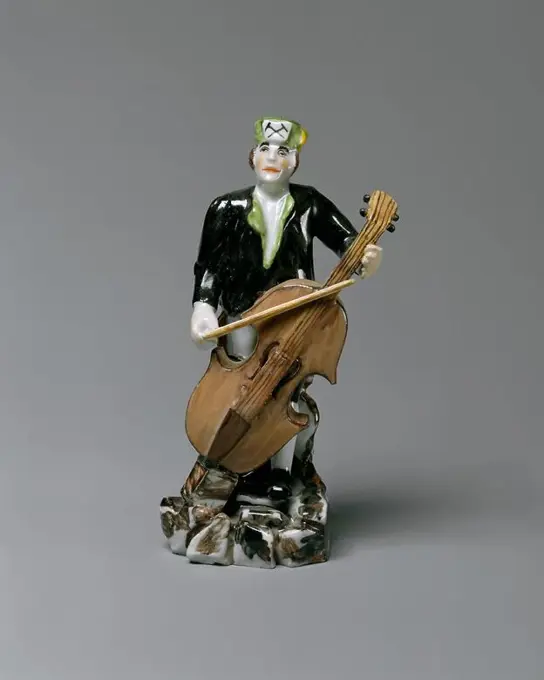
Miner Playing the Cello. Culture: German, Meissen. Dimensions: Height: 5 5/8 in. (14.3 cm). Factory: Meissen Manufactory (German, 1710-present). Date: ca. 1730. Museum: Metropolitan Museum of Art, New York, USA.
6145-29746698
St. George and the Dragon 15th-16th century German. St. George and the Dragon 464365
1899-18721011
The Tang Dynasty (pinyin: Tang Chao; June 18, 618 - June 1, 907) was an imperial dynasty of China preceded by the Sui Dynasty and followed by the Five Dynasties and Ten Kingdoms Period. It was founded by the Li (æŽ) family, who seized power during the decline and collapse of the Sui Empire. The dynasty was interrupted briefly by the Second Zhou Dynasty (October 8, 690 - March 3, 705) when Empress Wu Zetian seized the throne, becoming the first and only Chinese empress regnant, ruling in her own right. The Tang Dynasty, with its capital at Chang'an (present-day Xi'an), which at the time was the most populous city in the world, is generally regarded as a high point in Chinese civilization equal to, or surpassing that of, the earlier Han Dynasty a golden age of cosmopolitan culture. Its territory, acquired through the military campaigns of its early rulers, rivalled that of the Han Dynasty. In two censuses of the 7th and 8th centuries, the Tang records estimated the population by number
6145-59028870
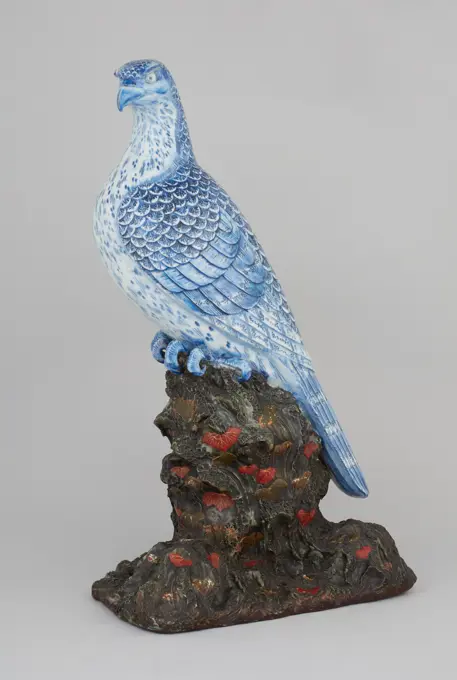
Seto (ceramic production center), hawk perched on a rock (Taka Okimono) (username), 1870. Porcelain, decor painted in blue under the cover, lacquer and pigments. Cernuschi Museum, Asia Museum of Asia in the city of Paris. Falcon, head turned to the left slightly. painted in blue. The rock is covered with brown lacquer, with red, green and ocher leaves.
1848-55260722
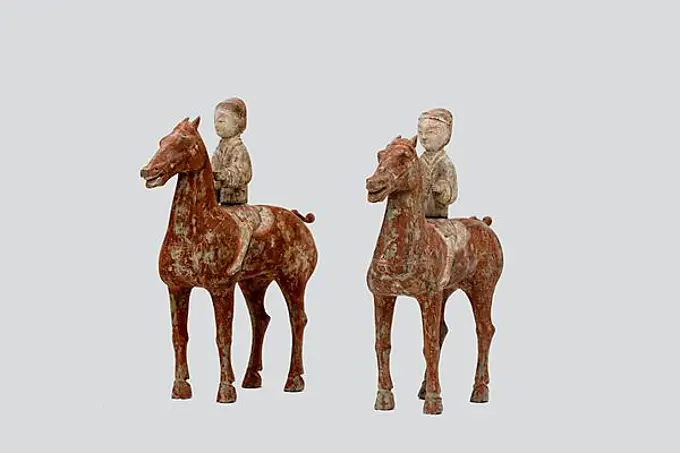
Chinese equestrian figures, Museum Island Hombroich musem, Neuss, Lower Rhine, North Rhine-Westphalia, Germany, Europe
4409-17460680
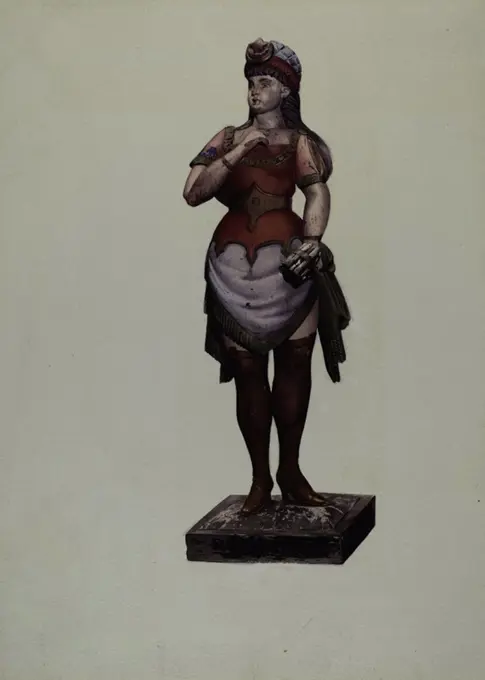
Cigar Store Figure. Dated: c. 1937. Dimensions: overall: 42 x 29 cm (16 9/16 x 11 7/16 in.). Medium: watercolor, graphite, and pen and ink on paper. Museum: National Gallery of Art, Washington DC. Author: Joseph Goldberg.
4409-17391568
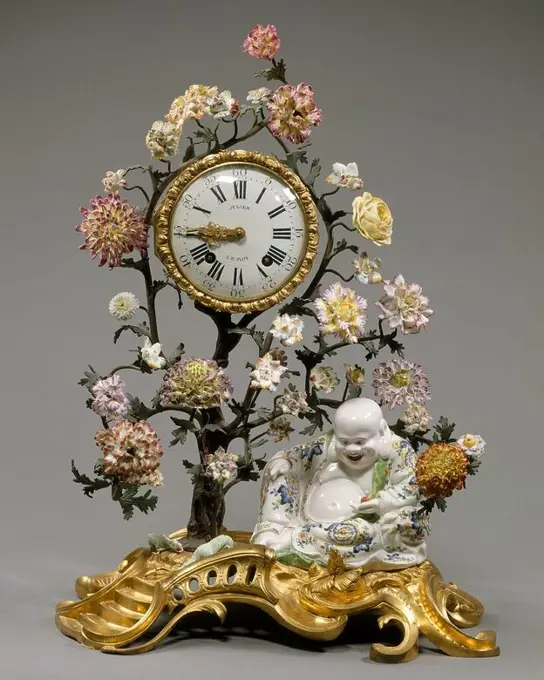
Mantel clock. Culture: French, Paris with French, Chantilly case. Dimensions: Height: 21 1/2 in. (54.6 cm). Maker: Clockmaker: Julien Le Roy (French, Tours 1686-1759 Paris); Case maker: Chantilly (French). Date: ca. 1745-49.The figure of Pu-tai Ho-shang, a Chinese apostle of the Buddha, is a literal copy made at Chantilly in the 1740s of a blanc de chine model that originated at Tê-hua in the Fukien province of China and was exported to the West in the first half of the eighteenth century. Augustus the Strong owned a number of examples, presumably those described in the 1721 inventory of the Japanese Palace in Dresden as sitting pagods.1 This Chantilly version may be compared to a blanc de chine figure, mounted, like this, in French gilt bronze of about 1745-49 in the Walters Art Gallery, Baltimore.2 Thirteen of the flowers are original and are of soft-paste porcelain made at Chantilly; the remainder are replacements in hard-paste porcelain. The clock has a rack-and-nail quarter-s
4409-20925776
JARRA DE MARFIL CON ESCENA MITOLOGICA. Location: PRIVATE COLLECTION. BACCHUS. FAUNO. PAN DIOS.
1899-28660109
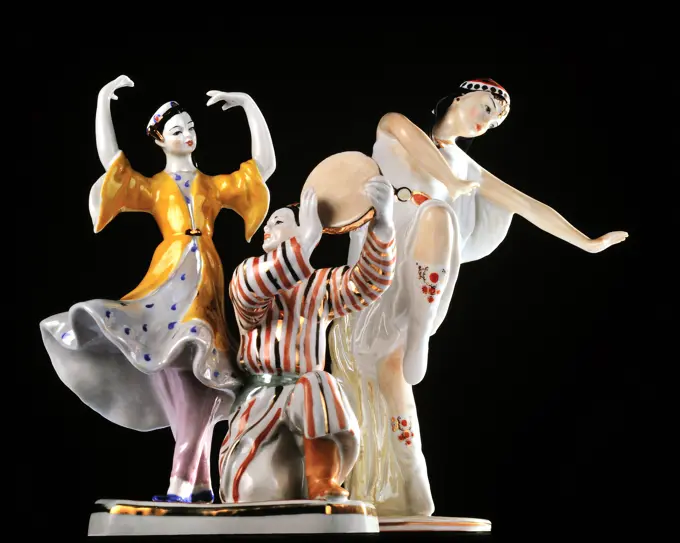
Still-Life, Soviet porcelain, Uzbeka Dance, group of statuettes from 1957, in painted porcelain, covered in gold gilding, from Dulëvo Manufacturing.
6145-29776146
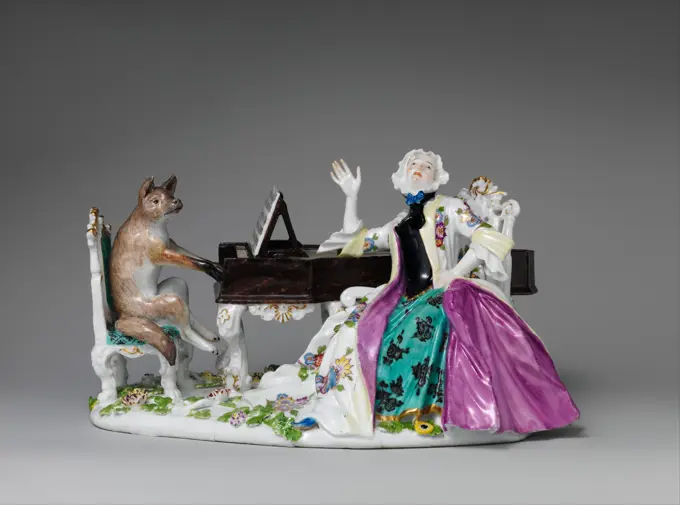
Faustina Bordoni and Fox ca. 1743 Meissen Manufactory German This figure group expresses on several levels the great popularity of opera in Dresden in the mid-eghteenth centruy. The renowned Italian mezzosoprano Faustina Bordoni is depicted in the act of singing, accompanied by a fox on a harpsichord. The precise painting of the sheet music on the harpsichord provides the name of the opera, Antigono, followed by the names of its composer, Johann Adolph Hasse, and its lead singer, S. (Giovanni) Bindi. The music is rendered in extraordinary detail, allowing one to read the lyrics, which refer to seduction, dignity, and revenge.In 1730, Bordoni had married Hasse, who was a conductor, a prolific composer, and an accomplished harpsichordist. In the course of his career, Hasse composed numerous operas for the Dresden court, and Faustina figured prominently in many of them. The couple's celebrated status in the musical life of Dresden did not protect them, however, from the satiric wit of the
4409-17338255
Four Patriarchs from a depiction of the Tree of Jesse. Antwerp, c. 1520. Oak, polychrome. Schnu_tgen Museum. Cologne, Germany.
6145-29814360
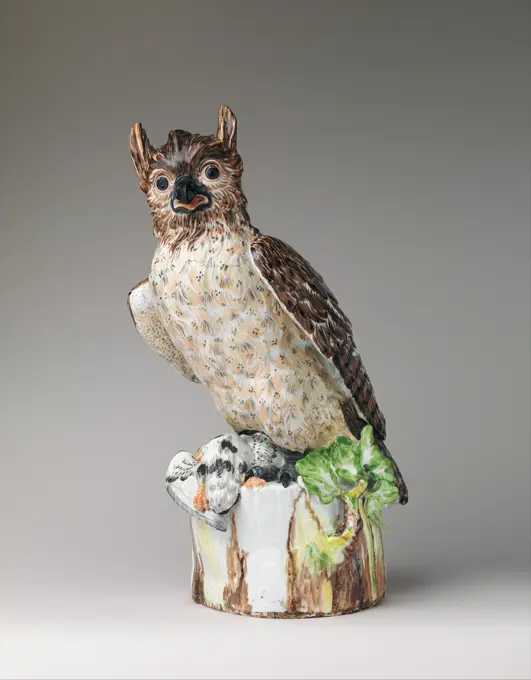
Eagle owl ca. 1735 Meissen Manufactory German This figure of an eagle owl belongs to a large group of porcelain mammals and birds ordered for one of the Saxon royal palaces in Dresden, Germany. Known as the Japanese Palace, the building was intended to house the vast porcelain collection of Augustus II (1670-1733), the elector of Saxony and King of Poland. Augustus was a voracious collector of both Chinese and Japanese porcelains in the early eighteenth century, and his interest in Asian ceramics led to his establishment of the Meissen factory near Dresden in 1710. The early production at Meissen was strongly influenced by Augustuss Chinese and Japanese porcelains, and the designs for the interiors of the Japanese Palace incorporated both Asian and Meissen examples.In 1730, Augustus initiated a commission for large-scale animals that would be displayed in the Japanese Palace. The original order called for almost six hundred creatures in sizes approximating, when possible, the subjects
4409-17332486
LA ORACION EN EL HUERTO O JESUS EN EL HUERTO DE LOS OLIVOS - 1776-1800 - BARRO Y FIBRA TEXTIL - 64x57x37 cm. Location: MUSEO DEL ROMANTICISMO-ESCULTURA. MADRID. SPAIN.
6145-29740449
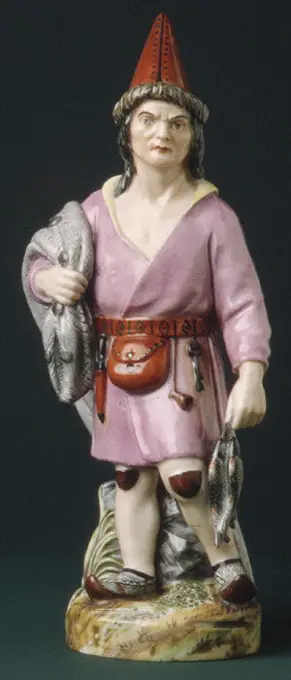
Lapplander ca. 1780-1800 Imperial Porcelain Manufactory, St. Petersburg Russian About 1780 the Imperial factory began the production of a large series of figures depicting Russian national types, of which fourteen are represented in the Linsky Collection. Like most of the figures, this figure is modeled from engravings published by Johann Gottlieb Georghi in his Description if All the Peoples Inhabiting the Russian State (editions of 1774, 1776, and later). The authorship of the models themselves is not established, but some may be attributable to Jean-Dominique Rachette (1744-1809), chief modeler at the factory from 1779 to 1804.. Lapplander 207062
4409-17353858
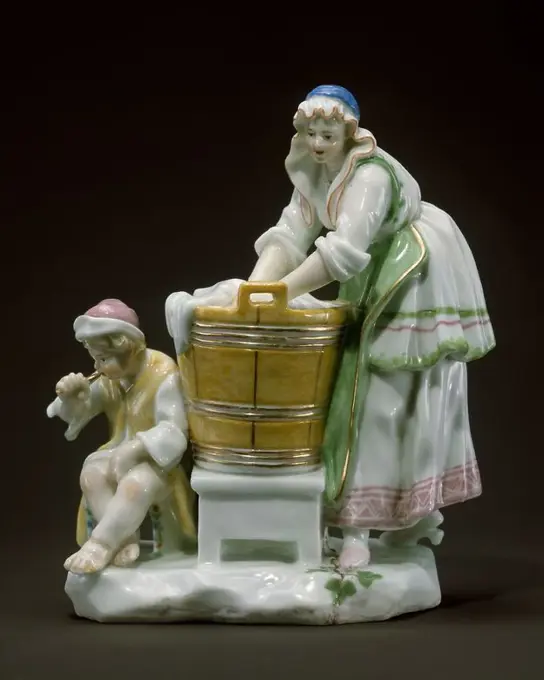
The Washerwoman. Artist: After a print by Charles Nicolas Cochin I (French, Paris 1688-1754 Paris); After a painting by Jean Siméon Chardin (French, Paris 1699-1779 Paris). Culture: Italian, Naples (Capodimonte). Dimensions: Height: 7 3/16 in. (18.3 cm). Manufactory: Capodimonte Porcelain Factory (Italian, 1740/43-1759). Modeler: Giuseppe Gricci (Italian, ca. 1700-1770). Date: ca. 1752-58. Museum: Metropolitan Museum of Art, New York, USA.
6145-29093875
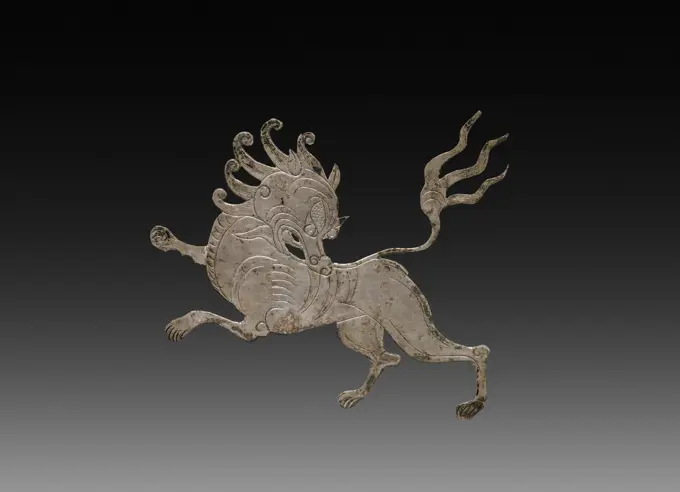
Inlay for a Mirror or Box: shih-shih, c. 900-1000. China, Tang dynasty (618-907) - Song dynasty (960-1279). Beaten silver with chased details; overall: 5.2 x 5.6 cm (2 1/16 x 2 3/16 in.). The p'ing-t'o technique of inlaying gold and silver foil on lacquer produced luxurious articles of elegance and fragility. These stray silver inlays were originally mounted on a mirror back or a cosmetic box whose lacquered surface has disintegrated. They combine auspicious symbols of Indian and Chinese origin--human-headed birds whose melodies filled the Buddhist paradise, and bird-riding deities who inhabited the skies of Taoist mythology. Like these imaginary beings, the lions were probably paired in a radial design; at least one has been lost.
4409-17308136
CORACERO ESPANOL TALLADO EN MADERA. Author: TELLO. Location: PRIVATE COLLECTION. MADRID. SPAIN.
6145-46428134
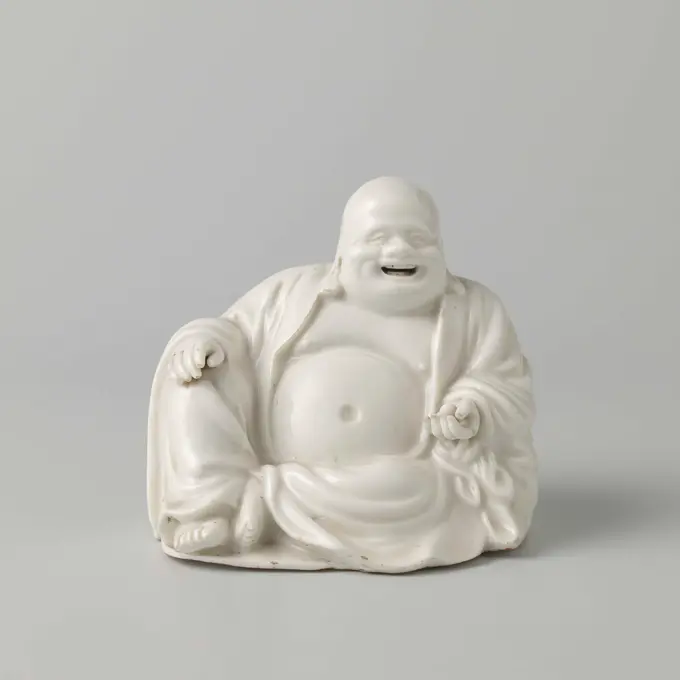
Figure of A Seated Monk. Image of porcelain, covered with a translucent white glaze. Sitting, smiling monk (Budai) With a pearl in his hand and a bare chest and belly. On the back an accompanying and gold-plated unidentified character. Blanc De Chine.
4042-22183858
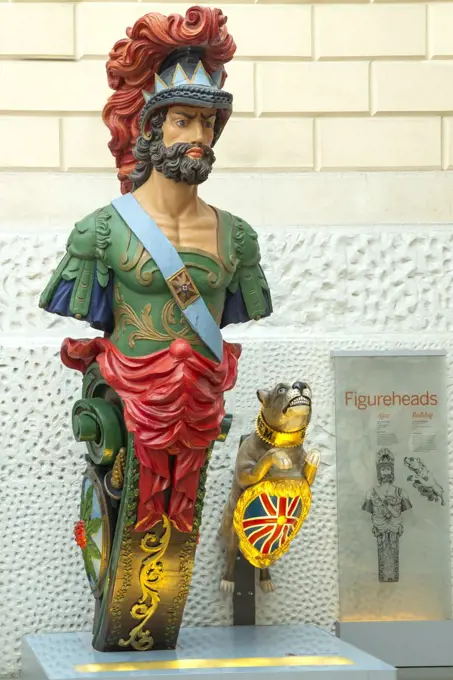
Ajax, Ship Figurehead, HMS Ajax, London, 1809, and British Bulldog, Ship Figurehead, HMS Bulldog, Chatham, 1845,
4409-17375113
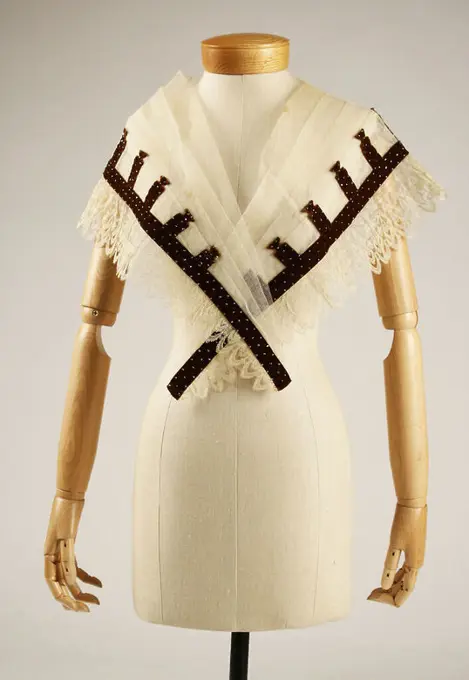
Fichu. Culture: American or European. Date: mid-19th century. Museum: Metropolitan Museum of Art, New York, USA.
1848-60611012
Close-up of a shiny golden dragon figure at the top of a Venetian gondola, Venice, Veneto, Italy, Europe
PREVIOUS
of 2
NEXT
2401 S. Ervay, Suite 206
Dallas, Texas 75215
United States
Get Started
Free ResearchMy BoardsMy Cart
For Creators
How To License Your ContentContributor PortalFrame of Mind
Resources
API accessPricing
Contact
+1 866 236 0087help@viewpictures.co.uk Contact form
©2026 View Pictures. All Rights Reserved. -A
This site is protected by reCAPTCHA and Google Privacy Policy and Terms of Service apply.