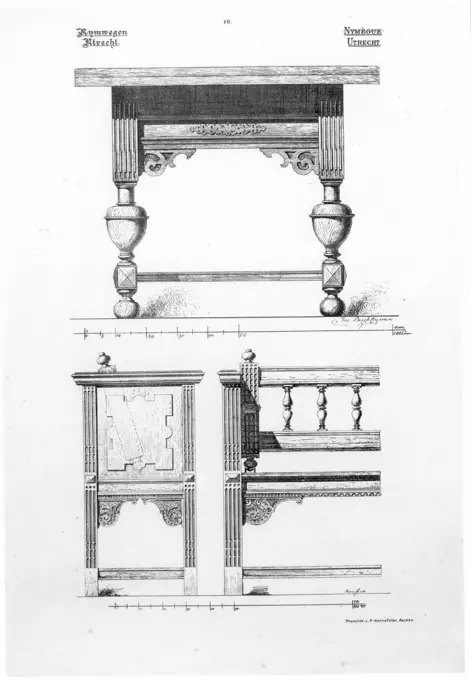
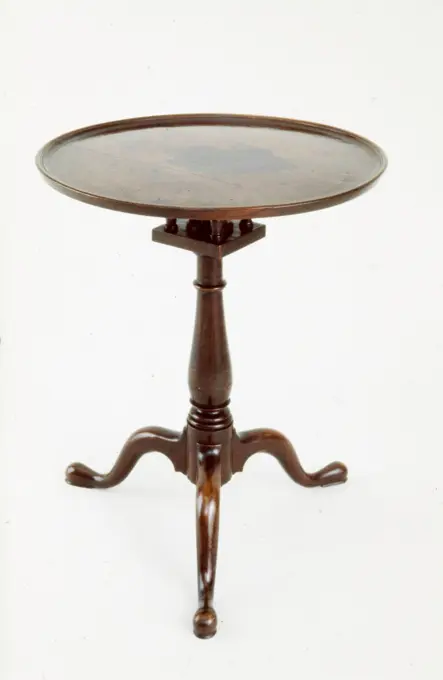
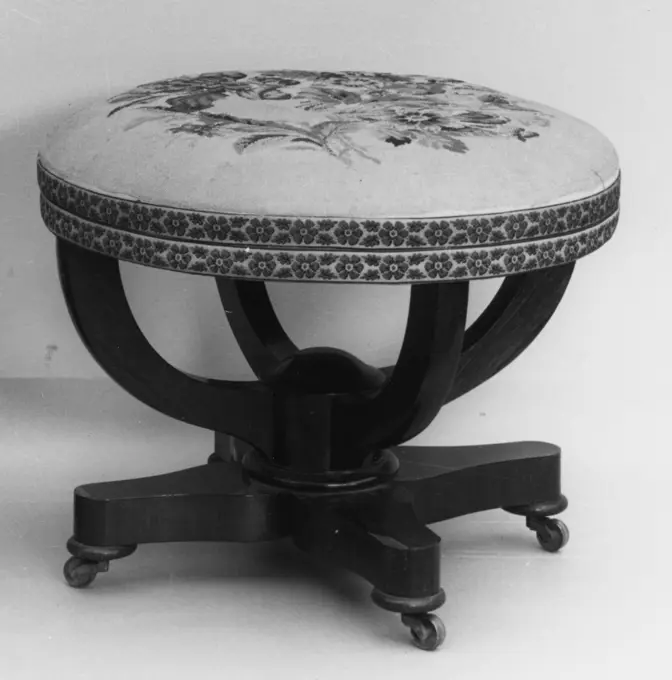
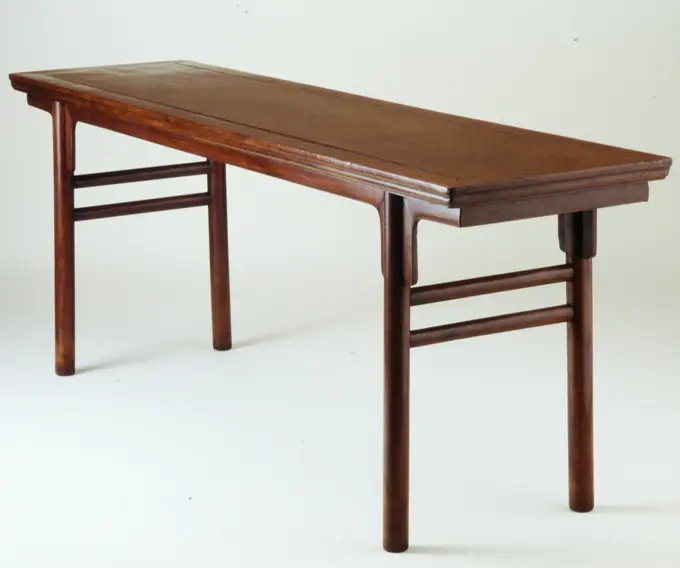
Antique Furniture Designs

An array of beautifully crafted antique furniture pieces like cupboards, desks, and tables, showcasing intricate marquetry, elegant woodwork, and historical motifs.
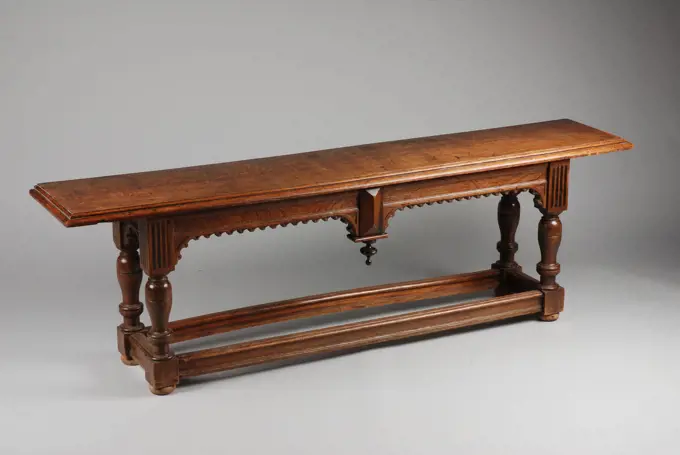
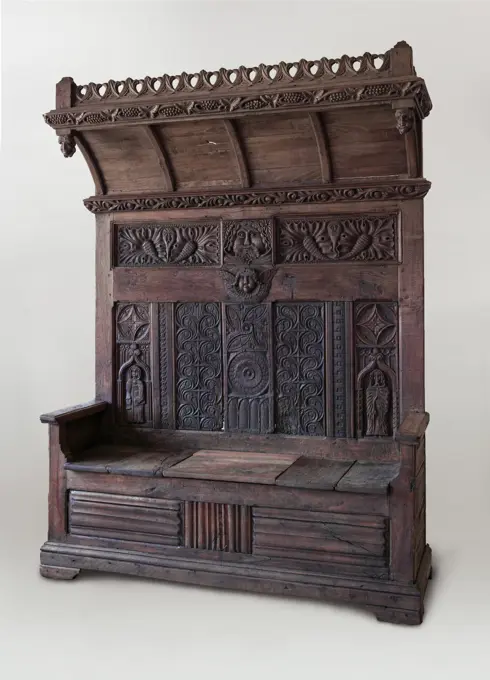
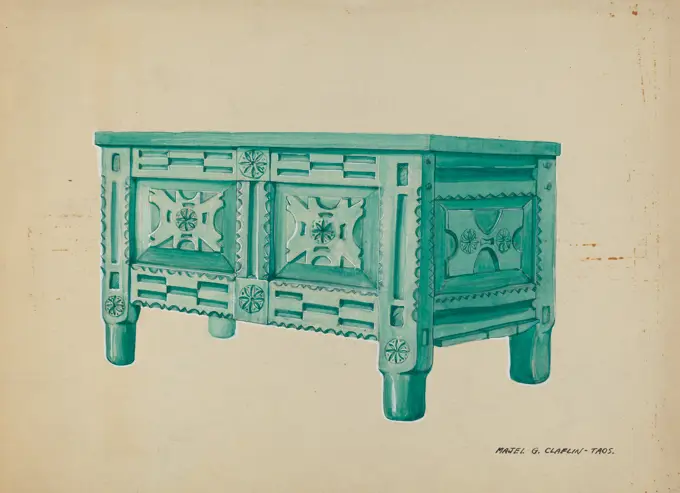
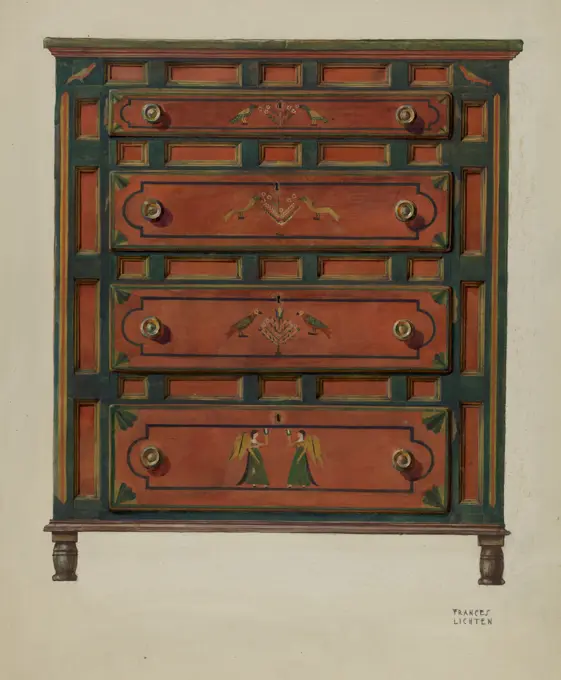
Oak renaissance bench of the Reformed Old Woman's House, bench furniture furniture interior design oak wood moore oak rosewood elmwood wood, Oak Renaissance bench with few marquetry details front with bows and twisted knob baluster legs connected by lines back without decoration Rotterdam City triangle Hoogstraat Gereformeerd Oudevrouwenhuis renaissance Elisabeth Stichting Anno 1455 Reformed Oudevrouwenhuis (St. Elisabeth Gasthuis)
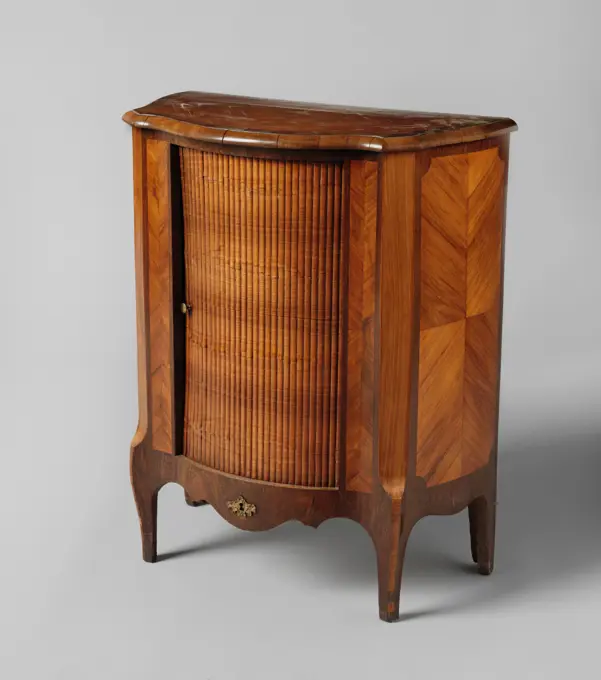
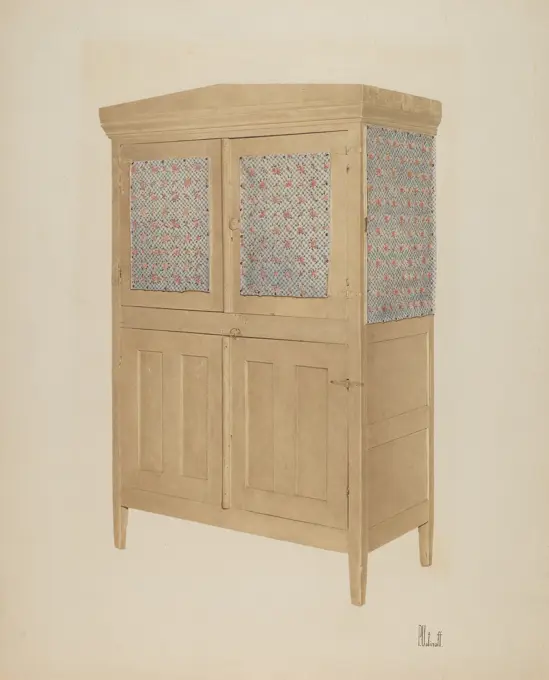
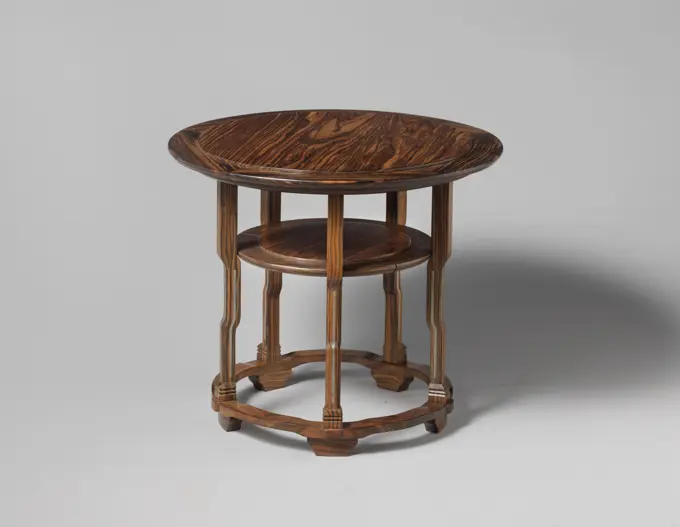
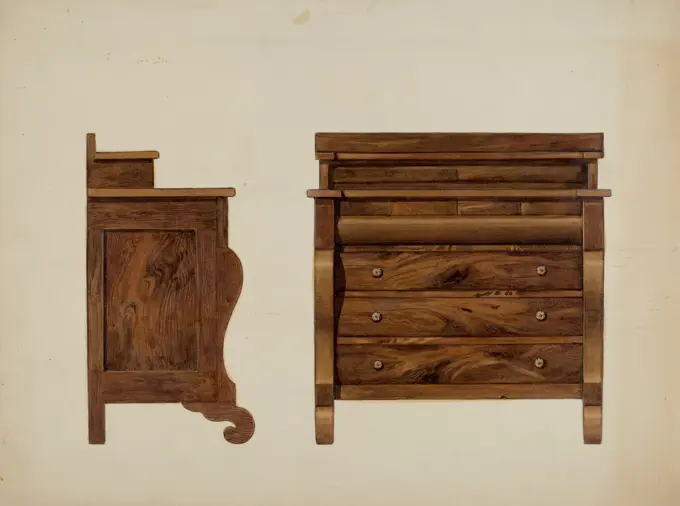
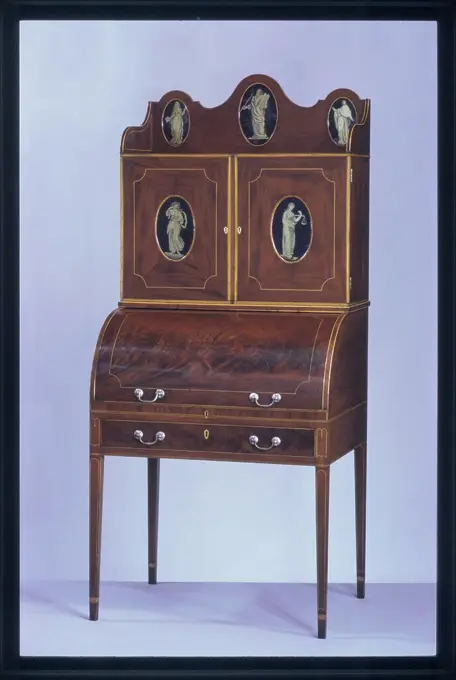
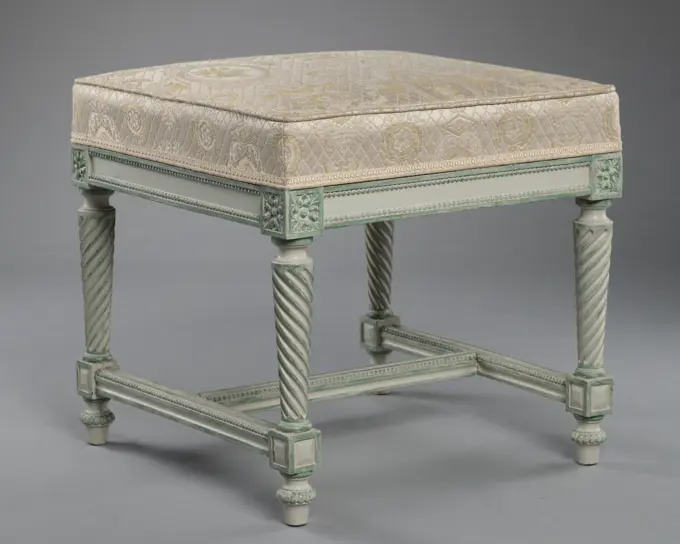
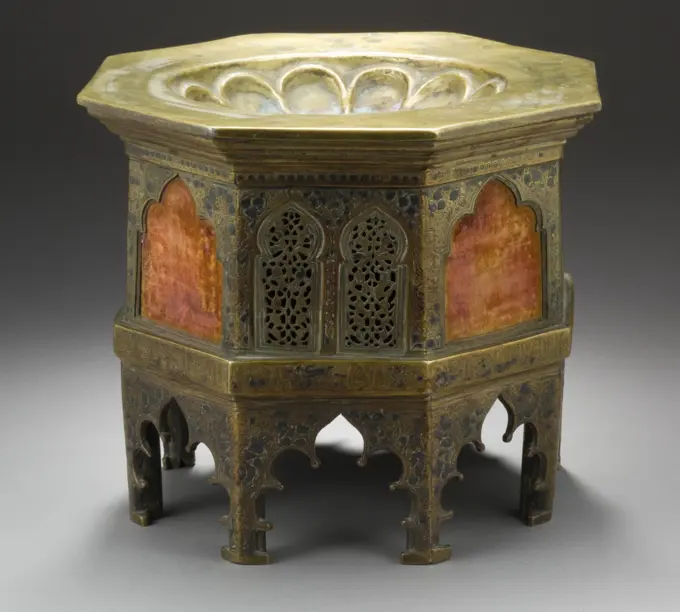
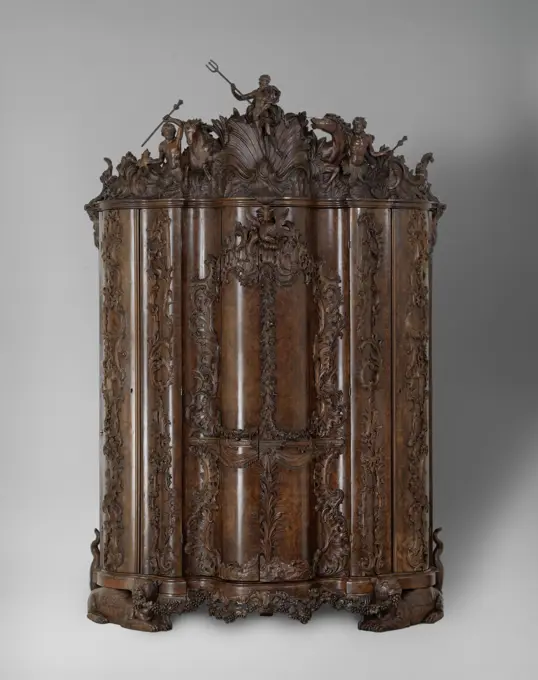
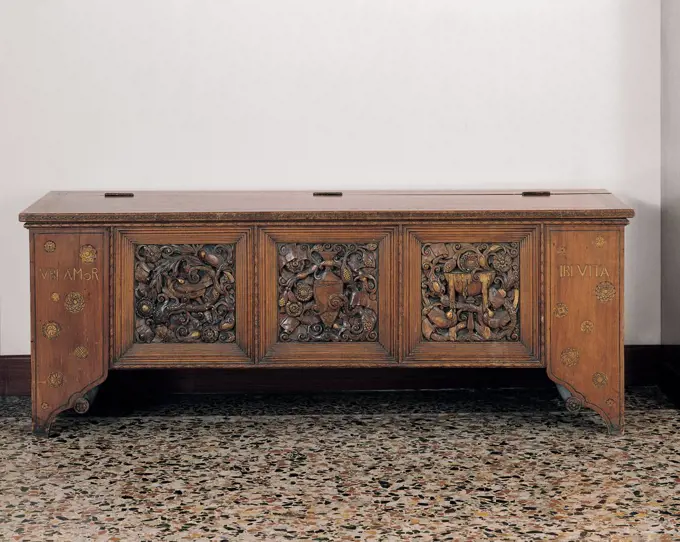
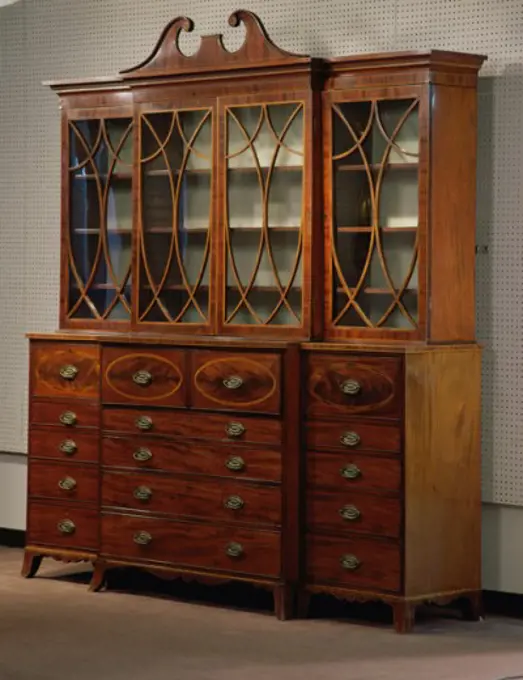
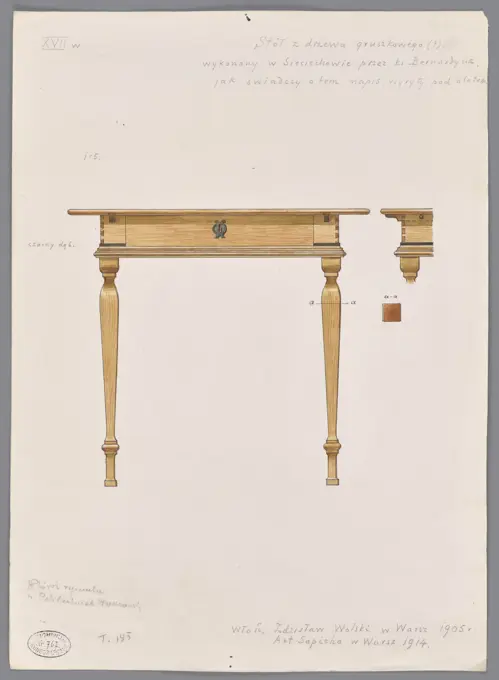
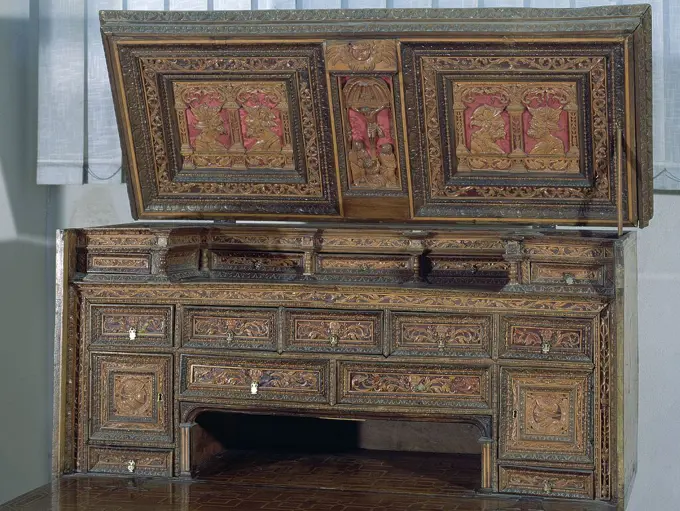
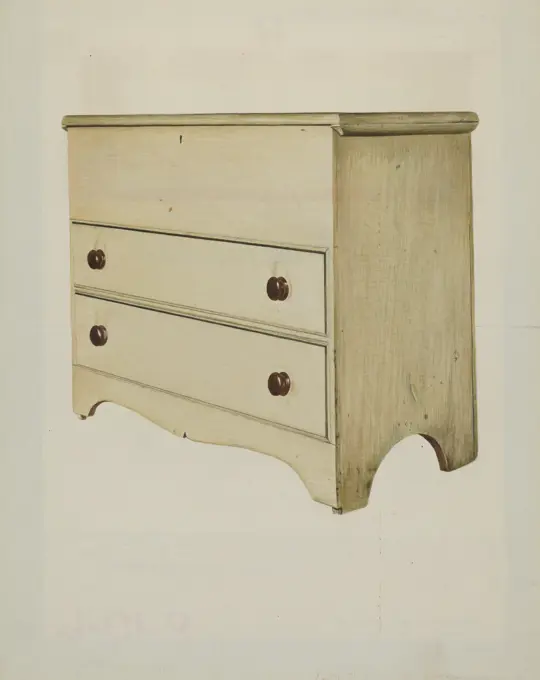
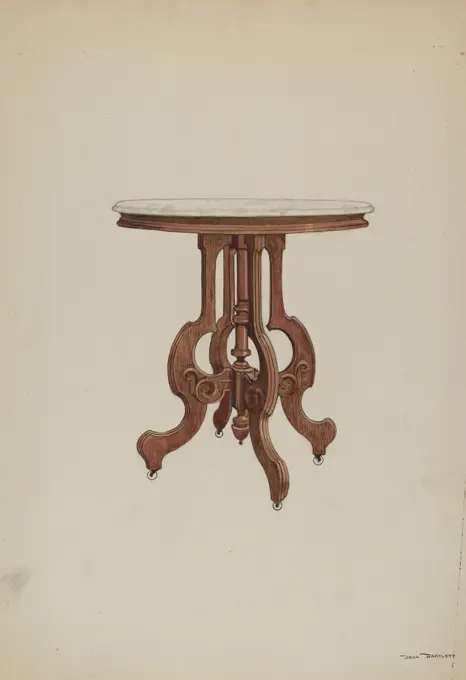
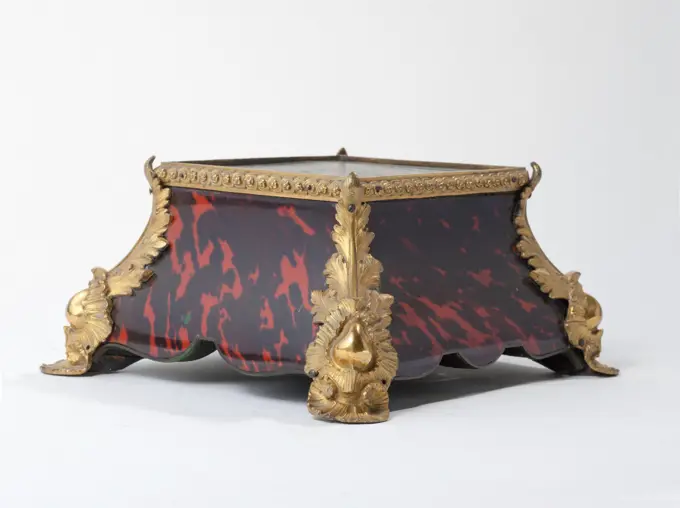
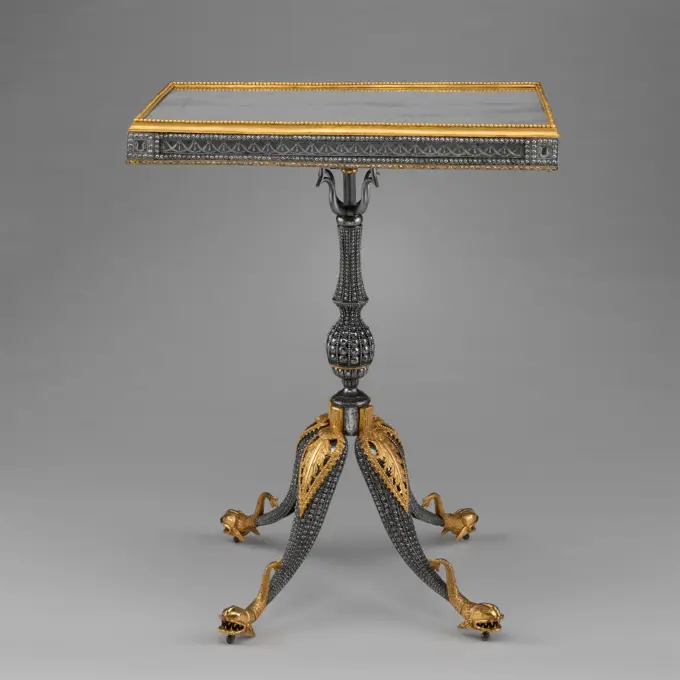
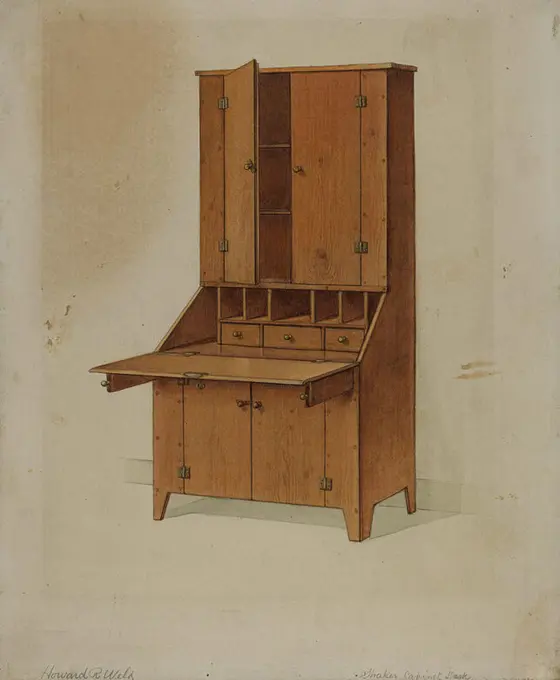
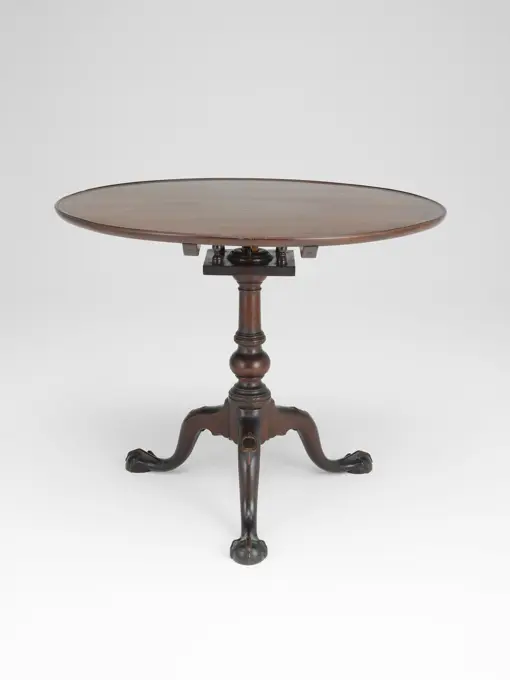
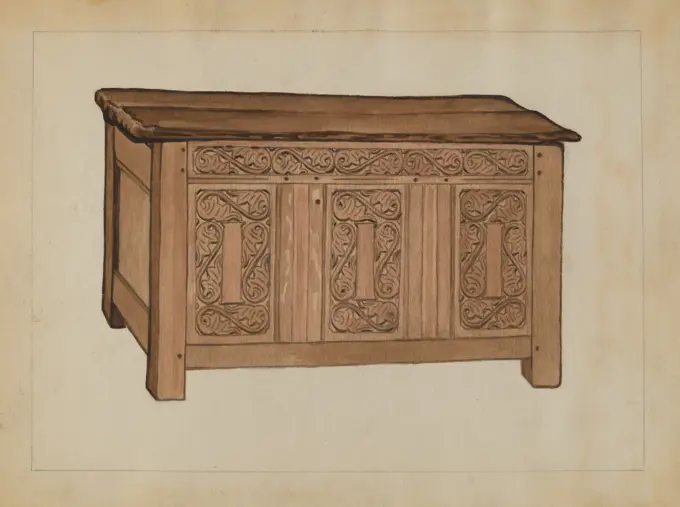
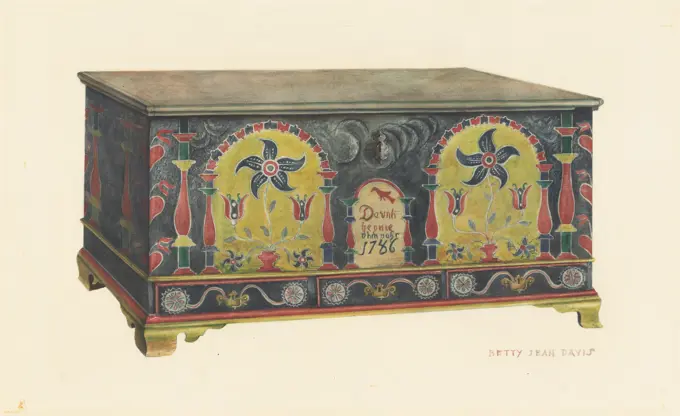
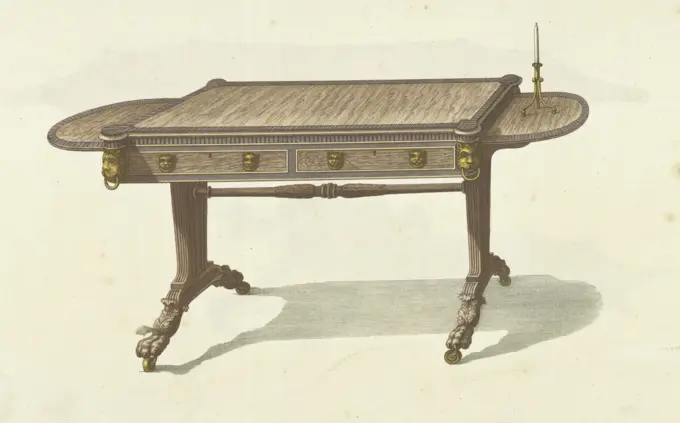
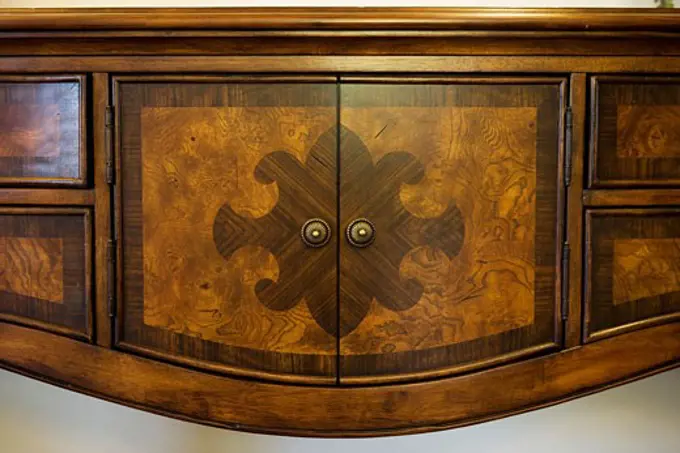
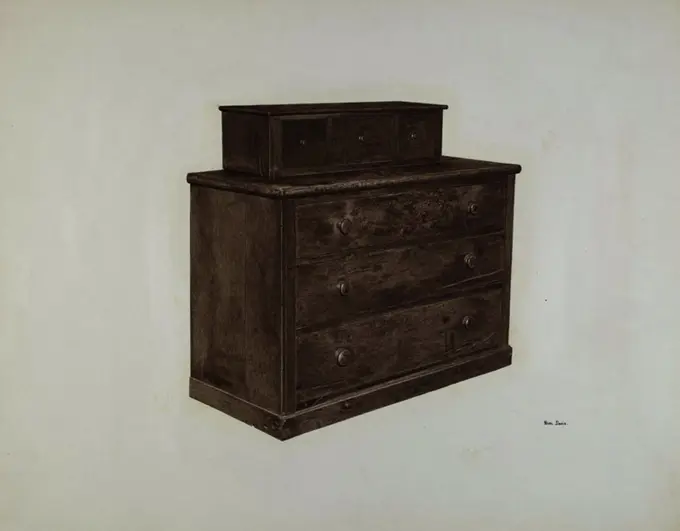
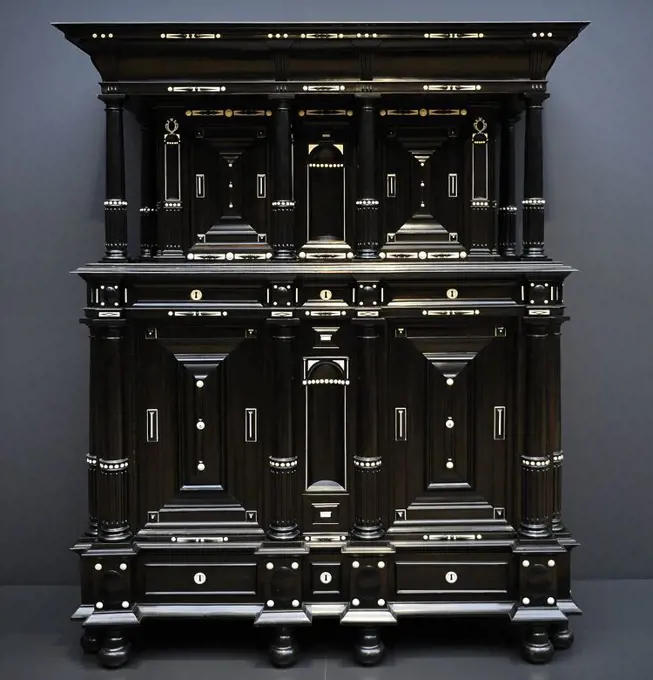
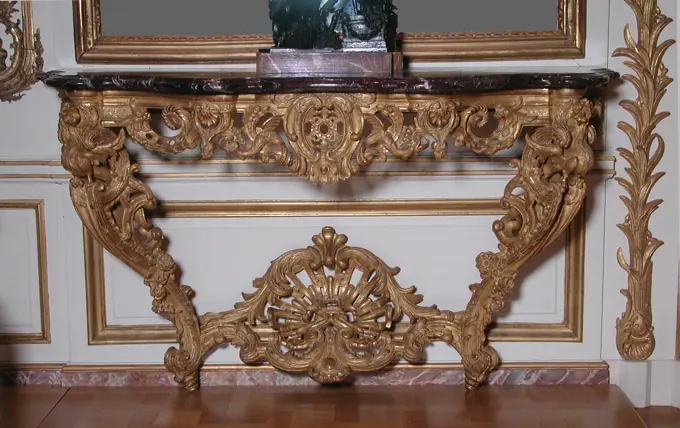
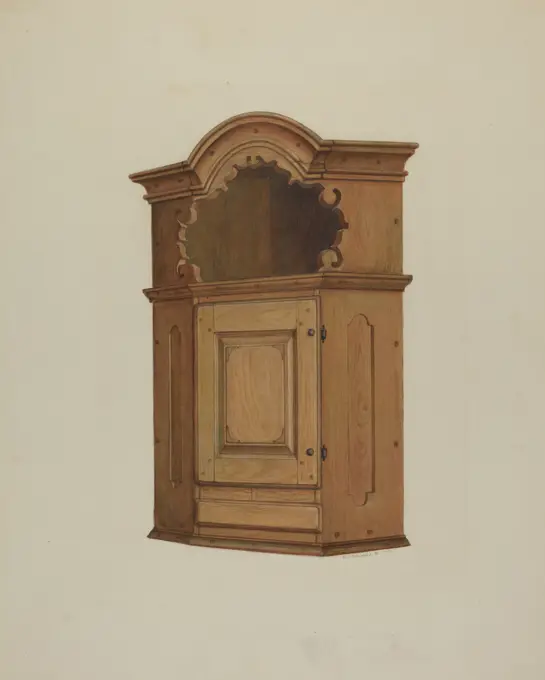
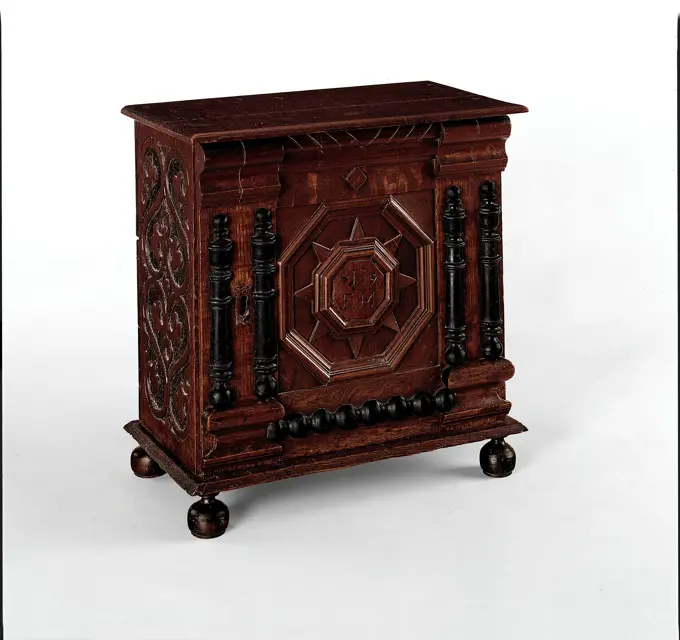
Cabinet 1679 American The ornamentation composed of applied elements and geometric patterns of moldings on the door of this small cabinet achieves a distinctly architectural effect. Several different kinds of wood were employed; originally, they differed in color, adding to the complexity of the scheme. Carving, the other major method of decoration used on seventeenth-century style colonial furniture, adorns the sides of the piece. This is one of four similar cabinets attributed to the tradition of joinery brought to Salem, Massachusetts, by John Symonds, who came to Salem in 1636 from Yarmouth, England. The octagonal sunburst motif on the door was a geometric design favored by the Symonds shops. The center plaque on the door is inscribed with the date 1679 and the initials of the original owners, probably Ephraim and Mary Herrick of Beverly, Massachusetts. Behind the locked door are ten small drawers of varying sizes meant for the safekeeping of documents and small valuables of all Cupboard with jalouzie door and styles decorated with herringbone pattern., Anonymous, 1770 Cabinet glued with pink and rosewood. The blinded jealousy door carries batter around a keyhole on the scalloped bottom line and is flanked by styles decorated with marqueterie in a herringbone pattern. The corner styles placed overhoek are transferred to the S-shaped front legs. Northern Netherlands wood (plant material). oak (wood). rosewood (wood). purpleheart (wood). brass (alloy) Cabinet glued with pink and rosewood. The blinded jealousy door carries batter around a keyhole on the scalloped bottom line and is flanked by styles decorated with marqueterie in a herringbone pattern. The corner styles placed overhoek are transferred to the S-shaped front legs. Northern Netherlands wood (plant material). oak (wood). rosewood (wood). purpleheart (wood). brass (alloy)Peter C Ustinoff, Kitchen Safe, c 1940 Kitchen SafeButter Lamp Stand and CabinetTafel, Carrel Adolph Lion Cachet, C. 1920 Table of Coromandelhout inlaid with pewter stripping. The round leaf has a raised central part. The chassis rests with a rule on five wide legs with corrugated sides. The rule that is slightly bent down above each leg is connected to the leaves by five styles placed above the leg, which rest on a profiled base and are slightly bent in the half -height. At the point where they bend out again, they are connected by a also raised leaf. Netherlands wood (plant material). tin (metal) Table of Coromandelhout inlaid with pewter stripping. The round leaf has a raised central part. The chassis rests with a rule on five wide legs with corrugated sides. The rule that is slightly bent down above each leg is connected to the leaves by five styles placed above the leg, which rest on a profiled base and are slightly bent in the half -height. At the point where they bend out again, they are connected by a also raised leaf. Netherlands wood (plant material). tiMartin Partyka, Hartford Cupboard, c 1936 Hartford CupboardDana Bartlett, Dresser, 1937 DresserDesk and bookcase. Culture: American. Dimensions: 68 3/4 x 30 1/2 x 23 1/4 in. (174.6 x 77.5 x 59.1 cm). Date: 1800-1810.The verre églomisé panels--reverse paintings on glass--on the front of this desk depict Faith, Moses, and an unidentified male figure, above, and Temperance and Justice on the doors. Most Americans in this period were well versed in the meaning of allegorical figures such as these. The desk originally belonged to Dr. Edward Harris of Queen Anne's County, Maryland. Museum: Metropolitan Museum of Art, New York, USA.Hartford Cupboard. Dated: c. 1936. Dimensions: overall: 29 x 36.7 cm (11 7/16 x 14 7/16 in.) Original IAD Object: Approx. 47" x 55 1/4". Medium: watercolor, colored pencil, pen and ink, and graphite on paper. Museum: National Gallery of Art, Washington DC. Author: Martin Partyka.Stool, 1805-1813. François-Honoré-Georges Jacob (French, 1770-1841), Georges Jacob (French, 1739-1814). Painted walnut; overall: 47.3 x 48.4 cm (18 5/8 x 19 1/16 in.).Square Table On Four Curved Legs. Square porcelain table, covered with a monochrome turquoise, blue glaze. With four curved legs, between which a modeled and openwork decoration of Lambrequins and Volutes. Two legs restored; crack in the leaf and chassis; Some pieces from the decoration missing. Monochromes.Table. unknown, authorDecorated French Wardrobe Antiques Henry Meyers, Bookcase and Writing Desk, c 1936 Bookcase and Writing DeskGate-leg table. Culture: American. Dimensions: 26 1/4 x 30 x 34 3/4 in. (66.7 x 76.2 x 88.3 cm). Date: 1690-1730. Museum: Metropolitan Museum of Art, New York, USA.Table with hexagonal leaves and substructure, on S-shaped legs, decorated with flower and leaf motifs ,, 1850- 1900 Iron wood table. The hexagonal leaf is trimmed with a pearl edge and rests on a hexagonal substructure of six lying panels with flower and leaf motifs. The whole stands on five elongated S-shaped legs, also decorated with flower and leaf motifs. The knees of the legs and the space in between are filled with sculpture of branches with blossoms and fencing. The legs are interconnected by five as spokes of a wheel placed rules with a rosette in the middle. Canton wood (plant material). ironwood Iron wood table. The hexagonal leaf is trimmed with a pearl edge and rests on a hexagonal substructure of six lying panels with flower and leaf motifs. The whole stands on five elongated S-shaped legs, also decorated with flower and leaf motifs. The knees of the legs and the space in between are filled with sculpture of branches with blossoms and fencing. The legs are interconnected bTable, Reconstructed as a brazier in modern times. Syria, first half of 13th century. Metal. Brass, engraved, pierced, inlaid with silverSecretary with settings and a clock; Quare, Daniel (Ca 1648-1724), Borodicz, Ludwik (Flow. Ca 1750),  around 1750 (1740-00-00-1760-00-00);Apollo (Mitol.), Chronos (Mitol.), Potoccy (family), Amorki, Baroque (style), autumn (allegory), summer (allegory), seasons (allegory), rocaille (ornament), rococo (style), Development (allegory), spring (allegory), purchase (provenance), winter (allegory)Buffet cupboard, anonymous, Asmus Frauen (attributed to), c. 1755 - c. 1765 Rococo buffet cupboard with sculpture. Amsterdam walnut (hardwood). oak (wood). Rococo buffet cupboard with sculpture. Amsterdam walnut (hardwood). oak (wood).Large Chest, by Zaccari Ettore, 1821, 19th Century, wood carved and partly gilded. Italy, Lombardy, Milan, police Post, Via Moscova. Whole artwork. Chest carved wood volutes flowers fruit grain cup inscription UBI AMOR IBI VITA boxes bird amphora leaves stylized decorative rosette gilding gold.Windows painted with a face in a pleasure court, anonymous, c. 1700 Windows painted with a face in a pleasure court. In the foreground a decent company, some riders, etc. In the crowning a coat of arms with a black horn on a silver field.  silver (metal) Windows painted with a face in a pleasure court. In the foreground a decent company, some riders, etc. In the crowning a coat of arms with a black horn on a silver field.  silver (metal)Corner cupboard.The upper and lower doors of this piece of furniture can be turned, whereupon an interior fitted with shelves to hold silver cutlery, porcelain and glassware appears. The cabinet could thus serve as a buffet sideboard during a meal. The curved corner cupboard, decorated with detailed marquetry, combines elements of the Rococo with Neoclassical shapes and motifs.George III Breakfront Bookcase Antiques Bureau Plat. Bernard II van Risenburgh (French, after 1696 - about 1766, master before 1730)Side table, gilded and polychrome carved piece of furniture, 18th century, Carles Morató workshop, Museum of Baroque of Catalonia, Manresa, Spain.Shaving stand. Culture: British. Dimensions: 37 1/2 x 18 x 11 in. (95.3 x 45.7 x 27.9 cm). Date: 1700-30. Museum: Metropolitan Museum of Art, New York, USA.Cabinet decorated with red-backed turtle shell. Dated 17th CenturyHundred Made in Sieciechów by Fr. Bernardine in the 17th century - front and details on a 1: 5 scale; Sztolcman, W Adys Aw Roman (1873-1950); 1914 (not after 13.10.1914) (1914-00-00-1914-00-00);Cupboard. unknown, creatorBetty Jean Davis, Pa German Chest, c 1939 Pa. German ChestManuscript Storage Cabinet late 18th-early 19th century Thailand (Bangkok) Cabinets of this type were traditionally gifted to monasteries where they served to house and preserve the sacred scriptures written on palm-leaf manuscripts, and associated Buddhist texts often on khoi paper, such as those narrating the adventures of the venerable monk Pra Malai. These cabinets were richly decorated with gold on lacquer ground in a technique known as Lai Rod Nam. Depictions of celestial adorants was a favored subject, as was combatant scenes from the Ramakien, the Thai version of the Indian epic, the Ramayana, as seen here. The openwork stand with two drawers is carved in the Chinese manner and is likely of a later date.. Manuscript Storage Cabinet 37656Console table from Croome Court, Worcestershire 1765 Robert Adam British, Scottish Architect Robert Adams favorite carver was Sefferin Alken, a Danish craftsman working in London. Alken strictly followed Adams meticulous drawings during his employment, then left after four years to work for a rival designer. Here, we see Adams delicate ornament and Alkens precise carving at their lightest and most kinetic. The painted surfaces evoke the ancient plasterwork that had been newly excavated from Pompeii and Herculaneum, while the marble-veneered tabletop demonstrates an innovation that probably reduced the tables weight but increased its expense.. Console table from Croome Court, Worcestershire. Sefferin Alken (active 1744, died ca. 1783). British. 1765. Carved and painted pine with newly carved swags; marble sheets veneered on a limestone core. Woodwork-FurnitureTavern Table (Top Missing). Dated: 1938. Dimensions: overall: 38.6 x 45.7 cm (15 3/16 x 18 in.) Original IAD Object: Base: 45"x32". 28"high. Medium: watercolor, colored pencil, and graphite on paperboard. Museum: National Gallery of Art, Washington DC. Author: Austin L. Davison.cabinet Pierre Garnier (1726/27-1806), French cabinetmaker. Chiffonier. Placing: Rosewood in leaves; Golden bronze, Lumachelle marble, 1715. Paris, Carnavalet museum. 77642-3 Rosewood, bronze gilded, ragpicker, gilding, leaf, lumachelle marble, marquetry, furniture, plating, lock, regence style, drawer, 18th century, furniture, plateThe table is supported by fluted parts rising from calices and ending in masks from which festoons hang. The front of the frame shows an ovoidal medallion between two festoons. The chest of drawers is supported by calices and reaches to the frame of the table. Two drawers are indicated by framed oblongs. Colored background. Pen and brown ink, brush and brown wash on off-white laid paper. Date: 1746-1809. Museum: Cooper Hewitt, Smithsonian Design Museum.Cassetta-type frame early 16th century Veronese. Cassetta-type frame. Veronese. early 16th century. Poplar. Carved, gilt; deep brown-orange bole, coarse blue color in background.. FramesMUEBLE PAPELERA ESPAÑOL - SIGLO XVI. Location: MUSEO ARQUEOLOGICO NACIONAL-COLECCION. MADRID. SPAIN.Corner Basin Stand c 1790-1800 New York. Mahogany with white pine and cherry, and light-colored inlays . Artist unknownJohn Davis, Shaker Blanket Chest, 1935 1942 Shaker Blanket ChestBuffet cupboard with mirrors, Anonymous, After Victor Joseph Quétin, 1832 - 1877 print A buffet cupboard with three mirrors. Print from 39th Livraison.  paper  furniture for storageDana Bartlett, Center Table, with Marble Top, c 1937 Center Table, with Marble TopCabinet 17th century Italian, Venice (Murano). Cabinet. Italian, Venice (Murano). 17th century. Glass, wood. GlassDoctors CabinetAntique wooden small almira, Jodhpur, Rajasthan, India Copyright: xSafatxAli/DinodiaxPhotoxAnonymous. Basement. Wood plated with red veined scales, gilded bronze. 1701-1800. Paris, Carnavalet museum. Furniture, furnitureBishop Hill: Chest. Dated: 1939. Dimensions: overall: 32.2 x 45.4 cm (12 11/16 x 17 7/8 in.) Original IAD Object: Drawers: 6 1/2" high; 32" long 17 1/2" deep; knobs: 1 1/2" in diameter; 7/8" deep. Medium: watercolor, graphite, and pen and ink on paperboard. Museum: National Gallery of Art, Washington DC. Author: Wellington Blewett.Center table ca. 1780-85 Imperial Armory, Tula (south of Moscow), Russia From 1712, when the imperial armory in the town of Tula, south of Moscow, was founded by Peter the Great (r. 1682-1725), the master armorers regularly enjoyed imperial patronage.1 During the reign of Empress Elizabeth (1741-61), they began to produce a sideline of cut-steel decorative items and furniture now known as Tula ware. These were richly and elaborately worked using many different techniques in addition to the faceting that gives them their characteristic diamond-like sparkle. Although in their shapes Tula chairs, tables, and stools resemble traditional wooden furniture, they are chased, blued, chiseled, gilded, pierced, and inlaid like parade weapons. They have come to embody for the eighteenth century the Russian decorative arts, as Fabergé objects have for the decades just before and after 1900.2 So greatly admired was Tula ware in Western Europe that around 1775 its steel-cut look was imitated in sShaker Secretary. Dated: c. 1936. Dimensions: overall: 28 x 22.8 cm (11 x 9 in.) Original IAD Object: 78 3/4" high; 36" wide. Medium: watercolor and graphite on paper. Museum: National Gallery of Art, Washington DC. Author: Howard Weld.Shaker Tin Safe. Dated: c. 1939. Dimensions: overall: 41 x 30.9 cm (16 1/8 x 12 3/16 in.). Medium: watercolor, graphite, and colored pencil on paperboard. Museum: National Gallery of Art, Washington DC. Author: George V. Vezolles.Desk No. 285 and Desk Chair No. 285 ½. Shop of the Crafters (United States, Ohio, Cincinnati, 1904-1920)Pál Horti (Hungary, active United States, 1865-1907). United States, designed circa 1905. Furnishings; Furniture. Mahogany, boxwood, pearwood, mansonia, sycamore, lacewood, brass, and leather (replaced)Tea Table c 1750-1790 Philadelphia. In the 18th century, Americans delighted in the genteel art of tea drinking, which facilitated socializing based on strict rules of engagement. First introduced to New York in the 1740s, the tilt-top tea table, designed in the service of fashionable domestic tea parties, was a popular form in colonial Philadelphia and New York. The spindled ìbirdcageî mechanism allowed rotation, which provided the hostess with a measure of gentility by enabling her to spin the table so that she did not have to reach for anything; the table also flipped into a vertical position, permitting efficient storage against a wall. Illustrating the understated Quaker aesthetic present in late-18th-century Philadelphia, this tilt-top tea table was likely used in the parlor or drawing room of a middle- to upper-middle-class home.. Mahogany . Artist unknownWine cistern (urn and pedestal) (one of a pair) ca. 1820-30 British. Wine cistern (urn and pedestal) (one of a pair). British. ca. 1820-30. Mahogany, bronze. Woodwork-FurnitureAda V May, Chest, c 1936 ChestCabinet Cabinet; Designed by Carlo Bugatti (Italian, 1856 - 1940); Italy; joined hardwood, sheet vellum, applied, cut, and molded copper ornaments, inlaid pewter, brass wire, sheet glass, textile tassels; 150.2 x 73 x 37 cm (59 1/8 x 28 3/4 x 14 9/16 in.)antique Wooden Chair isolated on white backgroundNijmegen / Utrecht. "And" Nymegue / Utrecht.Tilt-top table, c. 1740-1775, 29 x 23 x 23 in. (73.66 x 58.42 x 58.42 cm), Walnut, United States, 18th centuryShaker Blanket Chest. Dated: c. 1936. Dimensions: overall: 27.4 x 35 cm (10 13/16 x 13 3/4 in.) Original IAD Object: 45" high; 38" wide; 17" deep. Medium: watercolor and graphite on paper. Museum: National Gallery of Art, Washington DC. Author: Ray Holden.Music cabinet and piano with a relic of St Cecilia, Antoine Bord, Pierre Joseph Hubert Cuypers, 1858 - 1859 Piano, of which the cupboard of oak and pine is partially painted in colors and gold. The columns that wear the keyboard rest on lying, coming from the cupboard, and the two high corner styles are crowned by the figures of a flute player and a citer player, with the faces of Cuypers and his wife Antoinette. On either side of the reliek of Saint Cecilia placed in the front behind glass, his painted scenes from her life: her defense towards prefect Almachius; She bends her head in front of the executioner. On the far left the monk Hucbald, inventor of the counterpoint; On the far right Pythagoras, founder of harmony. On the back we see Central Maria with high hands on the throne, with musician angels and female and male saints. Left and right of this, female and male representatives of sacred music from all centuries are shown. Signed in the right -hand representation front: MonogrStool ca. 1840 American. Stool 7914Mirror with Ornamented Frame, 1886. M. Louise McLaughlin (American, 1847-1939). Beveled plate glass framed in walnut, decorated with etched metal plaques; overall: 85.5 x 76.8 cm (33 11/16 x 30 1/4 in.). McLaughlin was an important figure in the Cincinnati Arts and Crafts movement during the later 19th century. She is known chiefly for her work in ceramics, but as this mirror demonstrates, she was an accomplished practitioner in other media—in this case wood and metal. The influence of Japanese taste can be seen, especially in the design of the etched metal plaques decorated with chrysanthemums.Furniture, Anonymous, 1760 Round pedestal for porcelain vase, made of gilded walnut. The pedestal rests on three boxers; Rocailles and double festons have been installed between the legs. Northern Netherlands wood (plant material). walnut (hardwood). gilding (material) gilding Round pedestal for porcelain vase, made of gilded walnut. The pedestal rests on three boxers; Rocailles and double festons have been installed between the legs. Northern Netherlands wood (plant material). walnut (hardwood). gilding (material) gildingCosmetic Box from the tomb of Sennedjem ca. 1279-1213 B.C. New Kingdom, Ramesside The interior of this box is divided into four compartments. It was probably used to store the cosmetic utensils of the deceased. The cover has two flaps attached with pivots at the edge of the box.The inscription bears the names of Iyti and Ramose, both of whom were related to Sennedjem in whose tomb the box was found. Other objects in the collection that were discovered in the same tomb can be viewed here.. Cosmetic Box from the tomb of Sennedjem 551116Painter's Table (tiao'an), early 17th century, 33 x 89 x 22in. (83.8 x 226.1 x 55.9cm), Huang-hua-li hardwood, China, 17th century, This is an example of a standard table intended for practical use. Tables utilizing identical construction techniques exist in many sizes and appear in numerous paintings and illustrated books from the Sung dynasty onward. Generally termed a 'recessed leg table,' its bridle-and-tenon joints, straight aprons, plain spandrels and simple stretchers combine in one of the basic and classic forms of Chinese furniture.Kast, anonymous, c. 1550 - c. 1600 Low wardrobe of walnut with poplar wood interior, resting on a profiled base. The corner and middle styles wear pilasters, which narrow downwards. In the main frame above, there are always two consoles, which form the pass signs of narrow drawers, which flank two wider drawers, with bronze lion mask and tensile ring. The doors have a sanded panel, with a lion mask in the middle with a bronze tension ring, and decorated with rosettes in the corners. Florence (possibly) wood (plant material). walnut (hardwood). poplar (wood). bronze (metal) Low wardrobe of walnut with poplar wood interior, resting on a profiled base. The corner and middle styles wear pilasters, which narrow downwards. In the main frame above, there are always two consoles, which form the pass signs of narrow drawers, which flank two wider drawers, with bronze lion mask and tensile ring. The doors have a sanded panel, with a lion mask in the middle with a bronze tension ring, and decoratMegalethoscope. Carlo Ponti (Italian, born Switzerland, about 1823 - 1893)Upright Harp Piano. Artist: F. Beale & Co.. Culture: British. Dimensions: Height: 77 3/16 in. (196 cm)Width (Parallel to keyboard, excluding handles): 53 9/16 in. (136.1 cm)Depth (perpendicular to keyboard): 29 5/16 in. (74.5 cm). Date: 1843.The short-lived Euphonicon (from Greek, "sweet-toned") was patented by John Stewart in 1841 and manufactured under his supervision. Hand-painted designs and gilded brackets soften the industrial aspect of the solid iron frame. The Macassar ebony case encloses 3 soundboxes that replace a normal sound board. Tuning is by means of screw-threaded rods reached by a long wrench. The 82 double-strung notes are sounded by soft, felted hammers; the top 23 notes lack dampers and vibrate sympathetically. Damper and una corda pedals modify the tone. Decorated on all sides, the Euphonicon can be free-standing. Delicate scrollwork and carving belie its great weight. Similar harp-pianos (so called because of the exposed strings) were popular in America around Console table, anonymous, c. 1650 - c. 1675 Wall table made of gray -marbled lindenwood with marble top. The four overhoeks placed volute-shaped legs are covered with carving of scaly leaf motifs and have a thickening on the swelling of the S-Volute; Bloemlingers sprout from this. The start and final volume exhibit lobe ornament; At the top in the form of bird basin. The legs are connected at the rear of the upper swelling by four sculpted rules with tenders; The front has two grape picking putti in the middle. Netherlands wood (plant material). linden. marble (rock). paint (coating) Wall table made of gray -marbled lindenwood with marble top. The four overhoeks placed volute-shaped legs are covered with carving of scaly leaf motifs and have a thickening on the swelling of the S-Volute; Bloemlingers sprout from this. The start and final volume exhibit lobe ornament; At the top in the form of bird basin. The legs are connected at the rear of the upper swelling by four sculpted rules witBetty Jean Davis, Pennsylvania German Chest, 1935 1942 Pennsylvania German ChestTable, 1805 - 1806, by Thomas Sheraton (1751-1806). Issued in London, England. The work features colored engravings of furniture, specifically tables., 25 x 39 cmFruit basket; BRested, Susannah (Fl. 1888-1895), Leuchars & Son (London; Company Z Otnicz; Fl. CA 1845-1902), Bell & BRASTED (London; company Z Otnicz; Fl. 1857-1947); 1894/95 (1894-00-00-1895-00-00);PembroketableComb and Brush Case. Dated: c. 1940. Dimensions: overall: 40.8 x 30.5 cm (16 1/16 x 12 in.) Original IAD Object: 14"x11". Medium: watercolor, colored pencil, and graphite on paperboard. Museum: National Gallery of Art, Washington DC. Author: J. Herman McCollum.Tiles, part of Pabuling 1626, Anonymous, 1626 Two crates with the tiles of the entrance section. Northern Netherlands marble (rock)   Dordrecht Two crates with the tiles of the entrance section. Northern Netherlands marble (rock)   DordrechtDetail wooden end table with drawersDesign for a dresser. .Dresser. Dated: c. 1940. Dimensions: overall: 35.5 x 45.1 cm (14 x 17 3/4 in.) Original IAD Object: 21"deep x 48"long; 32 1/2"high. Medium: watercolor, colored pencil, and graphite on paperboard. Museum: National Gallery of Art, Washington DC. Author: Pearl Davis.Console table 18th century French. Console table. French. 18th century. Carved and gilded wood. Woodwork-FurnitureCupboard, c. 1630-1640. Northern Netherlands. Rijksmuseum. Amsterdam. Holland.Bench. unknown, creatorCarl Strehlau, Pa German Chest, c 1940 Pa. German ChestConsole table (one of a pair) ca. 1735-40 possibly by François Rournier Made by François Roumier, these two console tables can be dated to around 1740. Sculpteur ordinaire du roi in 1721, Roumier was famous for this type of furniture and published a number of books such as the Livre de plusieurs Desseins de Pieds de Tables en Consoles, which was published after his death in 1750. Working for most of the royal residences, Roumiers masterwork is a magnificent carved table supplied in 1737 for the Cabinet doré in Louis XVs private apartments in Versailles.The rich decoration of these two consoles is emblematic of the Régence (1715-1723) and the beginning of Louis XVs reign. They illustrate the triumph of sculptors from the Btiments du Roi responsible for room paneling of which consoles and mirrors were part. Here the frieze is carved in the center with a heart-shaped cartouche pierced with a rose-window motif. Four dragons decorate the consoles, two flanking the cartouche and two otheNight table Close up shot of round night table cabinet Copyright: xZoonar.com/Baloncicix 14621245Small Table 15th century French. Small Table. French. 15th century. oak. Woodwork-FurnitureAustin L Davison, Pa German Wall Corner Cupboard, 1938 Pa. German Wall Corner CupboardReliquary 1850-1851 Paris. Gilt bronze over wooden support . Eugène-Emmanuel Viollet-le-Duc. The four legs of this table represent the Four Seasons. Because it is a console table meant to be placed against a wall, the two back figures are turned towards the front. The gilding of the table is very worn, so the red underlayer shows through in places. Originally, the piece must have looked as if it was made of gold, or silver gilt.Majel G Claflin, Chest for Clothing or Blankets, c 1937 Chest for Clothing or BlanketsFrances Lichten, Chest of Drawers, 1935 1942 Chest of DrawersAbruzzo, L'Aquila, Celano, S. Giovanni Battista, Italy, 20th century, photo, photography, EuropeDisplay Cabinet (Kabinettschrank); Unknown, Three wood carvings by Albert Jansz. Vinckenbrinck, Dutch, about 1604 - 1664/1665; Augsburg, Germany, Europe; about 1630; Ebony and other tropical and European woods, porphyry, gemstones, marble, pewter, ivory, bone, tortoiseshell, enamel, mirror glass, brass, and painted stone; Object: H:  73 x W:  57.9 x D:  59.1 cm, 53.1 kg (28 3/4 x 22 13/16 x 23 1/4 in., 117 lb.)Neo-gothic bookcase (chassis). Mount of a neo-gothic bookcase.Joan Busquets i Jané / Chifonier, siglo XX. Colección privada.Ellen Duncan, Doll Furniture  Table, c 1937 Doll Furniture - TableCarl Strehlau, Painted Cabinet, c 1939 Painted CabinetHand Carved Cabinet. Dated: c. 1953. Dimensions: overall: 35.5 x 24.4 cm (14 x 9 5/8 in.) Original IAD Object: 40" wide; 49 1/2" high. Medium: watercolor and graphite on paper. Museum: National Gallery of Art, Washington DC. Author: Ethel Dougan.Clock cabinetOld painted Victorian millinery cupboard on shelf above storage baskets in kitchen alcoveLittle Table, by Pietro Fondelli, 1826, 19th Century, wood veneered, gilded bronze applications, marble top. Italy: Tuscany: Florence: Palazzo Pitti: Quartiere d'Inverno MPP 1911 n. 16551. Whole artwork. Little table