Antique Glass Goblets

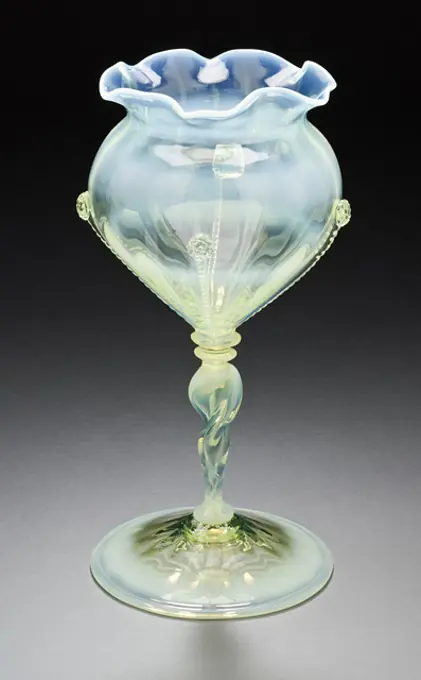
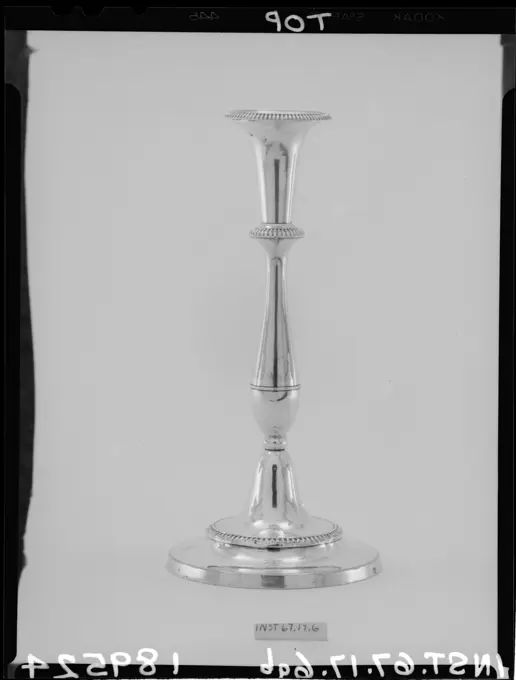
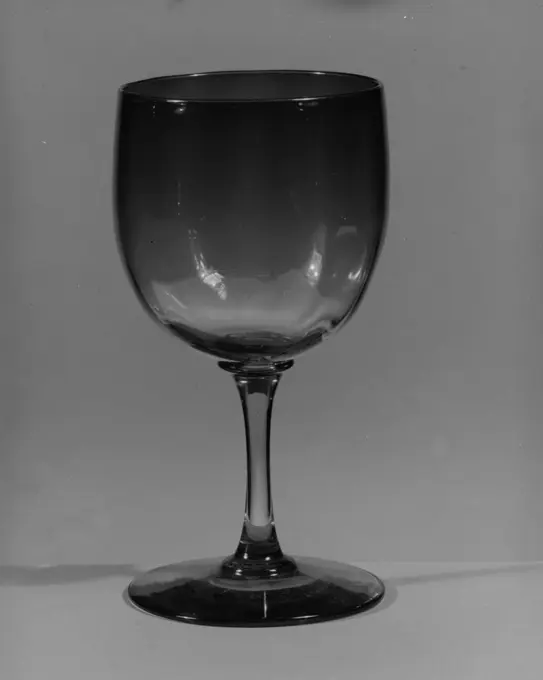
A collection of elegantly designed glass goblets from historical periods, featuring intricate engravings and fine detailing.
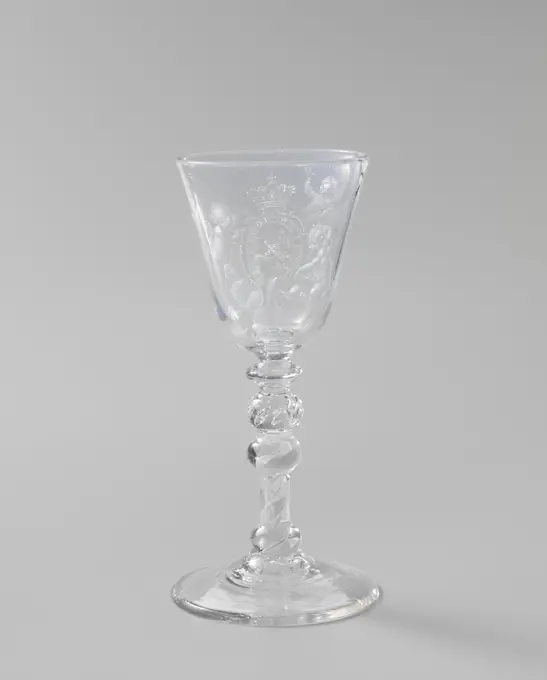
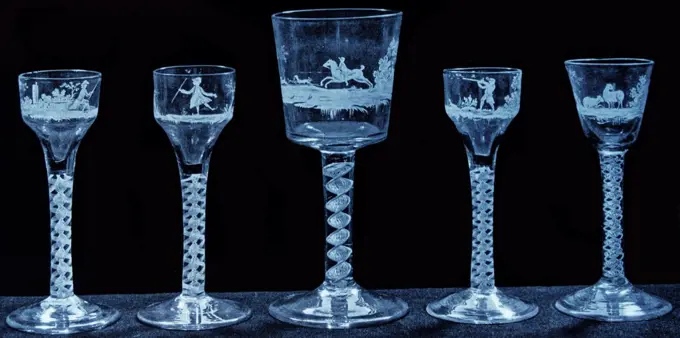
Wine glass with the arms of William V, anonymous, c. 1765 - c. 1780 Conical foot. Balus -shaped trunk with a white spiral around a double white spiral, three knots, one of which is bubbles inserted with a wreath. Conical chalice rounded at the bottom. On the chalice the coat of arms of Stadholder Prince Willem V (1748-1806) in an oval coat of arms of Rococo-Voluten with the Order of the Garter Band and the text Honi soit Qiu Mal Y Pense. As shield carriers two putti on clouds. A third putto flies from the right behind the shield, holding a branch up. glassblower: EnglandThe Hague glass glassblowing Conical foot. Balus -shaped trunk with a white spiral around a double white spiral, three knots, one of which is bubbles inserted with a wreath. Conical chalice rounded at the bottom. On the chalice the coat of arms of Stadholder Prince Willem V (1748-1806) in an oval coat of arms of Rococo-Voluten with the Order of the Garter Band and the text Honi soit Qiu Mal Y Pense. As shield carriers t
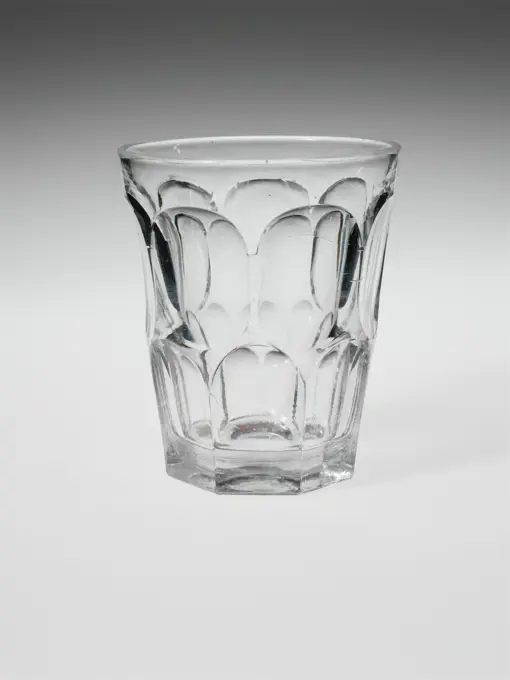
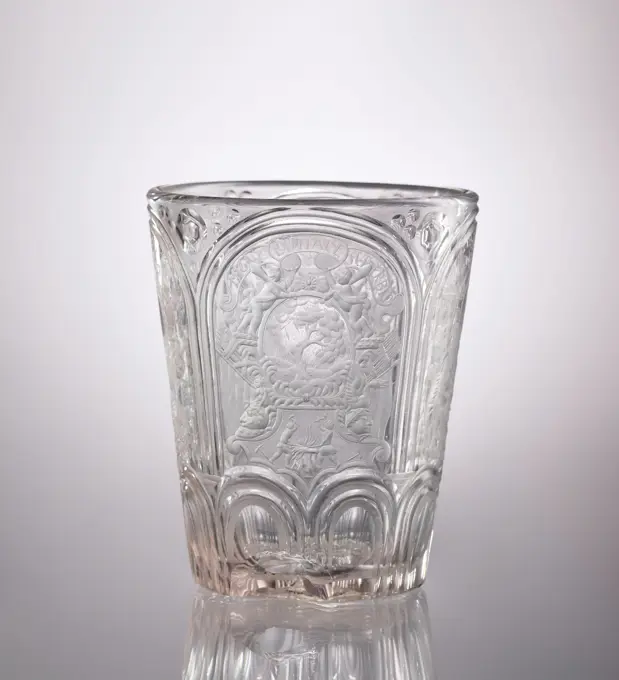
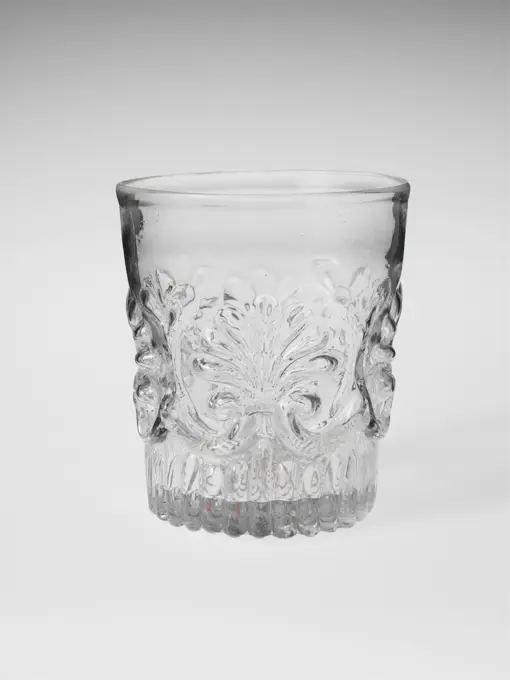
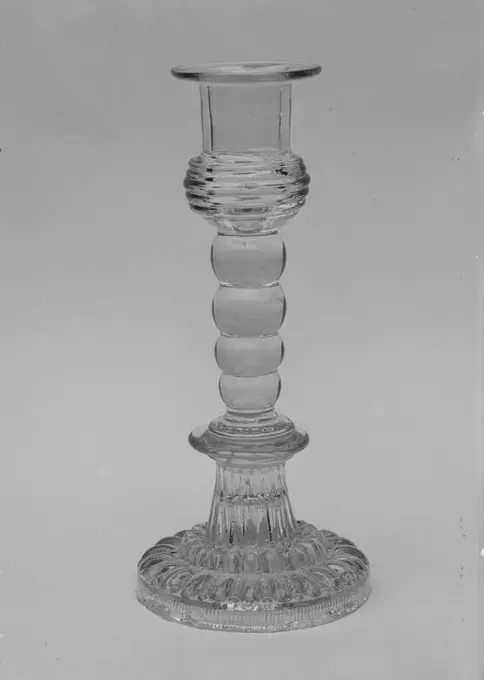
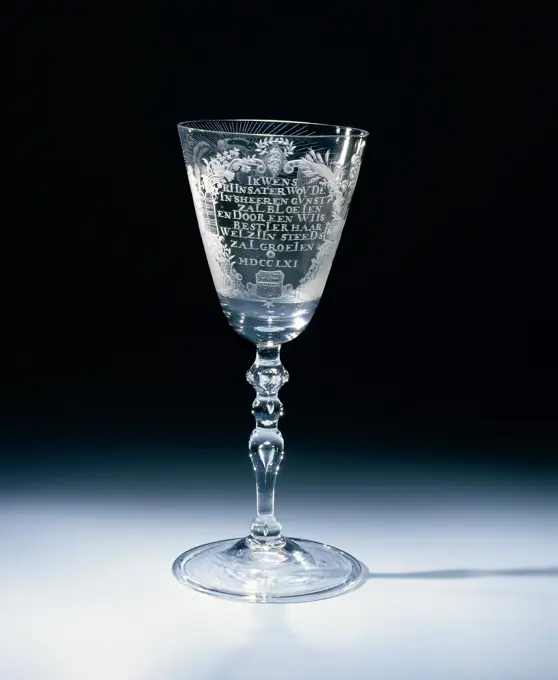
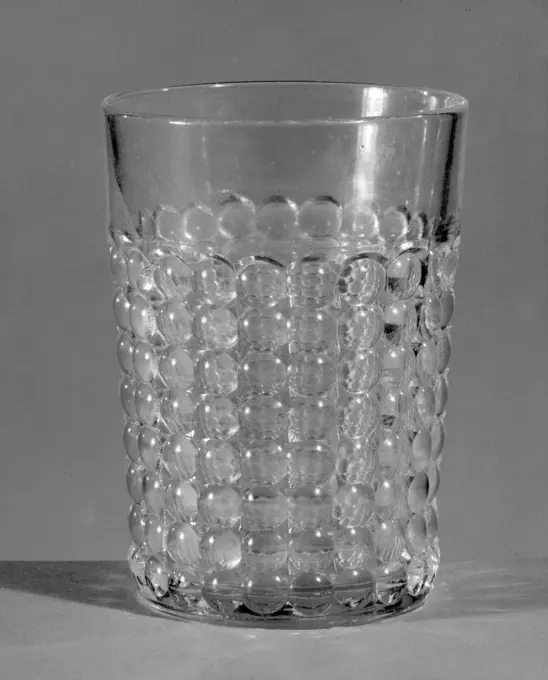
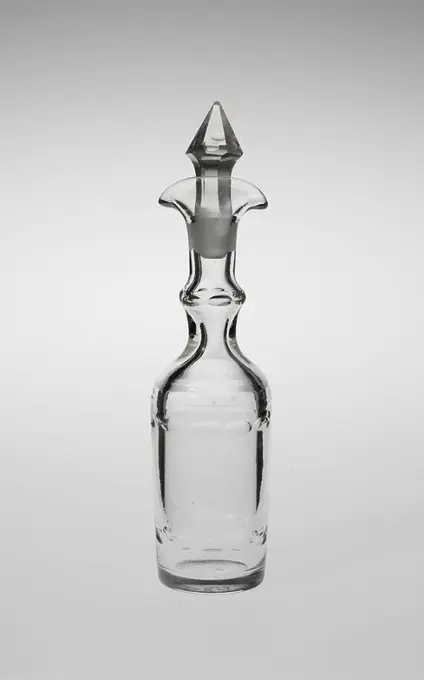
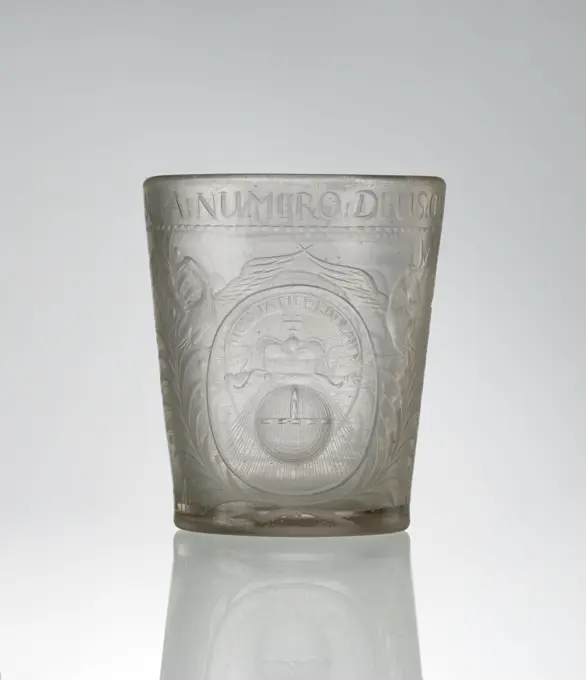
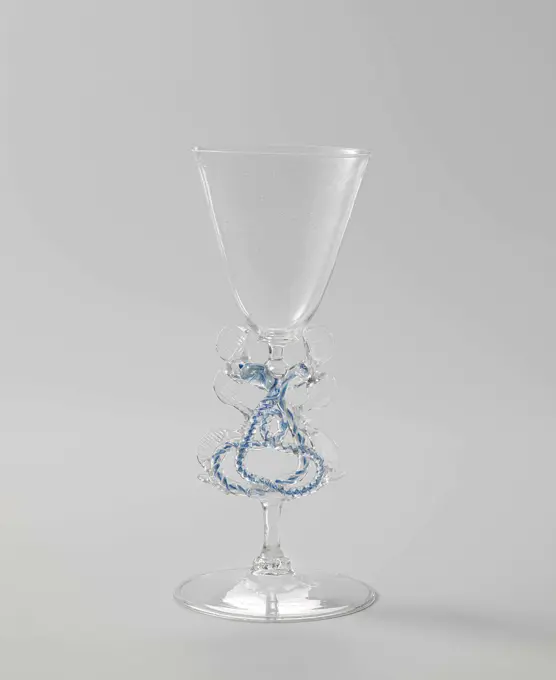
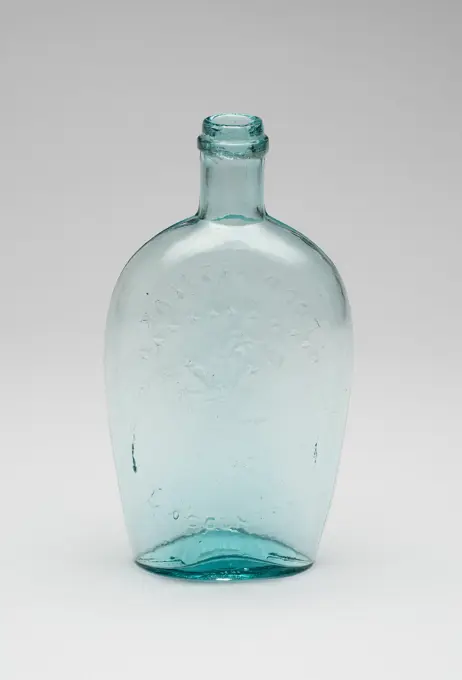
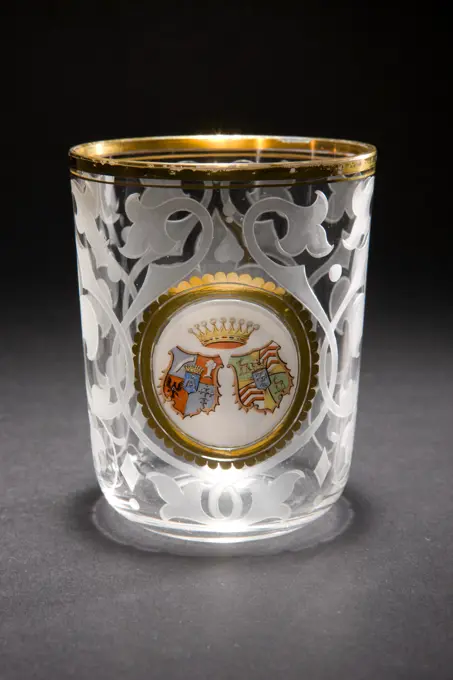
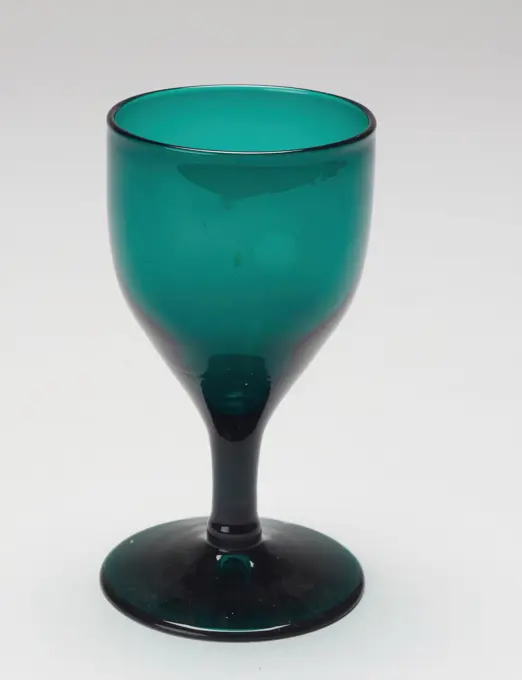
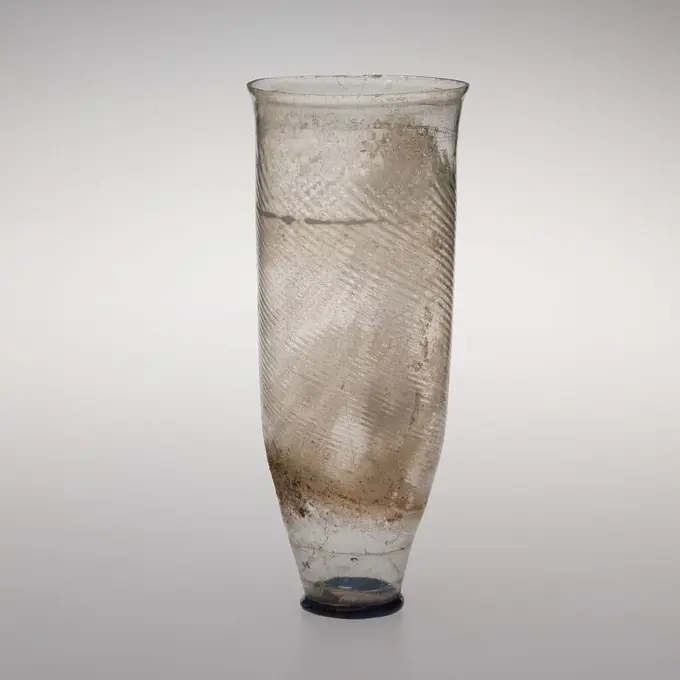
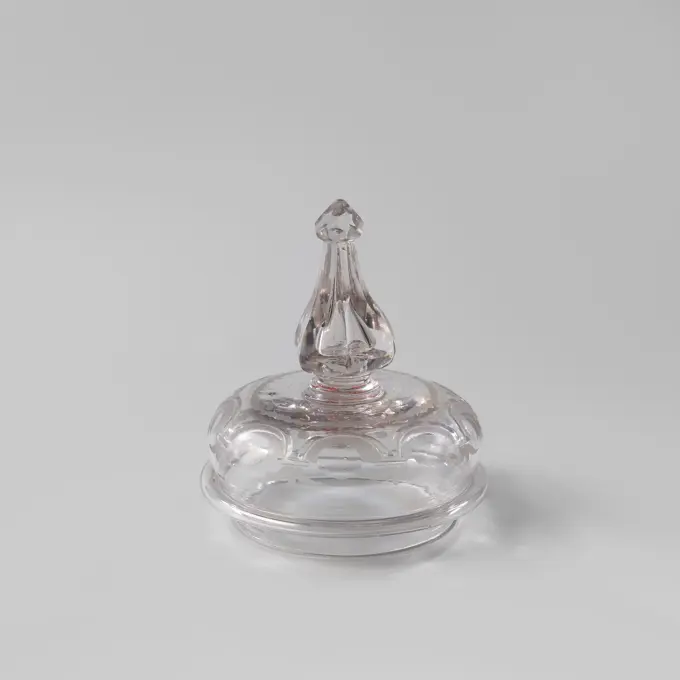
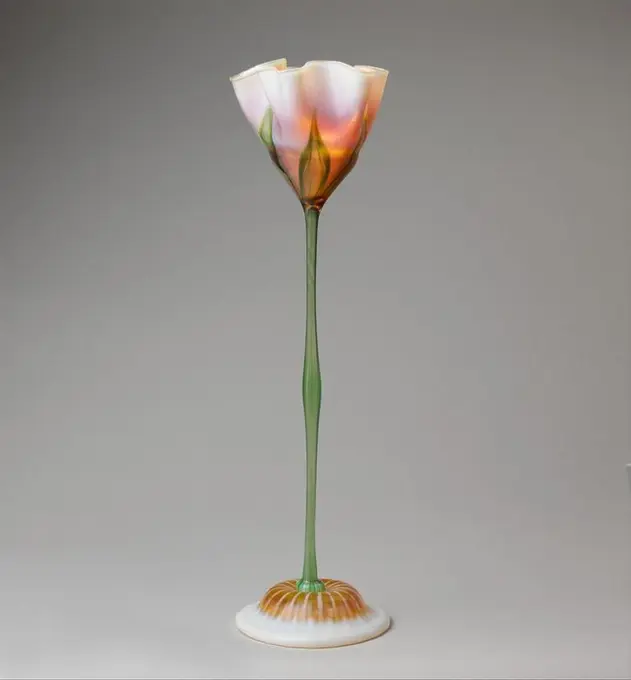
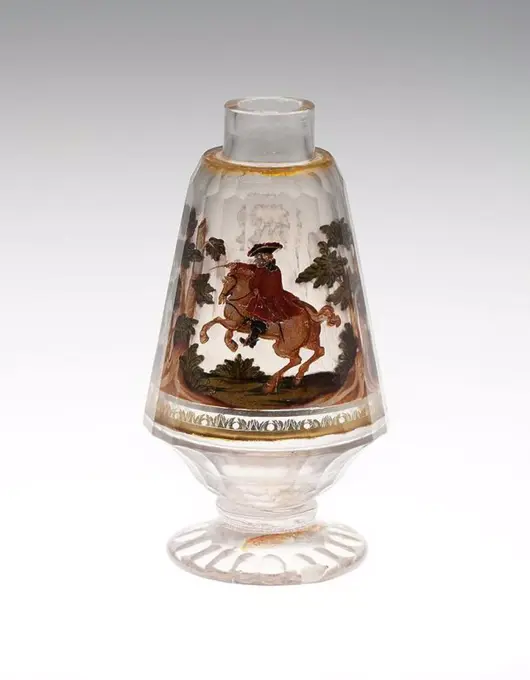
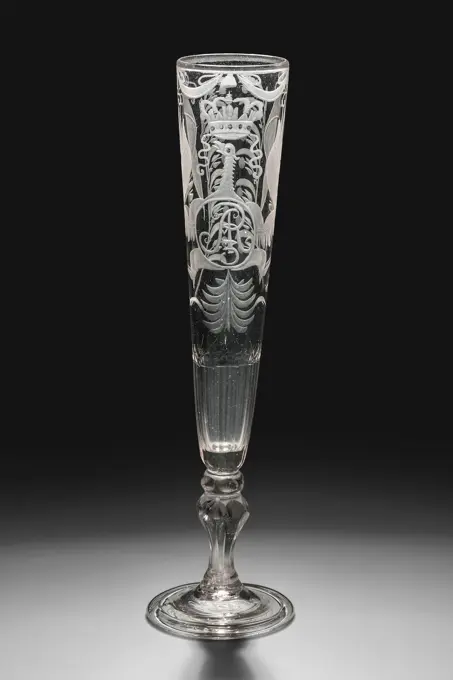
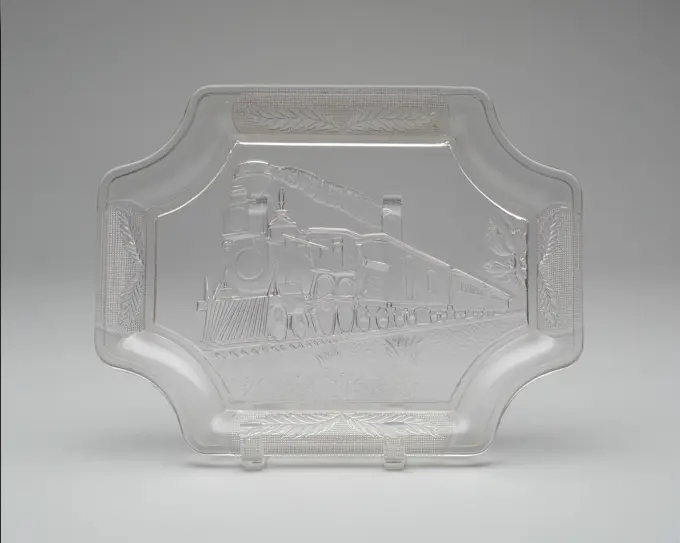
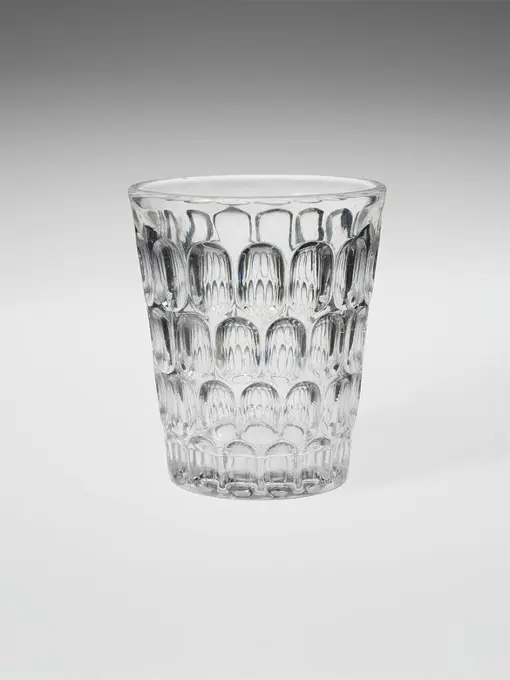
Tumbler. Culture: American. Dimensions: H. 3 5/8 in. (9.2 cm); Diam. 3 5/8 in. (9.2 cm). Maker: Bakewell, Pears and Company (1836-1882). Date: 1850-70. Museum: Metropolitan Museum of Art, New York, USA.Puzzle Mug. Germany, possibly Rheinland. Date: 1500-1599. Dimensions: 22.9 x 12.7 cm (9 x 5 in.). Glass. Origin: Germany. Museum: The Chicago Art Institute, Chicago, USA.Flip Glass 1830-70 American With the development of new formulas and techniques, glass-pressing technology had improved markedly by the late 1840s. By this time, pressed tablewares were being produced in large matching sets and innumerable forms. During the mid-1850s, colorless glass and simple geometric patterns dominated. Catering to the demand for moderately-priced dining wares, the glass industry in the United States expanded widely, and numerous factories supplied less expensive pressed glassware to the growing market. At the Exhibition of the Industry of All Nations at New Yorks Crystal Palace in 1853, for example, the New England Glass Company exhibited 130 pieces of one design, "consisting of bowls, tumblers, champagnes, wines, and jelly glasses." This object belongs to one such service. Although the glass manufactory is not known, the glassware is very typical of the large services that were very popular with Americas middle class in the nineteenth century.. Flip Glass. AmerTwo Vases. Various rulers created treasure chambers as a way of displaying their knowledge, wealth, and power. These vases were prominent showpieces in the Kunstkammer in Dresden founded by Augustus, Elector of Saxony, in 1560. In the course of his life he assembled a large collectionof around 40 vases, which together were valued at no less than 12,000 thalers (26,000 guilders).Decanter with Stopper, 18th-19th century, 8 3/8 x 3 x 3in. (21.3 x 7.6 x 7.6cm), Glass, United States, 18th-19th centuryGlass; indefinite steelworks; XVII/18th century (1680-00-00-1710-00-00);coats of arms, symbolic scenesLiqueur glass. Culture: British, Bristol. Dimensions: 3 3/16 × 2 1/8 in. (8.1 × 5.4 cm). Date: 1750-1800. Museum: Metropolitan Museum of Art, New York, USA.Kelkglas with a ship with women and the inscription: o Wonder miracle and even wonder the ship is full. Holes and does not sink. Vaulted foot. Baluster trunk with four buttons and air bubbles. Conical chalice with rounded soil. On the chalice a ship with women. Along the mouth edge The inscription: o Wonder miracle and even wonder the ship is full. Holes and does not sink.Palmyra Pimentel, Celery Vase, c 1939 Celery VaseWhiskey Taster 1840-60. Whiskey Taster 9802Tumbler 1825-45 Attributed to Boston & Sandwich Glass Company. Tumbler 9020Glass;  1920-39 (1920-00-00-1939-00-00);Beaker with the Judgment of Solomon. Bohemia or Germany, second half of 18th century. Furnishings; Serviceware. GlassGlass. The Netherlands or Germany, c. 1625-1675glassCandlestick. Culture: American. Dimensions: H. 8 1/2 in. (21.6 cm). Date: 1825-50. Museum: Metropolitan Museum of Art, New York, USA.Supermine cup of silver, cylindrical. Along the top edge engraved tendrils and hanging flower branches. Inscription to the middle, between engraved cables: The Gift or Mr. Rychard Browne or Heighham .. Silling cup of silver, cylindrical. Along the top edge engraved tendrils and hanging flower branches. To the middle between engraved cables into the inscription: The Gift or Mr. Rychard Browne or Heigham. From the Ned. Protestant municipality in Norwich.Masonic cup of a member of the Zu den drei Seraphim lodge, Berlin. unknown, authorWineglass. Culture: British. Dimensions: Overall: 4 1/2 × 2 in. (11.4 × 5.1 cm). Date: late 18th century. Museum: Metropolitan Museum of Art, New York, USA.Glass Huta unknown (Lesser Poland)Toothpick Holder after 1883 Probably New England Glass Company. Toothpick Holder. American. after 1883. Blown glass. Made in East Cambridge, Massachusetts, United StatesBokaal with the church in Rijnsaterwoude, Anonymous, 1765 Vaulted foot with turned around. Baluster tribe with four knots and air bubbles. Conical chalice with rounded soil. On the chalice an engraved performance of the church in Rijsaterwoude and the inscription: "I wish Rijsaterwoude in 's Heeren Gunst will flourish and through and wise her well -being will always grow. glassblower: Low CountriesNorthern Netherlands glass glassblowing Vaulted foot with turned around. Baluster tribe with four knots and air bubbles. Conical chalice with rounded soil. On the chalice an engraved performance of the church in Rijsaterwoude and the inscription: "I wish Rijsaterwoude in 's Heeren Gunst will flourish and through and wise her well -being will always grow. glassblower: Low CountriesNorthern Netherlands glass glassblowing. Roemer with inserted bottom on high, concave, spun base from a wire. The light convex chalice as a whole blown up with the trunk that is busy with four convex studs. The transition from the chalice to the strain is indicated by a ribbed wire.Wine glass. The arms of Stadtholder William III are enclosed by the seven coats of arms of the Republic of the United Netherlands.Tumbler ca. 1888 Richards and Hartley Flint Glass Co.. Tumbler. American. ca. 1888. Pressed yellow glass. Made in Tarentum, Pennsylvania, United StatesCompote - Lamont Glass Company Lamont Glass CompanySillabub Cup ca. 1820 American or British. Sillabub Cup. American or British. ca. 1820. Free-blown lead glass. Possibly made in England; Possibly made in United StatesSaltEmpty margarita glass isolated on white backgroundBottle. Dimensions: Overall: 7 1/2 in., 223.7 Grams (19.1 cm, 7.192 Troy Ounces)Base diameter: 1 11/16 in. (4.3 cm)Other (Height without stopper): 6 5/16 in. (16 cm). Date: 1700-1800. Museum: Metropolitan Museum of Art, New York, USA.Glass; Non -like Lona Huta; XVII/18th century (1680-00-00-1710-00-00);A cup for champagne;  19th century (1801-00-00-1900-00-00);Candlestick. Dimensions: Candlestick: H. 18 1/2 in. (47 cm)Shade: Dimensions unavailable. Date: 1790-1800. Museum: Metropolitan Museum of Art, New York, USA.Glass; Lobmeyr, J. & L. (Vienna; 1823-); 1920-39 (1920-00-00-1939-00-00);GobletReflection of an empty cocktail glass on tableVase, Tiffany Glass and Decorating Company, American, 1892 - 1900, Mold-blown favrile glass, One of a pair of amber vases. Flat base with a flaring stem. Squat bowl with all-around decoration of growing lily plants, New York, NY, USA, ca. 1900, glasswares, Decorative Arts, VasePlate 1825-1865 France. Glass; pressed and cut . Baccarat Glassworks (Manufacturer)Candlestick ca. 1800 Matthew Boulton British. Candlestick. ca. 1800. Sheffield silver plate. Made in Birmingham, EnglandBottle 18th-19th century. Bottle 444720Candlestick; Silver Products Factory K.F. Malcza (Warsaw; Sreber label; 1828-1864), Malcz, Karol (1797-1867); 1852 (1840-00-00-1860-00-00);Tumbler 1800-1830 American. Tumbler. American. 1800-1830. Blown pattern-molded lead glass. Made in Midwest, United StatesWine Glass ca. 1883-88 Probably New England Glass Company. Wine Glass. American. ca. 1883-88. Blown glass. Made in East Cambridge, Massachusetts, United StatesGoblet; Made by Louis Comfort Tiffany (American, 1848-1933); favrile glass; Overall: 17.2 x 7.6 cm (6 3/4 x 3 in.); Bequest of Joseph L. Morris; 1966-55-7-cFlask. Baltimore Glass Works; American, 1800-1870; Baltimore, Maryland. Date: 1835-1850. Dimensions: . Glass. Origin: United States. Museum: The Chicago Art Institute, Chicago, USA.Pitcher 1840-50 American. Pitcher. American. 1840-50. Blown lead glass. Made in United StatesFlügelglas. The stem of this glass consists of a hollow blown thread of transparent and blue glass, symmetrically twisted in complex loops. Because of the shape of the stem resembles bird or insect wings, this form is known in English by the German term Flügelglas (winged glass’).Tumbler after 1886 Probably Hobbs, Brockunier and Company. Tumbler 9117Georges Despret (1862-1952). Cutting on foot. Glass, glass paste. XIXth-XXth century. Museum of Fine Arts of the City of Paris, Petit Palais. 19th XIXth XIX 19th 19th 19th century, XXth XXth XX 20th 20th 20th centuryFlask c 1860-1875 Midwest. Glass . Artist unknownGlassCzarka. unknown, craftsmanCandlestick. Culture: British. Dimensions: Height: 9 1/8 in. (23.2 cm). Date: ca. 1740. Museum: Metropolitan Museum of Art, New York, USA.Sauce Dish before 1867 Boston & Sandwich Glass Company. Sauce Dish 7145Cup. Joseph Loring; American, 1743-1815; Boston, Massachusetts. Date: 1764-1775. Dimensions: 8.6 × 7.9 cm (3 3/8 × 3 1/8 in.). Silver. Origin: Boston. Museum: The Chicago Art Institute, Chicago, USA.Bowl, Knickerbocker” Pattern. Designer A. Douglas Nash, American, 1881-1940 Designer Edwin W. Fuerst, American, 1903-1988 Manufacturer: Libbey Glass Manufacturing Company, American, 1919-1935Manufacturer or: Libbey Glass Company, a subsidiary of Owens-Illinois Glass Co., American, 1935-1943Wine glass, one of a set of twelve, 1780-1800, 5 x 2 5/8 x 2 5/8 in. (12.7 x 6.67 x 6.67 cm), Green glass, England, 18th-19th centuryGlass beaker. Culture: Roman. Dimensions: H. 6 1/4 in. (15.9 cm)diameter 2 1/2 in. (6.4 cm). Date: 4th century A.D..Colorless with blue green tinge; foot ring in translucent cobalt blue.Outsplayed, knocked-off rim; tall cylindrical body, tapering slightly downwards, then slanting inwards; applied solid foot ring, made by applying trail around edge of bottom; low kick in bottom.Side decorated with continuous band of closely spaced shallow ribs in a downward spiral from left to right, extending from below rim to point where body slants inwards; in plain band below rim and above ribs, two horizontal wheel-abraded lines; on slanting lower section of body, a band of two horizontal wheel-abraded lines and then below another single horizontal wheel-abraded line.Broken and repaired, with some small holes in lower body; pinprick bubbles; dulling, limy encrustation, weathering, and iridescence. Museum: Metropolitan Museum of Art, New York, USA.Candlestick 1875-1900 American. Candlestick. American. 1875-1900. Pressed colorless and opalescent glass. Made in United StatesFlash with a traffic jam. The German name for this type of glass comes from the rings of glass (passen) that indicate the measures. The trick was to drink precisely from one ring to the next in one gulp. Failing that, the drinker had to try again until he succeeded.Glass;  1920-39 (1920-00-00-1939-00-00);metallic bottle isolated on white backgroundEmpty wine glass. Isolated on a white background. With clipping pathLid of a jar. Vaulted lid with a faceted, pear-shaped button on three discs and a flat button. On the lid a engraved leaf ornament.Lid of a jar, anonymous, c. 1725 - c. 1750 Vaulted lid with a scattered, pear -shaped button on three discs and a flat button. A engraved ornament on the lid. Silesia (Possible) glass glassblowing Vaulted lid with a scattered, pear -shaped button on three discs and a flat button. A engraved ornament on the lid. Silesia (Possible) glass glassblowingGoblet 1870-90 Challinor, Taylor and Company. Goblet 4123Candlestick - Christ holding The CrossLog Cabin pattern covered compote c 1875 Wheeling. Pressed glass . Central Glass Company (Manufacturer)Beaker ca. 1805 Benjamin Halsted. Beaker 19088Covered Dish. Boston and Sandwich Glass Company; American, 1825-1888; Sandwich, Massachusetts. Date: 1835-1840. Dimensions: 12.7 × 26.7 × 22.2 cm (5 × 10 1/2 × 8 3/4 in.). Pressed glass. Origin: . Museum: The Chicago Art Institute, Chicago, USA.Part of the toilet set: a container with a lid Glassworks HydrangeaDrawer Pull. Dimensions: Diam. 2 1/8 in. (5.4 cm). Date: 1810-60. Museum: Metropolitan Museum of Art, New York, USA.Decanter with stopper Possibly Baccarat French 1890-1900Honey dish 1850-60 American With the development of new formulas and techniques, glass-pressing technology had improved markedly by the late 1840s. By this time, pressed tablewares were being produced in large matching sets and innumerable forms. During the mid-1850s, colorless glass and simple geometric patterns dominated. Catering to the demand for moderately-priced dining wares, the glass industry in the United States expanded widely, and numerous factories supplied less expensive pressed glassware to the growing market. At the Exhibition of the Industry of All Nations at New Yorks Crystal Palace in 1853, for example, the New England Glass Company exhibited 130 pieces of one design, "consisting of bowls, tumblers, champagnes, wines, and jelly glasses." This object belongs to one such service. Although the glass manufactory is not known, the glassware is very typical of the large services that were very popular with Americas middle class in the nineteenth century.. Honey dish. AmerLid of sugar bowl of cut crystal, anonymous, c. 1881 Vaulted lid crowned by a high button. Belonging to a sugar bowl (BK-1981-12-B-1). Netherlands (possibly) crystal (lead glass) Vaulted lid crowned by a high button. Belonging to a sugar bowl (BK-1981-12-B-1). Netherlands (possibly) crystal (lead glass)CupNappy - Beaded Grape PatternCandlestick. Dimensions: H. 7 3/8 in. (18.7 cm). Date: ca. 1740. Museum: Metropolitan Museum of Art, New York, USA.Decanter And Stopper (England); Designed by Harry Powell (English, 1870 - 1920); Manufactured by James Powell & Sons (United Kingdom); blown and pressed glassAttic Lip Cup. Tleson (Greek (Attic), active about 555 - 535 B.C.)Candlestick - Inconnu / UnknownPedestal. Huta Szkła J.Stolle "Niemen" (Brzozówka ; 1894-1939), glass worksCup - Goblet, 1700-1800. Made in England. Pinto Collection - Purchased from Edward H Pinto, 1965.. This laburnum wood goblet is one of a pair, probably dating from the eighteenth century. We can tell that it was made on a pole lathe because the point where the goblet was held in place on the lathe leaves a characteristic mark on the base. It is very difficult to date these plain wooden goblets accurately as styles and patterns changed very slowly over the years. Laburnum wood was an interesting choice for this goblet as its warm tones and contrasting dark heart and yellow sapwood help to add a certain beauty and finesse to an otherwise everyday object.Decanter c 1835-1865 Pittsburgh. Glass . Artist unknownSilversmith's Art, Italy 20th century. Silver dessert bowl. Alessi manufacturing, 1931.Candlestick and Shade 1800-1830 British, probably. Candlestick and Shade. British, probably. 1800-1830. Mahogany, glass, brass. Probably made in EnglandMug; Non -like Lona Huta; 2. PO. 18th century (1750-00-00-1800-00-00);Joint or BoneHolder.   Maker: George B. Sharp, American, 1819-1904Retailer: Bailey and Company, American, 1846-1878CordialVase. Culture: American. Designer: Designed by Louis Comfort Tiffany (American, New York 1848-1933 New York). Dimensions: H. 18 11/16 in. (47.5 cm). Maker: Tiffany Glass and Decorating Company (American, 1892-1902). Date: 1900-1902. Museum: Metropolitan Museum of Art, New York, USA.Enamelled glasses by Bielby of Newcastle-on-Tyne. Dated 18th CenturyBottle. Bohemia, Czech Republic. Date: 1720-1730. Dimensions: 12.4 × 6.5 cm (4 7/8 × 2 9/16 in.). Glass. Origin: Bohemia. Museum: The Chicago Art Institute, Chicago, USA.Flute;  1736-1763 (1736-00-00-1763-00-00);August III (King of Poland - 1696-1763), coats of arms, monograms, message (provenance), rulerTrain platter c 1870-1900 United States. Glass . Artist unknownGlass; Lobmeyr, J. & L. (Vienna; 1823-); 1920-39 (1920-00-00-1939-00-00);Beaker glass, Glass, enamel, Switzerland, 18th century, glasswares, Decorative Arts, Beaker glassGlass Lausitzer glassworksStrnad Muslin glass Sherry Glass; Designed by Oskar Strnad (Austrian, 1879 - 1935); Manufactured by J. & L. Lobmeyr GmbH (Austria), Meyr's Neffen, Adolf; Austria; mouth-blown crystalGreen cups rows glass crystal luxury kitchenware